Shivalingams and Paadas, in granite and marble
Cosmic symbol and presence
This blog post is about a secondary activity of mine, making Shivalingams in granite and Sri Paadas in marble.

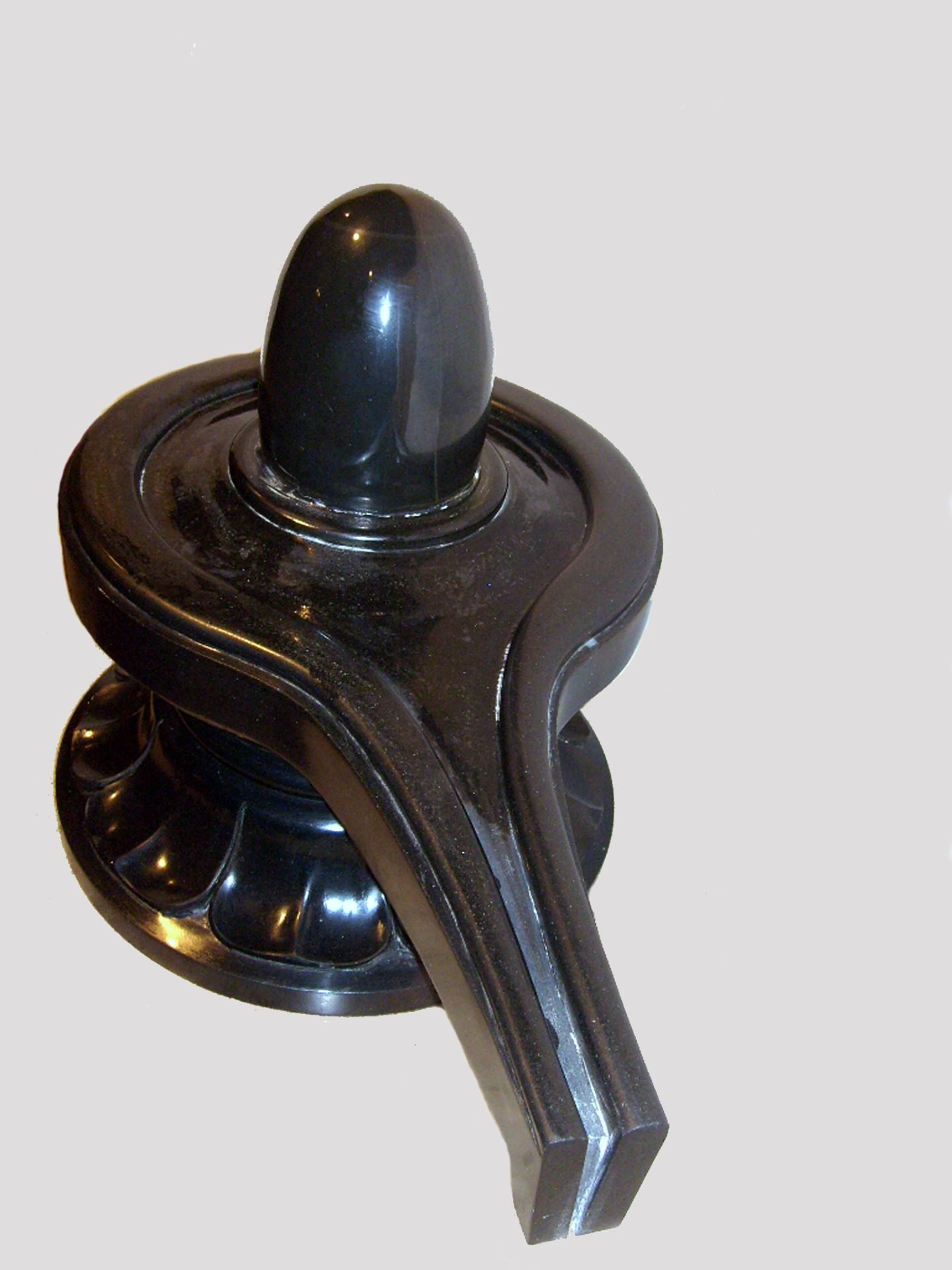
I have made Shivalingams before and also explained about it on this blog, but in short: A Lingam is an egg-shaped stone, which represents the Cosmic Principle: the silent state of Being, which is indefinable pure consciousness and is completely filled with bliss by nature.

Purusha, or Sat-Chit-Ananda. It is incased in a basis, the yoni of panipeetham, which represents the creative energy and the creation principle. Traditionally, these two are also referred to as masculine and feminine, primary and secondary, yet inextricably one and the same.
So you can write entire books about this, but the lingam is not meant for that. It's a representation, an approximation of the form of pure consciousness, and needs to be experienced, not discussed rationally.

Whenever a Shivalingam is first taken into use, a specific consecration ritual is needed for this (pranapratishtha, or, the blowing in of life's breath) to turn it from a block of stone into the living presence of cosmic consciousness. There are also rituals afterwards to guarantee and use this energy for the world's general well-being. If you are open to it, you can perceive it with clairvoyant gaze as a blue ball of moving energy.
Design and implementation
Oh well, that was the spiritual background of these objects. As a sculptor, I am mainly involved in the practical execution of this project: How do I make such a Shivalingam?
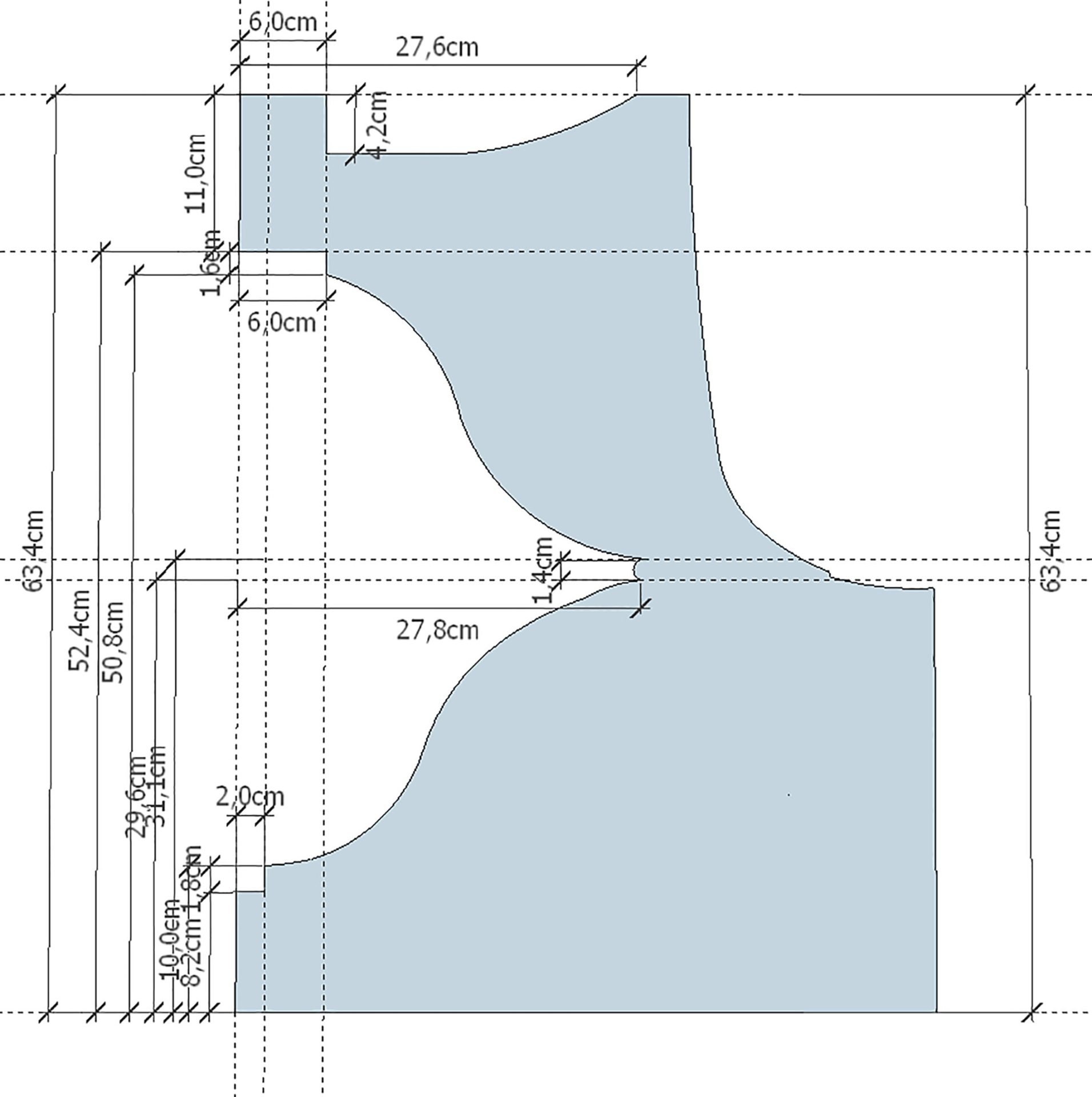
I start from a design, then order a piece of stone, draw it out and start cutting and carving. After that it is primarily a matter of a lot of polishing work in 8 steps, from 50 to 10.000.
Onderdijk 1 and 2
The first one I made was for the Temple of Onderdijk. They already had a Shivalingam of black onyx. I made a yoni for it from black granite, in 2004.
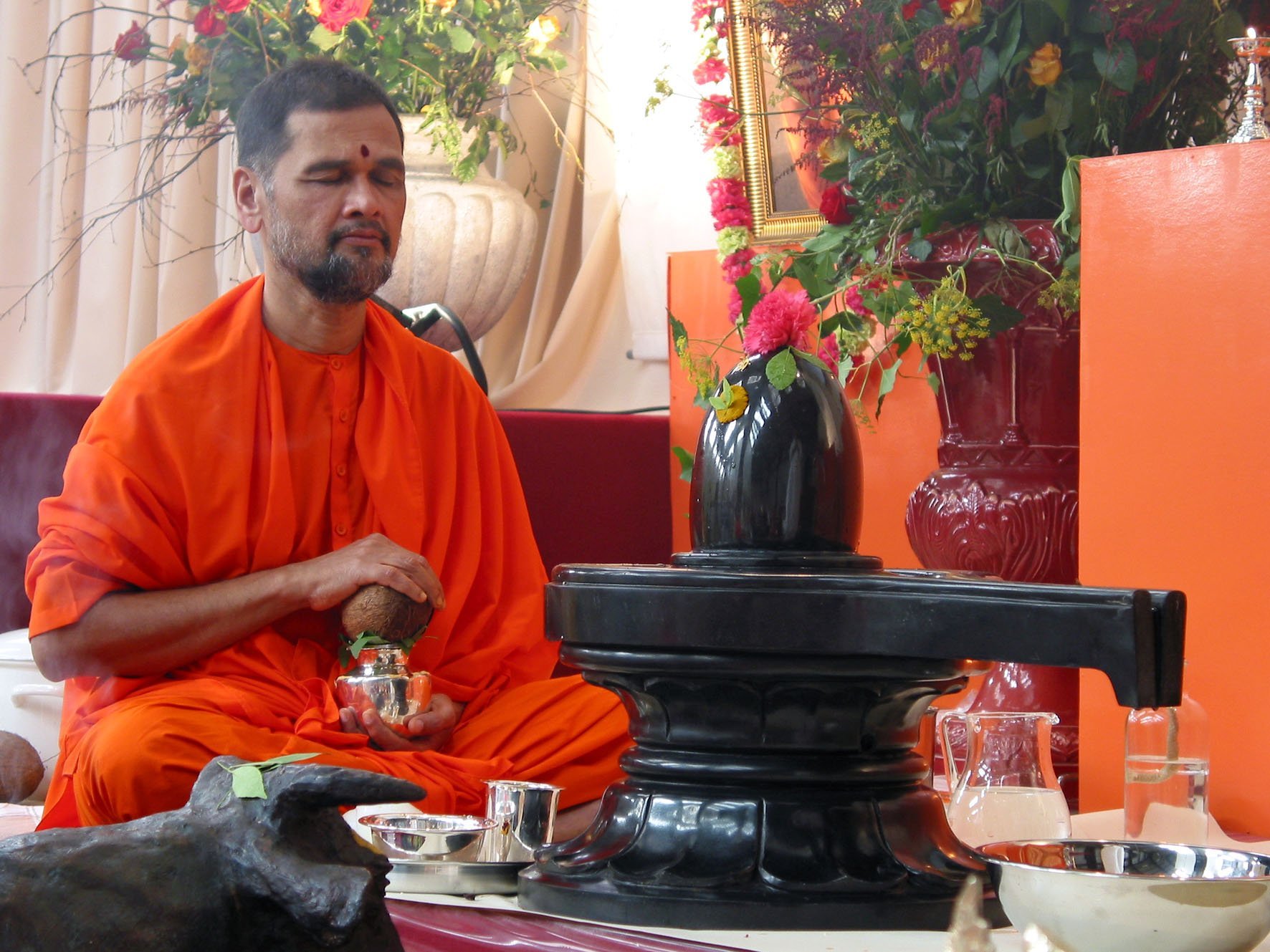

Then in 2012 I made a large Shivalingam and Yoni from granite that I still had lying about. I made it in five parts, because otherwise it wouldn't fit: the black lingam, the yoni out of 3 parts of pinkish granite, and an base plate of dark red Balmoral granite. This now sits in the garden of the same temple in Onderdijk.
The Samadhi Tomb of Swami Gopala Krishna
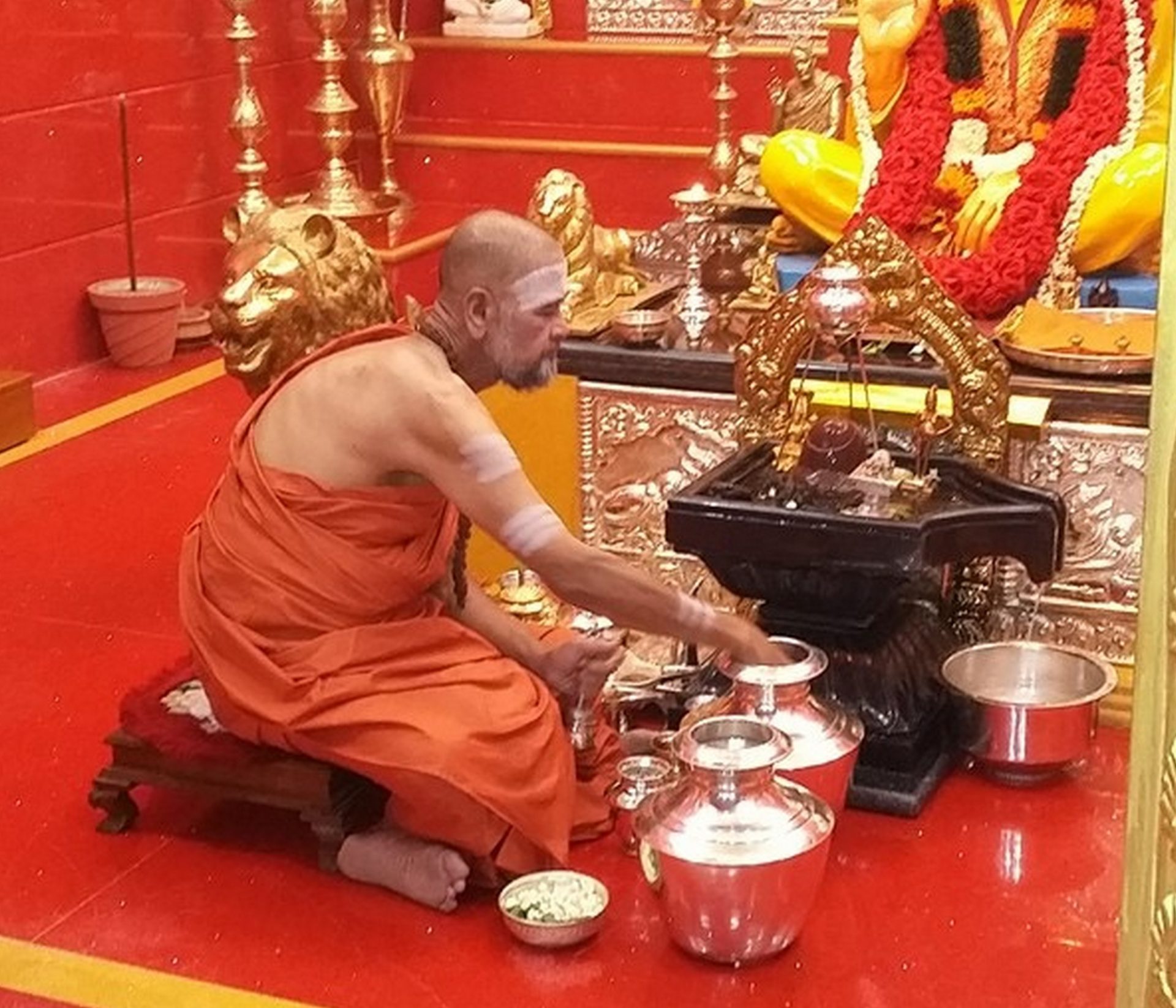
Then I made a black granite yoni or panipitha for the Sri Soma Sai Skanda Ashram in Nidagatta, in the state of Karnataka in India. I wondered why I was asked to do that while on almost every street corner in India there will be someone who can do this, but Swami Gopala Krishna preferred me to do this. It now resides on his tomb, the samadhi.
A black Dhyanalinga
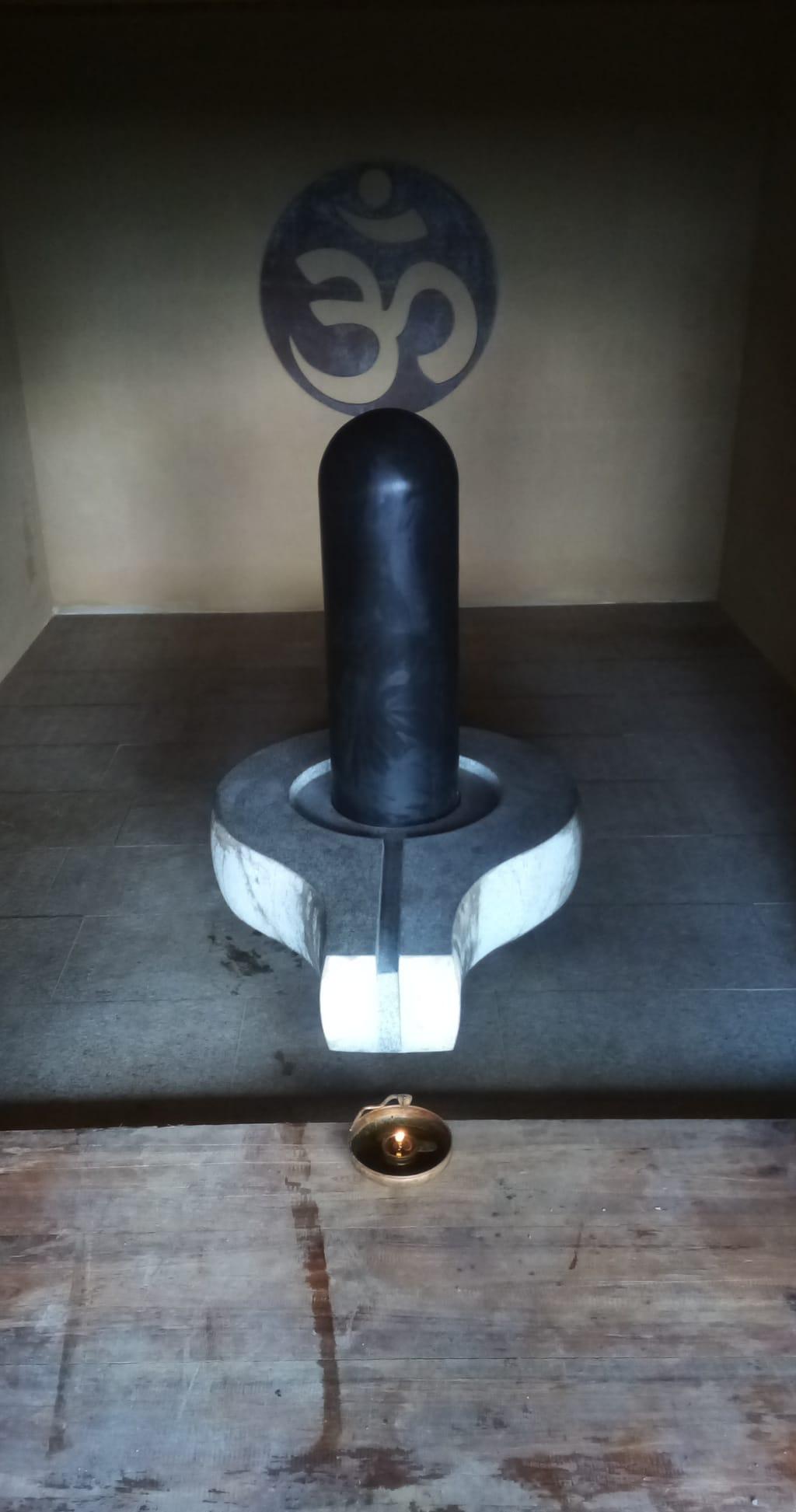
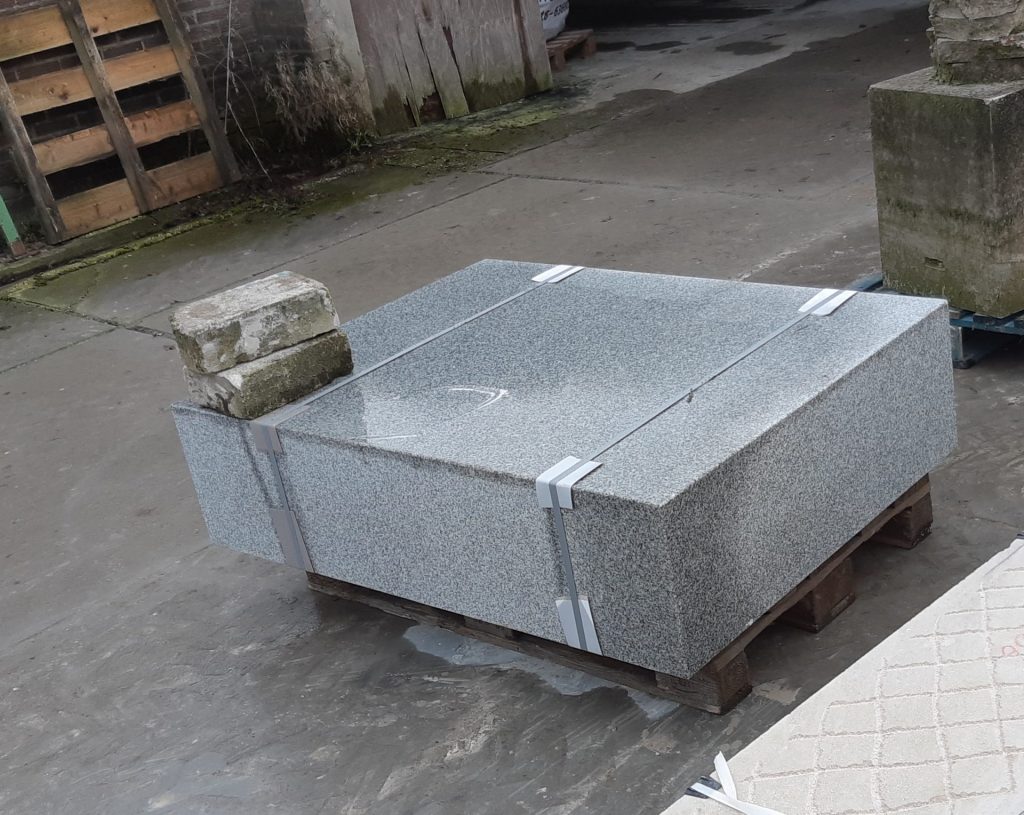
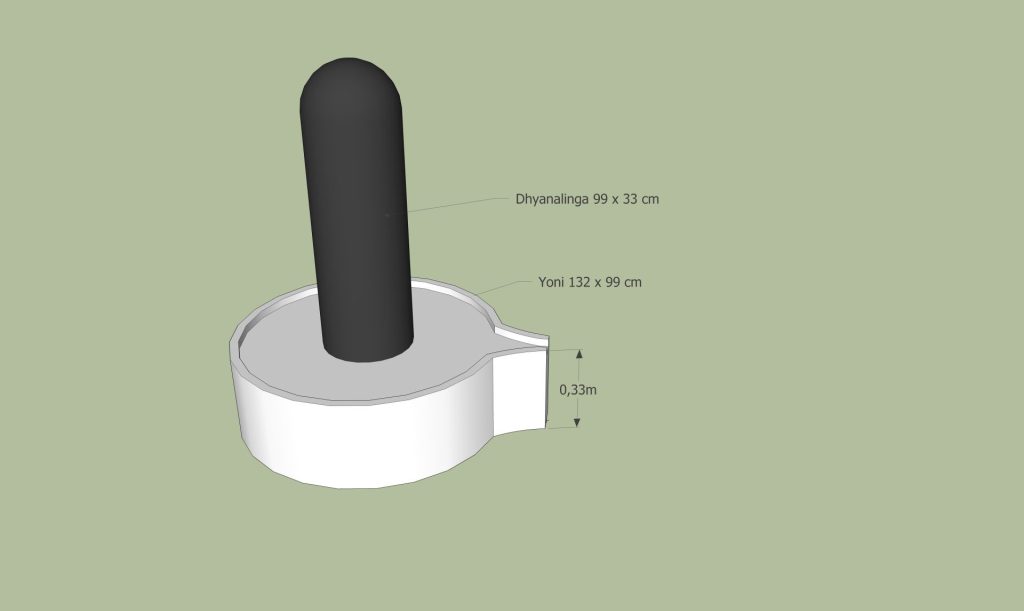
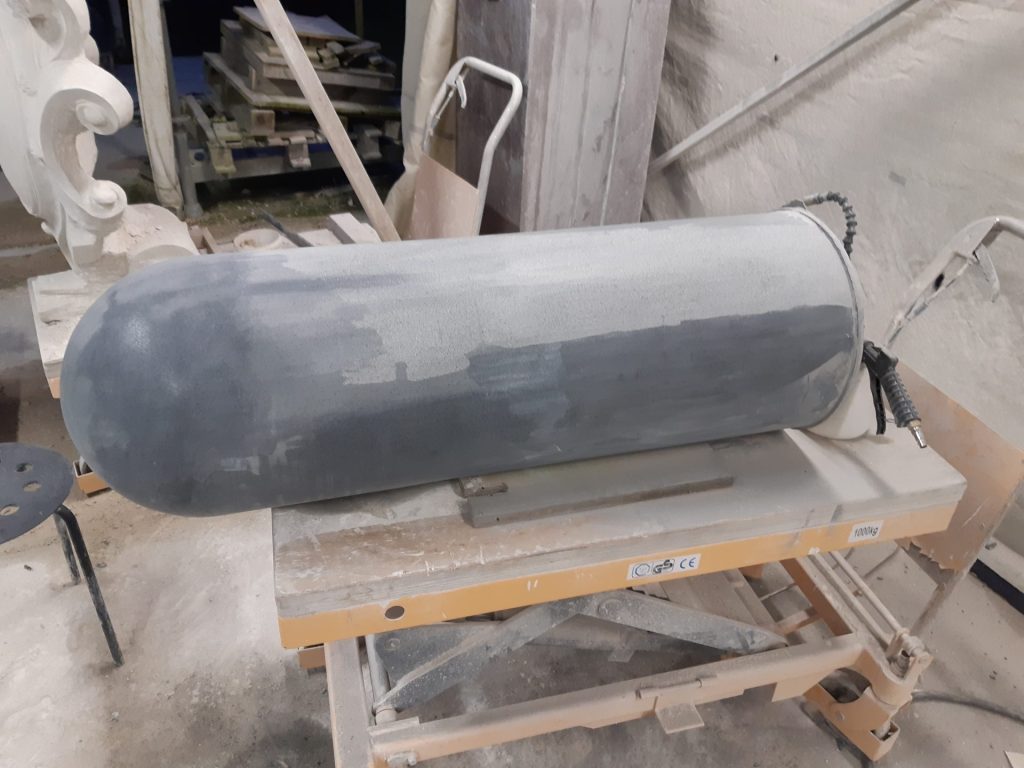
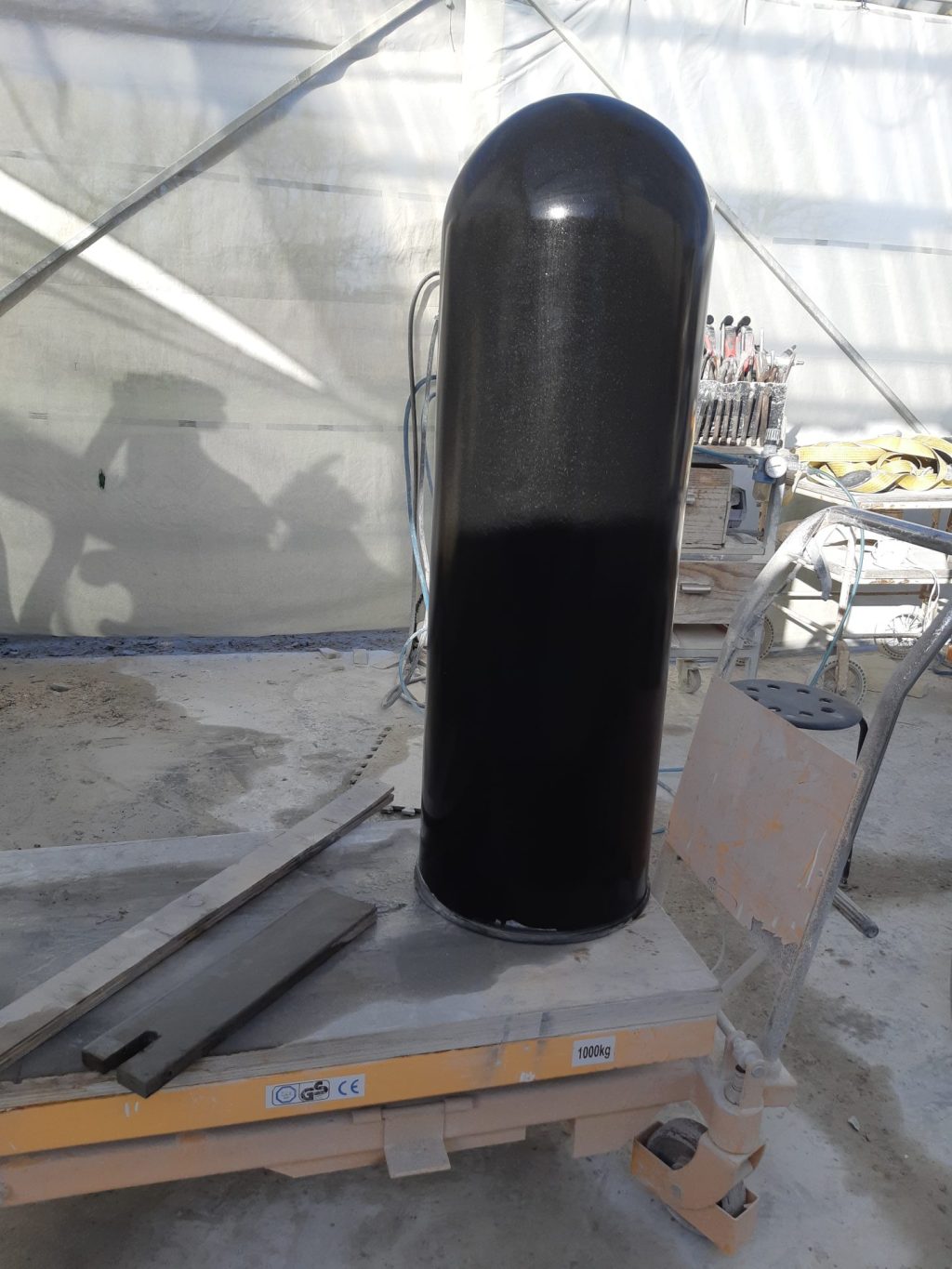
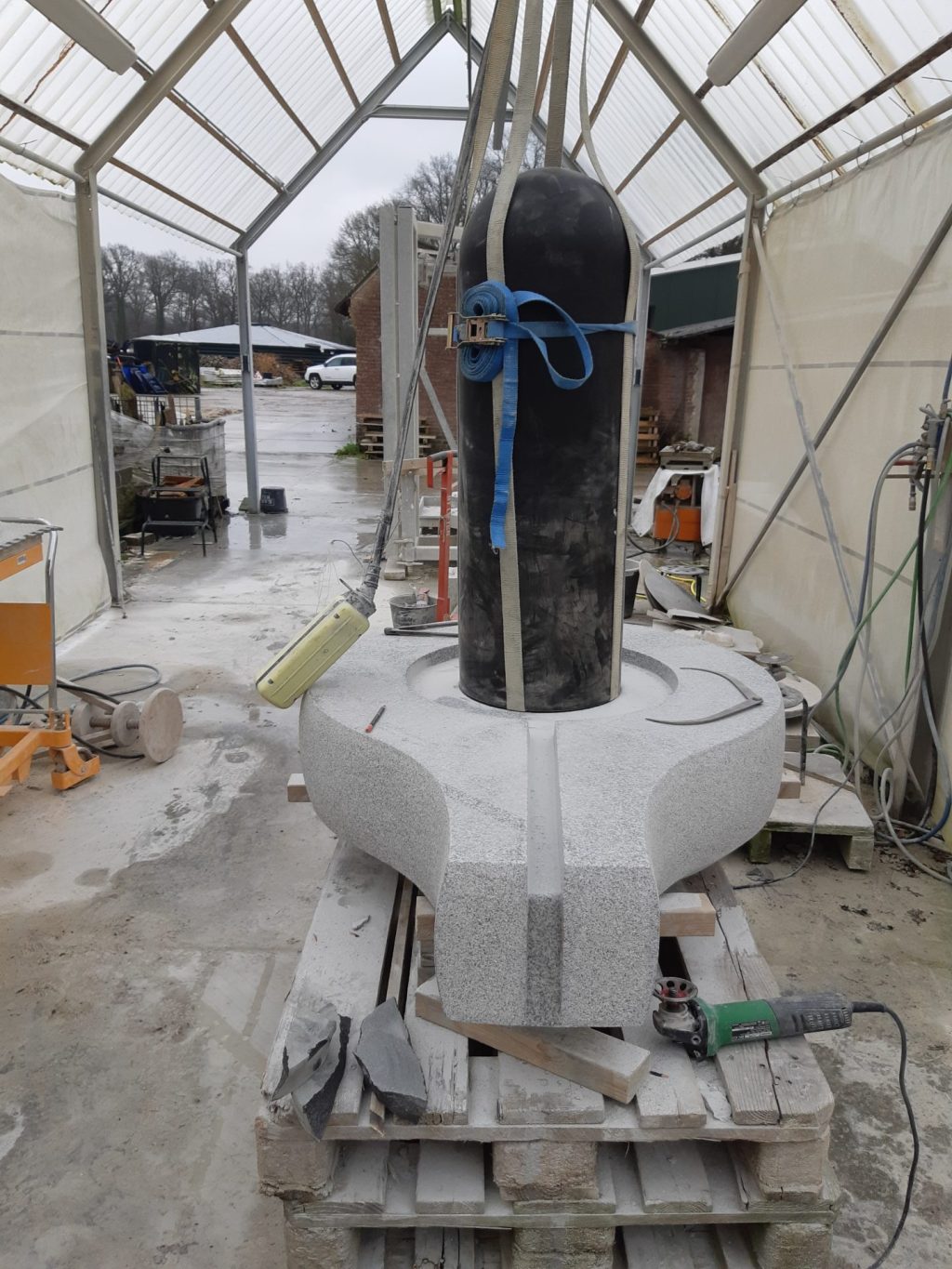
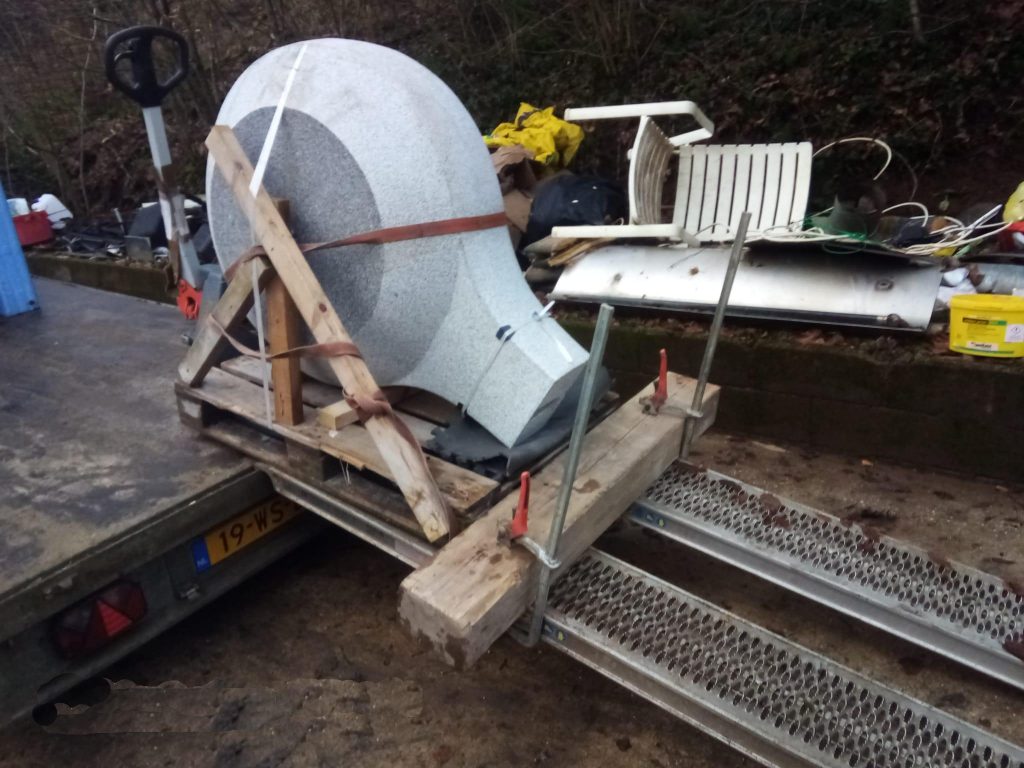
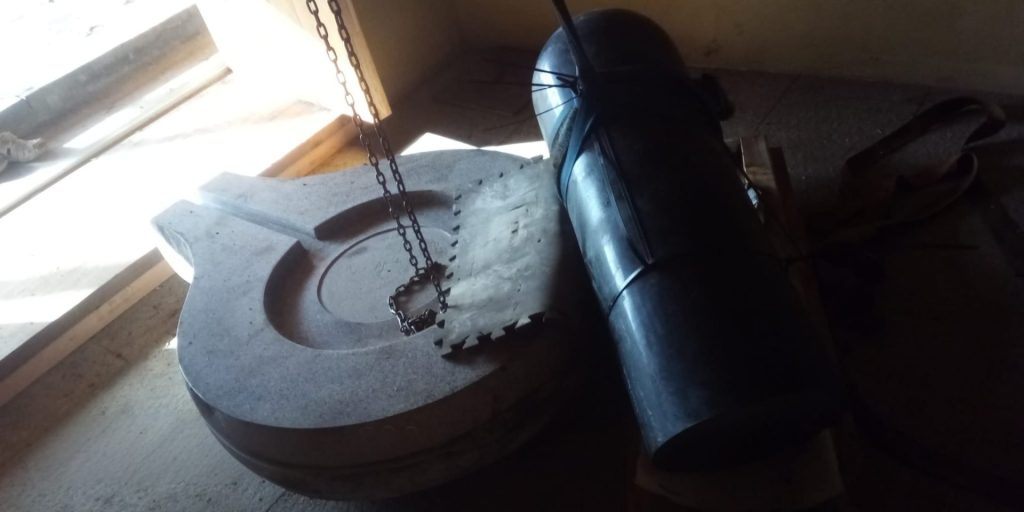
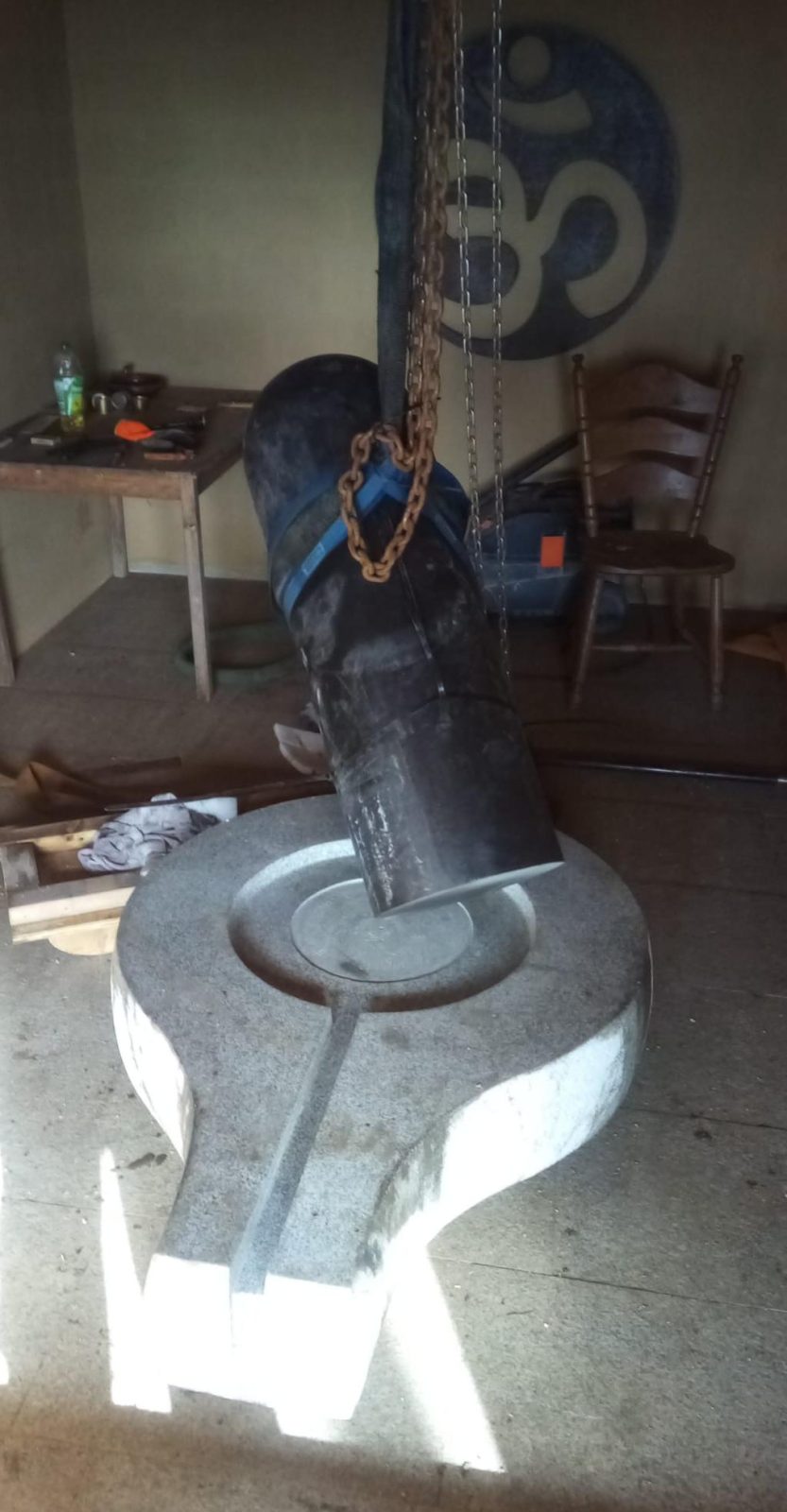
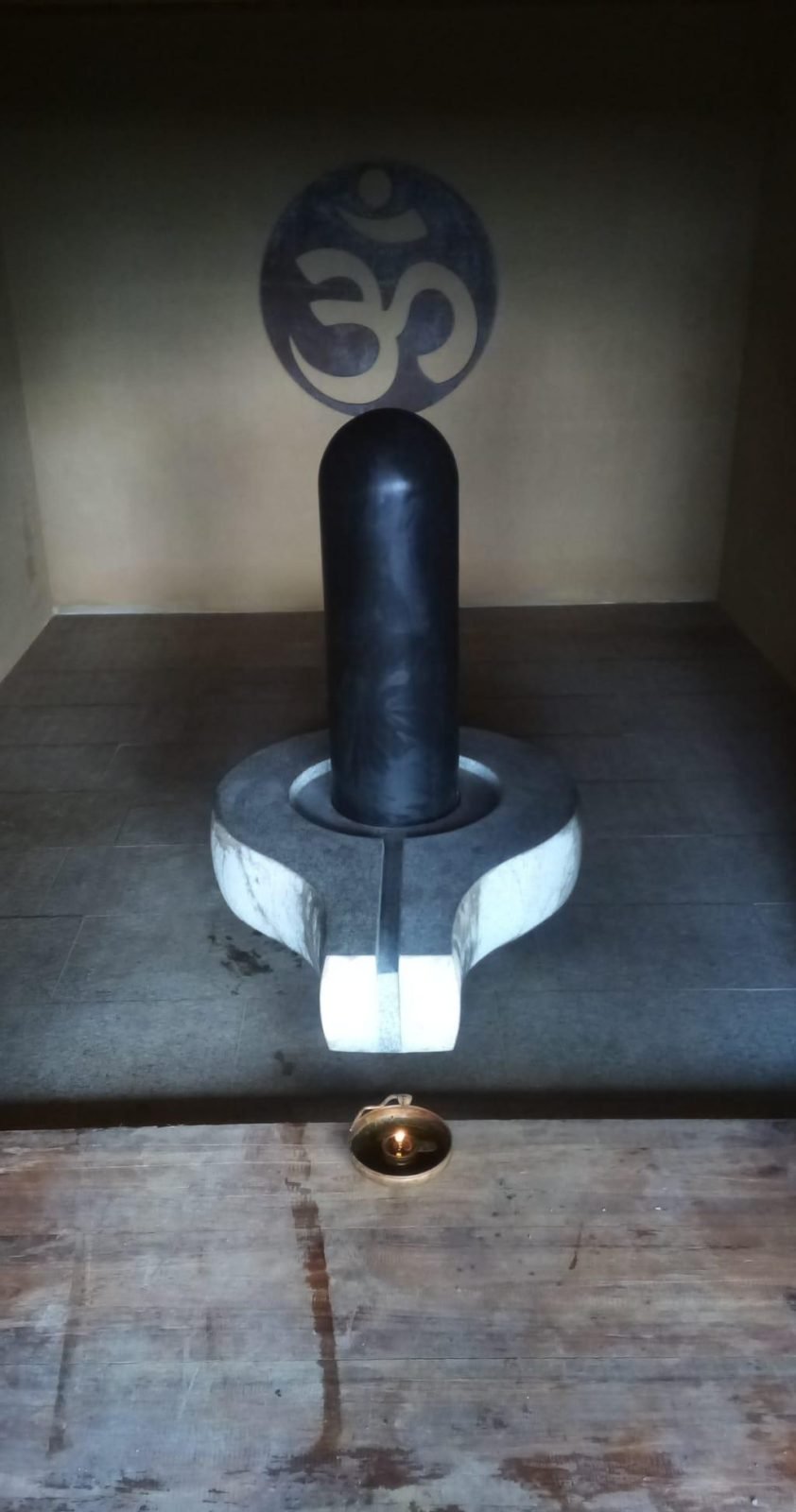
Another Shivalingam was ordered by a customer from Germany. He wanted a meditation lingam, just like his master Sadhguru . I carved the lingam from black granite of 99 x 33 x 33 cms wide, and the yoni from white granite of 132 x 99 x 33 cms wide. The heavy lingam and yoni have been installed in his house by the customer himself, after an obstacle track with many height differences. An impressive job!
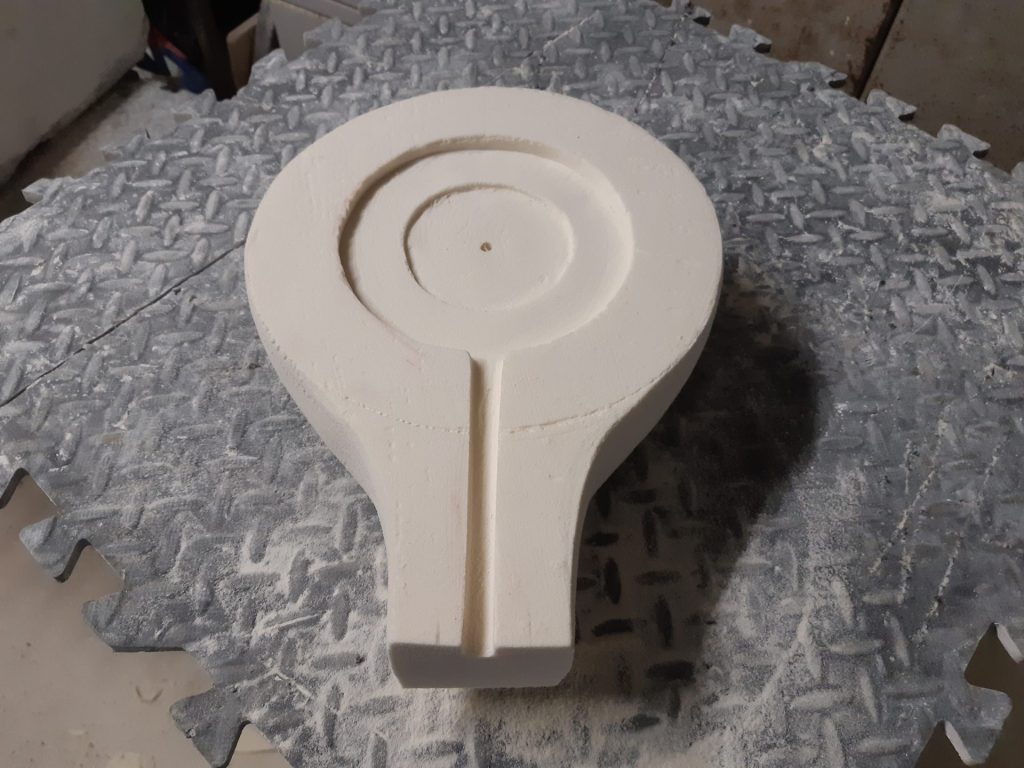
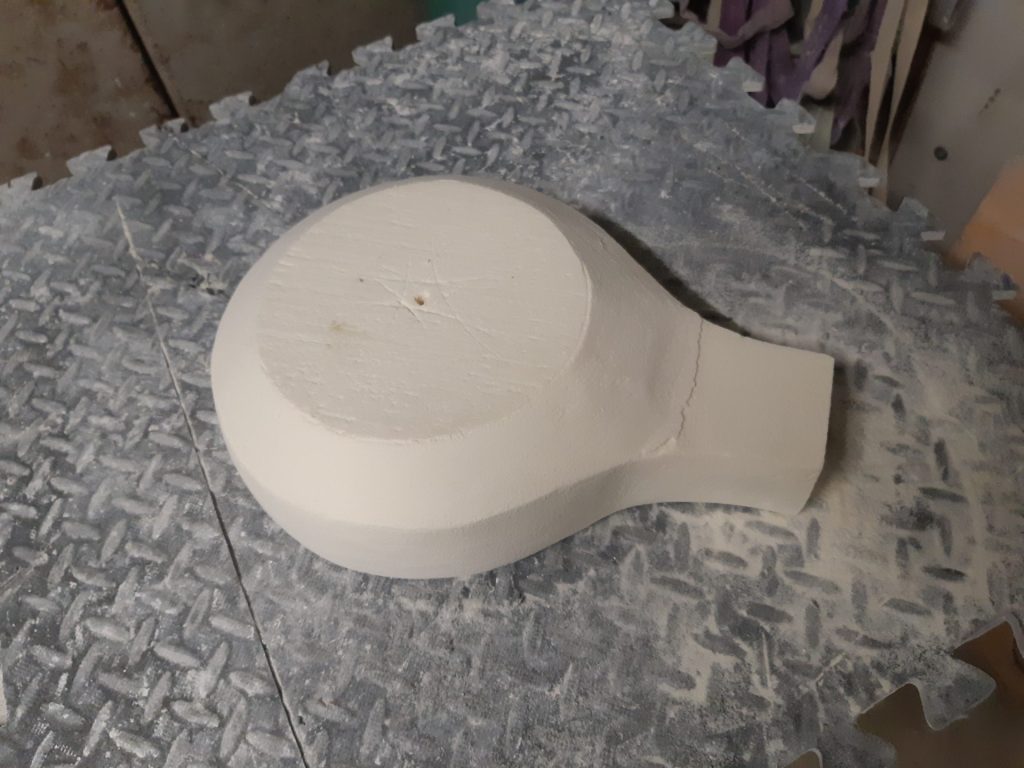
Gallery: a black Dhyanalinga in a white granite Yoni
A white Yoni for the lingam in Scotland

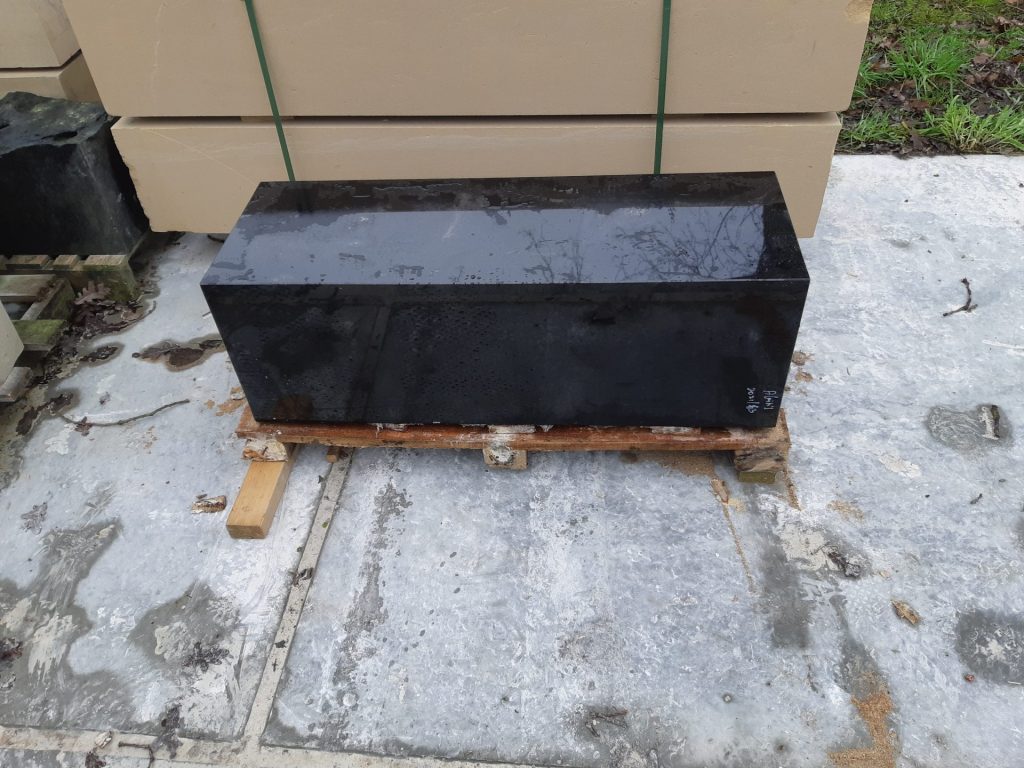
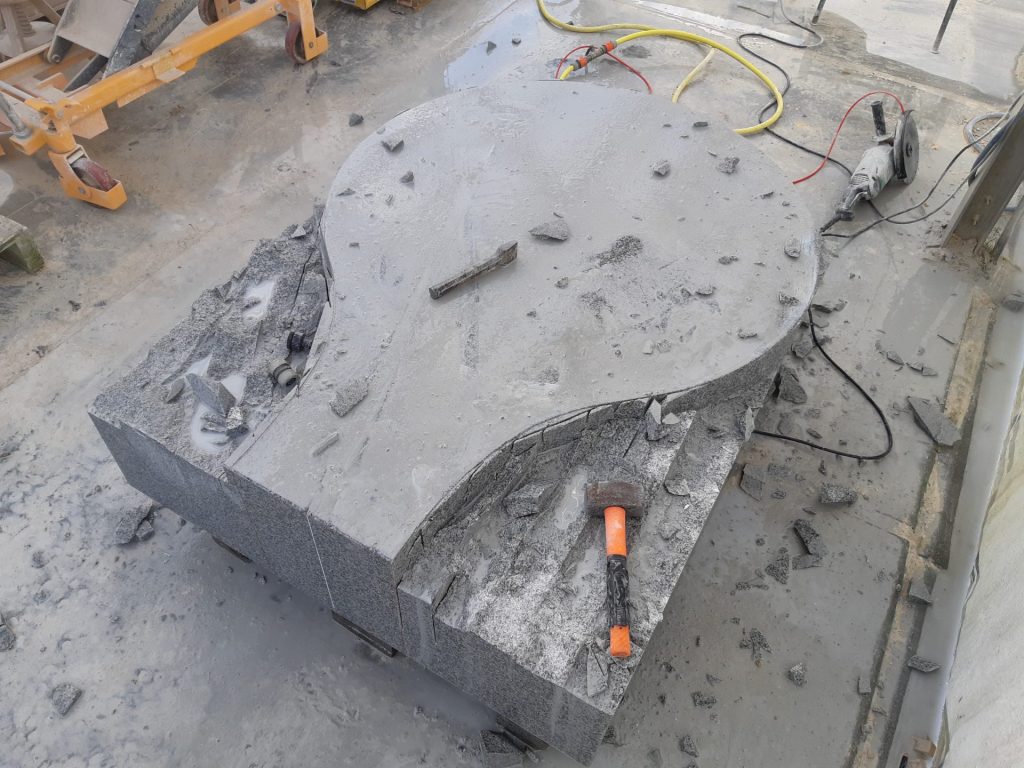
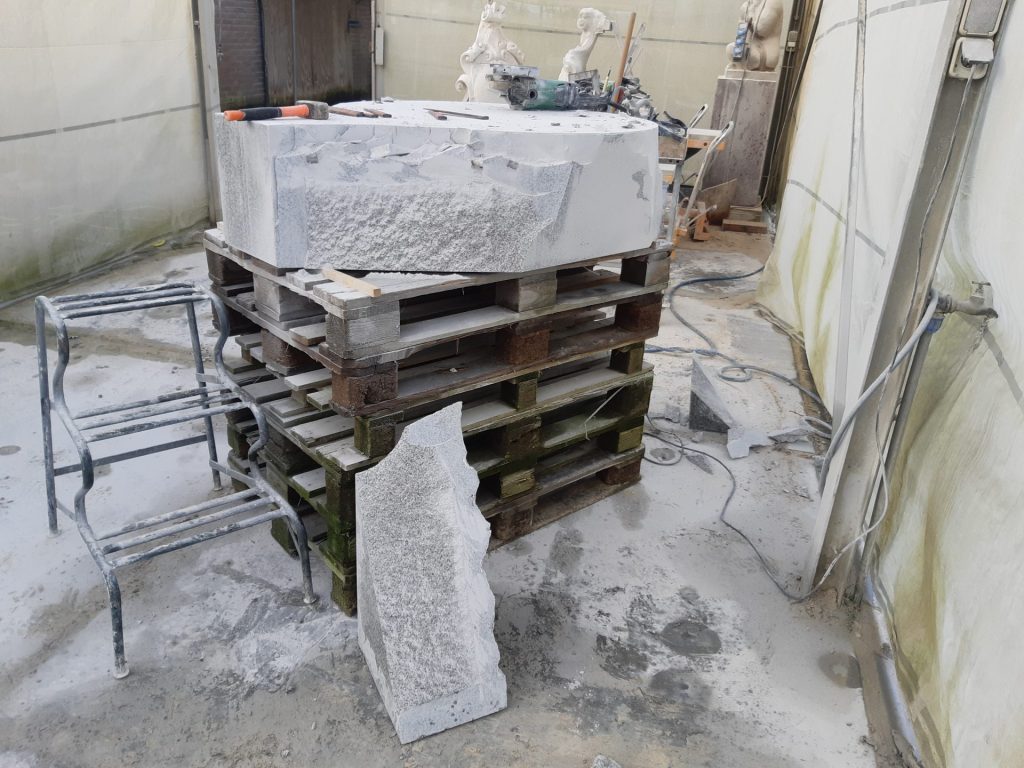
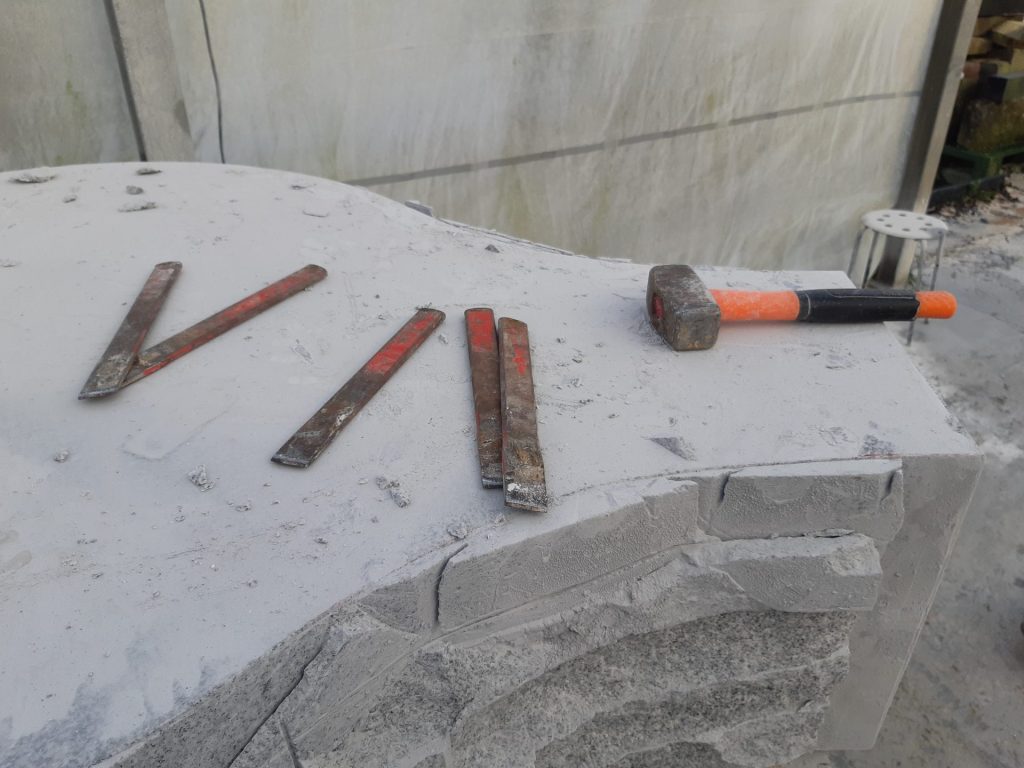
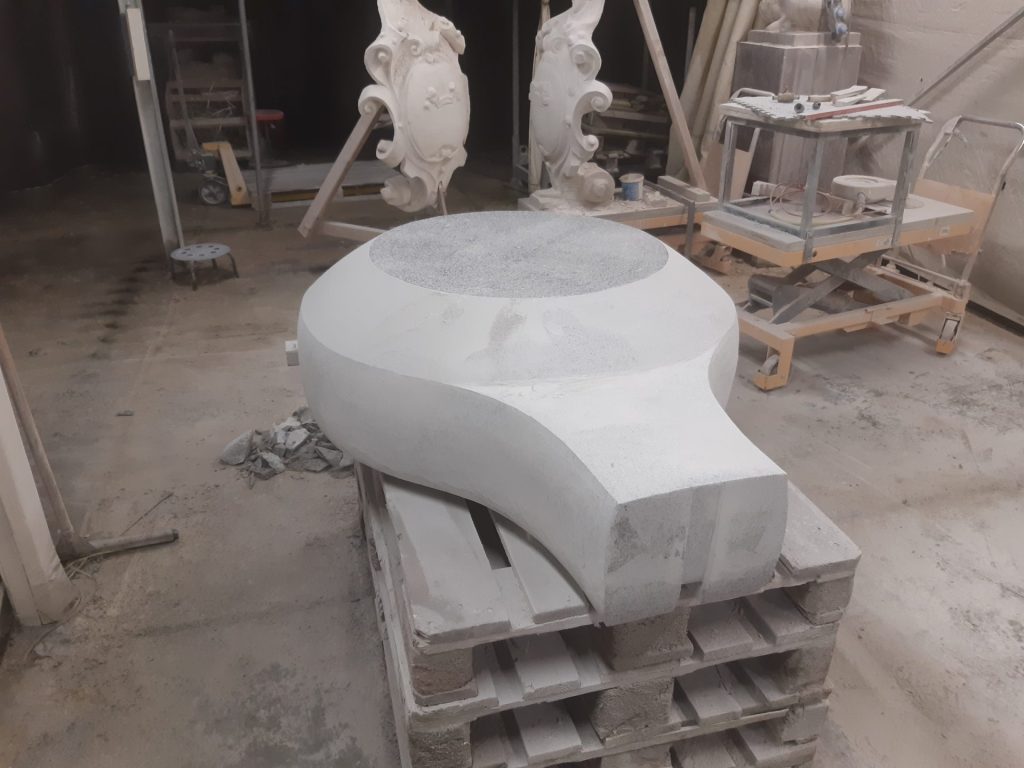
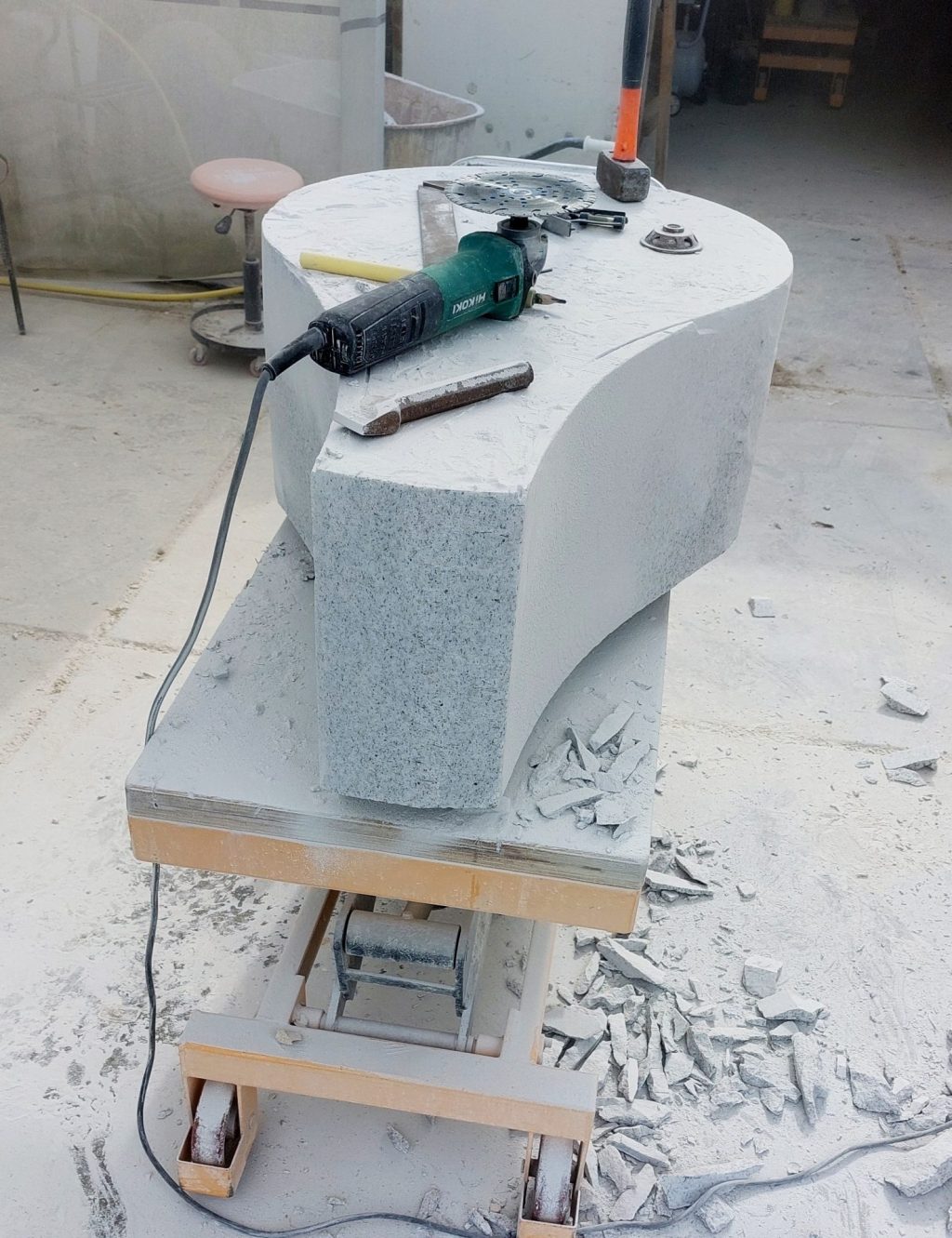
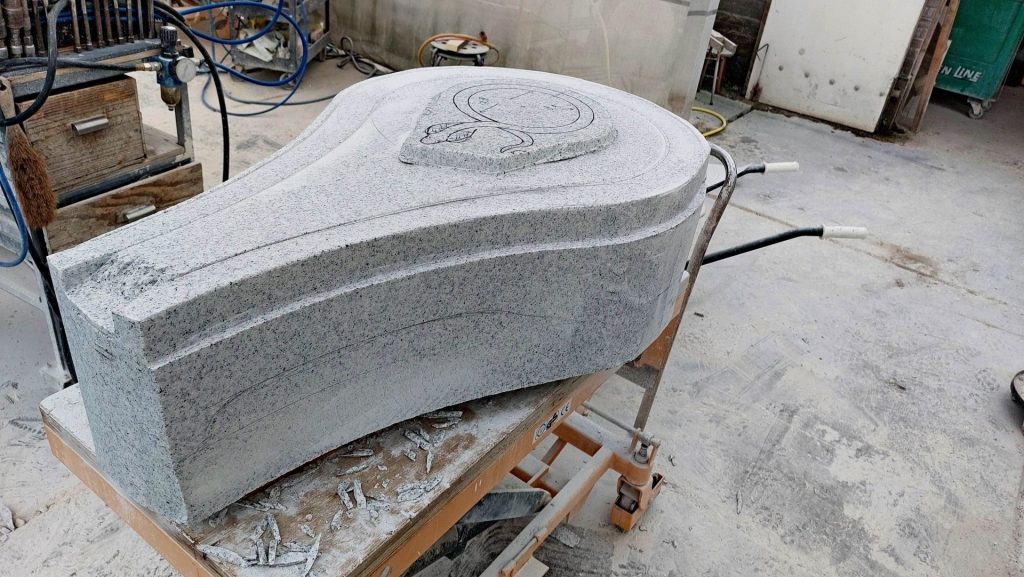
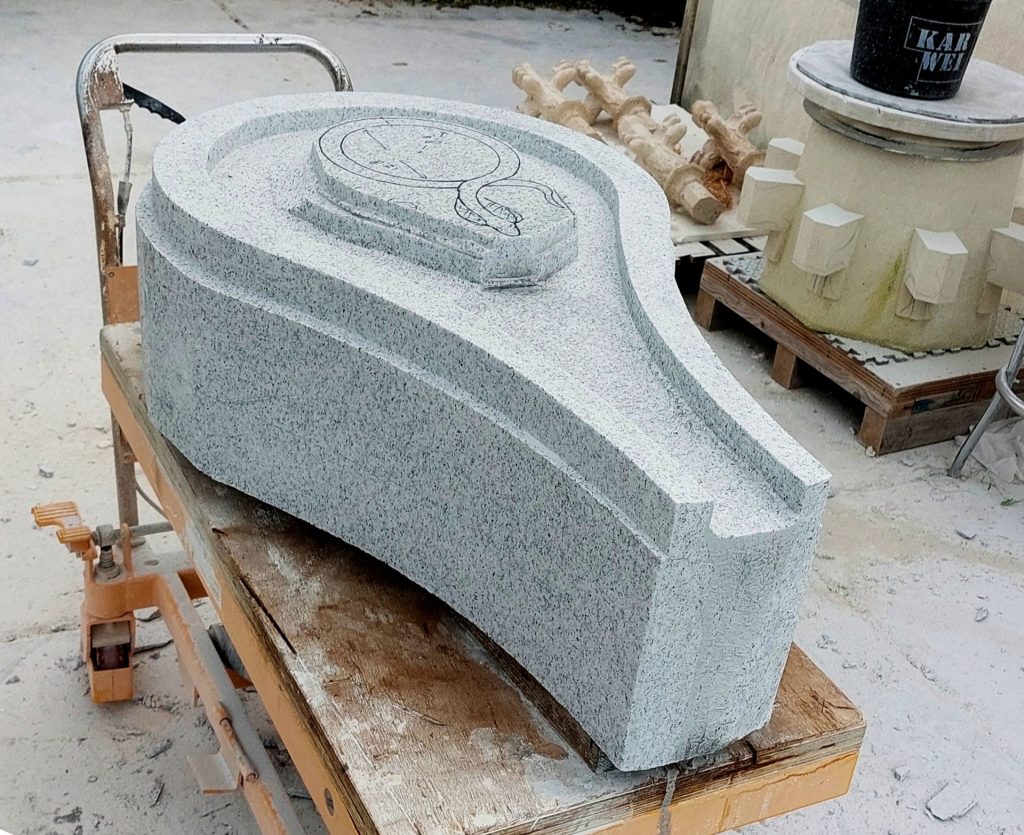
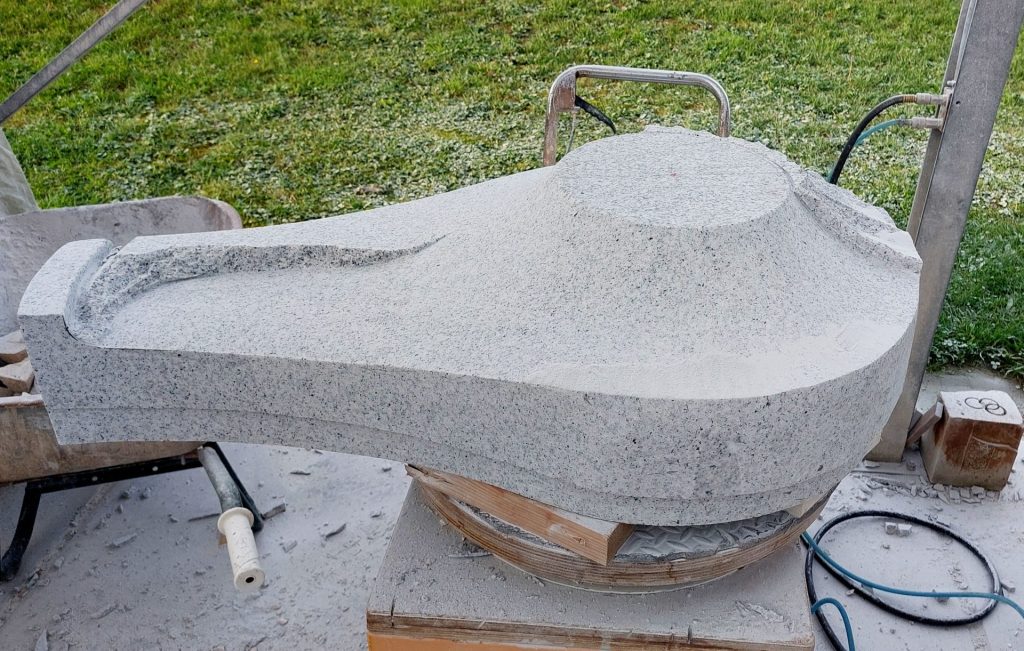
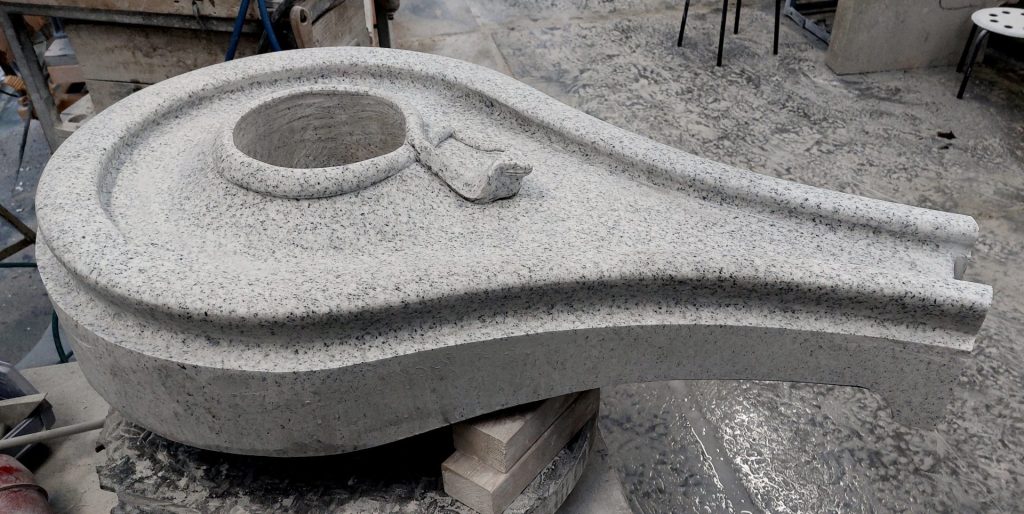
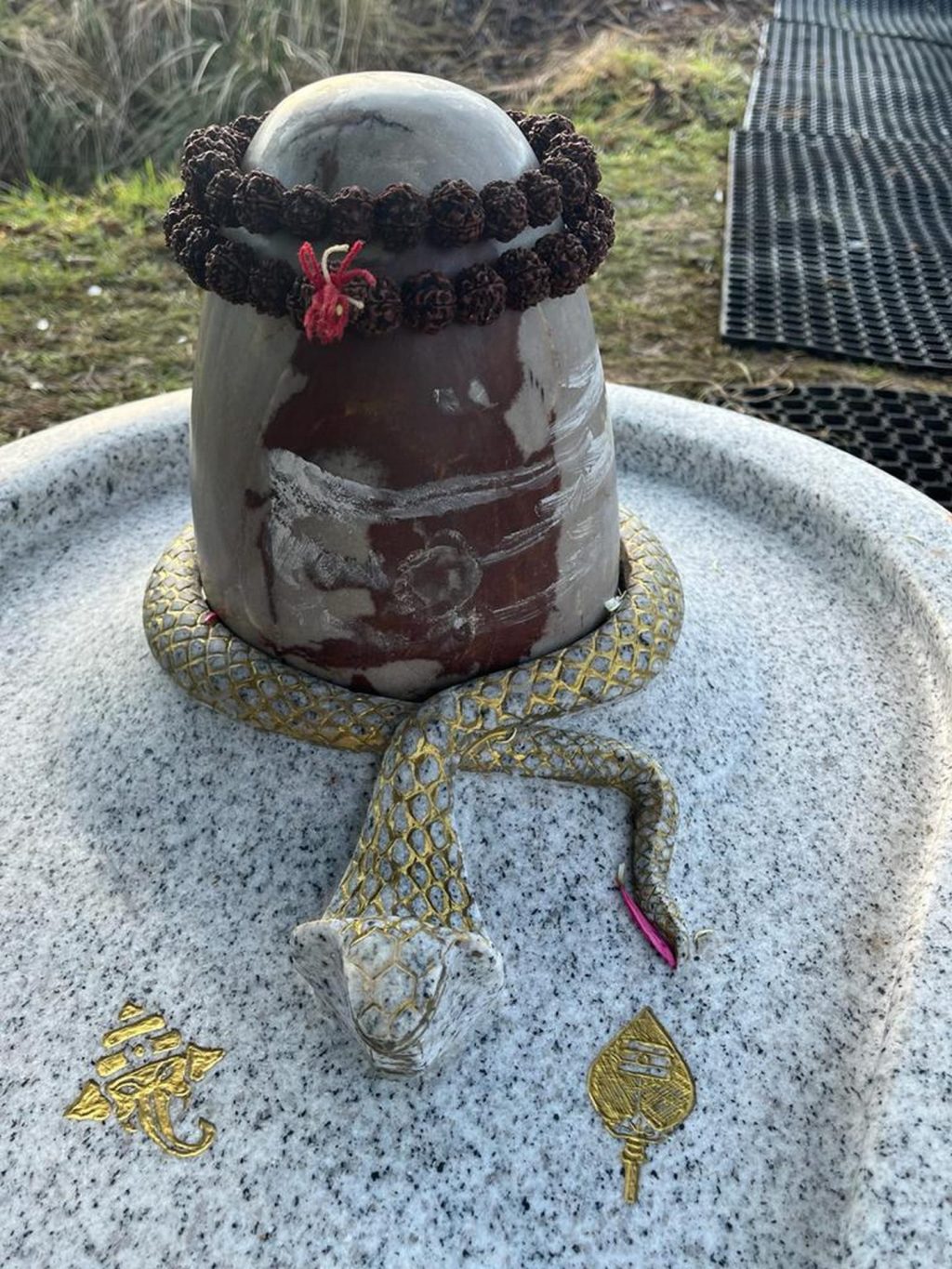
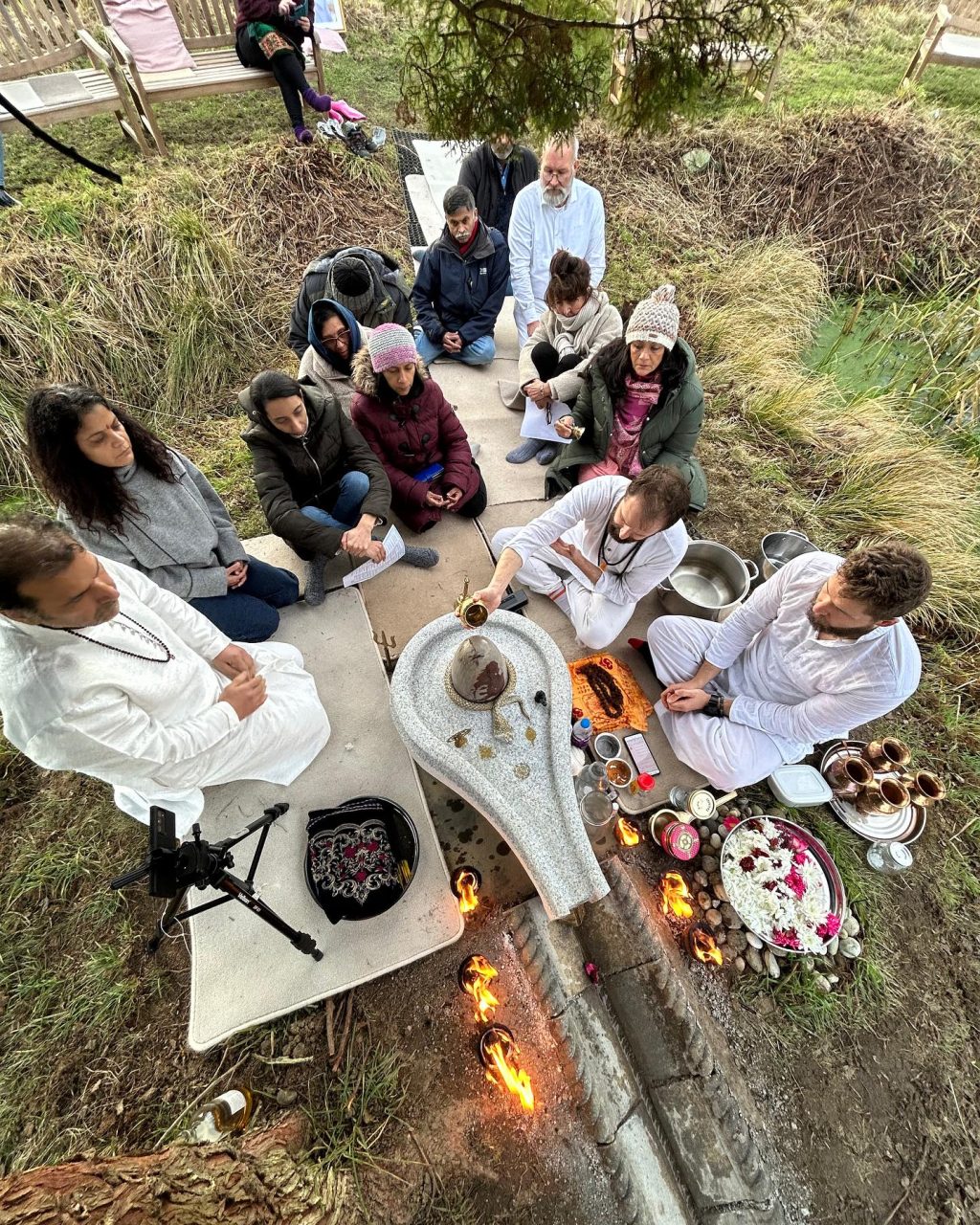
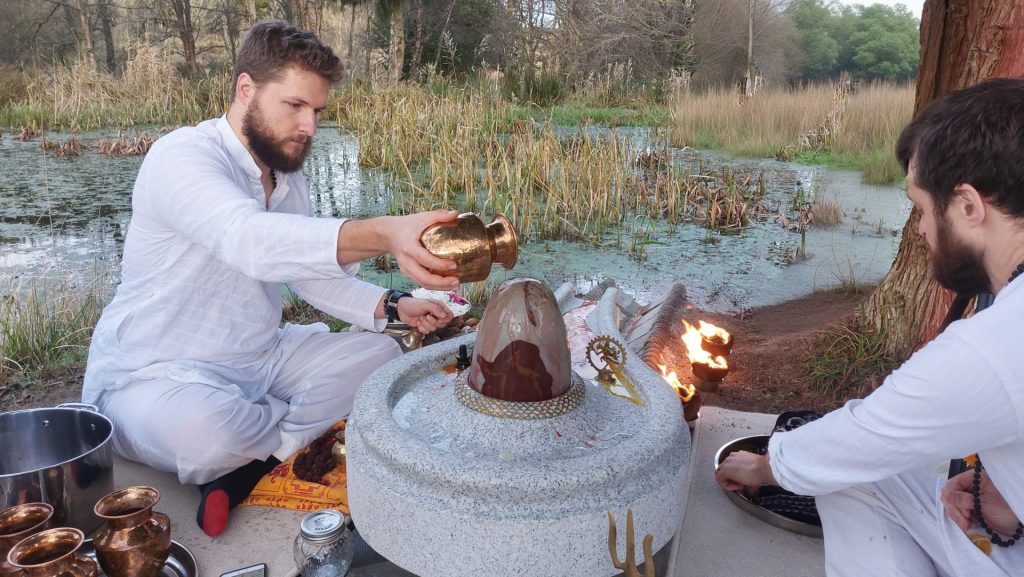
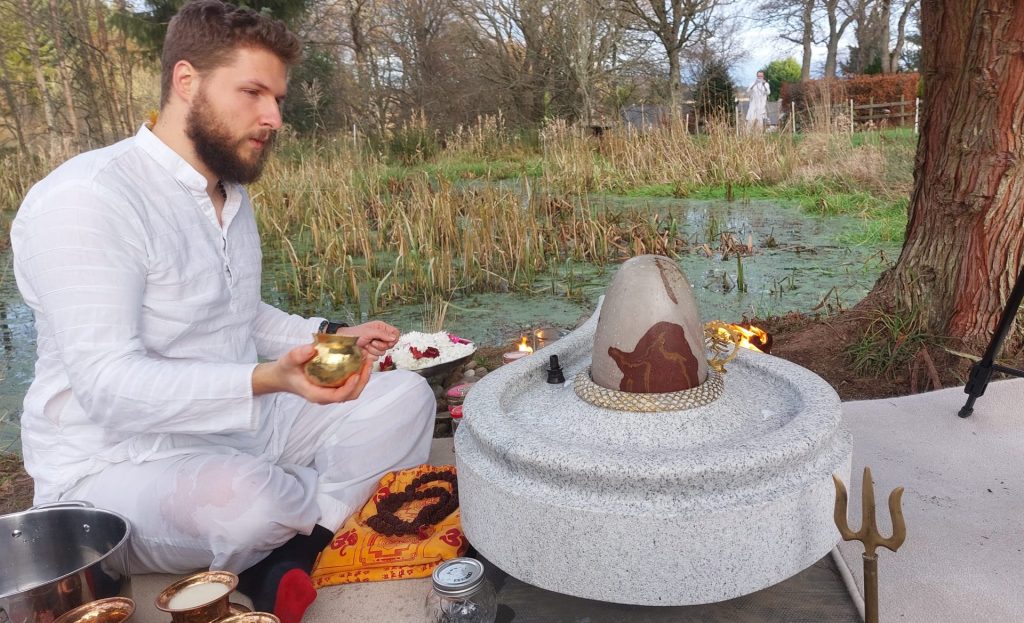
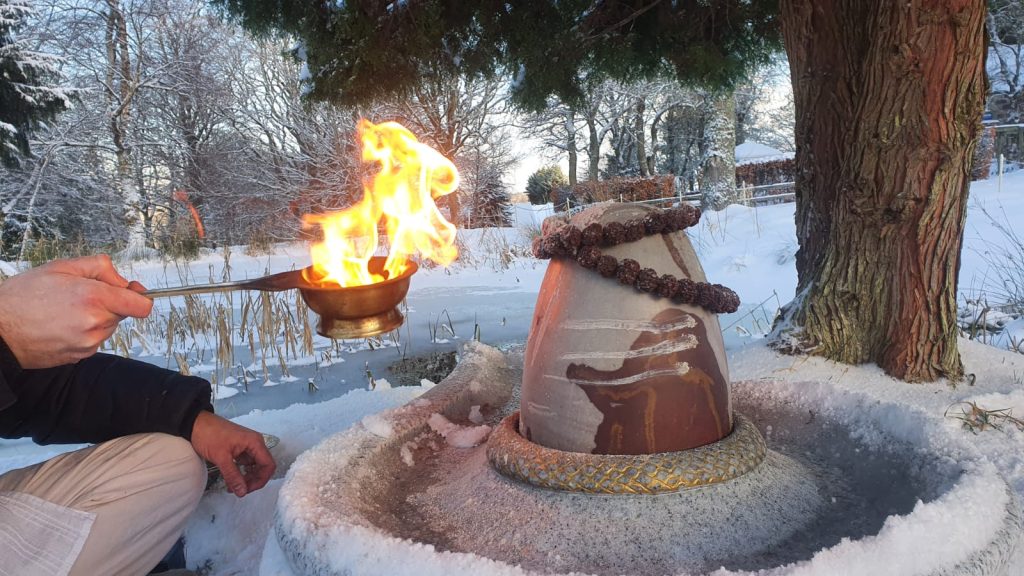
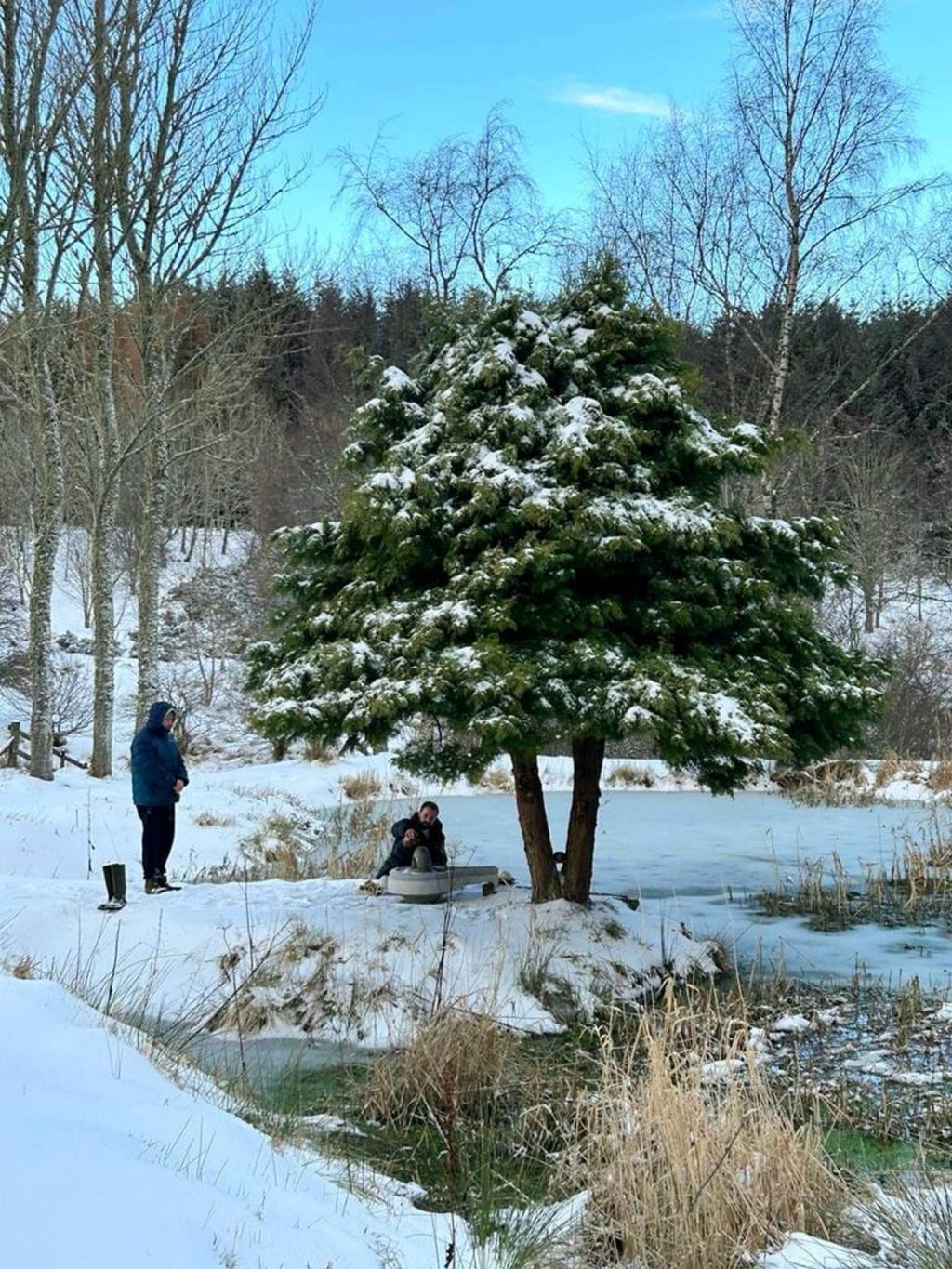
For the Mohanji Centre in Scotland I made a panipeetham out of white granite. They already had a large Shivalingam there, and because it was light in color, the Yoni also had to be white. But marble in that climate didn't seem like a good idea to me. There was a time when I carved in granite often, but that was quite a while ago. That's why it had slipped my mind that you can split granite just fine: if you make a cut with an angle grinder, then by inserting a number of narrow chisels into that saw cut you can easily remove a big chunk. Granite breaks without unpredictable bends or leaps and bounds, because it has no layer direction.
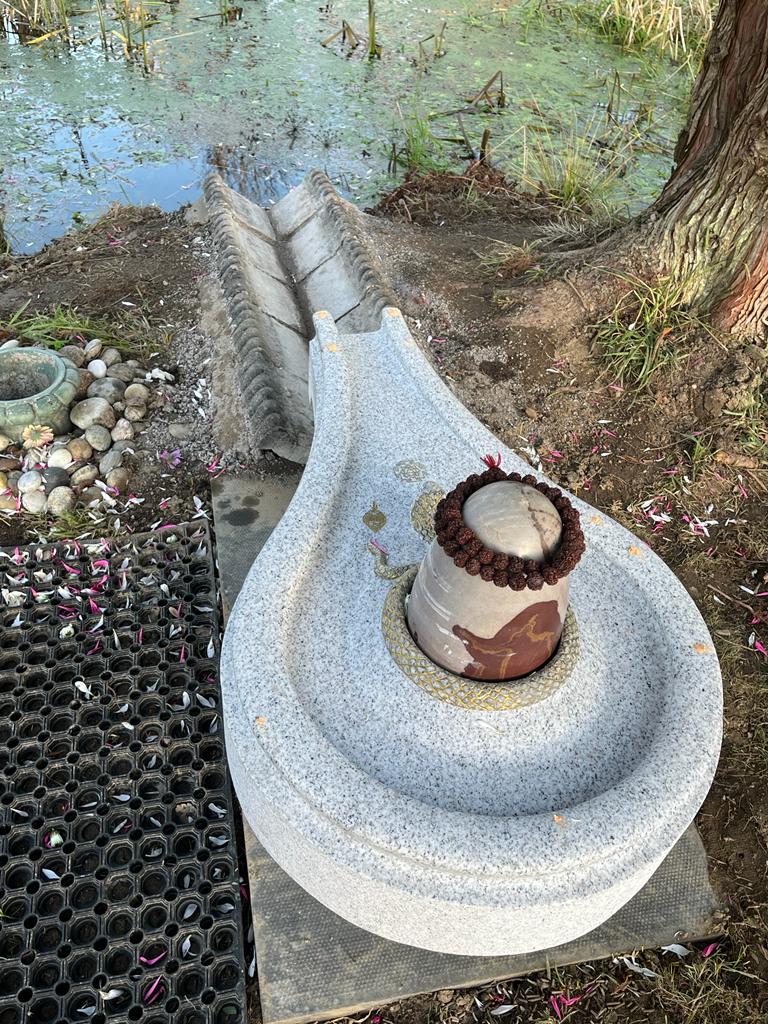
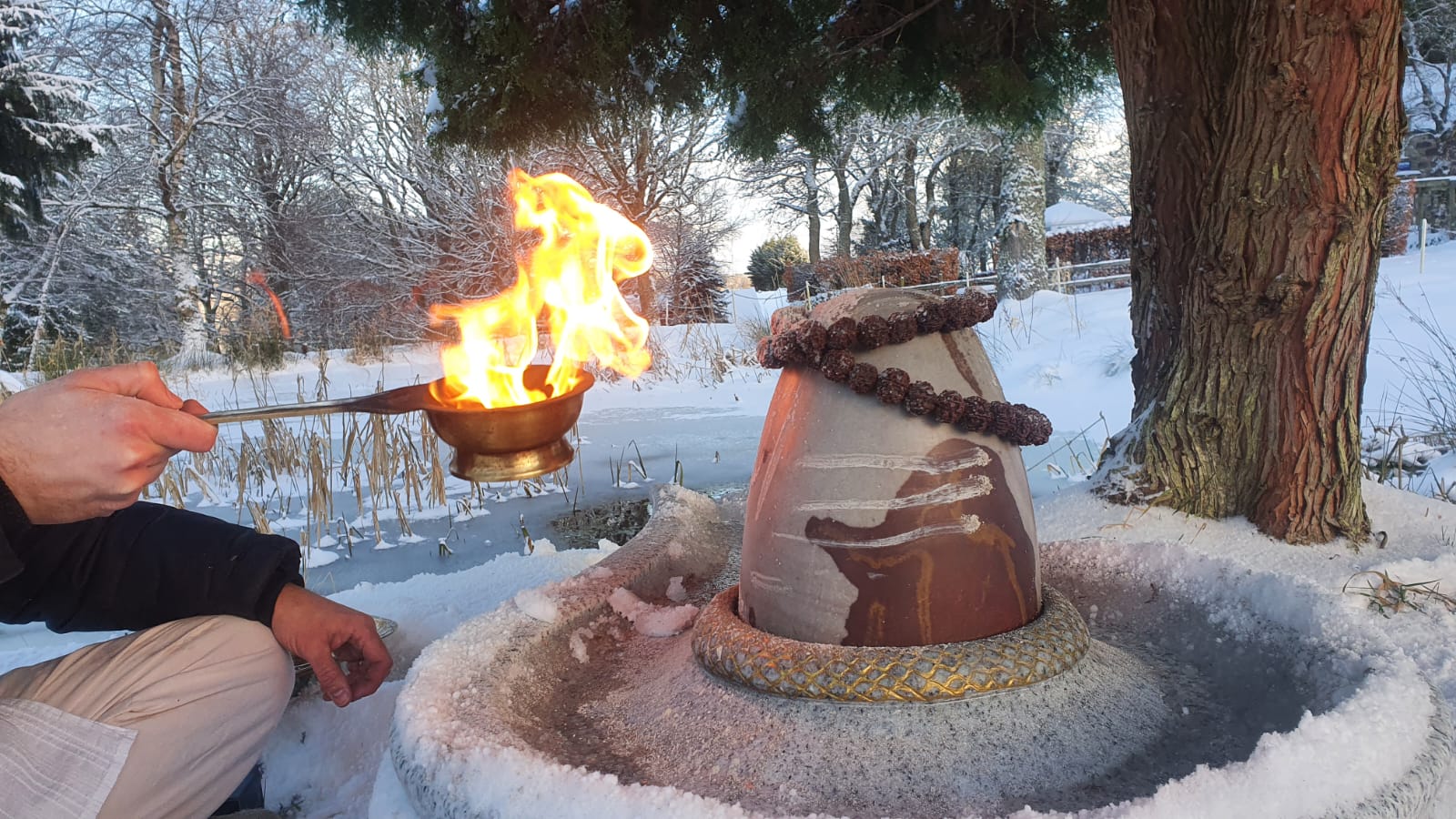
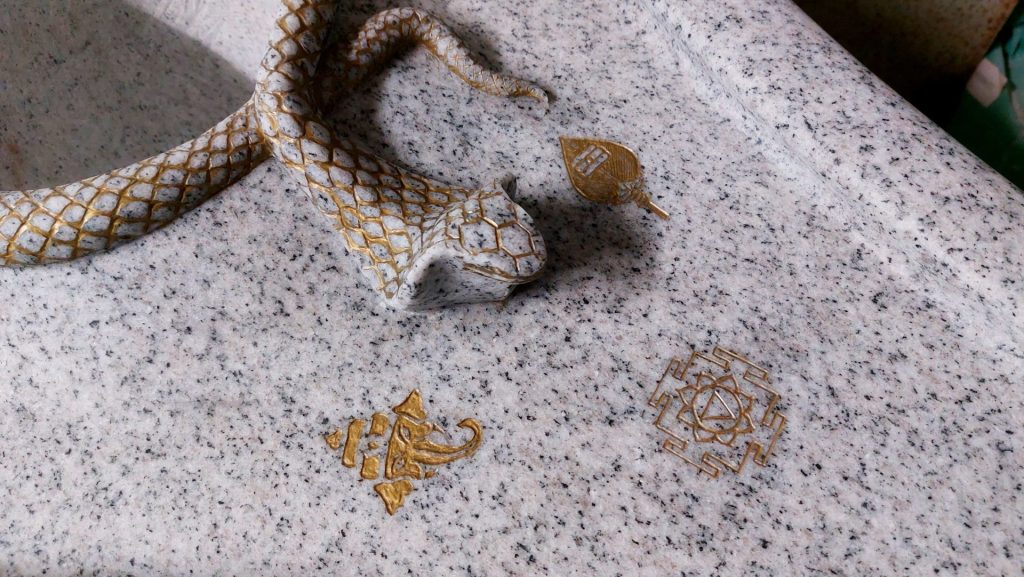
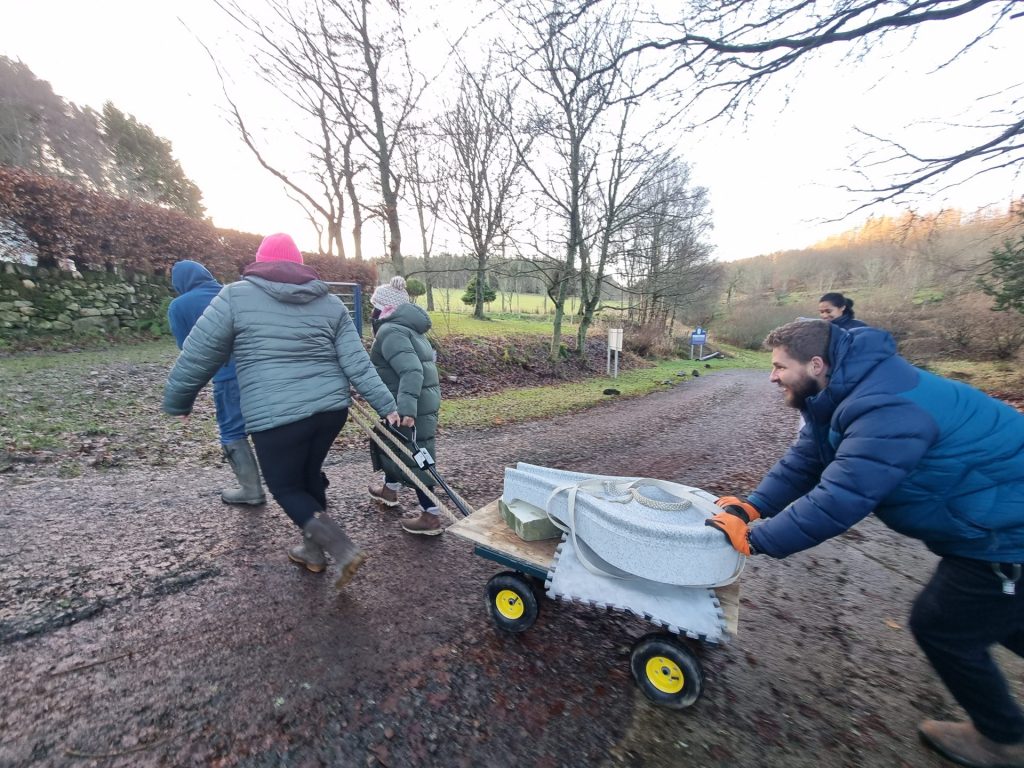
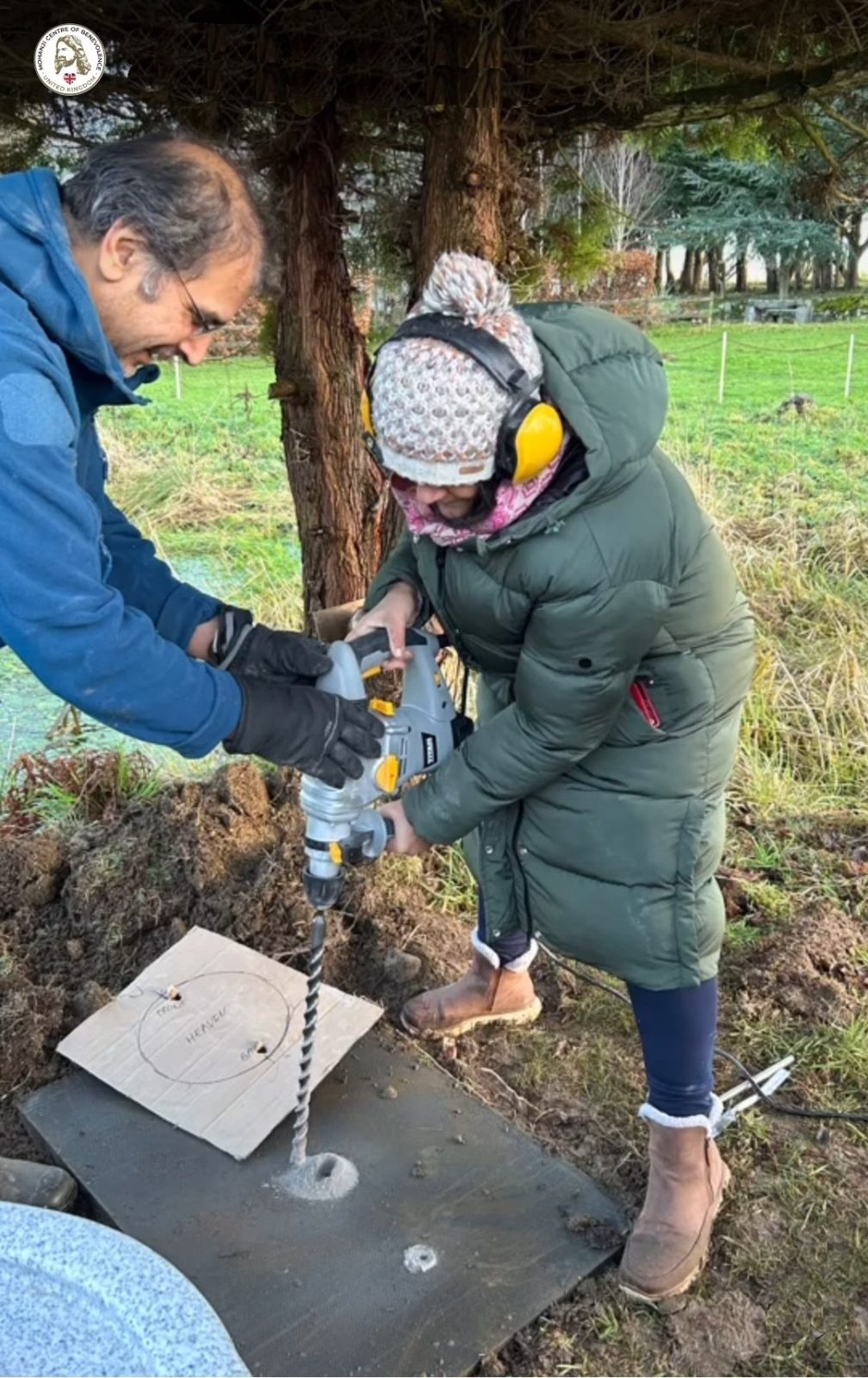
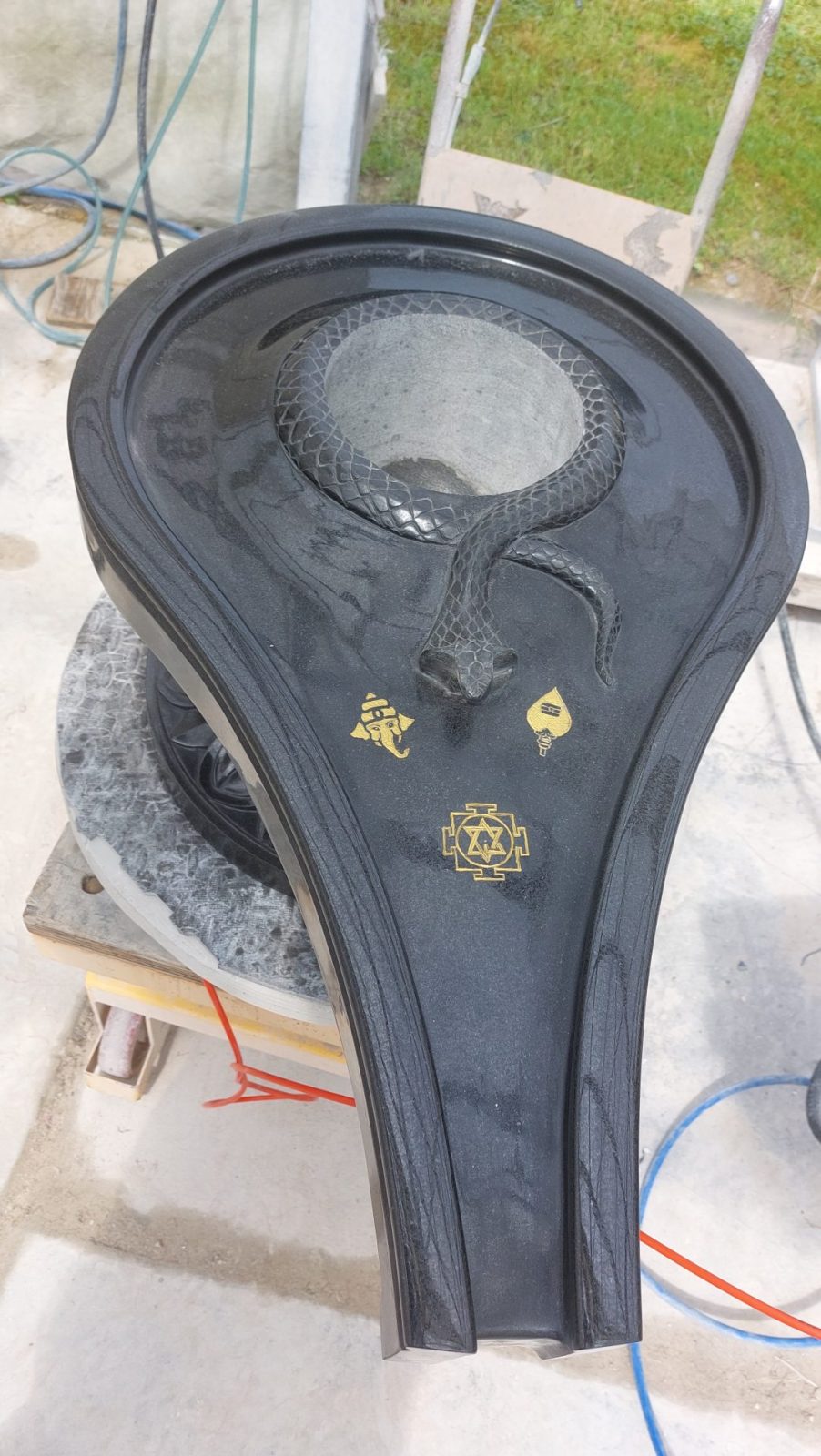
This Yoni has a simple bush-hammered exterior on the sides, But on top and bottom it is smooth. A Cobra has been draped around the Shivalingam and three symbols have been engraved in the upper surface, of Tripura Sundari, Ganesha and Subramaniam. These were painted in with gold paint. I sent the whole thing to Scotland and flew after it myself to install it in December of 2023.
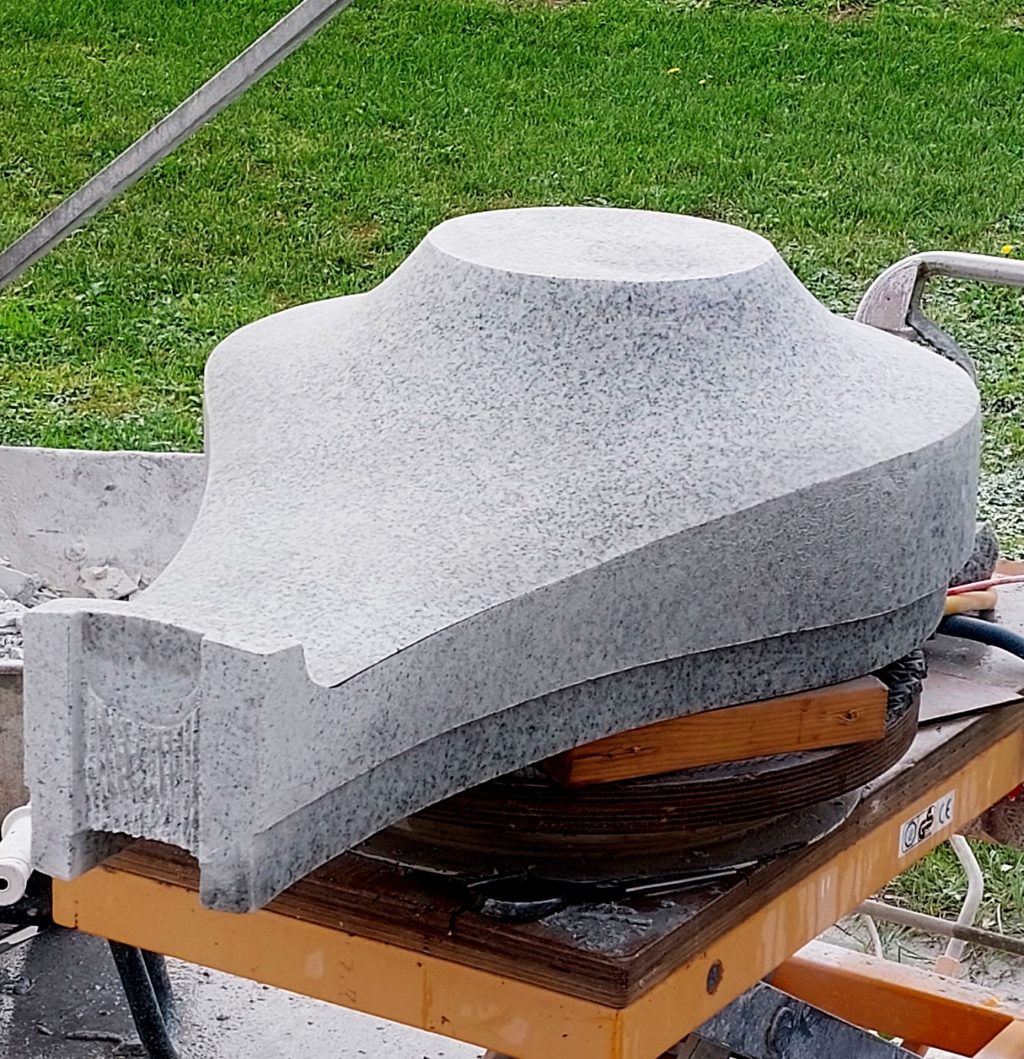
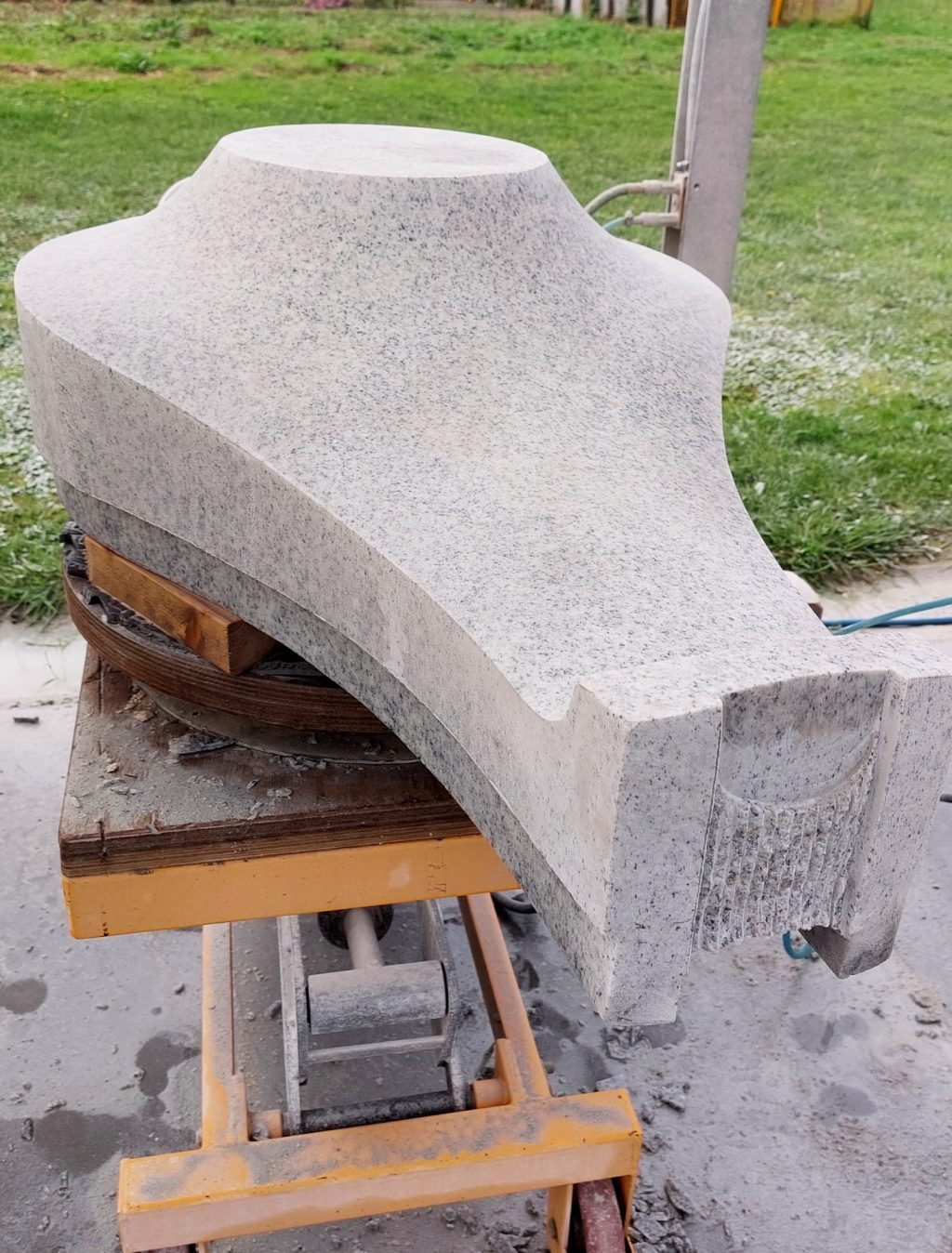
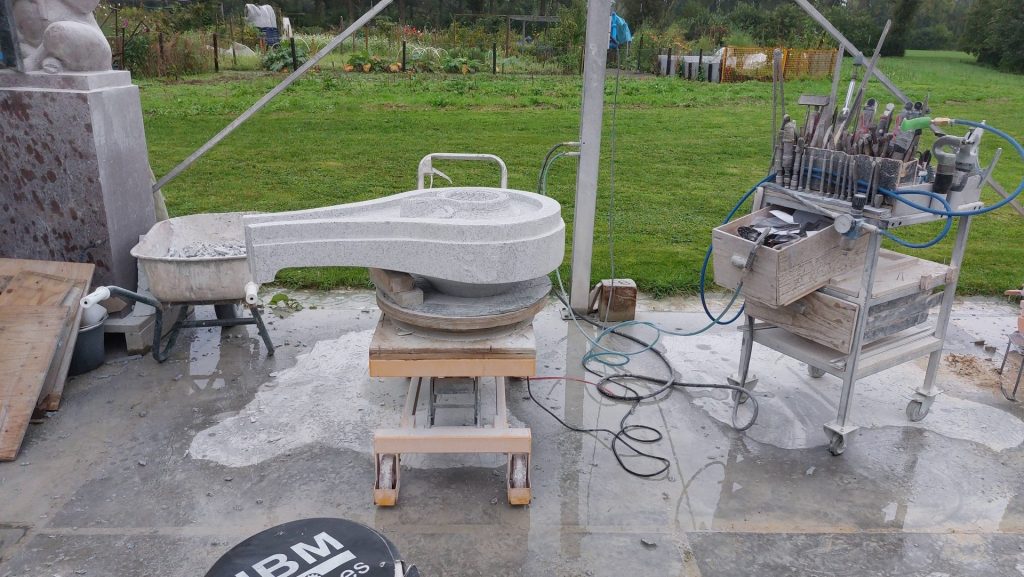
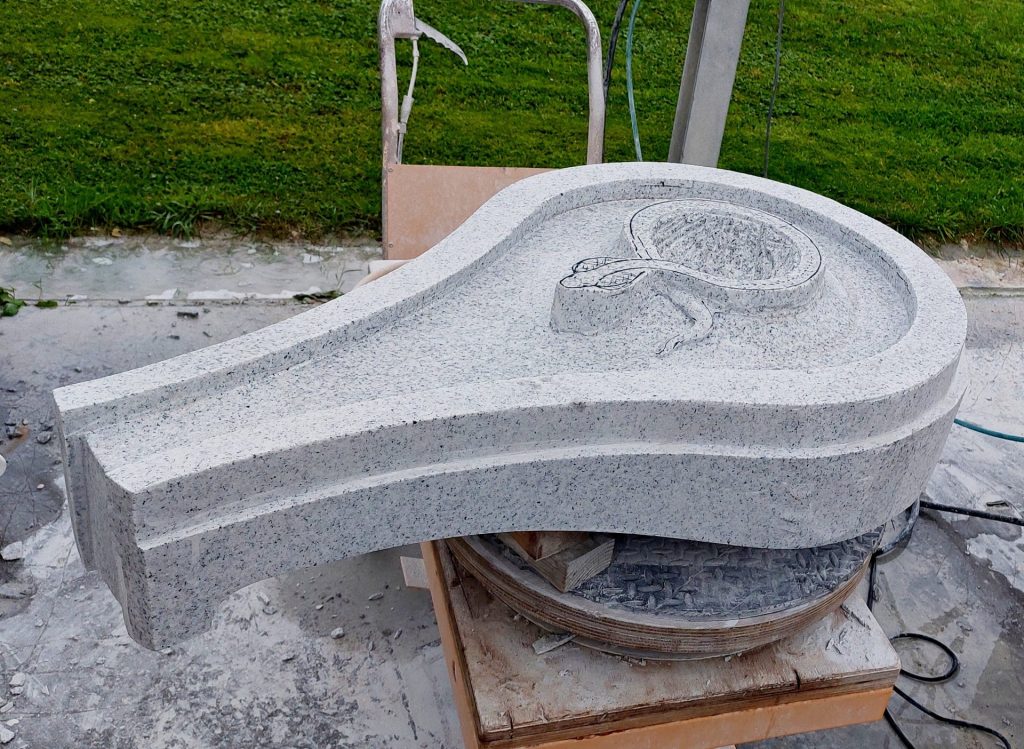
A black Shivalingam in Slovenia

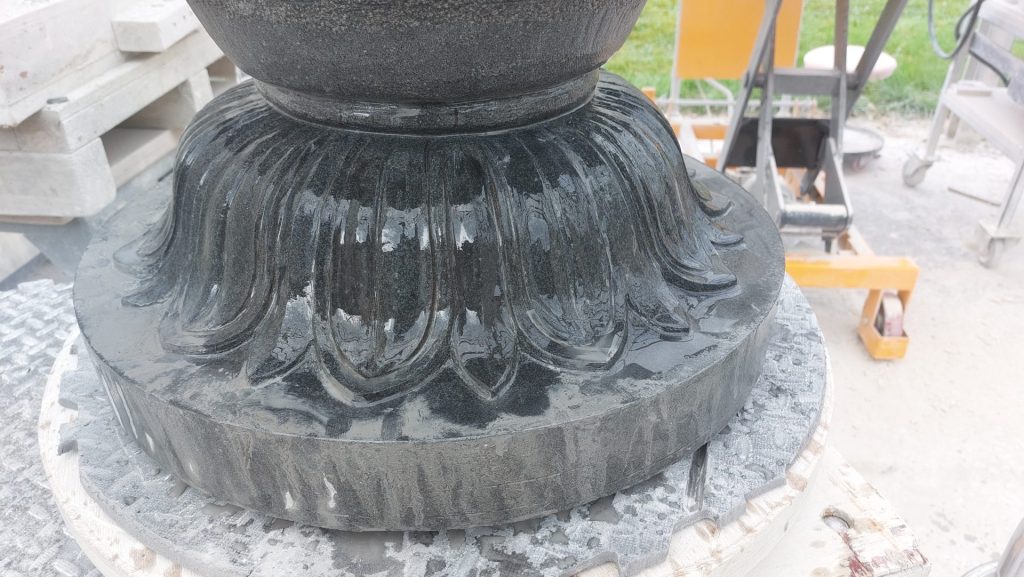
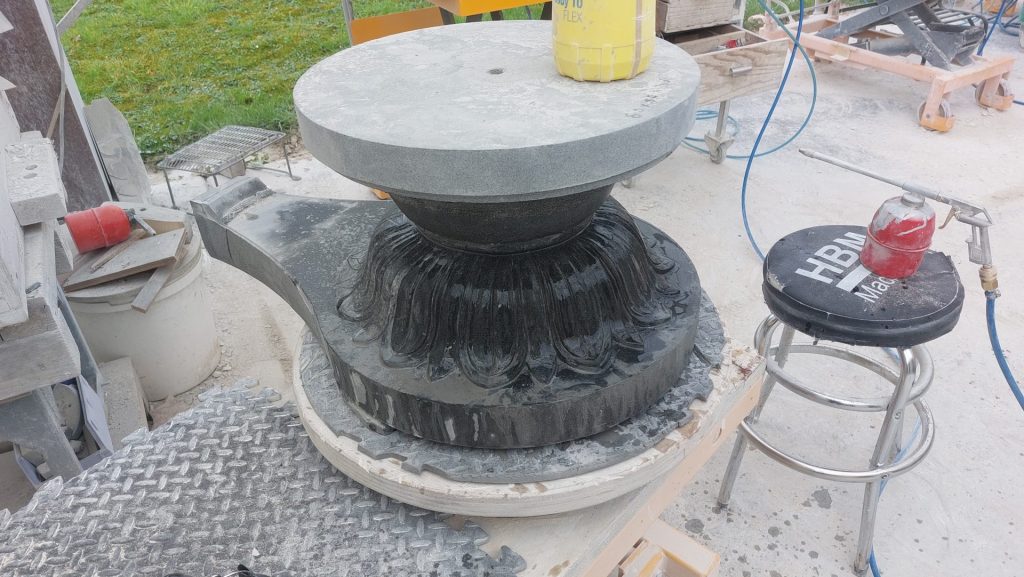
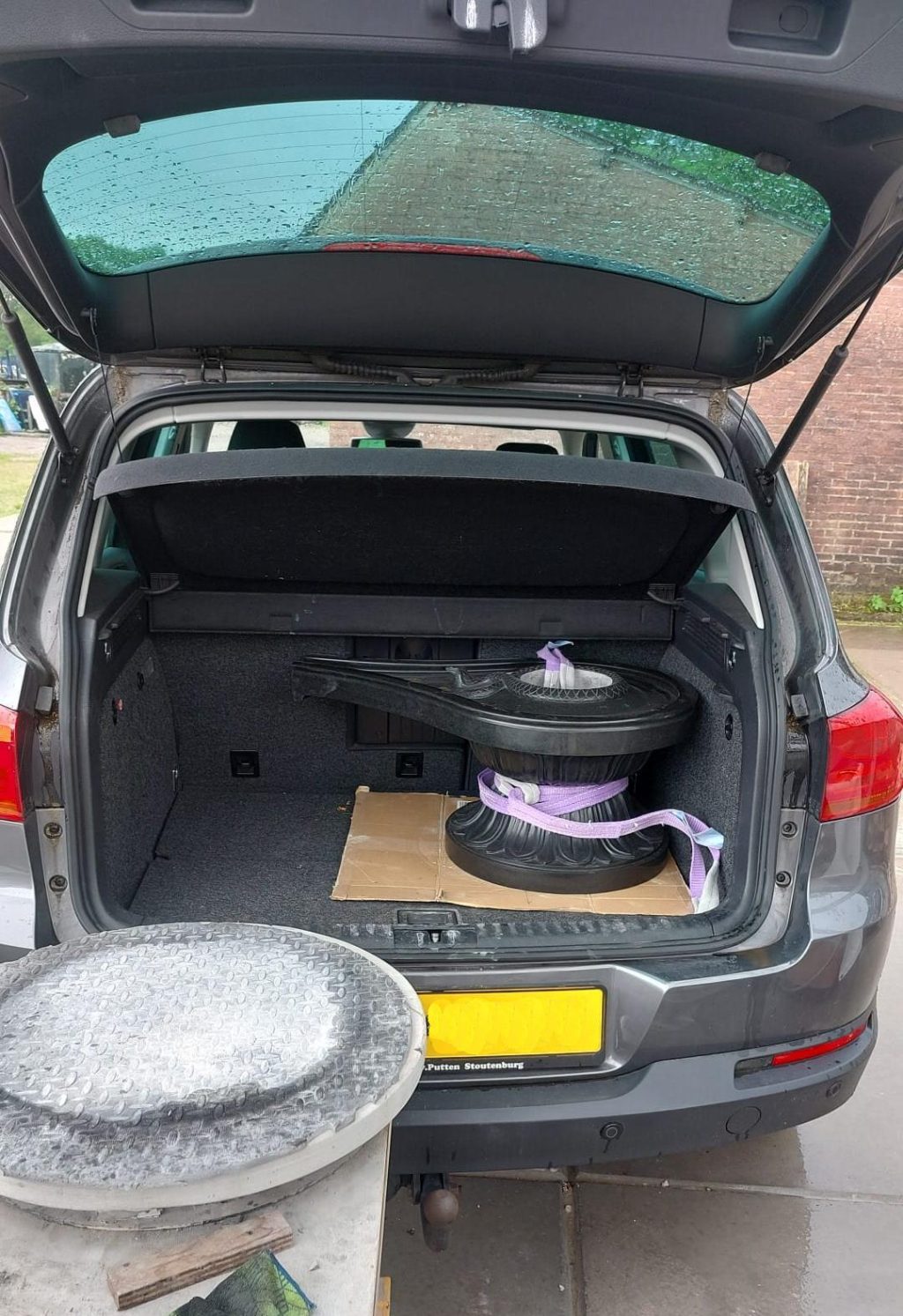
Another Shivalingam was intended for the Mohanji Centre in Slovenia. It has the same dimensions as the Shivalingam inside the temple in Onderdijk. There are 11 wide lotus leaves on the foot of the Yoni and 11 narrow ones, and the same number on the upper part. The whole is finished 1 block of black granite , and its lingam was carved out of the block that I had cut away from under the spout.
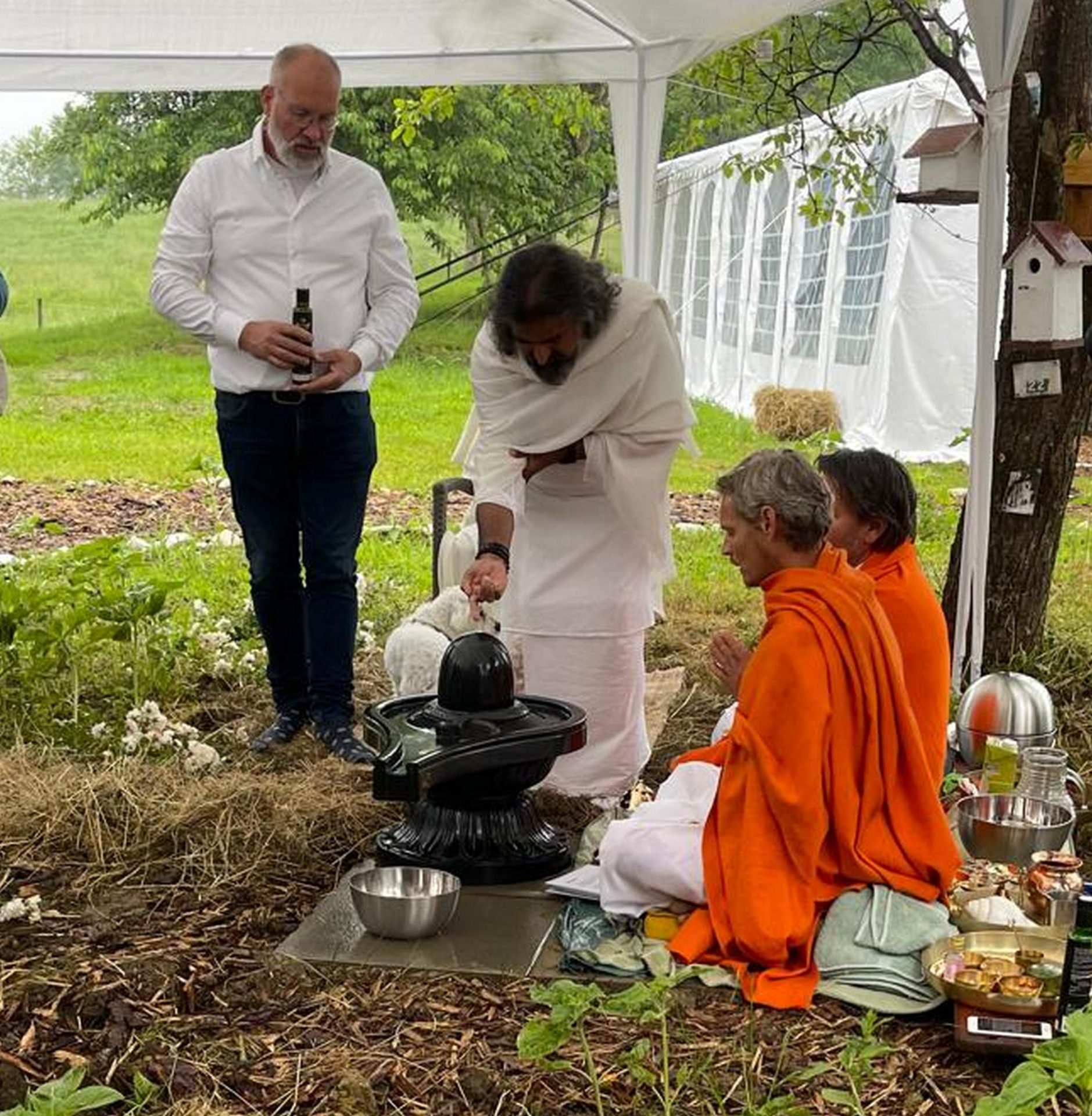
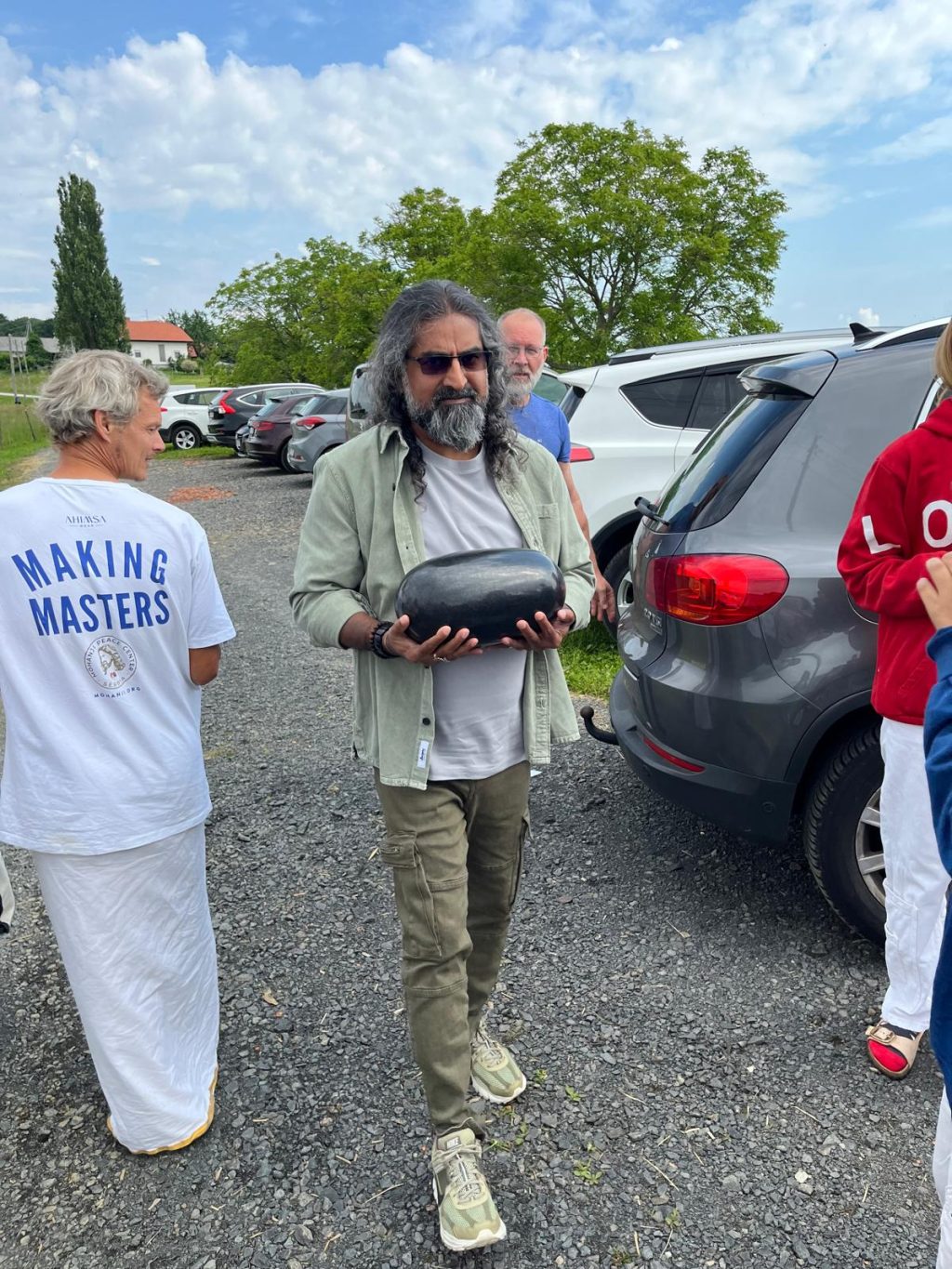
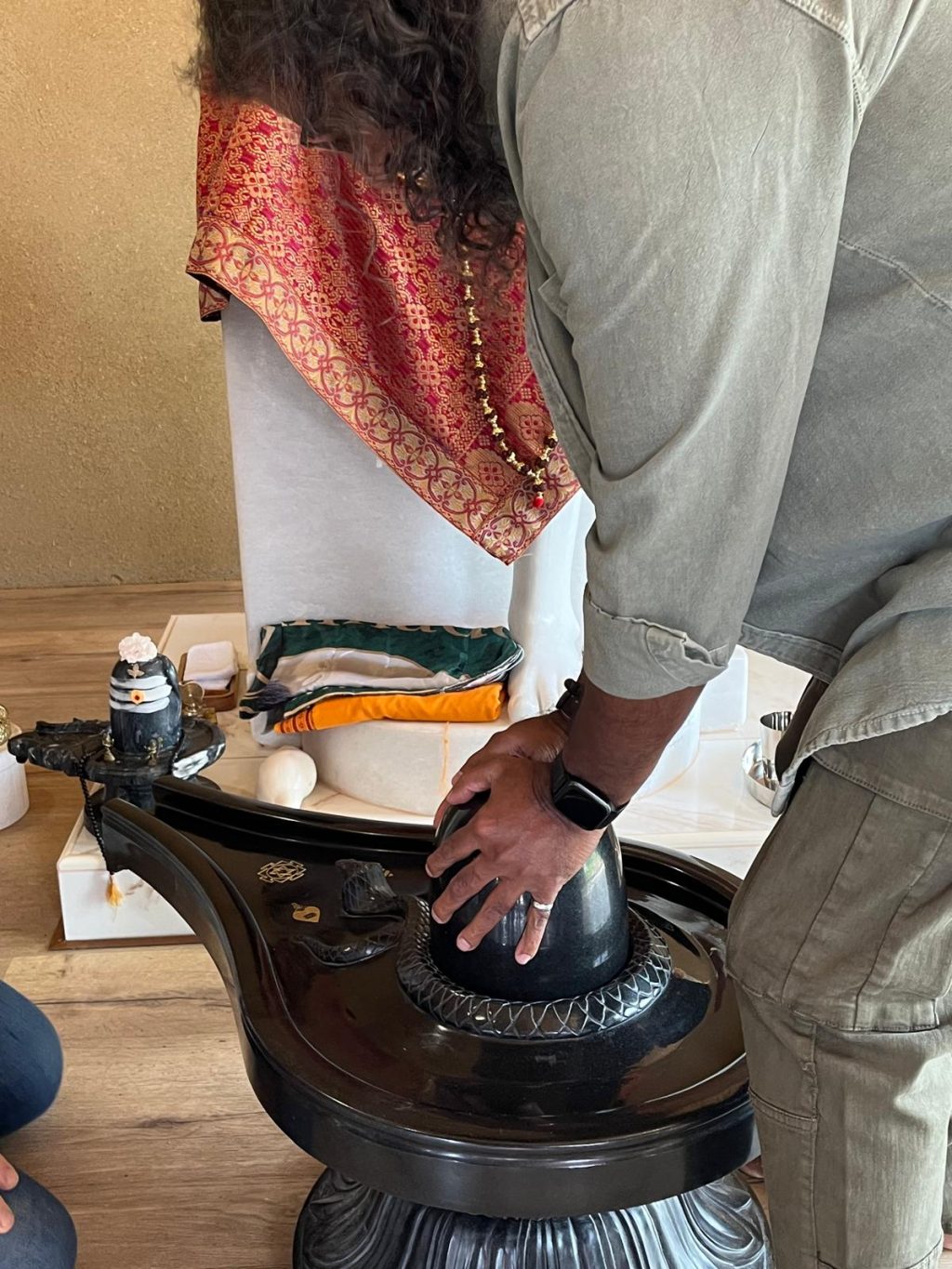
On 31 May 2024 this Shivalingam was installed and initiated by Mohanji. It was pouring cats and dogs that day, and Mohanji said about that: "When Shiva comes, then mother Ganga, the Ganges River, also comes with him". This Yoni also has a small Cobra draped around the lingam and three symbols on its upper surface, all according to instructions from Mohanji himself.
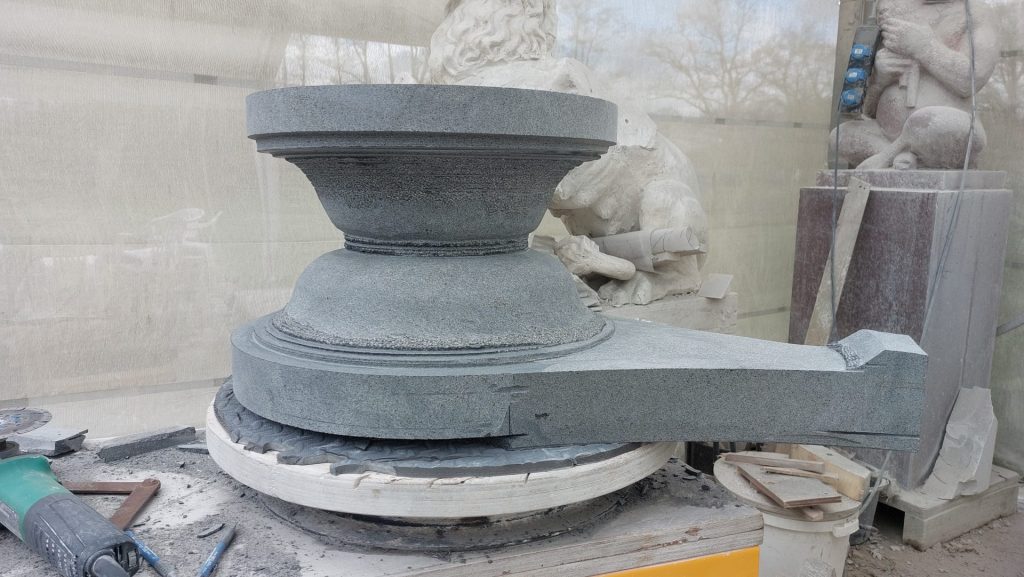
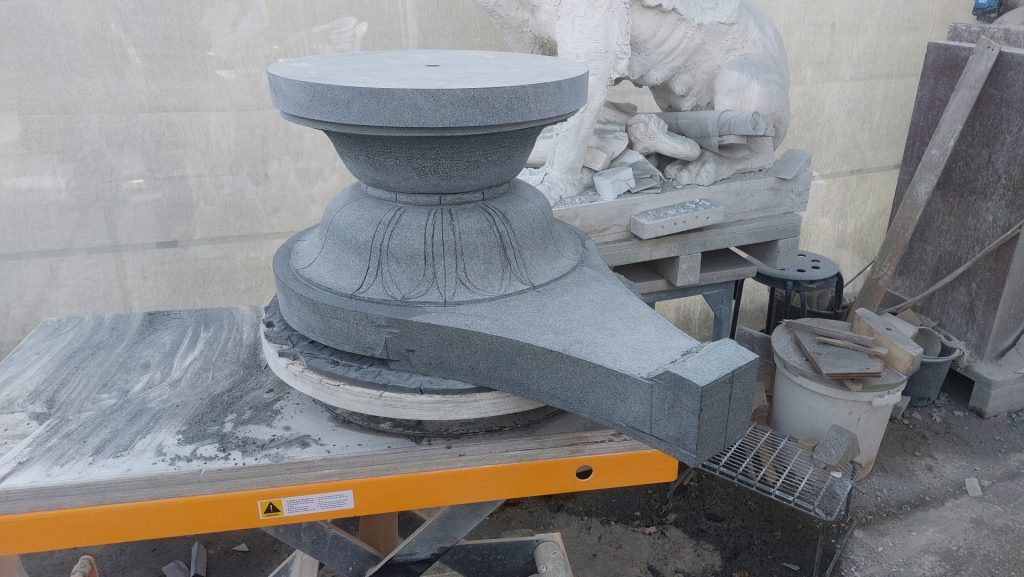
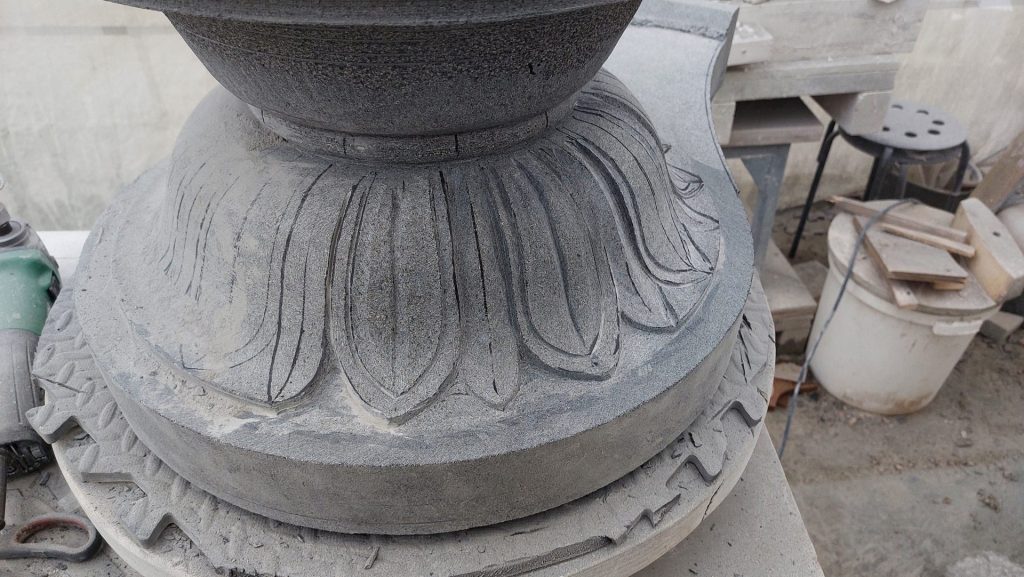
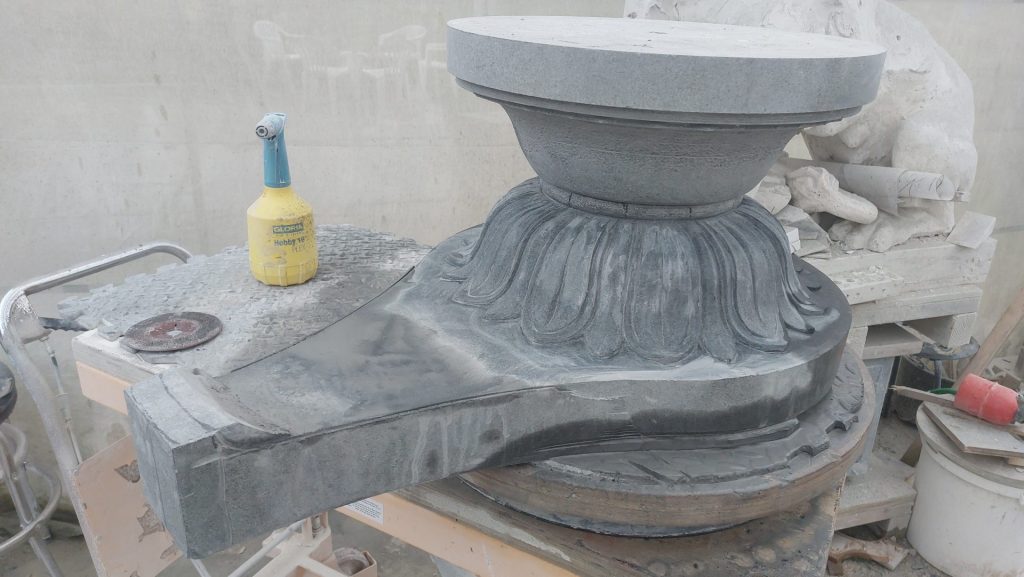
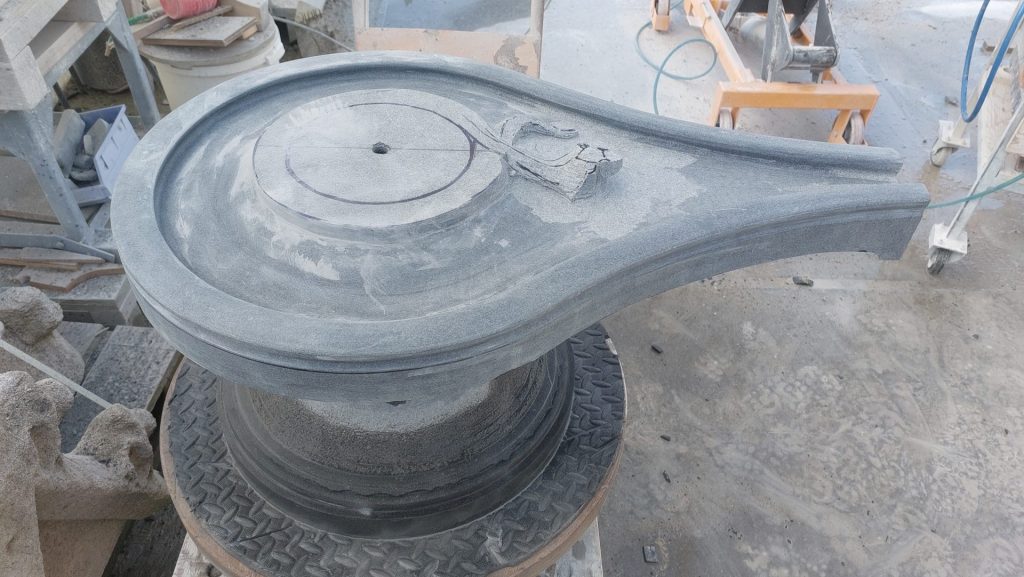
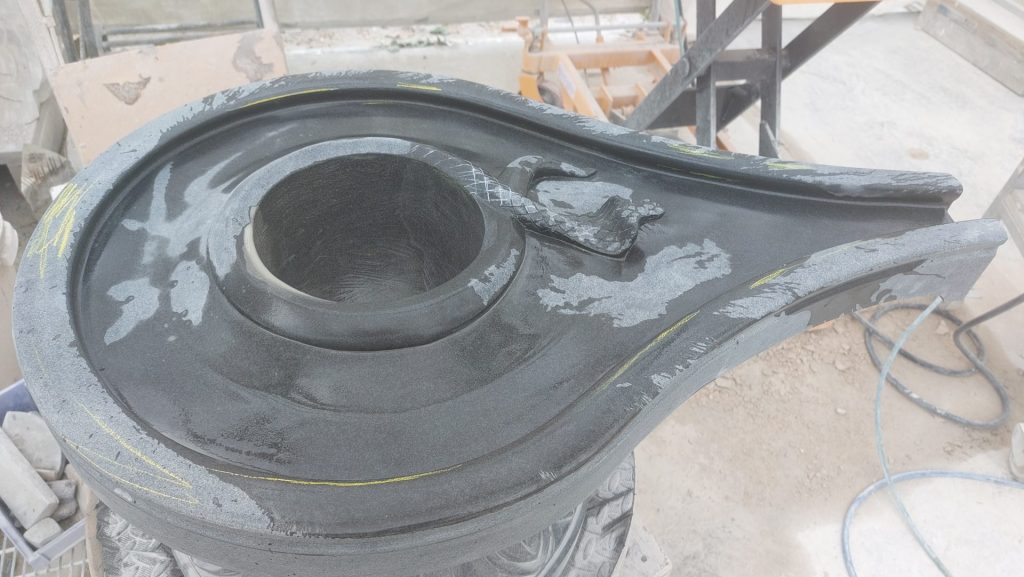
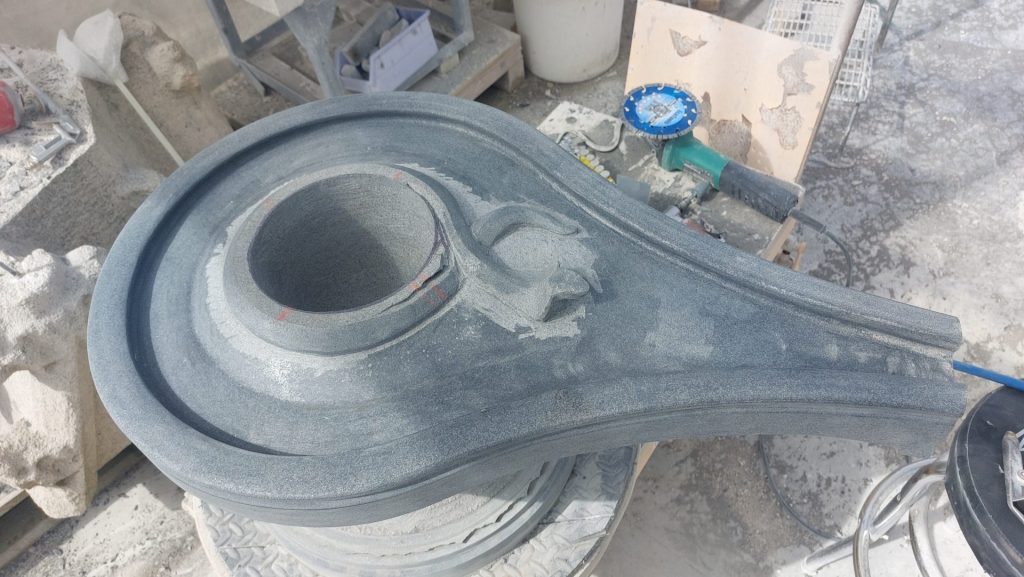
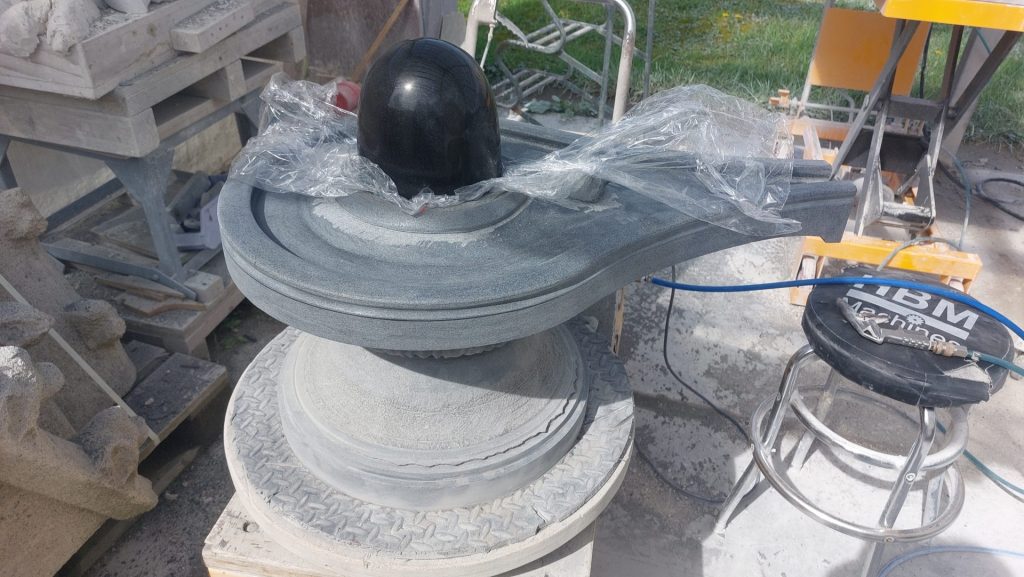
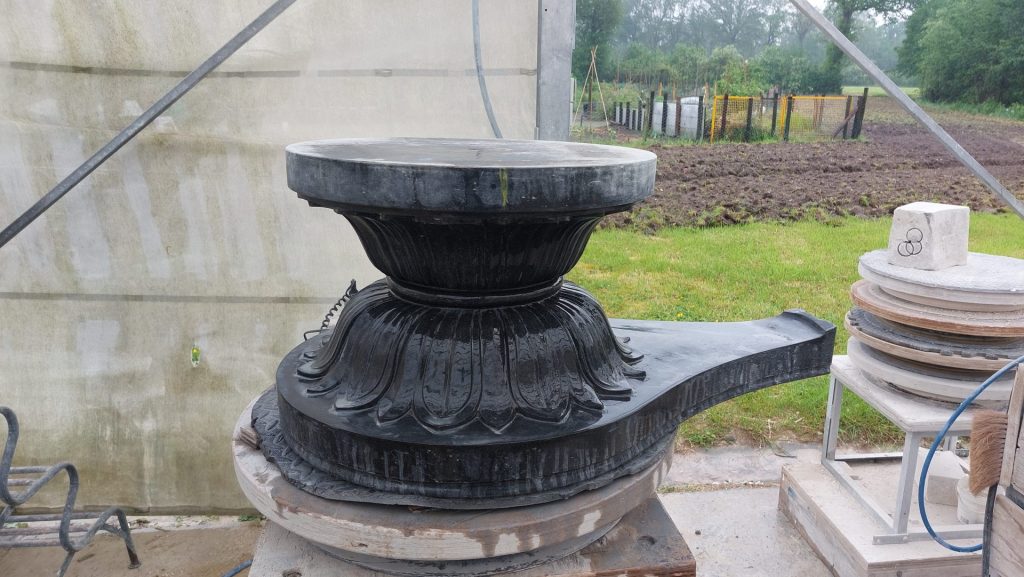
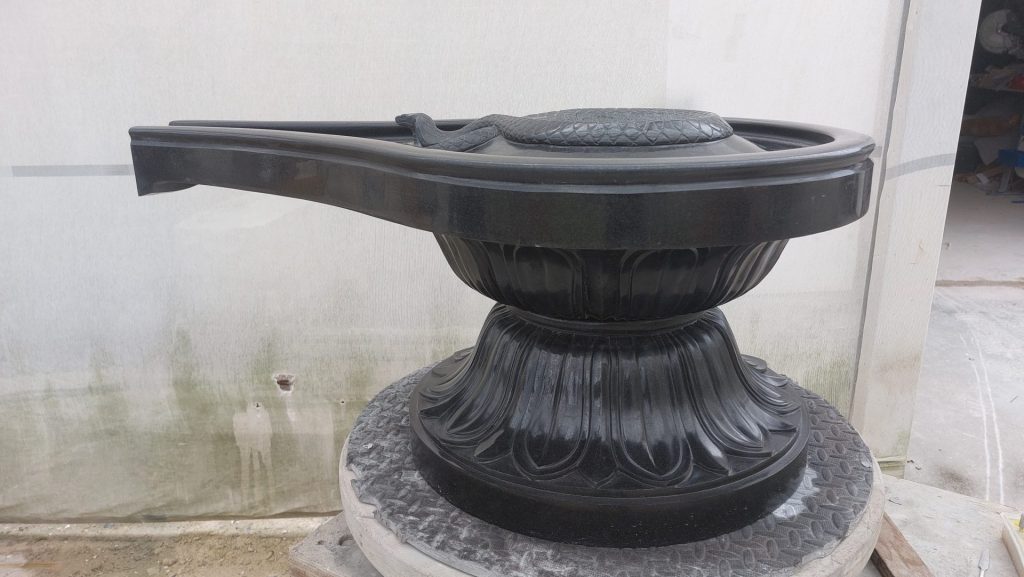
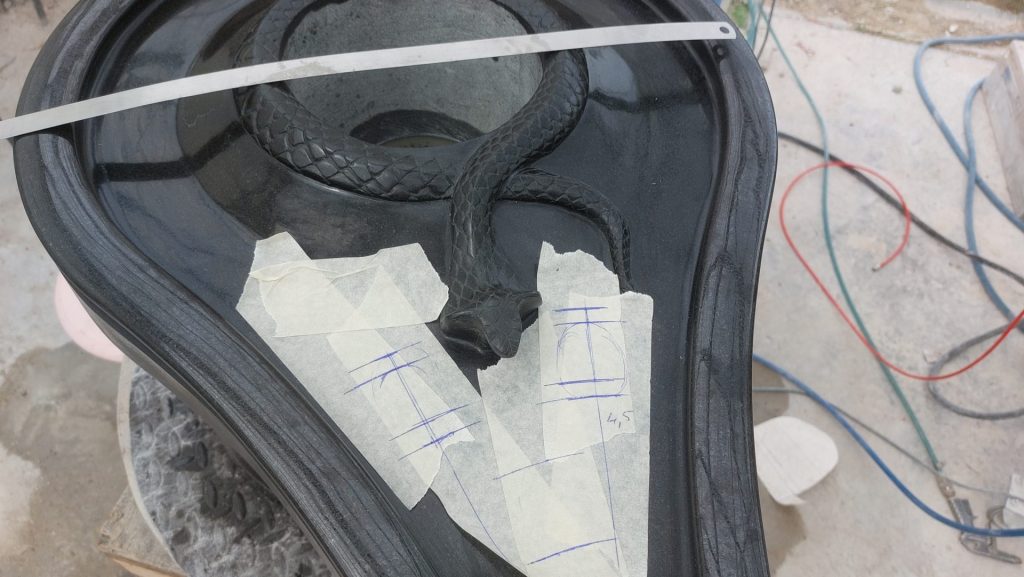
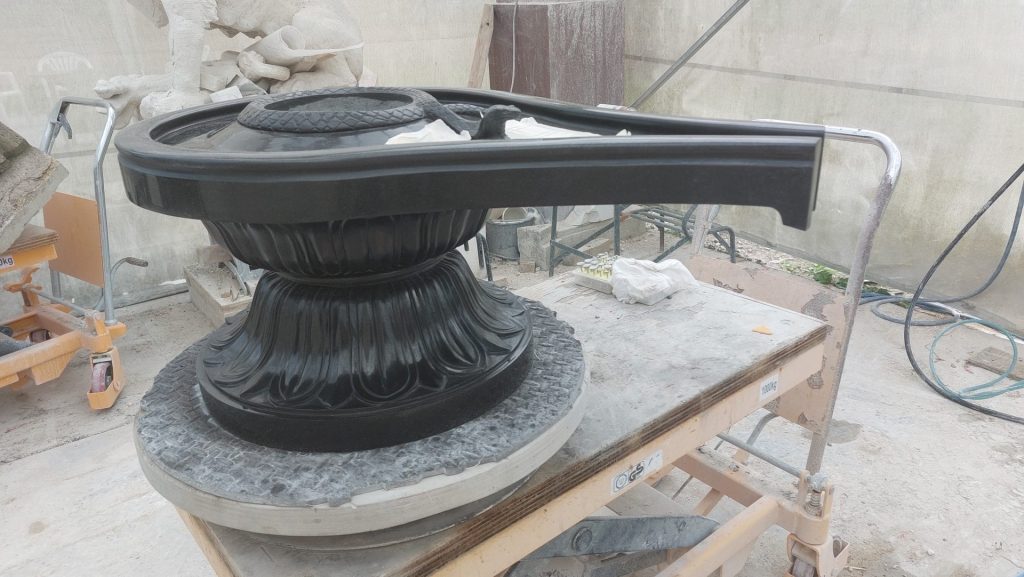
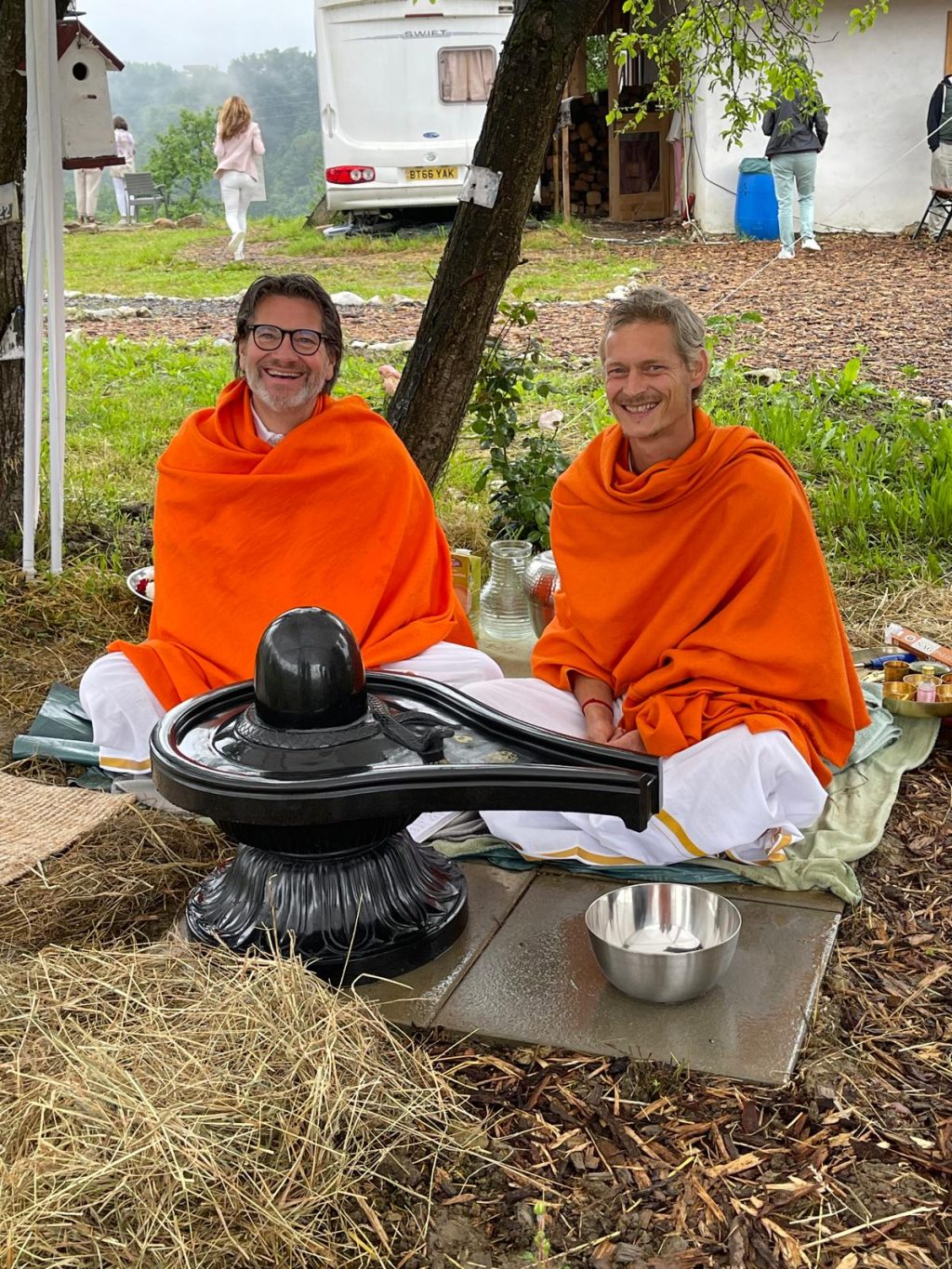
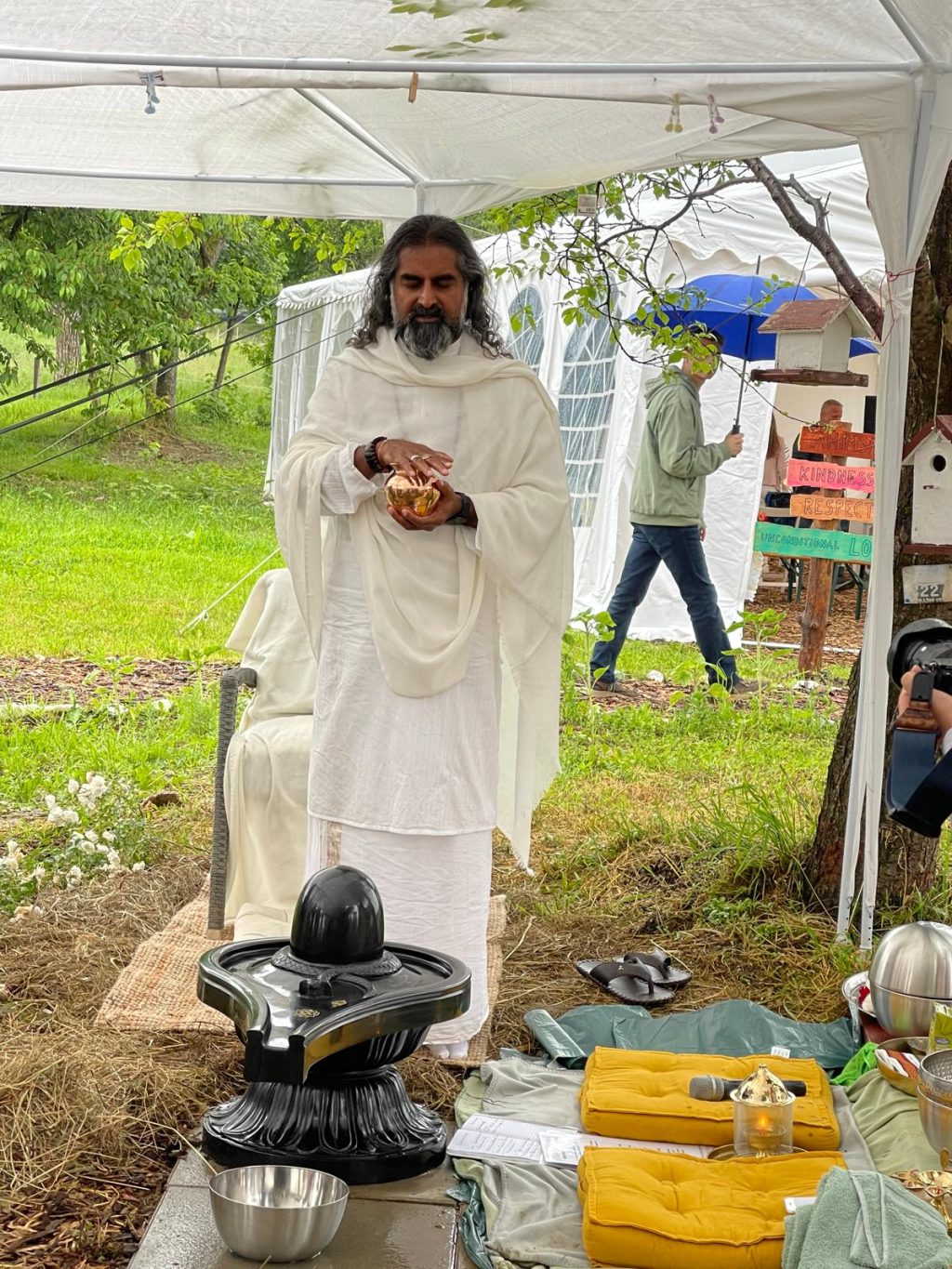
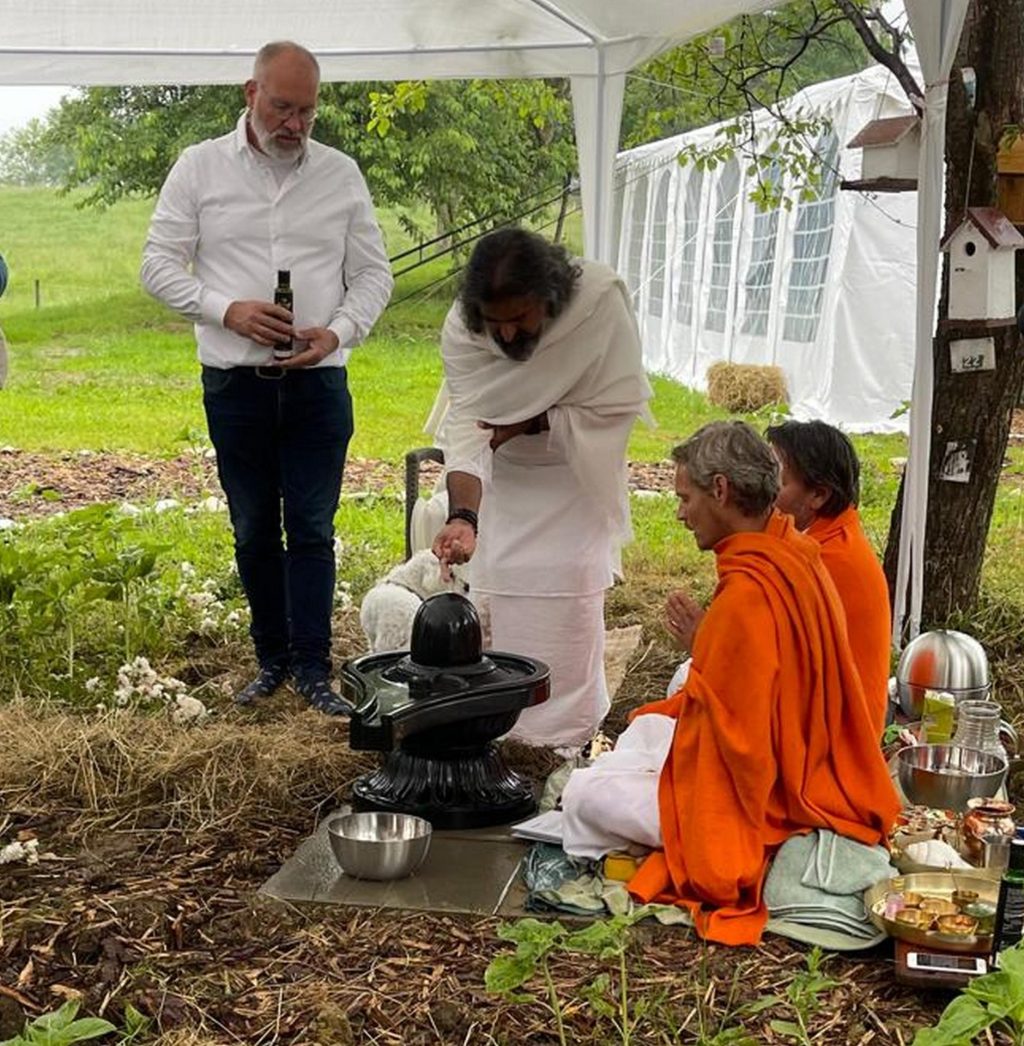
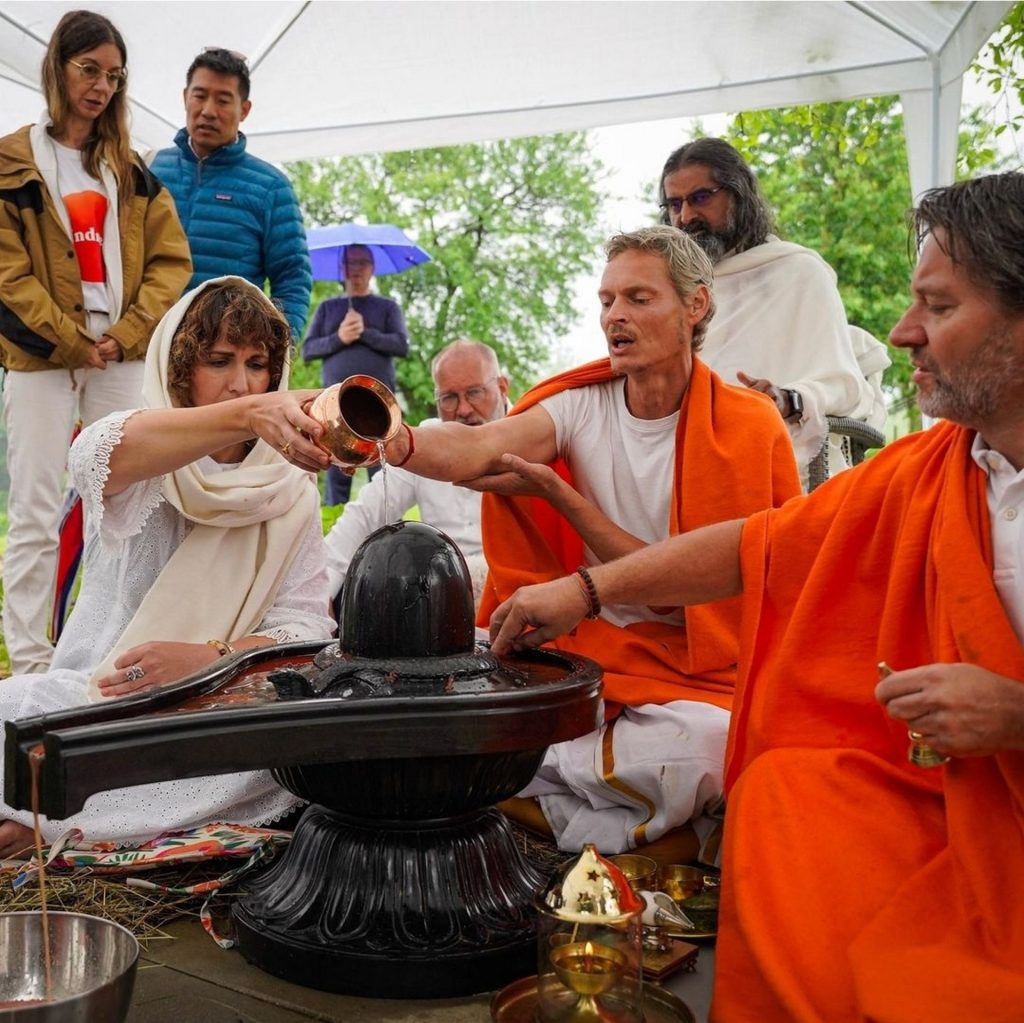
A very large Shivalingam for Croatia

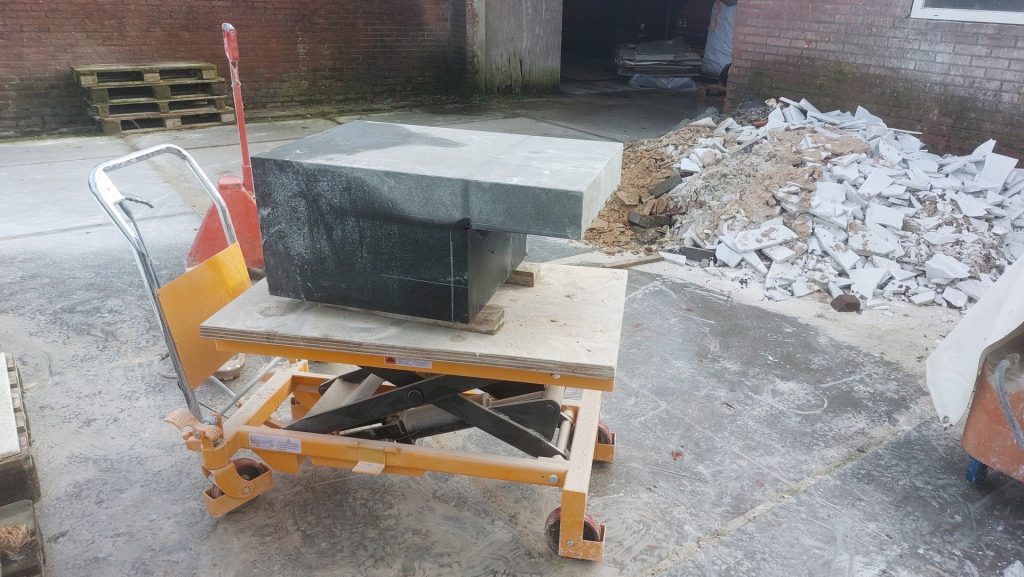
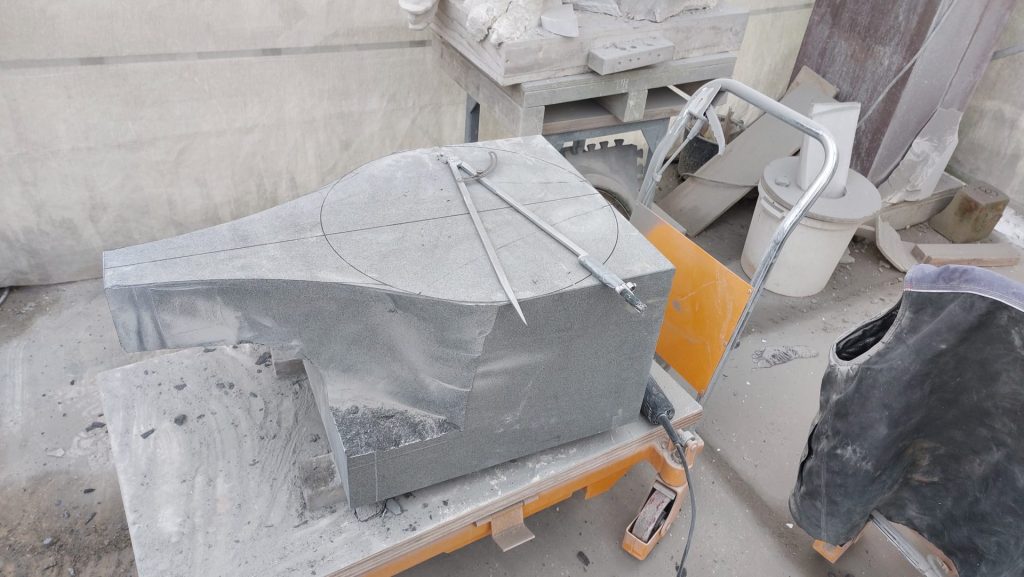
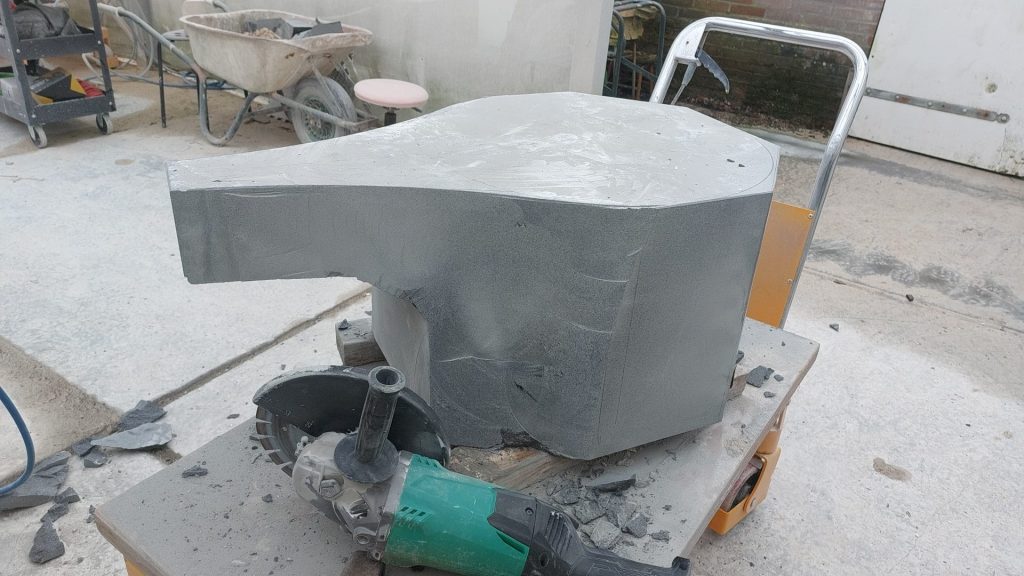
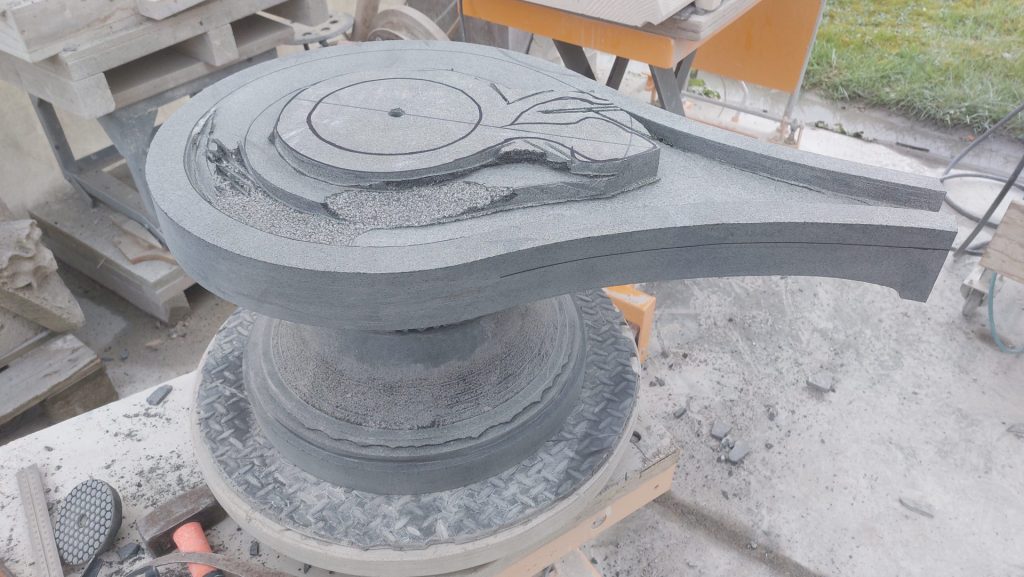
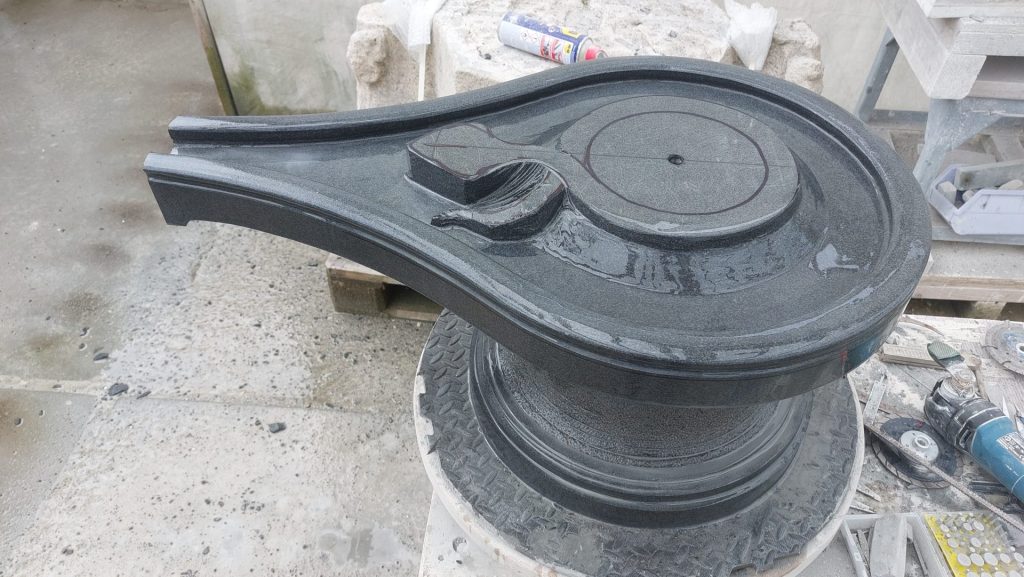
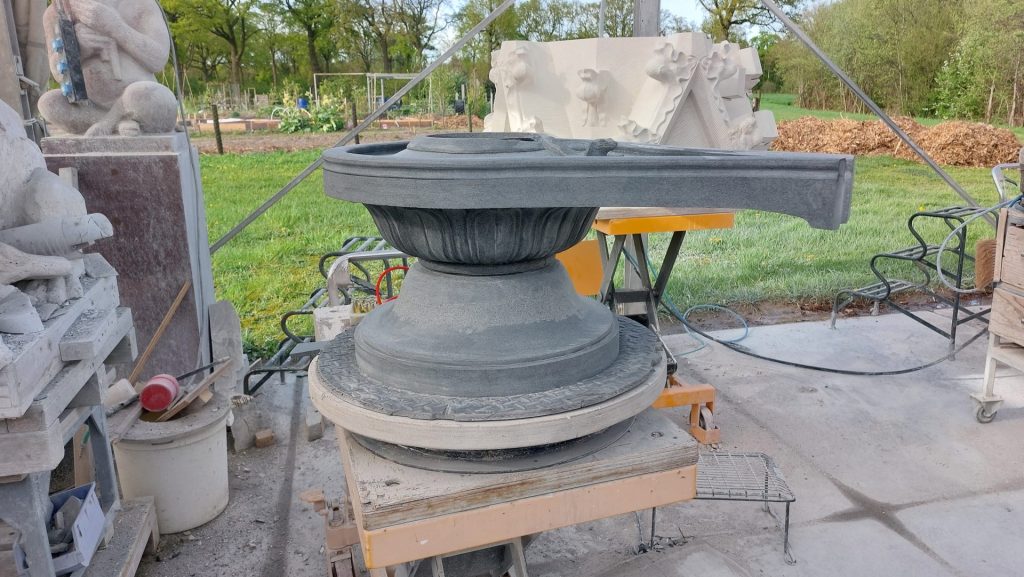
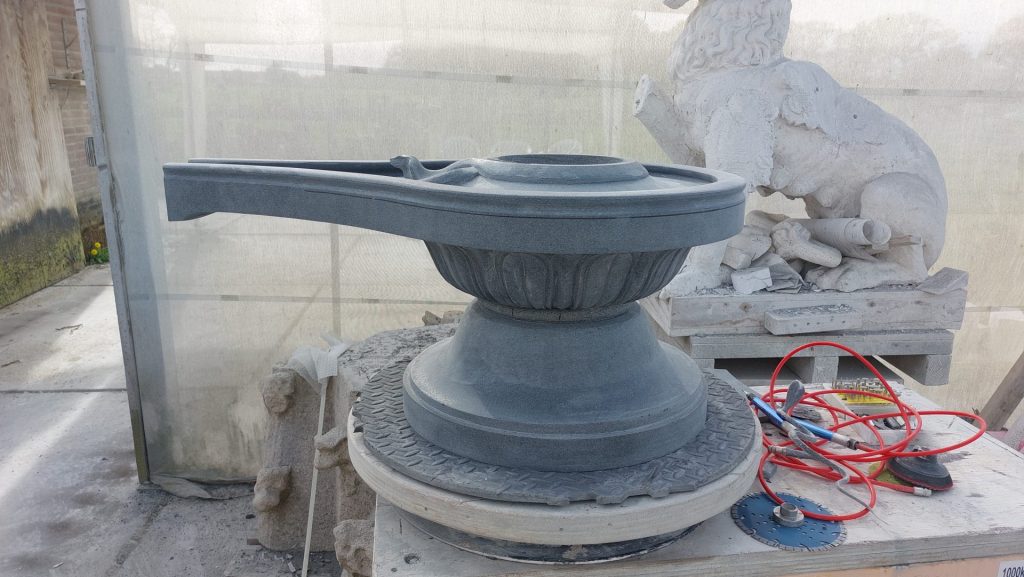
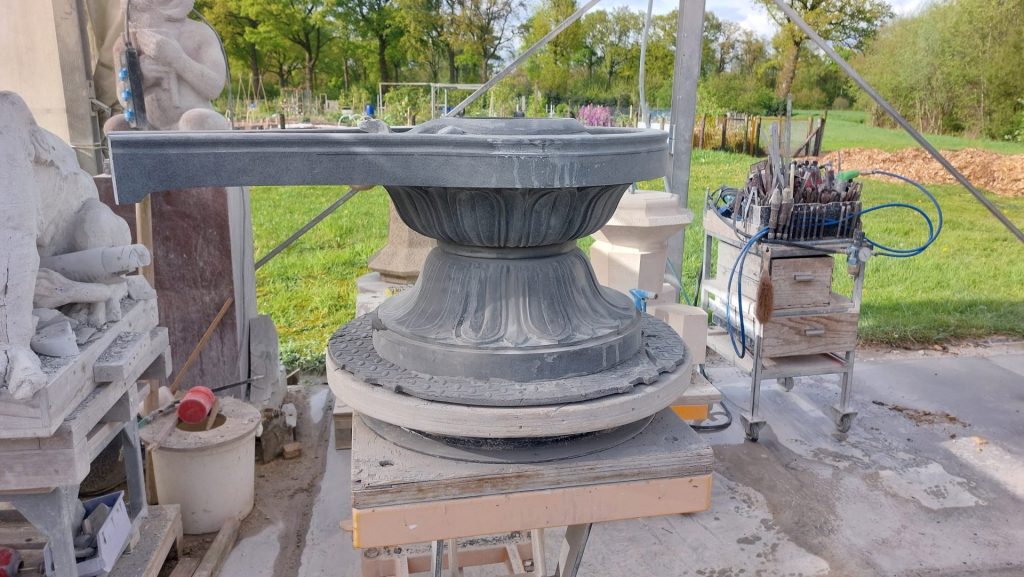
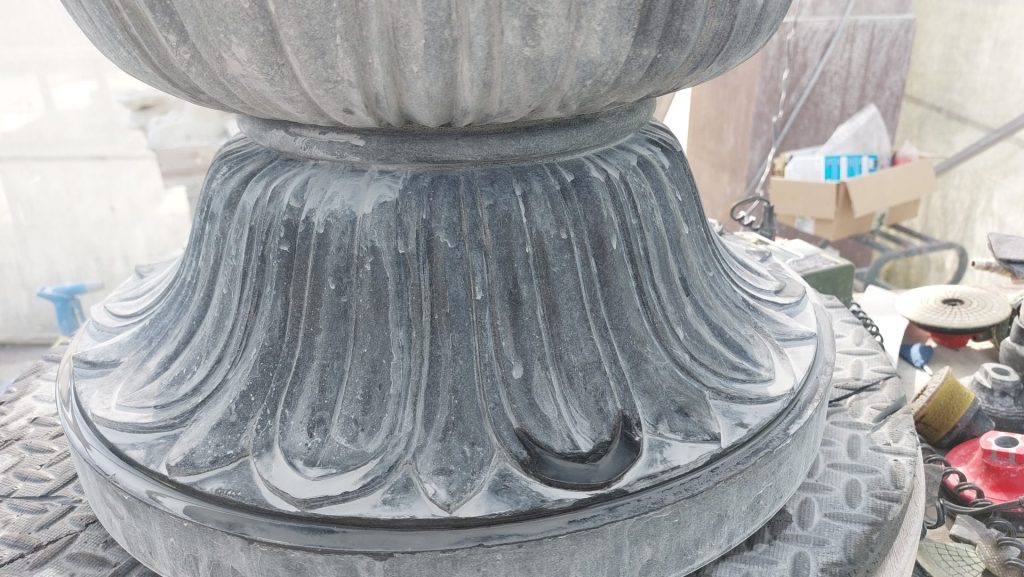
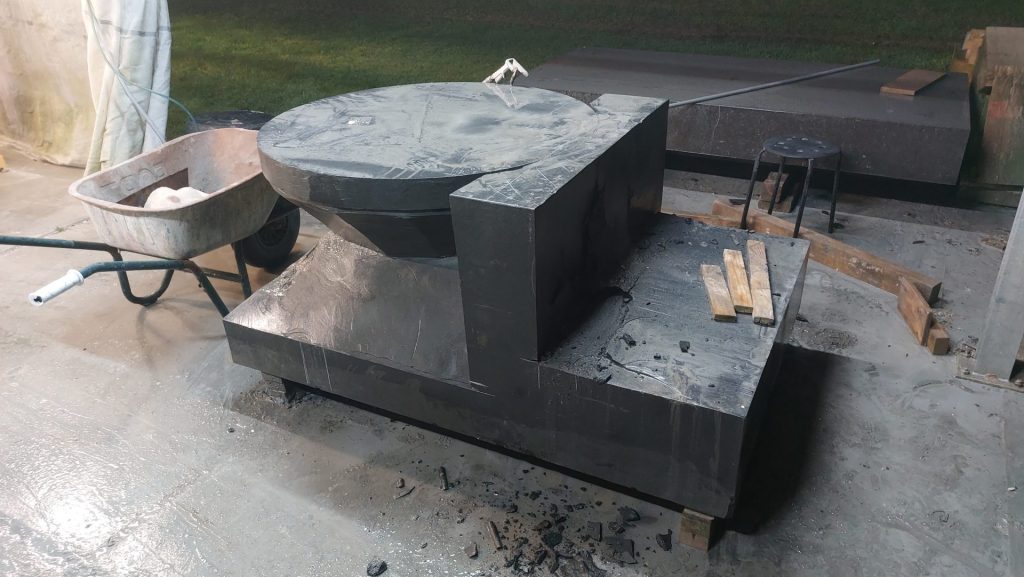
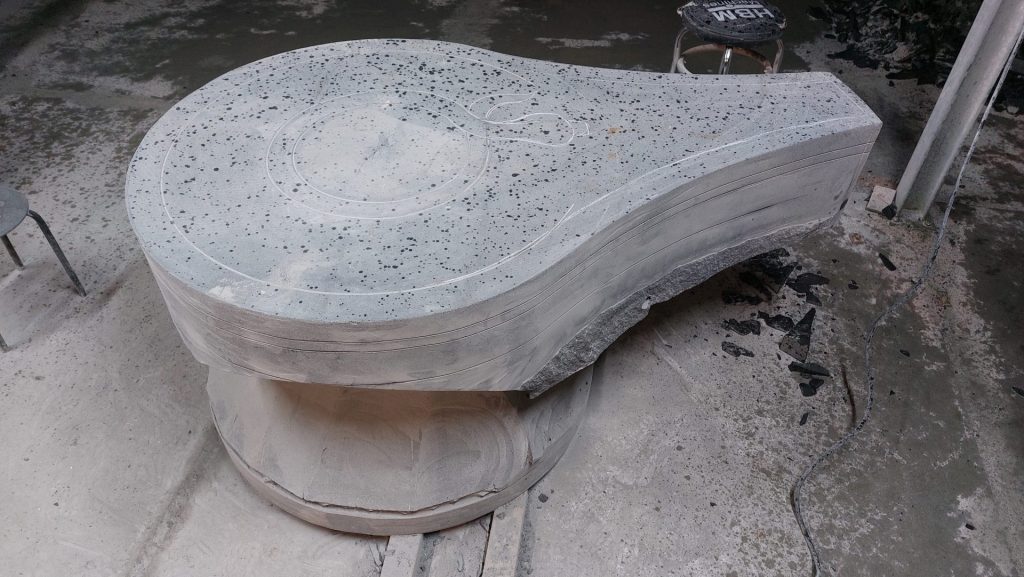
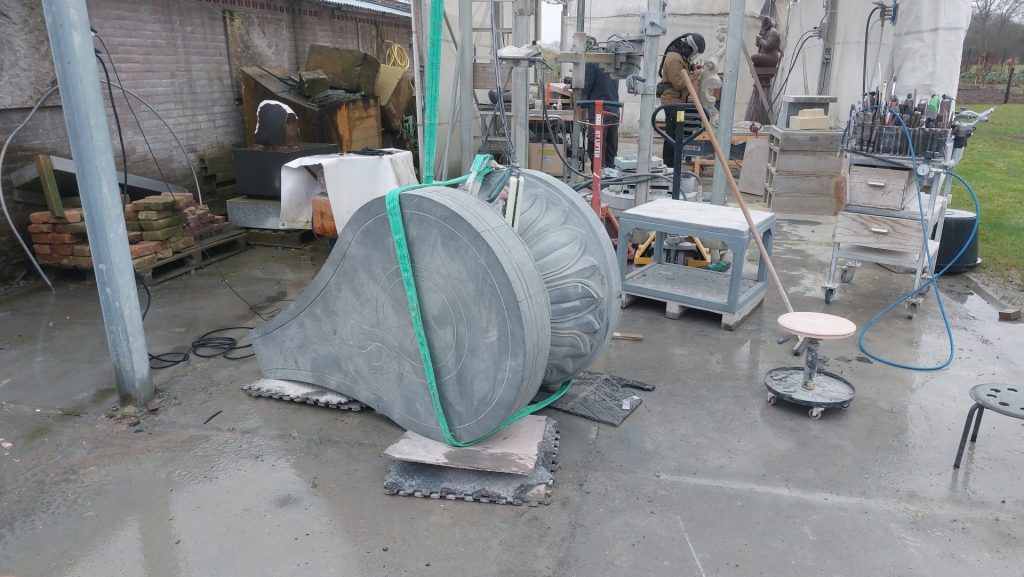
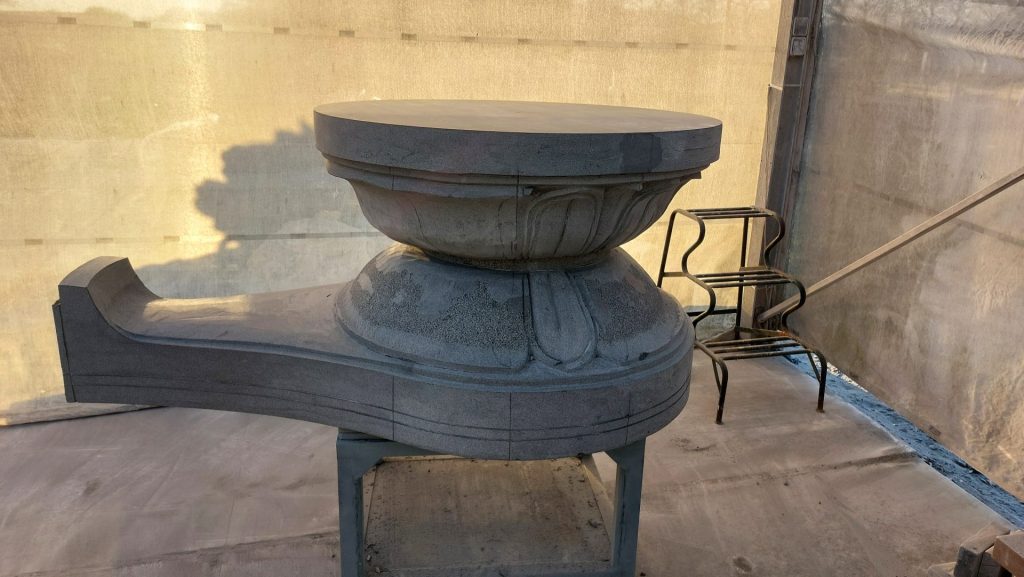
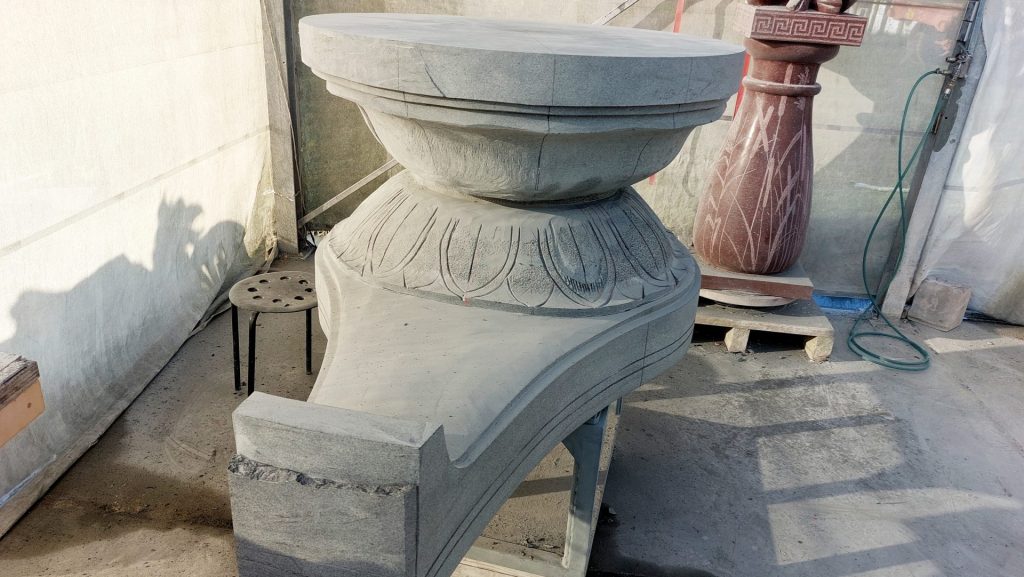
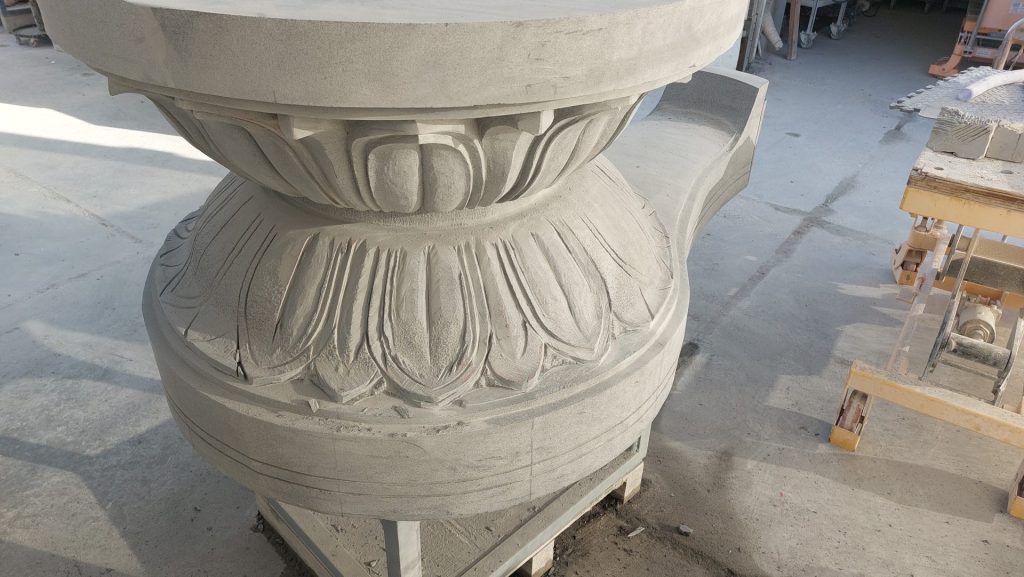
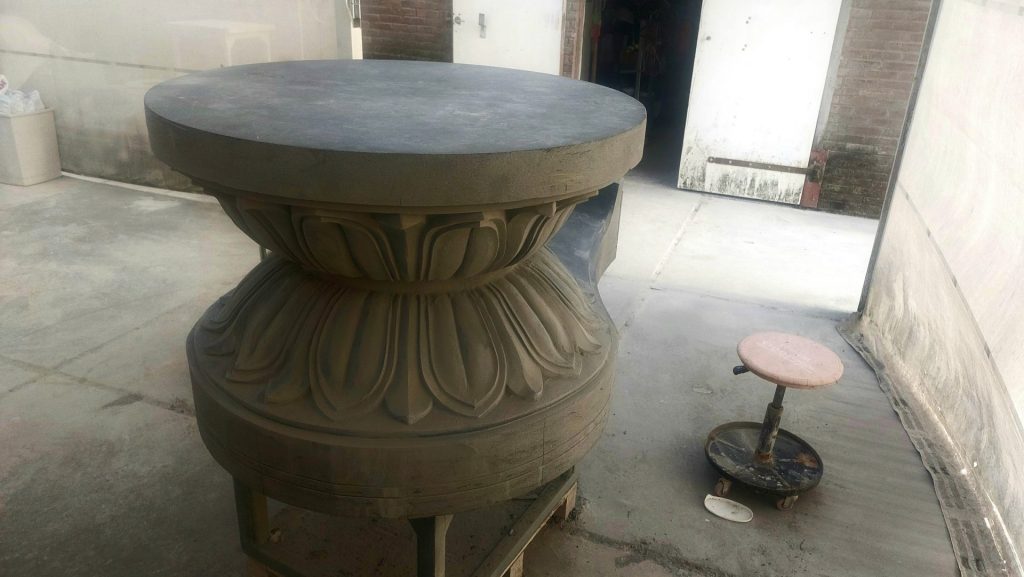
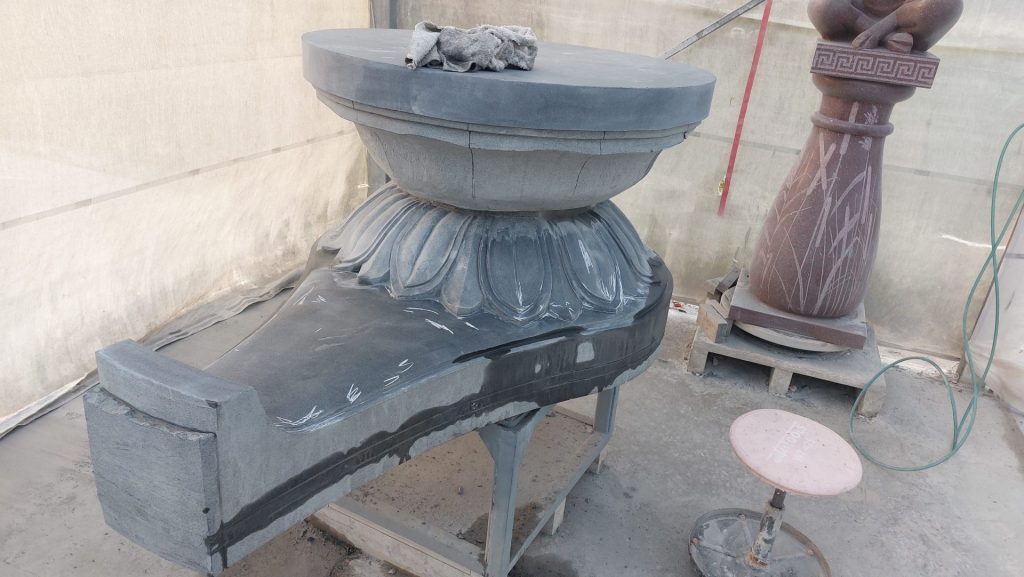
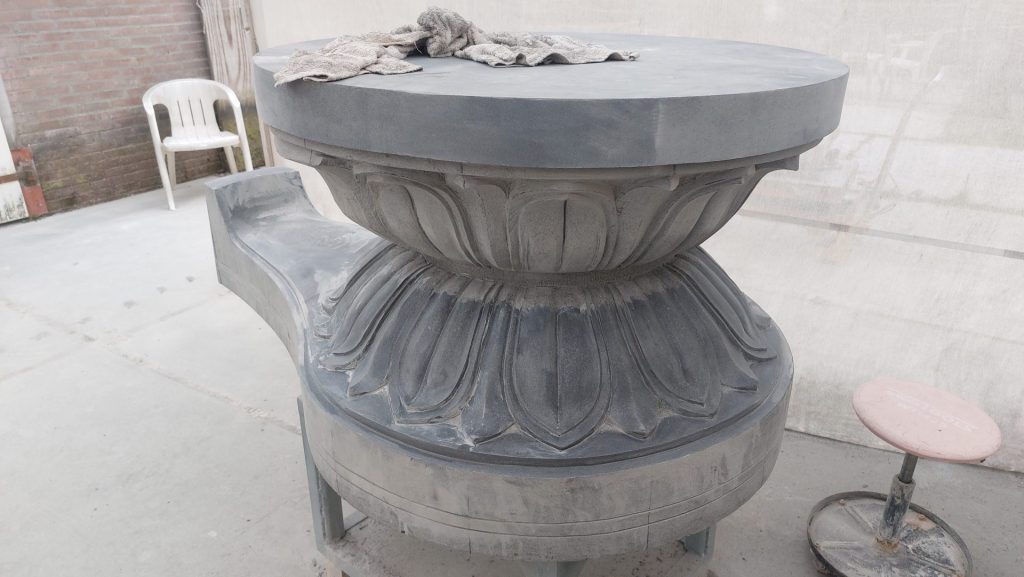
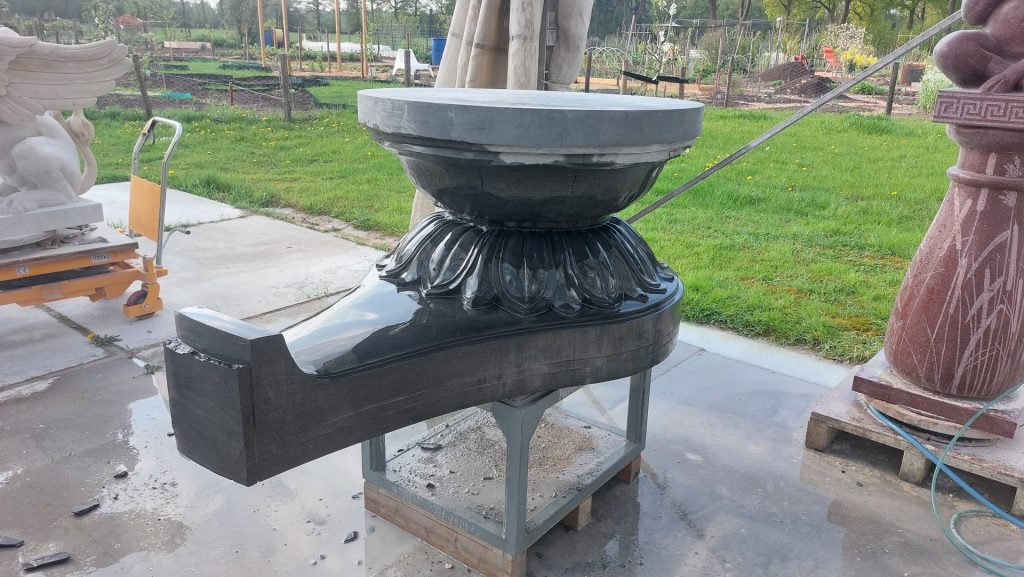
And in Croatia as well there is a Mohanji Centre under construction. This centre has large gardens all around, that is why this Shivalingam became a bit bigger. I am currently working on it. The design was based on the design for Slovenia, that is to say, without too many frills, but 2x 11 large lotus leaves and 2x 11 narrow lotus leaves on the bottom. Here too, a Naga (cobra) and 3 symbols will be carved on the top.

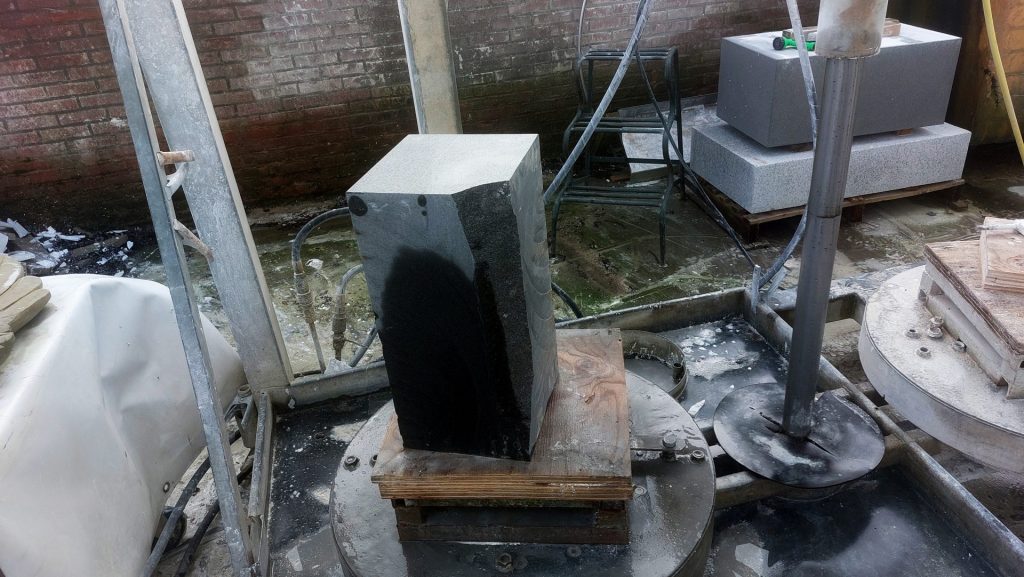
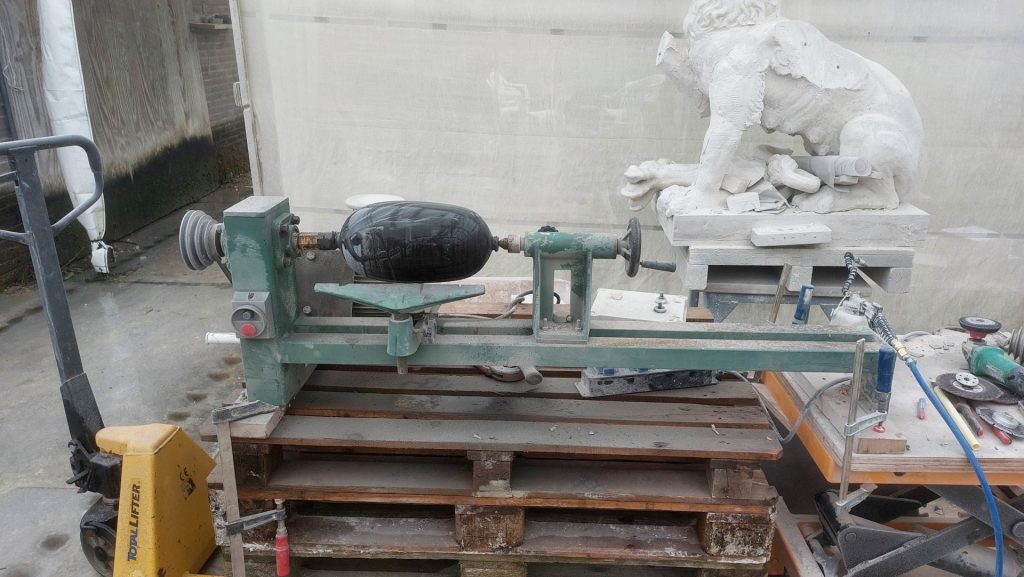
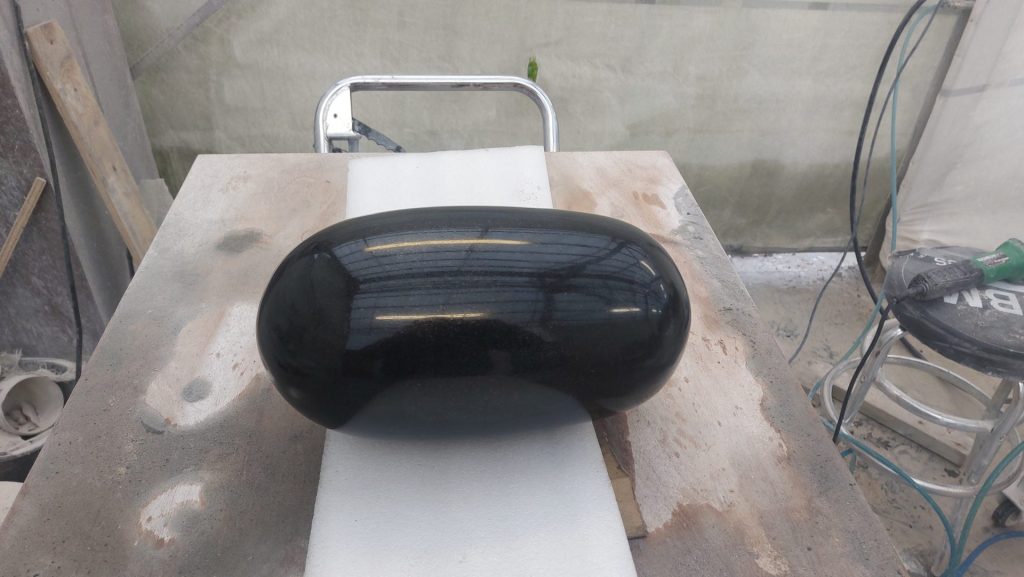
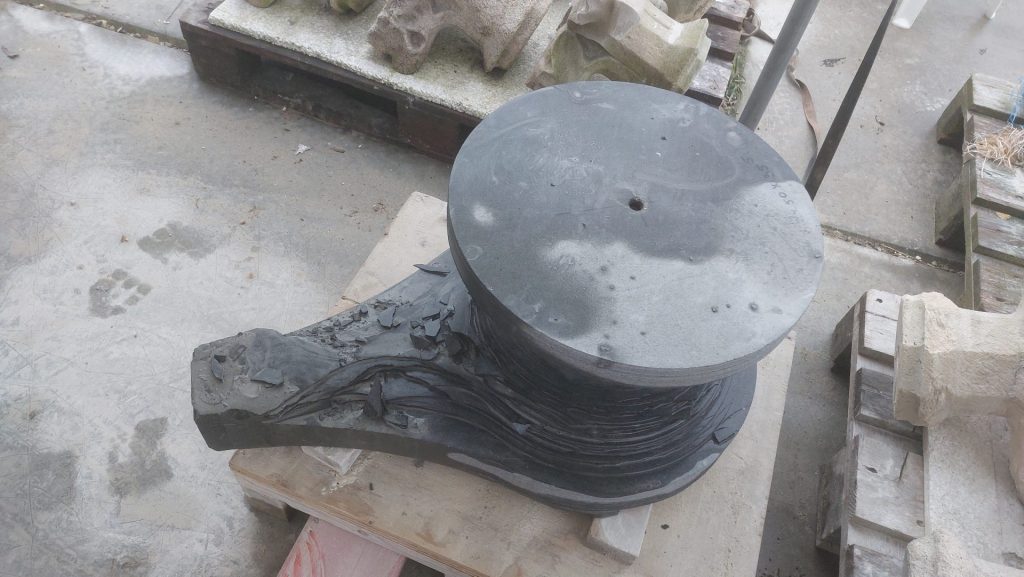
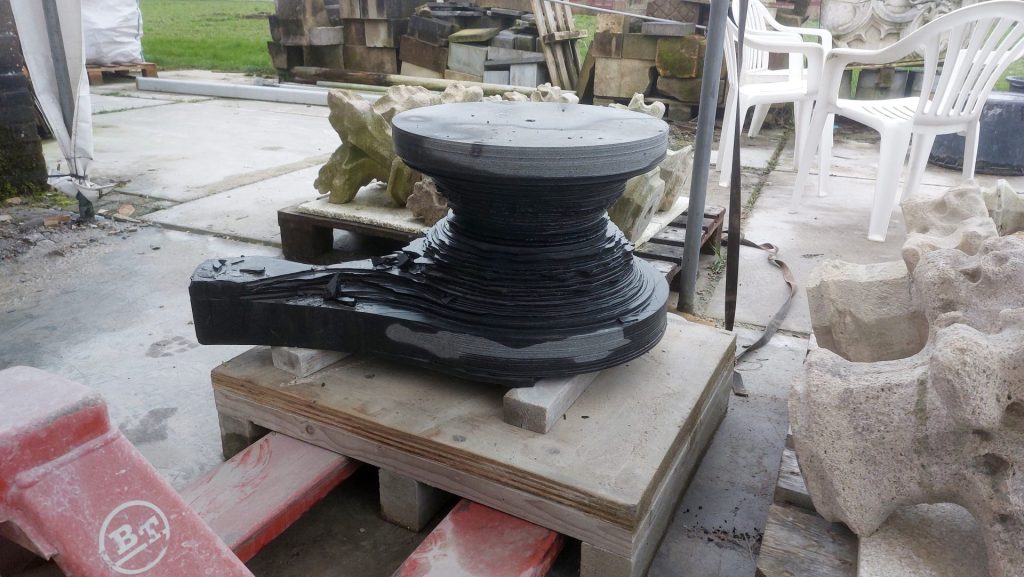
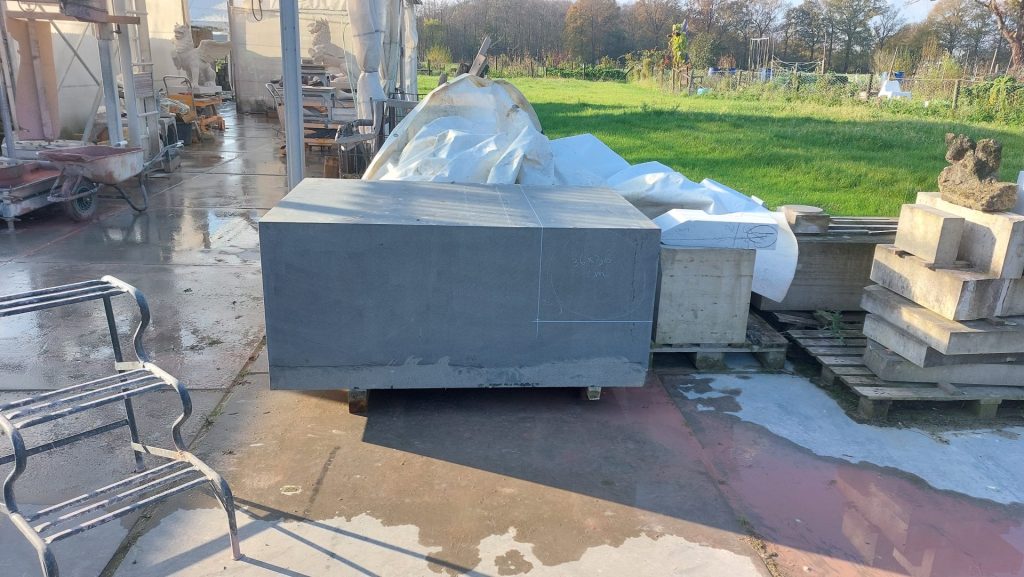
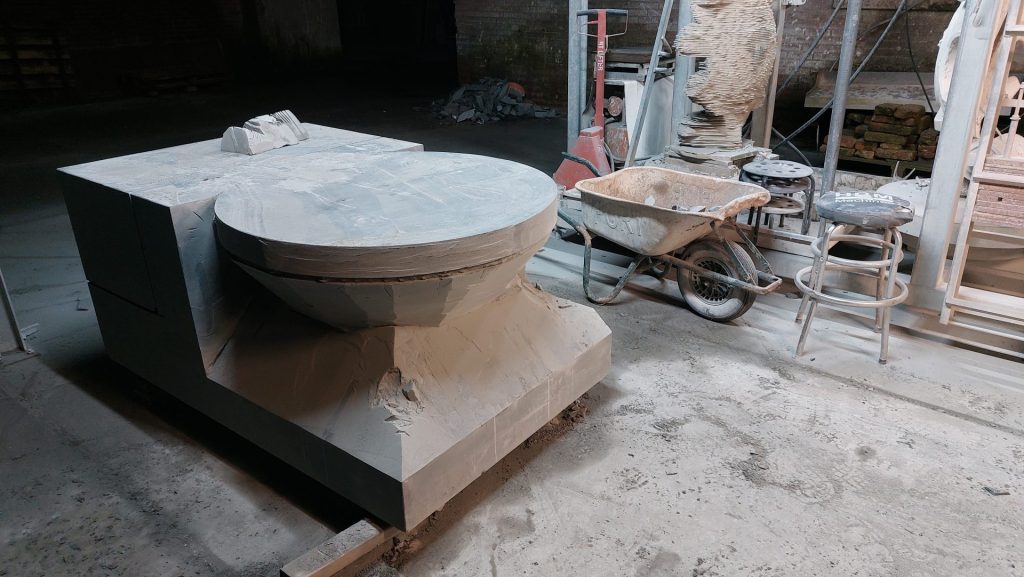
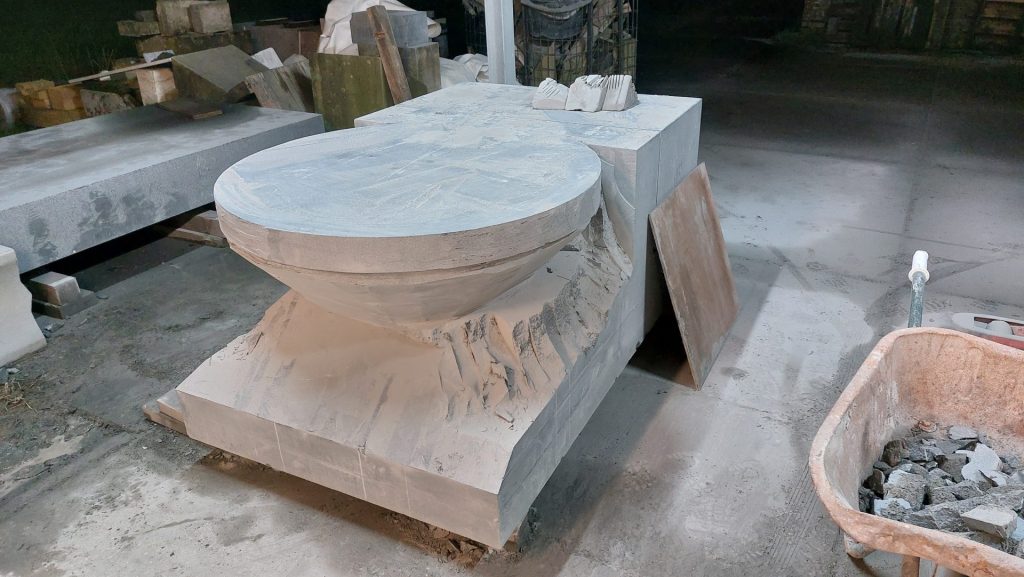
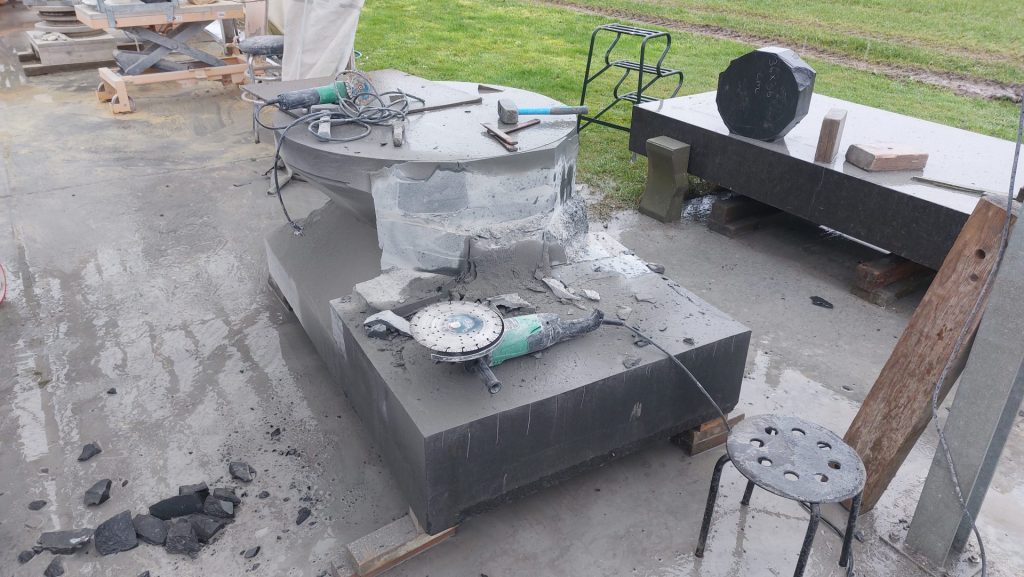
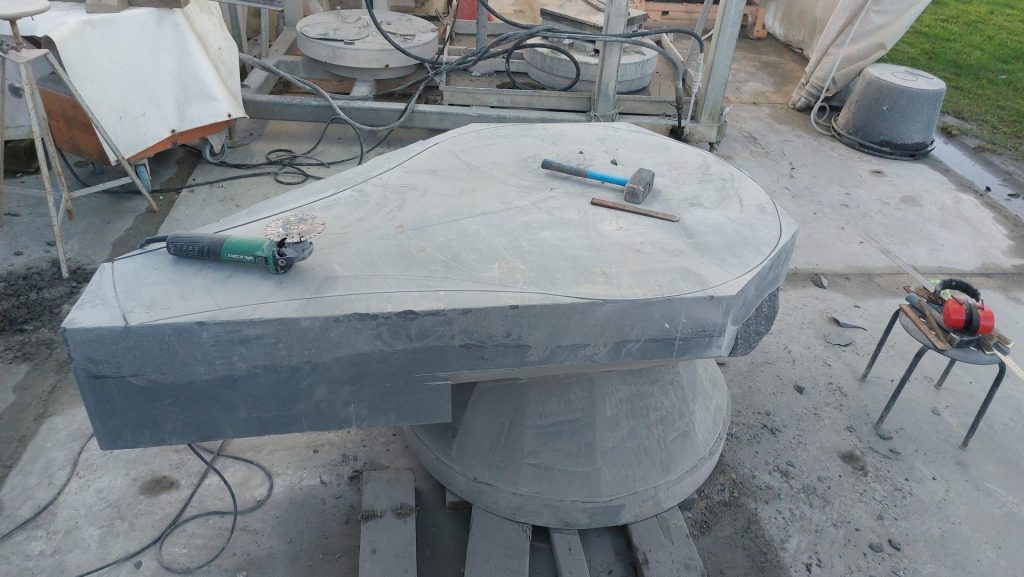
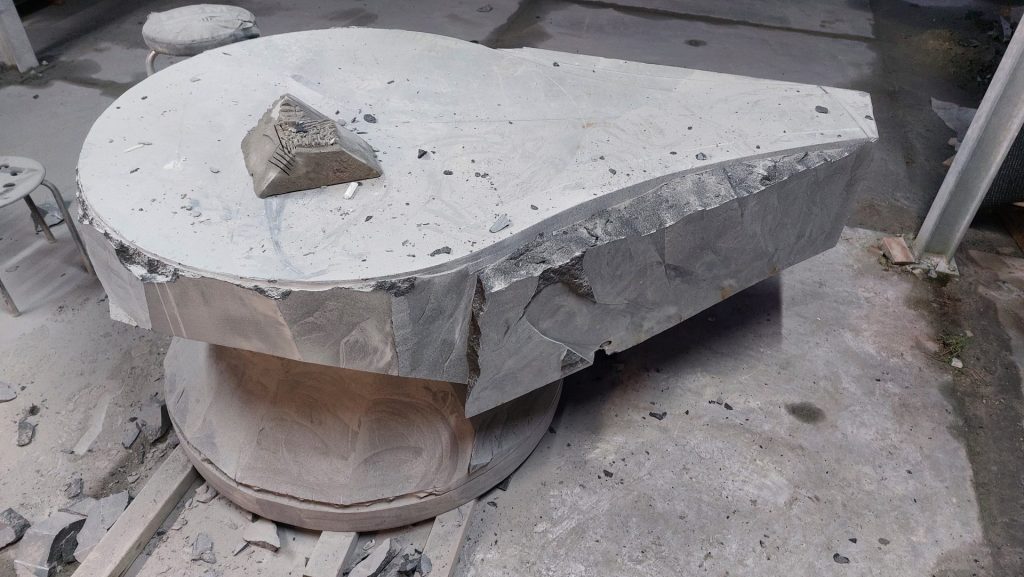
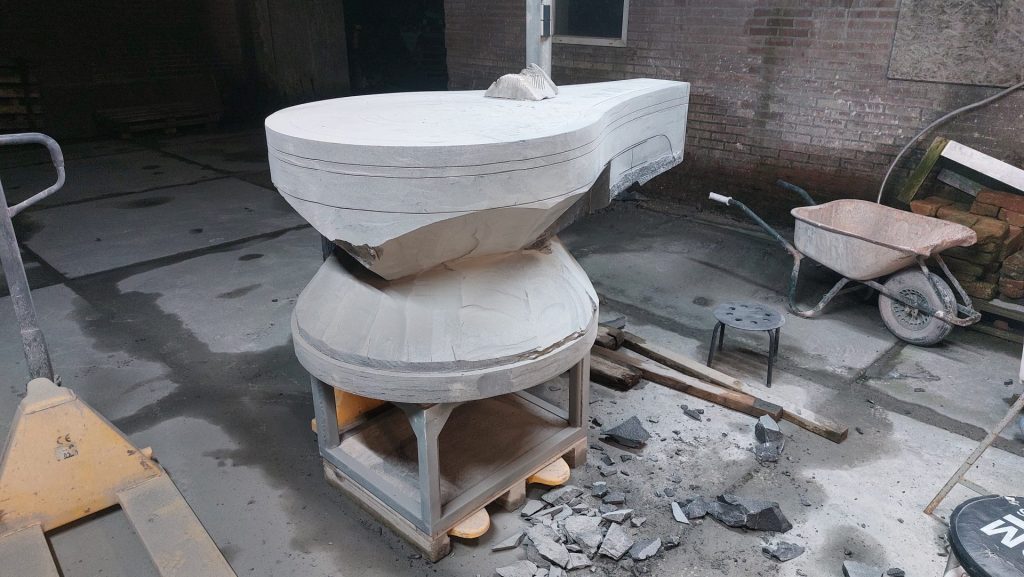
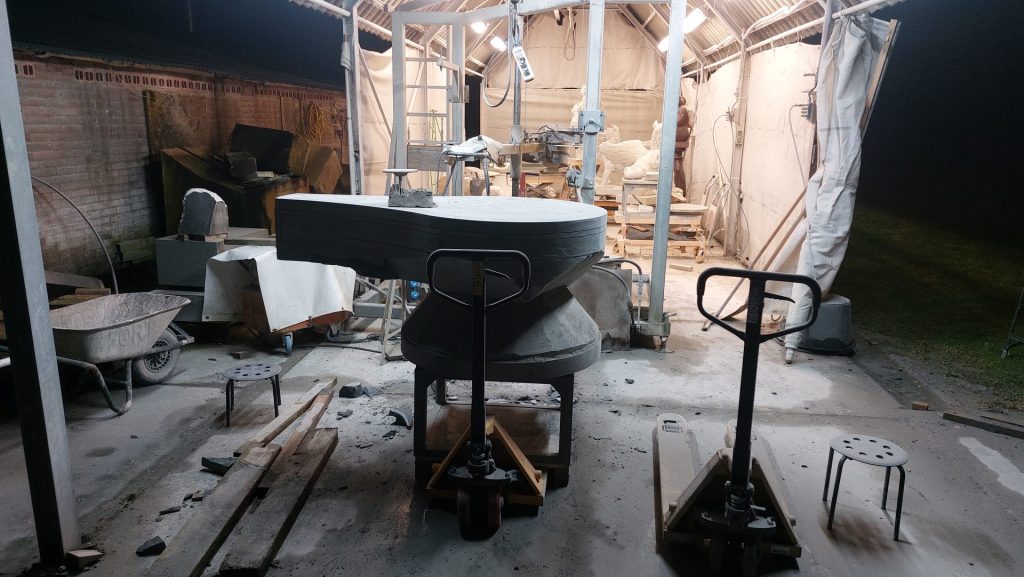
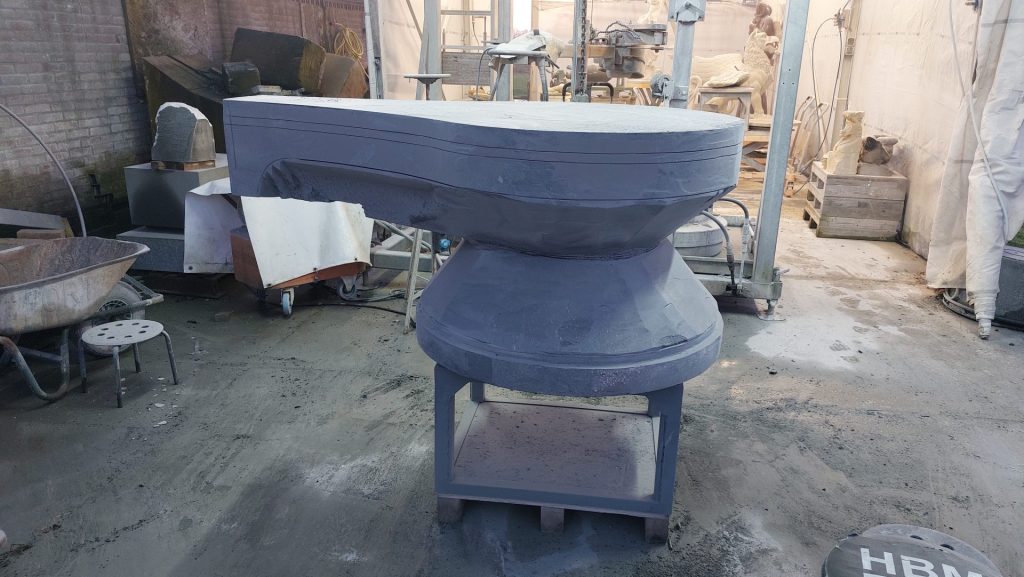
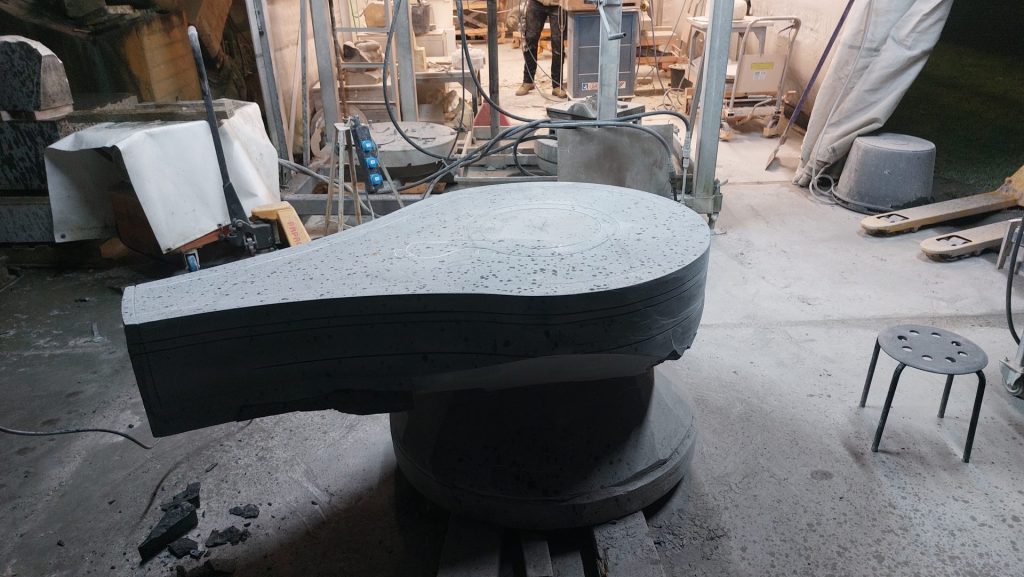
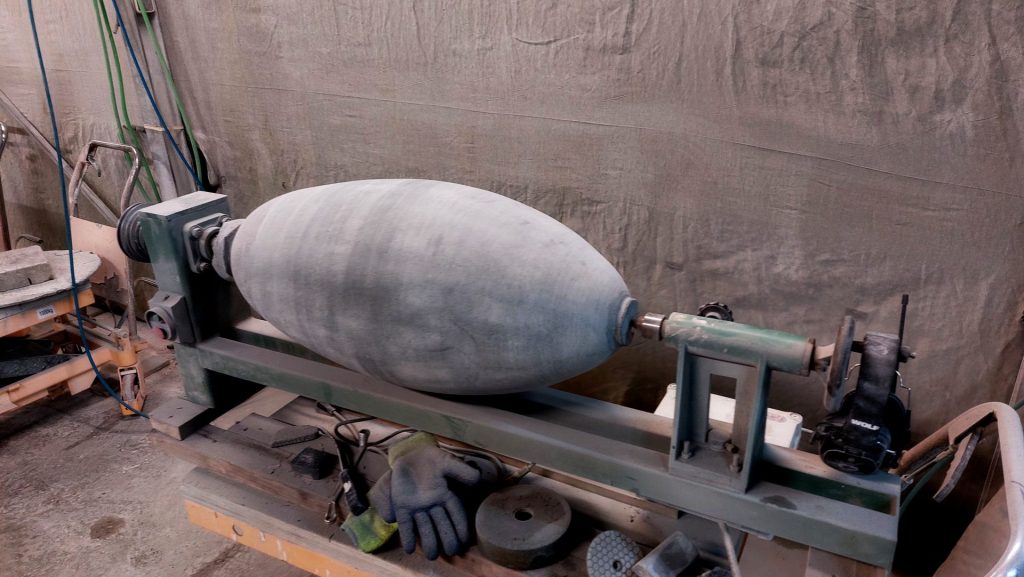
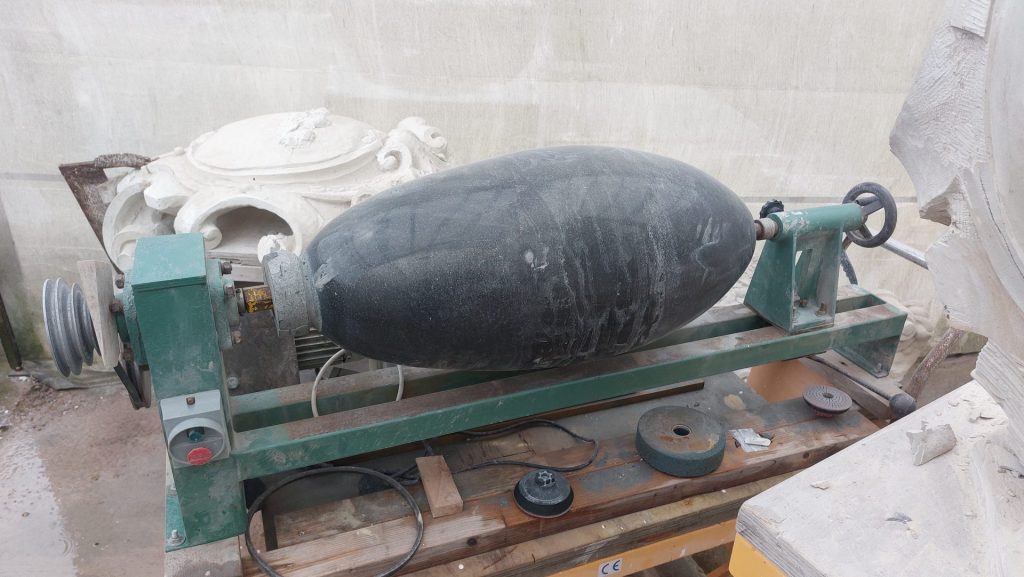
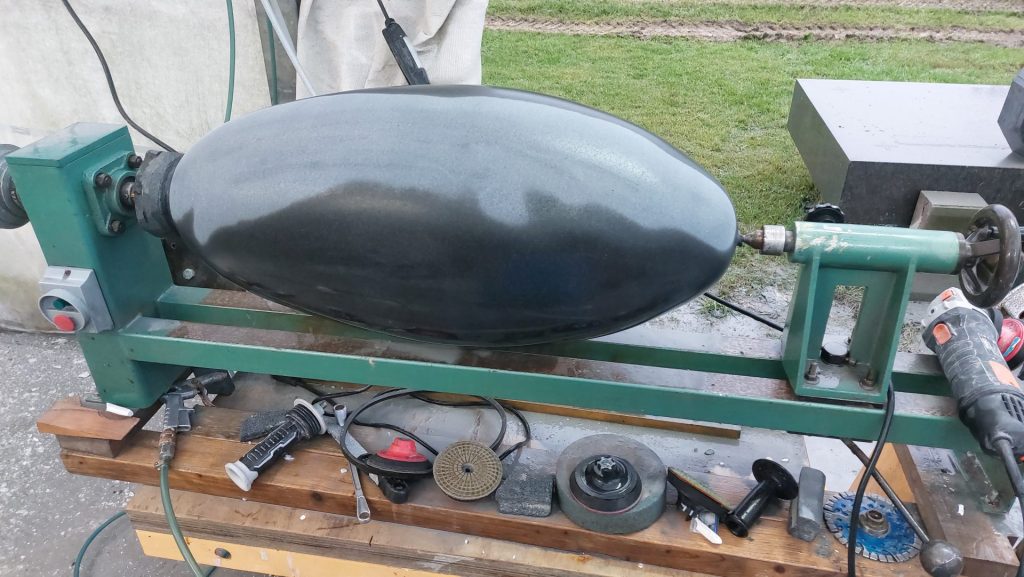
We bought a block of deep-black granite of 3,5 Ton and I started sawing. I had some setbacks with my diamond chainsaw, because the chain tensioner broke when the saw got stuck. But I managed to get a large piece from the bottom side, from which later the Shivalingam itself was to be made on my contour saw, by using it as a vertical lathe. I was then able to polish the lingam on my converted wood lathe.

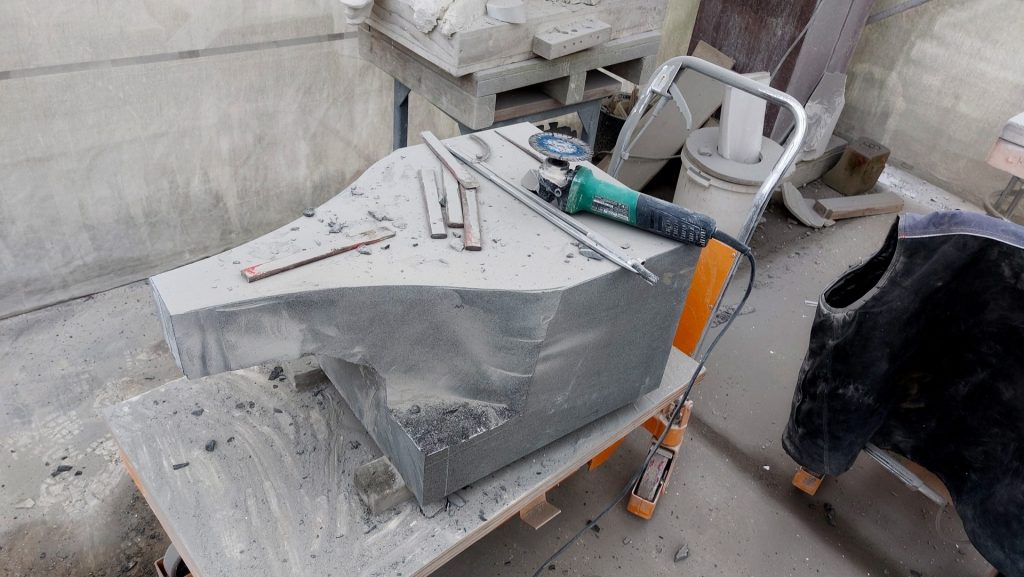
With the angle grinder I started removing material and then I was able to split off a large piece. The block was by now 1600 kilos lighter, so that I could turn over the block and start carving the spout and the lotus leaves. Before, it was all too heavy, my shop crane said, "You do it yourself". Soon I will turn over the block again, so that I can shape the underside of the spout and the lotus leaves on the other half. Once these are polished I can put it back in the right position. Meanwhile, the 3500 kilos have been reduced to just over 1400 kilos., And I expect to end up with less than one ton.
Padukas or Sri Paadas
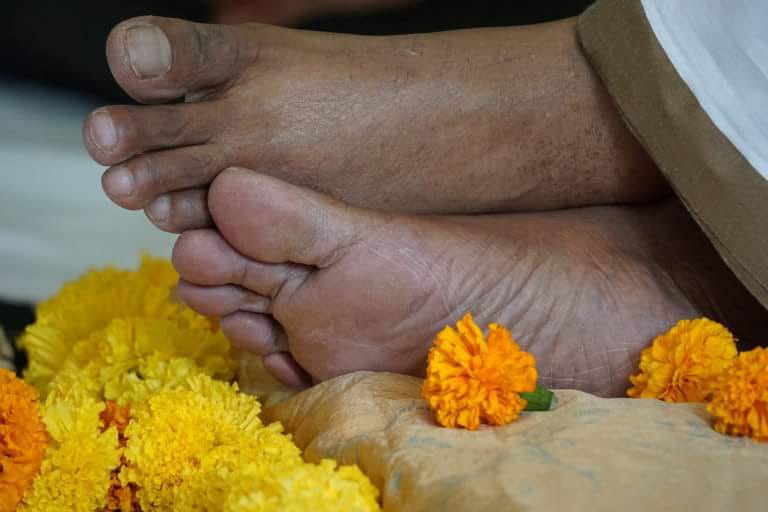
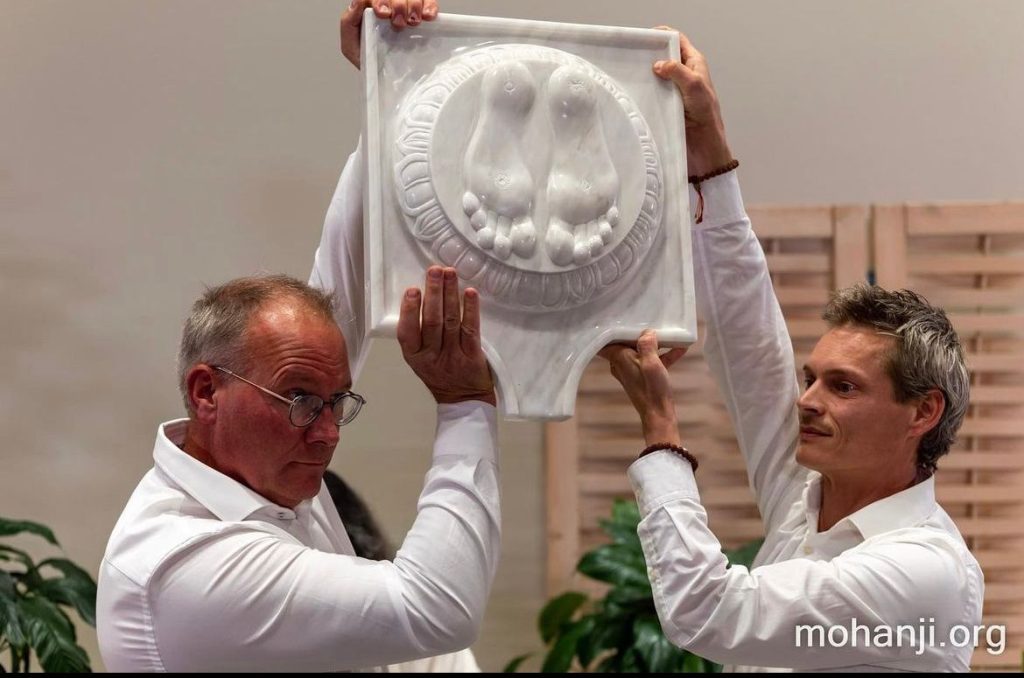
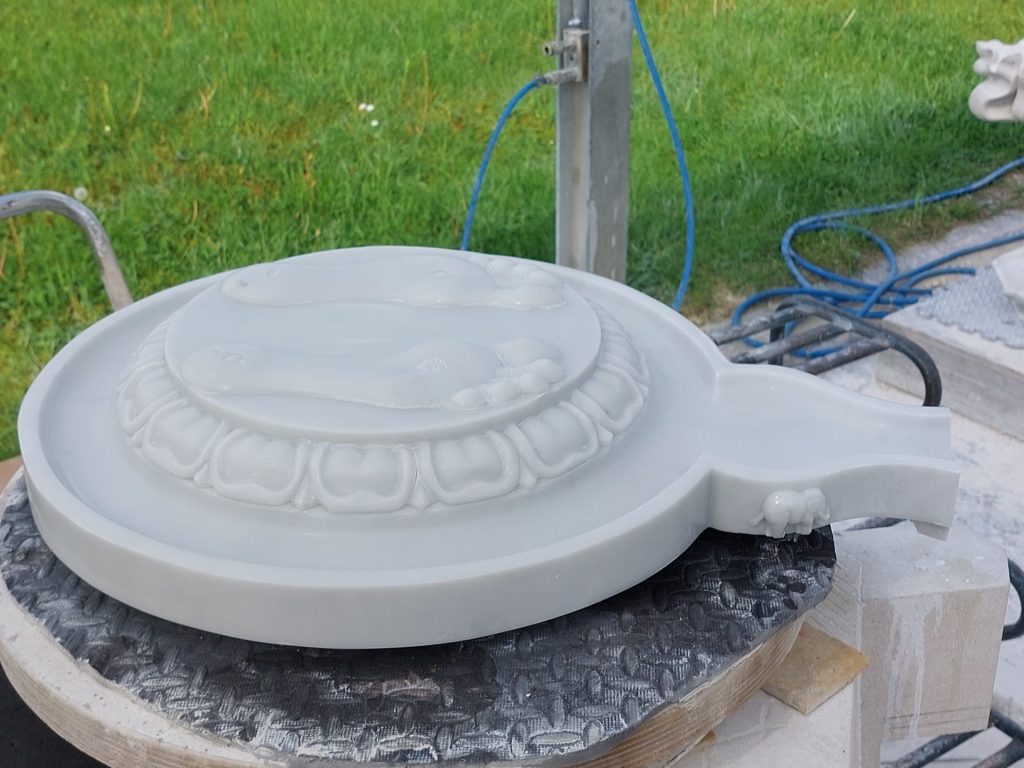
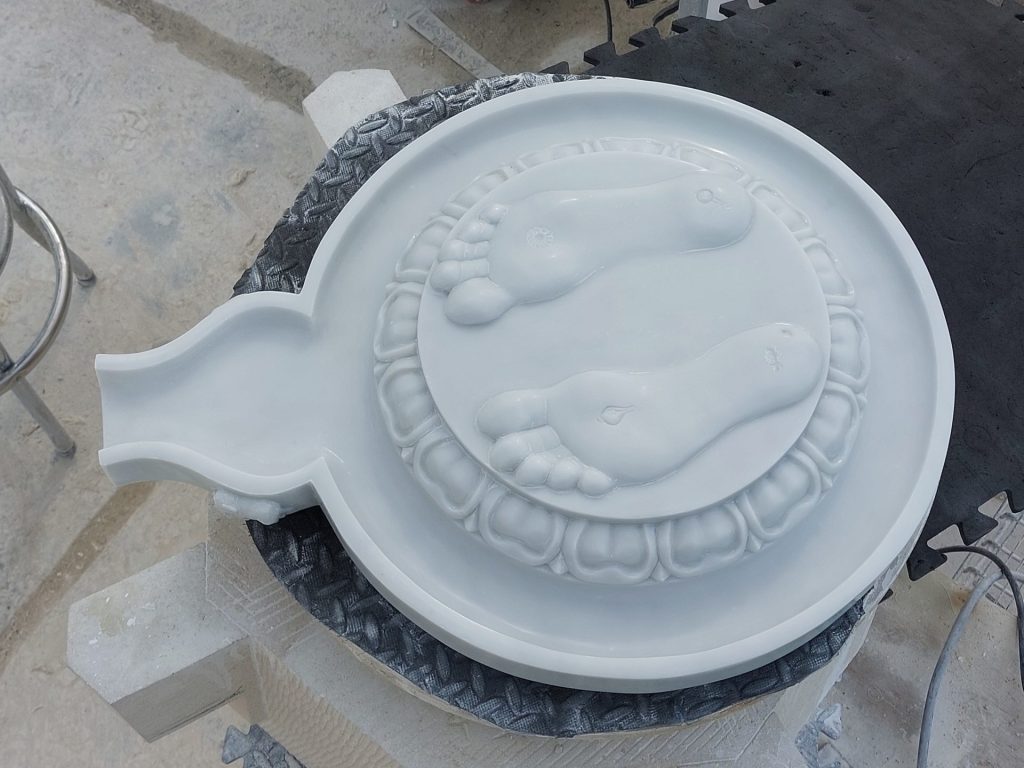
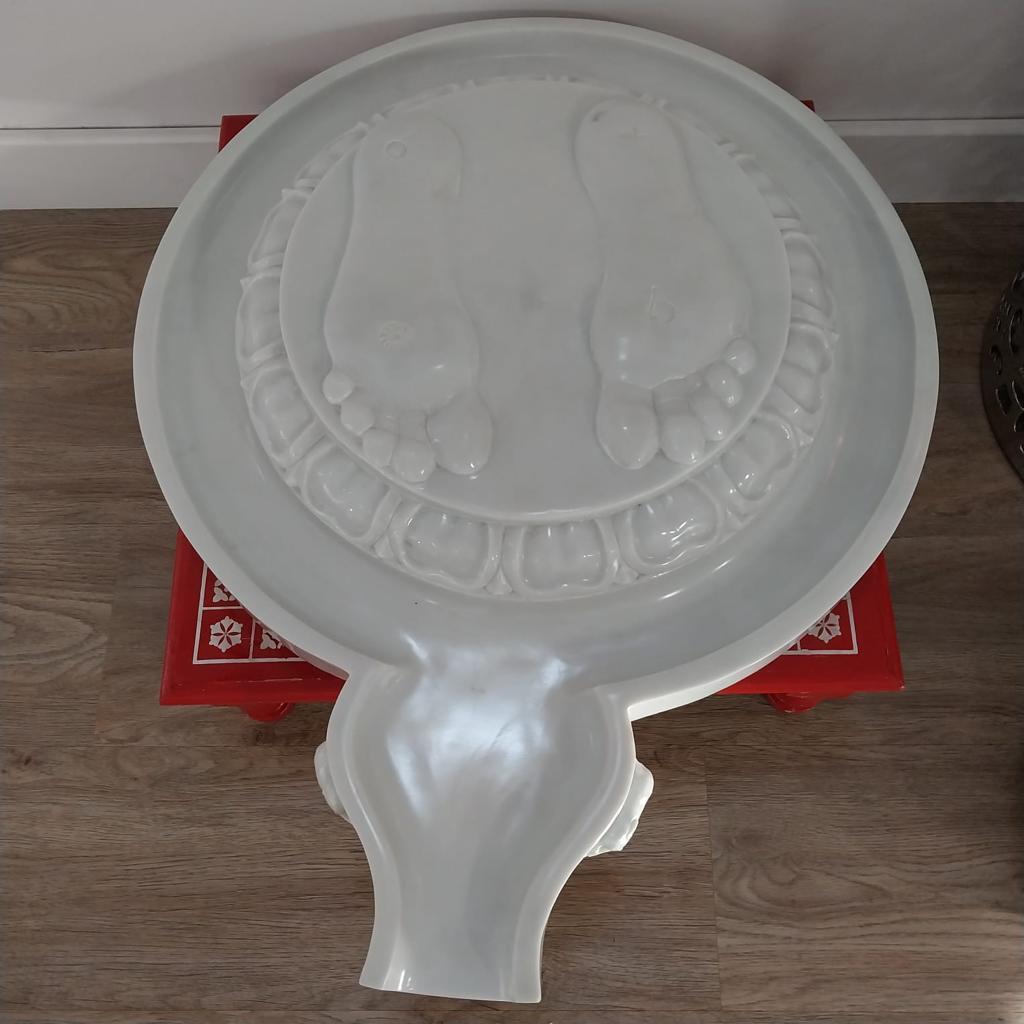
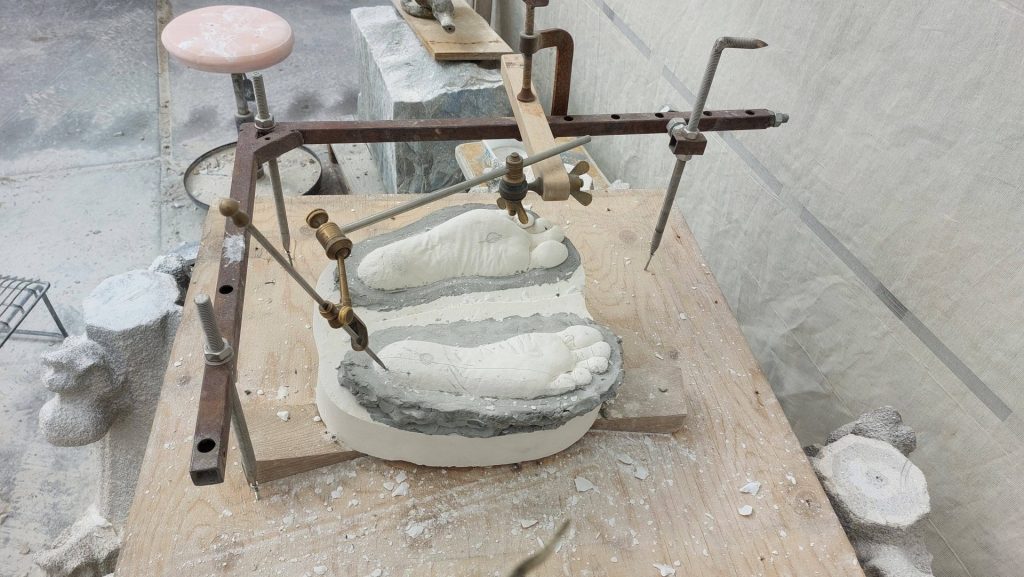
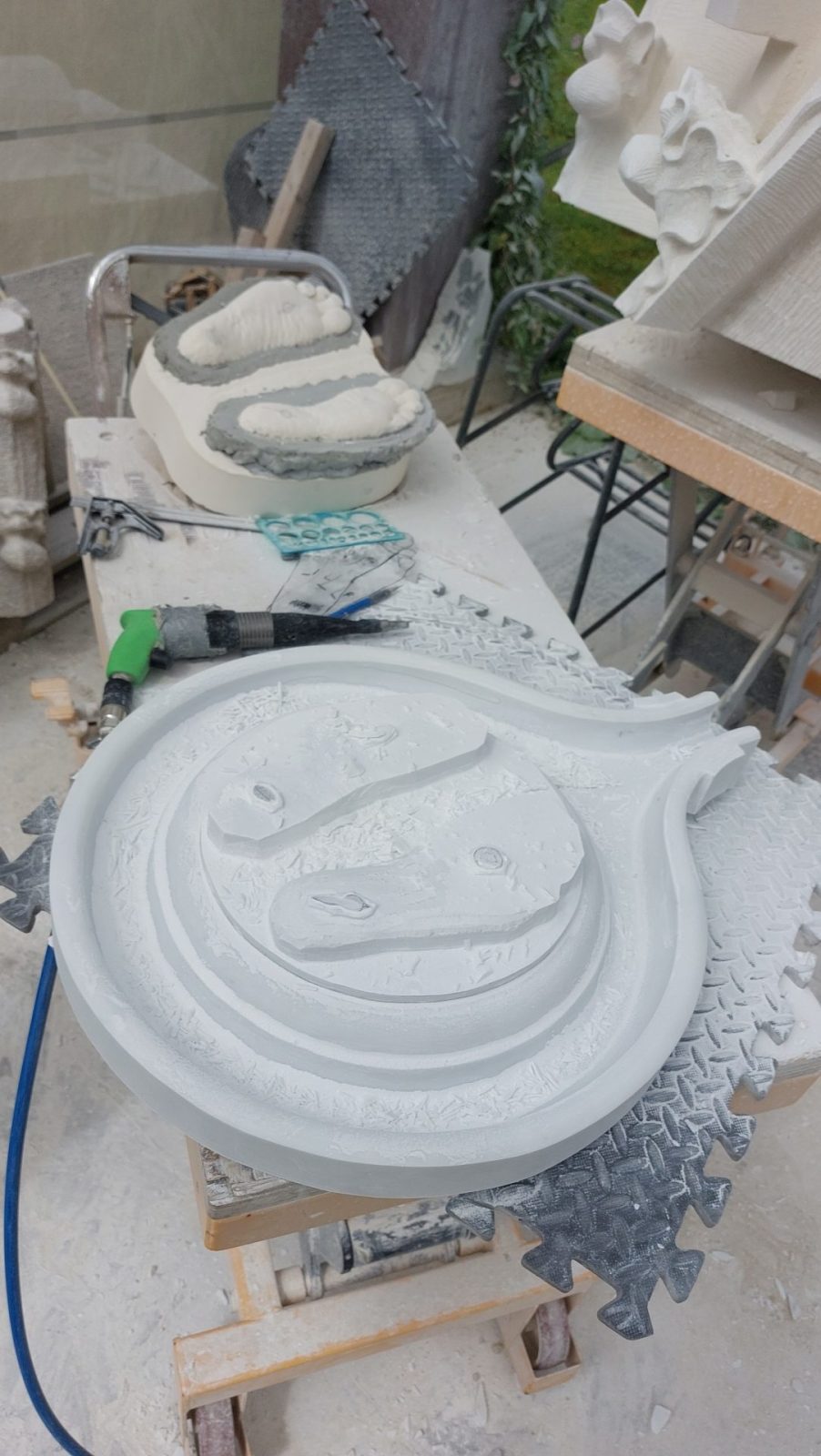
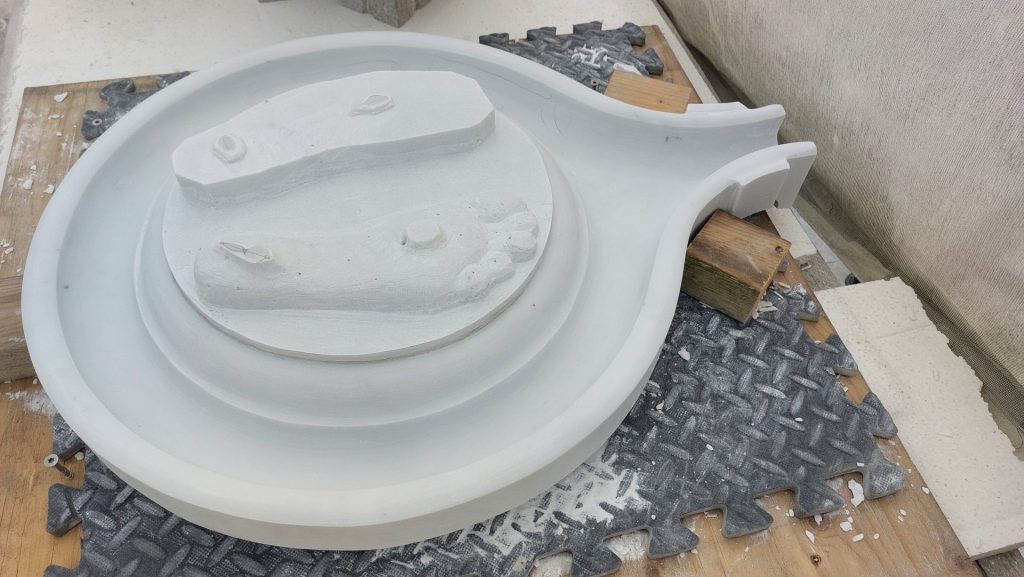
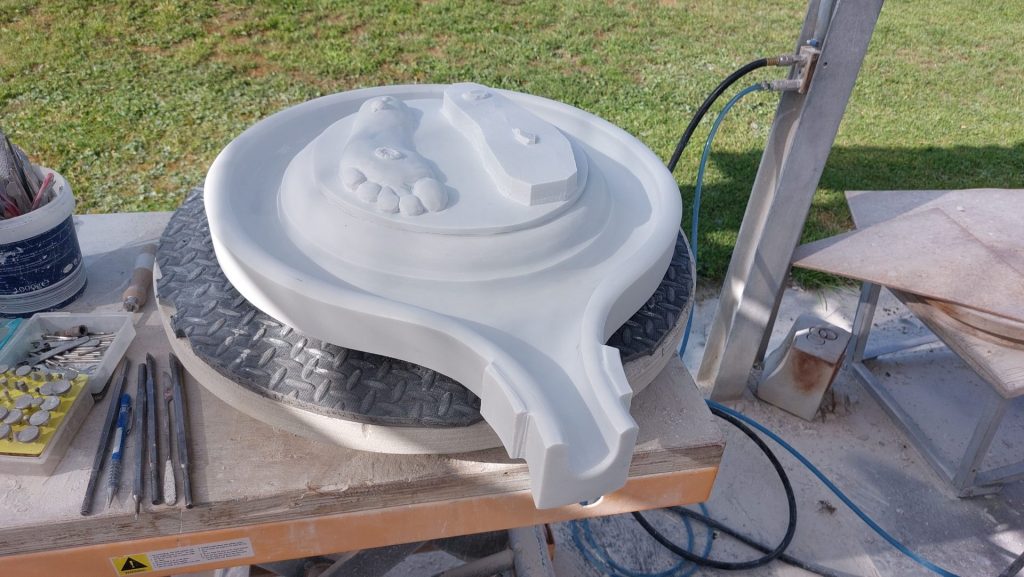
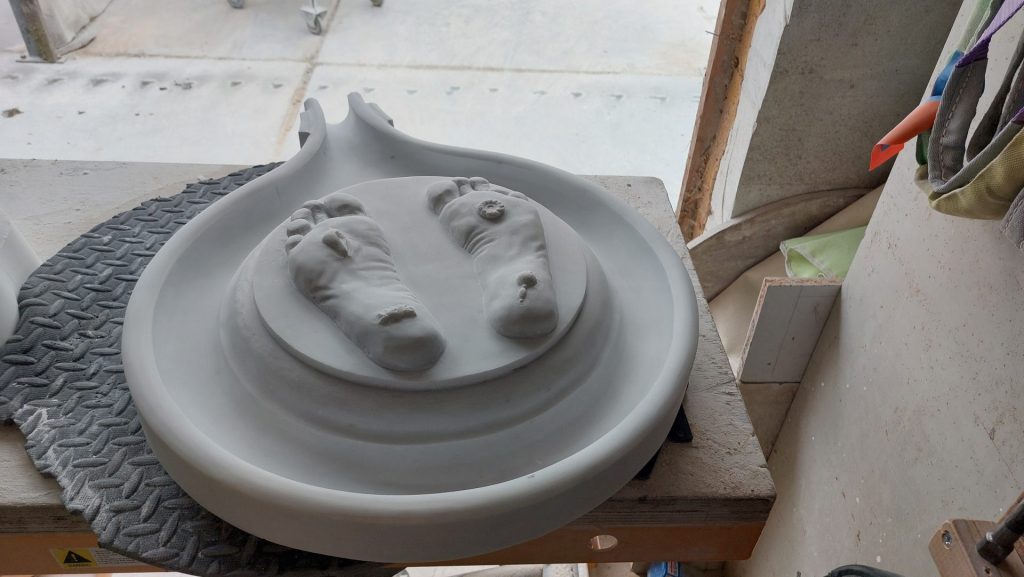
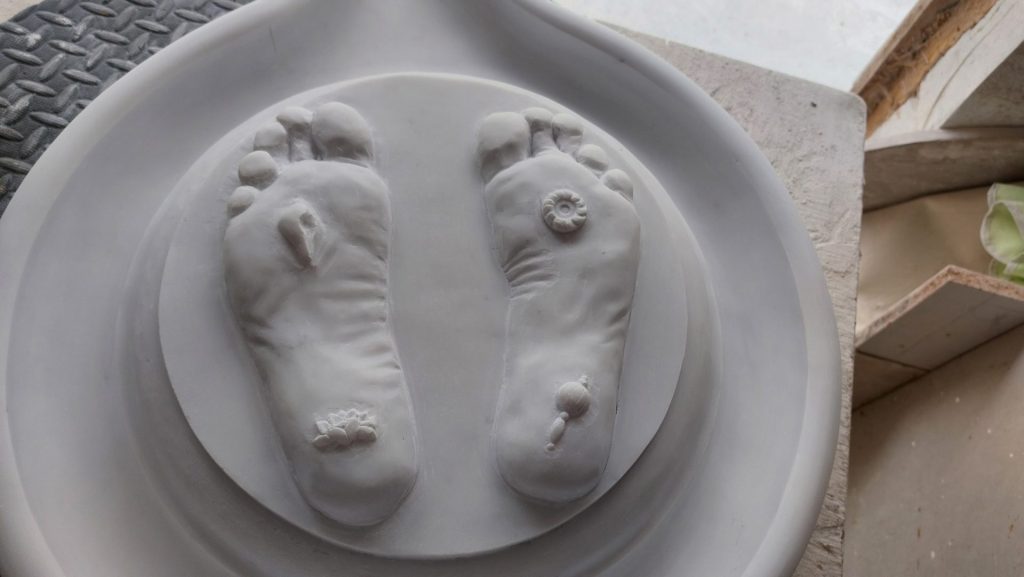
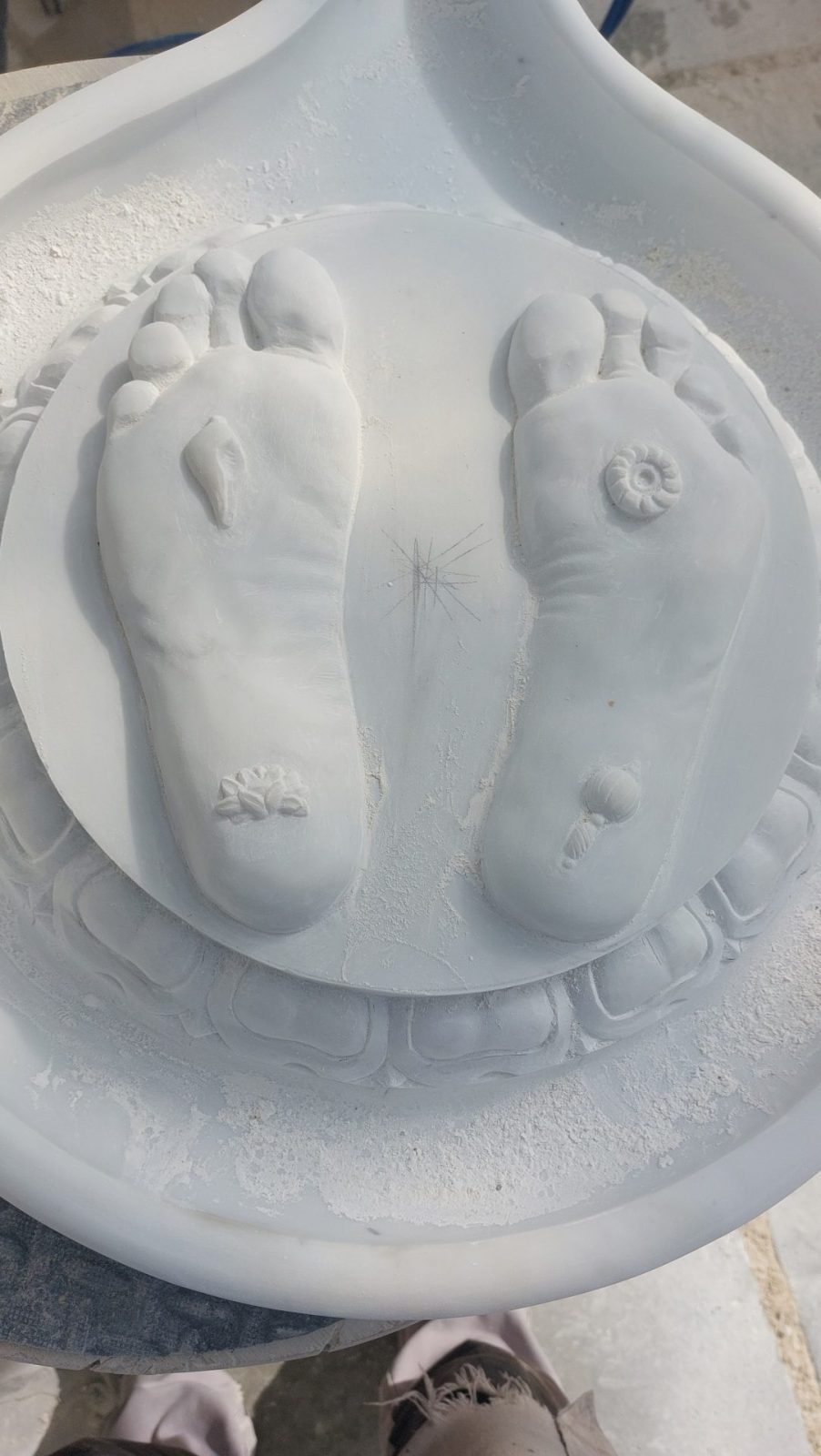
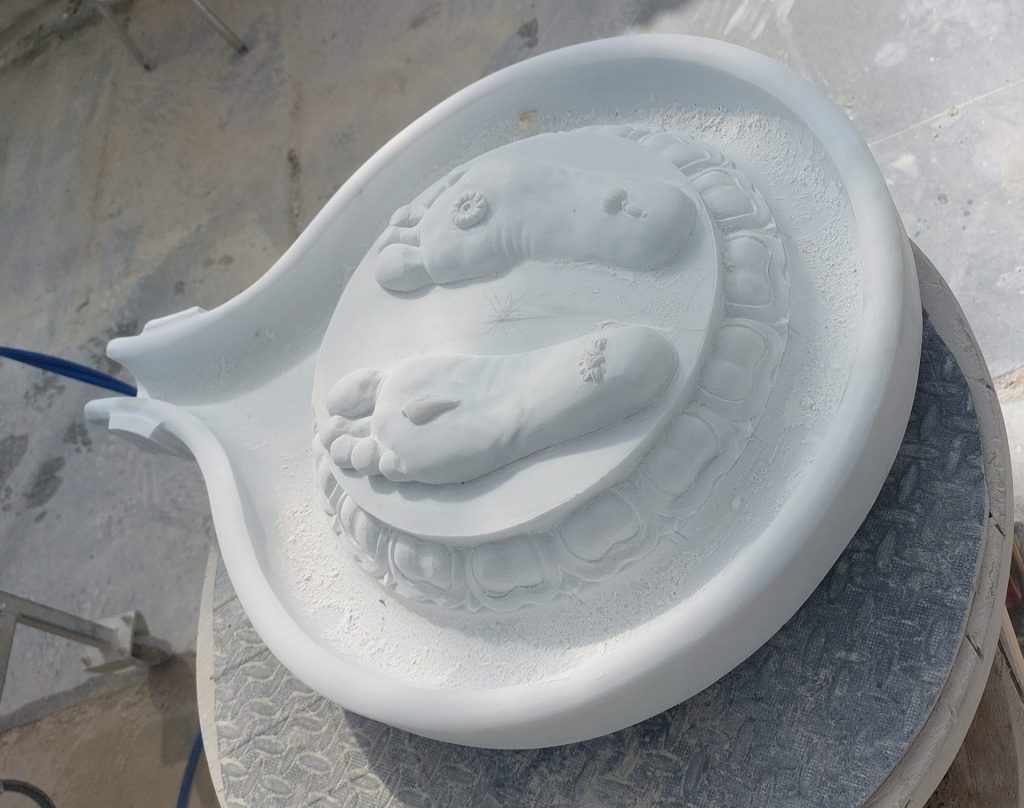
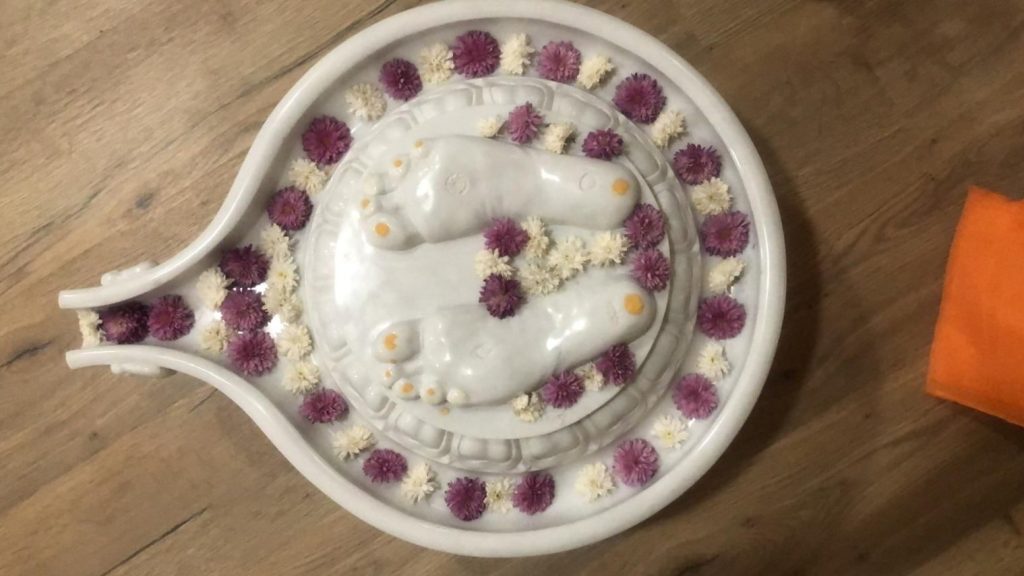
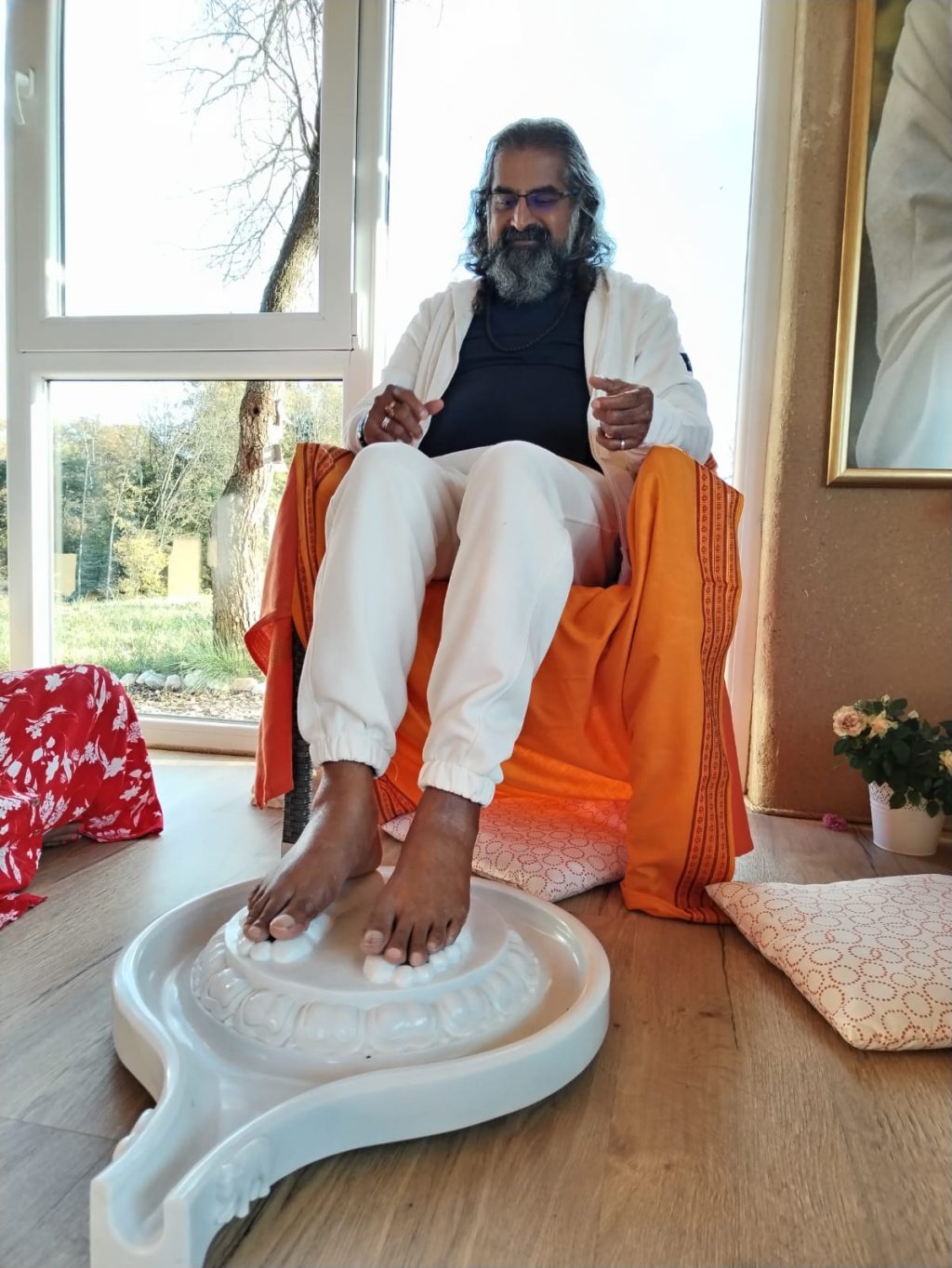
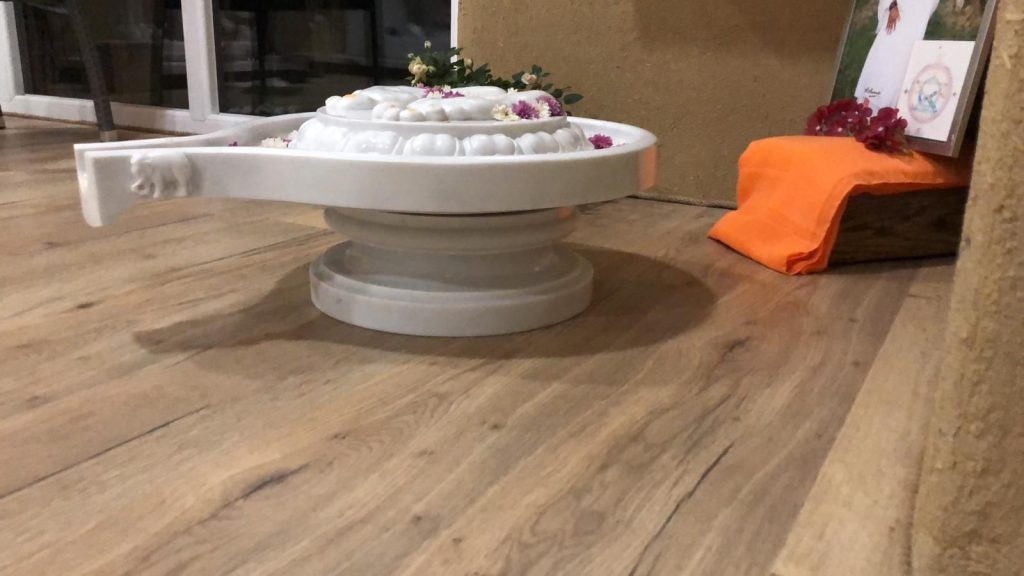
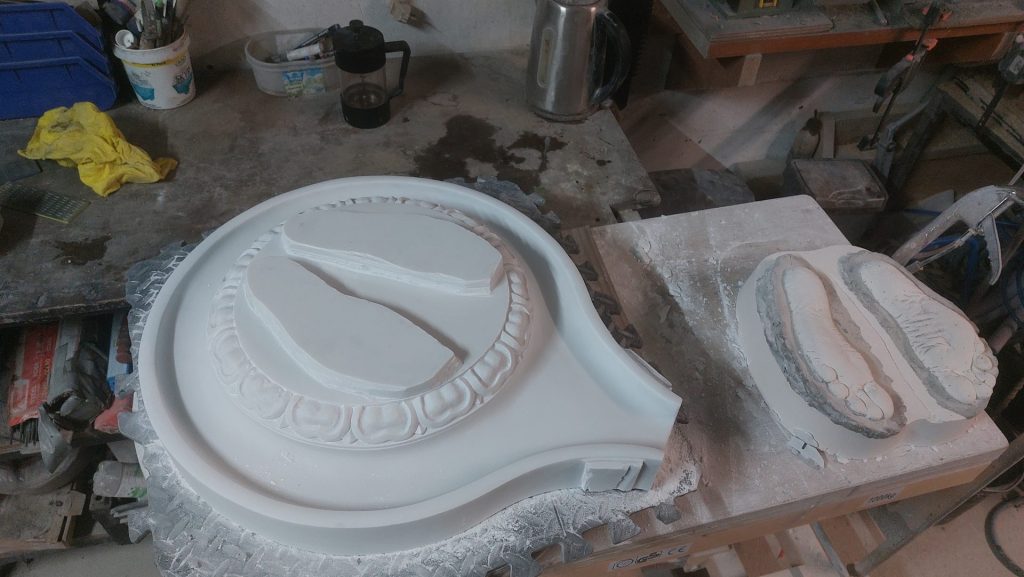
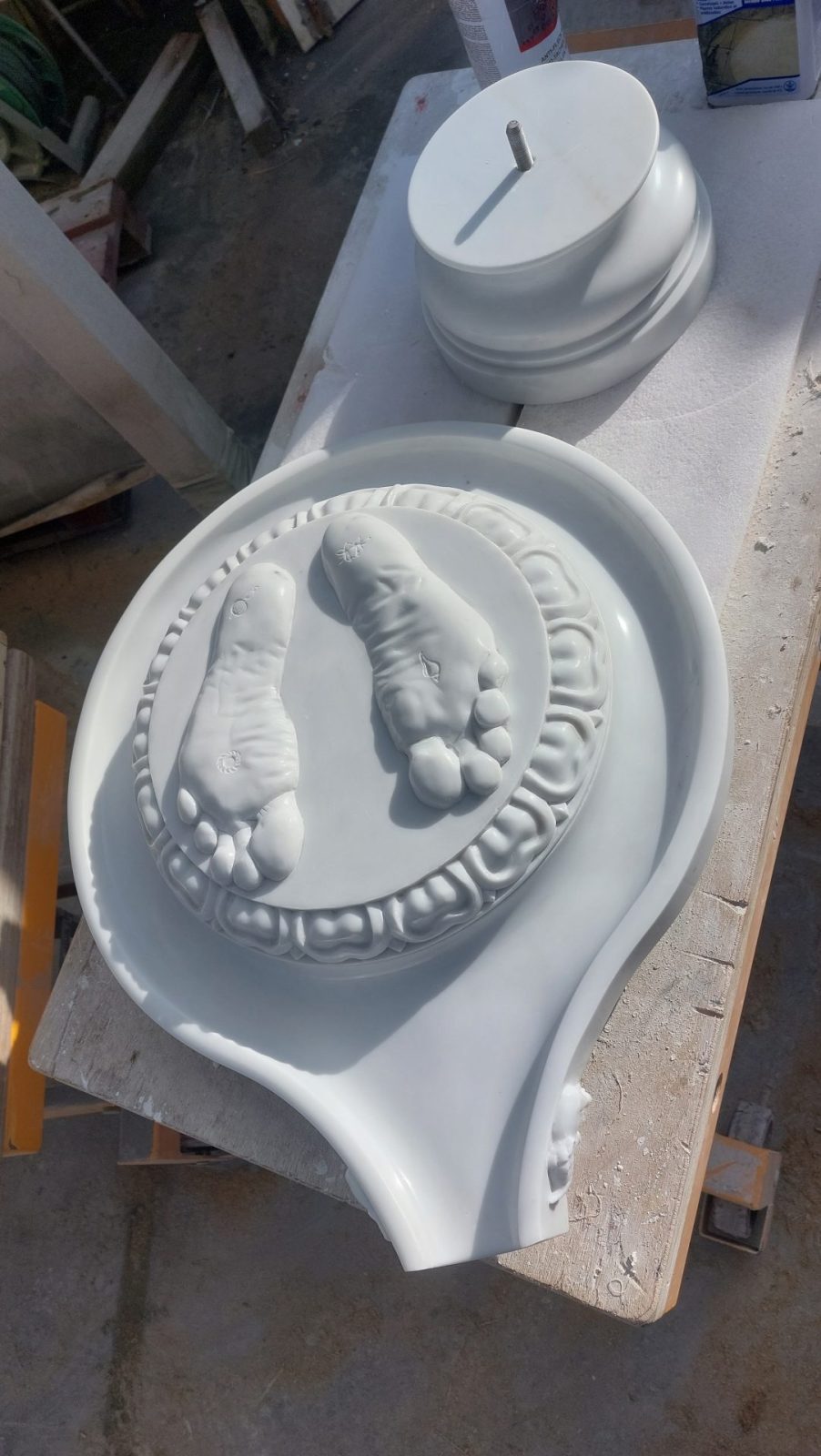
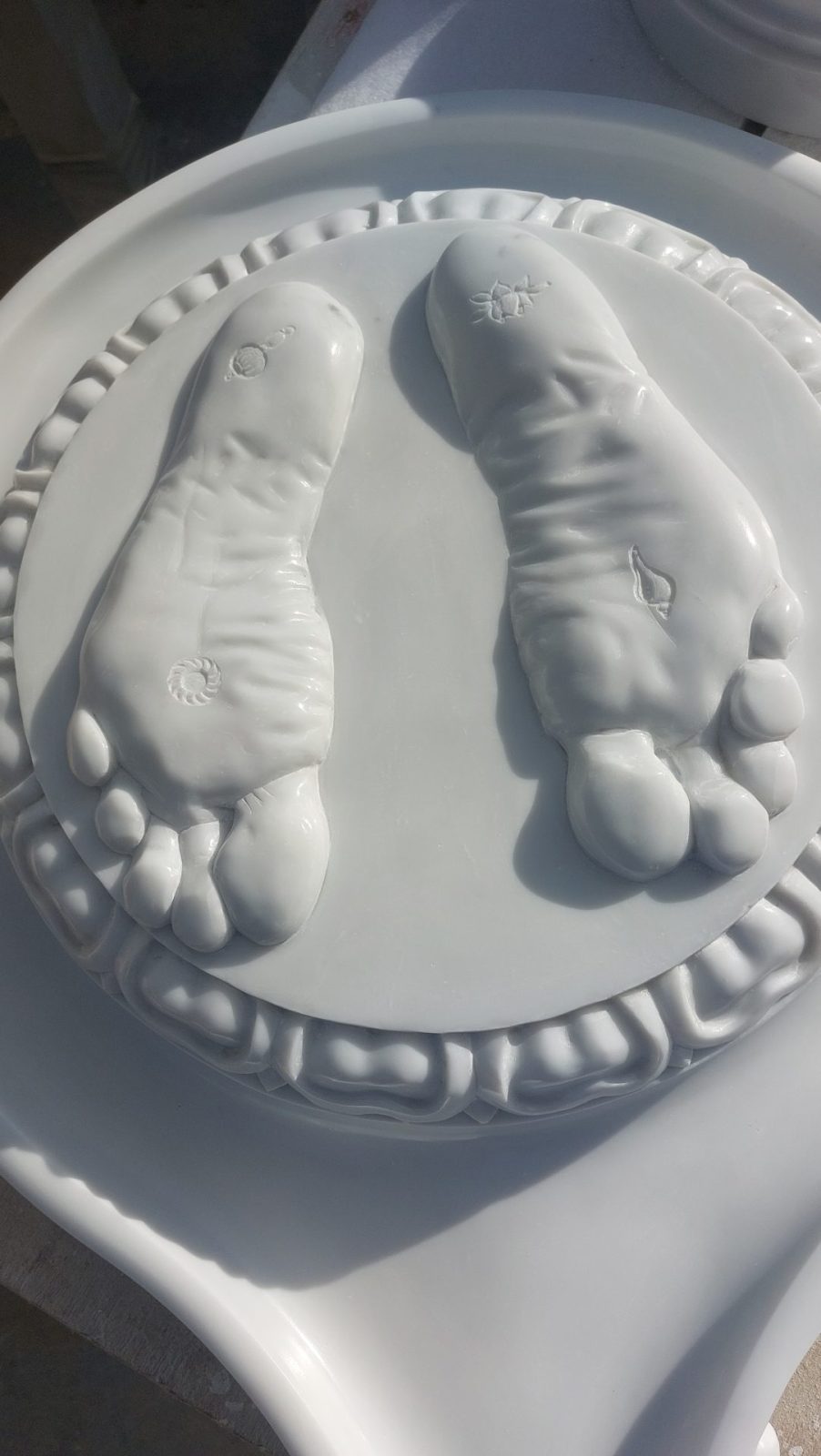
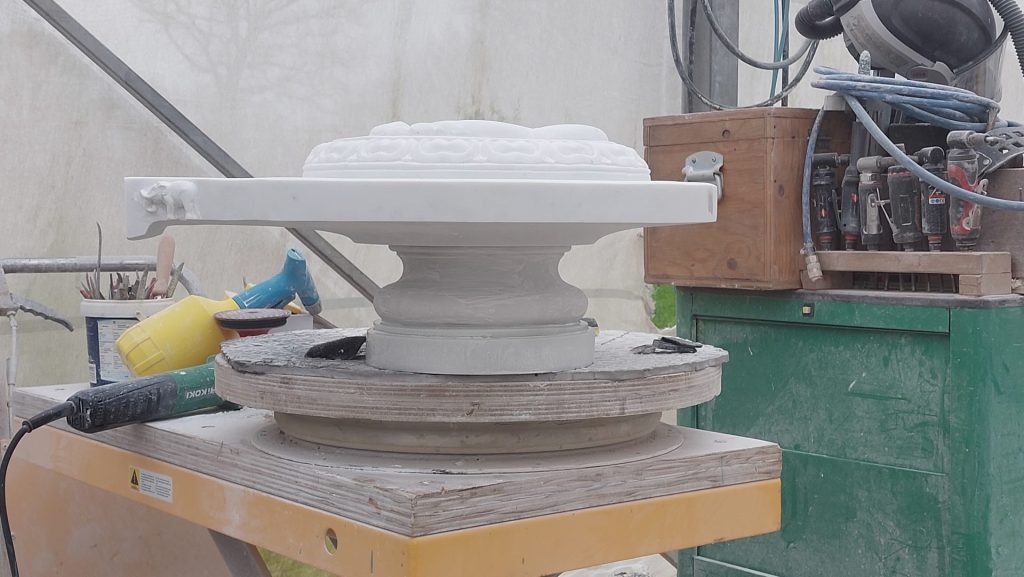
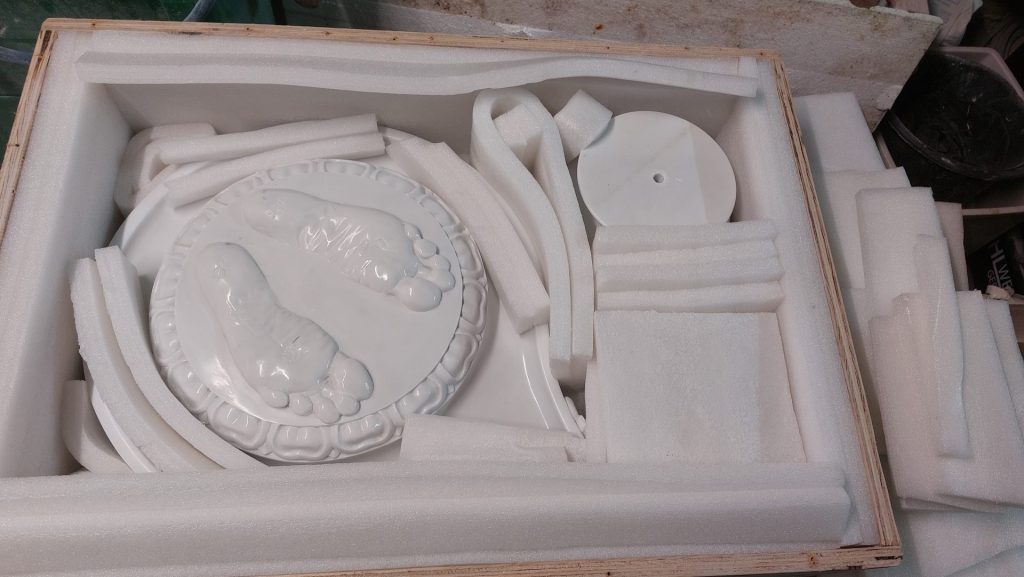
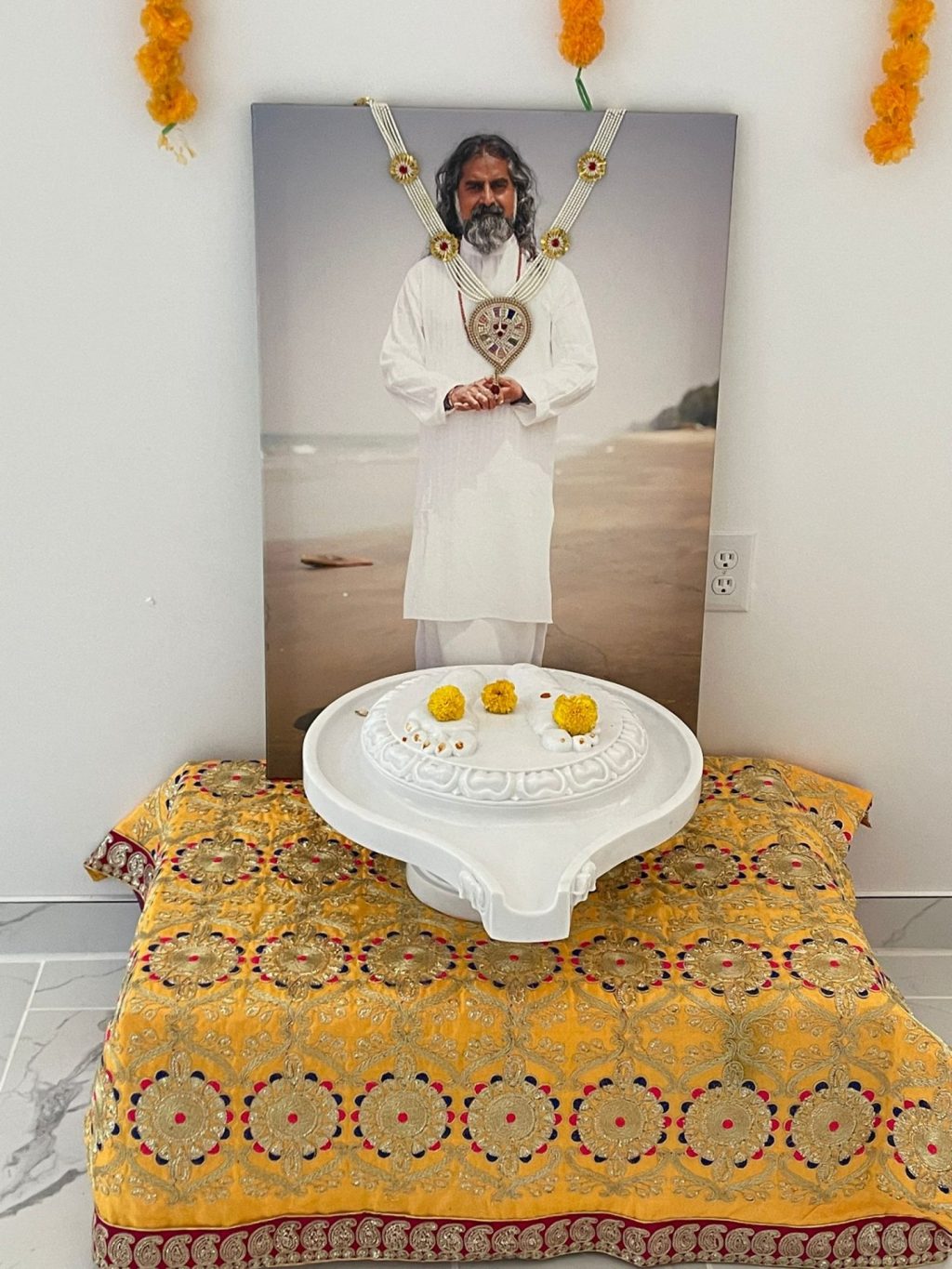
Paadas are depictions of the feet of a saint. I'd already carved black granite padukas or paadas once before that represented the feet of Swami Gopala Krishna and later once again, but in recent years I've carved a few more, of Mohanji's feet. These are used daily in the centers in Serbia, Scotland, Slovenia and the United States to keep in connection with the Master. At the moment I am still in preparation for Australia and Croatia, and perhaps Brazil. Unlike the usual form, I also gave these Paadas a spout, so that ritual liquids (water, milk, kumkum, vibhuti etc) can be collected and spread over the land as an energetic blessing.