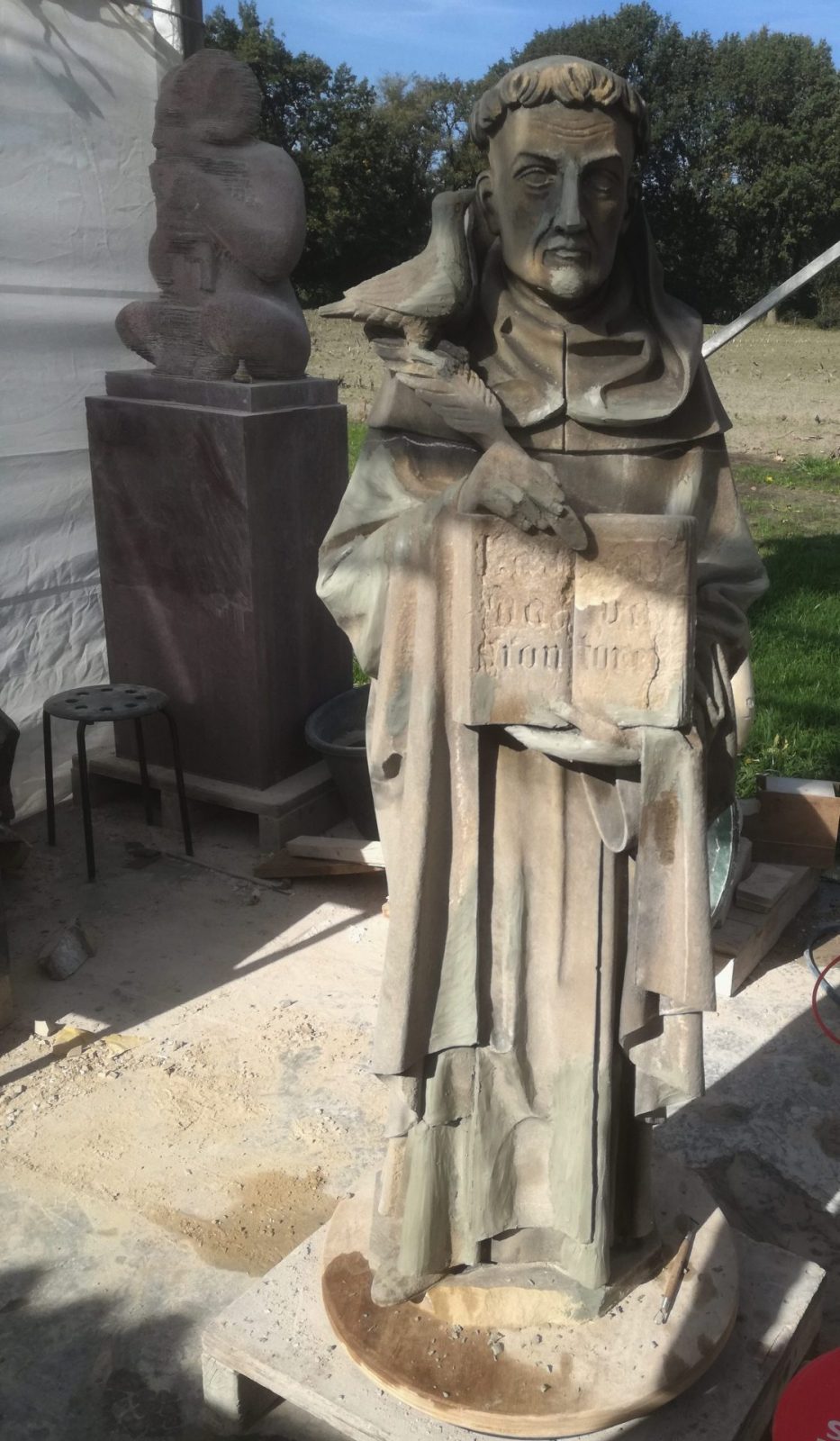
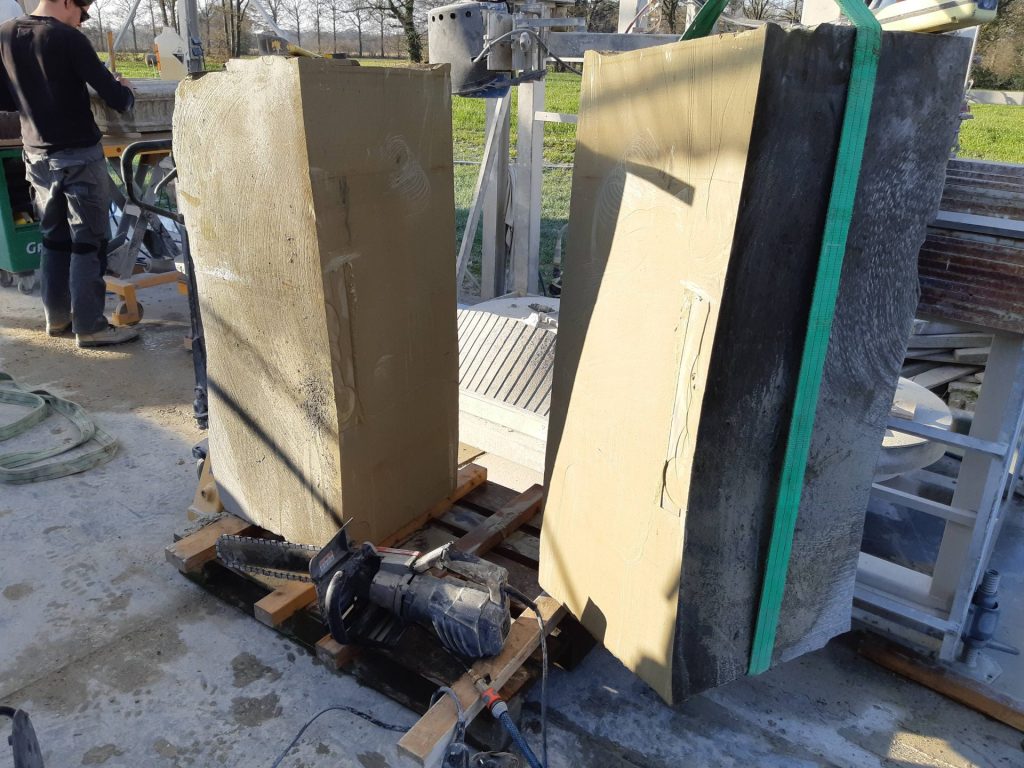
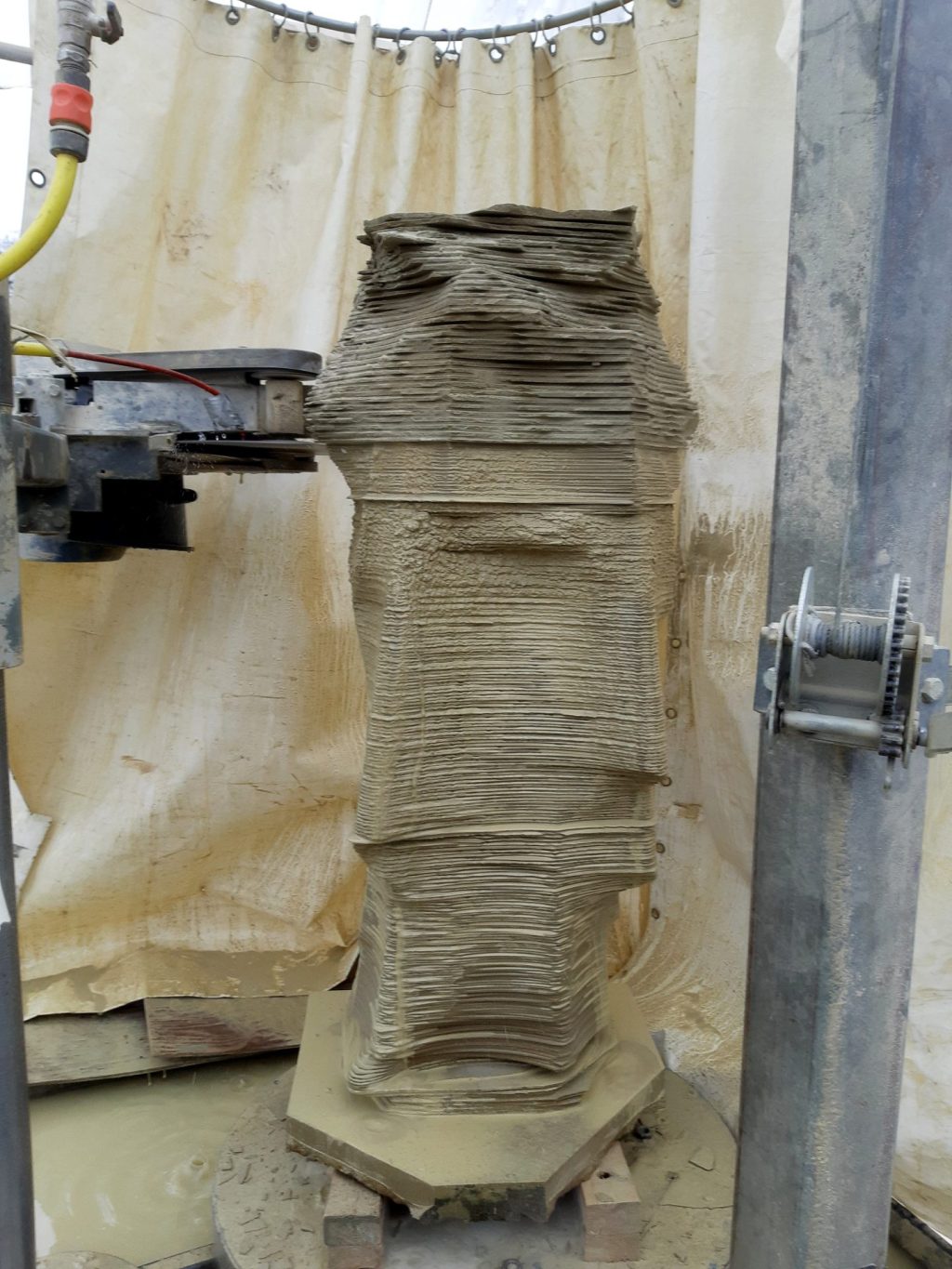
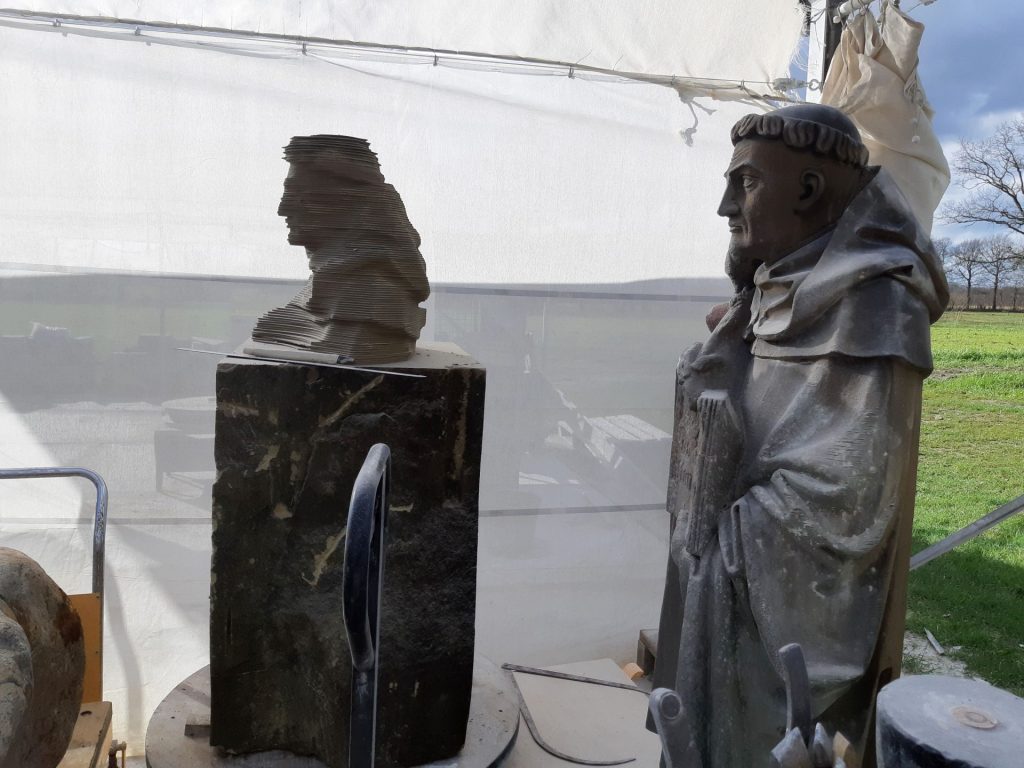
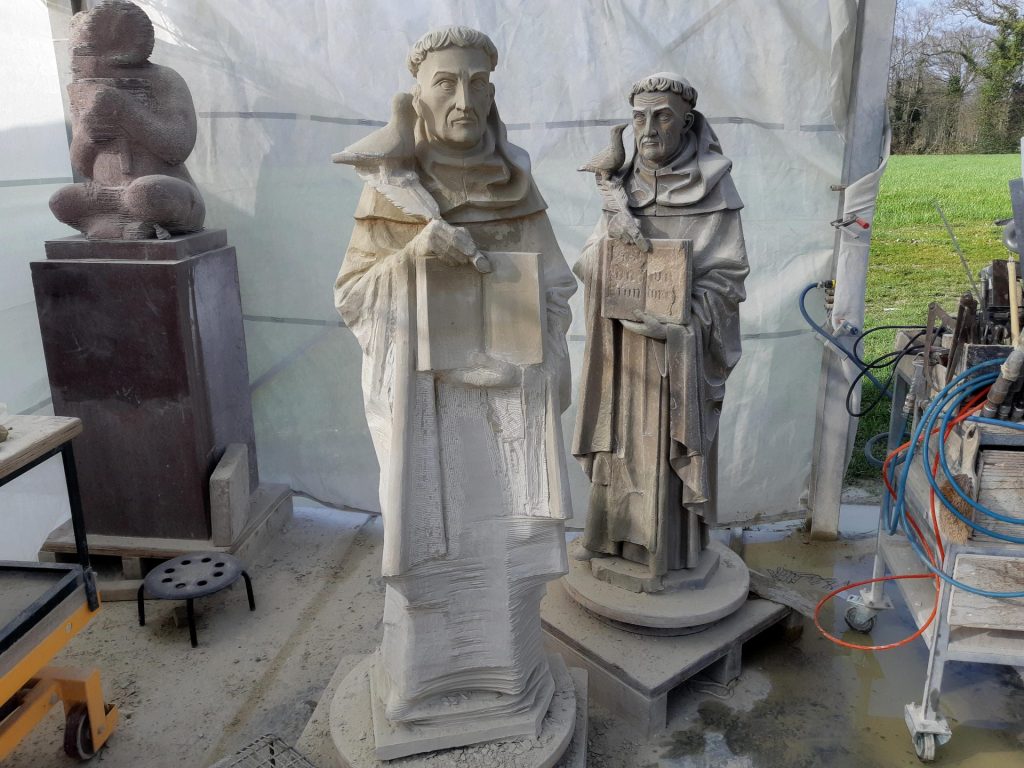
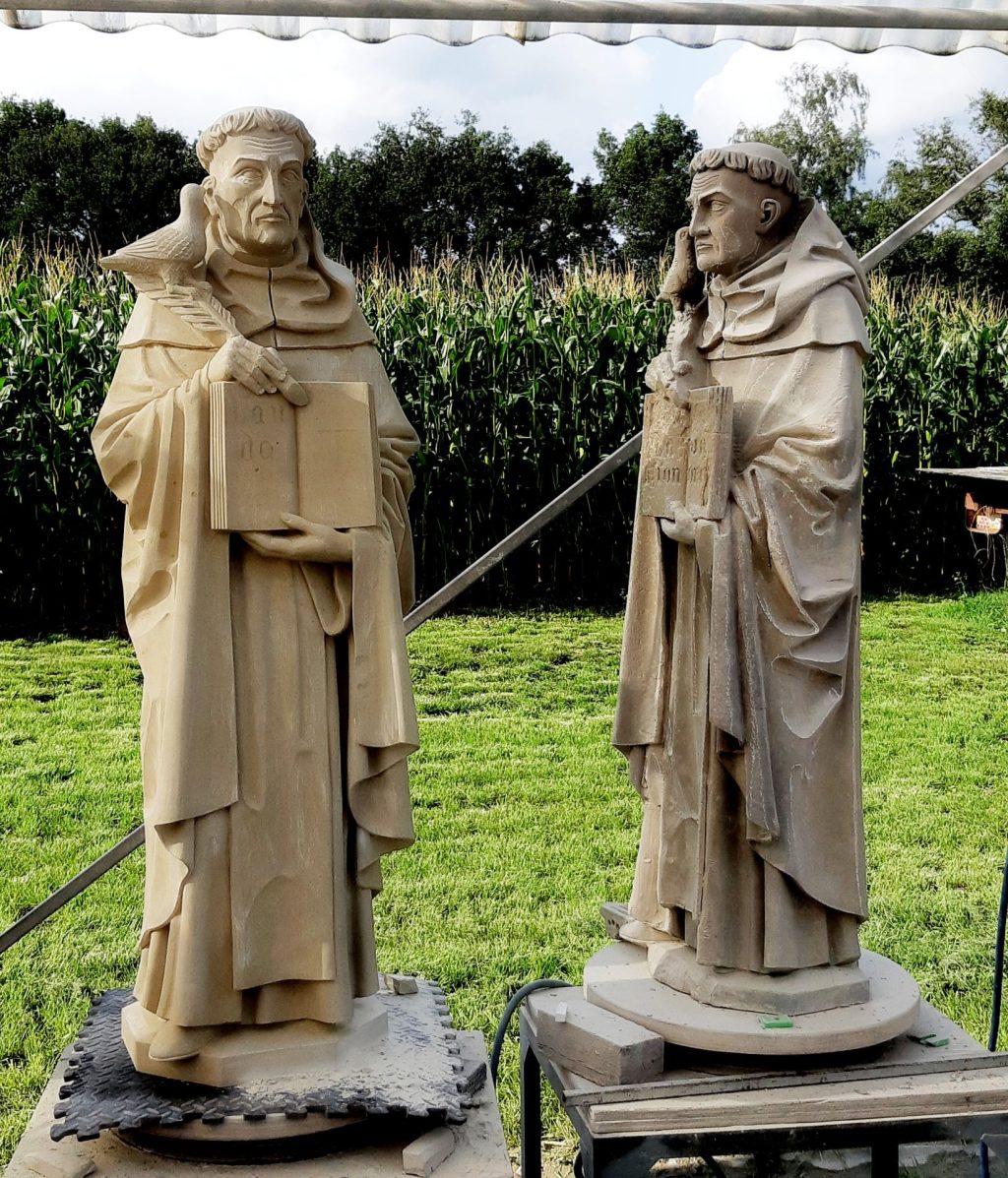
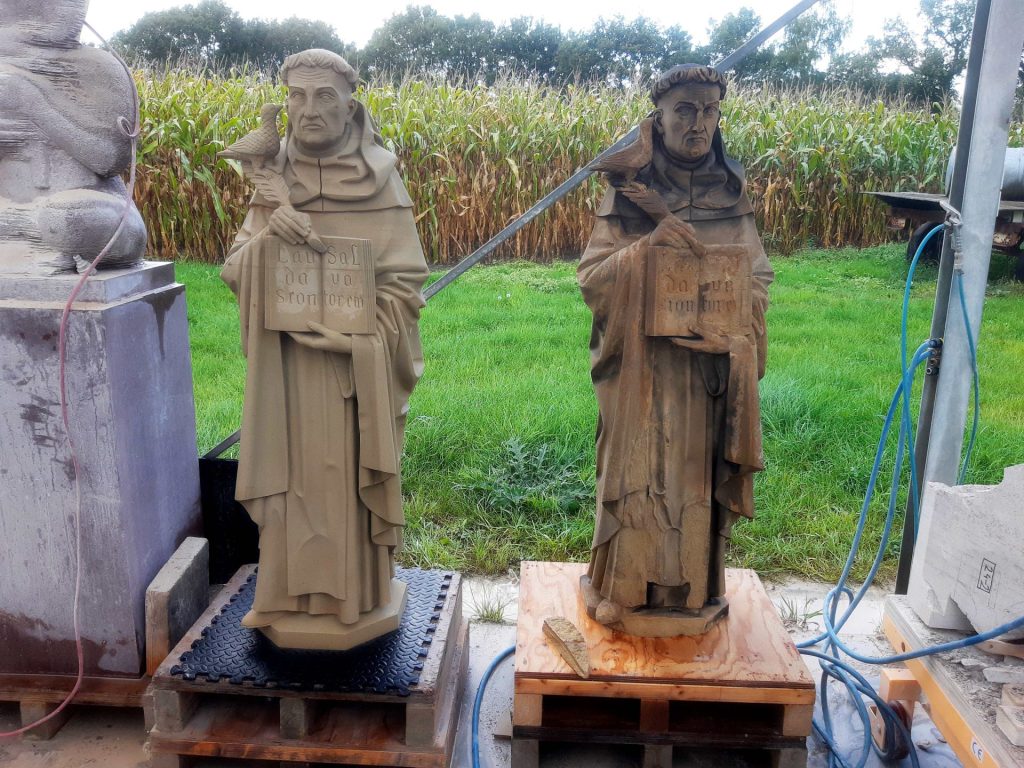
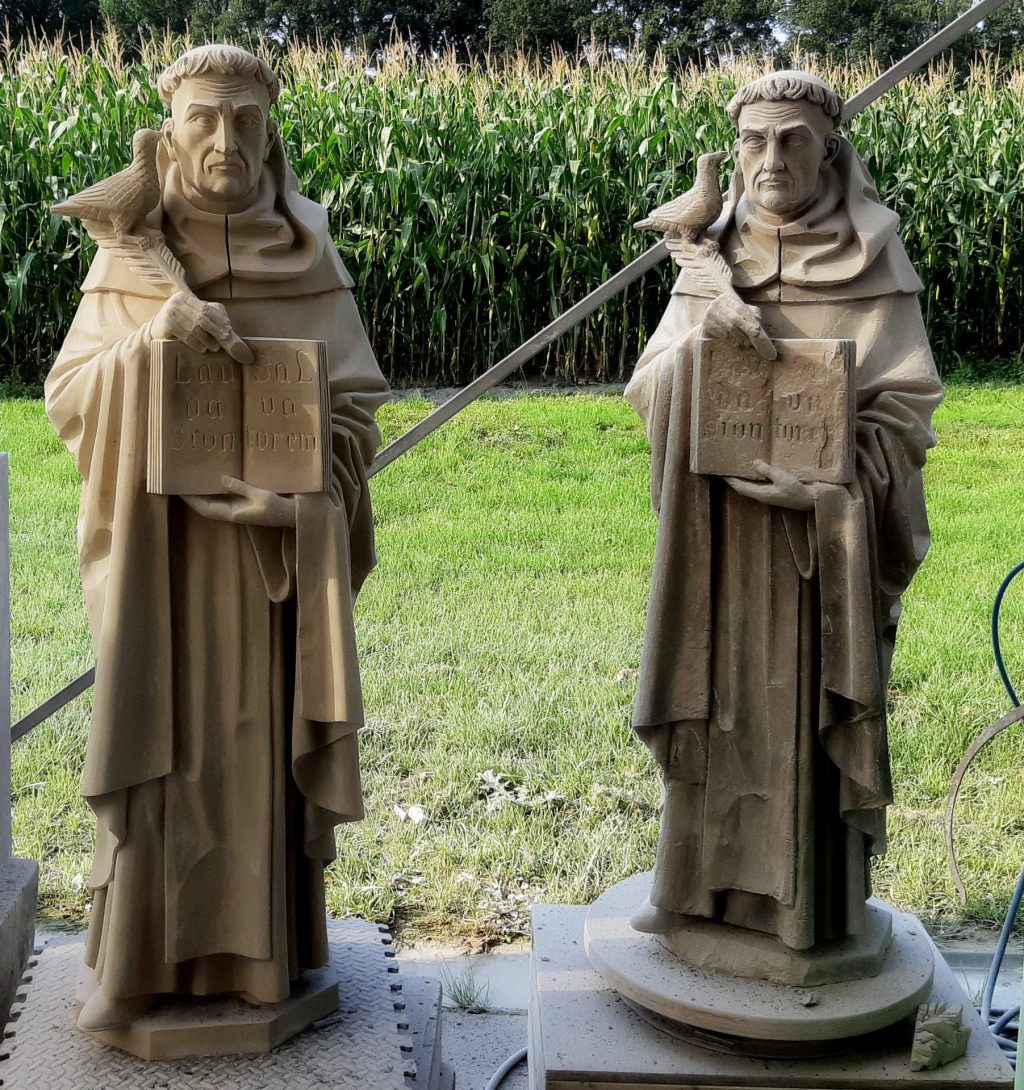
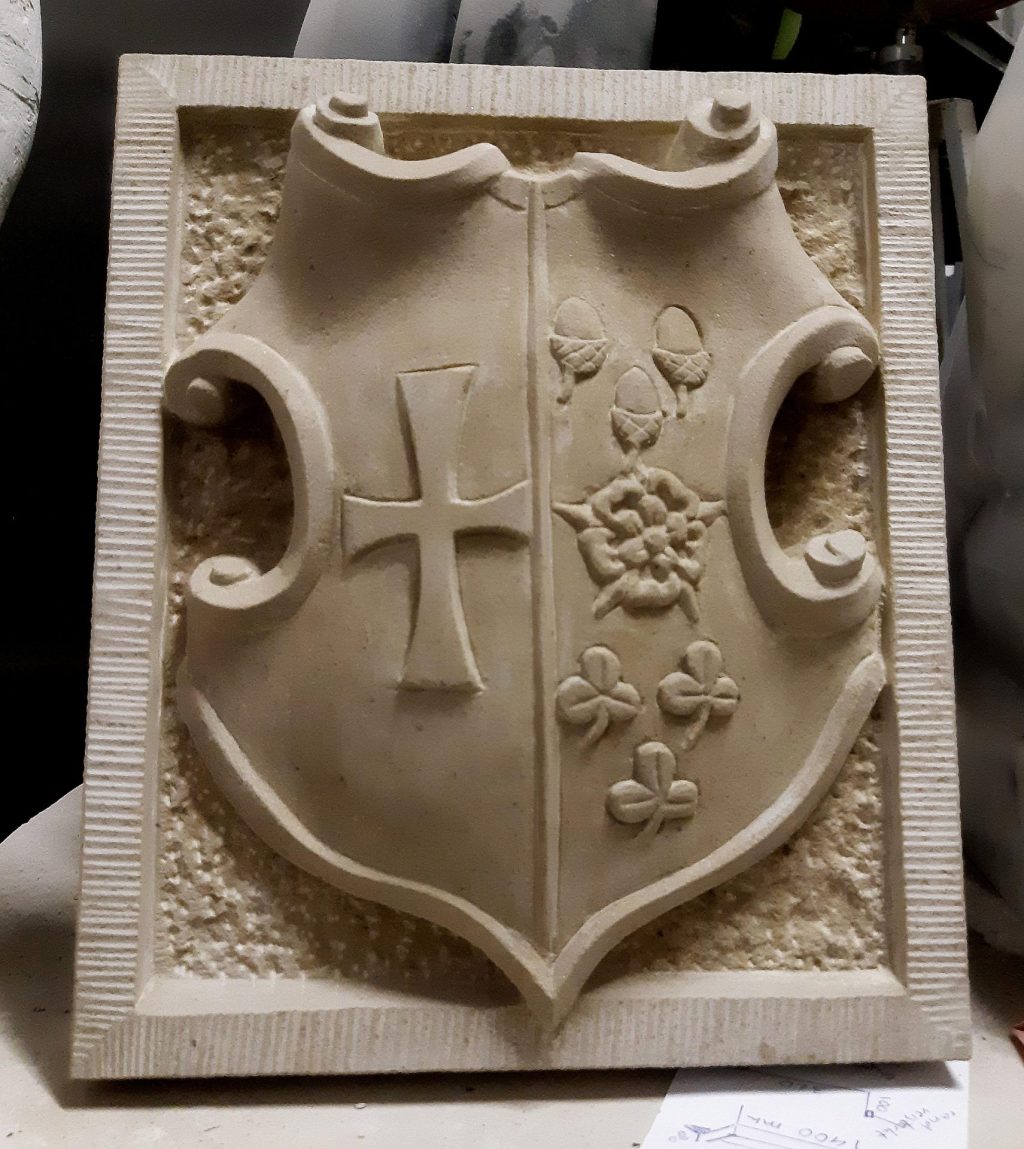
copy of Thomas Aquinas completed
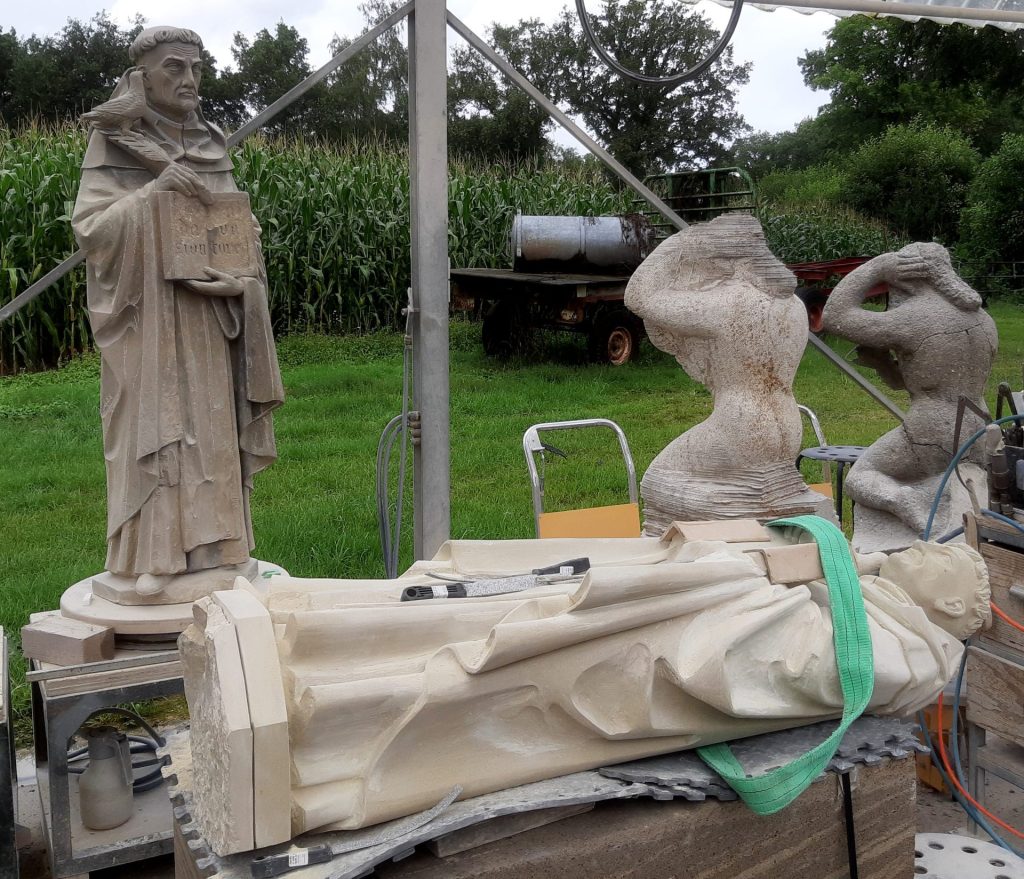
Thomas in two parts
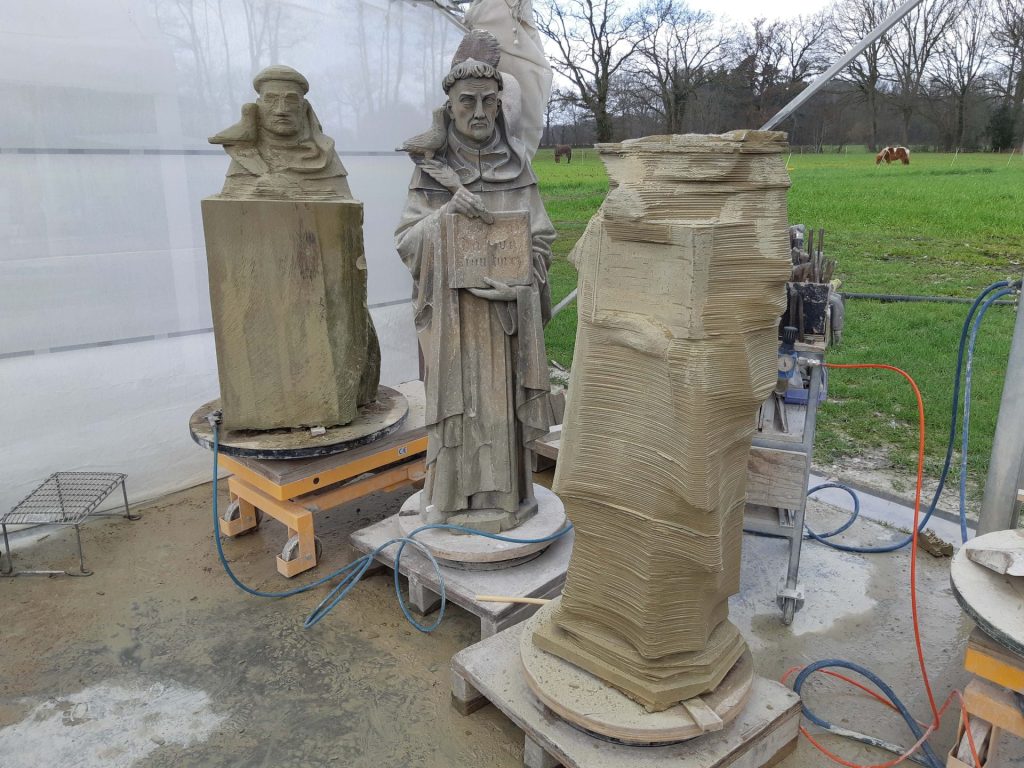
After long interruptions (carving finials for St. Eusebius's Church and large crockets for the Utrecht Dom Cathedral out of new limestone) the statue of Thomas Aquinas is finally finished. In my previous blog posts you can read who this man was and how I reconstructed the sculpture, and how I started the copying of the statue with a lot of sawing.


To the message first about this project.
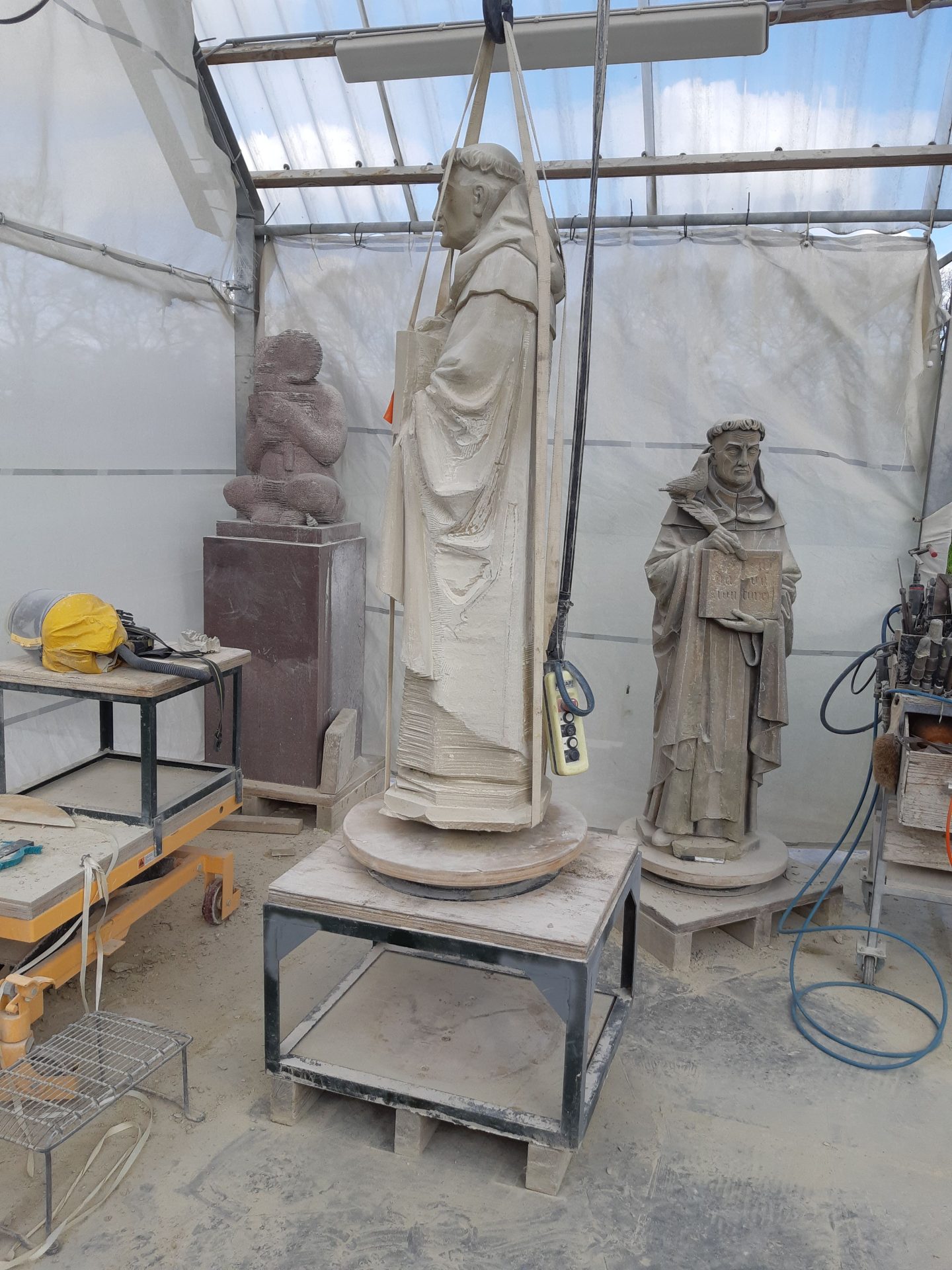
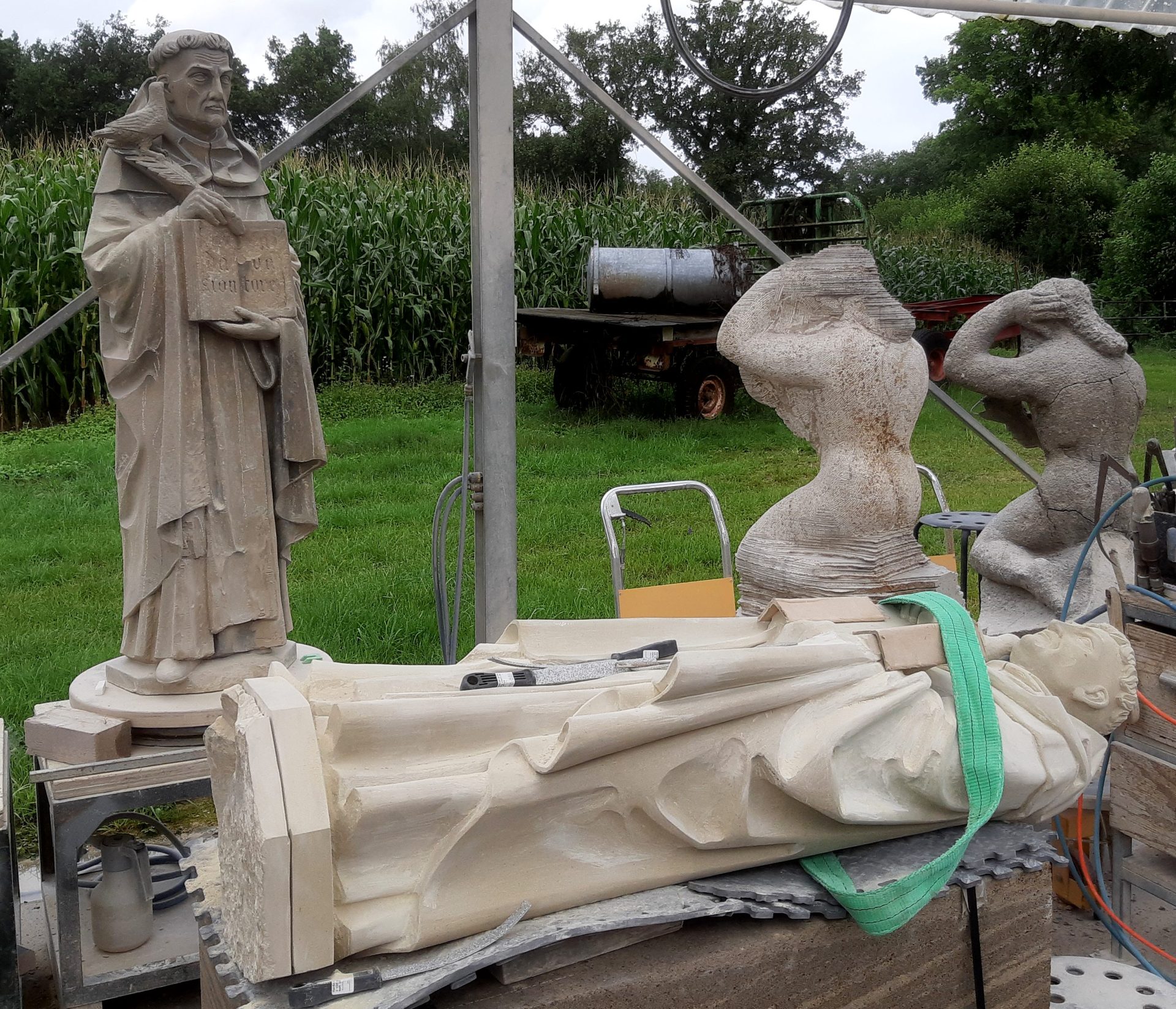
When I got started again,I had already anchored the two parts together with two thick stainless steel threaded rods of 20mm thick and about 50 or 60 cms long. That won't come off so easily. I made it so that the top part fits onto the lower part a bit like a bottle cap. But I still needed to connect the jointing plane with a restoration mortar, because carving this plane to fit 100% is unnecessarily difficult. I can't glue it entirely, because a horizontal glue layer is like asking for trouble. The water won't seep through the material and the stone above the line will rot and break by freezing. Of course I did attach the pins firmly with epoxy adhesive. With the mortar I grouted the seam in the same colour and now it's hard to tell the spot.
Feathers and feet
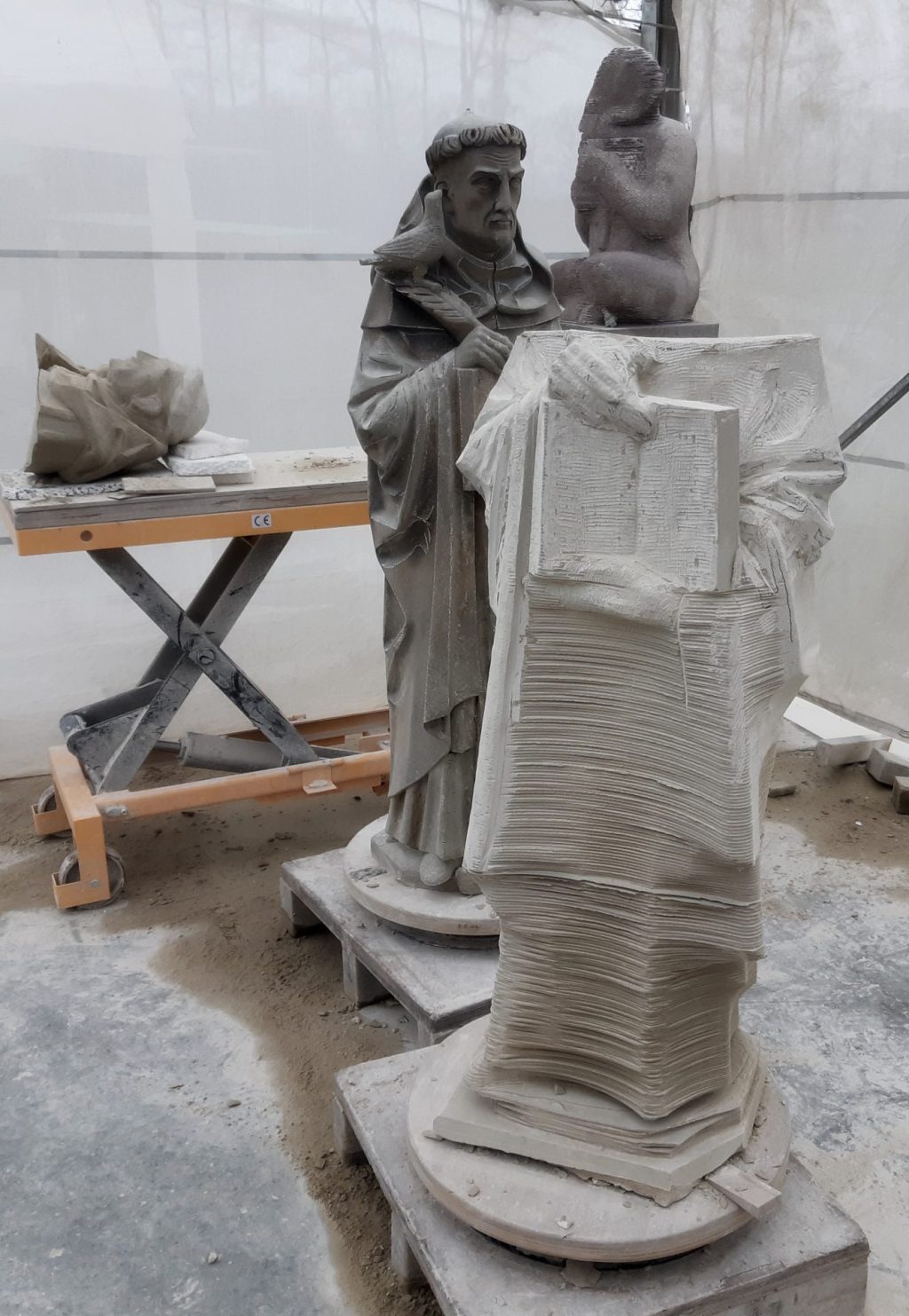
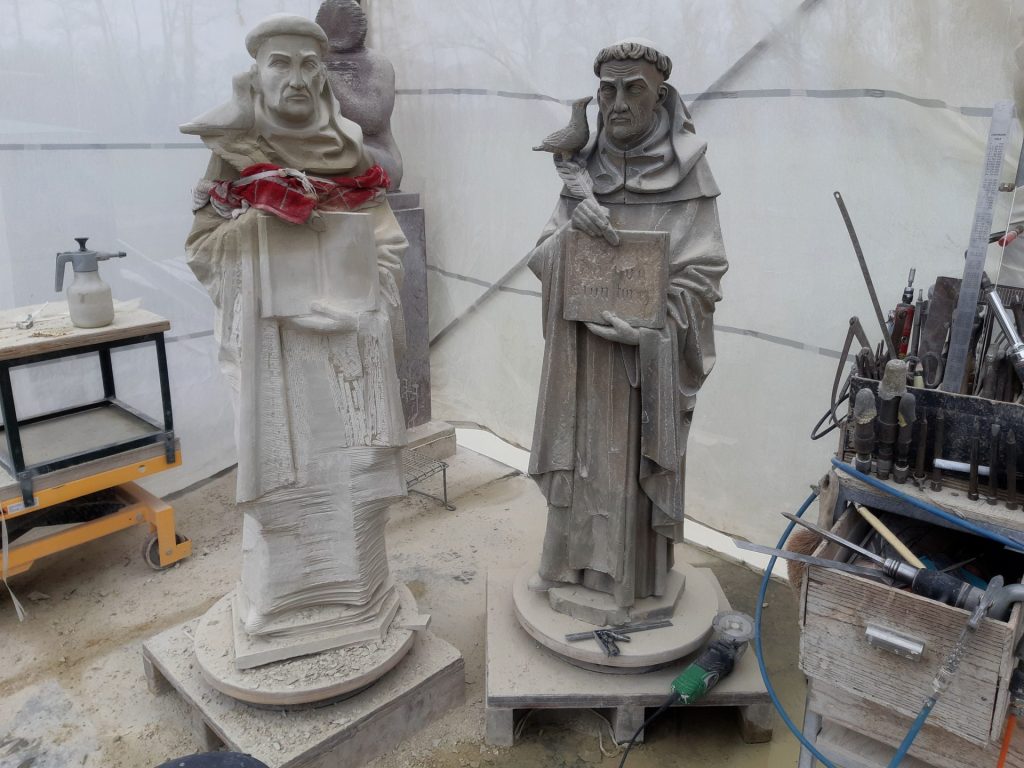
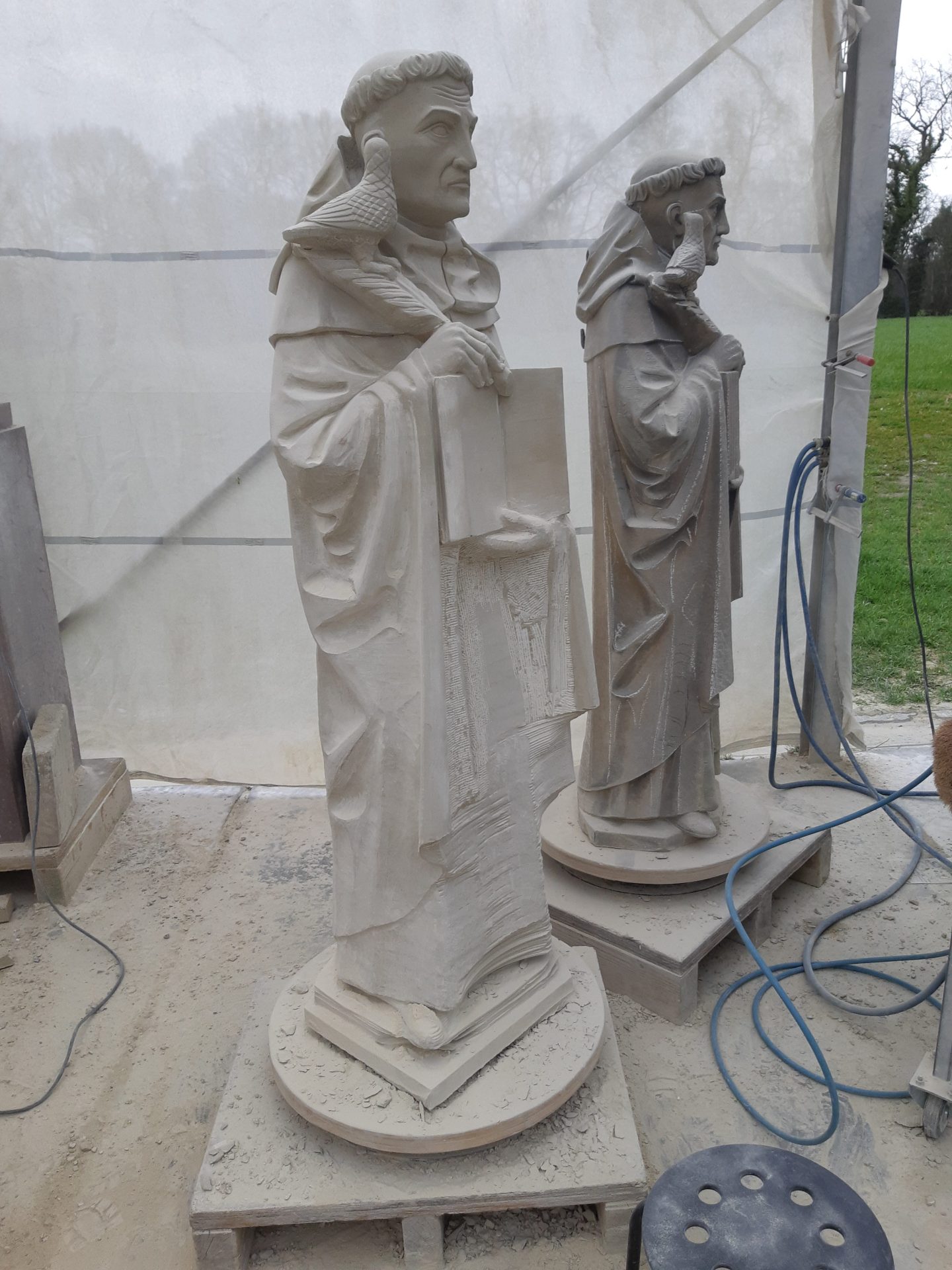
This was followed by the wellknown steps of carving the details. With some measuring work and gradually detailing, a proper copy of the weathered sculpture emerged. I didn't use the pointing machine unfortunately, because my presawing machine had already given me so much references that I could transfer the intermediate points much more easily with compasses and templates.
I had reconstructed the missing pieces with plastiline clay in the old statue. This clay will not harden and can easily be removed again later. The clay coloured remarkably well with the rest of the statue, so it did not interfere while copying.
The pigeon on Thomas’ s shoulder was carved with great detail, with tiny legs and feathers. This kind of thing is not really hard to make in this stone, it just requires a little more patience.
At working height and easy to turn
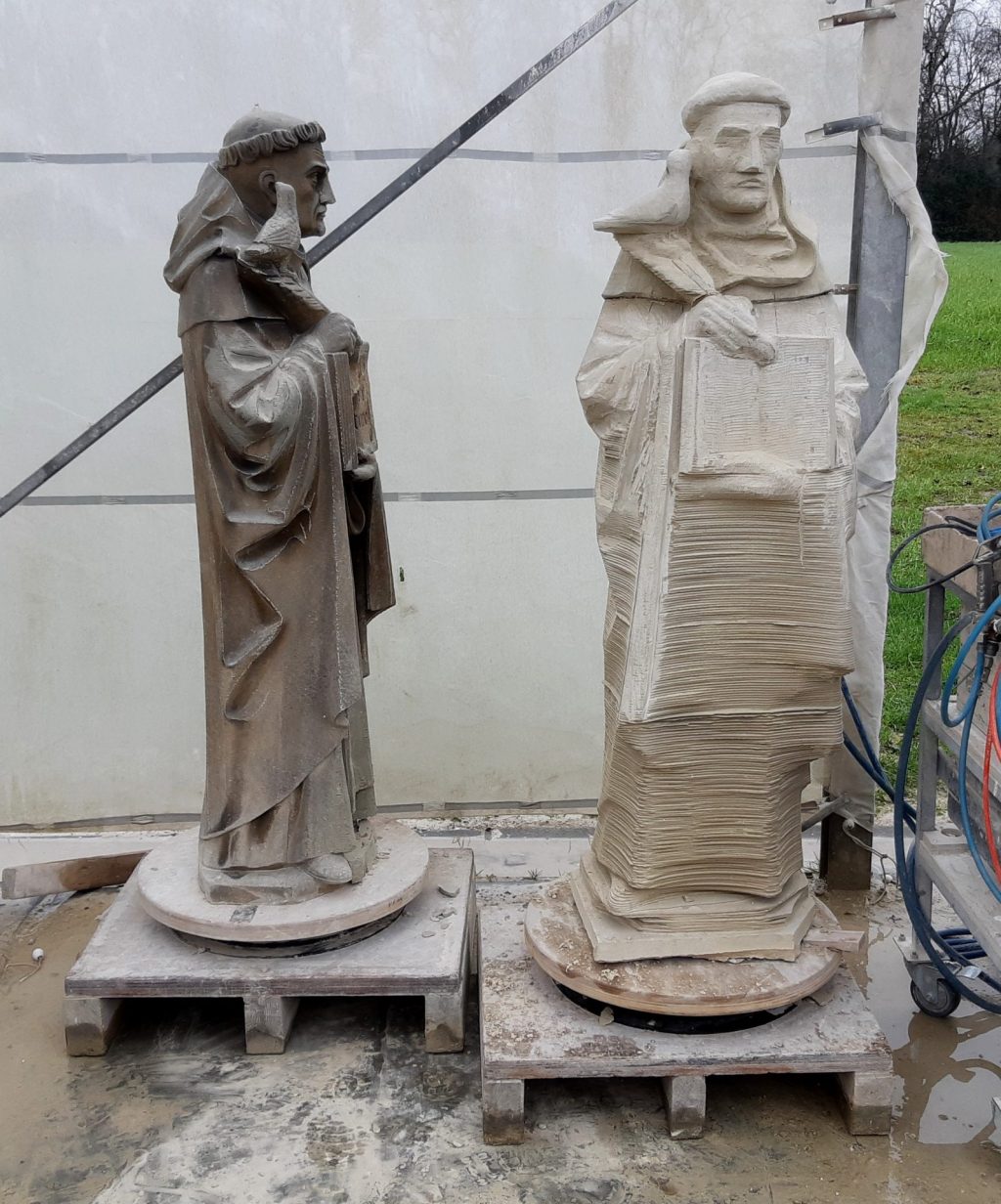
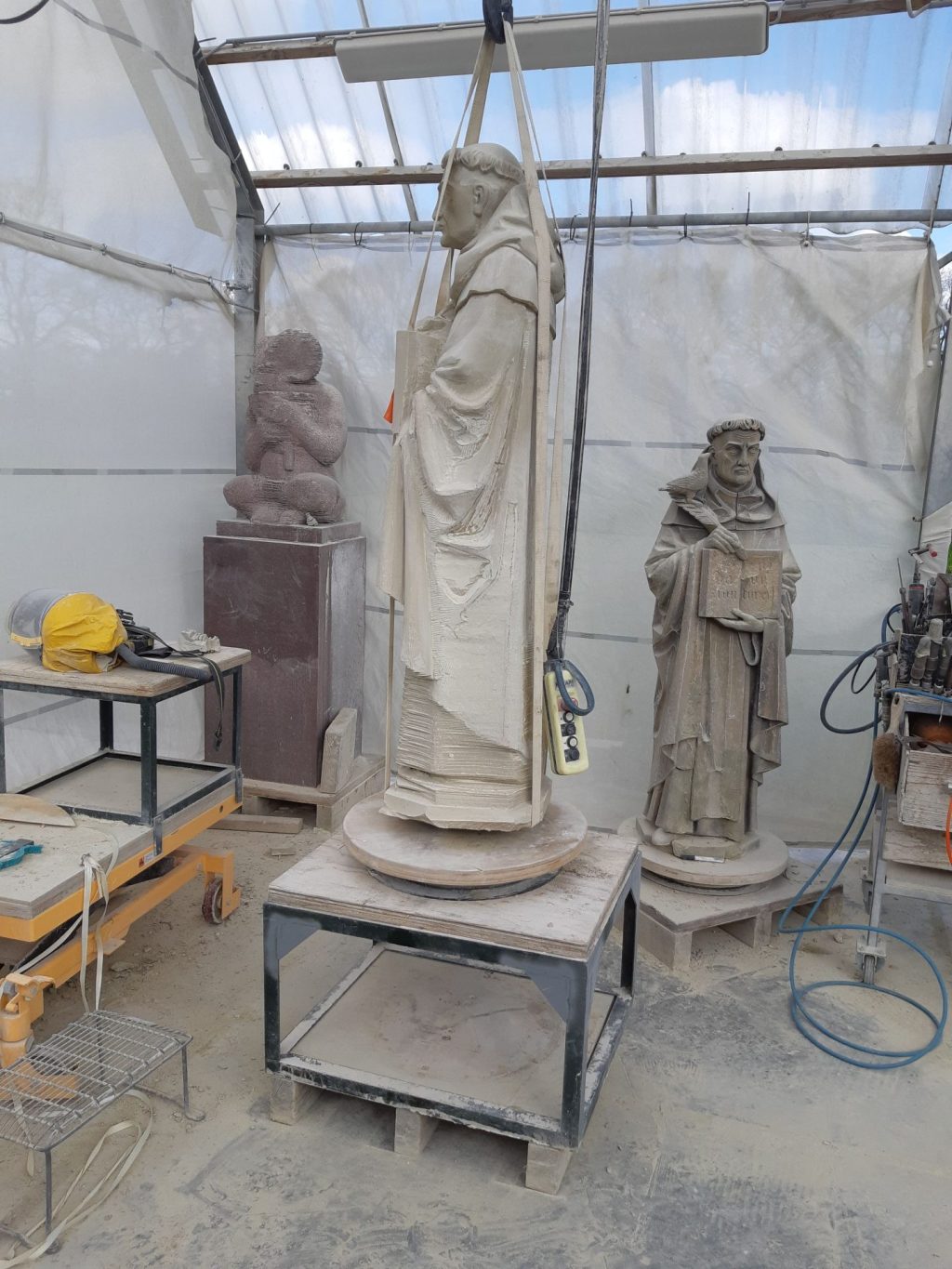
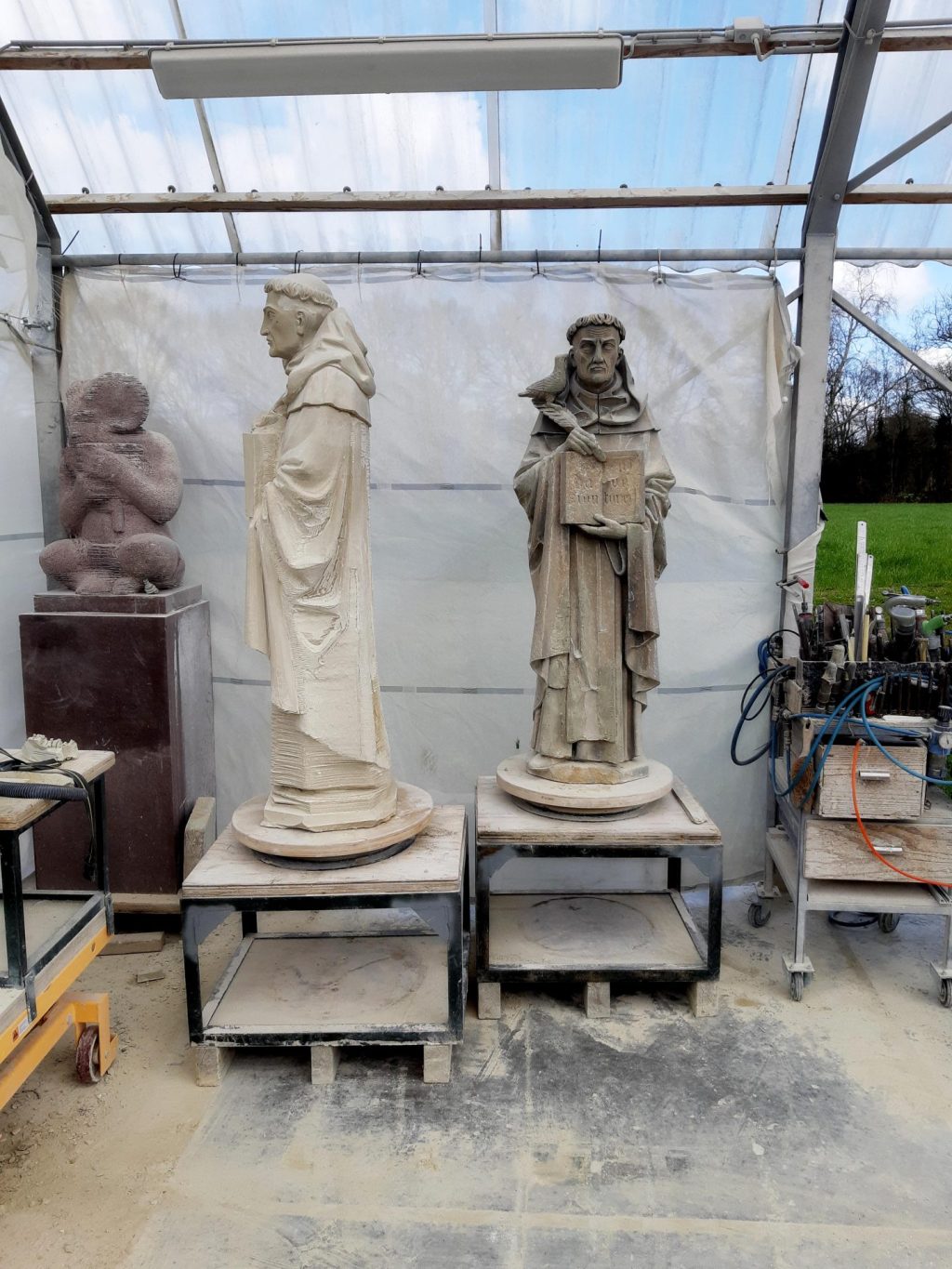
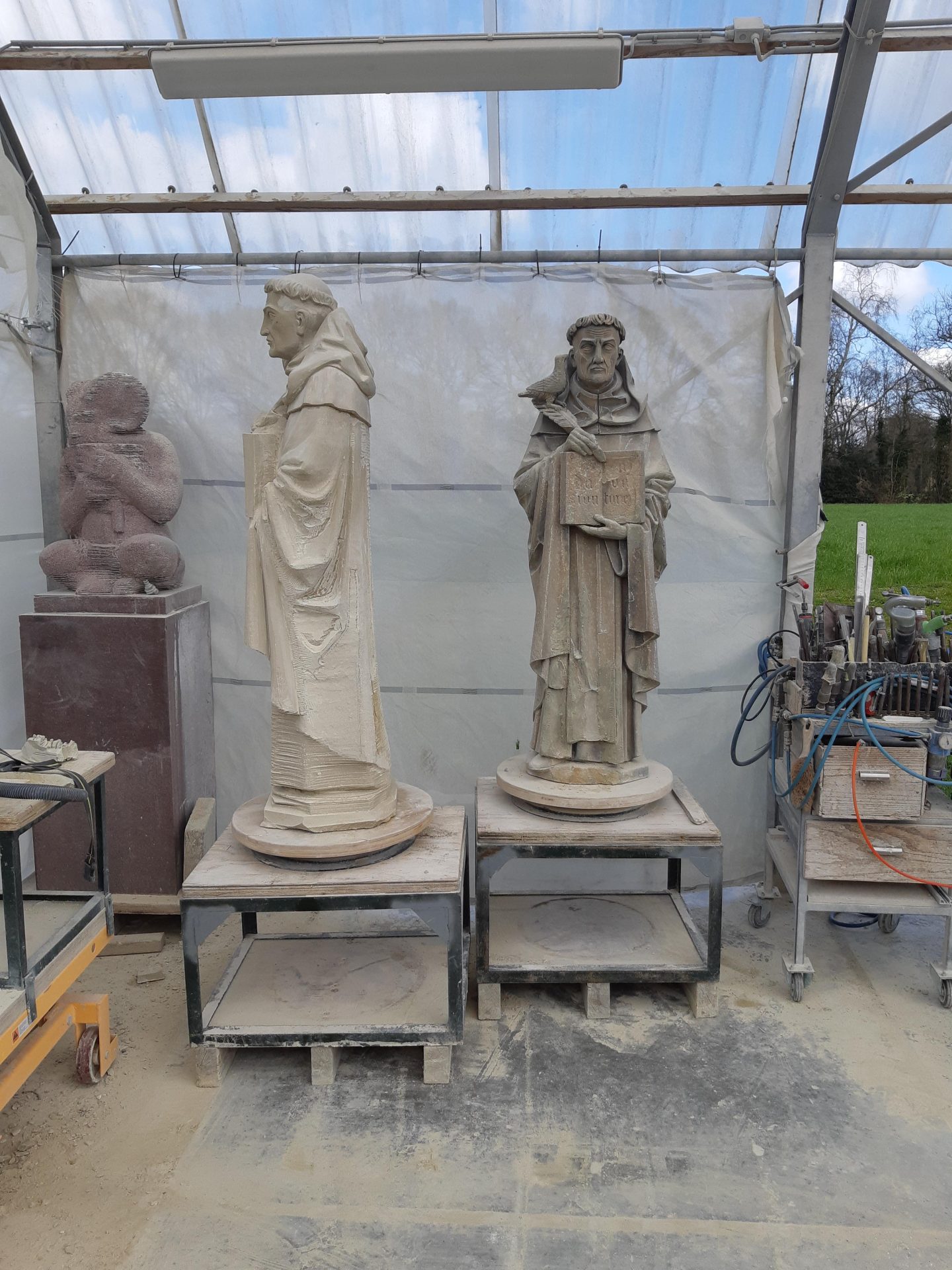
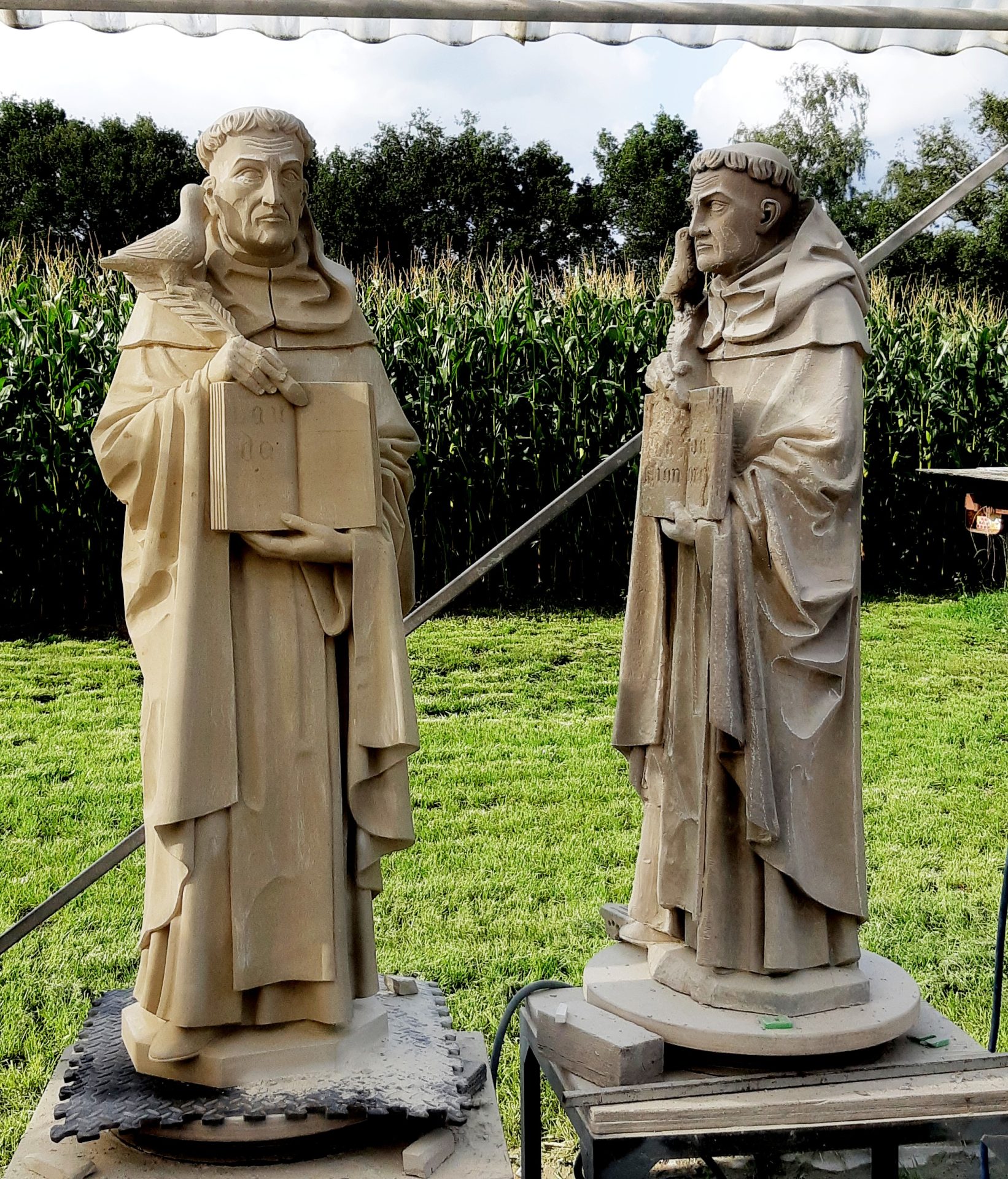
I then placed the statue a level higher, in order to tackle its lower half. I always set them up close together and preferably on a turntable, so I can always put them in the best position and easily oversee everything.
I had these stands made so they fit on small pallets, so I can easily wheel them around with a pallet truck. They are stackable too, so I can build them up to a good height. But the stands are just for the larger statues; for smaller ones I'll use my yellow scissor tables. I can use the turntables on these as well.
In case that's still too low, I can add an extra platform to it.
Buffing and sanding
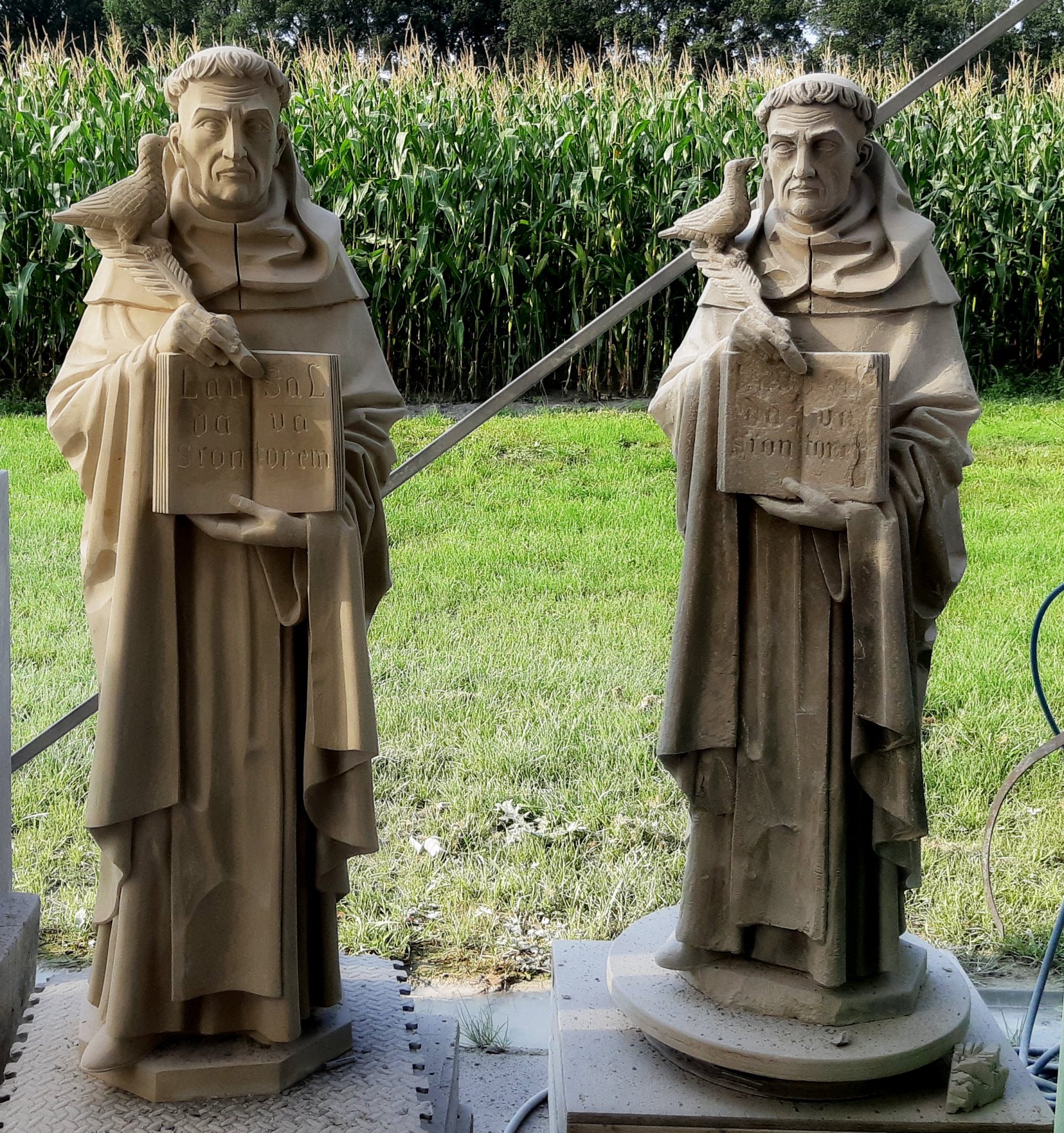
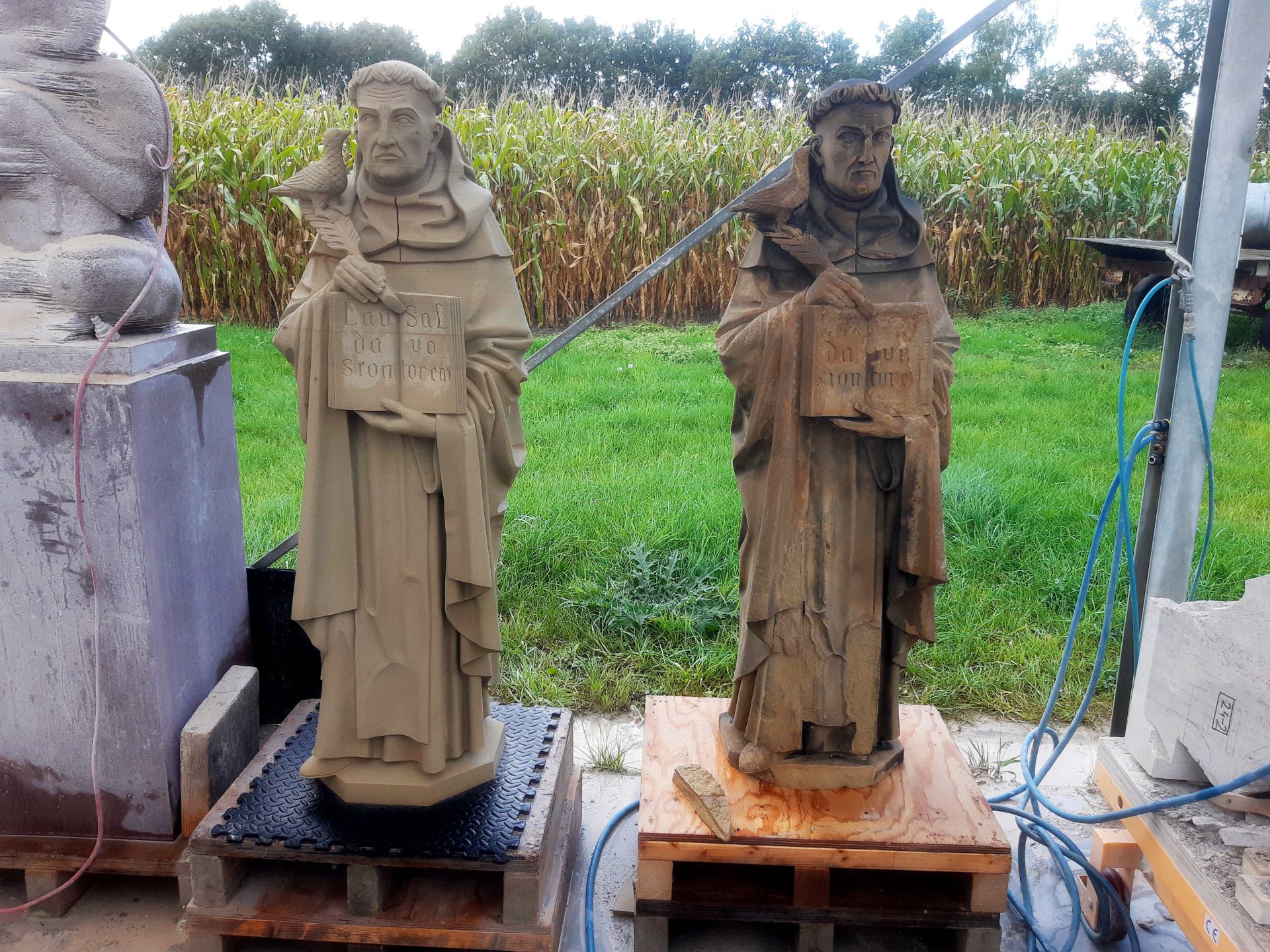
Once all the details were to my taste, the sanding started. With diamond files and abrasive stones, I sanded the entire statue. Later on it still didn't look good enough to me. I discovered that in this Udelfanger sandstone it works quite well if you finish it with sandpaper or emery cloth by hand. It gives a kind of velvety finish that suits the sculpture quite well, and all the scratches of the chisel and abrasive stones will quite easily disappear. However, it is again just another of those jobs that take a bit of patience. I've been sanding on his habit for days, and started to feel it in my fingertips.
Making history for posterity
At the rear of the original statue, there were all kinds of different chisel marks. I reproduced them in the copy. But to make things clear for future generations, I also carved in the following text:: copy 2019 k. van velzen
This should make it easier for future historians what happened to this statue in the present year. For I don't dare trust that this blog will survive the centuries. Perhaps not even the Internet will. It is said that one good solar eruption is enough to fry all of our electronics and even the electrical equipment and facilities. We'll see, but this way, Thomas will remain, at least a little, a guardian of history.