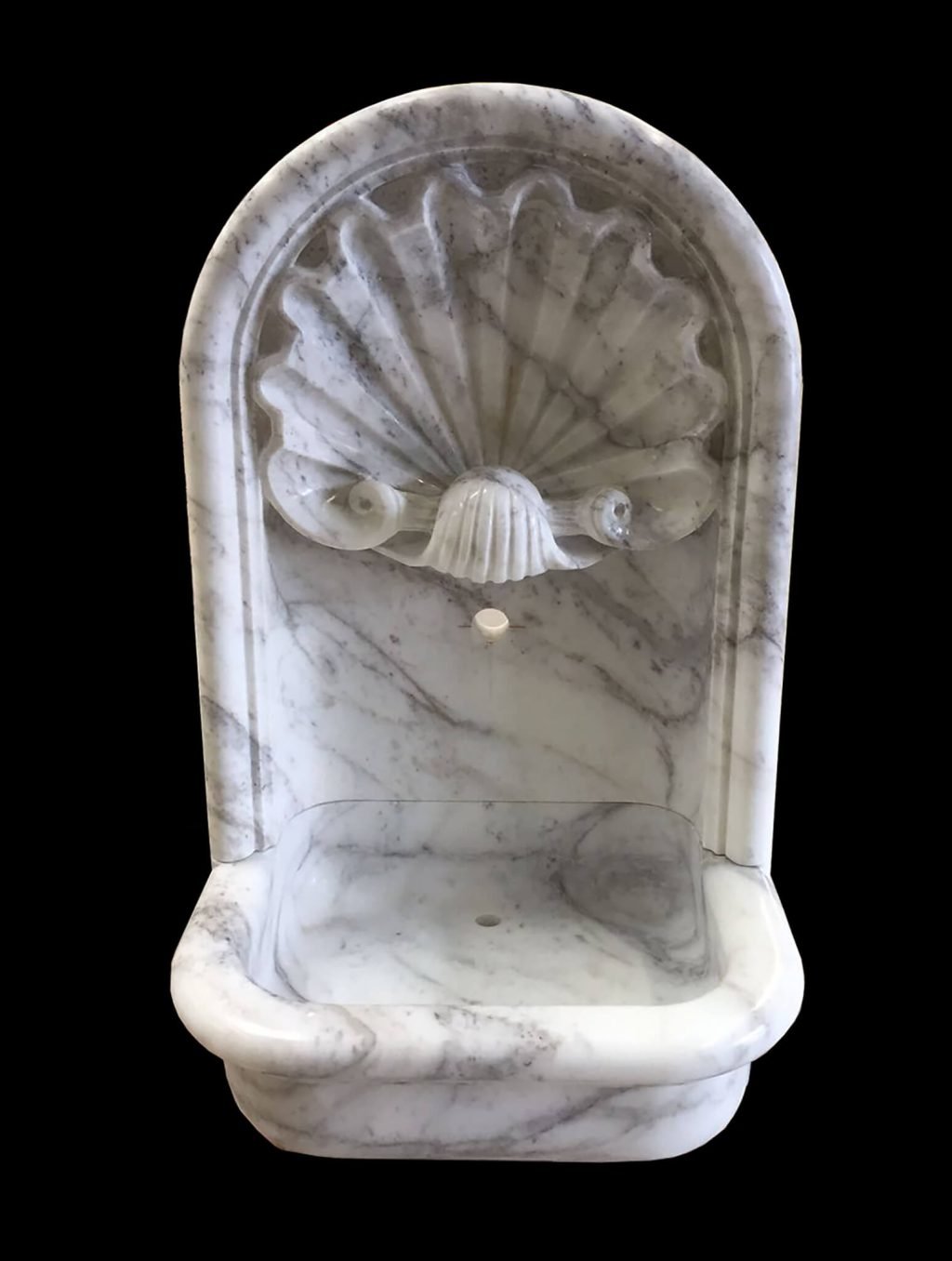
Venus shell in Arabescato-marble
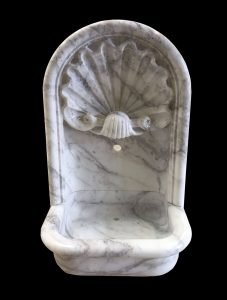
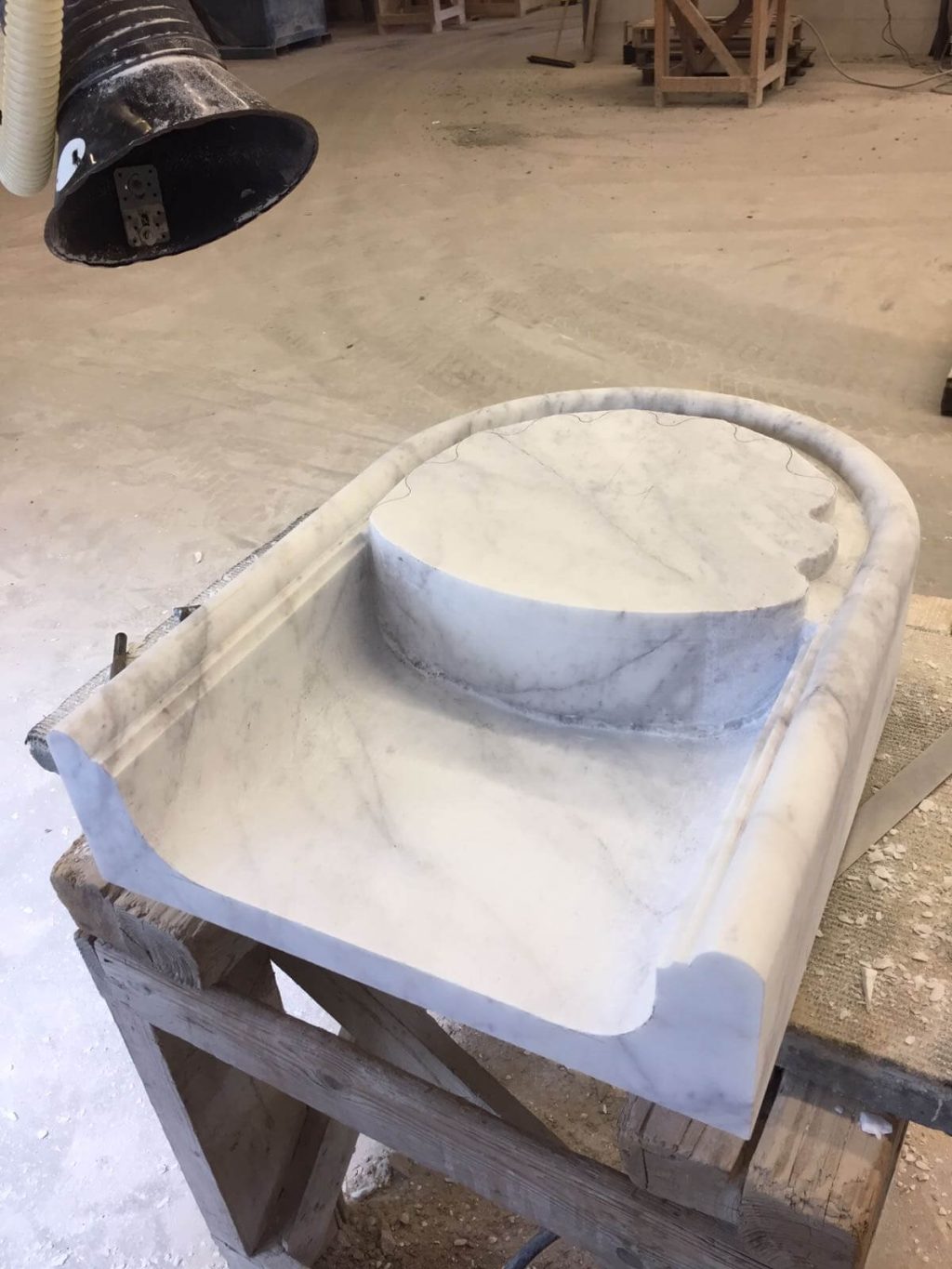
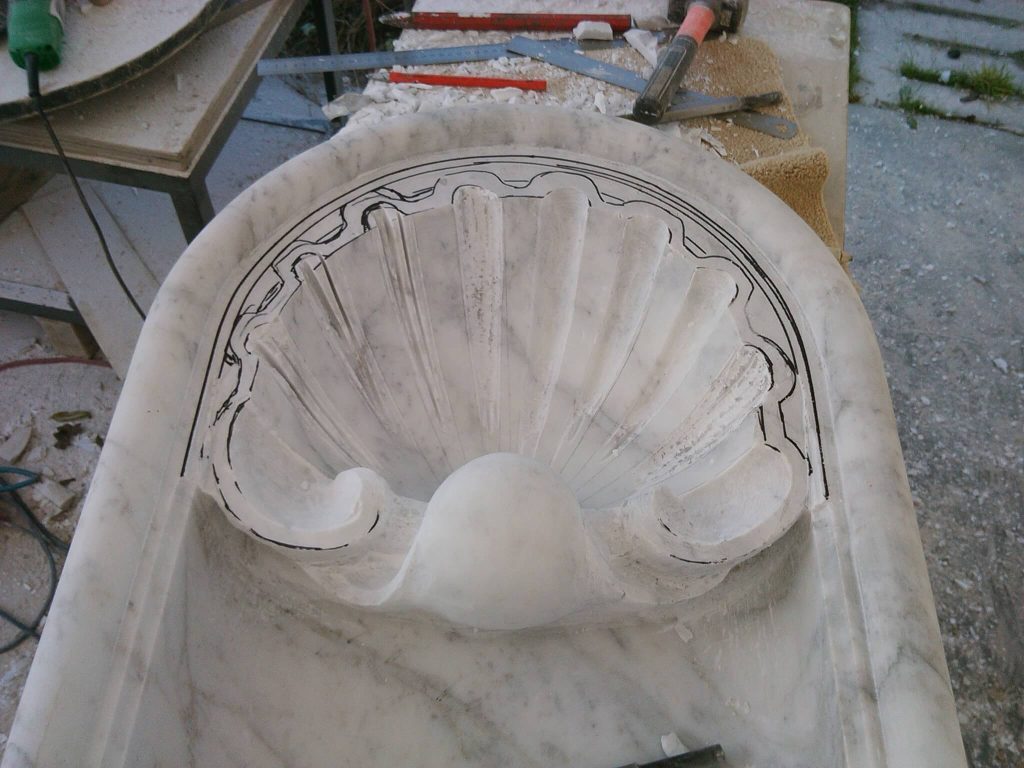
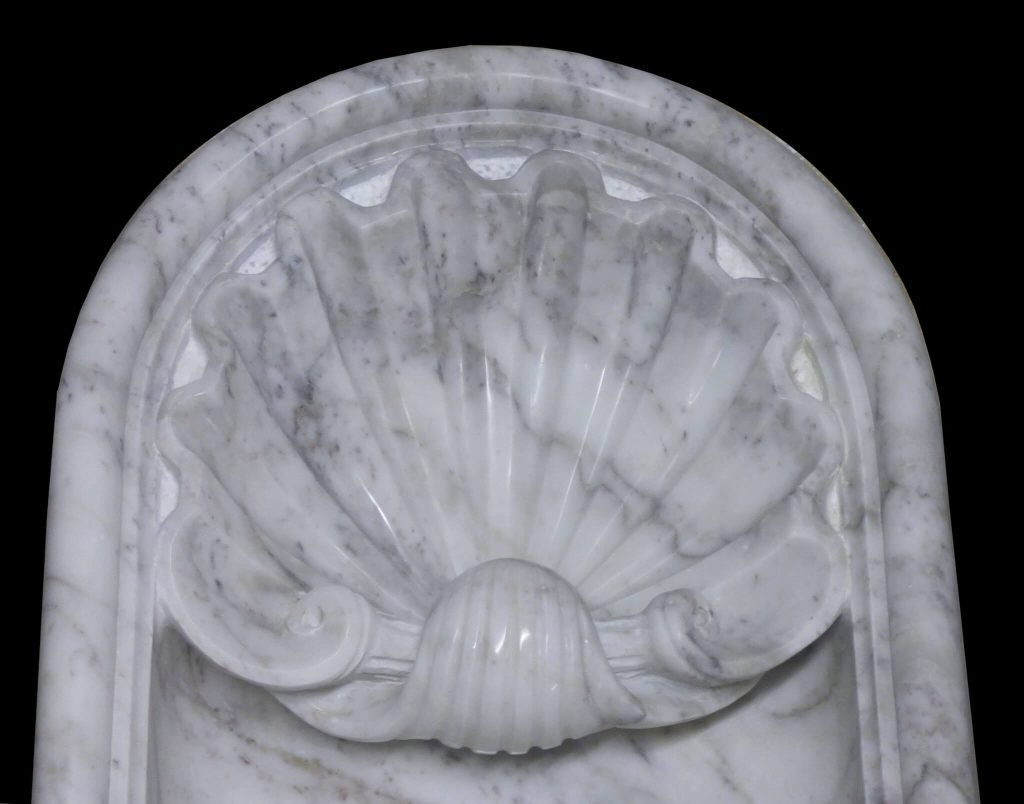
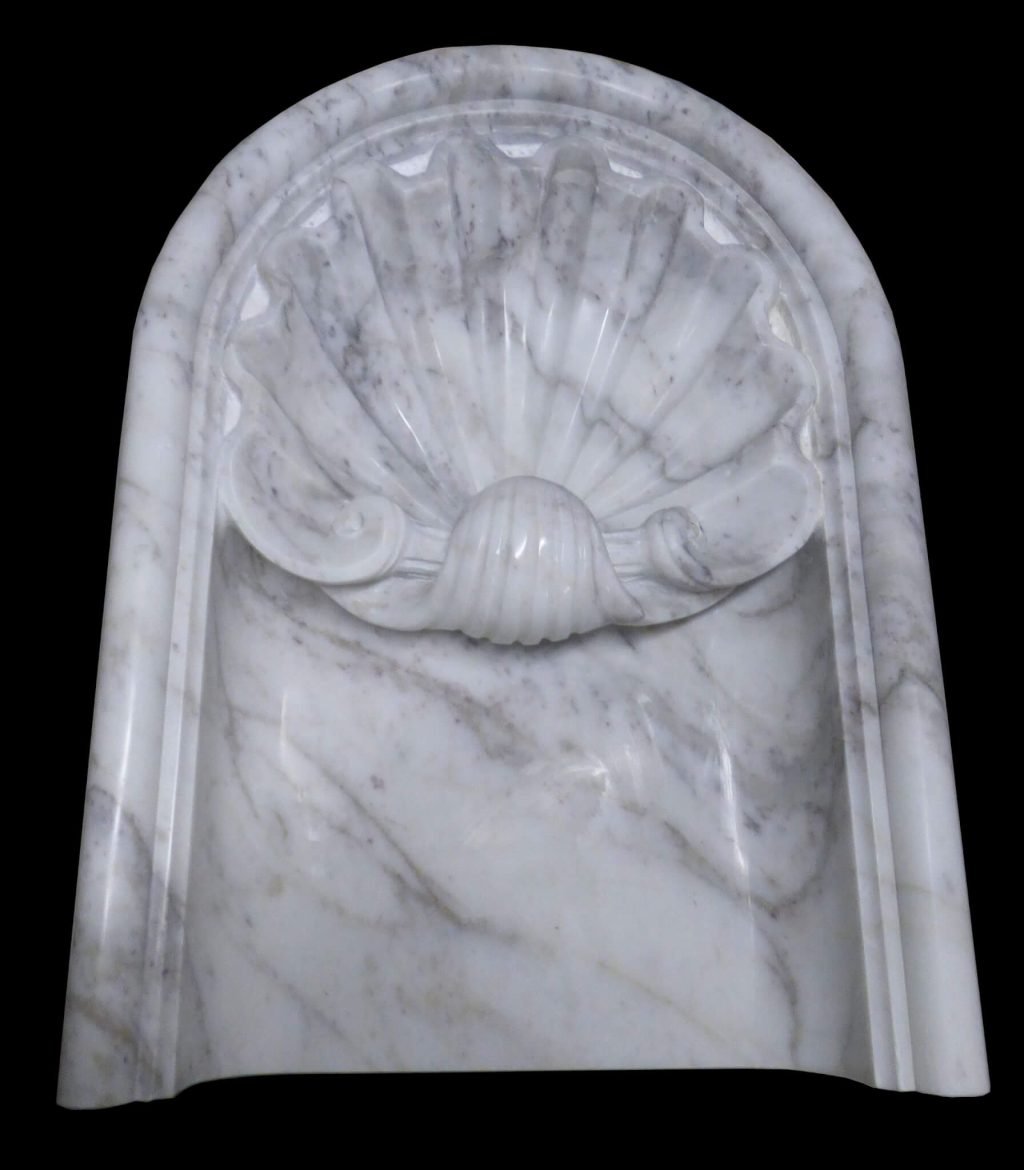
Last week, in between several flying buttress figurines as well I got an urgent request: if I could carve a Venus shell in marble, for on a sink or washing basin.
This shell, also called St. James' shell (Venus according to myth was born from the foam of the sea and is often depicted standing inside the shell), was named after Jesus’ disciple James the Greater, who is traditionally depicted with this shell on his hat. That's why it is also the symbol of Santiago de Compostela, the pilgrimage place which was named after him, and also why it represents all pilgrims.
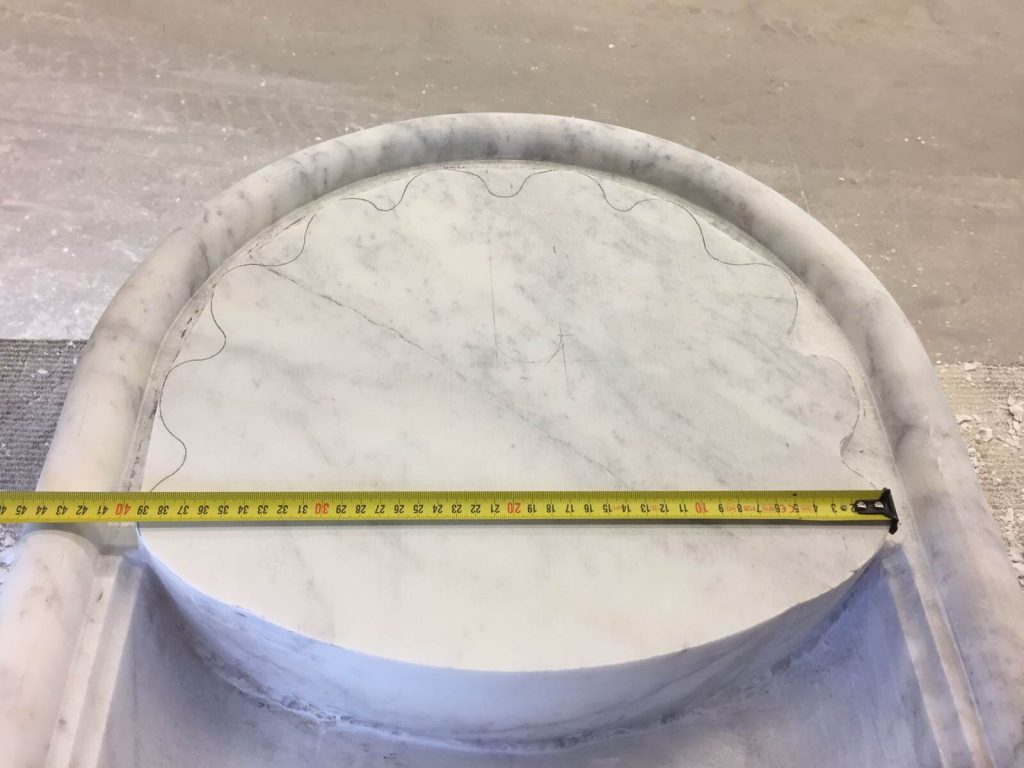
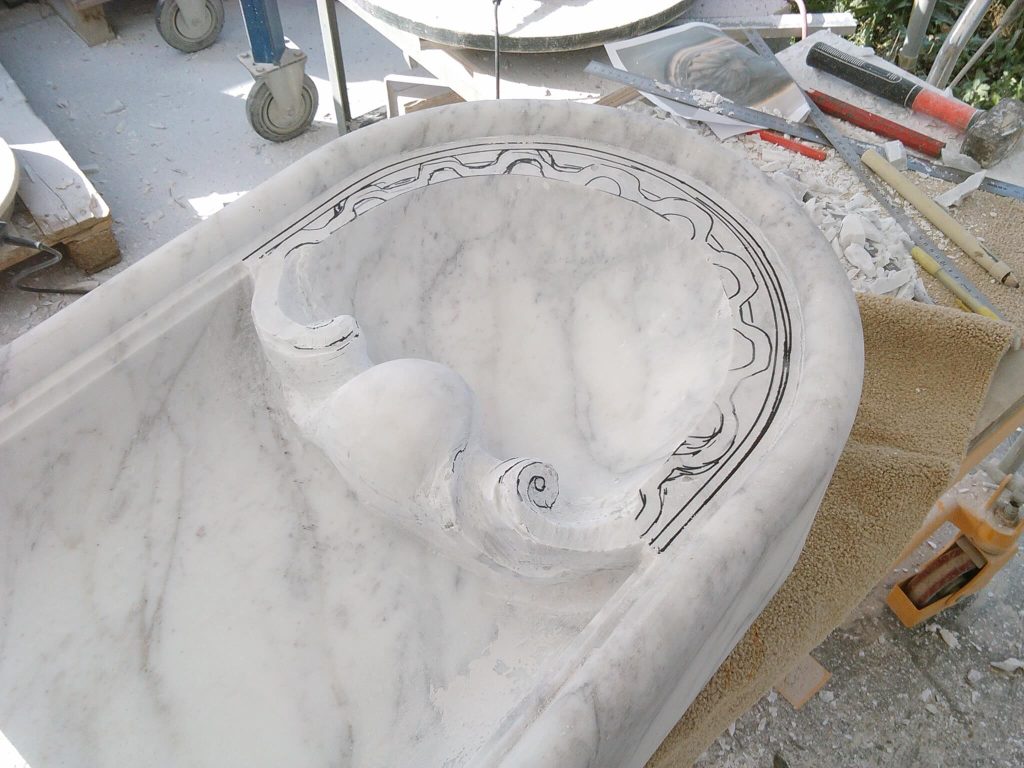
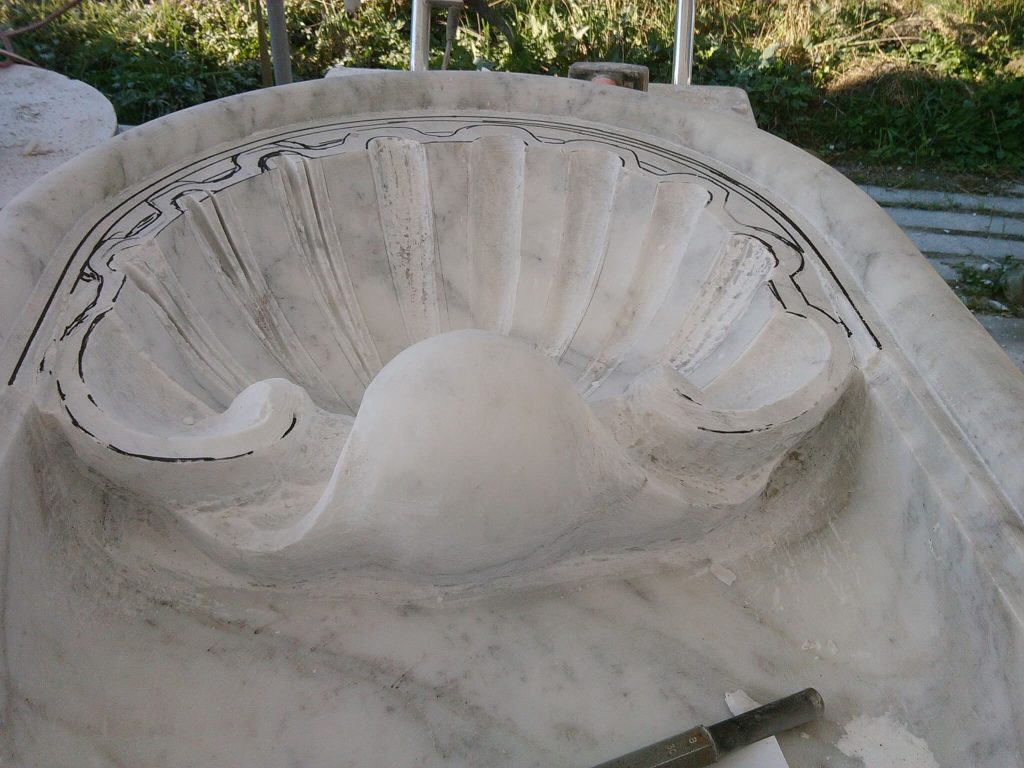
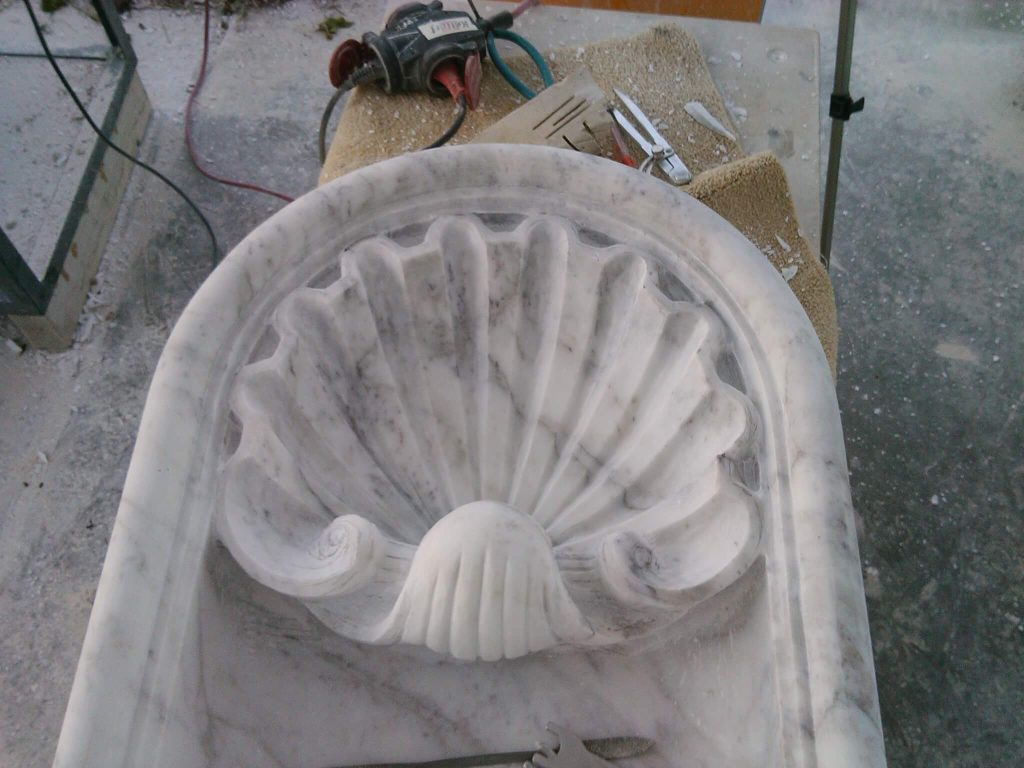
I was approached for this work by Slotboom Stonemasons in Winterswijk, the Netherlands, who had carved the two parts and asked me if I would like to carve the shell on it. Luckily, ten years ago I had already made such a thing, so I remembered how to do it. But I did use a printout to reduce all the measuring and scaling. This shell was set in a pretty deep background, so the shell had to be carved out fairly deep to prevent it from hovering way above the background. This marble was pretty hard and it took a lot of time to find the right basic shape. The ratio of the time spent in precarving to the time detailing/finishing and polishing is approximately 3:3:1.
I thought this could perhaps be a good opportunity to show some more of my methods in carving this work, and the various tools that I use. I think I will make a video about the different air hammers later on. More on that later.
The first video is a quick overview of the work, and for enthusiasts there is also a more extensive version at the bottom of this message that shows all the work step by step. This version has also been accelerated, but now with a complete overview of the entire work process, summarized in half an hour. If you want to see it at a normal pace, you can play it at a quarter of the speed.
If the slide show does not work properly, click here.