Inbetweens: a water spiral for the panipitha
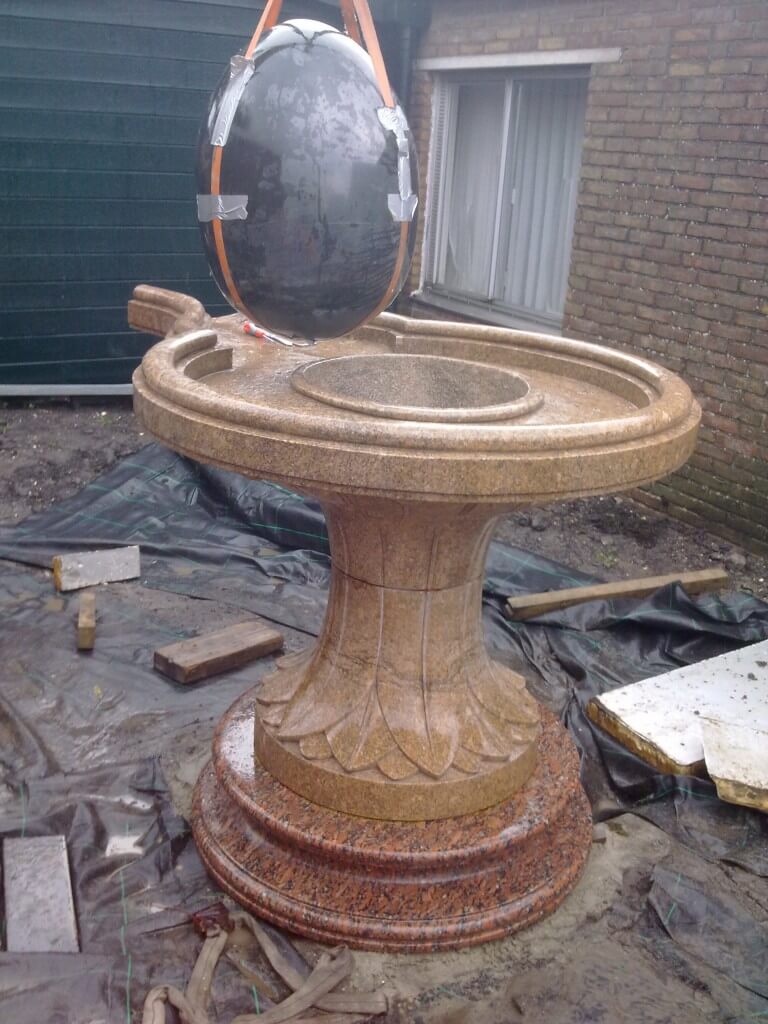
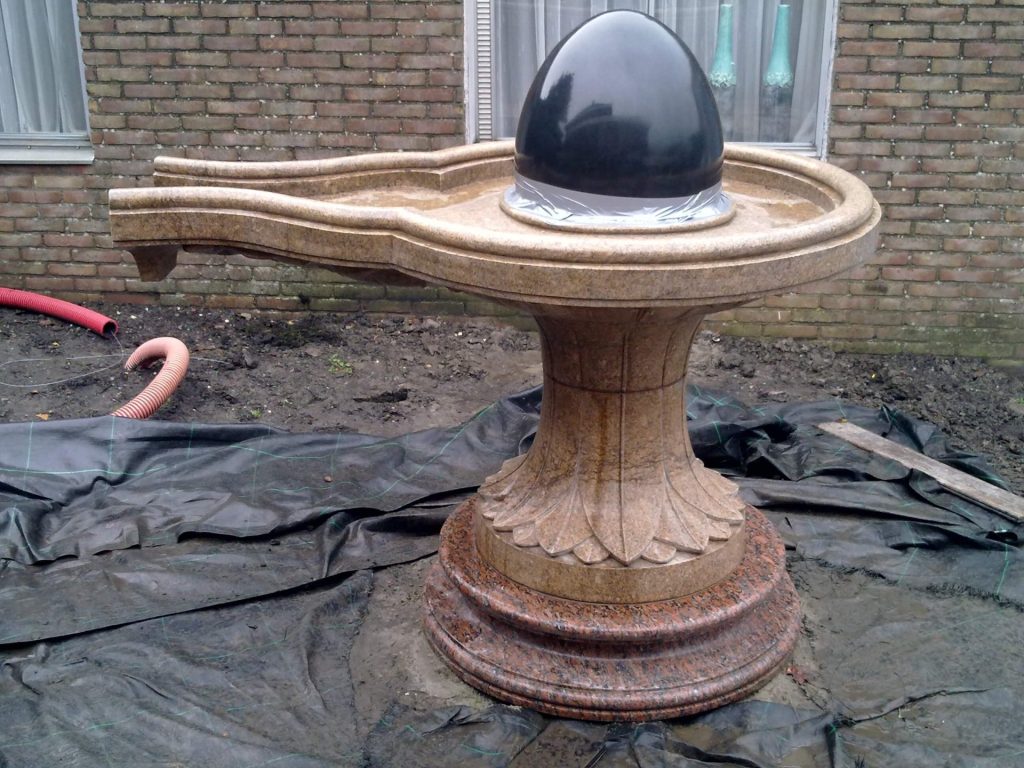
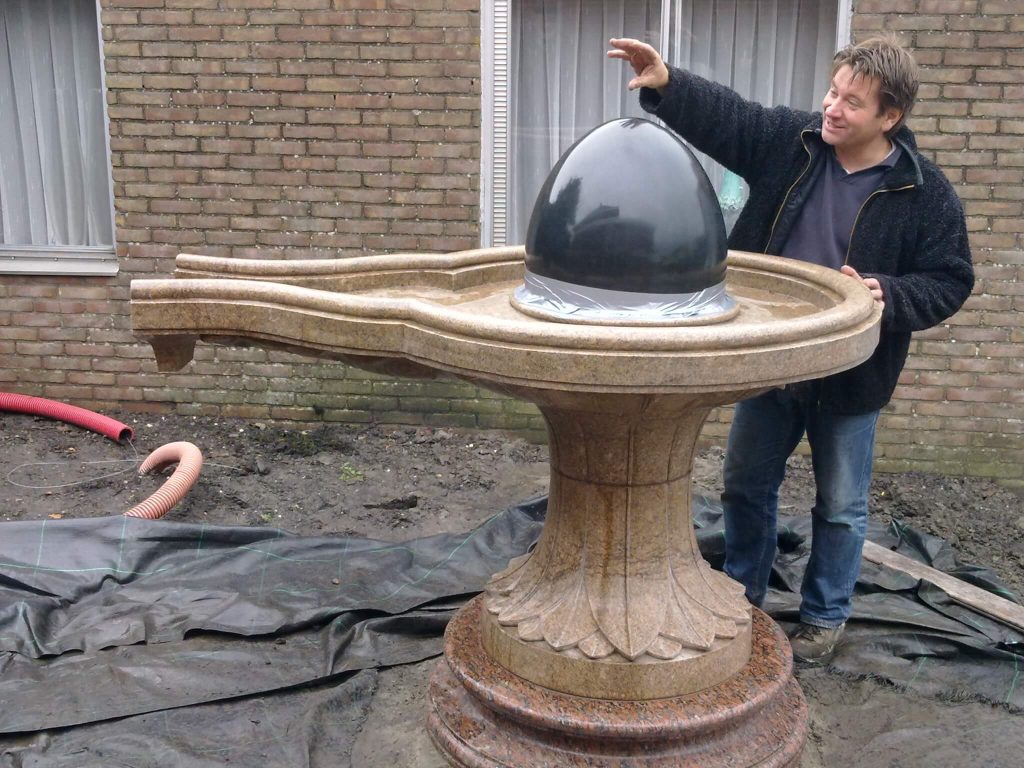
After the panipitha was completed (see photos of the process here)there had still something to be found to deal with that water flowing off of it.
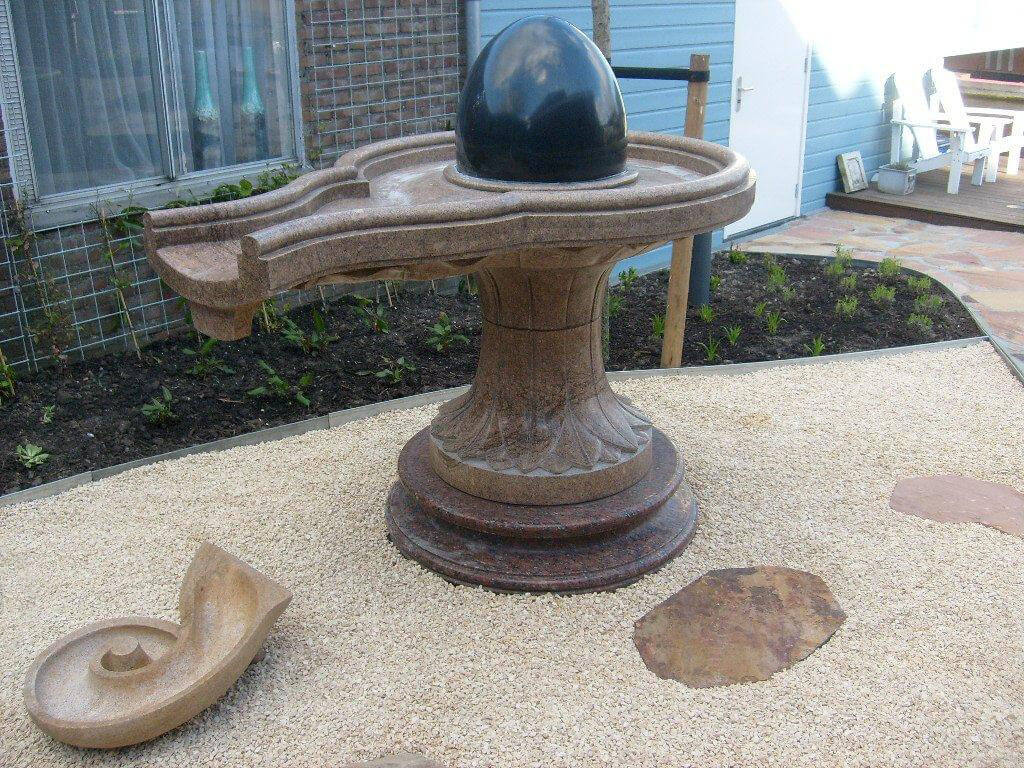
It is intended that in the future, a constant stream of water will flow over the big black lingam , which will eventually be diverted into the canal through a stainless steel gutter in the garden. In order to catch the water that flows from the spout of the panipitha on, I thought of a spiral shape, with a nod to the work of Viktor Schauberger, who always emphasizes the importance of the vortex. This way, a religious object will get an alternative scientific touch as well.
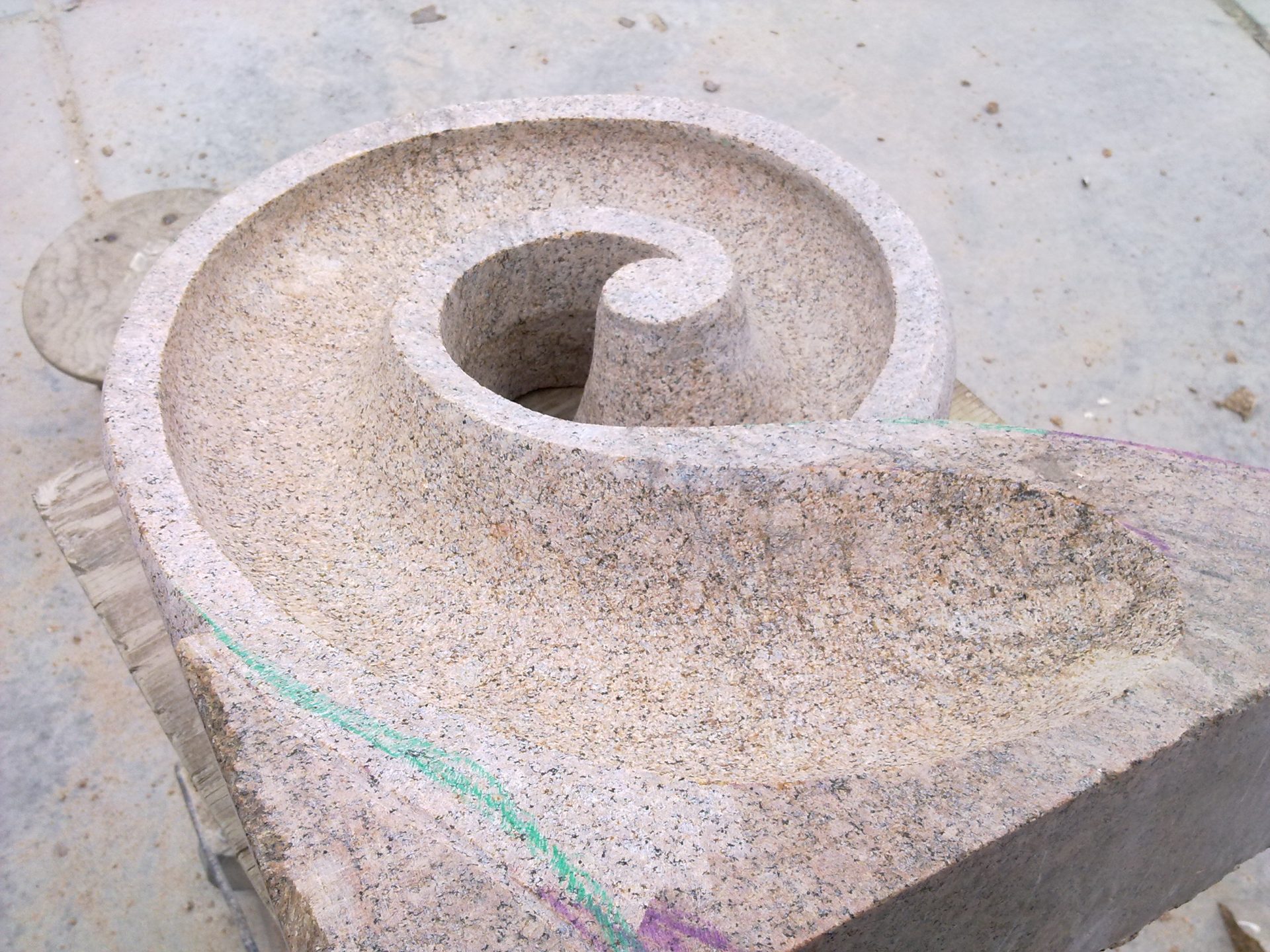
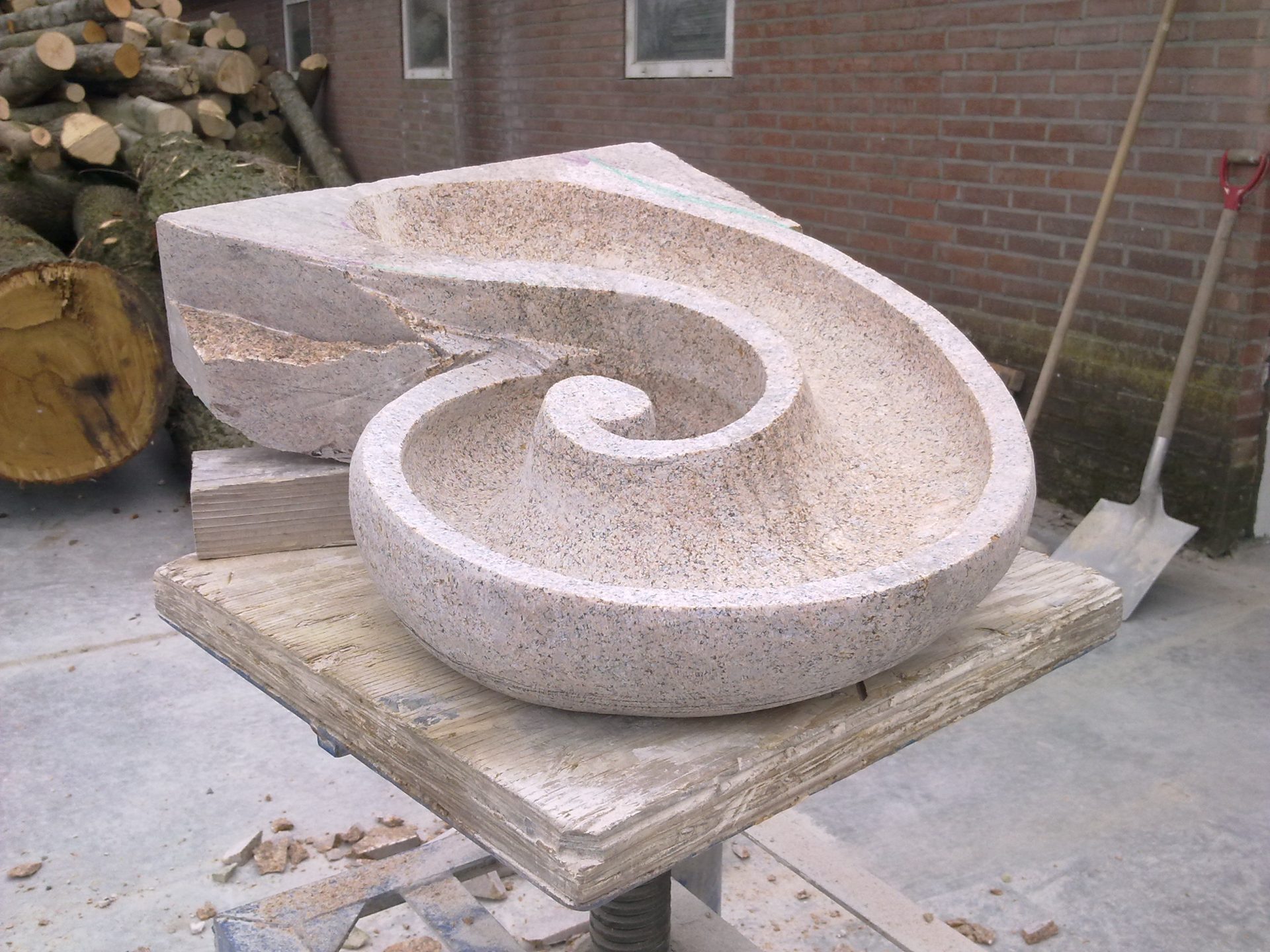
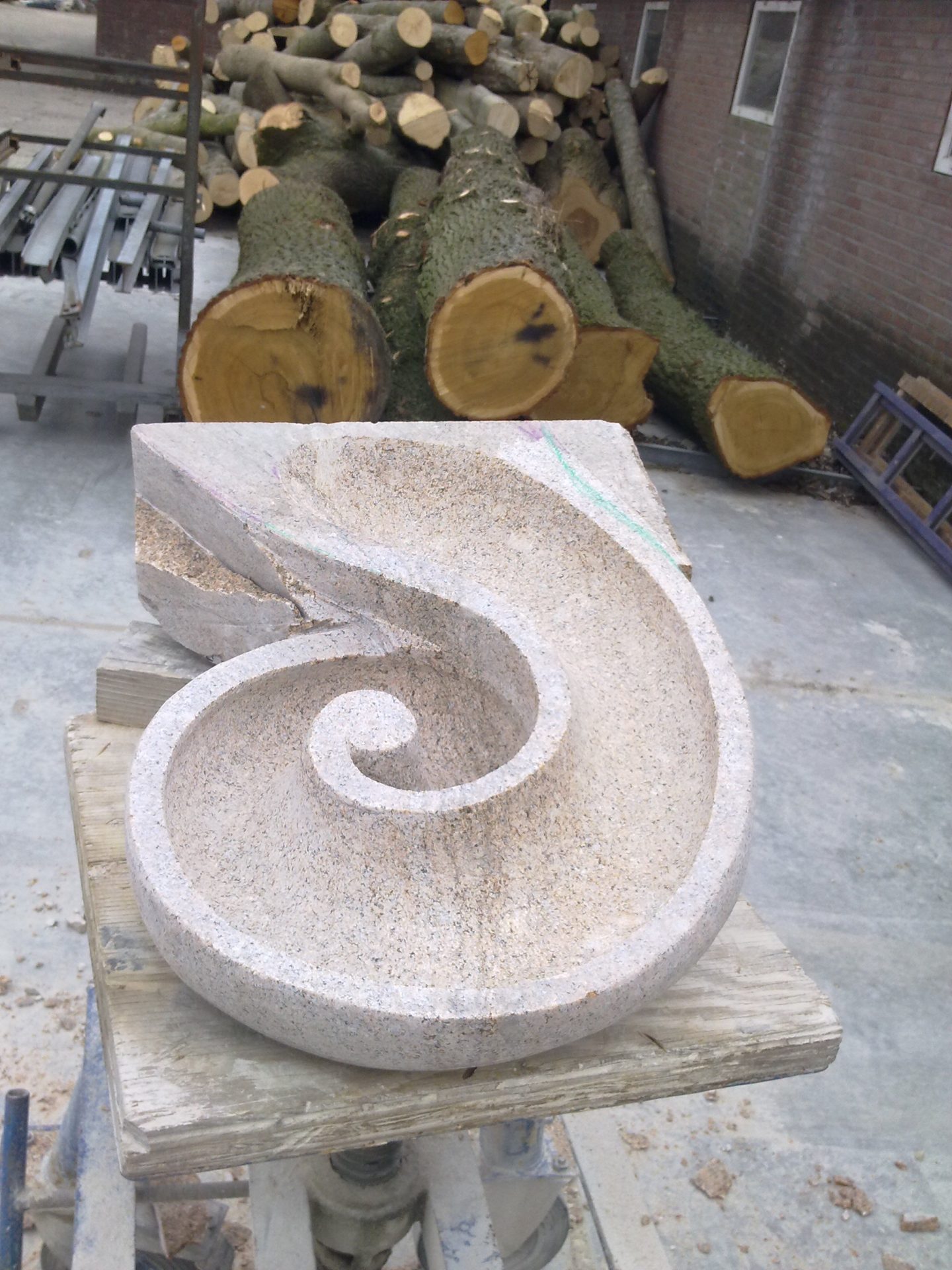
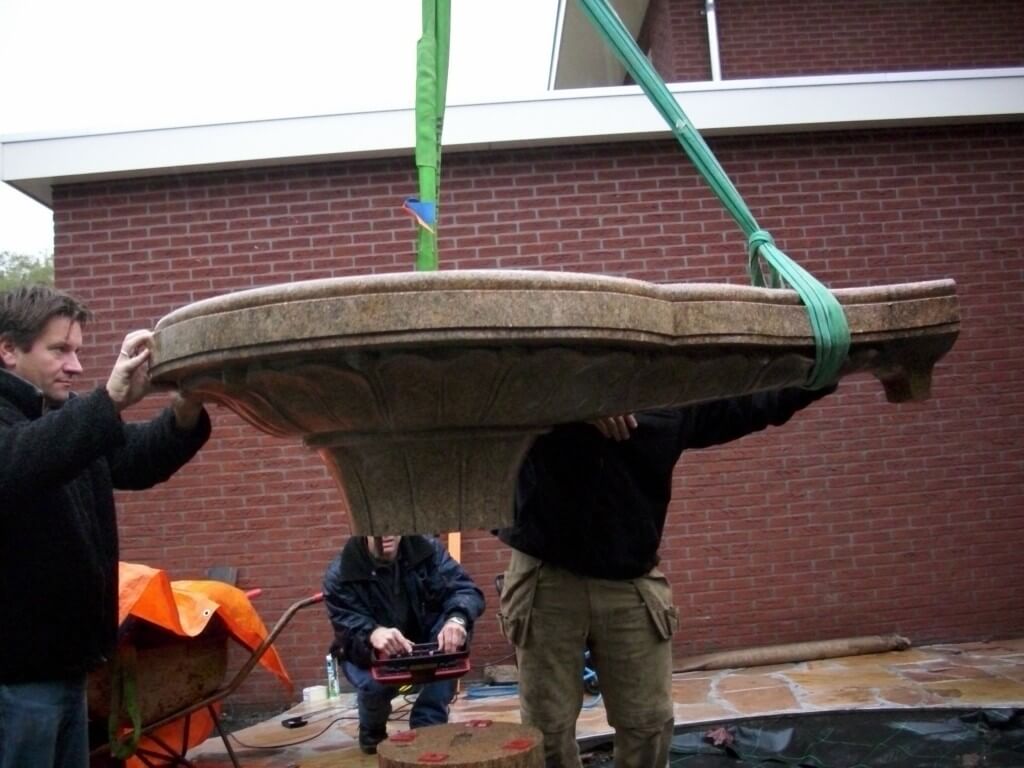
I still had a piece of granite lying around, that came from the block from which I have cut the spout of the lingam. After I had first made a model in PIR foam, to see if it worked as I had thought, I then created a template, traced it on the stone and carved the thing in granite.
Last year I went to visit Paul van Dijk, who made wonderful flowforms of all kinds. His flowforms are different than usual in the sense that he knows how to generate the required swirls with a single chamber instead of two. The knowledge behind these flowforms fascinates me so much that I think I'll someday carve one out of granite myself. It has to do with the enlivening of water, and increasing the amount of dissolved oxygen in the water, and with purifying and increasing the energy of the water. If you study it, the subtle knowledge that a select few have about this almost overwhelming, you won't be quite finished learning just yet. Apart from that, of course, flowforms are very hypnotic objects to stare at, in your garden. A bit like fire: It calms you, but then with water. The 'inventor’ of it was John Wilkes. His book on flowforms is a must.
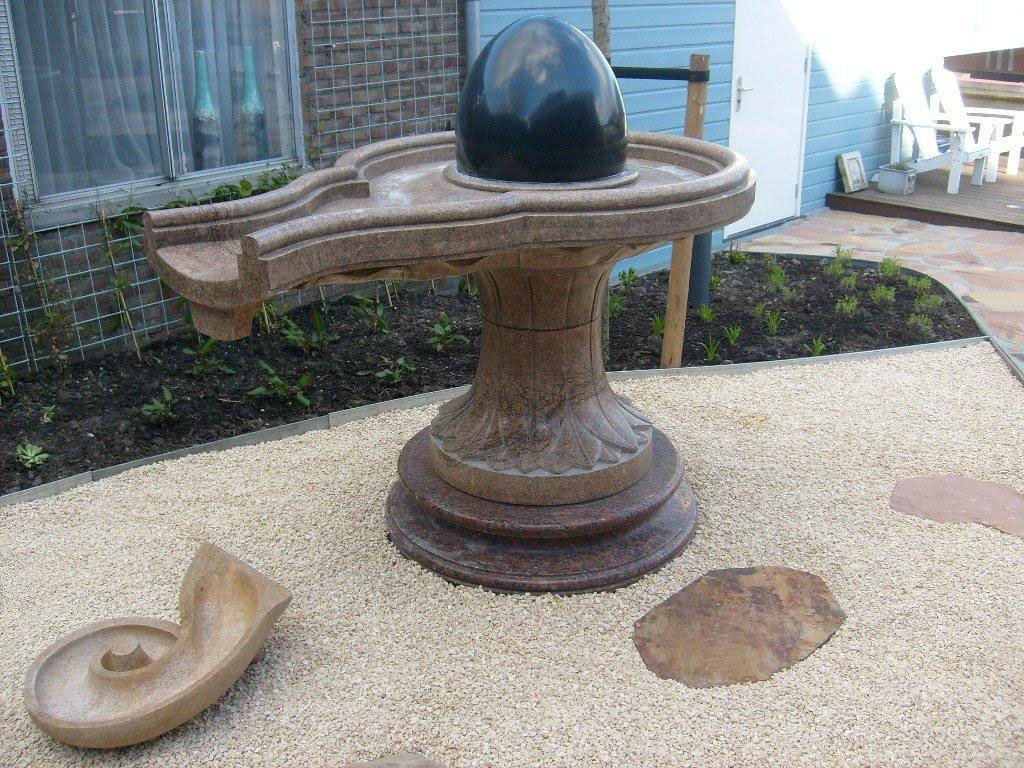
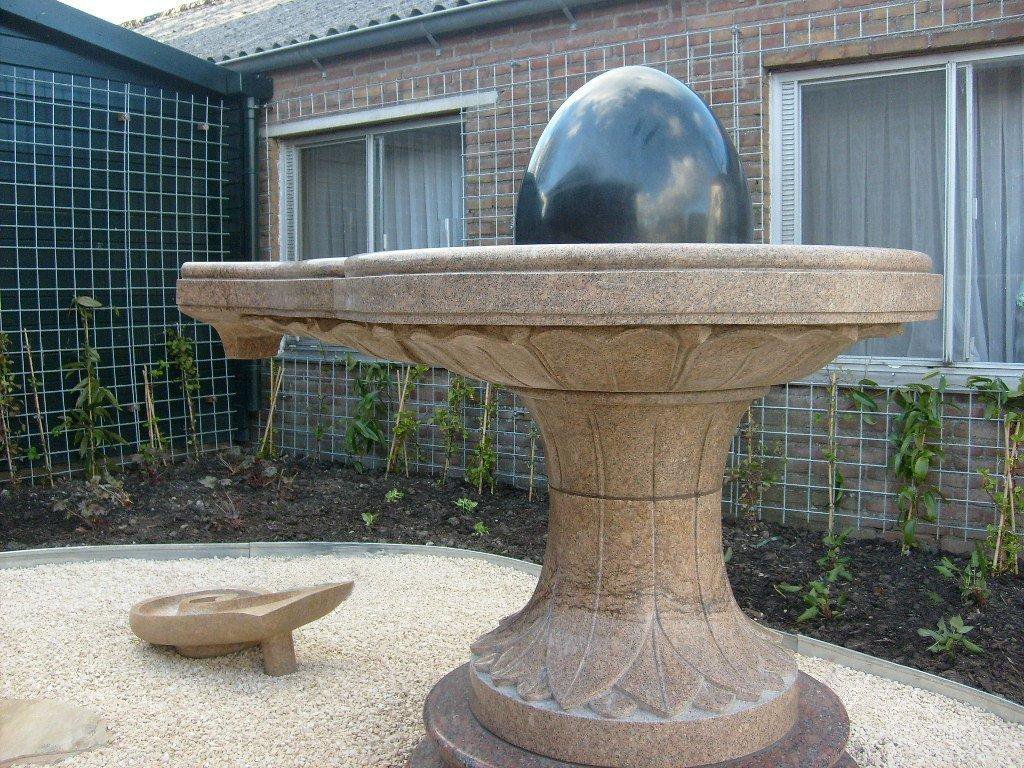
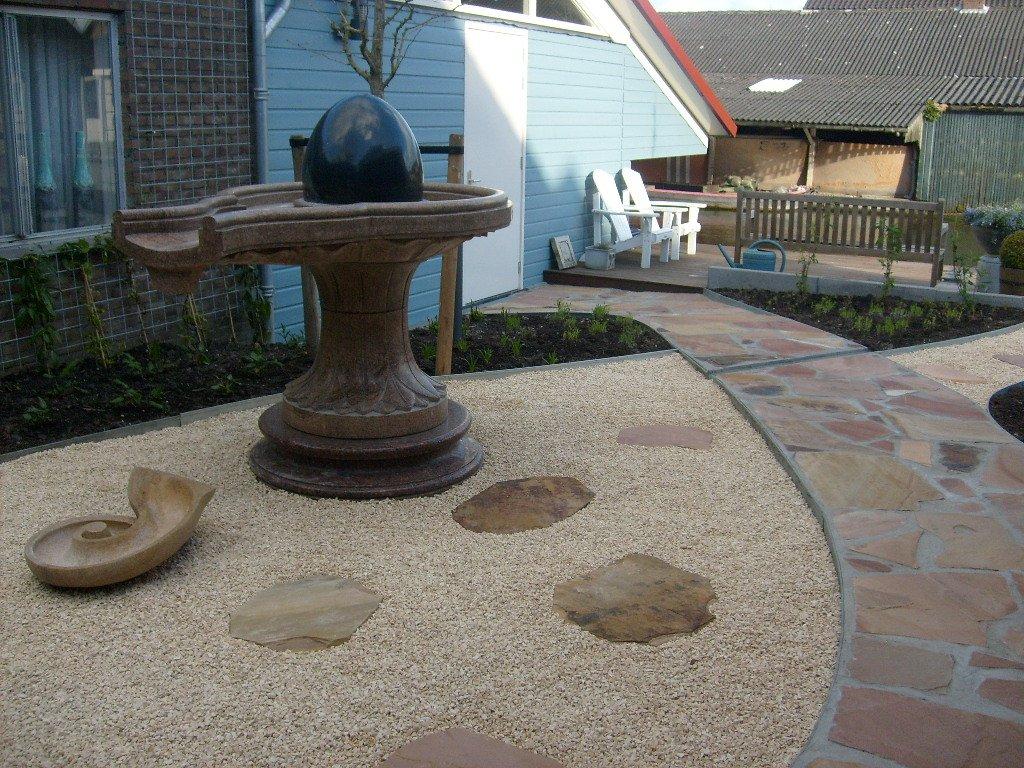
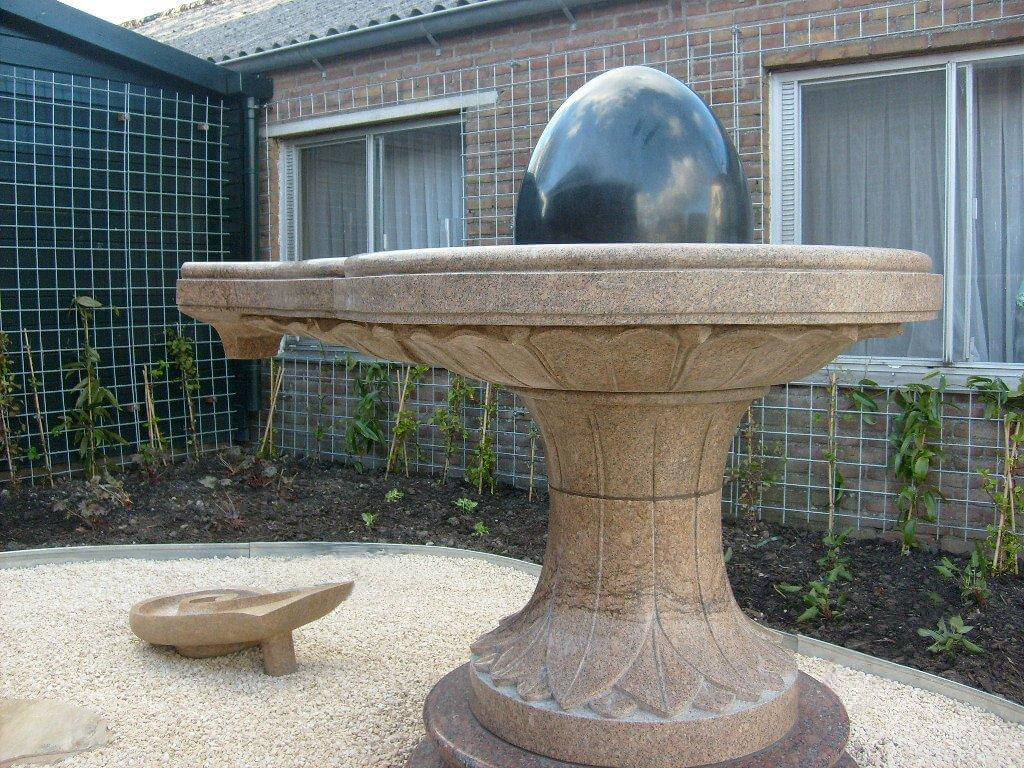
The garden with the panipitha lingam in it is ready now. It has become particularly attractive, and how beautiful it is when the clematis has completely covered the walls! There will be a gutter for discharging water, and something to let water flow over the lingam. The spiral will be a bit higher up in the end, on a stainless steel base.
Nasty the first message about this project.
Nasty the next post about this project.