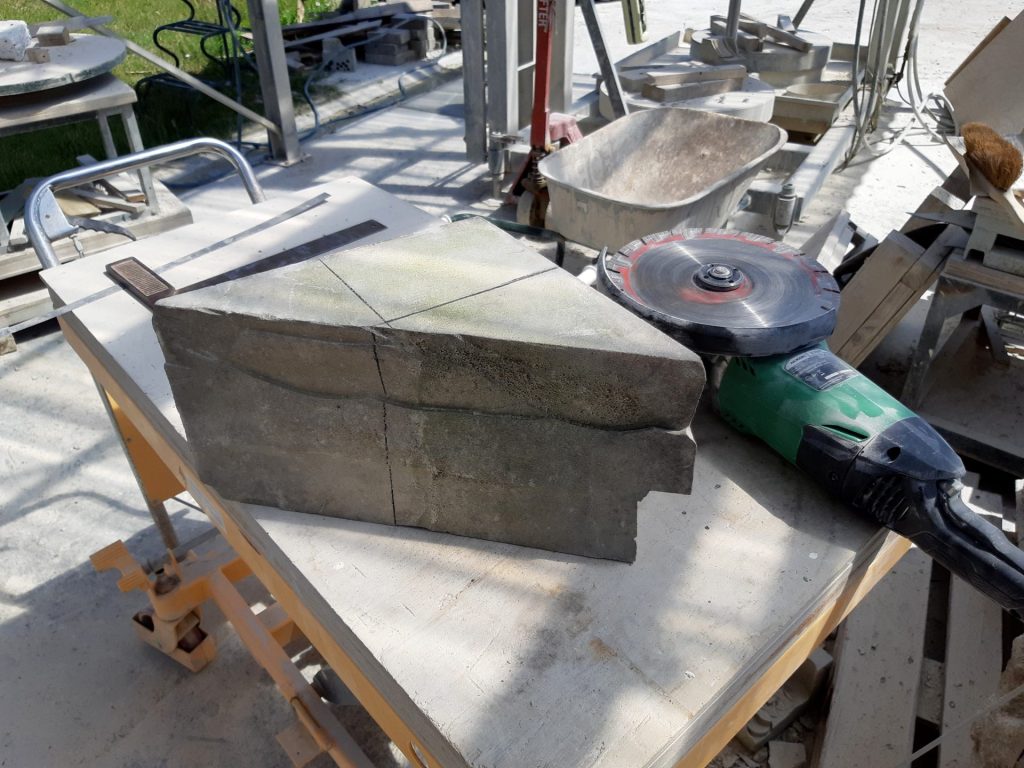
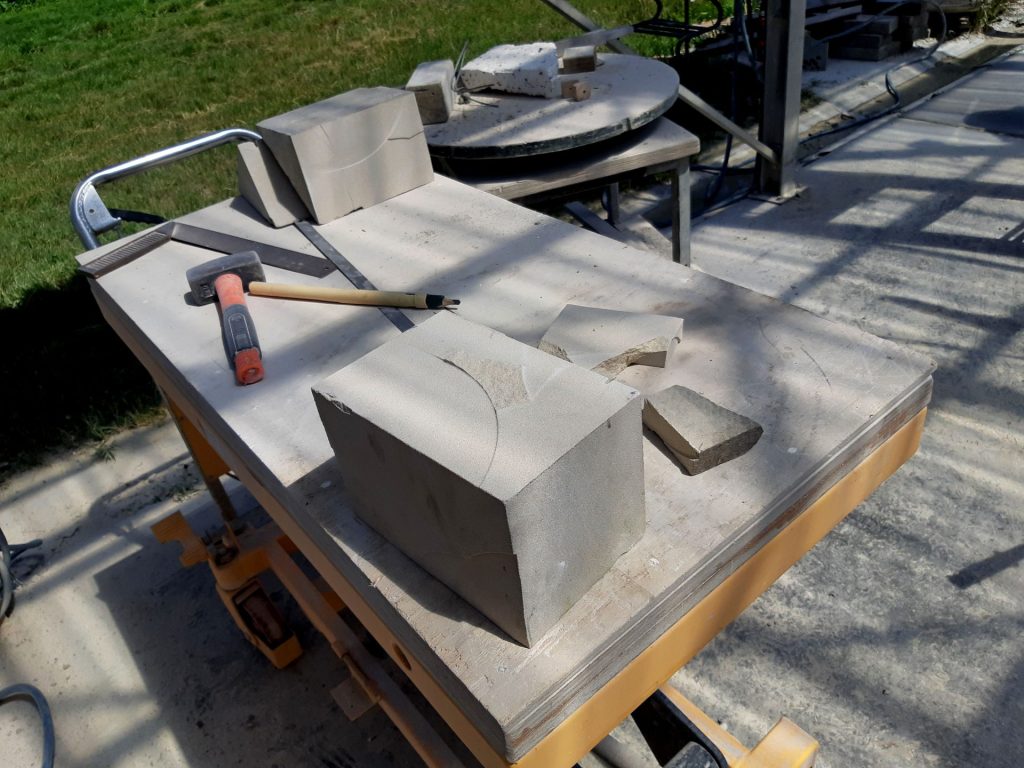
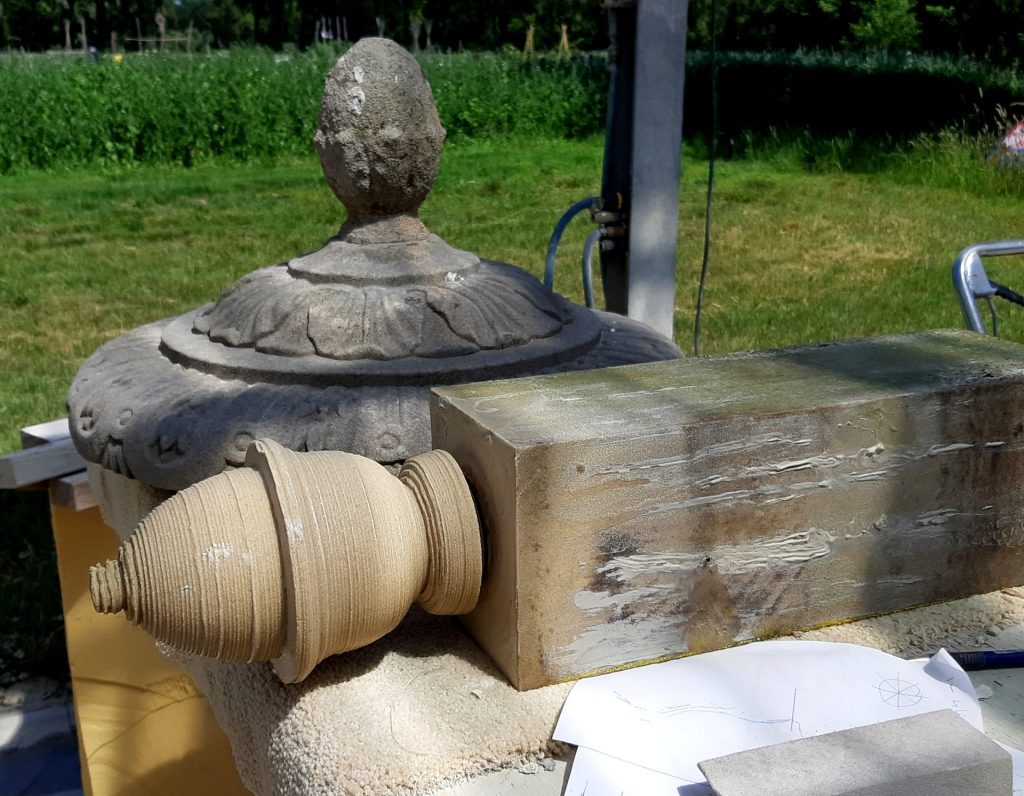
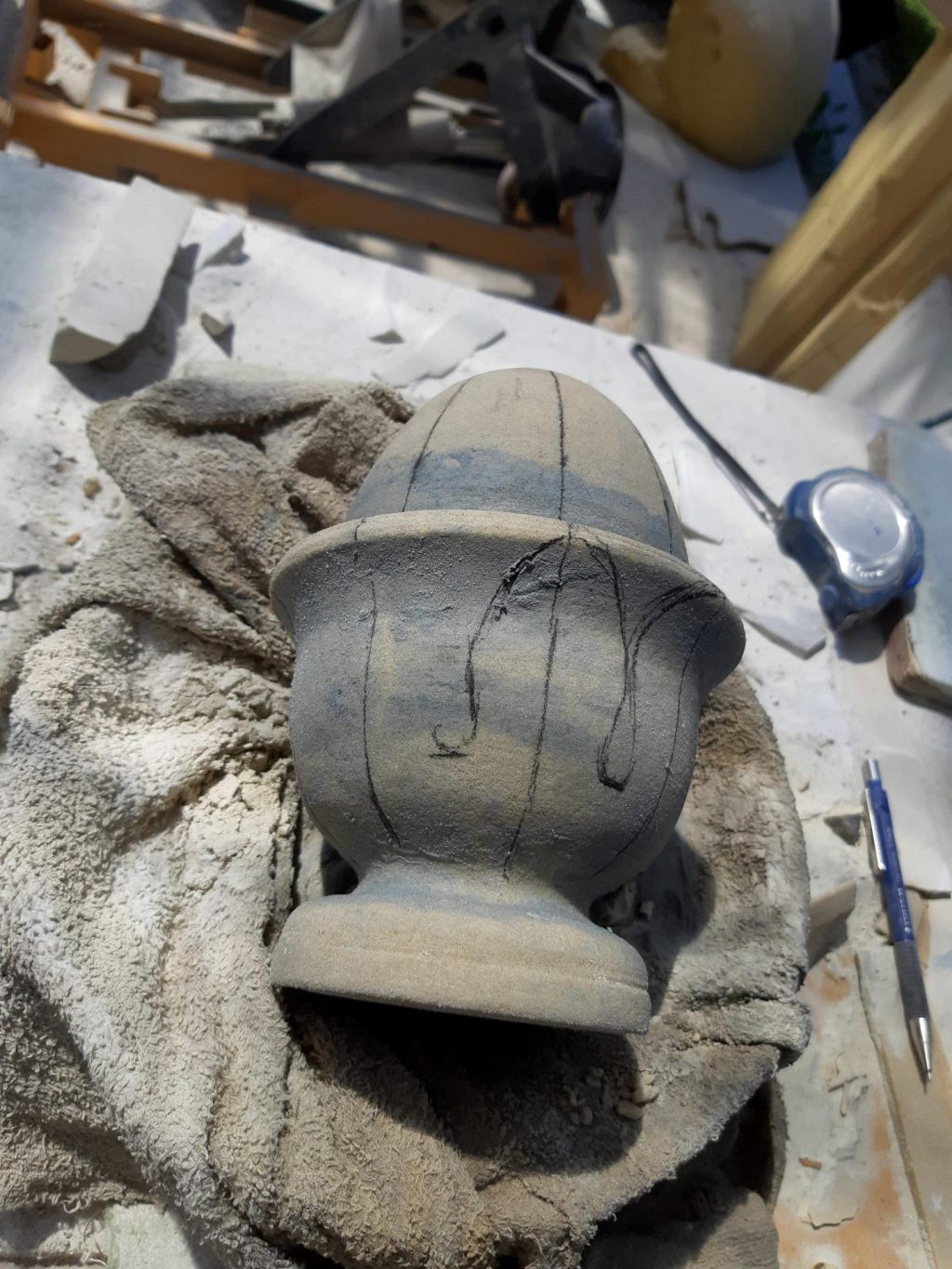
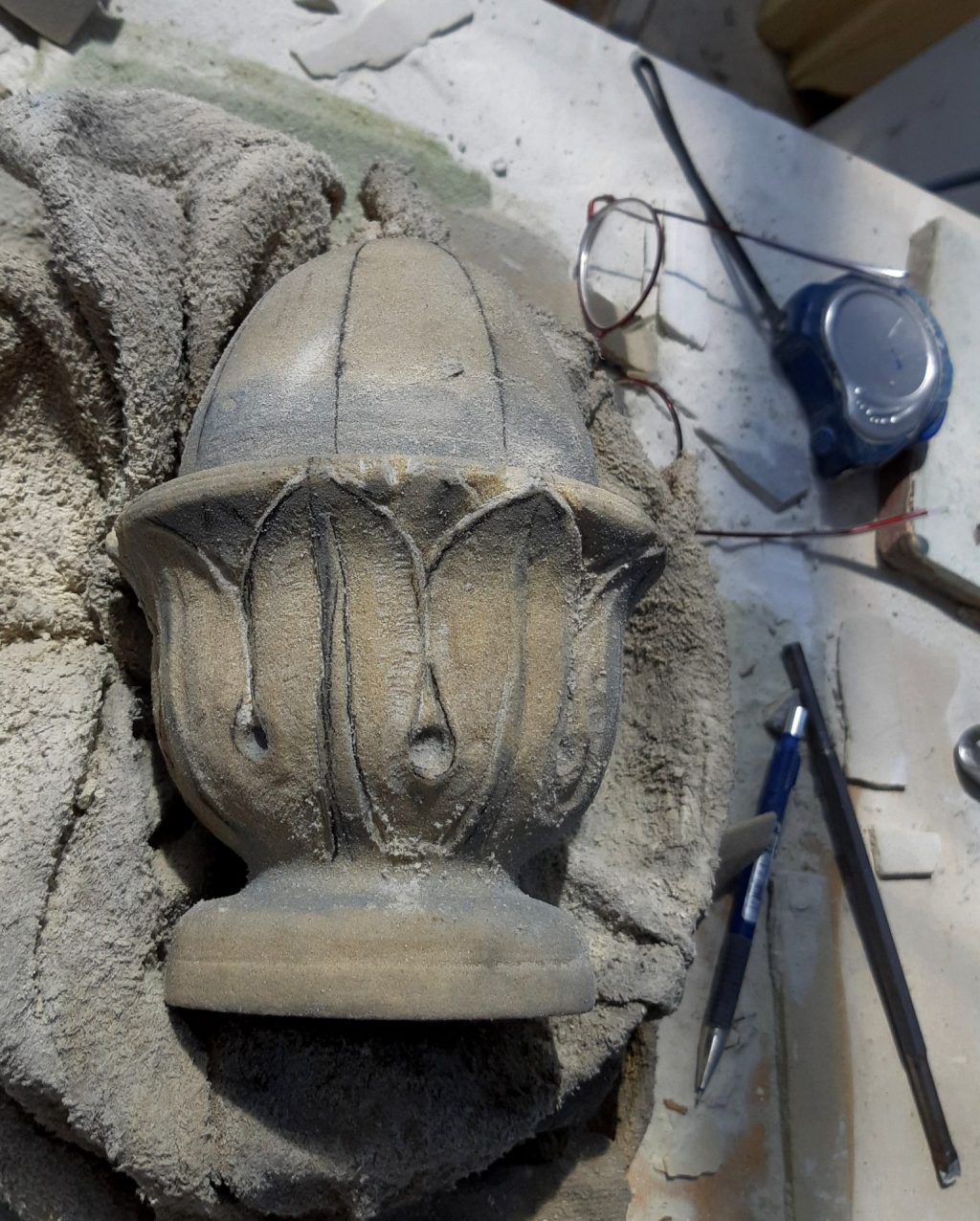
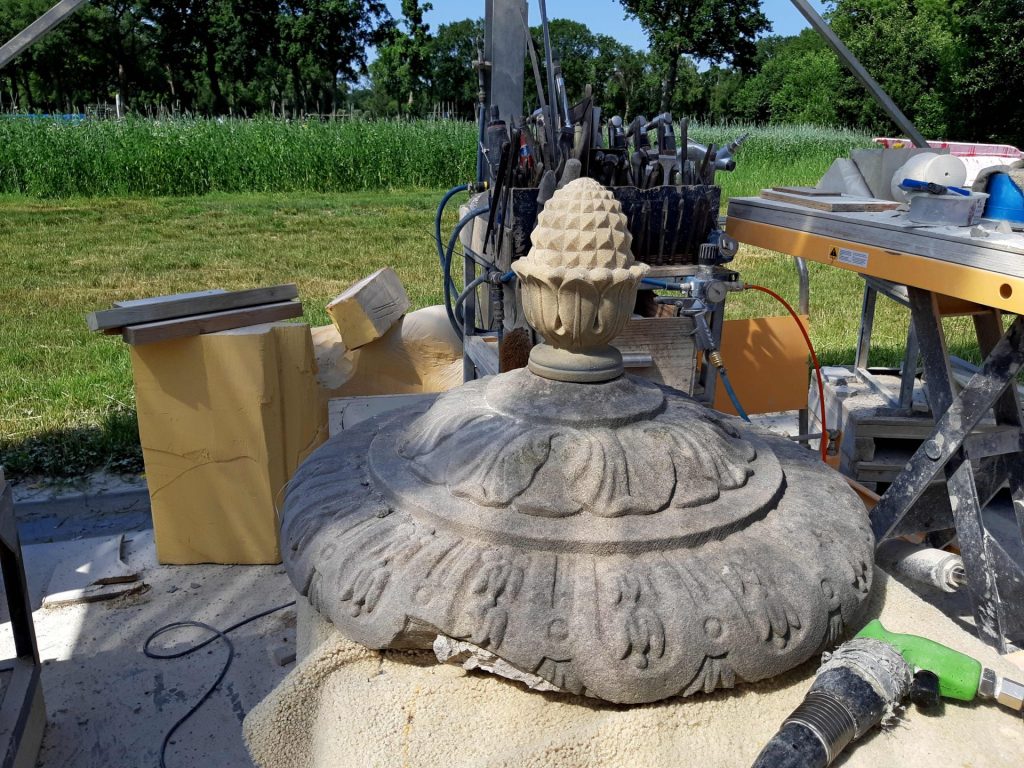
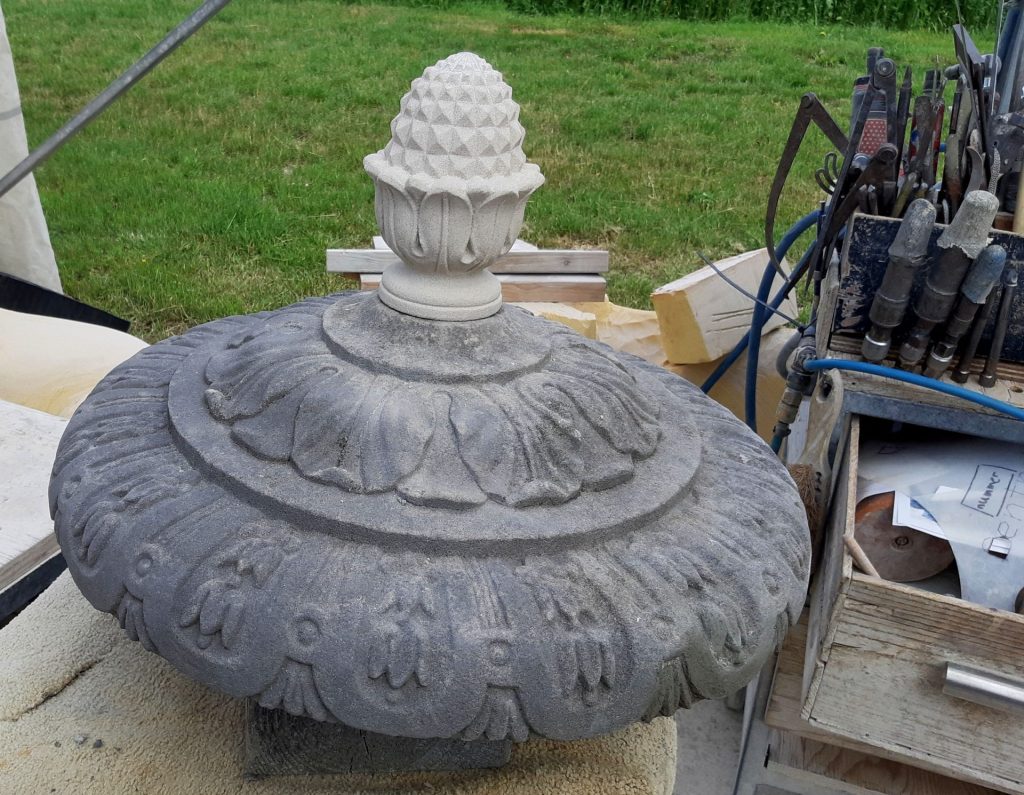
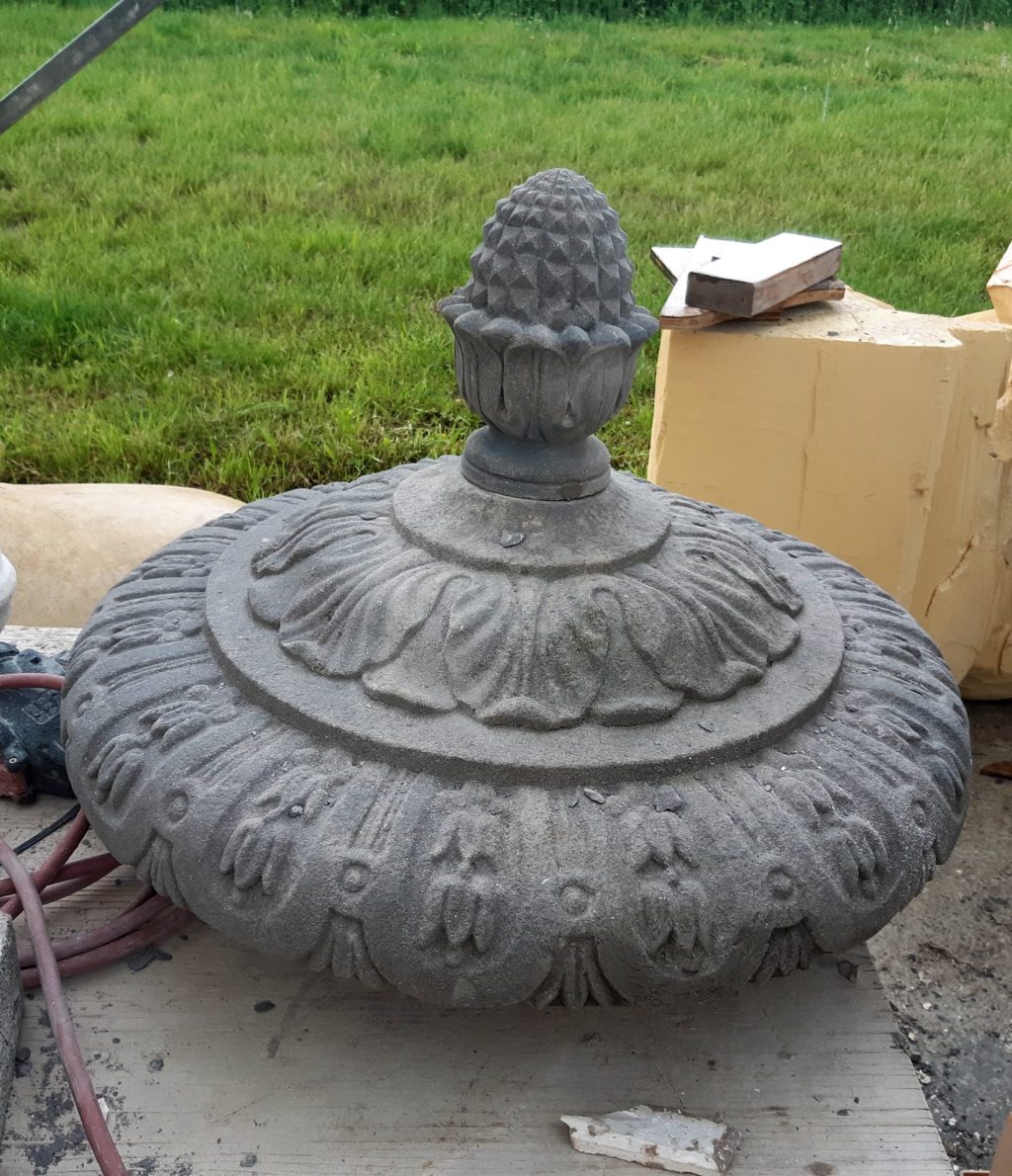
A small assignment I got last summer was to make a new sandstone pine cone for an 18th-century garden vase. This beautiful vase was made of Bentheimer sandstone, but the pinecone was made out of concrete and it was also very weathered, so now a new one was to be made for it. The lid of the vase also had two damages on its edge, which I would fix as well.
By hand or by lathe?
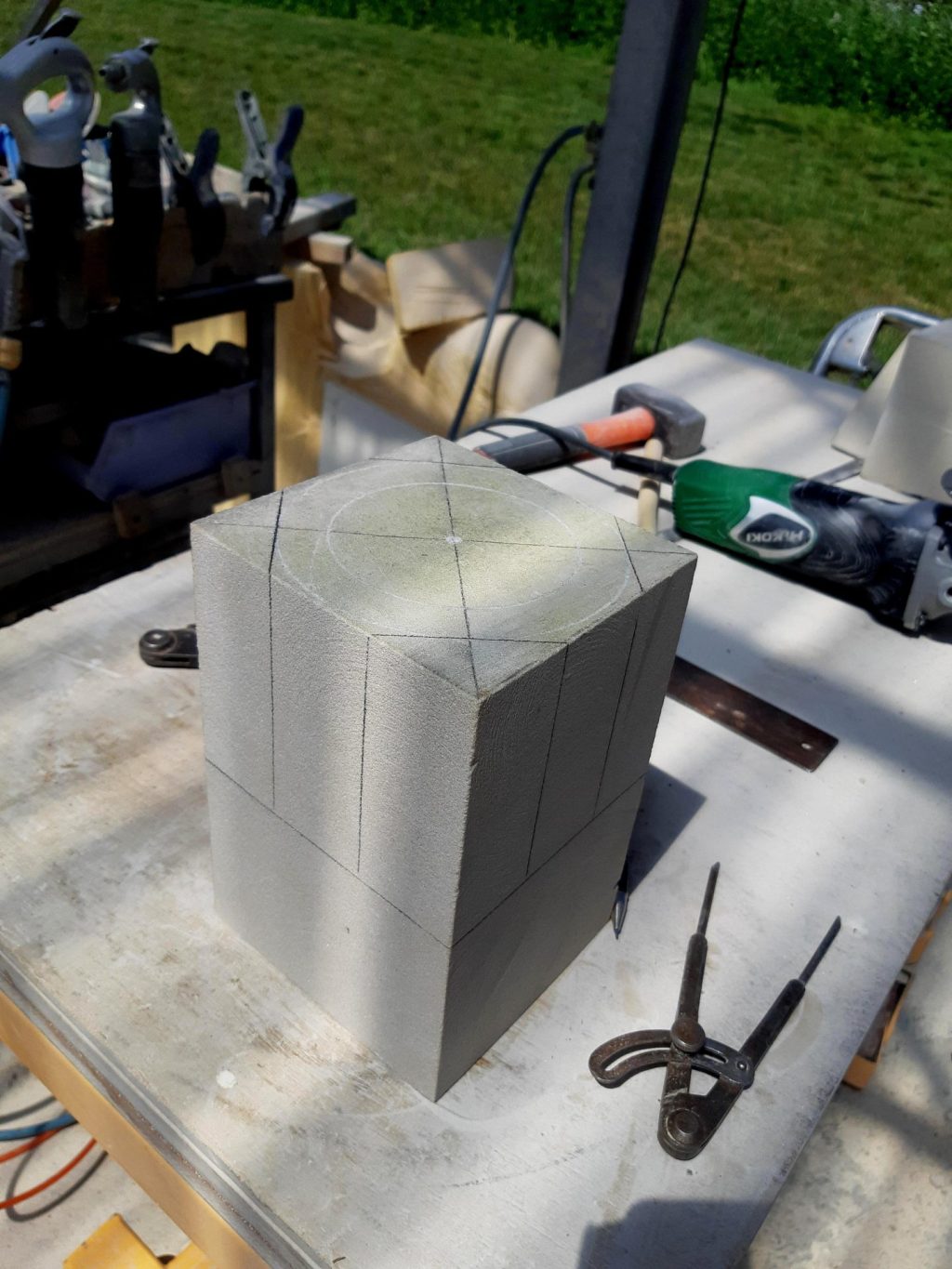
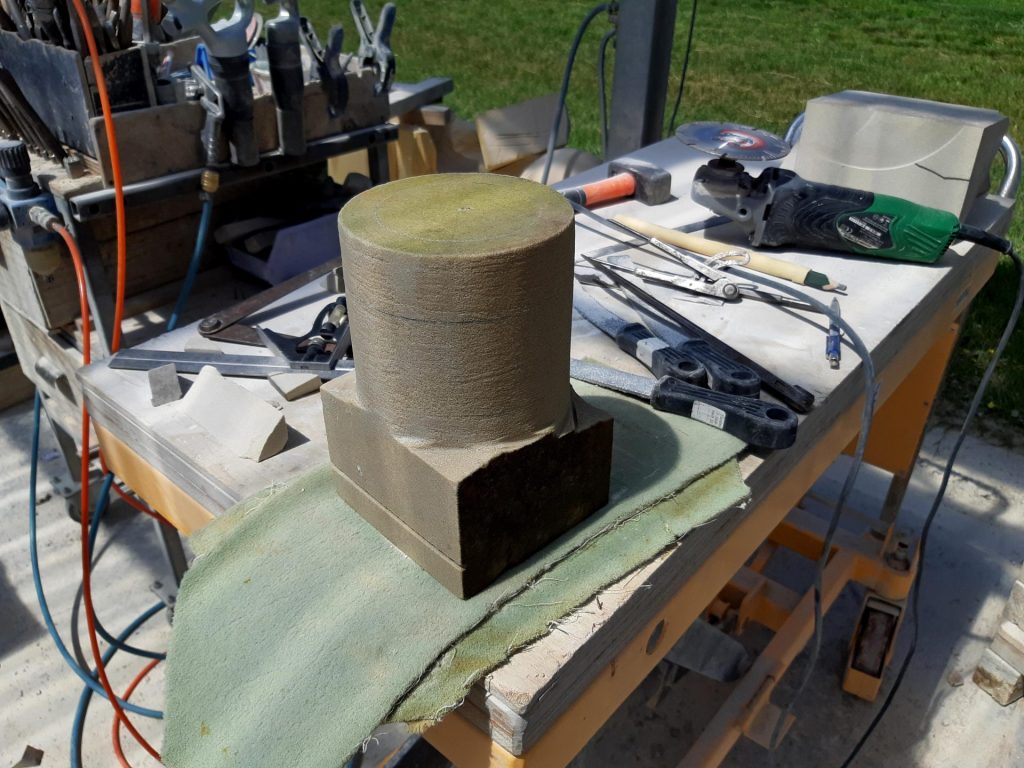
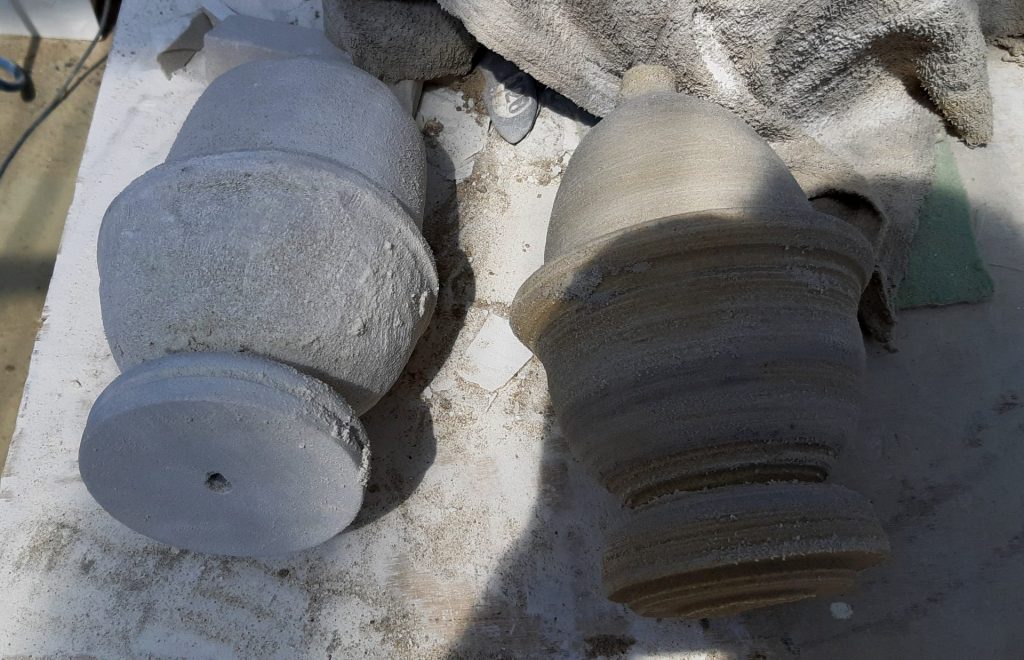
First I made a new pine cone from a new piece of sandstone, but I didn't get it as sleek as I wanted, and it took me way too long. Whenever you want to make something round by hand, it takes a lot of time, because you have to make a cube first, then you turn it into a cylinder in several steps by making facets, then you have to set up the outline of the ornament in facets, make all that tight, and then you still need to start detailing the ornaments and scales. I didn't like it and started over.
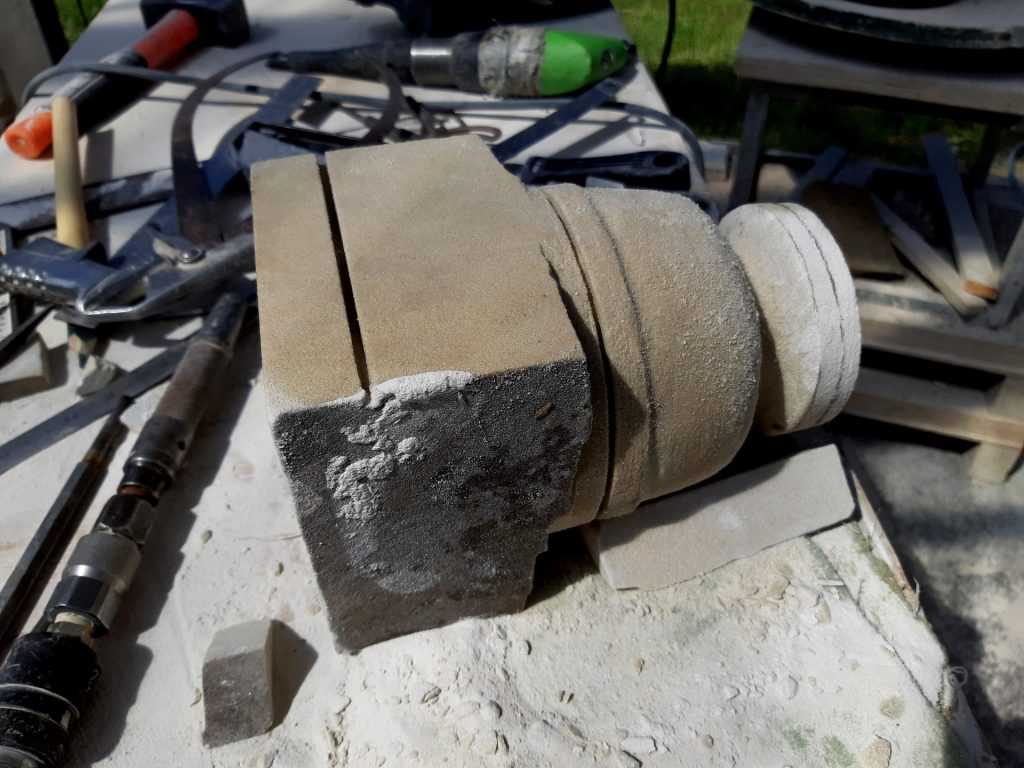
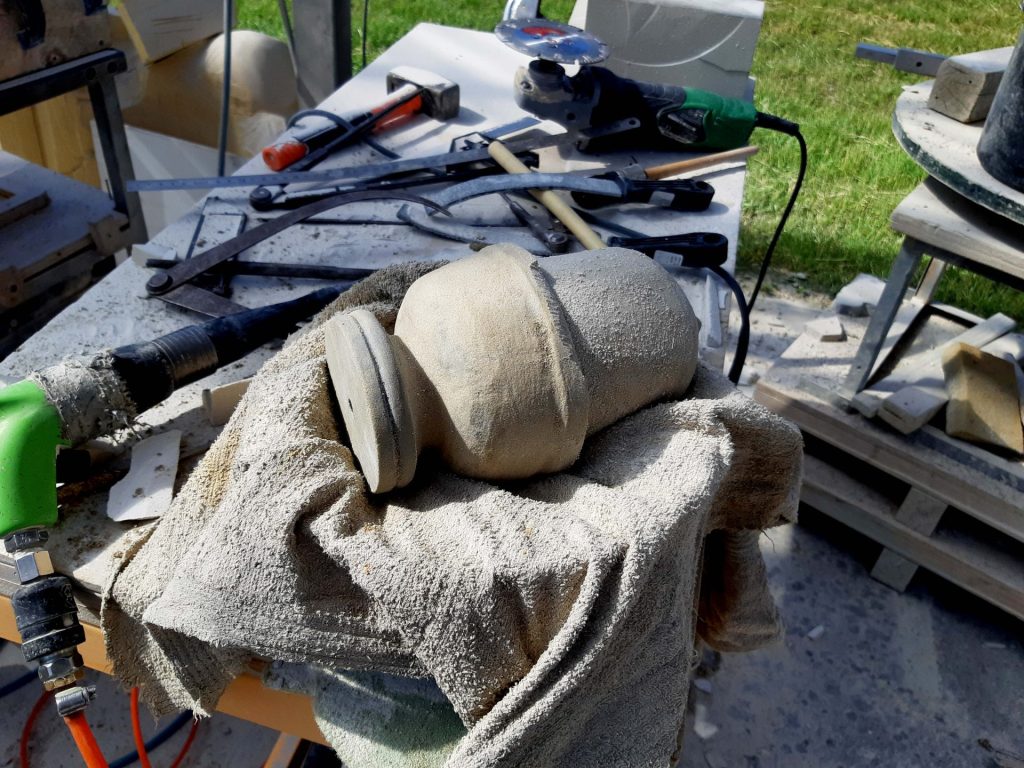
So I started with another piece of stone and turned a nicely detailed copy out of this block on my copy saw. It took some work to set it all up, making a contour tracing, aligning and sawing everything accurately, but it immediately looked much more crisp. After some sanding I was able to continue with drawing and carving the details.
Restoration
Once the pinecone was ready I was able to restore the lid of the vase and attach the cone to it. I started by removing the old concrete pine cone. It was secured with some copper pipes and polyester glue.
Then I could glue the new one on top, repair the damage to the edge with restoration mortar and bring everything back to color. I also adjusted the new part to the old color scheme, so that it merges into the whole and doesn't contrast with it.
The next flying buttress figurine from arc no. 24 of St. Eusebius's Church in Arnhem wasn't entirely clear to me. We've seen all seven sins pass by, except Sloth, sometimes called idleness, laziness or inertia, so this one had to be it.
I just don't know how the sculptor had originally intended this. I also thought at first that this one was Pride, or Hubris, a lady with voluptuous bosom that sits high on horseback. Or maybe it should depict a donkey?
Dolce Far Niente
Maybe this lady portrays the lack of direction of a bored rich lady, spending her days with useless things and letting the workhorses do the work? "Idleness is the devil's earcushion,’ as an old saying goes, though I always thought they meant you really had to be flexible if you wanted to give the devil a kiss on his ear. This lady is in any case sufficiently limber!
However it may be, I just copied the sculpture as it was. While working I noticed that not only the breasts threatened to fall overboardfrom her gown, but even the nipples are in focus. "It's must be feeding time again', commented my mate Stide. 'How so??’ I asked. ‘Well,’ he said, 'The piglets are already looking over the trough!’
Structure
The old sculpture had a heavily weathered surface, but I noticed something that hinted the sculptor had carved something of a structure and had made the suggestion of a thick woolen dress. I tried to imitate that by first bush hammering, horse and dress and carving short, shallow lines into the dress with a pointed chisel, resulting in a lively surface.
Dog-Latin
presawing Envy, step 2
In a previous post on this flying buttressI told you about the theme that these sculptures convey: the seven deadly sins. Each figurine we have carved so far (and Jelle has made three out of these seven) has been given a Latin name in the profile on the side: Superbia for Vanity, Gula for Gluttony, Ira for Rage, Avaritia for Greed, This Laziness or Idleness is called Acedia, and then later Stide will be adding Luxuria for Lust and Invidia for Envy. Which are both on their way as well.
A mysogynous sculptor?
presawing Envy- step 3
Some ladies noted that women come down quite badly in this series, because actually only the Fury is a male. This went against their sense of justice and some of them therefore ascribed a very negative view of women to the original sculptor.
But even in the next series, which should represent the seven Virtues, the majority is shown as female as well. The conclusion is clear: Eduard van Kuilenburg, who carved almost all of the flying buttress figurines in the 1950s , had no trouble with women. On the contrary: he would rather carve images of women than men. That would explain why there are so many women among these sculptures.
Measuring up
The profile leans 5 degrees to the left with respect to the wall face, and 61 degrees downwards