Five gable stones for Zeeland widows
Five Biblical texts
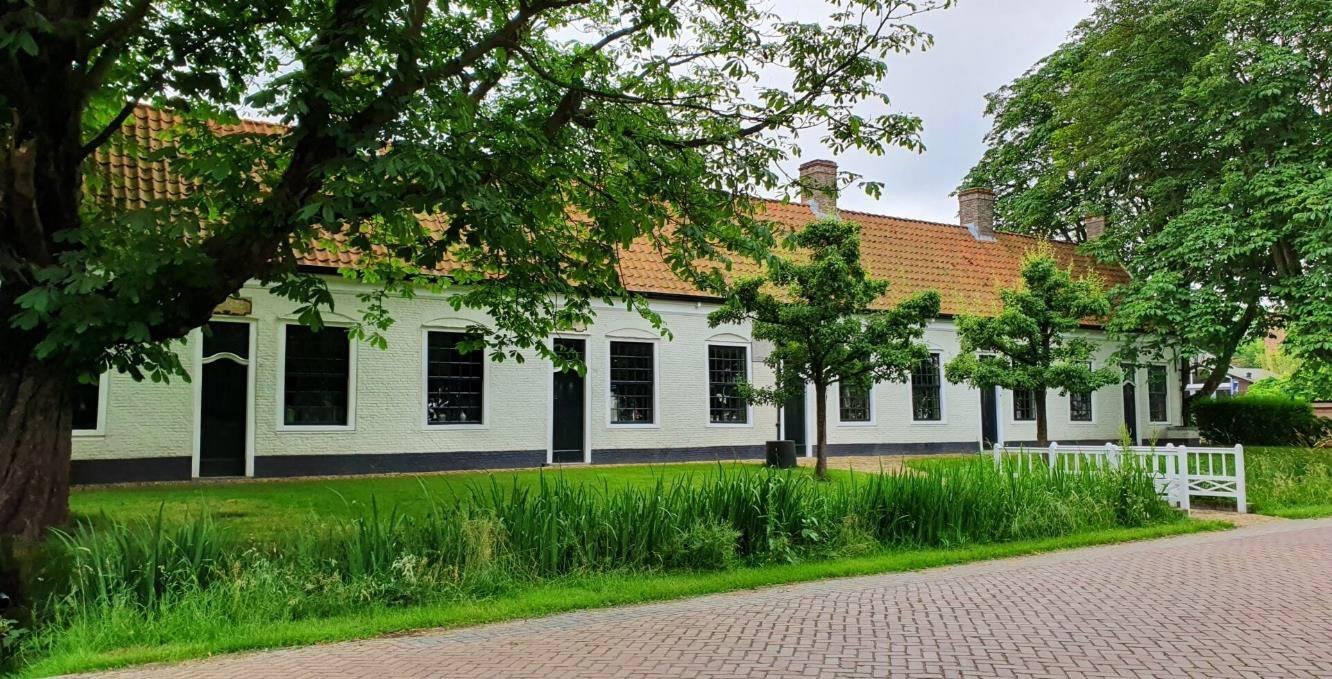
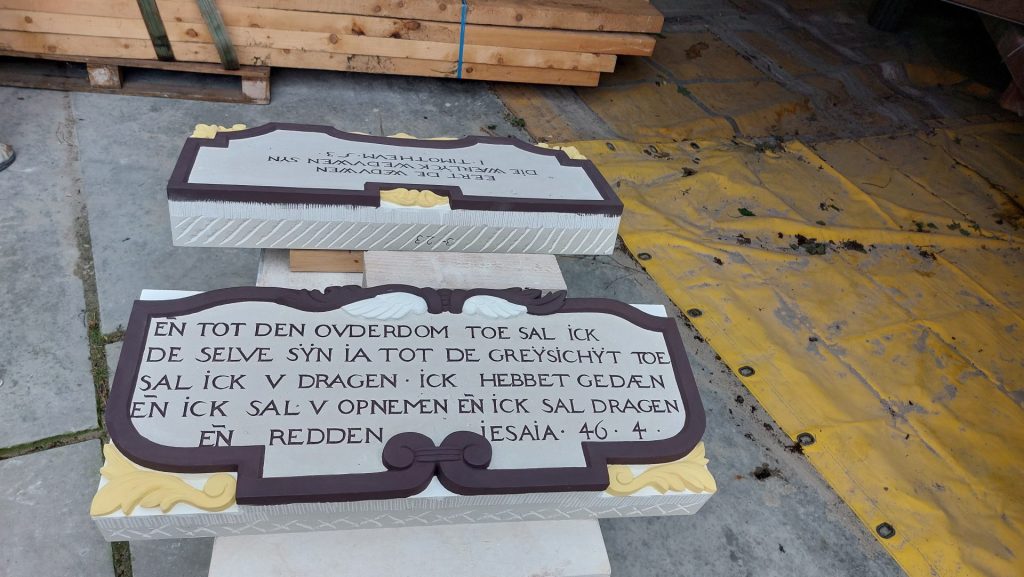
A project that Jelle and I (in 2023 already, it seems like a very long time ago, but I'm way behind on blogging) worked on together were these five sandstone gable reliefs for five widows' houses in Noordgouwe.

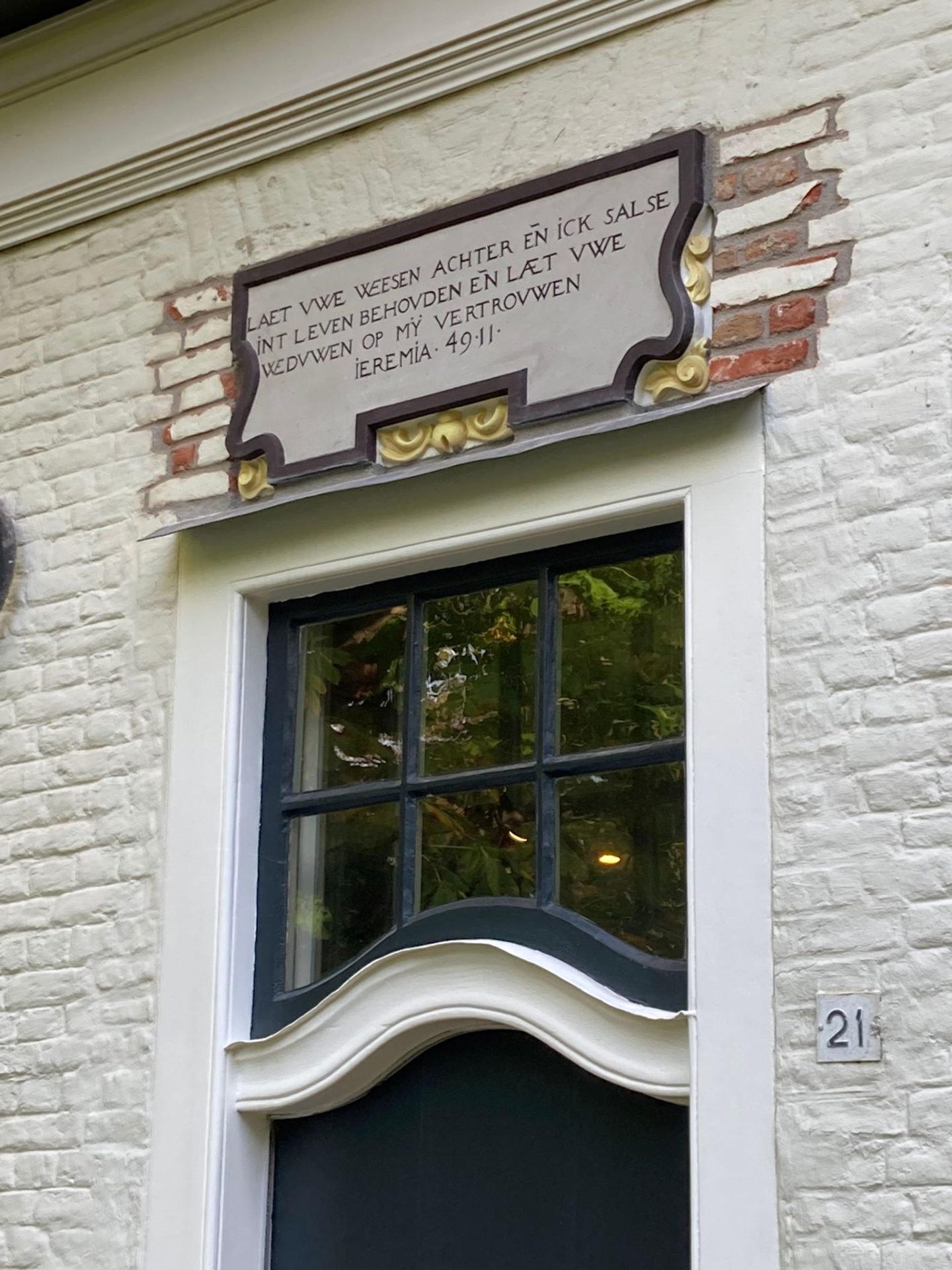
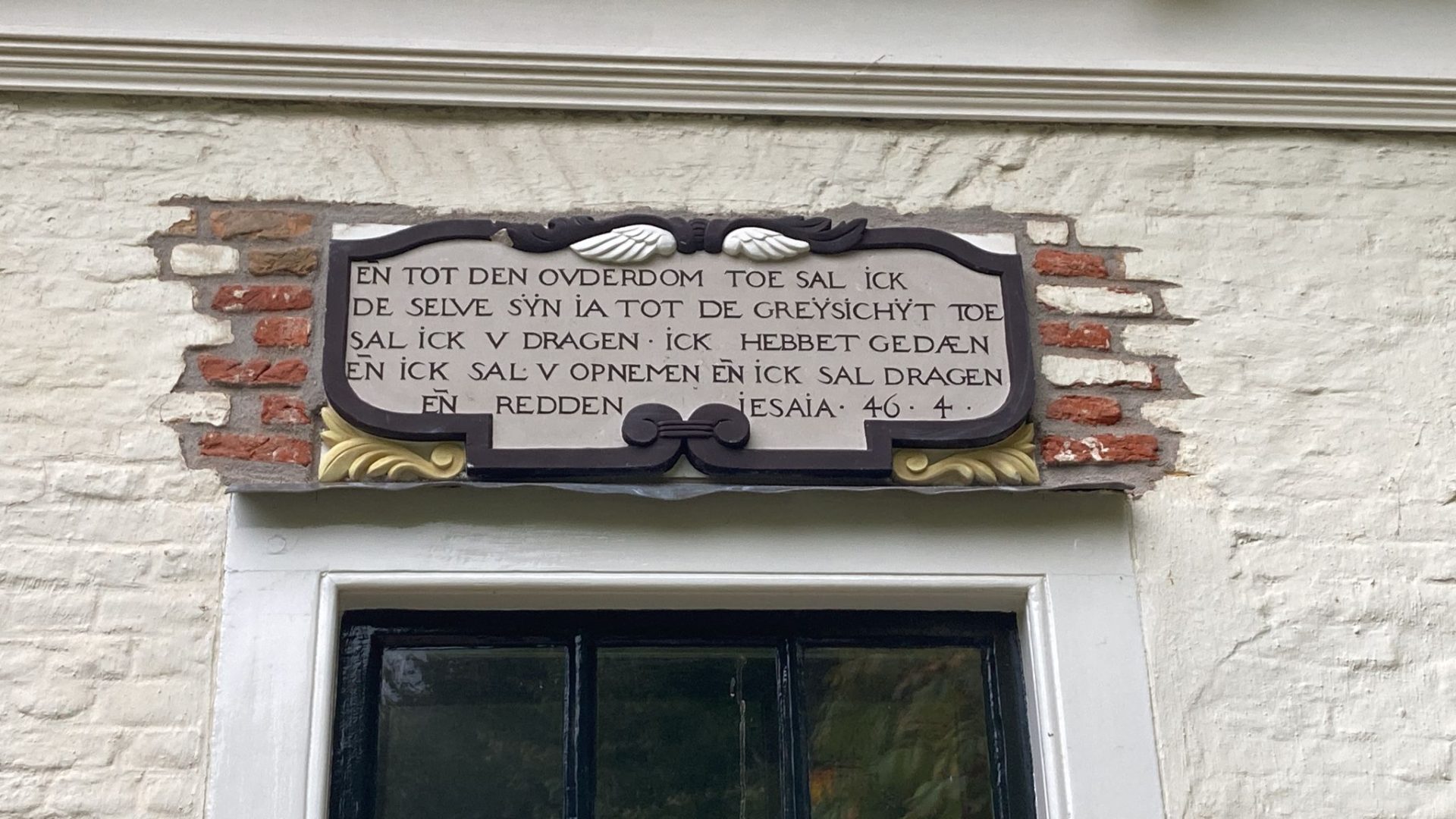
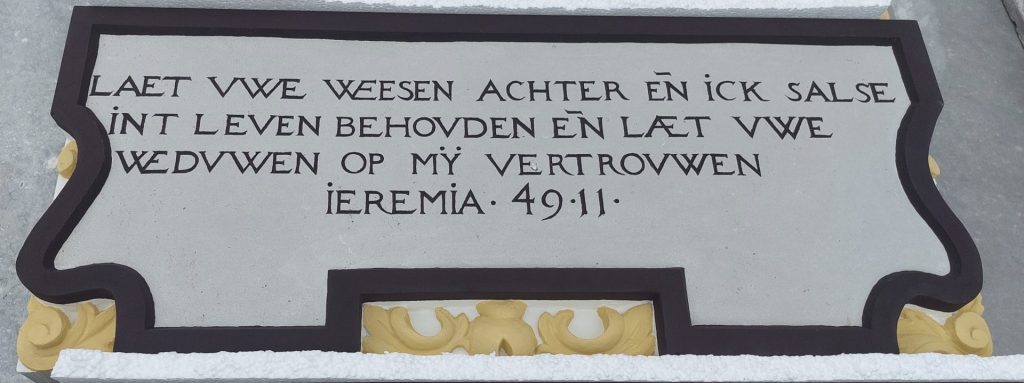
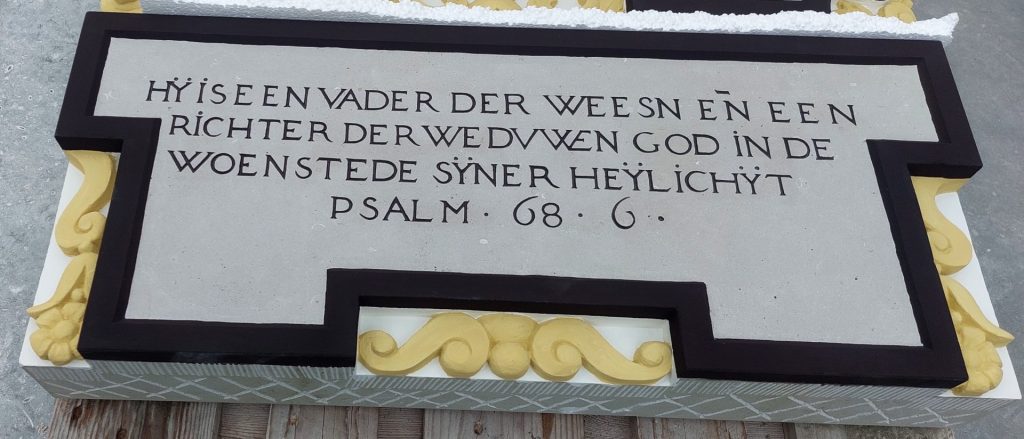
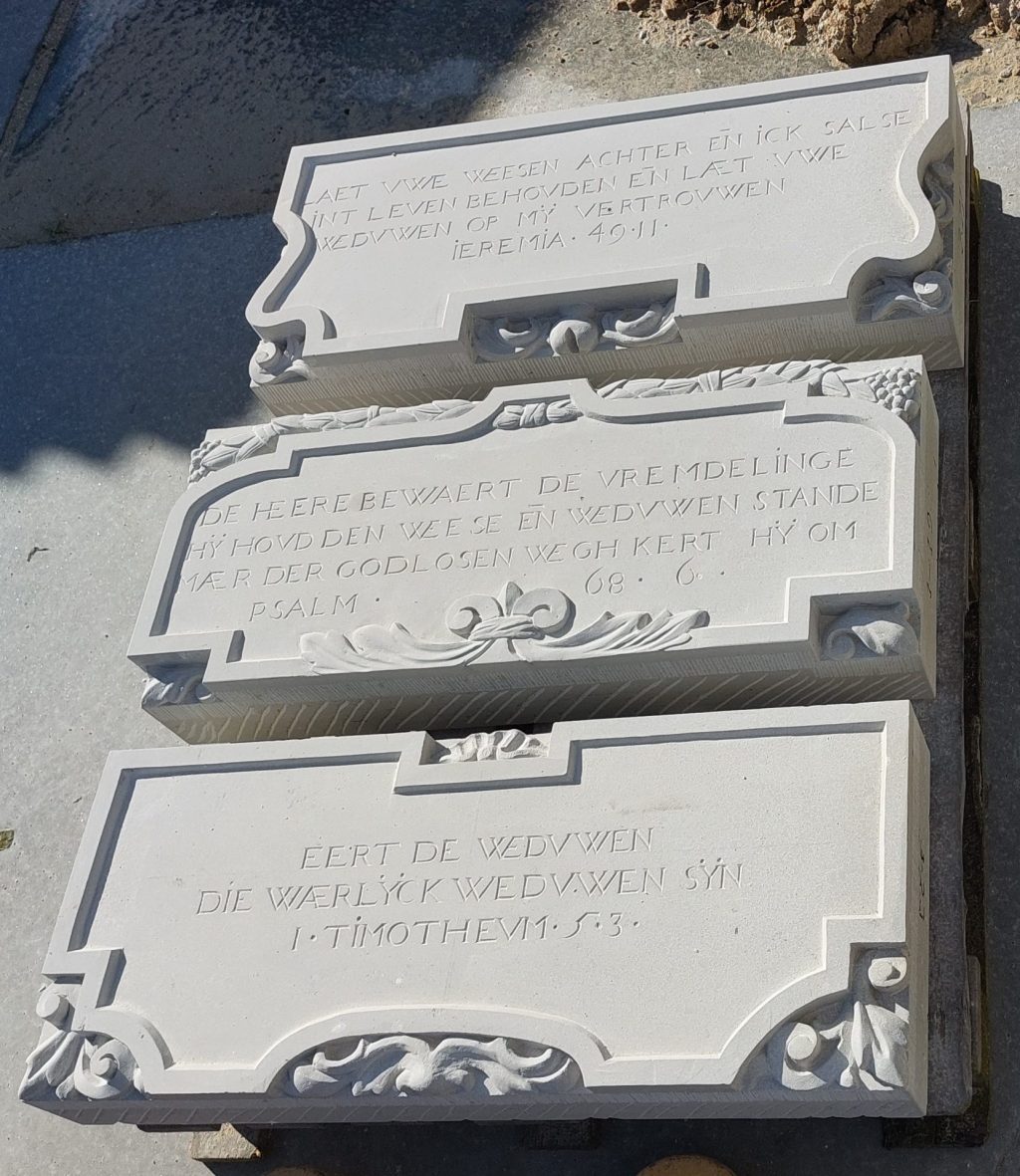
These stones probably date from the construction period of the houses, the year 1651. These are five Biblical texts from one of the the oldest Dutch Bible translations from 1637, executed with some poetic freedom in terms of spelling and typography. For example, sometimes two letters have been combined into one, for example at WEESE and WEDVWEN, where the W and E are joined together, and at MAER where the A and E have been merged.
Tracing and scanning
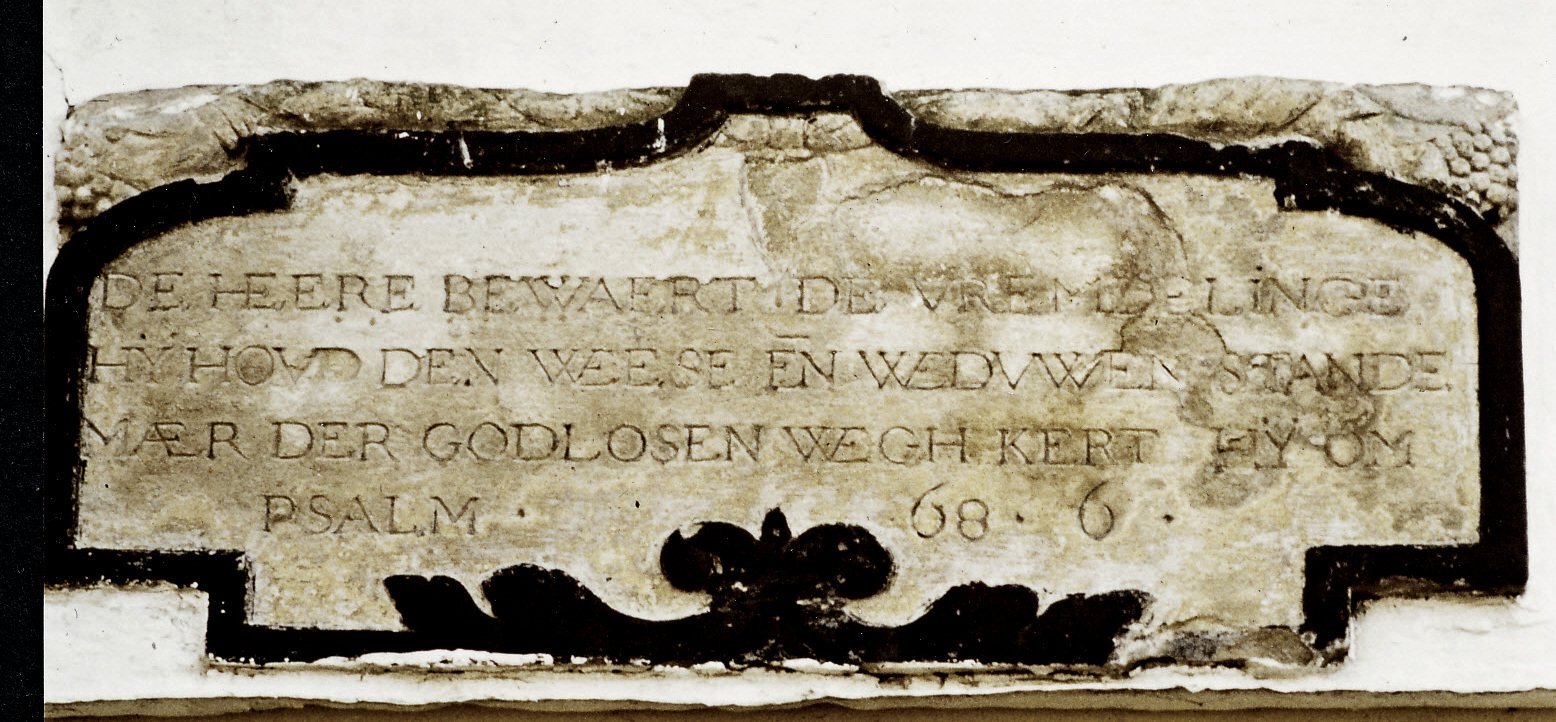
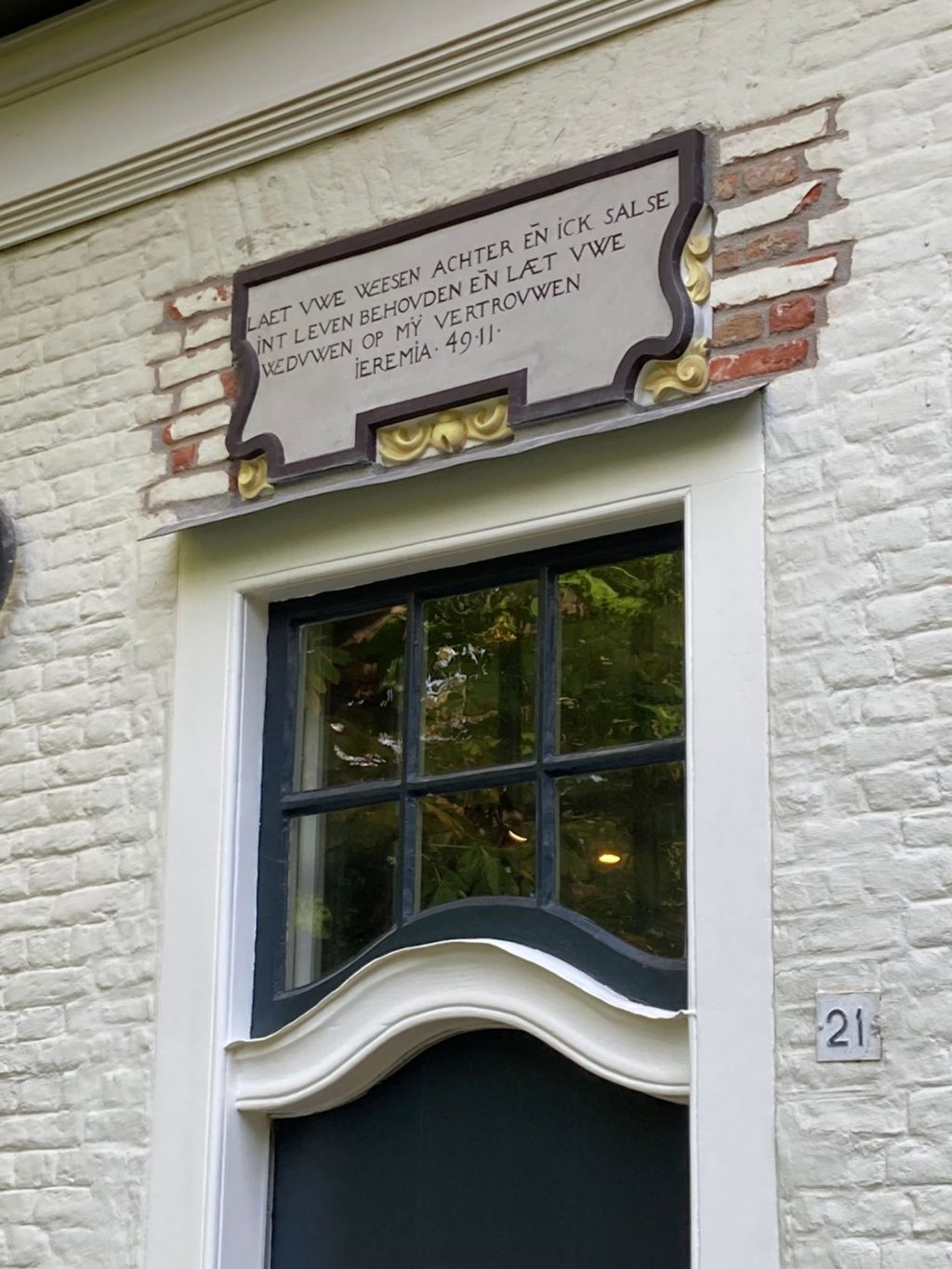
The client, who currently lives in and manages these five houses, wanted to safeguard these gable stones for the future, by conserving the old stones inside and placing reconstructed copies in the five facades.
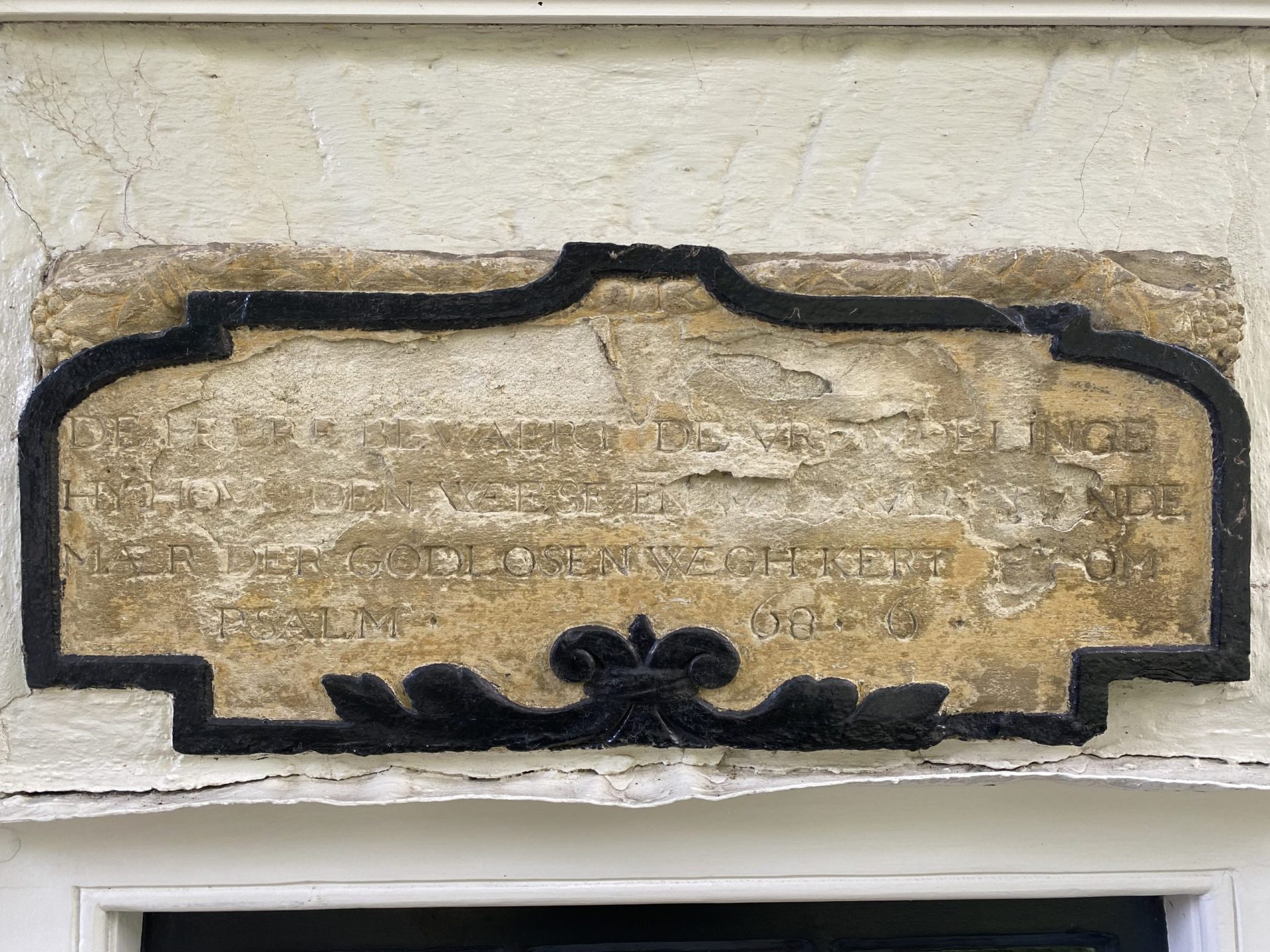
After much research, he managed to find all the original texts and asked us whether we could carve copies of these facade stones in new Obernkirchener sandstone.

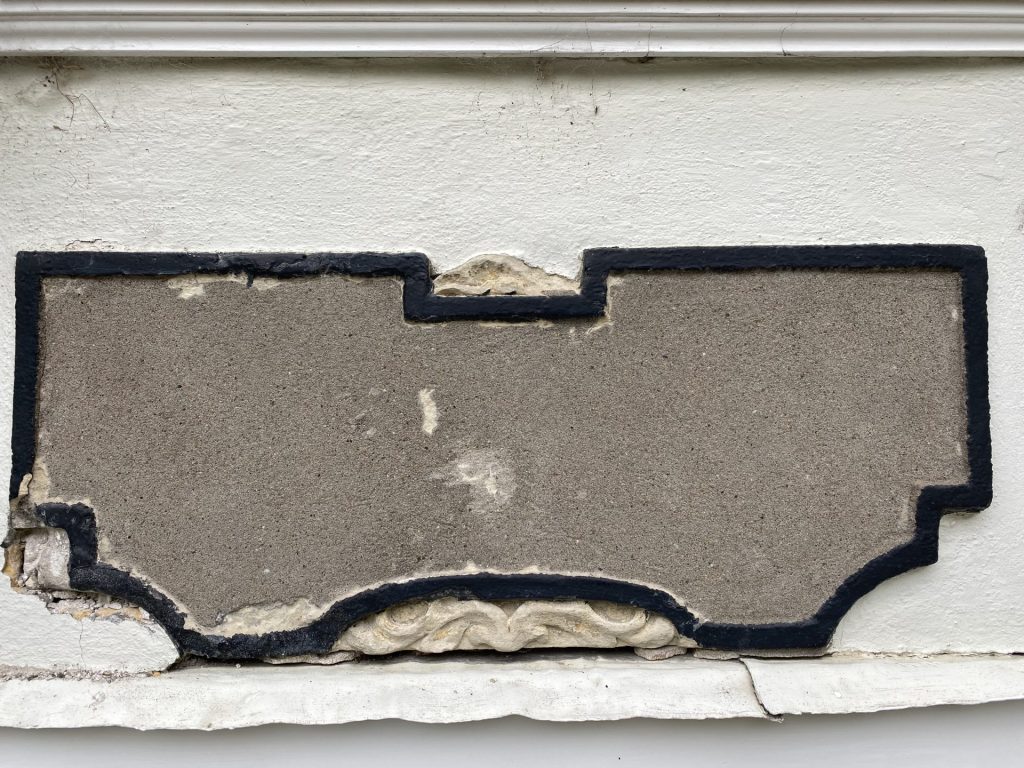
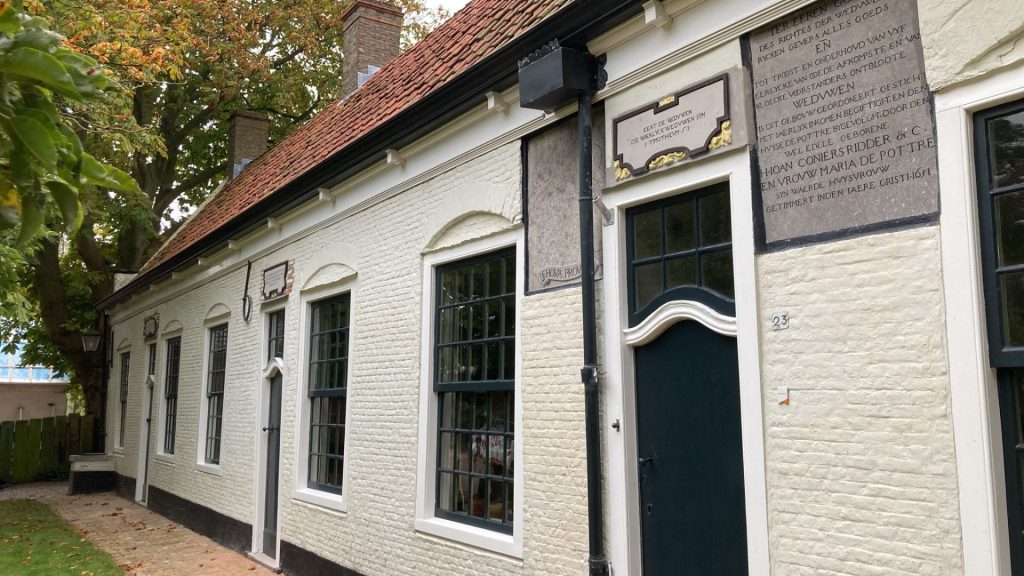
We first measured the existing gable stones completely, I traced all dimensions out on transparent foil and took photos of the current condition. Unfortunately, the stones of facades no. 21, 23 and 25 didn't have any text anymore, as all this had been lost in previous centuries. However, the client managed to find the correct Bible texts.
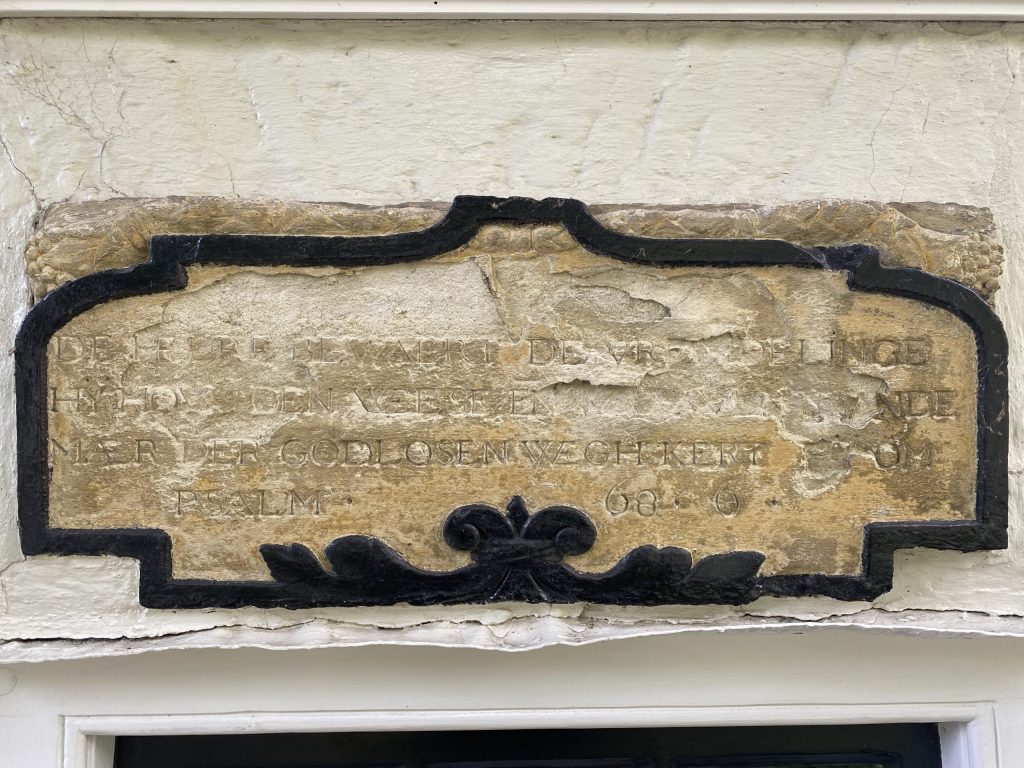
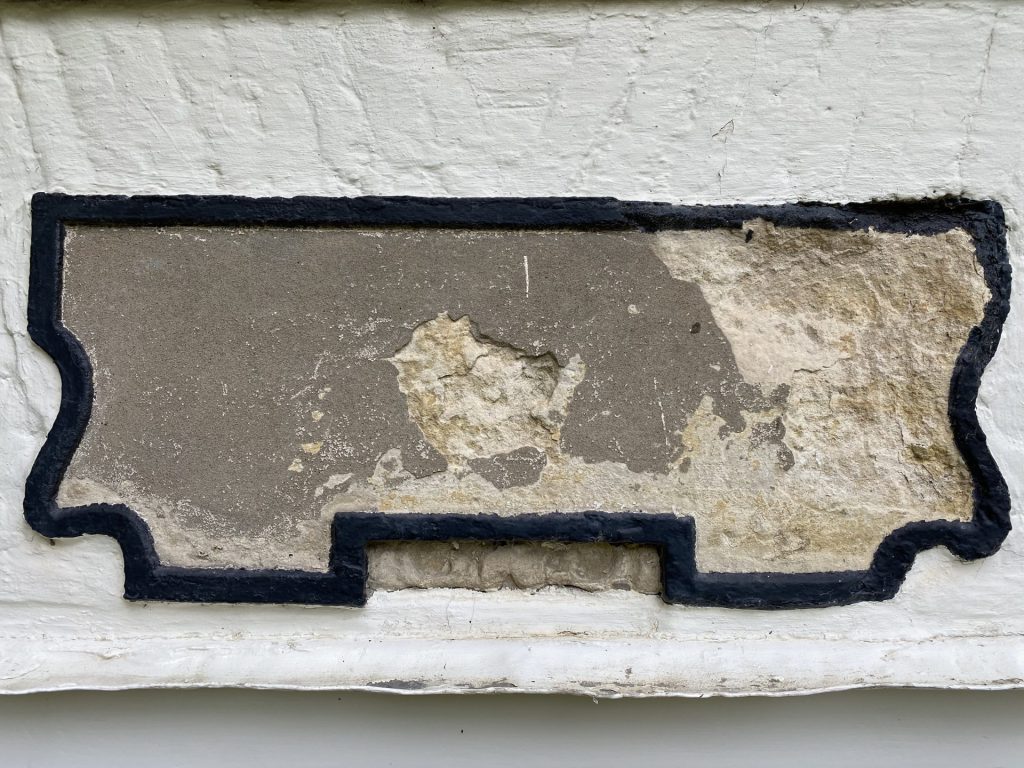
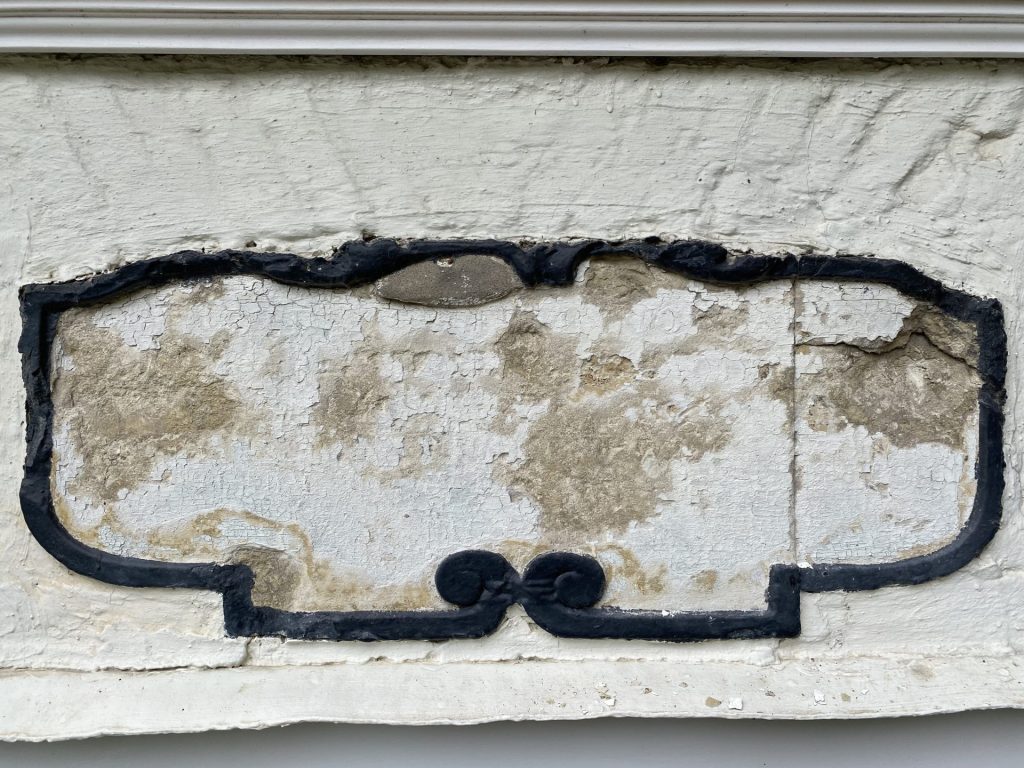
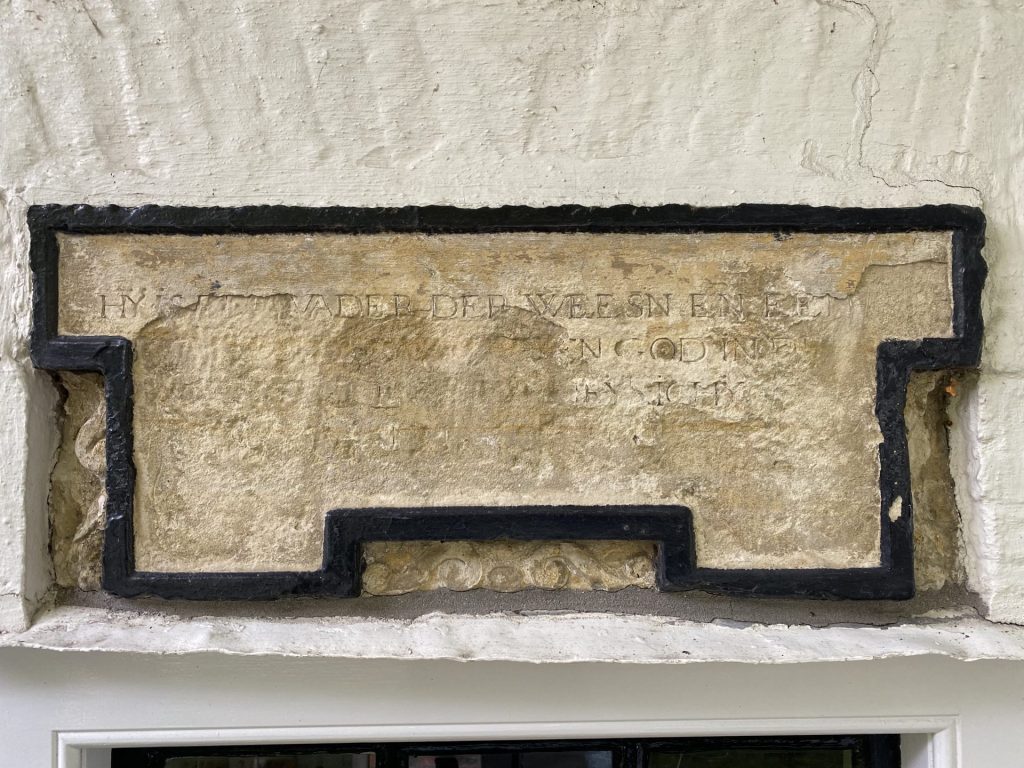
Strongly weathered
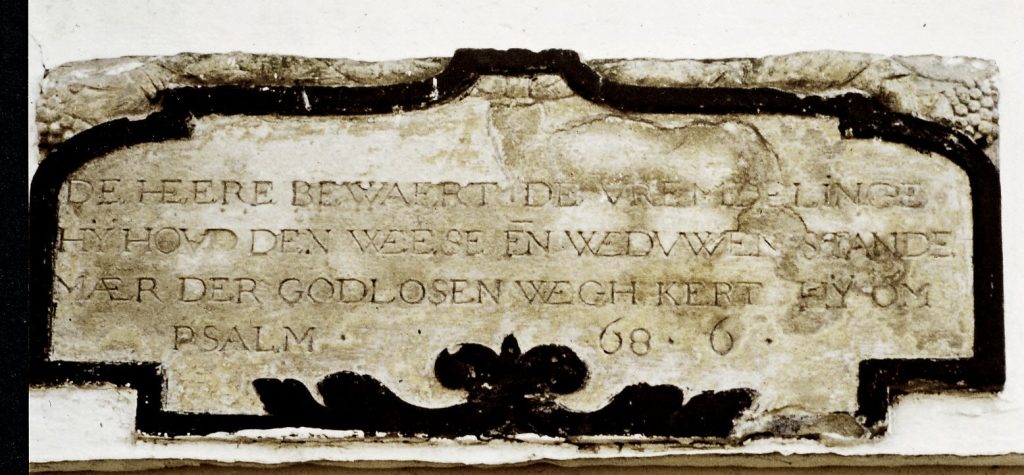
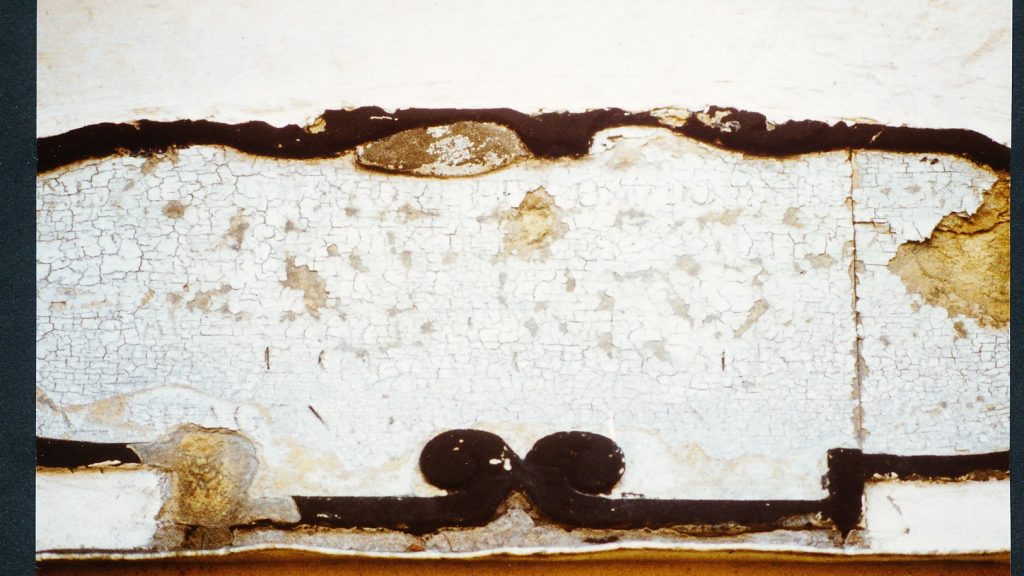
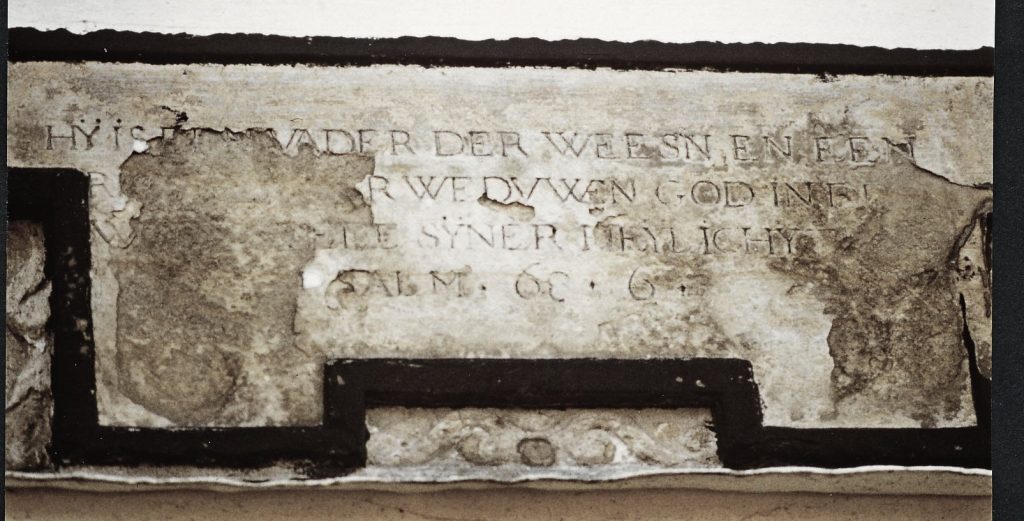
Hence, only from two facade stones there were any visible texts left, and then only partially. In the photos from 1976 these two texts were much more complete and also easier to read.
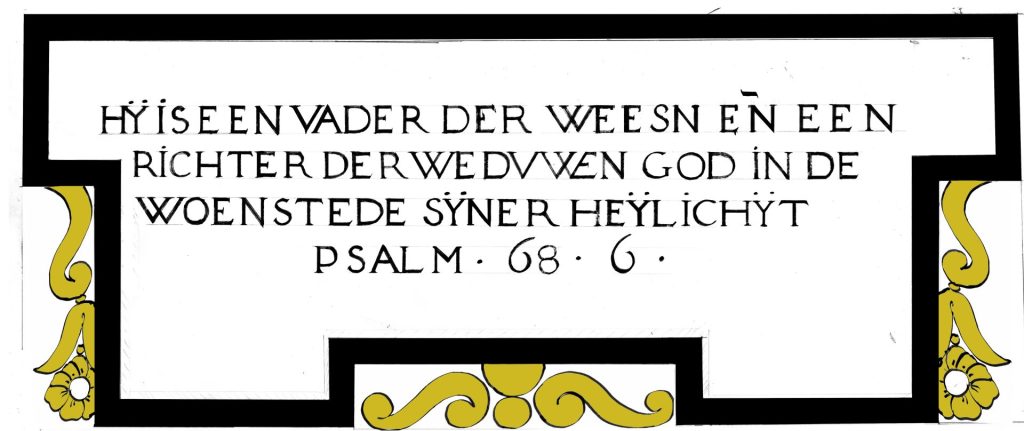
Thanks to all the research done by the client and a local historian, we were also able to reconstruct the text placement on the stone quite well.
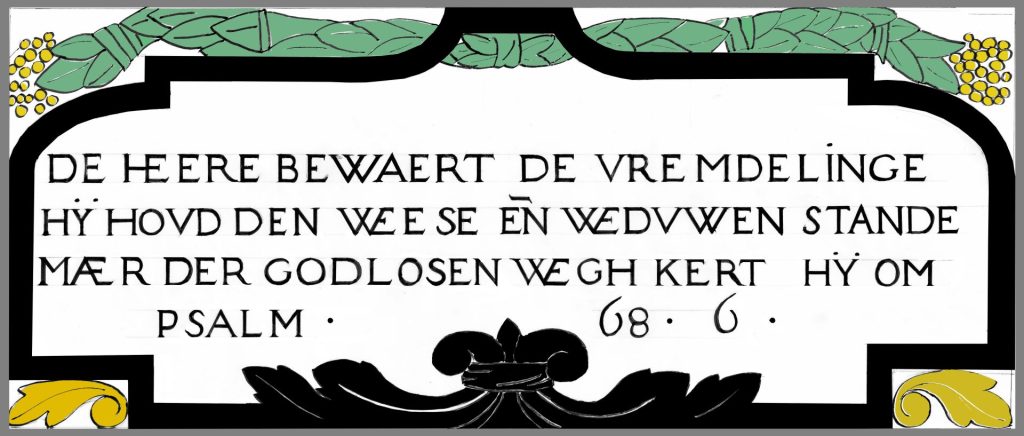
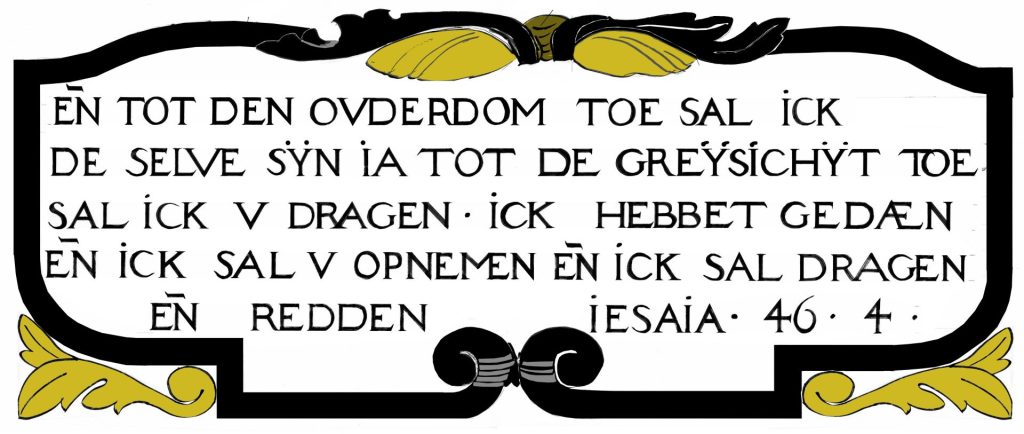
The ornaments were also only partially present; We had to supplement these with designs based on the existing remains.
Devoid of brave proponents
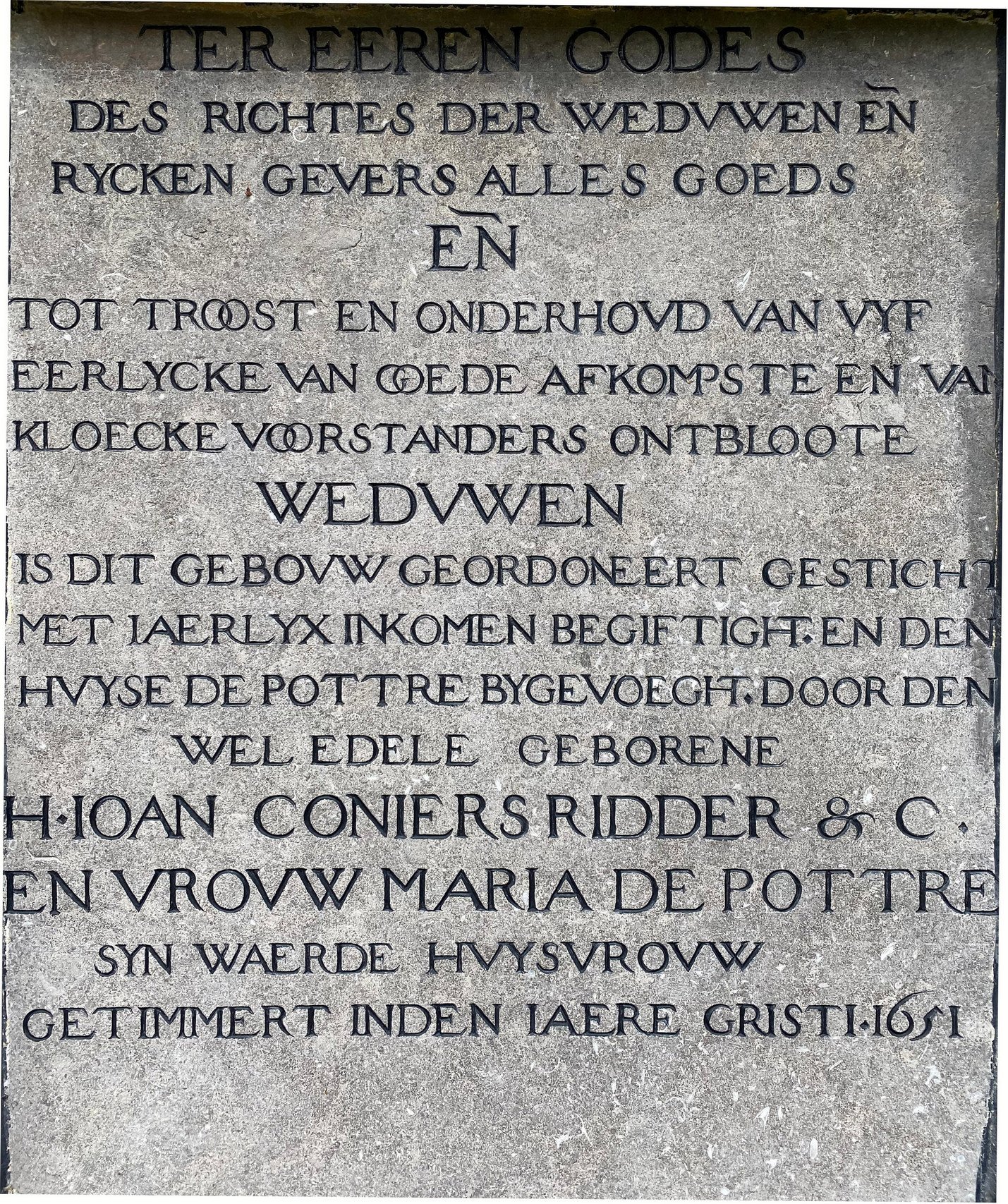
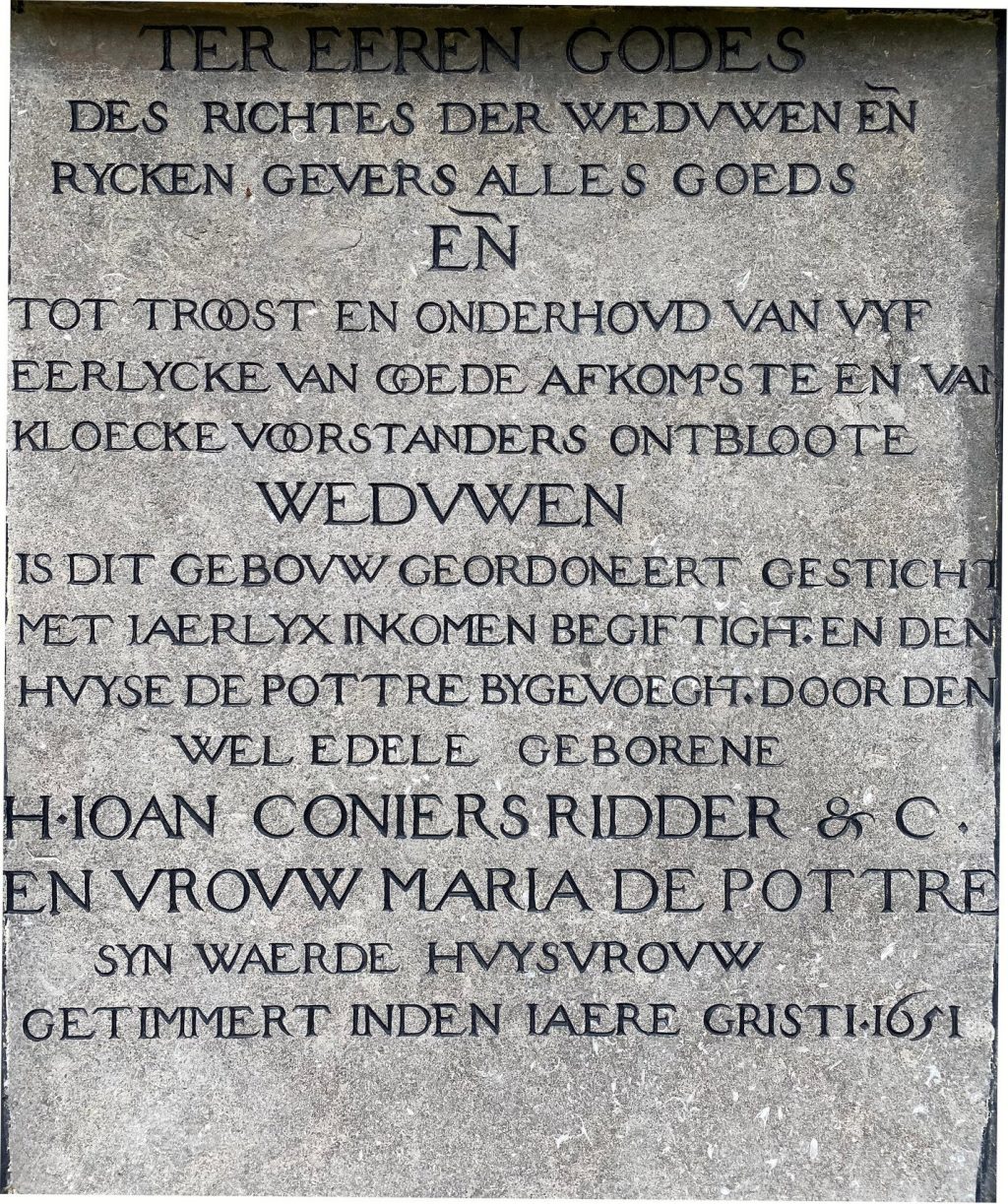
For the letters, we were able to use a beautiful text plate next to the middle front door , on which all missing letters could be found, albeit in a slightly different style. It would appear that a different stonemason carved the letters on this plate than the person who made the gable stones. This text plate describes how these houses were built as a shelter for five widows who were 'devoid of brave proponents'’ -; i.e. women of good descent who no longer had anyone to care for them. In addition to the house, an annual allowance was also provided.
Retain errors
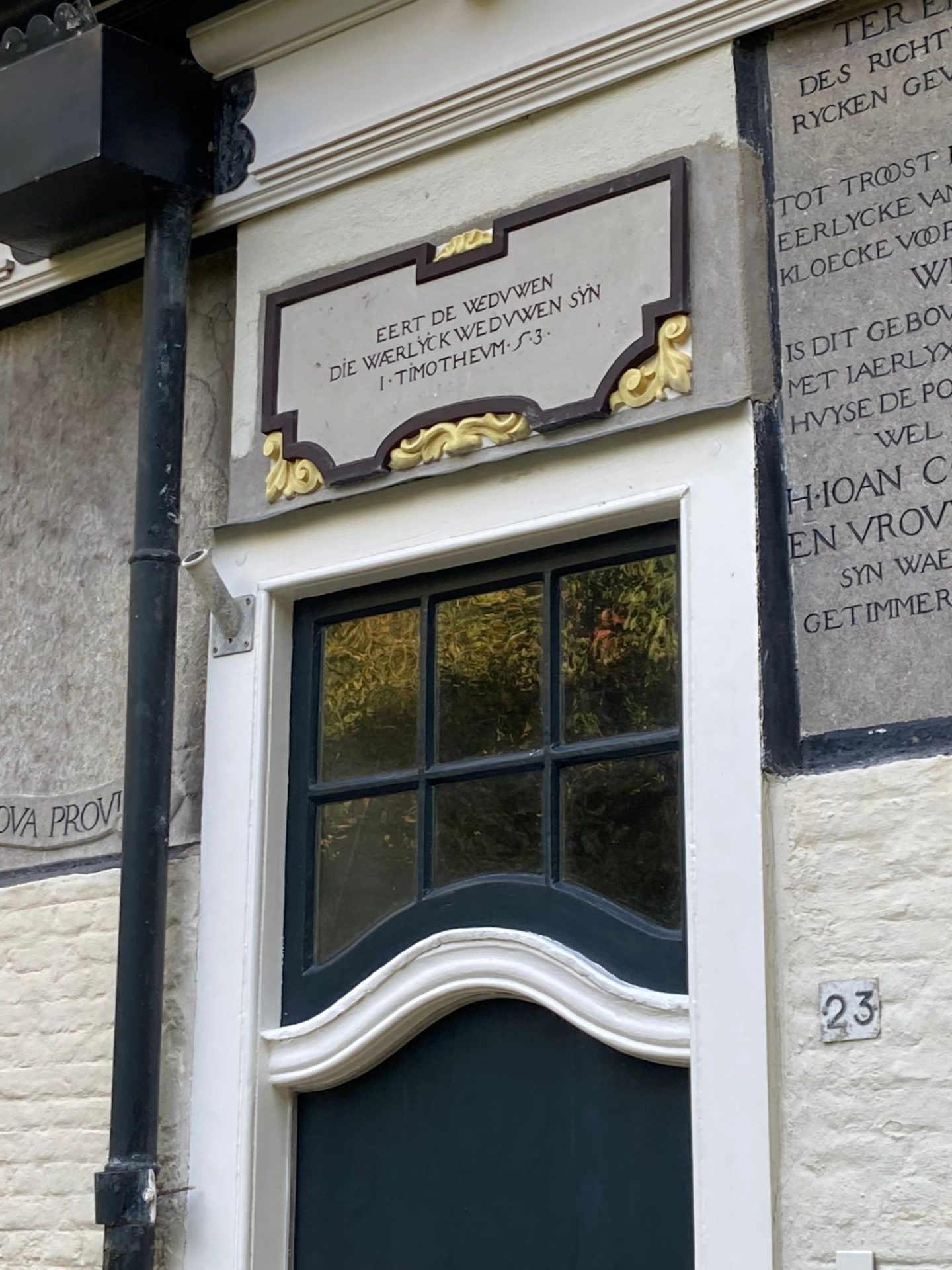
It is remarkable that there was an error in the old gable stones: both the first and last text are referred to as PSALM 68:6, while the text of the first facade is actually psalm 146:9 ... In consultation with the customer, we didn't correct this peculiarity, because it forms part of the story of the vicar , the client and the stonemason who executed it. Perhaps the different spelling is also because someone passed it on orally in one of these steps?
Different order
Normally in such a project all the parts are removed first, then they are somewhat repaired and reconstructed, then the stone is ordered and the copies are carved, and finally the copies are placed back into the facade. That was not the most convenient approach in this case, because in that case the client would be left with five large holes in the facade for six months. There were also concerns about the support for the roof and surrounding masonry.

That's why I suggested measuring it all beforehand, and reduce costs by ensuring that the contractor could remove 1 stone and immediately put its replacement back in. That would save a lot of work, including setting up scaffolding one less time, and the house would not be open to the elements for six months. There was still some uncertainty about the precise thickness of the stones, but the customer drilled a hole through the masonry and was thus able to make a good estimate of the desired thickness and the space in the cavity. This allowed us to order the new Obernkirchener sandstone.
Reconstruction

Due to the brittle condition of the old gable stones, it was decided to leave them in the facade as long as possible. There was a good chance that a lot of damage would happen to the stones when they would be removed, causing loss of information. The gable stones were measured and the available information was traced using transparent foil (markings, ornamentation and, if possible, parts of texts).

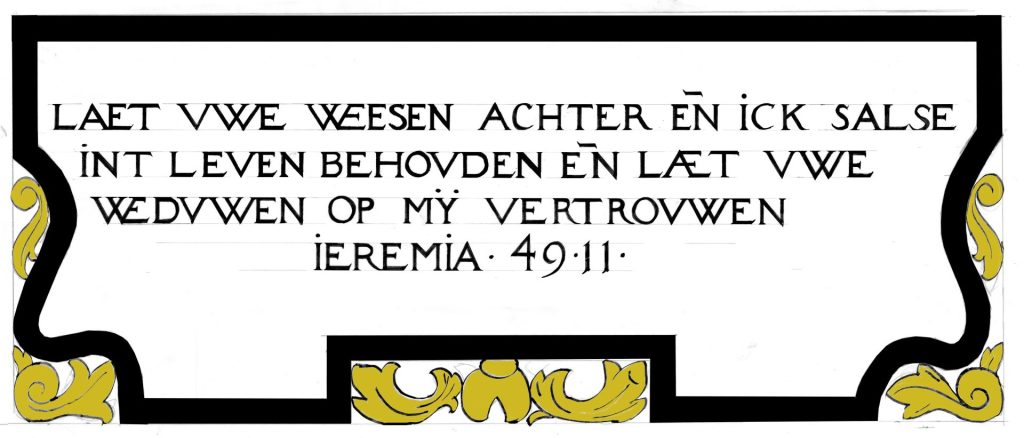
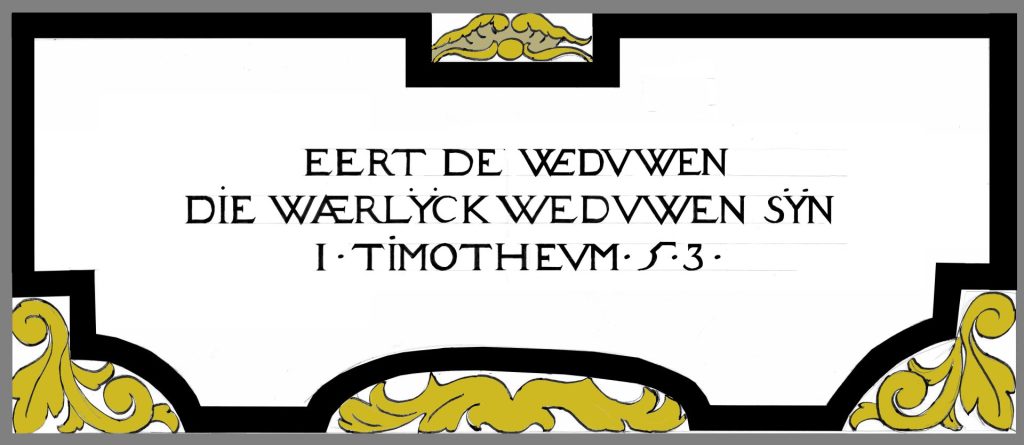
I scanned these foils into the computer and matched the images in Photoshop with old images of the gable stones, so that the text overlaps exactly with the foil stencil. This way, the perspective distortion of the photo has been removed. See an example of this matching below, namely from gable stone no. 1-19. The black marker lines on the foil are projected over the photo. After this, the ornaments and edges of the facade stones were reconstructed by hand using tracing paper and then drawn out in full size.. The same thing happened with the texts.

There were still some clear photos dating from 1976 showing the texts on the stones 1 and 5, with which many of the missing letters and the style of the letters could be easily reconstructed.
Execution
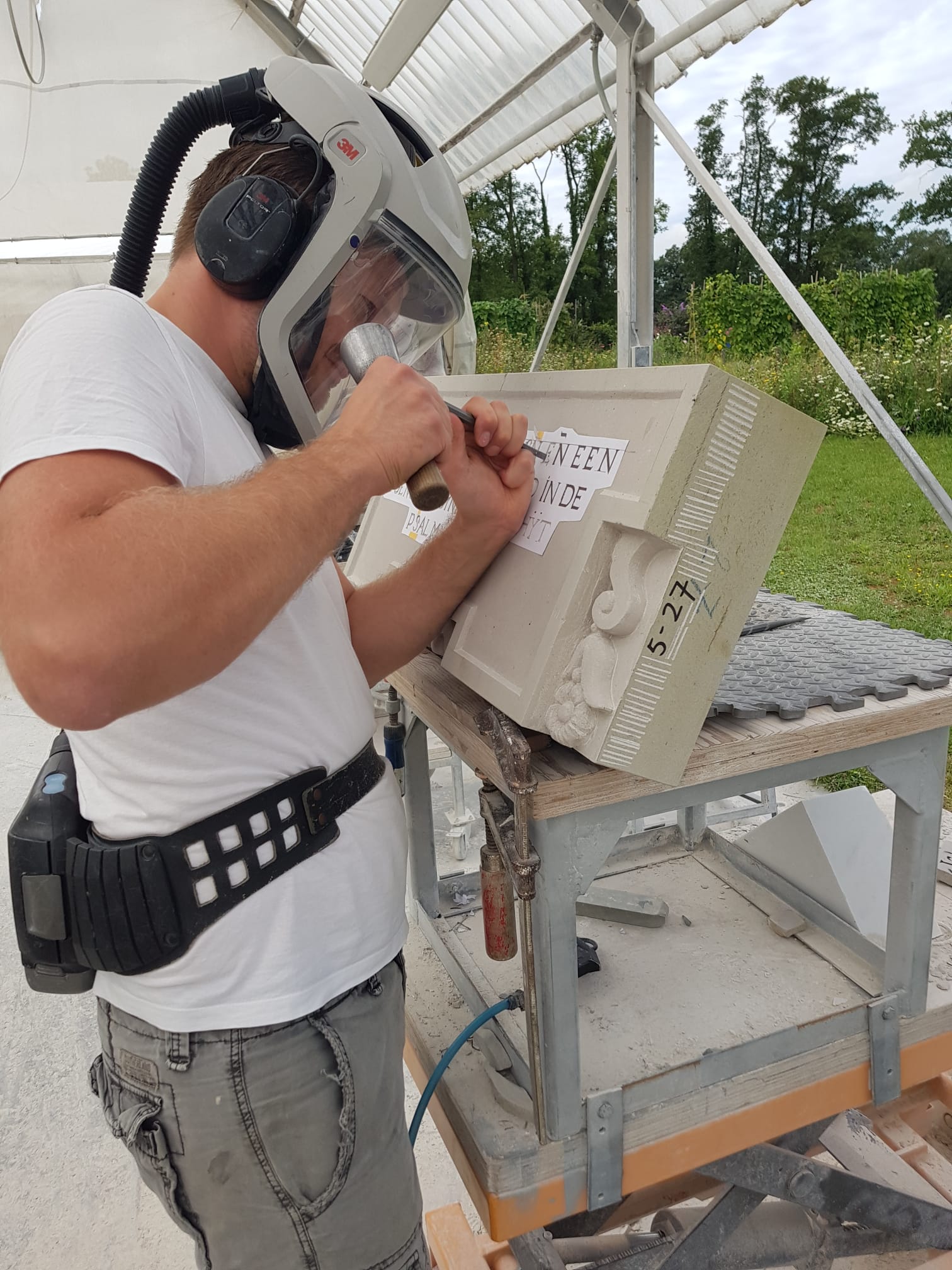
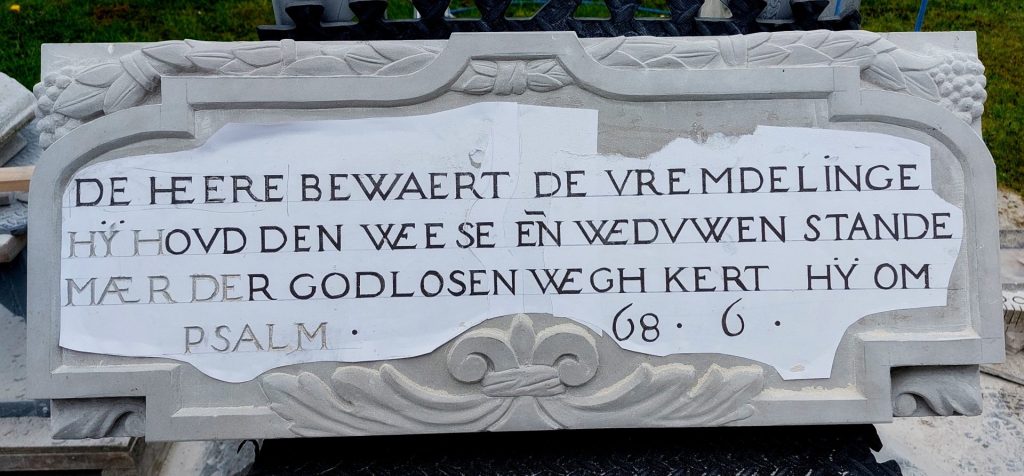
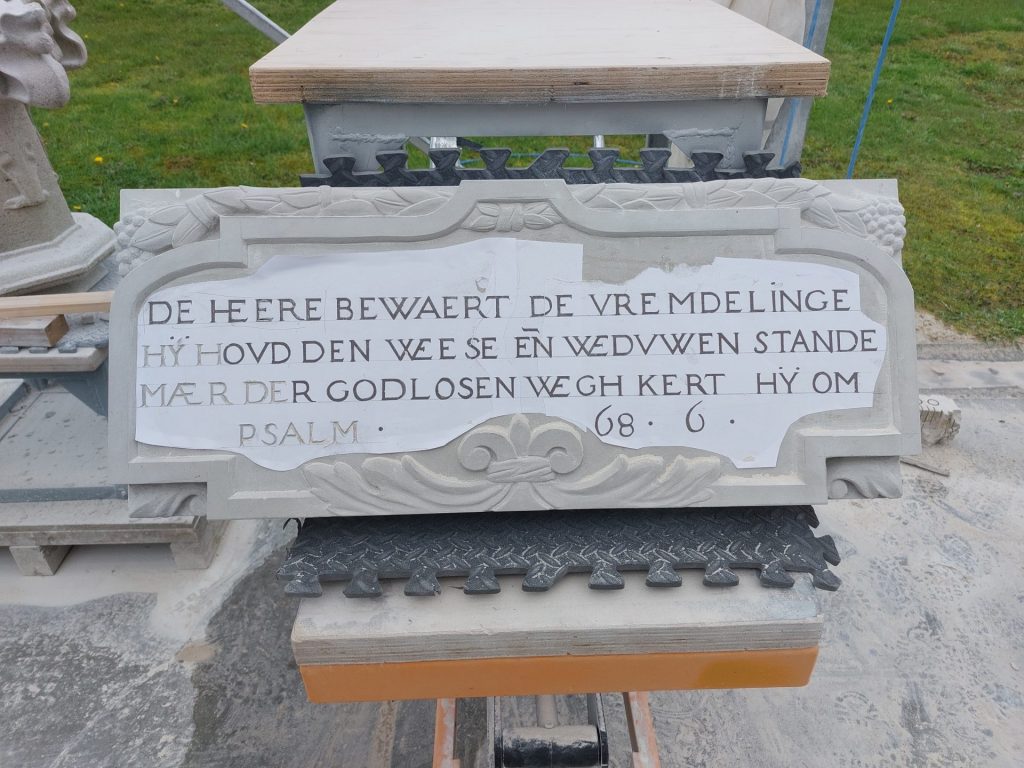
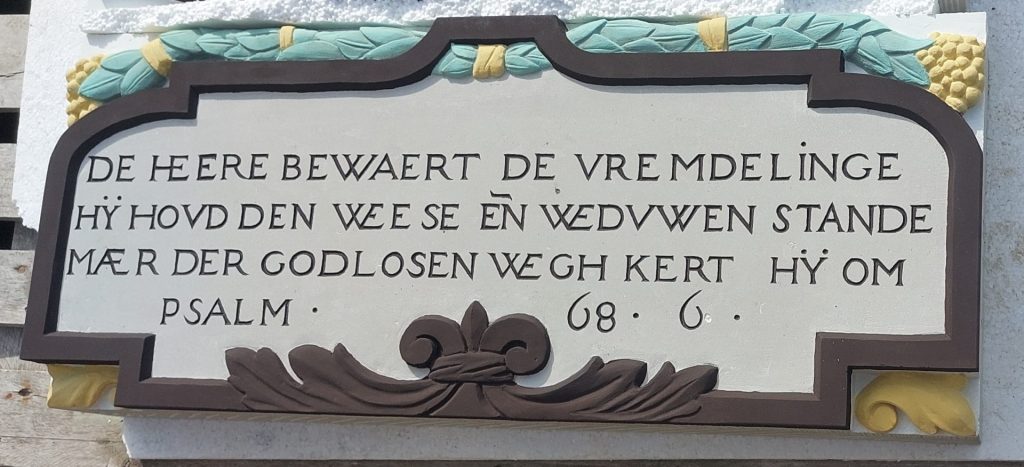
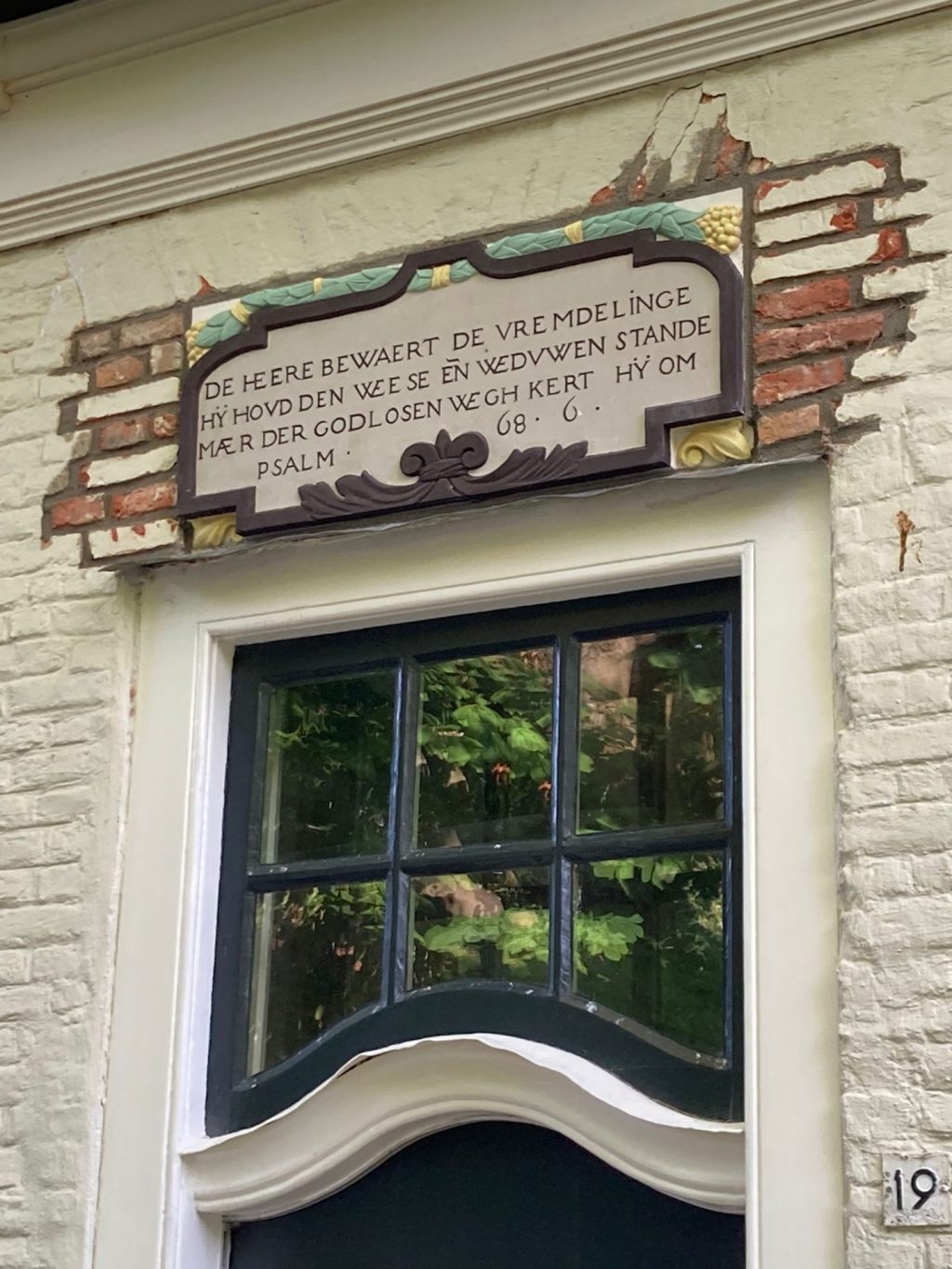
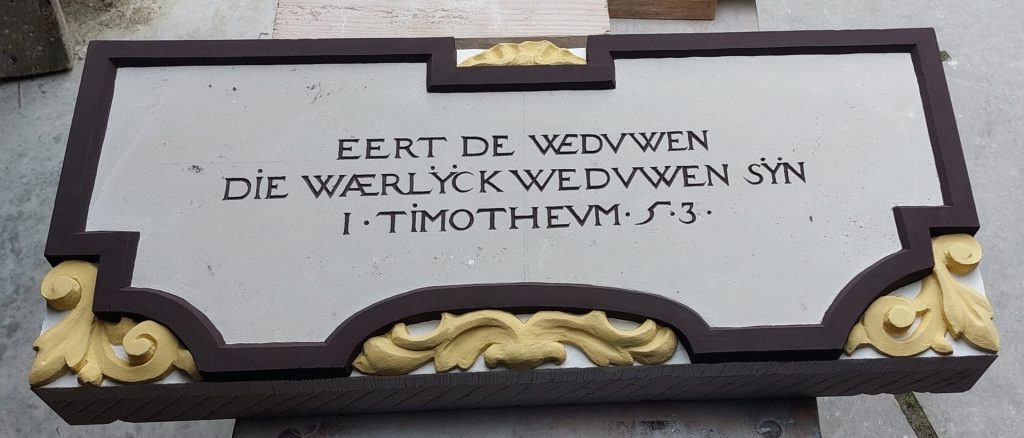
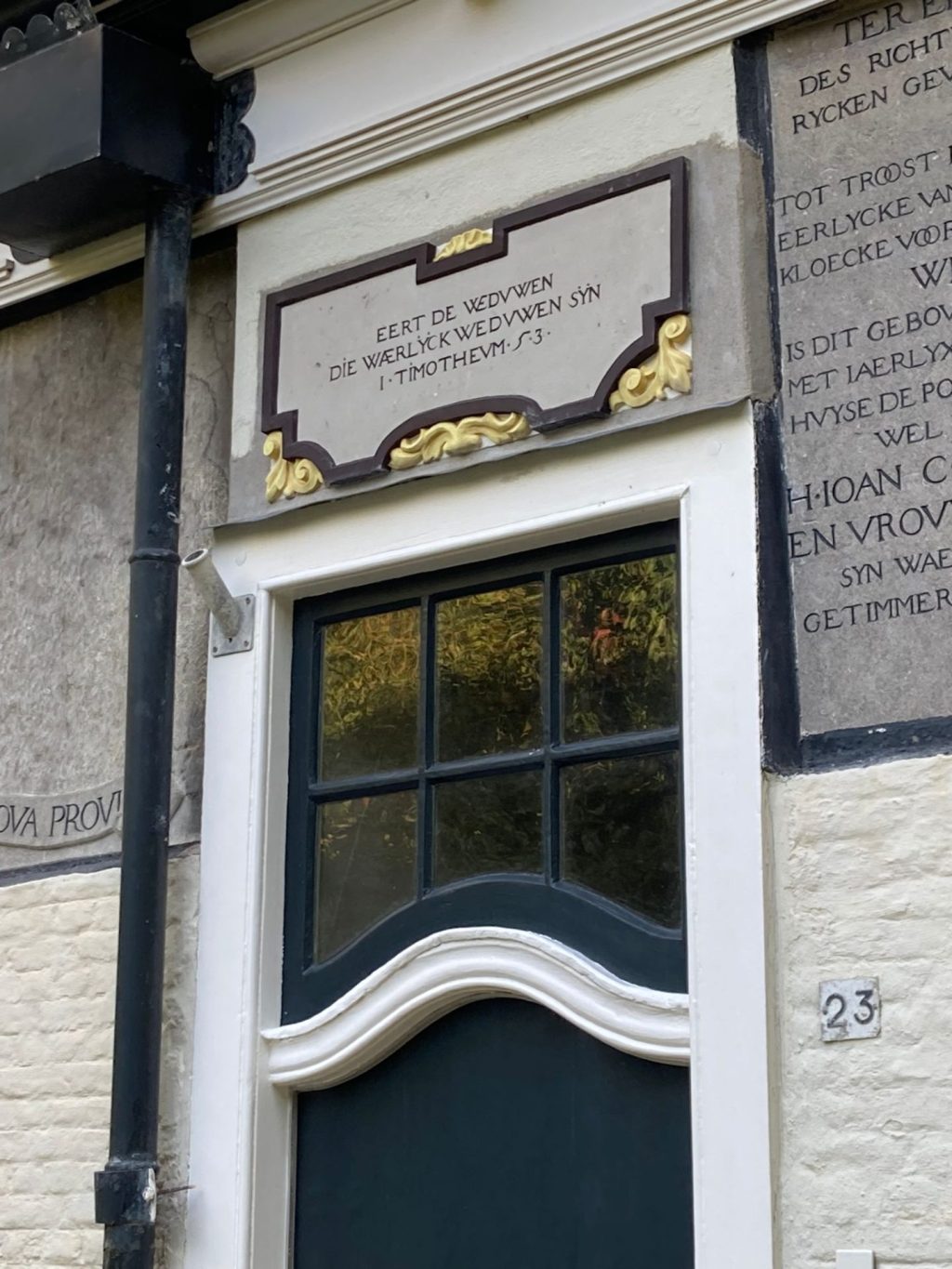
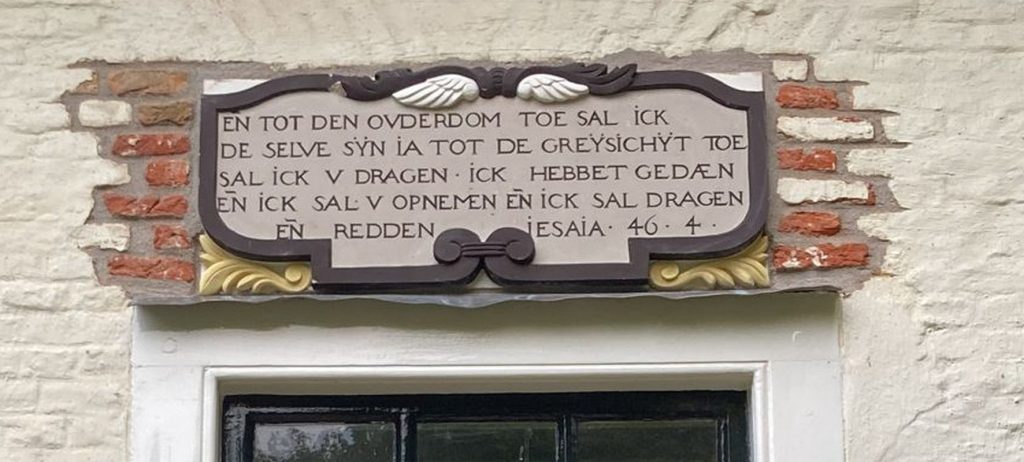
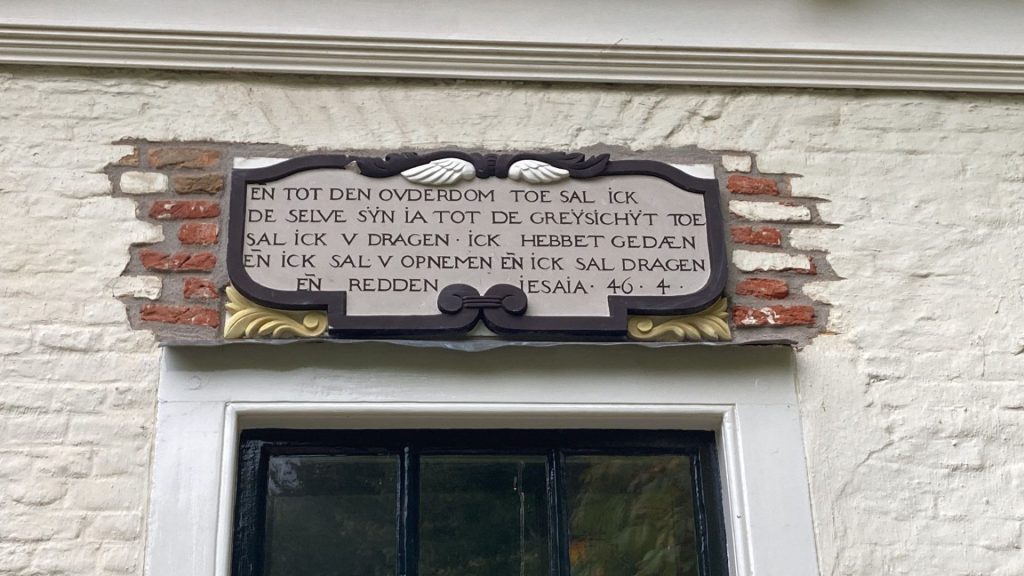
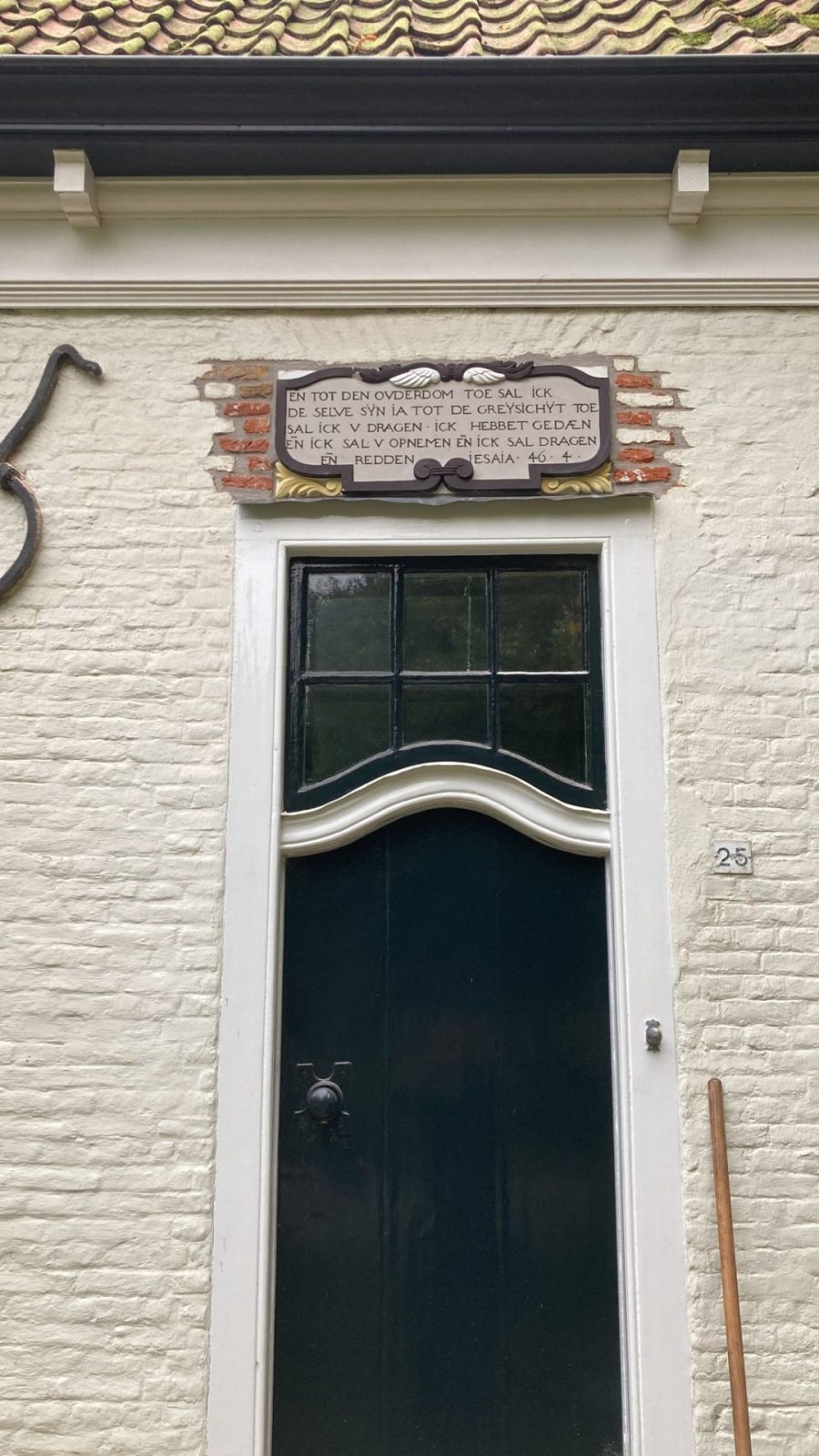
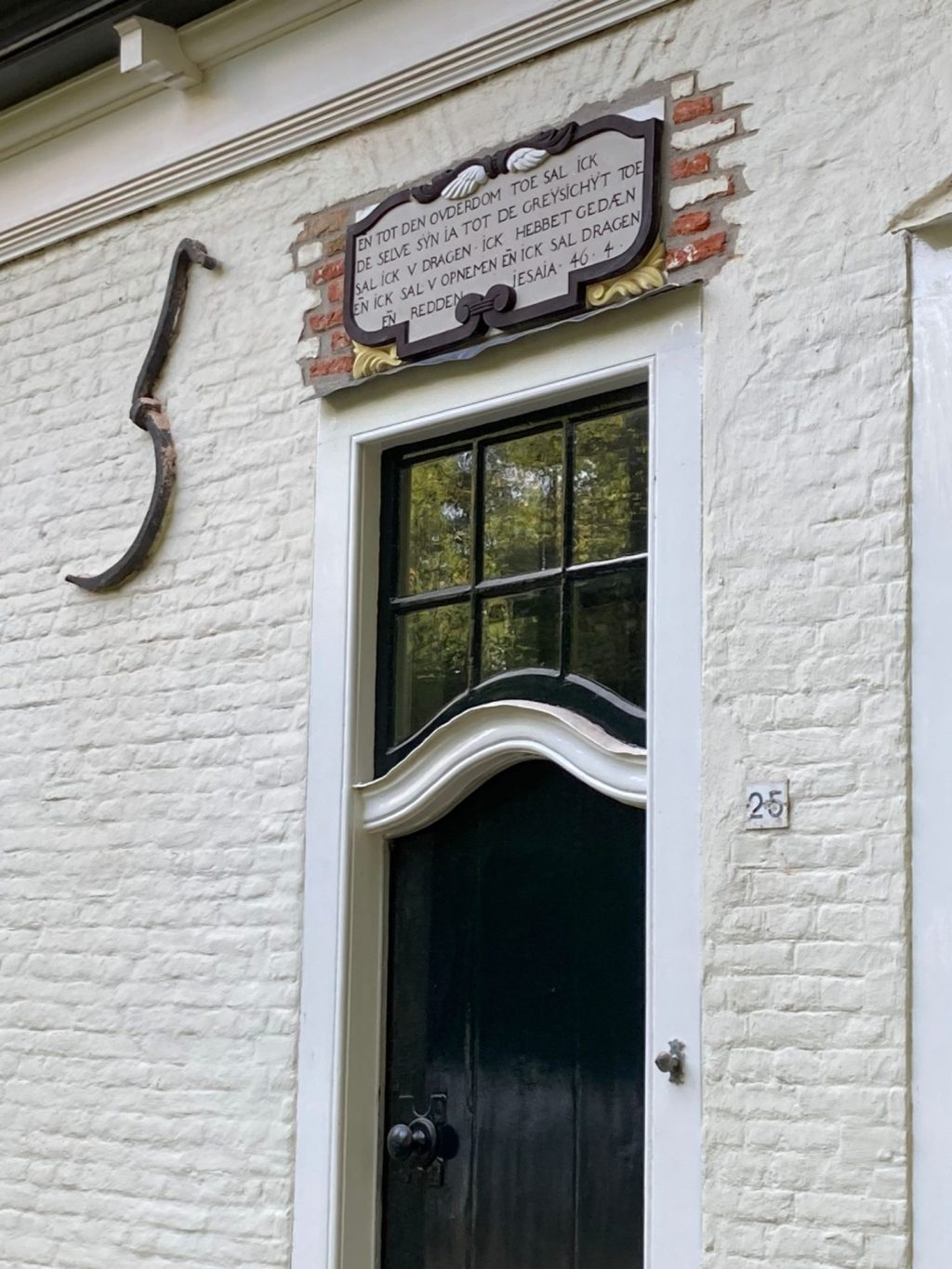
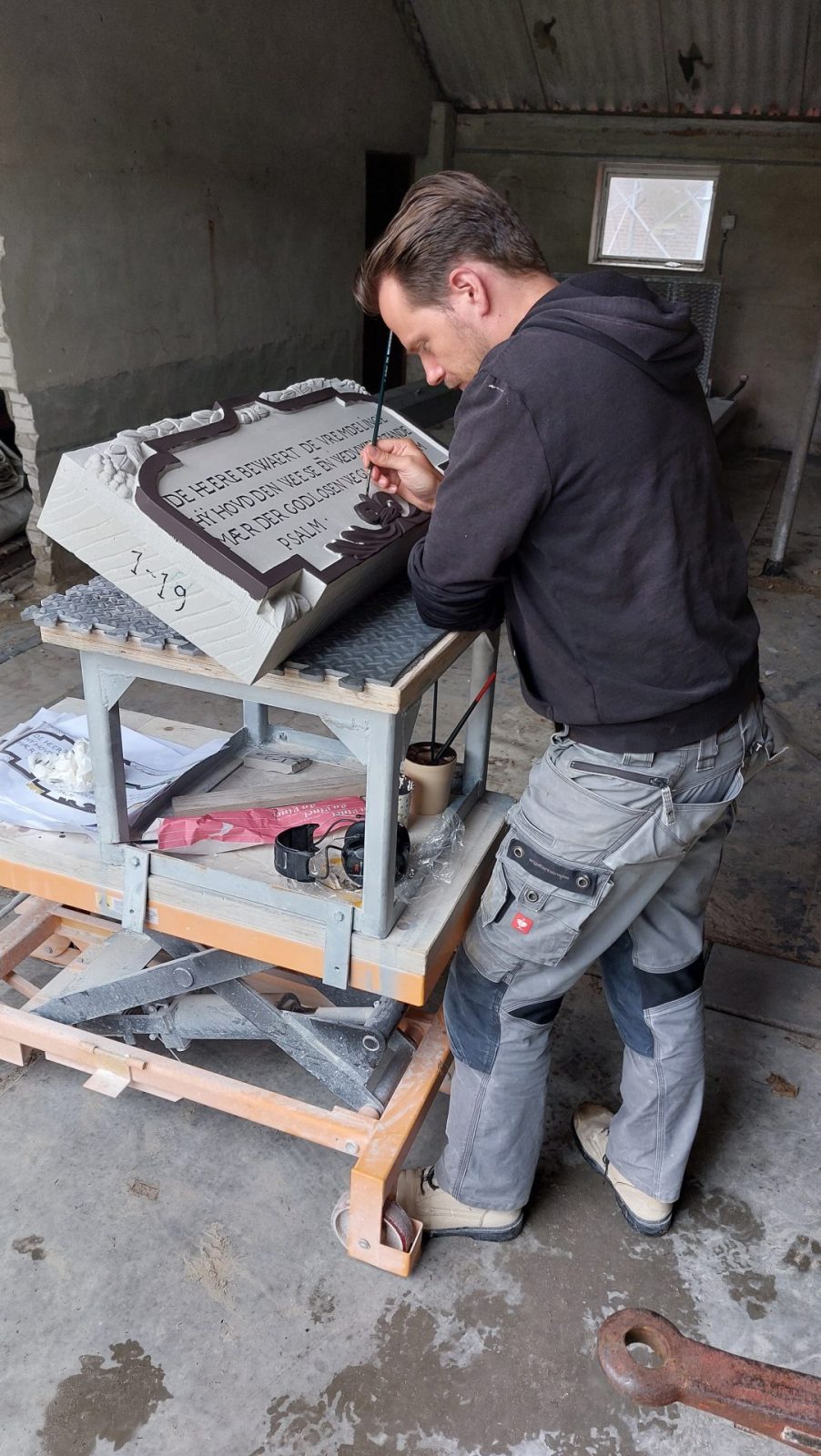
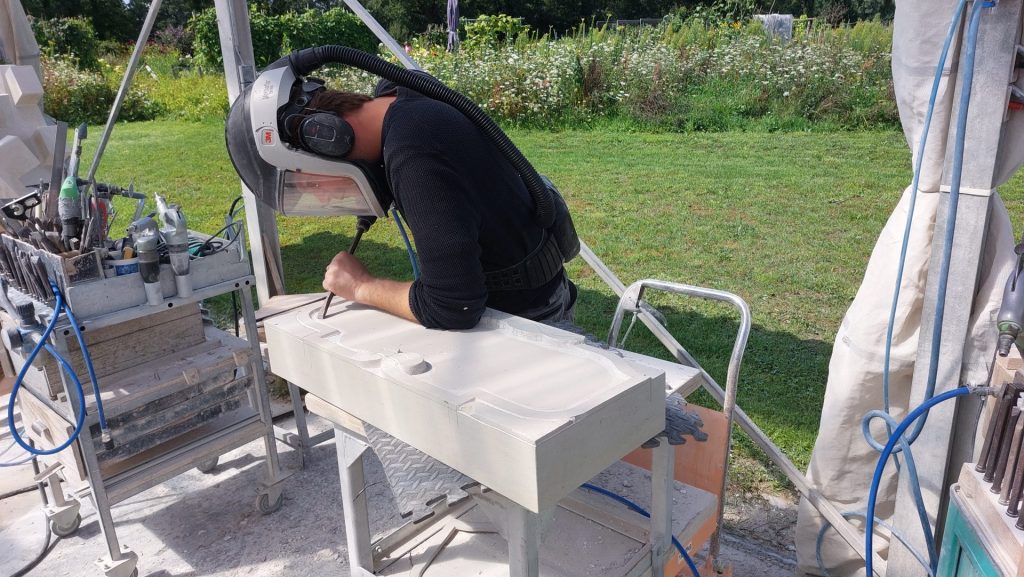
Based on the colored designs, we first carved the cartouches, after which Jelle carved the letters, because he has the most experience with that. This time he also took care of the polychromy. The new reliefs were then transported and a local contractor removed the old gable stones, the new stones were placed and the surrounding brick was repaired. The customer still had to color the bare bricks in the photos.
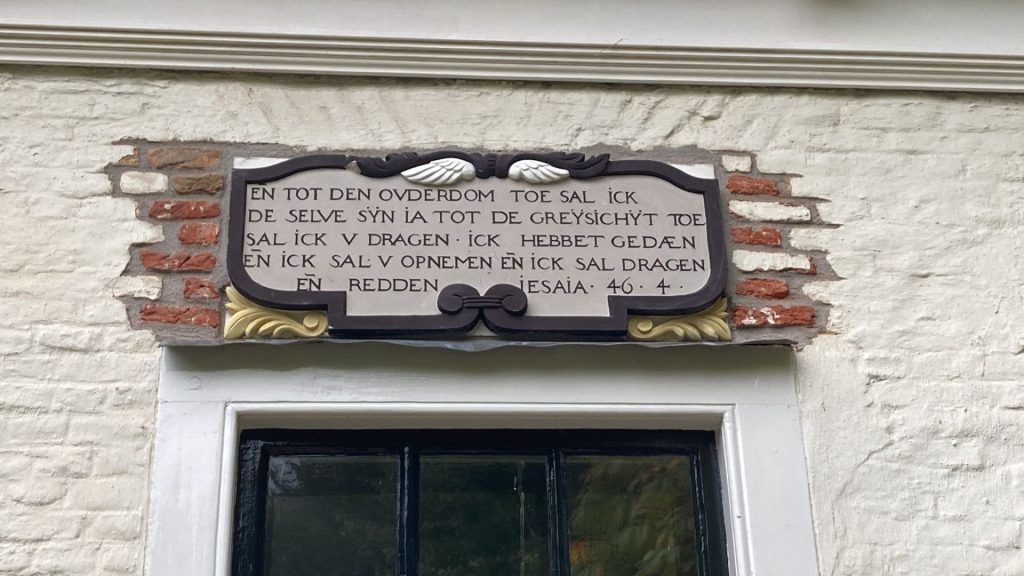
Gallery: before, during and after
Conclusion
There is much more to tell about the background of these houses, the biblical texts, the findings of the historians, the client's quest, the typography and the material used at the time. There is also quite a bit of background material in PDF with more information about all these matters, but I think this gives enough of an overview of this commission, which we enjoyed working on again.