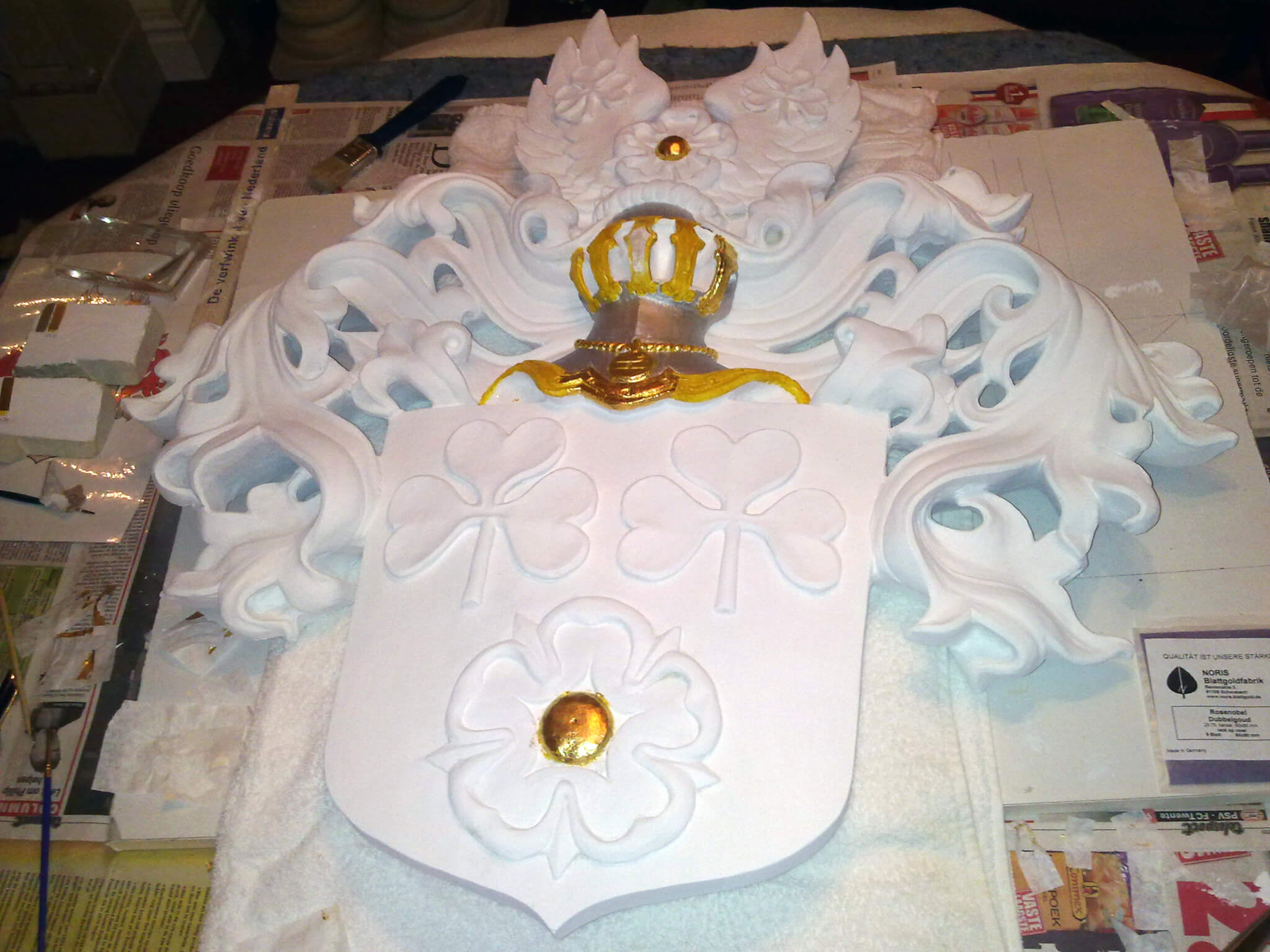
Rómulo has started with the gilding. The bars of the helmet, the edge and the string of the helmet and the buttons of the heraldic roses are gilded with 23,75 carat double gold. The helmet itself is painted silver. On the photos most places where gold should come are still yellow; that's the base coat for gilding.
This is then followed by the second component (activator) and finally the gold leaf. This process is suitable for outdoor, weather proof and with lasting gloss.
I'm very curious how the weapon will look like when it is completely polychromed, it is in fact a bit new to me too. Most of the sculpture that I supply remains the natural colour. But given Rómulo's great skill and knowledge I'm fully concvinced that it is going to be very attractive!
The relief with the family crest of Duitgenius today went on a trip to the painter, Rómulo Döderlein de Win. I know Rómulo since 1983, when we both studied theology in Amsterdam. Incidentally we both later entered the restoration business, he as a painter (and portraitist and heraldry painter) and I as a sculptor. This is the first time we're doing a work together, so that's something that gives me extra joy.
Right away when the shield was on the table at his house Rómulo got started. The back side was treated with a special restoration paint, that is moisture-resistant, but vapor permeable. When two layers of paint are done, the front will painted, and then the colour in oil paint and gilding will be added. More about this in the next blog post.