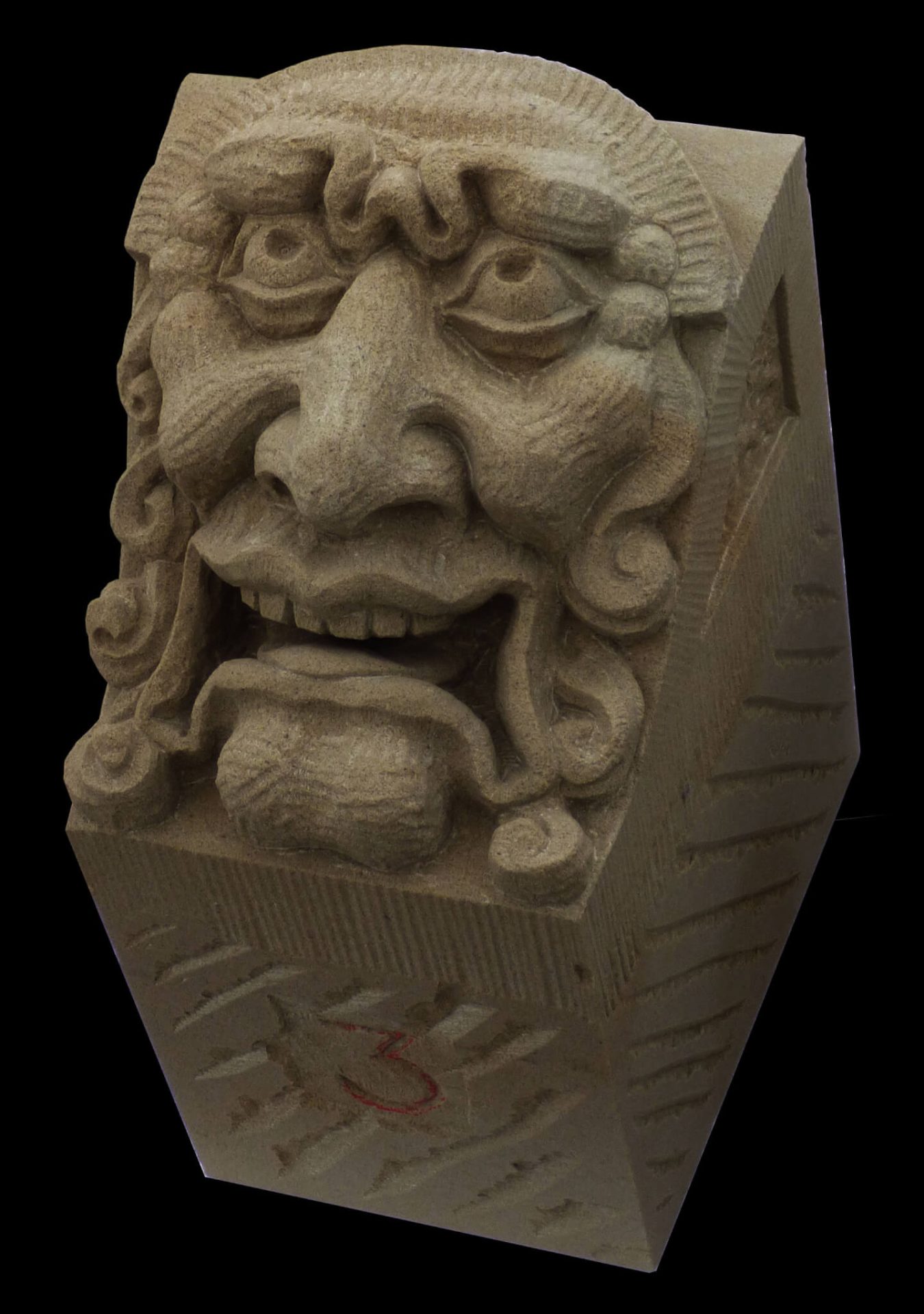
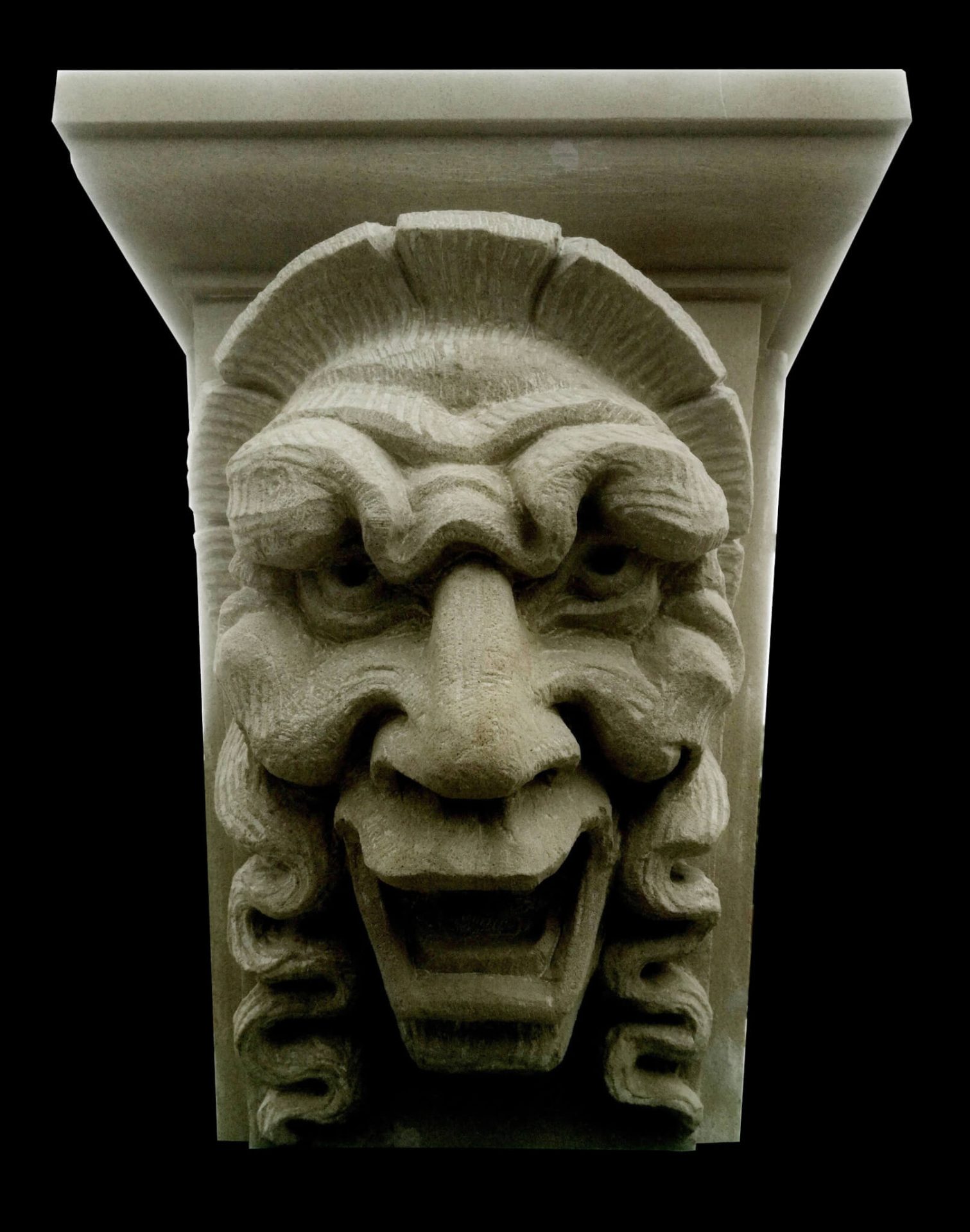
Flying buttress: dog, lion, naked woman, fat man and bird
Sorry, proper translation later this week! These past few weeks I've continued carving for flying buttress 6 and 7 out of St. Eusebius's Church in Arnhem (the Netherlands).
A short video from the church as the crow flies, with the flying buttresses. As a bonus, a short performance by my colleague Stide Fox copying a corbel.
Flying buttress 6 and 7
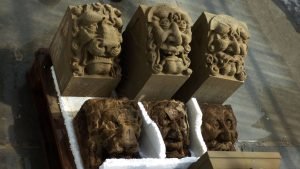
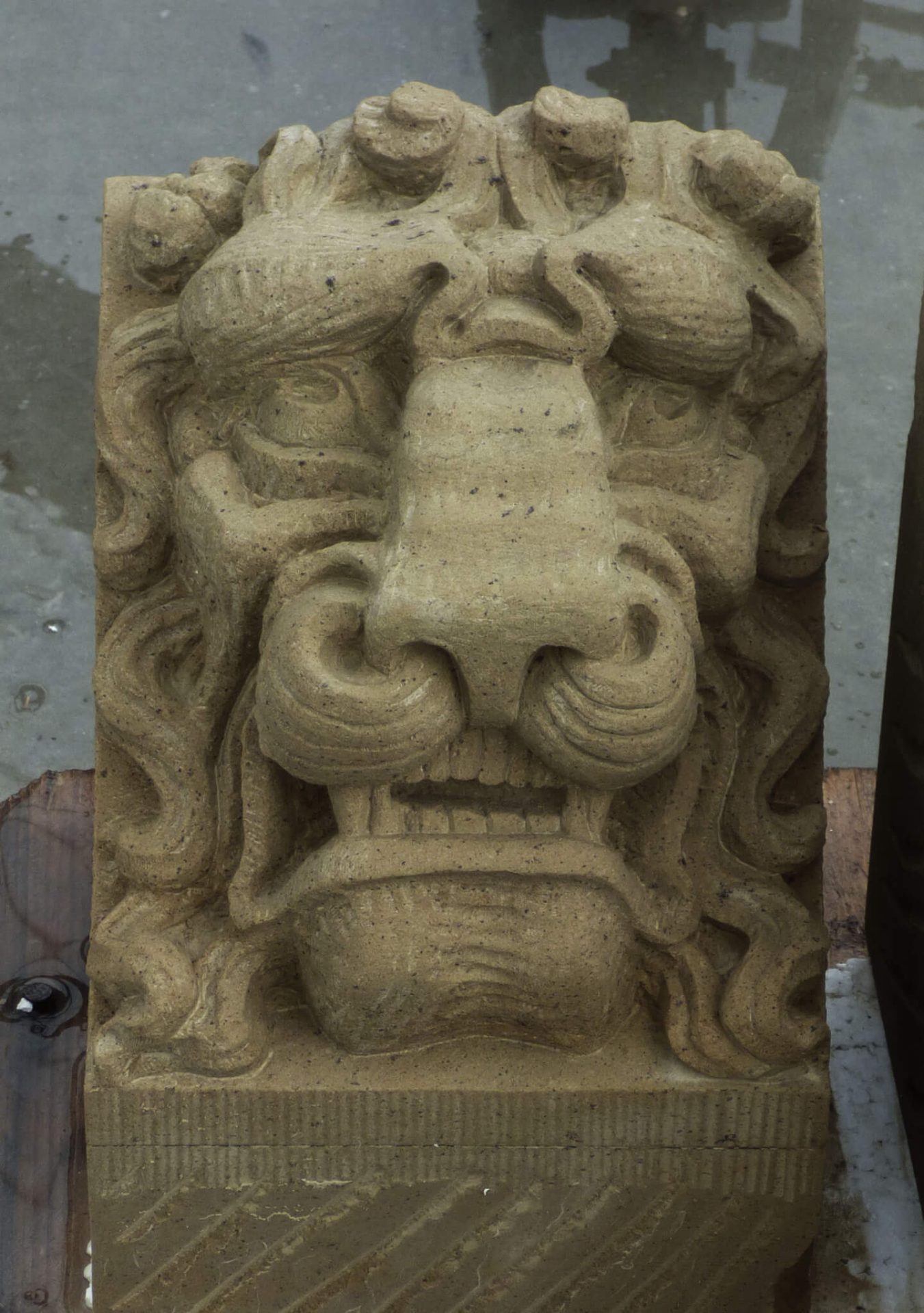
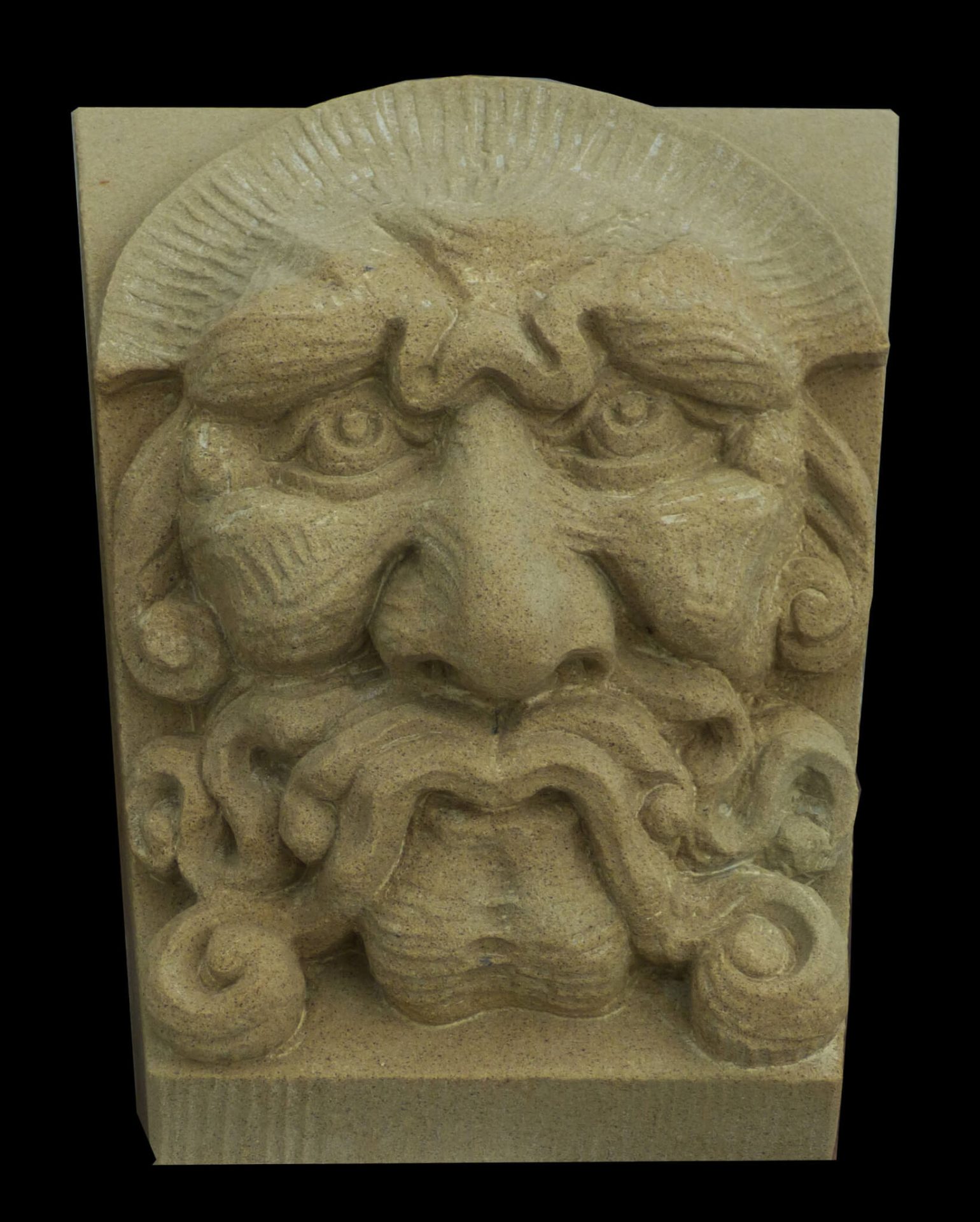
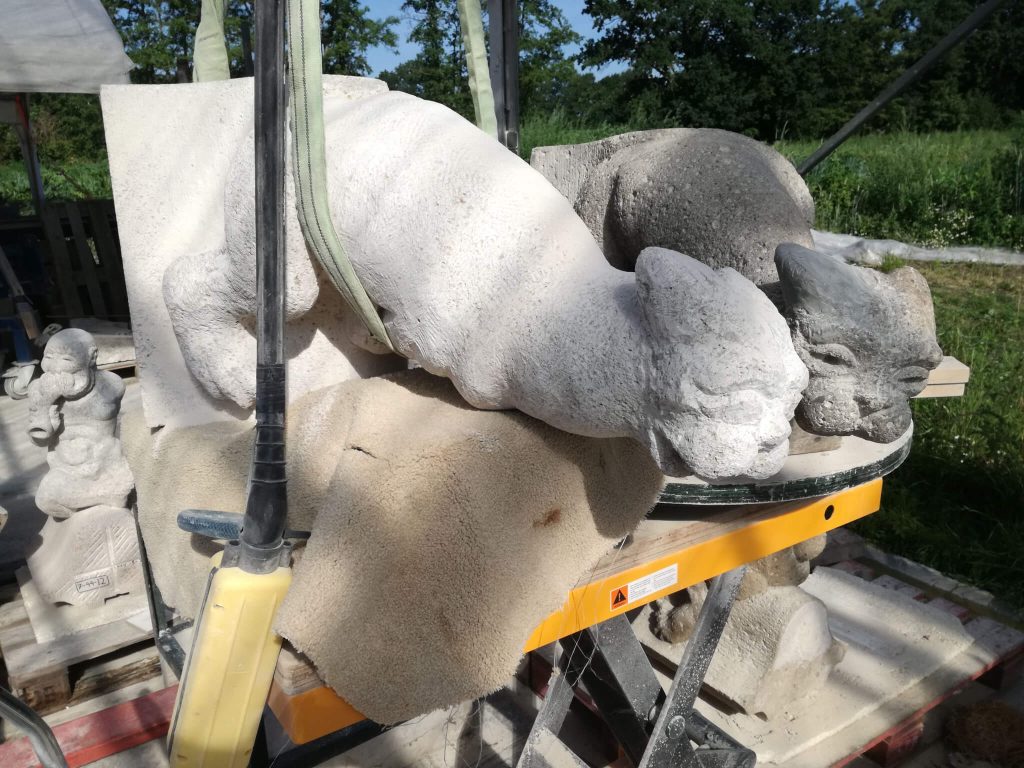
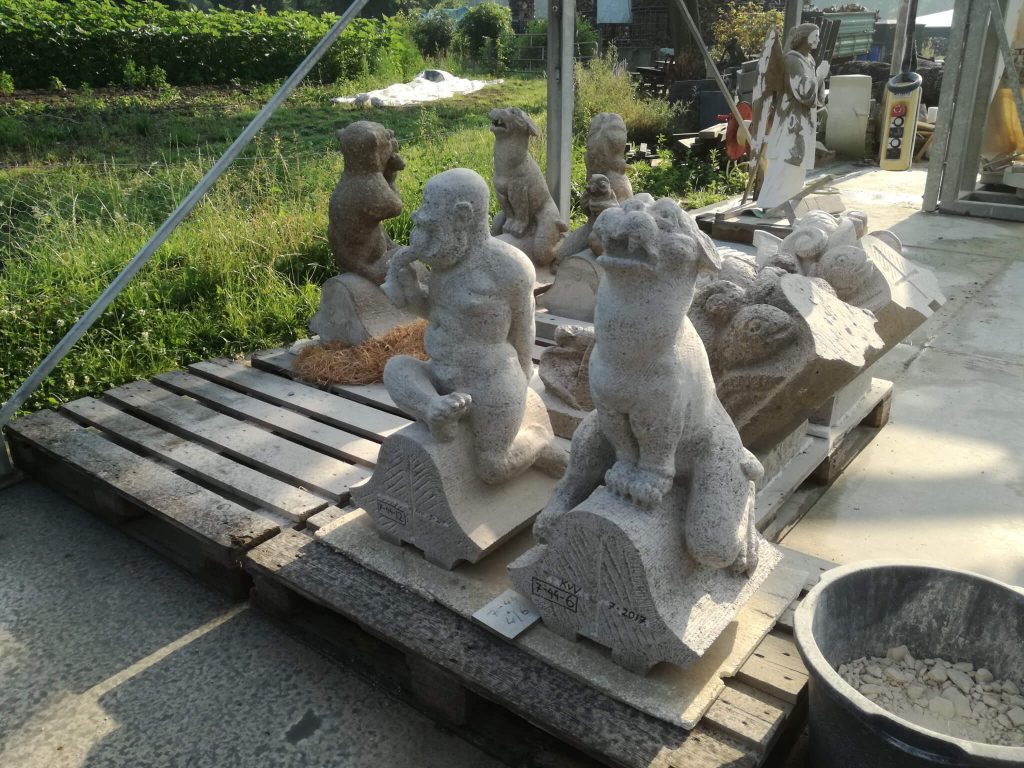
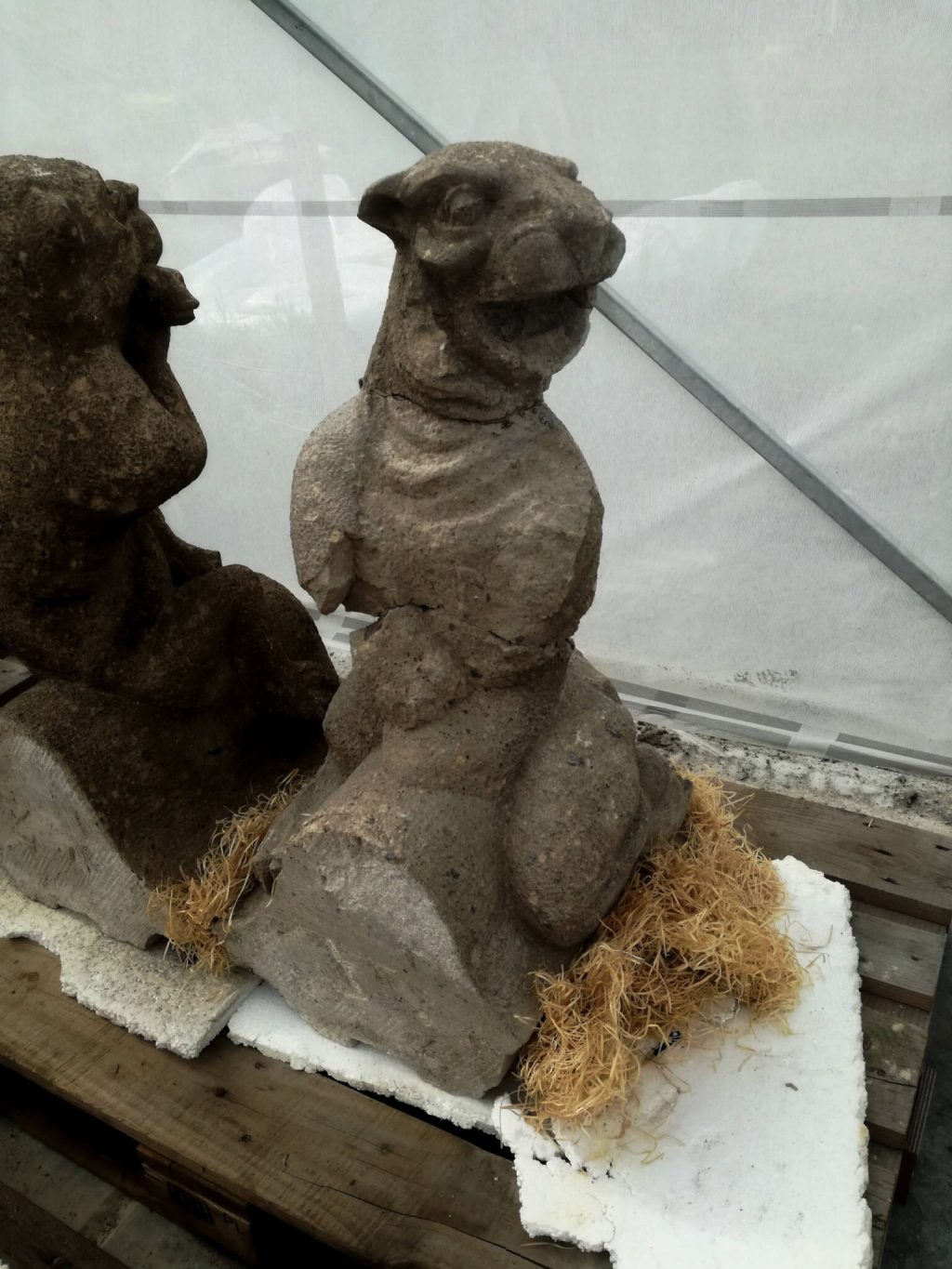
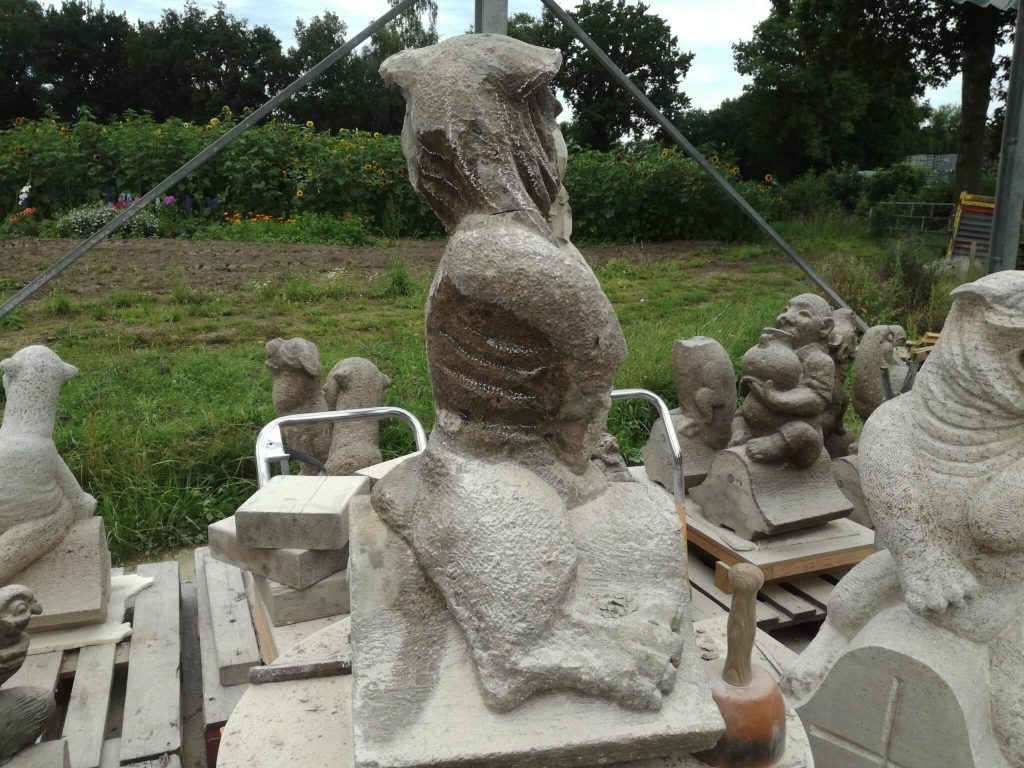
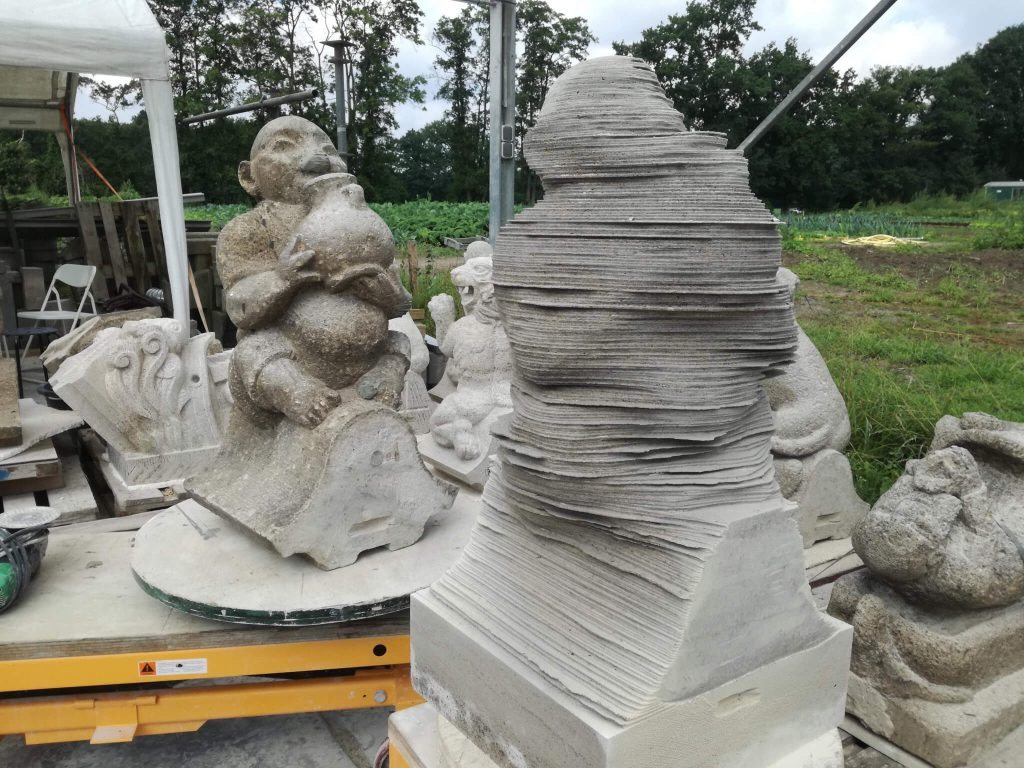
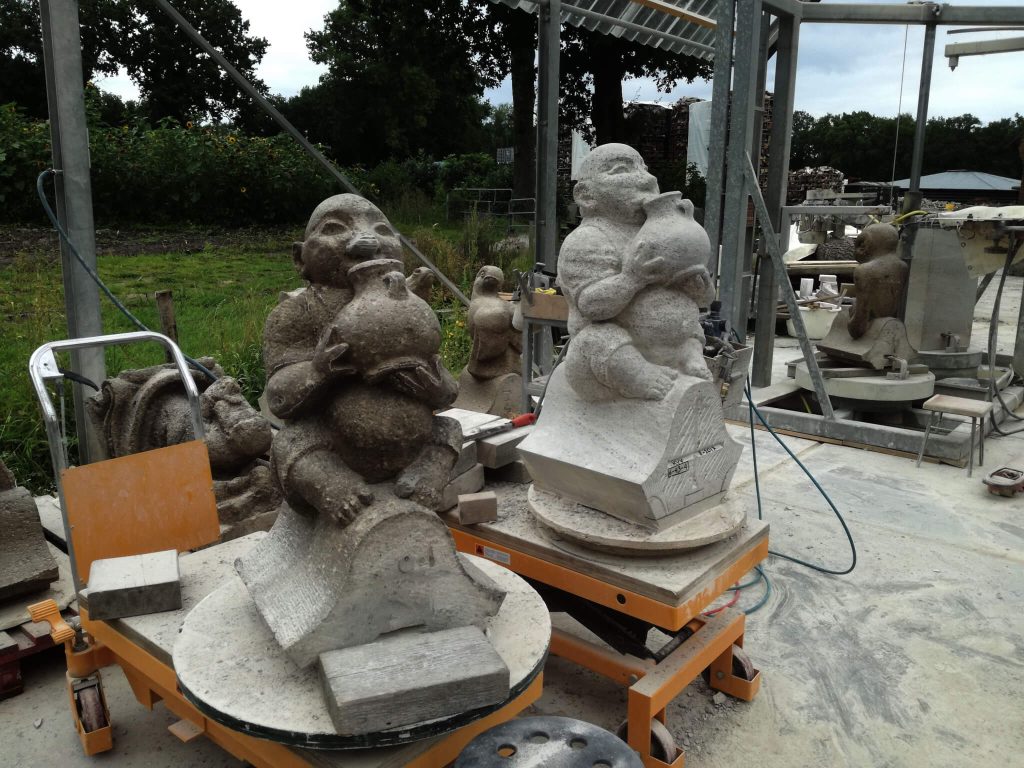
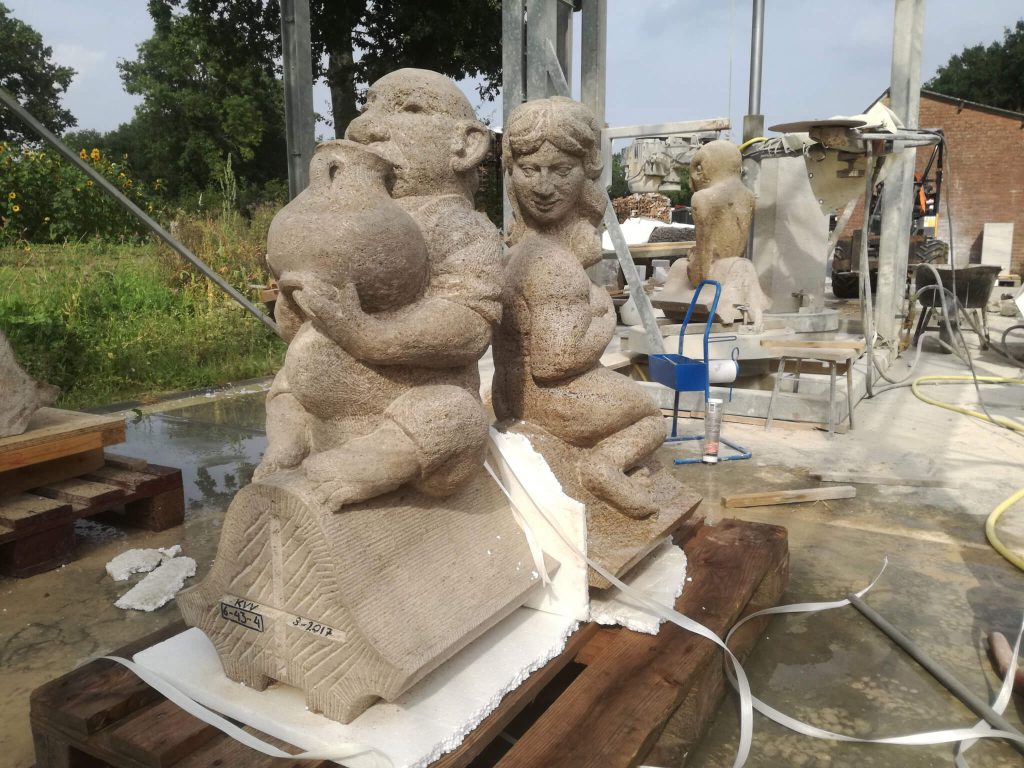
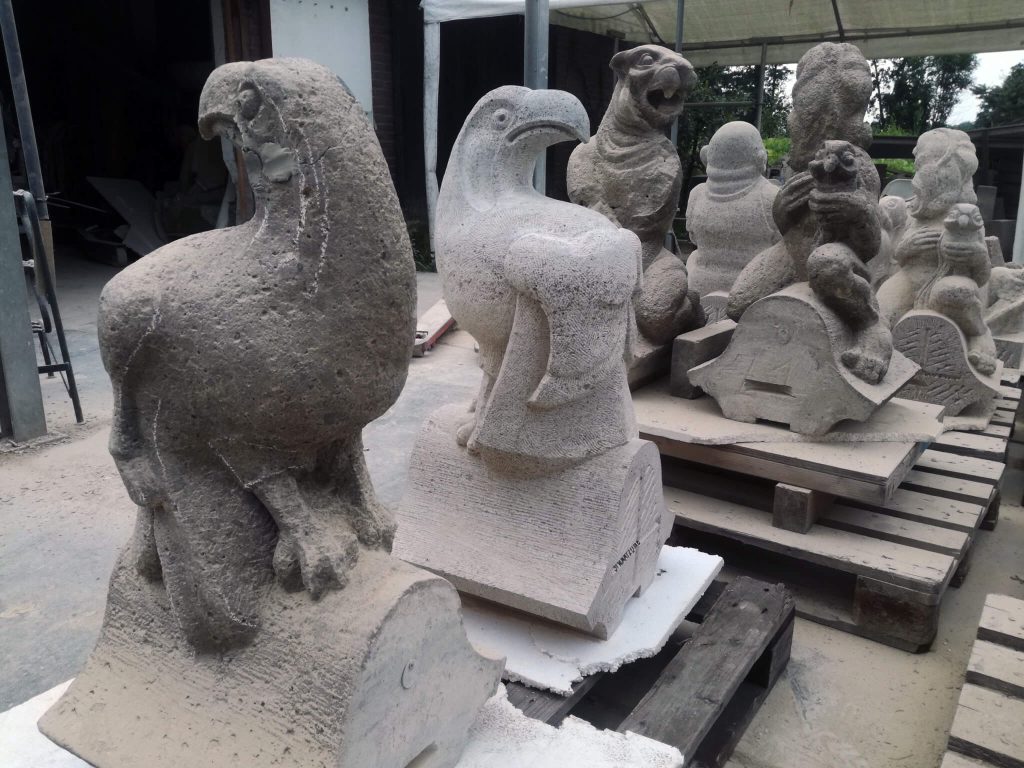
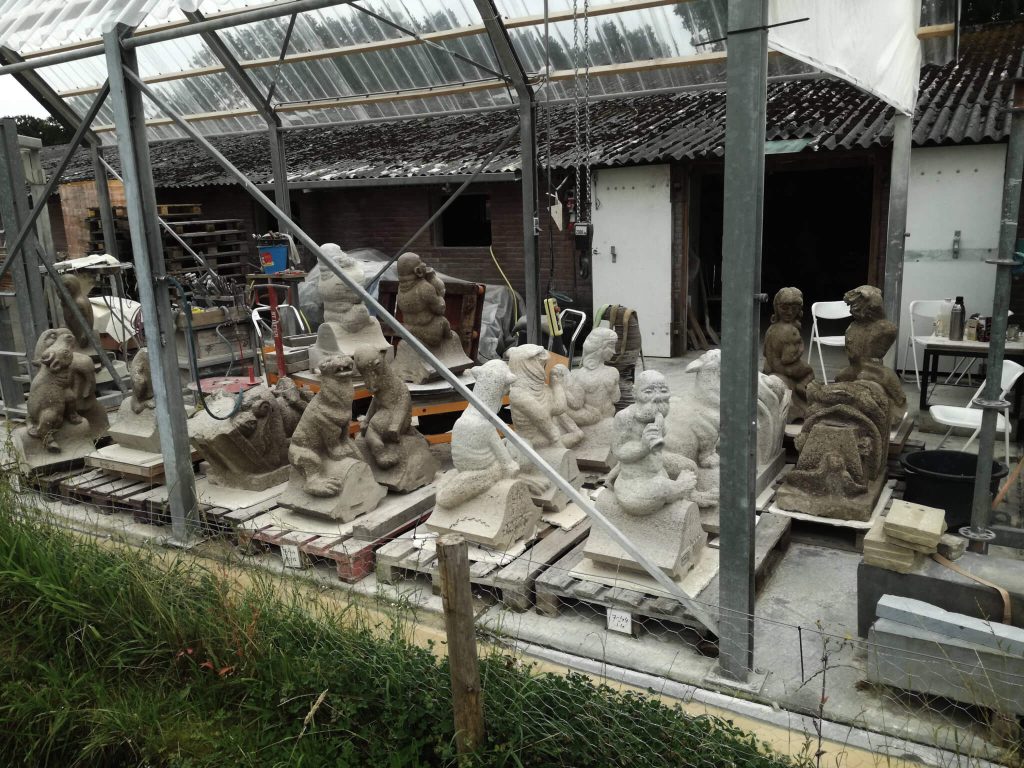
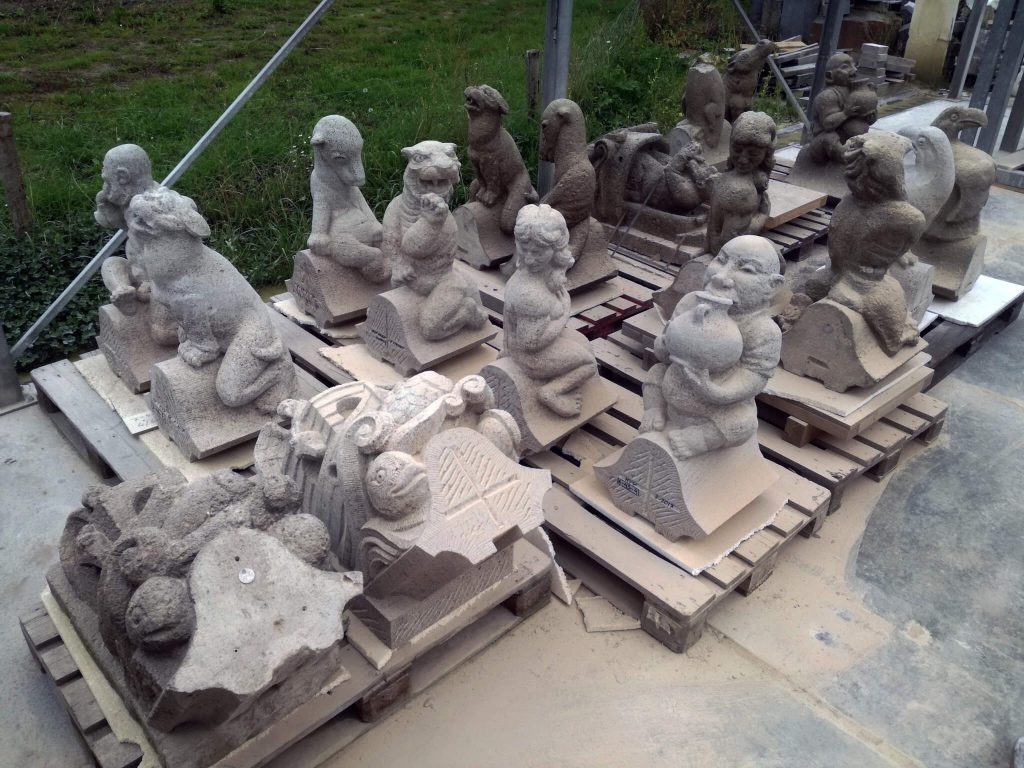
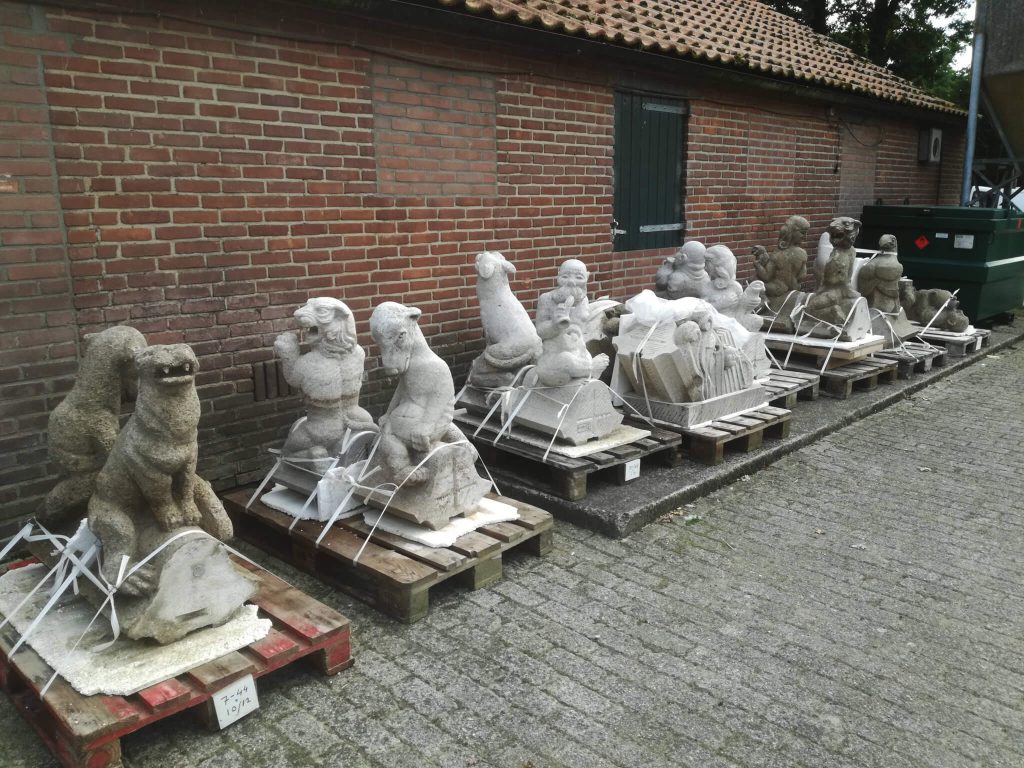
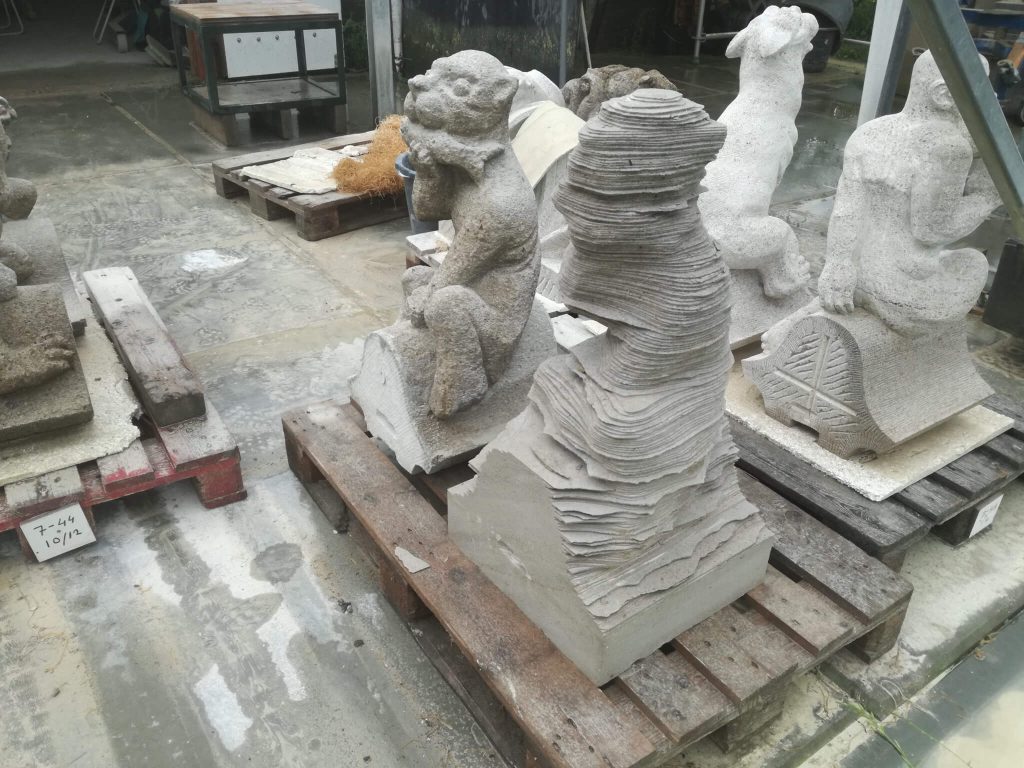
It was a motley collection I received at my yard: the Noah and his ark I described earlier, a dog, a naked lady with big feet and a broken neck plus a bird, a very happy lion with his paw in a strange position, a fat man drinking from a large pot, and a bird which we suspected could be a Capercaillie.
Finally Stide has a carved a Sad Badger. At least, that's what we thought. Others thought it was supposed to be a dog, but there already was a dog. It could also be a Sad Young Bear (See the slideshow below for pictures of them all).

Not Beautiful
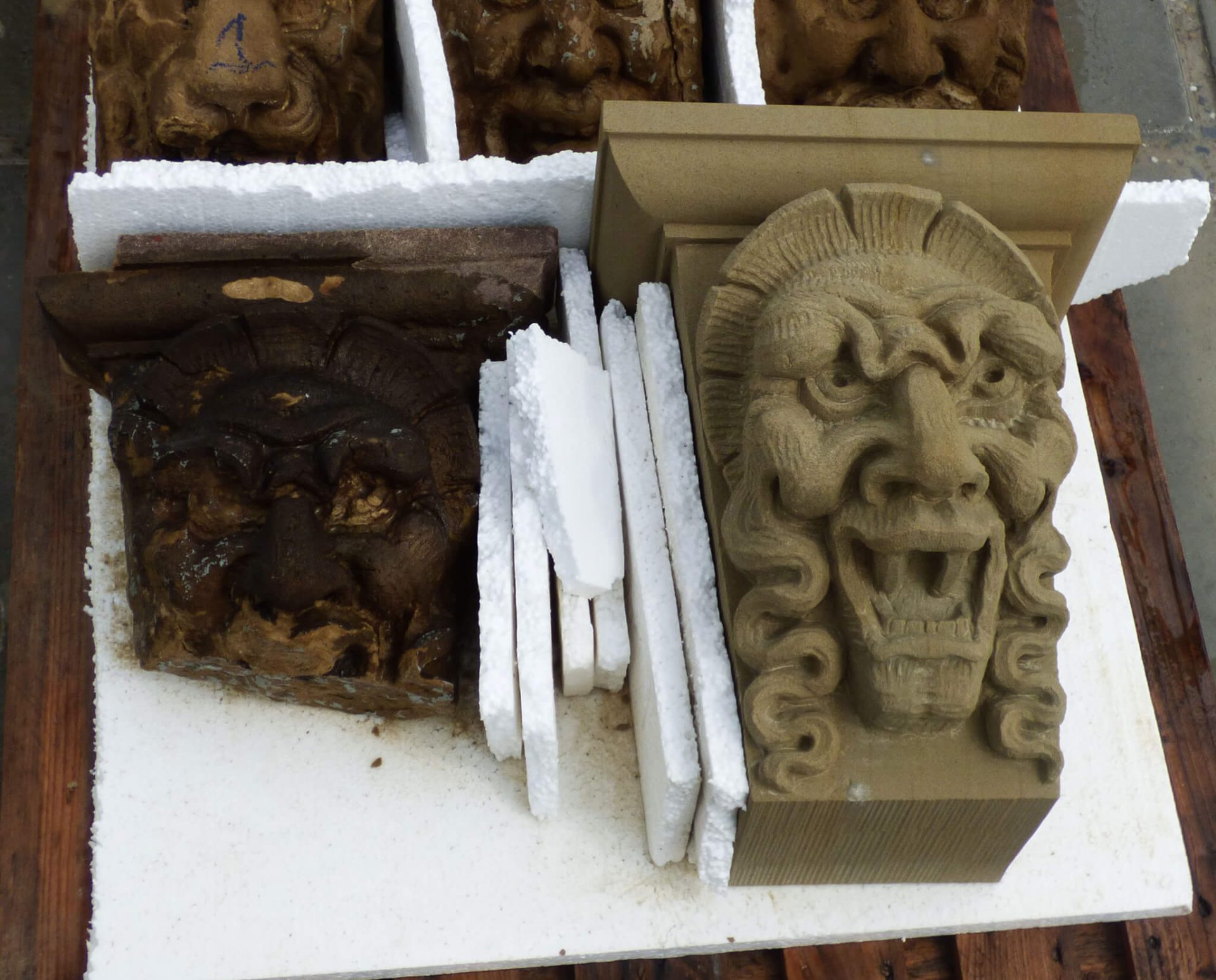
Without wanting to be too arrogant, I dare say that the original sculptures are not of the highest standards. There was a suspicious lion with all sorts of weird flaws such as a way too thin waist, really big legs and a short tail, and a belly that doesn't make any sense. Only the head was nicely styled. I tried to imagine what went on at the time: Theo van Reijn was old and left the work to a student. I think this was carved by the student that he was not satisfied with, and that later, they adapted it to their best ability so as to still make something out of it. And someone else carved the head later.
Bertha with the Big Feet
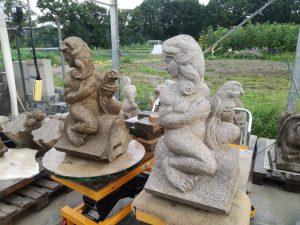
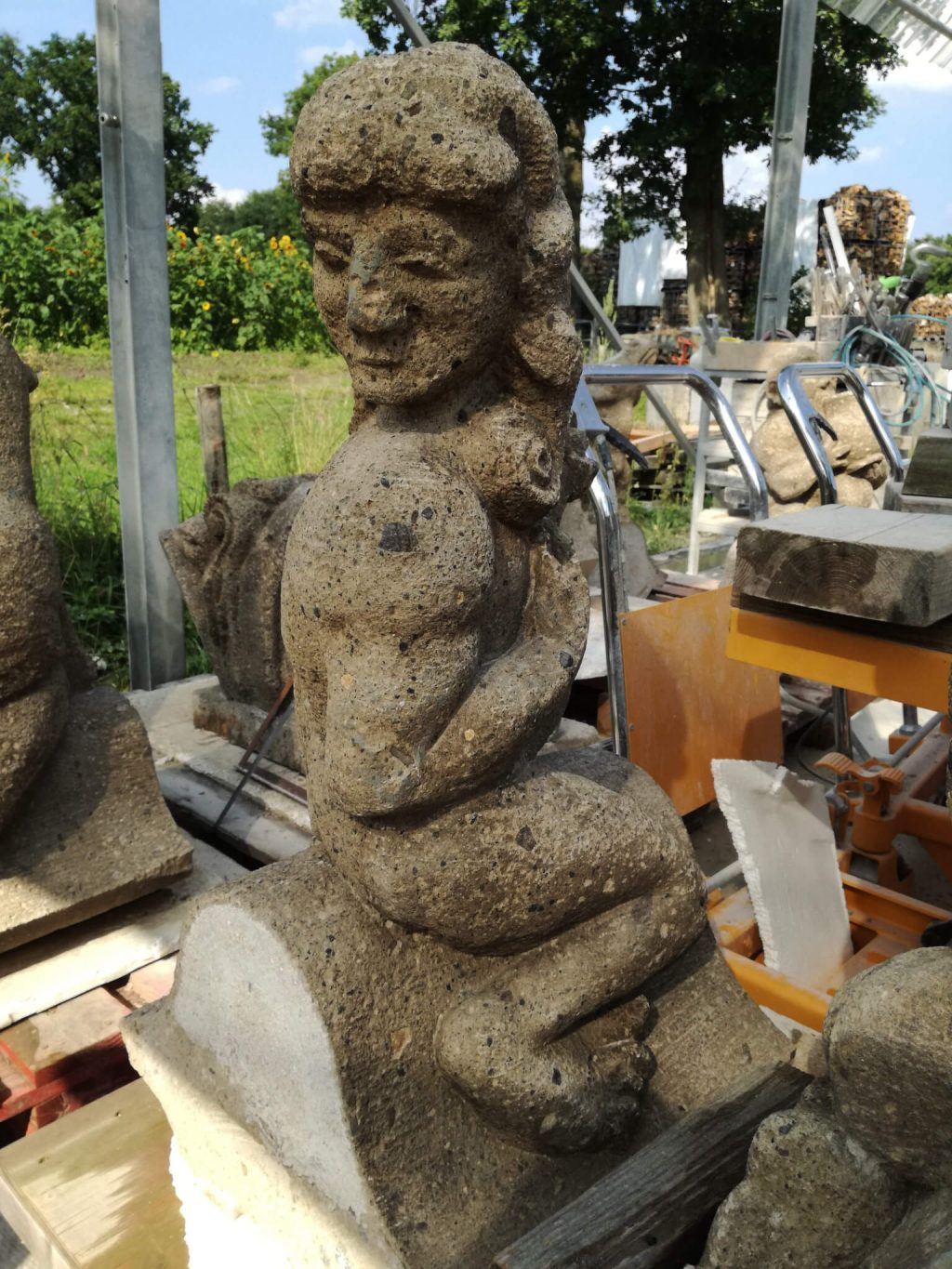
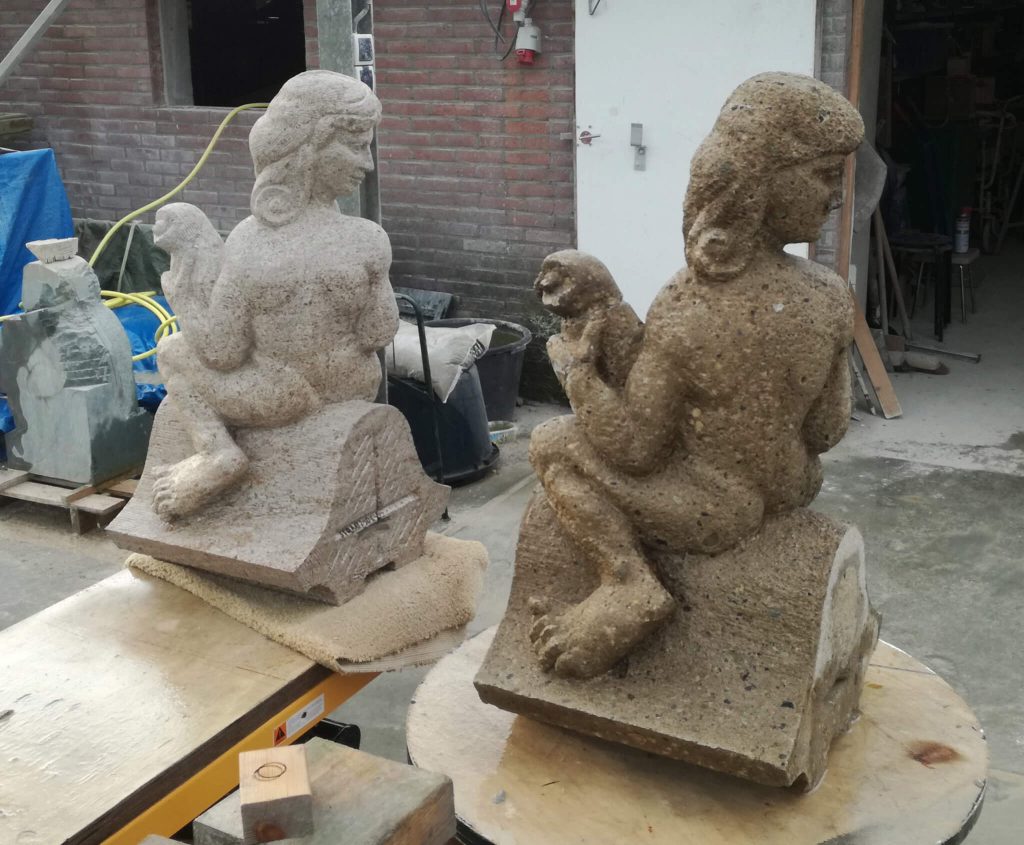
The Naked Woman had some quirks as well: her (too large) head is in a position which is only possible if you have an owl in your ancestry, one leg was twice as thick as the other, she had no breasts and a very wide crotch, and finally she has huge feet. Those feet I have left that way, but for a few other things I had to do a little straightening out , or it would heve looked really bad in the copy. 'Nice, isn't it, boss, she's all done now!’ -"What have you done now? You've forgotten that bird's tail! Oh well, you know what, just cut that one leg a bit thinner, and then that tail will just about fit in. No-one will notice.’
Construction Sculpture
Now this kind of flying buttress figurines should actually have a somewhat naive look to them, to fit into the tradition. When it all gets too perfect, it loses its atmosphere and endearing effect. Also, the medieval sculpture to other churches and cathedral is characterized by that not too anatomically correct way of depiction, with a playful directness. That is one of the main features of this type of construction sculpture. That's why we did our best to rather preserve and strengthen the atmosphere of each figurine. A number of sculptures were simply copied, others, like the ark in my previous post about this series of flying buttress figurines, I've provided with some more details and expression. The female got breasts wich she's chastely covering, her legs are now both equally thick, and she has a little less surly face. Only the head is still in a weird position and somewhat on the large side. Not everything can be overcome without creating a totally different sculpture, but it has become a more acceptable thing. It also helps that the Muschelkalk is a lot lighter in colour, so it all defines a lot clearer now.
Plastiline
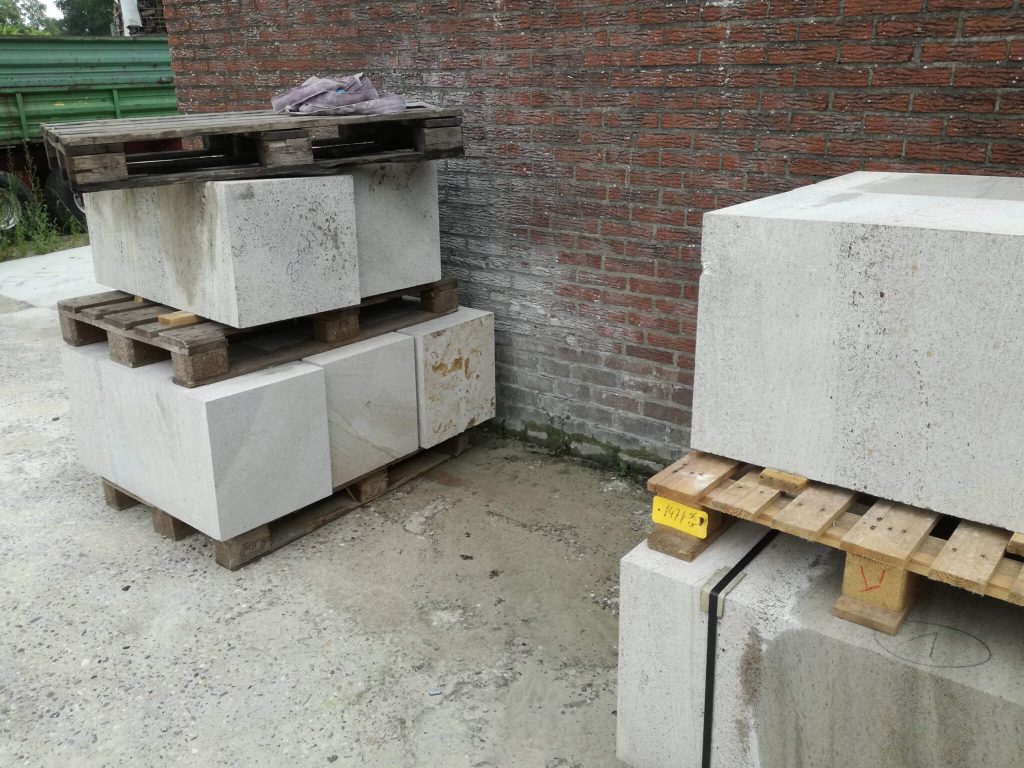
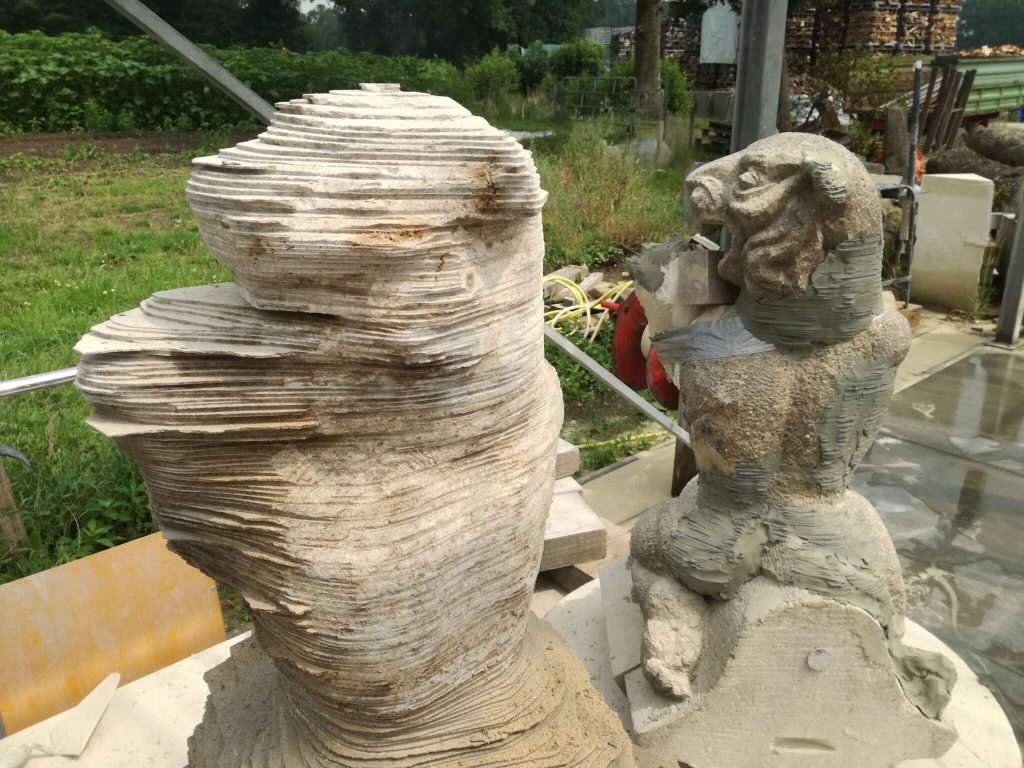
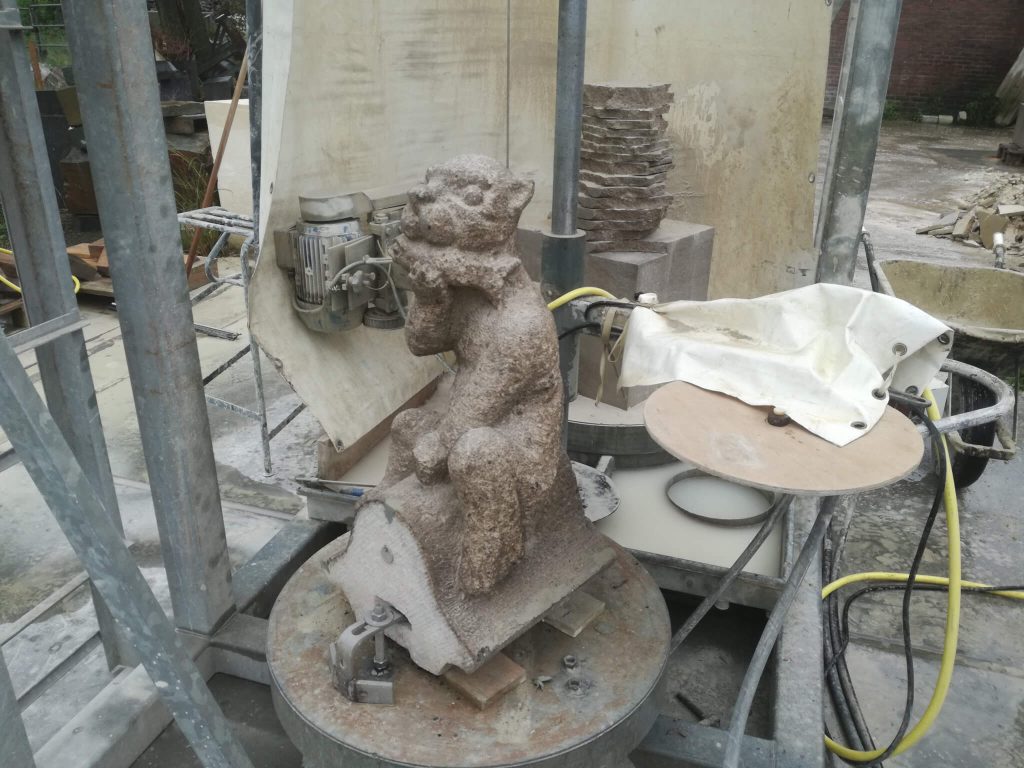
When I'm about to carve a statuette, I start with pre-cutting with the saw machine on my copying saw machine. That will copy-cut out the contours of the model into a new block of stone. So if something is missing in the original, I will cut that off as well in the copy. The machine is not computer-controlled, but simply a manually operated device. Therefore, I can still make some adjustments, but mostly I fill in the missing parts with plastiline clay, which will not harden. When I'm done I can easily take that away again, and that's just as well, because they are going to sell the originals at the Eusebius Church.
Petra van Stijn and Gerda Mulder near the flying buttress figurines. The Capercaillie (The 'headless chicken’ in the video) I recently copied as well, see the slideshow below. Petra says very optimistic that the figurines will last for another fifty years, but that totally depends on the circumstances! If you put such a sculpture in the grass under a tree, it will crumble within ten years. Read more about the weathering of tuff.
Claw chisel
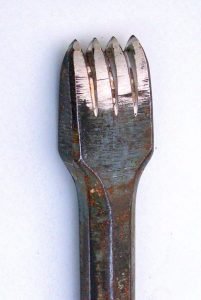
On the old tufa sculptures the traces of the chisels can be clearly seen. Therefore, I pay much attention to the finish, and especially the traces of the claw chisel (a serrated chisel) give it a vivid effect. Claw chisels come with flat teeth (a Gradine) and with pointed teeth. I usually use a claw chisel with flat teeth, and apply it crisscros along the sculpture surface, causing a loose effect. Other portions are emphasized with the flat chisel. See the slideshow below for the first results.
Now I'm already busy with the next series of flying buttresses 6: a screech owl, another ark with Noah inside, a Cape buffalo and an headless Penguin. Next time more!
Slideshow
Right click to view images in large format.





If the slide show does not work properly, click here.
To the next flying buttress statue.