• Crockets and finials for Aachen Cathedral

    For the Aachen Cathedral some pinnacles had to be replaced. The old ones were worn and had cracked because of rusting iron and because the layering of the stone was not properly applied. The deposition direction of the stone should preferably be processed horizontal, otherwise there is a risk that a long vertical slice breaks off. In this case, they applied it vertically.

    Two new finials for the Aachen Cathedral in Irish bluestone

    The material for these pinnacles is Irish bluestone. It is virtually the same material as the more famous Belgian bluestone, but it is a bit more evenly toned (some would say more boring) and easier to work in: it is slightly less hard and there's less tool wear because it contains less silica.

    Cutting work

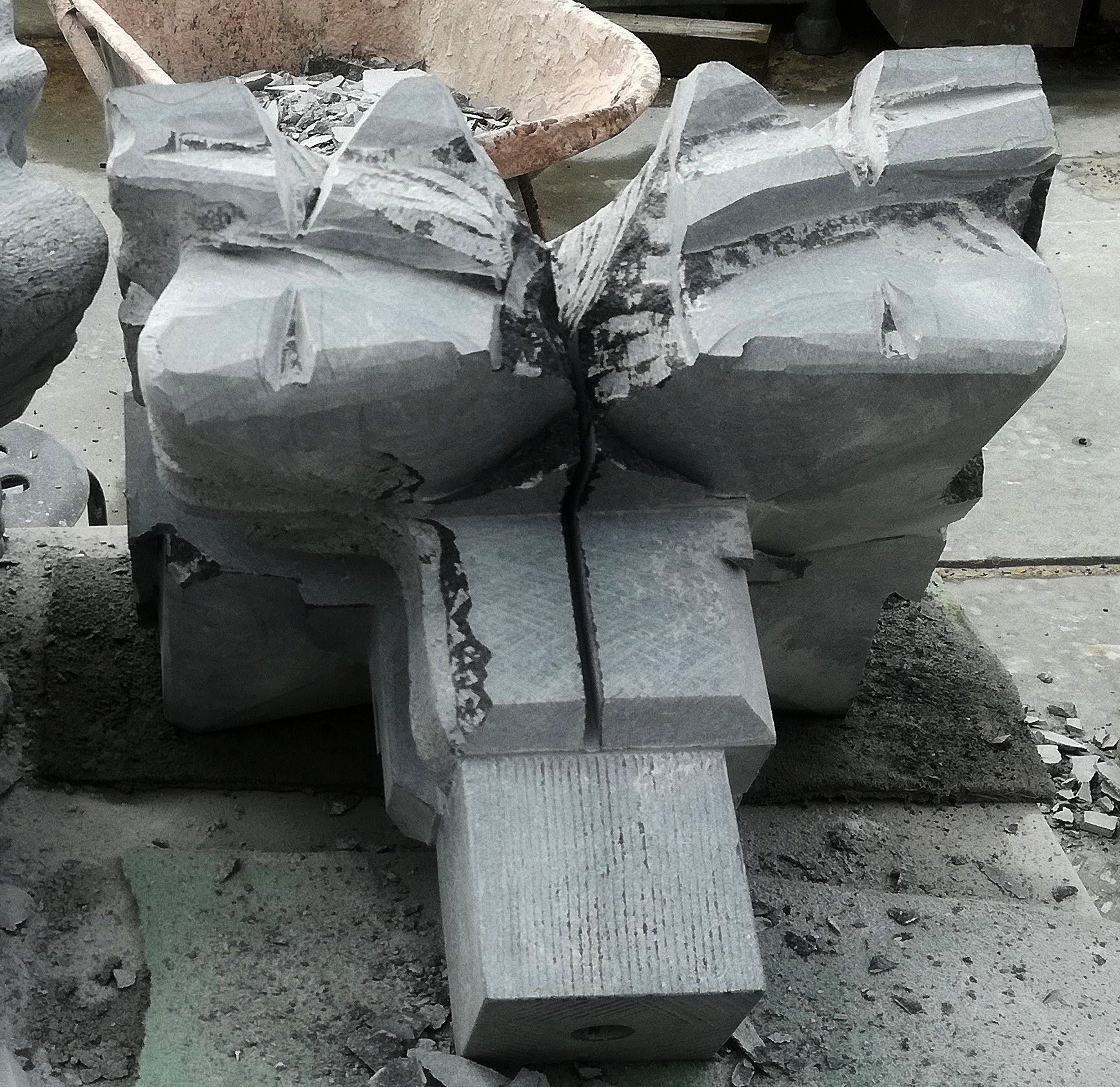
    I got supplied with the old model and new blocks of Irish bluestone (Kilkenny limestone). The four crockets of the finial are not connected to each other in the middle. With an angle grinder, I can not cut all the way down to the shaft, but with a chainsaw it's no problem. This speeds up the carving significantly! Of course, a large stonesaw machine could also fix this, but I don't own one. For firmness I could even leave part of it still attached, so that the stone wouldn't break too easily.

    old and new block of stone for Aachen Cathedral
    old finial and new block of stone
    rough block of stone for Aachen Cathedral
    using the chainsaw can speed up the work

    Shaping the forms

    precutting the finial for Aachen Cathedral
    precutting and carving the rough shape. With the chainsaw I can cut right up to the shaft

    Finials are essentially the same as crockets. A gothic pinnacle contains from bottom to top a few rows of leaf shaped ornaments (the crockets), which are usually crowned with more intricate leaf shapes which are opposed to each other in a cross shape (the finial).

    These crockets and finials of Aachen Cathedral are likely postwar copies. They were certainly not carved all that exciting at the time. I did though, without deviating much, applied slightly more tension in their shape. The overall shapes of the finial are all located within the same plane. That makes it easy to quickly precut these flowers in the beginning.

    crockets of irish bluestone for the Aachen Cathedral
    in the background the old crockets, the new in front

    The simple water leaf crockets I carved a bit deeper, and made the outlines a bit more graceful and sharper (see below). In 1993 I first learned to carve crockets and finials, and in the past 25 years I've made a lot of these, but not often in bluestone before. Because Irish bluestone or Kilkenny limestone, is, as its Dutch name denotes, a relatively hard stone, it is natural that the shapes are kept so simple. But even the simplest of water leaf crockets has its own charm, and it is essential that its shape keeps the tension and that after generations of copies to copy we're not just left with a vague sort of shape. That still makes it somewhat interesting for me to carve: the search for a beautiful shape and its tension.

    It is intended to replace many more pinnacles from Aachen Cathedral in the future.

  • A new belly for the plinth of Hercules (videos)

    A sad history

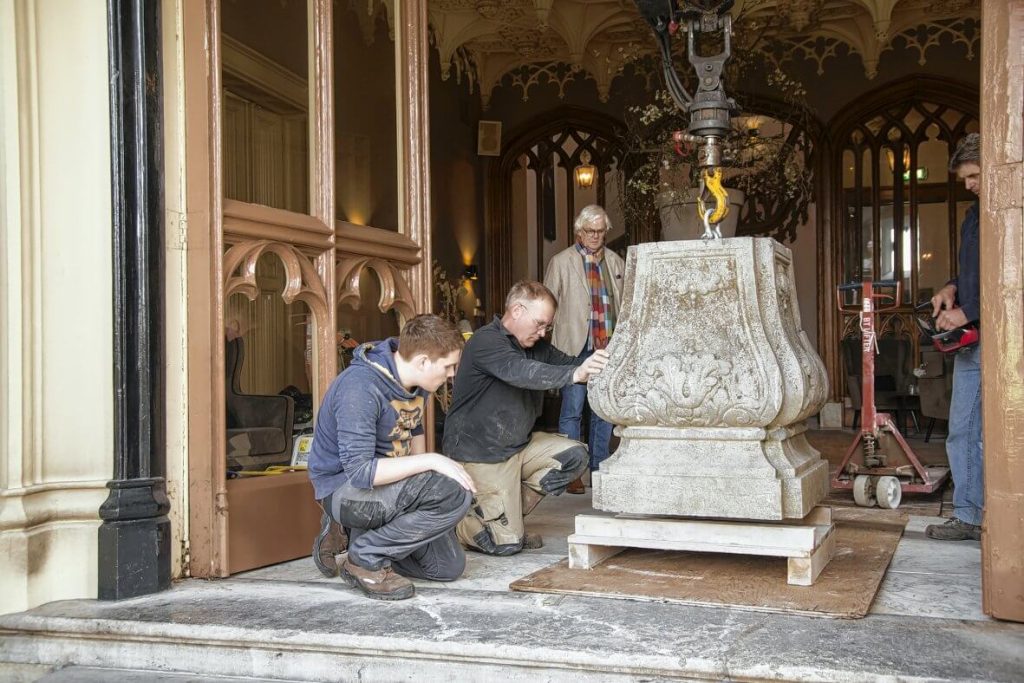
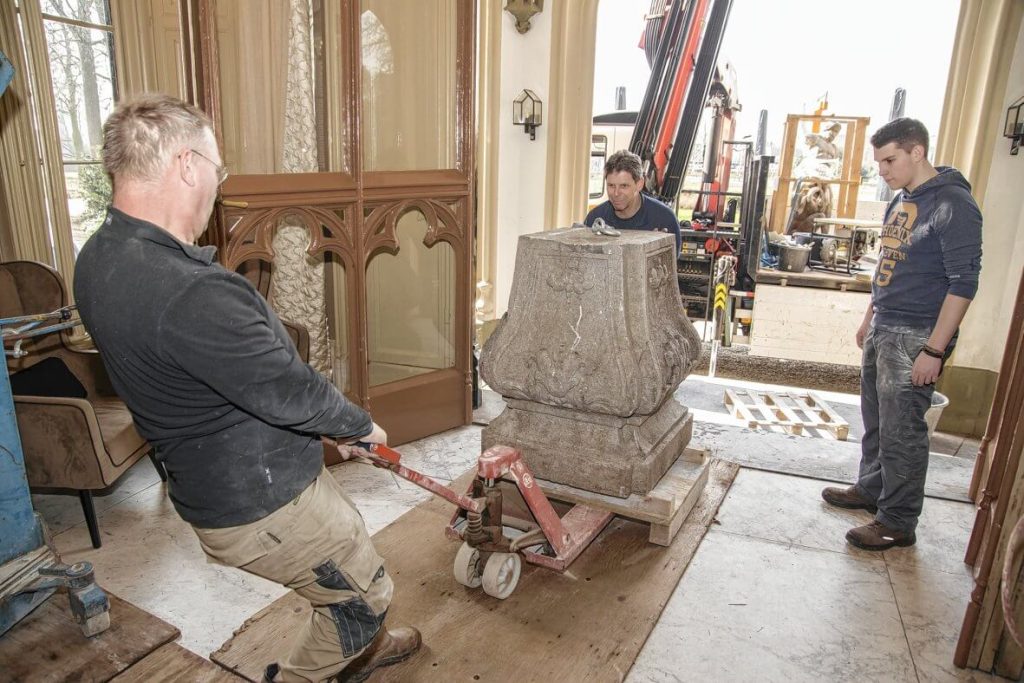
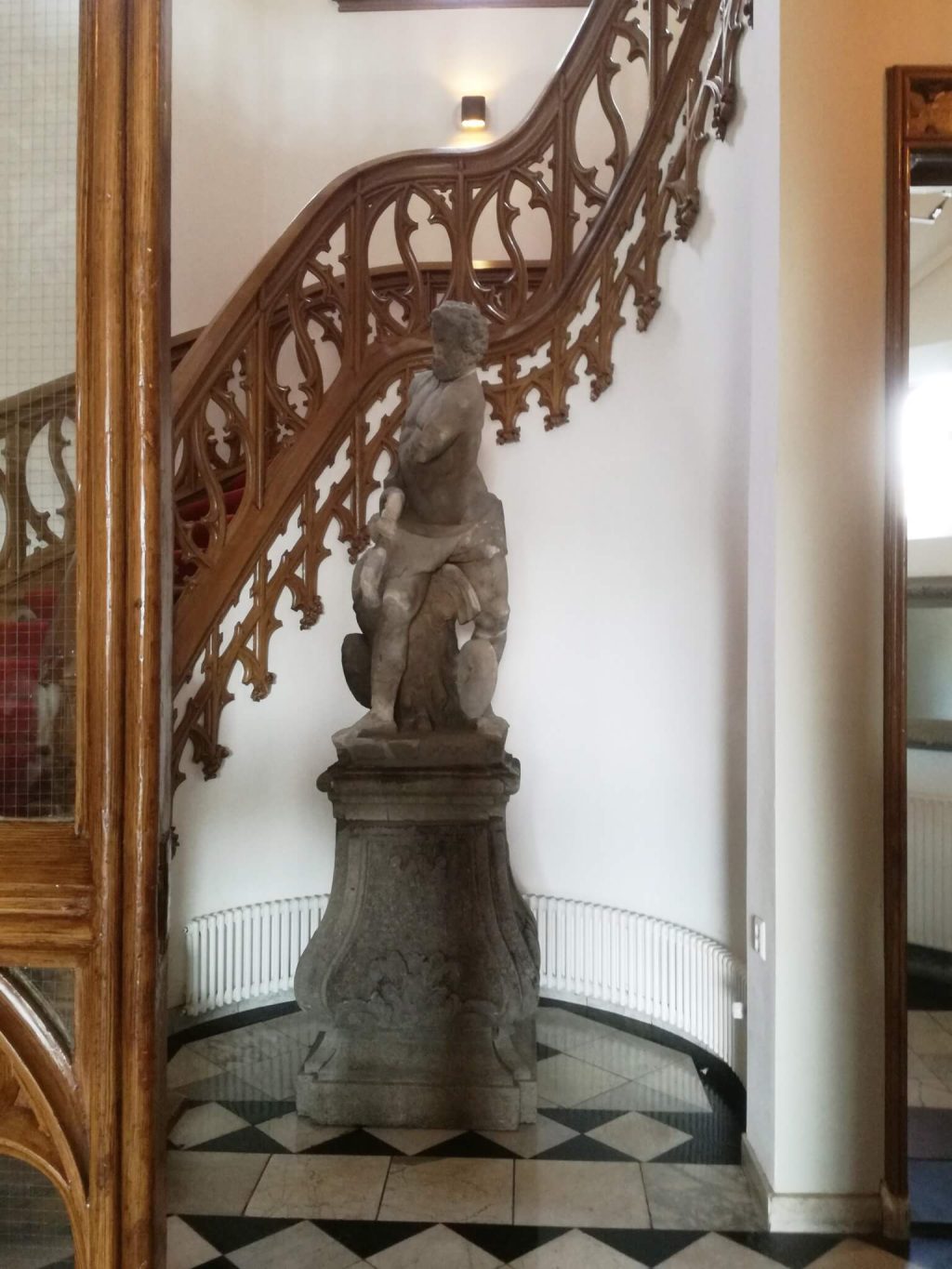
    For centuries the sandstone statue of Hercules stood on its stone base in the Estate Schaffelaar Barneveld. Until sometime in the seventies a group of young people entered the Schaffelaar Wood and smashed it to pieces. In grief, the statue was then buried in the garden. Around the turn of the century, the picture was dug up again and restored somewhat. A new bronze Hercules had now been placed on the pedestal, created by Ton Mooy from Amersfoort. Then the plan arose with the current owner of the estate, the Foundation Geldersch Landscape and Castles, to safely place the old sculpture inside, and the new one on a new plinth outside. I was asked to take care of its removal and installation and to carve a new belly’ for the new plint of the bronze Hercules. In November 2016 we cut the old plinth free with the chainsaw and brought it to my workshop.

    A new belly

    new belly for plinth of Hercules Schaffelaar in Irish bluestone

    A new base already existed , and the new top plate was still attached to the bronze statue. The bronze statue was removed from its plinth four years ago for fear of bronze theft.

    I ordered a large block of Irish bluestone 72 x 82 x 87 cms wide, with a weight of more than 1300 kilos. I first carved the general shape of the plinth, after which I started on the ornaments.

    Video: Carving the ornaments

    I had forgotten to turn on the camera at the start of the carving work, so specifically for the video I carved the same ornament again on a scrificial piece. After the carving of the contours the real shaping is shown on the final block.

    Installing

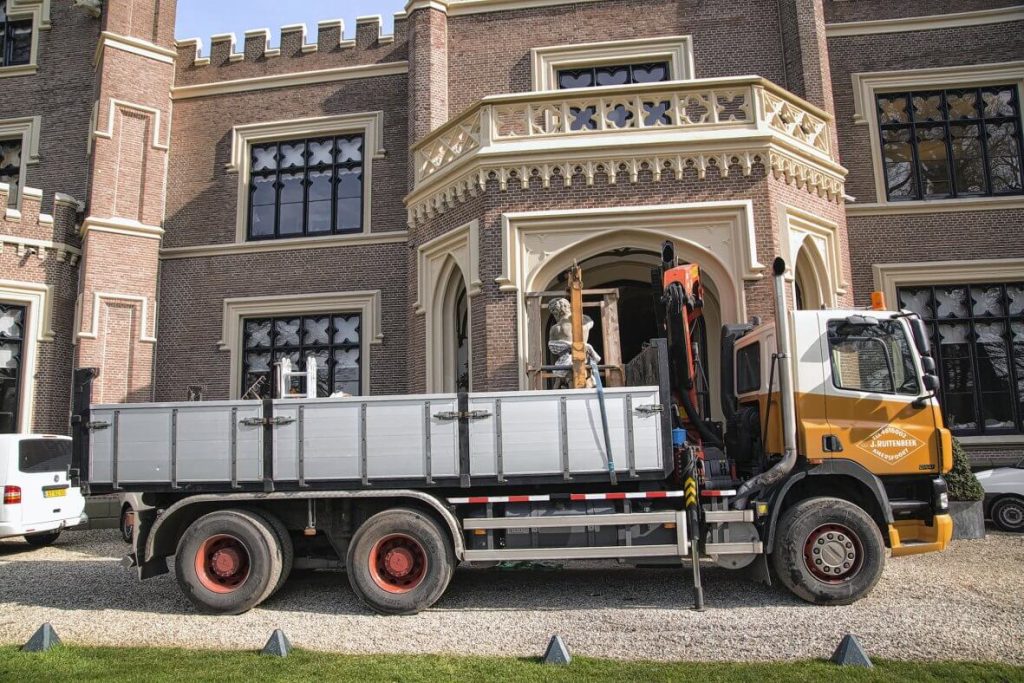
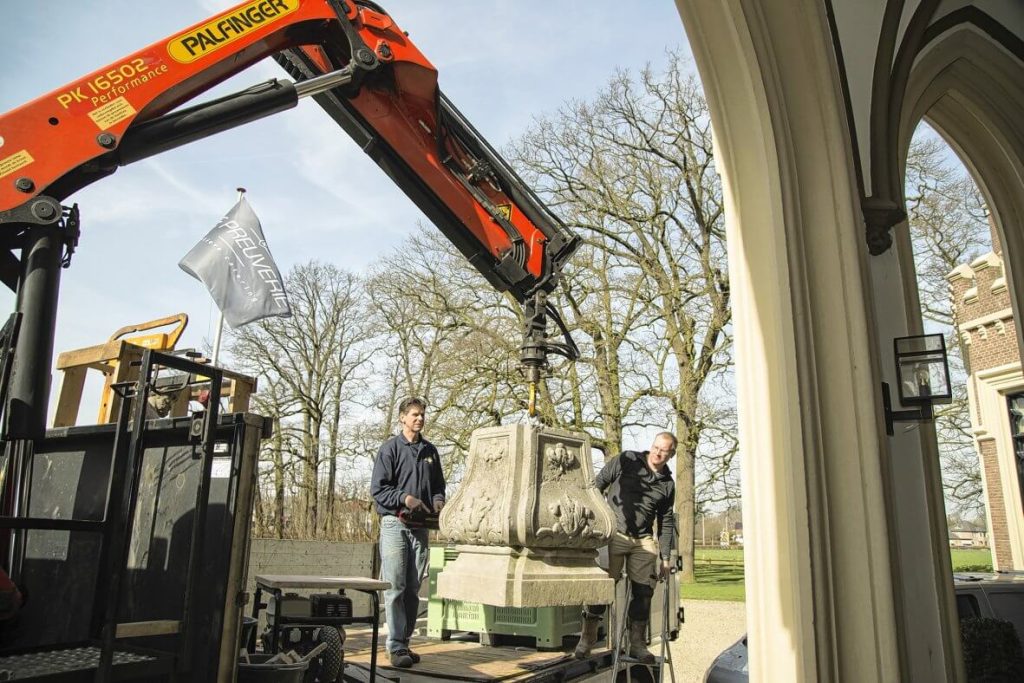
    On the day of installing I again had the same truck and crane operator as during disassembling: the Ruitenbeek firm from Amersfoort. We collected the two statues from the storage area of the Gelder Landscape, drove to the park and installed the plinth of Hercules in three parts on the existing concrete slab in the park.

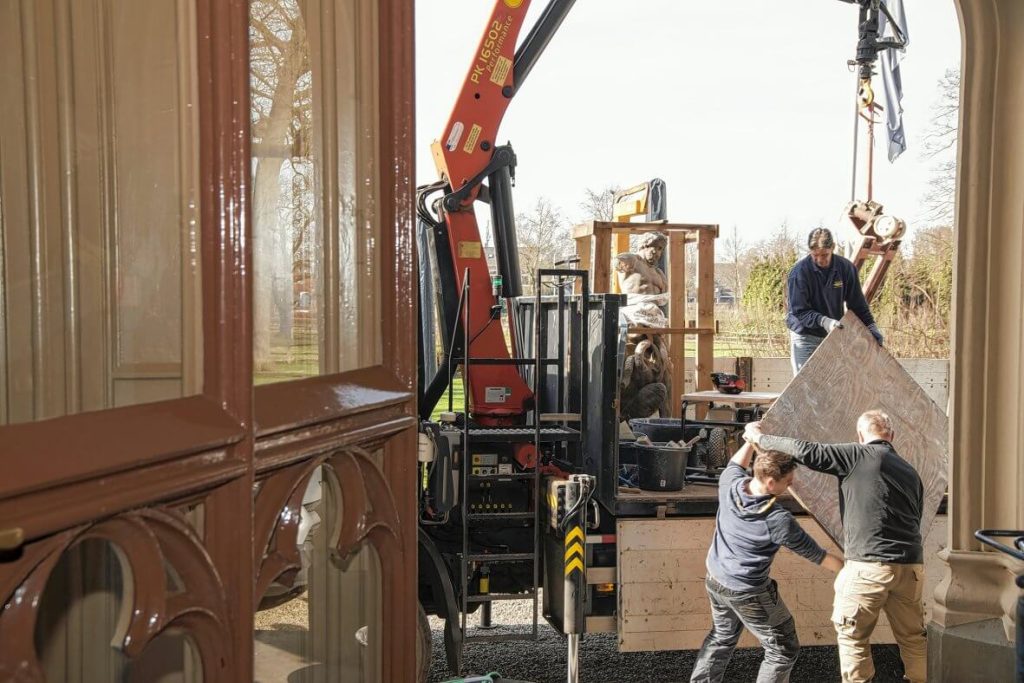
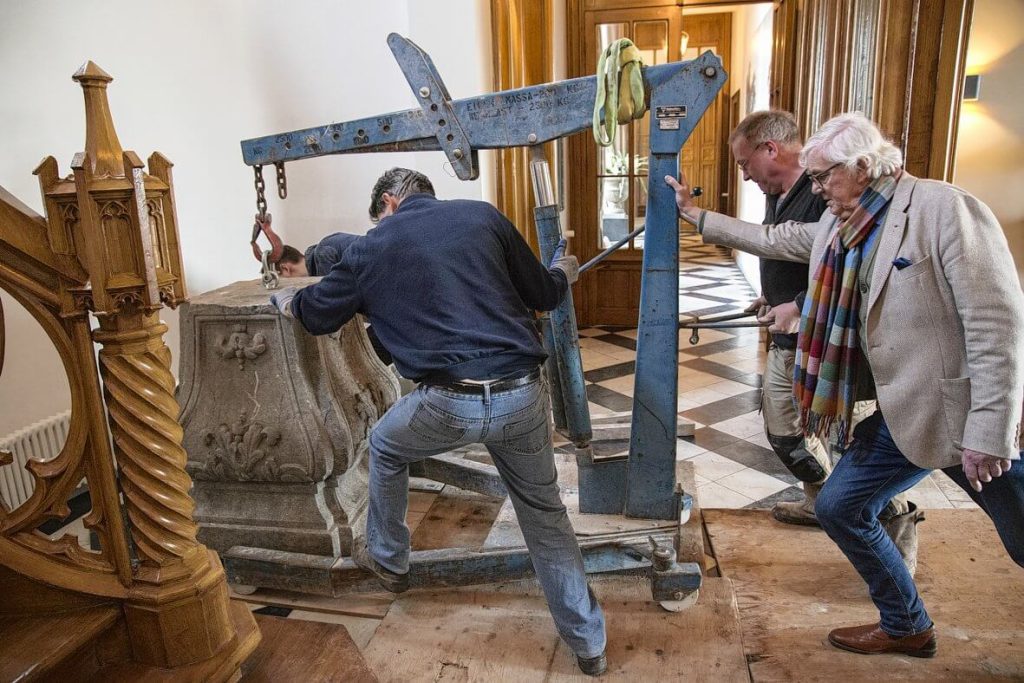
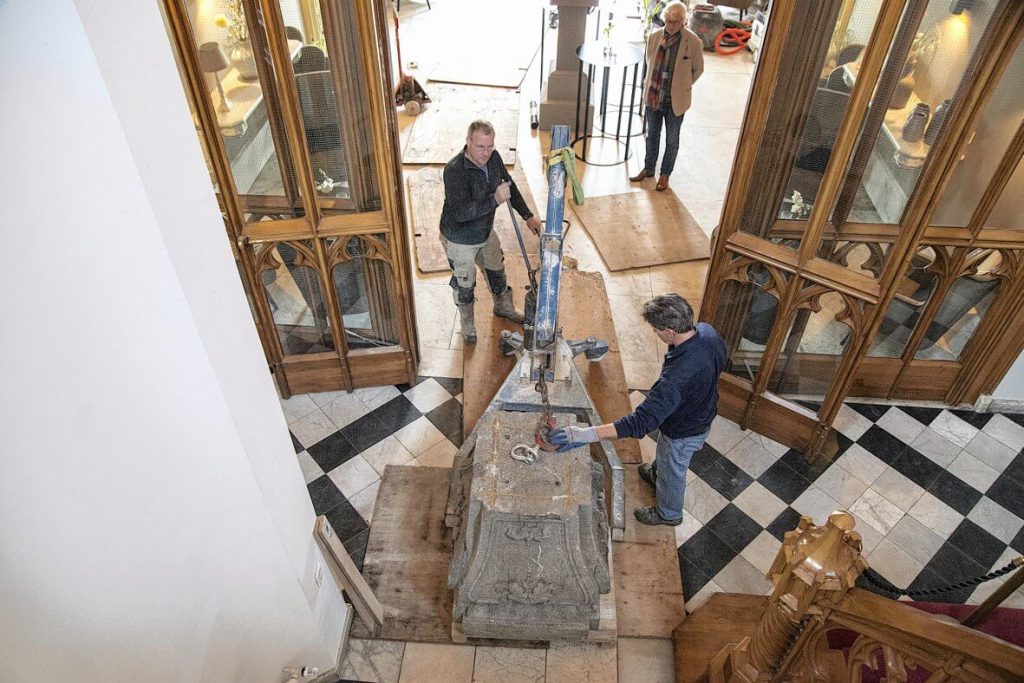
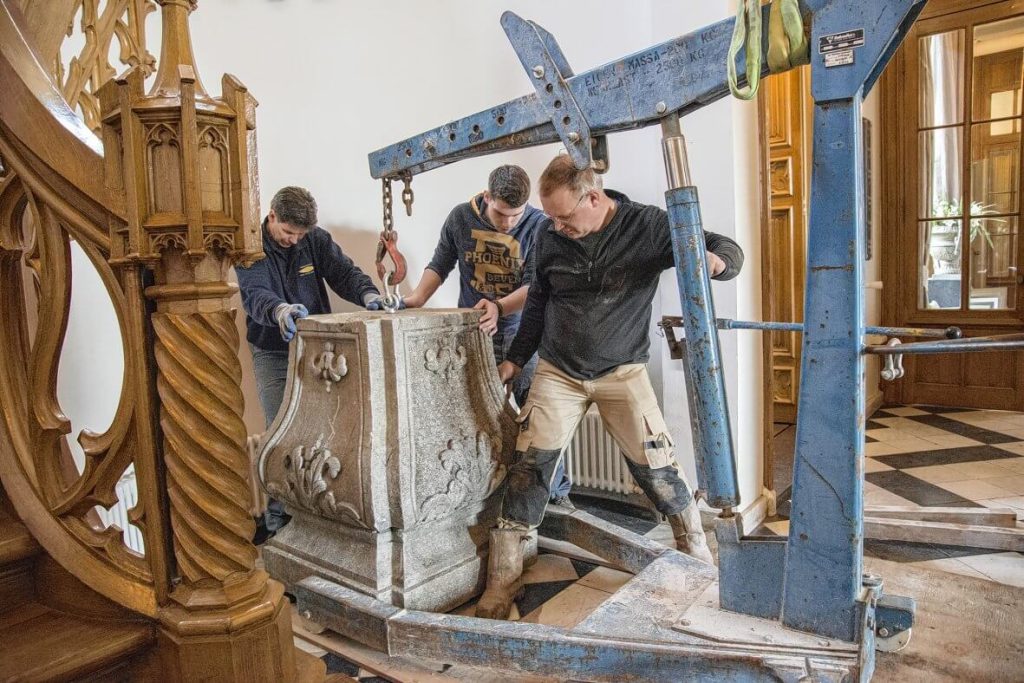
    When the new, bronze Hercules stood shimmering in full sunlight again, we drove to the mansion for the real challenge. We still had to transport the gruesomely heavy old plinth and the old statue across the marble floor to the stairwell , and there mount these to a final height of three meters. The staircase was too narrow for a gantry crane, and there was no place to hang a pulley. How was I supposed to get this done?

    new belly for pedestal of Hercules
    A new base of Hercules. Bronze sculpture by Ton Mooy. Sculptor Koen van Velzen made a new base.
    The bronze statue was made by Ton Mooy from Amersfoort. I was responsible for the placement and the carving of the new plinth

    Fortunately, I found out that my blue stone crane could just reach high enough if I modified it a little… Photos by Bram van der Meulen of the Barneveld newspaper.

    If the slide show does not work properly, then click here.

No more messages to show.

No more messages to show.