• Two griffins with a large shield

    The next project has taken a very long time to get properly going. More than a year ago I received this request, and only now there is the peace and time to address this well. It is not a simple little project for doing between other things.

    griffins with shield castle entrance plastiline maquette
    griffins with shield castle entrance plastiline maquette

    Castle

    Griffins with Shield ancient castle entrance
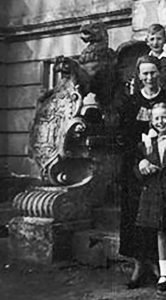
    Old photograph of original griffin

    This client is working on the restoration of an ancient castle. There were formerly two large griffins at the entrance, each bearing a large shield with the coat of arms of the Count and of his wife.

    The castle needs to be thoroughly restored, Moreover, its main entrance was so severely damaged that only a few pictures remain of how it used to be. The client asked me to reconstruct these two guardians, so he can restore the entire entryway to its former glory.
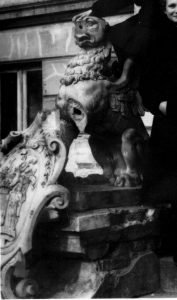
    griffins with broken legs and head
    This clearly shows that the original was hollow

    Not stone

    On a few old photos can be seen how the damaged griffins are missing legs and heads. Because of this, it's clear to see that the old statues were hollow, so they probably were casts. Given the age of the entrance, dating from around 1880, I expect it wasn't cast in concrete, and probably not ordinary ceramics either, because the material was quite thick. I'd sooner think of a material like Coade Stone or the like.

    Coade stone is a composite of 10% grog, 5-10% crushed flint, 5-10% fine quartz sand, 10% ground glass and 60-70% ball clay from Dorset and Devon. This was then fired for 4 days at 1110 degrees Celsius.
    Coade stone is very resistant to weathering and can, after casting in plaster molds, still be extensively reworked by hand before firing. There is also an interesting video about this material available on YouTube ↑, including the history of the remarkable woman who stood at the cradle of this material, and its rediscovery.

    Commission
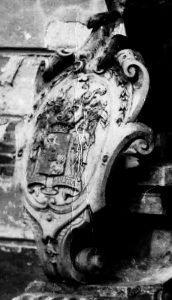
    griffins with shield entry old castle
    Close-up of original left shield

    After much research of grainy old photos and making sketches I first made a little clay maquette in plastiline. Then I was about to magnify this in hard foam. From this, the customer would create rubber molds and then make two mirrored casts in, probably in some kind of artificial stone.

    I'd been carving the foam models for some time when I found that my little clay model gave me too little reference. Because I need to make clear four separate front legs and two different shields, and that should all carefully fit together. That's why I retraced my steps and made a larger clay maquette in plastiline clay. The first model was about 30 cms tall, and in this one, just the griffin itself is 62 cms wide. Plastiline is a modeling clay that never hardens and never dries out. It allows me to continue to work and change things without worrying about cracks or fissures. Modeling wax would allow that as well, of course, but in that material detailing is much more difficult and the lighting is hopeless. There is also professional industrial modeling mass, but for the size I want to make, I would need to spend a few thousand euros on clay, so that's not an option.

    What next??

    Once this larger clay maquette is largely to my liking, I'll make the griffin body out of hard PIR foam with two hind legs and the head, two left front legs,  two wings, two right front legs and a tail. There will also be a shieldin which will fit two different center pieces bearing the coats of arms in relief. Once these parts are cast, they need to fit exactly together and form two mirrored griffins. Altogether a challenging job!

    Read more about this project in the next post.

  • Four grotesques in Amsterdam-1

    Reconstructing and copying

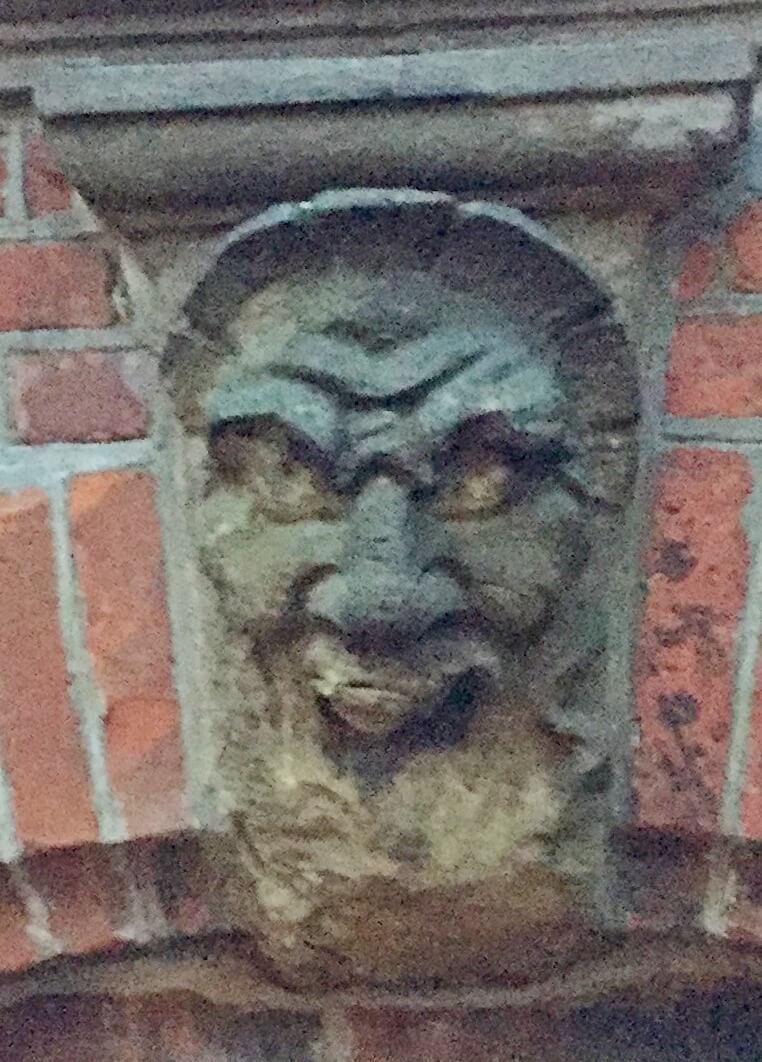
    Four grotesques in Amsterdam, lion's head 1, weather-beaten

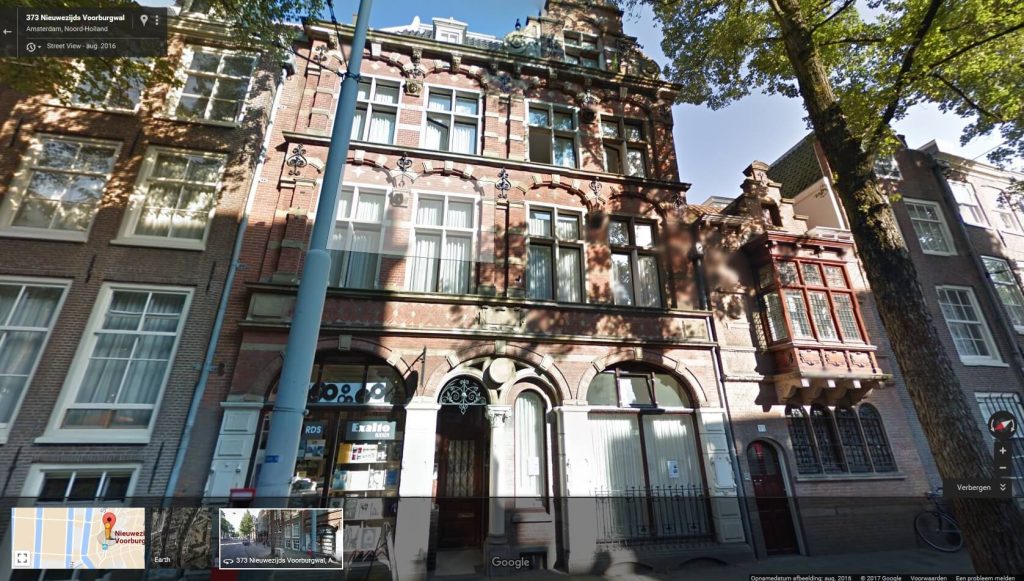
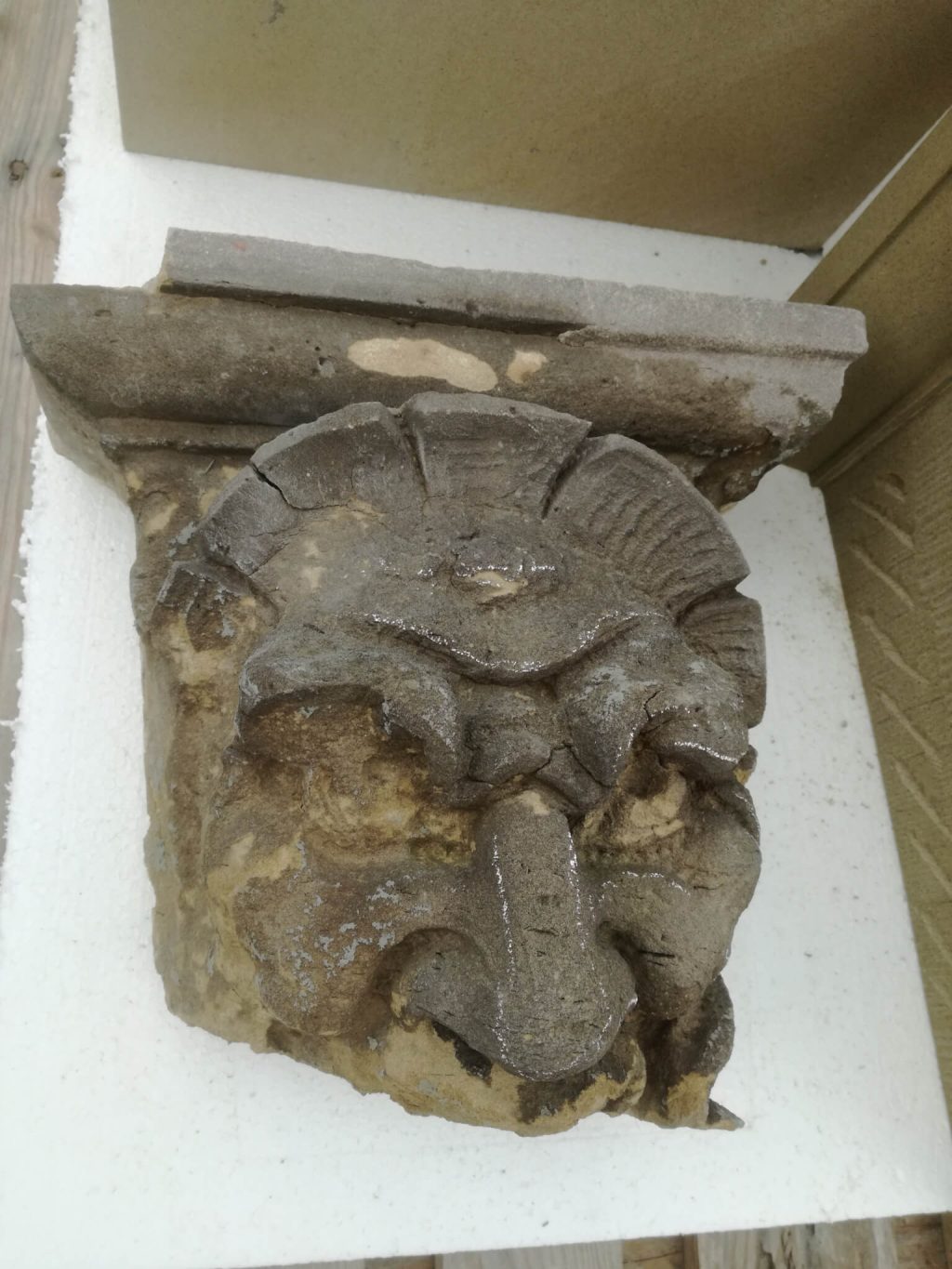
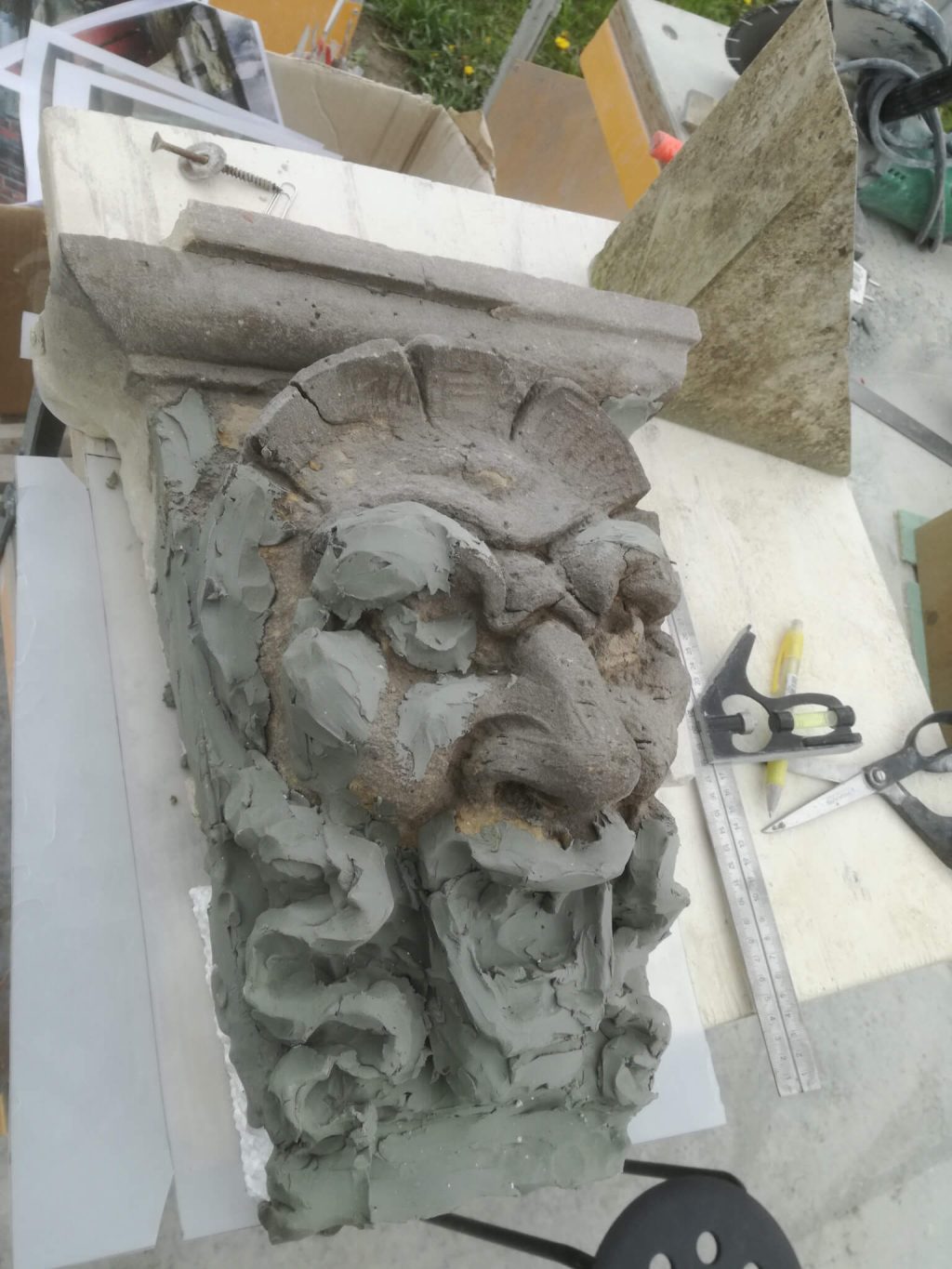
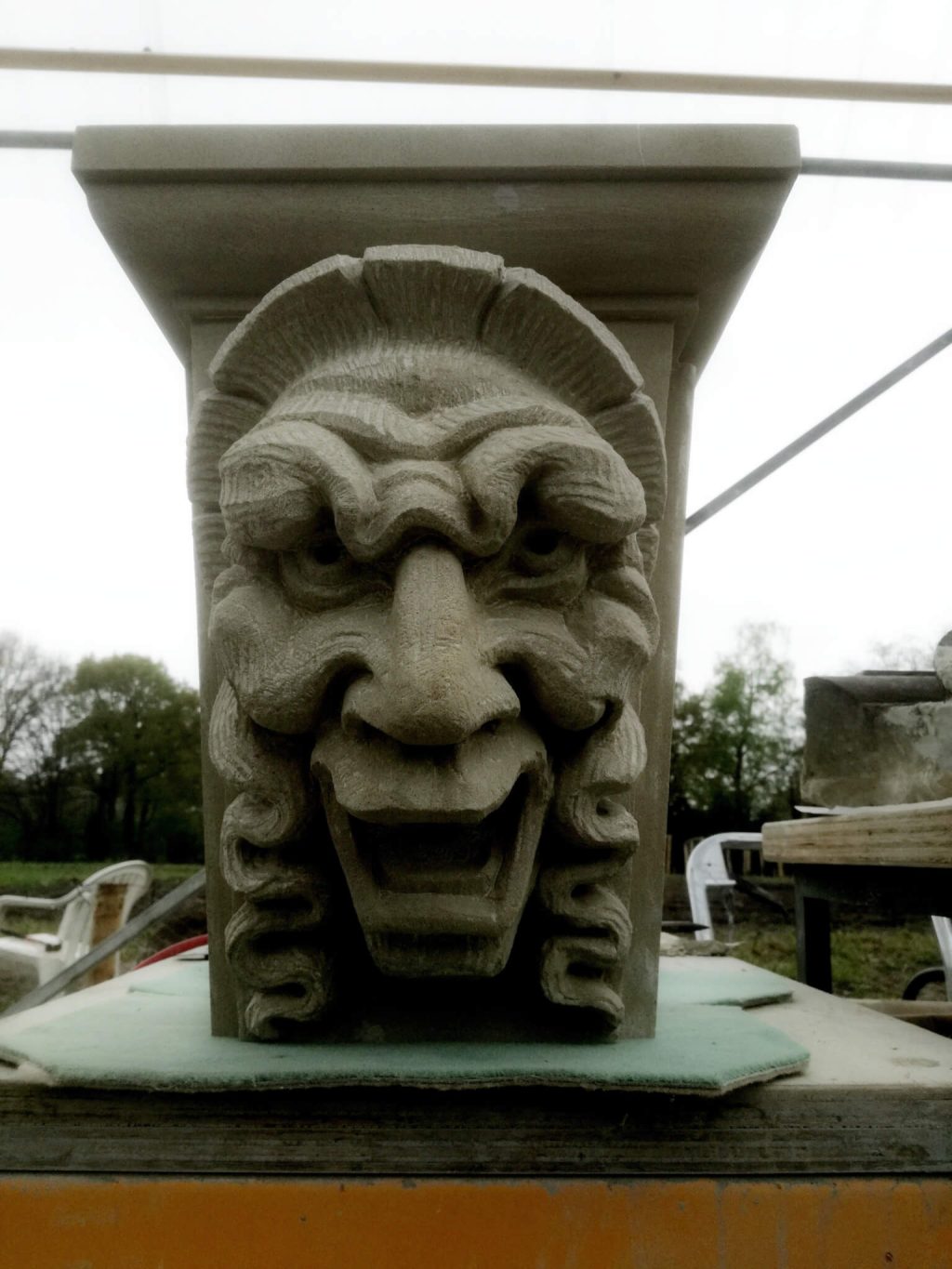
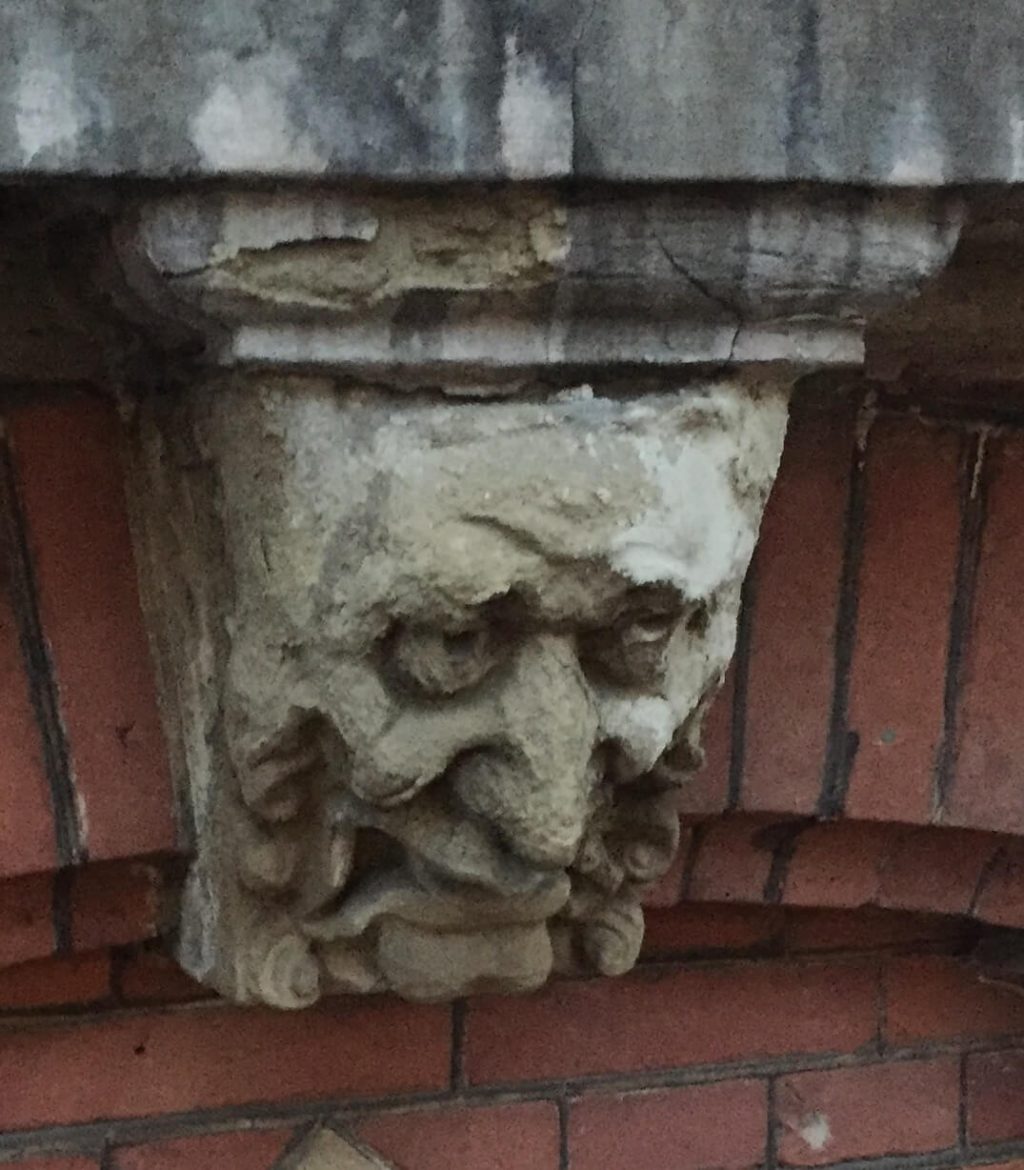
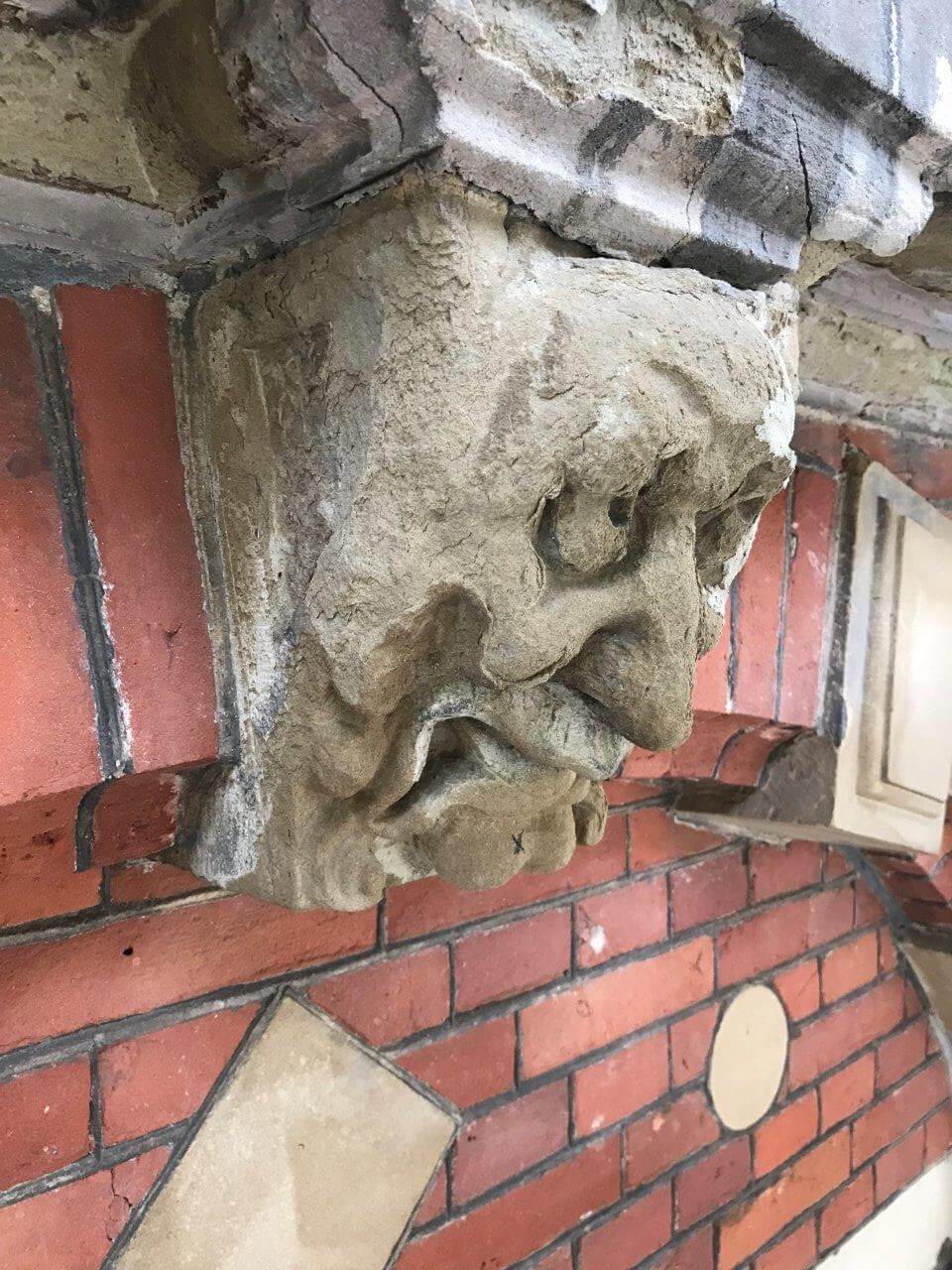
    For a building in Amsterdam, I am currently carving four grotesques: ferocious sandstone heads. All four are severely damaged, which was the reason for choosing to replace them.

    The idea behind this is that at this moment enough remains to make a reconstruction of the original, and that the remains still can be preserved. With the new heads mounted into the façade something will remain for posterity to see. This is typically a job for which a restoration sculptor really is the best choice. Alternatives, such as, for example, impregnated with acrylic resin, making a cast , or creating a 3D-print from the original, will still provide an incomplete picture of a damaged original. Reconstructing is therefore an essential part of the copying process.

    Archive of images

    Four grotesques in Amsterdam, grotesque 2, weather-beaten

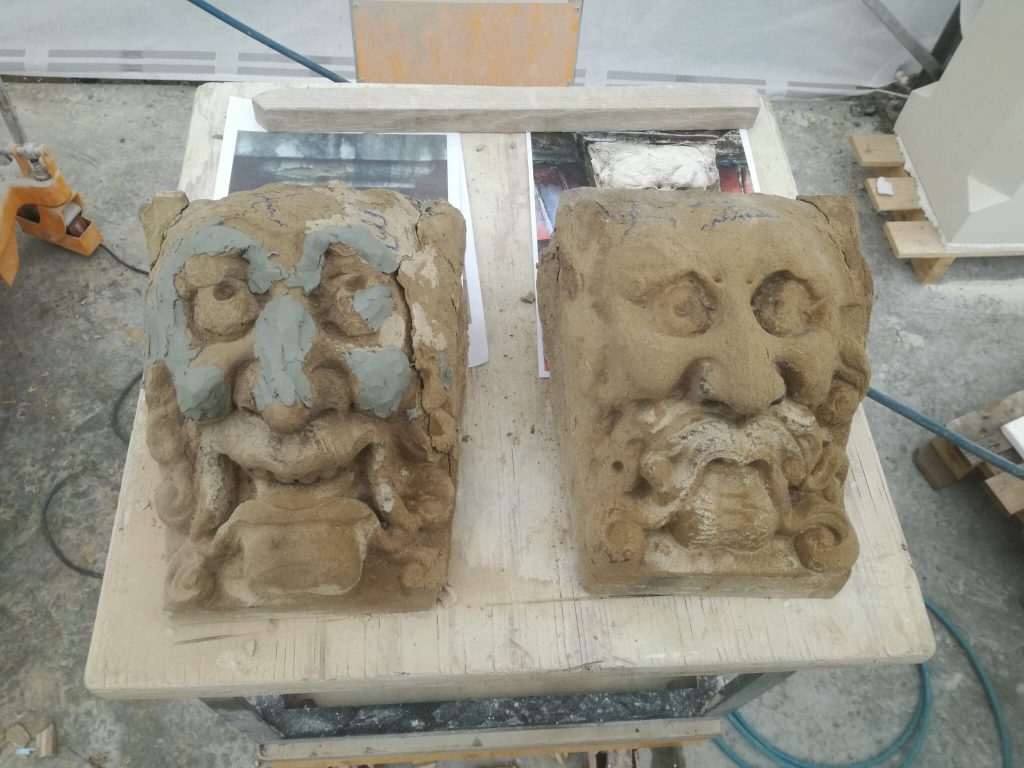
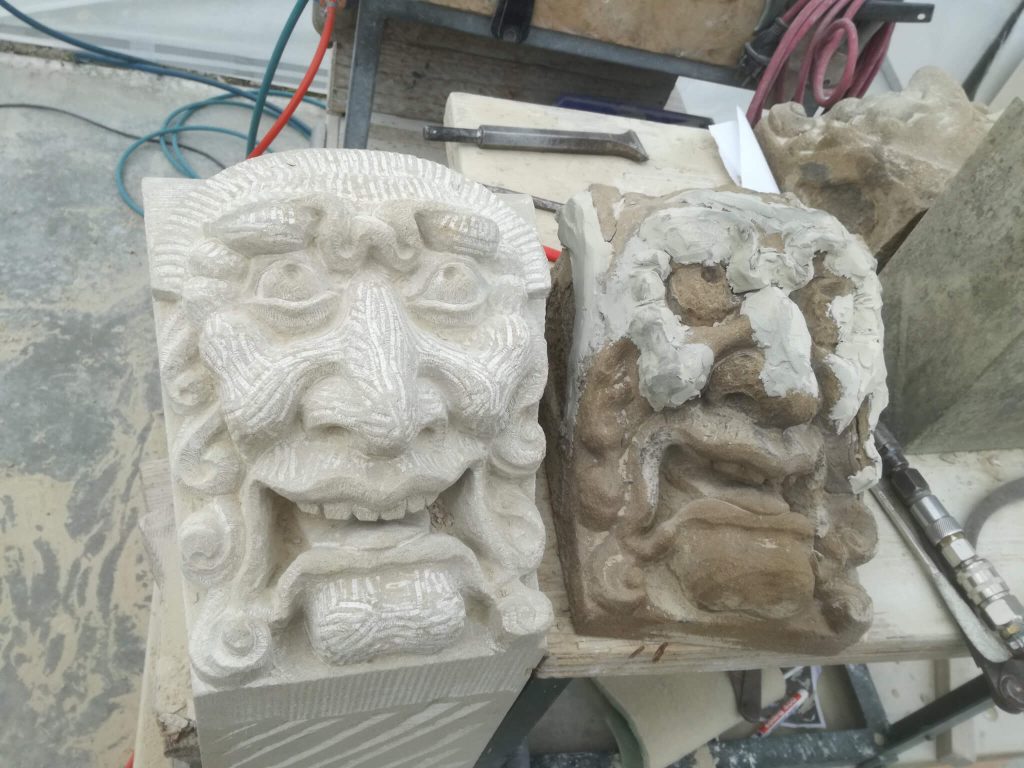
    In these cases, I will first have to find out what has been there in the past and put this back into the copy. With a permanently soft artificial clay that I can easily remove again I start remodelling the missing parts. For this, I will need reference material, and the main one is of course the parts that are still in good condition on the old heads themselves. For example, one of those is a totally weathered lion, but because what is weathered on the left is still intact on the right and vice versa, I hardly need to remodel anything on it. I will simply copy the first half, and then mirror that on the other side; that way, I can carve a complete copy. The first head unfortunately missed its entire lower jaw. It was already badly damaged, but it was so brittle that the lower half totally crumbled during disassembly. In reconstructing I therefore made use of image archives of similar heads: one inside my head, and one on photos. I have previously written a blog post about how these picture archives in your head work, which you can read here: "The statue is already in there, you just need to remove the rest ... " From heads that I've copied before, I recognized the way to carve the eyebrows, or the cheeks.

    My method of working

    Four grotesques in Amsterdam, grotesque 3, weather-beaten

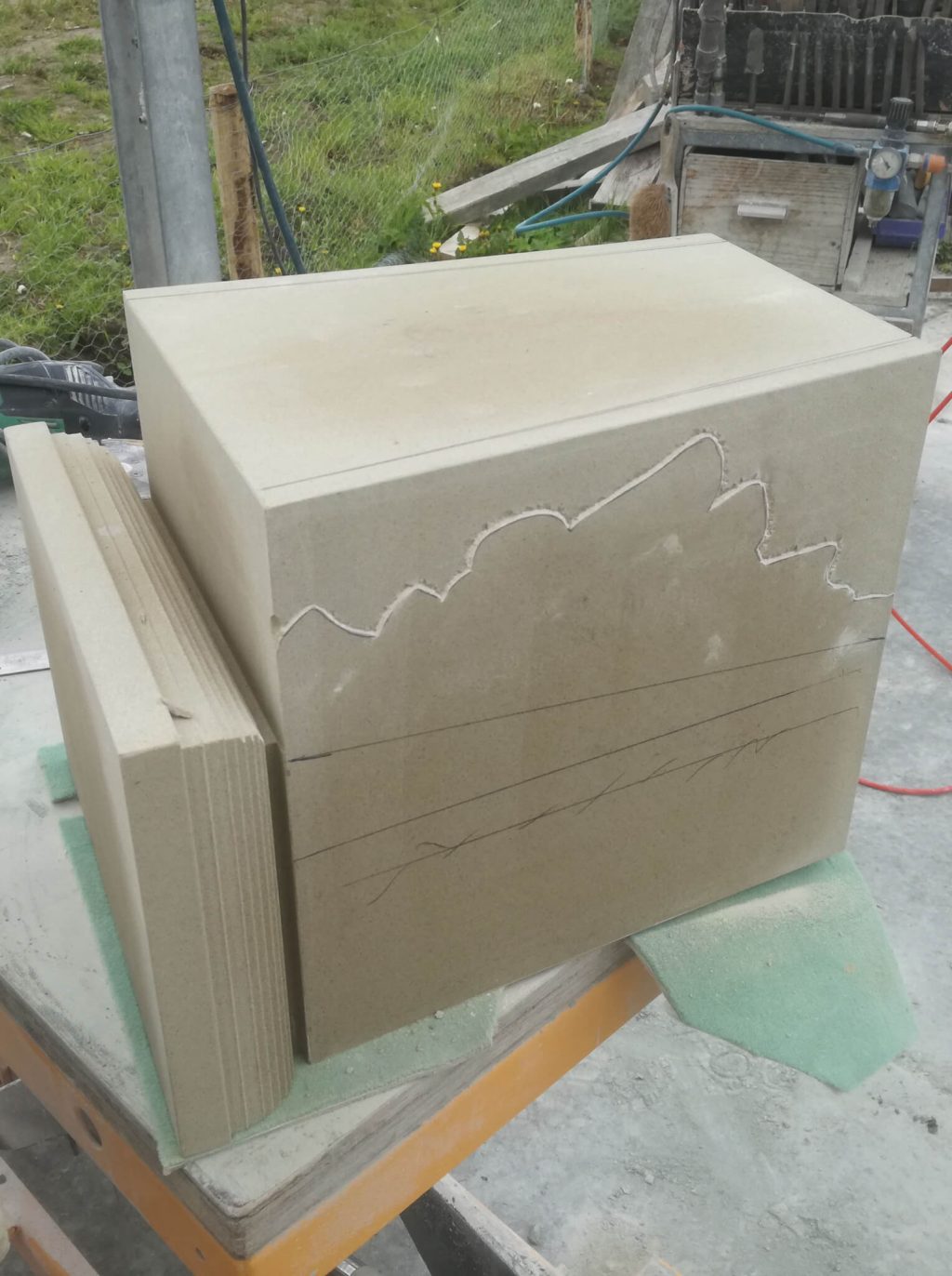
    Once I've found the overall right shapes, I'll follow my usual method of copying. This can be done, for example, with a pointing machine, but in this case I found the right shape quickly with a template and a few compasses. Because ultimately it is often a matter of costs: with a pointing machine I will certainly be more accurate, but it all takes a lot longer. I will have to make suspension points, make a wooden cross for it, fine-tune all of it… by that time I will already have finished half of the precarving, if I take a different approach. That's why I transferred the outlines onto a piece of cardboard, wich I traced onto the new stone, and by placing the pieces side by side I could quickly reference its main dimensions. Read here a post about copying techniques. The heads had to be copied into the same stone: Udelfanger sandstone. The stonemason provided me with four new blocks, exactly cut to size.

    Finishing

    Four grotesques in Amsterdam, original grotesque 1, weather-beaten

    These heads may looke like they were finished with sharp details, but at the time, they were carved quite quickly with a toothed chisel. The tooth chisel marks can still be clearly seen on the original. That means that this should also return in the copy. If I had designed them myself, I probably would have finished everything completely with a grater. However, the chisel marks do give the whole a lively character, which doesn't dominate at all when seen from the street: After all, they are about twelve meters high up.

    Why these grotesques?

    Mother Kali, removing evil inside us, standing on the body of Shiva

    I was already wondering myself, and it's exactly the question I keep getting from visitors: "Why would anyone want to install such horrible heads on their house?’ As I went searching on the internet for the significance of these grotesques I couldn't find much at first; the German Wikipedia does mention the ‘Neidkopf‘, and describes that it is intended to keep off envy. 'Grotesque’ by the way refers to the Itailaanse word 'grotta', which means cave. It refers to a period in which it was fashionable to have a cave in your garden with all kinds of fantastic and terrifying sculptures in it.

    We also know the devil on churches and fearsome temple guards of Hindu and Buddhist temples. Apparently they have a function to keep envy and the evil eye outside the building, but intuitively I would think very differently about that myself. I'd rather just decorate my building with very positive and auspicious symbols and figures, that benefit not only its residents but also the environment. putting devils on it seems like asking for trouble; it seems to me that they rather attract more turmoil than scare it off.

    On the other hand, there was the Indian saint Sri Ramakrishna Paramahamsa. He had a great affection for one of the most horrible forms of the Divine Mother: of the Godess Kali. For him she, with her belt of human arms and a necklace of human skulls, was the one who on the one hand ruthlessly exterminated all the negativity inside of him, and on the other the most tender mother he could wish for. So again it appears that all depends on our own understanding and perception.

    Restoration architect: Bureau Delfgou
    Restoration Stonemason: Slotboom Stonemasons
    Read more…

No more messages to show.

No more messages to show.