• Update after two years: five coats of arms

    It's been over two years since I last posted on my blog. The main reason for this is our work on the Utrecht Dom Tower, that took up all the attention I had left, in addition to a busy private life and four students. It has been two wonderfully interesting years! Here's my first short update, this time about family crests.

    LANGUAGE

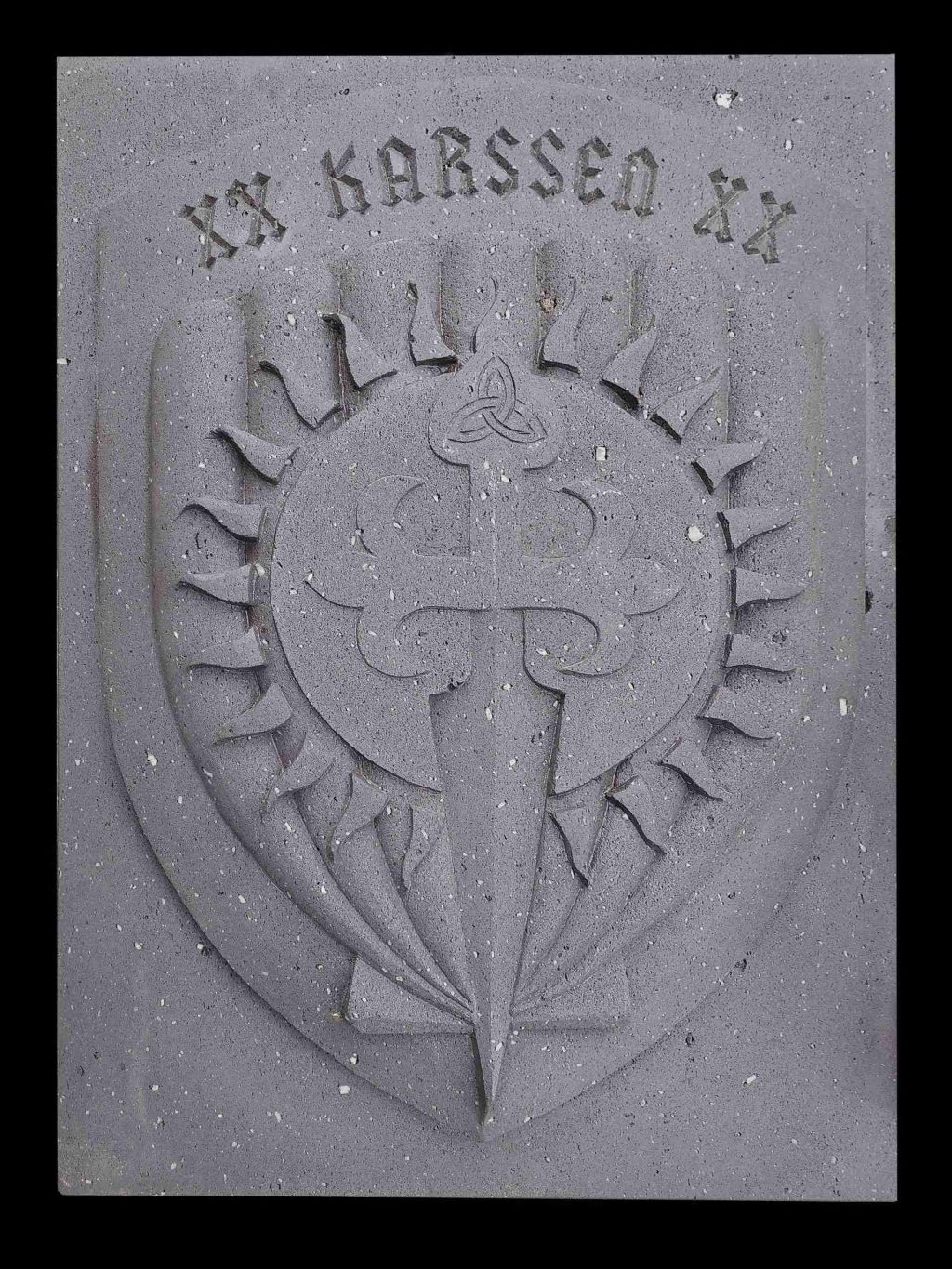
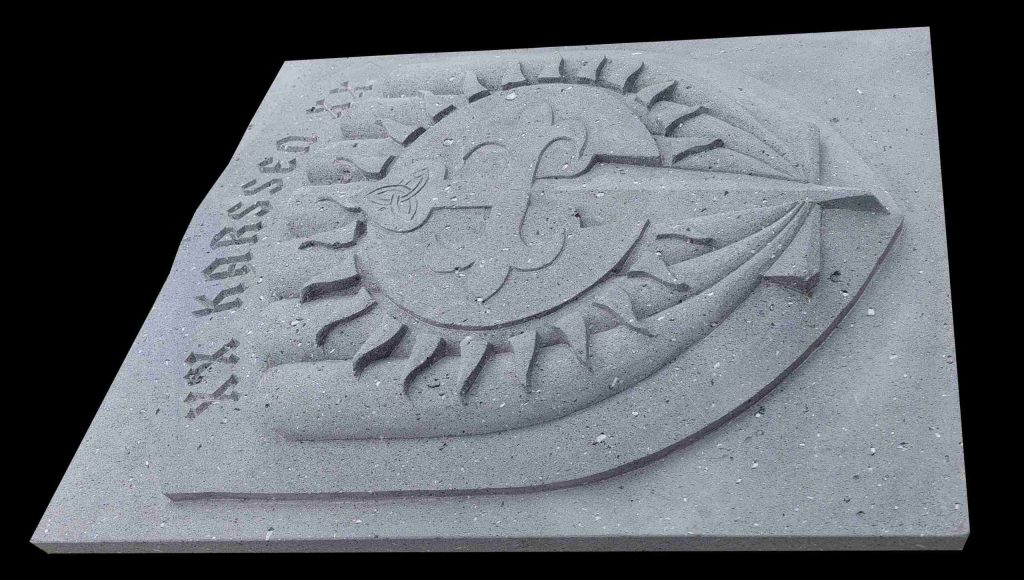
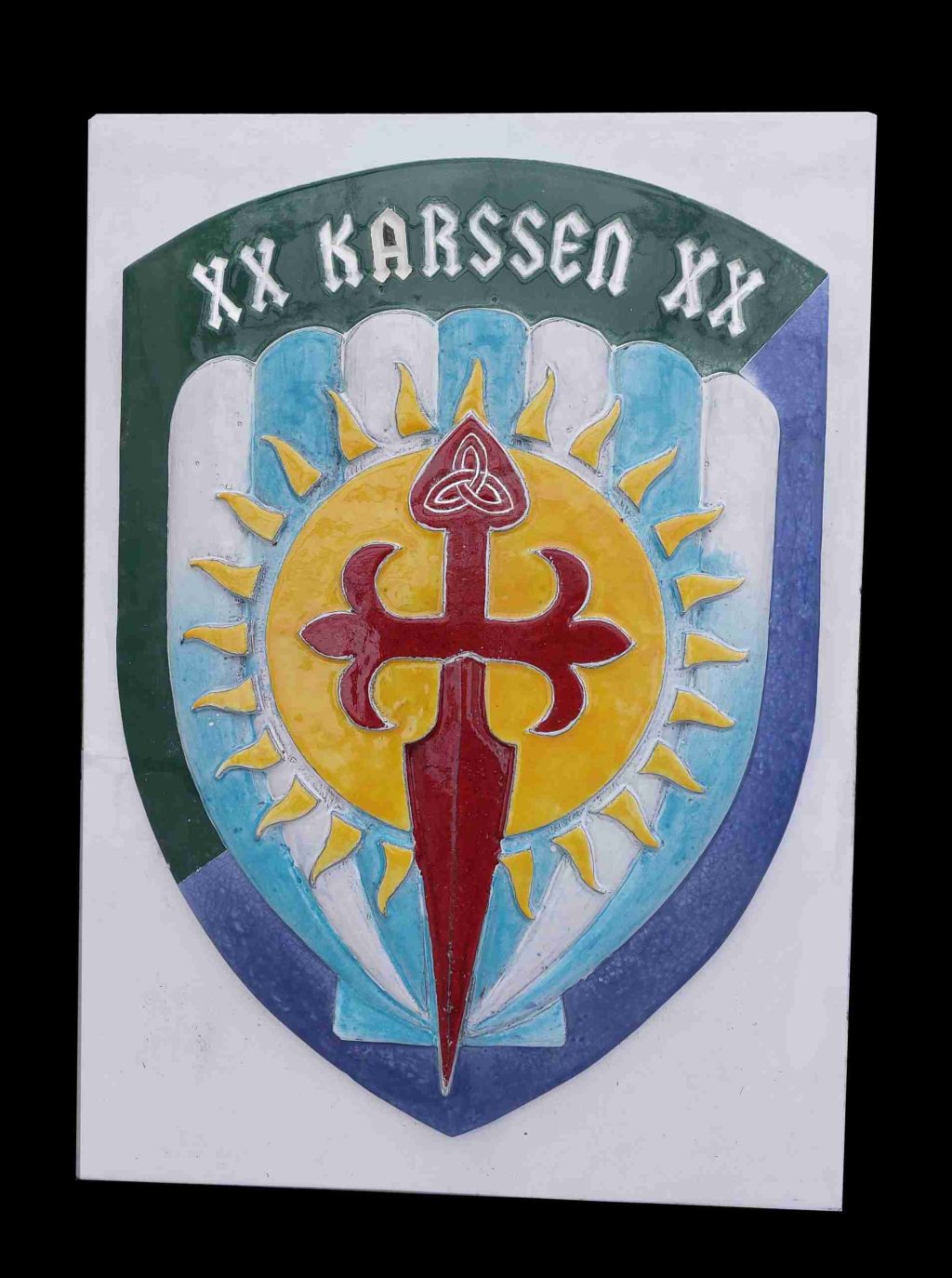
     1: Two coats of arms in enamelled basalt lava
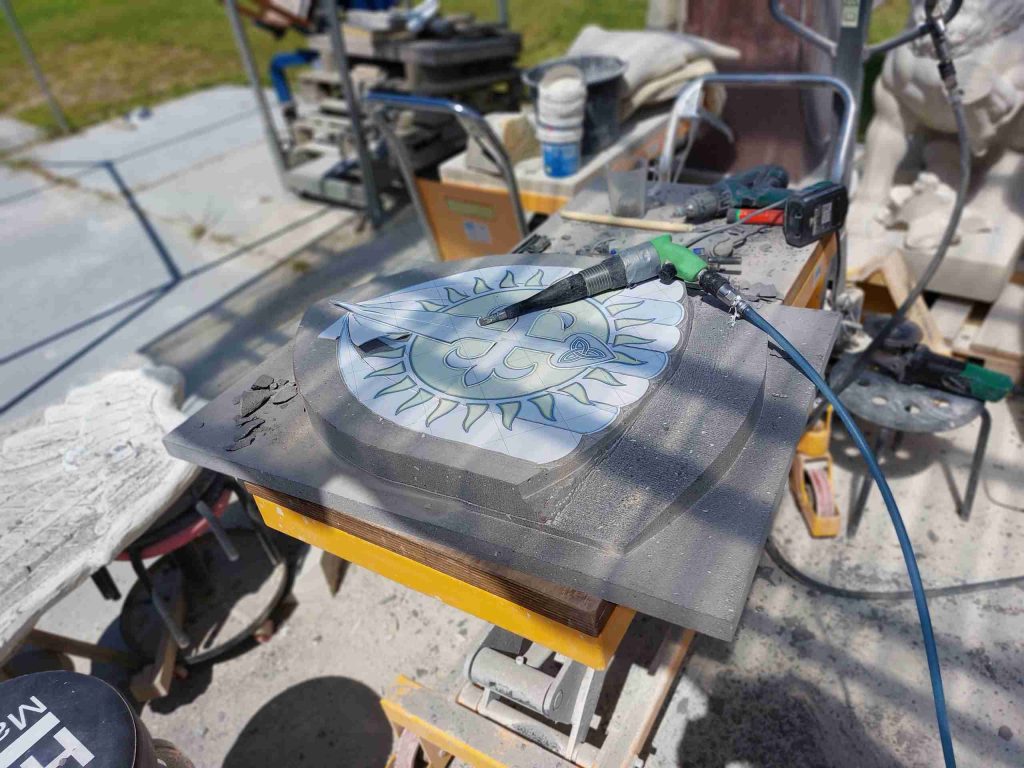
    For two retail properties in Ede I carved two coats of arms in Mont Doré basaltlava. These were then enamelled. Unfortunately, Mr Karssen has now passed away, but he did want to leave something valuable to the city of Ede, with two new retail properties and living space located above. He wanted to add two coats of arms in color, but would rather not have to have it painted every few years. I had the solution for this: to have it carried out in enamelled basalt lava, as we did shortly before as well in Veghel in October 2021. This will easily last for a thousand years. I suggested giving it some bulge as well, so that it became more than just a picture. Unfortunately, the basalt lava can only be at most 5 centimeters thick, so I had to hollow out the stones at the back. In the end it worked out well and the stone shields will continue to shine brightly on the shop facade for years to come.

    LAREN
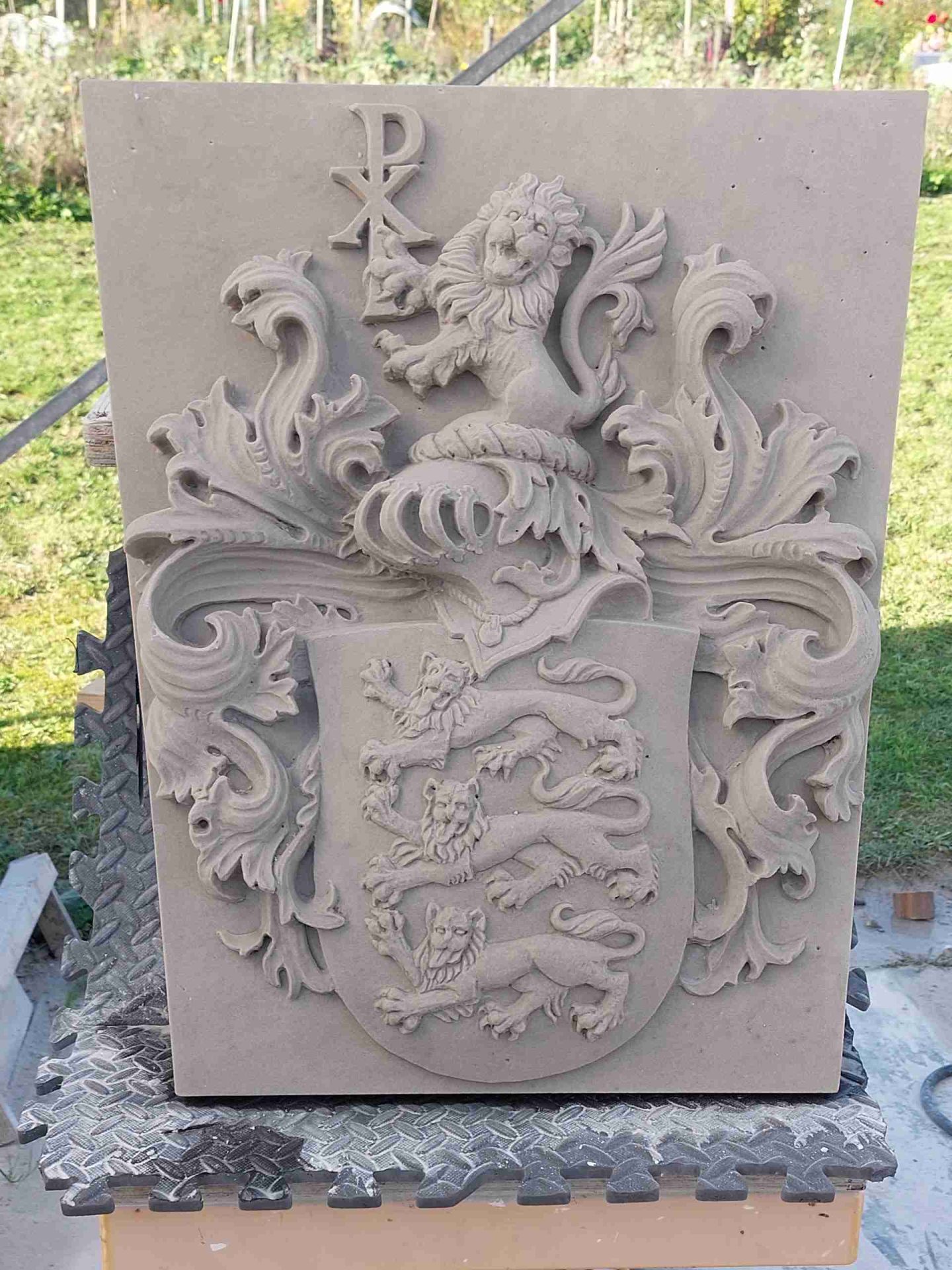
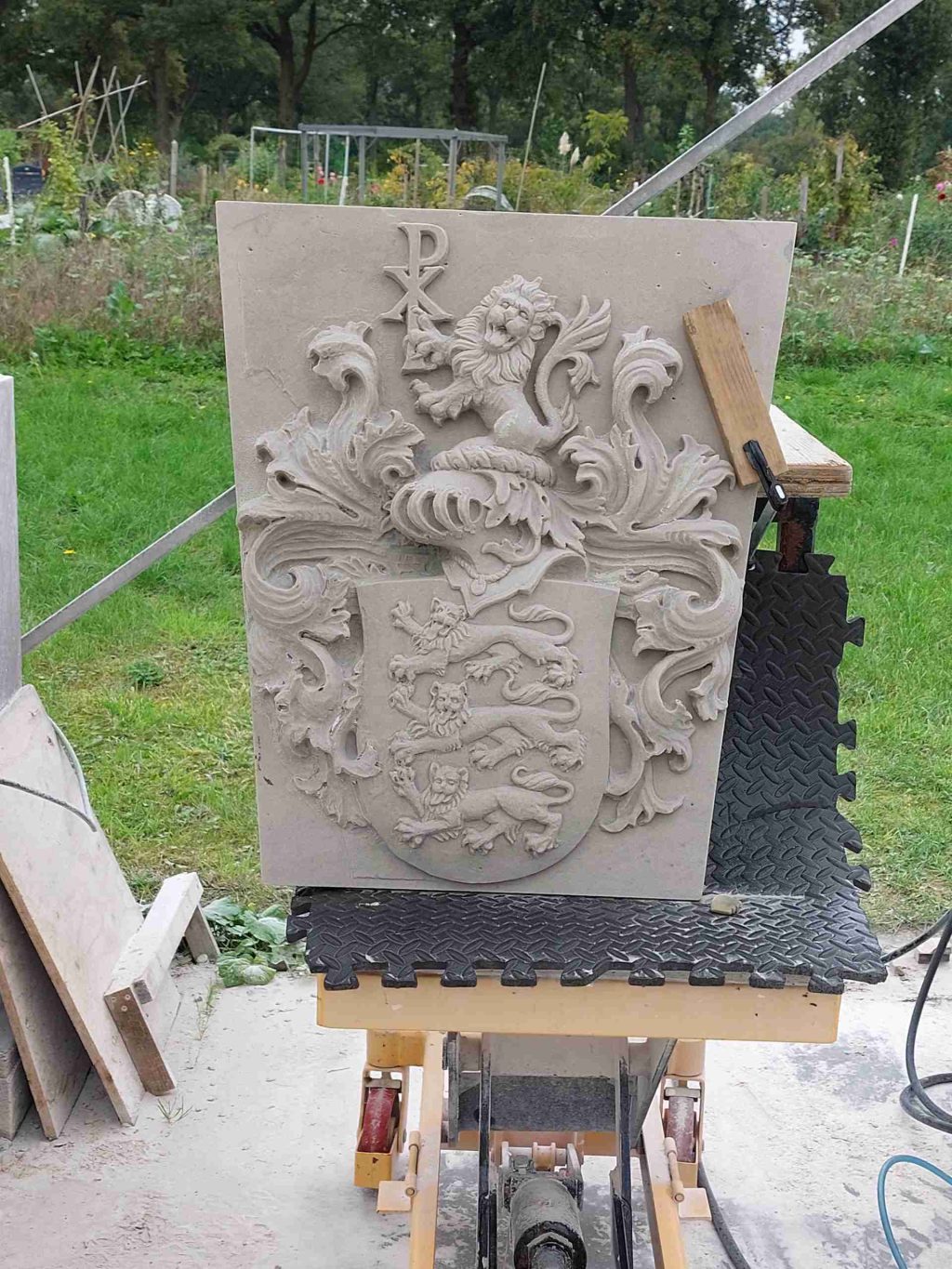
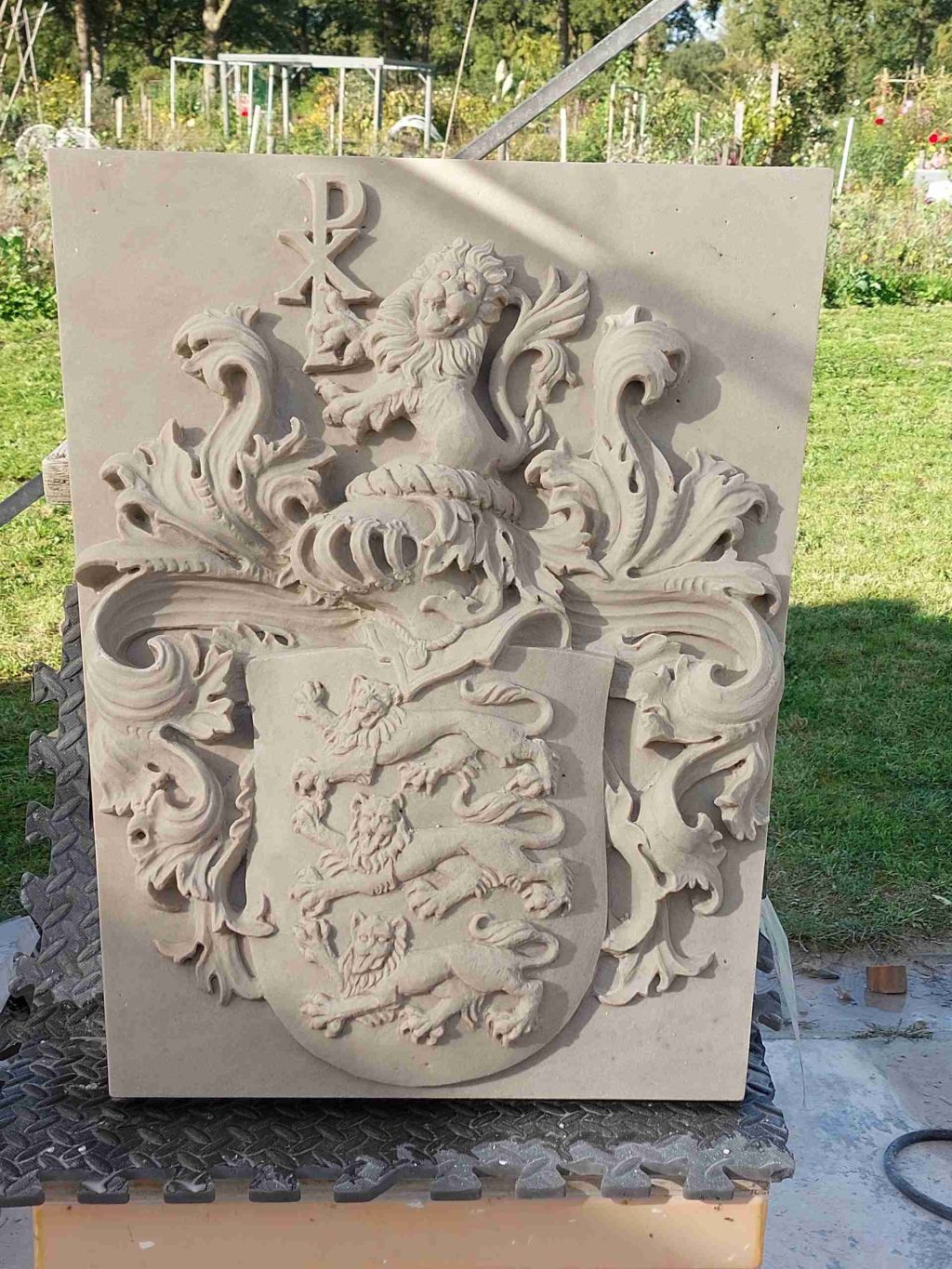
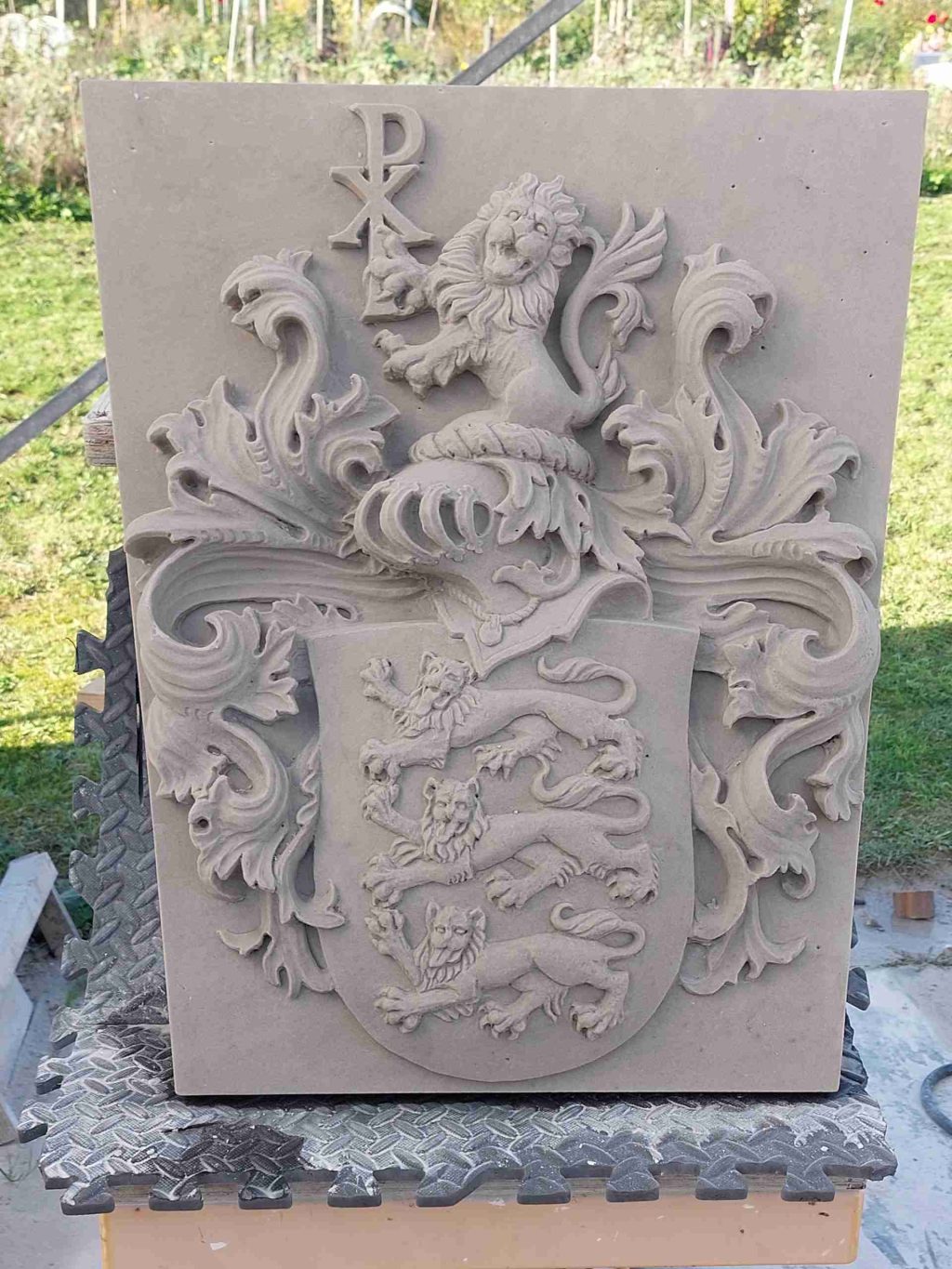
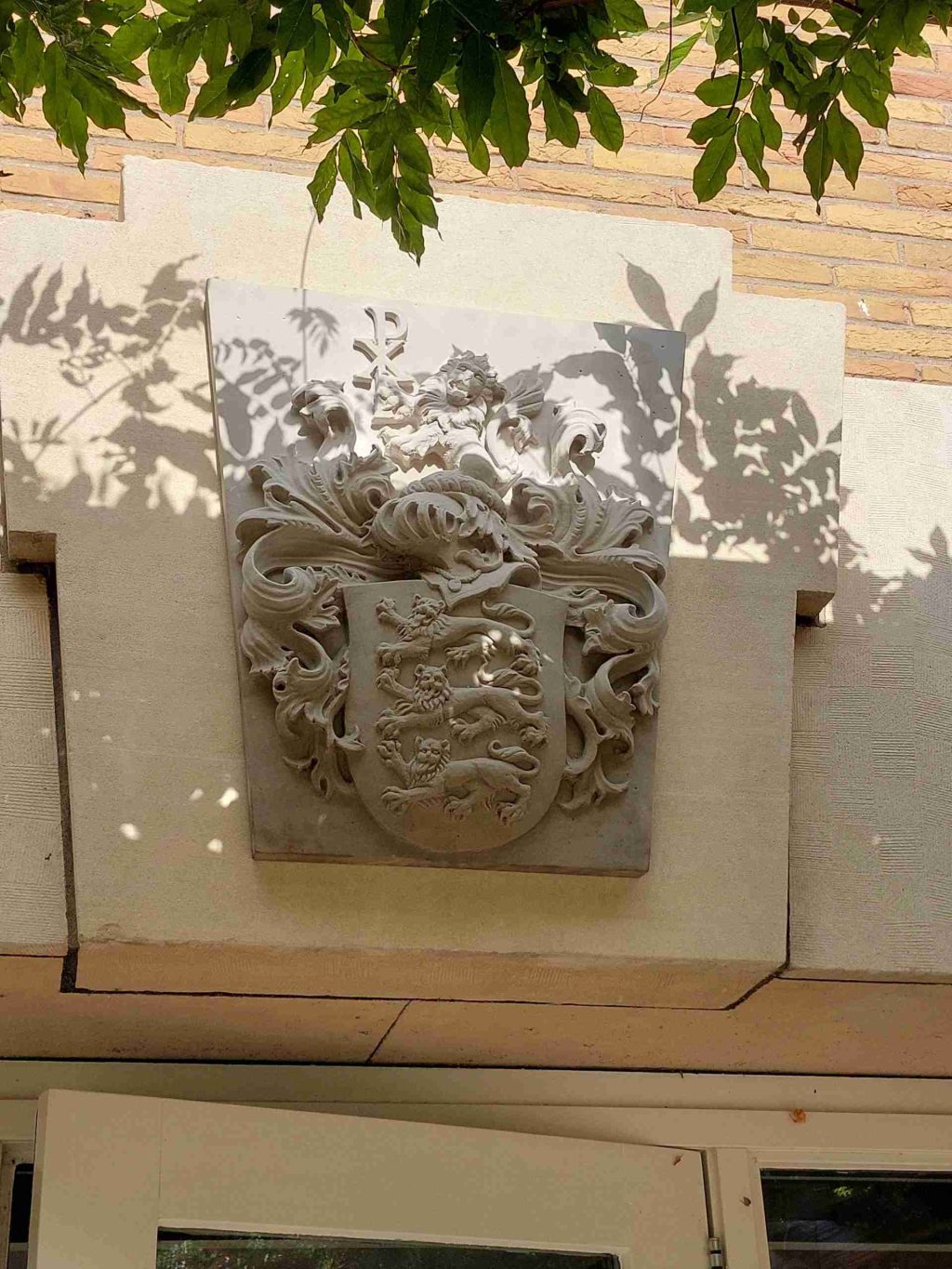
    coat of arms Van Steenis with 3 lions in Bentheimer sandstone

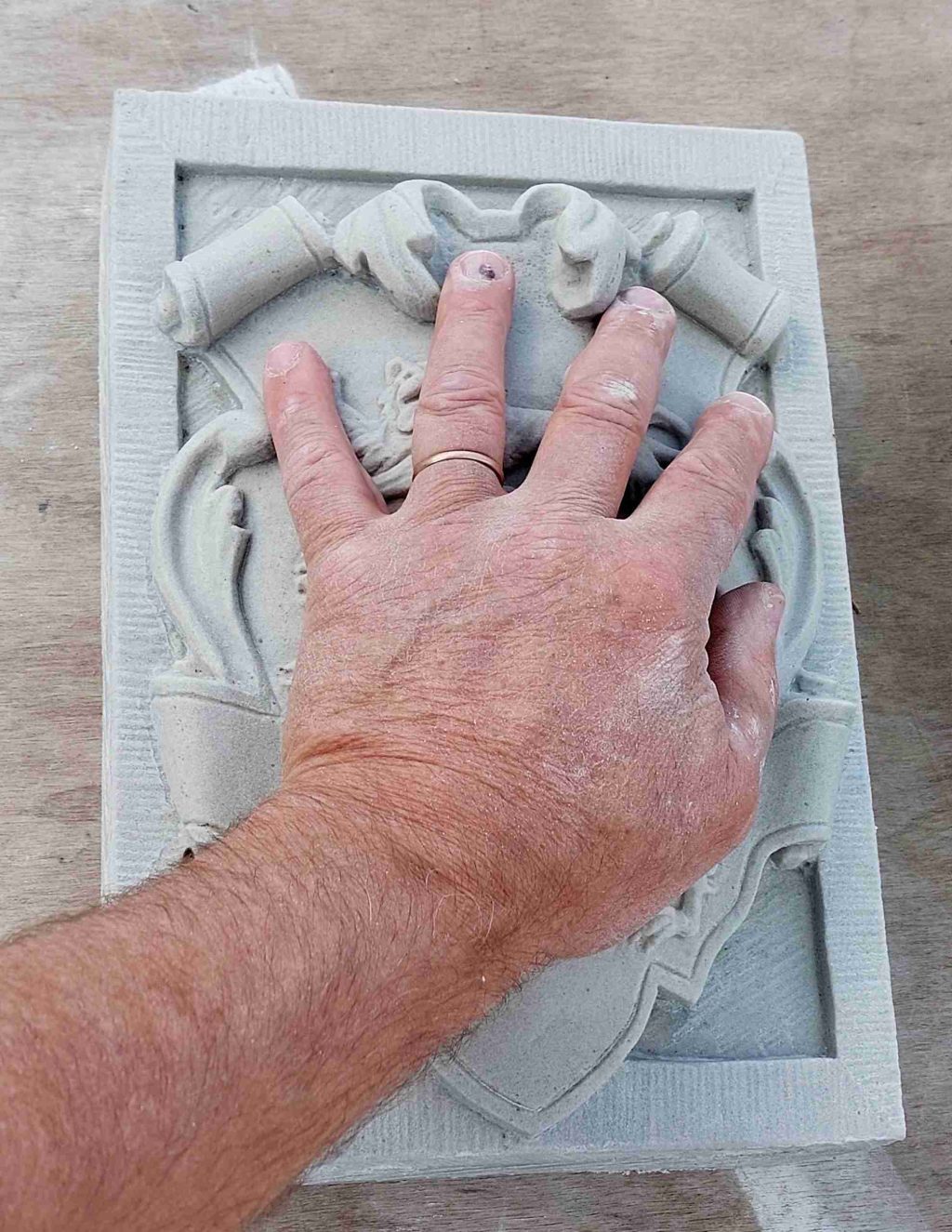
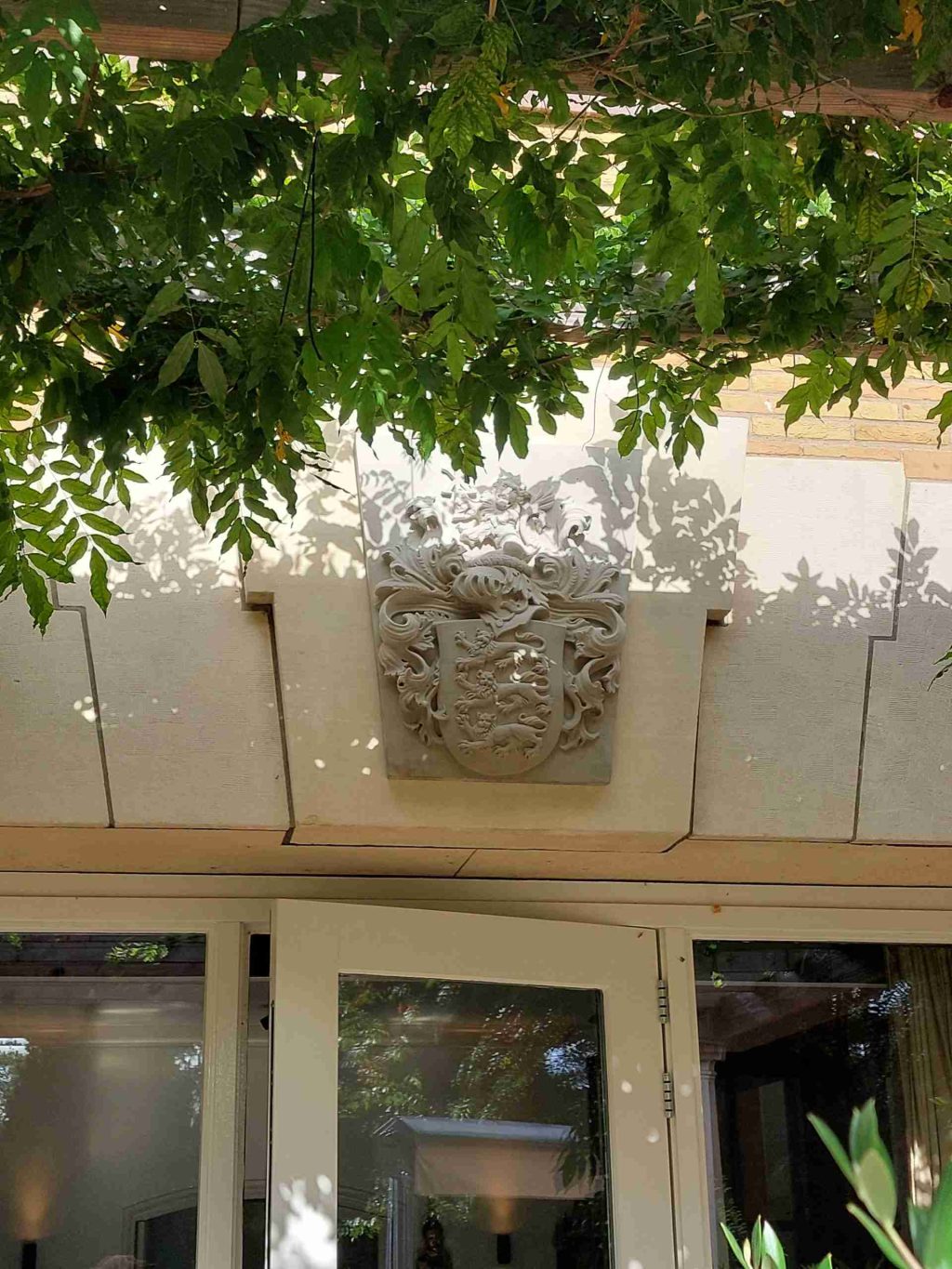
    2: Two sandstone family crests

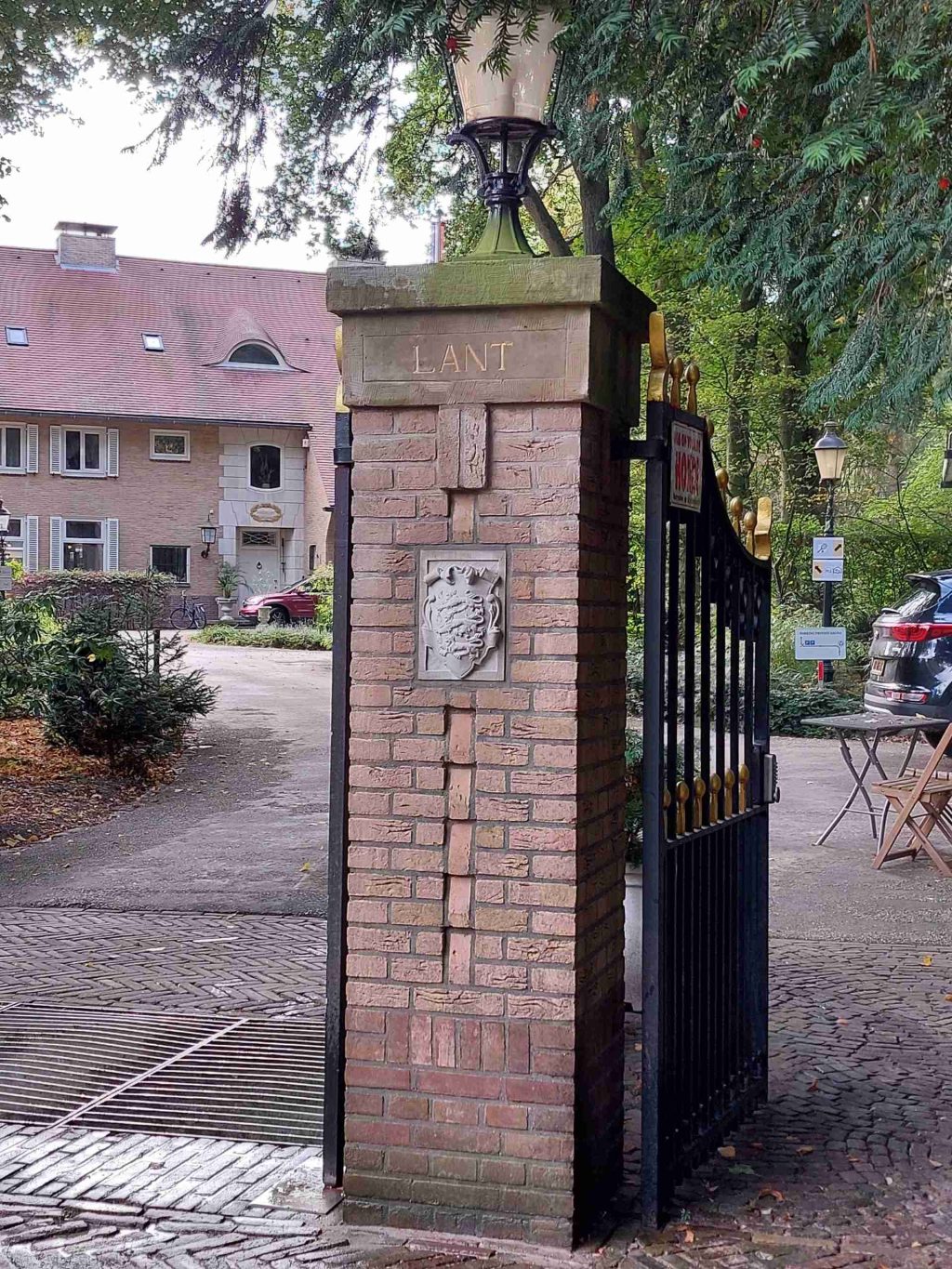
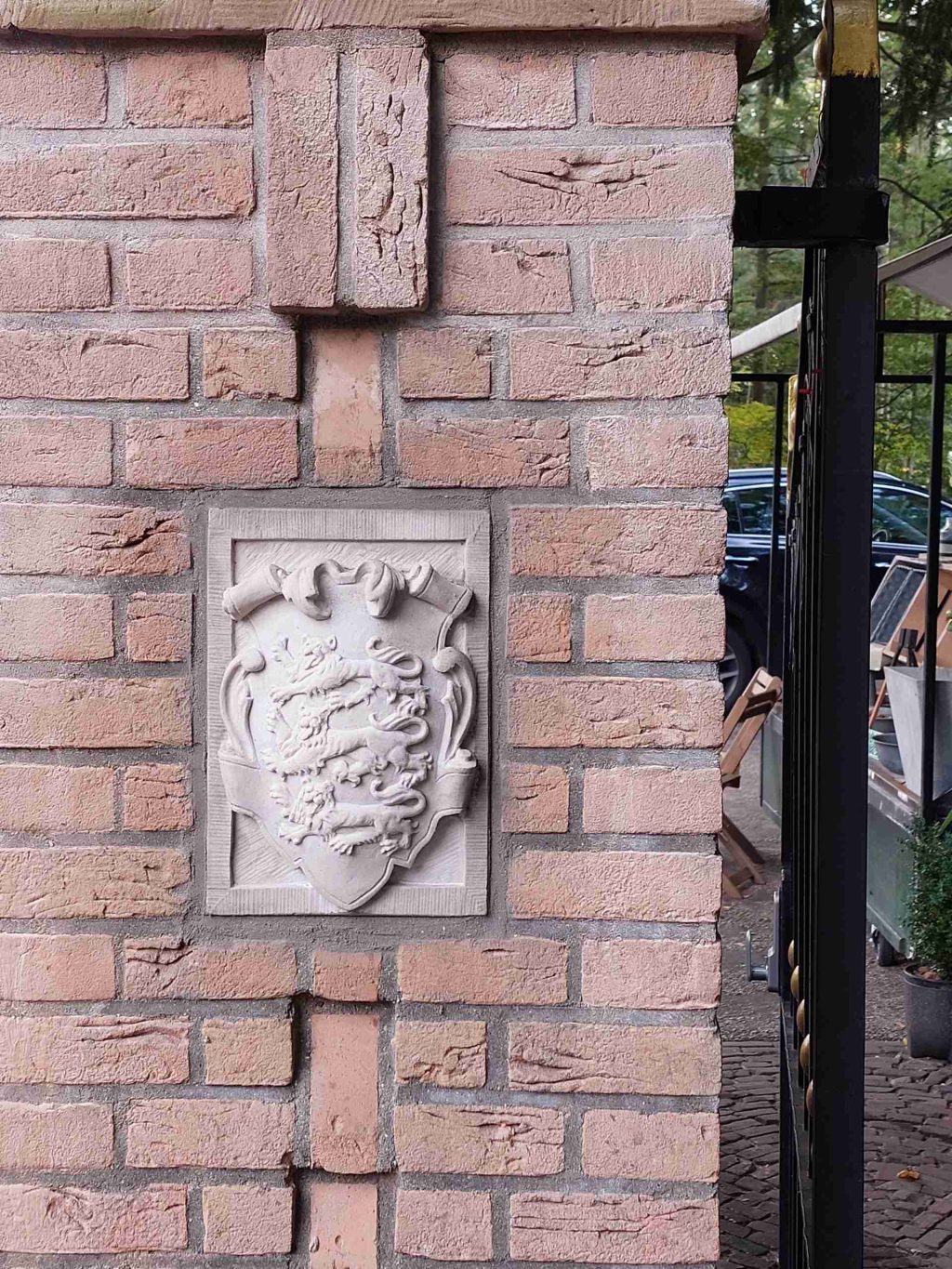
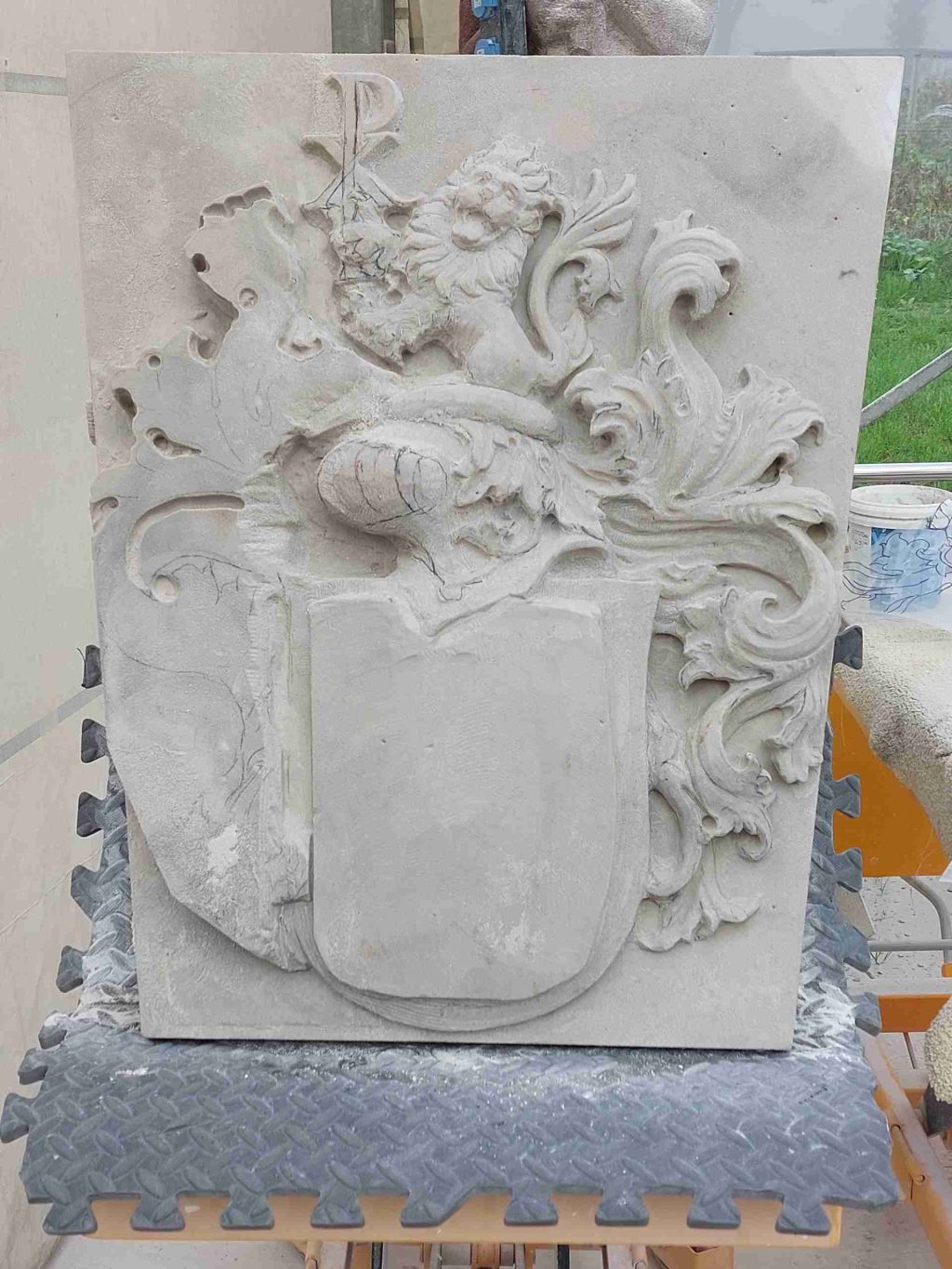
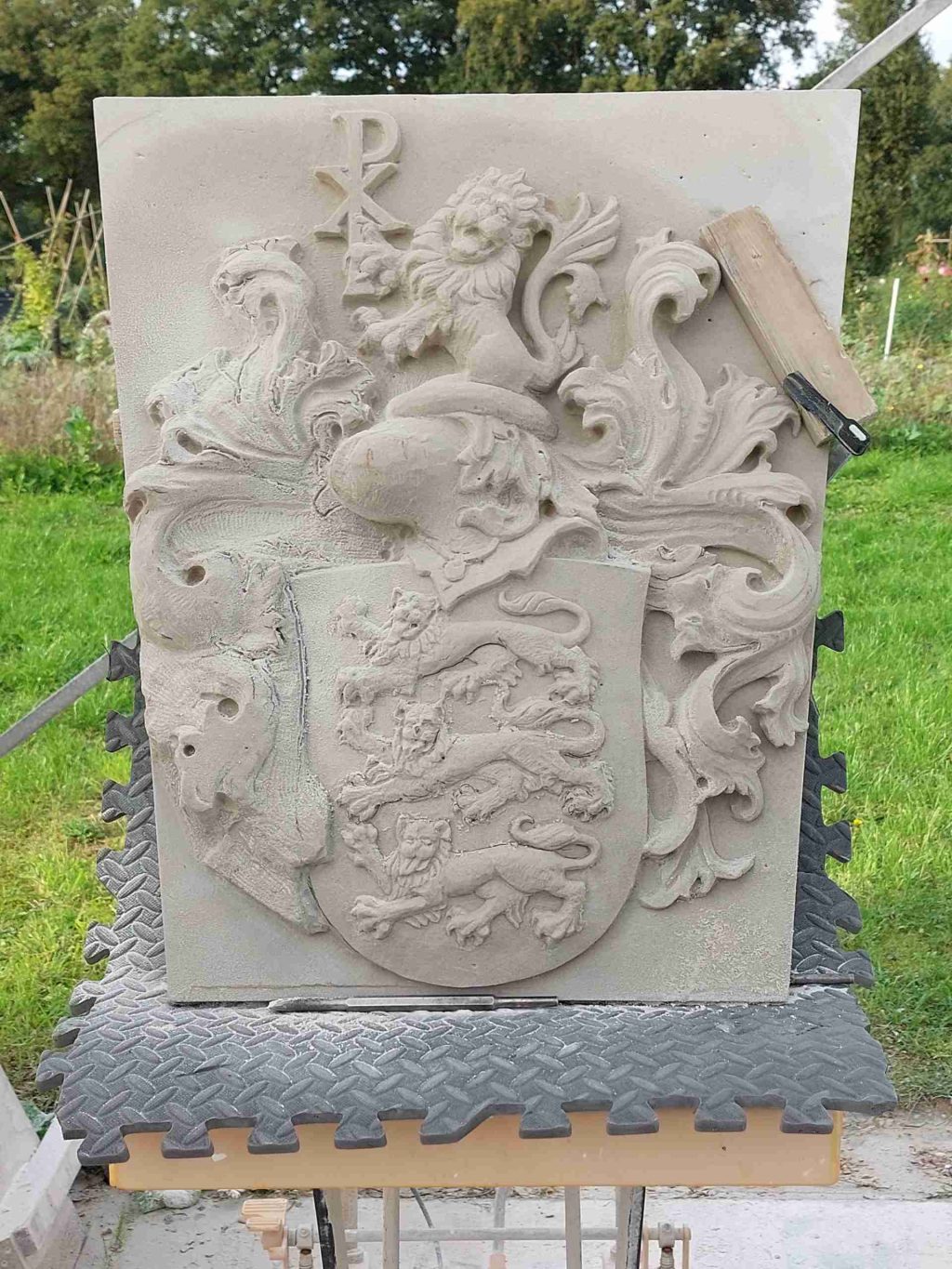
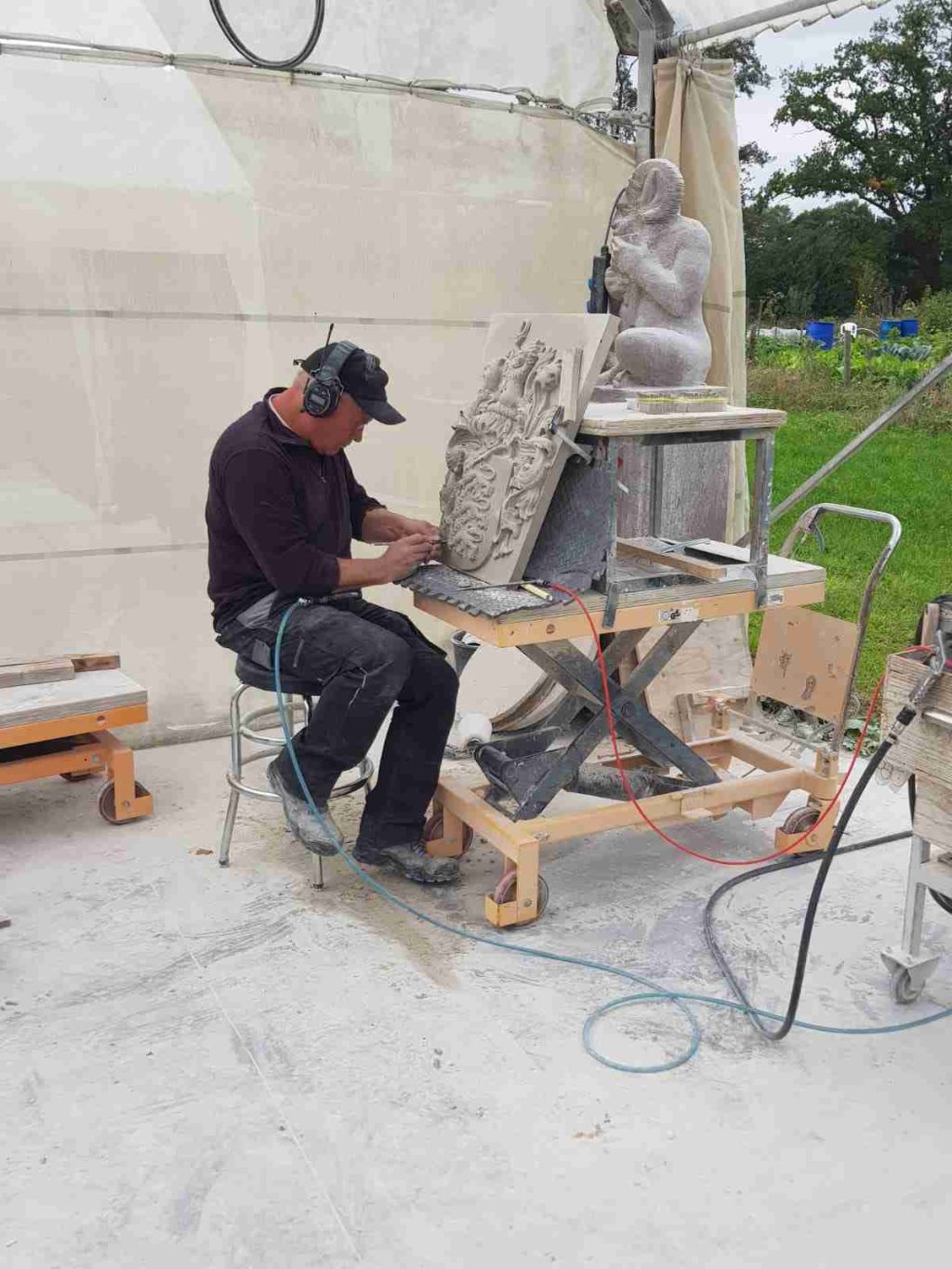
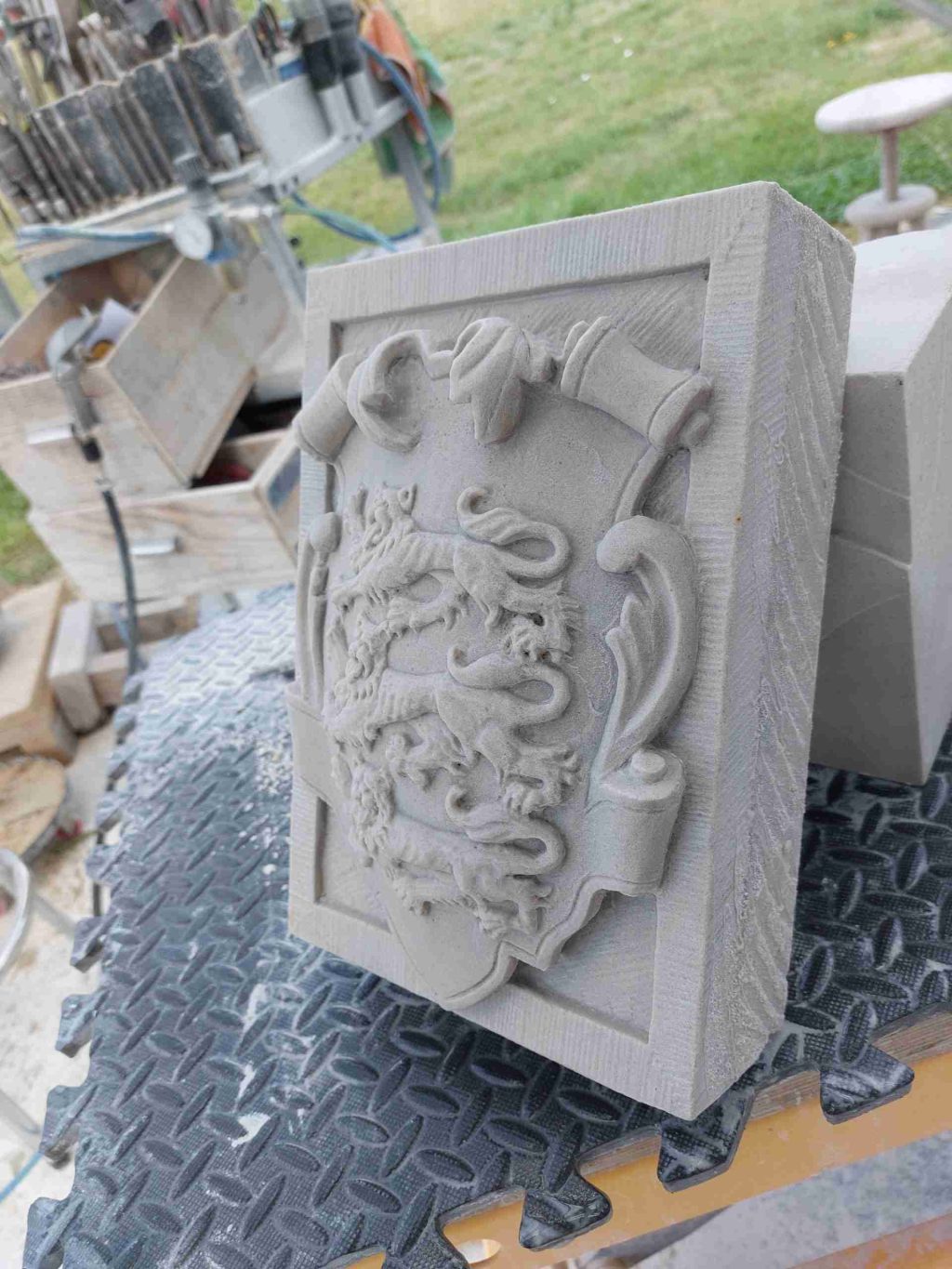
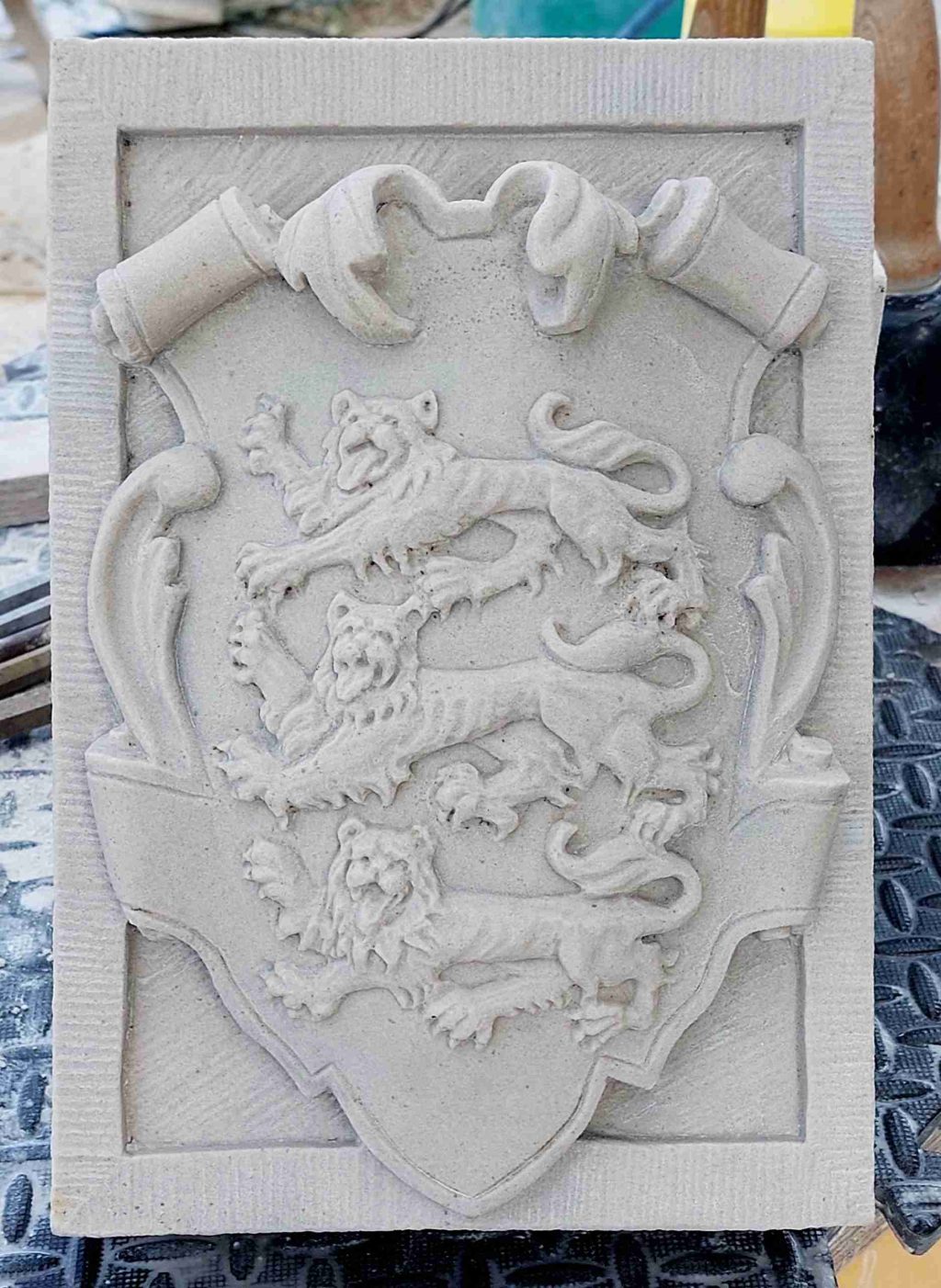
    For a villa in Laren I carved a large panel with a coat of arms Bentheimer sandstone, plus a smaller coat of arms to be put into into the pillar of the gate. Tim helped me install it.
    DUISBURG

    3: A small round coat of arms in Portland stone

    A coat of arms with helmet, helmet mark and mantling on a round background with profiling. Dimensions 40 cm diameter and 6 cms thick.

    round coat of arms with coat of arms. Portlandstone
  • A pine cone for a classic garden vase

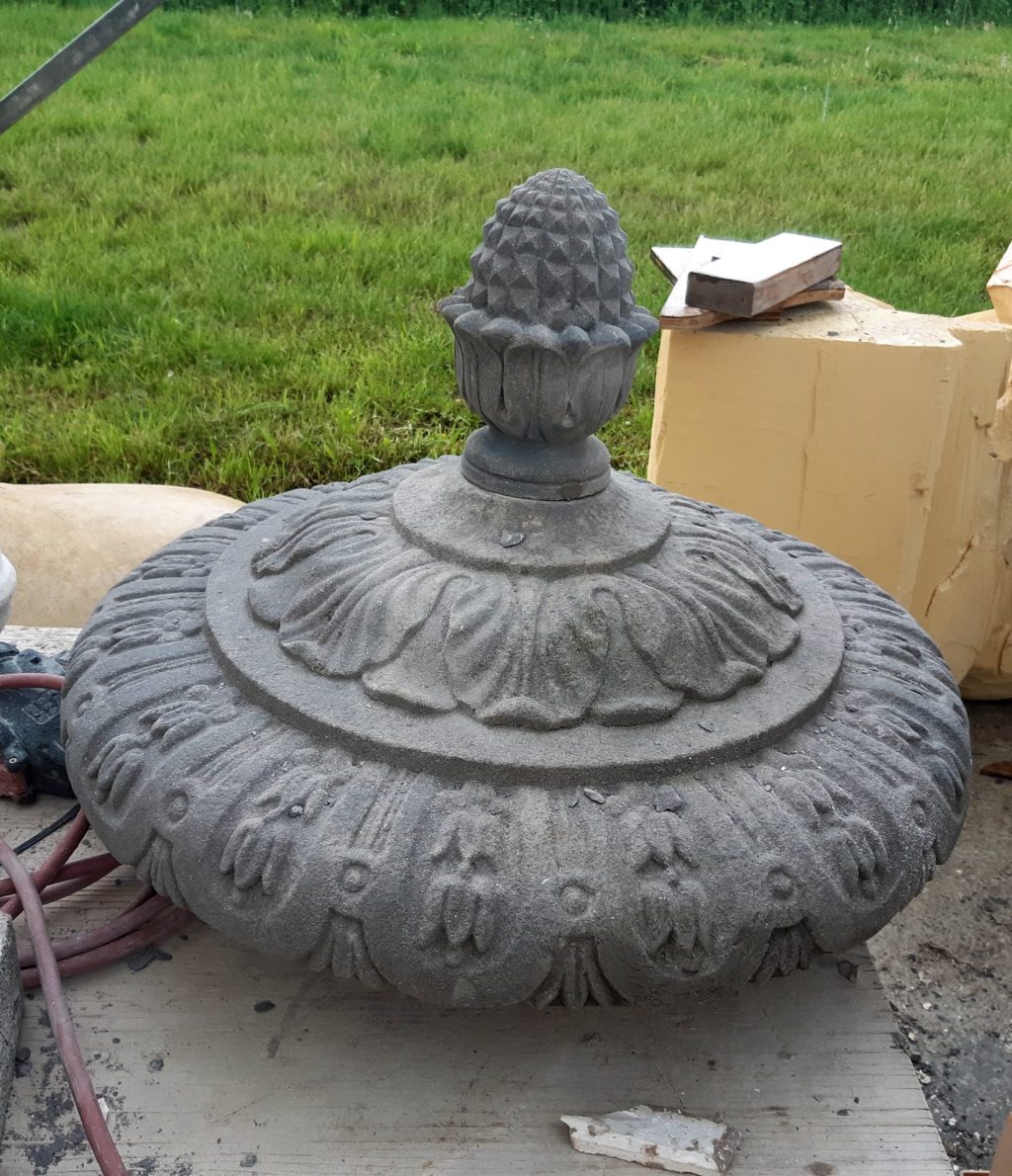
    An 18th century garden vase with pine cone

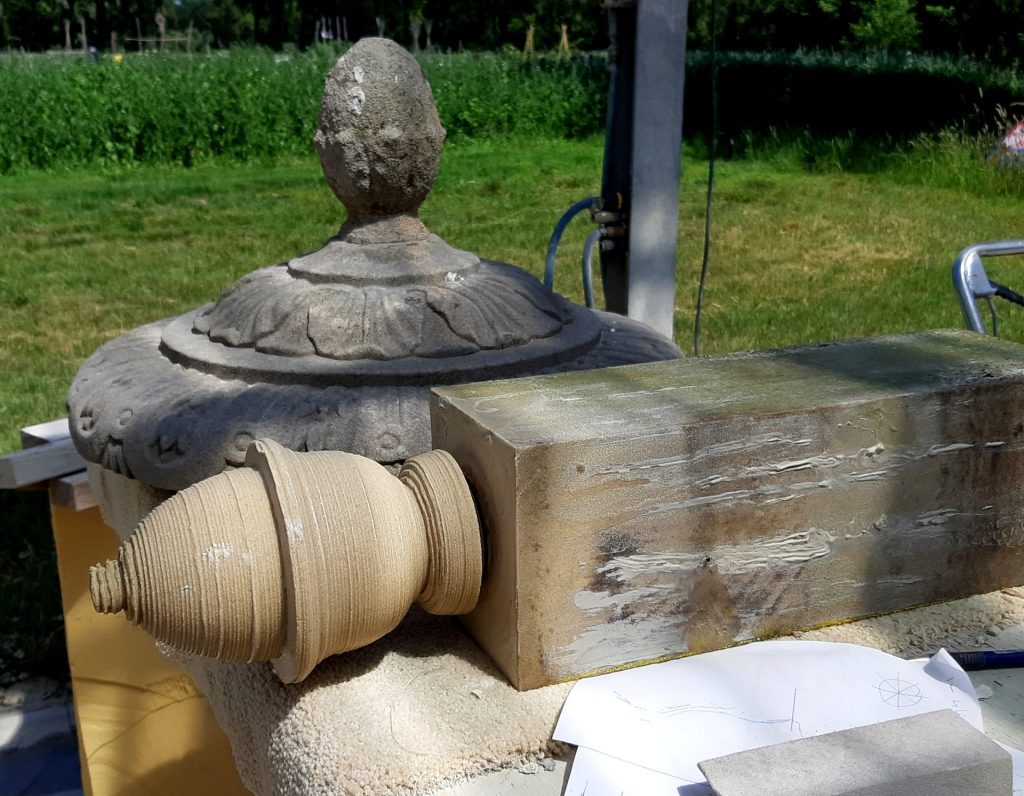
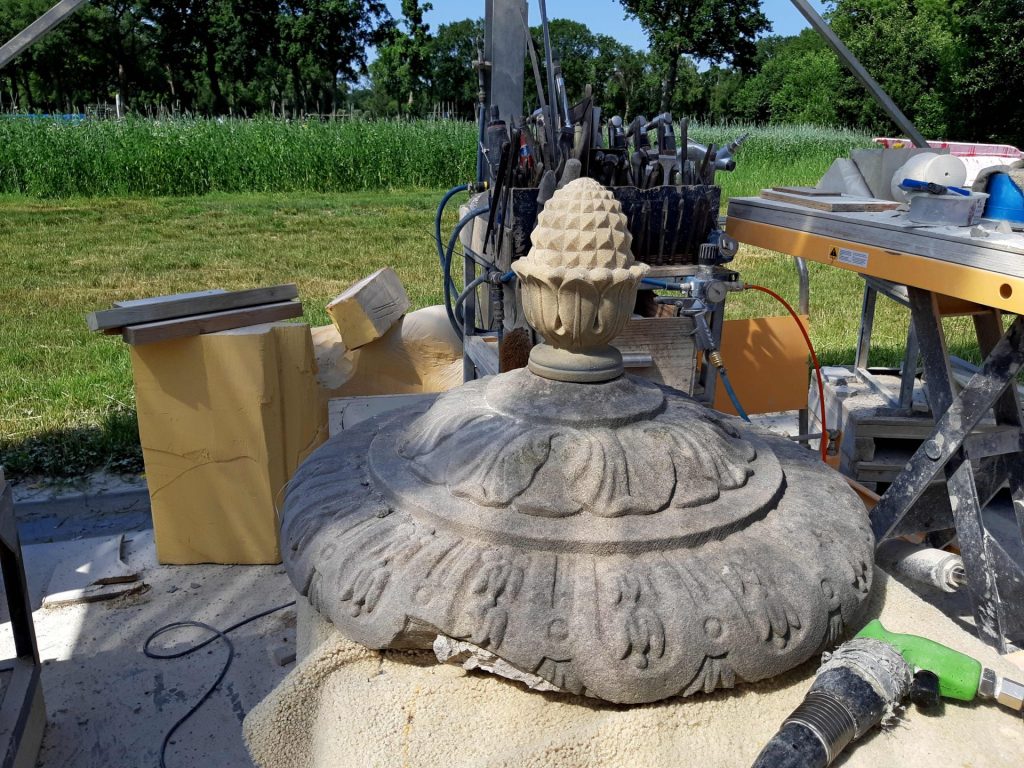
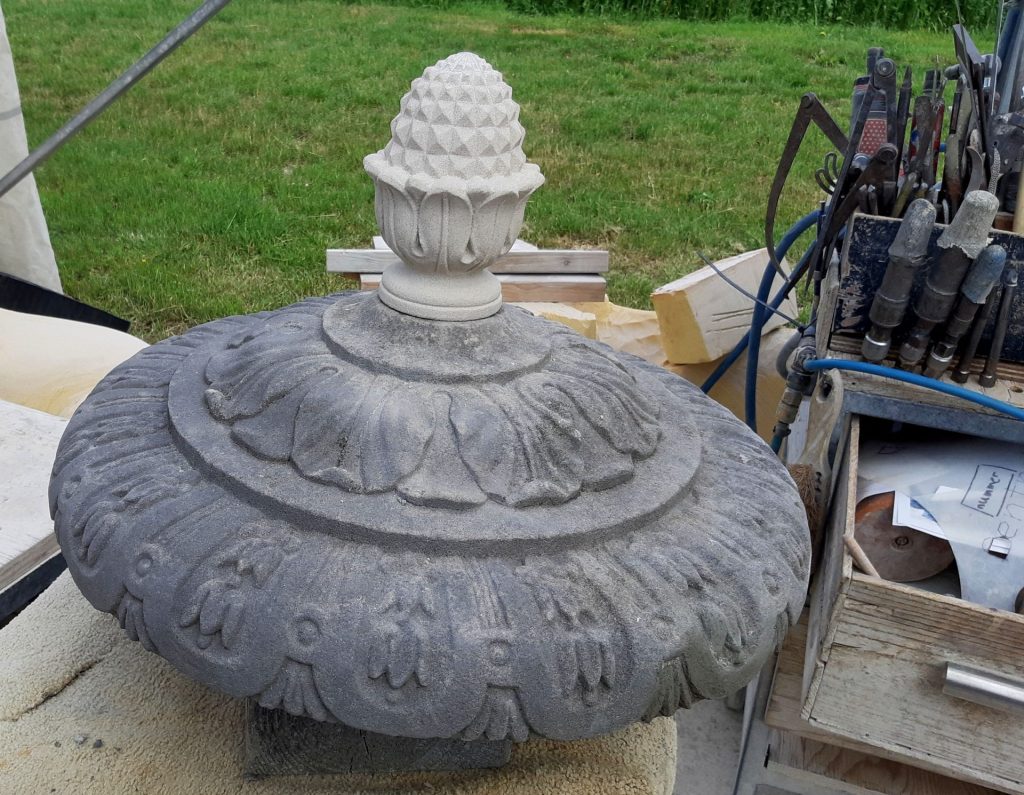
    A small assignment I got last summer was to make a new sandstone pine cone for an 18th-century garden vase. This beautiful vase was made of Bentheimer sandstone, but the pinecone was made out of concrete and it was also very weathered, so now a new one was to be made for it. The lid of the vase also had two damages on its edge, which I would fix as well.

    By hand or by lathe?

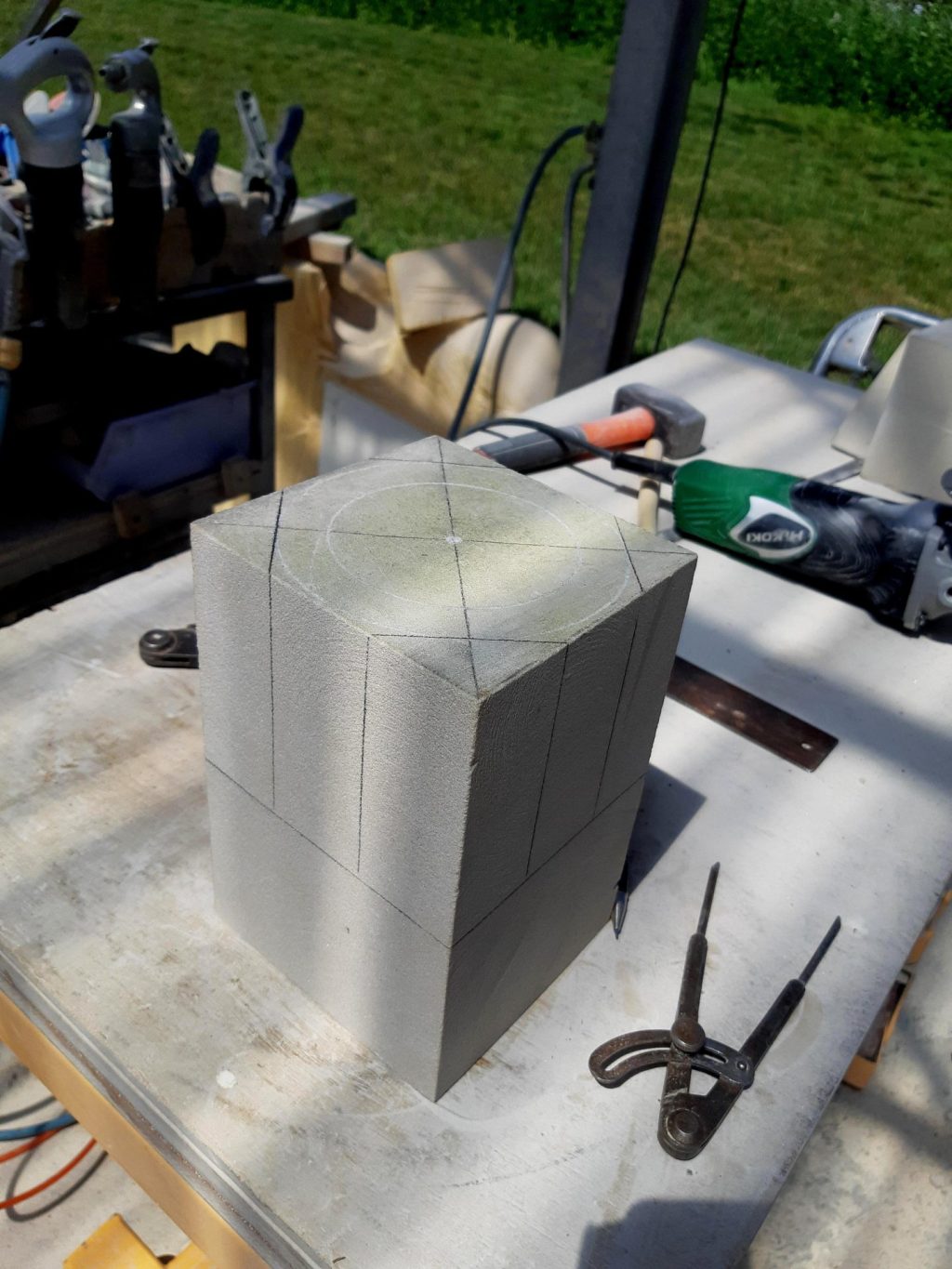
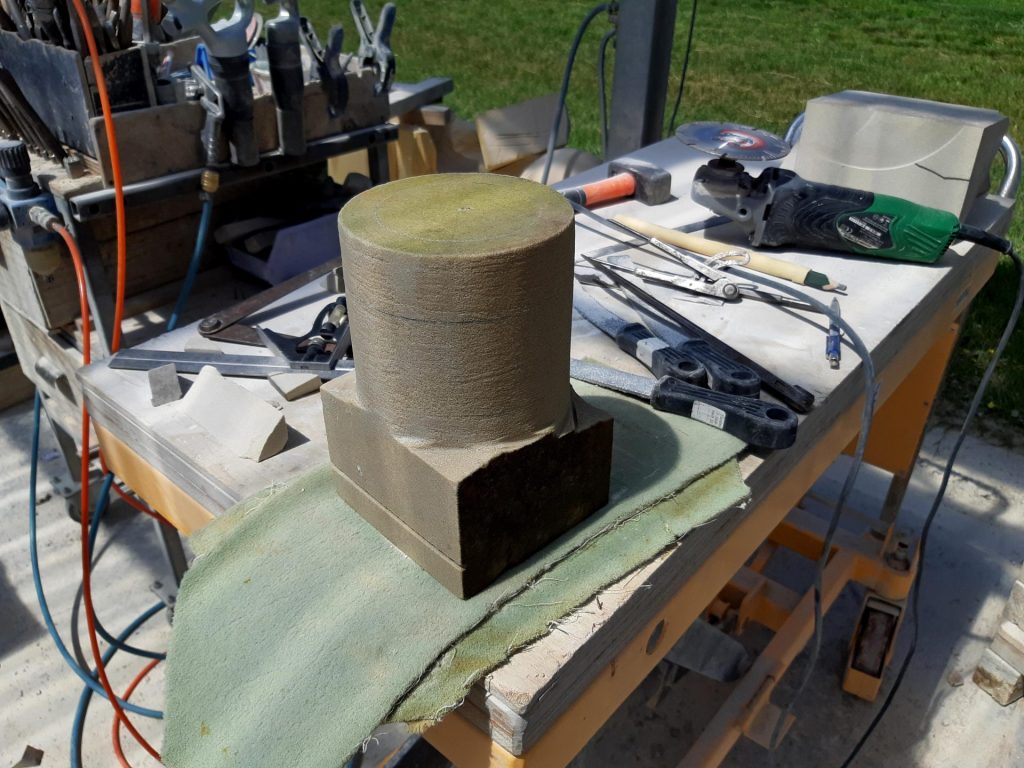
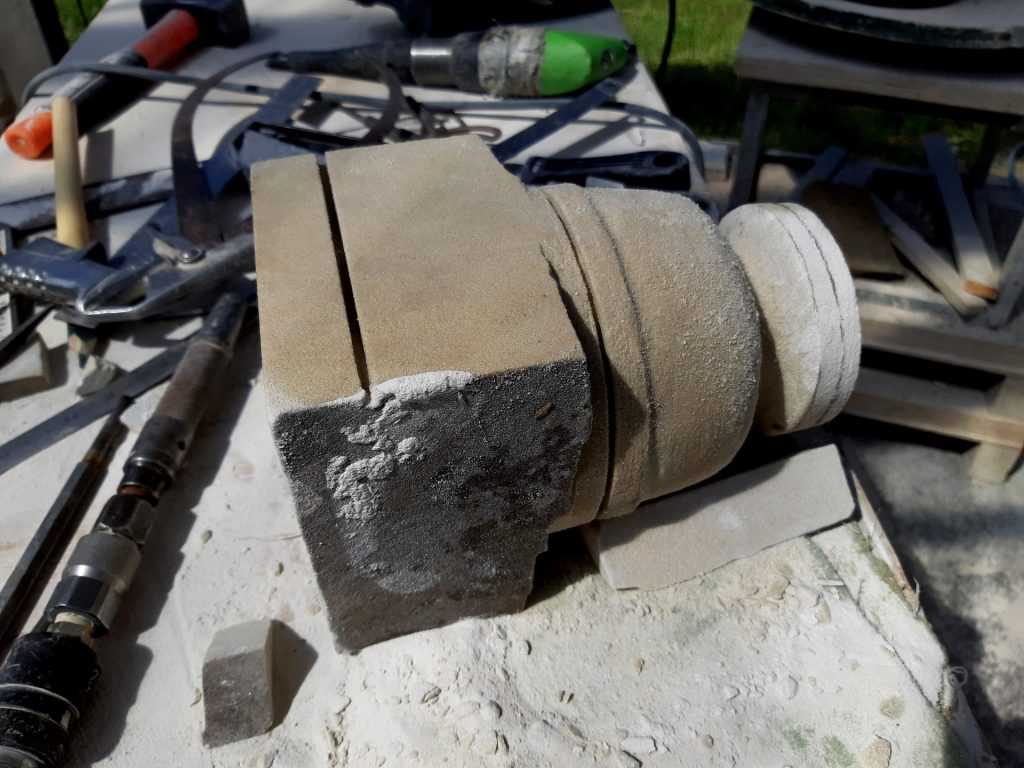
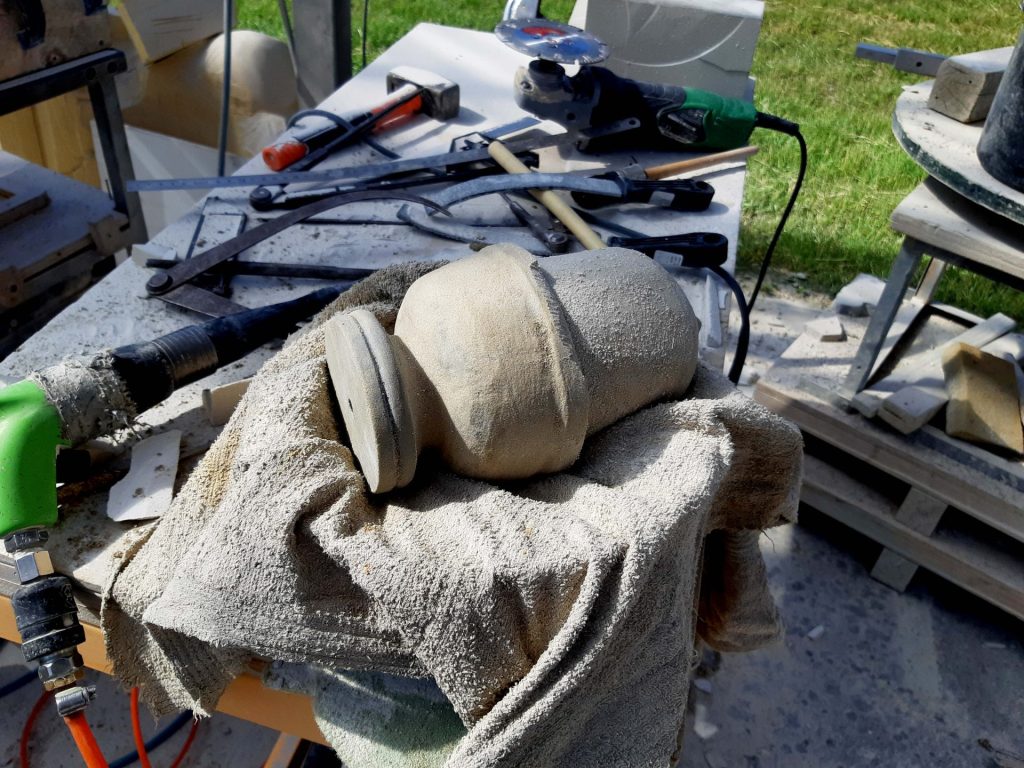
    First I made a new pine cone from a new piece of sandstone, but I didn't get it as sleek as I wanted, and it took me way too long. Whenever you want to make something round by hand, it takes a lot of time, because you have to make a cube first, then you turn it into a cylinder in several steps by making facets, then you have to set up the outline of the ornament in facets, make all that tight, and then you still need to start detailing the ornaments and scales. I didn't like it and started over.

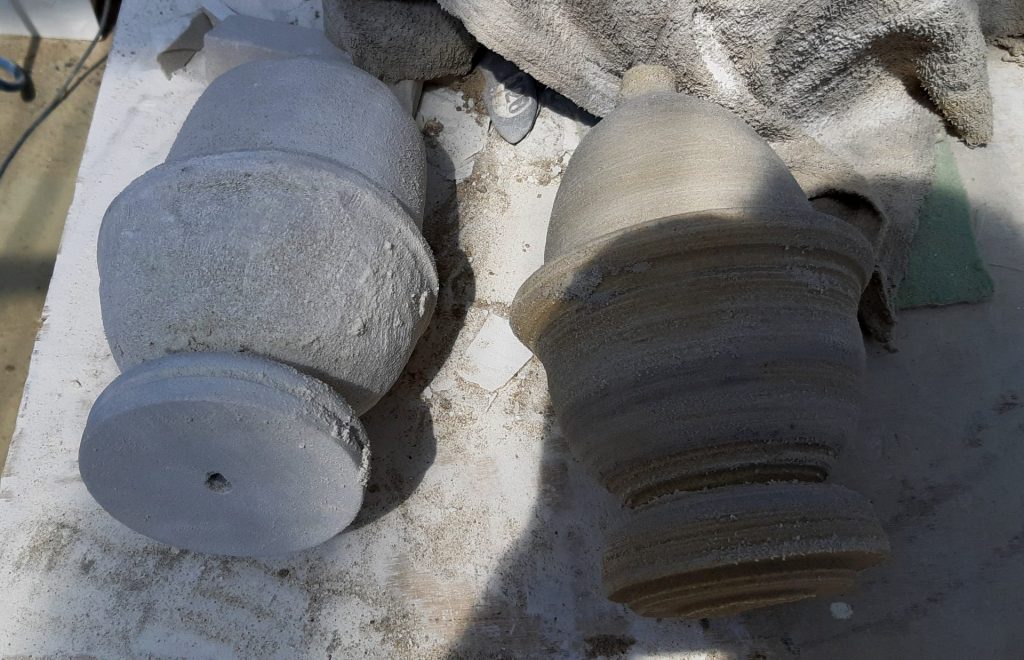
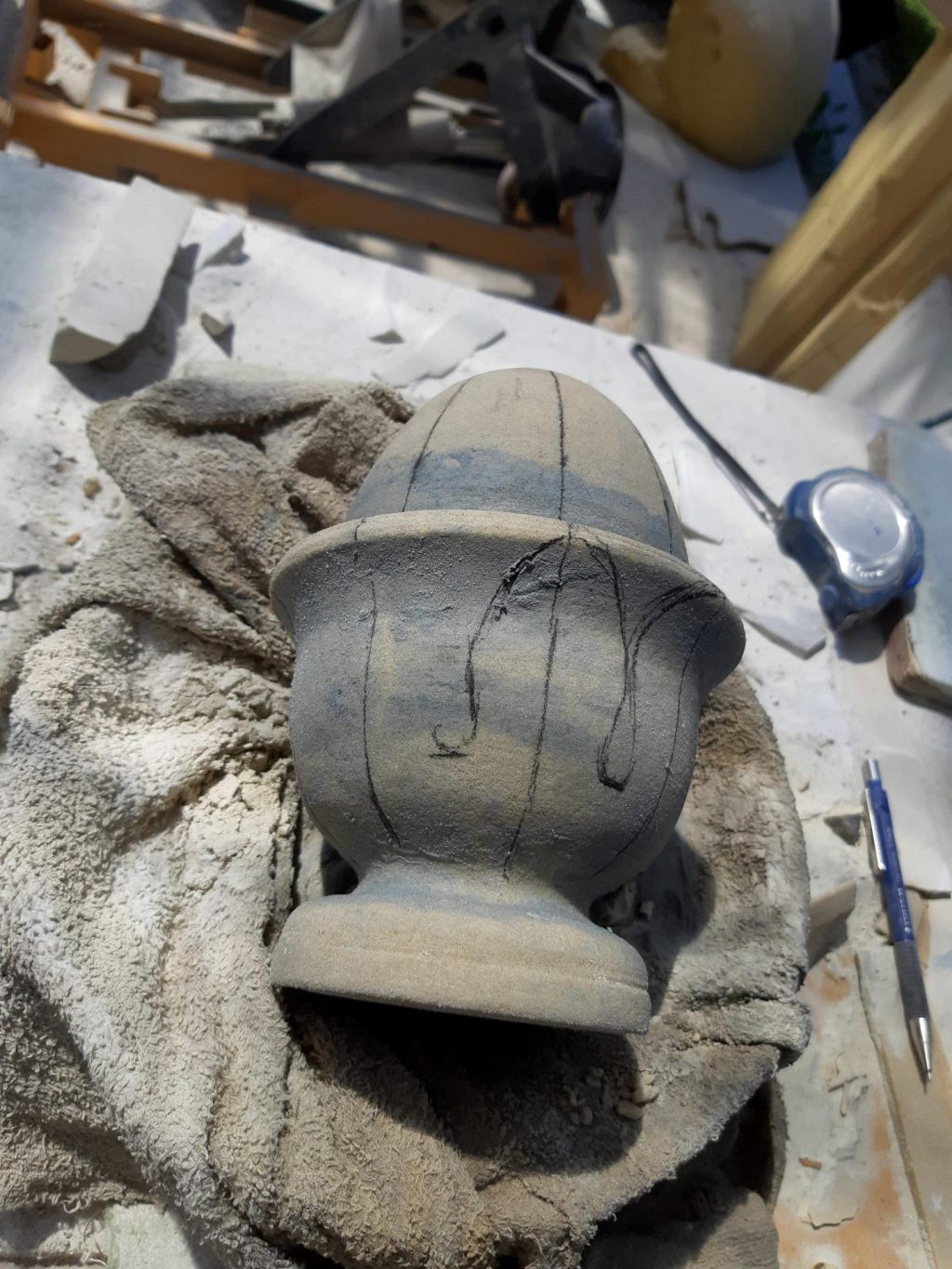
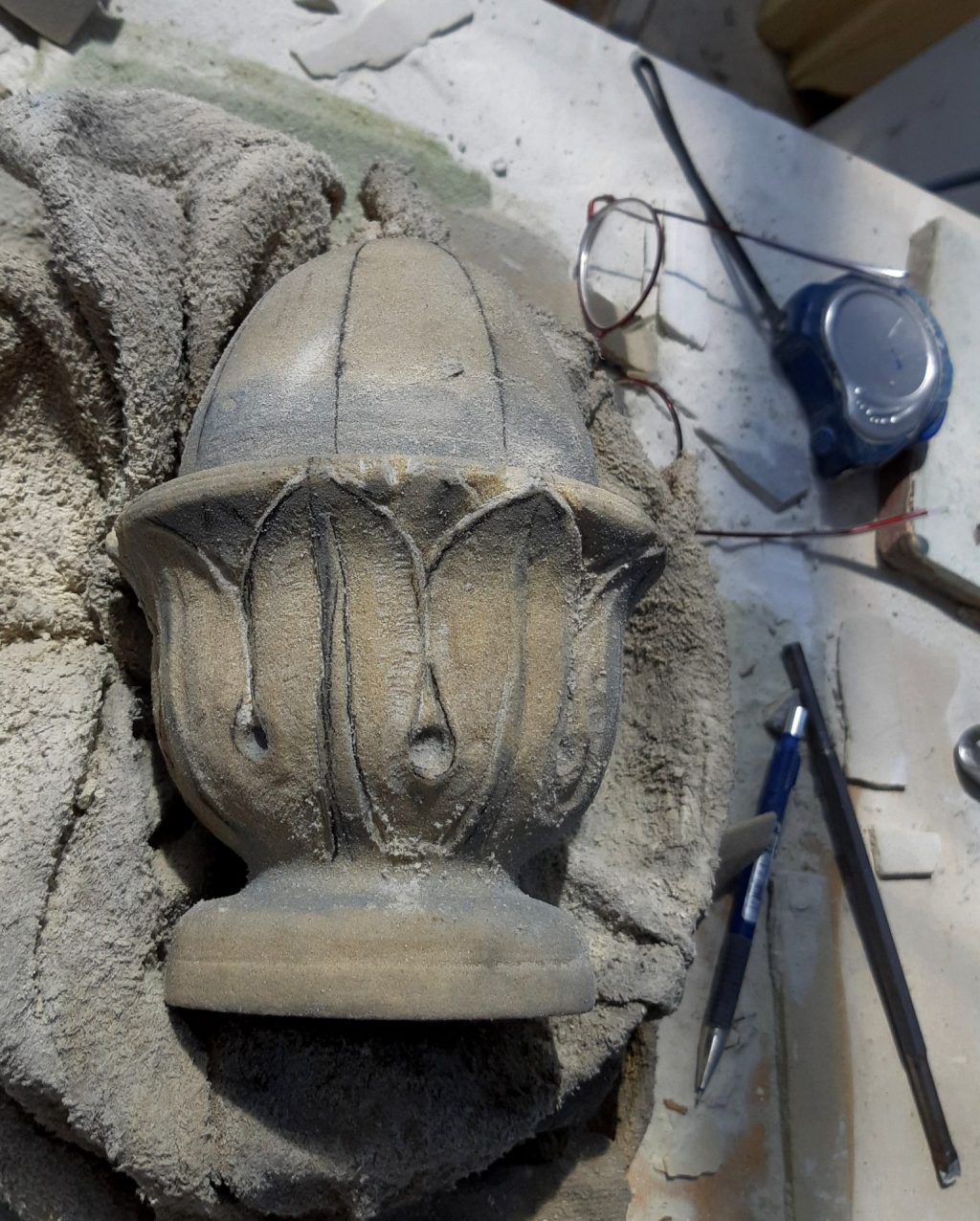
    So I started with another piece of stone and turned a nicely detailed copy out of this block on my copy saw. It took some work to set it all up, making a contour tracing, aligning and sawing everything accurately, but it immediately looked much more crisp. After some sanding I was able to continue with drawing and carving the details.

    making pine cone in sandstone

    Restoration

    restoration garden vase lid

    Once the pinecone was ready I was able to restore the lid of the vase and attach the cone to it. I started by removing the old concrete pine cone. It was secured with some copper pipes and polyester glue.

    restoration garden vase lid

    Then I could glue the new one on top, repair the damage to the edge with restoration mortar and bring everything back to color. I also adjusted the new part to the old color scheme, so that it merges into the whole and doesn't contrast with it.

    restoration garden vase lid with pine cone

    Gallery with pictures of the making step by step

No more messages to show.

No more messages to show.