• Ornaments for Utrecht's Domkerk and St John's Cathedral 2

    Finial

    As you may perhaps remember: I last year I carved ornaments a few times and even made some stonemasonry work for St. John's Cathedral in 's-Hertogenbosch. The blog posts can be found under the following headings: Stonemasonry work and ornaments for St. John's Cathedral, Finally another update! and Ornamental work for the Utrecht Dom Church and St. John's.

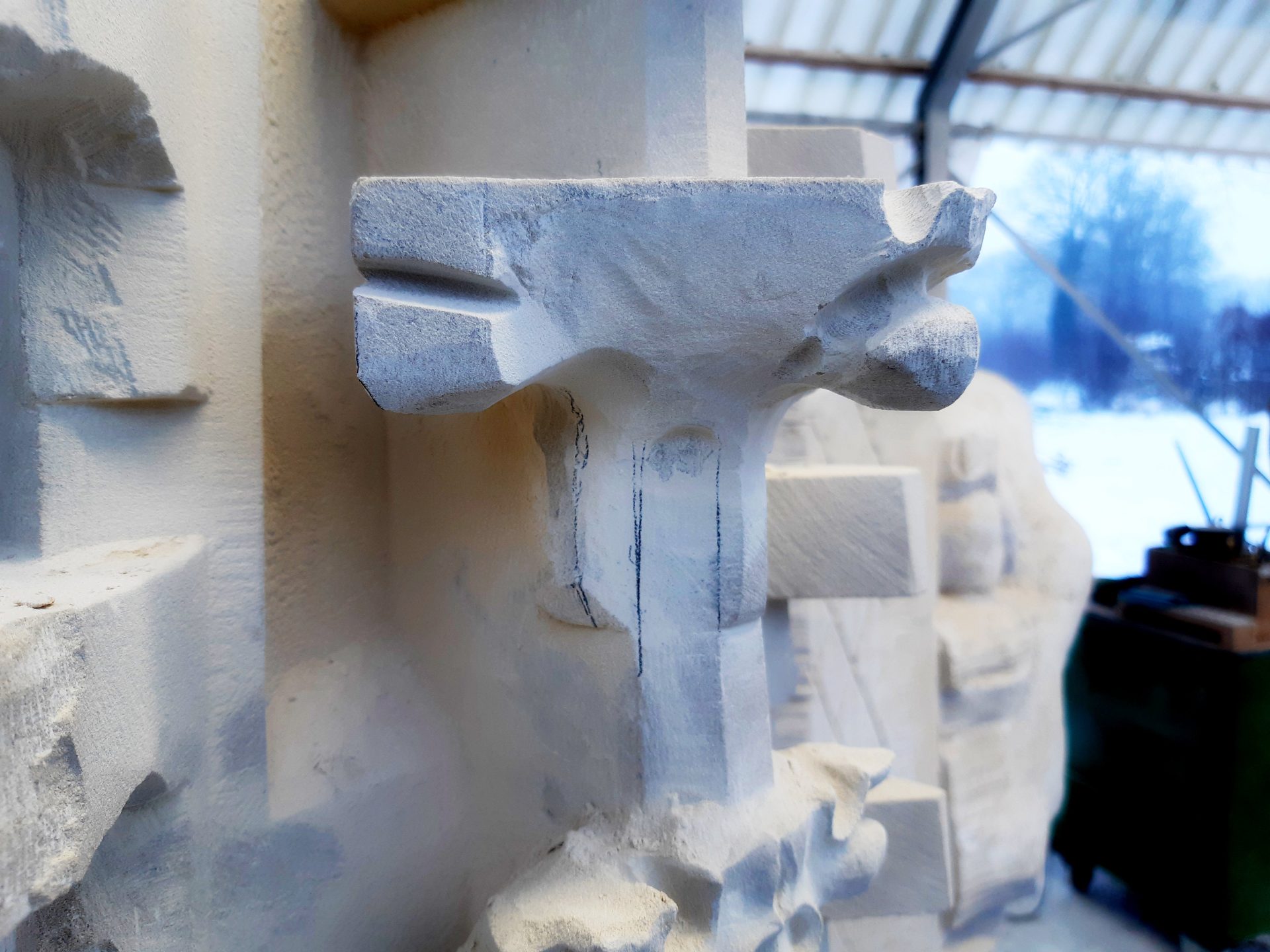
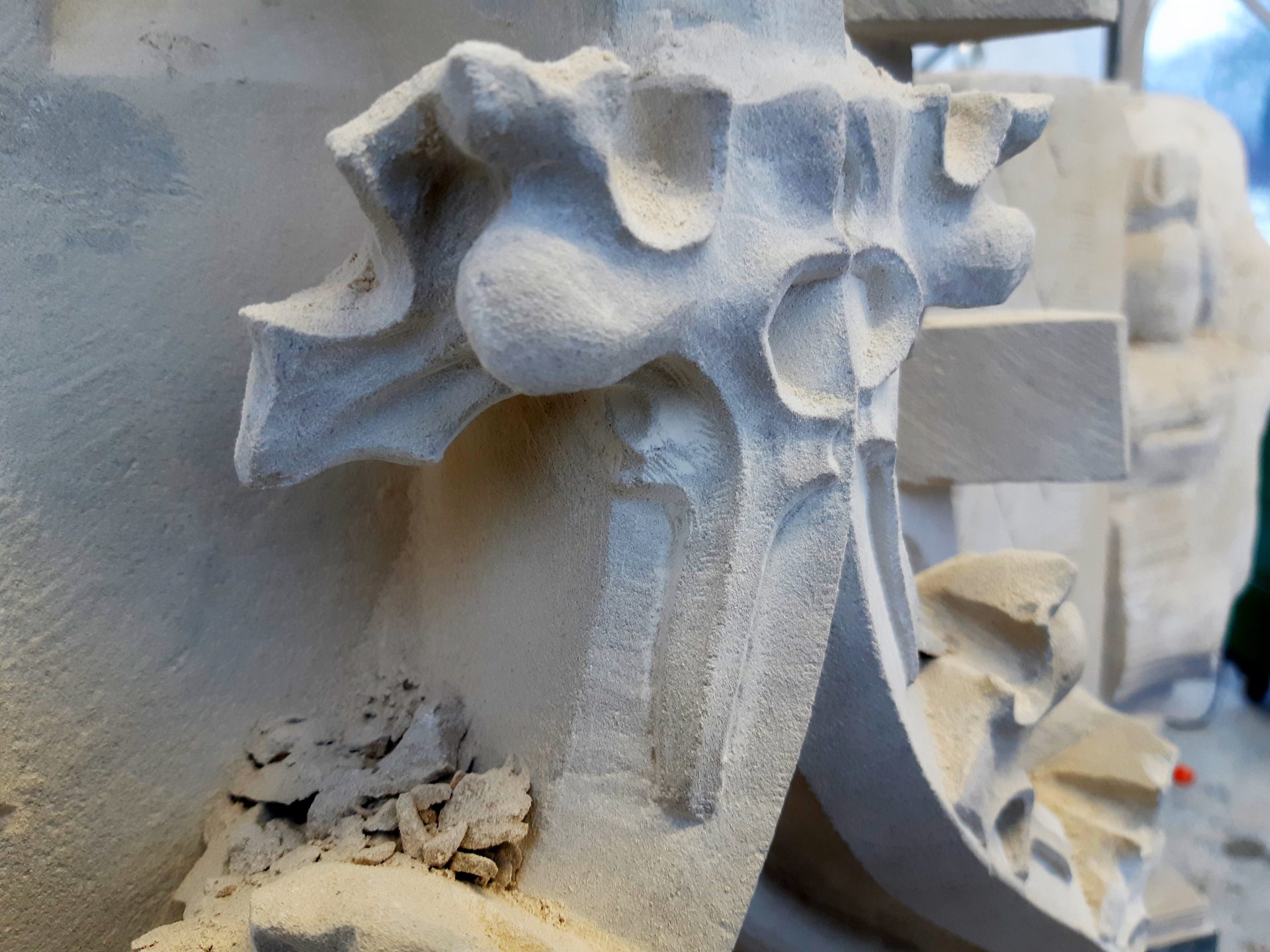
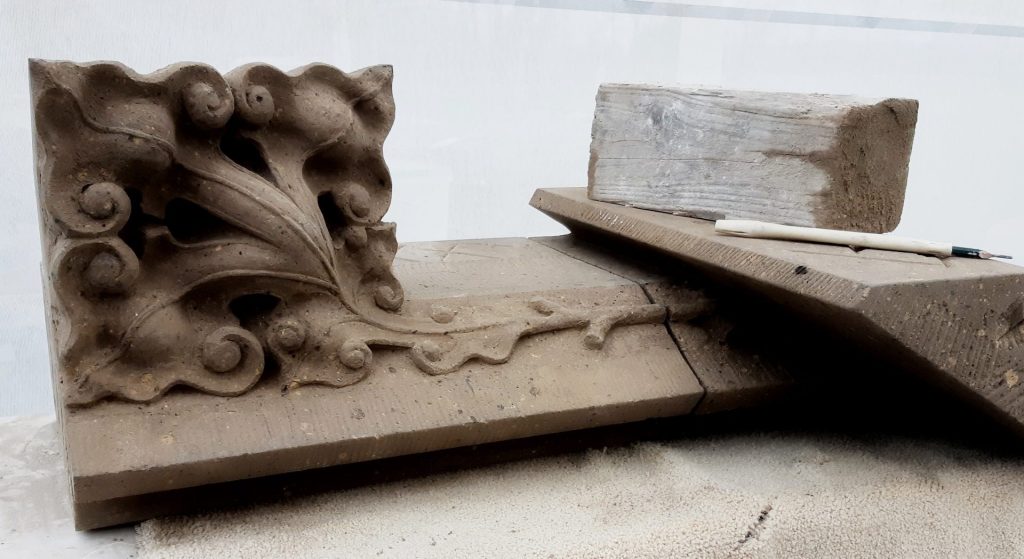
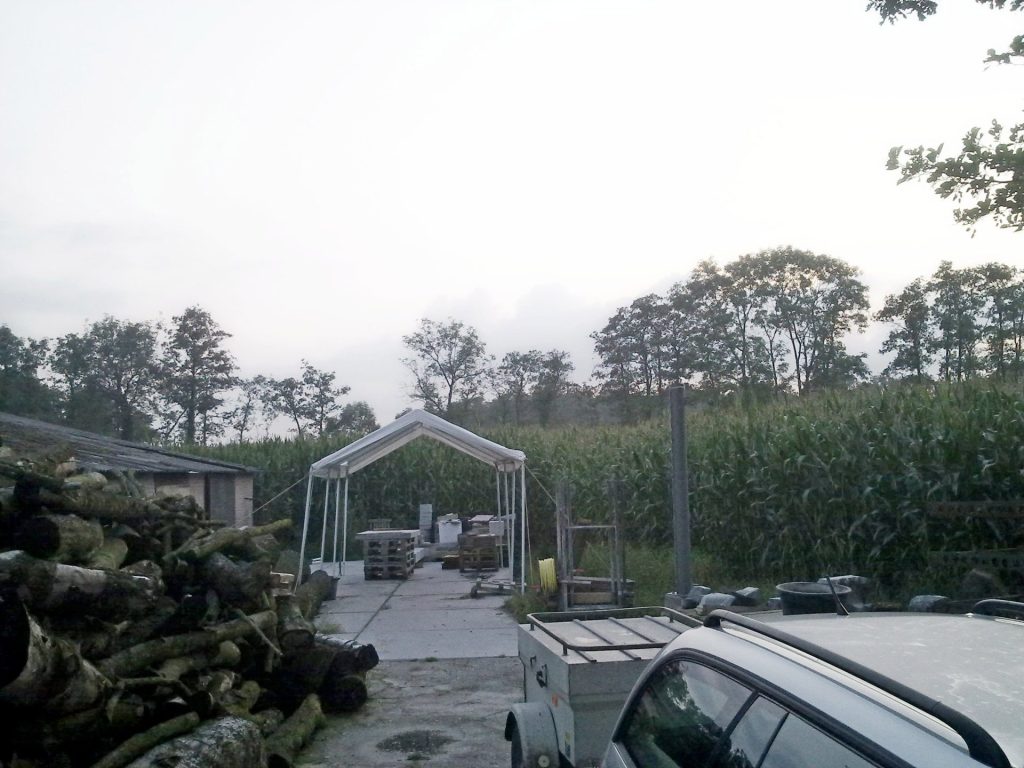
    I recently got a new batch of ornamental work in the yard again, including another identical finial block for the same buttress finial of St. John's Cathedral. The first block I carved in its entirety myself, including the stonemasonry parts.

    pallet with ornamental work in the yard of the sculptor's workshop

    The second block was precarved by stonemason Mike Slotboom from Slotboom Steenhouwers in Winterswijk and the ornamental work was done by my colleague Serge. The third block was carved by three young stonemasons from Slotboom Stonemasons, who have all done their terrific best, and I carved the ornaments again: the crockets.

    Together with my colleagues

    sculotor's workshop with many projects

    For larger projects, I work with my colleagues Stide Vos and Serge van Druten. We were all trained as restoration sculptors at our former employer's Beeldhouwerij Mooy in Amersfoort. There, we worked together for about 15 years, so we know each other really well and get along famously.

    Self-employed in the sculptor's workshop

    We've continued all three as independent restoration sculptors, but keep in contact regularly, because it is such an incredibly small world. For this branch, the carving of ornaments and statues in new stone for mainly churches and castles, there are now still three restoration sculptors working fulltime. To my knowledge. It has always been a small group and that's never been a lot larger; there are times when all the work seems to come all at once and times when we really do not have enough work to keep all of us going. That's why we do other work as well, such as autonomous sculptures, reliefs, bronze statues, house signs, repairs, burial monuments, work for other sculptors and much more.

    Recently, Jelle Steendam has come to work in the beeldhouwerij to help alleviate the pressure and increase his knowledge at the same time. So that makes four in the Netherlands. There are of course many other sculptors in stone and I also know a few other restoration sculptors, but I rarely encounter these within my own genre

    Dom Cathedral

    overview West Facade of South Chapel of Dom church Utrecht
    Wherever the numbers are the side crockets are to be replaced

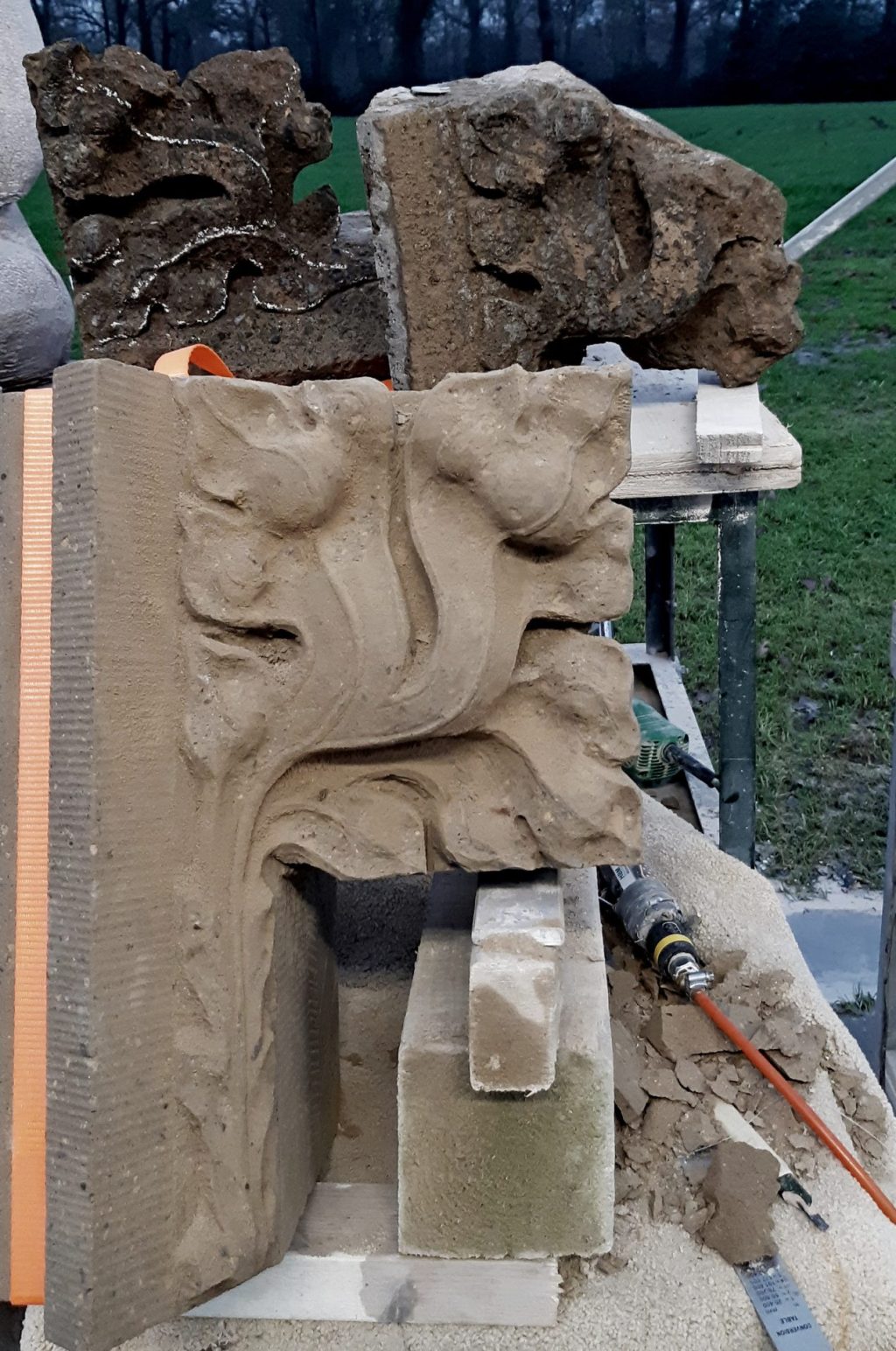
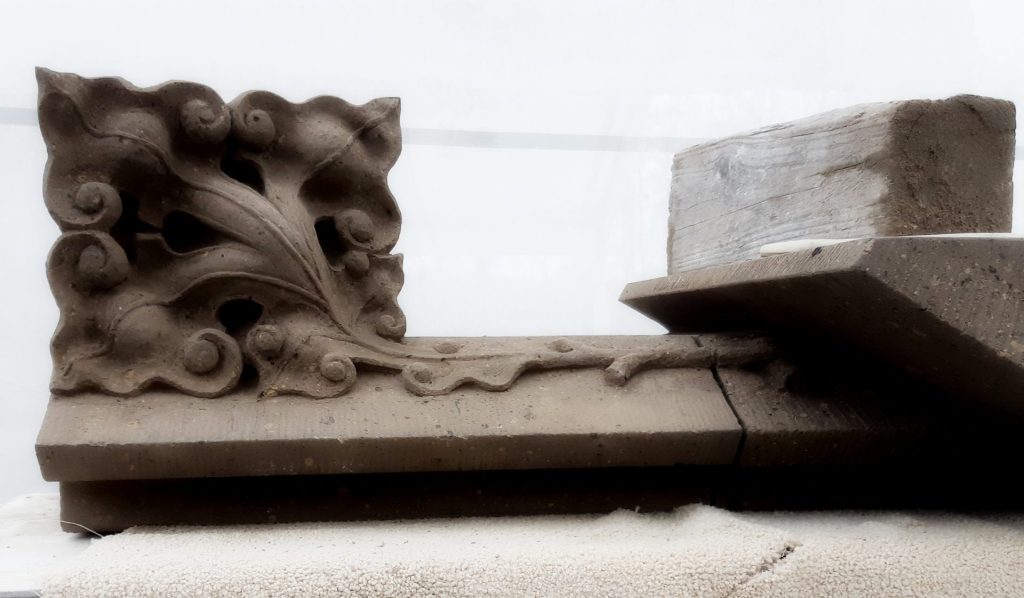
    At this time we're mainly working together on sculptural- and ornamental work for the Utrecht Cathedral and the Eusebius Church in Arnhem. Serge and Stide in particular have made many tuffstone side crockets for the Dom cathedral already, but in between all of the other work I also managed to carve a few flowers in tuff myself. On the right is a picture of the three Gothic pointed arch facades, with a triangular frame above it. Along that frame, 12 crocket flowers are mounted, and with two and a half façade that makes 30 crocket flowers in all. One doesn't count, so we'll need to make 29. This is just a fraction of what you can find on this beautiful church.

    Gallery
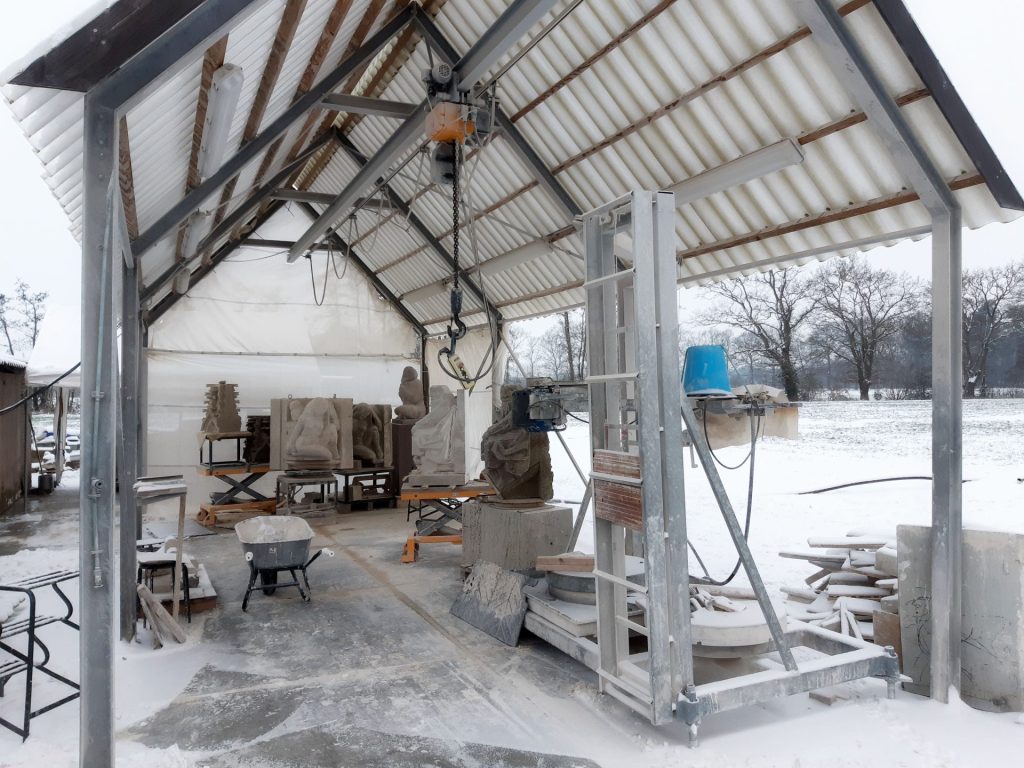
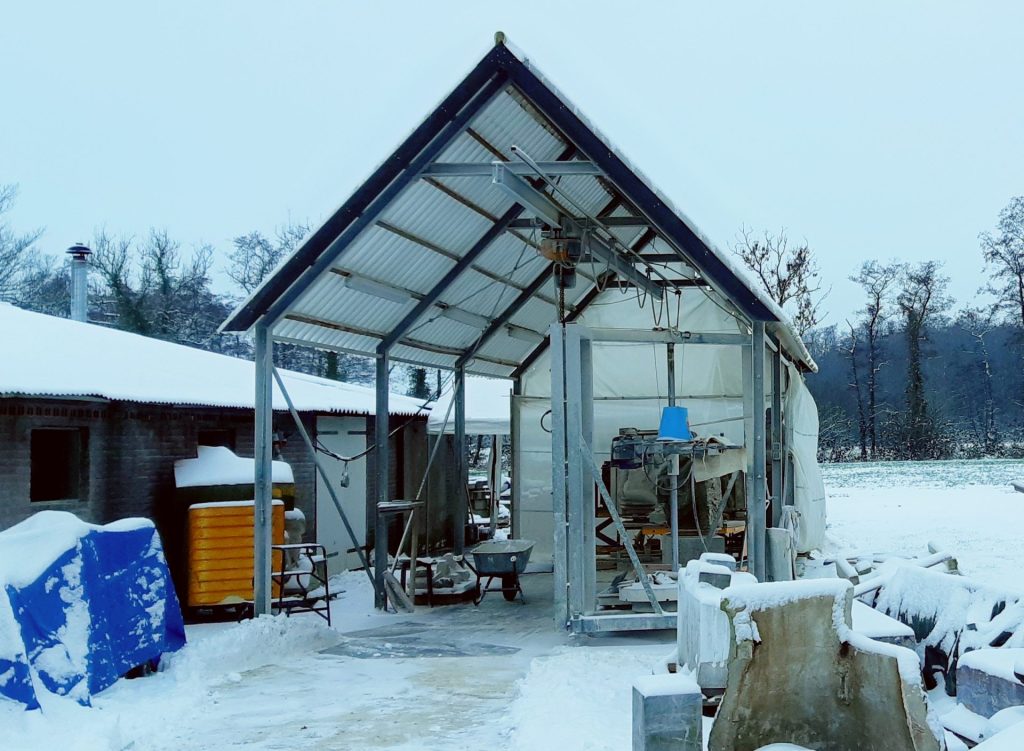
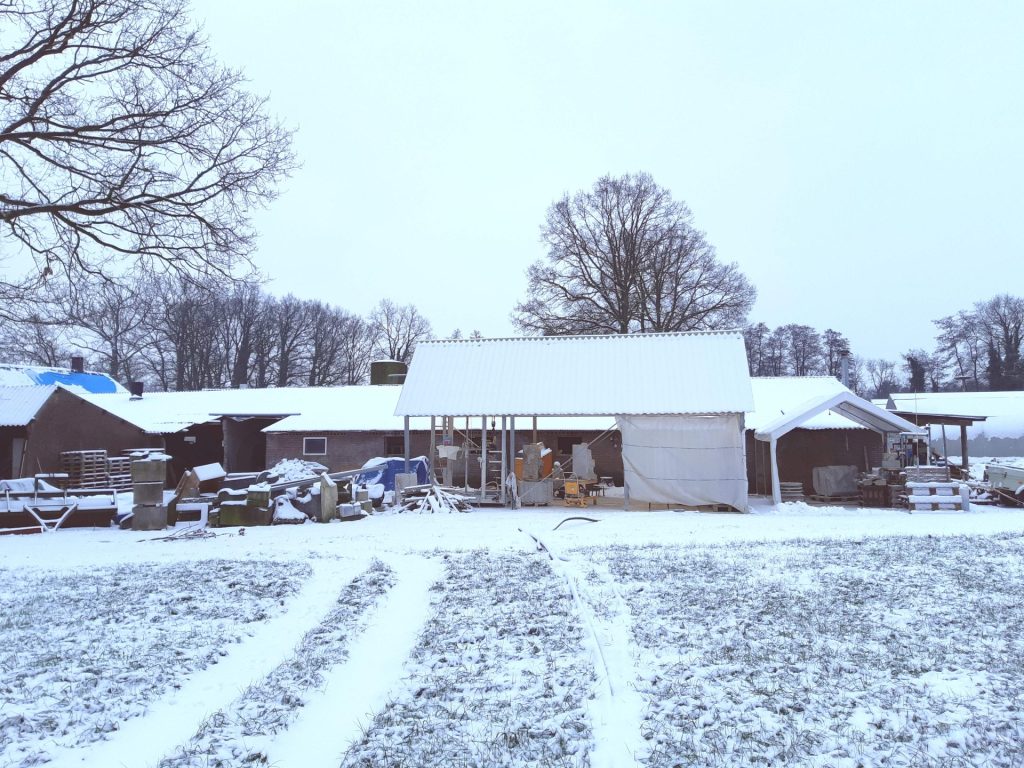
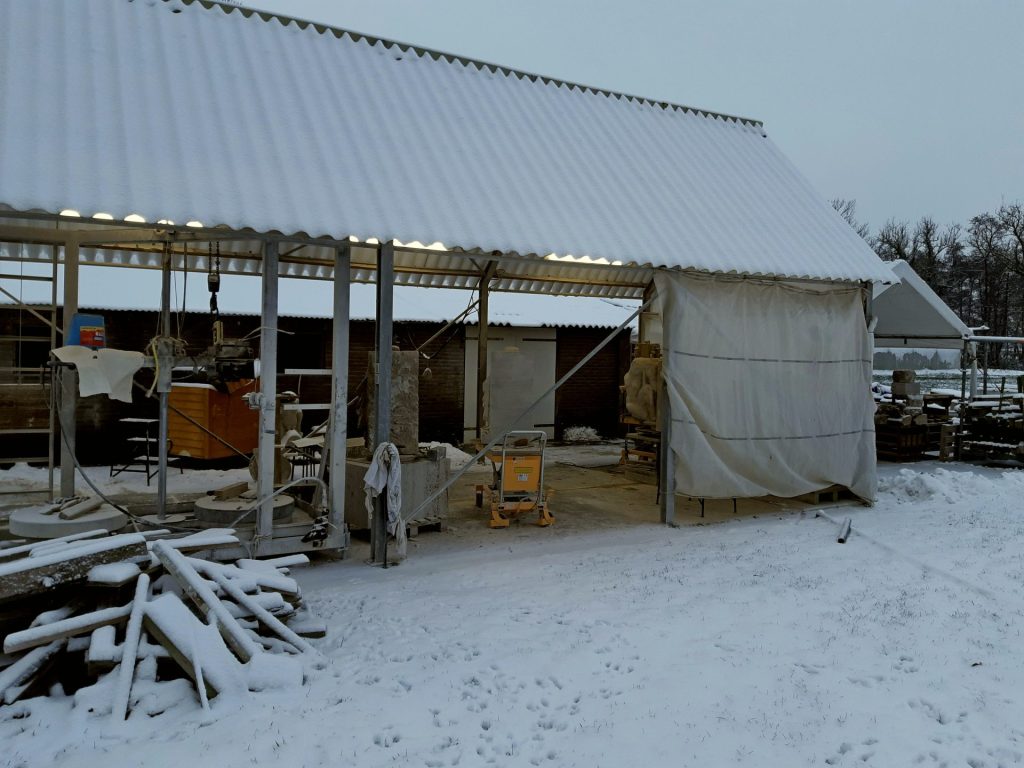
    Snow

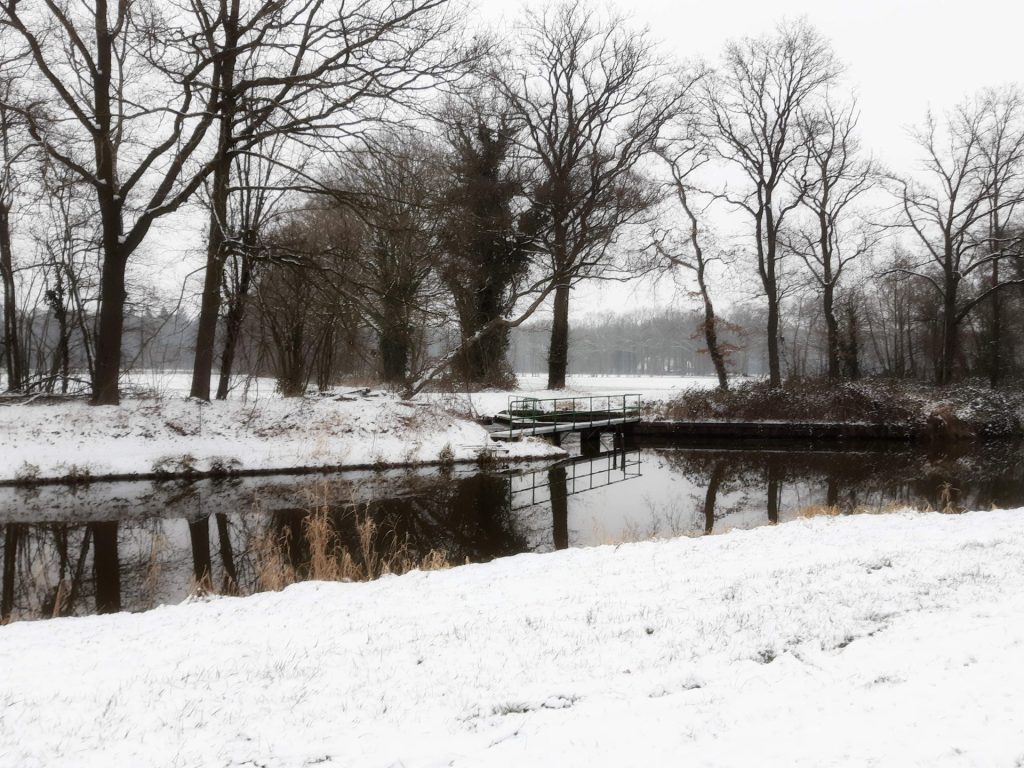
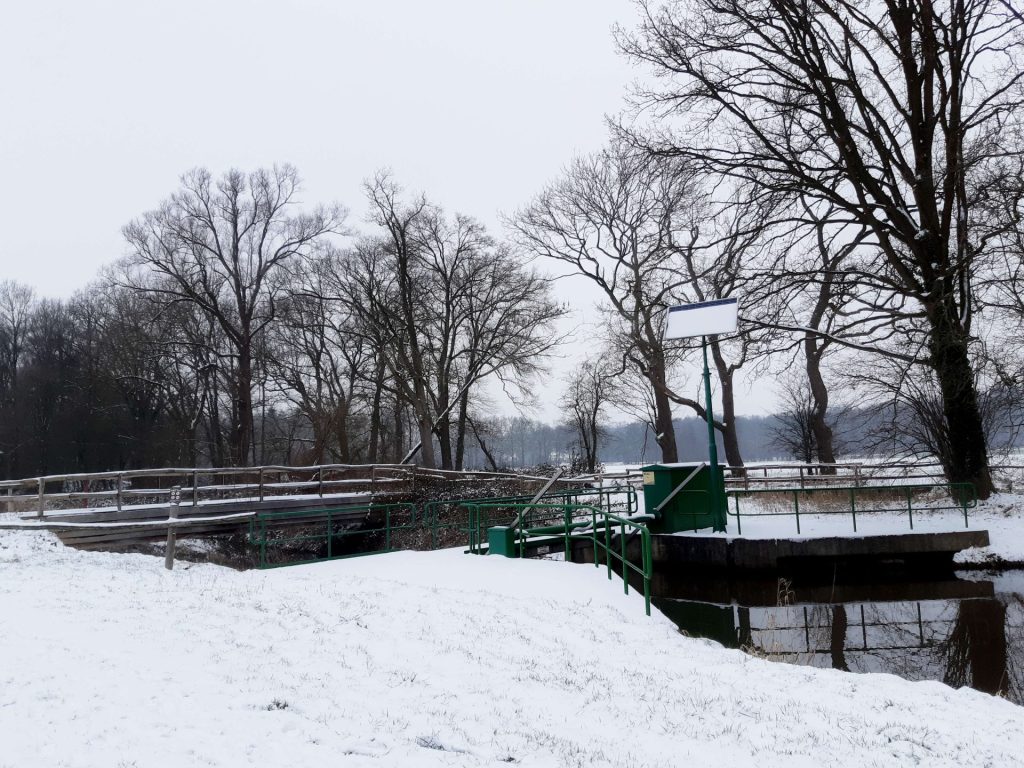
    It was cold in the sculptor's workshop, but it's beautiful, and we can dress to the occasion. As long as we can warm up again during breaks we'll be fine.
  • Thomas Aquinas (sandstone) for St. John's Cathedral

    statue of Thomas Aquinas
    Thomas Aquinas: Here the statue is still in its niche of St John's Cathedral

    St. John's cathedral

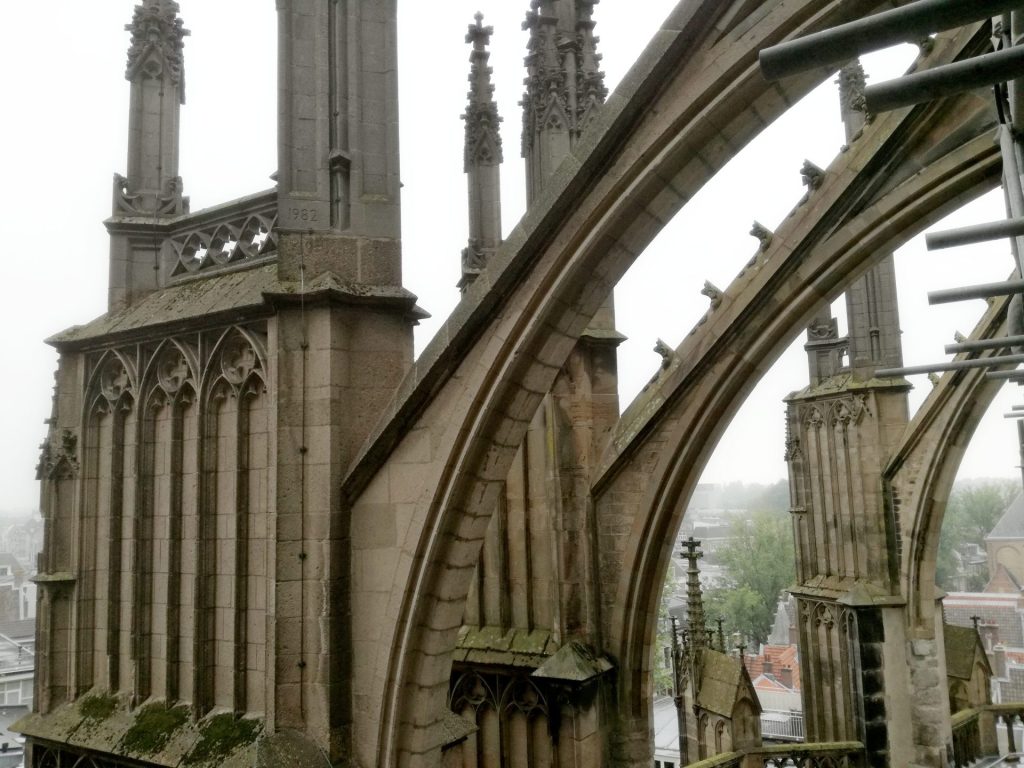
    The major overhaul of St. John's Cathedral is steadily continuing. Each year or maybe every two years, I'm not quite sure, one bay of the church is restored: 1 buttress and 1 window facade. This year I already did some work on two finial bases, a slanted profile and some crockets, but this time no canopy.

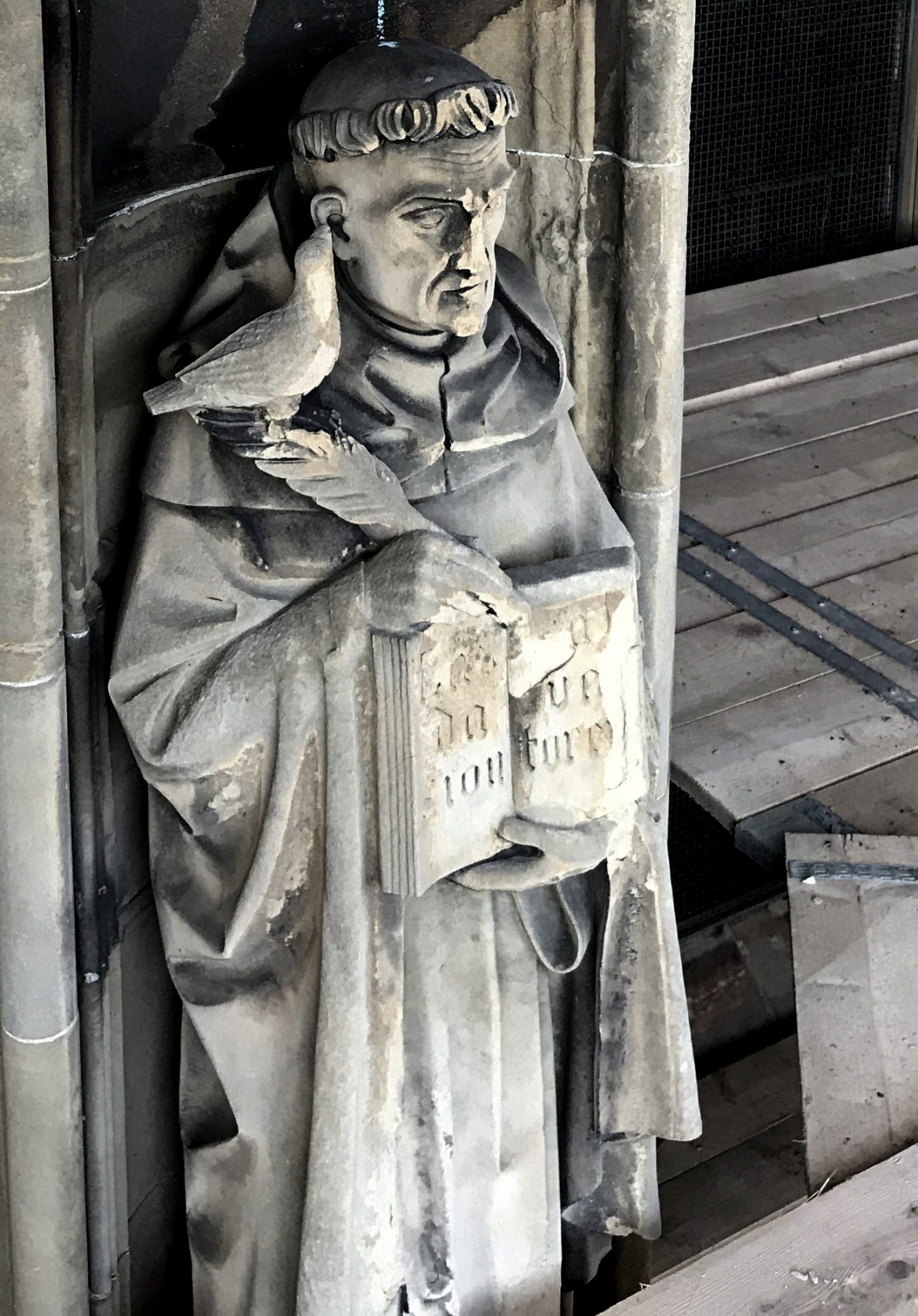
    Weathering on the statue of Thomas Aquinas
    In particular, the folds at the bottom of his habit were considerably weathered

    Thomas Aquinas

    I received a request to bid for the carving of a copy of a statue from this church. To my pleasure I got the commission. But at the time it was not yet clear to me which saint was depicted. It is a statue in Udelfanger sandstone.

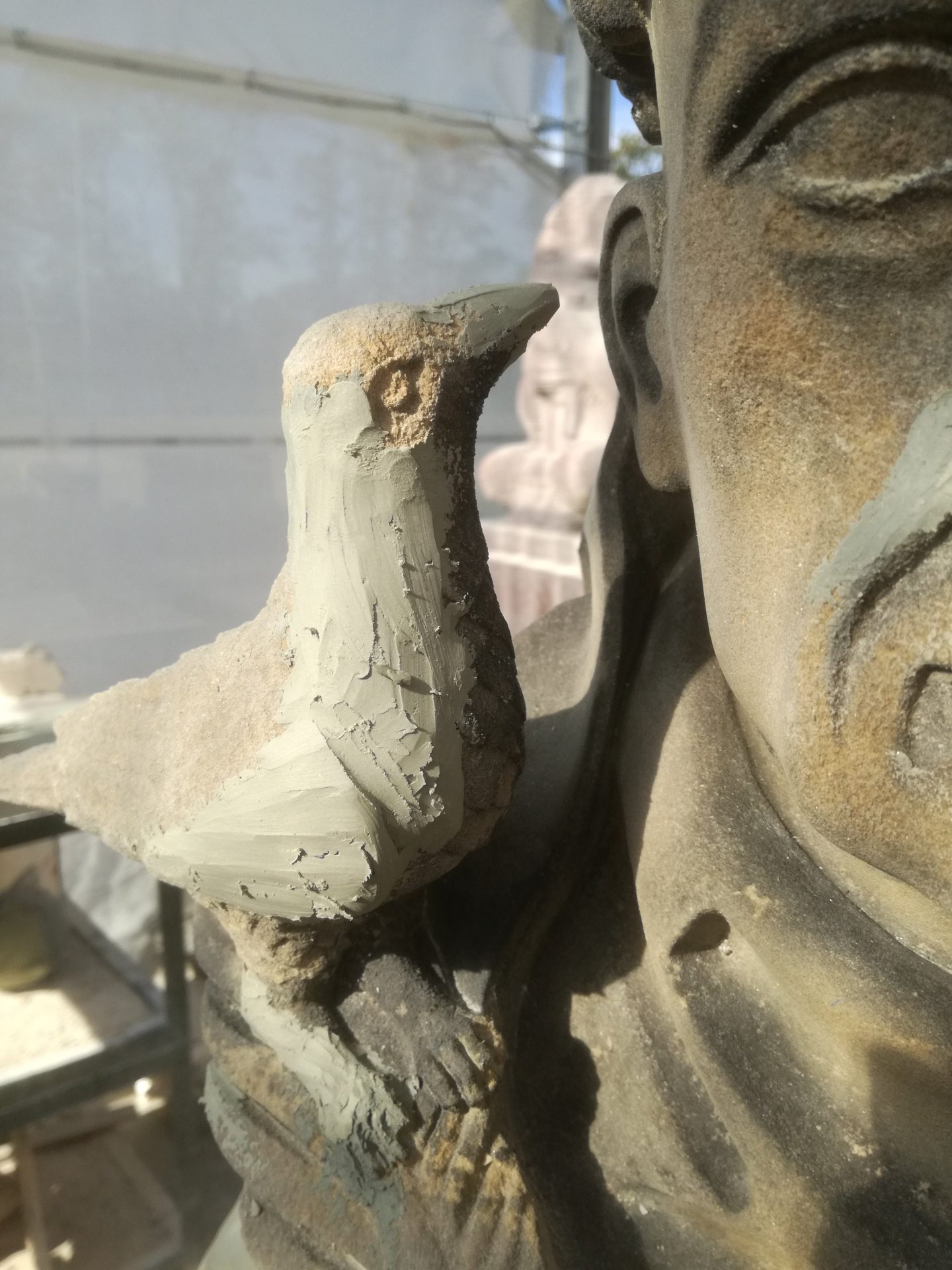
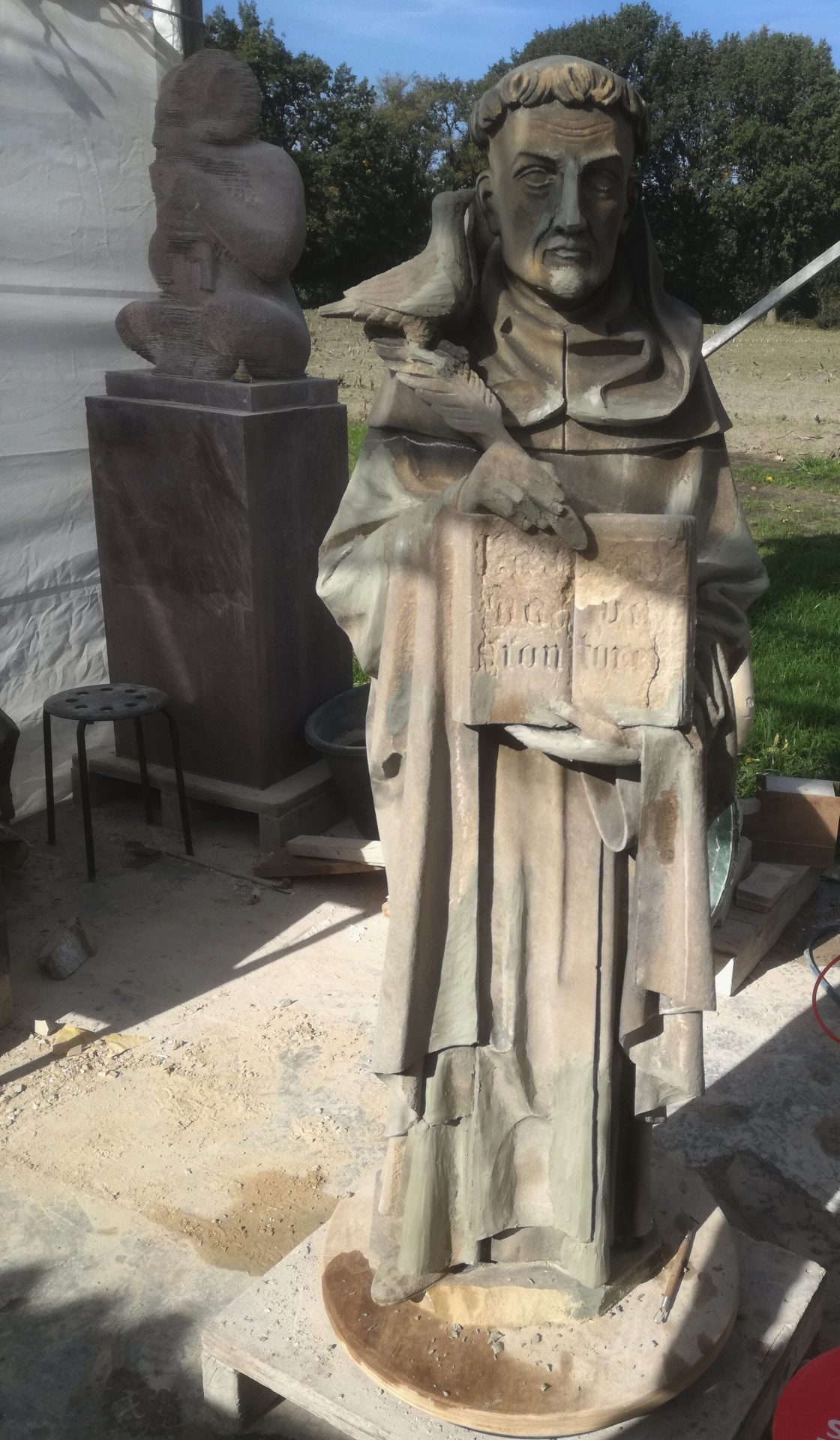
    Stylistically I thought from the 1920, because it is so highly stylized, but it is about 40 years older: around 1880. It's a monk in a Dominican habit (as seen by his hood) with a book, a quill and a dove. The book and dove made clear that he is a "father of the church’ as it's called.

    The dove stands for Divine inspiration

    a father of the church (nowadays Teacher of the Church , because there are female teachers of the church as well, such as Teresa of Ávila, Catherine of Siena, Theresia of Lisieux and Hildegard of Bingen) is someone who has left important writings on faith and doctrinal matters and has led an exemplary life of holiness.

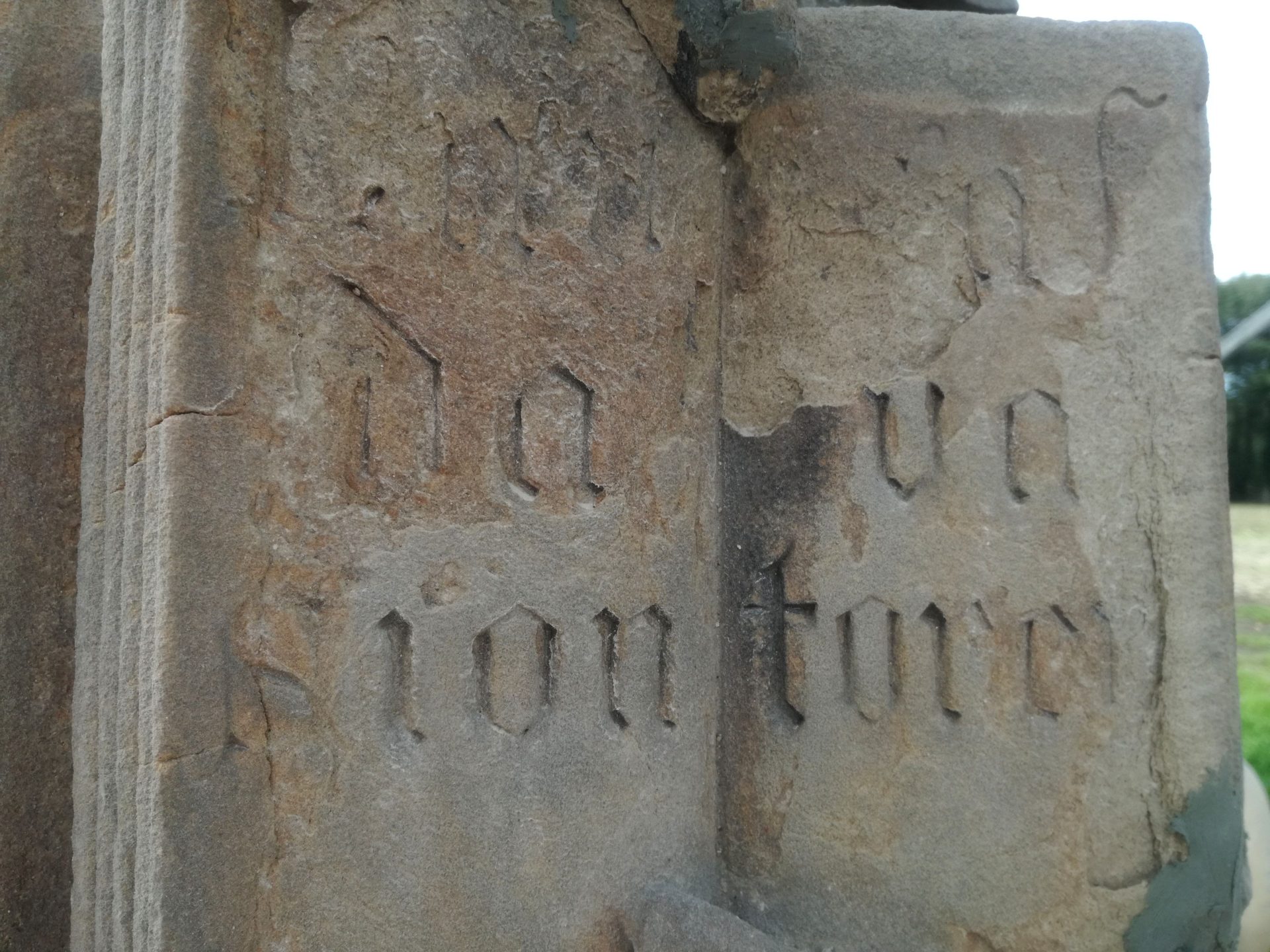
    I thought his book to show something like 'Lausal da van Sion Tower', but a search yielded nothing. I wish I had read vertically!

    Long live Whatsapp

    Lau da Sion Sal va torem

    After a few questions via Whatsapp to the right person it became clear that this sculpture has been on the outside of the cathedral in front of a stained-glass window, and that he probably was depicted on the inside as well. And yes, he was, he turned out to be Thomas Aquinas. And so the text becomes immediately apparent: an opening sentence from a famous cantata written by him. 'Lau da Sion Sal va torem'. Praise, Sion, the Savior.

    strange, For Aquinas was, according to tradition so enormously fat that he did not fit in a regular choir bench. They had to saw away one of the separation pieces, so he could sit at twice the normal width. Here he is pictured almost ascetic lean.

    Vertical layering

    Anyway, I was not hired for a hagiography or for art historical research, but to carve a copy. The first step is to reconstruct it, and then I need to carve a copy from that into a new block of sandstone. And just there's the catch. The old statue was carved in Udelfanger sandstone. But this stone is not available in this height. How is it that they were able to make a statue in one piece anyway? Simple. The stone they can retrieve from a bank of about one meter thick. So a statue of 152 cm is simply not possible. Unless you take a horizontal block of stone.

    But this choice has its drawbacks. The sedimentary deposits of this block will then be in line with the statue. Vertical. You'd prefer that the layers run horizontally through the sculpture, because if something breaks, the fracture will run horizontally as well, So the chance that everything stays in place anyhow is quite large. But in a statue with vertical layers, after some weathering an entire slice at once could come loose and fall down.

    The layer deposition in the quarry is called layering. Horizontal layering is desirable, upright layering is not. For this staue, they wanted a block with horizontal layering. That just is not possible, because the bank thickness in the quarry is not more than at most 110 cms wide.

    Patching it up

    The pictures show clearly that this sculpture is missing entire parts at the bottom, which fell off after weathering. I had to remodel those first and make a reconstruction of how it must have been originally. Now I do prefer plaster for this, so I can presaw the statue more easily on my copying saw. But Thomas Aquinas must be preserved intact because he will be stored later in the museum The Bouwloods, at St. John's Cathedral. That's why I modeled the missing parts in plastiline clay, which never dries out. That can later be easily removed again.

    In two parts

    Statue of Thomas Aquinas (sandstone) reconstruction in plastiline clay
    Missing parts are filled in with plastiline clay. The chalk mark approximately indicates the seam.

    This week, the committee came to see me to review the results and discuss how we can make this statue in horizontal layering. Eventually it was decided to create a thin seam between the two new blocks. On the dividing line of the monk's hood will be a cutting surface. But this seam runs quite irregular. When I cut a straight line here it will firstly be very visible and secondly the seam runs through the knuckles of the right hand.

    After some deliberation we decided: I'll make a separate top part and a separate bottom part. Exactly on the axis of the cap, I'll carve a parting plane toboth parts. Next, I'll put the two pieces together and insert two thick stainless steel pins. That will be an interesting puzzle!

    Read more about this image in the next post.

No more messages to show.

No more messages to show.