• Artificial aging with lichen

    In September 2015 I already wrote a post containing a piece about artificial aging of concrete, stone and the like with a moss recipe. Apparently it doesn't work all that well. The moss dries out quickly, and the photo that I linked to was rigged: someone had cut out some moss and pasted it on a wall, something quite different from growing moss.

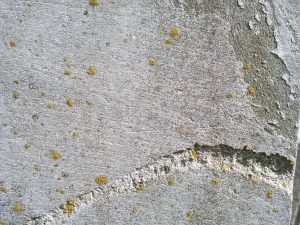
    In wet conditions moss and lichen easily grows, after a frost chunks keep falling off
    On tuff anything will grow, as it stays so wet all the time
    Lichen on bluestone
    Lichen on bluestone

    Hence, this message about how to make it succeed with lichens. Lichen is a symbiosis of a fungus and an alga, or a fungus and a bacteria (blue-green algae). Today I came across this link in which the following recipe is given for culturing lichens:
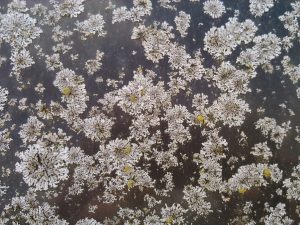
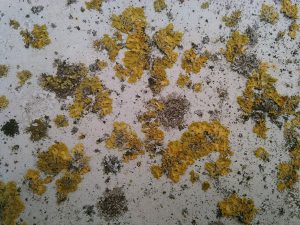
    Lichens on car window
    …or even on a car window
    Lichens on car
    under the right conditions lichen is also known to grow on a car

    Recipe for lichen:

    ½ litre of milk, 1 teaspoon of flour, 1 teaspoon of yeast, Â½ teaspoon of gelatin, and 1 tablespoon of green algae powder (or 1 tablespoon of dried mushroom powder), and a tiny pinch of water-soluble fertilizer.

    Bring almost to a boil, and let it cool until it is lukewarm. Then add:

    2 teaspoons of lichen flakes, collected from common lichens growing in a similar microenvironment to where the new lichens are wanted, plus 2 teaspoons of healthy soil from the area near where lichens are currently growing. Stir well.

    Use a paintbrush to apply to the surface where you want the lichens. Additionally, lichen covered rocks can be placed on top of it, in hope that they will shed some propagules. Last ingredient is patience!
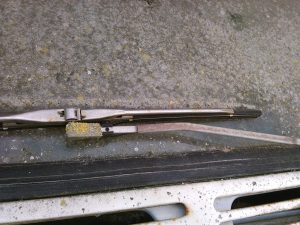
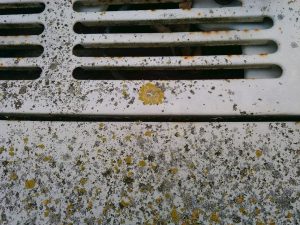
    lichens on car window2
    Lichens on car2

    So… if you somewhere still own an ugly wall and have a lot of patience, then this may be the answer!  I wonder if you can make wall paintings with lichen. There are the craziest kinds and colors, but those will of course over time overlap each other causing such a painting to fade. You can even eat some kinds of lichen! On the forum however is cautioned against eating all the yellow and yellow-orange lichen, because those can be toxic.
  • Installing: A garden bench for Castle Twickel

    During dead quiet weather, a very thick branch of a tree fell down.
    During dead quiet weather, a very thick branch of a tree fell down.
    During dead quiet weather, a very thick branch of a tree fell down.
    The concrete backrest with lead relief and the seat were the most damaged parts.

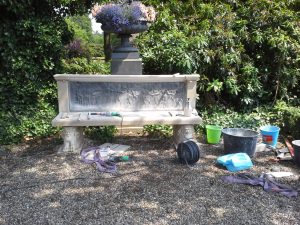
    Today, it was a hot sunny day. With a little power shovel machine and lifting straps we lifted the components of the garden bench and assembled them on site.

    To the first post about this project.

    tool with the new bench for Castle Twickel
    trowels, mortar, glue, hoisting straps… a car full of stuff

    The puzzle of course fit, because I had tested that beforehand.

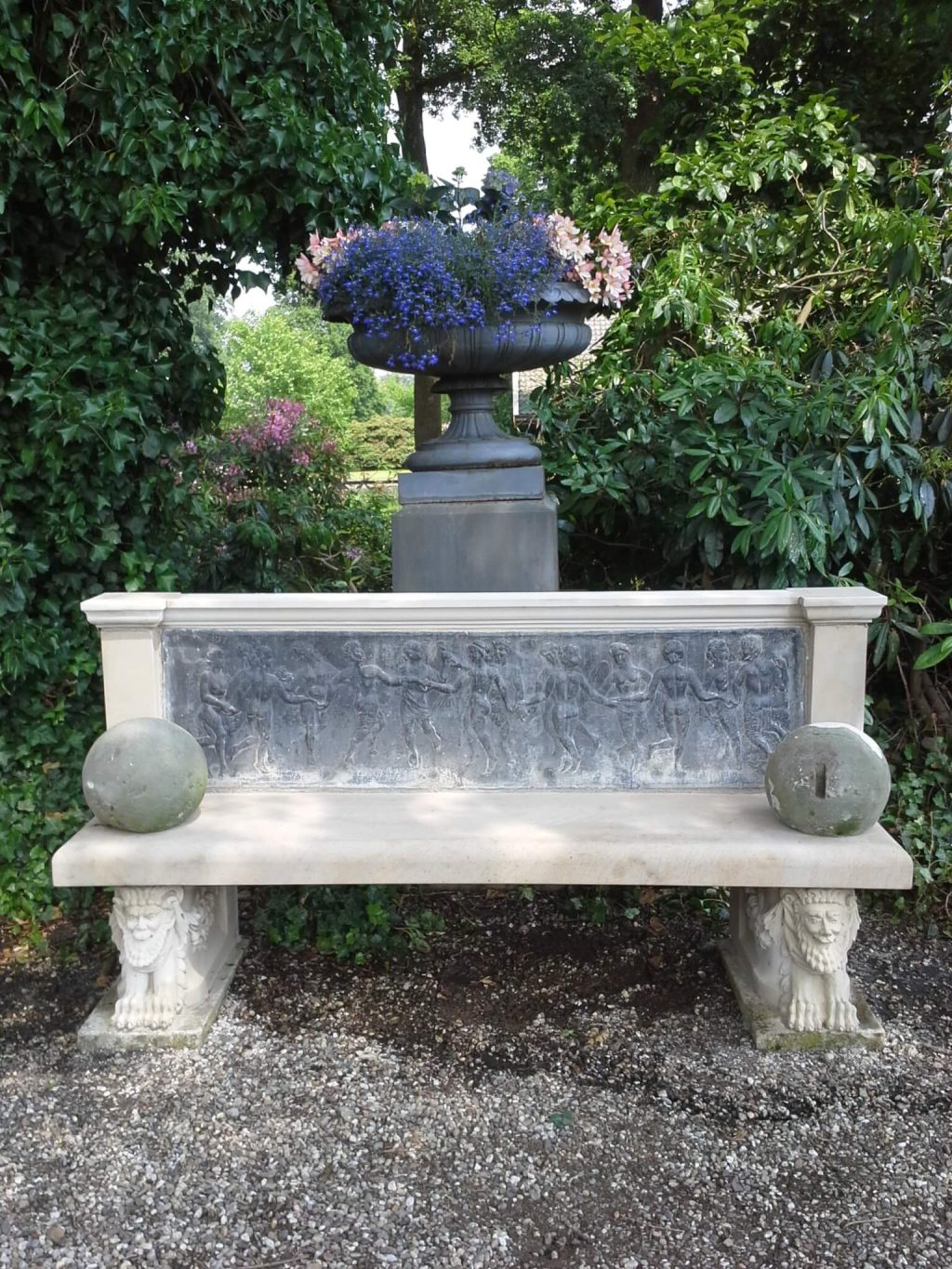
    All stone parts of the bench were weathered and damaged, and have been replaced with new sandstone. Especially the legs are quite elaborately carved.

    Garden bench with lead relief and new sandstone elements
    The sandstone spheres are there as a temporary solution

    The lead relief will probably soon again be patinated. It's possible to use a special patinating oil to quickly turn the lead grey or black, something that has obvious been done to this relief before. I've not done so beforehand on my own account, because such a thing, of course, is usually done in consultation.

    Garden bench with lead relief and new sandstone elements
    Dancing nymphs and fauns on the backrest

    Temporarily I've put the old sandstone spheres back on the seat. The right hand sphere had received such a blow that it broke into twenty pieces. I've pasted it roughly back together, quite a puzzle. The best thing would of course be if someday in the future those little music-making fauns on the corners could be put back again (read more on that in this post), but for the protection of the sculpted sandstone legs, for now the spheres will do.

    I thought for a moment that it might be a solution to carve two small little fauns from the beginning. The originals were made of lead and were stolen, and carving new ones out of sandstone is much too fragile with such a dangling leg. But sitting, from granite, that's technically possible. It's just not up to me to decide.

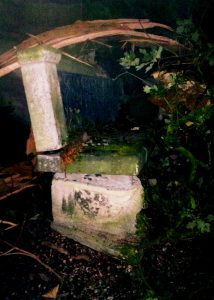
    This is how a damaged garden bench looks fresh and sharp again, perhaps even a little too sharp. With the greenish haze which the bench will automatically get because of its place under an oak tree, it will fit in more with the rest of the garden over the years.

    We have also talked about tactics to get something green rapidly. Buttermilk is often mentioned, and so is yogurt. I once saw a lady on the BBC who managed to get even plastic flower pots in a thick coat of moss by mixing in a blender some yoghurt, moss and (cheap!) latex paint (and maybe some loam and manure, but that I don't remember) and brushing that onto those pots. I think I'll experiment a bit myself someday. Just need an old blender.

    Update 2 September 2015:

    Always on the lookout for other insights I started using Stumble Upon. Apparently it works, because here I came across a fine recipe for moss : how to make moss graffiti. In short: indeed moss in the blender, add lukewarm water, add water-retention gel (perhaps from a diaper??), add buttermilk, pulsate in the blender until it congeals, pour it into a bucket and paint with it whatever you want, and if you spray it a bit wet every week, in no time you will have moss growing on your desired surface.

No more messages to show.

No more messages to show.