Rusting iron in natural stone
Rusting iron in natural stone will usually cause major damage. For iron expands when it rusts, and in the worst case reaches up to seven times its original thickness. This week I came across another example, and it was soon clear that the cause lay in the construction itself.
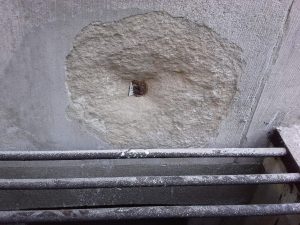
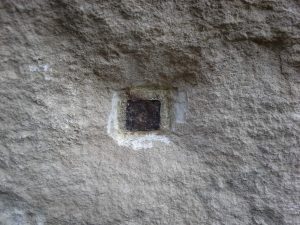
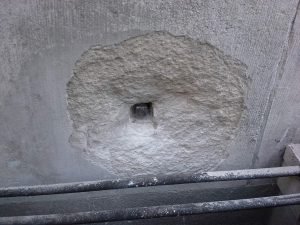
These involved iron anchors that hold facade panels made of French limestone. These anchors were at the time (round 1942) been cast in sulfur. That's happened before in Netherlands, and actually in every instance with the same result. Because when over the years some hairline cracks occur in the stone, and a little bit of moisture gets at the sulfur, then of course you get sulphuric acid, and well, that's a bit corrosive. A lot.
The advice is really just that all that iron and sulphur have to come out completely, and then be replaced by stainless steel and a good bonding material. But, for budget reasons, that was unfortunately not feasible here. That's why as a temporary solution the rusting anchors were laid bare and treated, after which the holes were closed again with restoration mortar.
In the Netherlands, a lot of iron has been applied to connect natural stone, but that will not always lead to problems, For example, because there is no moisture stress and also because it is not usually cast in sulfur but in lead, which is a much more reliable method. However, there remain enough buildings, bridges, benches, locks and other objects in which damage occurs by rusting iron.
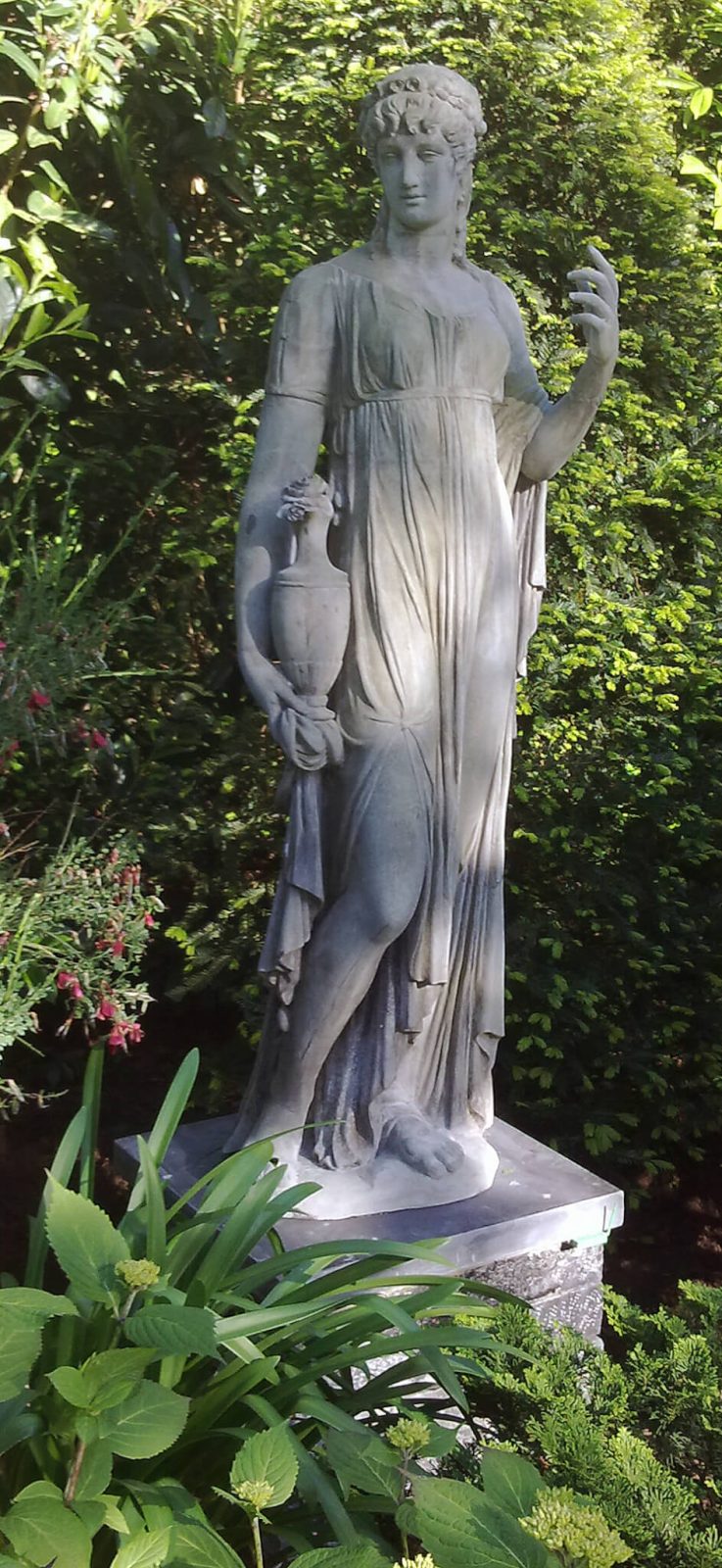
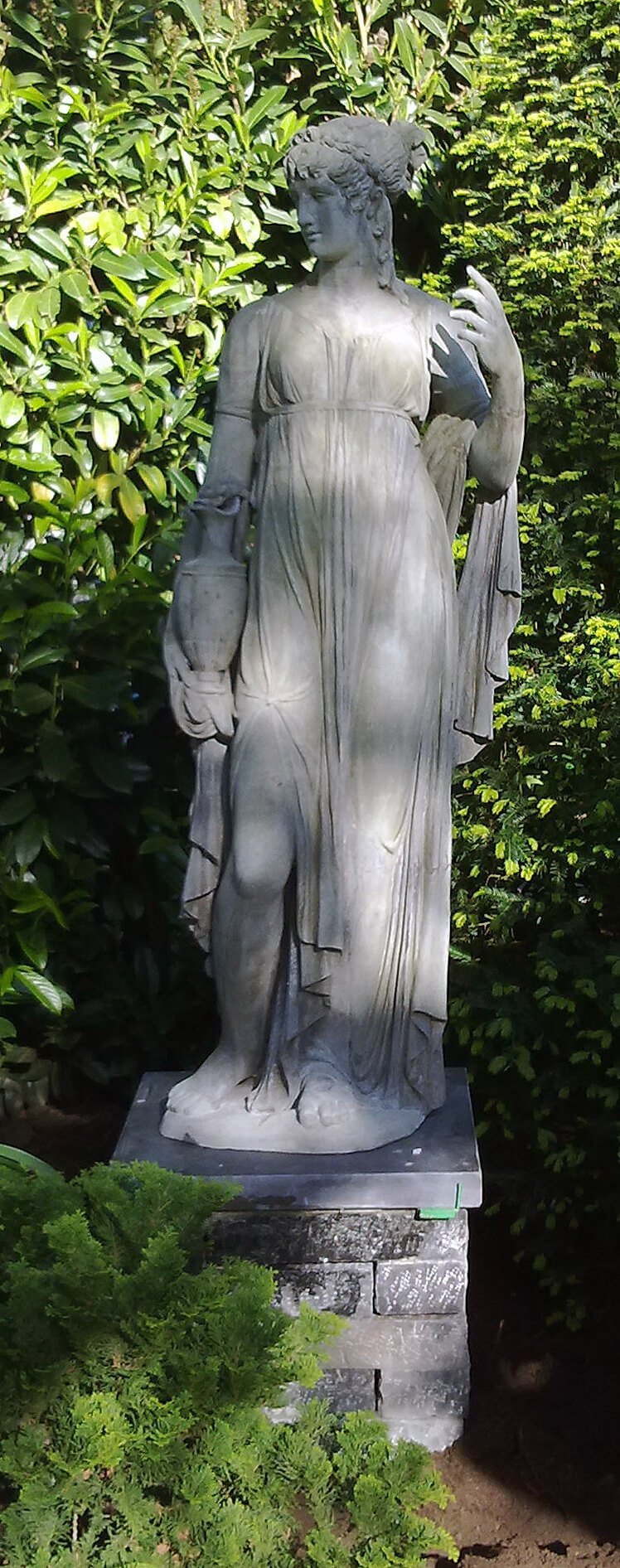
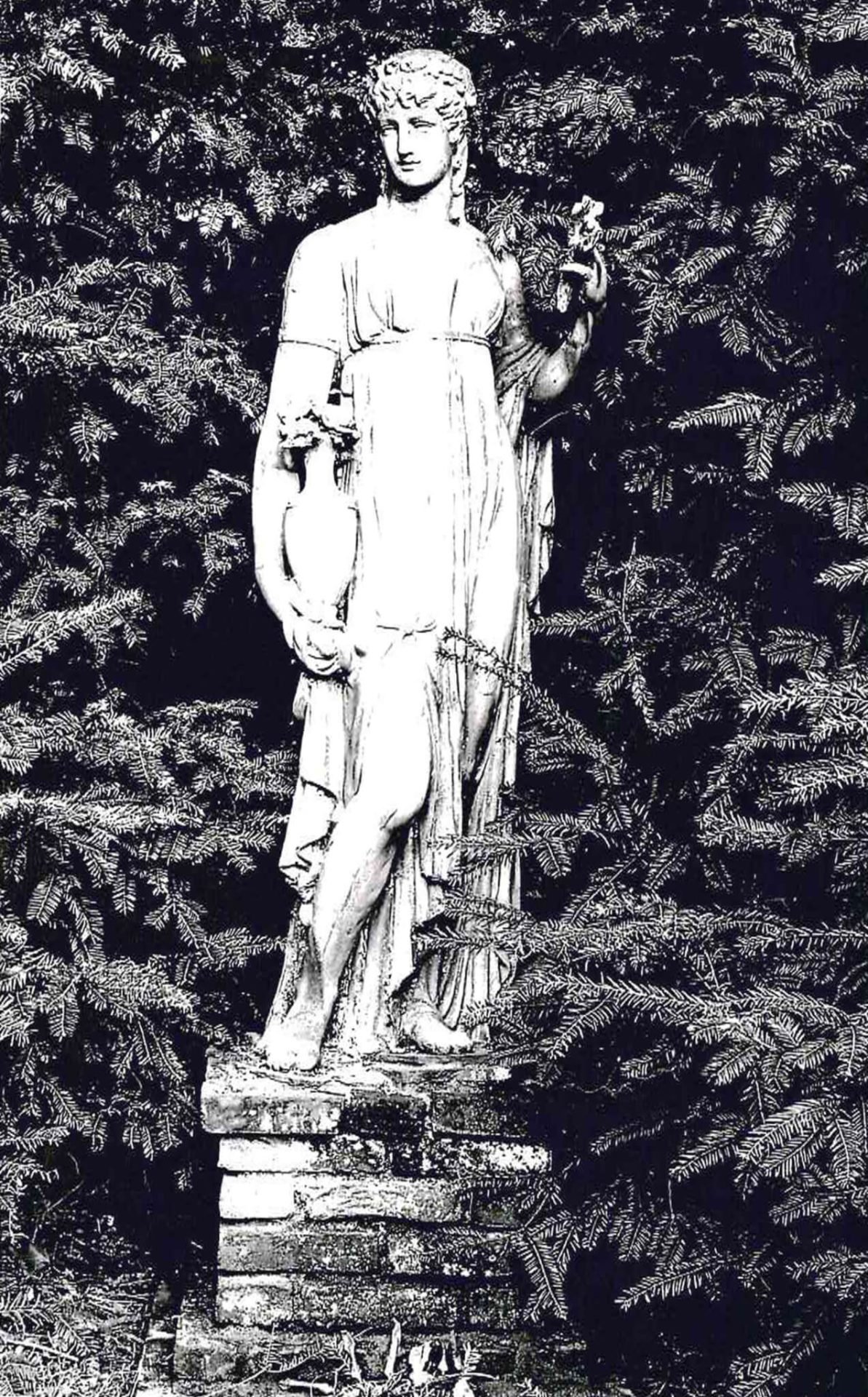
In natural stone sculptures as well rusting iron often leads to problems. For example, many classic sandstone and limestone statues were fitted with loose arms, which were connected to the body with an iron anchoring, or statues have been repaired using iron pins. Again, the best solution would be to remove all the iron and replace it with a more definitive solution. Nowadays we usually choose for reinforcing in stainless steel and adhesives or cement, or another prescribed adhesive, and connections with fiberglass bars are being used as well.
Addition of January 2018: Quote about alternatives to lead anchoring and on the historical use of sulfur
"As for alternatives to lead Van der Kloes mentioned some interesting remarks in his book Guide to the Mason from 1923: the attachment of the dowel is effected best by casting it with lead. This shrinks at solidification, so it closes securely around the dowel, but sits loosely in the hole. If one can get to it, one could drive it superficially by a blow with a chisel, but when it actually comes to it, in other words. when it comes to resistance against pulling out, this helps nothing. Some let their dowels be cast in tin, because it shrinks slightly less than lead. In that case there will be no need for driving the connection after pouring and dowel and tin will be closely linked equally movable in the hole as in the use of lead.
Dowels can be excellently cast in sulfur in the ratio of 4 at five parts by weight of fine sand. Sulfur expands upon solidification. The dowel, if one should give it barbs against sliding in the sulfur, will become very well stuck. But sulfur has the disadvantageous property of, when moisture is added, eating away the iron very strongly.
It is best to stamp in a mortar of portland cement in the ratio of 1 at 2,5 or 3 with fine sand created to earth-moist state,, but this only applies if you can get there. Pouring with portland cement has led to disappointment. The dowel will be stuck, but over time, the cement shrinks and then it's over with the strength of the connection (VAN DER Kloes J.A., 1923: 110).
Furthermore,. Viollet-le-Duc. in his Dictionnare raisonné de l architecture française du XI e au XVI e siècle, written in 1855, the following note: We have seen anchors cast with an oily mastic, which is composed of crushed sandstone, lead paint, lead glit (lead oxide) and oil or cast with a resinous material. The anchors which are integrally cast with this process, in buildings from the end of the XIII century, exhibit fewer problems of corrosion than those which are cast with lead or mortar (VIOLLET-LE-DUC E.E., 1855: 403).’