A granite gravestone
Usually I do not write about the sculptures I execute for other sculptors, because it's their design and I can not go showing off with their work. But last month, I carved a granite tombstone to the design of sculptor Gerard Overeem. He was satisfied with the result and was happy with me mentioning it on this blog.
The design is based on one of his early works, in possession of the customer.
Cutting and Measuring
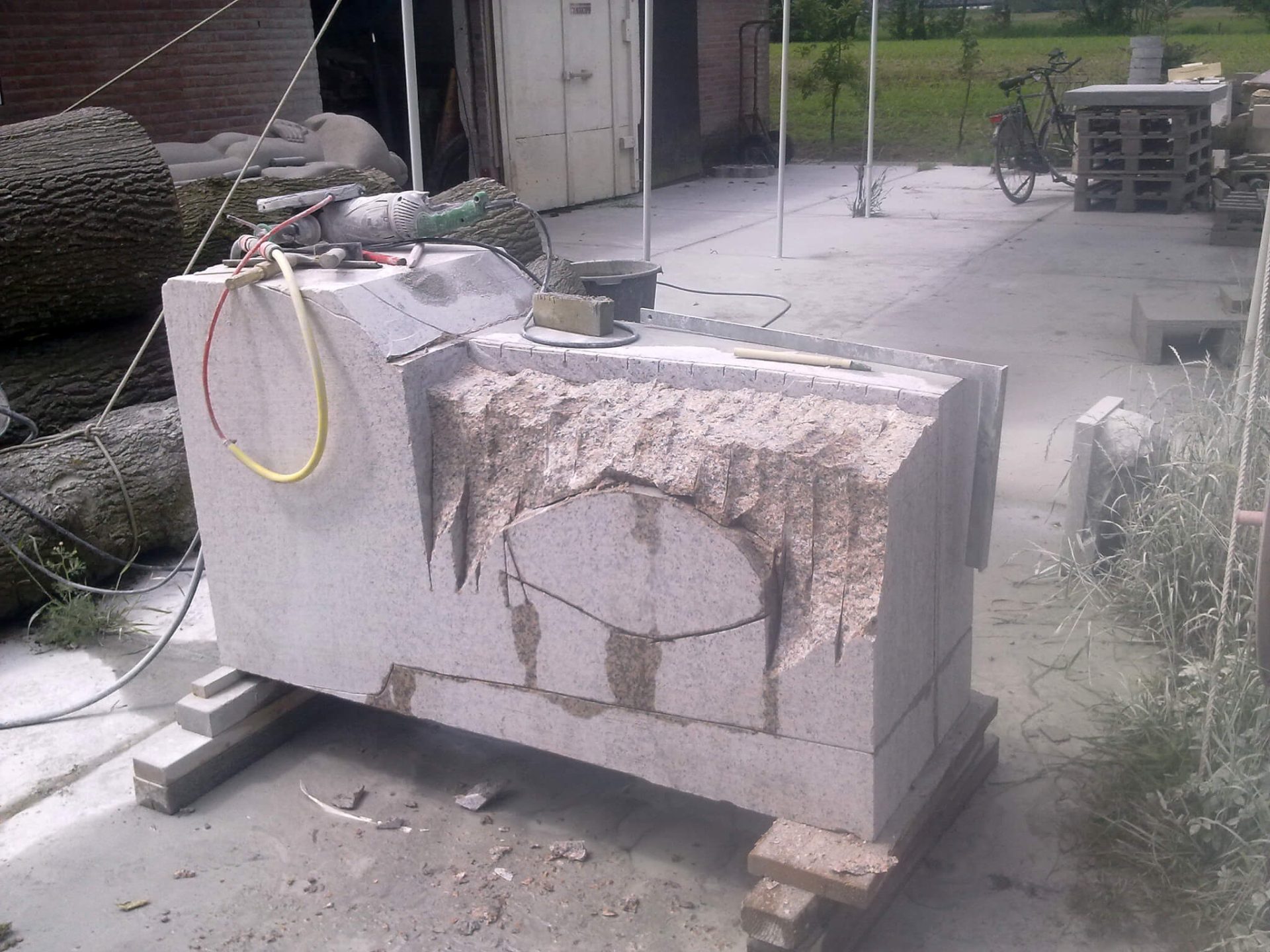
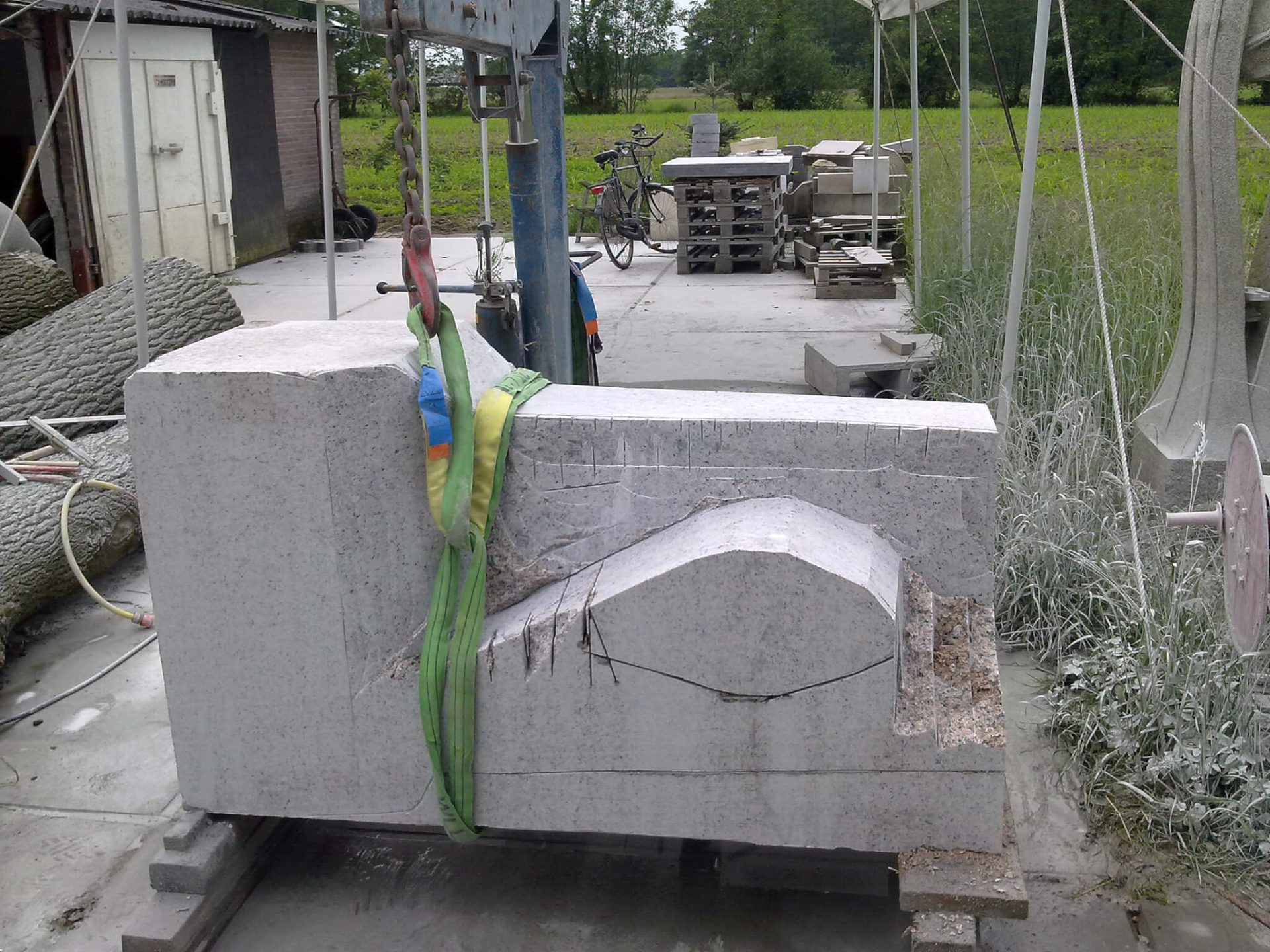
Gerard supplied me with the plaster model and a block of granite to size, on which I first started cutting away the excess. When all the unnecessary volumes were removed, I started measuring the relief of Mother and Child with compasses and transferred it into the granite.
Finally, I copied all the "brute’ planes approximately. These didn't have to be copied literally, making this a lot easier to carve.

Surface finishing
I have given the different areas of the sculpture various finishes: on the flat faces a chisel stroke with a narrow chisel, which I kept turning round. On the relief of mother and child the same thing, but with a much finer finish, so no roughness would hinder the depiction. Finally I carved lines with a toothed chisel on the 'brute’ surfaces at the bottom and at the rear.


The attentive viewer will see that I have kept the womb and belly of the mother a bit fuller, these are some of those small changes that will be carried out after consultation.
Master signs
All in all a nice commission in between, also because I like to work in granite . In this case it was Spanish Rosa Porriño, a bit pinkish with little grey dots.
Next week, the stone goes to the stonemason's shop, where the text will be added.
A nice detail is that Gerard and I both carved our 'master sign’ into the side of the granite, with the consent of the client, of course. This goes back to a medieval tradition, when the stonemason signed each piece with his own stonemason's mark, that was used for quality control and, for counting production, during payout. So this gives a historical perspective as well.
Nasty the first message about this project.