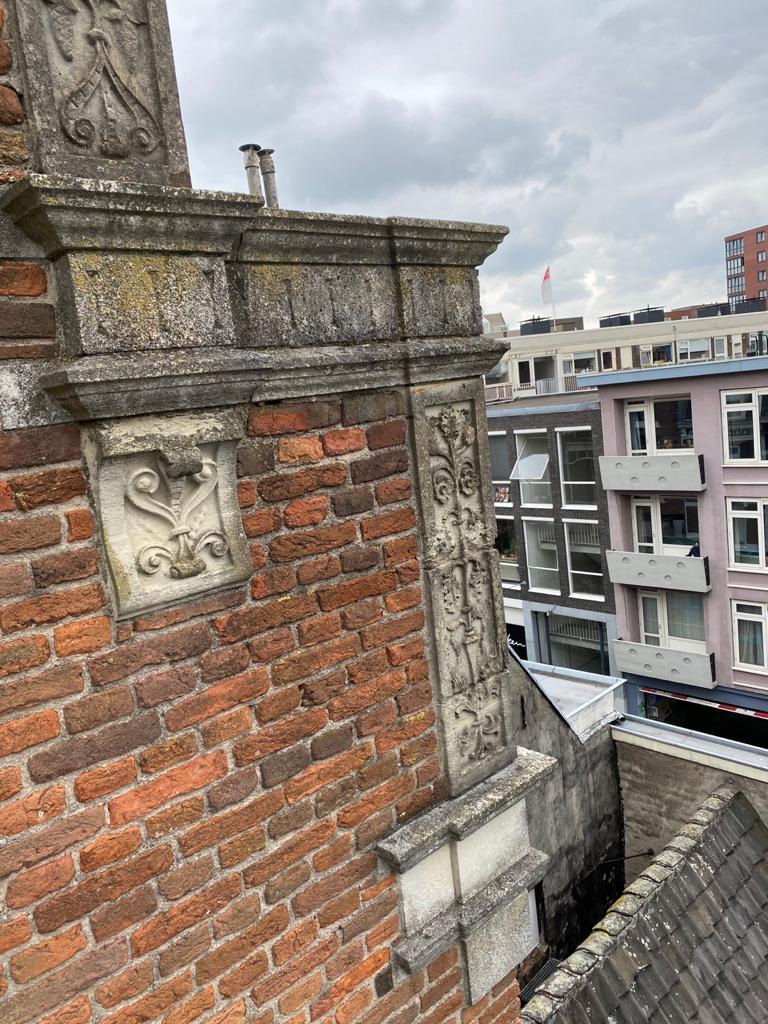
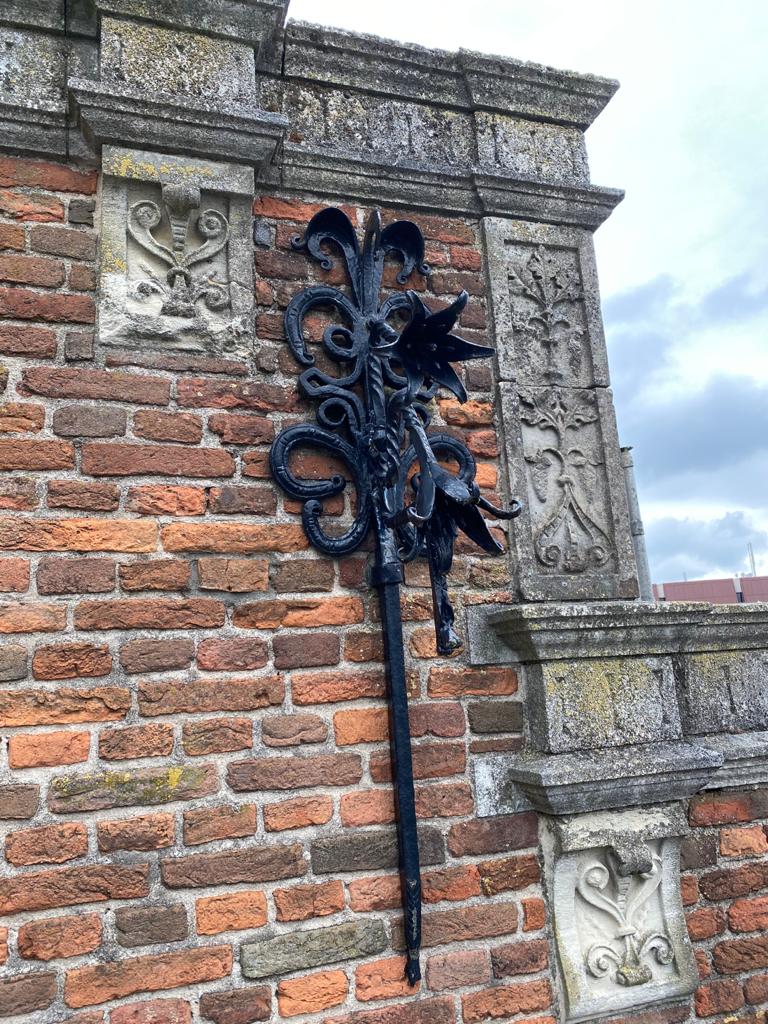
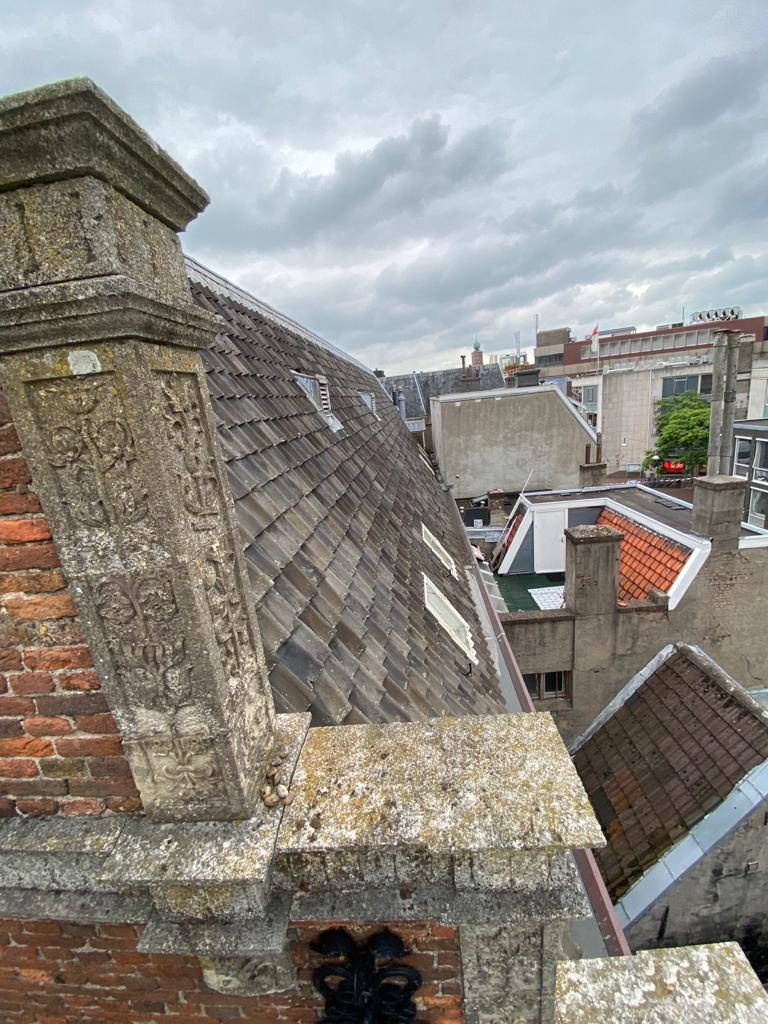
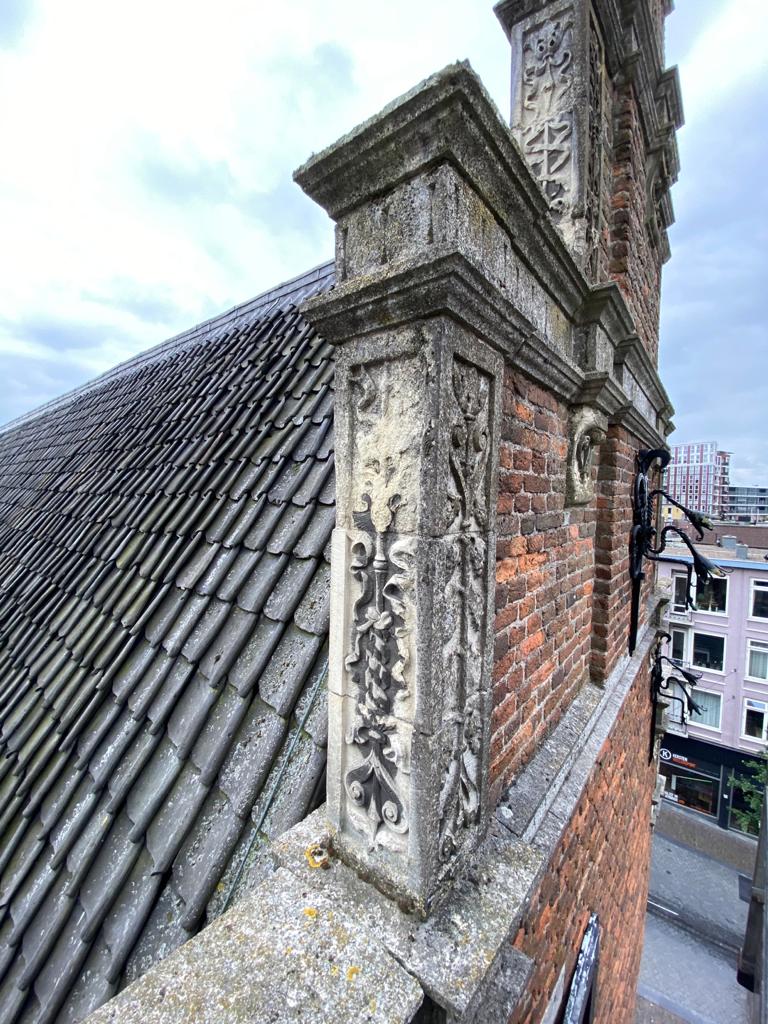
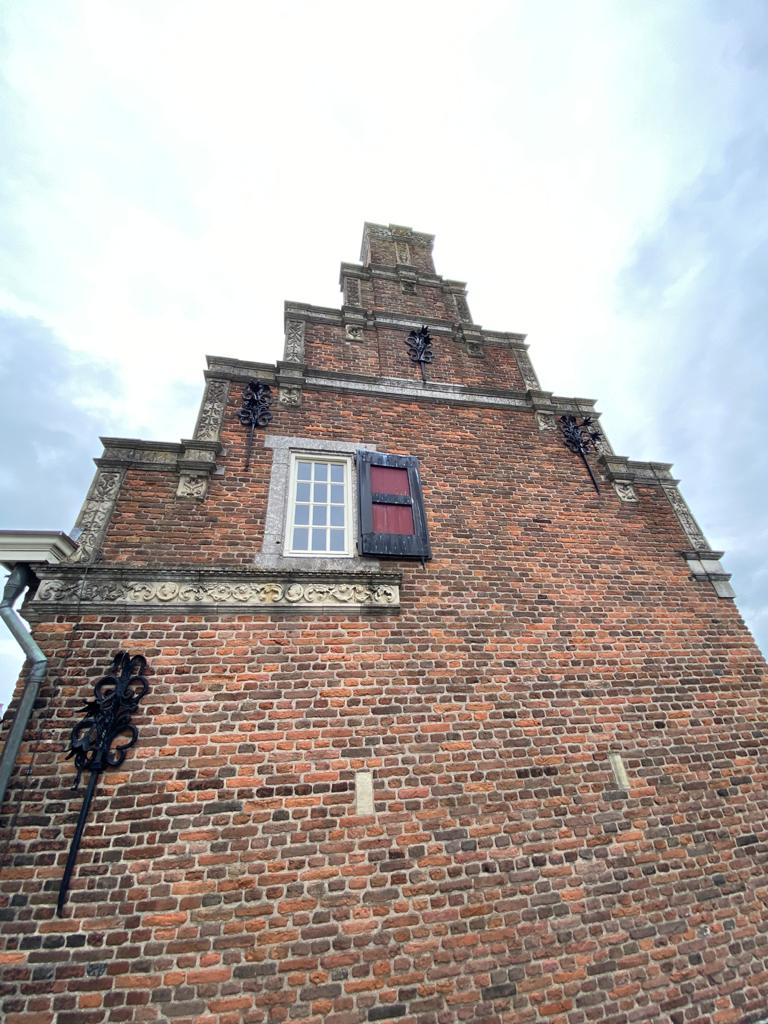
• The stepped gable of the Latin School in Nijmegen

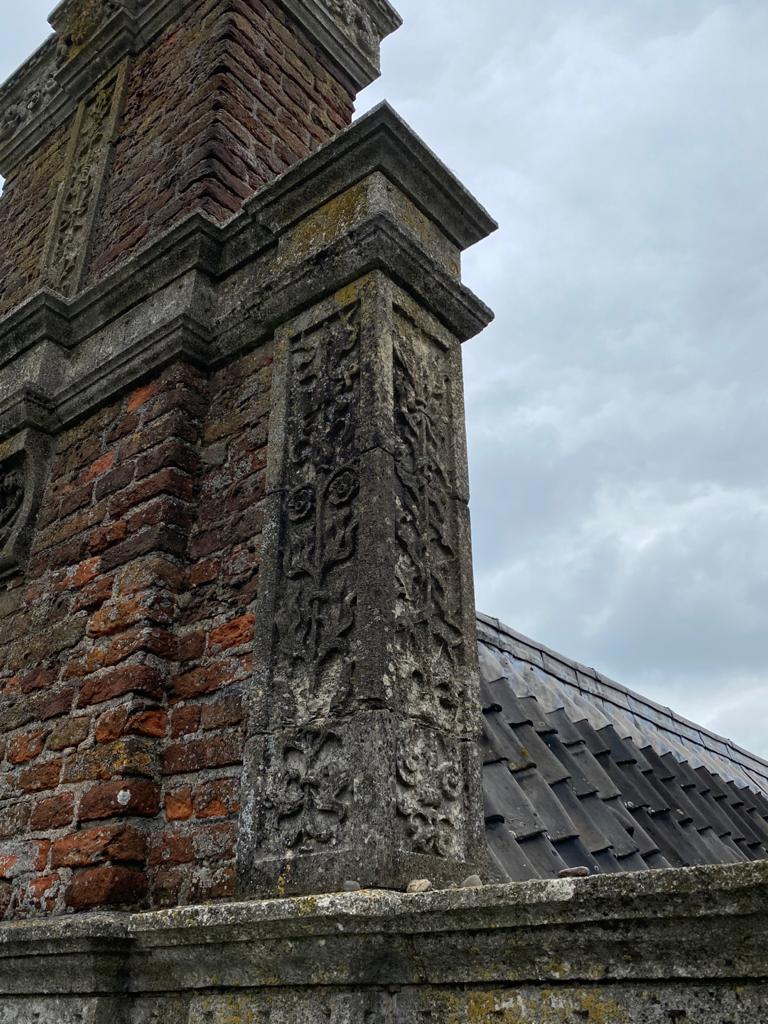
    ornaments in Baumberger stone for the Latin School in Nijmegen

    A Hasty Rush and still doing a proper job

    This was another such case of 'it has to be ready before Christmas'. Only those who took on the job were already terribly busy with all kinds of other projects and they actually couldn't find anyone other than Jelle and I to help out.

    ornaments in Baumberger stone for the Latin School in Nijmegen

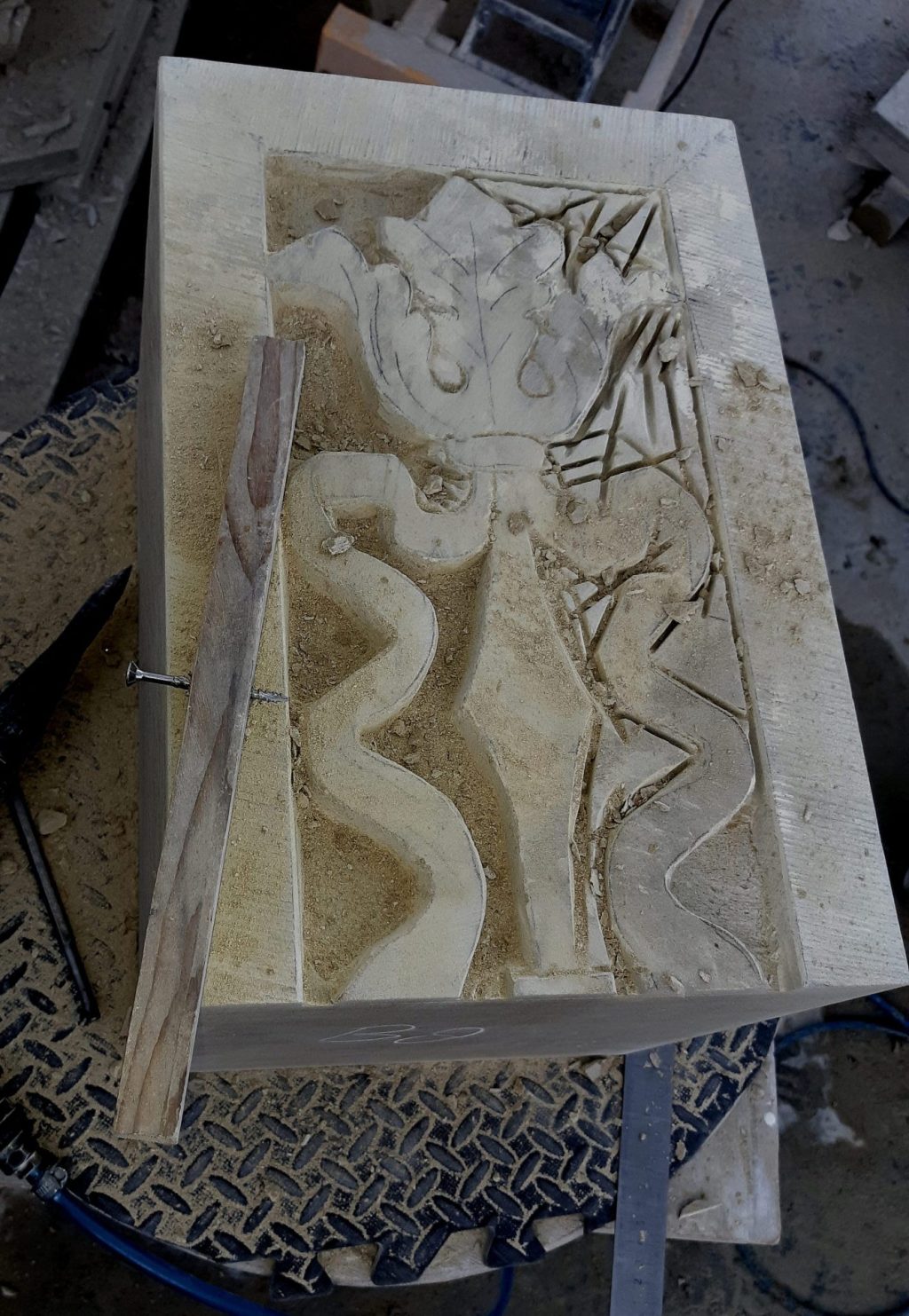
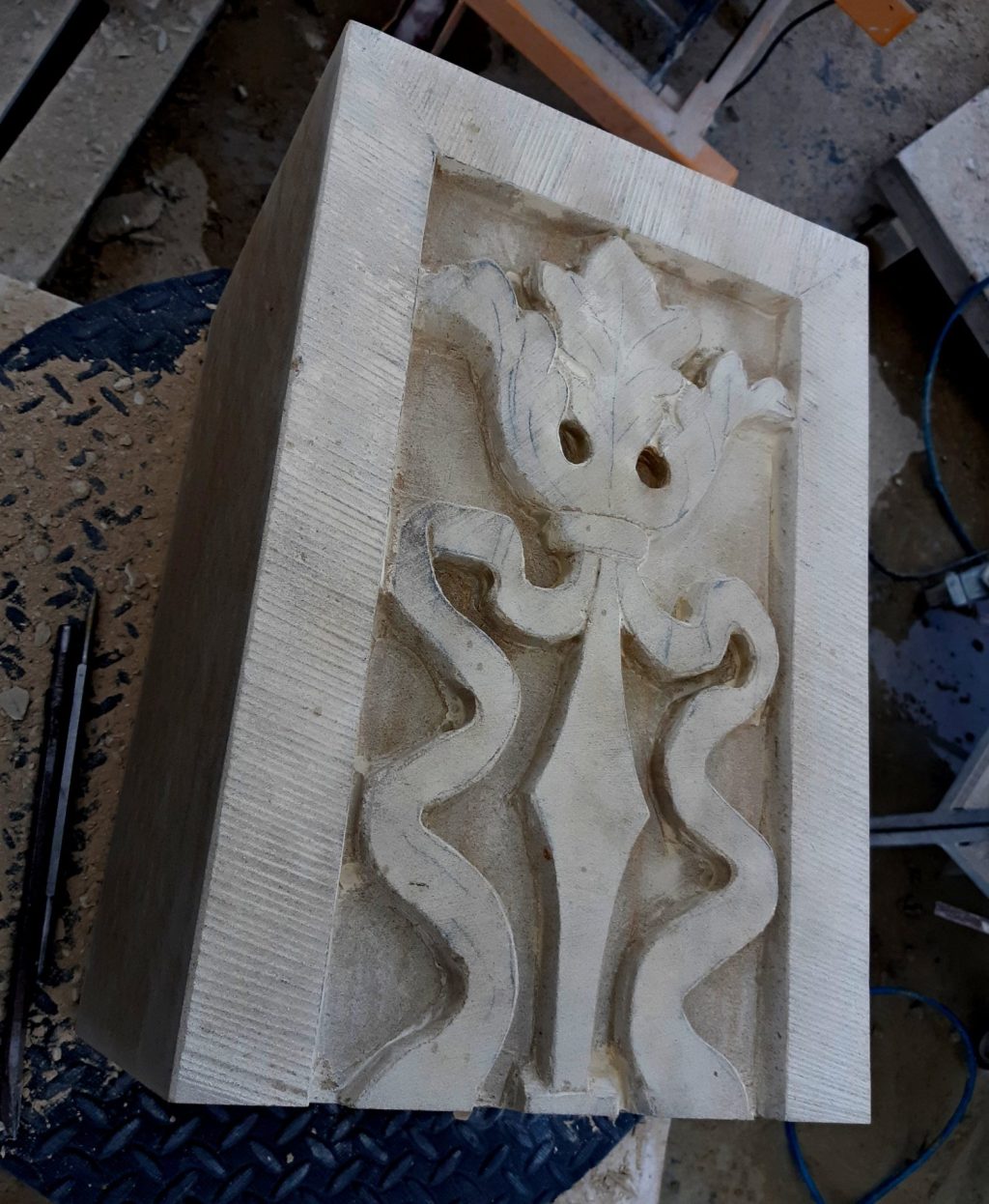
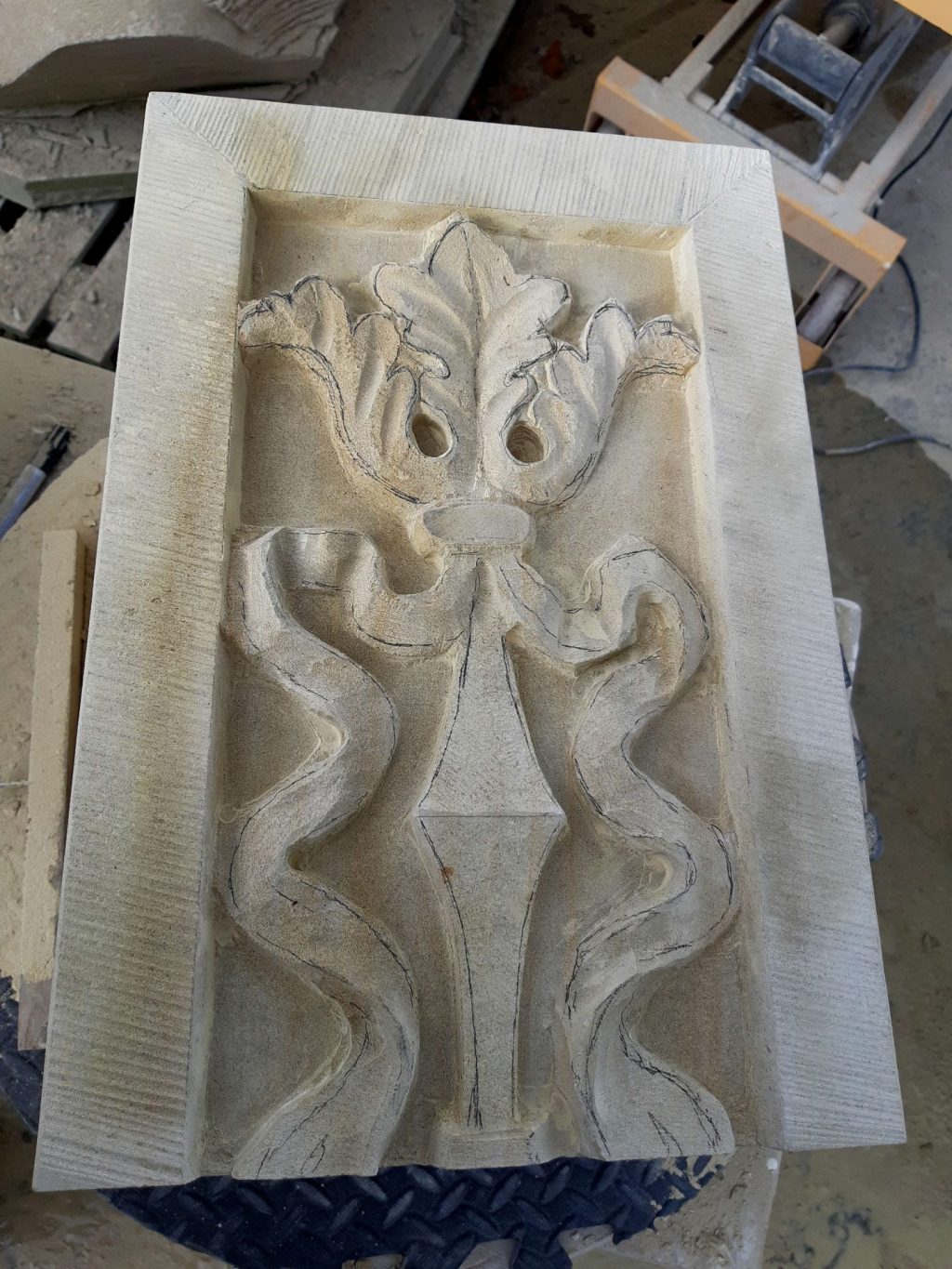
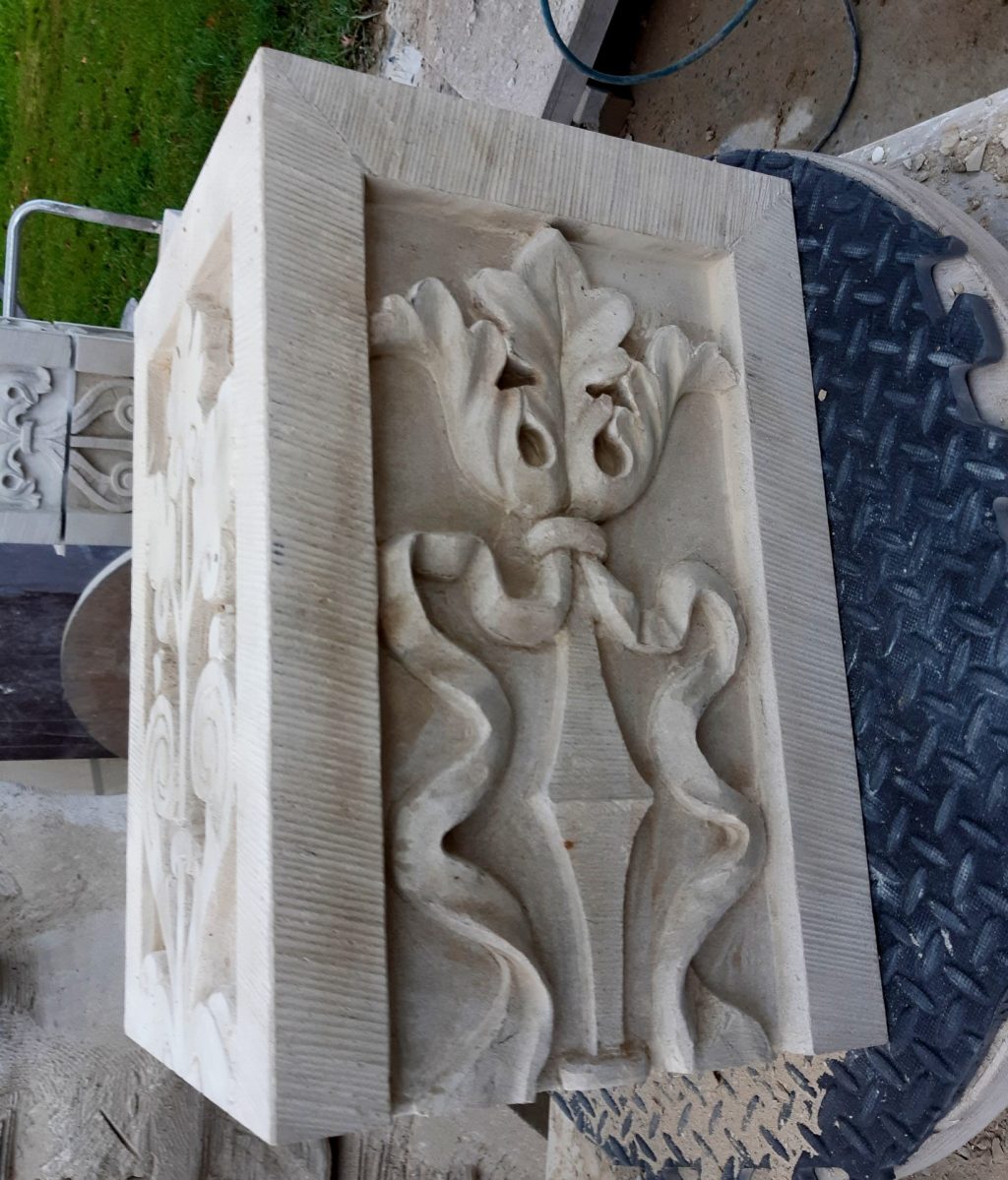
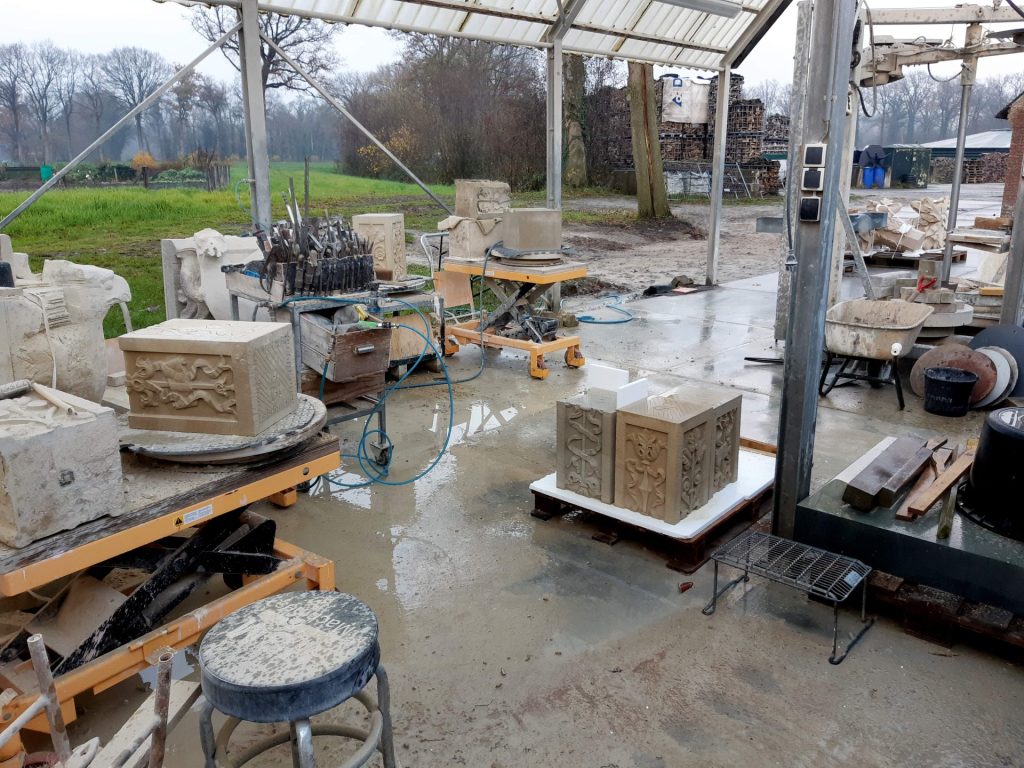
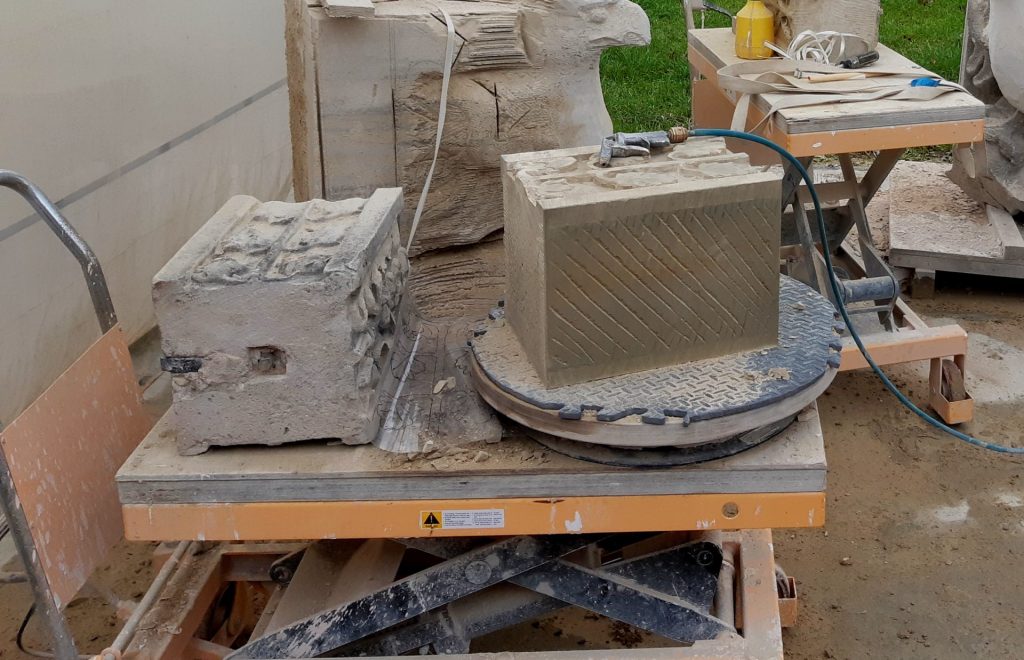
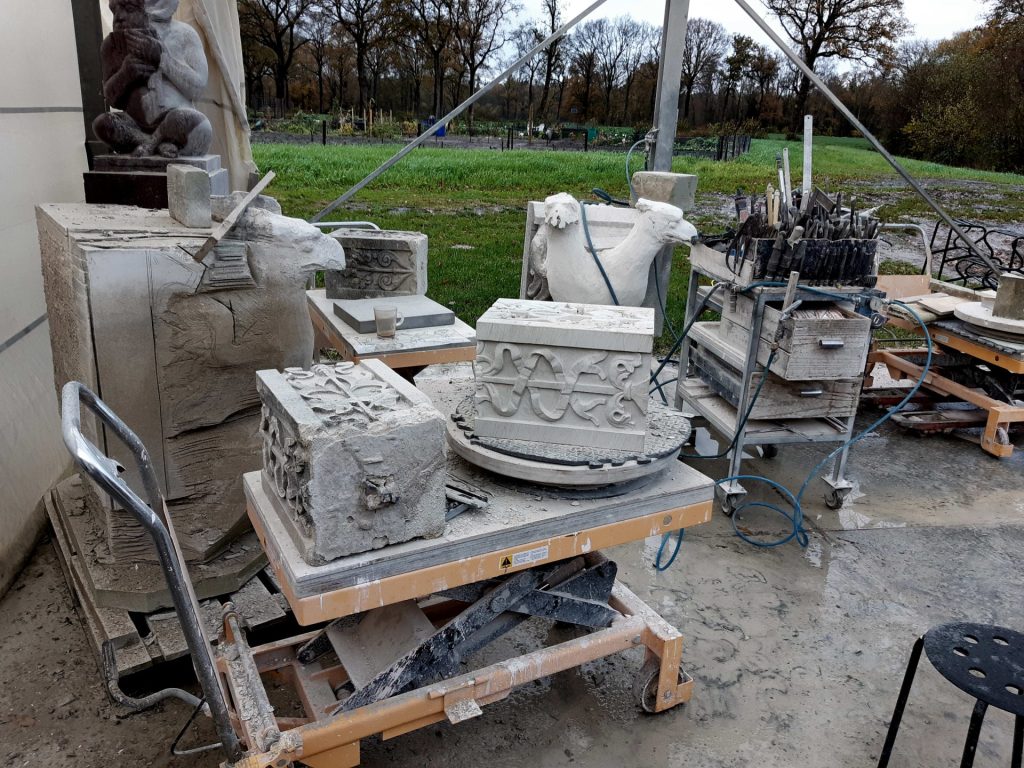
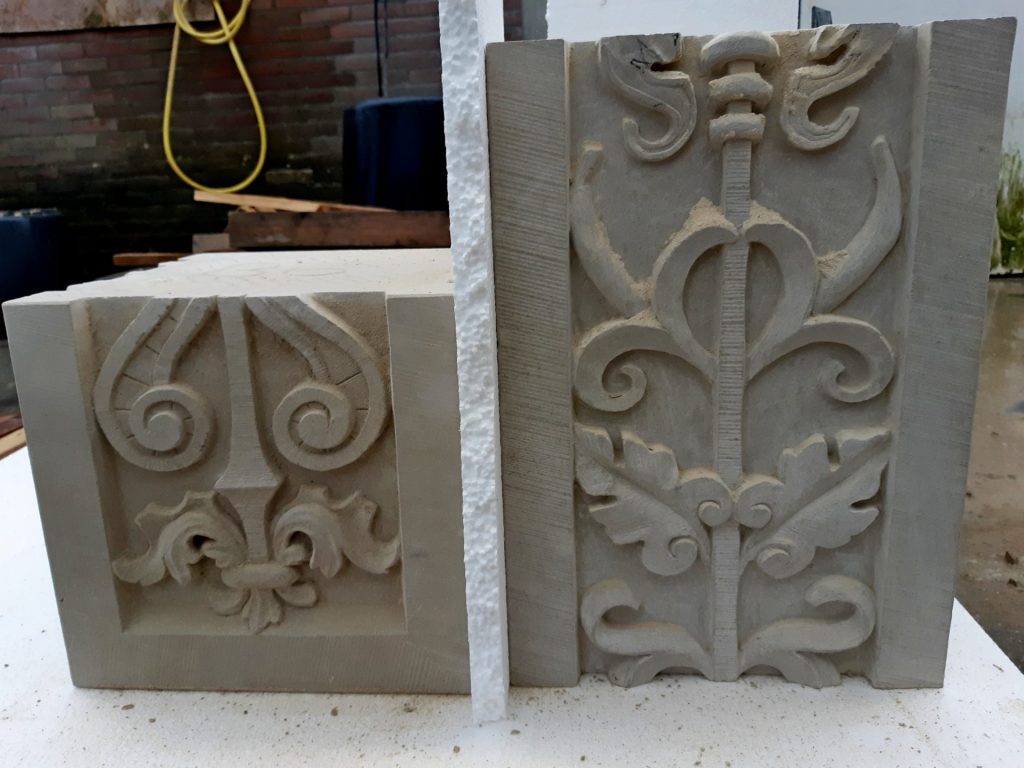
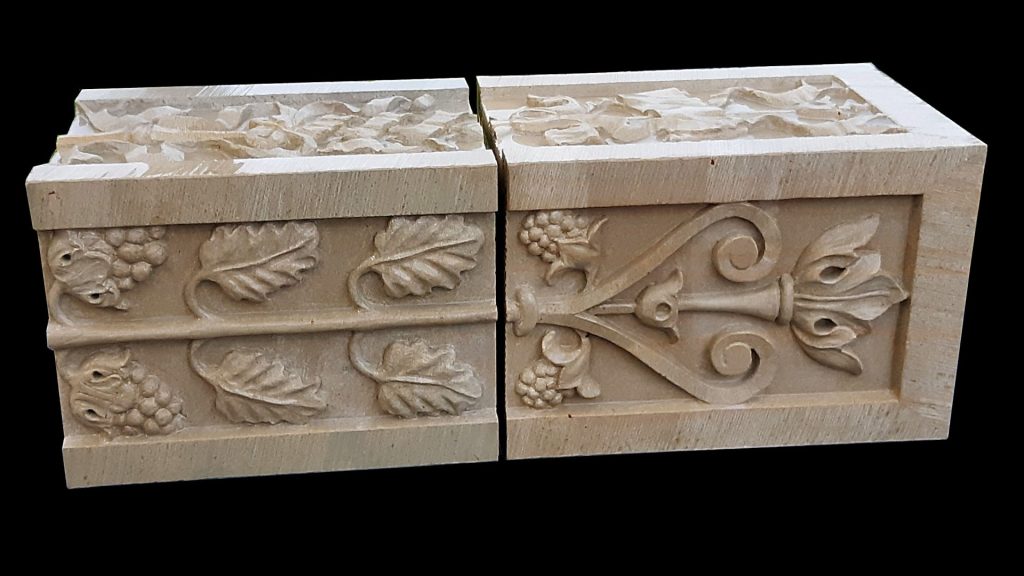
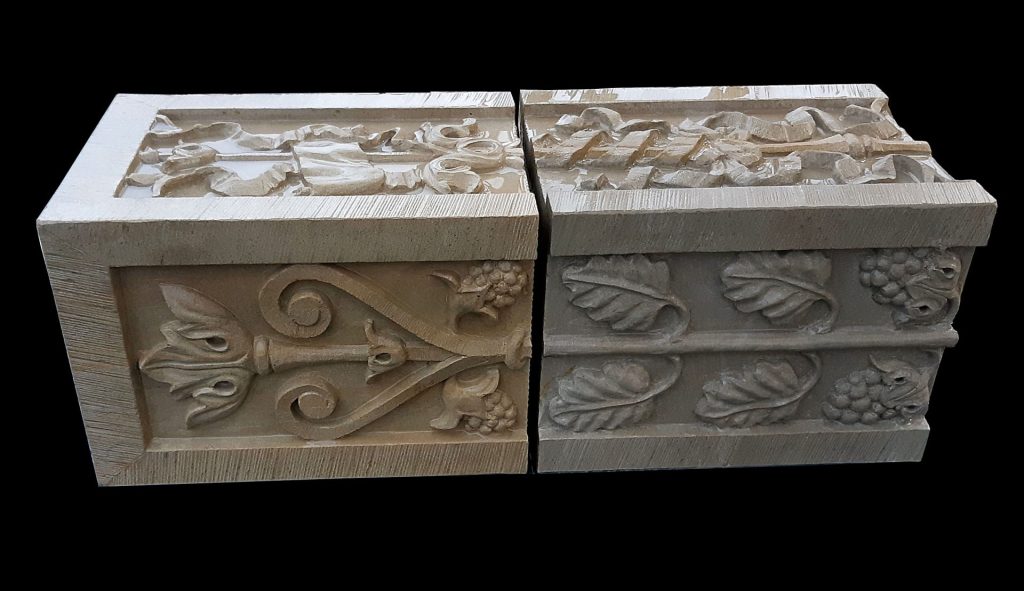
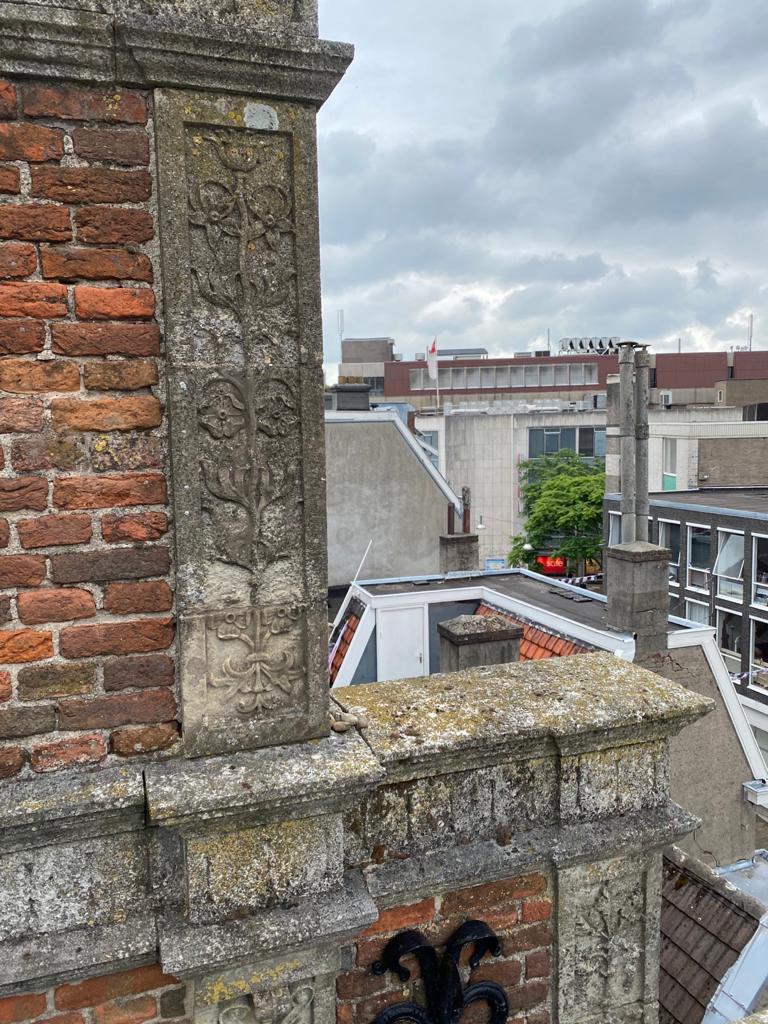
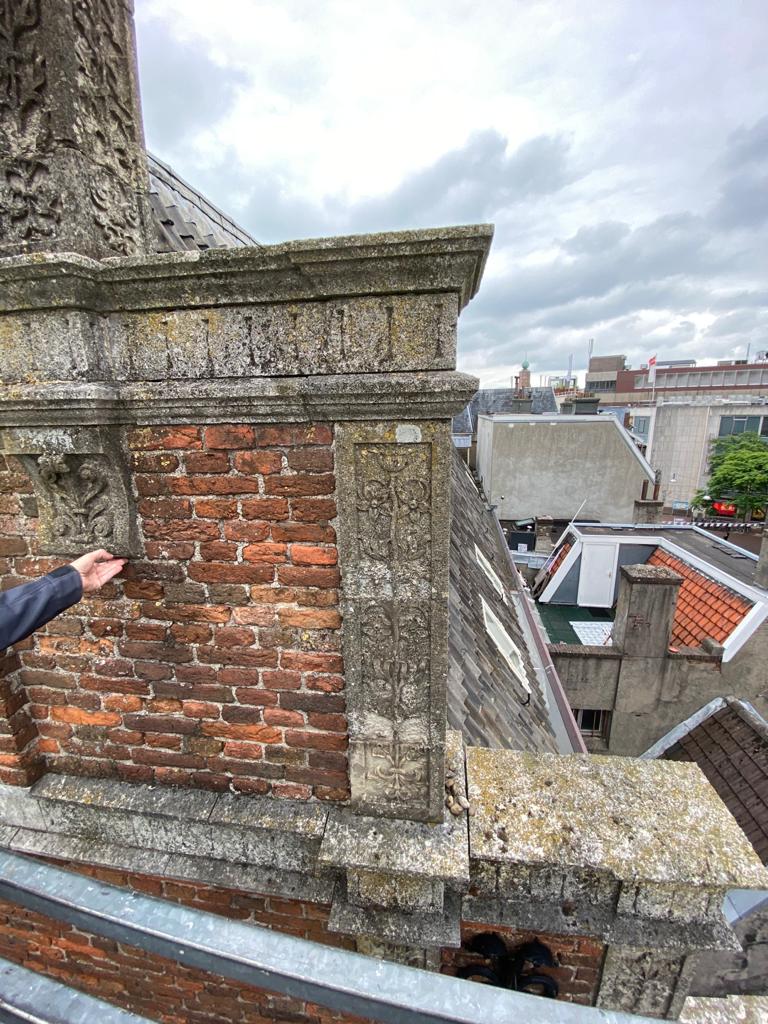
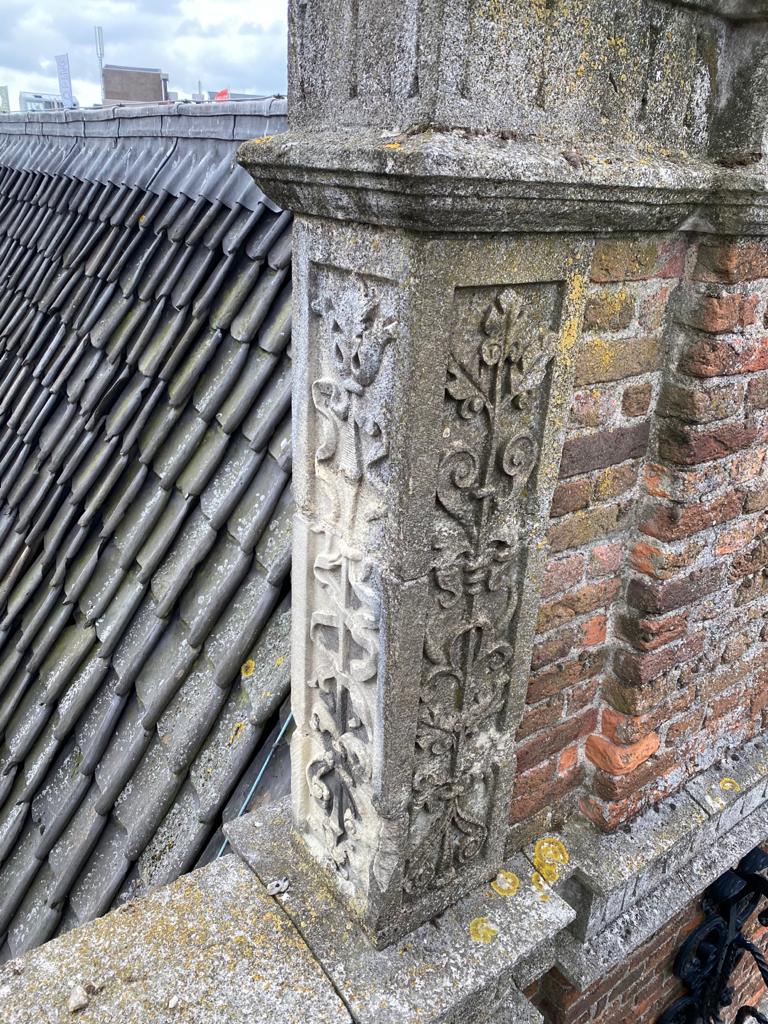
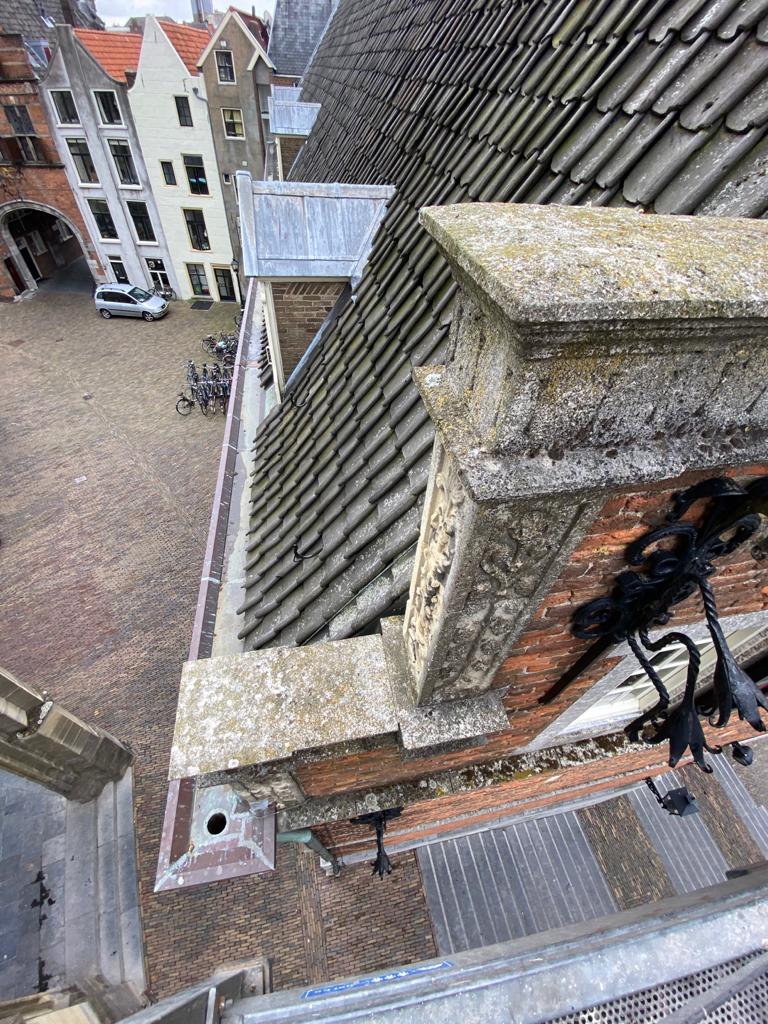
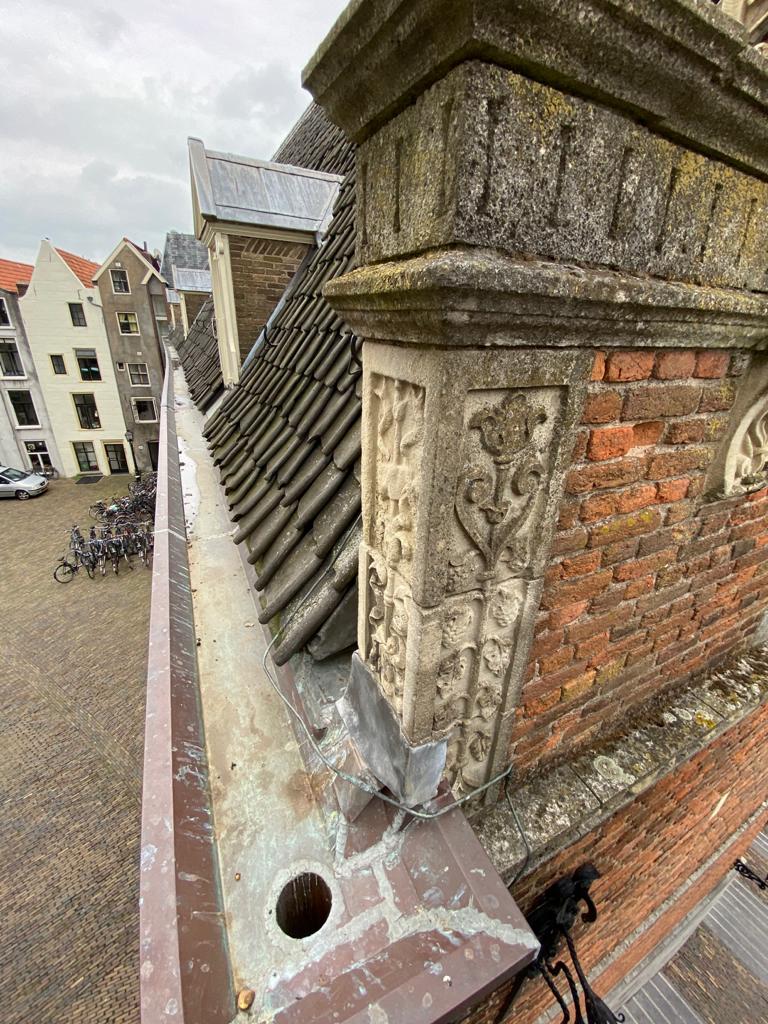
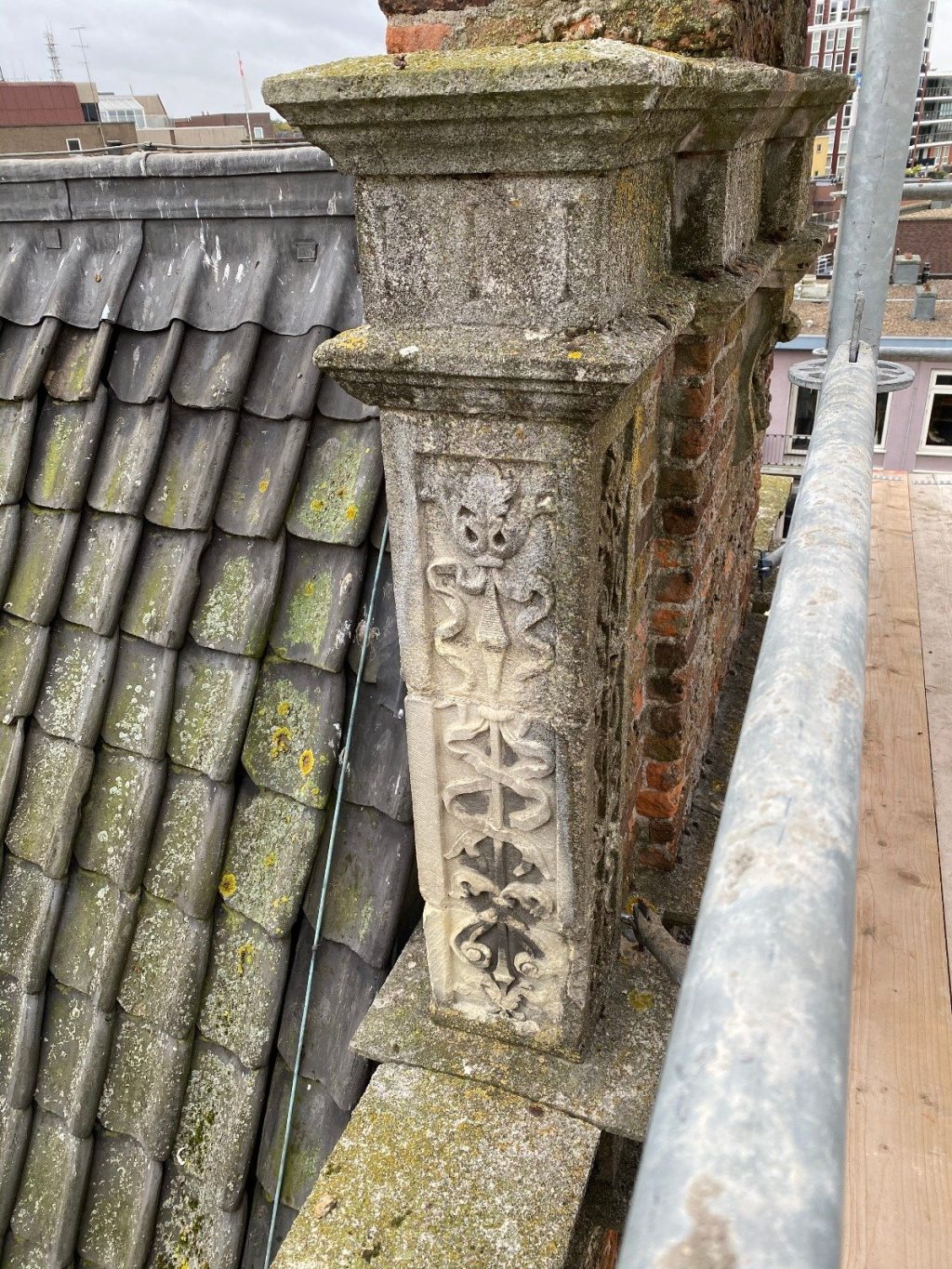
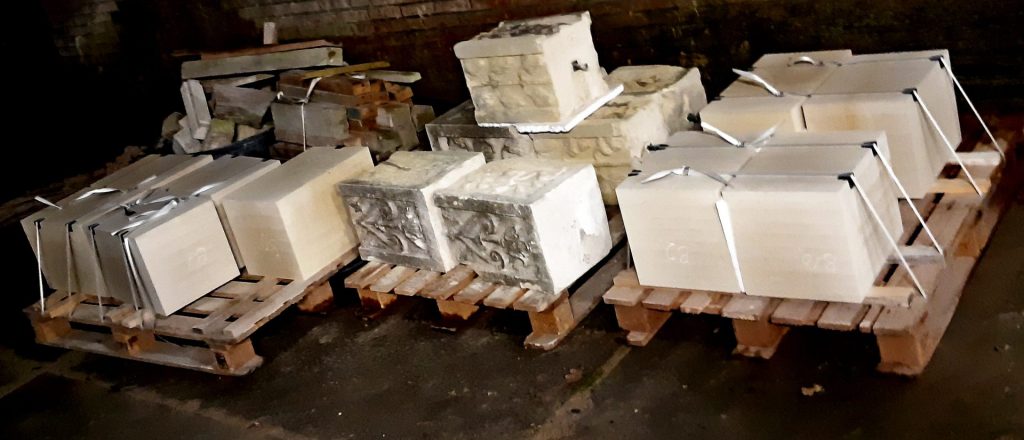
    And so ten blocks of ornamental work from the Latin School came our way. Fortunately, colleague Serge also wanted to take care of a few blocks, otherwise we would not have made it all. Each block has three carved sides so just check, 30 processed sides that is a good number of weeks of work.

    Dutch Renaissance

    ornaments in Baumberger stone for the Latin School in Nijmegen

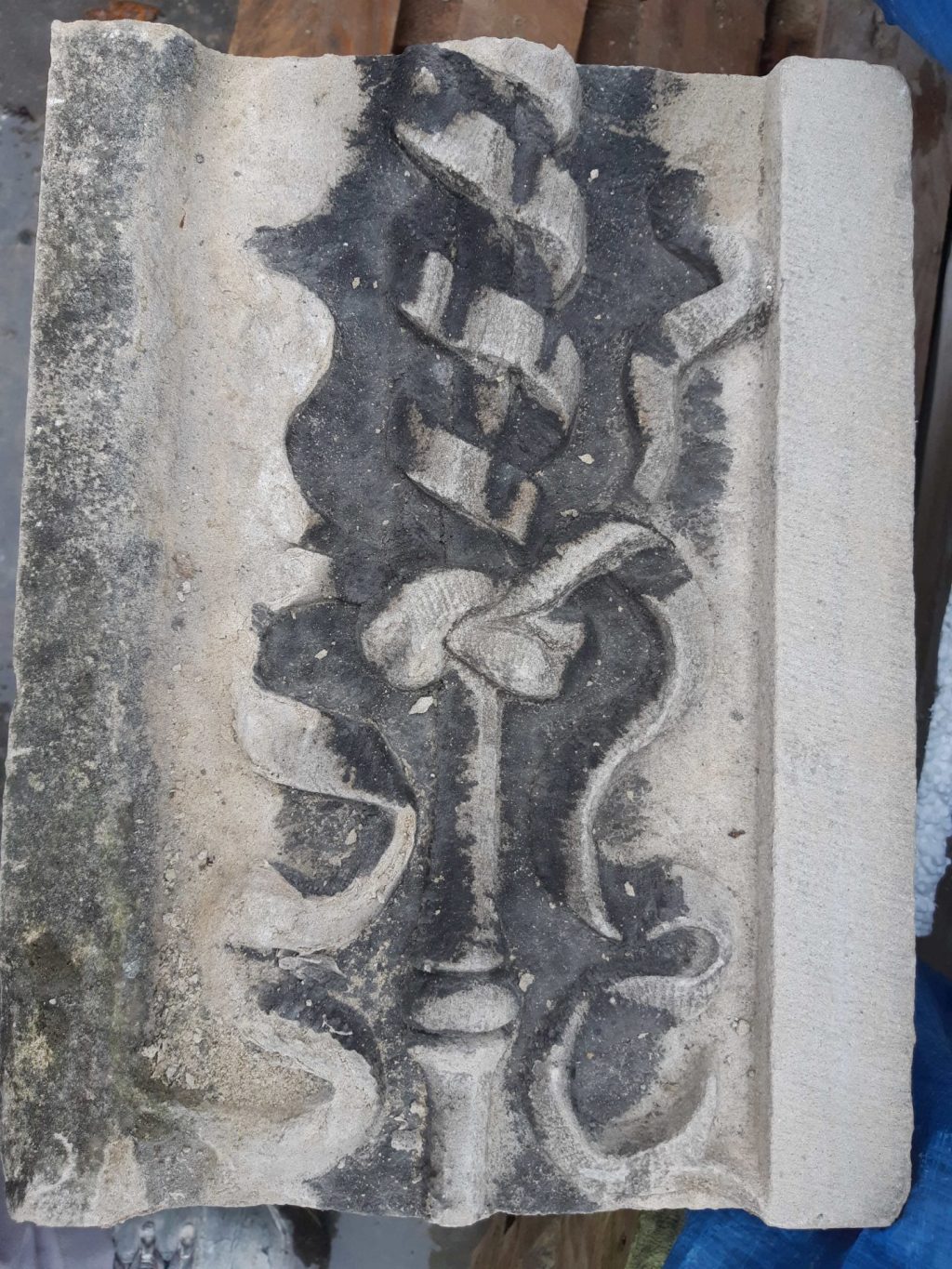
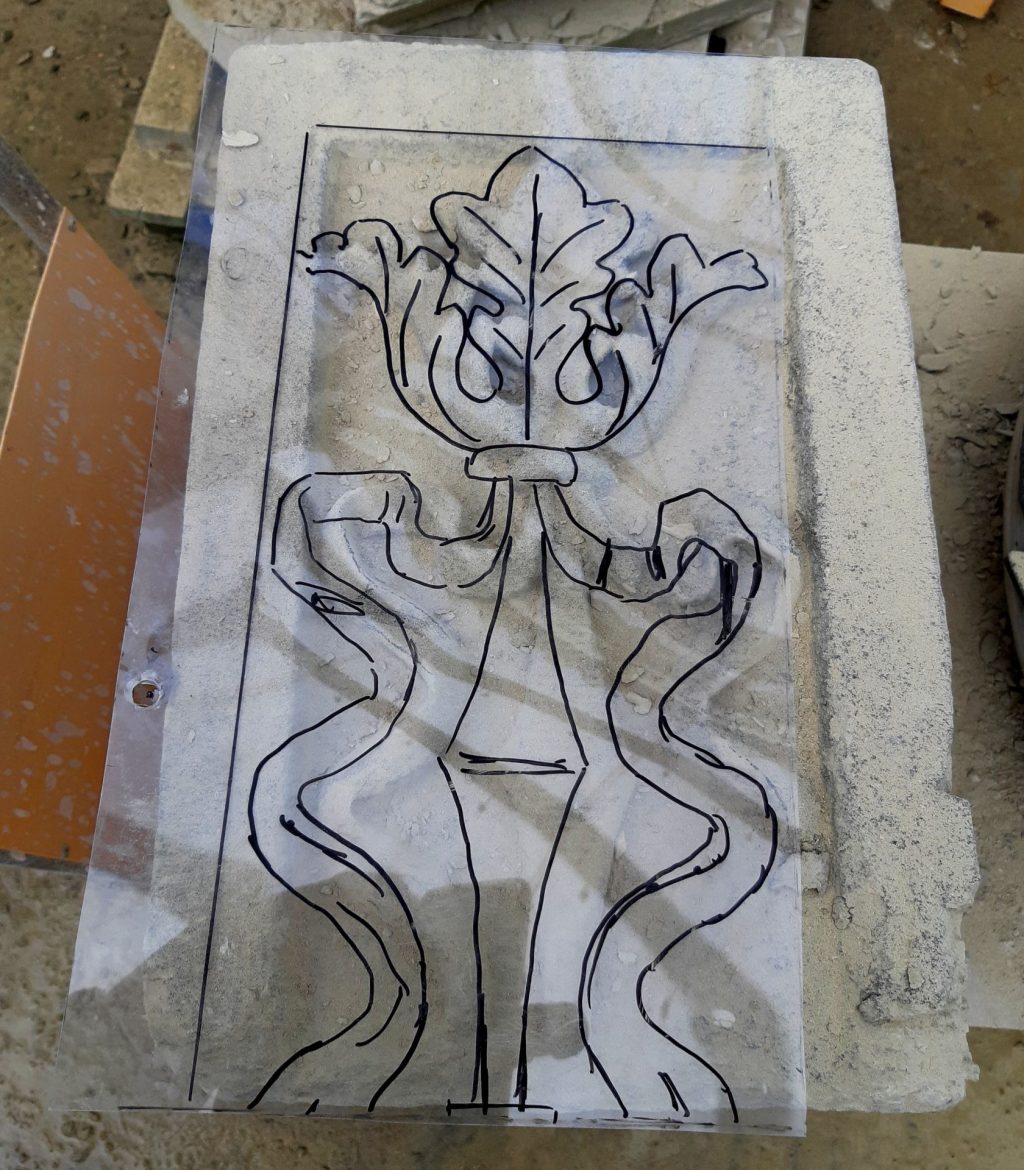
    It is interesting to carve these things, because much of it has disappeared through weathering and then you just need to reconstruct what was there. Fortunately, one can usually trace a part over from other blocks, and as this is made in the style of the Dutch Renaissance, some examples of it were still in my head. Flowers, leaves, stems and ribbons and a few fruits. Botanically it's really a mess, for a plant with oak leaves bears chrysanthemum flowers and pomegranates, but it is a lot of fun to make. If only there wasn't that much pressure on it!

    block numbering Latin School

    But we got it done in time. As it always goes with these things you get the hang of it over time and then the second one goes a lot faster than the first, the third even more quickly, and that's how you get the knack for it. Jelle and Serge, in addition to their other duties, could complete two blocks each and I did the other six.

    Latin School

    ornaments in Baumberger stone for the Latin School in Nijmegen

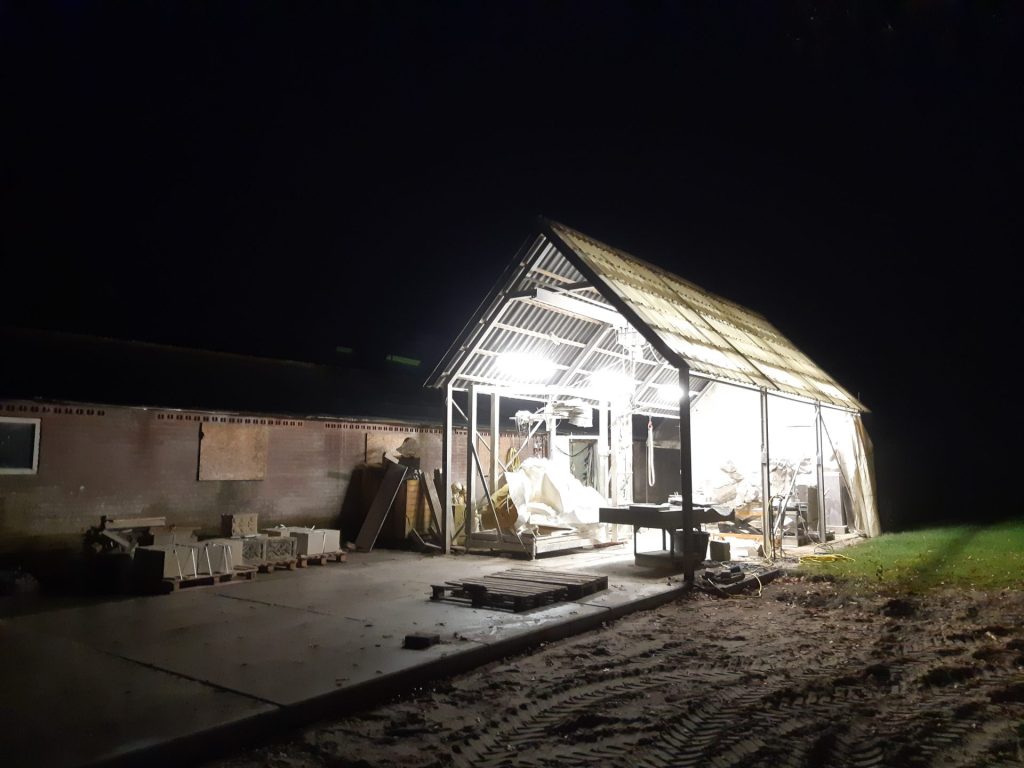
    These blocks are intended for the stepped gable of the Latin School in Nijmegen. They flank the stepped facade, and are covered by horizontal parts, some of which also contain ornamental work. This Latin School is not unknown to me. In 2015 Stide and I spent several months working on the South Portal of St. Steven's Church, which is opposite it. Then we also made a quote for copying the statues of the Latin School, but another company with a robotic milling machine had submitted a lower price. Because they didn't have enough sculptors to do the end carving, Serge and Stide have been finish carving those statues in Obernkirchener sandstone. In the video below you can see Stide cutting away a block of sandstone from under Apostle Thaddeus with my chainsaw . He still had to get to know the saw a bit, but it was a handy way to get rid of a large block.

    Baumberger stone

    ornaments in Baumberger stone for the Latin School in Nijmegen

    These sculptures were carved in Baumberger stone in the 1960s by sculptor Giuseppe Roverso from Nijmegen. He probably also provided this ornamental work. The copies of the sculptures from 2016 were made in the much stronger Obernkirchener sandstone, because Baumberger only lasts for about 70 years. Why a different type of stone was not chosen for these blocks as well is a mystery to me. Yes, it does fit with the historical use of materials, but unfortunately it doesn't last very long outside if you don't paint it. We'll see how they will keep up. Despite all the haste, it was a very nice assignment to make.
  • Flying buttress figurine: An accordionist

    Accordionist new, Muschelkalk limestone
    melodeon, black and white drawing

    Securely bolted down

    Actually, it wasn't an accordionist. More like a man with a melodeon, that small thing that they use in sailor's choirs. But at last it had arrived! I 'd been waiting for it for a long time, because it was stuck. To the new Focus Filmtheater. When I first asked for it, the replies were not good: the figurine (that I still was to copy) was temporarily borrowed out to the theater, but apparently it was attached so very rigidly that it was impossible to ever get it loose again. The roof would have to come off, or I would have to recieve the sculpture with the Film theater attached, you get the point.

    After much consultation, calling and meeting the sculpture turned out to be a bit easier to disassemble and it came my way.

    Presawing

    old flying buttress sculpture on pre-sawing machine

    When I got it in, the long pieces of threaded rod were still attached. That was actually a bit of a bother, because I had to make an entire construction for it to properly anchor the statue on my presawing machine. But a challenge from time to time is fun, so with some inventiveness we were able to come up with a good solution. It wasn't all that complicated from that point on: presawing the sculpture, copying it and sharpening up the details.

    Rough

    new flying buttress figurine accordionist

    The two flying buttresses that we are currently tackling have been carved (round 1956) quite roughly by Eduard van Kuilenburg. Add to this the fact that this accordionist spent more than sixty years on top of the church and you'll understand that it has all become a bit vague. The challenge in this sculpture is therefore not so much in the technical difficulty. The statue of Pope Leo the Great was a much more difficult job. When carving this group of sculptures, the main issue is with the details and finish.

    These statues don't have many details, and the parts that were there were carved very simple. The finish is coarse. Therefore, the most interesting part is carving things like the face, the hands and feet in such a way that these show a bit more, but still clearly match the style of the rest of the sculpture. And as for the finish: by playing with different surfaces such as bush hammered, pointed, toothed or flat chisel marks, lively surfaces can be created that enhance the design.

    Giving it hands and feet

    new flying buttress figurine accordionist

    The accordionist's hands were not equal on the left and right. The right hand did have somewhat like fingers, but on the left he only had a lump with a few stripes. However, the sculptor had chosen a nice position of the fingers, which indicates the playing on the keys. The feet were never really detailed, and after that it all weathered down further. The position of the hands and feet has remained the same in the new copy, but I've made more obvious fingers and toes on it. They're still huge lumps, though. The accordionist's face was slightly turned to the right, and he had a nice crooked smile, as if he was completely absorbed in a difficult piece of music. It was almost impossible to see anymore, so I recreated it a little more clearly in the new copy. The eyes of these figurines all have only upper eyelids and a hole underneath. However, it works very well in terms of shading, so I left it that way.

    Crooked

    It is striking that almost all heads that Van Kuilenburg carved are so strongly asymmetrical. Foreheads that run in an odd angle, a cheekbone two centimeters deeper than the other, eyes that are in a completely different plane. More and more often I wonder if he might have had trouble seeing depth, or that he only had sight in 1 eye. This sculptor's life was very tragic and he only got 39 years old. Maybe someday more about his life will be published, but it is not up to me to do that here. In any case, we try to make those crooked heads a bit more plausible without detracting too much from the character of the original sculpture. If you'd copy it exactly like this you'd get a sculpture that is even worse than the original, because you can't transfer some of its directness into the copy. Therefore, in order to maintain this fluency, we don't copy it with a pointing machine, but we work partly in the same way as Van Kuilenburg: shaping directly into the stone.

    ornaments south portal Eusebius Church, in Baumberger stone

    South Portal

    ornaments south portal Eusebius Church, in Baumberger stone

    A partial assignment that came in between all of this was the ornamental work for the South Portal of St. Eusebius's Church. We suspect that this too was originally carved in the 1950s. But it is known that Baumberger stone doesn't last that long and washes out quite quickly into a shapeless mass. Because a number of parts were already missing and chipped, a lot of natural stone has been replaced. We did some of those ornaments, our colleague Serge did the largest part at our request.

    3D-scan

    Finally, someone came by this week with a scanner and laptop: Emiel Frederiks from Nidim. He recorded the copy of the accordionist into a 3D model, from which one day maybe small versions will be printed. We'll see.

    To the next flying buttress statue.

No more messages to show.

No more messages to show.