A set of corbels for the Eusebius Church
The St. Eusebius's Church in Arnhem (the Netherlands) has been clad in scaffolding for a number of years now, and now the time has come to tackle the sculptured parts.
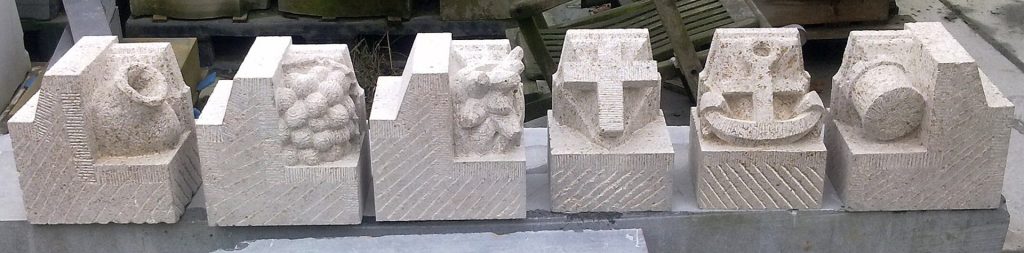
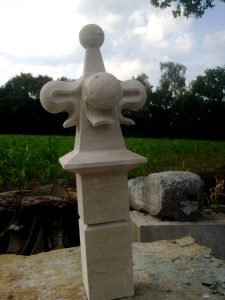
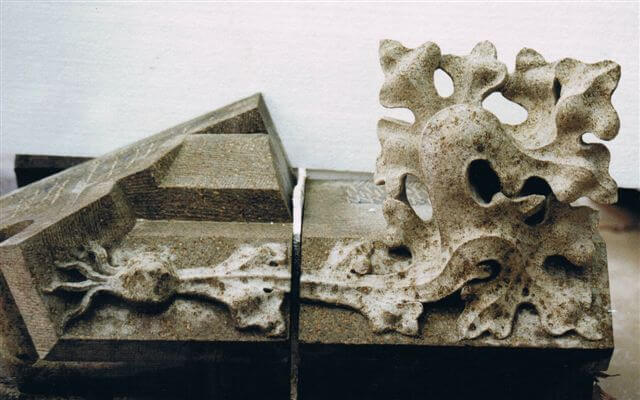
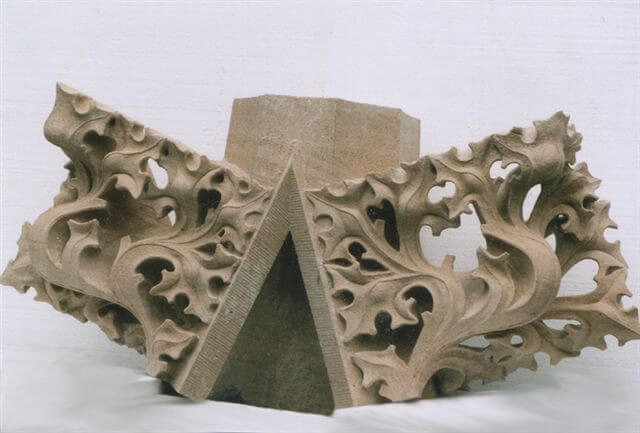
I was asked to copy the first tuff stone pieces from the fifties in new Muschelkalk limestone.
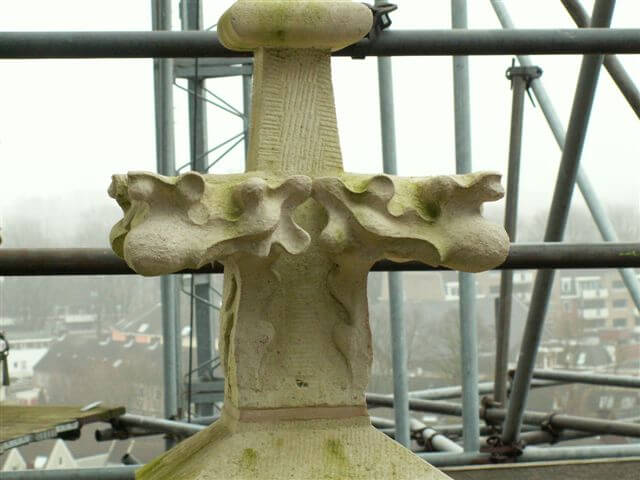
At first I didn't have much enthusiasm about the quality of the sculpture, because the first cocorbels looked very coarse (I would almost say crude) at first sight. But in the beginning of that first week I went up the scaffold to 46 meters high and there I was particularly impressed by the large corbels in Ettringer tuff stone that were still to be found there . The Eusebius was greatly damaged after all the bombing and a fire at the end of WWII, but it was carefully restored and because there was so much missing (and even in the first years after the war, a lot was stolen from the rubble, I read) the sculptors were given quite a lot of artistic space when filling the gaps.

The first thing I encountered when I stepped out of the elevator on the 20th floor were corbels with animals, and I was touched by the expression and skill with which a large bison with her calf and two Indian rhinos were hewn. The sculptor (A.M. Bruggeman from The Hague) had made brilliant use of the properties of the tuff (and those of his tools) to portray the shaggy coat.
Several sculptors have worked on the Eusebius church in the post-war years, and the story of the sculptor Eduard van Kuilenburg was the most striking of them. He died young, but before his death at the age of 37 he carved, incredibly driven, his vision through the direct carving method into the church's reliefs
If you want to read more about the sculptors and sculpture of the Eusebius Church and tower, then fairly recently a voluminous book was published about the sculptures of the church. Highly recommended!
The sculptures that could be at risk in the coming years will l be replaced by a copy in a more weather-resistant material. In the following weeks I will occasionally write about the corbels that I am carving now.