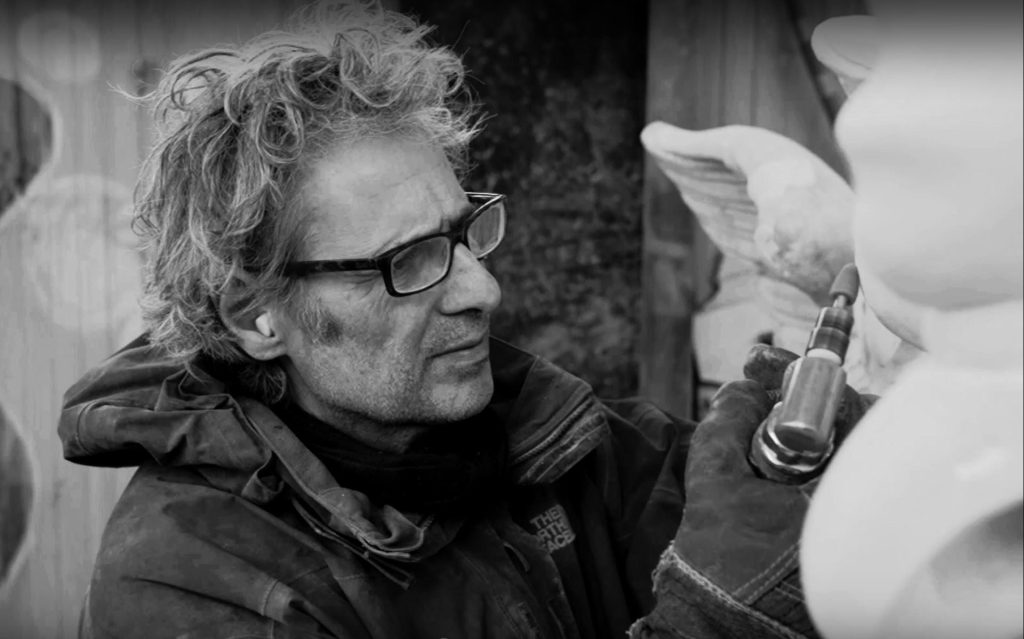
• Of Serge van Druten, two athletes and an angel

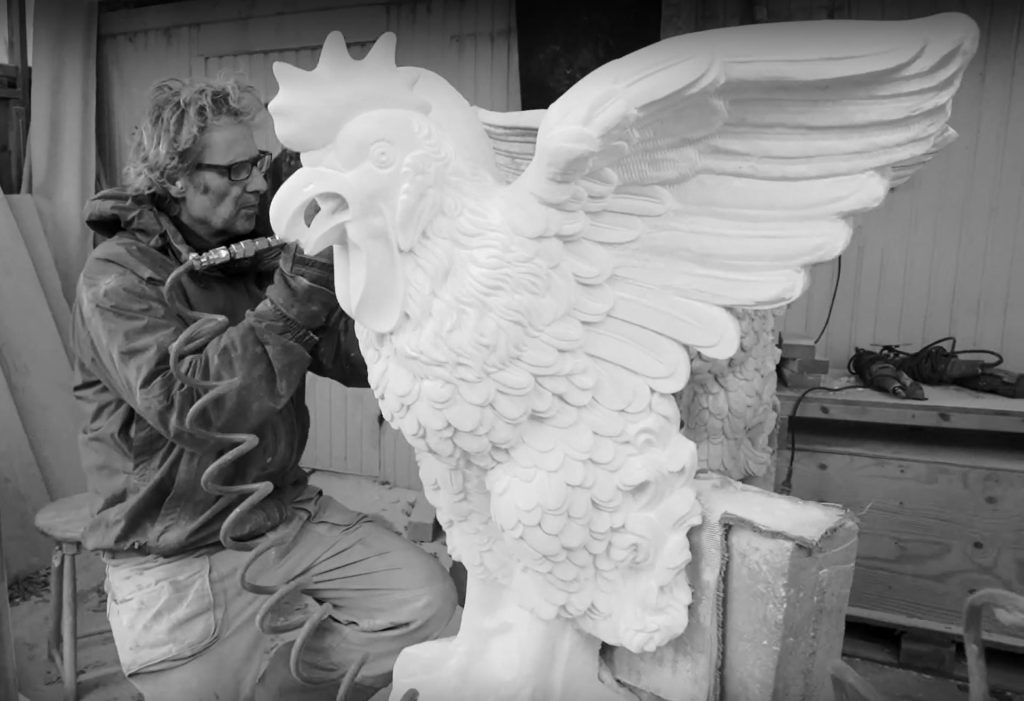
    Serge Van Druten Carving A Marble Rooster
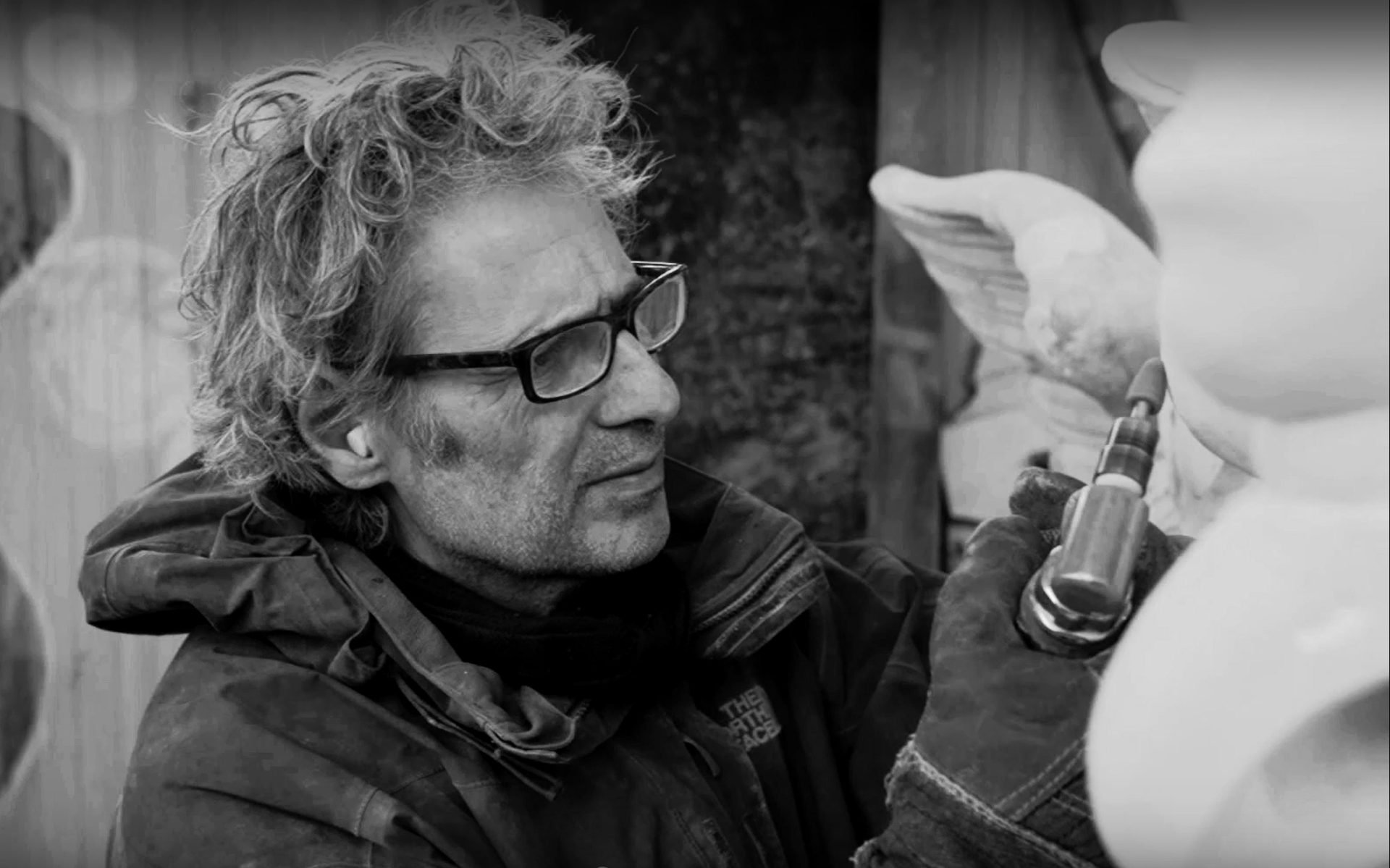
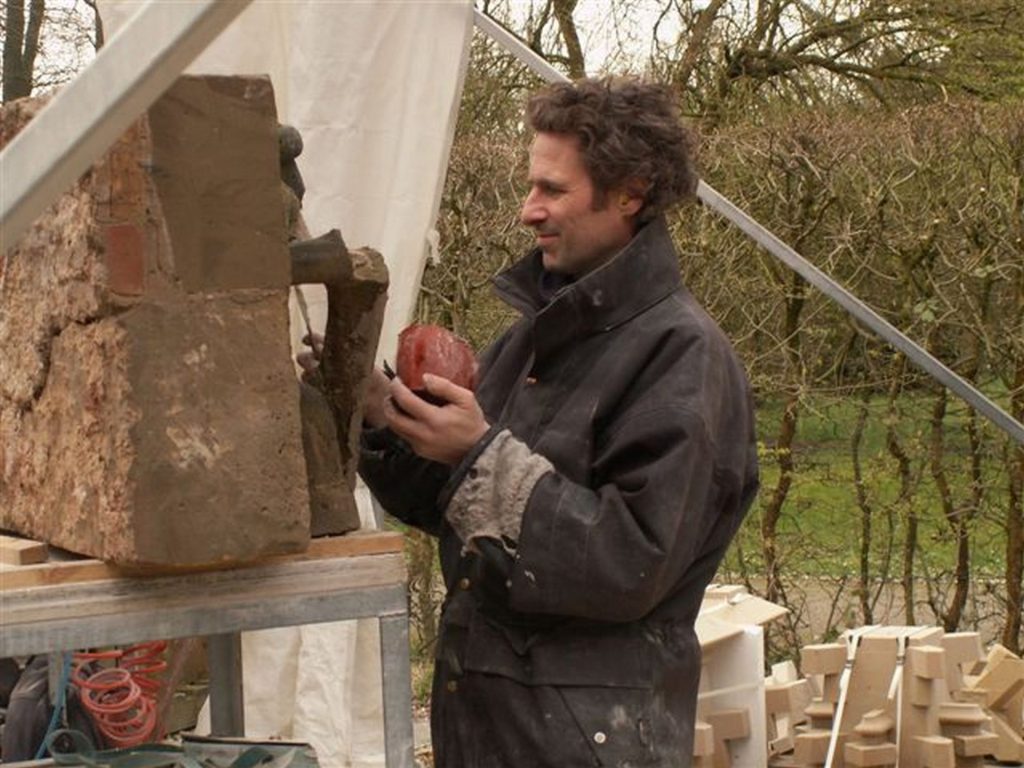
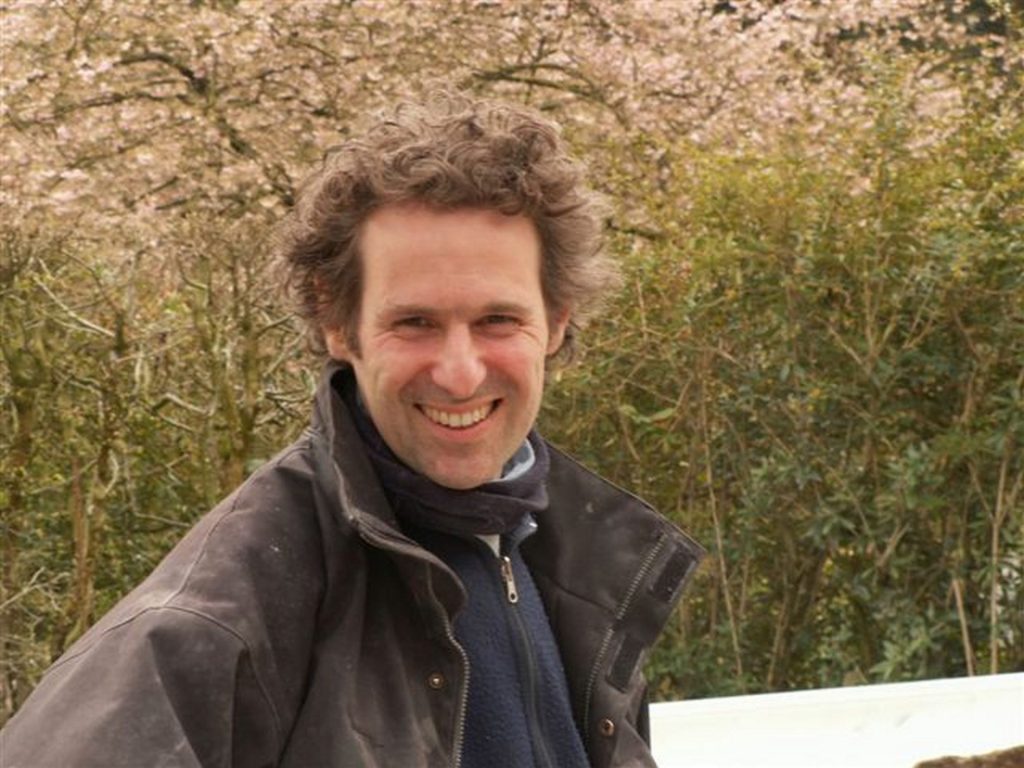
    Sculptor Serge van Druten, 1967-2025. Photo: Hugo Rikken, FullScreen Film

    A difficult request

    In the summer of 2022 I was confronted with a difficult request. My dear colleague Serge van Druten↑ was working on the two limestone statues for the restoration of the Scholten monument in the Stadspark in Groningen. But it didn't go well, he had to be operated on his back and wasn't able to work for a while.

    We agreed that he could work in my studio after the operation, so that we could help him move the statues and help him out- if needed. He'd be starting up very cautiousy and very slowly start working again. And as planned, we got moving. But after a only few days it went wrong: All the ironwork in his back broke off and he had to be operated on again. There was some pressure to this job, it had to be delivered on time, and he asked me if I wanted to finish it. Of course I would have preferred that he could have done it himself, while enjoying working in his own studio. A while earlier I had already carved an angel for him, also because of a surgery. Of course you'd help out a colleague, but knowing that this work was his passion and that he always used to dive into it with a lot of energy, I had a very double feeling about it.

    A long series of operations

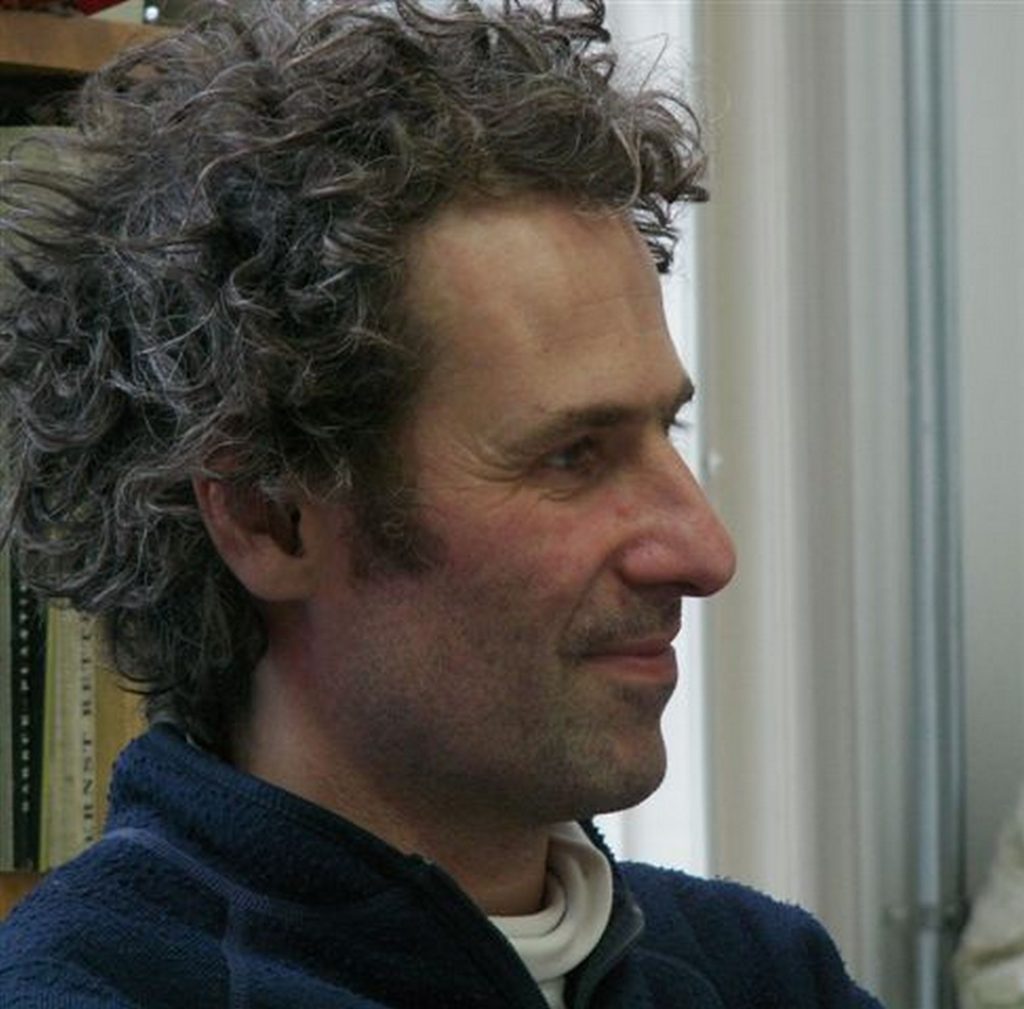
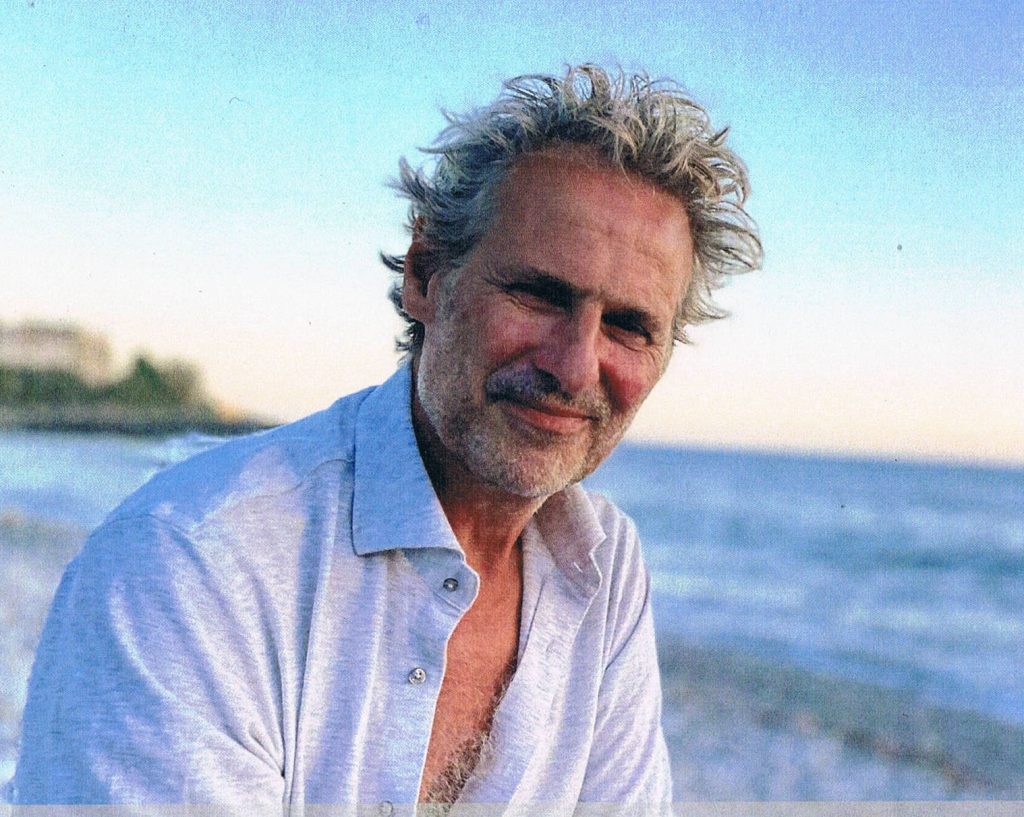
    Serge van Druten in 2008

    That back operation later turned out to be one in a long series. He went in and out of the hospital for more than three years, over and over again, and to make it more difficult, he also contracted a degenerative muscle disease. He was never able to sculpt again. I've known Serge since 1993 and from 1995 to 2010 I used to work with him on a daily base, that's why I was very sad when he passed on Wednesday 22 January 2025 , in hospital, 57 years old. He was a special, expressive person, an artist at heart, and has left me with many good memories.

    Car against the monument

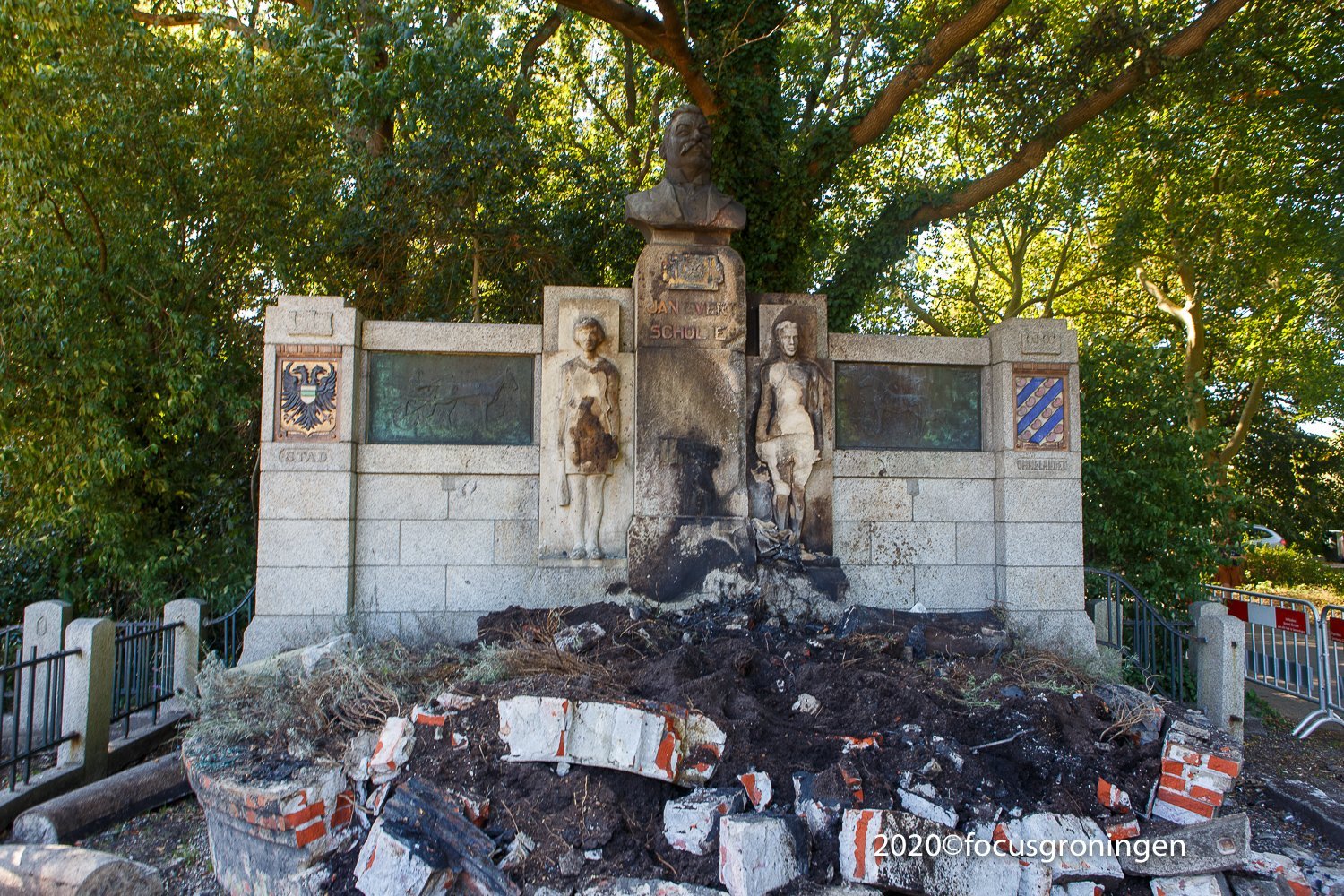
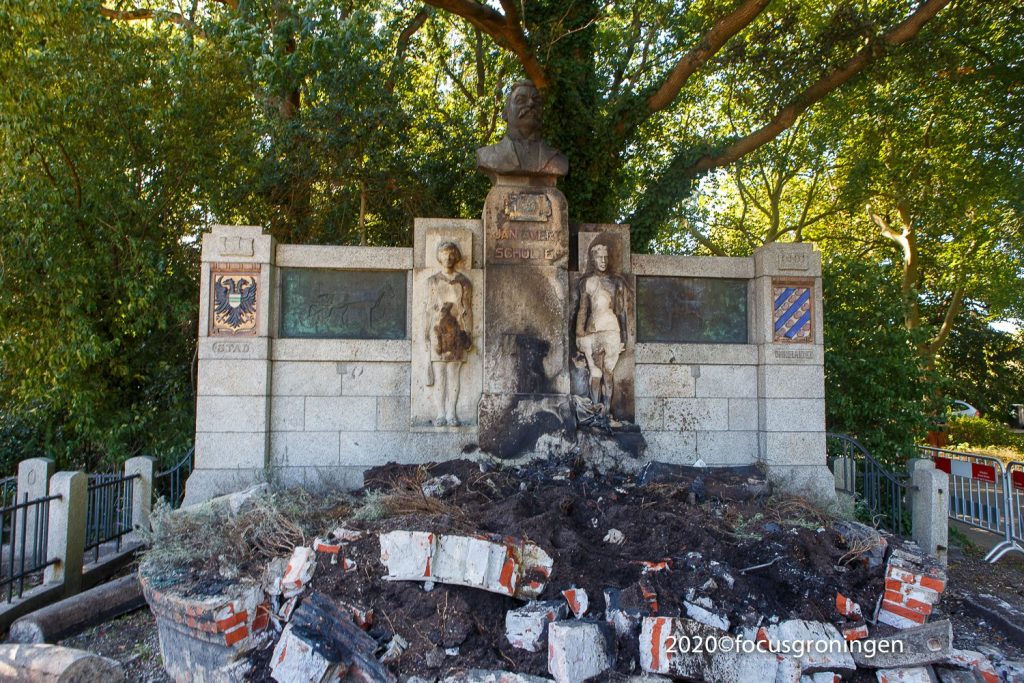
    The damaged Scholten monument after the collision. copyright 2020 Feiko van der Veen

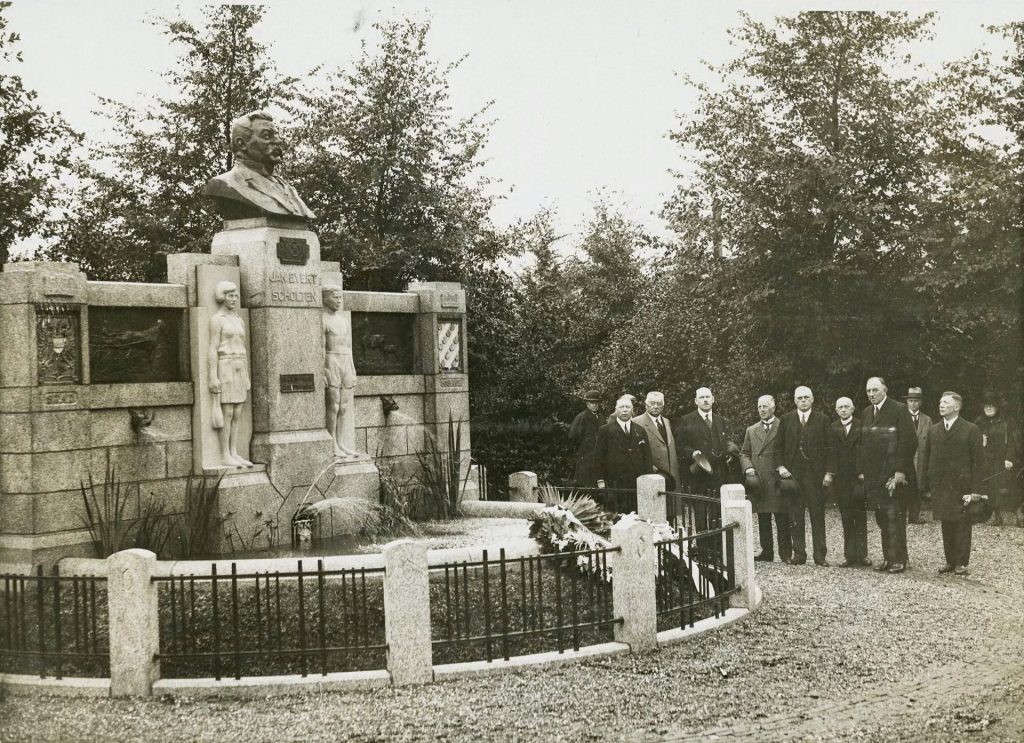
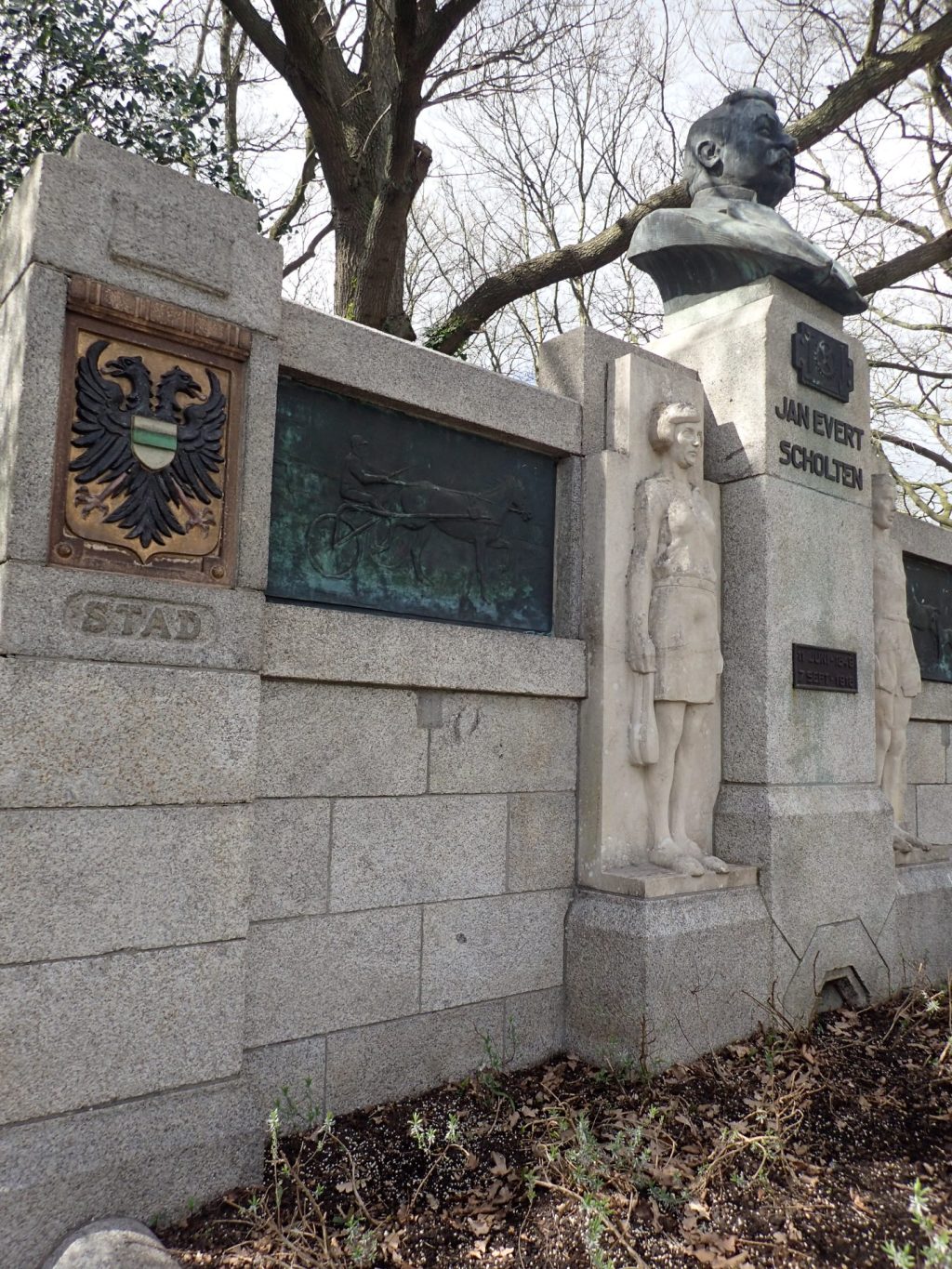
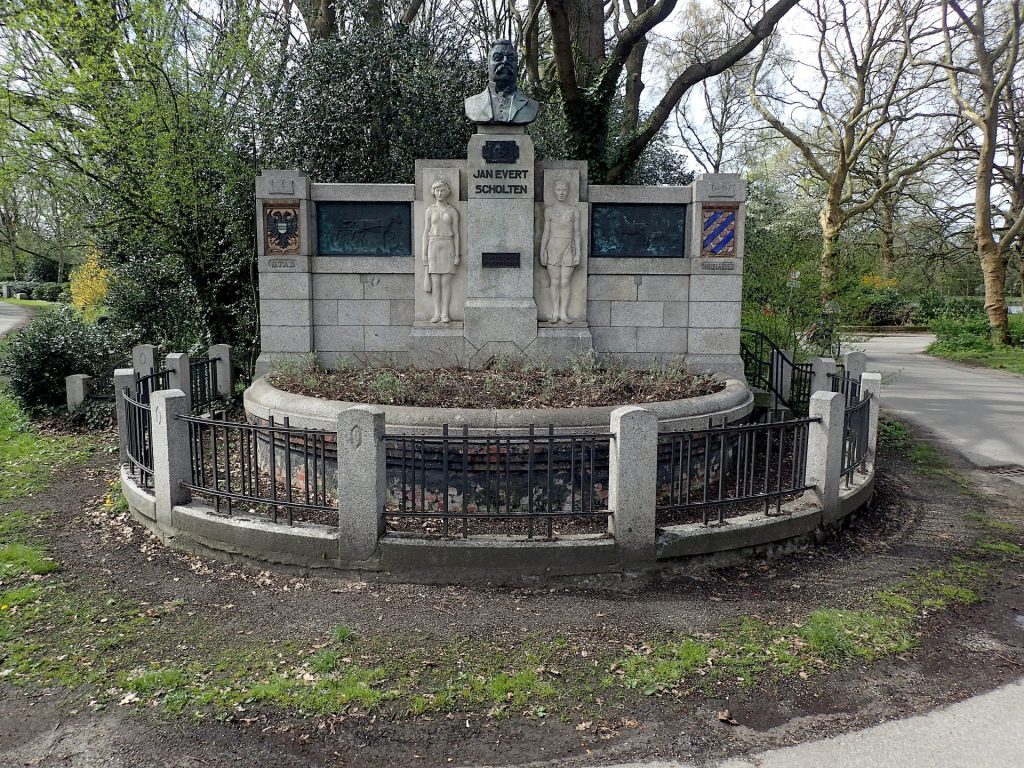
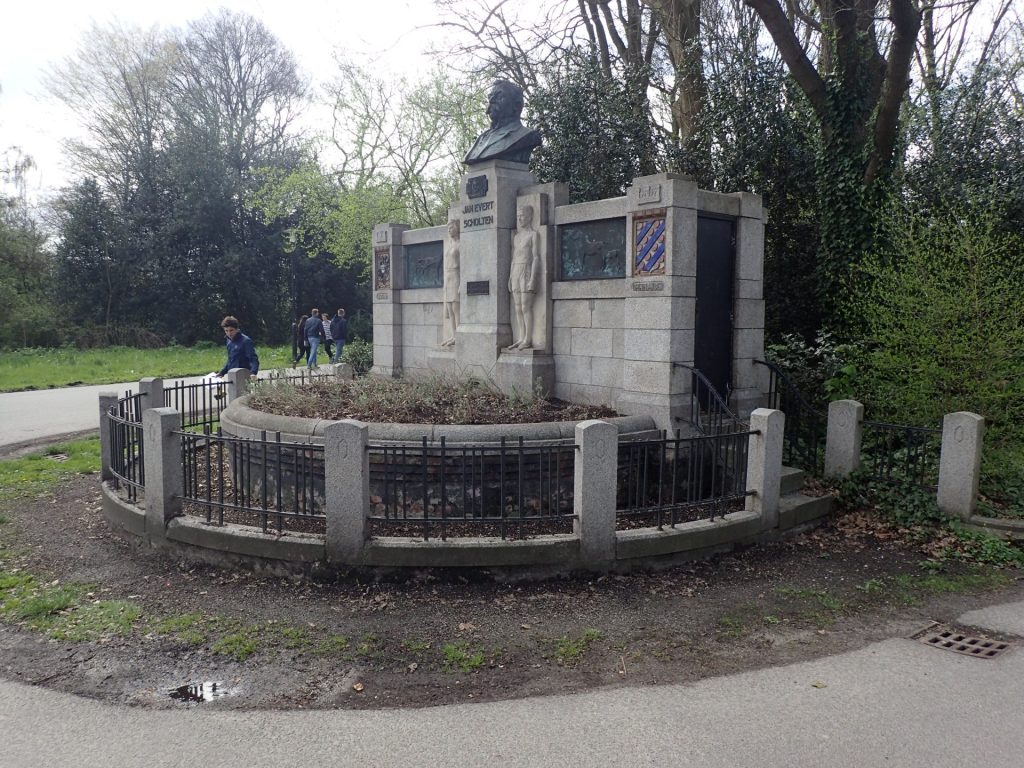
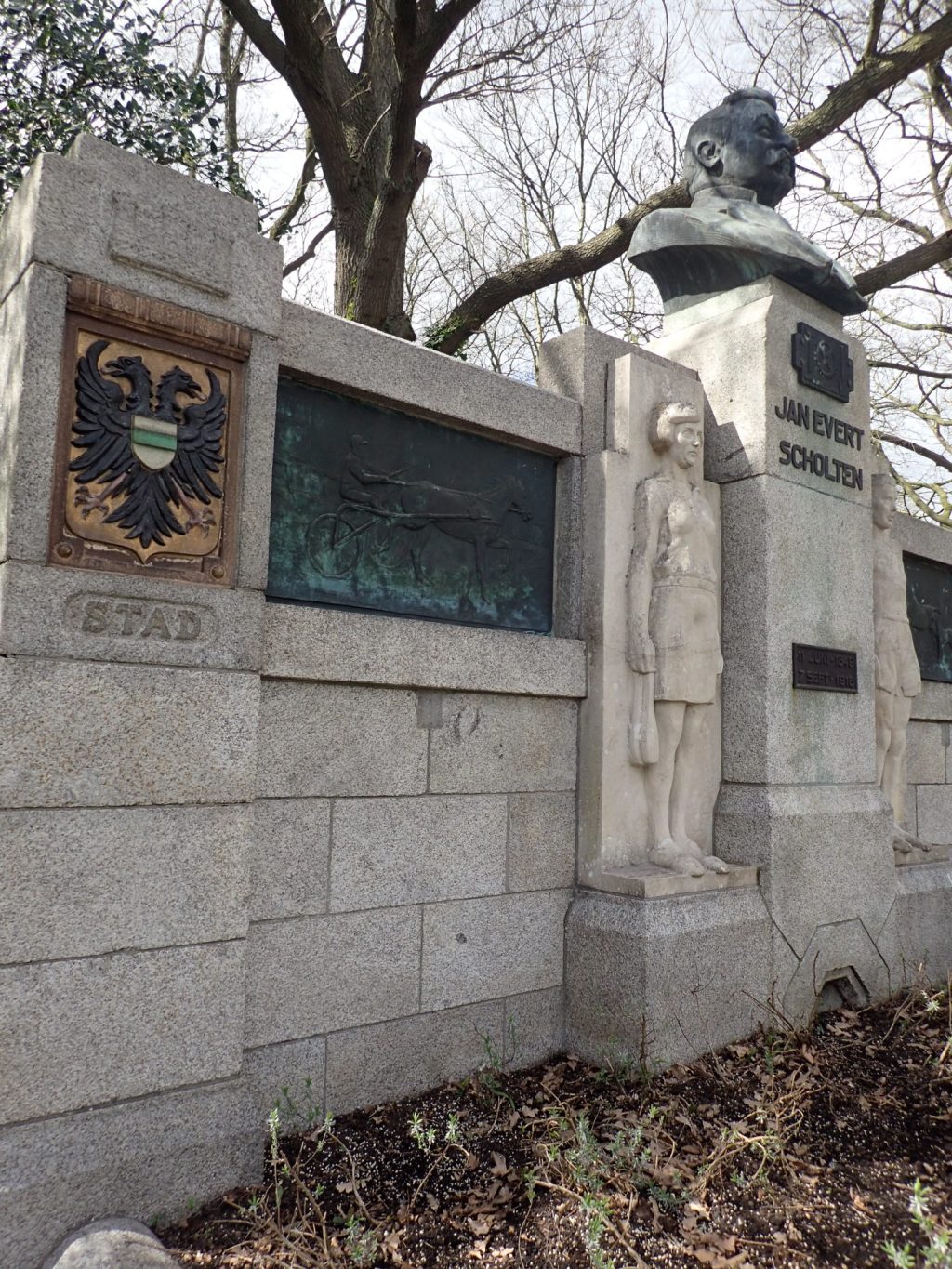
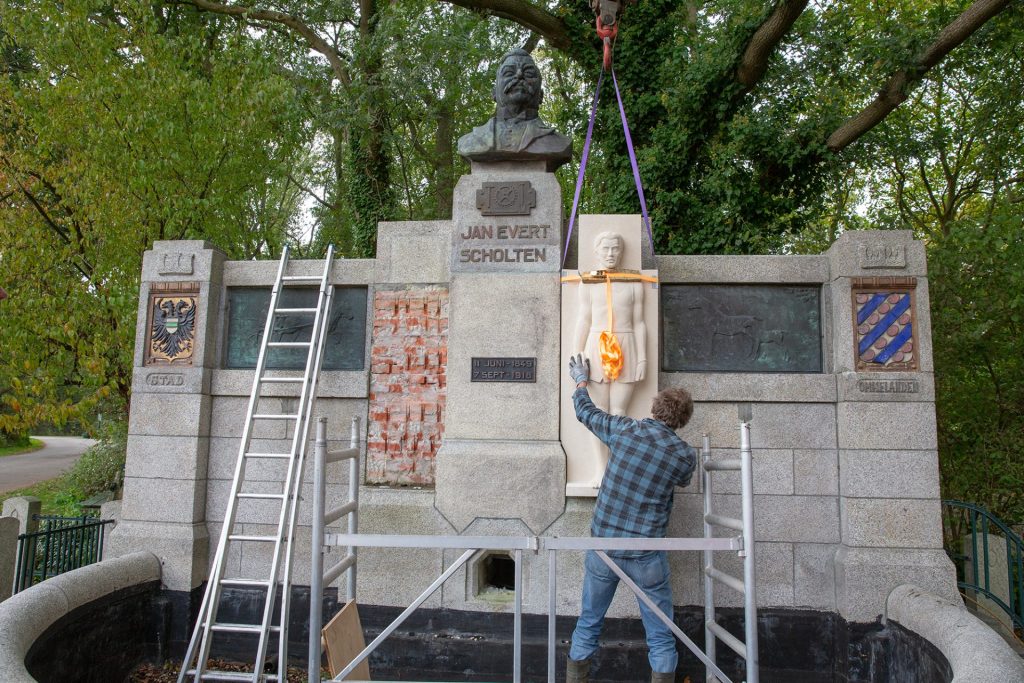
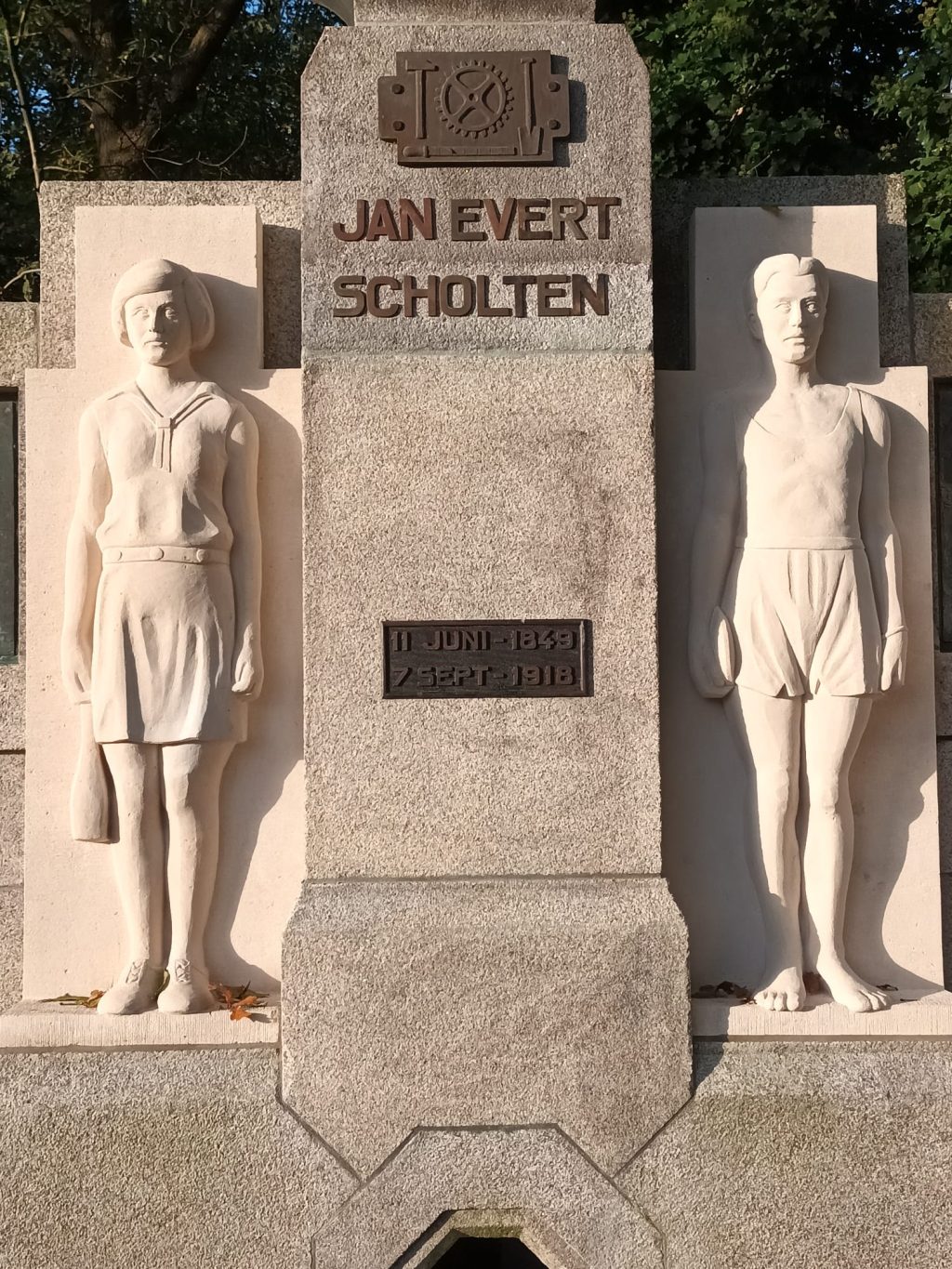
    The Scholten monument in the Stadspark in Groningen was erected in 1931 for industrialist Jan Evert Scholten, as a gift from his friends. Scholten had donated this city park to the city, so that's probably why they considered it a good place for the monument. The Sculptor Abraham Hesselink carved most parts for the monument, which consists of a pedestal with a bust of Scholten on it. This is flanked by two walls on which bronze plaquettes are mounted that refer to horse breeding and trot racing, two of Scholten's favourite pastimes. Next to the pedestal are two children in sportswear and on the corners of the monument the coat-of-arms of Stad en Ommelanden have been placed. It has sat there all this time, decaying a little bit over time, Until on Sunday morning 20 September 2020 a car against crashed into the monument with a huge bang and caught fire. The driver was killed instantly.

    Reconstruction

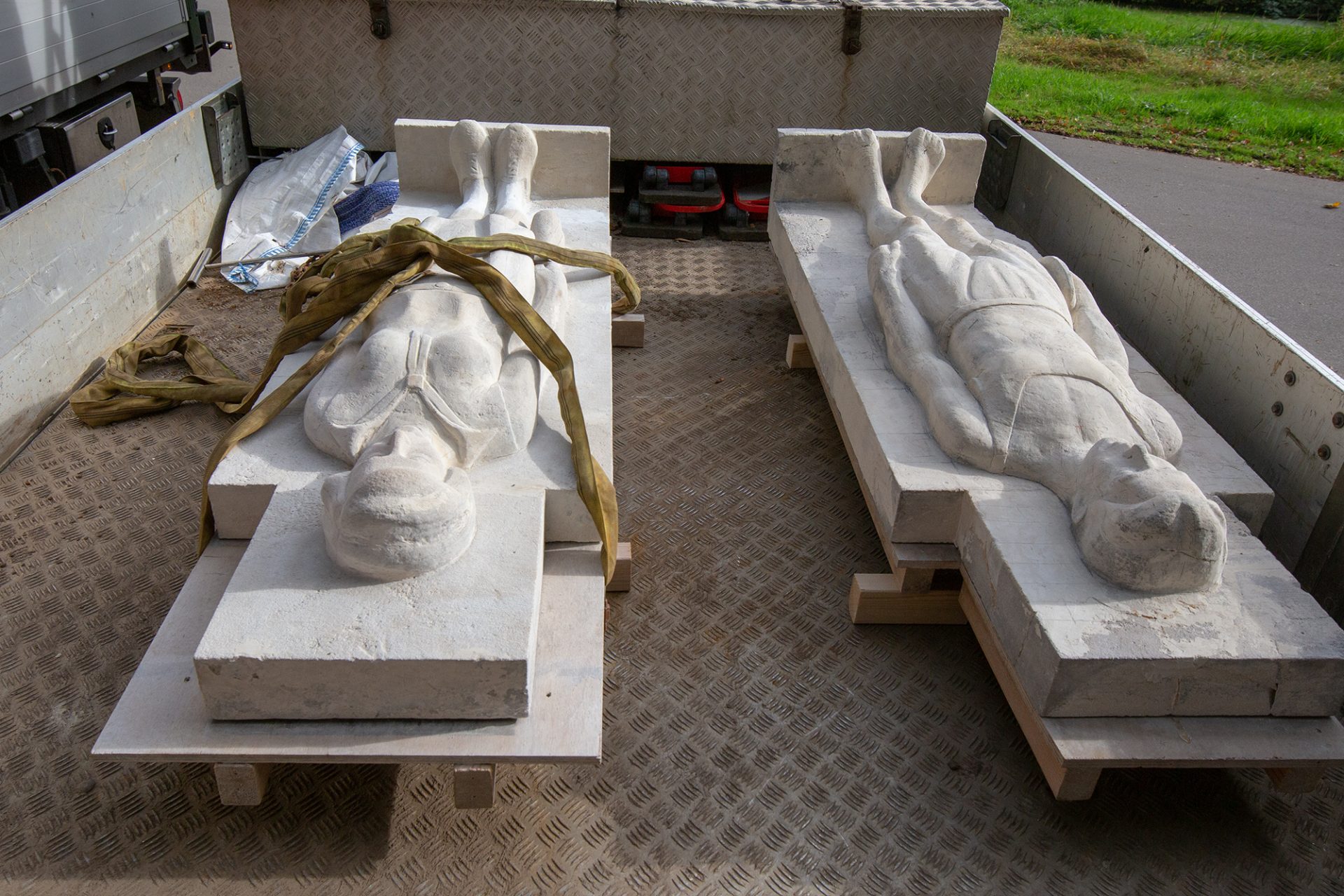
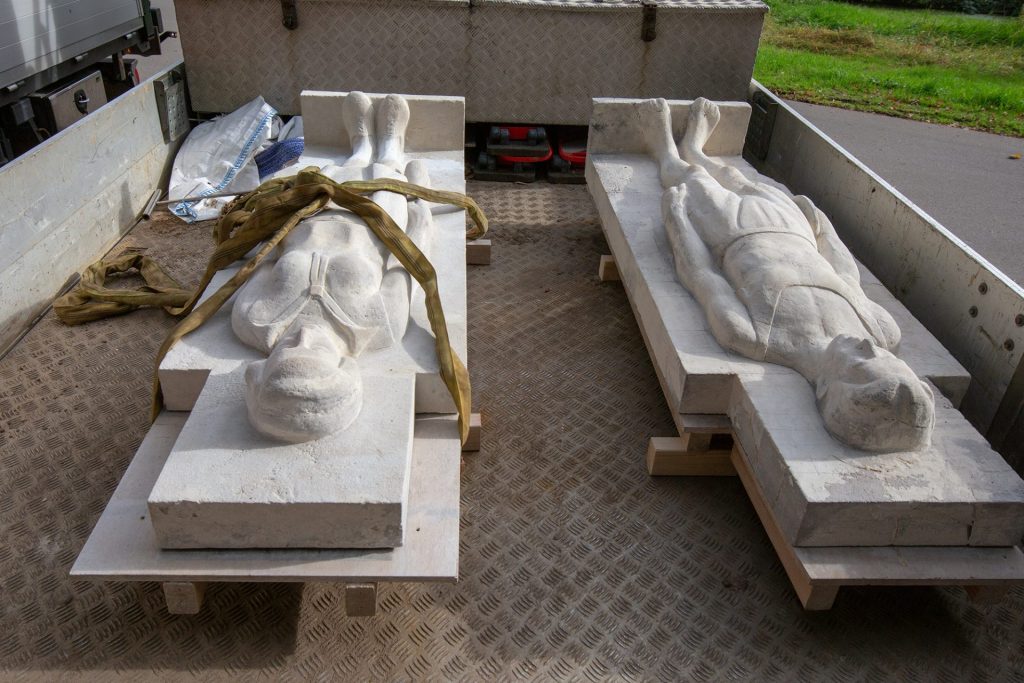
    The two recovered original statues on the truck. Photo: Henk Tammens

    The monument needd to be restored. The two statues were considerably damaged and after some consultation ended up at Serge's place to be reconstructed and resculpted in French limestone. All loose parts were kept on Serges request, so that he could fit them together and supplement the missing pieces with plaster. After reconstructing the statues, he coloured the plaster with acrylic paint, so that it was almost impossible to see that it was all repairs. He ordered the new stone and asked me if I could cut out the two statues on my copying saw machine. Because this machine is a contour saw machine with a saw blade of 40 cm and therefore cannot copy all all of the details, the sides of the statues would not be properly copied, but that was not a real setback. Serge was enough of a professional to easily take care of that.

    Copying

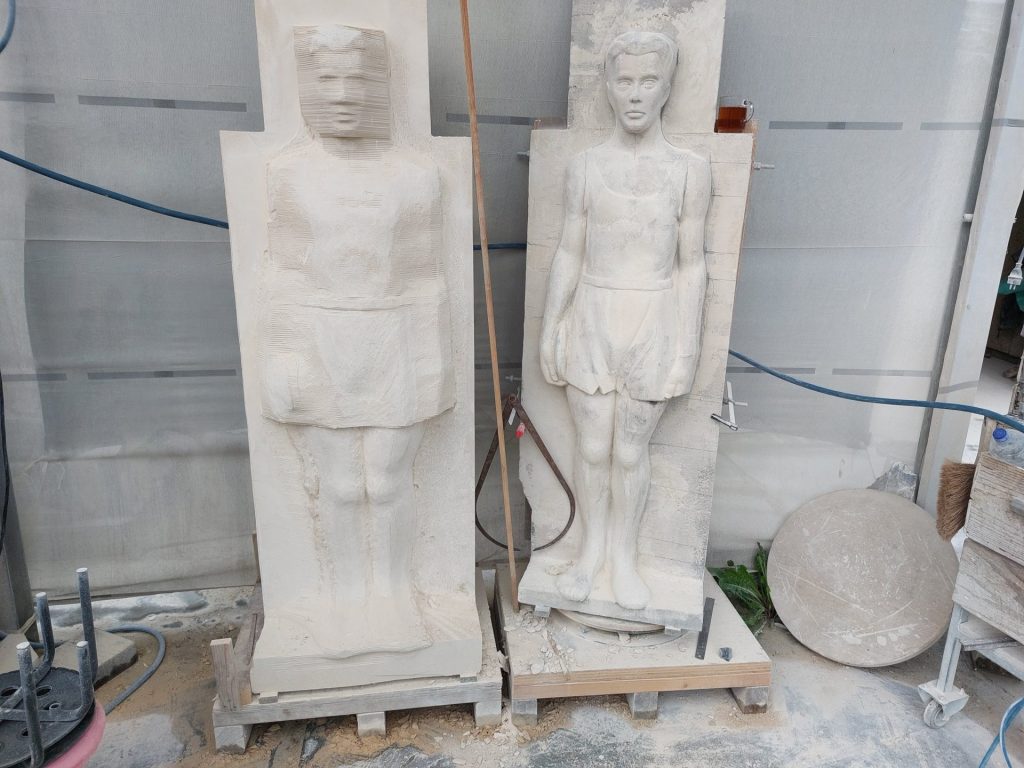
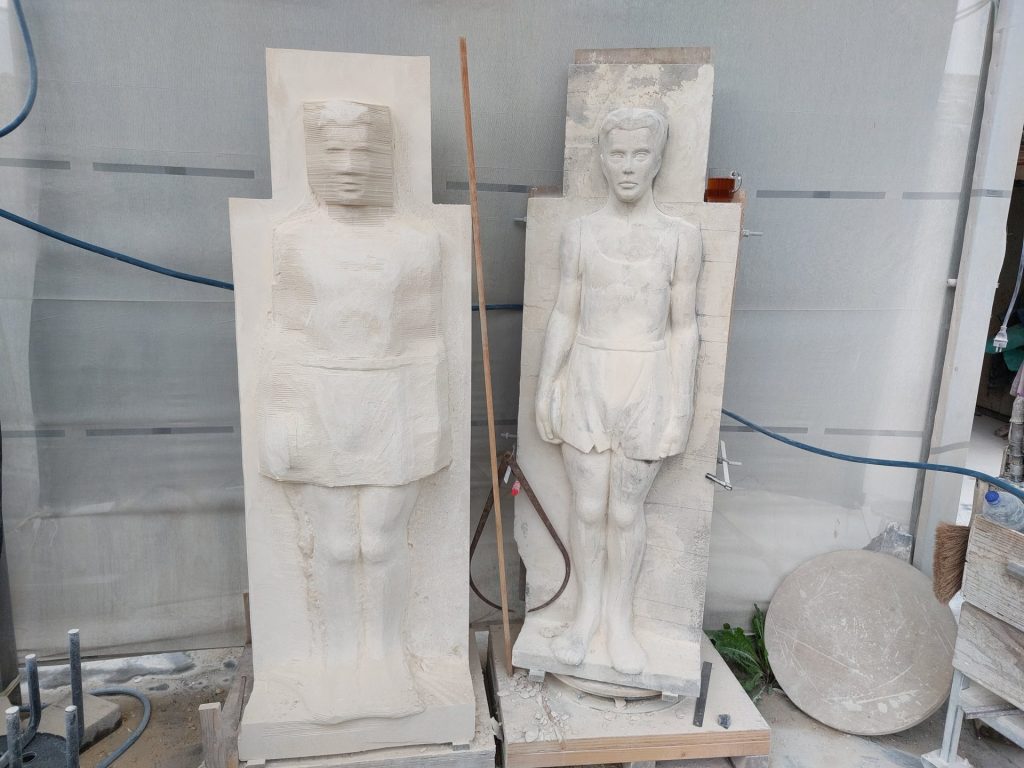
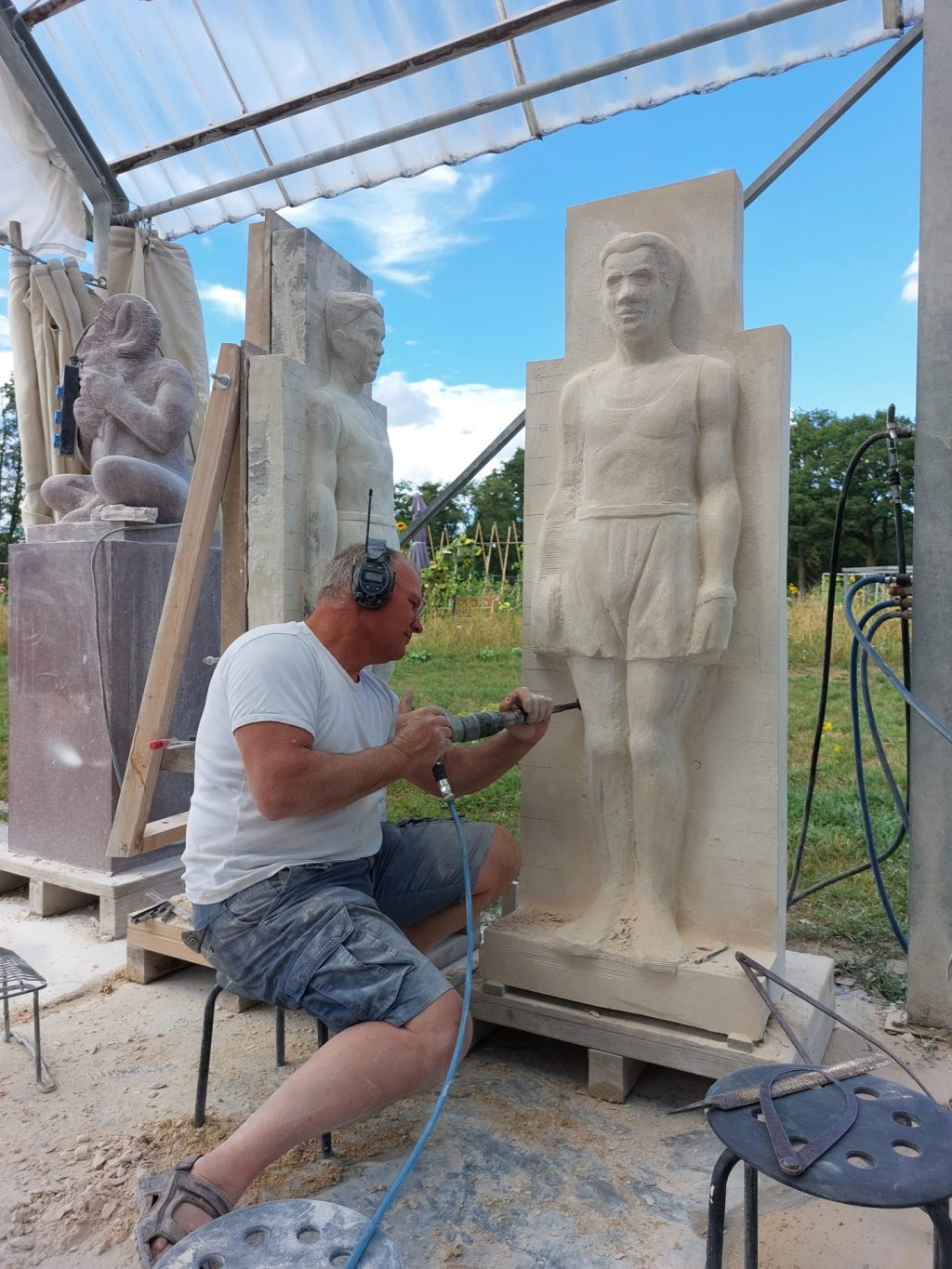
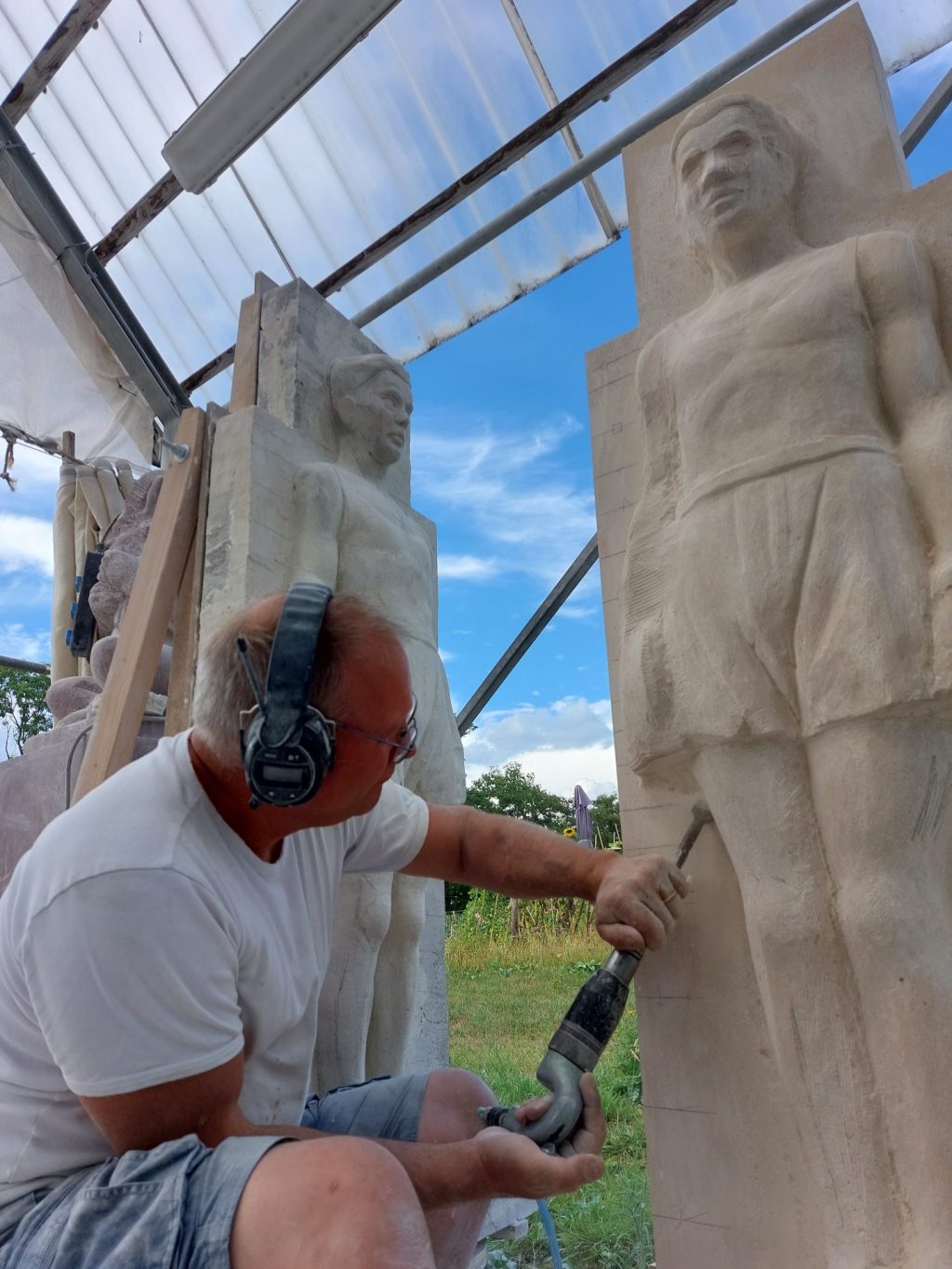
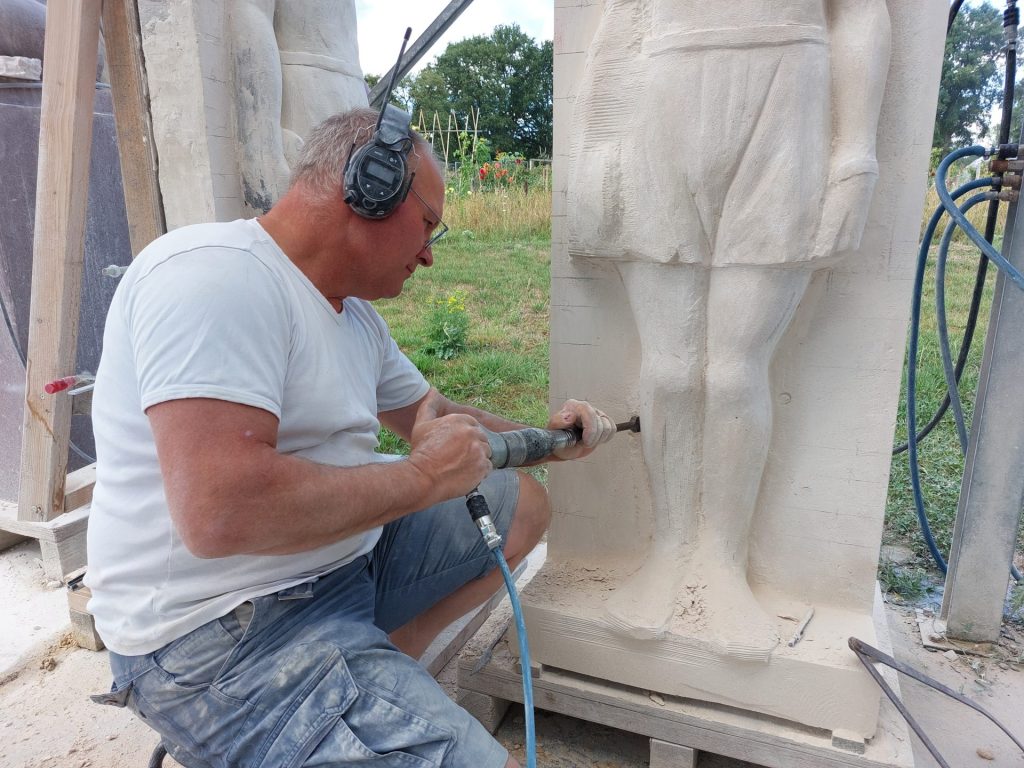
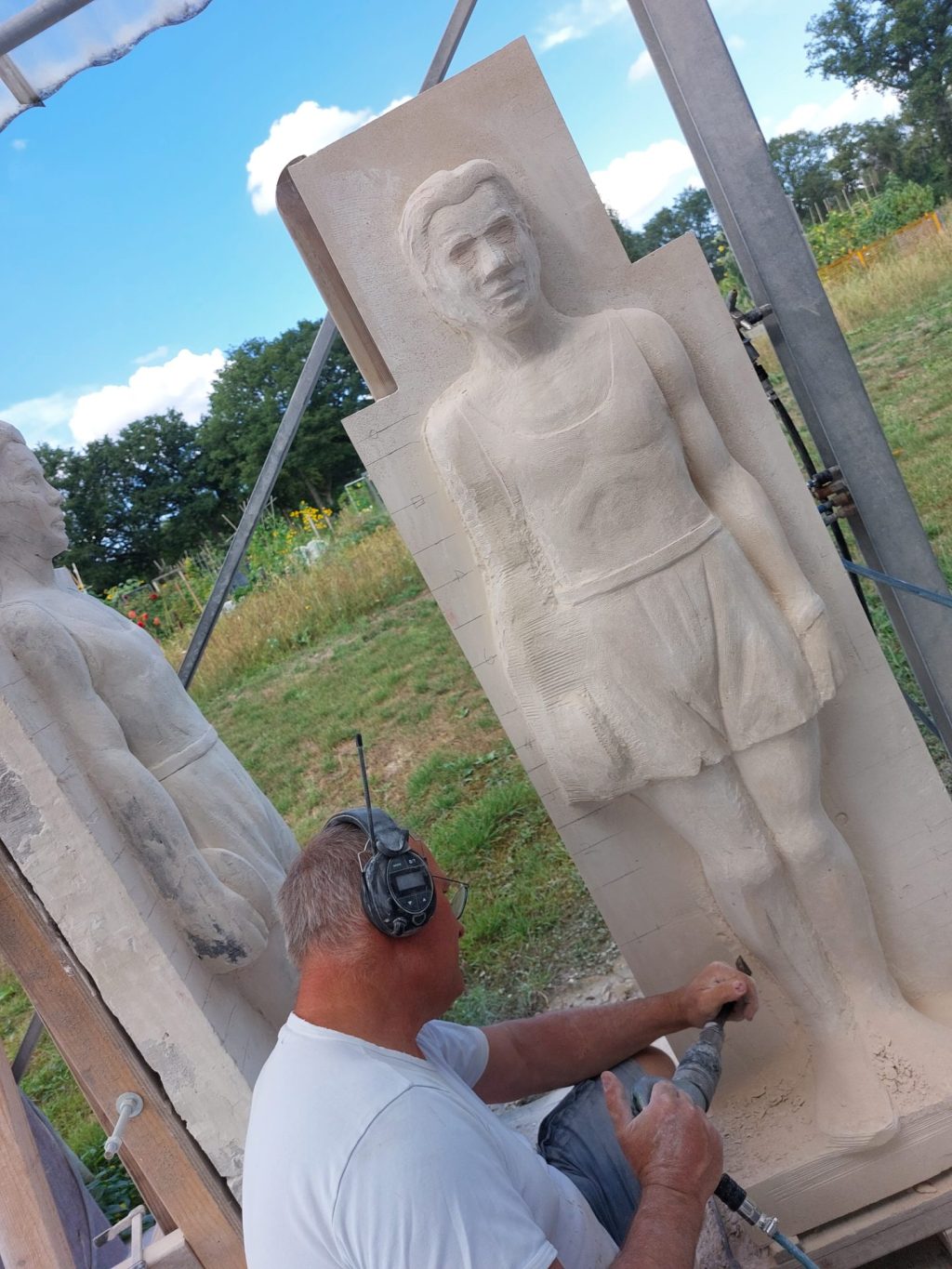
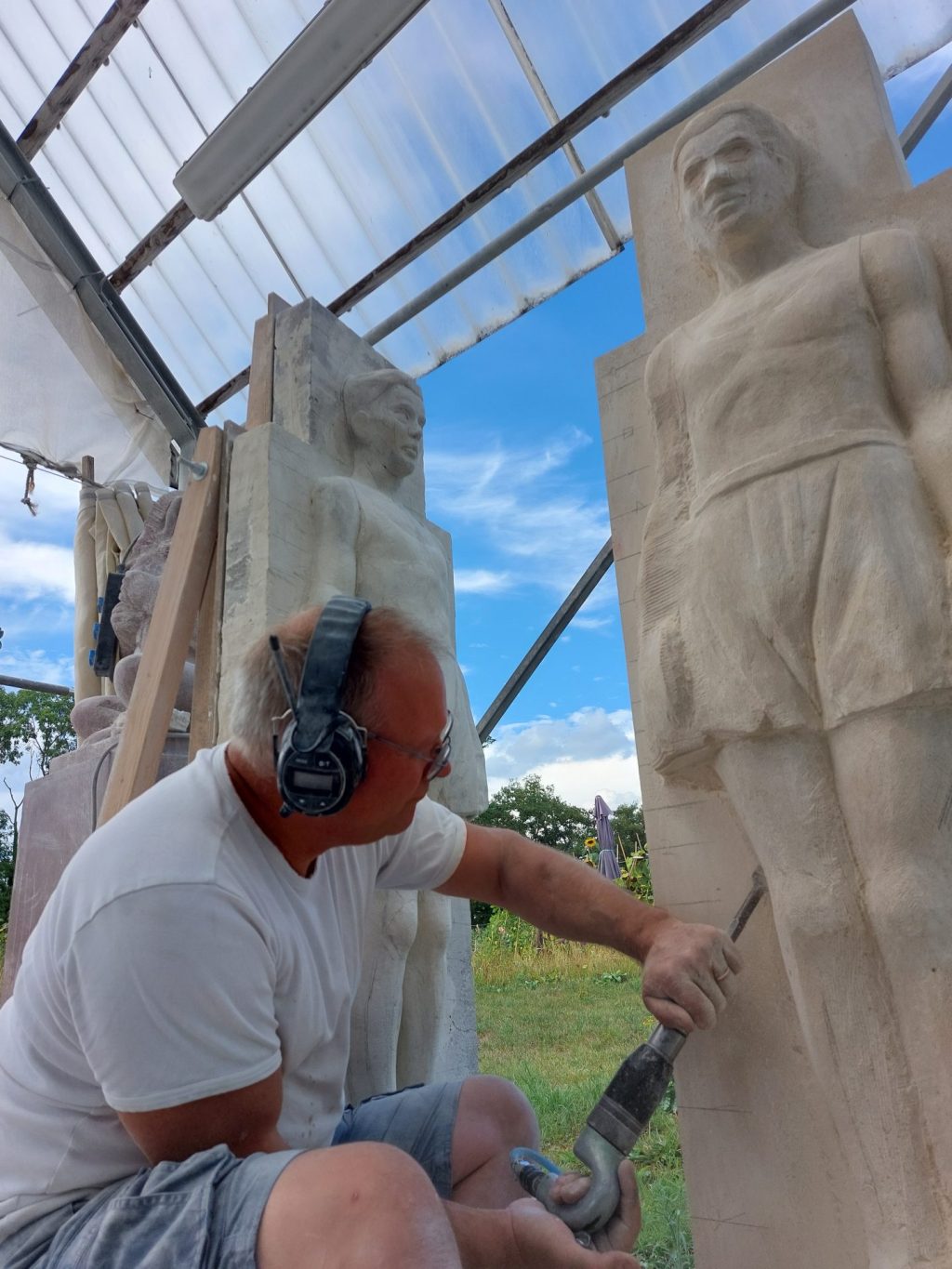
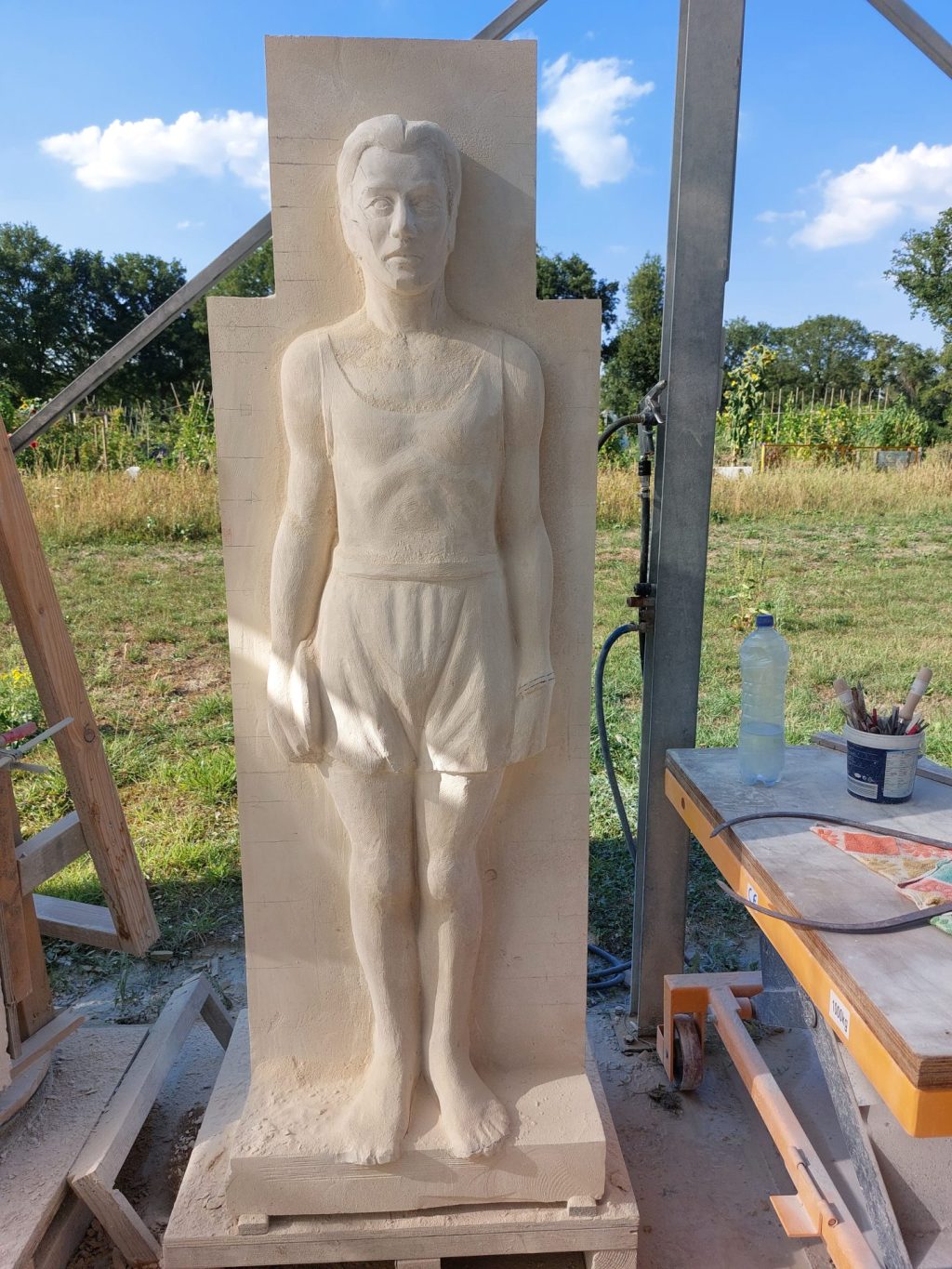
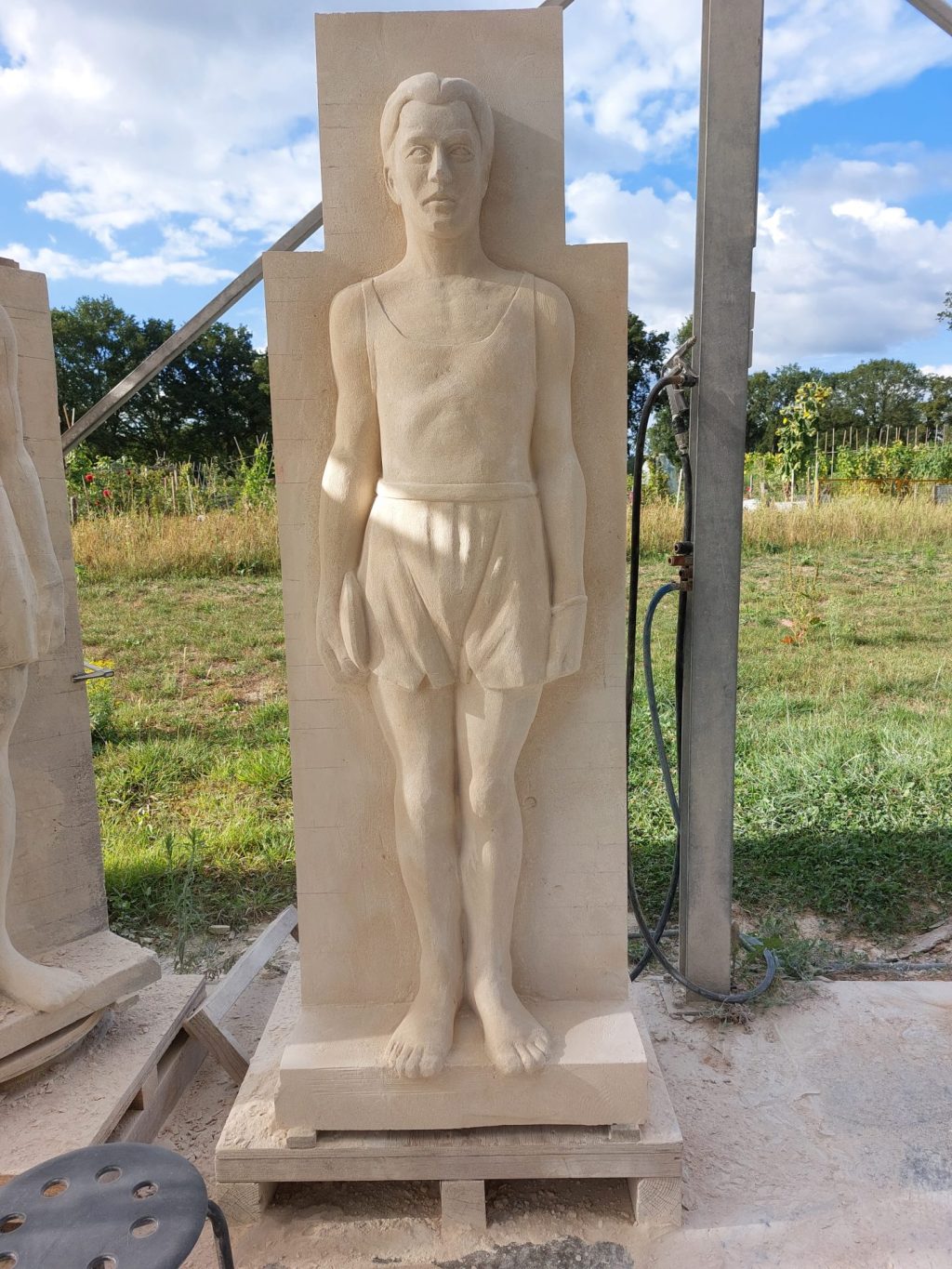
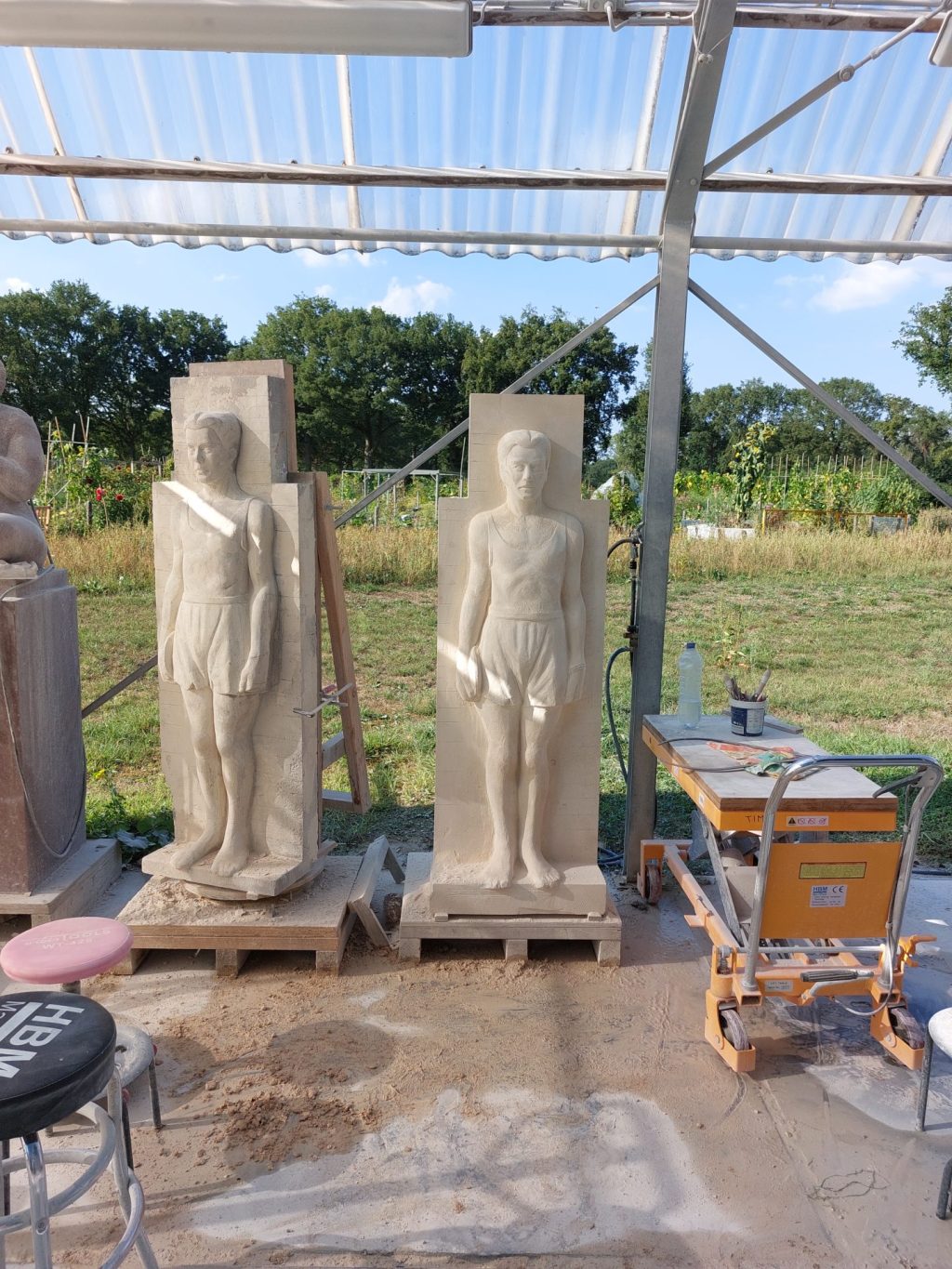
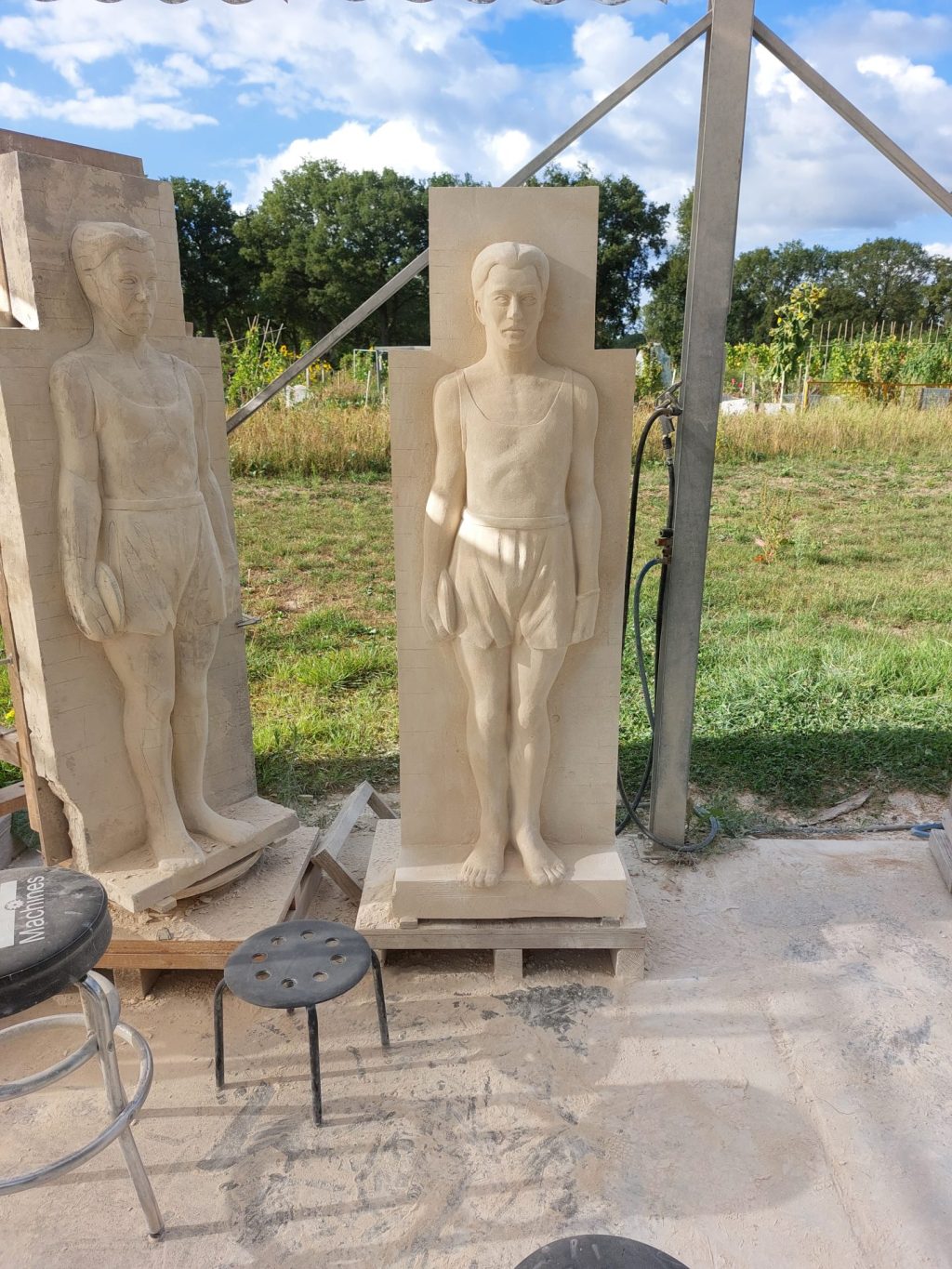
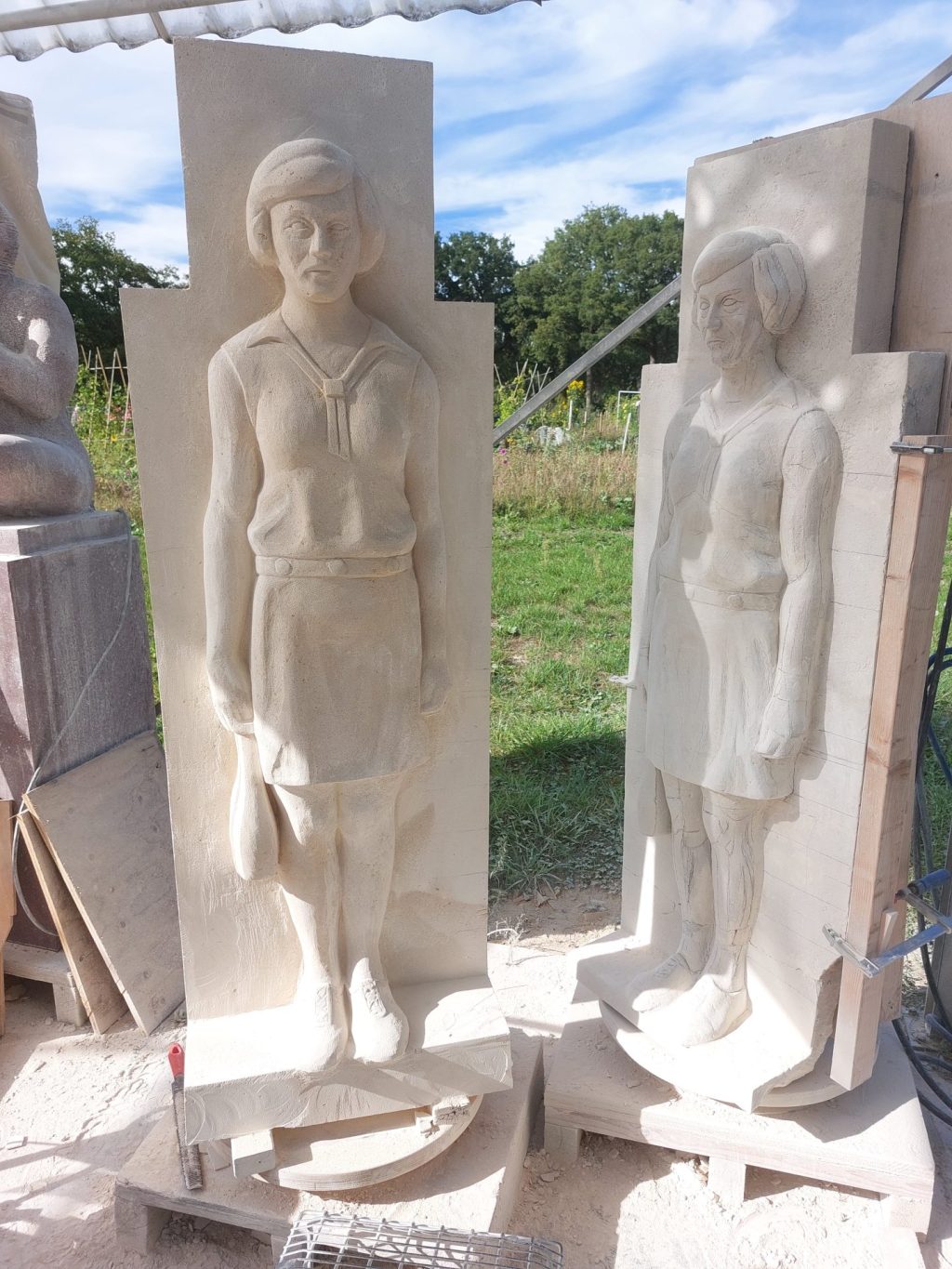
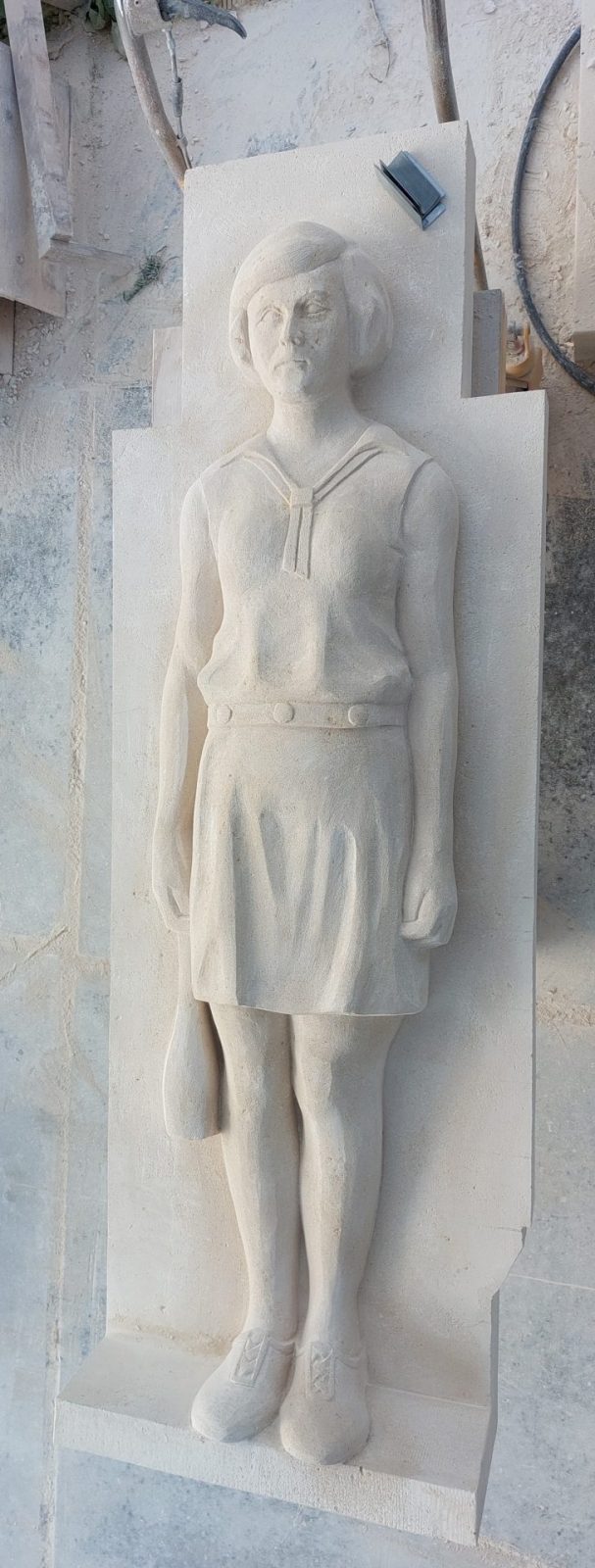
    I contour sawed the two statues out of a new block of limestone. The horizontal saw blade could not copy the space between the arm and the back side, but most details were neatly cut out. Then Serge came and started carving the first statue, taking it easy, starting on the young male figure first. After Serge needed to pull out, the sculptures sat there for a long time. Eventually we came to a decision, We worked out a fee and I carveded the sculpture for him. The carving job was considerably simplified by the sawing machine, But as you can see, there is still plenty of measuring and carving to do before you can call it a full-fledged copy.

    After that, I copied the girl. They're a couple of two stiff athletes, And especially the girl just stands there as if she is doing shopping instead of throwing hammers. The young man with his peculiar eyes looks a little Indonesian, also because of his build. A typical image of that time, shall we say.

    Gallery

    (Read on below!)

    Serge as a sculptor

    Serge climbing one last time into the construction lift, crutches and all, At Saint John's Cathedral, to see his angels up close. 2022. Photo: Roel van der Aa/BD

    I also collaborated a lot with Serge van Druten after the years that we were employed at the Mooy sculpture firm in Amersfoort together, among other things for the St John's Cathedral in Den Bosch, The Netherlands (statues and angels), the St. Eusebius's Church in Arnhem (the Netherlands) (carving ornaments), the Dom Cathedral in Utrecht (tuffstone crockets and large crockets in basalt lava) and of course a lot for the Utrecht Dom Tower in Utrecht (finials, gargoyles, crockets and ornaments).

    Video portrait of a sculptor

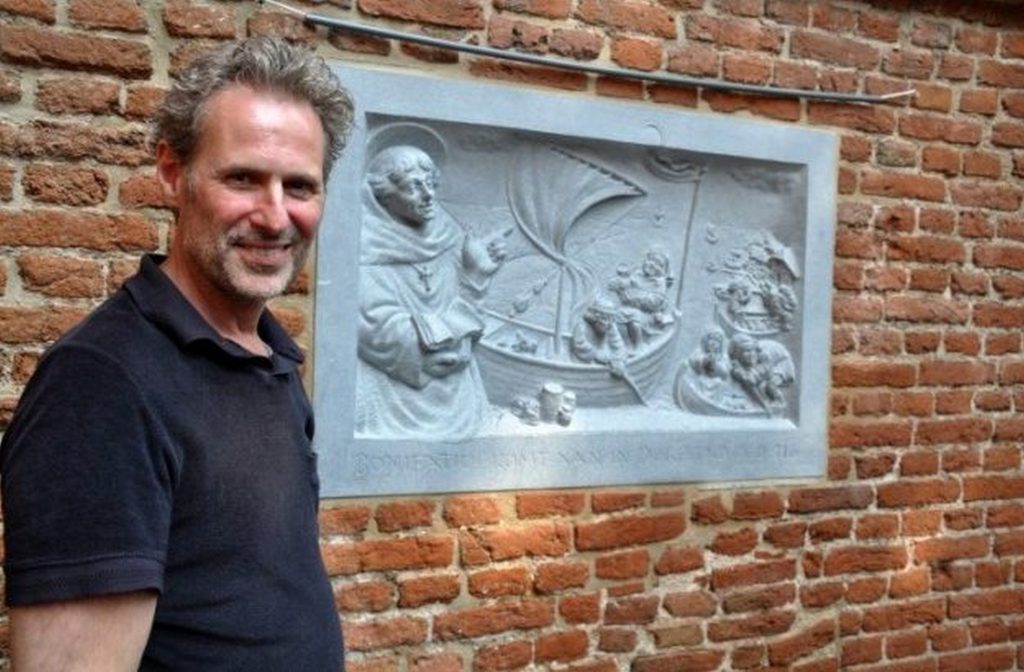
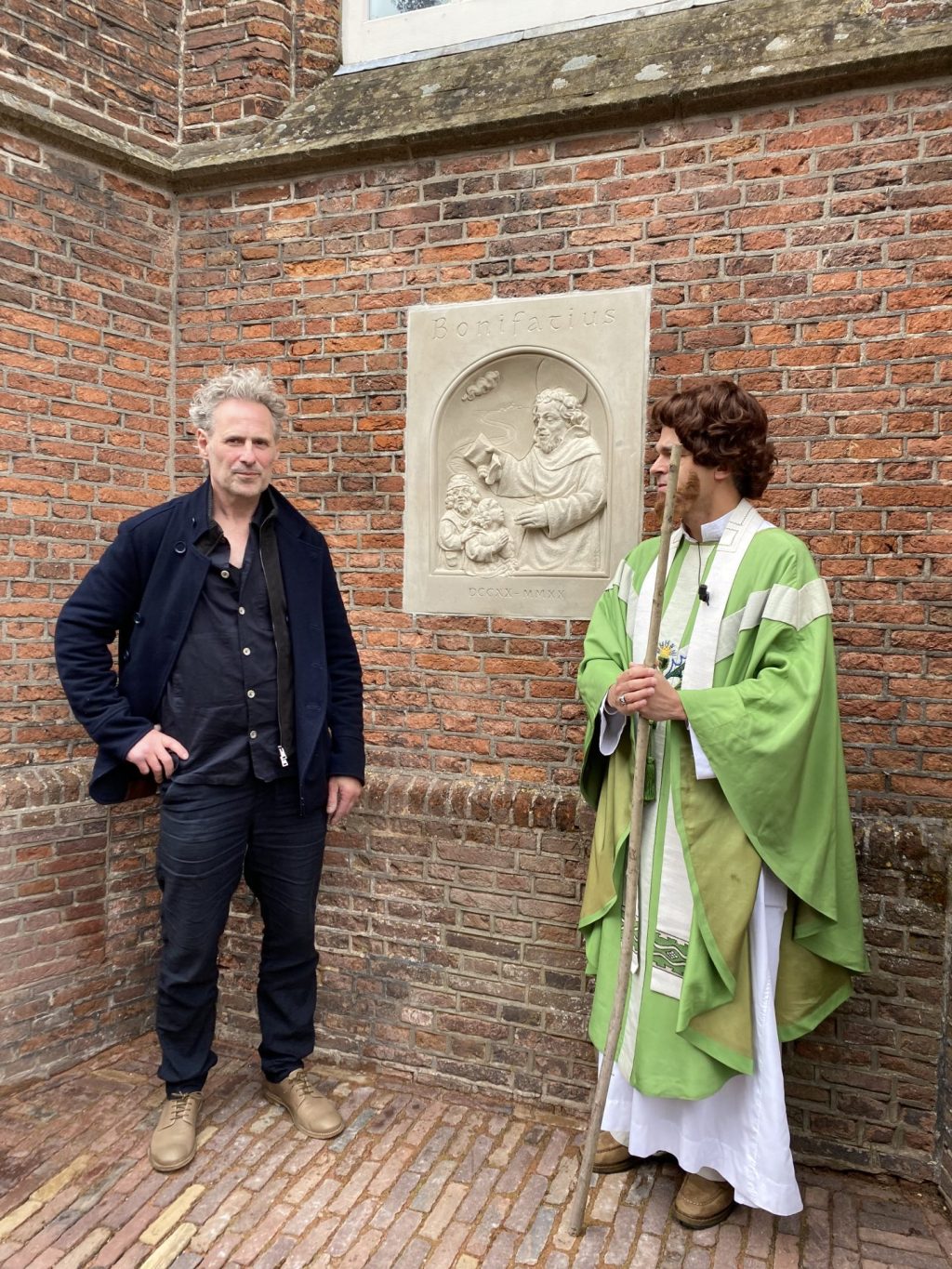
    But Serge also had his own projects, Such as its facade reliefs for the commemoration of the landing of St. Boniface in the Netherlands. If you want to know more about this, I'd especially recommend watching the videos that Hugo Rikken from Fullscreen Film made in Serge's studio. A beautifully recognizable portrait of a craftsman and artist, that can be found on the channel of Fullscreen Film on YouTube, by entering the name of Serge van Druten, or by clicking on this link to go through the entire playlist: Videos about Serge van Druten on YouTube.

    An angel being passed on

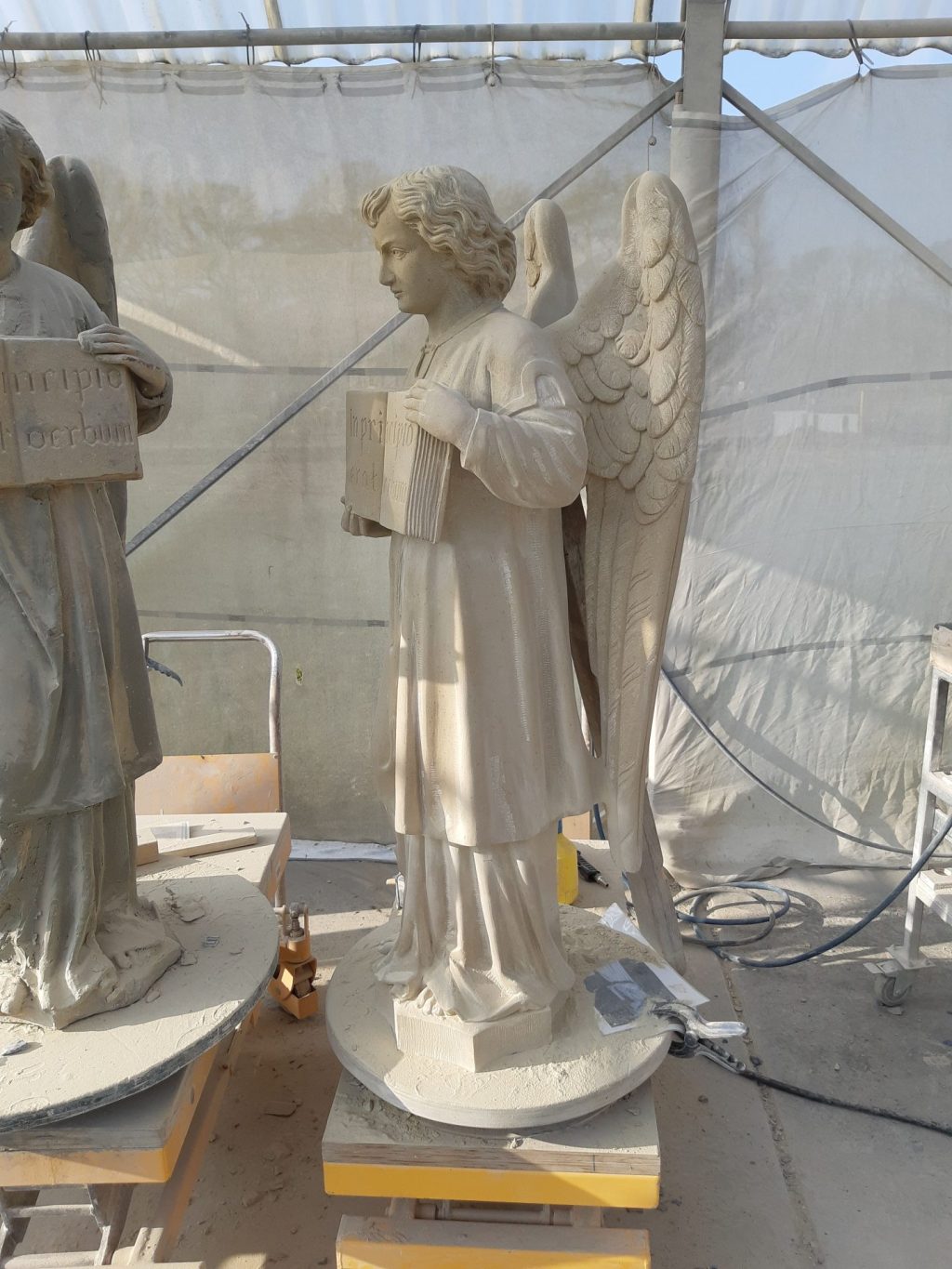
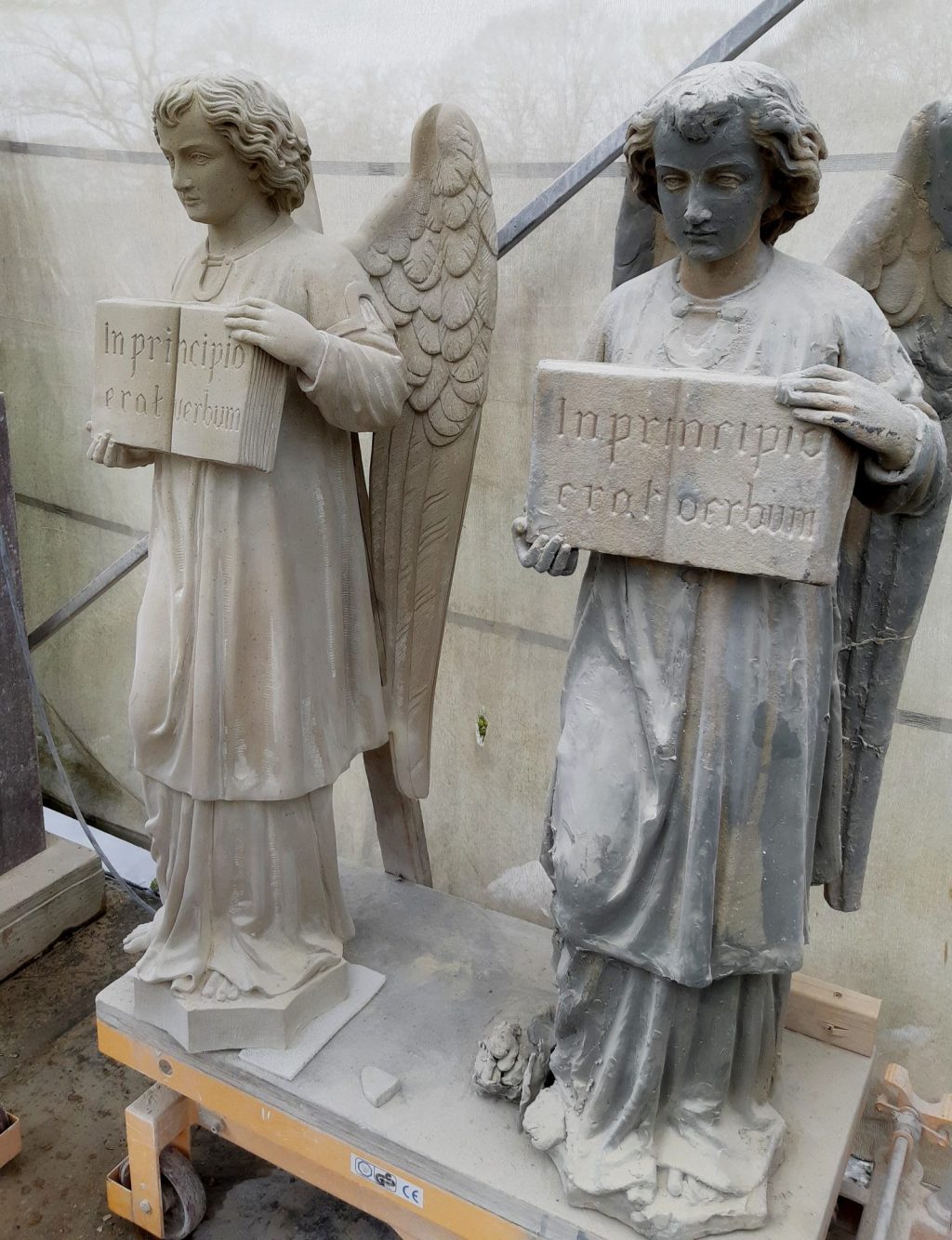
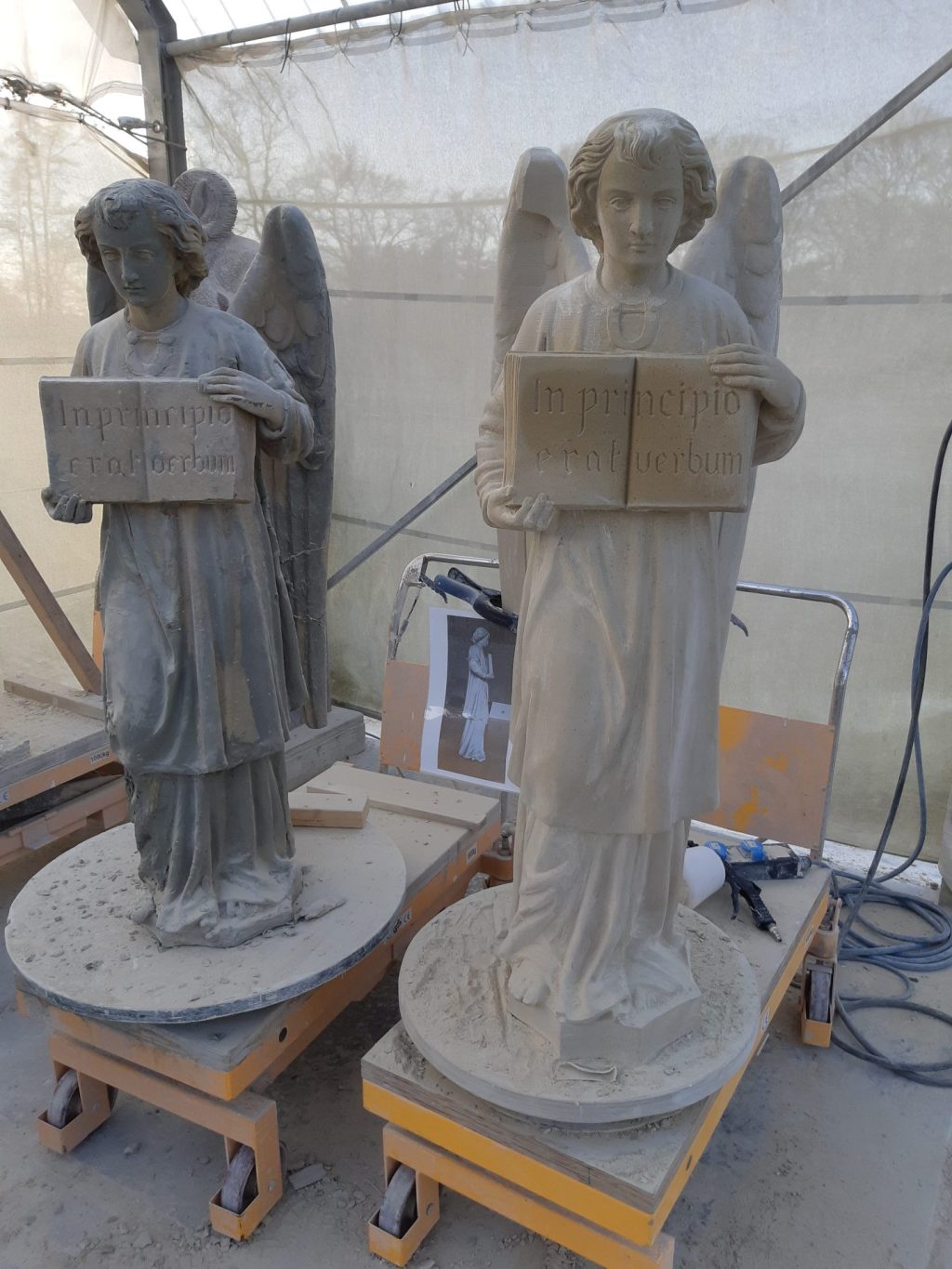
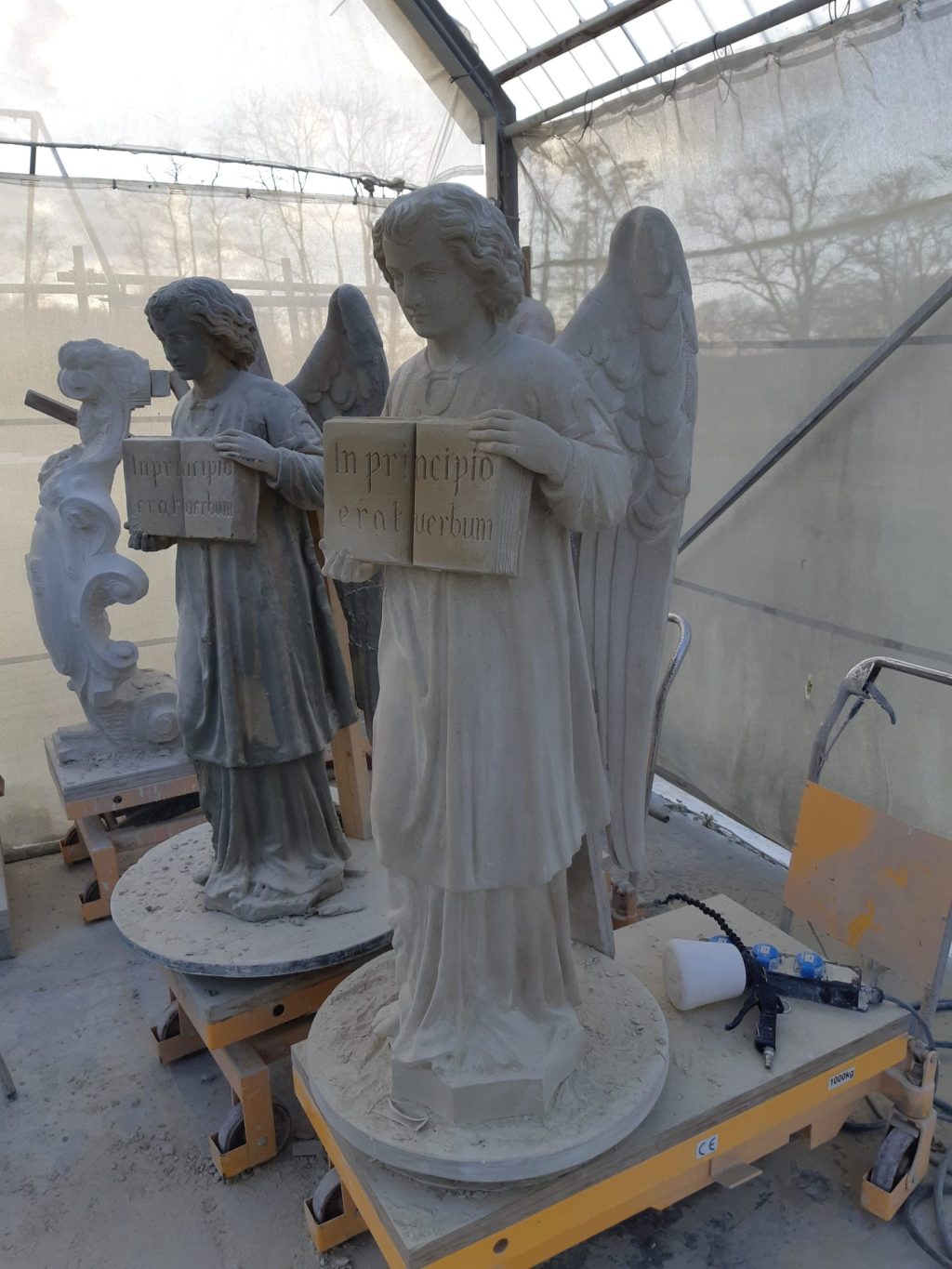
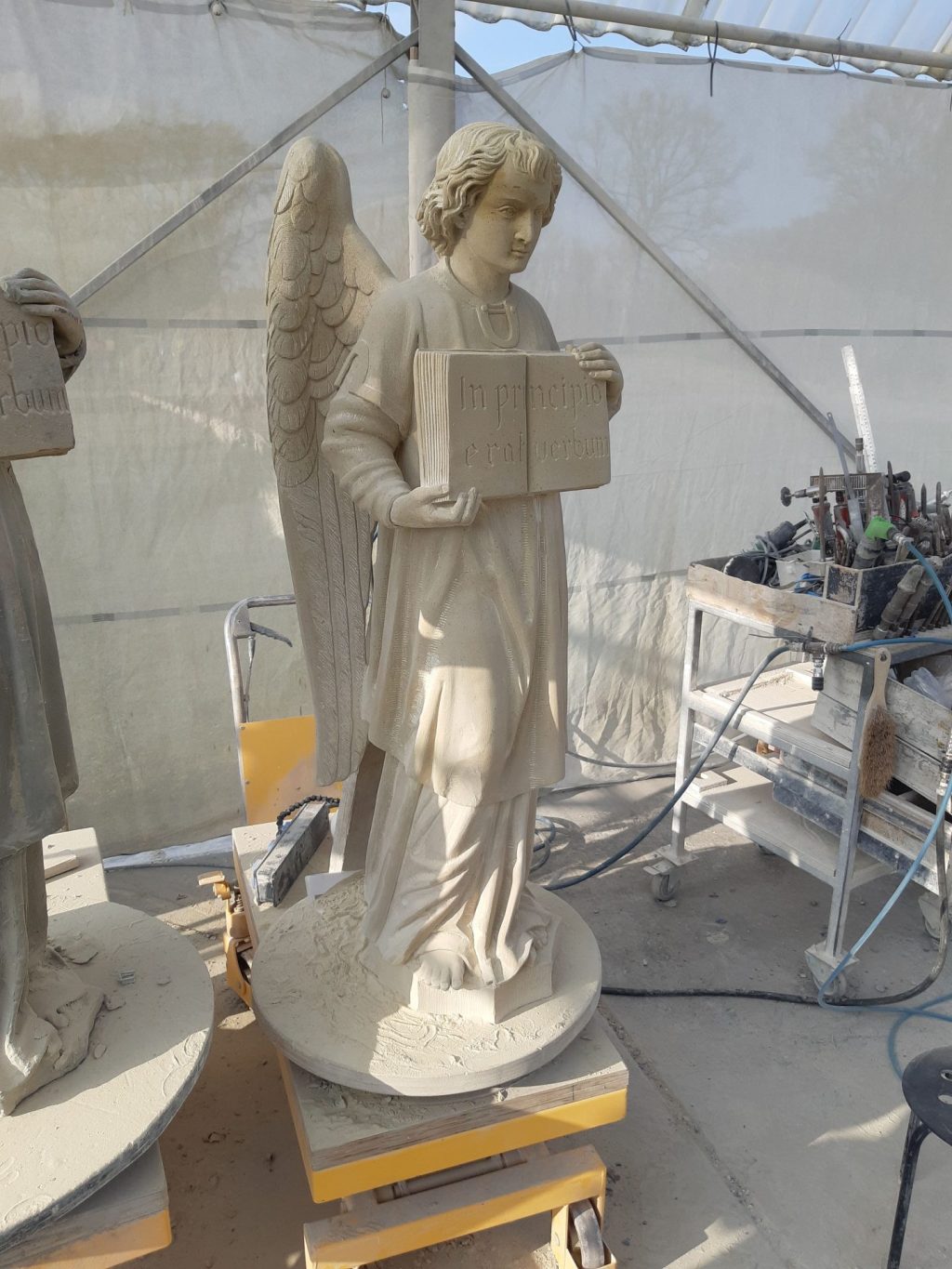
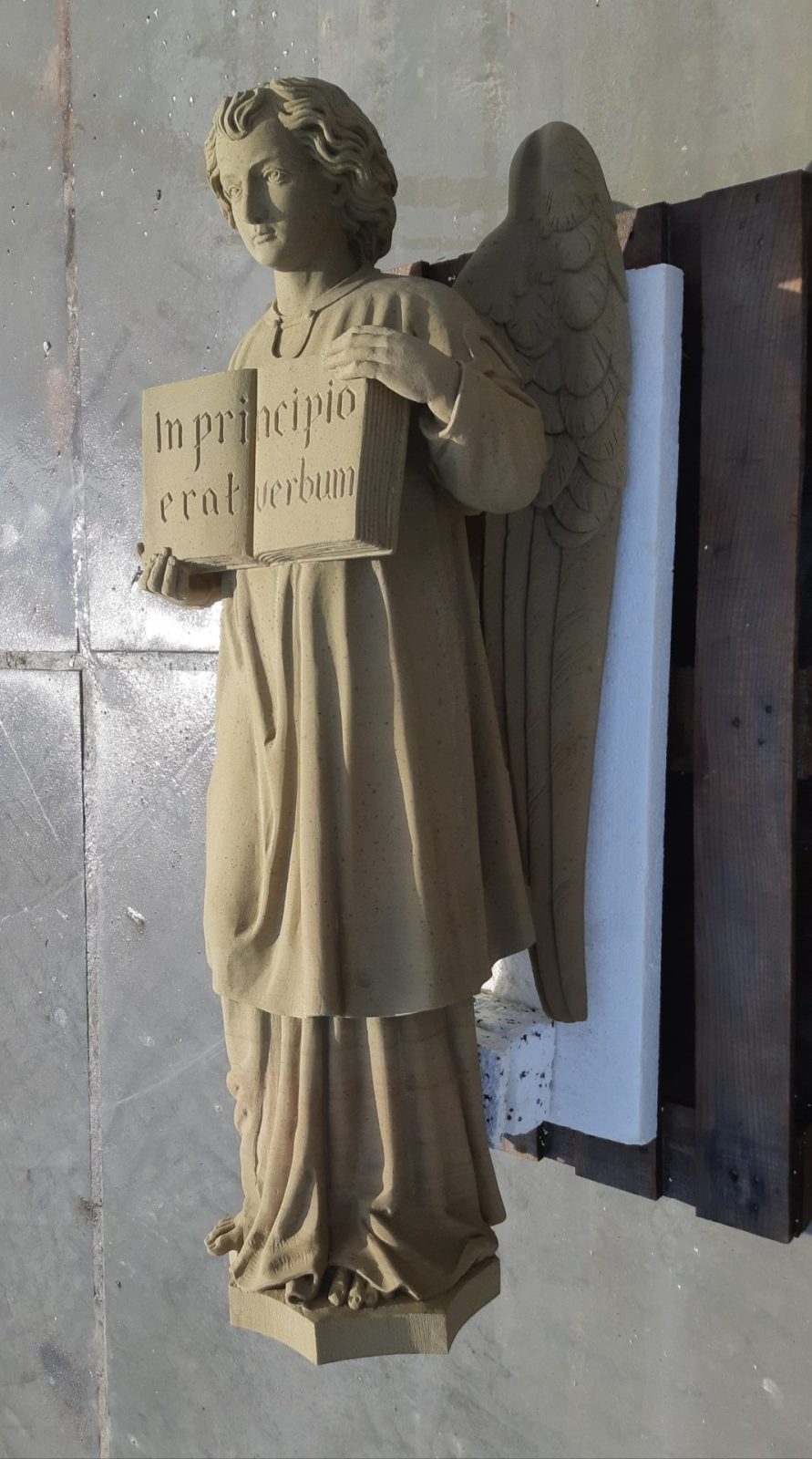
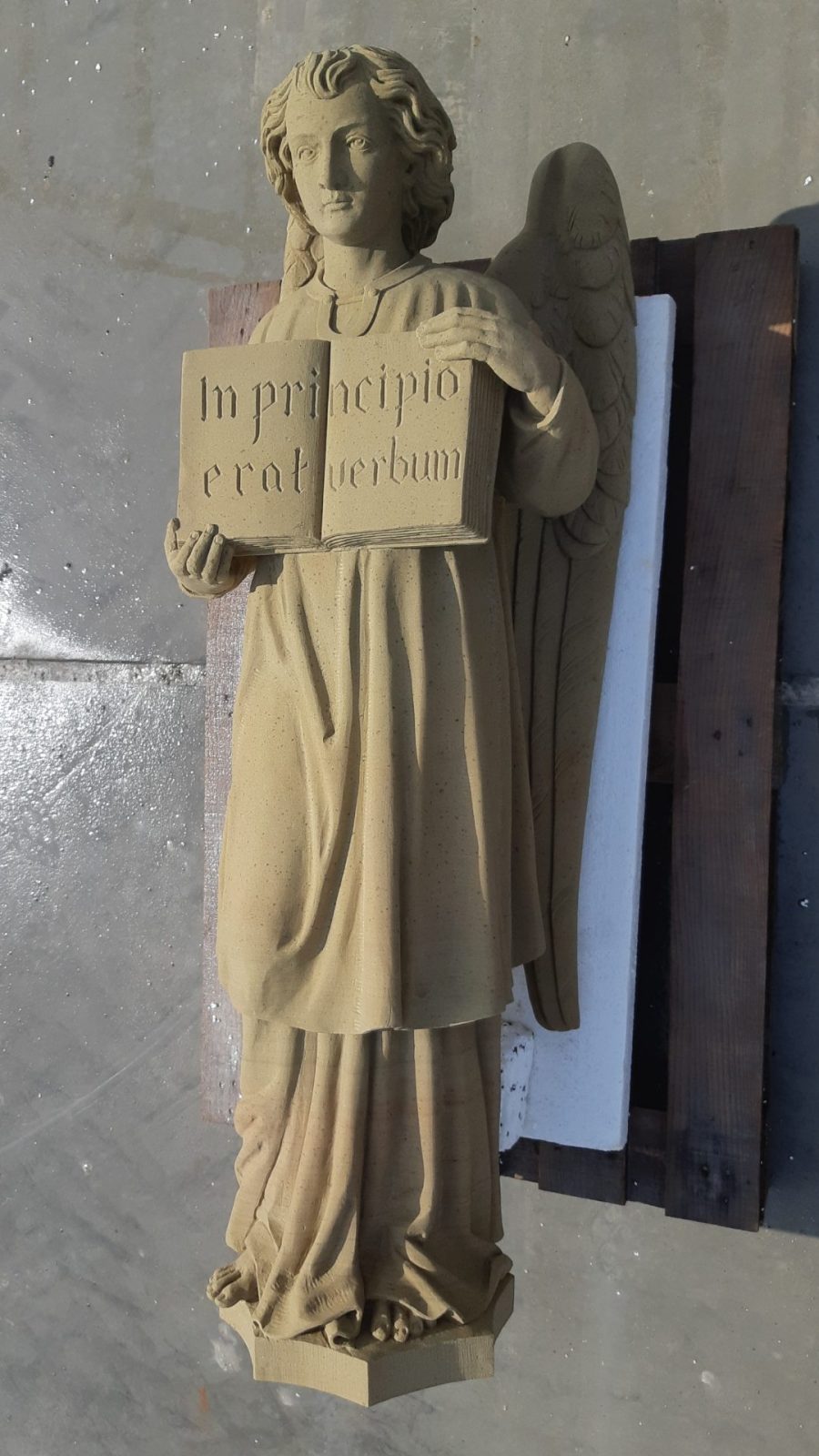
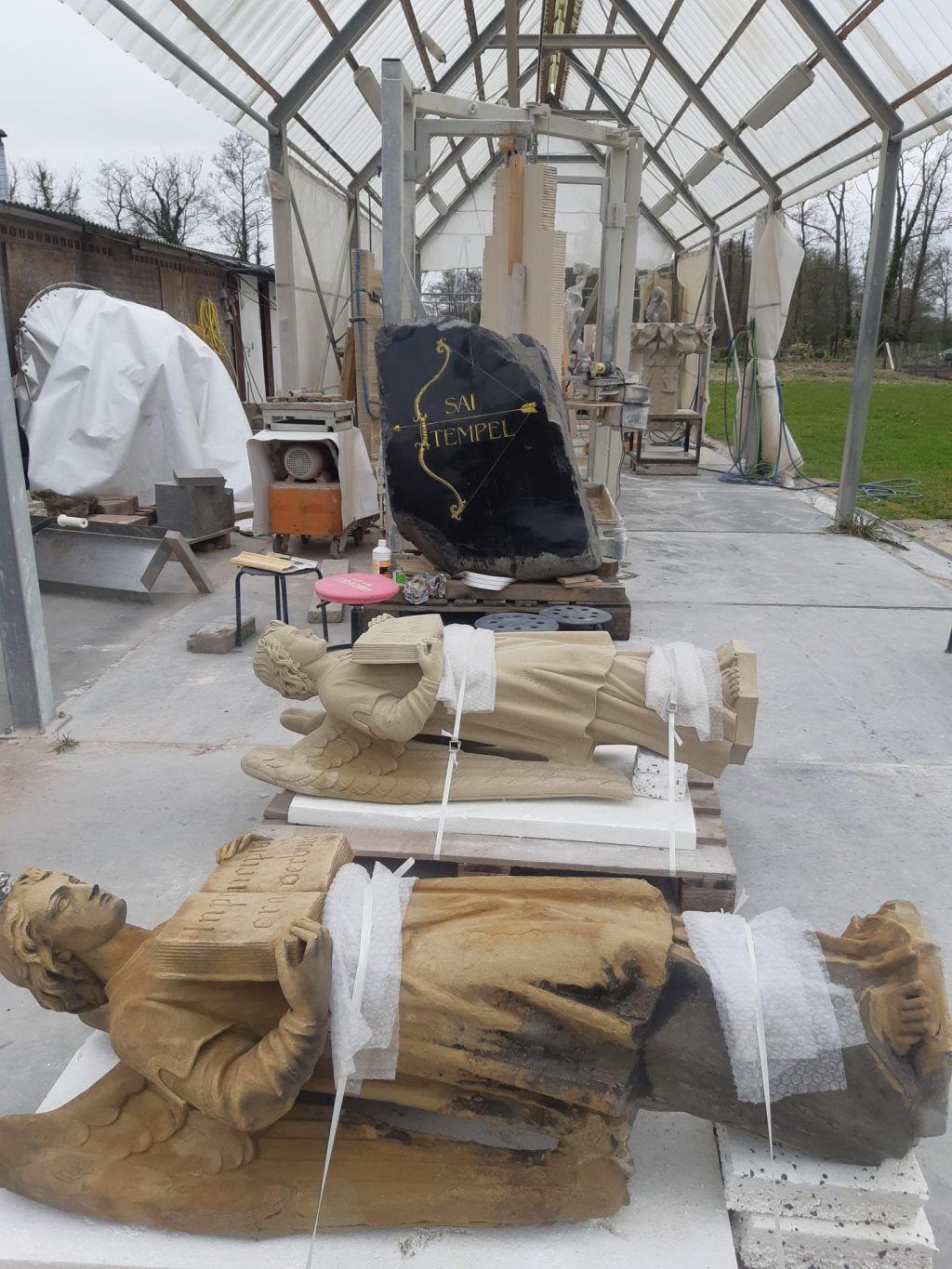
    Serge was, as I wrote above, suffering from crumbling back vertebrae even before the Groningen athletes. Because of an operation, he asked me 2022 if I wanted to carve the very last of the five angels he would copy into new stone, so the last one would be finished by me. He had reconstructed this angel with plastiline and I carved it in new stone for him. The committee came to inspect it t my place and everything was to their satisfaction.

    This angel was neo -gothic and date from the 1880. It was carved at the time in Udelfanger sandstone, and the intention was to do it the same way again this time around.. Only at the time they had carved it with the layers upright unfortunately. This means that, just like with Pope Leo and Thomas Aquinas, the layers of the stone are running through the sculpture vertically. This causes the danger that whole slices of stone could come down at once. It was quite a challenge for the restoration team to find a block in the quarry from which 1 entire angel could be made. The layer thickness in the quarry (the bank) averages only about 90 cms wide, and these angels are 125 cms tall. But it worked out just fine!

    Gallery: In Principio Erat Verbum-angel, Den Bosch
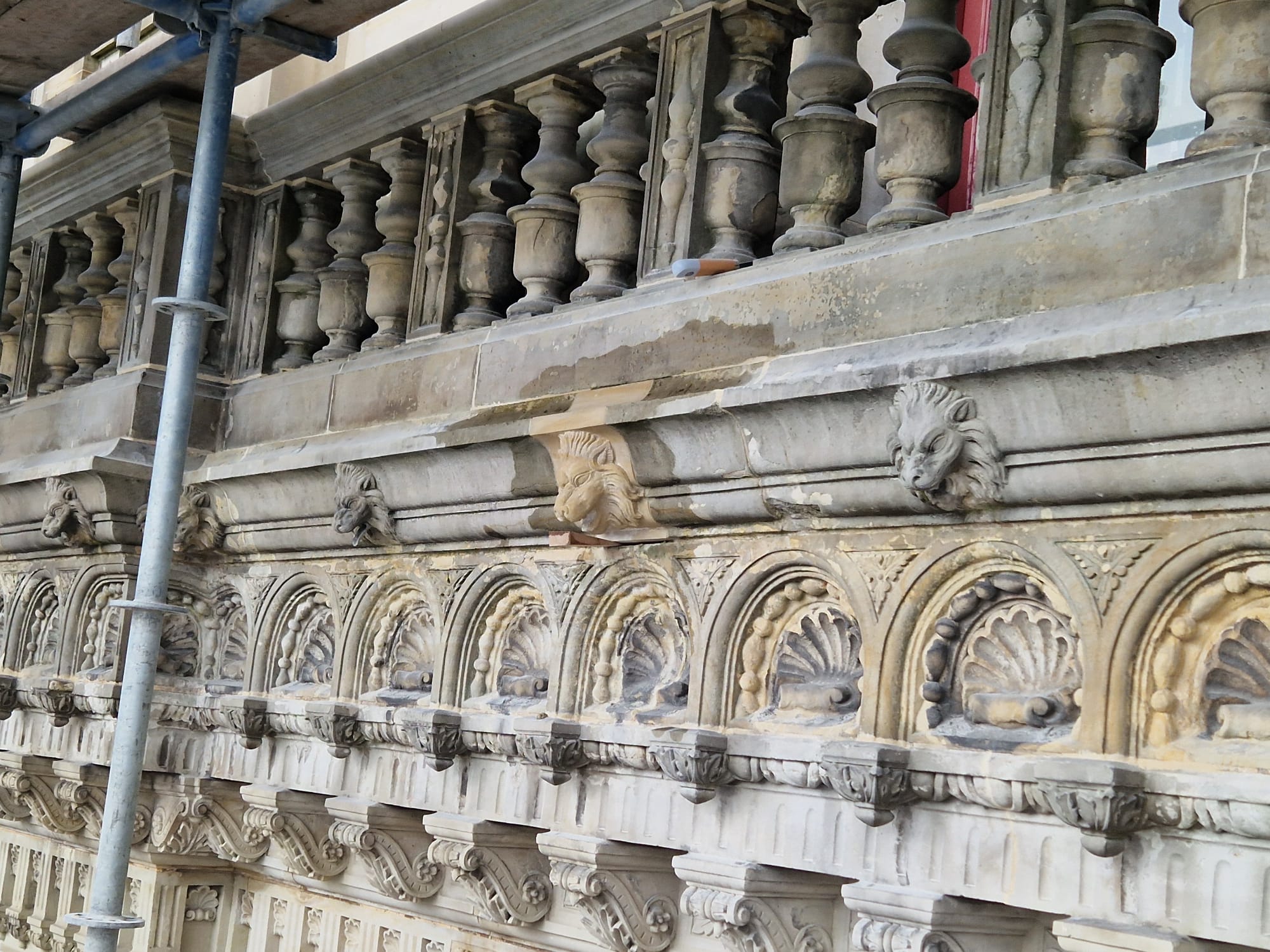
    (Read on below!)

    Gallery: Of Serge van Druten, sculptor

  • Five gable stones for Zeeland widows

    Five Biblical texts

    The five Conyers houses in Noordgouwe
    These five widow's houses were named after the British Mr. John Conyers and his Dutch wife: the Conyers houses.

     A project that Jelle and I (in 2023 already, it seems like a very long time ago, but I'm way behind on blogging) worked on together were these five sandstone gable reliefs for five widows' houses in Noordgouwe.

    Sculptor Koen van Velzen with facade stone in workshop

    These stones probably date from the construction period of the houses, the year 1651. These are five Biblical texts from one of the the oldest Dutch Bible translations from 1637, executed with some poetic freedom in terms of spelling and typography. For example, sometimes two letters have been combined into one, for example at WEESE and WEDVWEN, where the W and E are joined together, and at MAER where the A and E have been merged.

    Tracing and scanning

    Facade no 19: photo 1976

    The client, who currently lives in and manages these five houses, wanted to safeguard these gable stones for the future, by conserving the old stones inside and placing reconstructed copies in the five facades.

    facade no 19: photo 2023

    After much research, he managed to find all the original texts and asked us whether we could carve copies of these facade stones in new Obernkirchener sandstone.

    1 of five facade stones, Noordgouwe: reconstruction drawing
    drawing based on photo and foil tracing

    We first measured the existing gable stones completely, I traced all dimensions out on transparent foil and took photos of the current condition. Unfortunately, the stones of facades no. 21, 23 and 25 didn't have any text anymore, as all this had been lost in previous centuries. However, the client managed to find the correct Bible texts.

    Strongly weathered

    1 of five facade stones for Noordgouwe: after installing
    gable stone no. 21

    Hence, only from two facade stones there were any visible texts left, and then only partially. In the photos from 1976 these two texts were much more complete and also easier to read.

    Thanks to all the research done by the client and a local historian, we were also able to reconstruct the text placement on the stone quite well.

    The ornaments were also only partially present; We had to supplement these with designs based on the existing remains.

    Devoid of brave proponents

    For the letters, we were able to use a beautiful text plate next to the middle front door , on which all missing letters could be found, albeit in a slightly different style. It would appear that a different stonemason carved the letters on this plate than the person who made the gable stones. This text plate describes how these houses were built as a shelter for five widows who were 'devoid of brave proponents'’ -; i.e. women of good descent who no longer had anyone to care for them. In addition to the house, an annual allowance was also provided.

    Retain errors

    1 of five facade stones for Noordgouwe: after installing
    gable stone no. 23

    It is remarkable that there was an error in the old gable stones: both the first and last text are referred to as PSALM 68:6, while the text of the first facade is actually psalm 146:9 ... In consultation with the customer, we didn't correct this peculiarity, because it forms part of the story of the vicar , the client and the stonemason who executed it. Perhaps the different spelling is also because someone passed it on orally in one of these steps?

    Different order

    1 of five facade stones for Noordgouwe: after installing
    gable stone no. 25

    Normally in such a project all the parts are removed first, then they are somewhat repaired and reconstructed, then the stone is ordered and the copies are carved, and finally the copies are placed back into the facade. That was not the most convenient approach in this case, because in that case the client would be left with five large holes in the facade for six months. There were also concerns about the support for the roof and surrounding masonry.

    1 of five facade stones for Noordgouwe: completed
    gable stone no. 27

    That's why I suggested measuring it all beforehand, and reduce costs by ensuring that the contractor could remove 1 stone and immediately put its replacement back in. That would save a lot of work, including setting up scaffolding one less time, and the house would not be open to the elements for six months. There was still some uncertainty about the precise thickness of the stones, but the customer drilled a hole through the masonry and was thus able to make a good estimate of the desired thickness and the space in the cavity. This allowed us to order the new Obernkirchener sandstone.

    Reconstruction

    1 of five facade stones for Noordgouwe: transferred onto foil

    Due to the brittle condition of the old gable stones, it was decided to leave them in the facade as long as possible. There was a good chance that a lot of damage would happen to the stones when they would be removed, causing loss of information. The gable stones were measured and the available information was traced using transparent foil (markings, ornamentation and, if possible, parts of texts).

    1 of five facade stones for Noordgouwe: match photo and foil

    I scanned these foils into the computer and matched the images in Photoshop with old images of the gable stones, so that the text overlaps exactly with the foil stencil. This way, the perspective distortion of the photo has been removed. See an example of this matching below, namely from gable stone no. 1-19. The black marker lines on the foil are projected over the photo. After this, the ornaments and edges of the facade stones were reconstructed by hand using tracing paper and then drawn out in full size.. The same thing happened with the texts.

    1 of five facade stones for Noordgouwe: reconstruction drawing

    There were still some clear photos dating from 1976 showing the texts on the stones 1 and 5, with which many of the missing letters and the style of the letters could be easily reconstructed.

    Execution

    1 of five facade stones for Noordgouwe: Jelle carving the letters
    Jelle carving the letters

    Based on the colored designs, we first carved the cartouches, after which Jelle carved the letters, because he has the most experience with that. This time he also took care of the polychromy. The new reliefs were then transported and a local contractor removed the old gable stones, the new stones were placed and the surrounding brick was repaired. The customer still had to color the bare bricks in the photos.

    Gallery: before, during and after

    Conclusion

    There is much more to tell about the background of these houses, the biblical texts, the findings of the historians, the client's quest, the typography and the material used at the time. There is also quite a bit of background material in PDF with more information about all these matters, but I think this gives enough of an overview of this commission, which we enjoyed working on again.

No more messages to show.

No more messages to show.