Minervalaan part 2: Disassembling the statues
The project
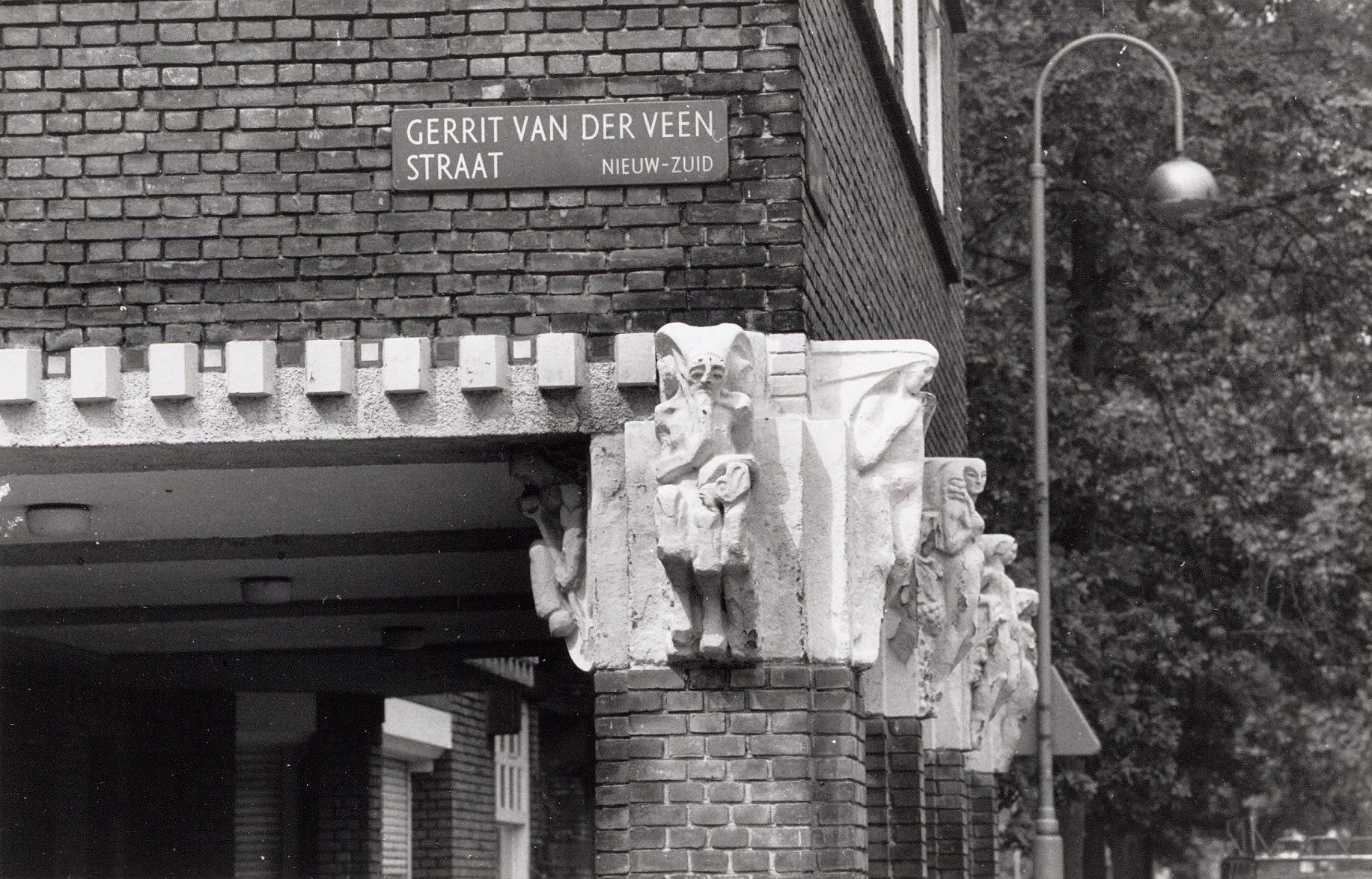
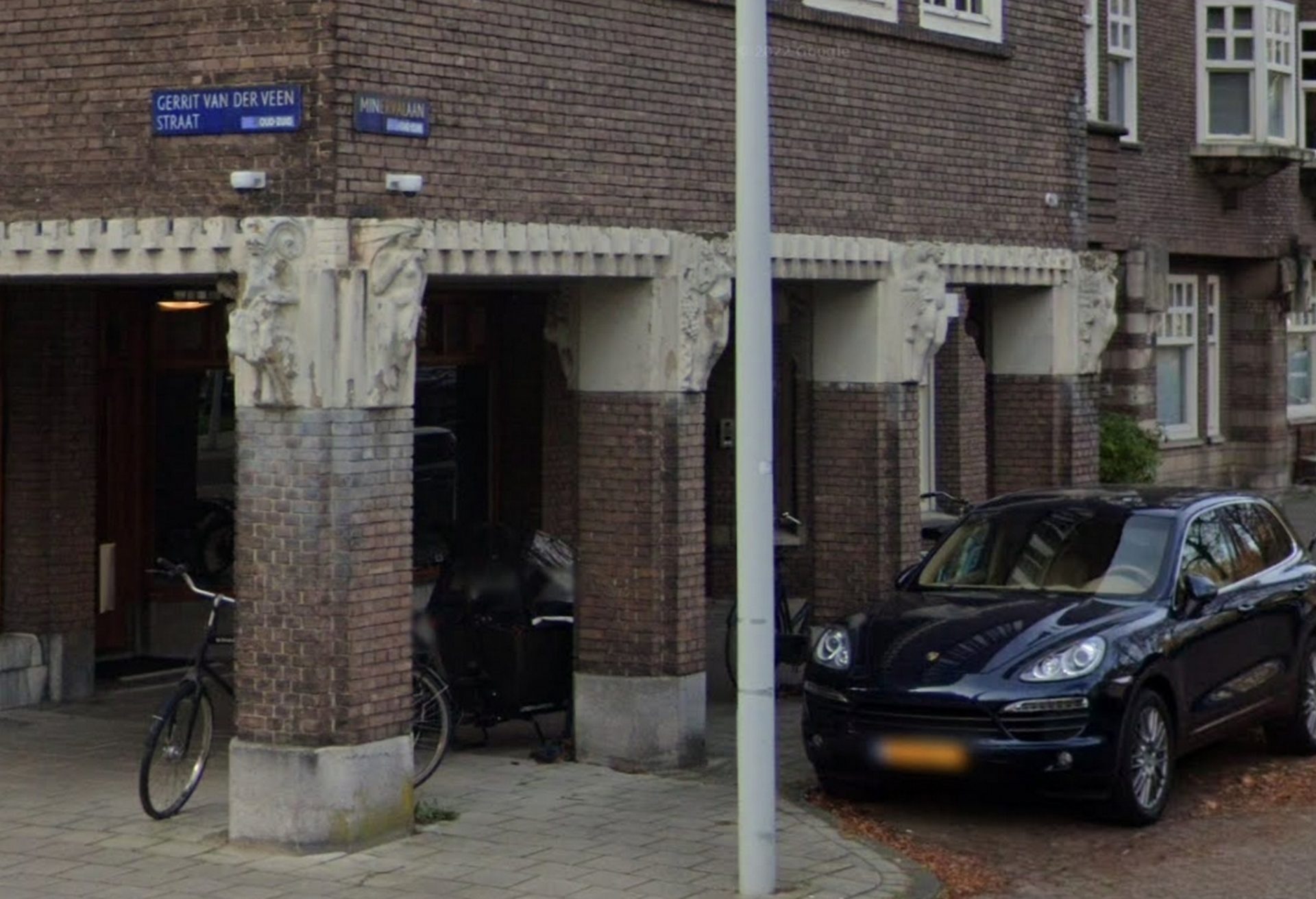
In the previous post I explained how we got involved in this project at the Minervalaan in Amsterdam. We were asked by Roderick Nijenhuis van Caho BV from Dordrecht to take care of the sculptural parts, but before the time came, the old statuettes had to be dismantled first.
When I gave a quote for this, I was quite optimistic on the one hand, because over 20 years ago I was closely involved with the restoration on the other side of the street, when I was still working at Mooy Sculptors Ltd. On the other hand, I was dreading it a bit as well, because it is just plain hard work to spend days on a small scafollding with a chainsaw.
Work across the street, 20 years ago

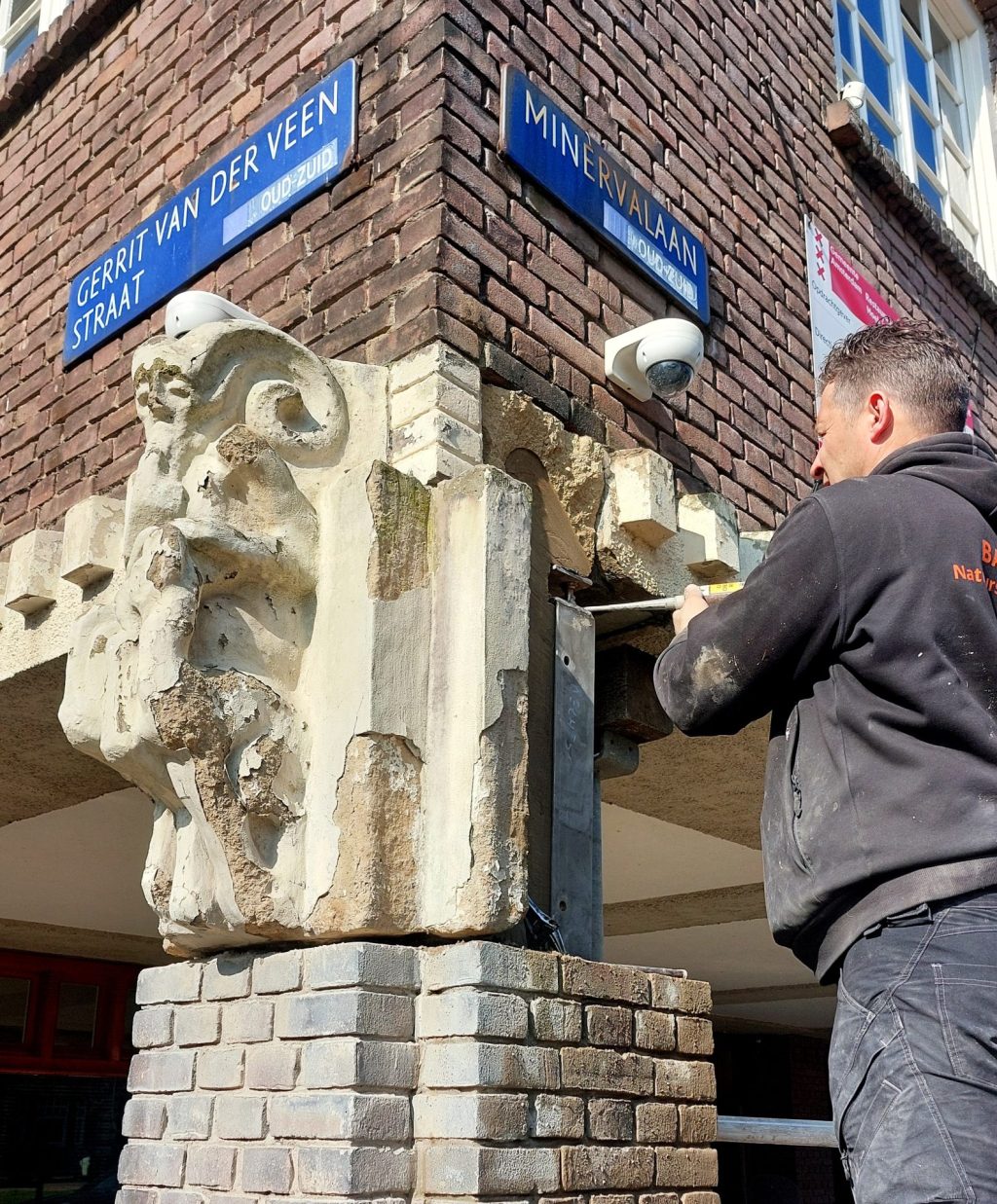
Around the year 2001 we started on the southeast corner of this intersection dismantling. We then had a diamond chainsaw on gasoline and with a lot of noise I could cut out the statuettes one by one. After a reconstruction phase we would carve the copies in Bentheimer sandstone. This choice was made because the stone is very weatherproof and lends itself to this kind of sculpture. Later there were a few comments about this choice, because sandstone catches dirt from the air and rainwater and will gradually darken, and also because nowhere else in this neighborhood this stone species has been used for sculpture. Usually you hear nothing about whatever was done well.
"Tuff is not strong enough’
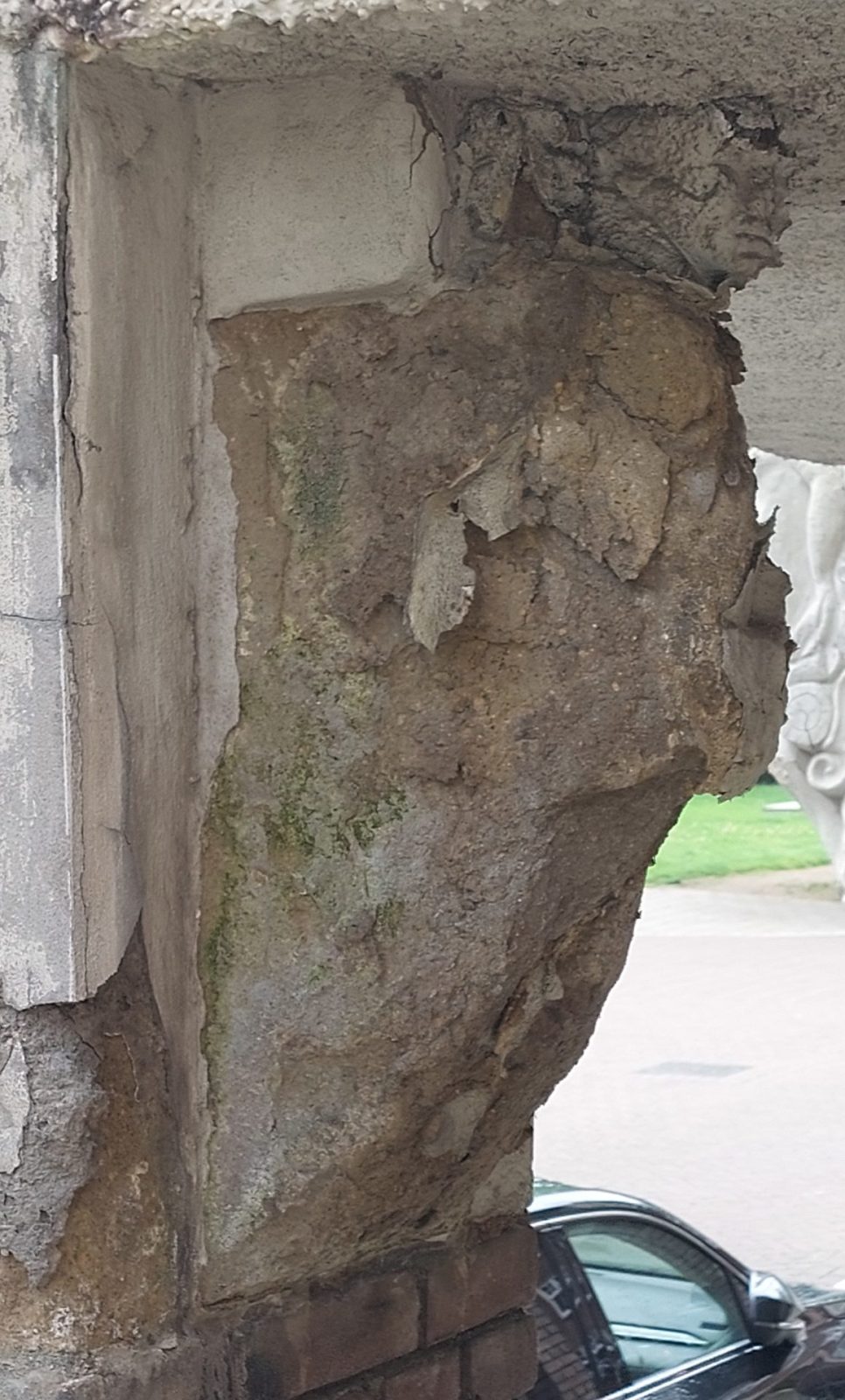
At that time we were cutting away the sculptures and I noticed that there was very little stone left standing. Would that even be enough to carry that entire building? A bit worried, I called the office about it. ‘No’, said Ton Mooy, "It's impossible that that building would rest on those blocks of tuff. That material is simply not strong enough to hold up an entire building. There has to be a pillar inside it, take a look.’ And yes, after some drilling and carving we found a concrete core inside the tuff blocks. Apparently a hole had been carved through the blocks during construction and concrete rebar had been put in it, after which everything was filled with concrete. This was clearly visible by the rough outline of the concrete pillar, which exactly matched the tuff's interior.
This time it went differently

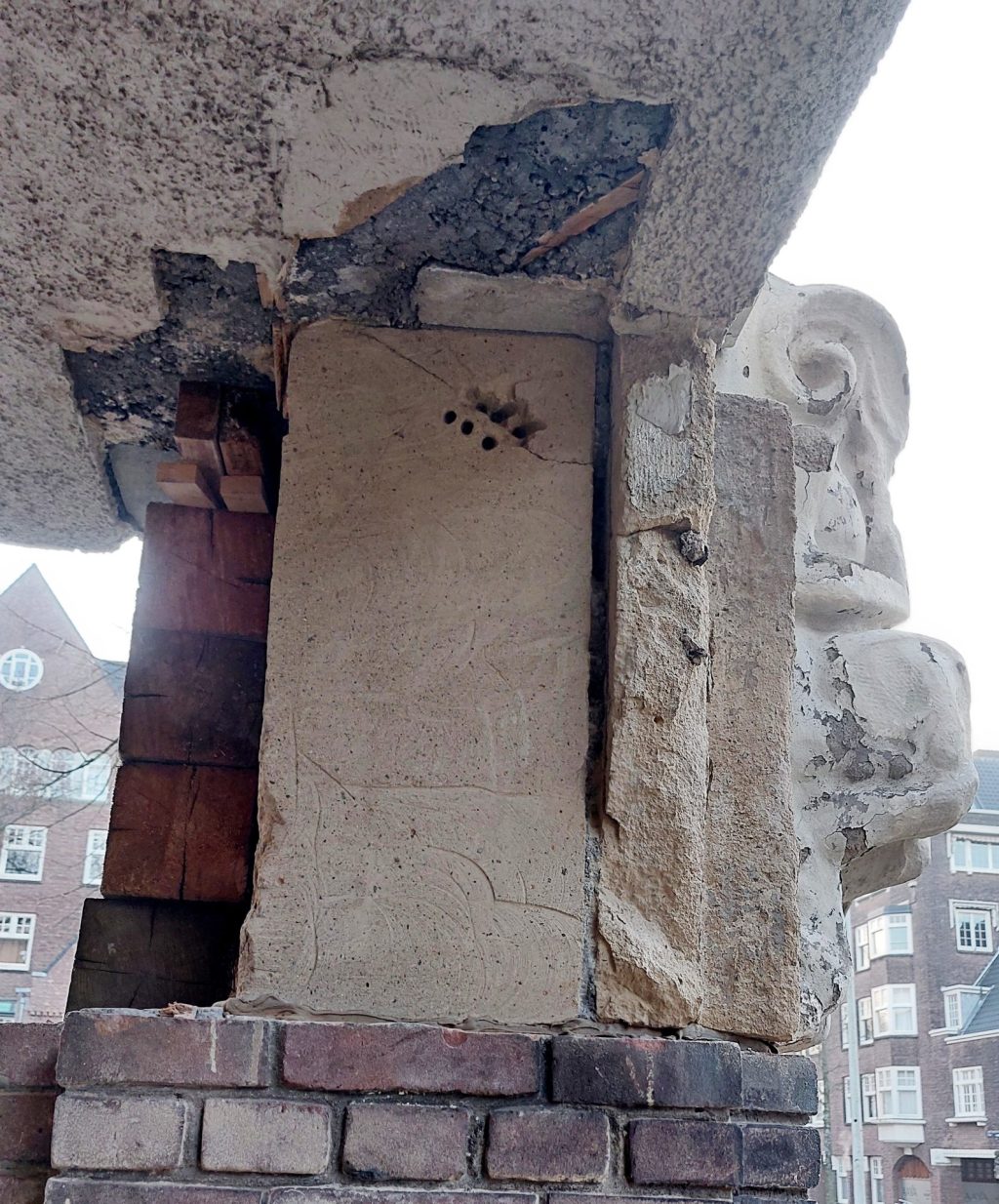
So this time, twenty years later, I went to work in good spirits with my diamond chainsaw. But once I had cut a few slices away, my colleagues started to worry. ‘Hold it for a minute, won't it all come caving in on us?!’ I said they shouldn't worry, because there would be a concrete core in it. But they didn't trust it and drilled a hole. And when after a lot of drilling and searching we still found no concrete, we immediately stopped the sawing.
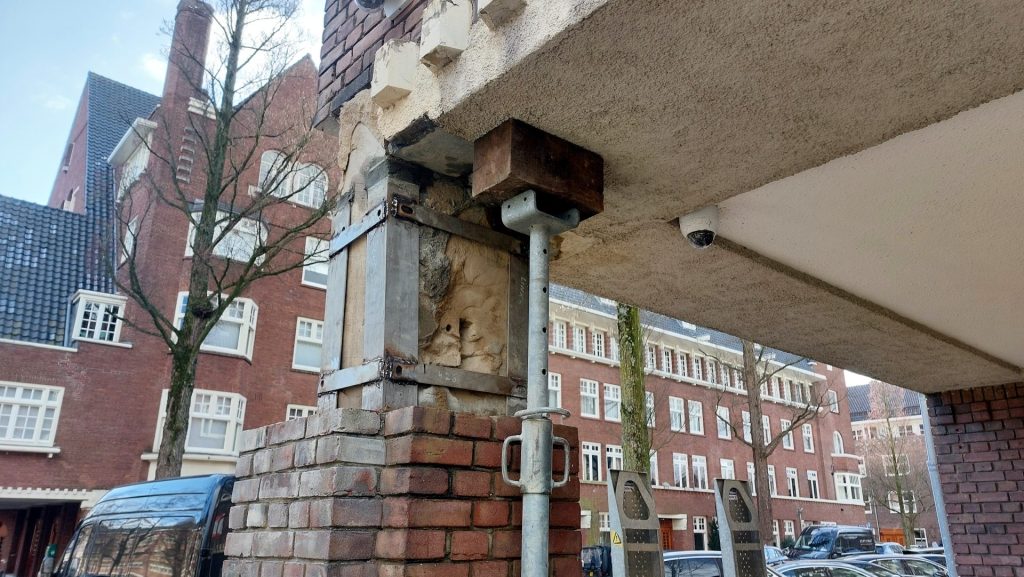
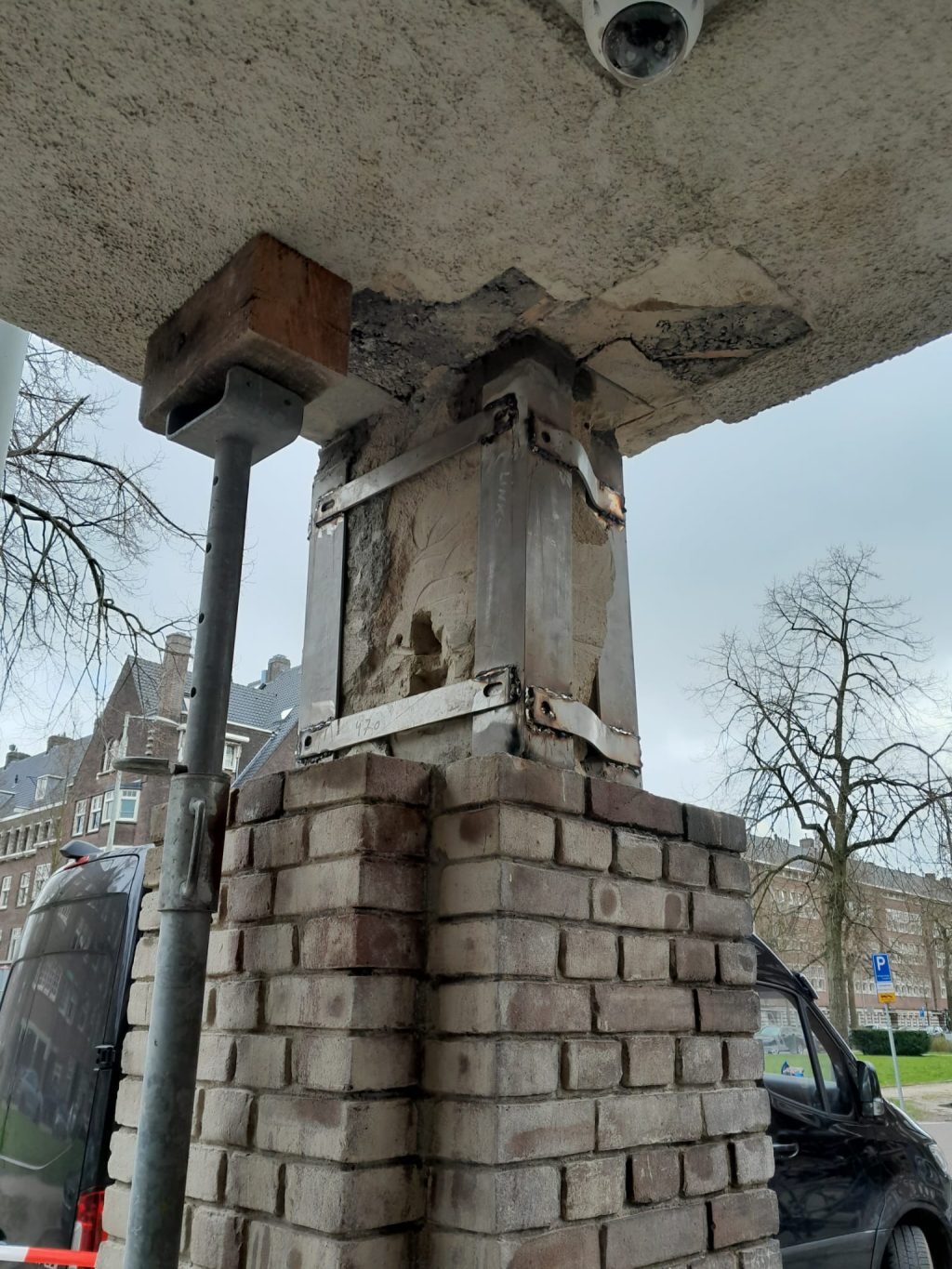
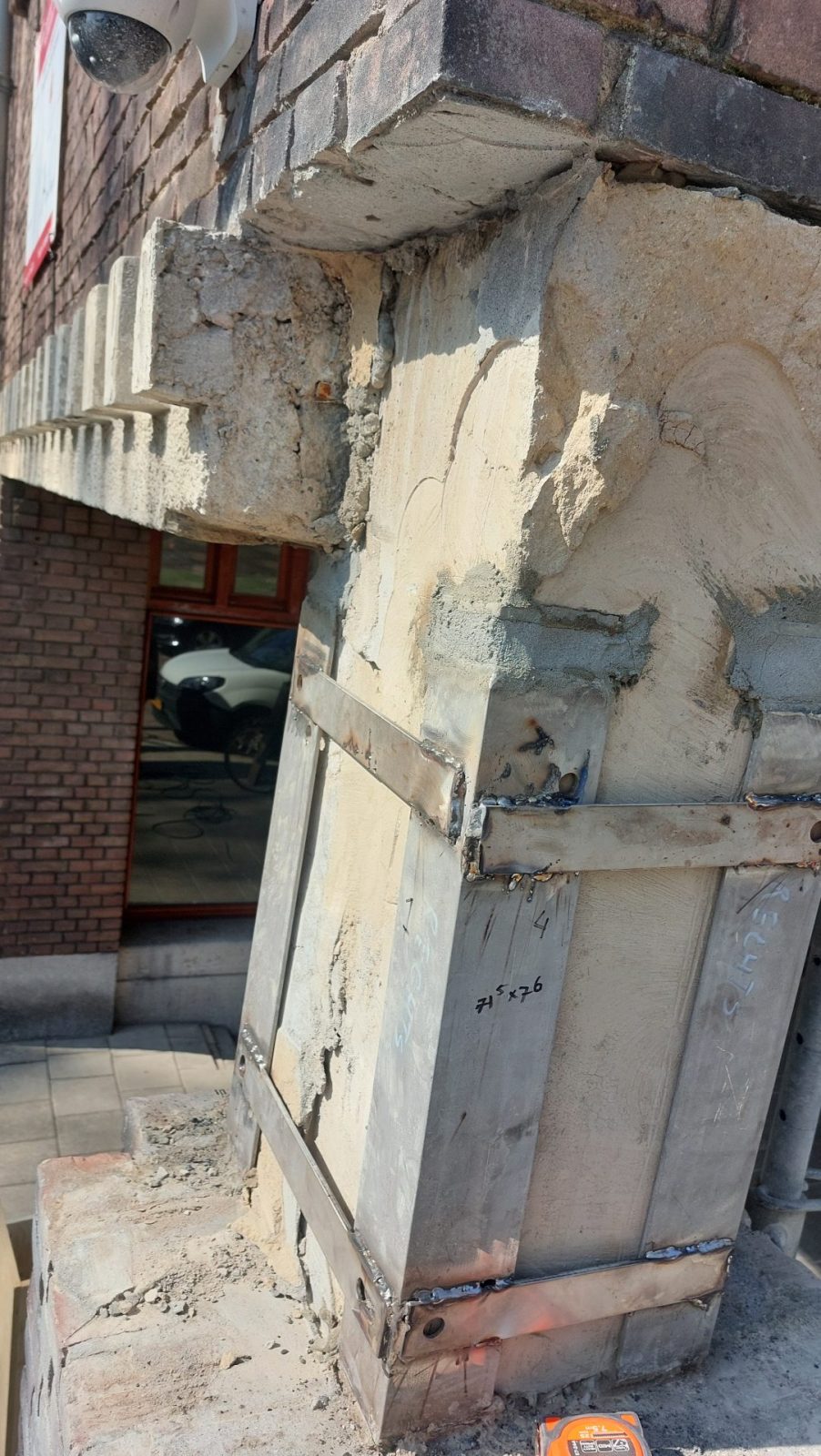
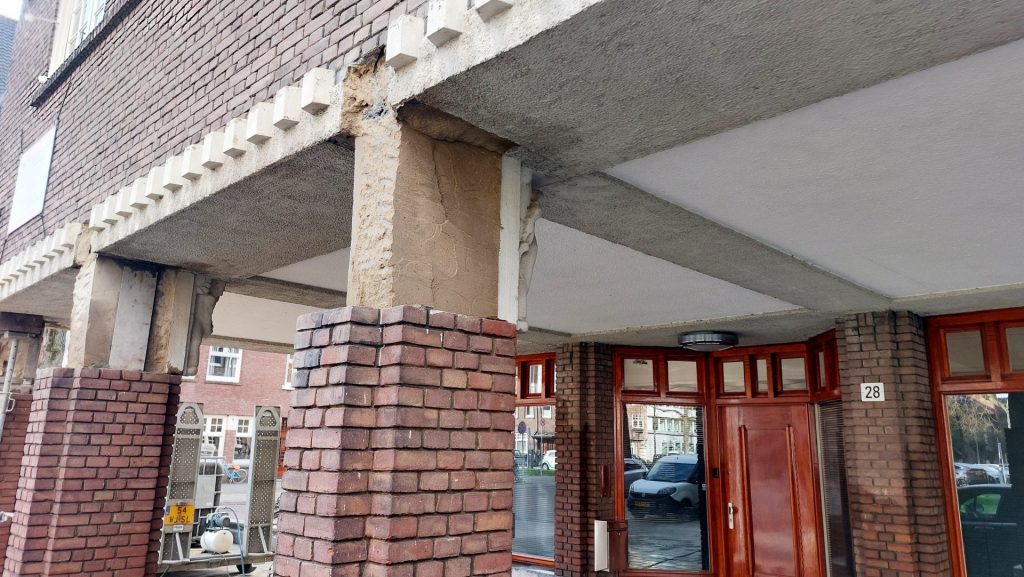
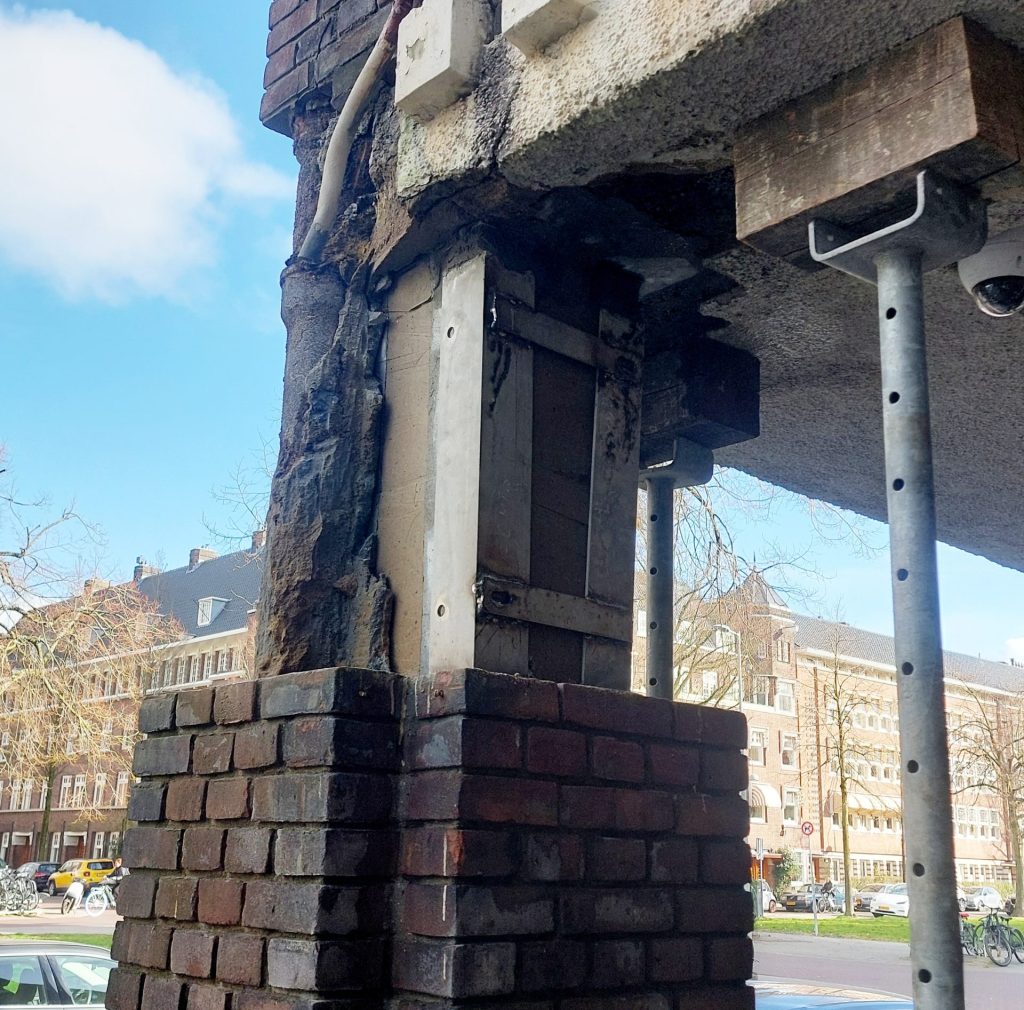
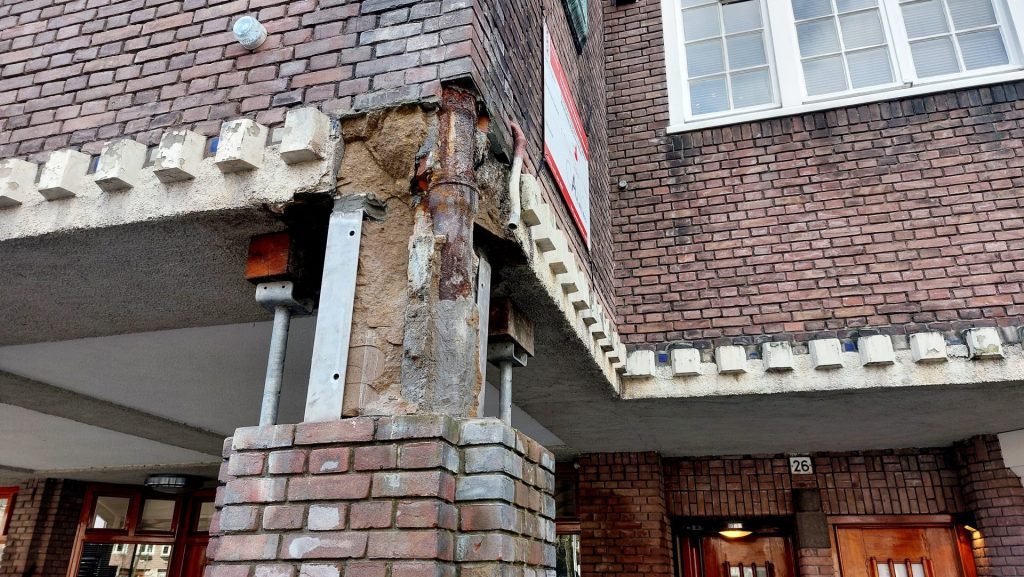
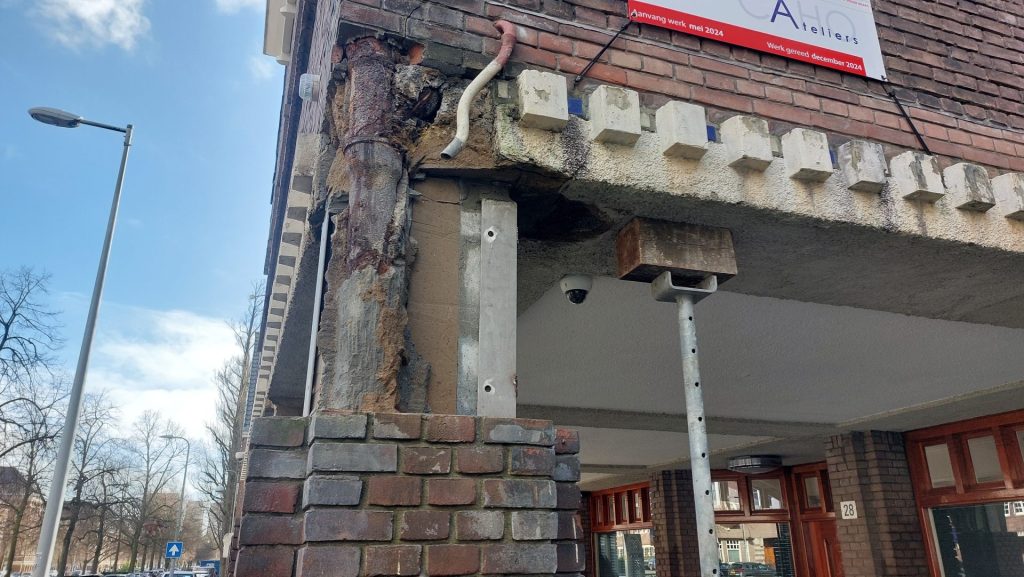
My colleague looked pale as a ghost and didn't want to stay under the underpass for a second. It turned out that these four cracked blocks of tuff kept up the entire facade! Before we cut out the sculptures, the blocks had a cross -section of 72 x 77 cms wide, But after that, only a small block of about 30 x 45 cm would be left! We stopped the job, installed supports (steel poles) and the wedged up the building with blocks of wood and wedges. Time for a new plan.
Stainless steel support props

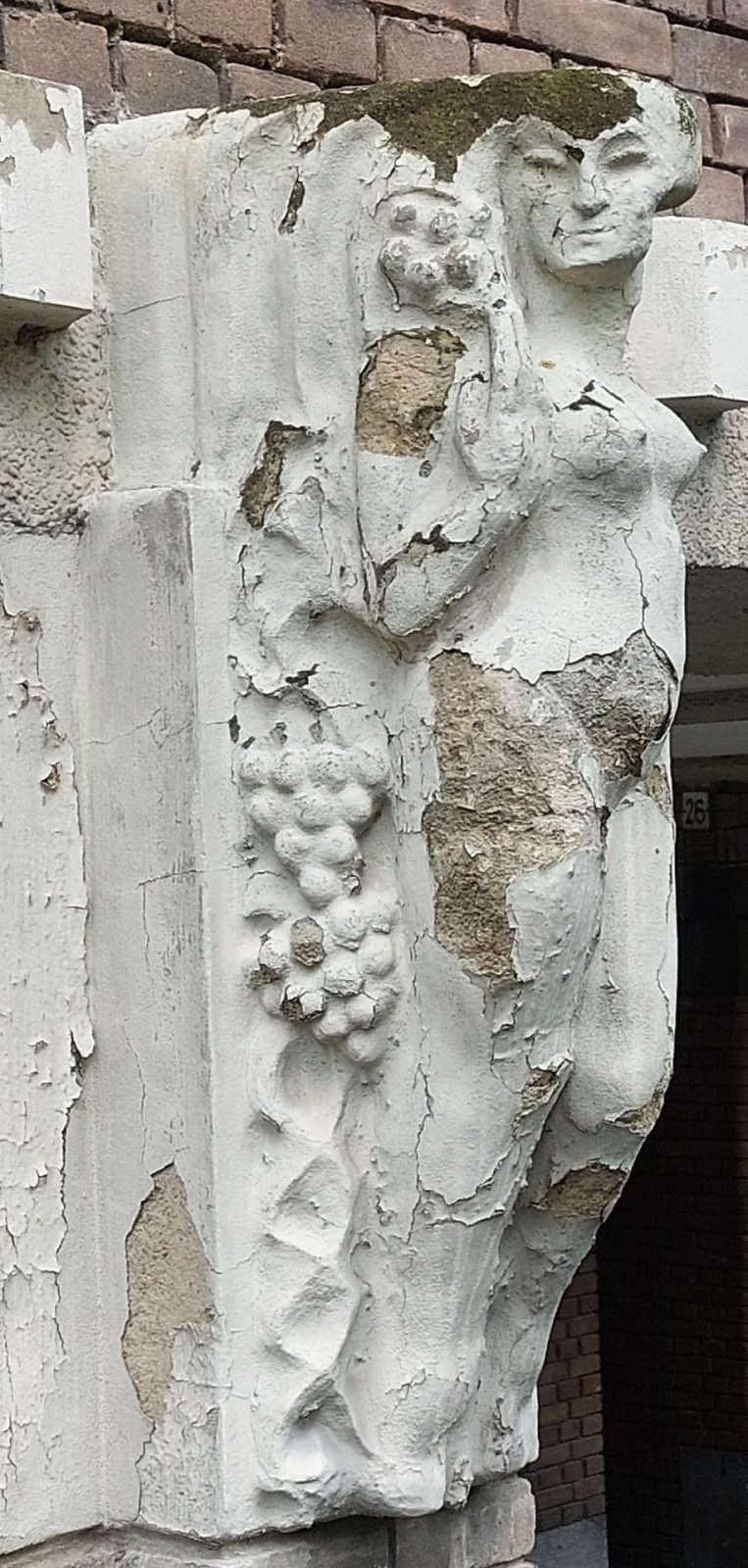
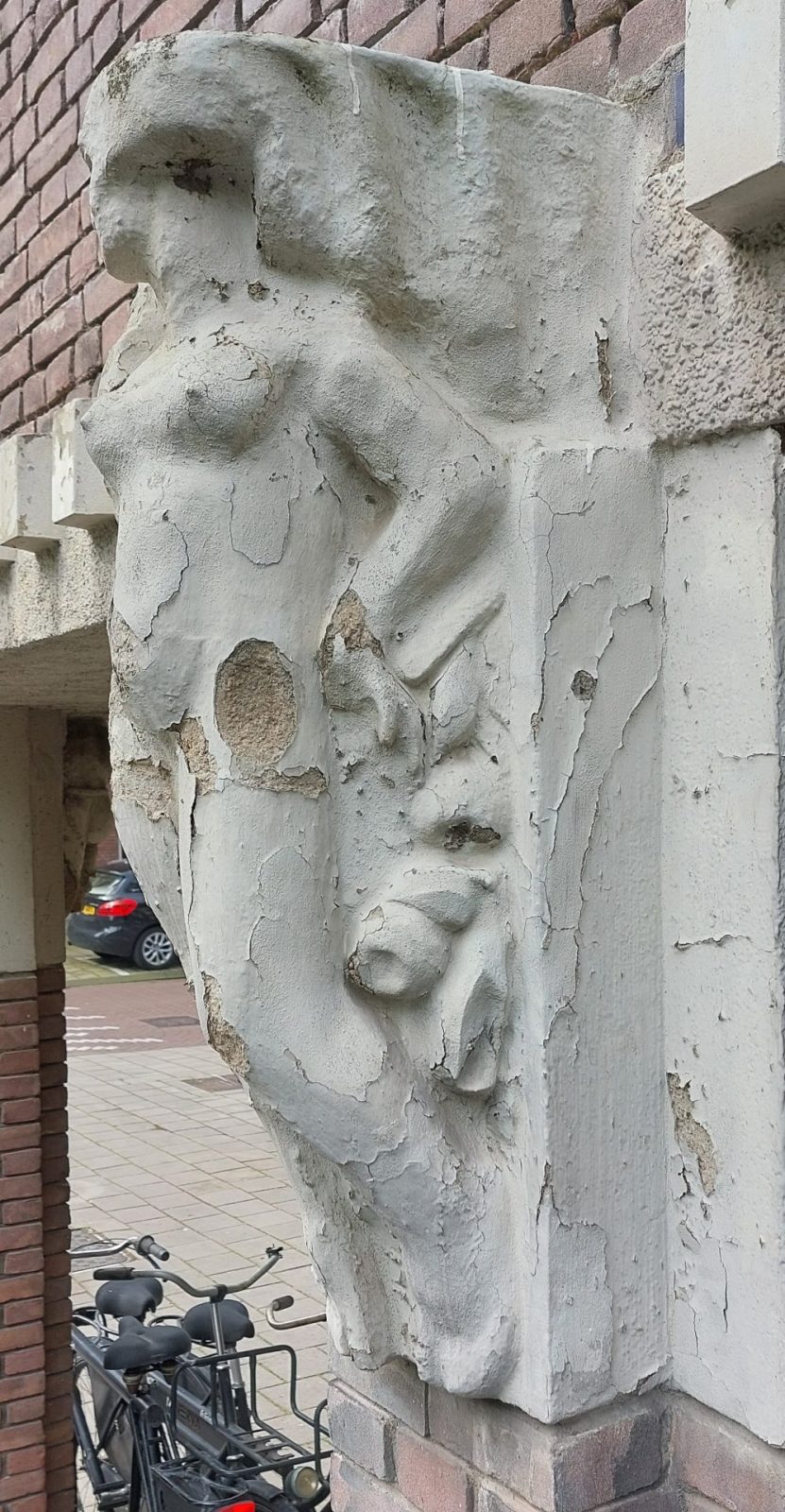
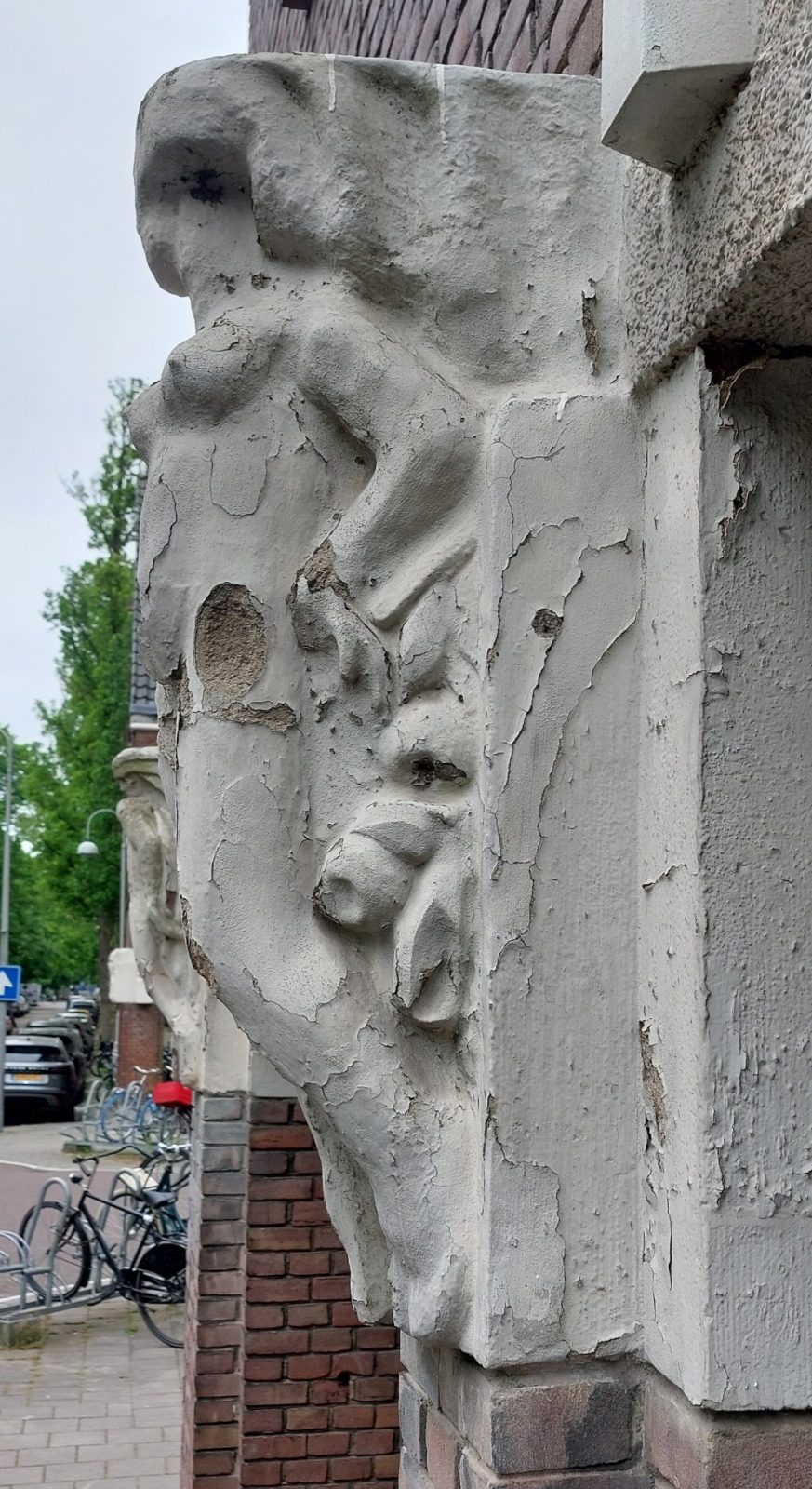
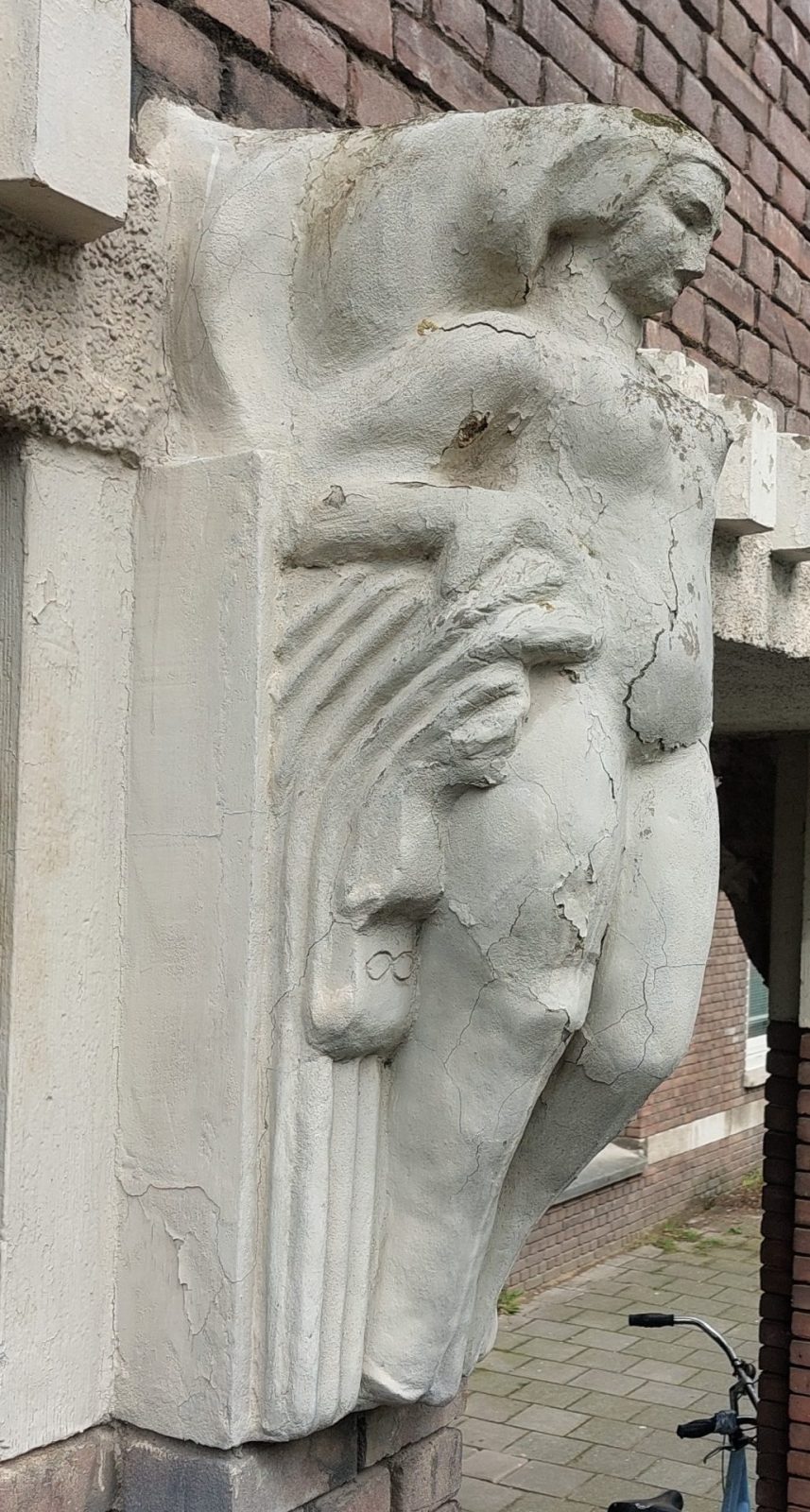
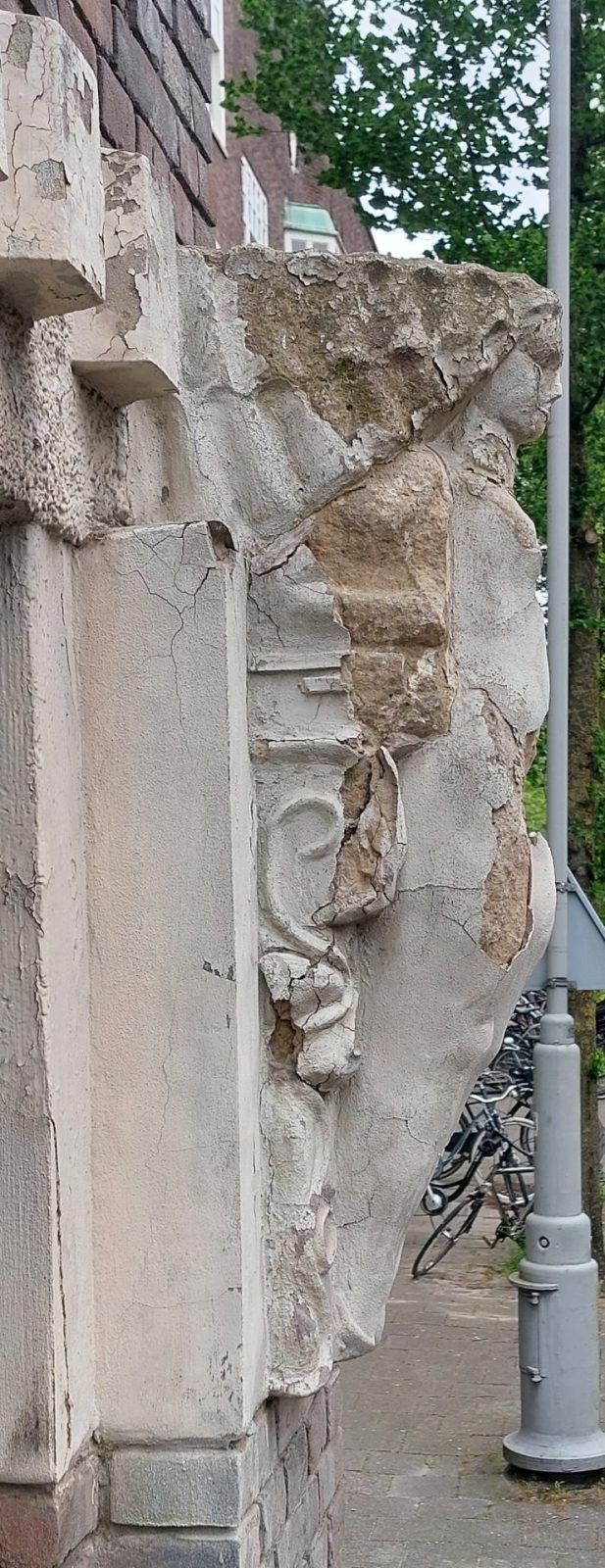
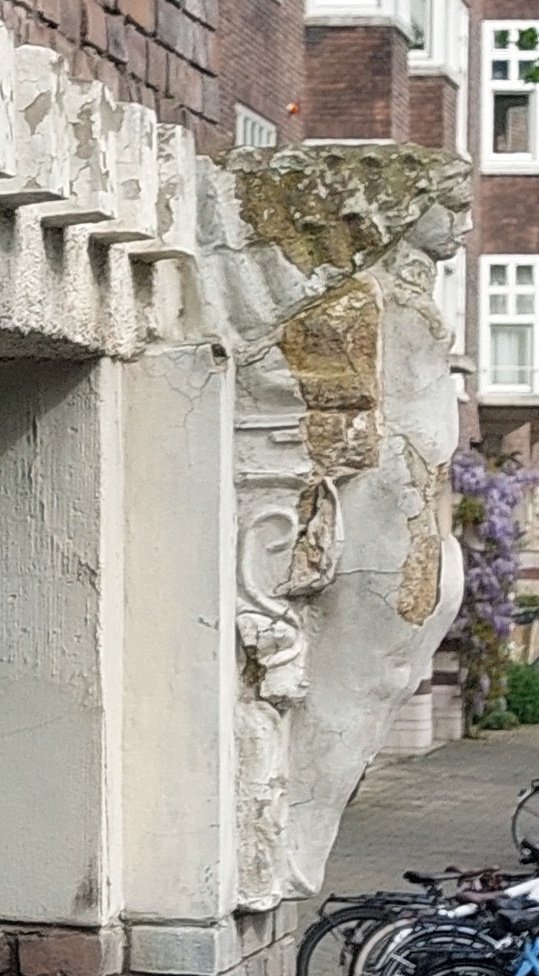
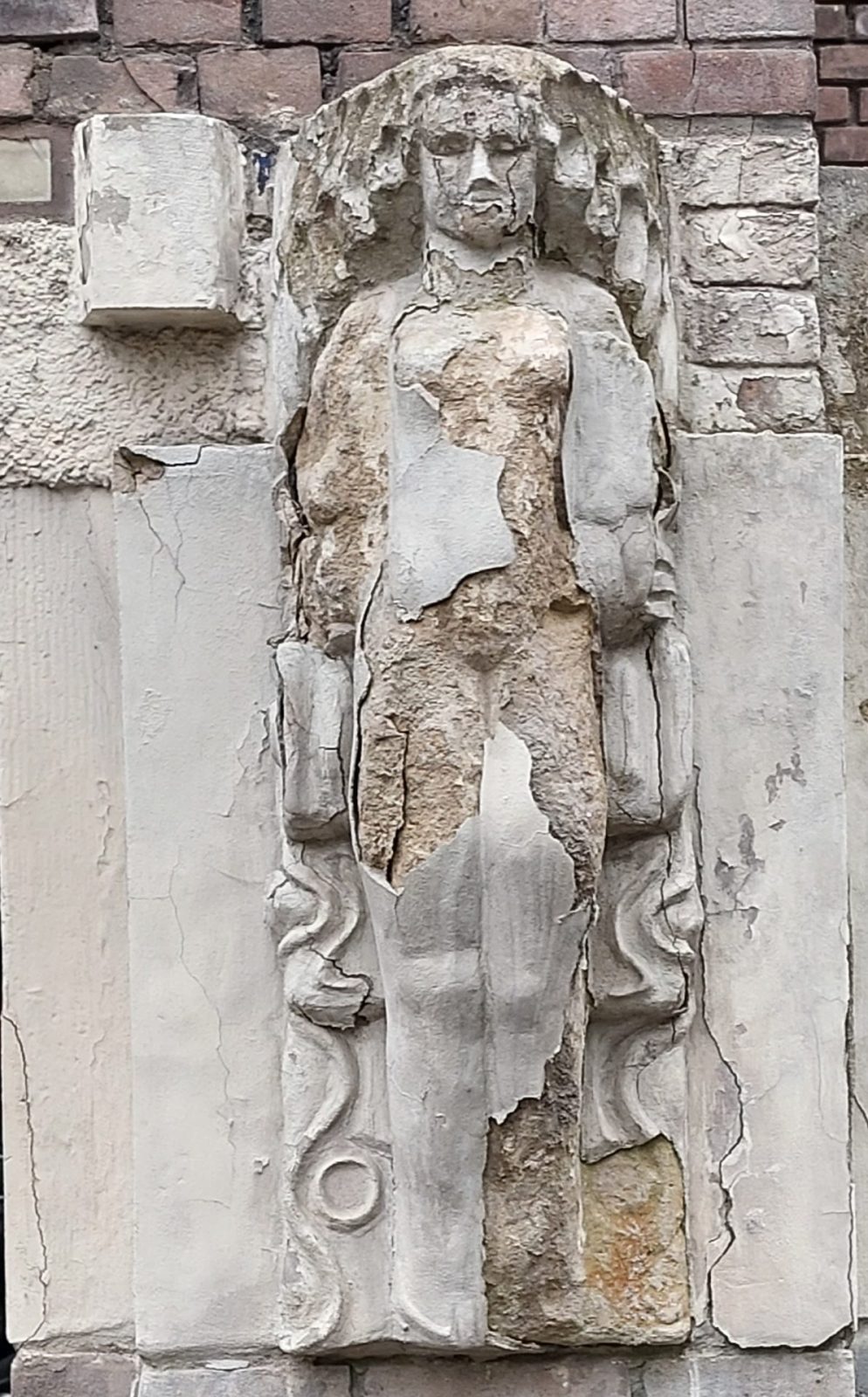
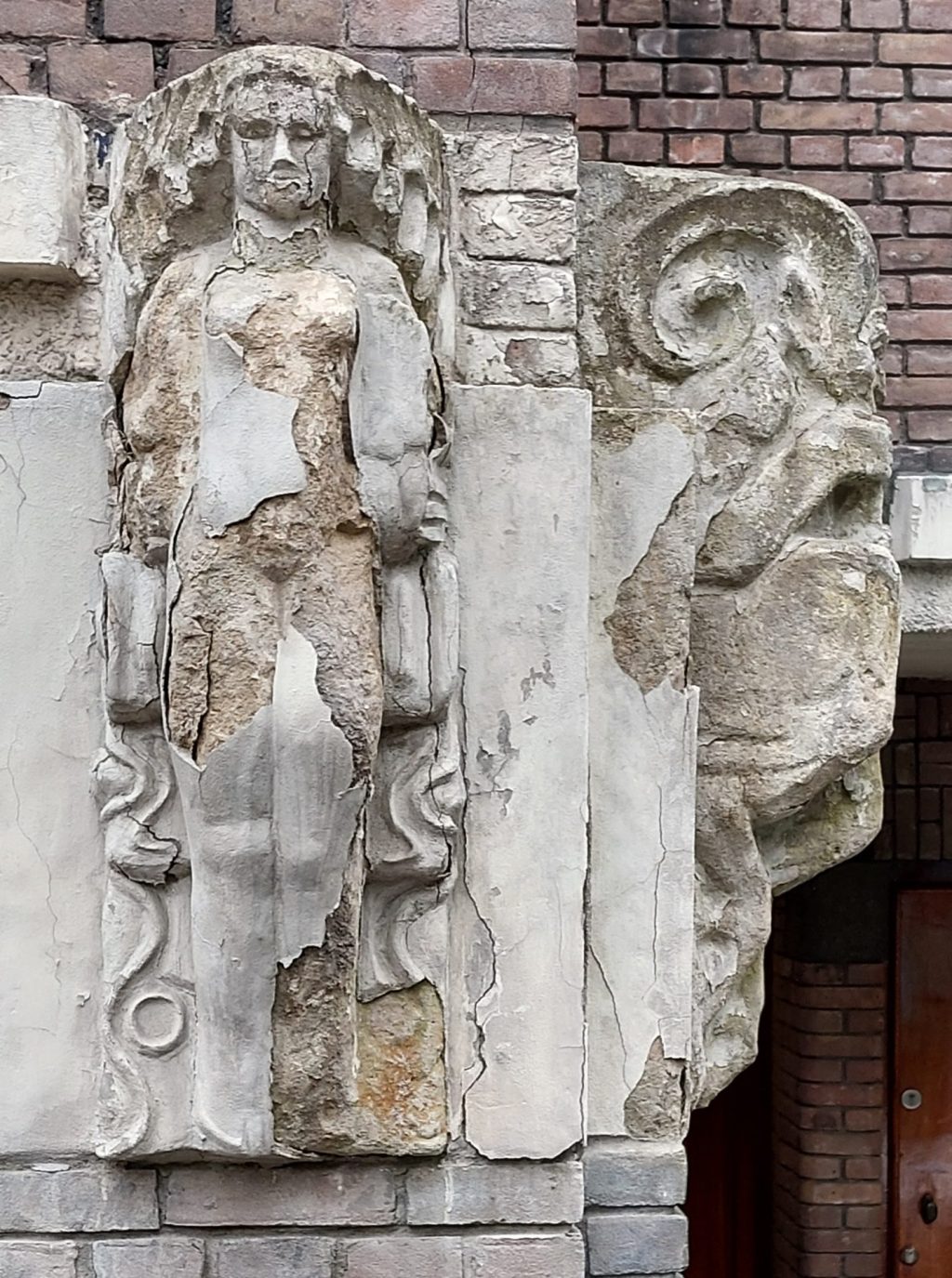
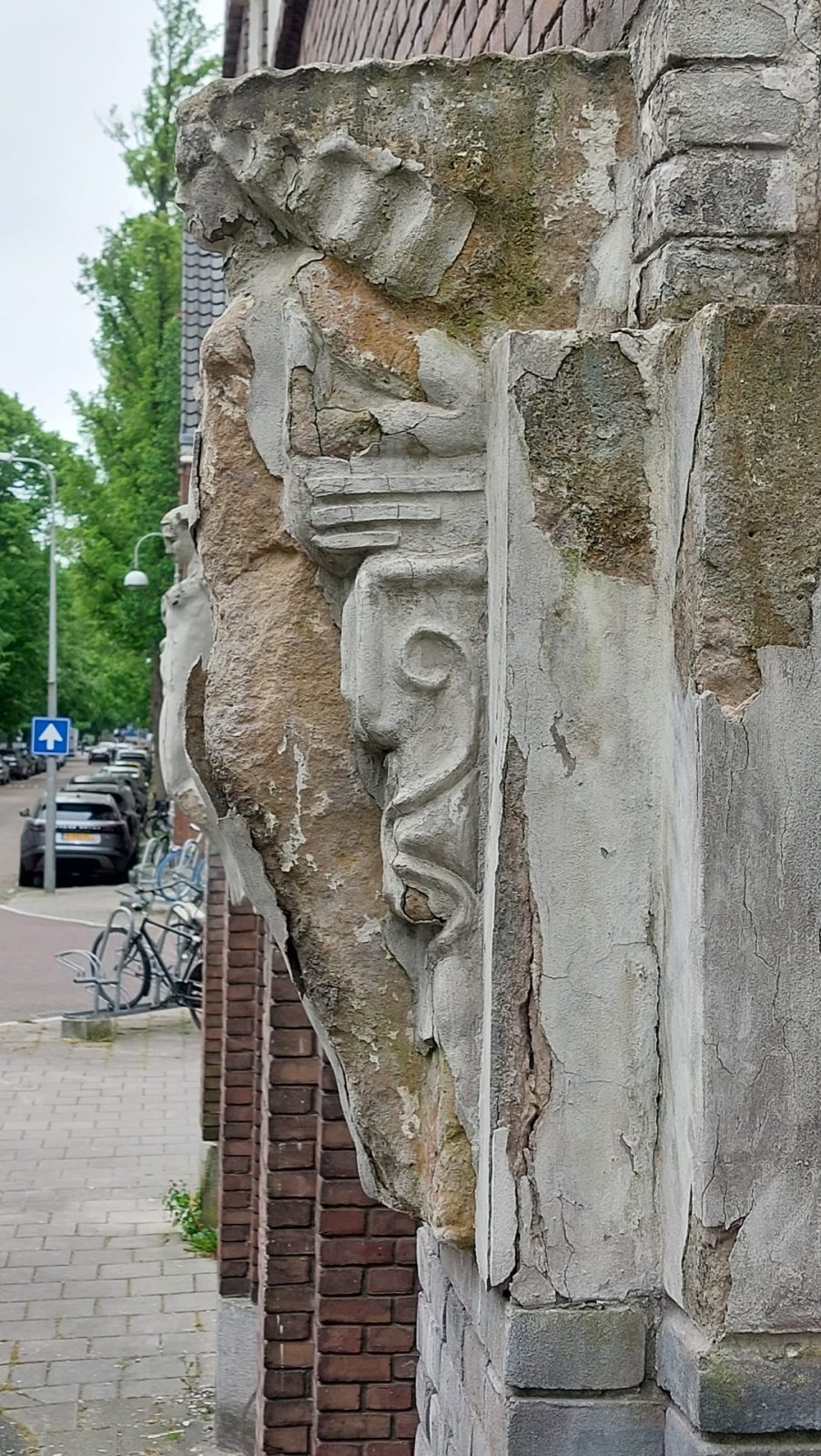
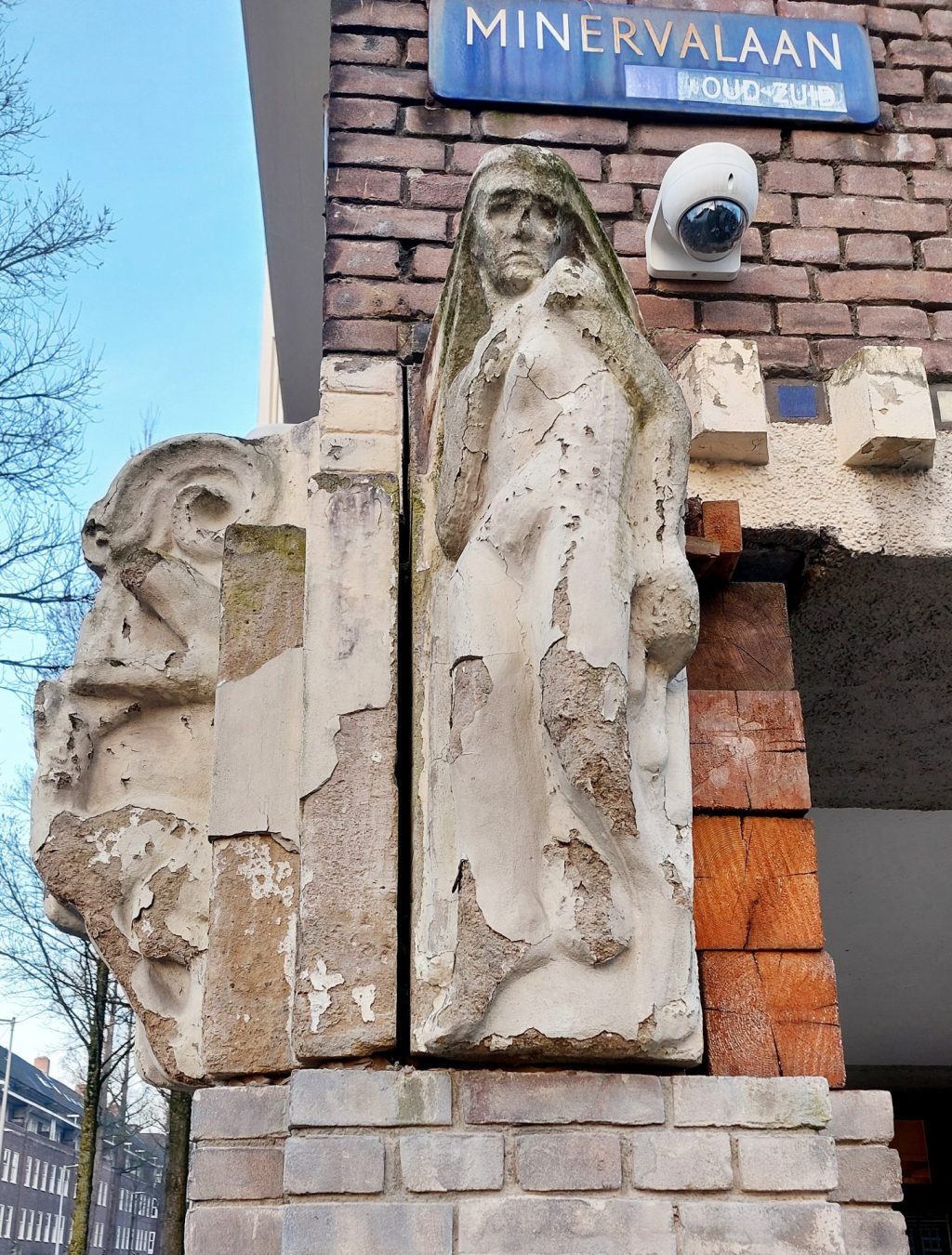
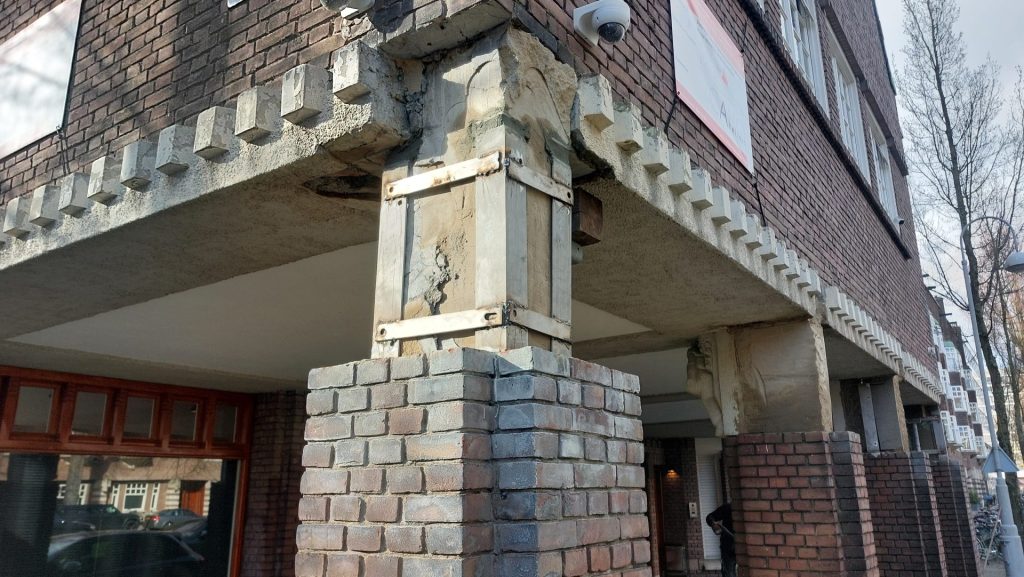
Half a year later we came back. The action plan was approved and the extra budget too, and a construction engineer had made calculations. Big stainless steel props were welded and they would keep things together. During cutting out the statuettes, it became clear how much this restoration was needed. Many of the blocks were not only strongly weathered down on the outside, but they came down in three or more pieces. For years there had been unseen cracks throughout the sculptures.
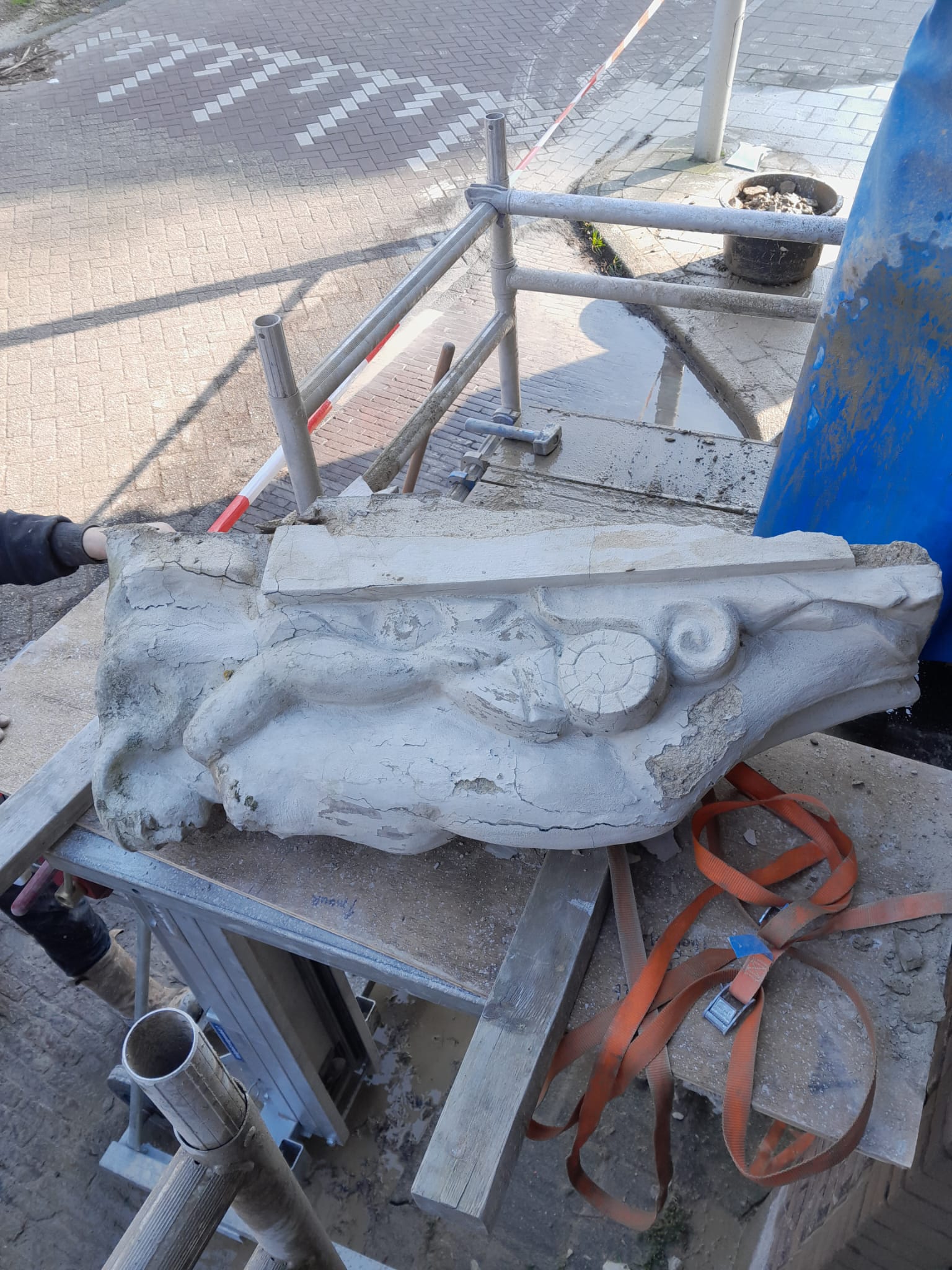
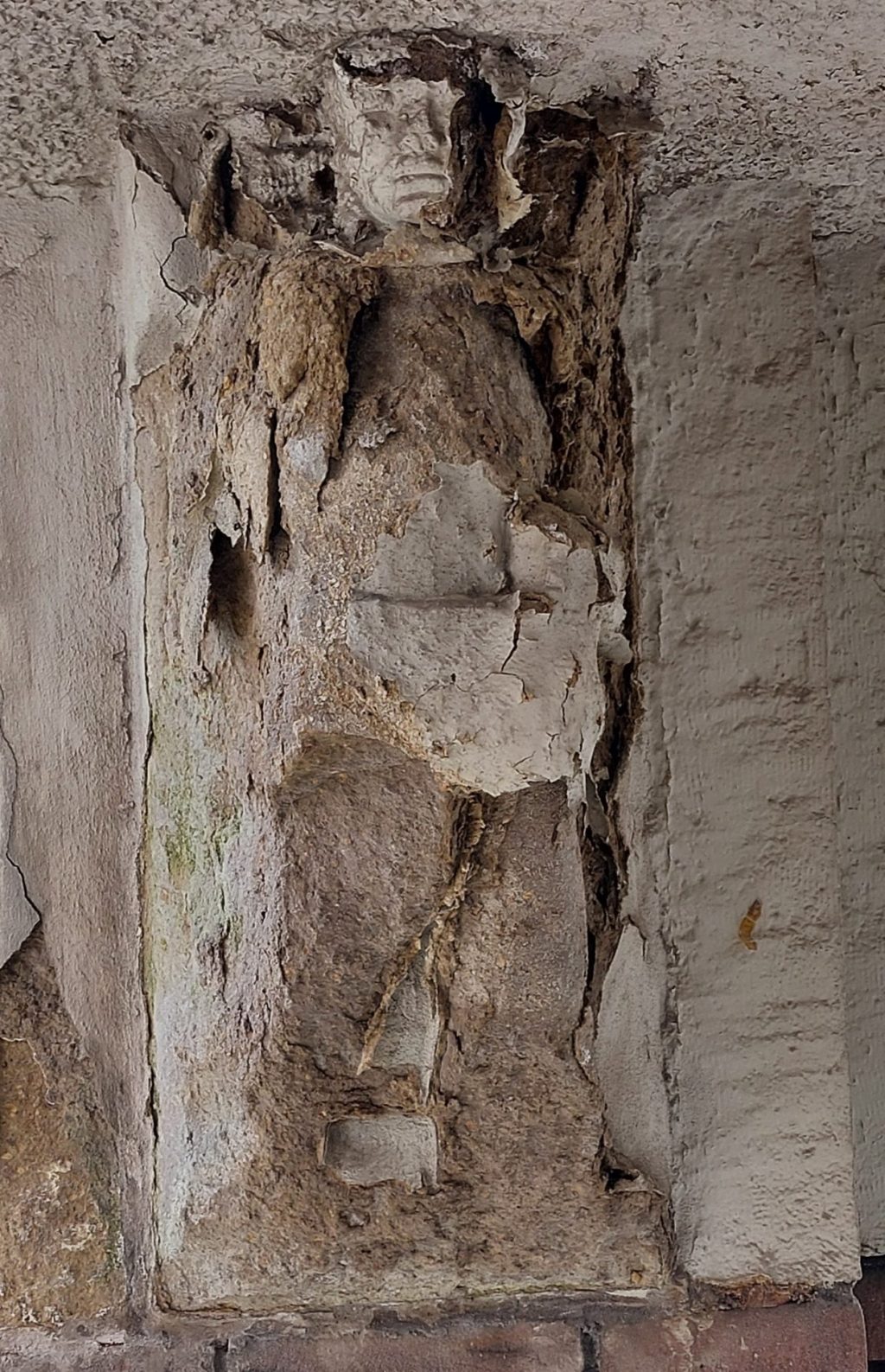
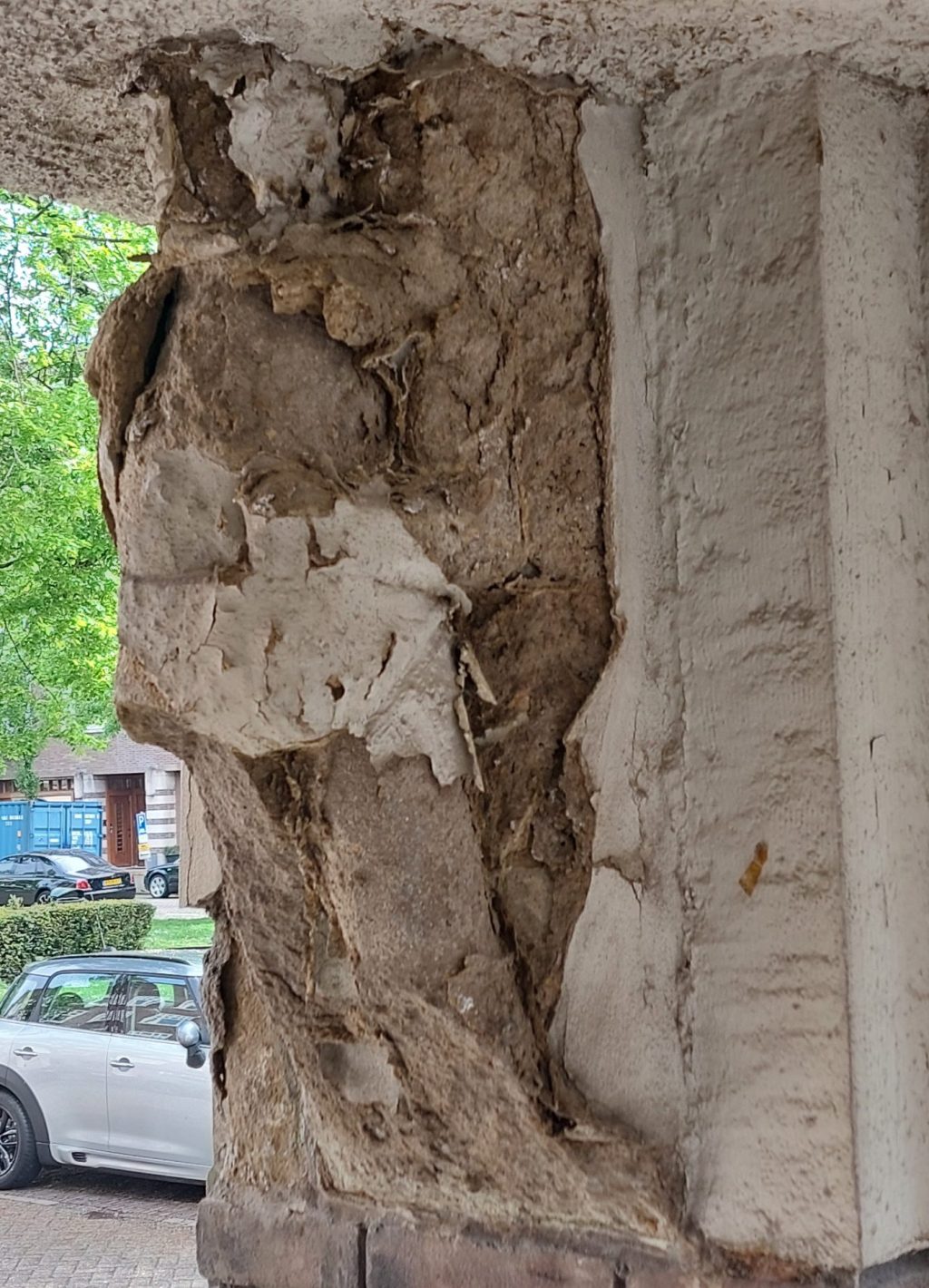
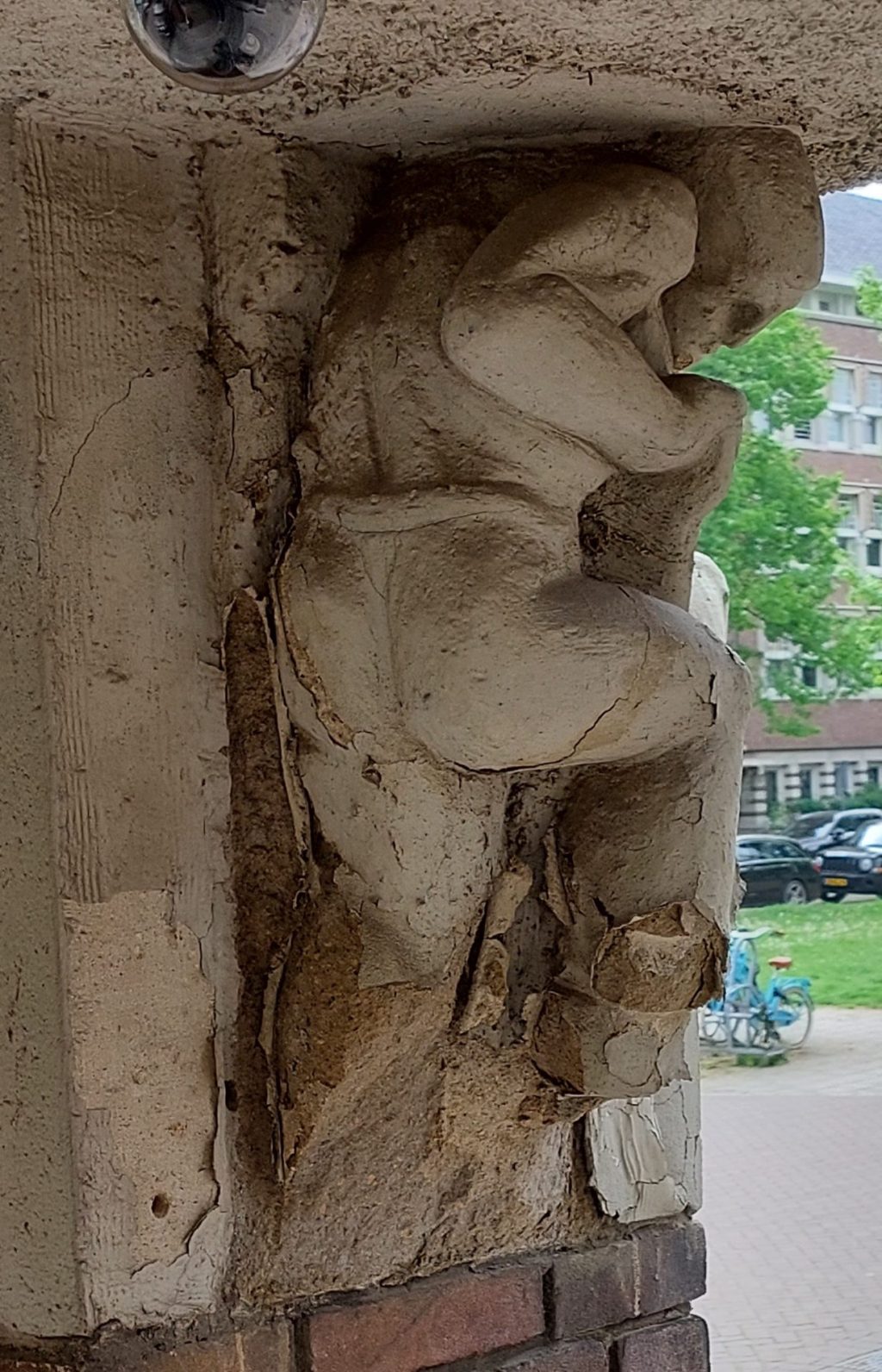
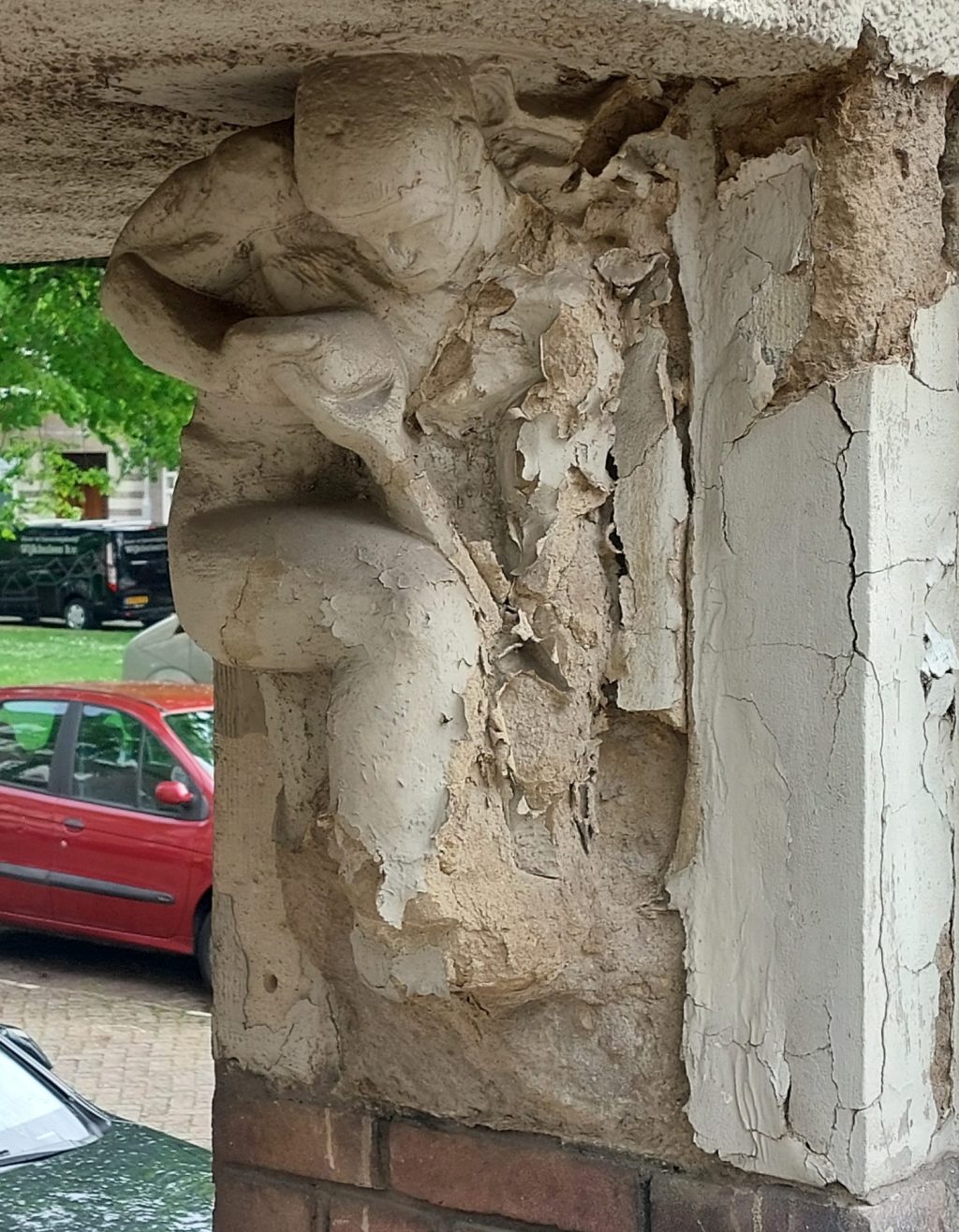
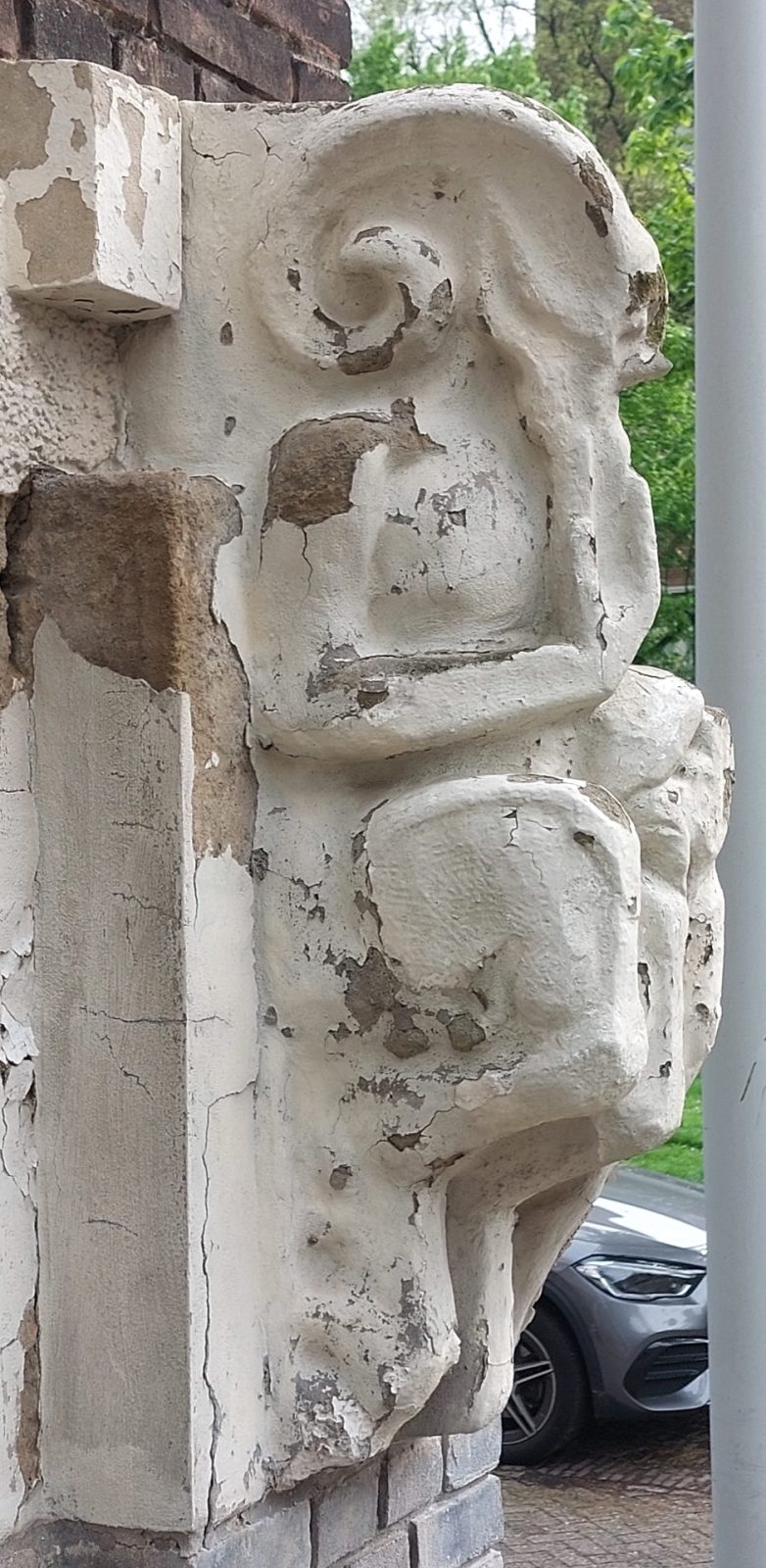
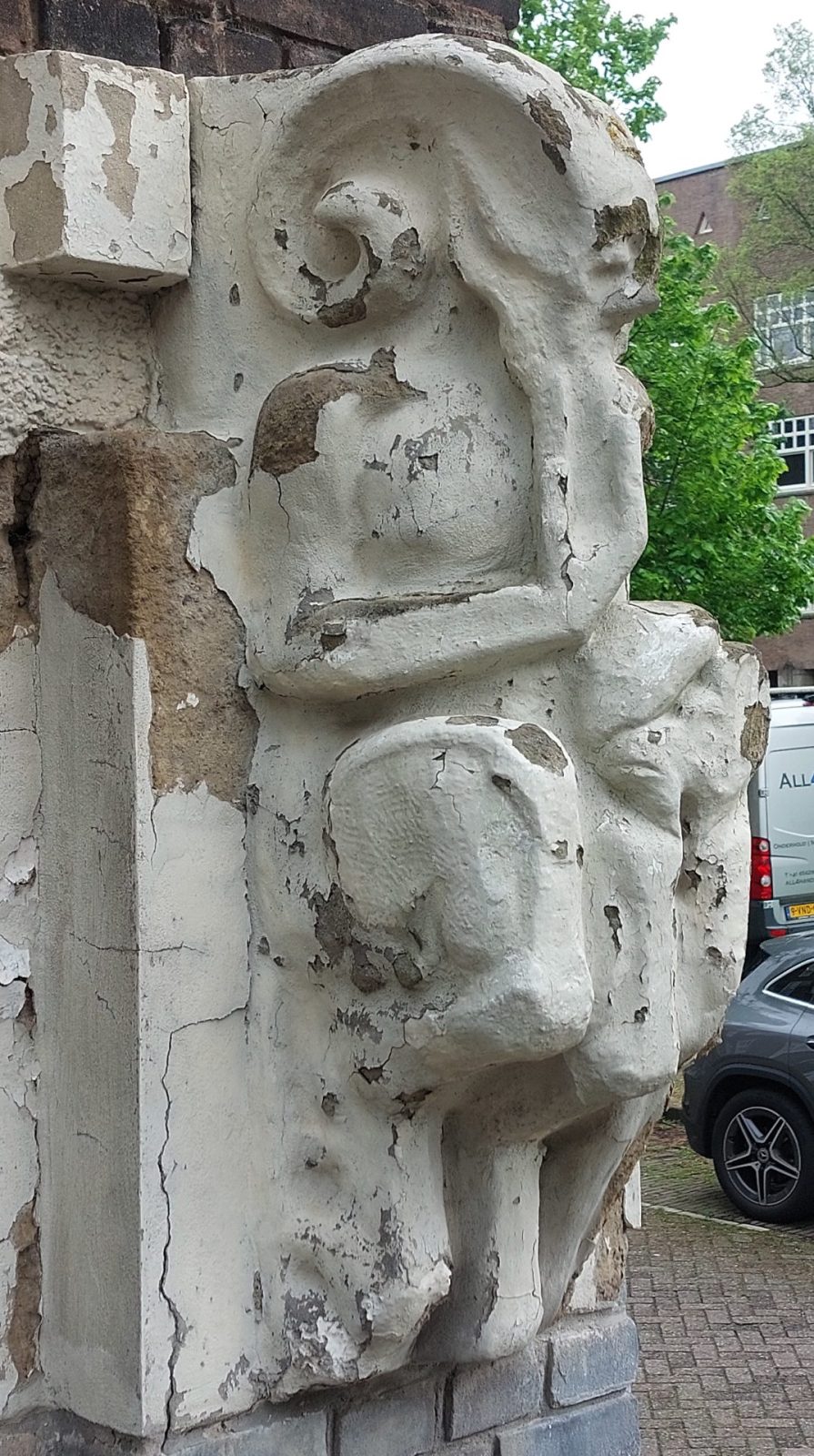
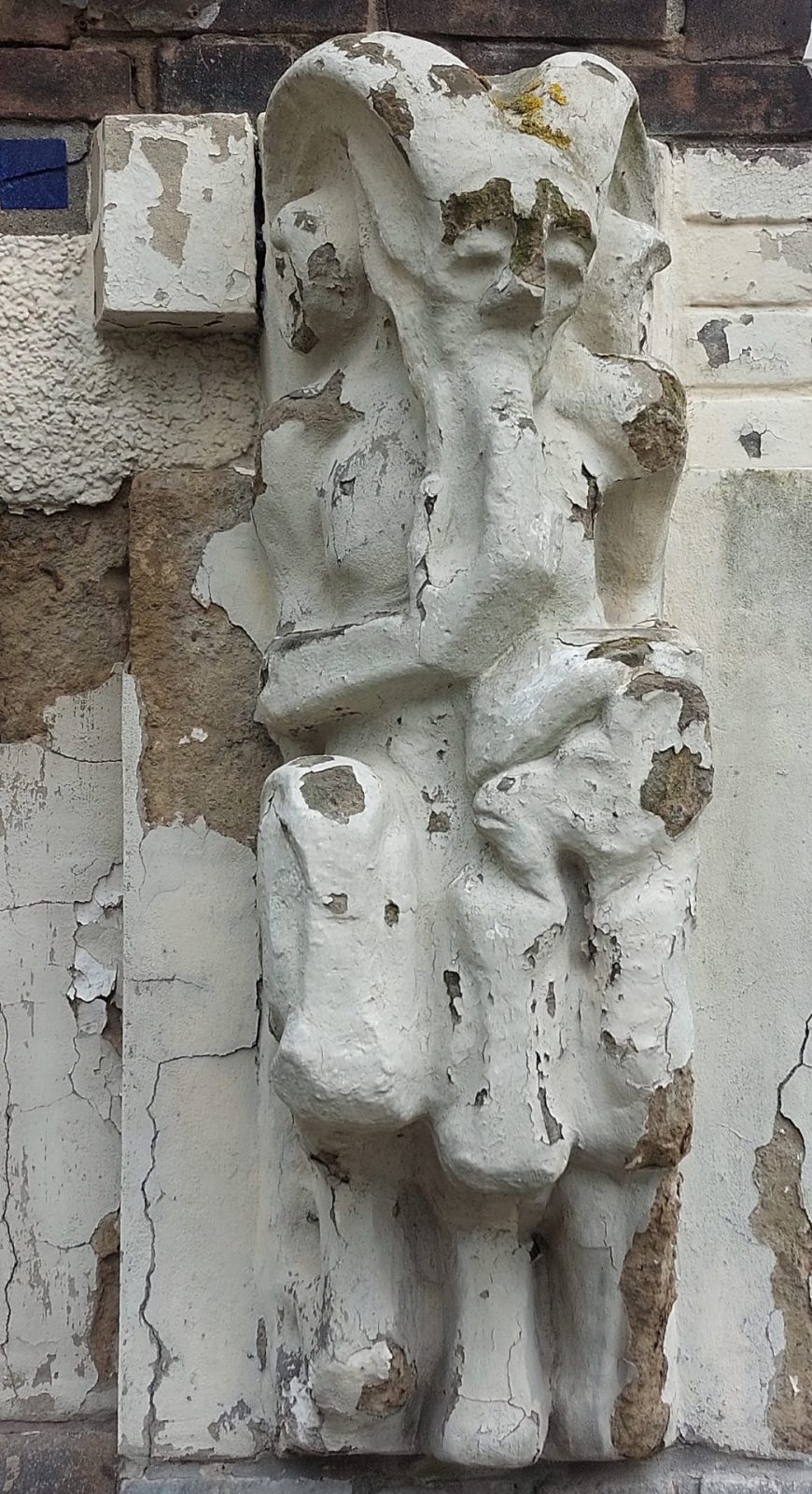
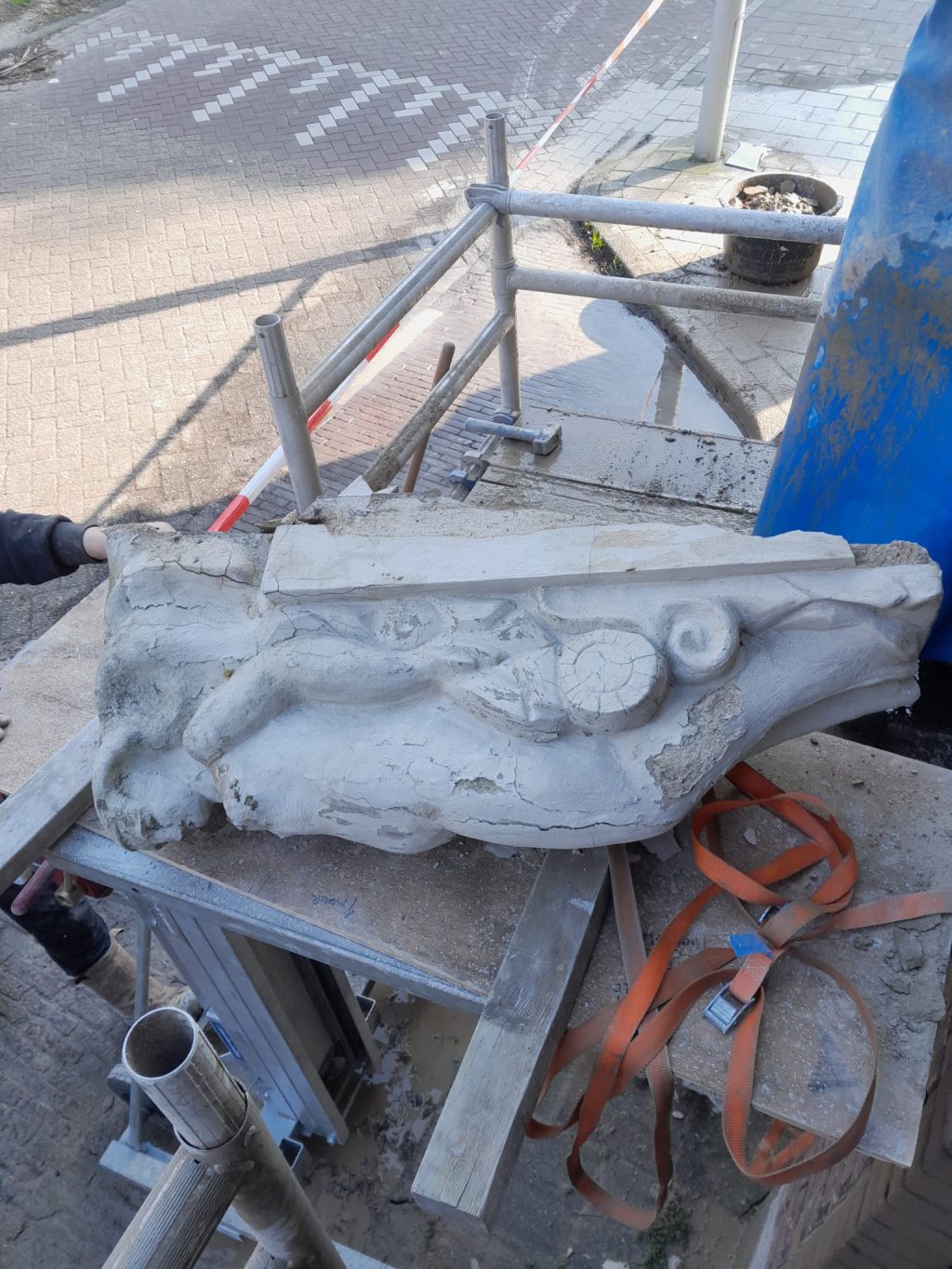
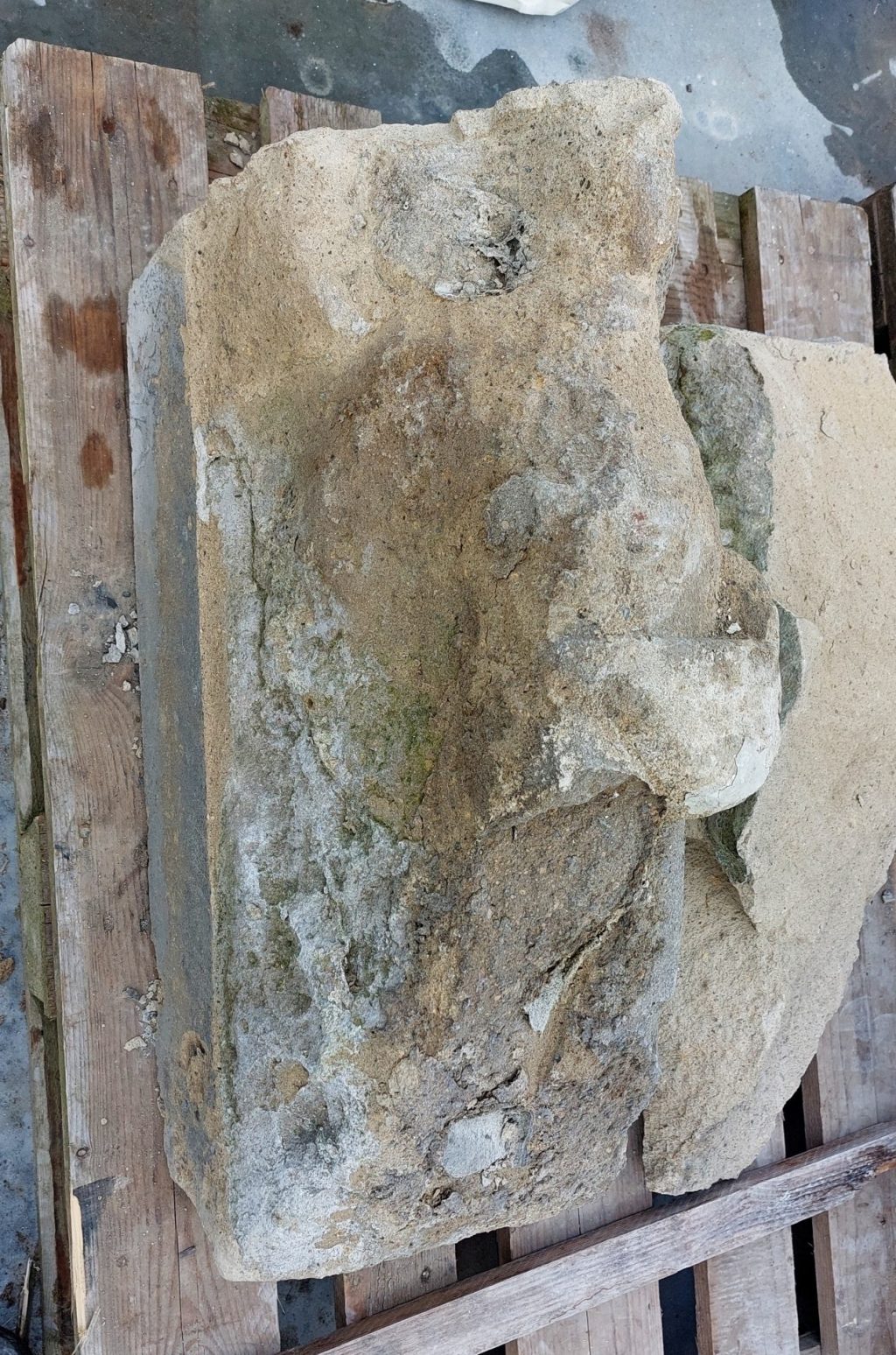
After a few days with the diamond chainsaw we had pallets full of whole sculptures, but also broken pieces, some of which barely looked like a sculpture anymore. It was a sad heap of rubble, while before, it had looked so nice on the facade! The props now kept the facade up, end then I welded the separate corner pieces together.
Video: Eight sculptures cut away with the concrete chainsaw
Found the culprit


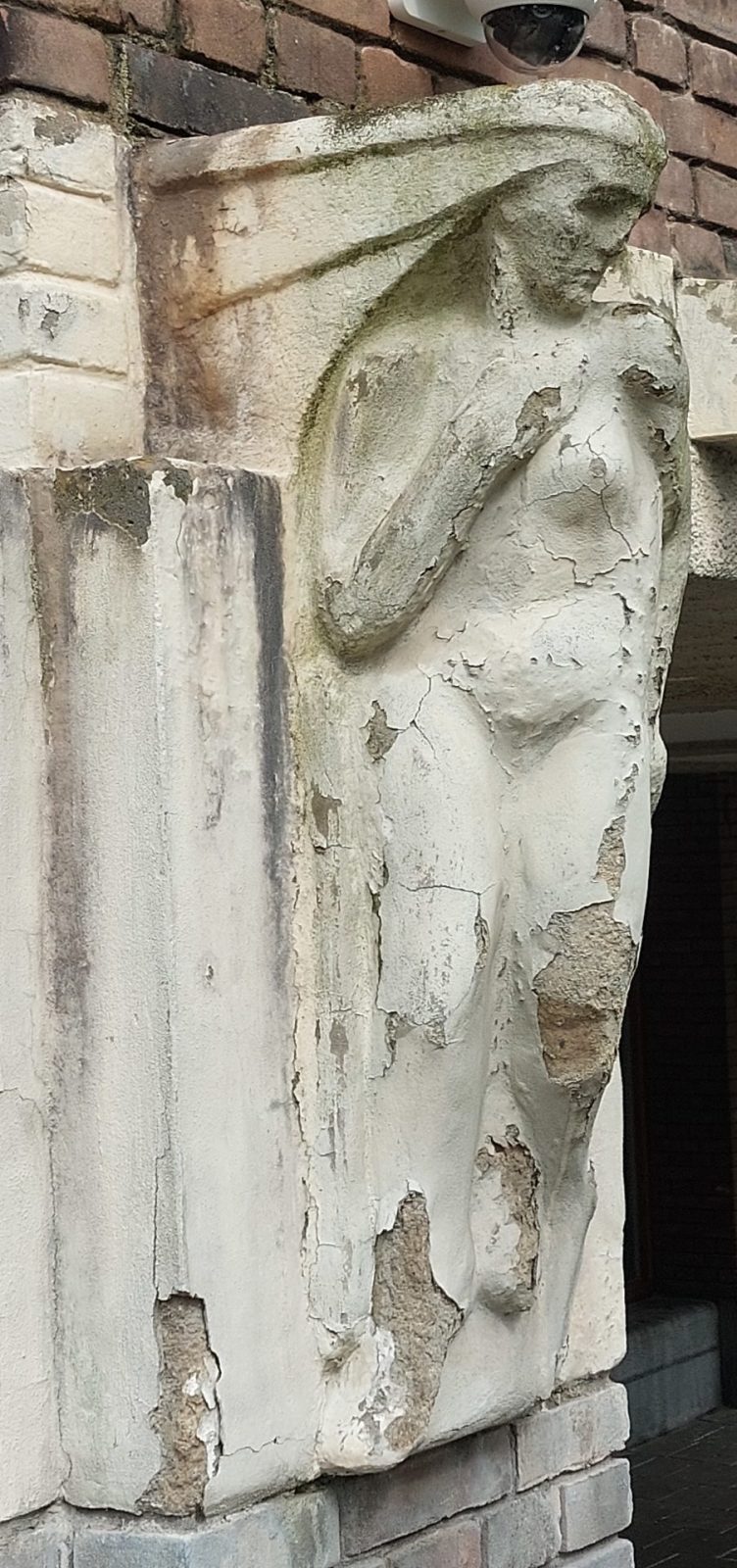
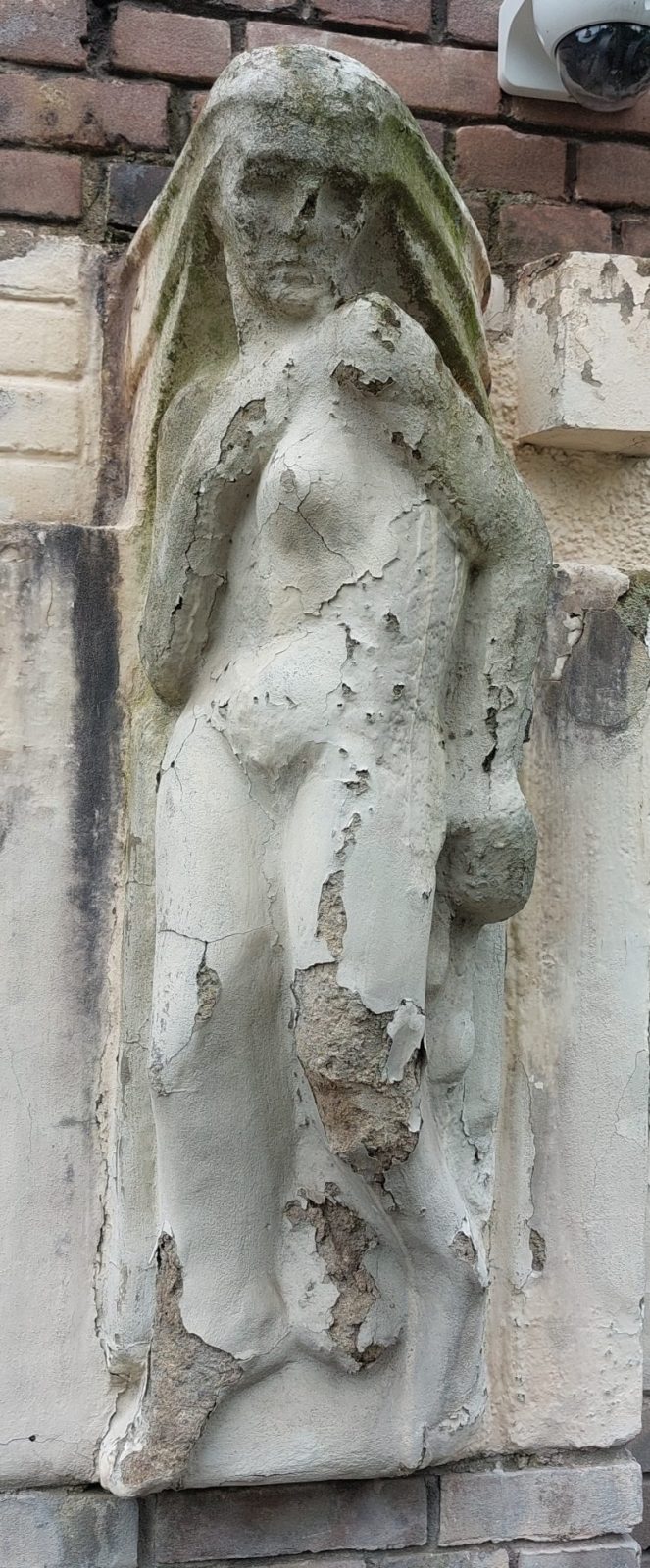
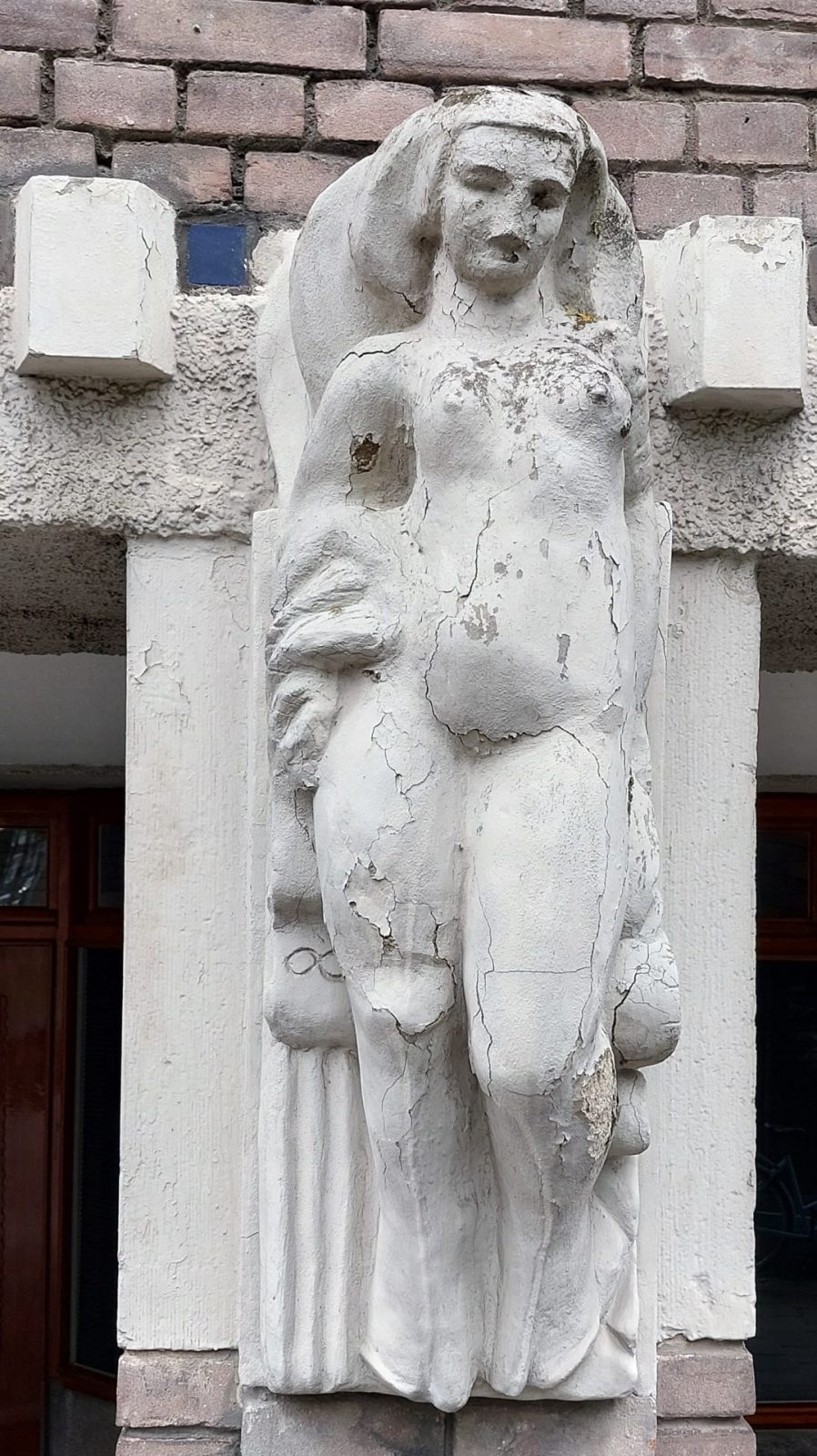
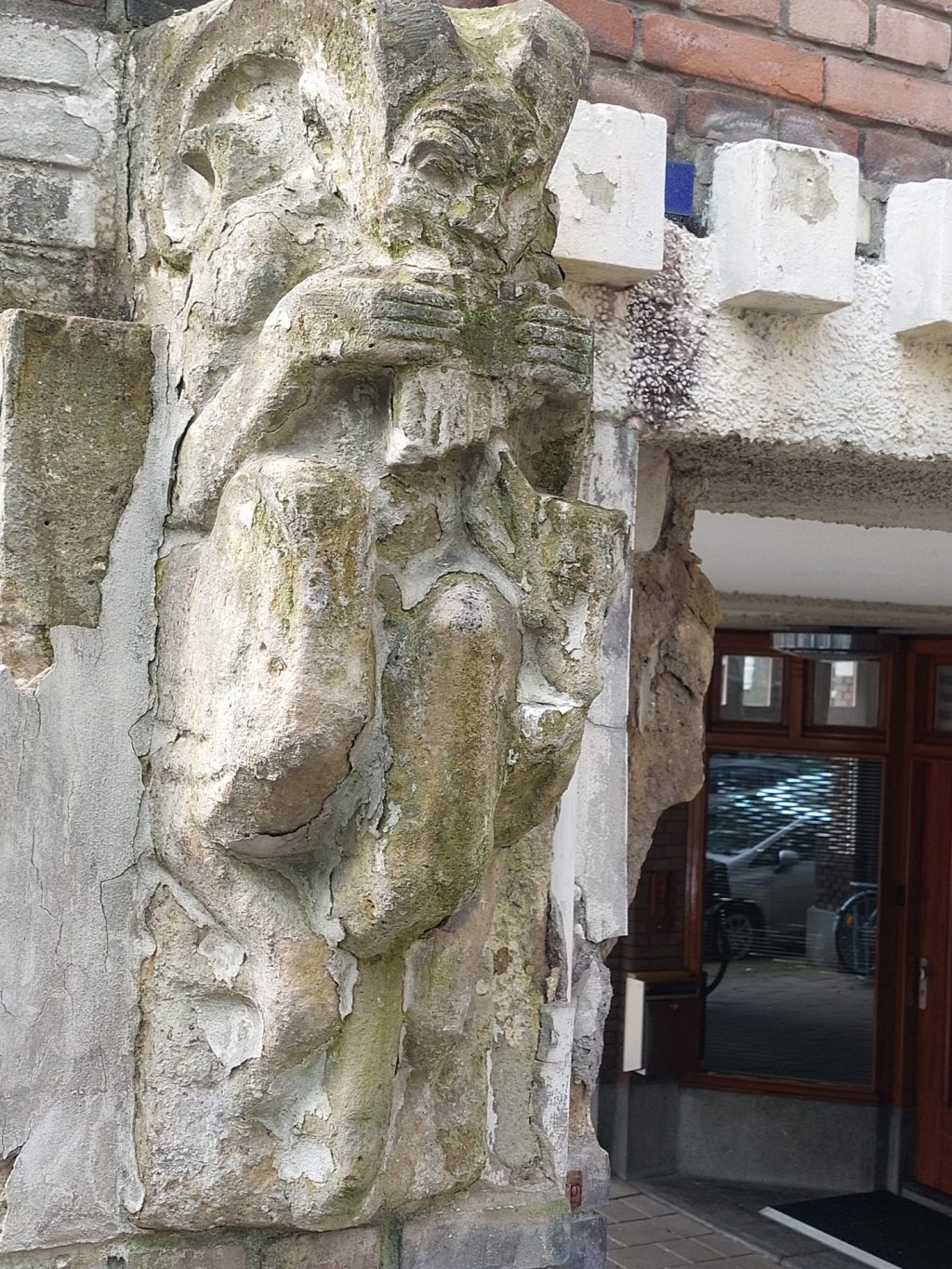
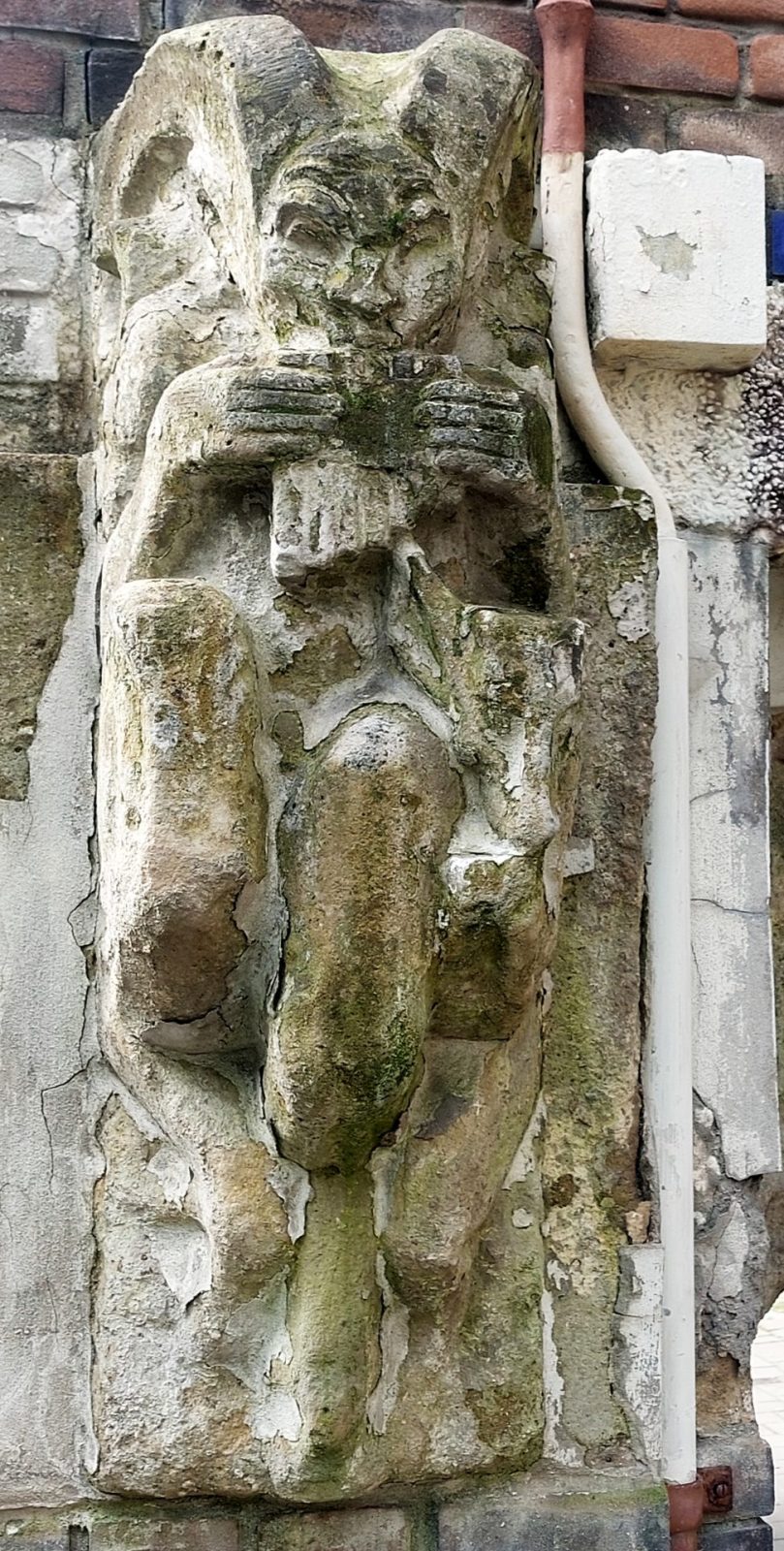
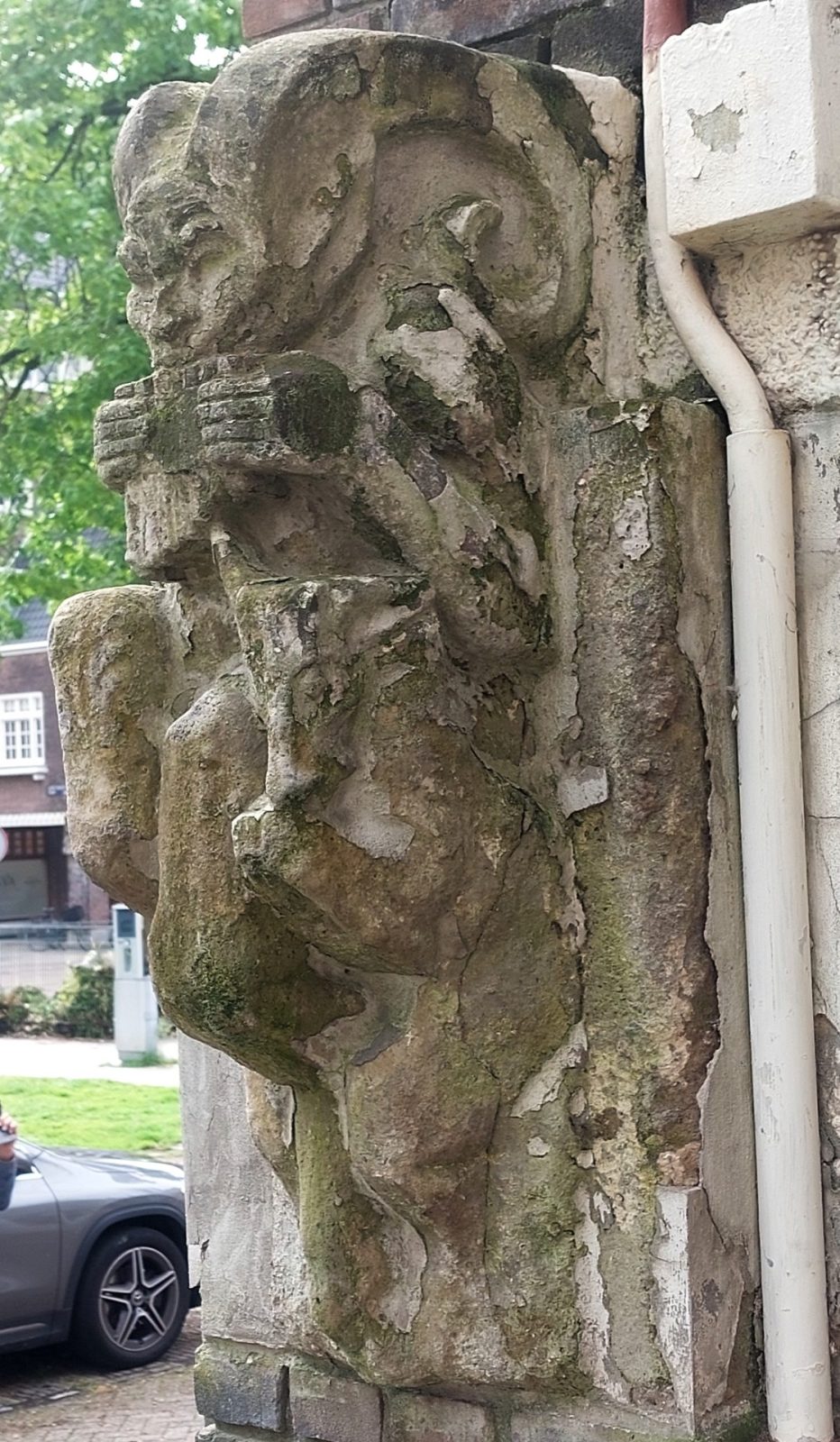
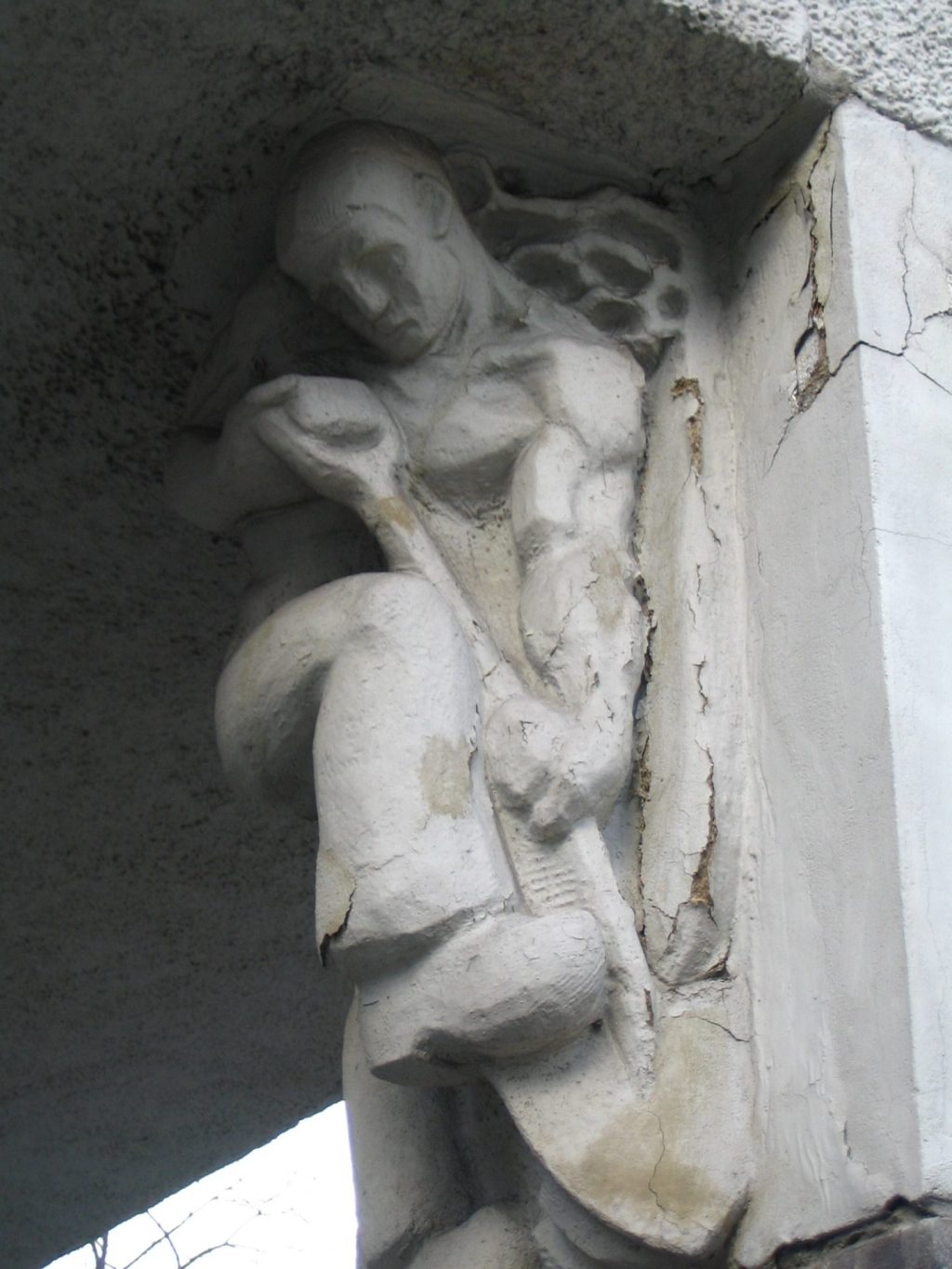
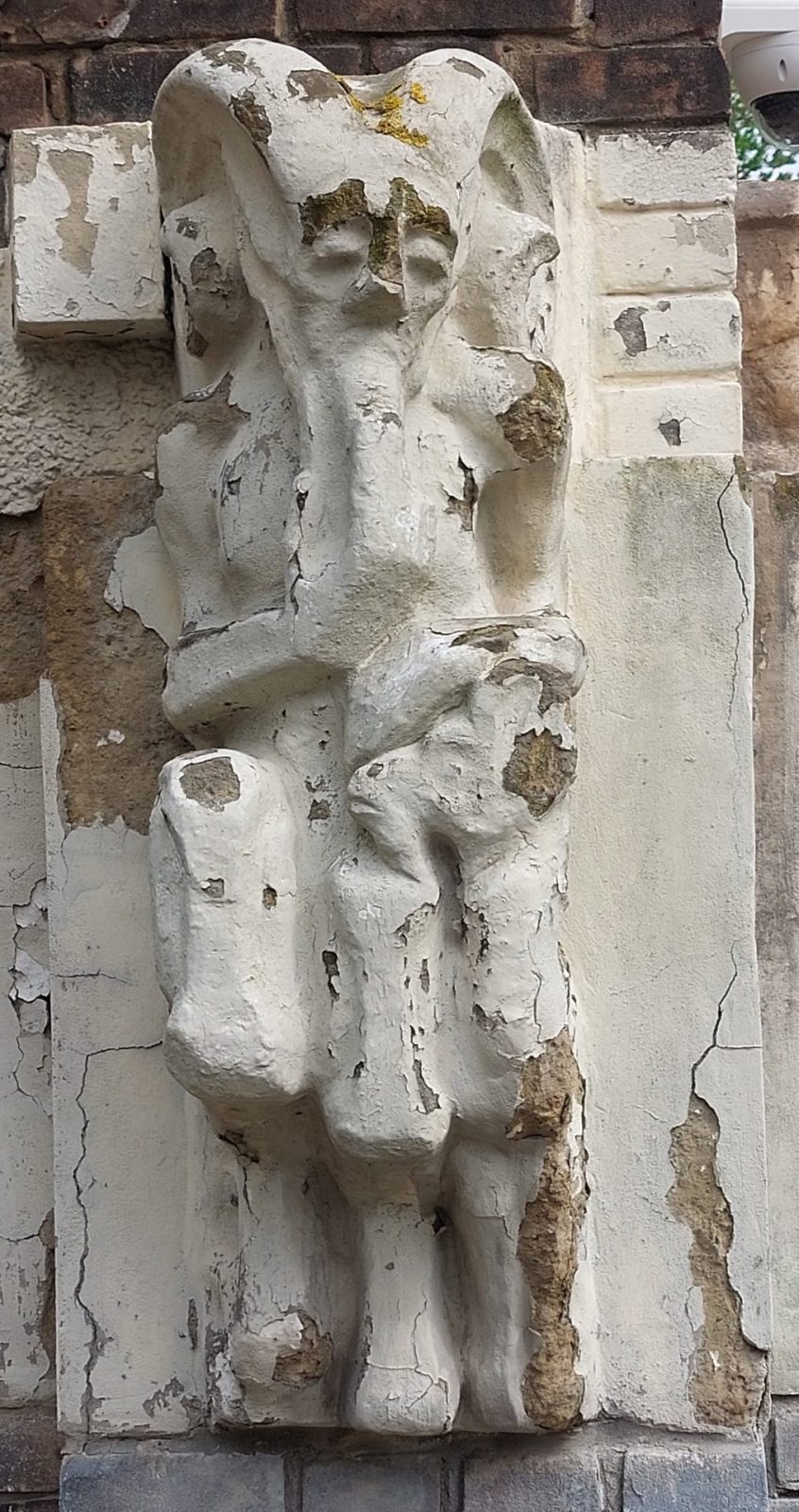
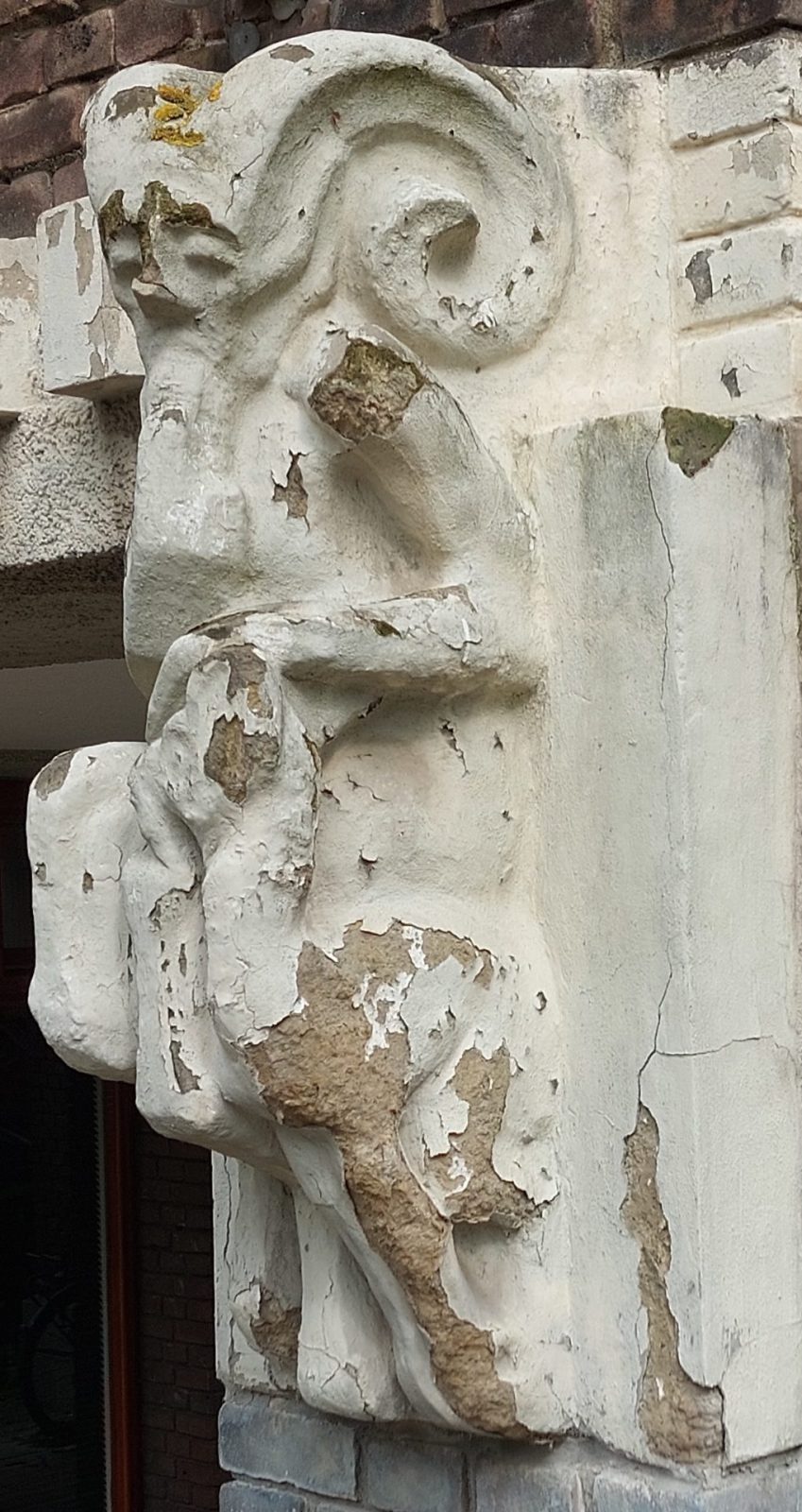
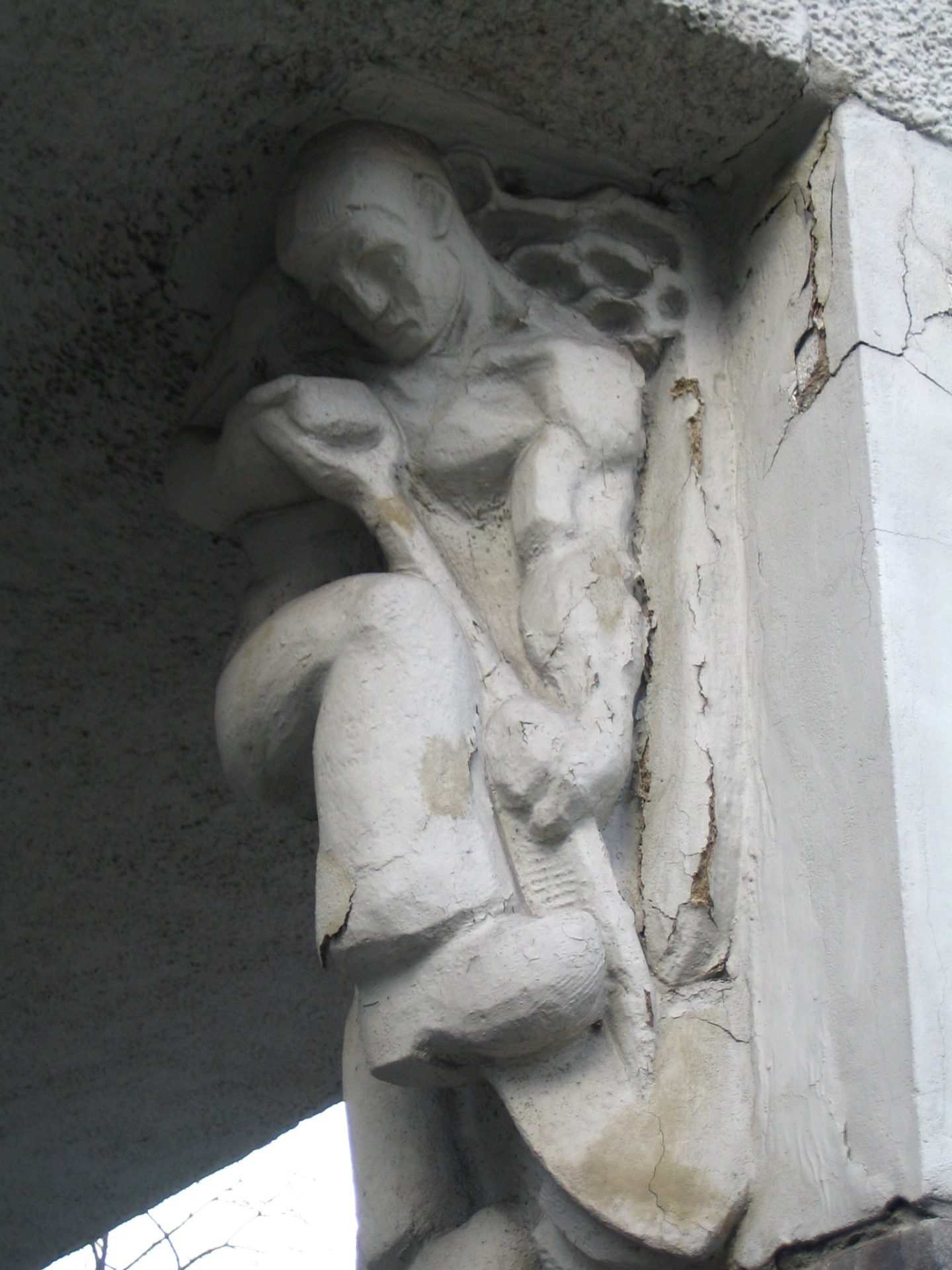
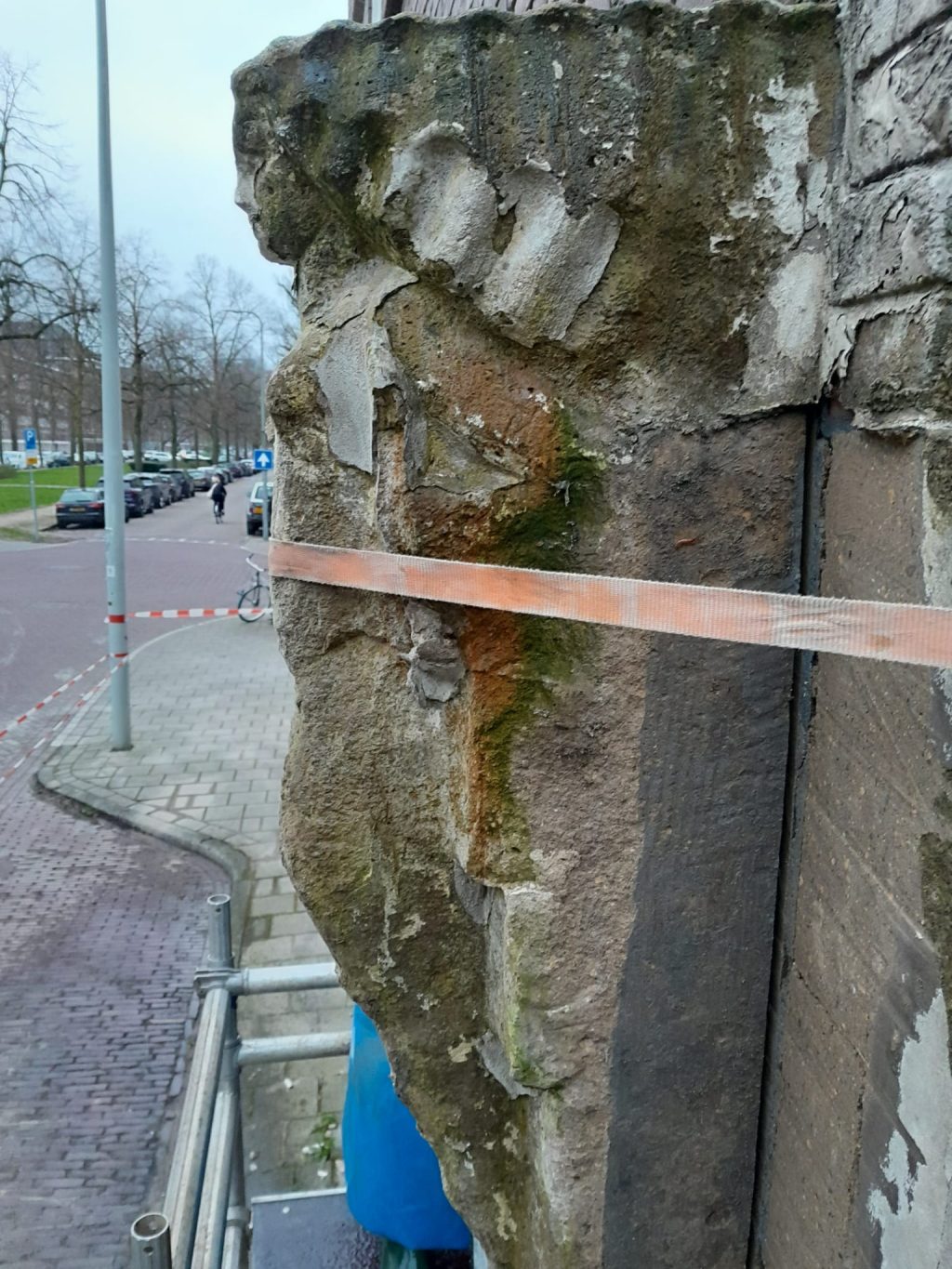
Especially the right hand corner, with Spring, a Faun and a Man Sowing, was in particularly bad shape. We had already seen that there was a long crack running through the facade from top to bottom. Would that be because of sagging? But we quickly found out that the cause was due to a leaking rainwater downpipe. Apparently the architect hated rainwater downpipes and it seems he thought it would be much nicer if it was hidden inside the brickwork of the facade. But cast iron rain pipes will rust , and especially when they start leaking. And rust simply expands, it can be up to 7x as thick as the original iron.

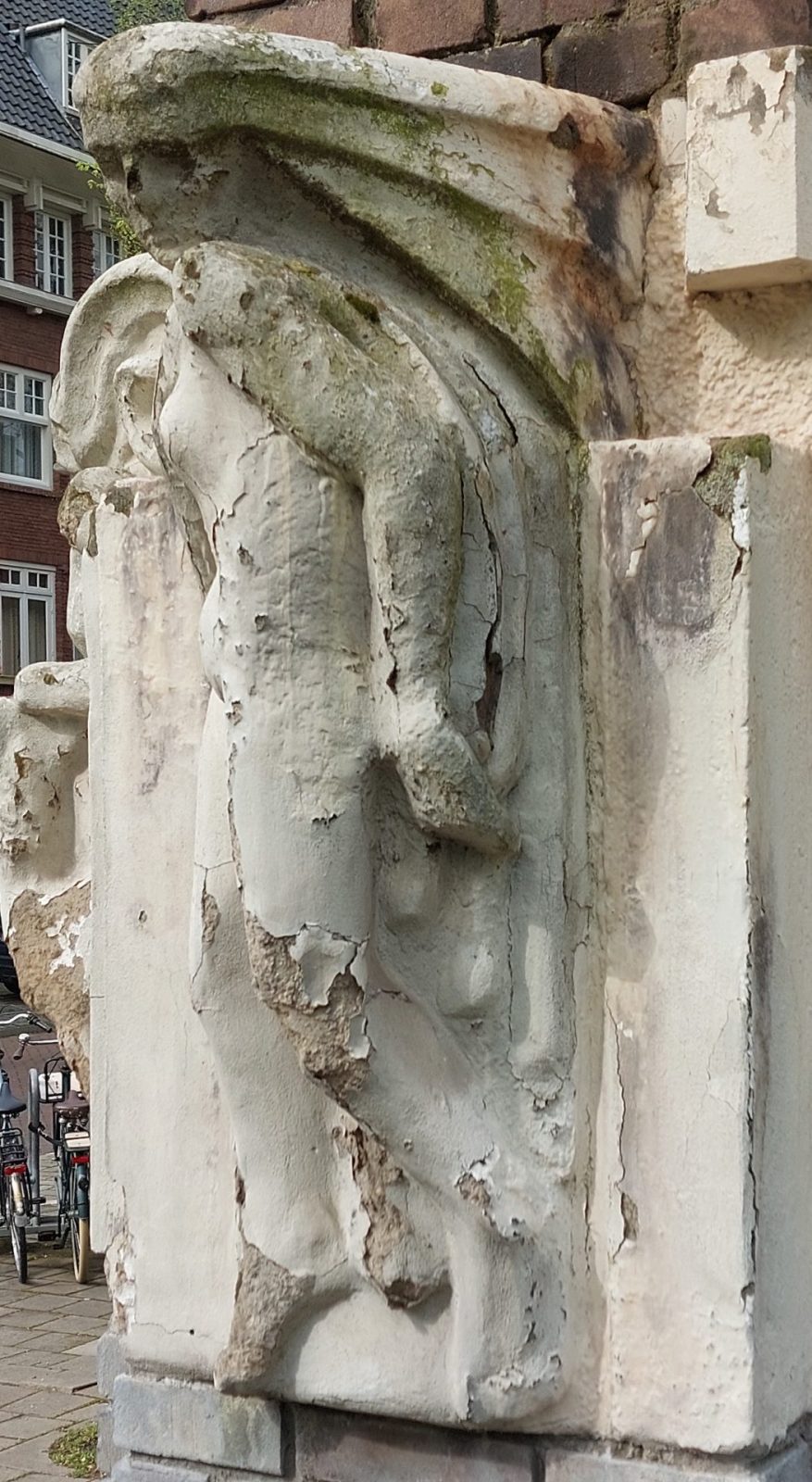
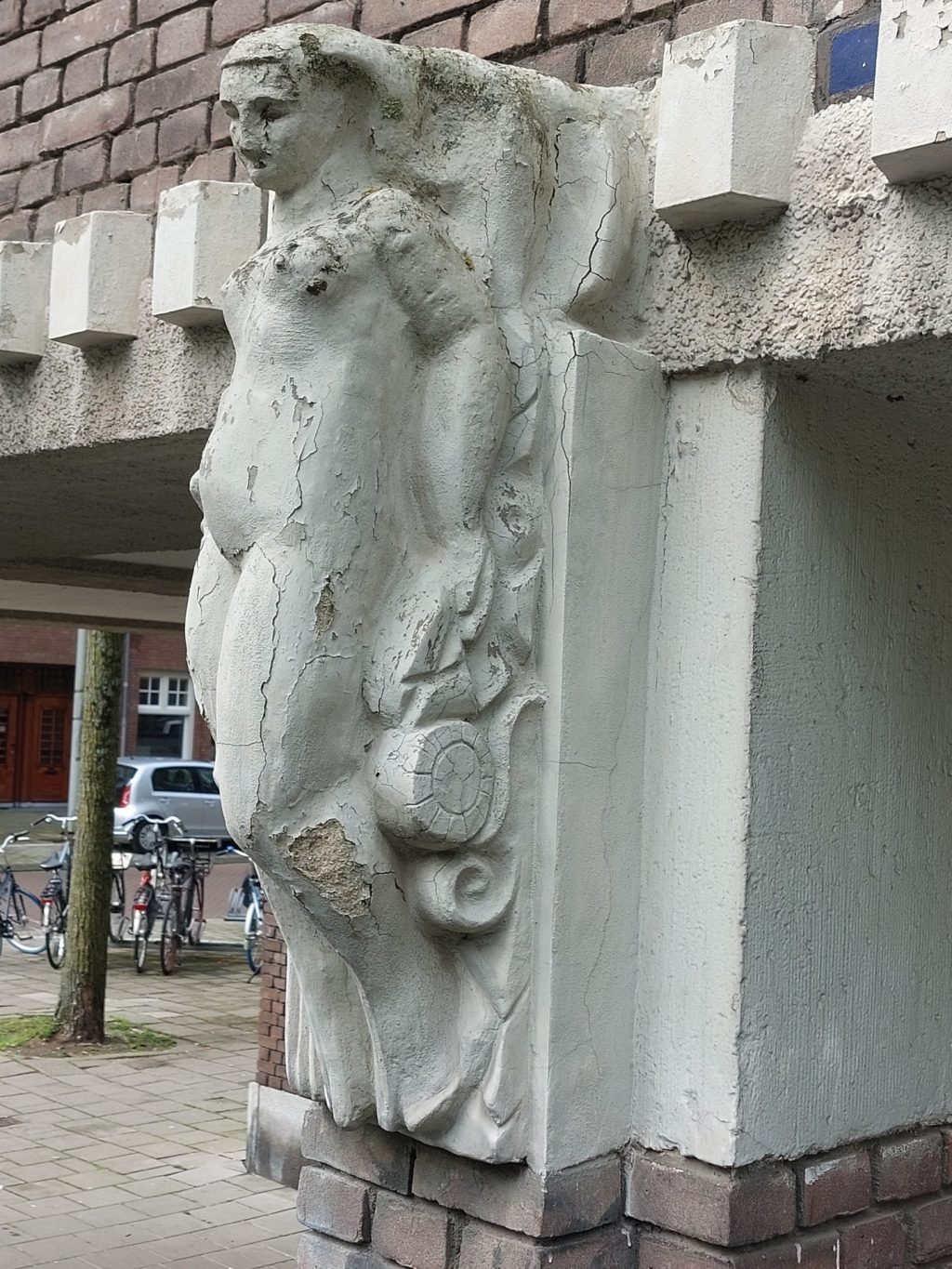
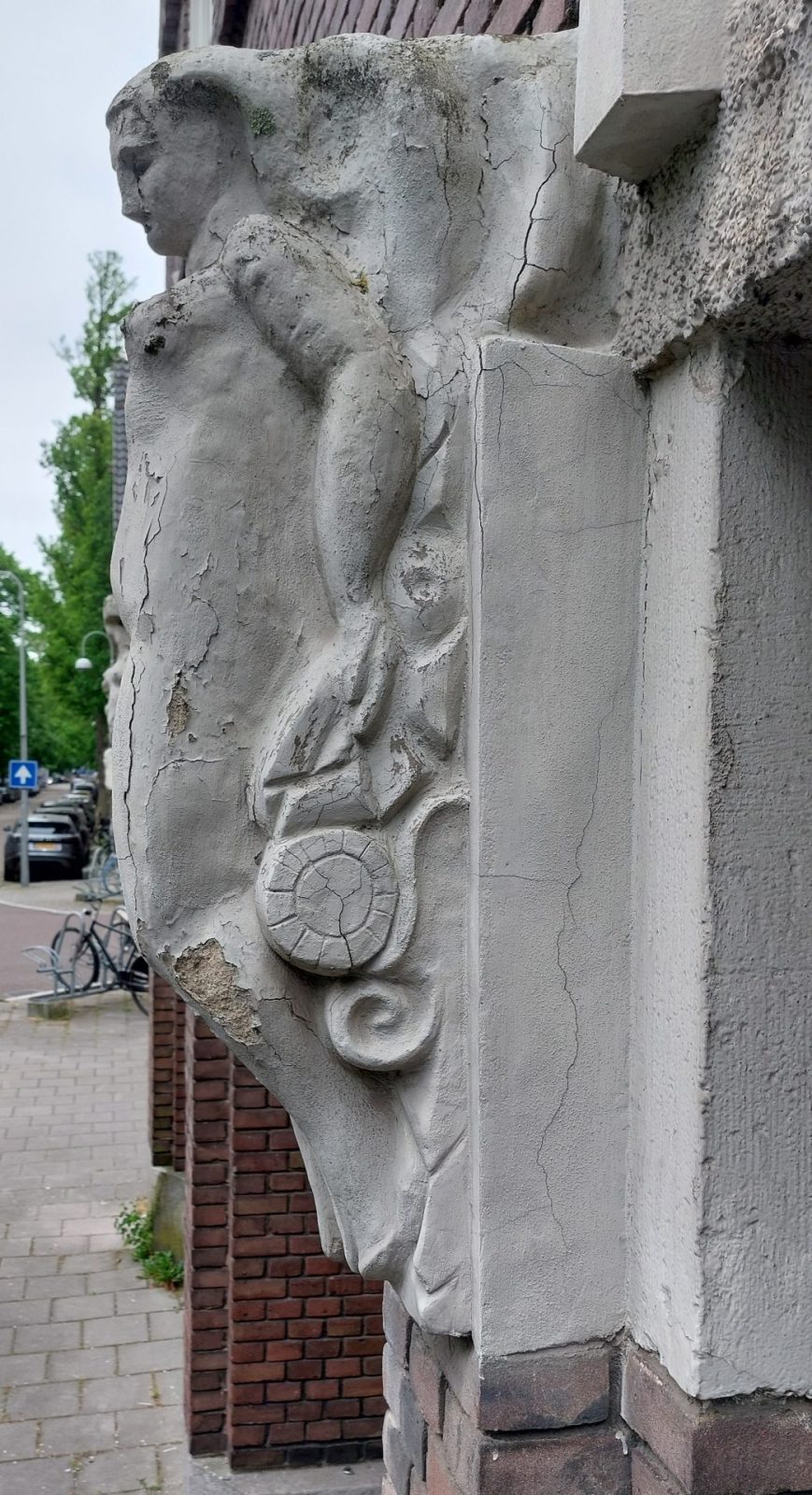
It turned out that in most places only a sliver of about 2 cm brick covered this rainpipe. Not enough to protect it against rust. De downpipe had started leaking and the sculpture had become really soaking wet all the time. Just that in itself would be enough for tuff to weather and deteriorate, but if that moisture cannot go because there is a thick layer of paint covering it and especially when frost periods are added, then the consequences are easily guessed. The statues of Spring and Faun came down in pieces, torn and soaked.
Archiving

Now I had already taken that into account. Experience had taught me that a lot of information could also be lost during dismantling. Simply because those loose crumbs that now look a bit like a face or a hand, immediately will crumble when you touch such a block. It will never get better once you start dismantling or cutting a sculpture free. That is why I had taken a whole series of photos of every statue, from the left, left front, front, front right and from the right, and preferably more. And from the sculptures on the other side of the street, on the North East Corner, I had taken loads of photos as well. We were going to need that during the reconstruction phase. The old statue would be leading in reconstruction, and hopefully, the photo material would provide enough information to be able to add the missing parts well.
Gallery: Disassembling the eight statues on the northwest corner
Read more about the reconstruction phase in The following blog post: Minervalaan part 3