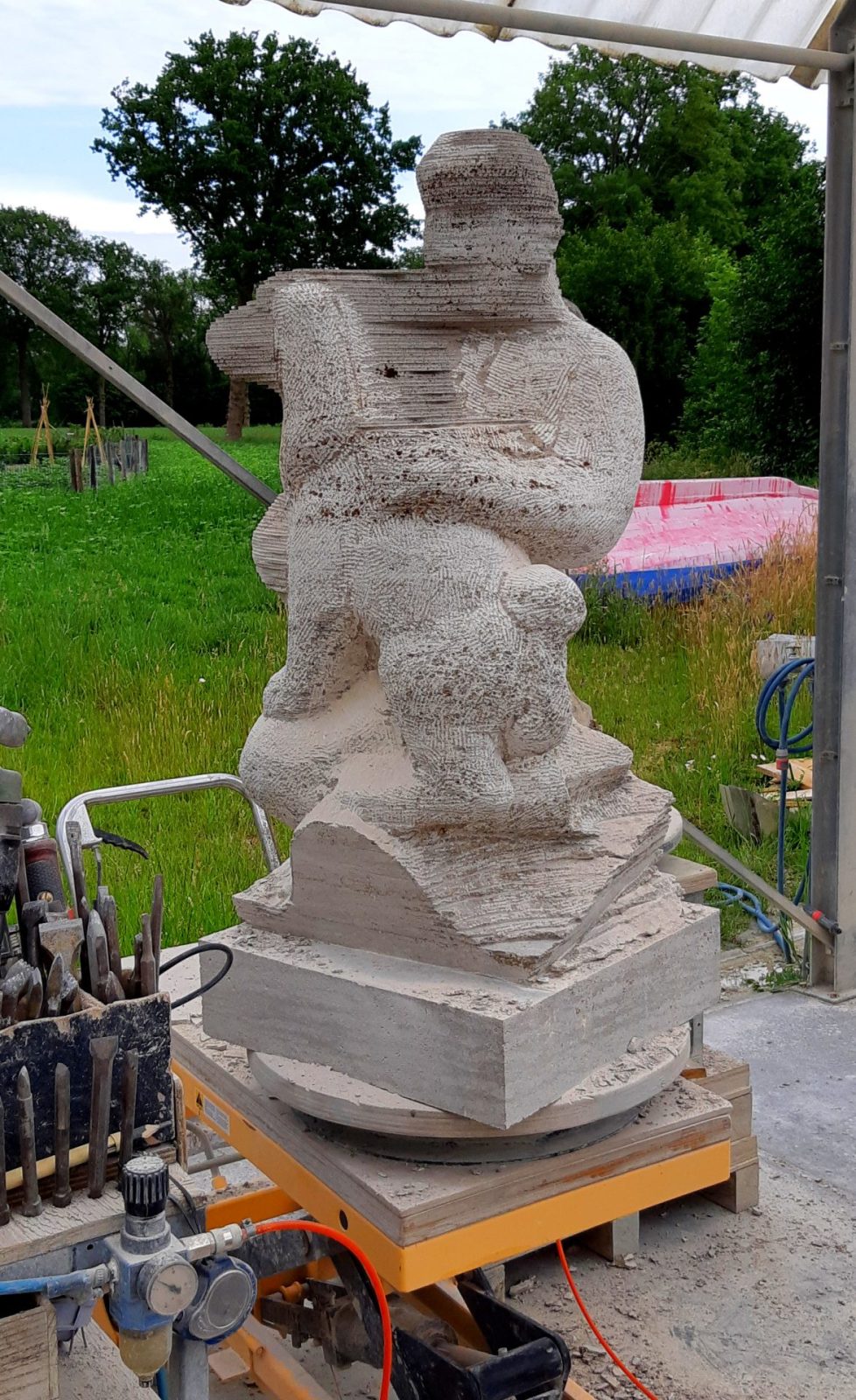
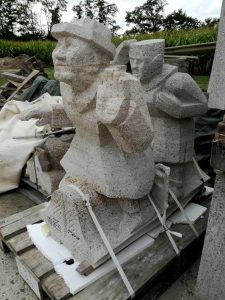
• Flying buttress figurine: Temperantia

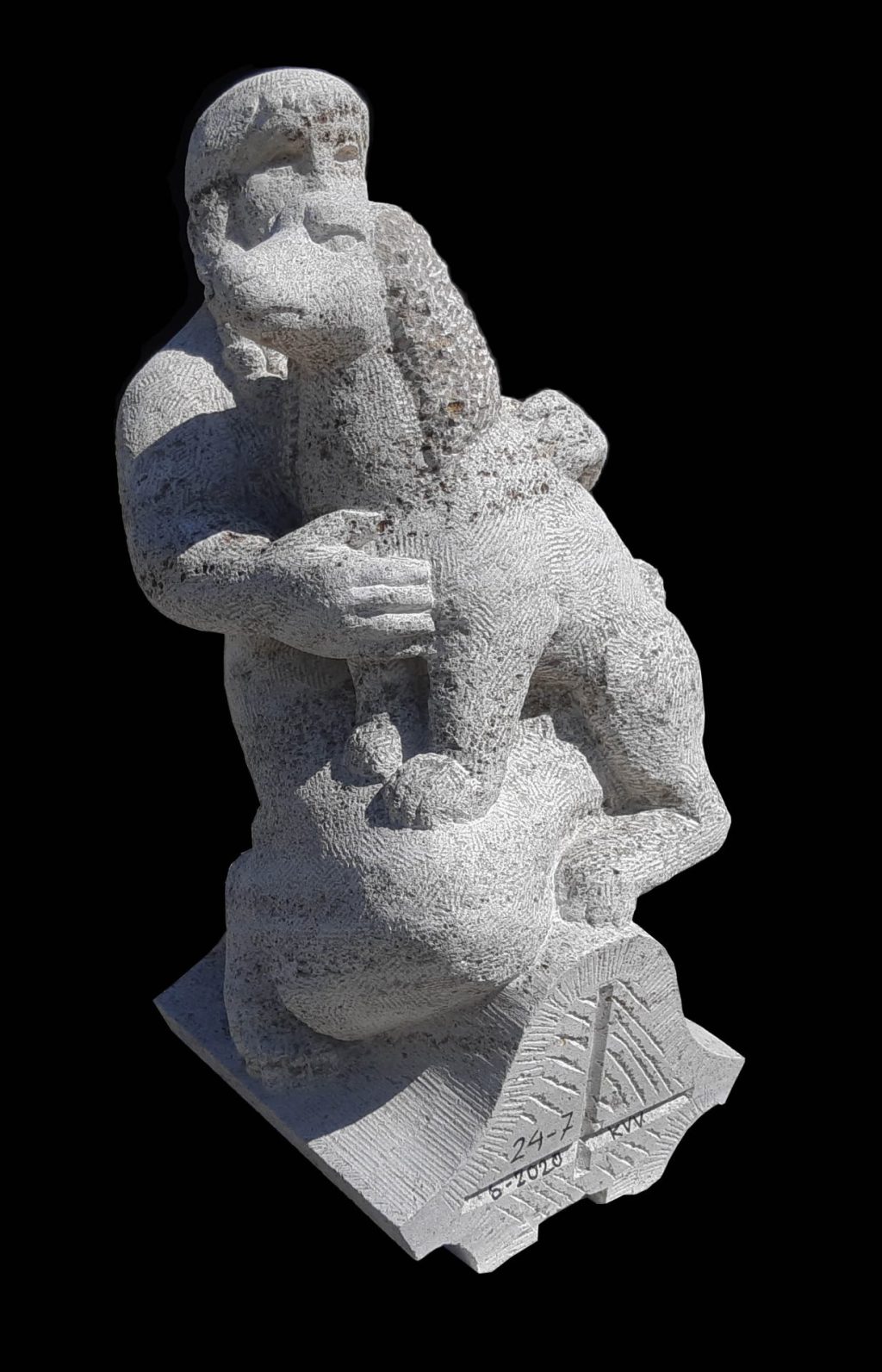
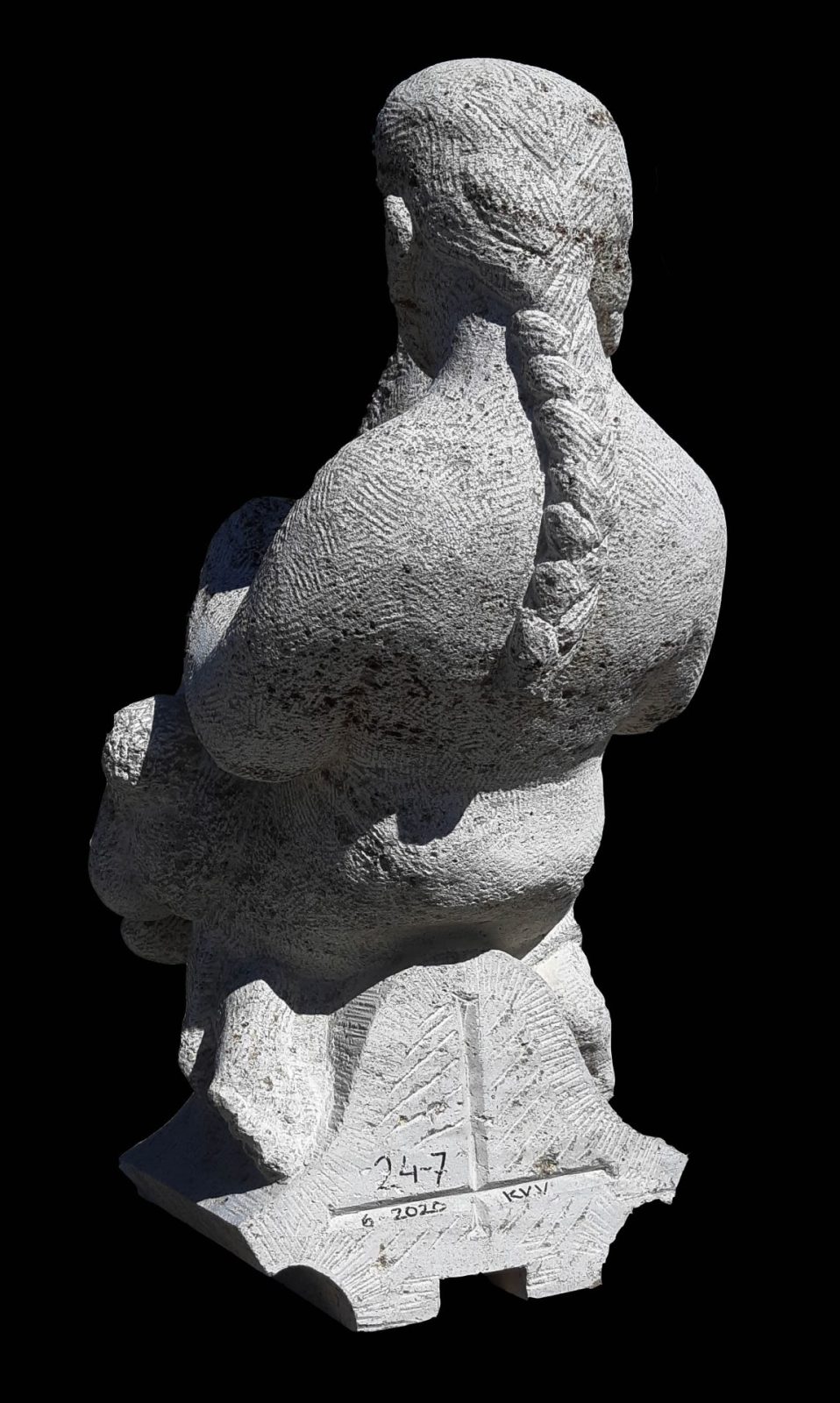
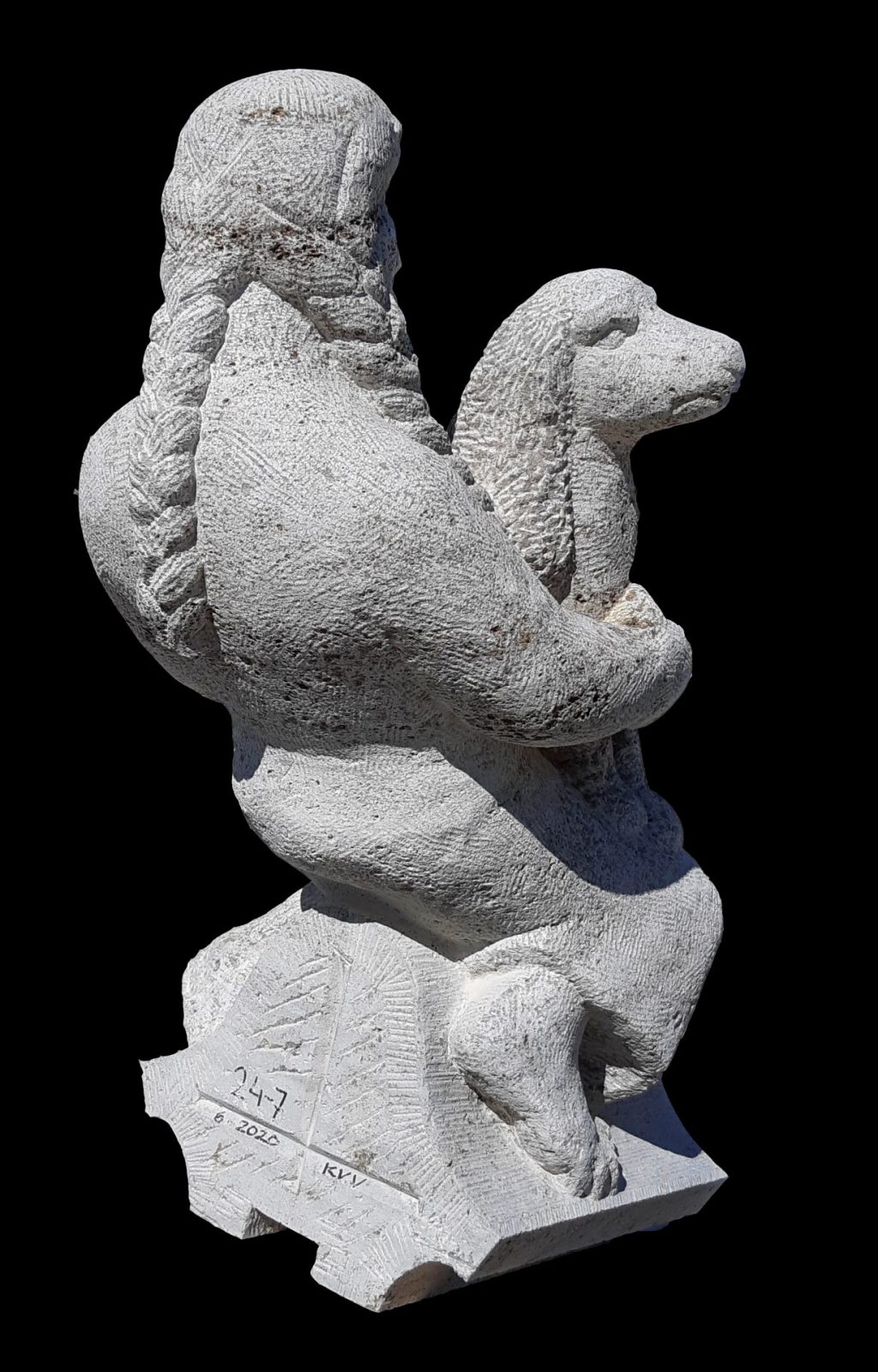
    flying buttress statue Temperantia for the Eusebiuskerk in Arnhem

    Determining the Seven Virtues

    just started work on the next flying buttress statue, Temperantia

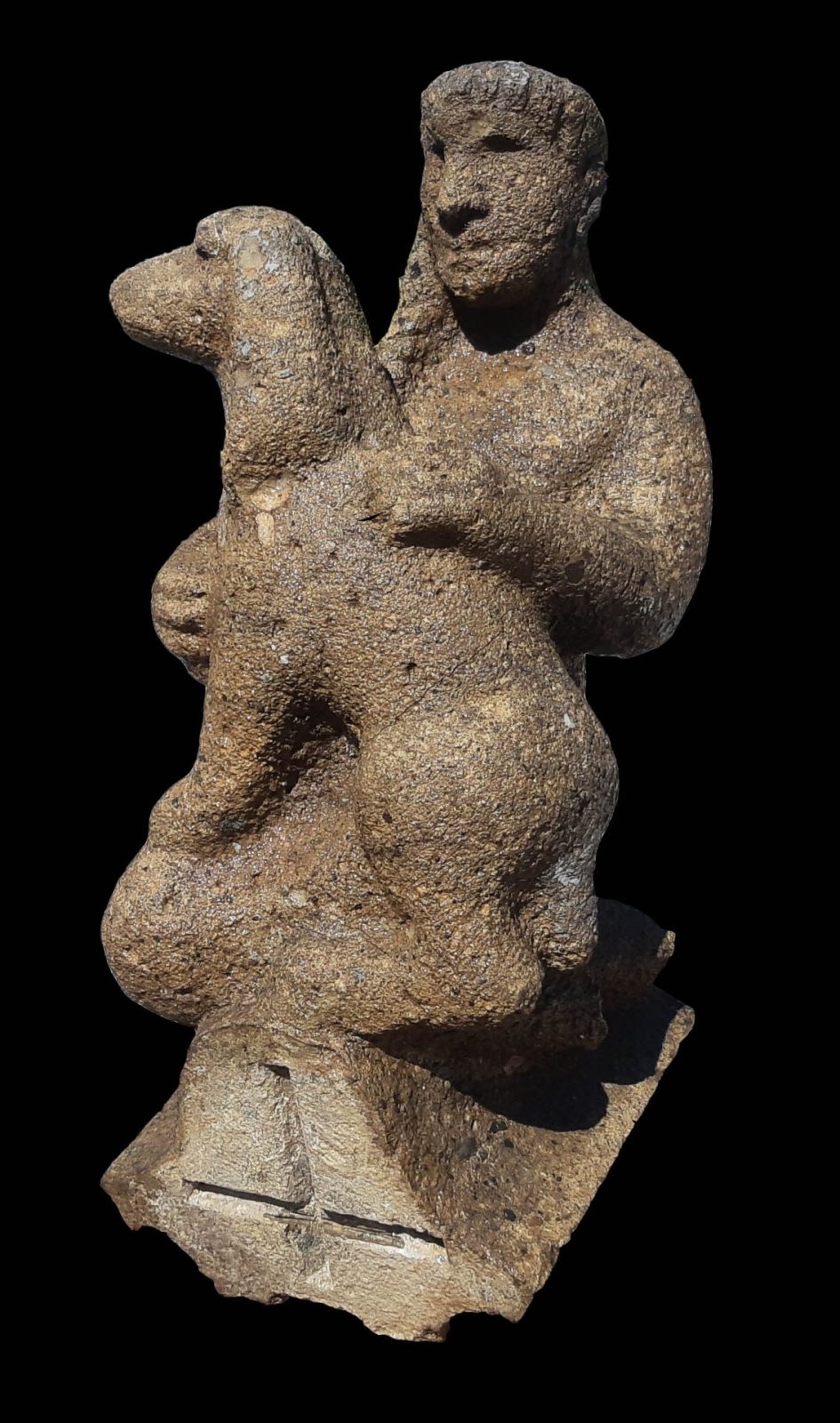
    We have been commissioned to carve another ten flying buttress figurines for St. Eusebius's Church in Arnhem. The first figurines have already been completed, but I'm a little behind on my blog. These are seven statues from arch no. 23: the Seven Virtues. You may remember that a while ago we carved the Seven Sins for this church? This is its sister, and the first statue I carved for this flying buttress was a statue of a woman with a poodle. We were able to determine six of the seven virtues, but this one was rather unclear. There was clearly a statue for Love, Hope and Faith, as could be seen from their attributes of heart, anchor and cross. And a few more were clear. 1. Prudentia (Caution – prudence – wisdom) , woman with book and lantern. 2. Fides (Faith), woman with cross. 3. Spes (Hope), woman with anchor. 4. Caritas (Love – charity), a mother and child. 5. Fortitudo (Courage – strength – tenacity – constancy – focus), a man with a lion.

    Confusion is not a virtue

    old flying buttress statue made of tuff

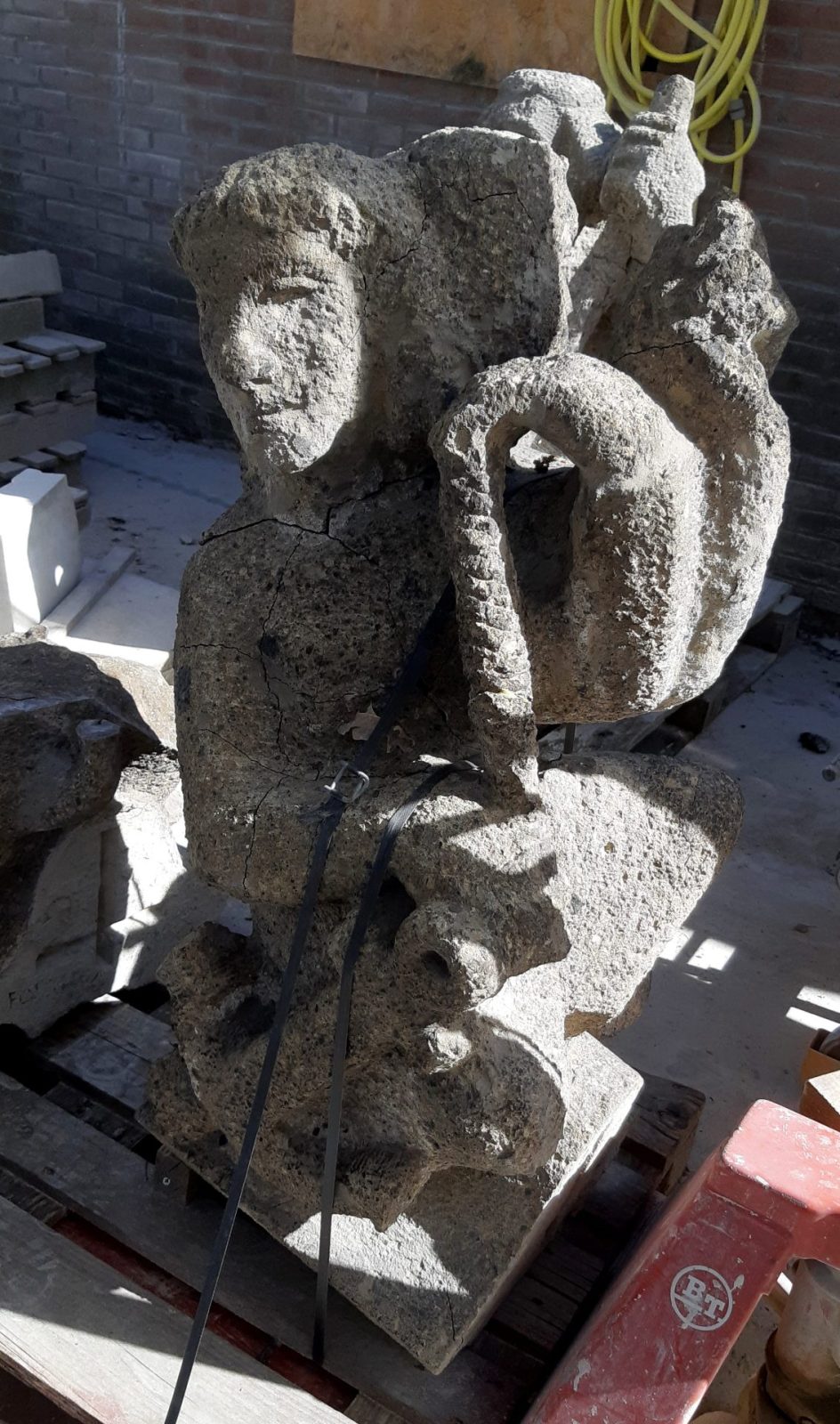
    But with the last two, we had a bit more trouble identifying them. There were only a woman with a rooster left and a lady with a dog. We could choose from Iustitia (Justice – righteousness), or Temperantia (Temperance – moderation – self-control). In the end, it seemed to us that a rooster has less self-control than a dog, so this statue became Temperantia and the rooster became Justitia. Perhaps the more scholarly among us will know the answer, that is, if they are more... schooled, I'll say.

    In addition, there was also an eighth virtue, to make it nice and confusing. In addition to the woman with the anchor, there was another figurine on sculpture no. 3 , a man clasping his own hands. Would thàt one then be the self-control of Temperantia? We'll leave it like this, and have the discussion become fodder for art historians. That was all we agreed on.

    Three more blocks

    flying buttress statue Temperantia for the Eusebiuskerk in Arnhem

    Then we had three separate flying buttress figurines. Those are: a two-headed eagle (intended for arch no. 17/18, at the top of two flying buttresses with large crockets),  a goat eating a crocket (the top piece of arch no. 19, with otherwise only big crockets) and a man with a watering can watering a large crocket (the top piece of arch no. 20, with otherwise only big crockets). The goat is already finished. I thought it would be smarter to finish the top pieces first, so that the contractor can continue to complete these arches while we are still carving the rest.

    In pieces
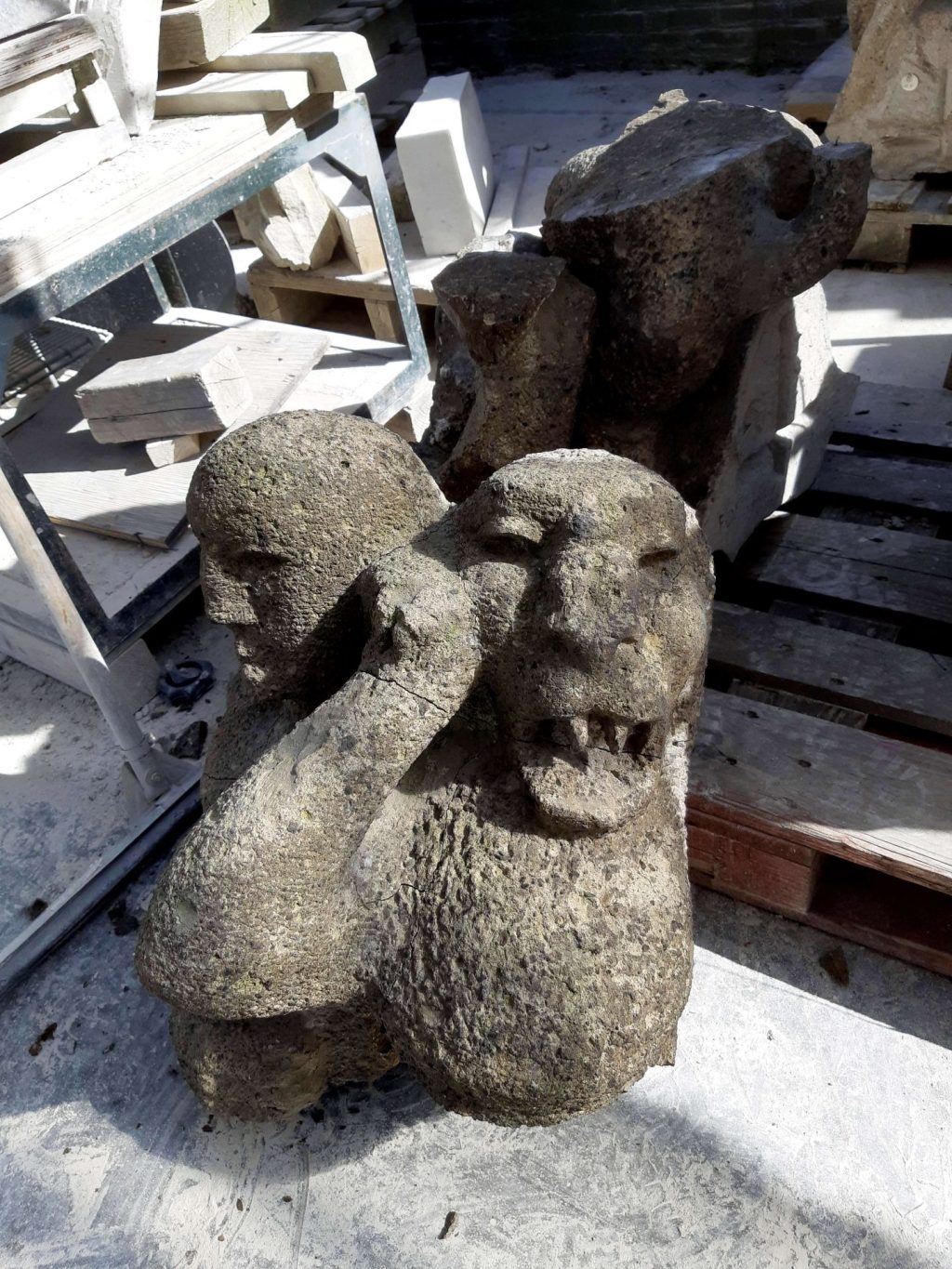
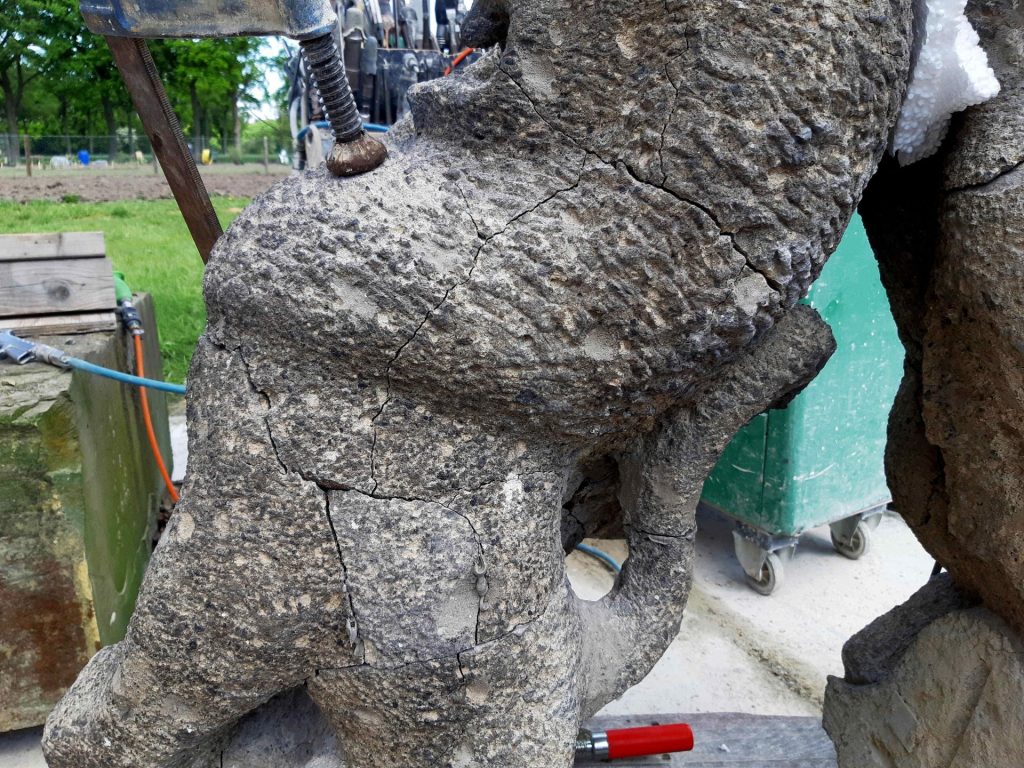
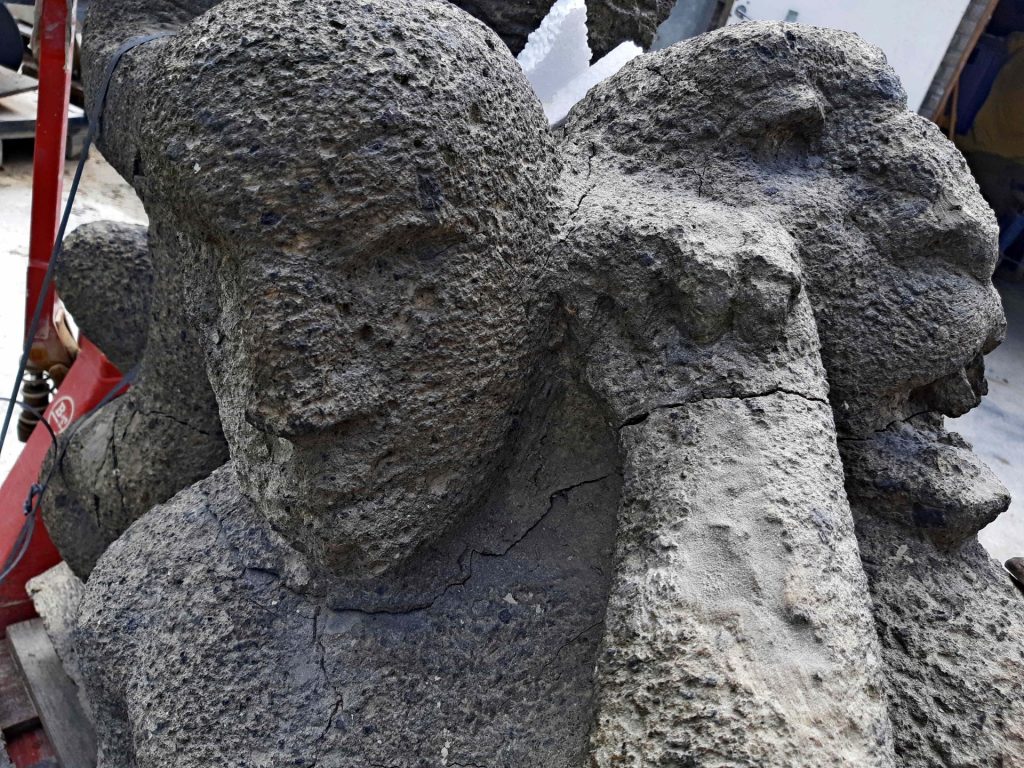
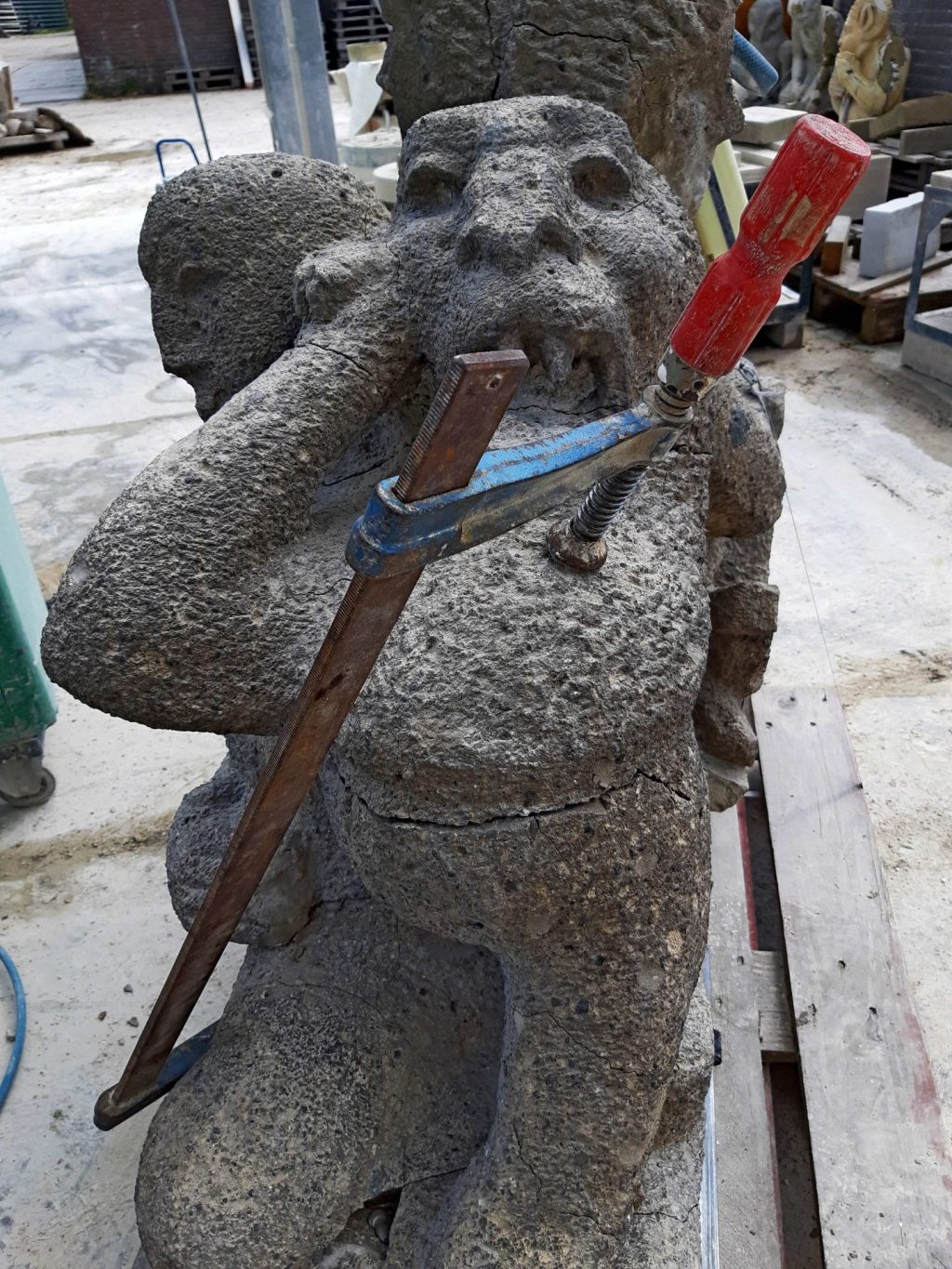
    These sculptures are in bad shape. Sculpture no. 5, Fortitudo, didn't live up to its name. Or maybe I myself was much stronger than I thought. I wanted to rotate the statue a bit on the pallet but I ripped off the whole torso and the other pieces rolled down. It was quite a puzzle to put it back together. I have previously explained why these figurines are so badly cracked, but in short, the impregnation process went wrong, which gave us the wonderful commission to replace all these figurines!

    Familiar process

    flying buttress statue Temperantia for the Eusebiuskerk in Arnhem

    Anyway, the work this time was on Temperantia. Along the tried and tested method, I pre-sawed the sculpture out of the block, and copied it into the new stone along the old example. These figurines also got their name carved in the side profile, just like with the Seven Sins. In the near future we will continue with the top images of the four arches that we are currently working on, so that those arches can be finished immediately when it suits the contractor. Usually, the bottom and top figurines are placed first, and the intermediate ones are then aligned.
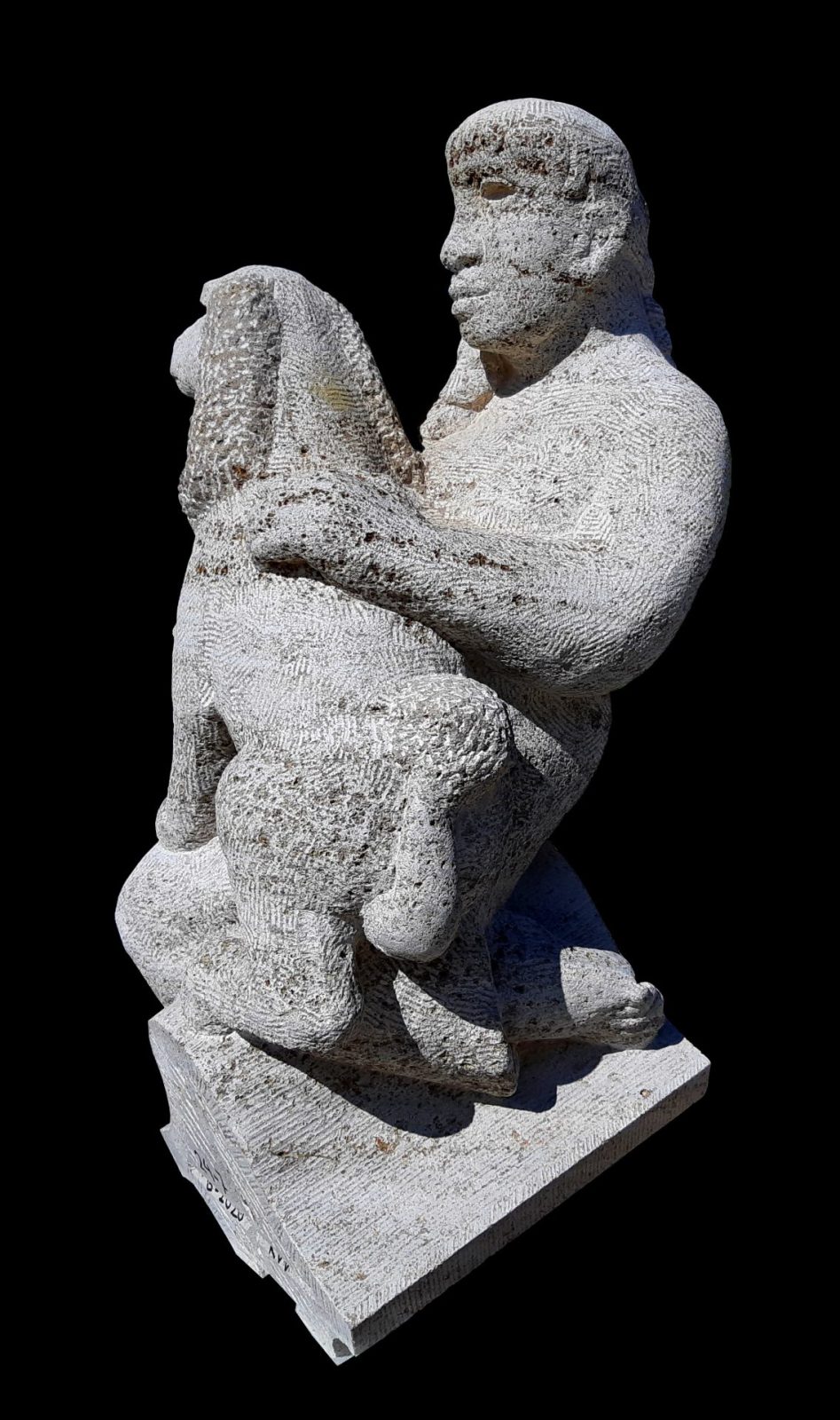
    To the next flying buttress statue.

  • Flying buttress figurine: Saint James the Greater

    copy of sculpture of Apostle James the Greater

    The last Apostle

    copy of sculpture of Apostle James the Greater

    Another part of the Eusebiuskerk has been completed by us: we have now finished carving all the flying buttress figurines of arc no. 14 and 16, the ones with the musicians and six apostles, for St. Eusebius's Church in Arnhem, the Netherlands. The last figurine in this series was Apostle James the Greater, and I tied it to a pallet last Monday, ready for transport.

    James the Greater is known to most people for his place of pilgrimage Santiago de Compostela. He is depicted on St. Eusebius's Church with a hat, a shell and a sword. To me, it was a very nice sculpture to work on, because of all the attributes and structures in it. A coarse beard, a thin hat and sword, big hands, a fur coat, a big nose and a hollow shell.

    James as a Pilgrim

    copy of sculpture of Apostle James

    I met his colleague a while back St. James the Lesser in new limestone. Why the shell, hat and sword with the Greater? From what I've read about it, around the year 44 James was beheaded by order of Herod Agrippa in Jerusalem. Around the year 800 legends arose about James, that he would have preached the gospel in the Iberian Peninsula, and that his body was brought to Galicia after his death, where it was buried by his disciples in the place that would later be called Santiago de Compostela. His grave was discovered at some point in the 9th century. In the Middle Ages, there was a lot of money to be made from the miraculous healing power of the relics of saints, so that started a great flow of pilgrims, which continues to this day. James himself is therefore usually depicted as a pilgrim, with hat, staff and shell.

    flying buttress no. 16 St. Eusebius's Church, 6 apostles
    the old statues from flying buttress no. 16 before disassembly

    Only six out of twelve

    Only six of the twelve apostles are depicted on the flying buttresses of St. Eusebius's Church. At the time it had been intended to give all twelve apostles a spot on the flying buttresses, but the work was completed at some point, and the last four arches were already decorated: large flower shapes (crockets), dating still from around 1920 and an earlier restoration. These statues date from the 1950s and were made during the restoration of the bombed church. Inside the church the statue of apostle John can still be found, James' younger brother, with a poison cup in hand. It was never installed on the church.

    The sculptor's progress

    old flying buttress statue of James in tuff, by Eduard van Kuilenburg

    Sculptor Eduard van Kuilenburg had taken his own path with this group of sculptures. His work had become less figurative, heavier, maybe become coarser, but had gained in expression. The apostles sit on the arch like massive humps, barely freed from the shape of the tuff blocks from which they were made. In some areas you can still clearly see how the sculptor worked: he traced a side view onto the stone and began to carve right away. We noticed it well during the copying process: we had to remove much less material than in, for example, the Seven Sins. The sculptures were still quite close to the surface of the original block.

    face of James

    The heads of the apostles are equally massive: big noses, rough beards and angular faces. But they do give a very strong atmosphere. The expression of an artist who has grown in his work. There were, as I mentioned earlier, complaints from the church council that these statues were too large and massive for the flying buttresses on which they sit. But now that we are working on it, I would almost say that it is rather the fault of the church that it is too small, than that the statues should be too big. Yes alright, they are heavy and coarse, but they are just right in their own way, and they have been worked on with care. That also makes it fun for us to work on the copies.

    Deliberate structures

    flying buttress figurines as well

    That is very different from when we were carving the invalids a while ago, by George van der Wagt, on the south side of the church. In some of those figurines we still found the machine cut surface of the original stone, and it looked like they were made with some indifference, as if the sculptor had said: 'There you go, another one finished. Next!'. Ugly things without attention to their finish.

    Rough-carved is not the same as indifferent. Sometimes a coarse structure has a function for a certain image, and Van Kuilenburg knew that.  The pointed chisel for the mantle, the claw chisel for hair, the grater and flat chisel for other parts. Van der Wagt seems to have made everything with just 1 chisel, a flat chisel of 25 mm or 1 inch wide.

    What next?

    Broken flying buttress statue Fortitudo Seven Virtues, man with lion

    We don't have to worry about work for the time being. We recently got confirmation for the last 10 flying buttress figurines as well, namely the Seven Virtues and three blocks that will be placed at the top of the four arches with the crockets: a man with a watering can near a flower, a goat eating a flower, and a two-headed eagle. They are in bad shape, some are missing many parts and all are broken.

    Next I have to make a gravestone for my father, which I have been designing in between all other jobs, and I still have some private assignments. We also have the prospect of all kinds of other work, about which I cannot say too much at the moment. And finally, we are not afraid of a quieter period, because then we finally get to make our own work. I have all kinds of ideas for that, and it would be nice to work them out. Facade reliefs with the four cardinal directions, the four Seasons, the four or the five elements, I also have ideas for entire entrances… bring it on!

    To the next flying buttress statue.

No more messages to show.

No more messages to show.