An interesting gable stone
Last week I started on a very interesting challenge: the carving of a new gable stone relief. The project deserves some explanation, because it includes a lot more than just this one relief.

Remisewijk in Haarlem
In total it involves ten new gable stone reliefs for the new area in Haarlem which used the endpoint and the remittance of the tram and bus. Now theFoundationfor Gable stone reliefsAssociationHaarlem (SGVH) conceived the plan to have for every street in this new building project (ten in total) a new gable stone relief carved. And because Haarlem is a comic book town, the idea came up to heve these designed by ten different cartoonists and then get them carved into stone by ten different stone sculptors. I was asked for plaque number ten, designed by cartoonist Toon van Driel, known for, among others, FC Knudde, De Stamgasten and his daily comic for De Telegraaf.
The commission was that the significance of the street name should be represented in the design of the cartoonist, together with his or her cartoon character/characters or clearly recognizable characteristics of his own comics work. Next, the sculptors will start carving this design three-dimensionally into stone, and polychromy. The SVGH writes: ‘The SGVHwantmake the history of this place as a tram and bus depot visible by placing a facade stone near the street name signs in the area that depicts where the street name comes from.The idea arose because. some decades ago comic artist Theo van den Boogaard drew many comic posters for the NZH bus line. (…) This way, a beautiful public art work is created in the district, covering 10 streets.For the cartoonist, this is a chance to get his comic portrayed in stone. For Haarlem to promote the comics city.’
Refreshing
In genreal, we consider gable stone reliefs as something of a distant past, when these were the house signs instead of the house numbers we now know. But occasionally there are still assignments for new house signs, and there are still a number of artists who regularly get these kinds of commissions. I also carved, at a time when I didn't take regular pictures of my work, some house signs or gable stones every once in a while. It remained incidentally however. Generally, these reliefs are appreciated very much, but issuing a commission is another matter entirely. In that sense I think it's a unique event that SVGH has taken this initiative and a project has found a developer willing to cooperate. The cooperation with the cartoonists is a stroke of genius, ensuring a refreshing kind of cross-pollination between traditional craft and contemporary vision.
Design and implementation
The relief that I'm carving now hasToon van Driel's typical sense of humor. We see a penguin about to enter a tram, while complaining it's late. The tram is on an ice floe in the Antarctic Ocean. It is the characteristic blue tram after which the street was named.
For his plaque I bought a piece of Udelfanger sandstone of 54 x 62 cms wide, with a thickness of 12 cms wide. I started with transferring the contours of the drawing onto the stone. We're not being too fussy about that: I just stick the printout onto the stone with tape, and carve right through the paper. Done. After that I decide the depth for each part, and start carving from low to high parts as blocks of contours. Only after that comes the shaping of the components. This way, I need to measure very little and will always keep my reference points. An explanation of this method can be found here and here. Because I was asked to make a real relief with considerable depth differences I made good use of the material. The deepest part is about 8 cms deep. Personally I love it best when it's all got quite a bit of volume; for me, a flat picture that is just carved in outlines doesn't yet make it into a proper relief!
Arts and crafts, applied design
Now you might have already guessed that I have a great weakness for construction sculpture. Spatial design without high pretensions applied in the context of a building, preferably with both a practical and a decorative function. In the past, capitals have been made with sculptures on them, columns in the form of heavy load bearing men and women (atlants and cariatids), corner blocks with decorations, entrances, consoles, all sorts of things. Unfortunately for the last fifty years a building will rarely get a decorative or sculpted ornament. It would be nice to be able to design and execute sculptures again for new buildings too. Sometimes something modern will happen, like the new City Hall of Deventer, which is decorated with 2300 fingerprints. But it's far from standard procedure such as for example the construction sculpture of the Amsterdam School was in the years 1910 to approximately 1930.
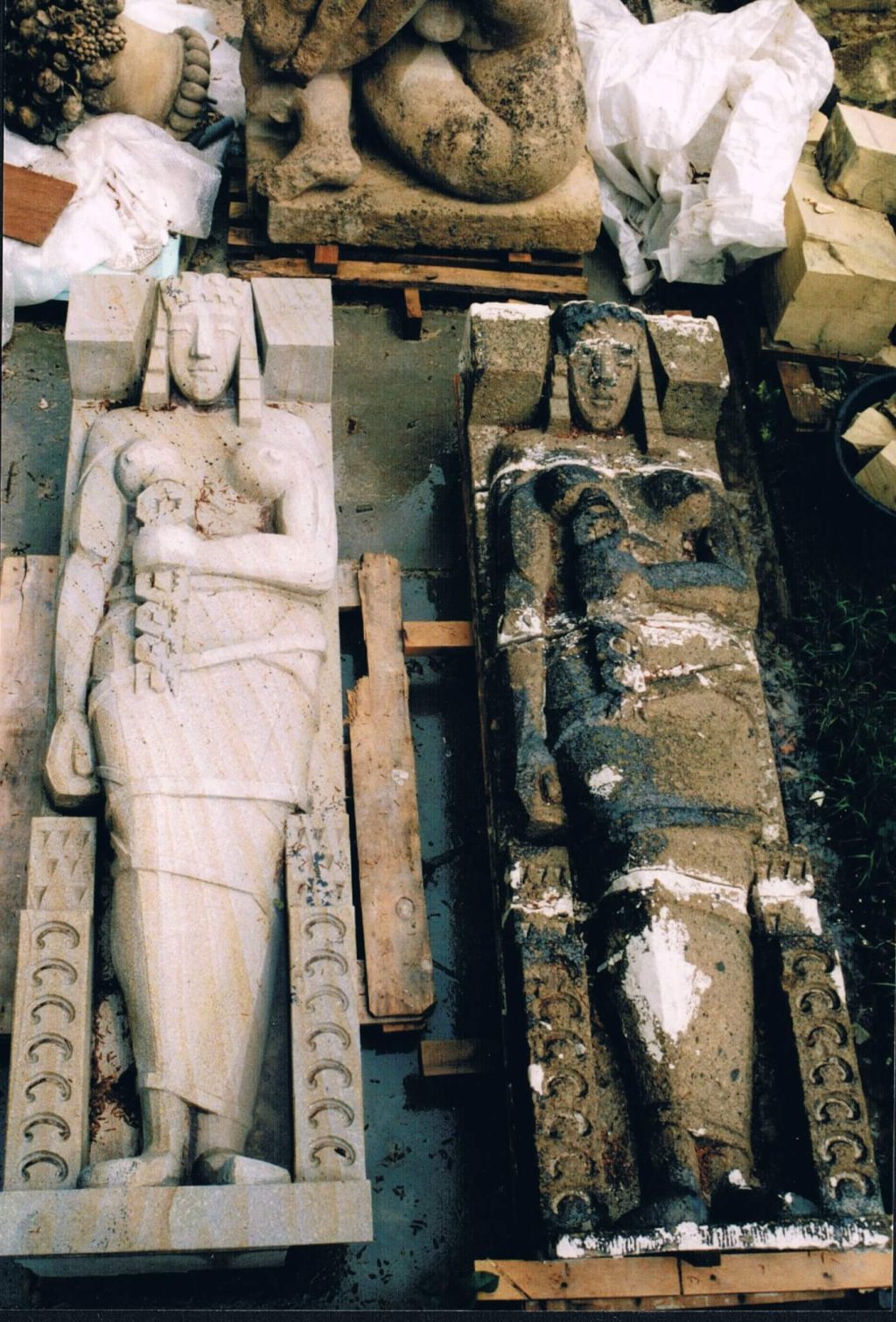
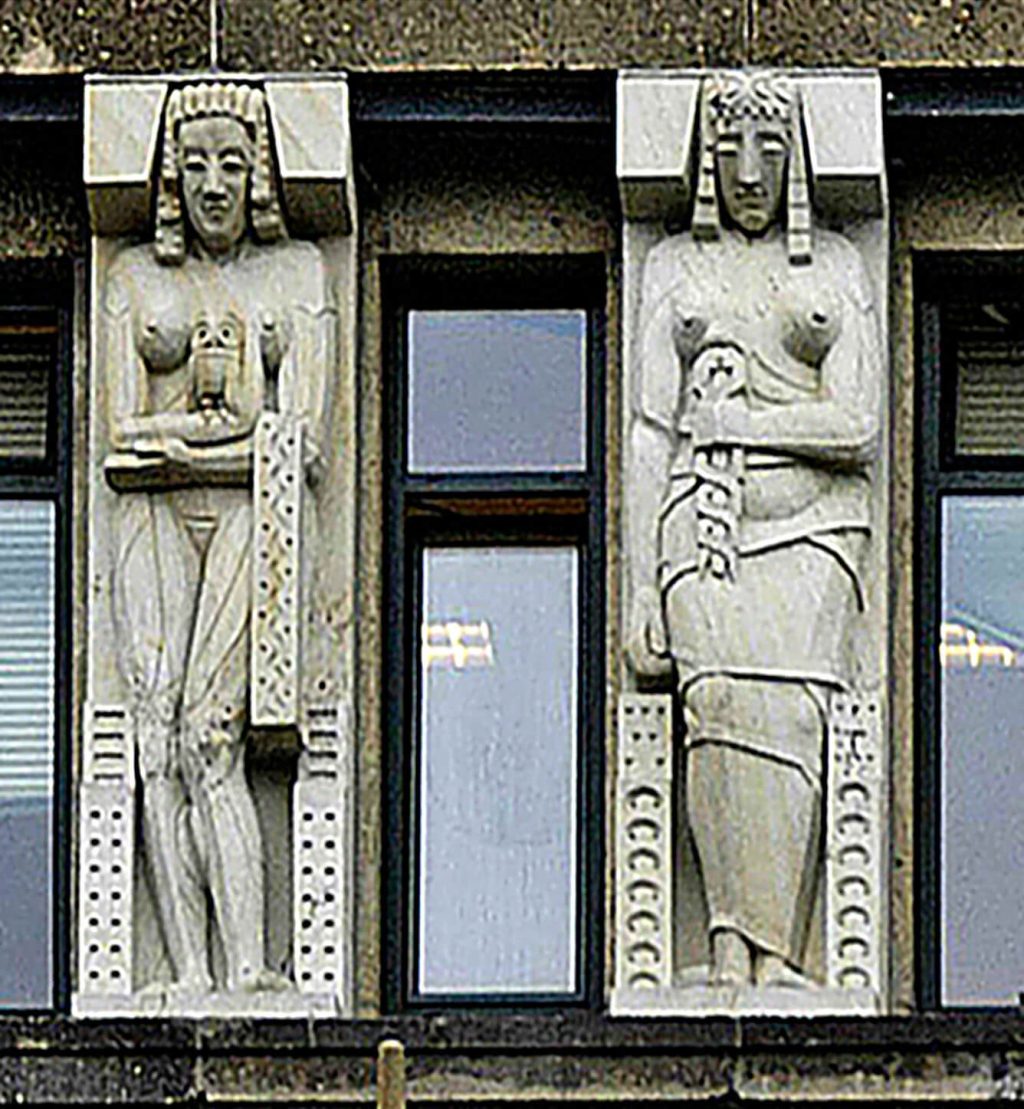
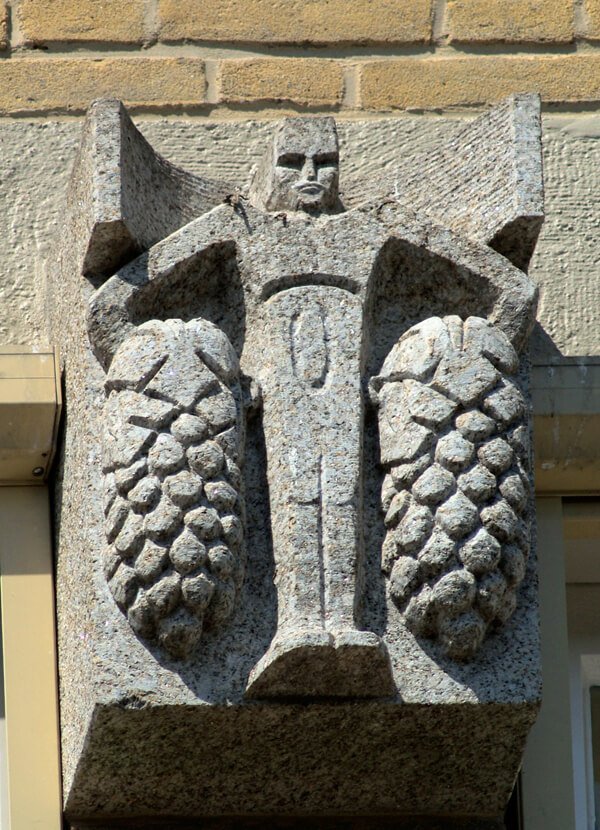
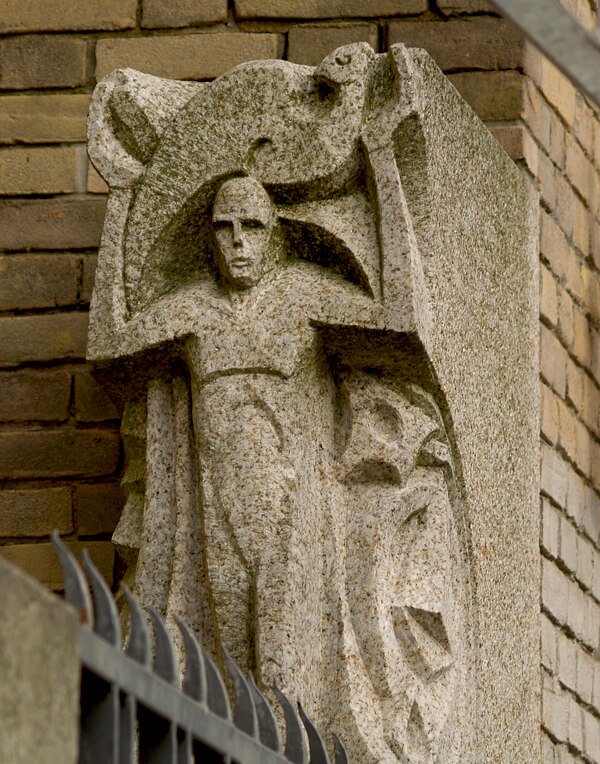
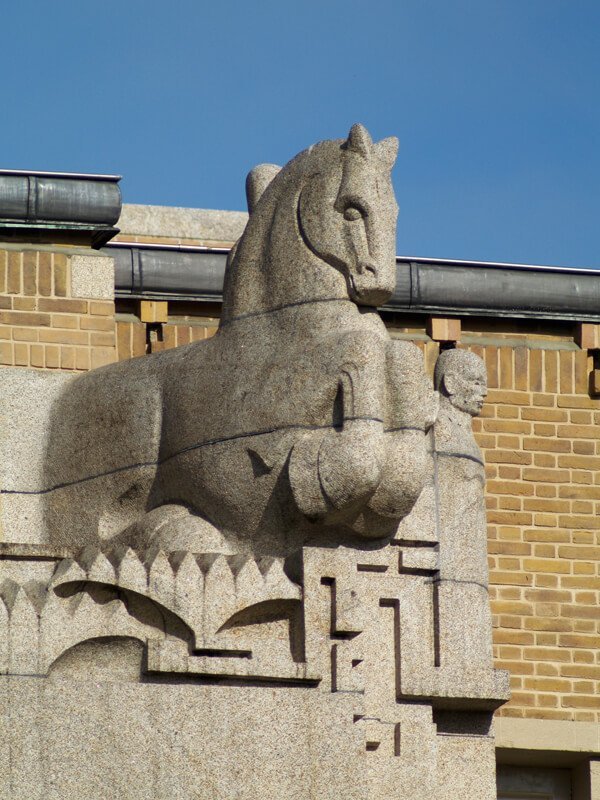
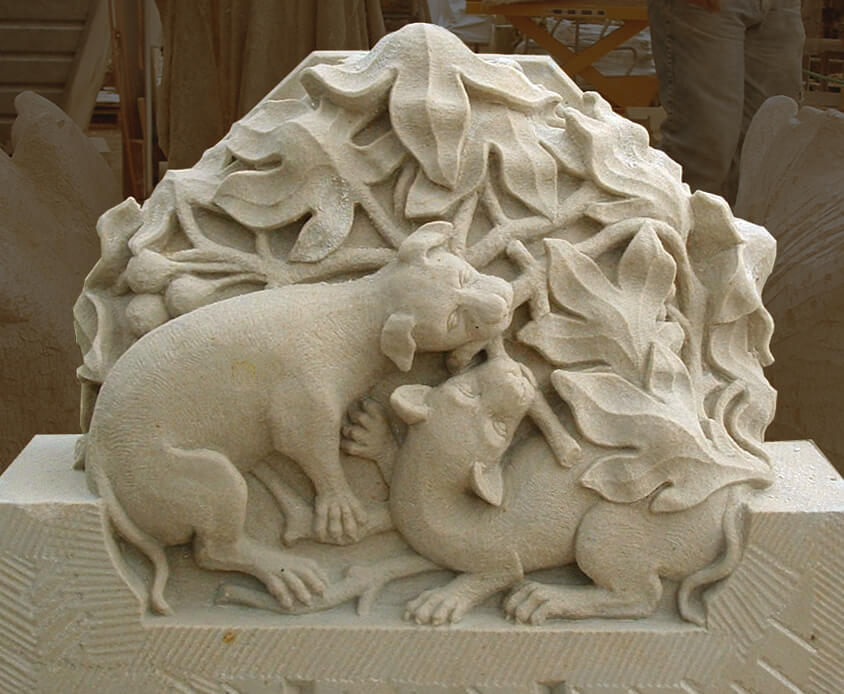
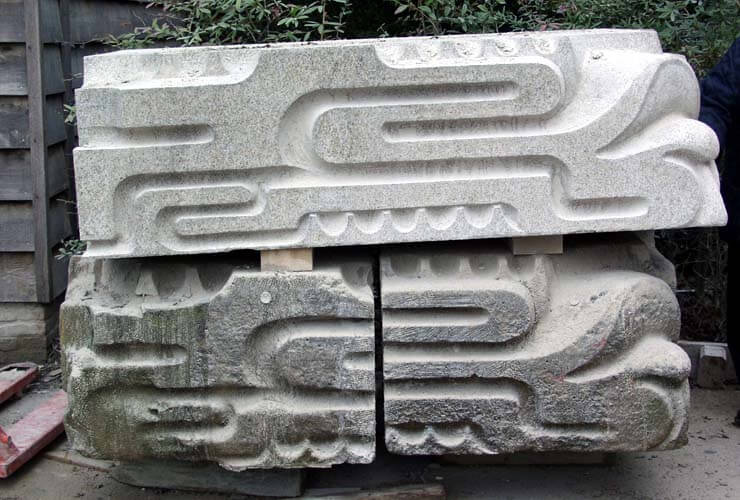
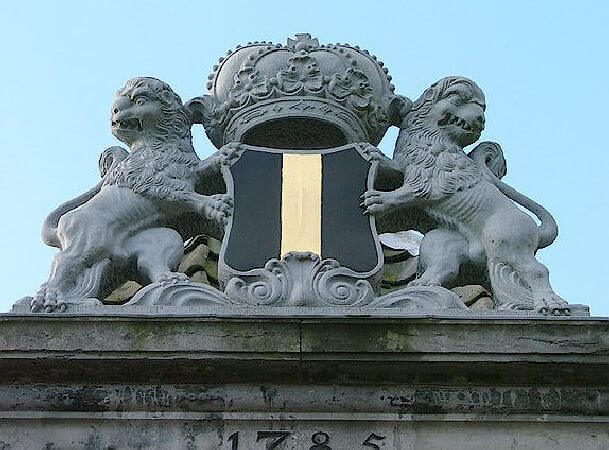
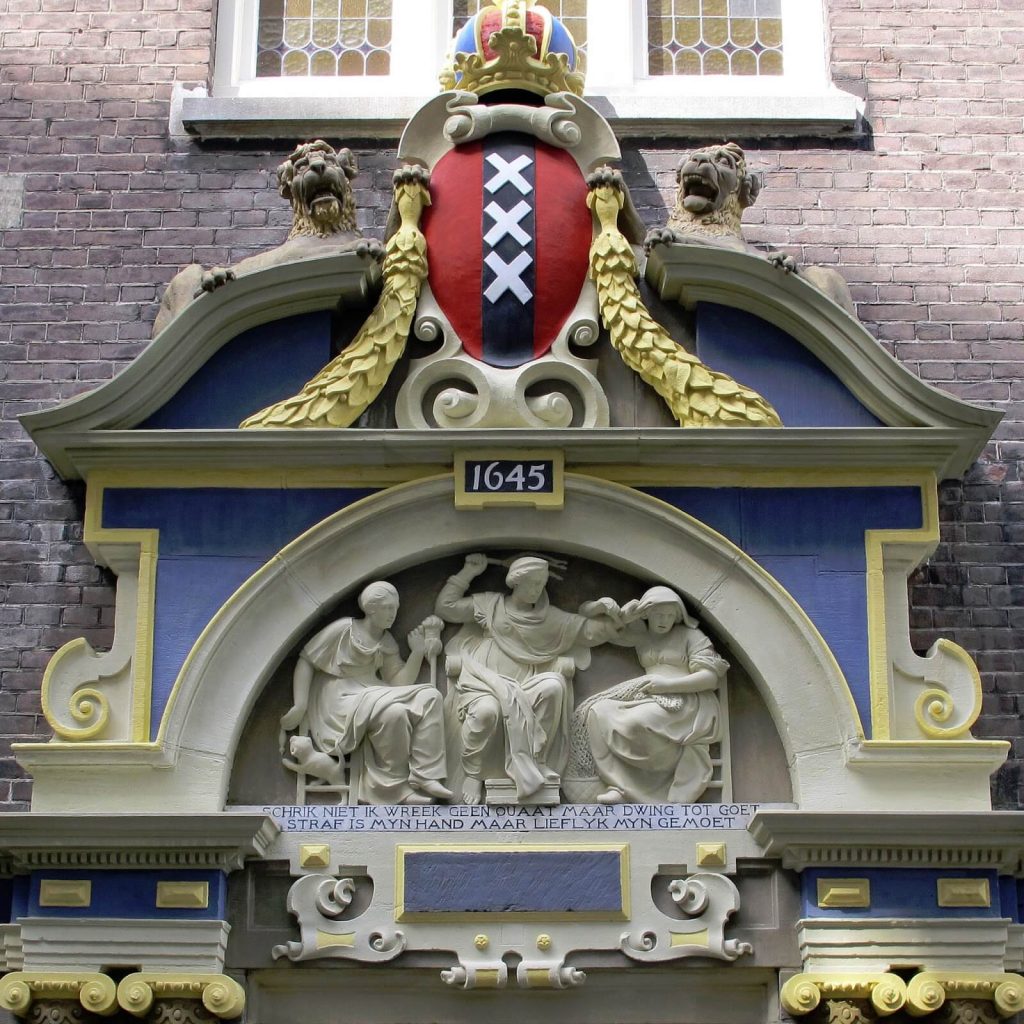
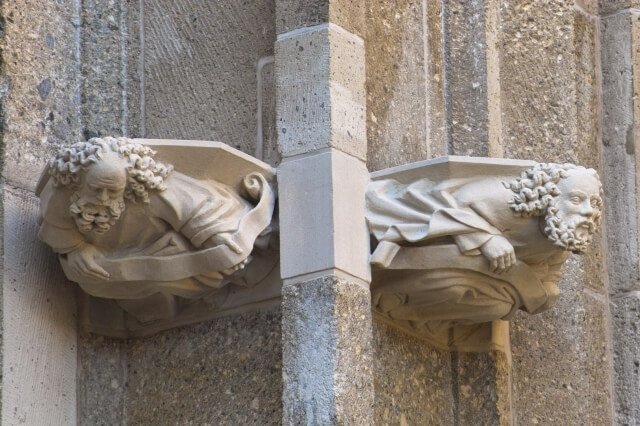
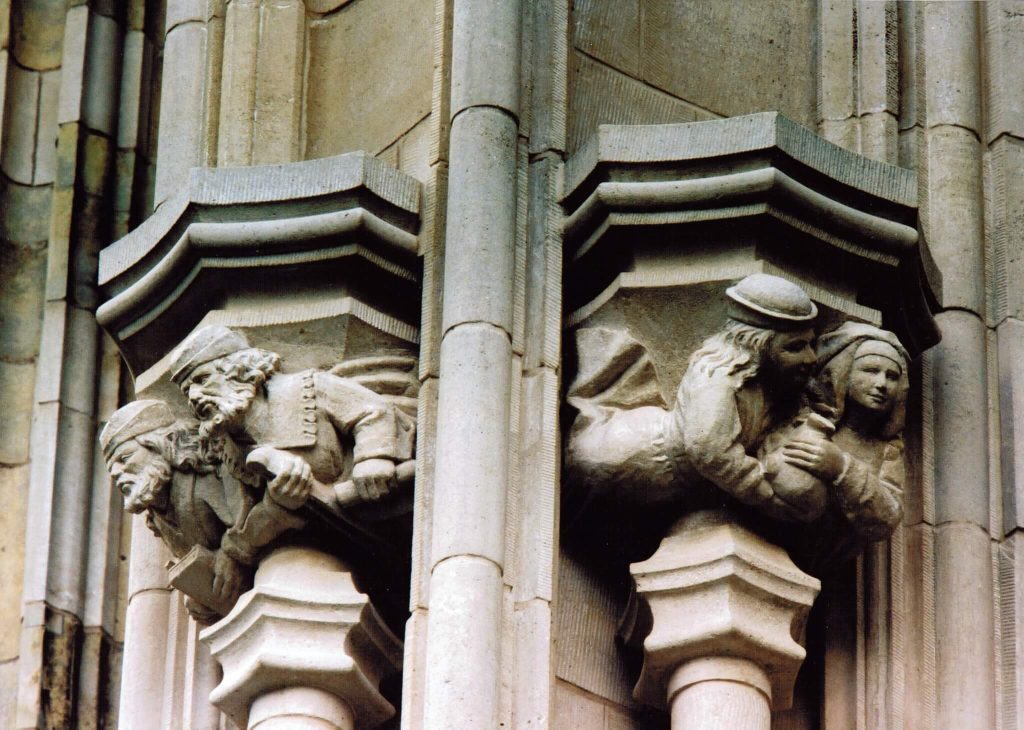
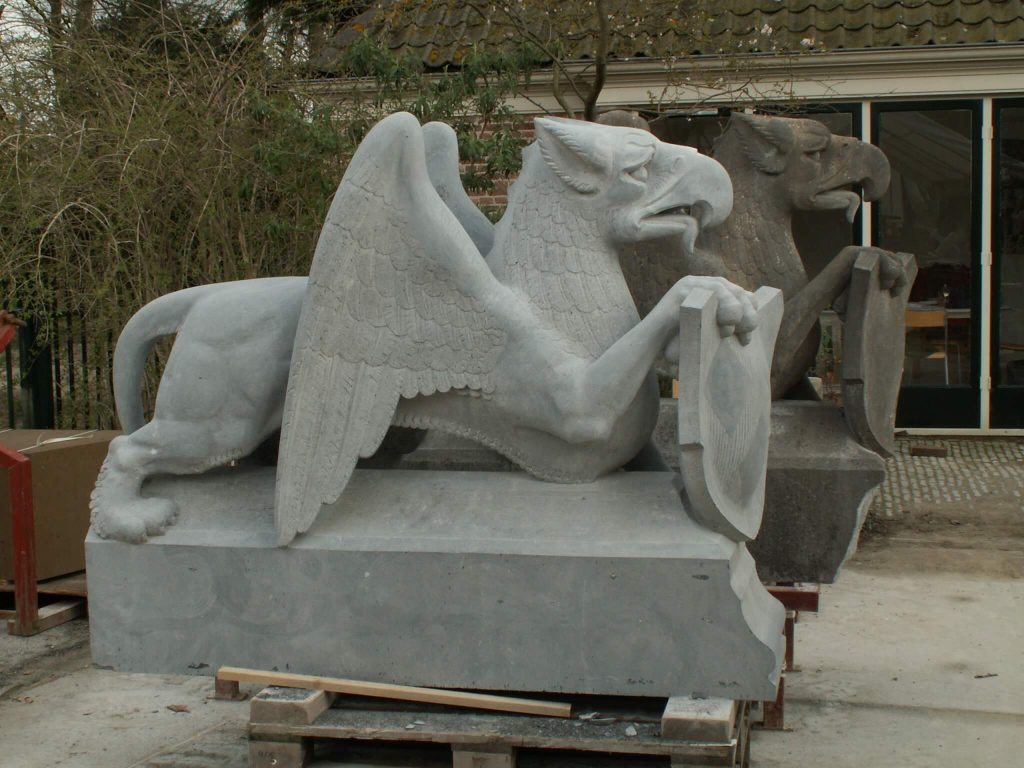
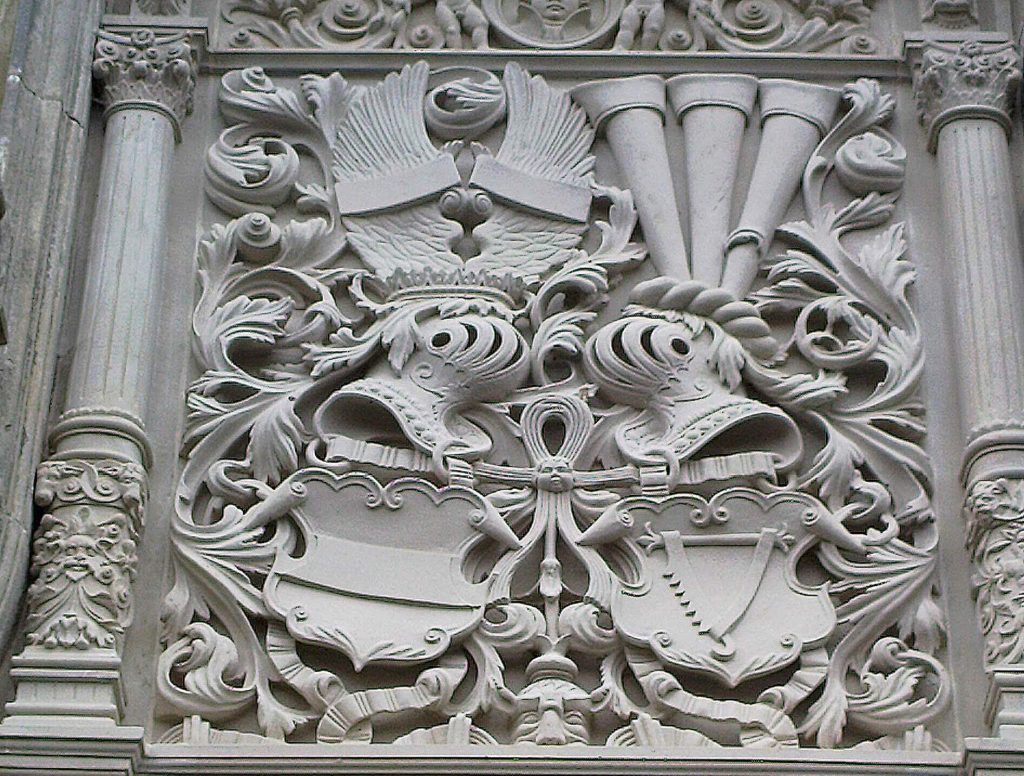
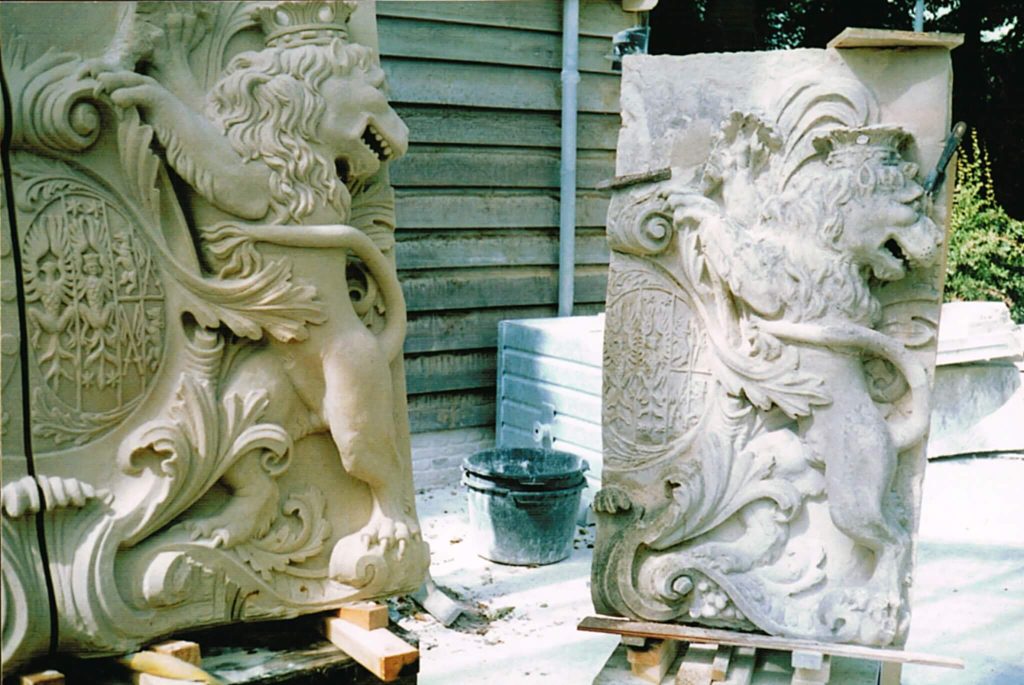
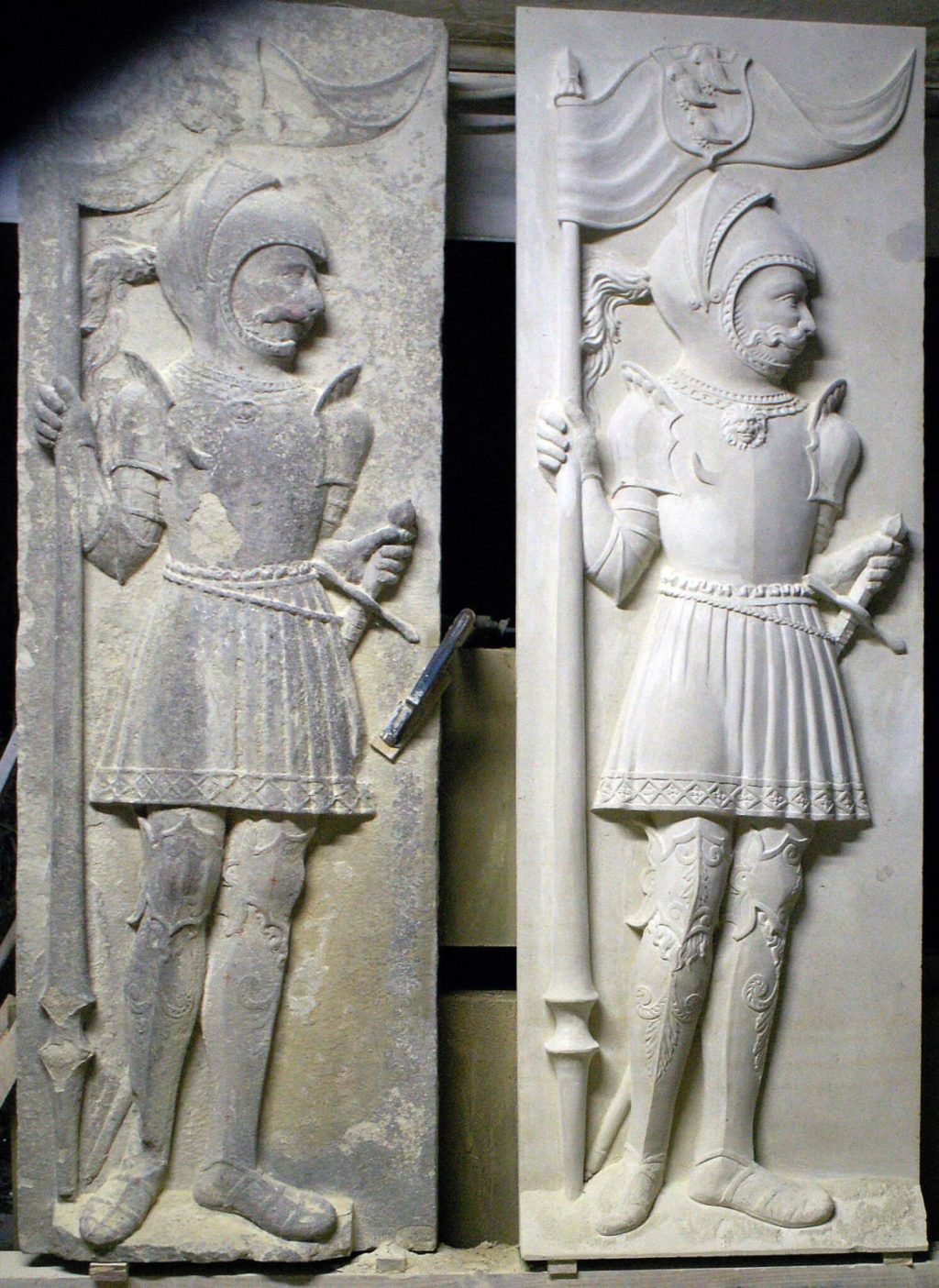
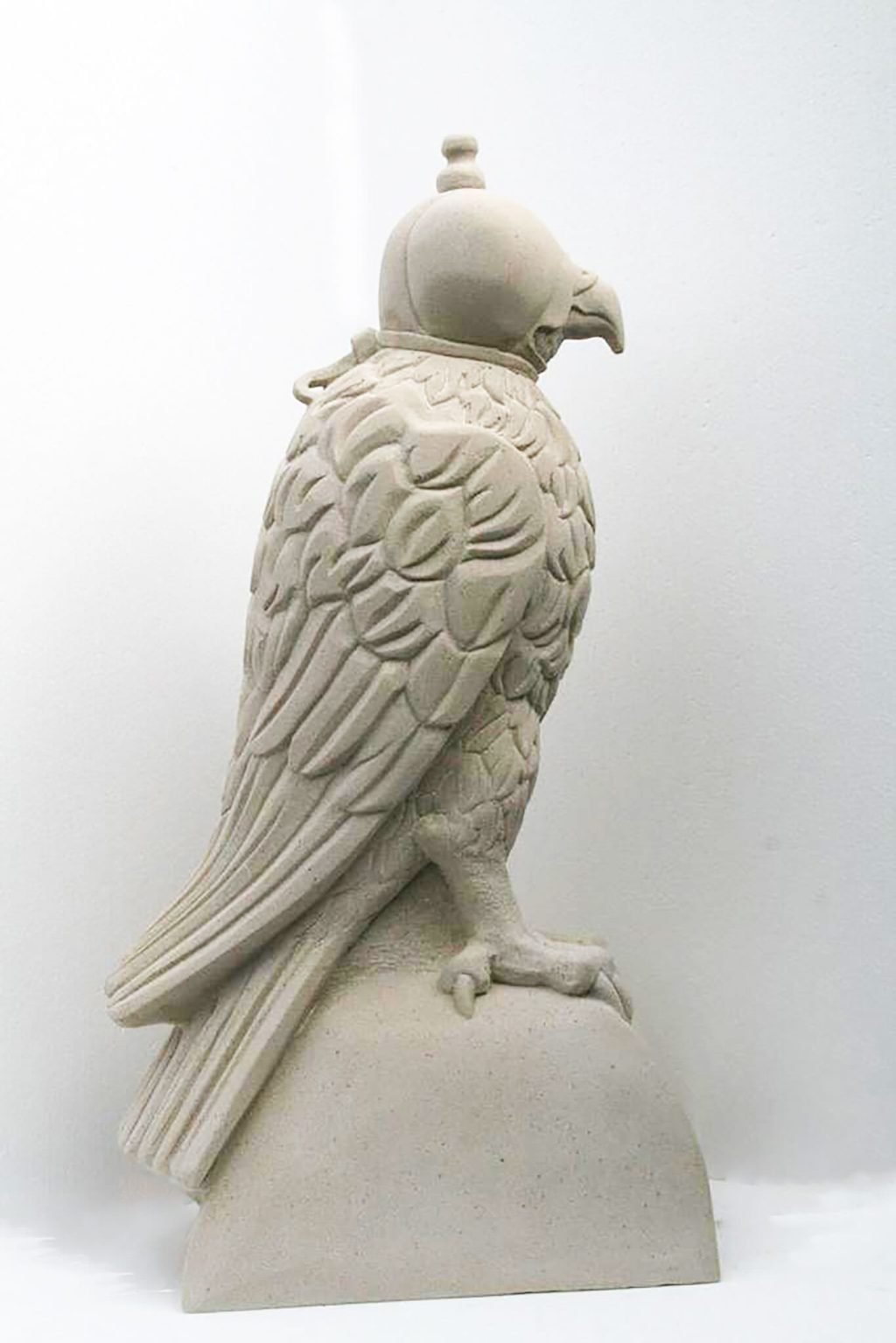
Some examples of sculpture that I have had the opportunity to replace in recent years in different types of stone.
New times, new designs
Yet in the past 24 years I've been fortunate to carve lots of things that were used in facades of buildings: wreaths and garlands, spirals, consoles, capitals, crest stones, house signs and more. Construction Sculpture has a supporting role, it adds something to its environment, without all wanting to pull all the attention to itself. It would be wonderful to design a whole entrance in stone, or a cornice. In modern style, with flowing lines and a subtle tension that complement the geometric shapes of the architect. A collaboration between the architect or designer and sculptor can of course work mutually stimulating.
Though I think there's still a lot of unfamiliarity with the possibilities and some cold feet among architects- and construction industry. I also find a preference for very crisply computer milled work, something that's usually not feasible by hand. Undoubtedly one day a turning point in the opposite direction will come , but I wonder if I will live to see the day.