• A new belly for the plinth of Hercules (videos)

    A sad history

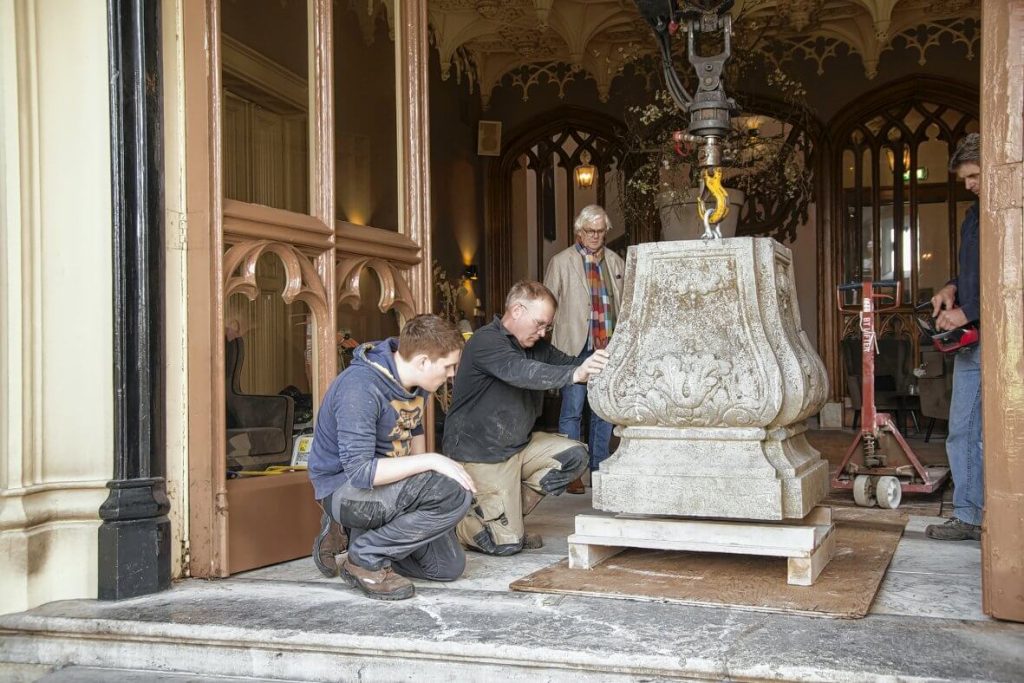
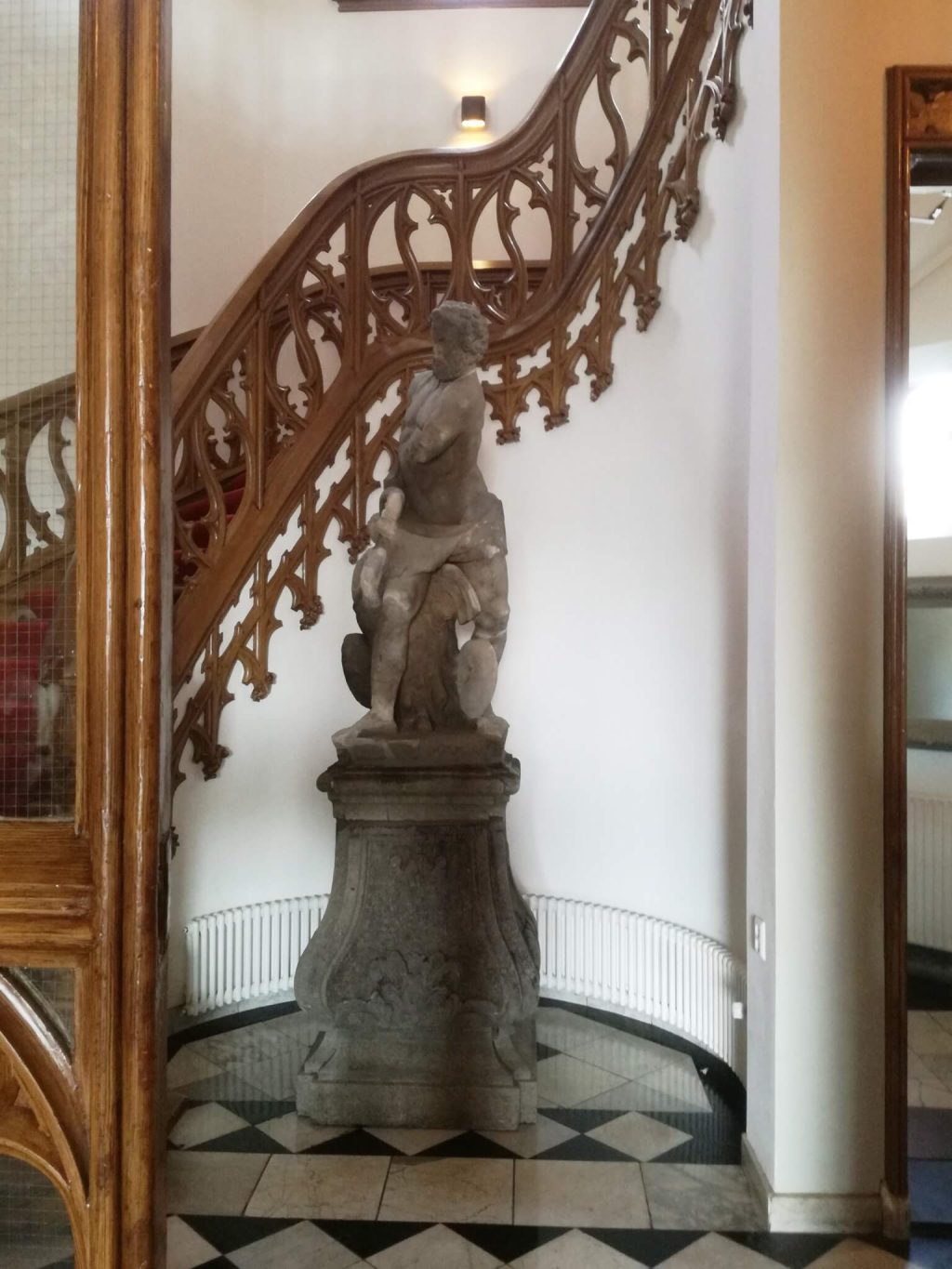
    For centuries the sandstone statue of Hercules stood on its stone base in the Estate Schaffelaar Barneveld. Until sometime in the seventies a group of young people entered the Schaffelaar Wood and smashed it to pieces. In grief, the statue was then buried in the garden. Around the turn of the century, the picture was dug up again and restored somewhat. A new bronze Hercules had now been placed on the pedestal, created by Ton Mooy from Amersfoort. Then the plan arose with the current owner of the estate, the Foundation Geldersch Landscape and Castles, to safely place the old sculpture inside, and the new one on a new plinth outside. I was asked to take care of its removal and installation and to carve a new belly’ for the new plint of the bronze Hercules. In November 2016 we cut the old plinth free with the chainsaw and brought it to my workshop.

    A new belly

    new belly for plinth of Hercules Schaffelaar in Irish bluestone

    A new base already existed , and the new top plate was still attached to the bronze statue. The bronze statue was removed from its plinth four years ago for fear of bronze theft.

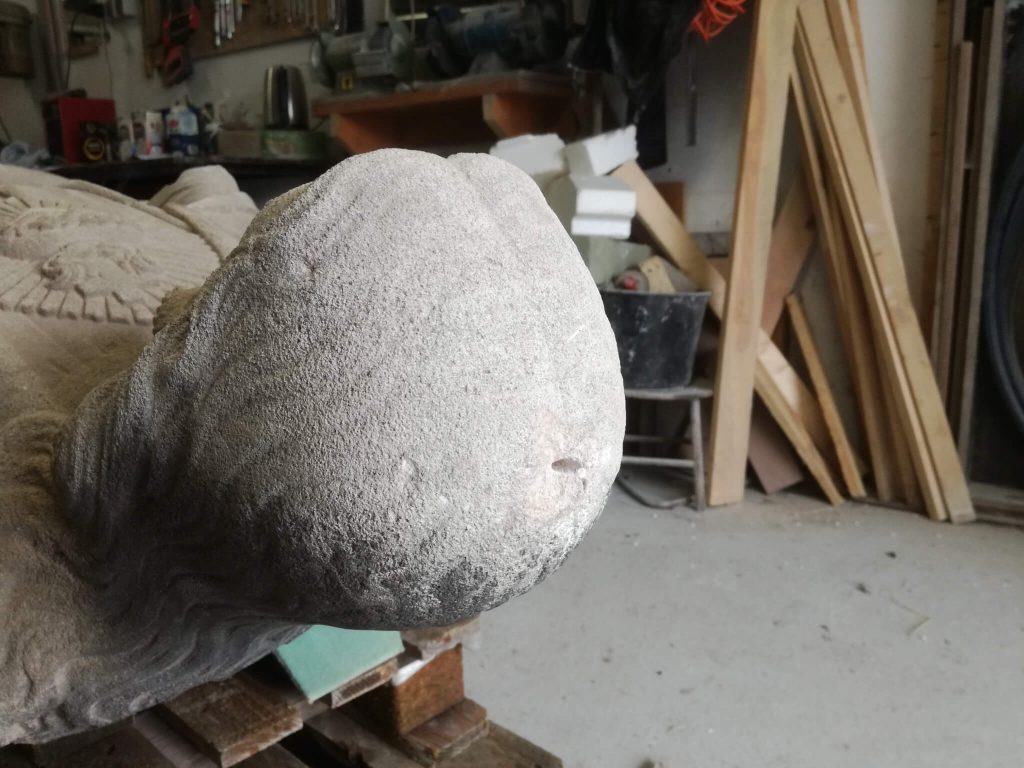
    I ordered a large block of Irish bluestone 72 x 82 x 87 cms wide, with a weight of more than 1300 kilos. I first carved the general shape of the plinth, after which I started on the ornaments.

    Video: Carving the ornaments

    I had forgotten to turn on the camera at the start of the carving work, so specifically for the video I carved the same ornament again on a scrificial piece. After the carving of the contours the real shaping is shown on the final block.

    Installing

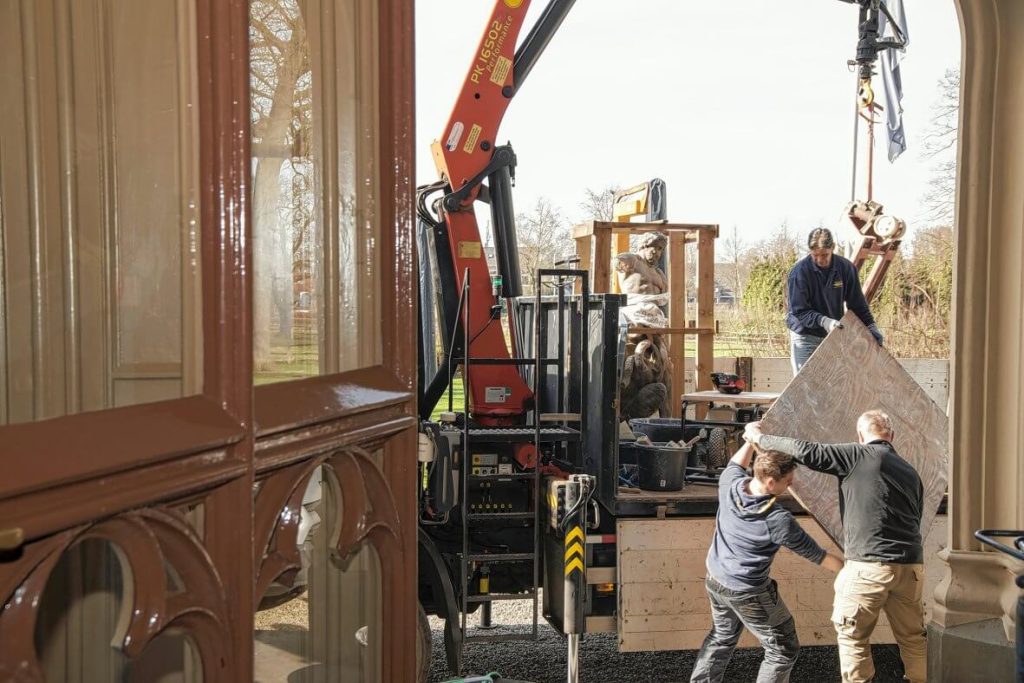
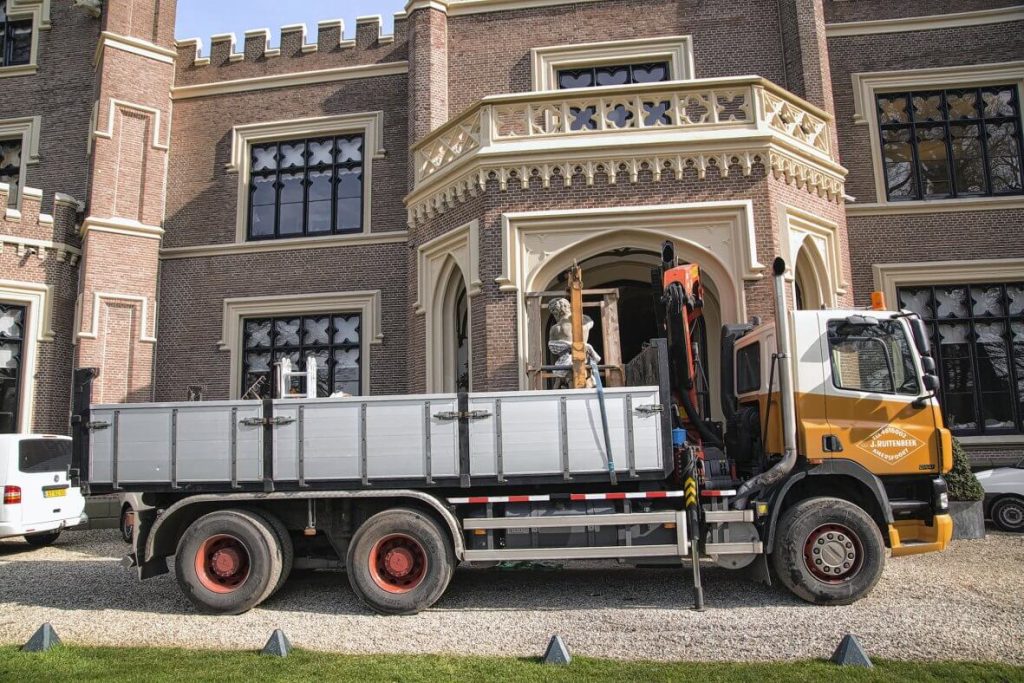
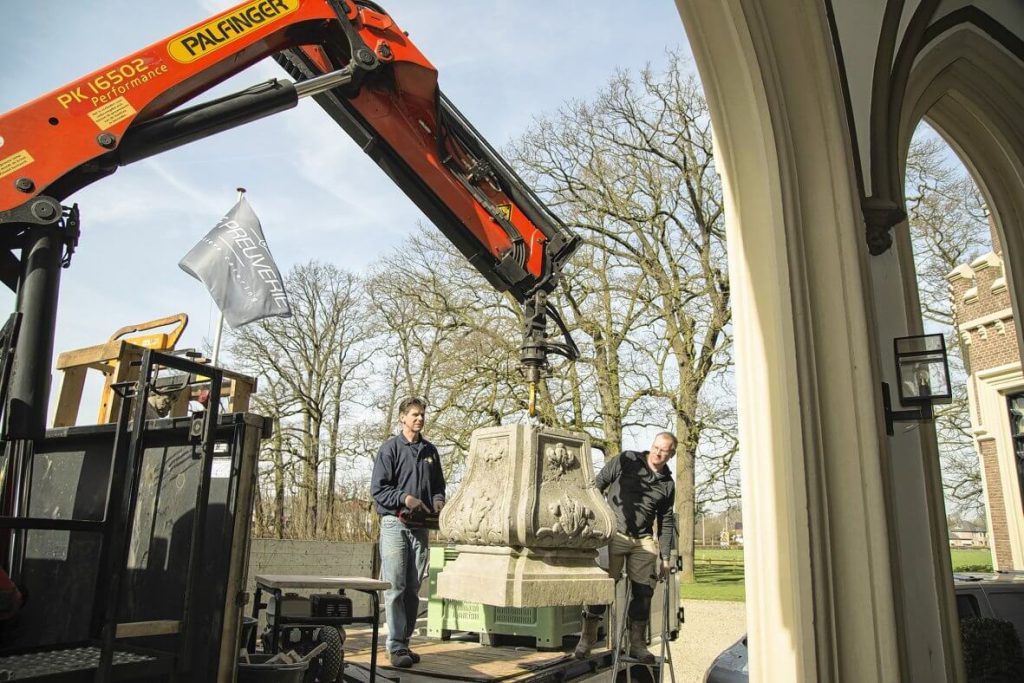
    On the day of installing I again had the same truck and crane operator as during disassembling: the Ruitenbeek firm from Amersfoort. We collected the two statues from the storage area of the Gelder Landscape, drove to the park and installed the plinth of Hercules in three parts on the existing concrete slab in the park.

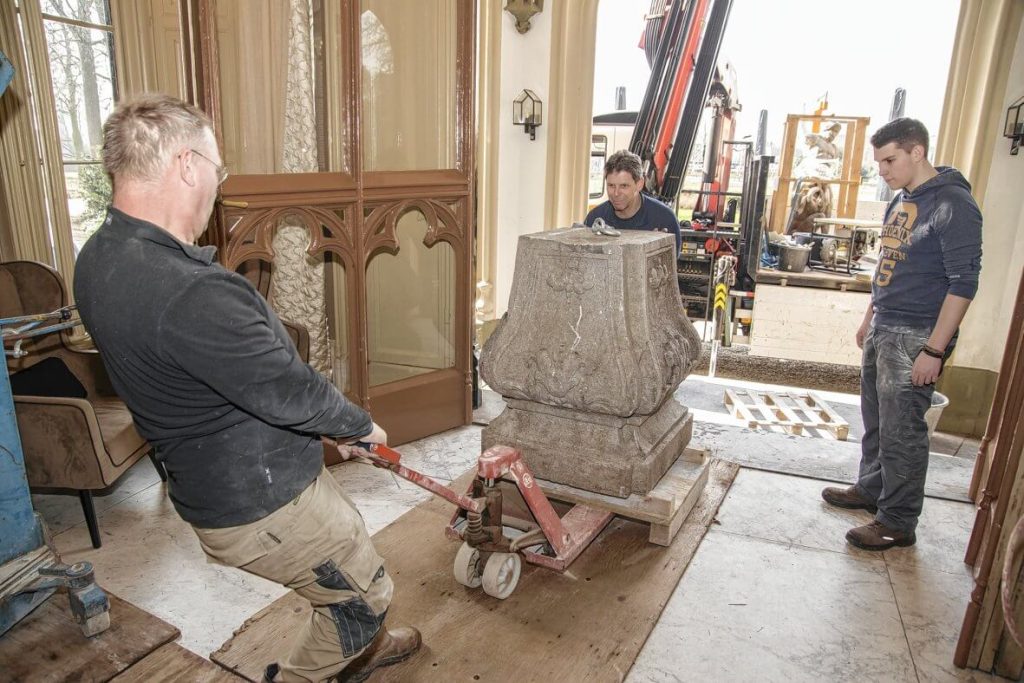
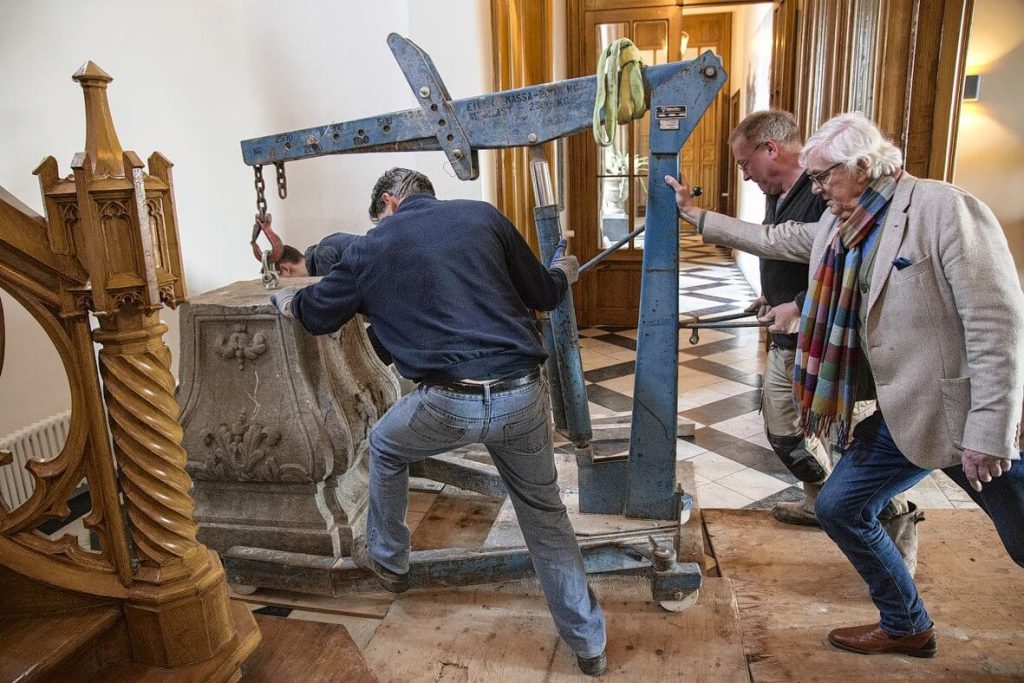
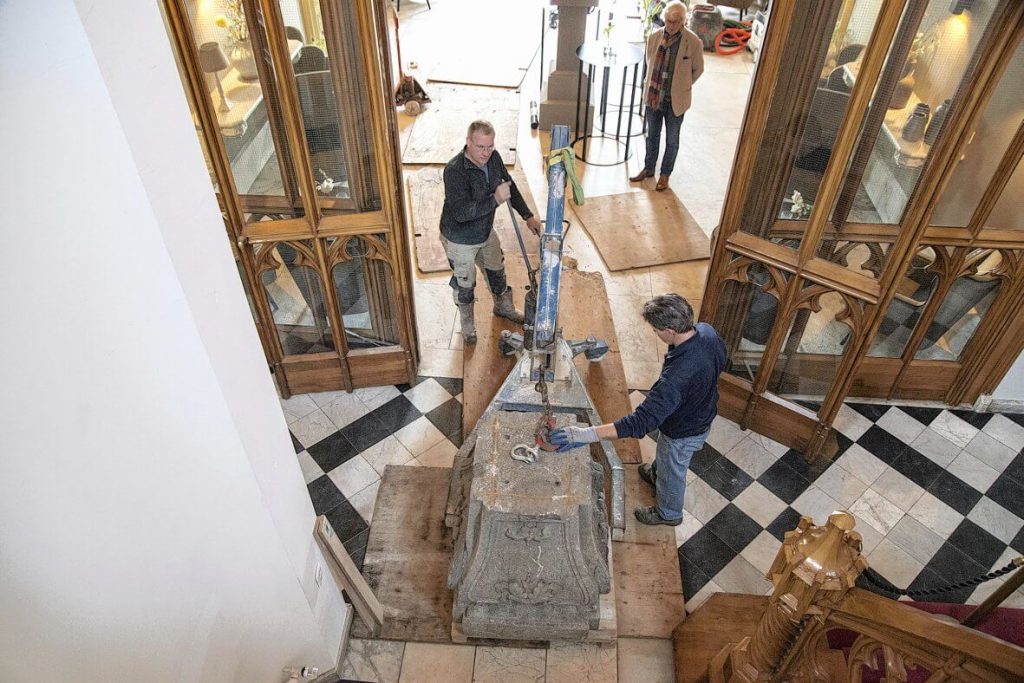
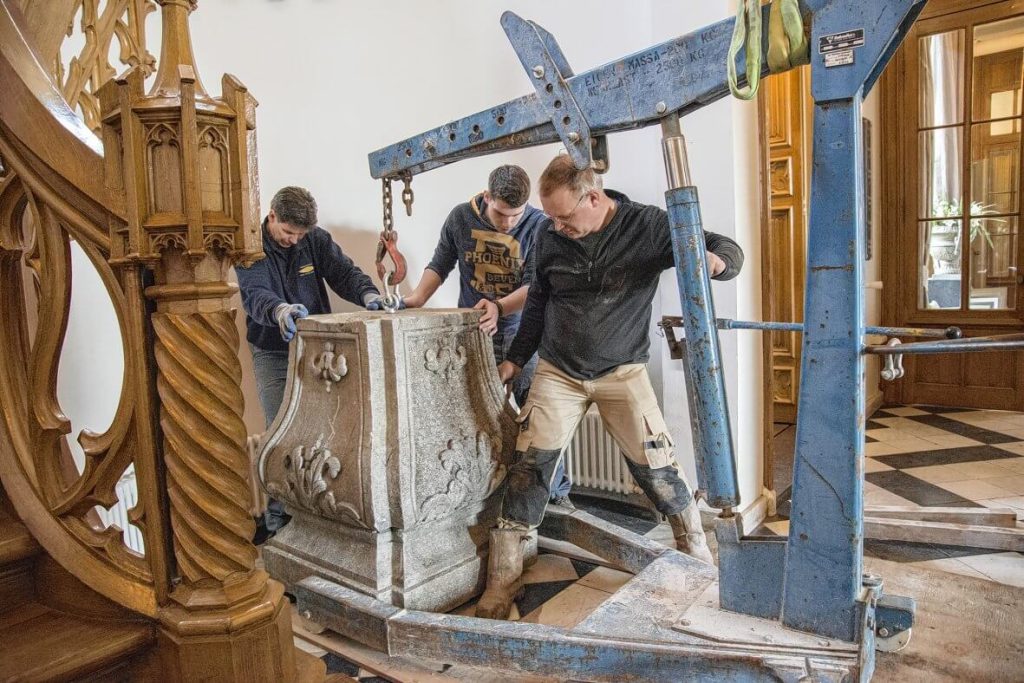
    When the new, bronze Hercules stood shimmering in full sunlight again, we drove to the mansion for the real challenge. We still had to transport the gruesomely heavy old plinth and the old statue across the marble floor to the stairwell , and there mount these to a final height of three meters. The staircase was too narrow for a gantry crane, and there was no place to hang a pulley. How was I supposed to get this done?

    new belly for pedestal of Hercules
    A new base of Hercules. Bronze sculpture by Ton Mooy. Sculptor Koen van Velzen made a new base.
    The bronze statue was made by Ton Mooy from Amersfoort. I was responsible for the placement and the carving of the new plinth

    Fortunately, I found out that my blue stone crane could just reach high enough if I modified it a little… Photos by Bram van der Meulen of the Barneveld newspaper.
    If the slide show does not work properly, then click here.
  • Sacred heart Statue: Our dear Lord in the basement

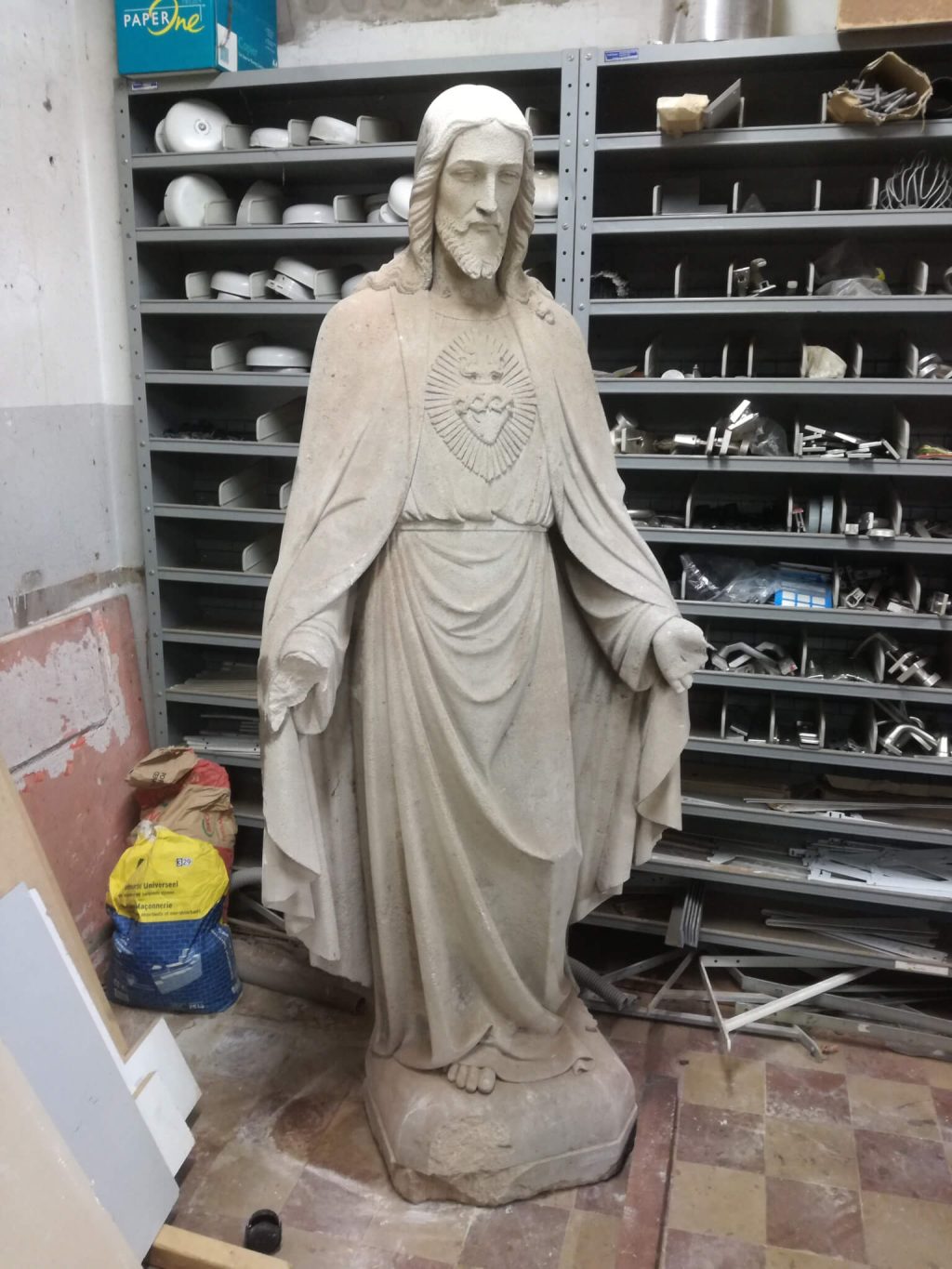
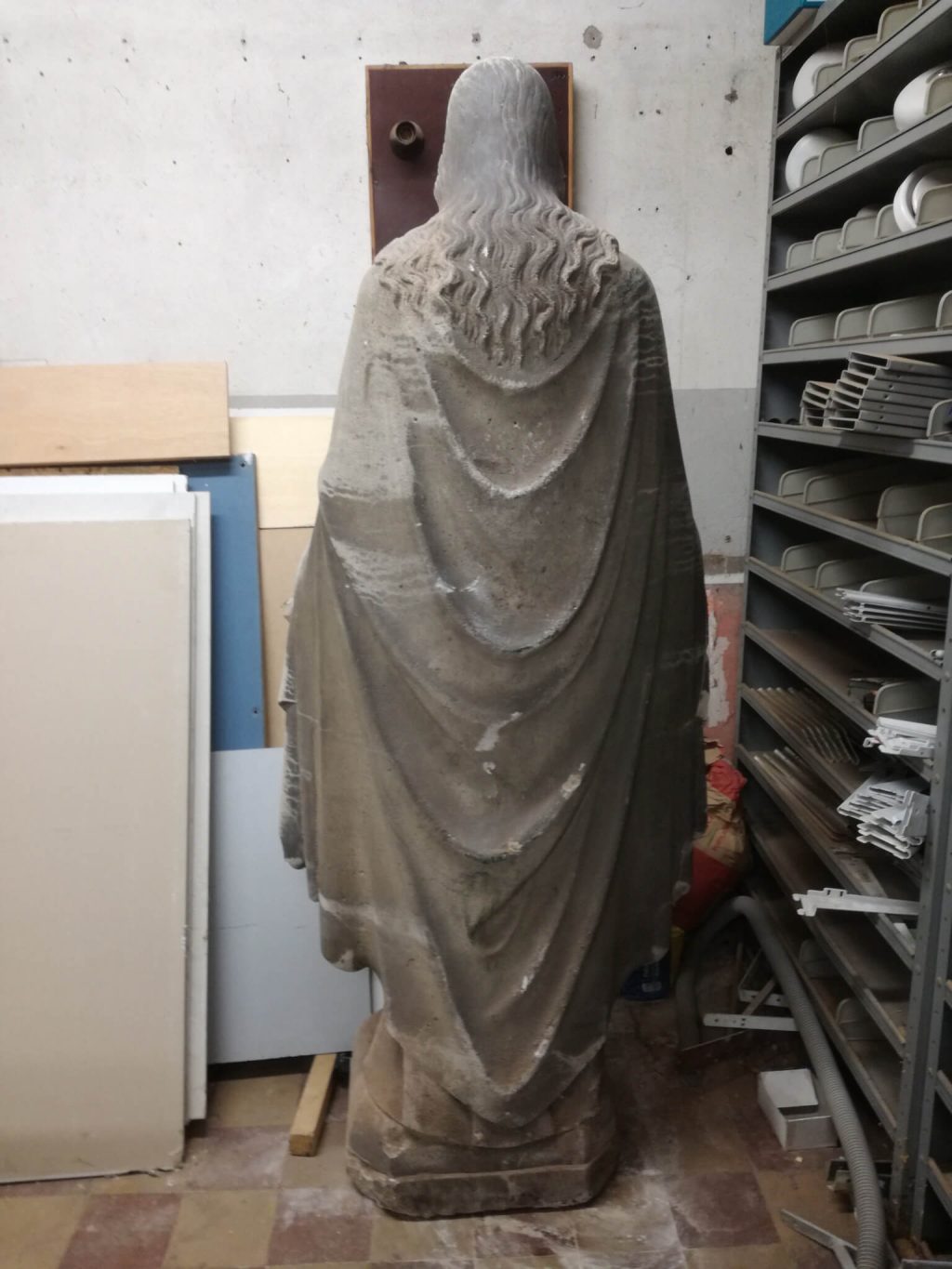
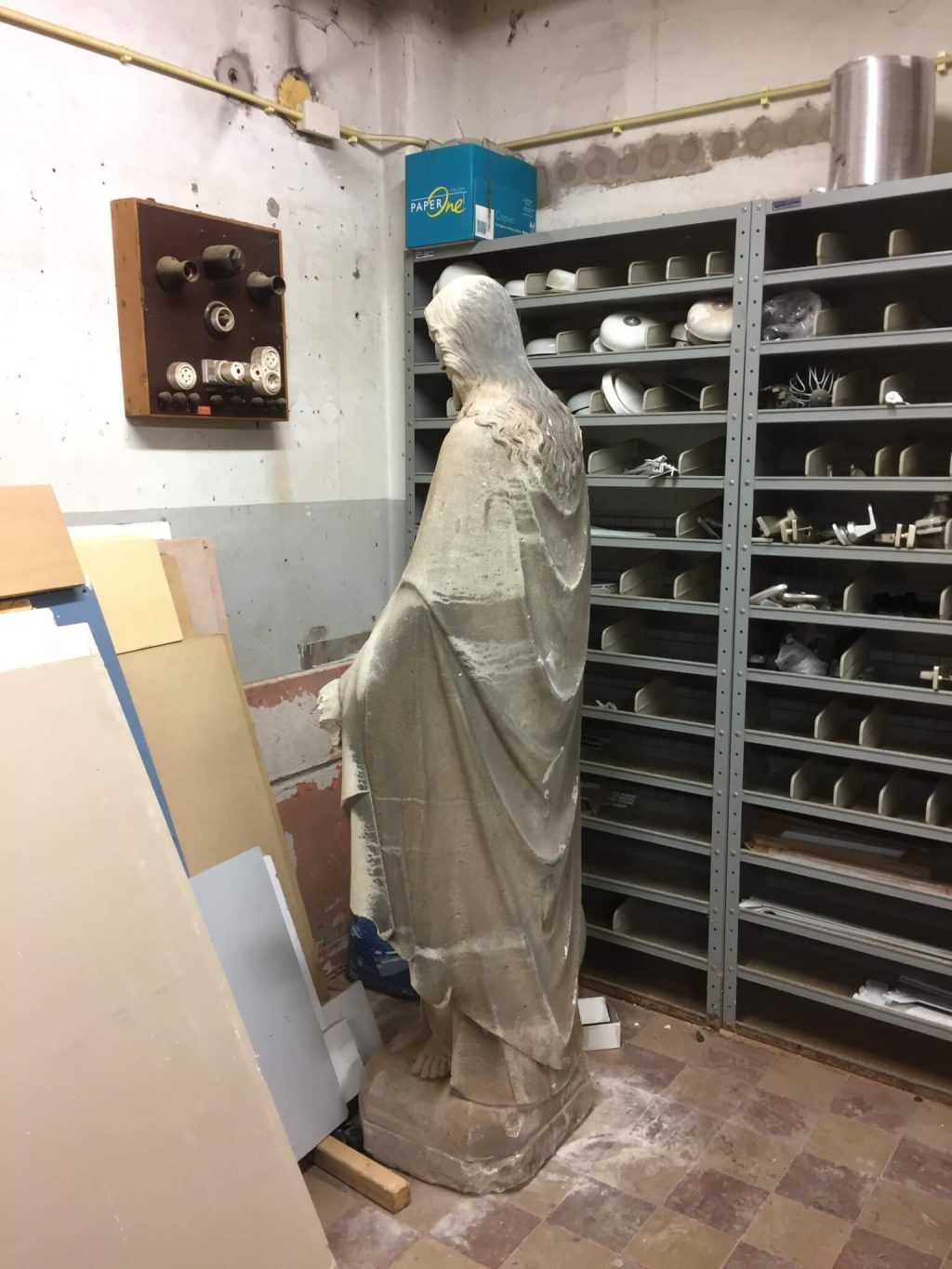
    This morning I came to Heemstede to retrieve a statue from the building of College Hageveld. It was a Sacred Heart Statue, a depiction in which Jesus is shown with his heart surrounded by a halo.

    If the slide show is not clearly visible, then click here.

    Hageveld

    Sacred Heart statue limestone Our Dear Lord in the basement
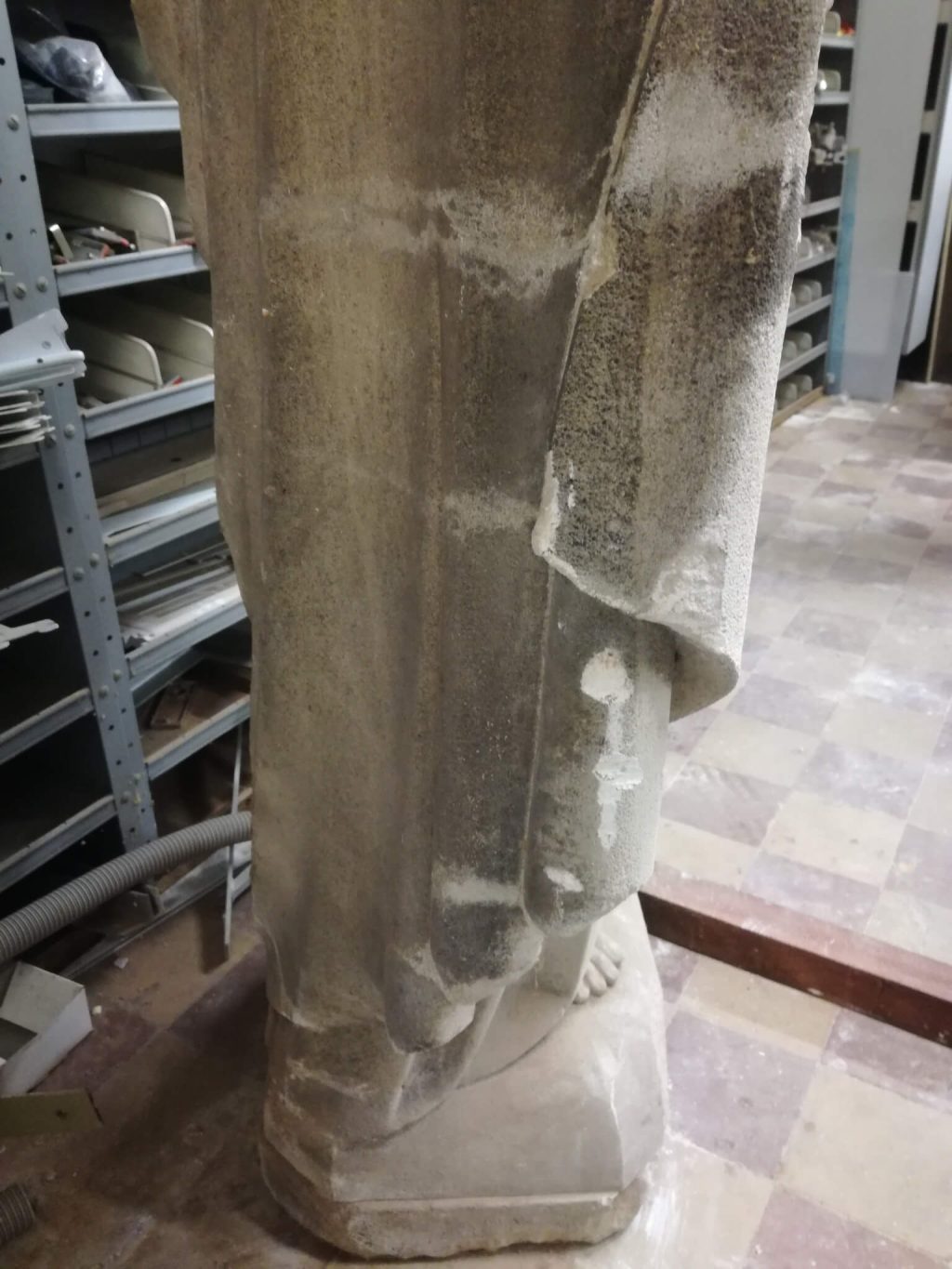
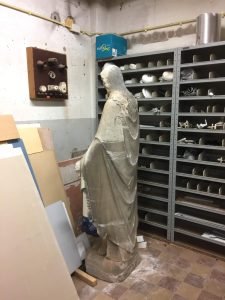
    The statue in the corner of the basement

    College Hageveld celebrates its 200 th anniversary. One hundred years ago, the students at the centenary, when it still was a minor seminary with a boarding, donated this Sacred Heart statue to the school. In 1967 Hageveld became a college and later a grammar school. Somewhere during all the changes of the last fifty years, the statue of Jesus ended up in a corner in the basement. It stood with its least vulnerable side to the open space, but it looked like he had been naughty and had to stand in the corner.

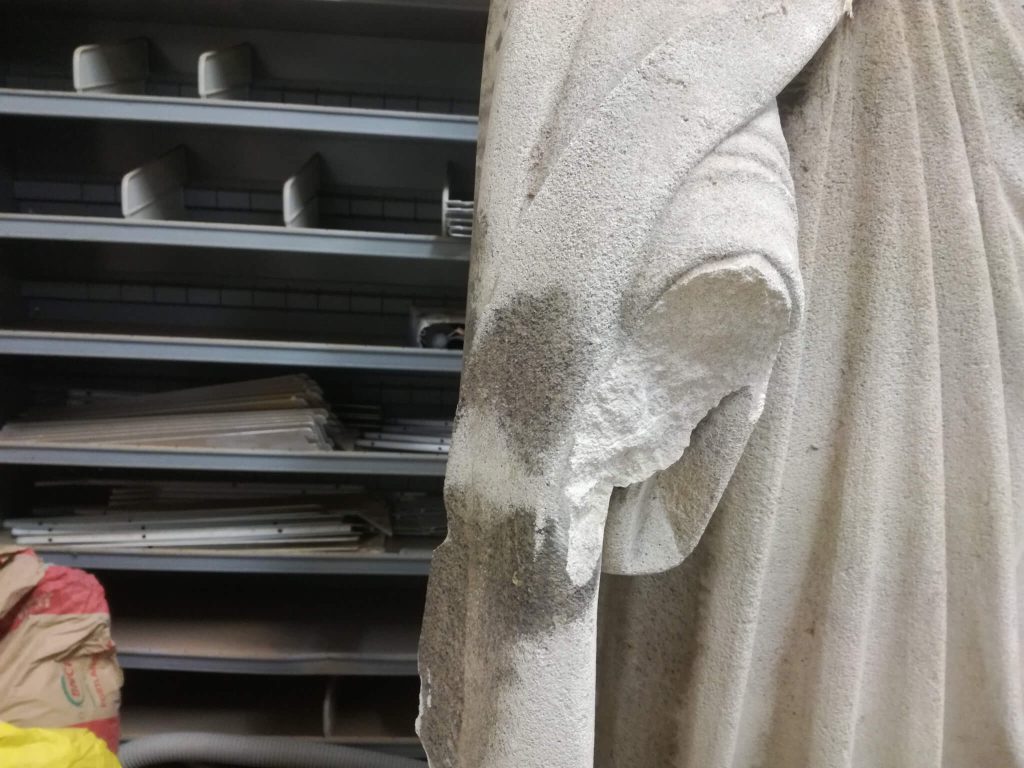
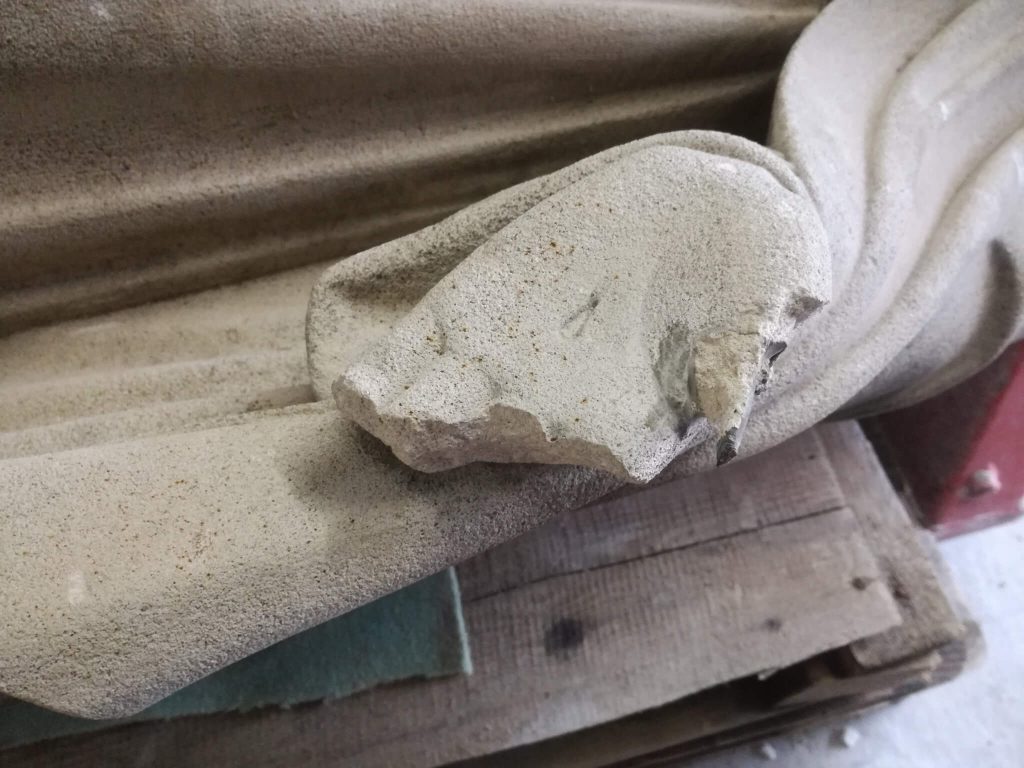
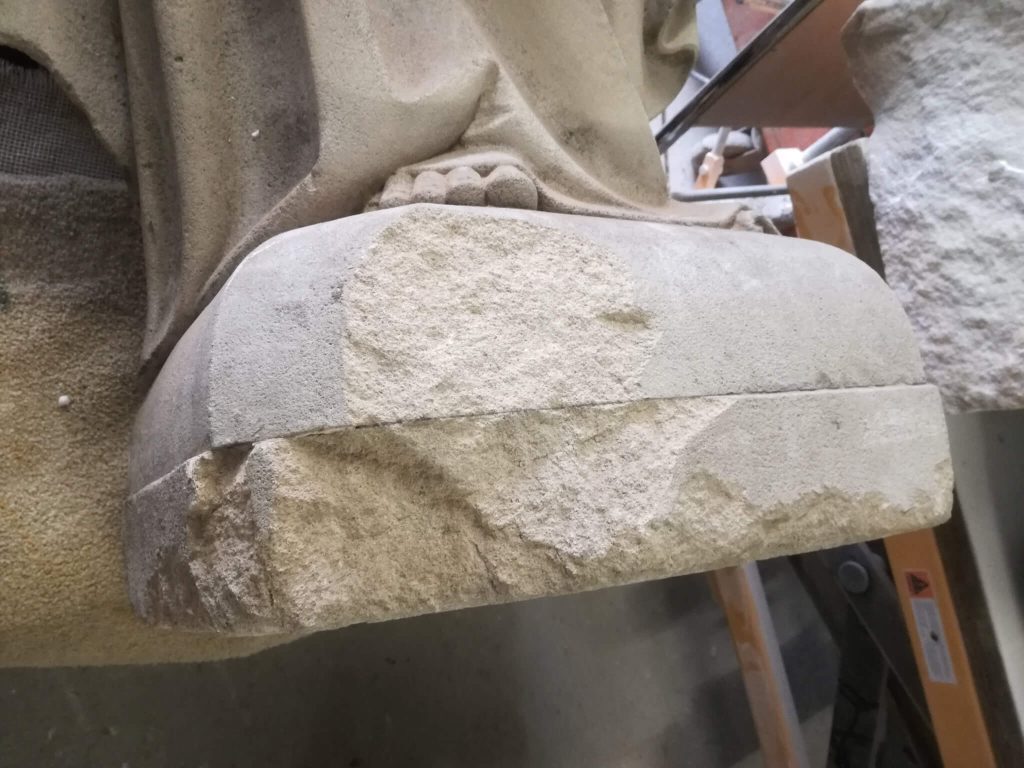
    Fortunately, things have now changed: in preparations for the 200th anniversary the plan came up to have the present from the students of a hundred years ago, this time supported by the parents of the pupils, restored and put in a proper place.. The statue was damaged in several places and was missing an entire hand, and of the other hand, all of the fingers were missing.

    Out of the basement

    Sacred Heart statue limestone Our Dear Lord in the basement

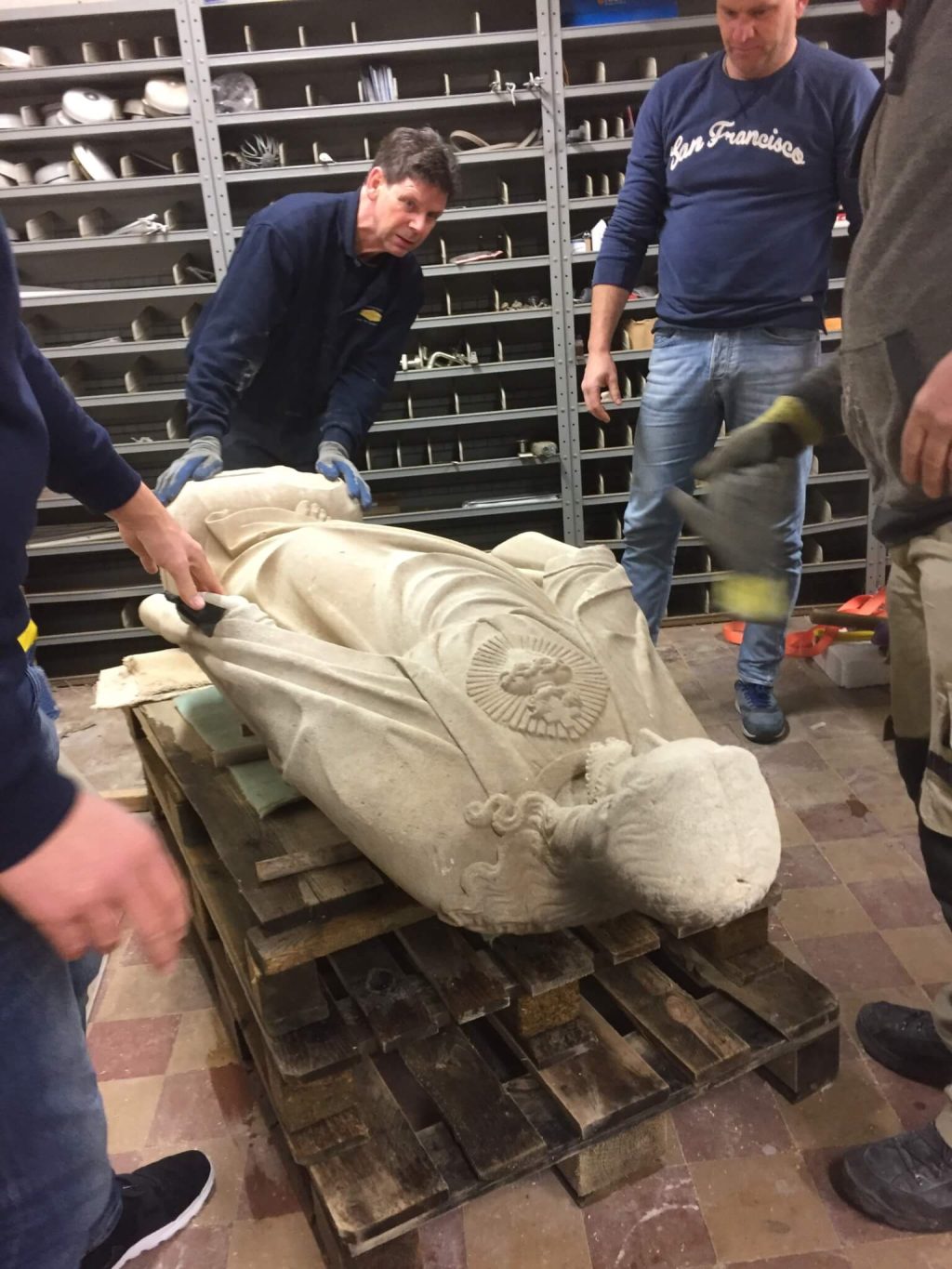
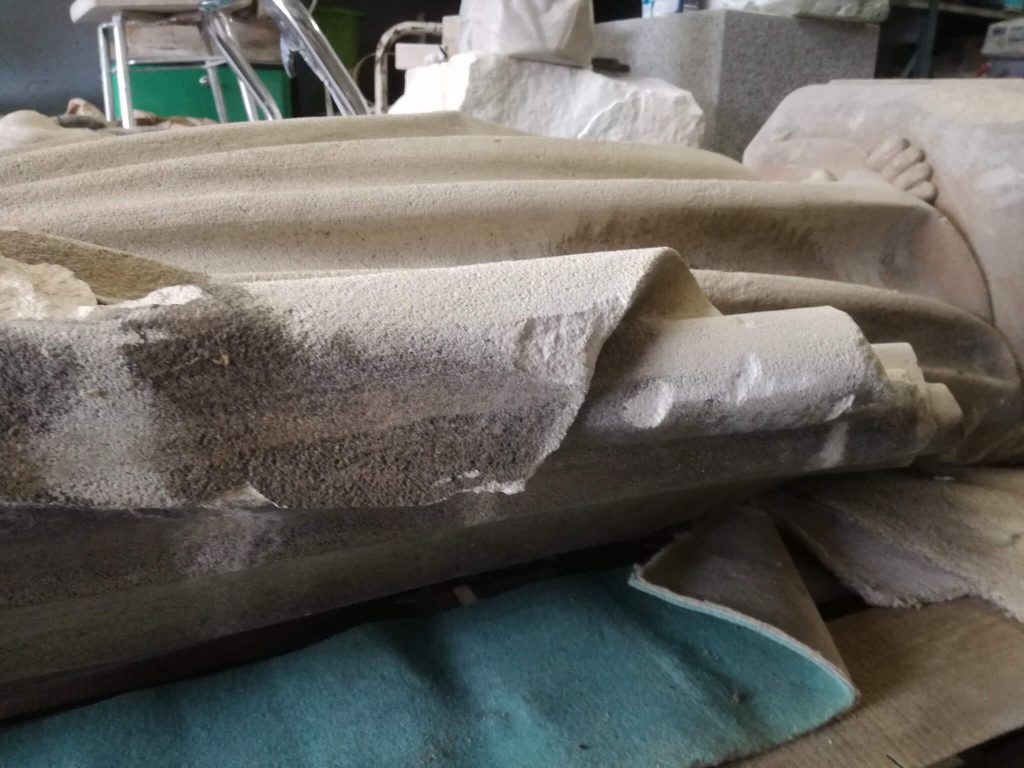
    But first Our Dear Lord had to come out of the basement. Such a statue of French limestone easily weighs several hundred kilograms and moreover, this is quite a massive one because of all its draperies. When I came around the first time I took a good look at how we could move the statue. It's not something you can simply lay down with two men, accidents would happen.

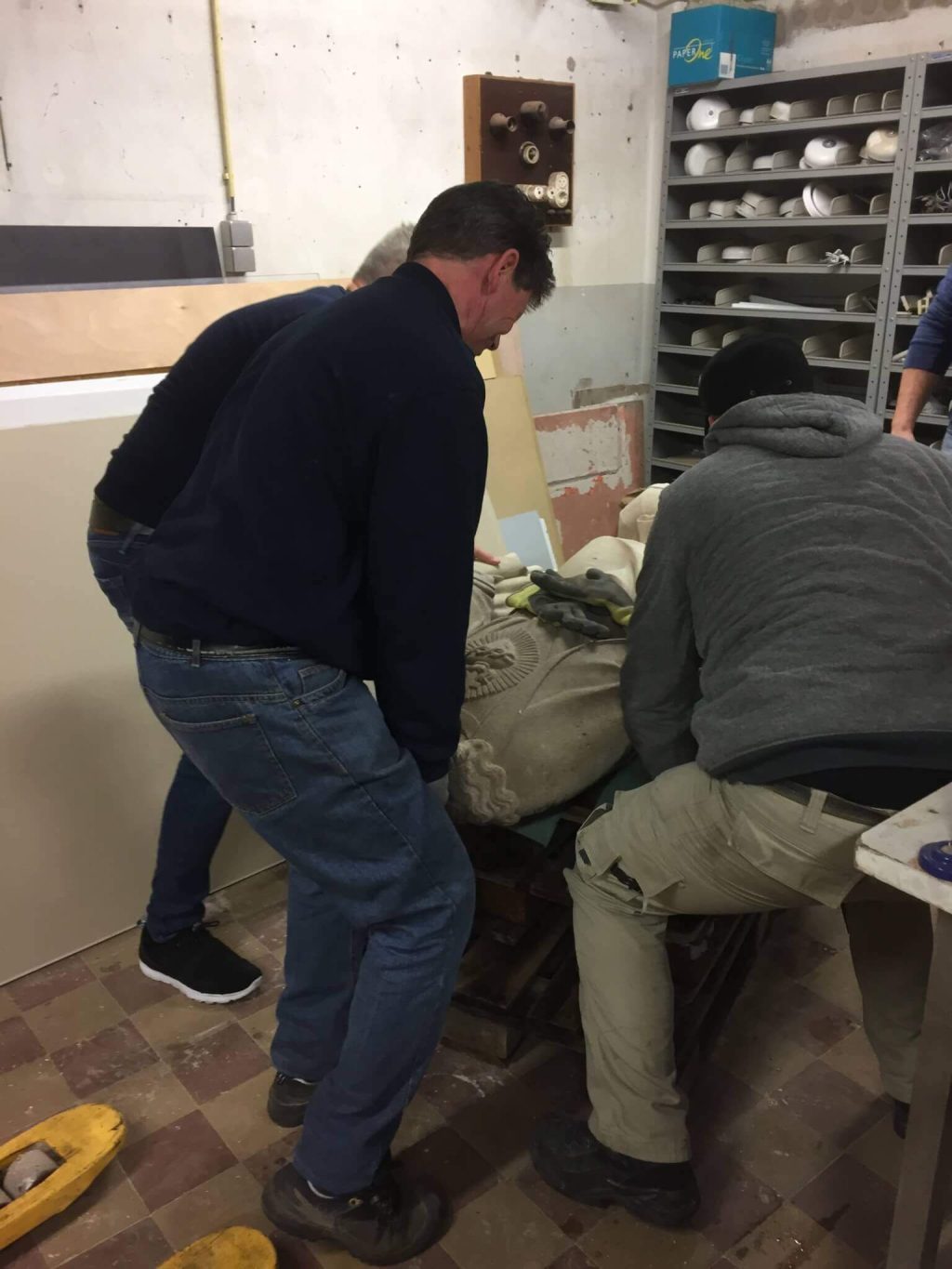
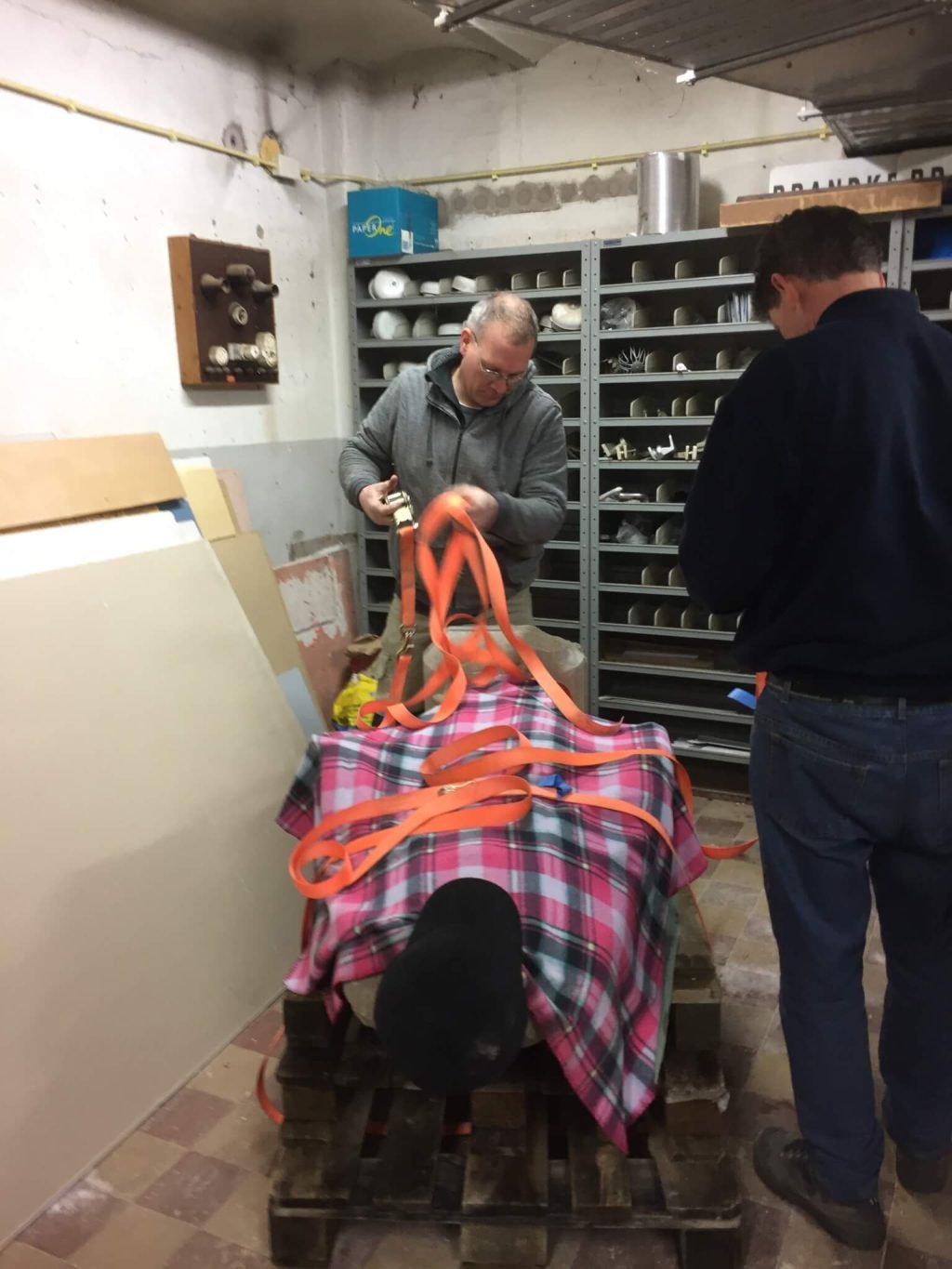
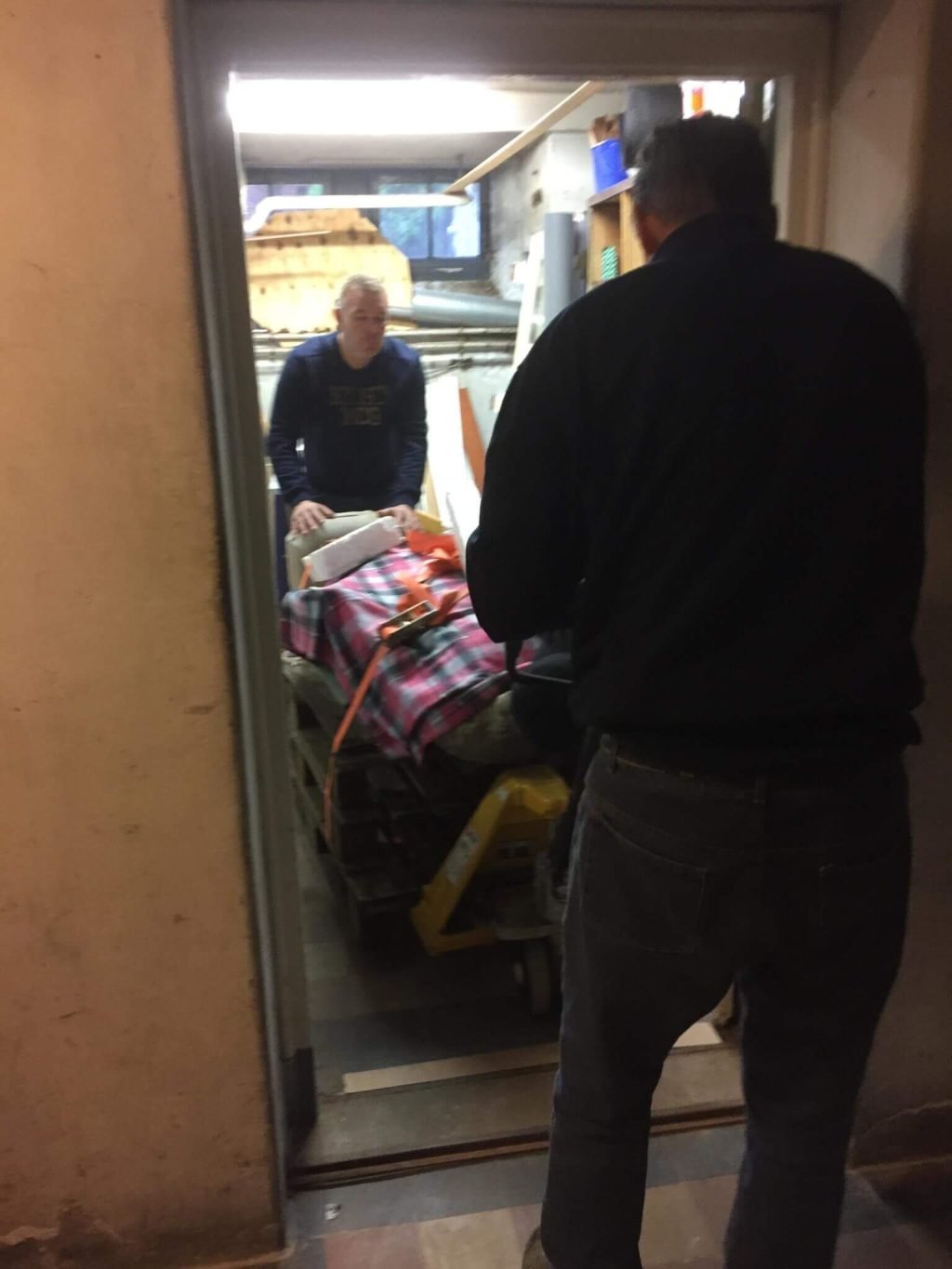
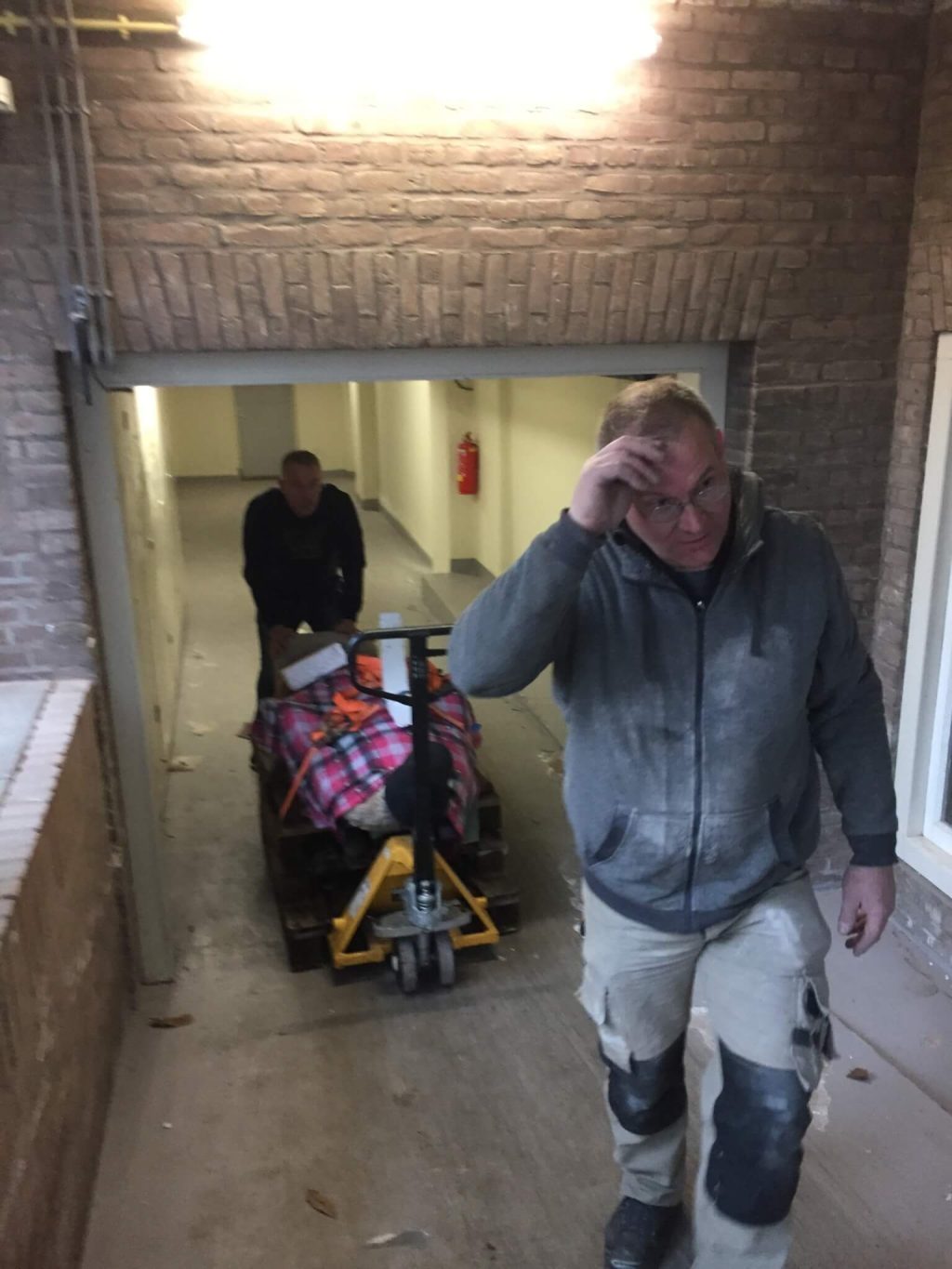
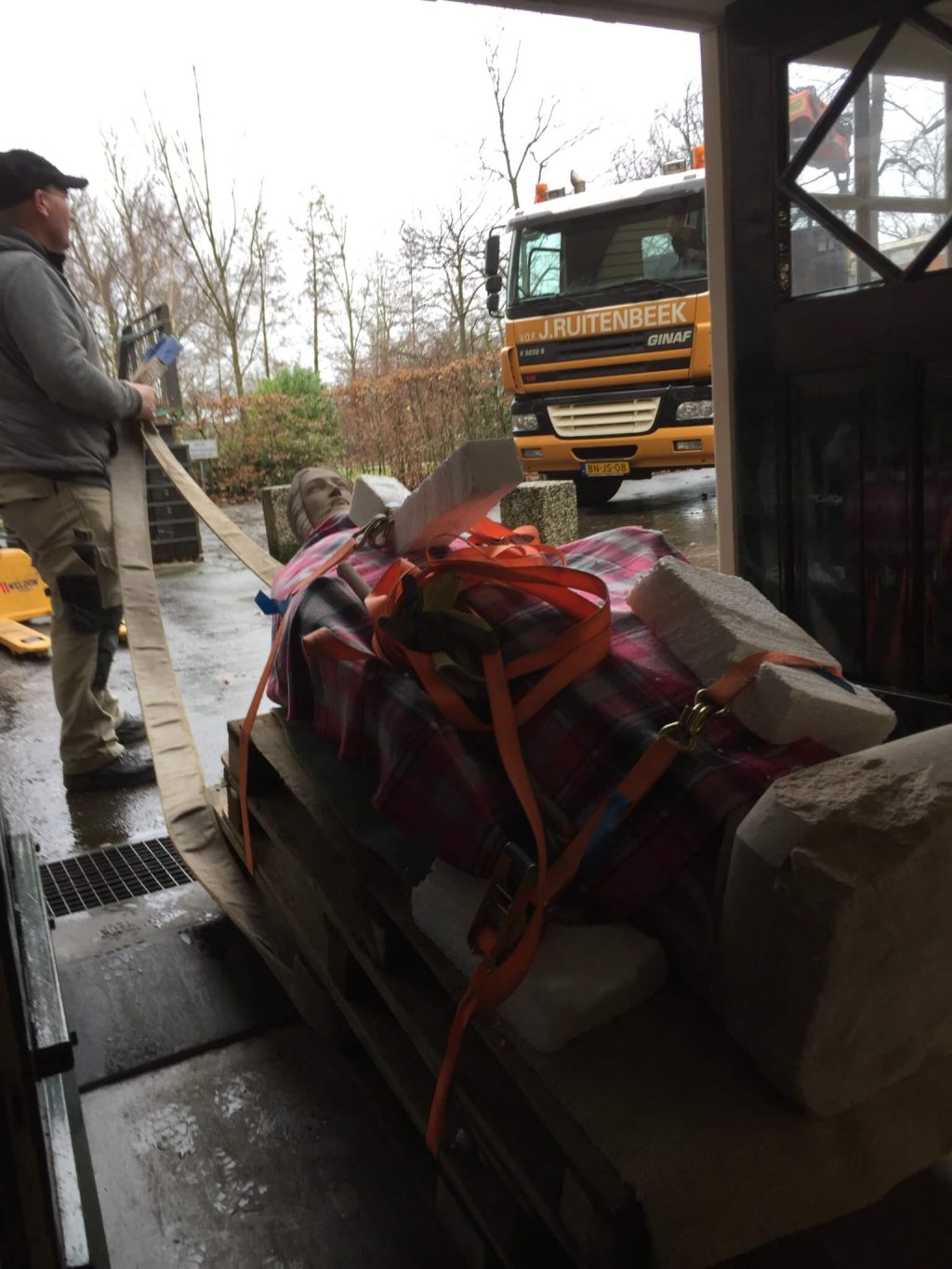
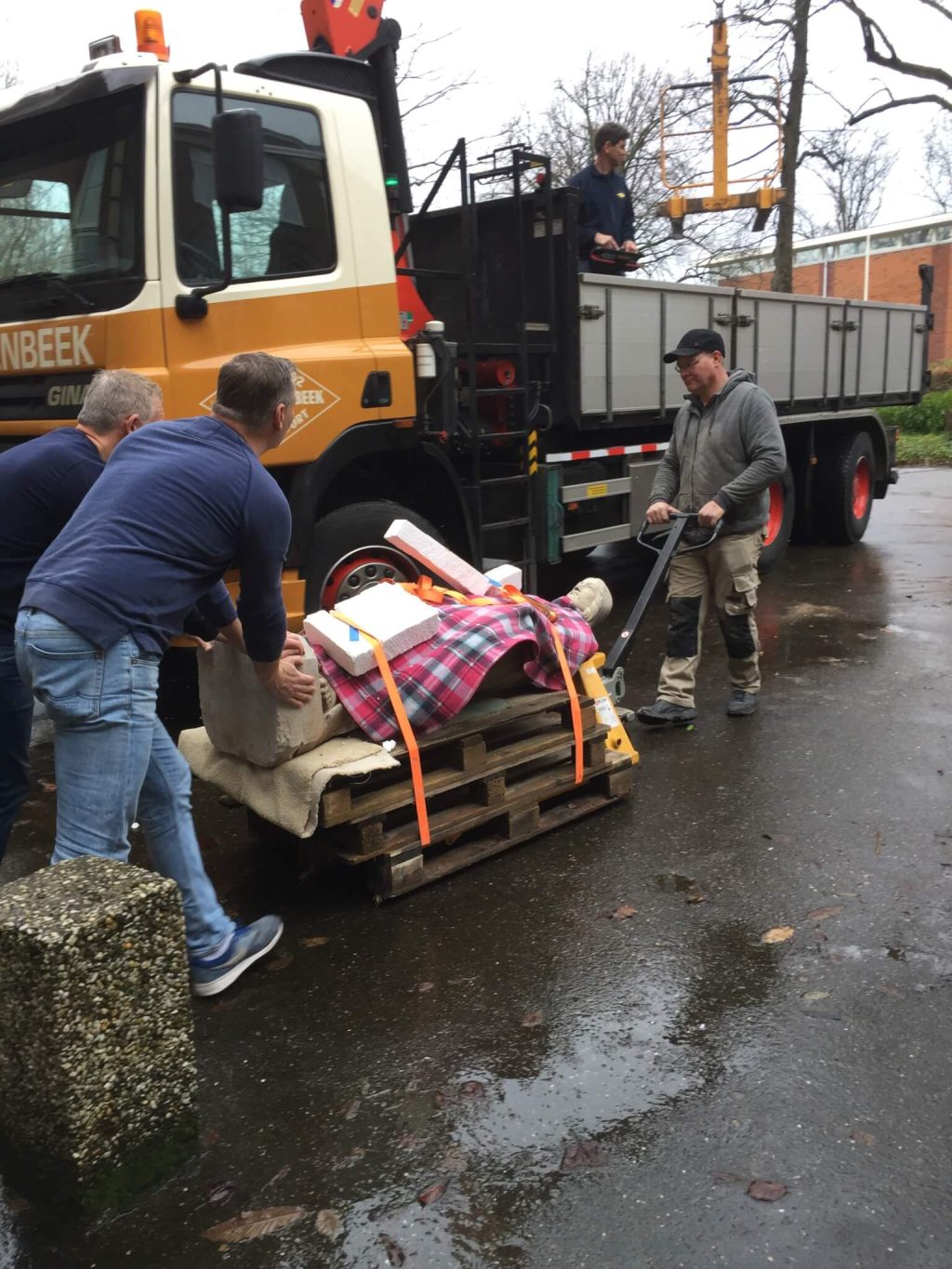
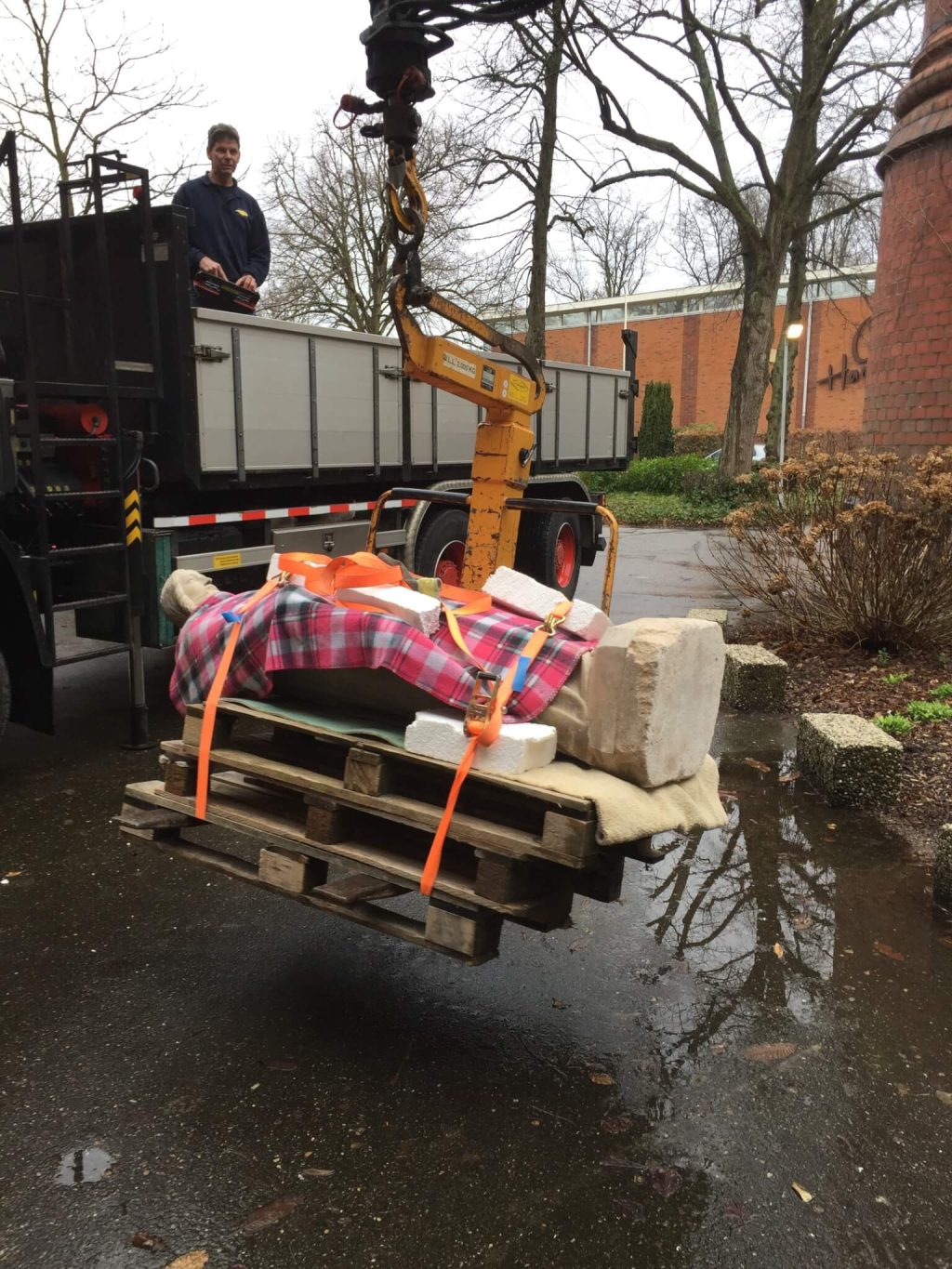
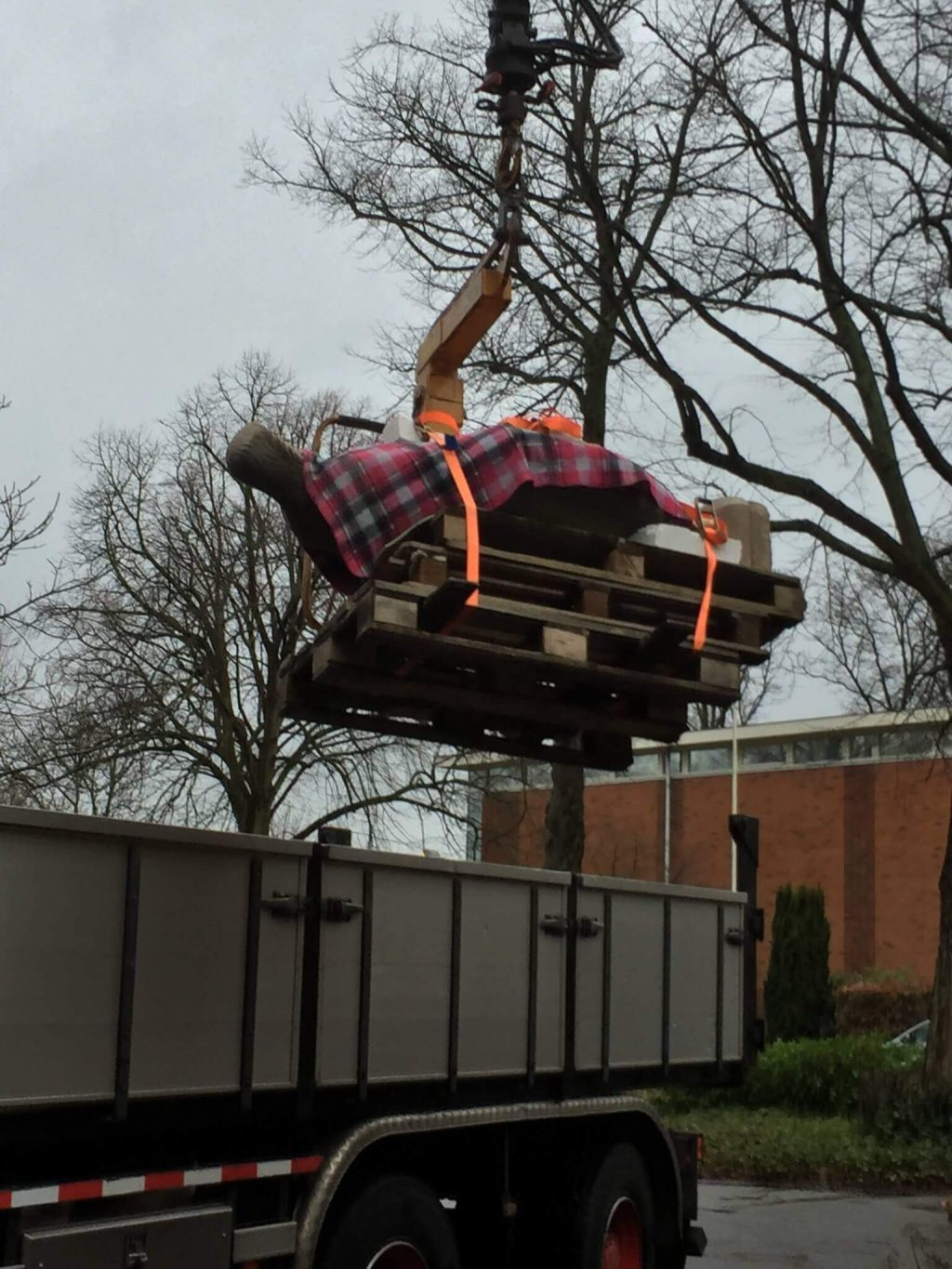
    That's why I brought some pallets. We tilted the statue slightly, and put a sheet of plywood underneath, put three pallets behind it and that way we were able to lay down the statue backwards on the pallets without having to lift anything. "What can be done with oil pressure, should not be attempted with blood pressure', as a friend always says. This also applies to simple leverage technology. Now the statue already was halfway on the pallets. A few wooden rollers underneath it, a bit of a shift and it was already neatly in place. We fixed the statue to the pallets with some straps, and pulled the pallets from the basement room it was in.. It just barely fitted through the door. With a hefty push we rode up the bike ramp, the crane helped the statue over a steep threshold and then it was still just a matter of hoisting to lift it up onto the truck. When I ponder this over in advance, I uually have some trust that it will come out fine, but it is always a relief when it runs as smoothly as now. Of course nothing should get damaged, and certainly not on someone who comes out to help. Therefore, proper planning is of great importance.

    Restoration

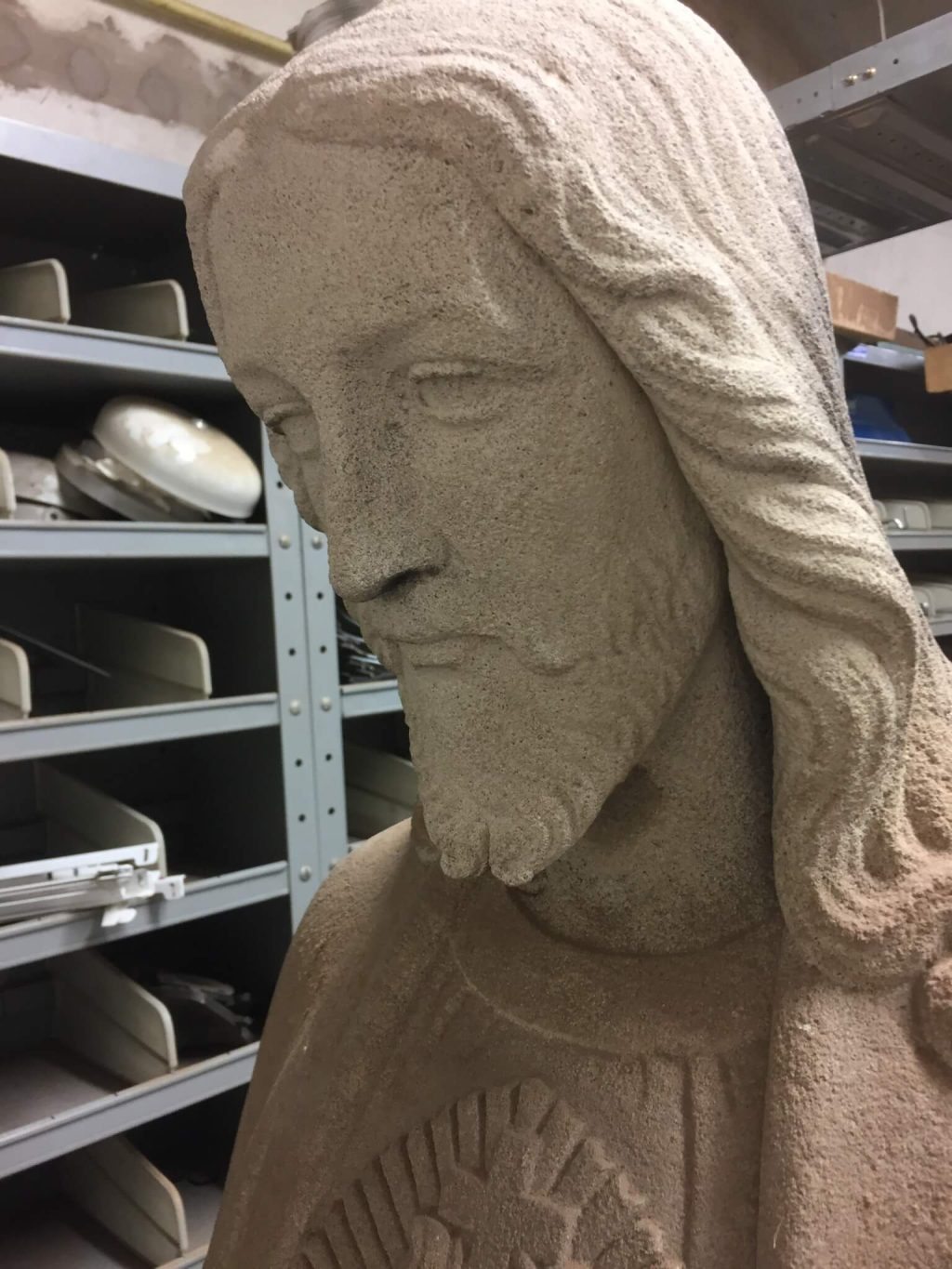
    In the coming weeks I will restore the statue. I will be carving new hands out of the same type of limestone, which I will shape to fit into the existing sleeves of the statue. I will not fix them definitively yet, because those fingers are quite vulnerable. Only when the statue is in place, I will fasten the new hands into the sleeves, so no transport damage can occur. I will also repair the damaged areas with special restoration mortar for this type of stone. Fortunately, the face is still in very good condition.

    Salad Oil Style

    Sacred Heart statue limestone Our Dear Lord in the basement

    The statue was carved in 1917 out of French limestone, presumably Brauvilliers or otherwise the almost identical Savonnières. We first thought of Euville, but that is a somewhat coarser and harder material. This mistake was caused by the washing out of the limestone, so it had become a little rougher in the last one hundred years. It is a very stylized design, in which something of late Art Nouveau can be seen. ‘Salad Oil Style‘, was condescendingly said about, for example the art of Jan Toorop. It is a typical Catholic imagery from that time, whereby the statue clearly establishes a link to the history of the school as a seminary and to the period in which it was made. After restoration the statue will be placed inside the building, right on the spot where once stood the altar of the school chapel. This way, the link with the past comes full circle: at the time donated by students and now restored to full glory through parents of students.

    (With thanks to rector Wille Straathof for the photos!)

No more messages to show.

No more messages to show.