Sacred heart Statue: Our dear Lord in the basement
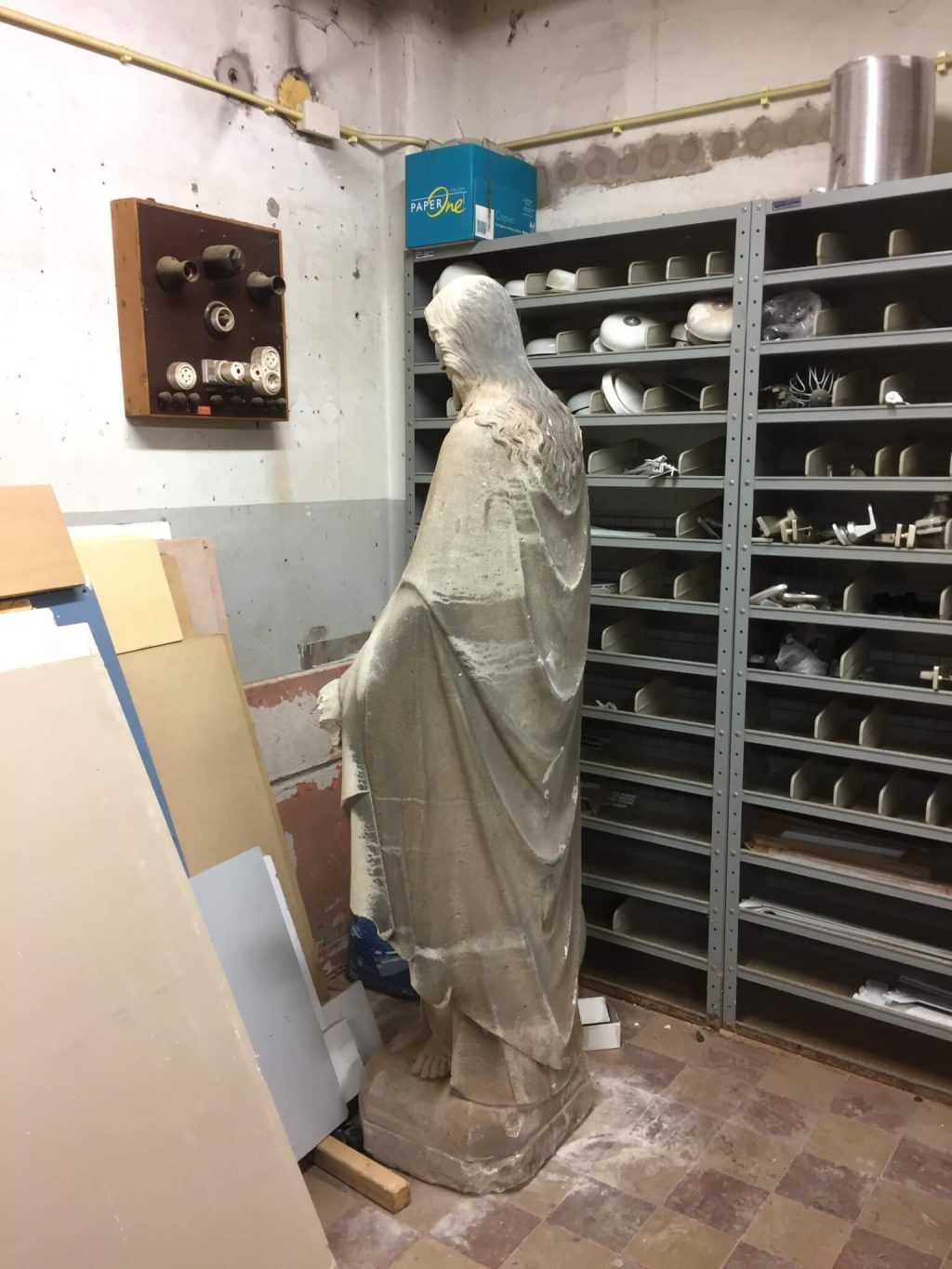
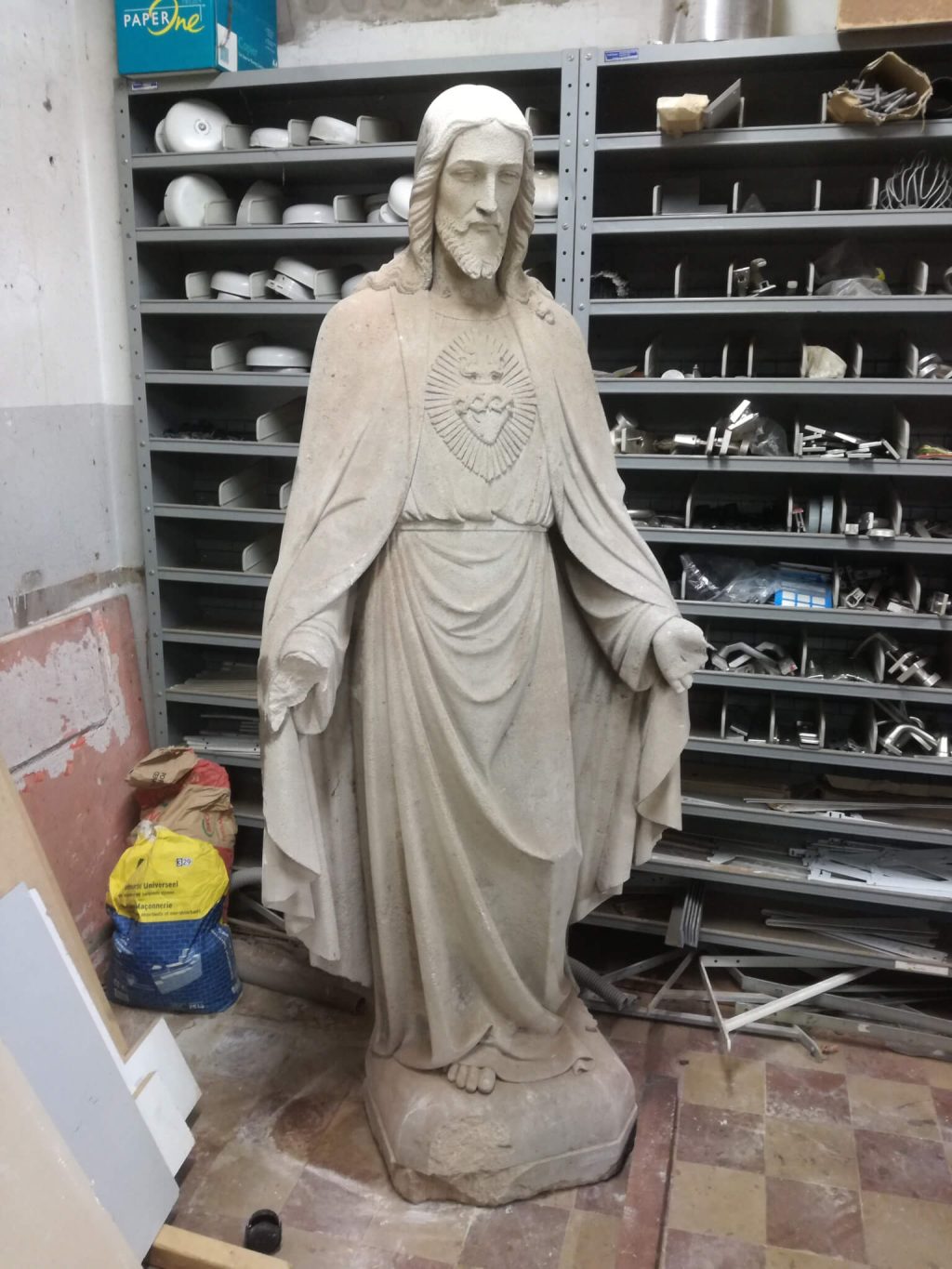
This morning I came to Heemstede to retrieve a statue from the building of College Hageveld. It was a Sacred Heart Statue, a depiction in which Jesus is shown with his heart surrounded by a halo.
If the slide show is not clearly visible, then click here.
Hageveld
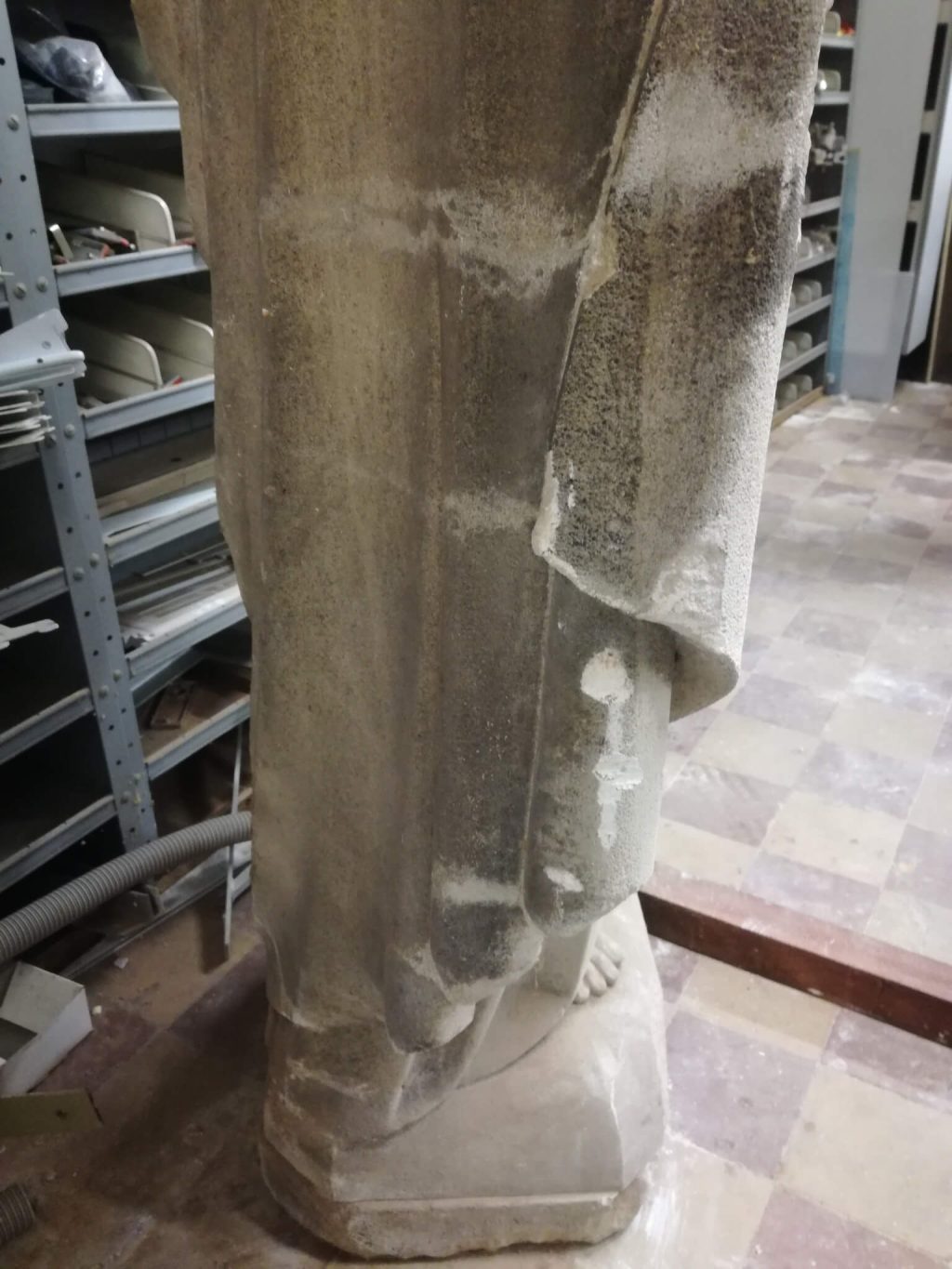
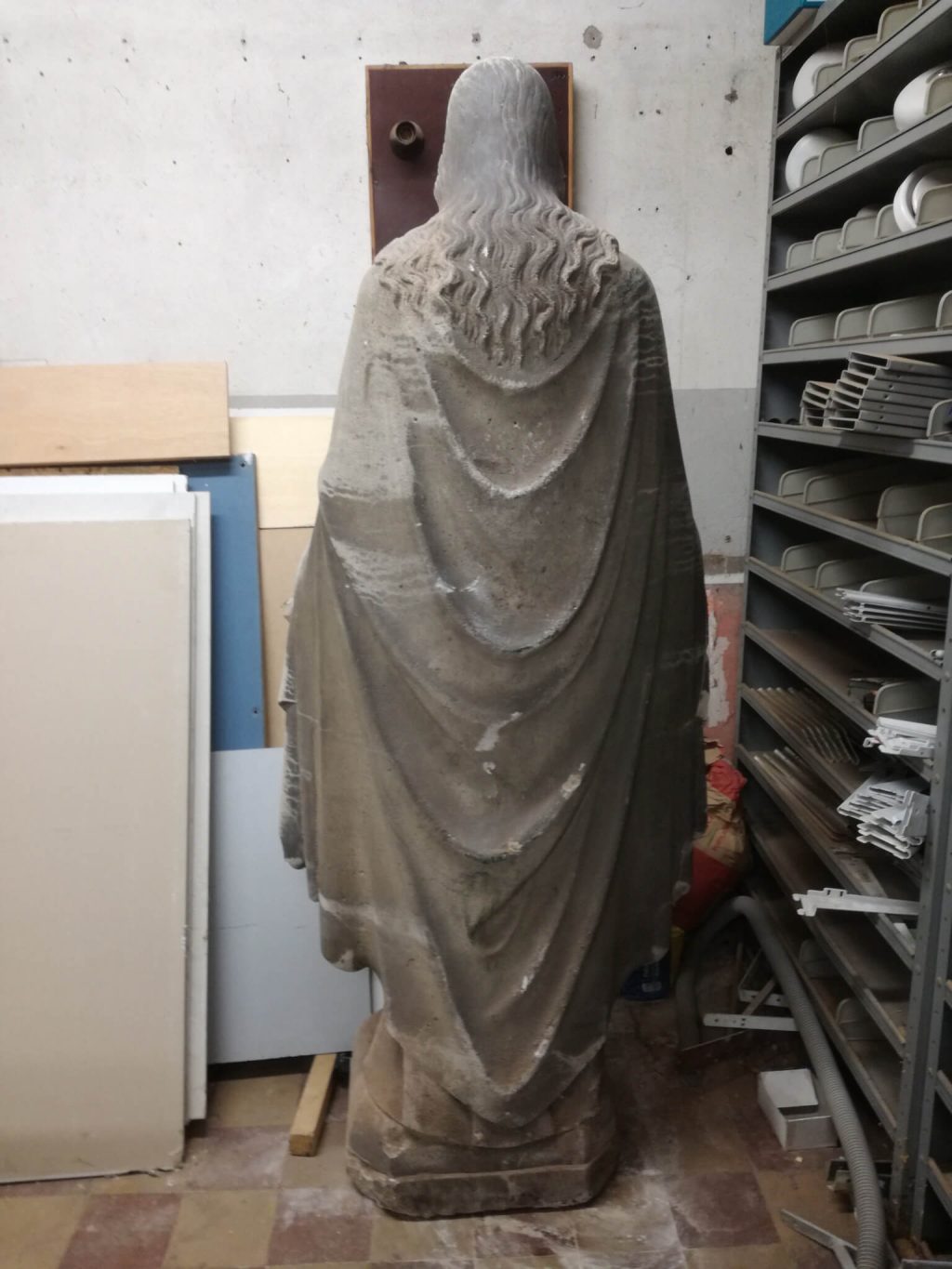
College Hageveld celebrates its 200 th anniversary. One hundred years ago, the students at the centenary, when it still was a minor seminary with a boarding, donated this Sacred Heart statue to the school. In 1967 Hageveld became a college and later a grammar school. Somewhere during all the changes of the last fifty years, the statue of Jesus ended up in a corner in the basement. It stood with its least vulnerable side to the open space, but it looked like he had been naughty and had to stand in the corner.
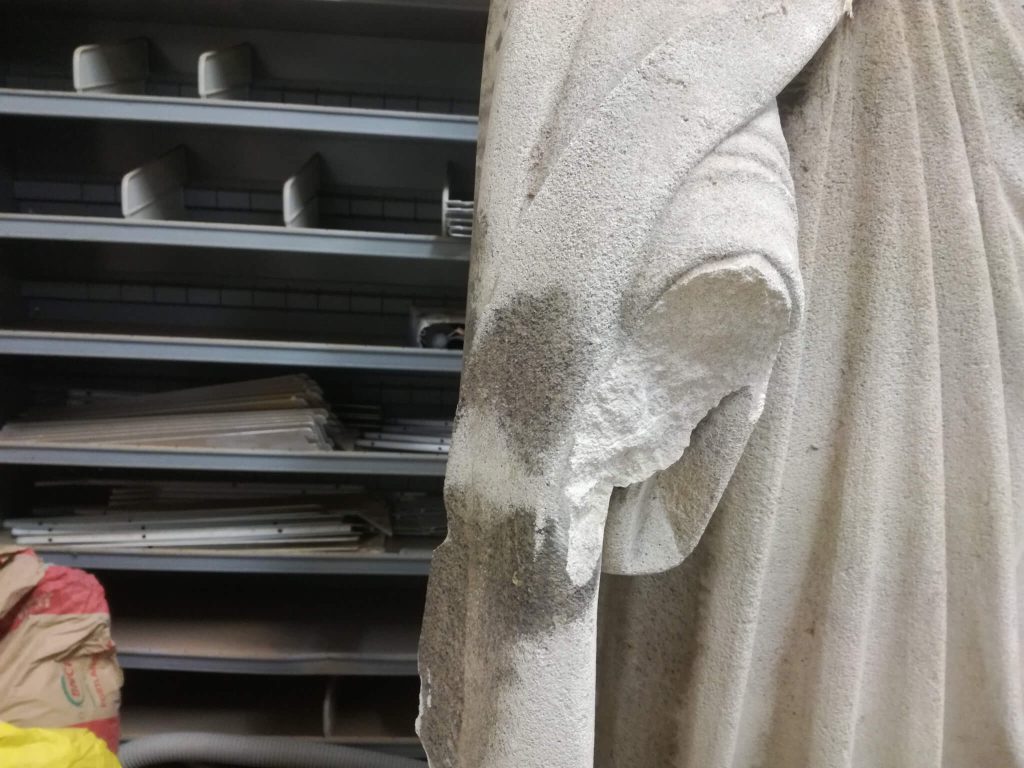
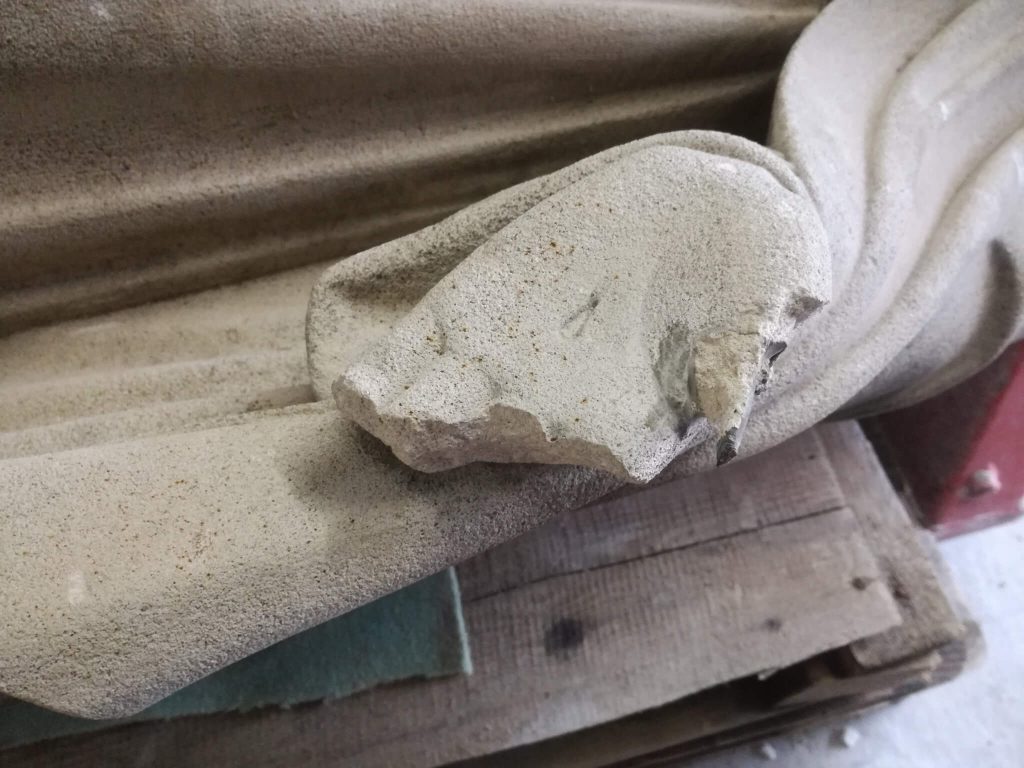
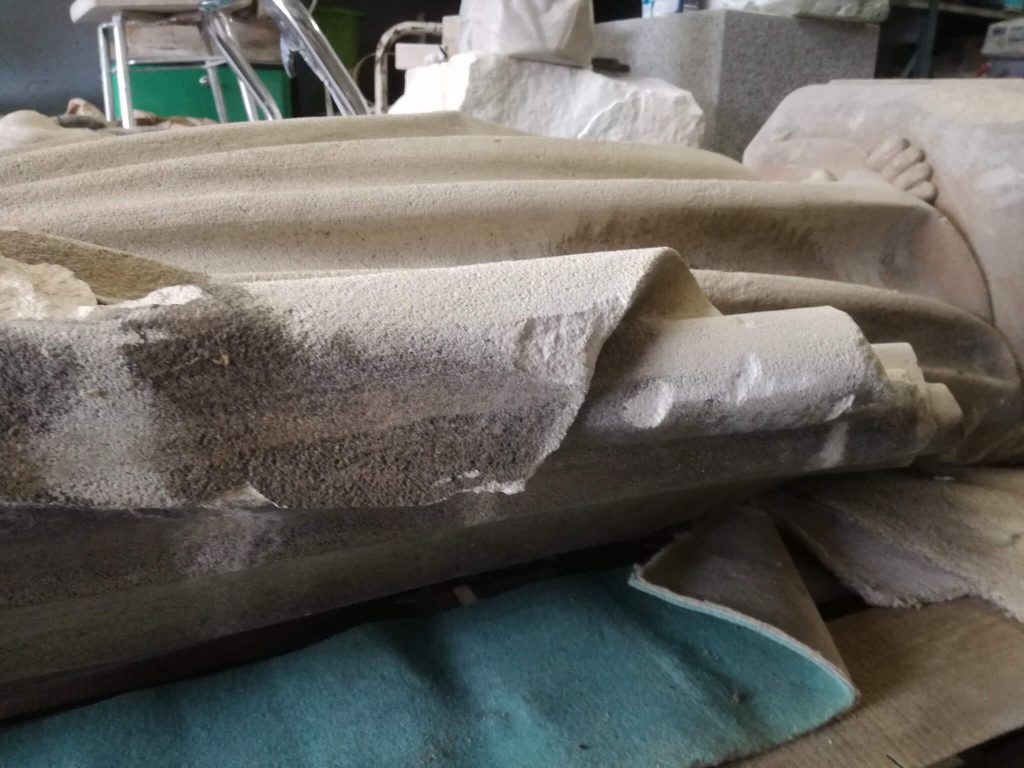
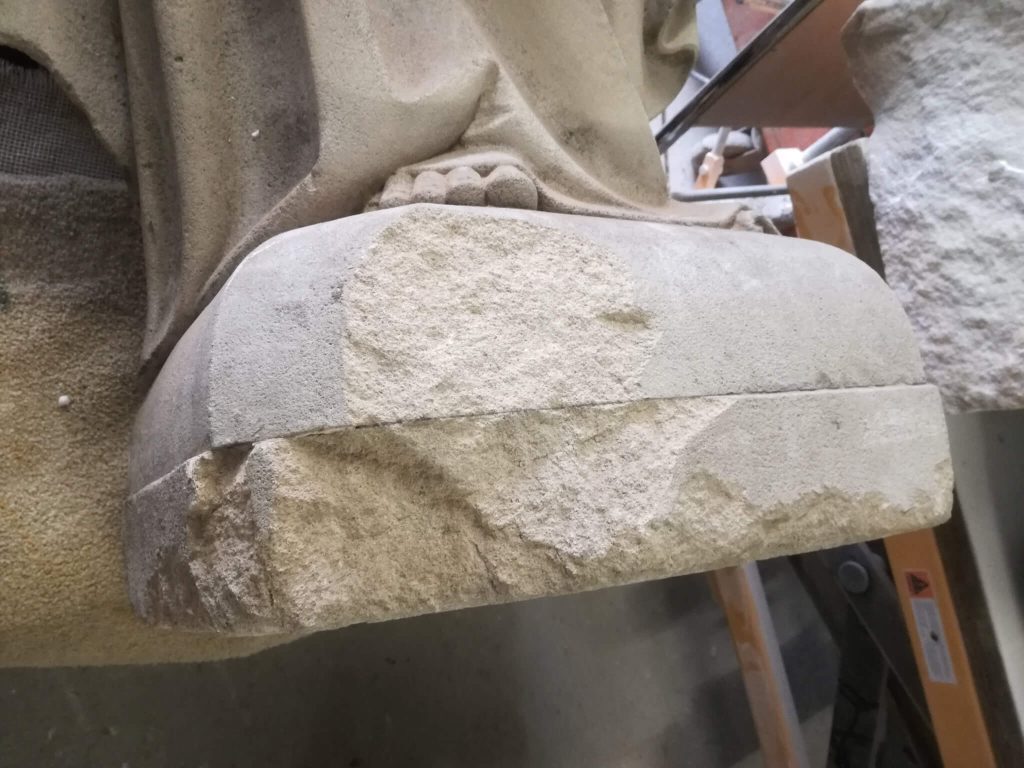
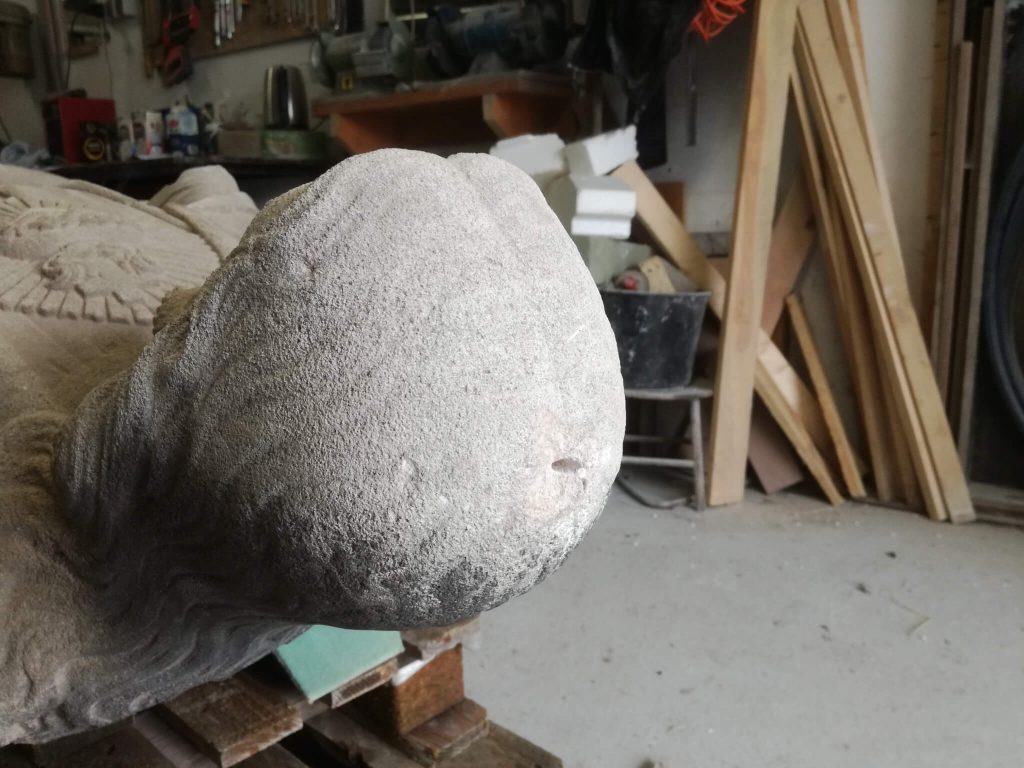
Fortunately, things have now changed: in preparations for the 200th anniversary the plan came up to have the present from the students of a hundred years ago, this time supported by the parents of the pupils, restored and put in a proper place.. The statue was damaged in several places and was missing an entire hand, and of the other hand, all of the fingers were missing.
Out of the basement

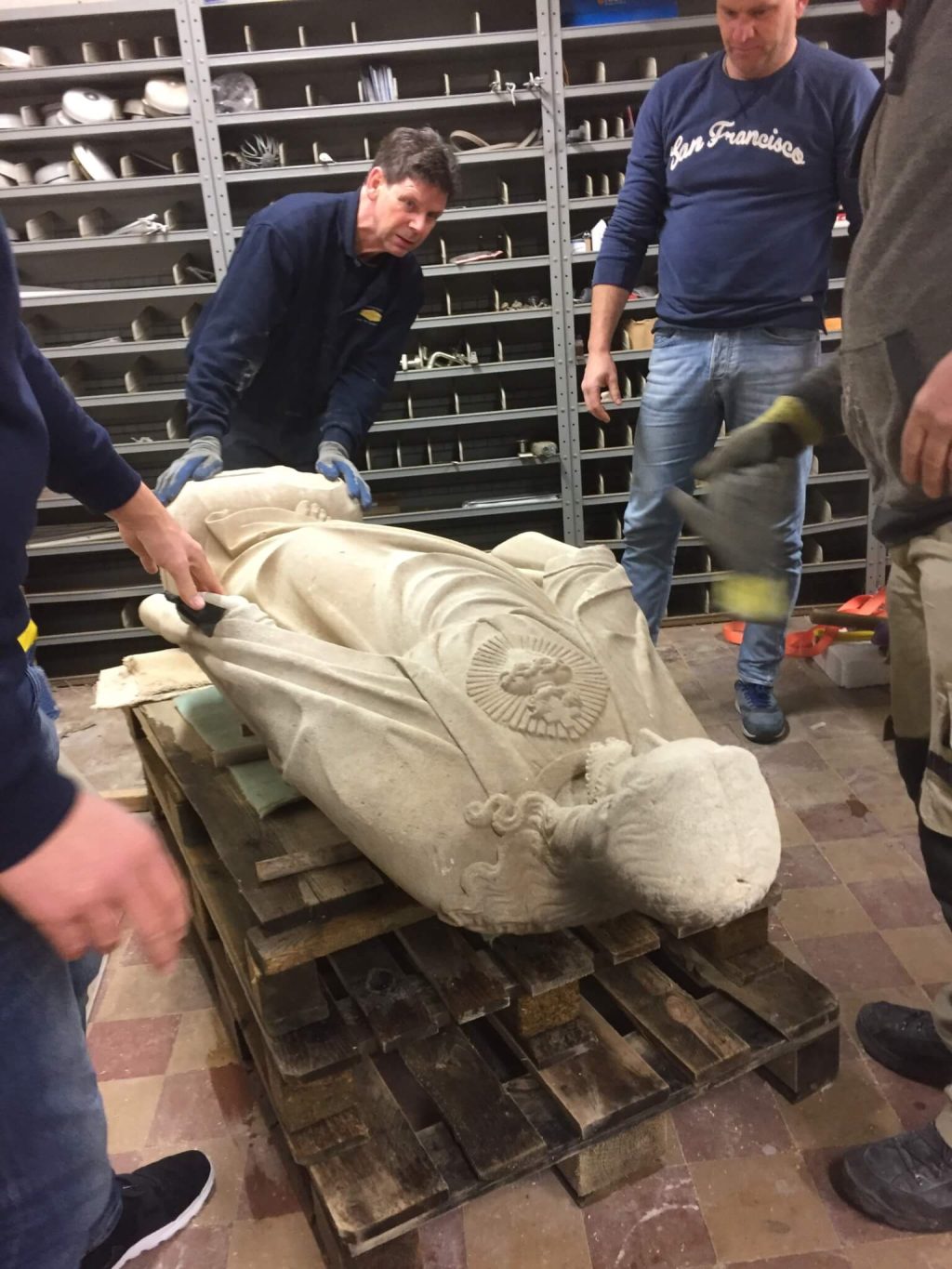
But first Our Dear Lord had to come out of the basement. Such a statue of French limestone easily weighs several hundred kilograms and moreover, this is quite a massive one because of all its draperies. When I came around the first time I took a good look at how we could move the statue. It's not something you can simply lay down with two men, accidents would happen.
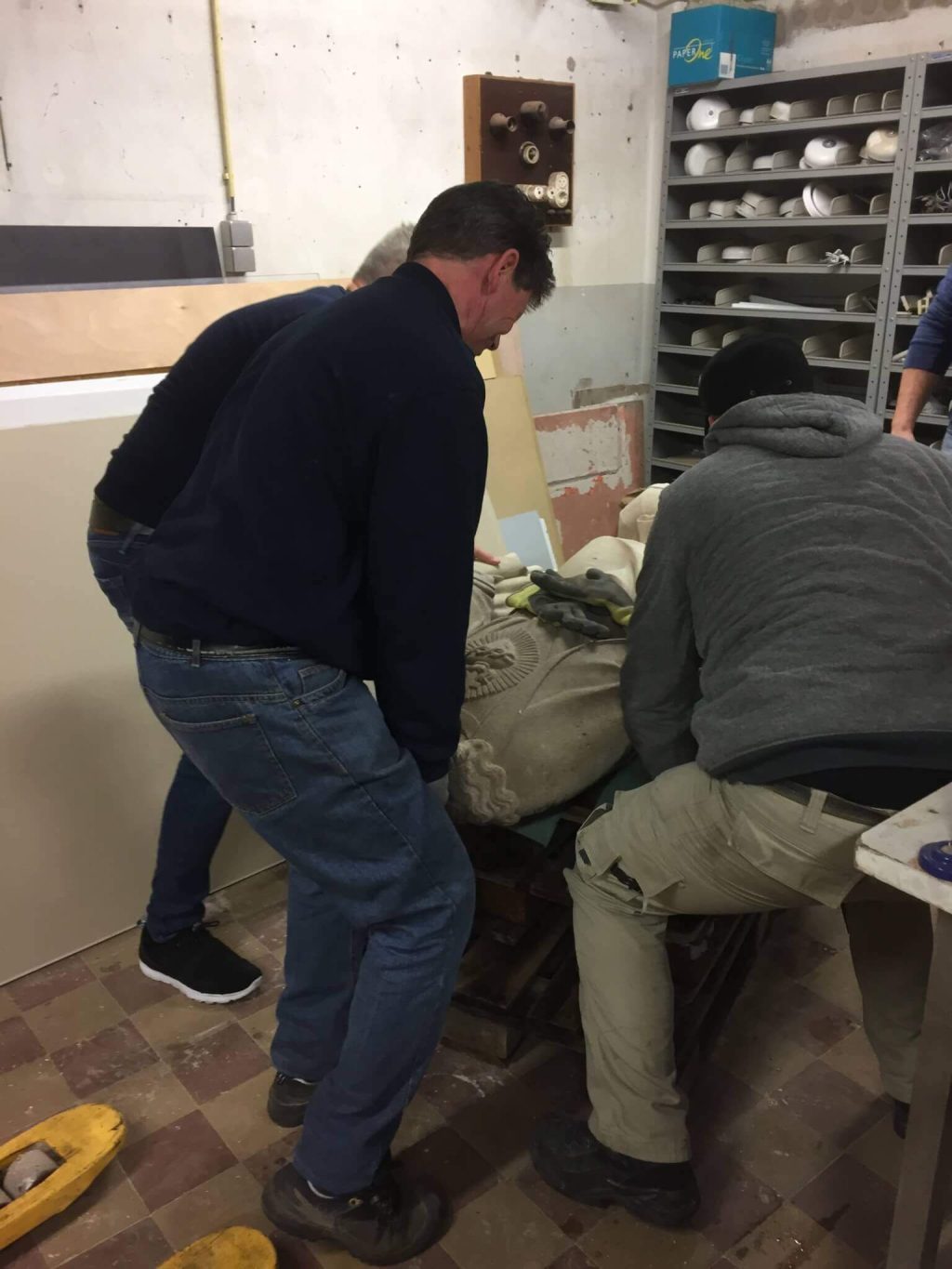
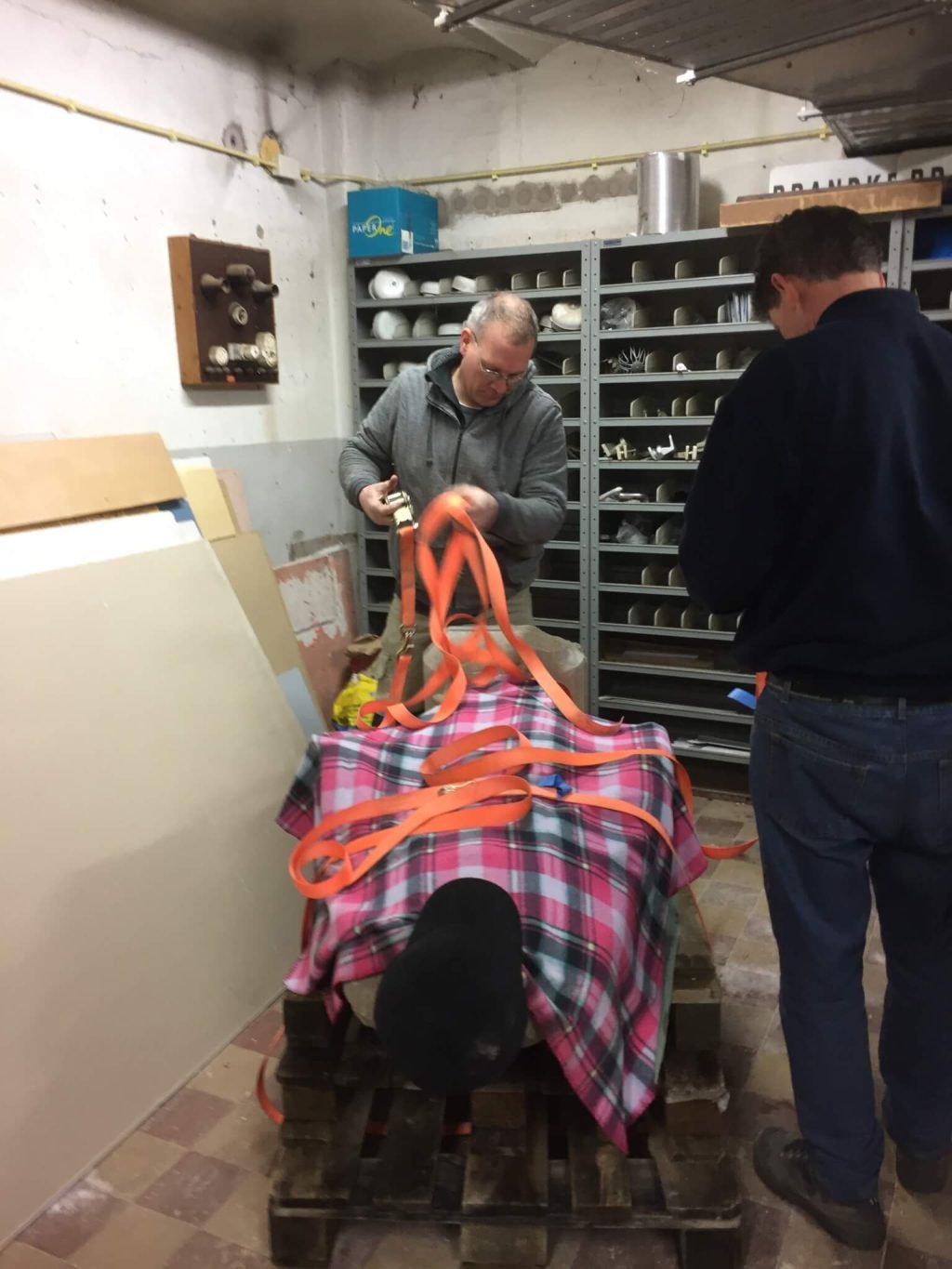
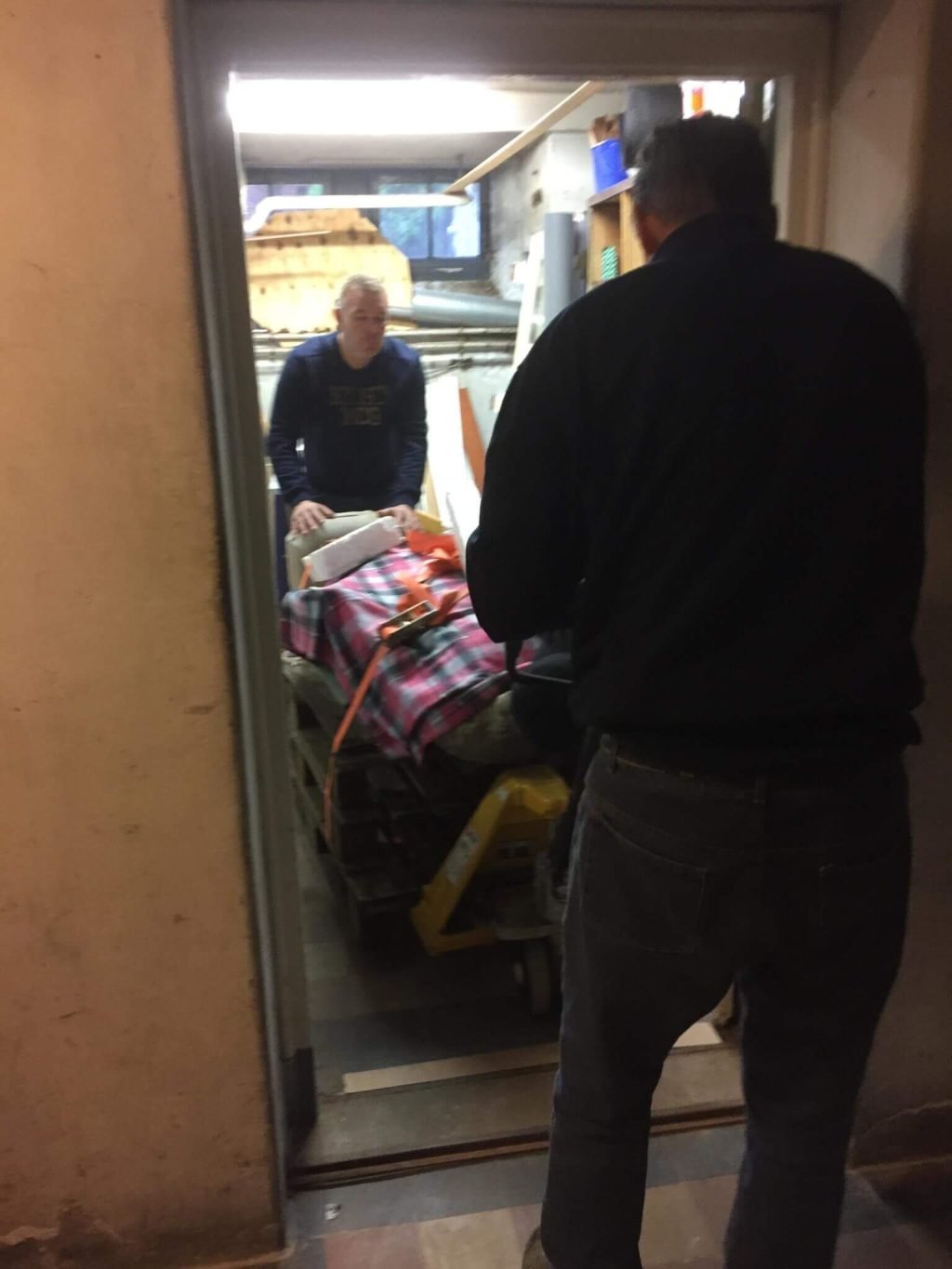
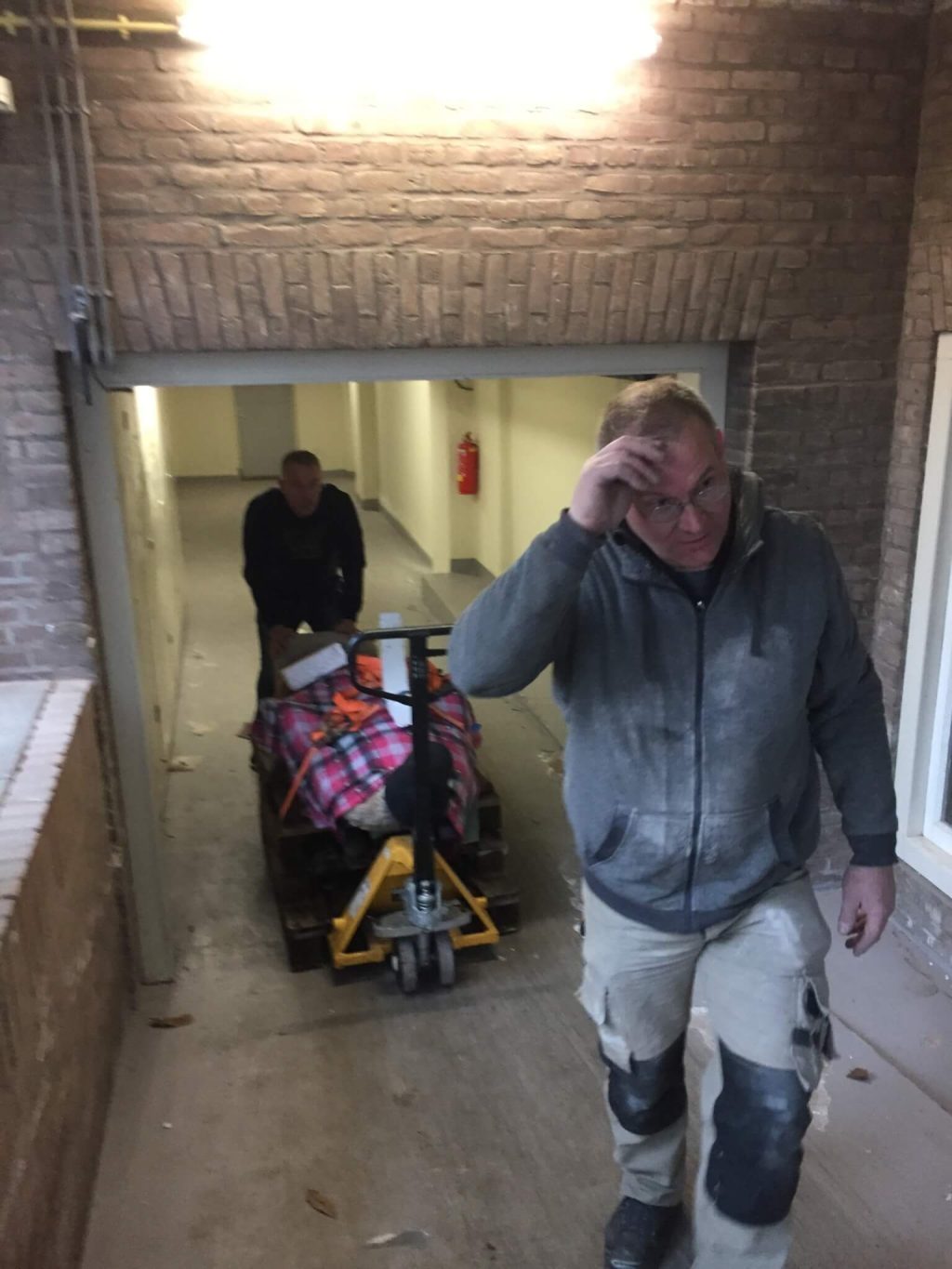
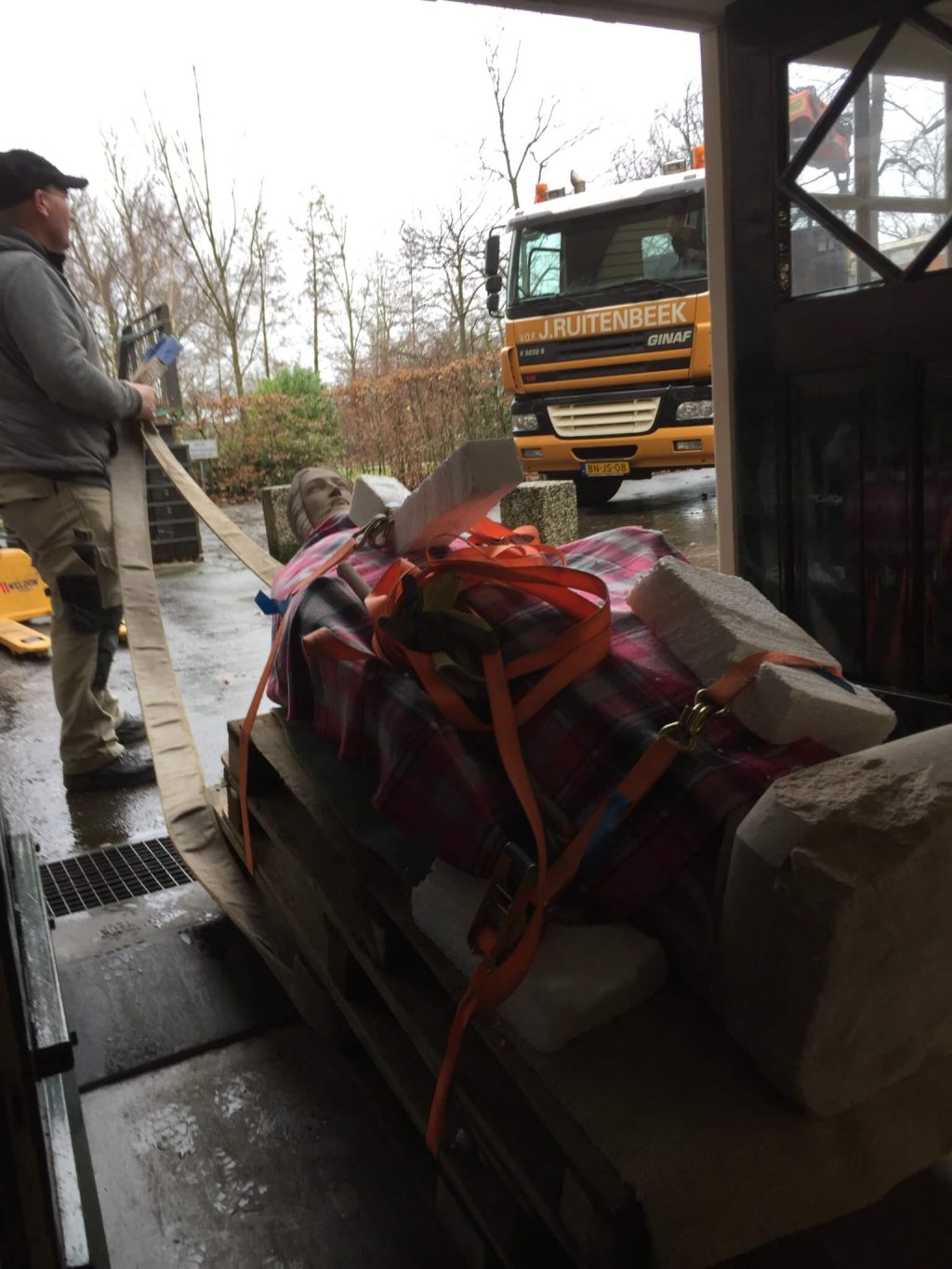
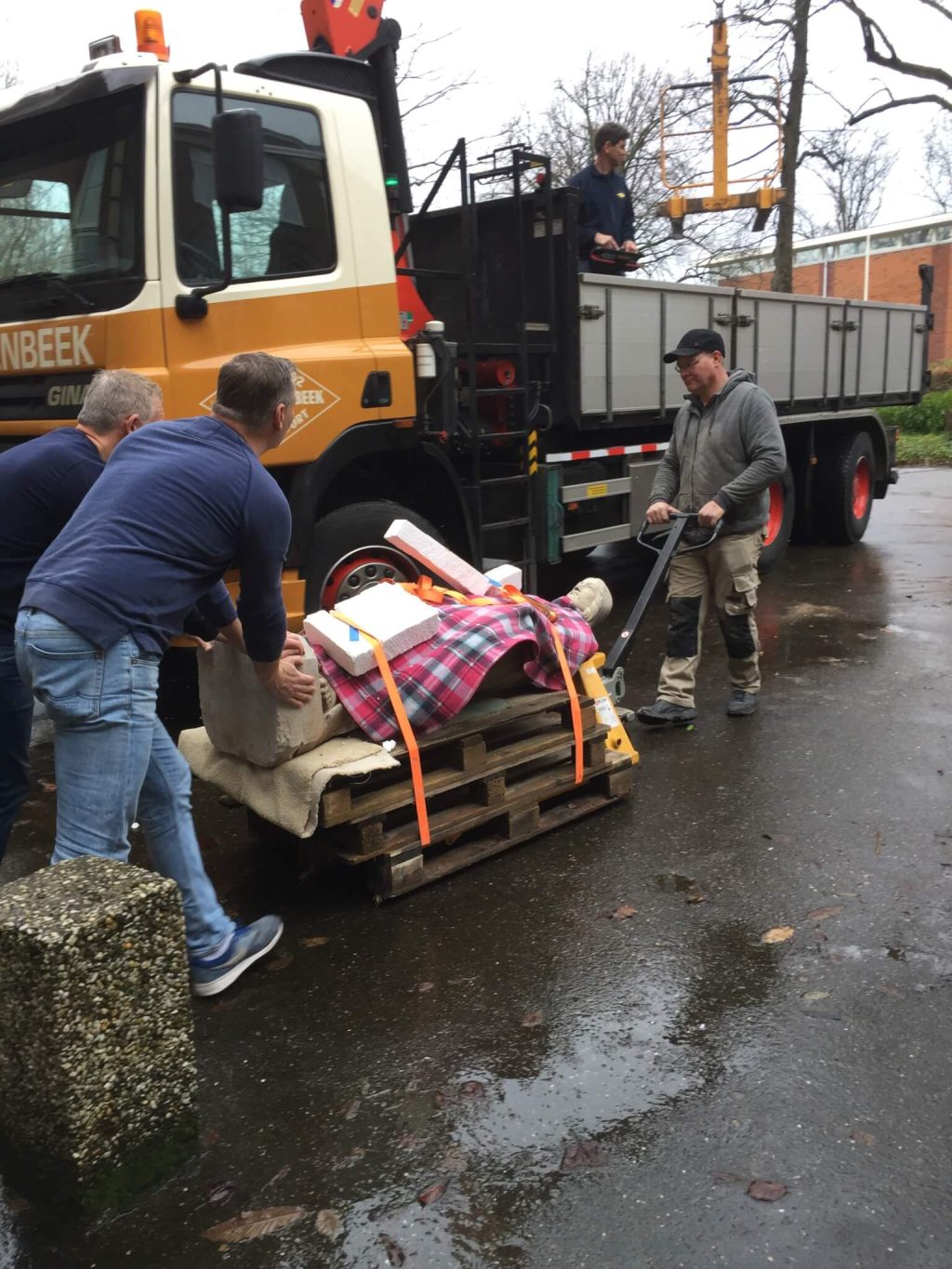
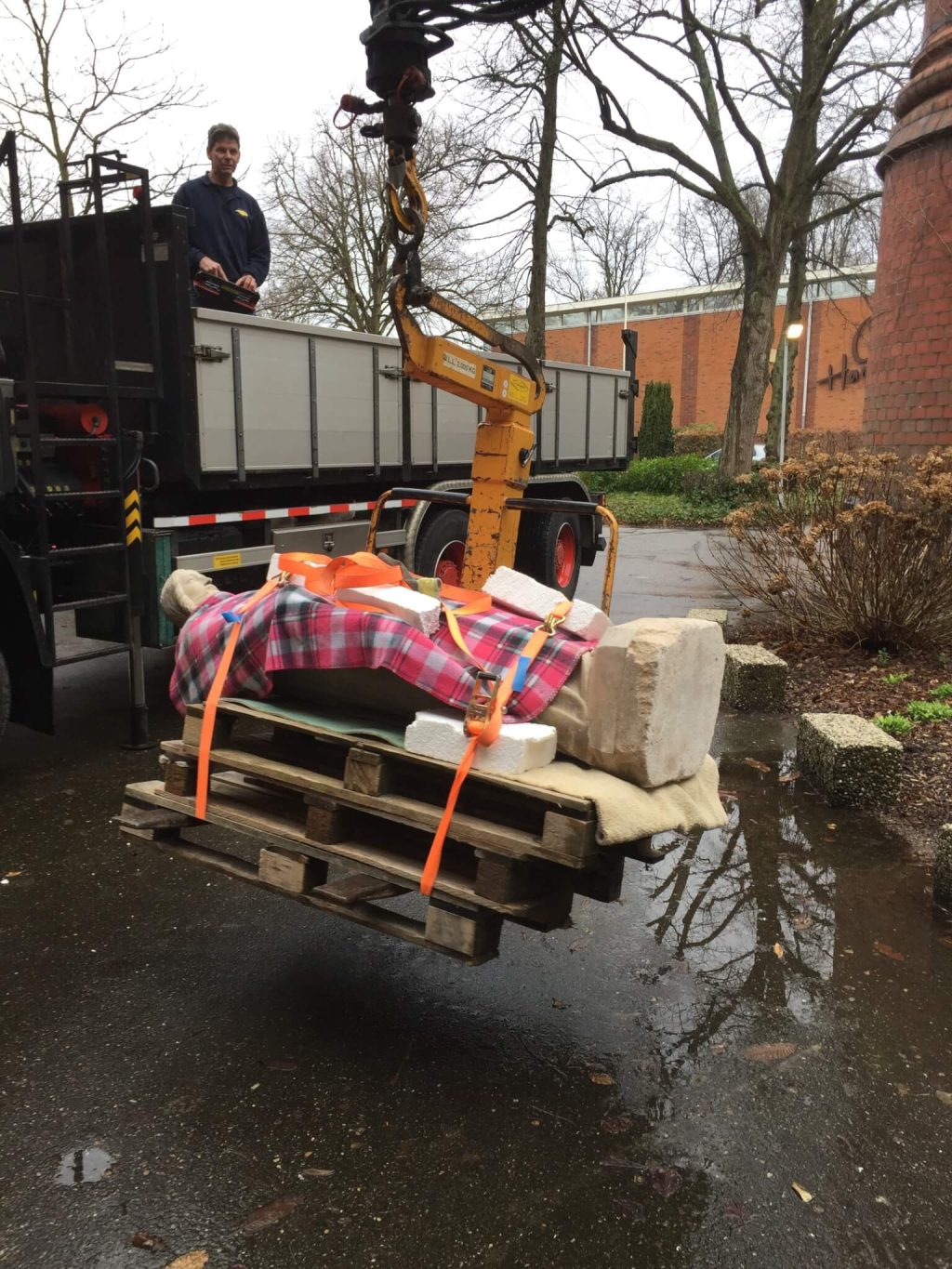
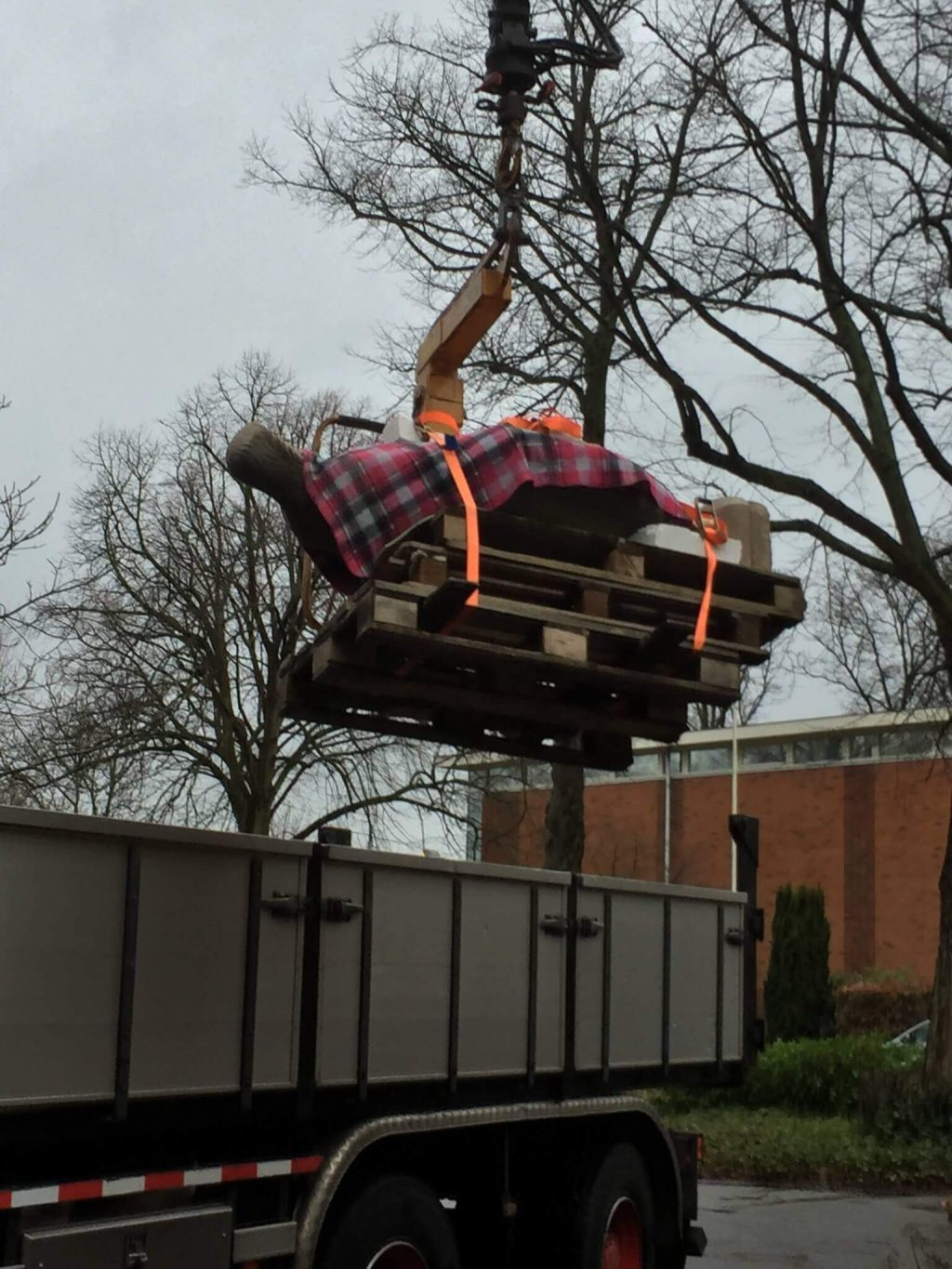
That's why I brought some pallets. We tilted the statue slightly, and put a sheet of plywood underneath, put three pallets behind it and that way we were able to lay down the statue backwards on the pallets without having to lift anything. "What can be done with oil pressure, should not be attempted with blood pressure', as a friend always says. This also applies to simple leverage technology. Now the statue already was halfway on the pallets. A few wooden rollers underneath it, a bit of a shift and it was already neatly in place. We fixed the statue to the pallets with some straps, and pulled the pallets from the basement room it was in.. It just barely fitted through the door. With a hefty push we rode up the bike ramp, the crane helped the statue over a steep threshold and then it was still just a matter of hoisting to lift it up onto the truck. When I ponder this over in advance, I uually have some trust that it will come out fine, but it is always a relief when it runs as smoothly as now. Of course nothing should get damaged, and certainly not on someone who comes out to help. Therefore, proper planning is of great importance.
Restoration
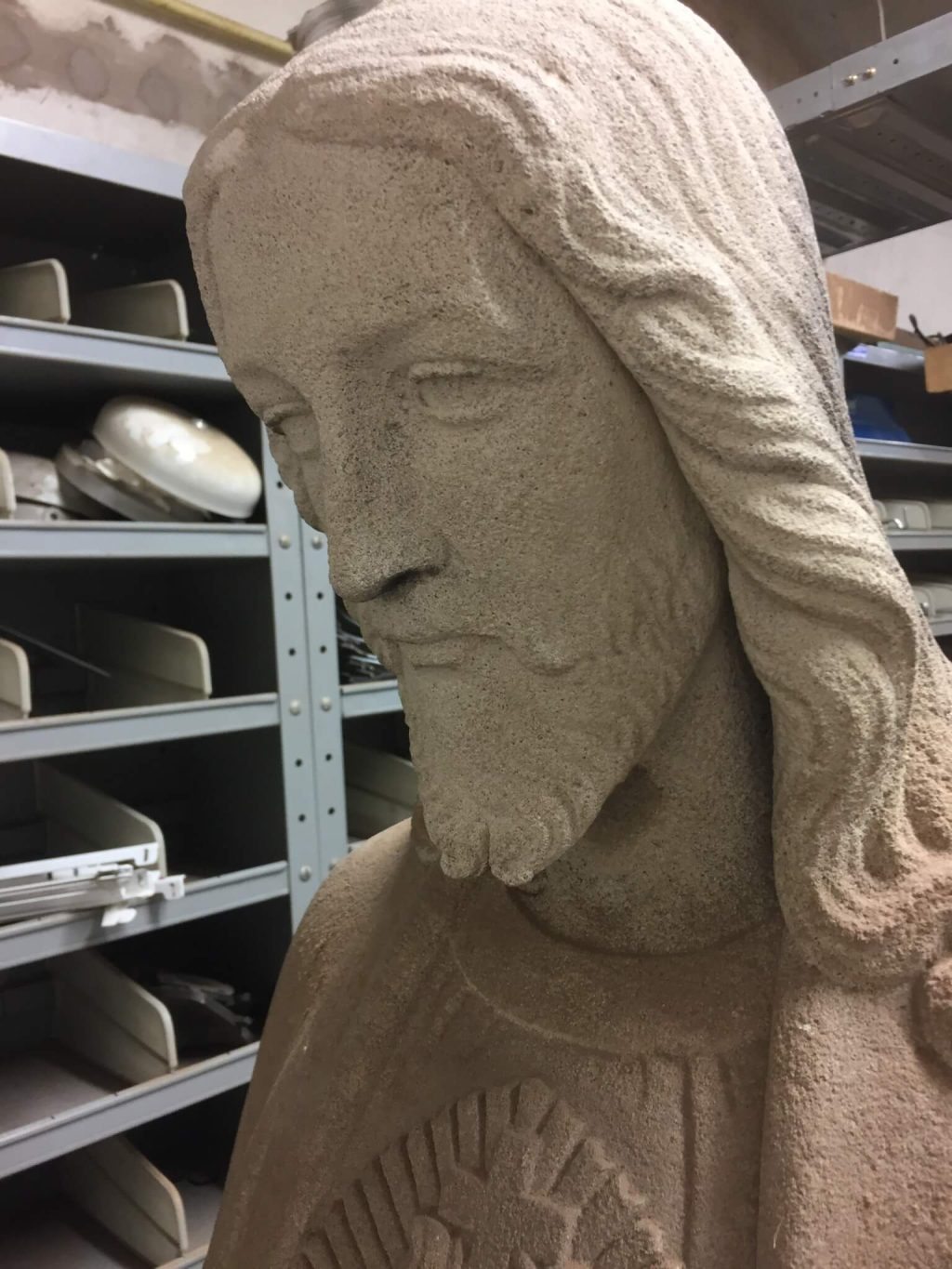
In the coming weeks I will restore the statue. I will be carving new hands out of the same type of limestone, which I will shape to fit into the existing sleeves of the statue. I will not fix them definitively yet, because those fingers are quite vulnerable. Only when the statue is in place, I will fasten the new hands into the sleeves, so no transport damage can occur. I will also repair the damaged areas with special restoration mortar for this type of stone. Fortunately, the face is still in very good condition.
Salad Oil Style

The statue was carved in 1917 out of French limestone, presumably Brauvilliers or otherwise the almost identical Savonnières. We first thought of Euville, but that is a somewhat coarser and harder material. This mistake was caused by the washing out of the limestone, so it had become a little rougher in the last one hundred years. It is a very stylized design, in which something of late Art Nouveau can be seen. ‘Salad Oil Style‘, was condescendingly said about, for example the art of Jan Toorop. It is a typical Catholic imagery from that time, whereby the statue clearly establishes a link to the history of the school as a seminary and to the period in which it was made. After restoration the statue will be placed inside the building, right on the spot where once stood the altar of the school chapel. This way, the link with the past comes full circle: at the time donated by students and now restored to full glory through parents of students.
(With thanks to rector Wille Straathof for the photos!)