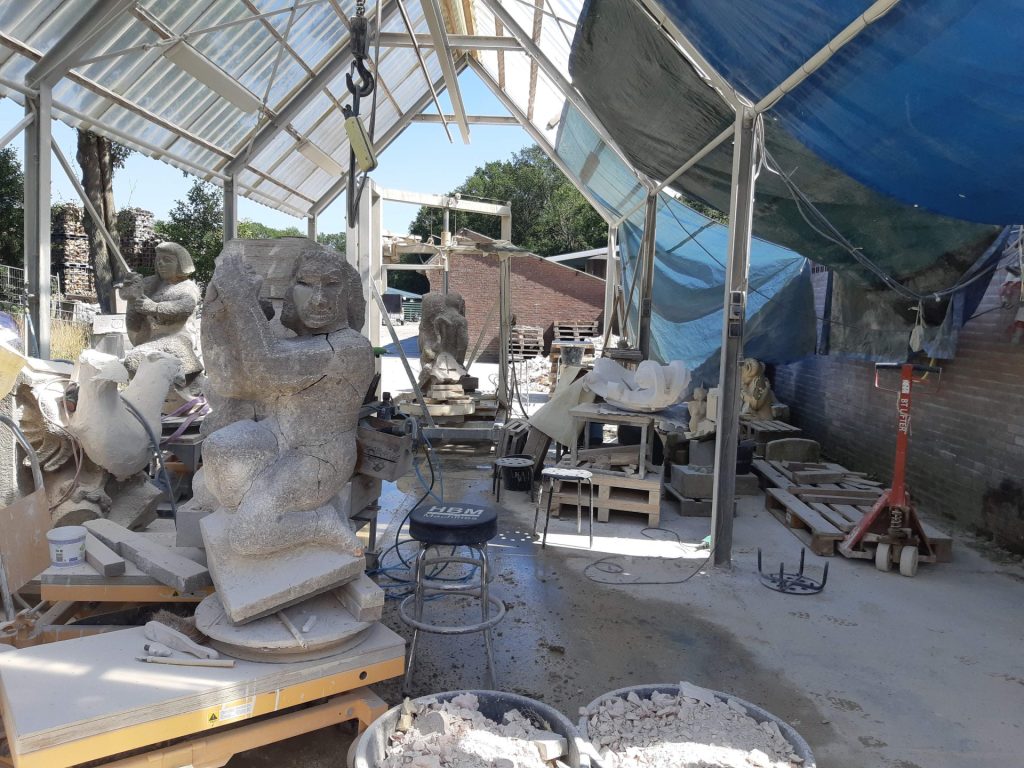
This was another such case of 'it has to be ready before Christmas'. Only those who took on the job were already terribly busy with all kinds of other projects and they actually couldn't find anyone other than Jelle and I to help out.
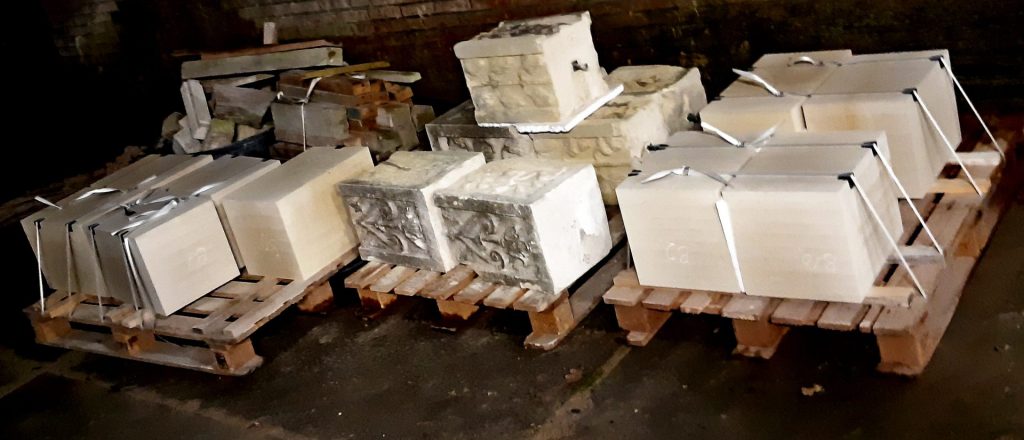
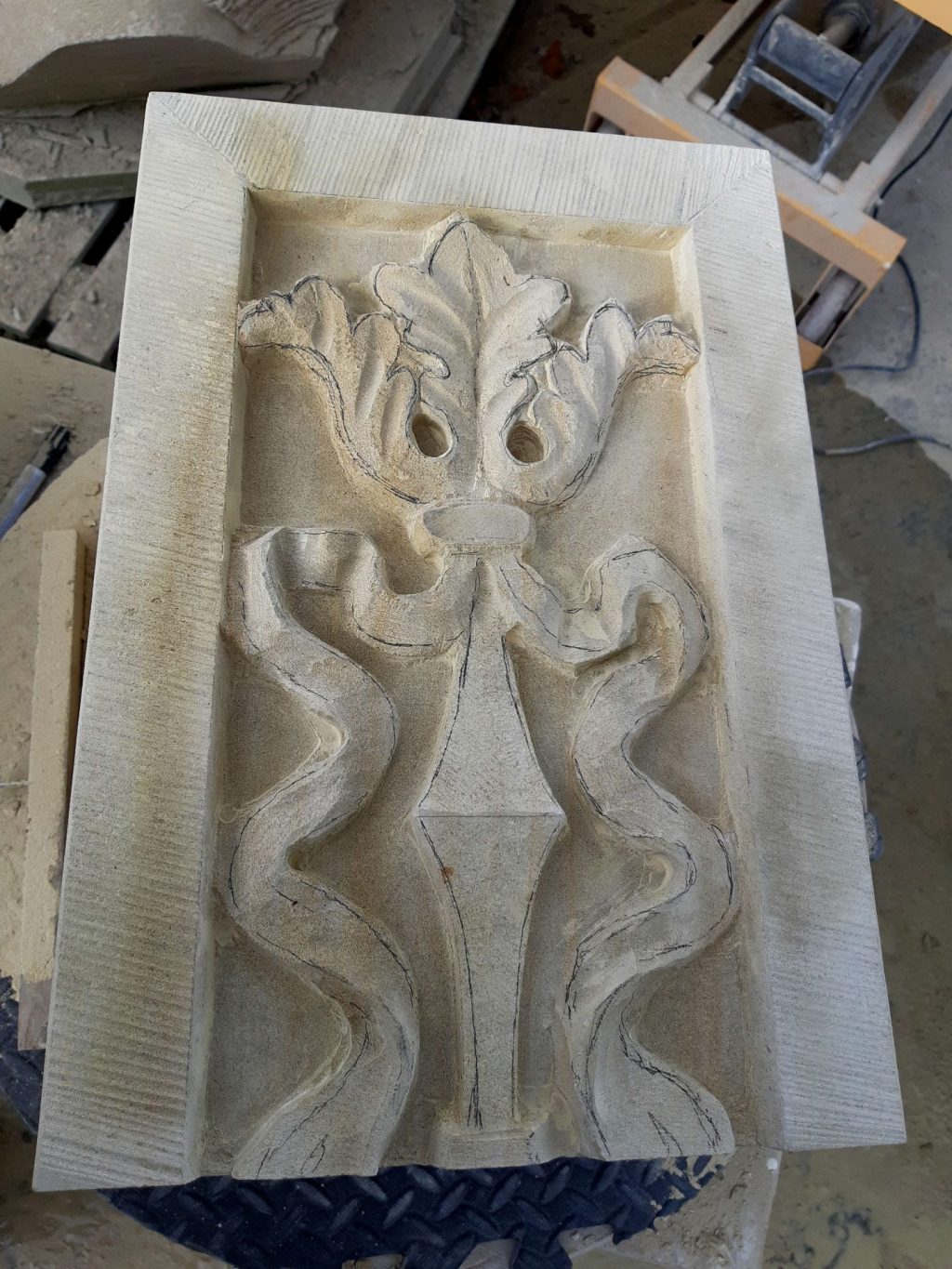
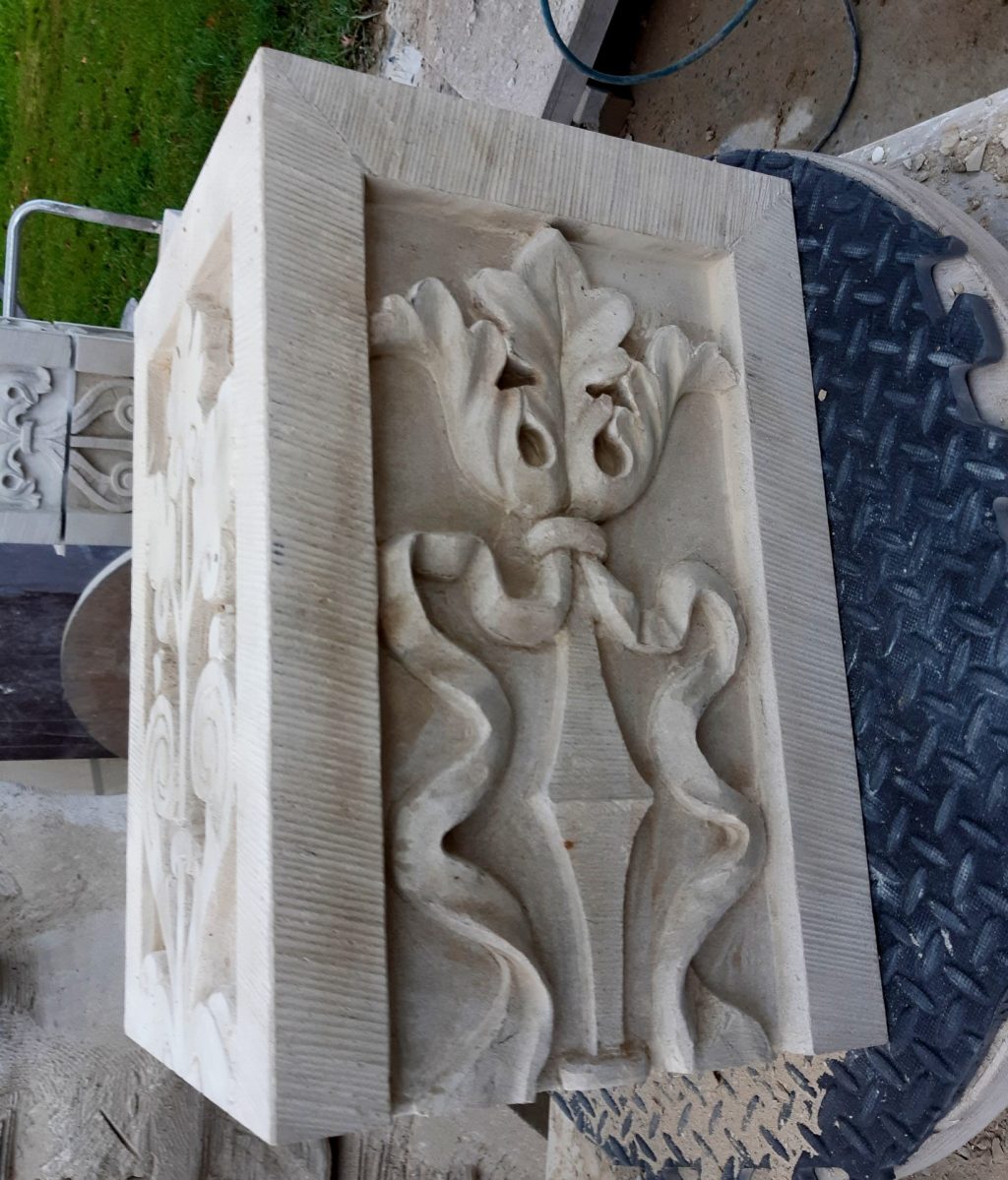
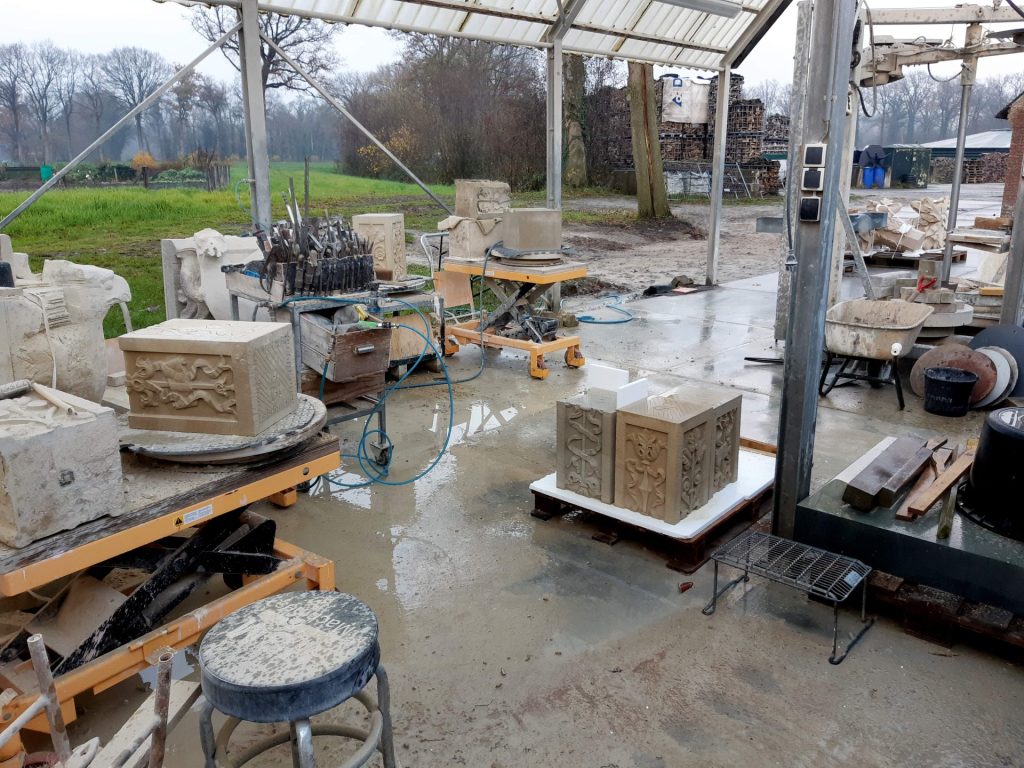
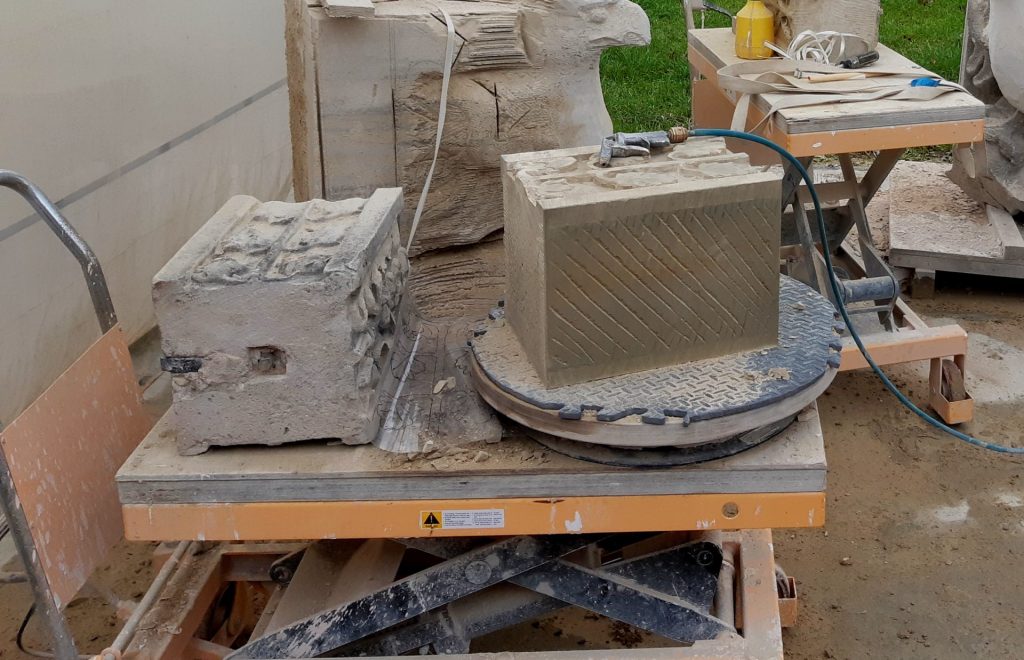
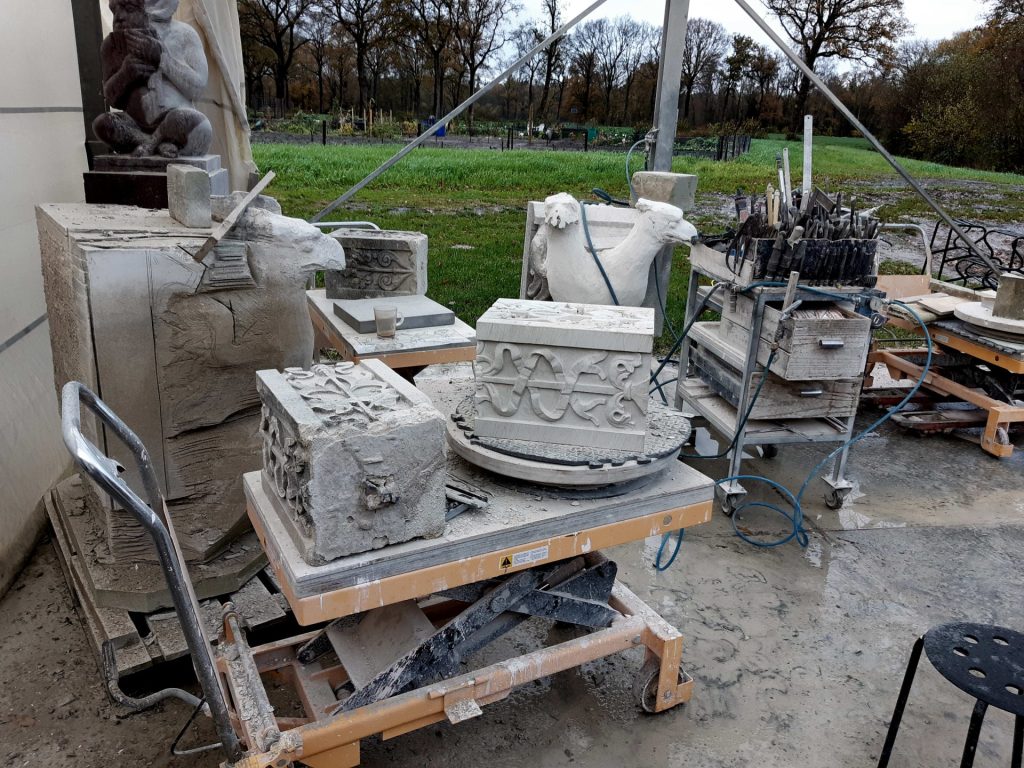
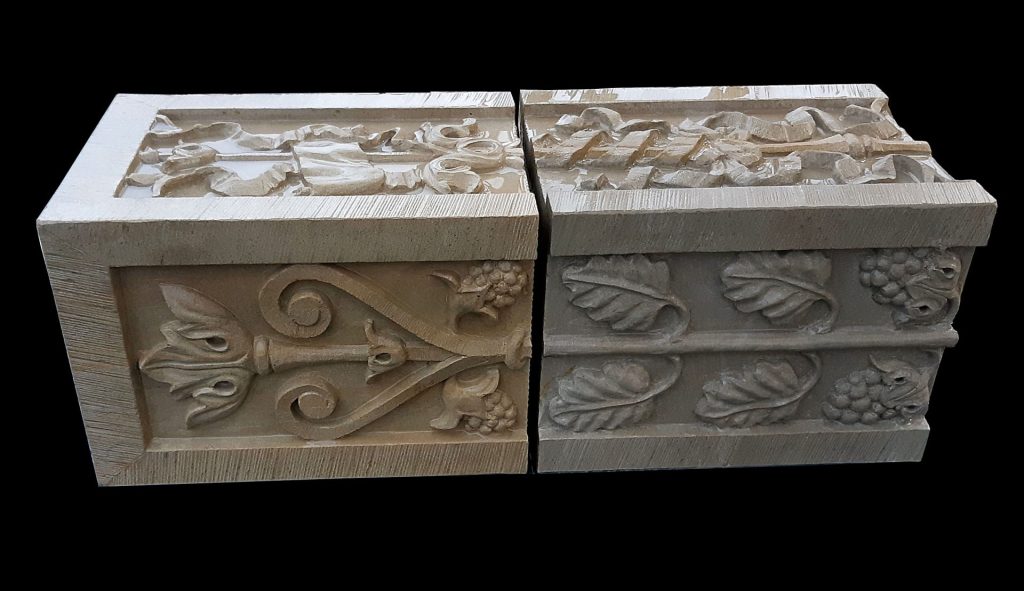
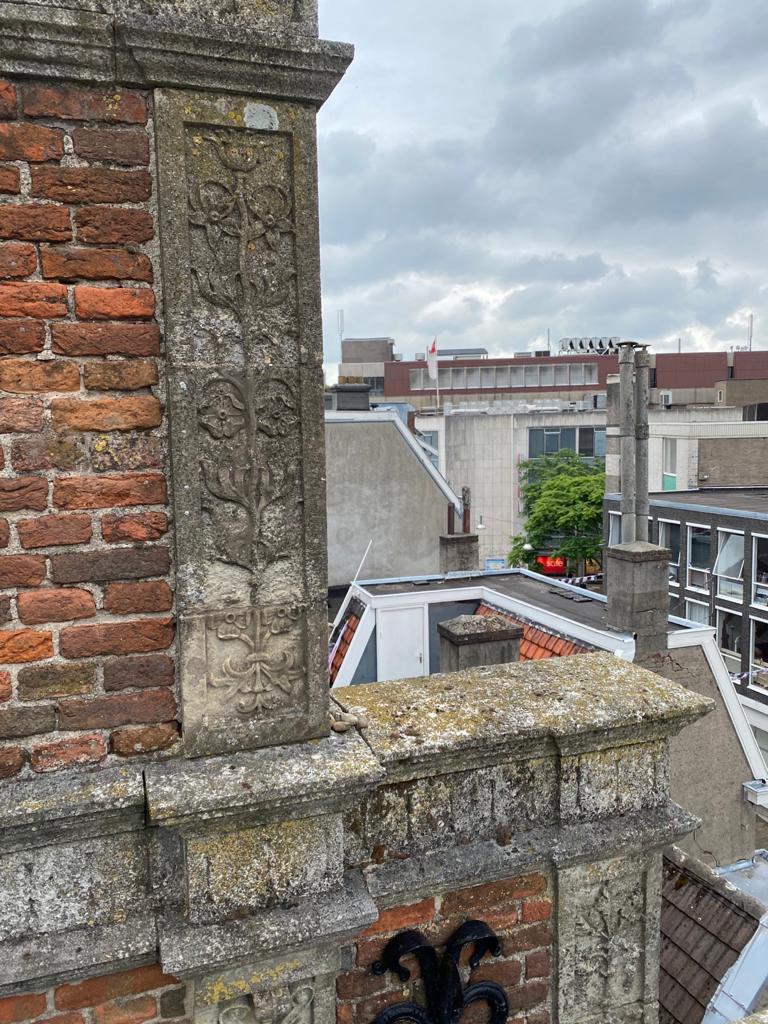
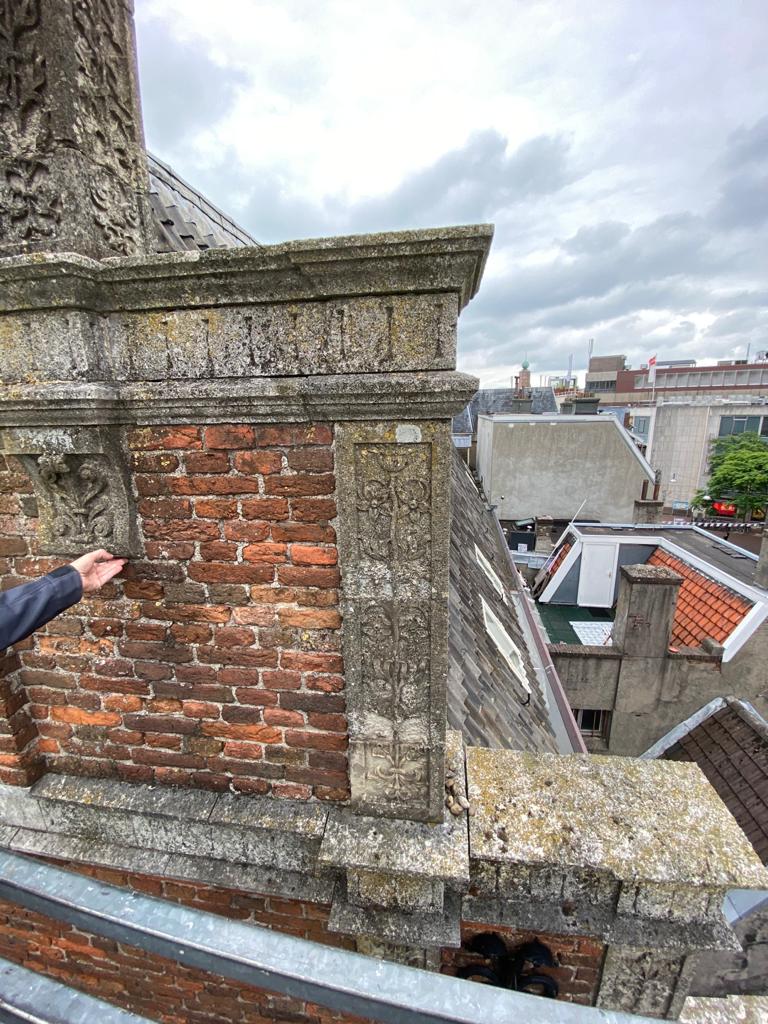
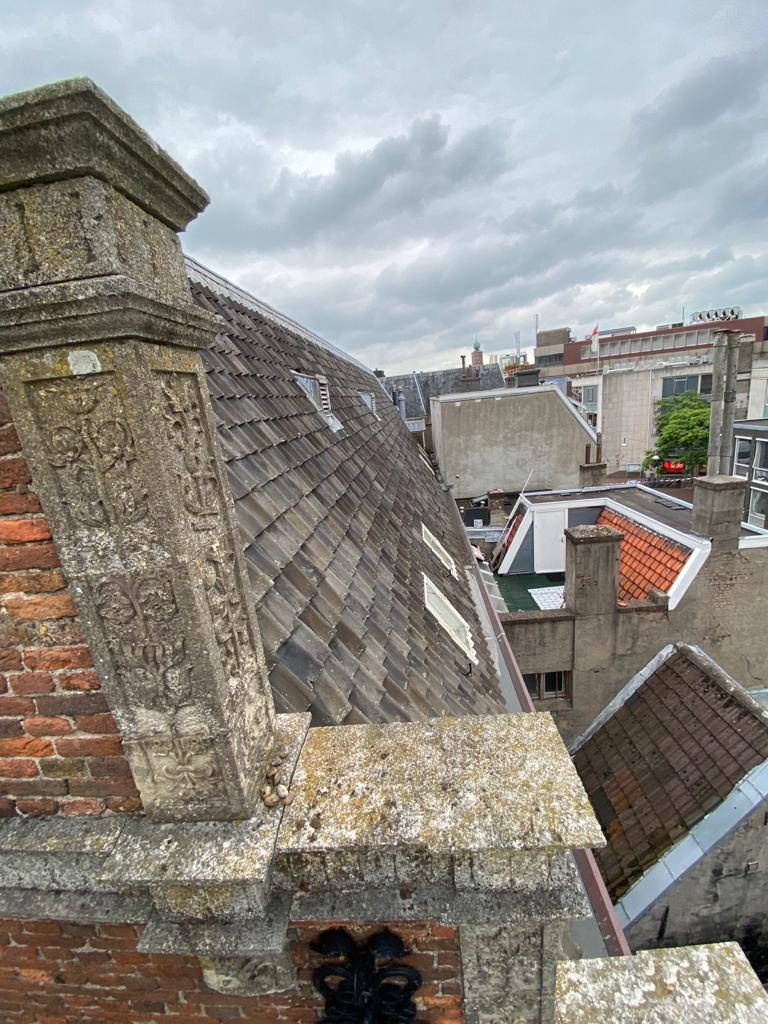
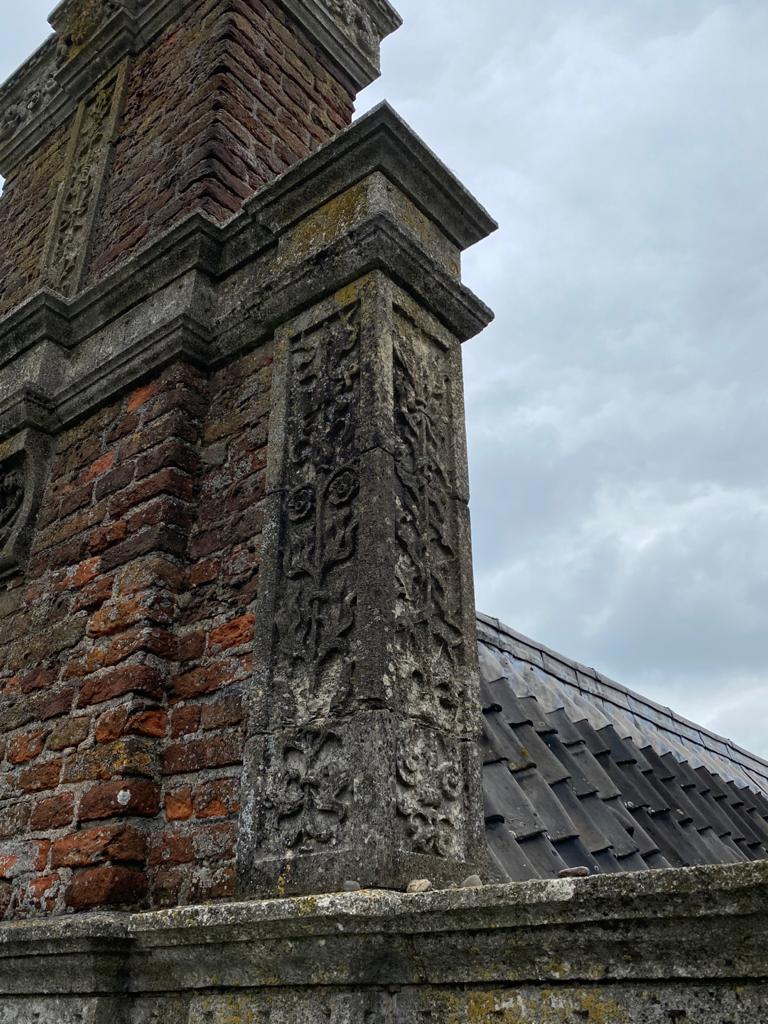
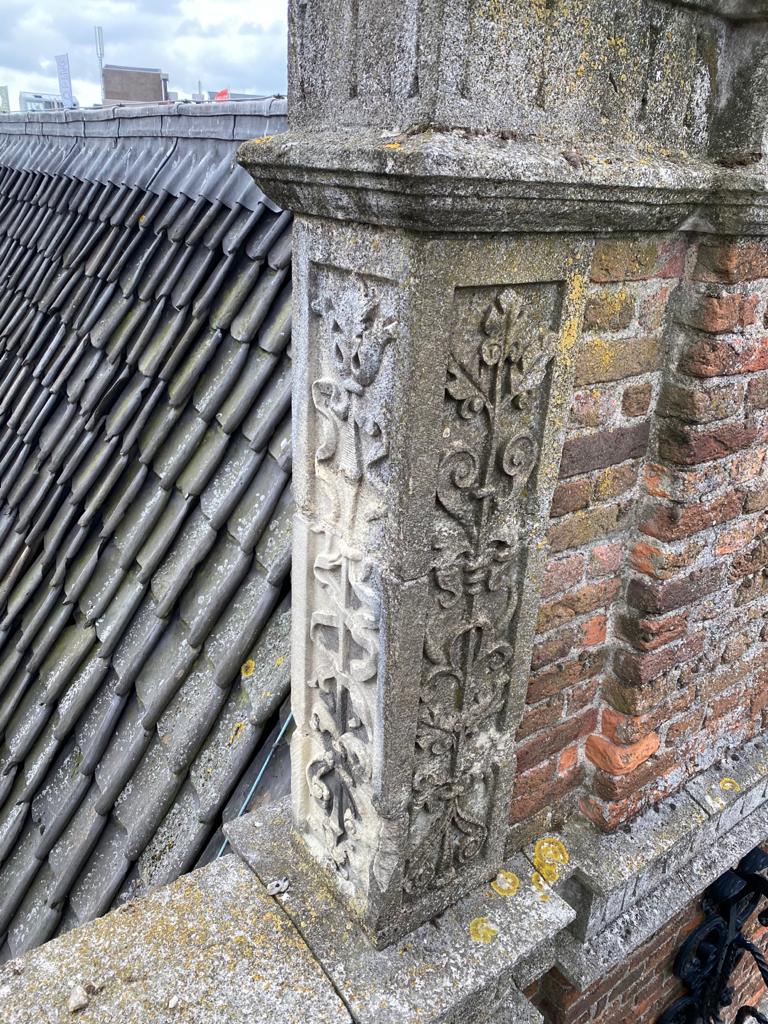
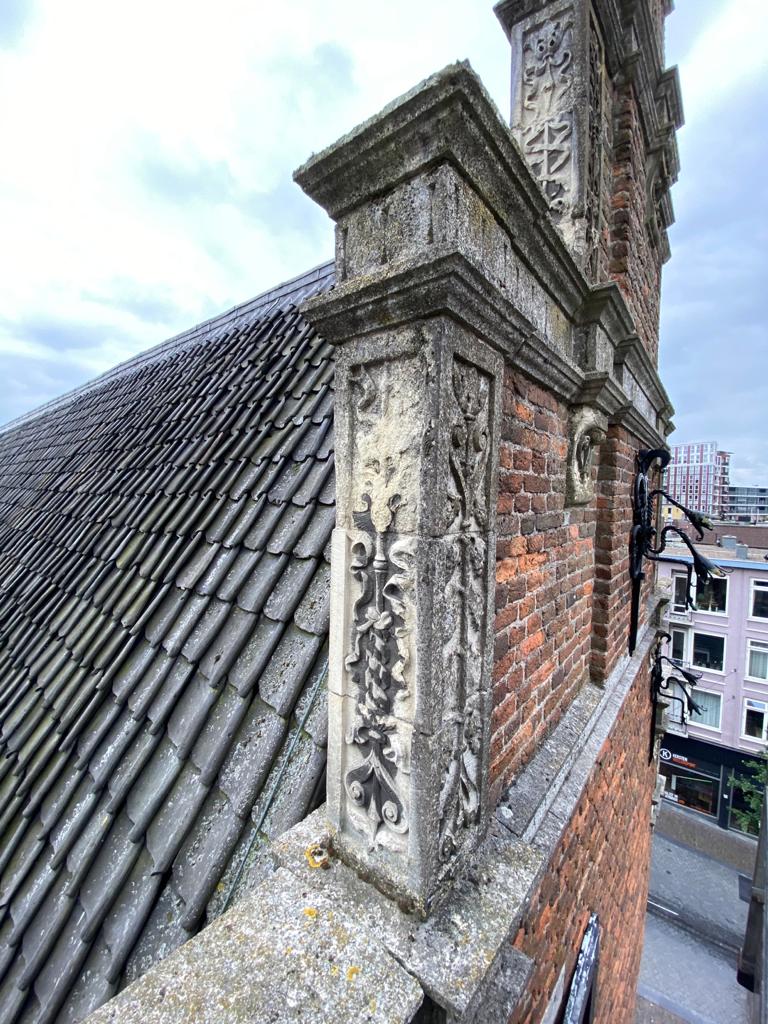
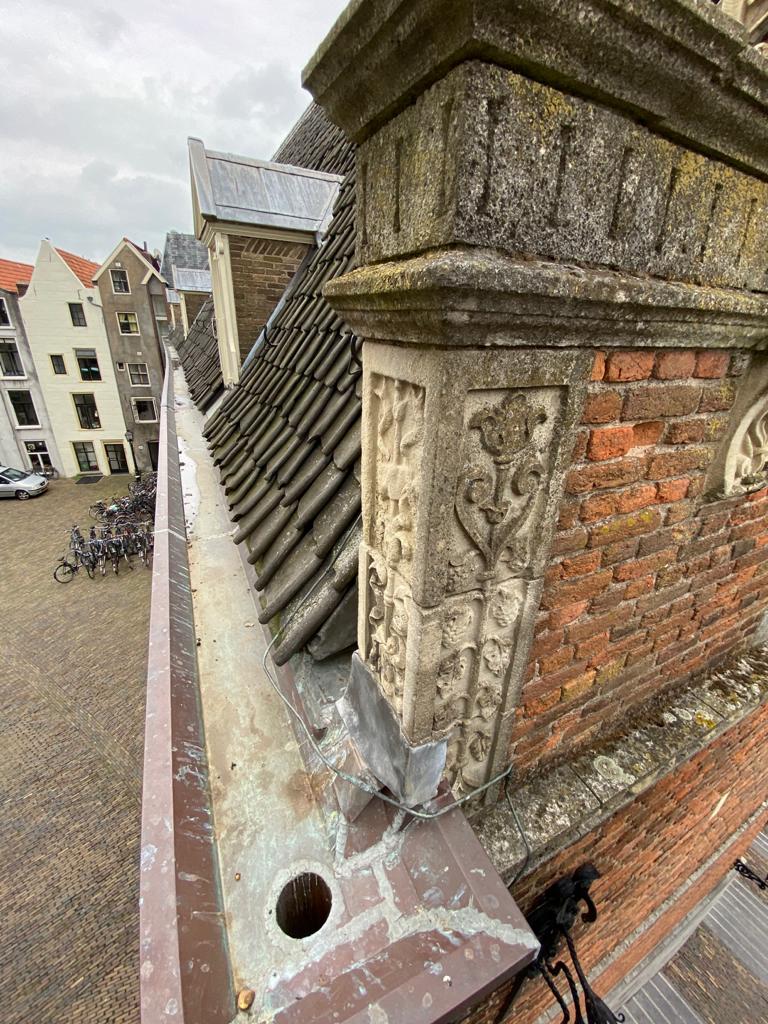
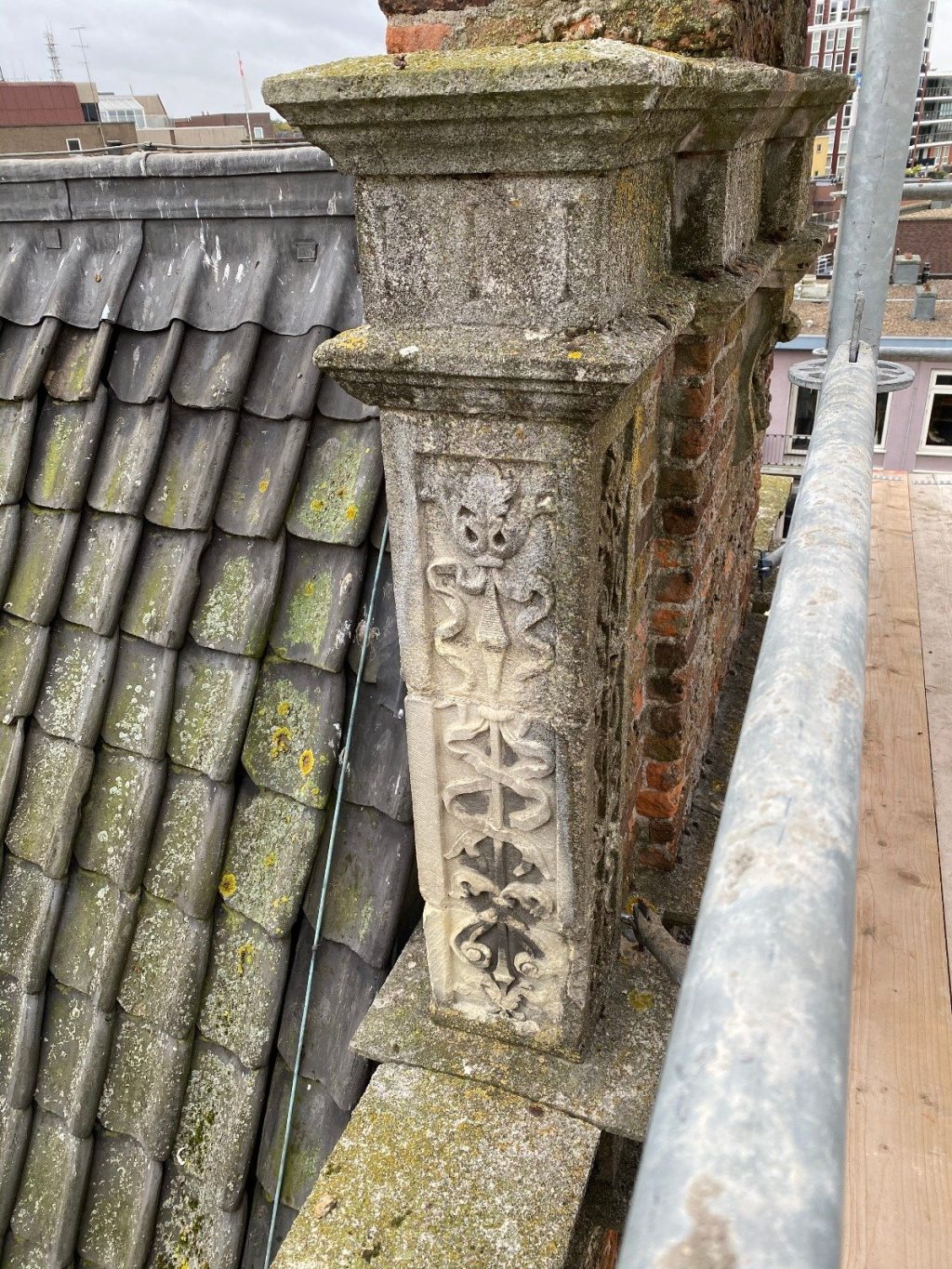
And so ten blocks of ornamental work from the Latin School came our way. Fortunately, colleague Serge also wanted to take care of a few blocks, otherwise we would not have made it all. Each block has three carved sides so just check, 30 processed sides that is a good number of weeks of work.
Dutch Renaissance
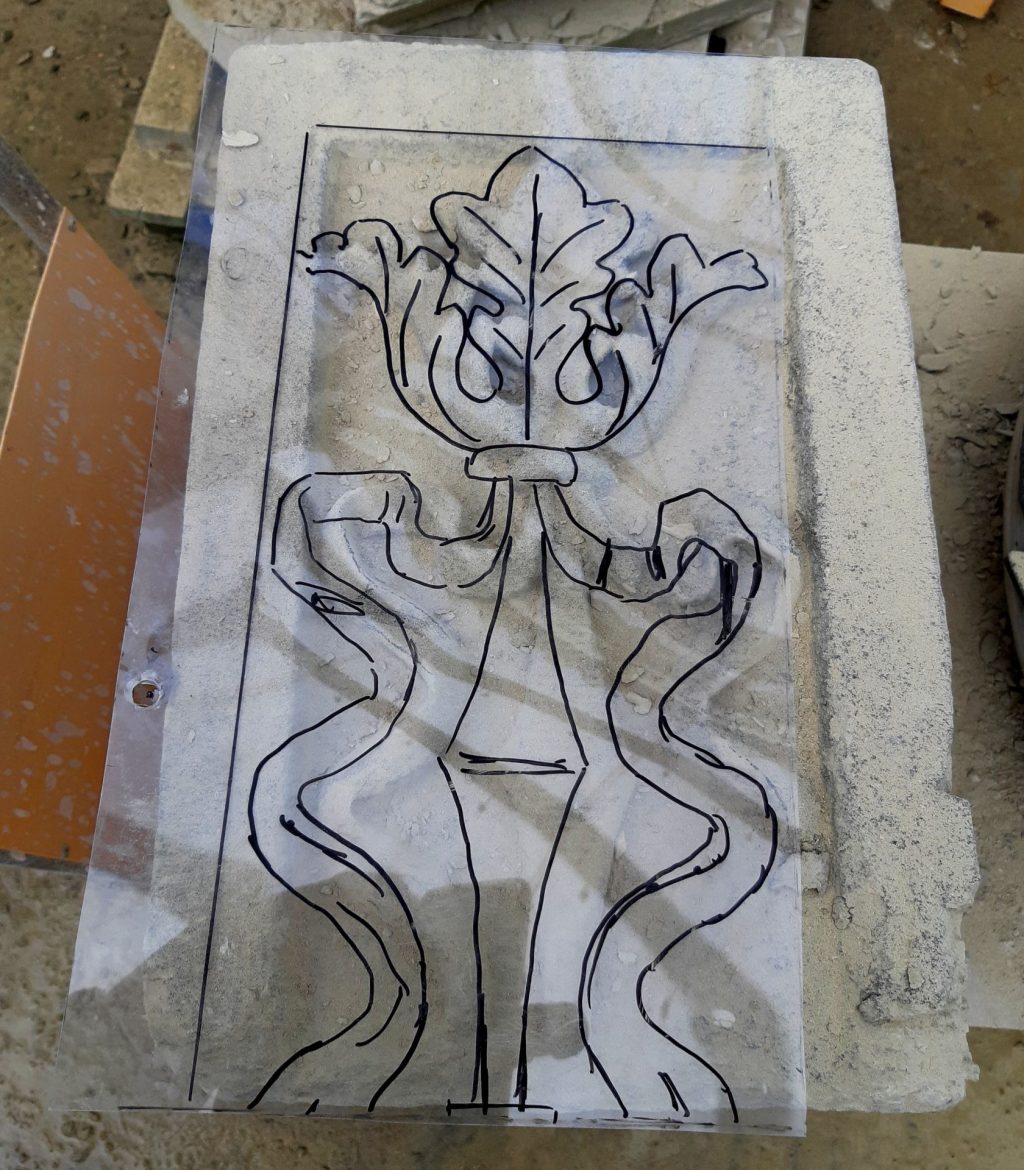
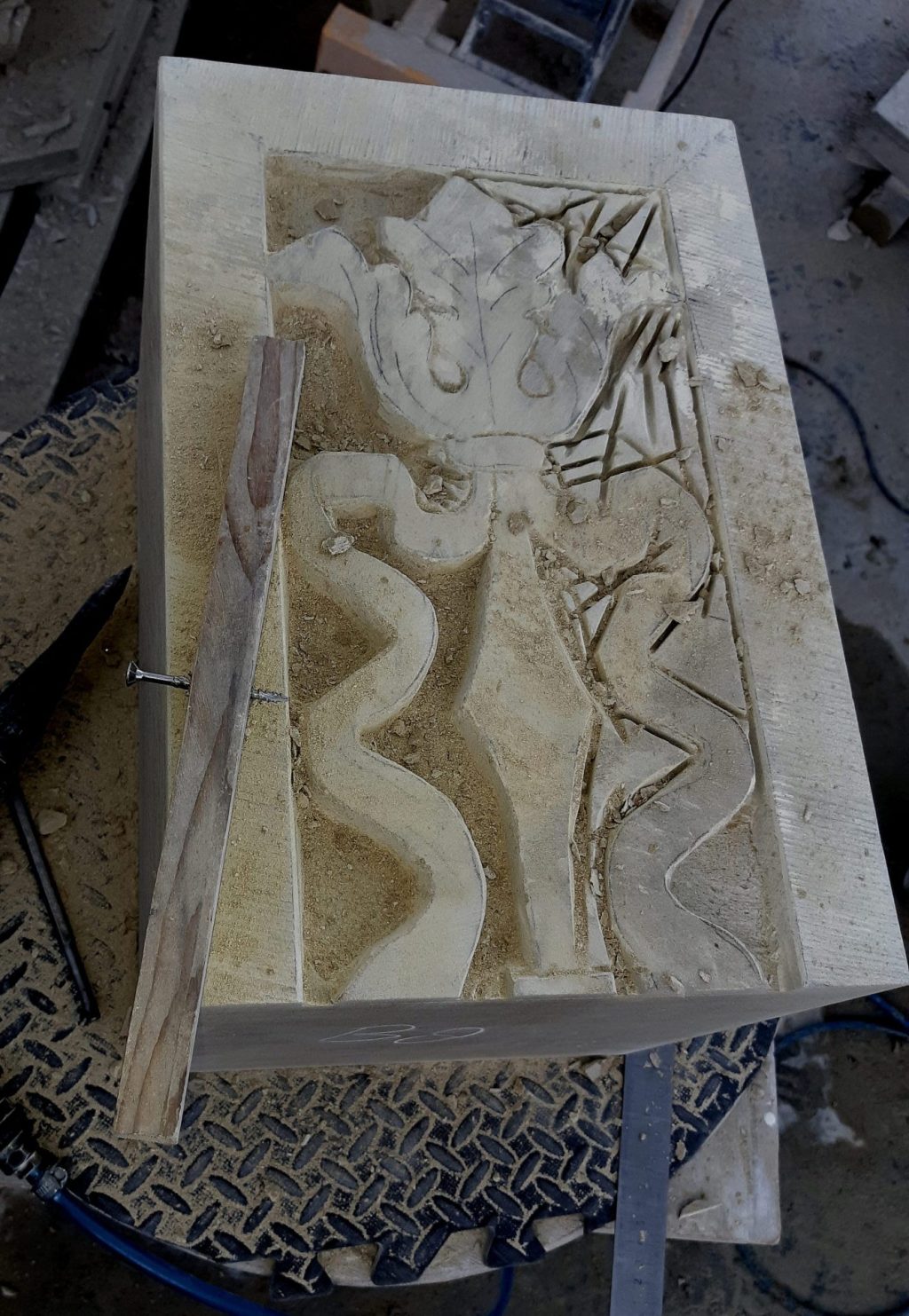
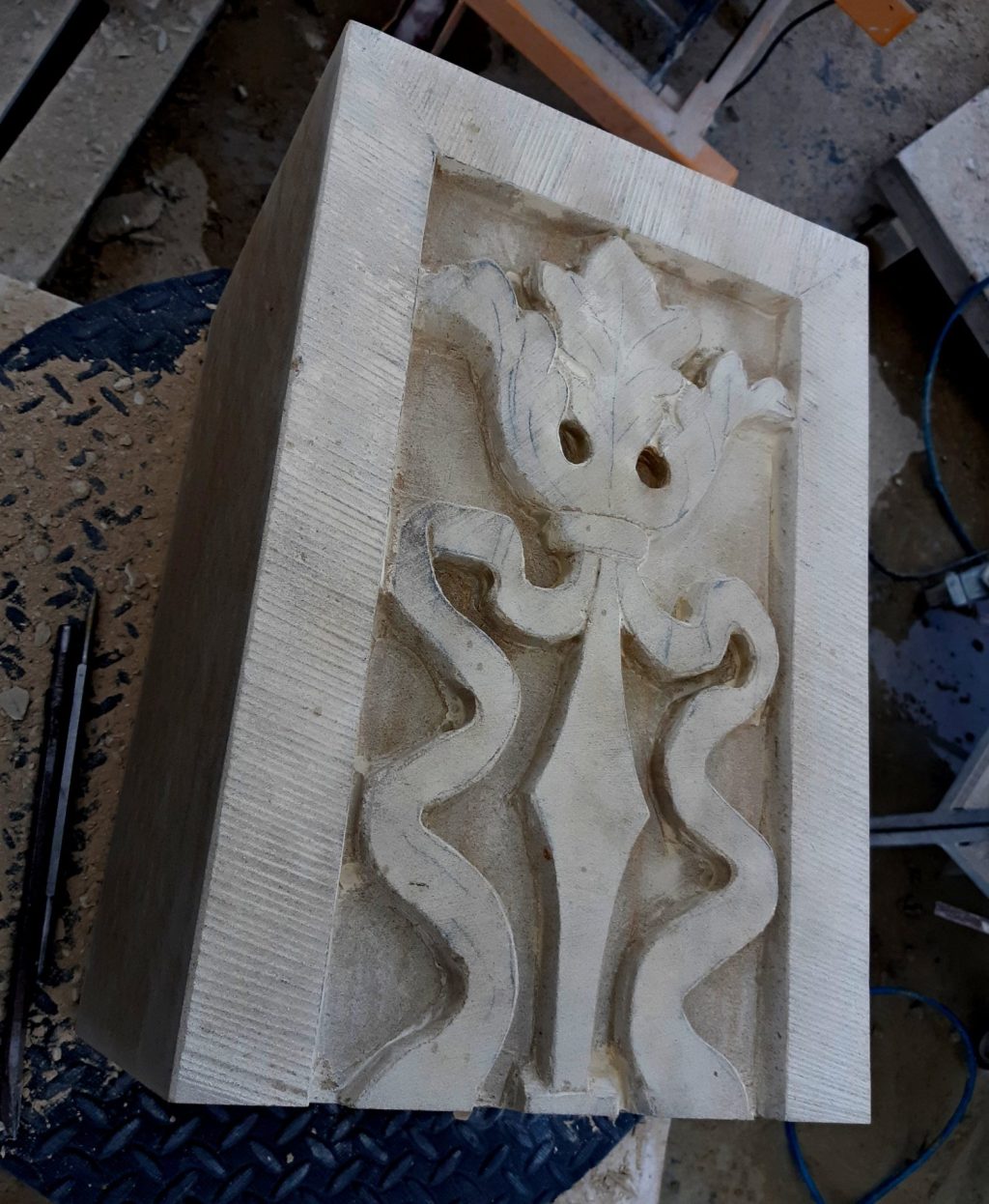
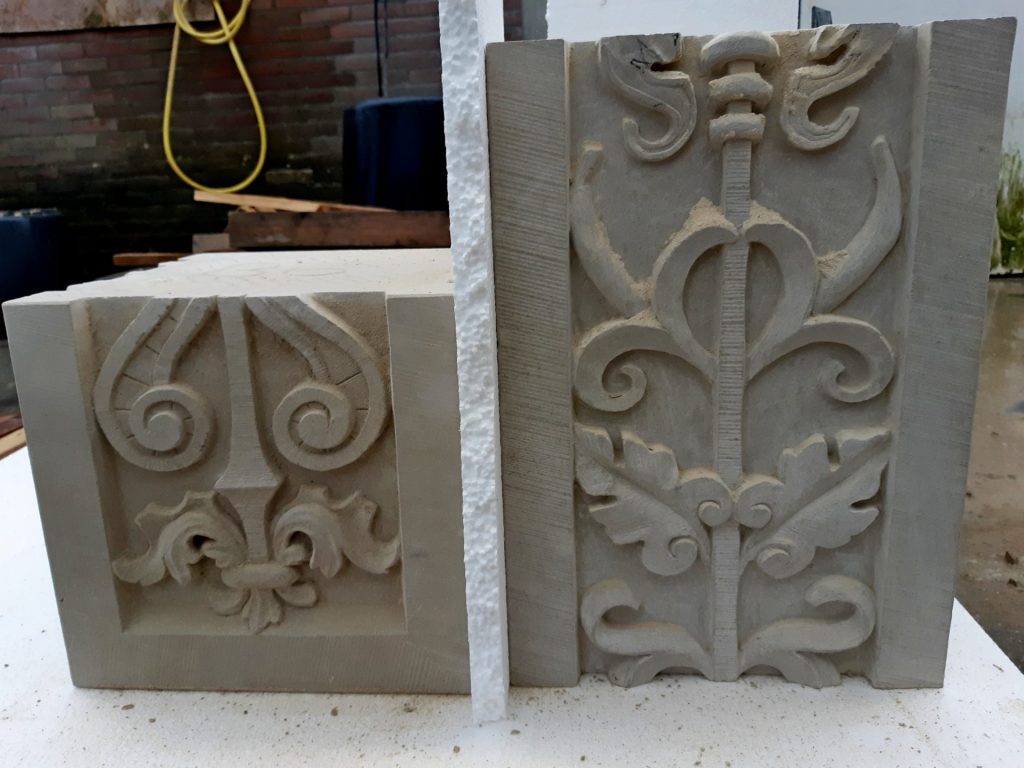
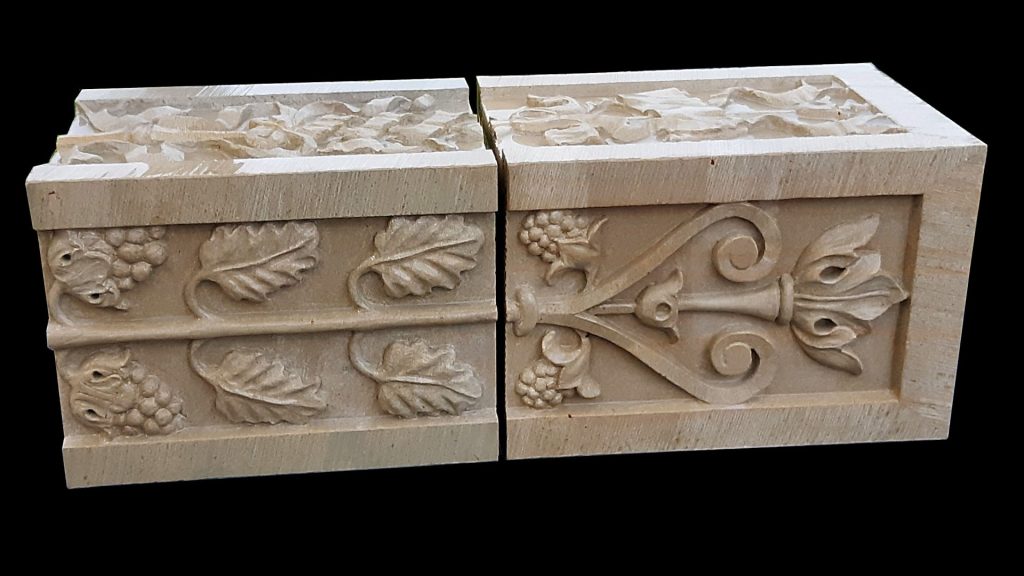
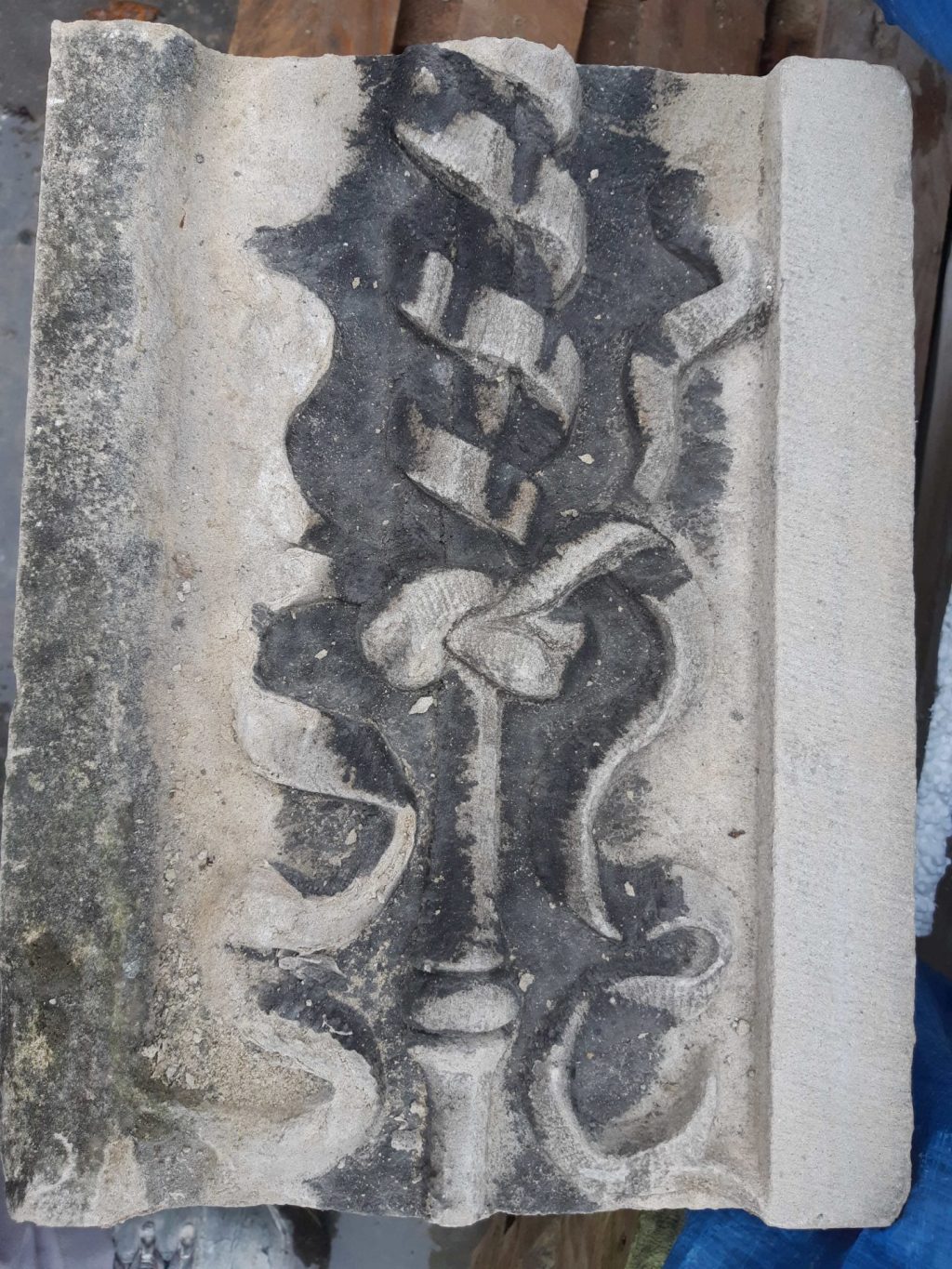
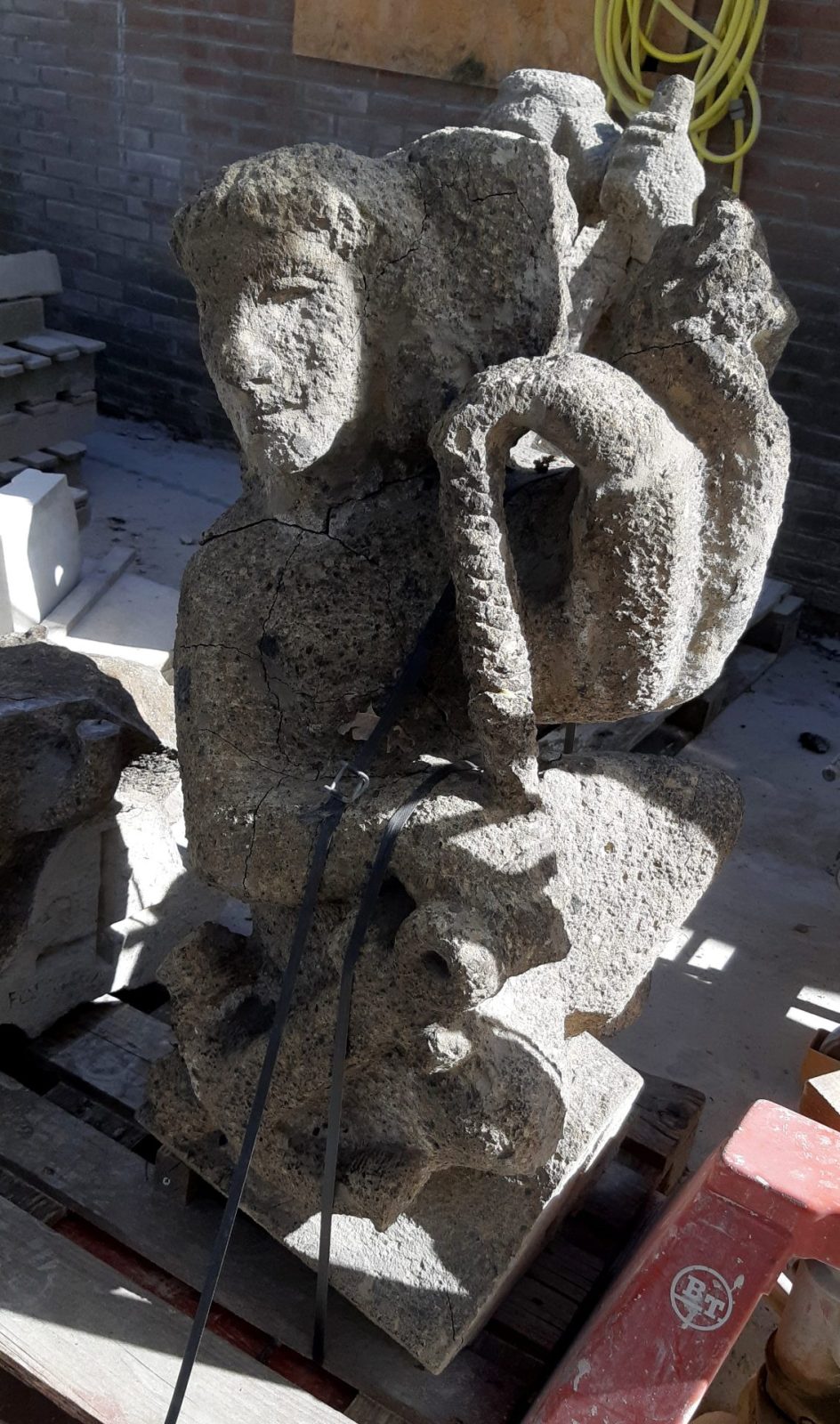
It is interesting to carve these things, because much of it has disappeared through weathering and then you just need to reconstruct what was there. Fortunately, one can usually trace a part over from other blocks, and as this is made in the style of the Dutch Renaissance, some examples of it were still in my head. Flowers, leaves, stems and ribbons and a few fruits. Botanically it's really a mess, for a plant with oak leaves bears chrysanthemum flowers and pomegranates, but it is a lot of fun to make. If only there wasn't that much pressure on it!
But we got it done in time. As it always goes with these things you get the hang of it over time and then the second one goes a lot faster than the first, the third even more quickly, and that's how you get the knack for it. Jelle and Serge, in addition to their other duties, could complete two blocks each and I did the other six.
Latin School
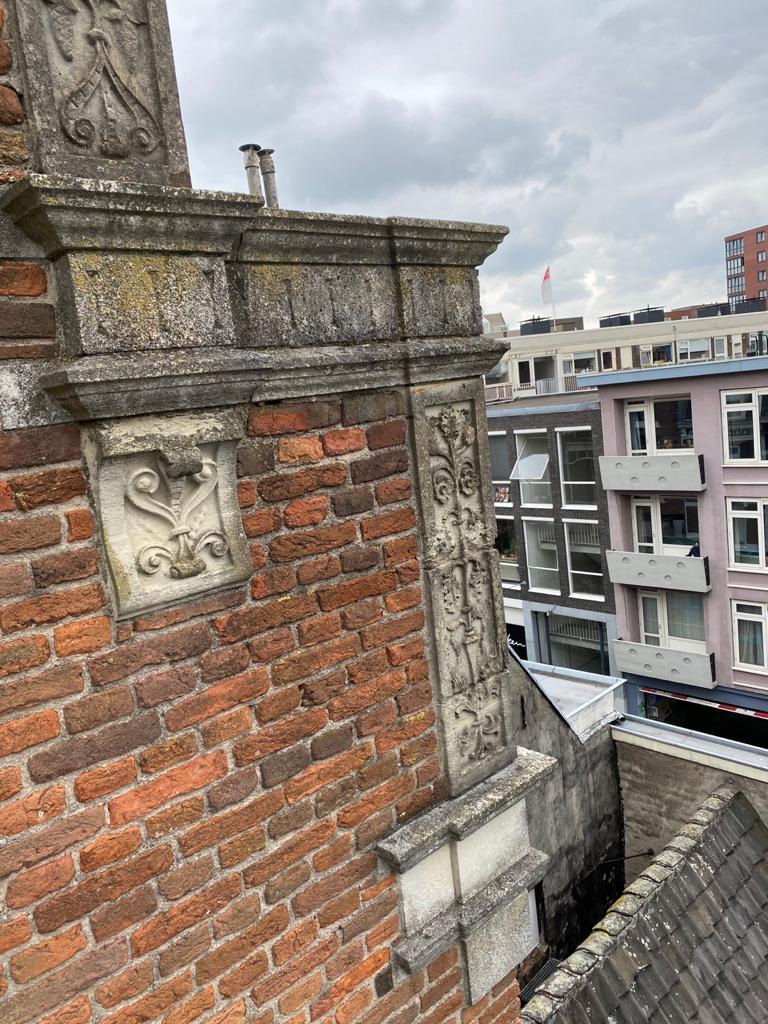
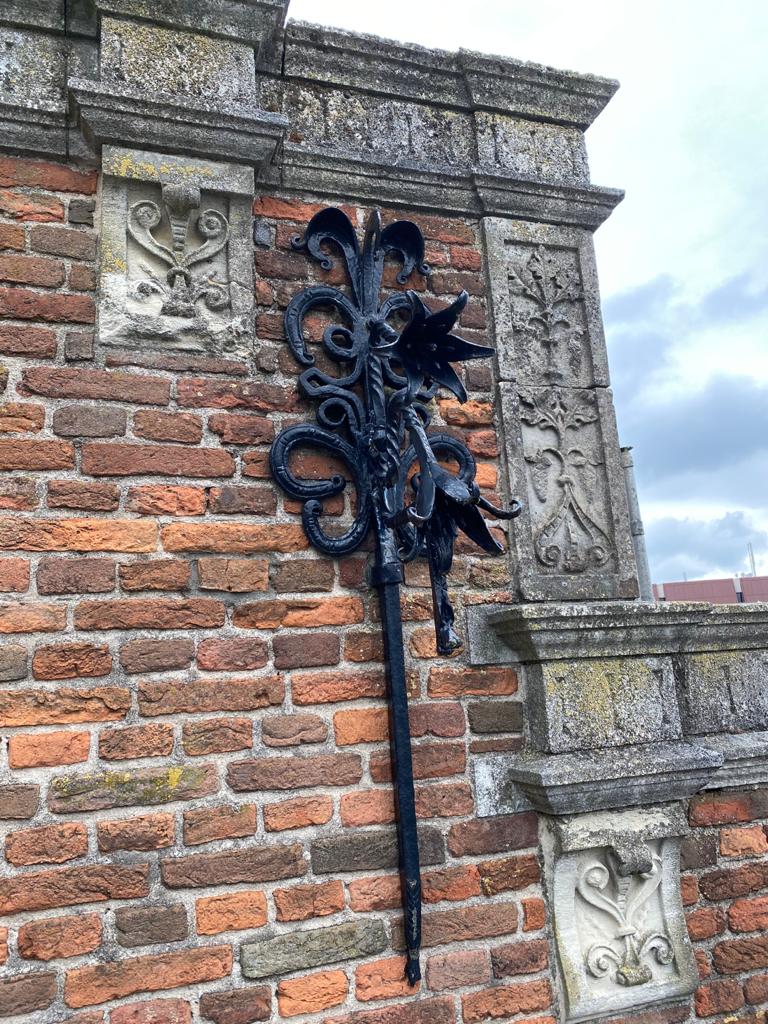
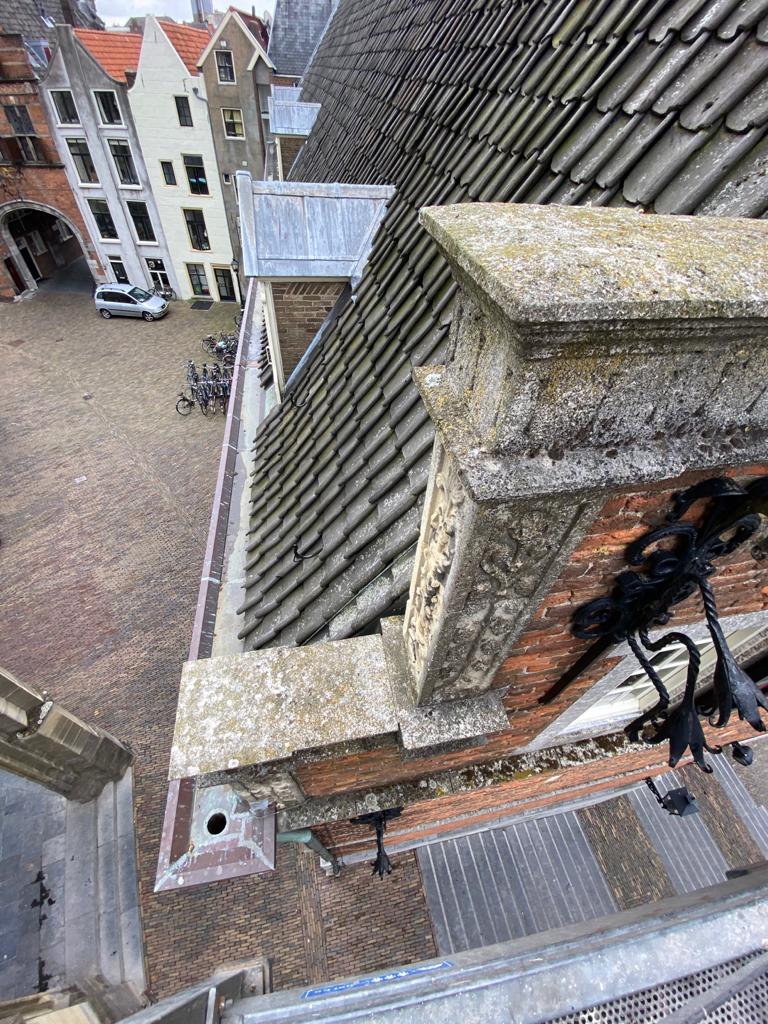
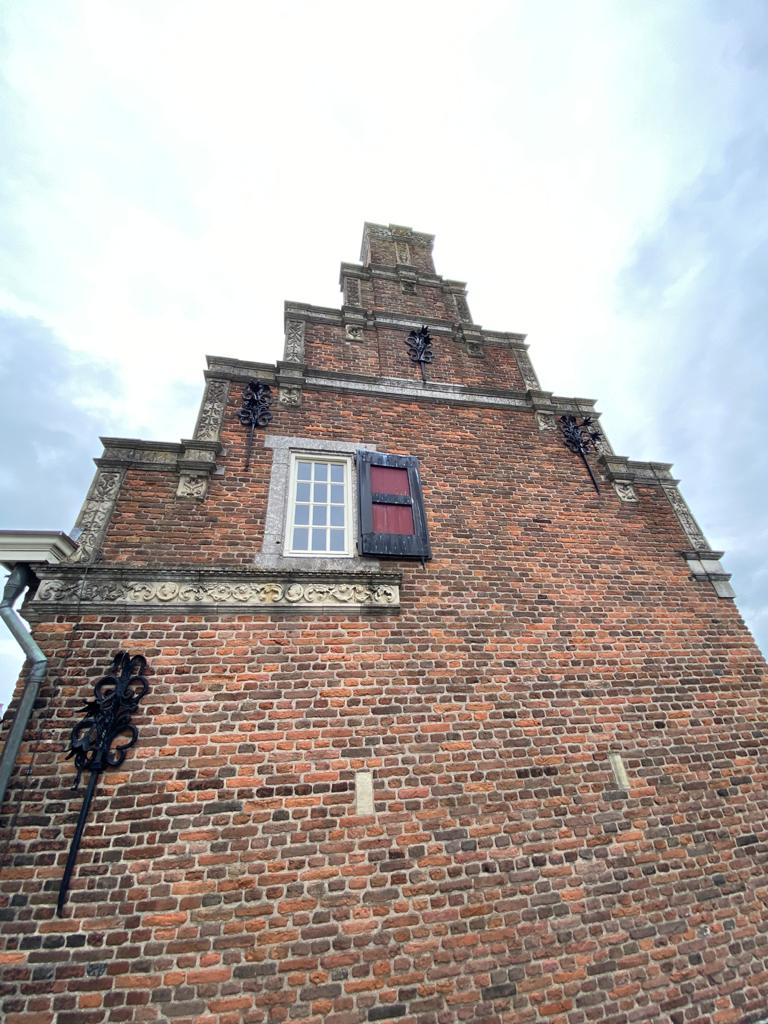
These blocks are intended for the stepped gable of the Latin School in Nijmegen. They flank the stepped facade, and are covered by horizontal parts, some of which also contain ornamental work. This Latin School is not unknown to me. In 2015 Stide and I spent several months working on the South Portal of St. Steven's Church, which is opposite it. Then we also made a quote for copying the statues of the Latin School, but another company with a robotic milling machine had submitted a lower price. Because they didn't have enough sculptors to do the end carving, Serge and Stide have been finish carving those statues in Obernkirchener sandstone. In the video below you can see Stide cutting away a block of sandstone from under Apostle Thaddeus with my chainsaw . He still had to get to know the saw a bit, but it was a handy way to get rid of a large block.
Baumberger stone
These sculptures were carved in Baumberger stone in the 1960s by sculptor Giuseppe Roverso from Nijmegen. He probably also provided this ornamental work. The copies of the sculptures from 2016 were made in the much stronger Obernkirchener sandstone, because Baumberger only lasts for about 70 years. Why a different type of stone was not chosen for these blocks as well is a mystery to me. Yes, it does fit with the historical use of materials, but unfortunately it doesn't last very long outside if you don't paint it. We'll see how they will keep up. Despite all the haste, it was a very nice assignment to make.
Gloomy clouds gather around Arnhem's Eusebius Church. After years of smooth and energetic restoration, the first restoration budget has come to its end. In a previous message from 2016 I could report that money had finally been released, and although the subsidies have been handled very efficiently, at that time it was already known that it would not be enough to complete the entire project. There is a lot of fuss in the media about it, and immediately there are also people who claim that the entire project would be a bottomless pit, but they talk like a headless chicken.
A top-class restoration
For this budget, the Eusebius Church, at less than one-third of the amount previously estimated, is being thoroughly restored and also adapted to contemporary requirements. The time of mass church attendance is simply behind us, and the church is now mainly used for other purposes. In addition, this is a top-class restoration, which can be seen by everyone who gets the chance to wander through the building and over the scaffolding. Certainly not a bottomless pit, butan examplary project. It would be foolish to stop now, just when we are nearing the finish line and have stayed within budget despite extensions to the original restoration approach. So I look forward with confidence to the next round of investment in this important building.
In the Gelderlander of 6 October 2020 the following article could be read:
The scaffolding around the tower of the Eusebius Church in 2016
ARNHEM – The restoration of the Eusebius Church in Arnhem has been halted again due to lack of money. In 2016 the work has also been stopped once, because there were no subsidies from the various governments.
There is still approximately missing 3 million euros for the completion of the last phase of the large-scale restoration project on this national monument. The hope is that the province of Gelderland will help financially in the short term.
This provincial support had already been counted on, but due to various circumstances it has not yet been granted.
Within the budget
The money is needed for the repairs to the choir part of the building. That is the part on the east side of the church, opposite the 'Duivelshuis' the Devil's House. The total restoration project for the Eusebius Church in 2013 was budgeted at approx 32,5 million euros. The total project remains within budget.
The Provincial Executive of Gelderland recently proposed to the Provincial Council to make a maximum subsidy available of 2,5 million euros to the Eusebius Arnhem Foundation, which is responsible for the preservation and operation of this house of God.
But it is not until November that the Provincial Council will decide whether to agree to this during the discussion of the budget for next year.
The tenor of these two articles is the same: lots of alarm and drama, while there is actually not much going on. An awful lot has been done with the available money and the restoration will also be completed with the same care.
Consequences for the sculptors?
copying flying buttress statue The Hope at 35 degrees Celsius
Actually, this does and doesn't have consequences for us. On the one hand, we just keep doing our thing and we still squeeze out one flying buttress figurine after another. On the other hand, the budget has also been temporarily suspended for us. Why then do we just continue with those statues, you may ask? This has everything to do with a period of relative calm before a great hustle and bustle.
Lots of work to come
The old flying buttress statue of The Hope, out of tuff stone
I can't say everything about it yet, but in spite of the apparent calm on this blog, Jelle and I in particular have been extremely busy recently. That is the reason that I couldn't keep up with writing blog articles. Indeed, I recently completed a flying buttress sculpture that depicted The Hope, from the series of the Seven Virtues, and I simply forgot to take pictures of it! Well, then it is therefore not possible to write an article about it anymore. But it is not forgotten, I will take pictures of it later at the Eusebius Church, where the figurine is stored.
A very busy autumn and winter
Things will get even crazier in the coming months, because we are currently already working on large finials for the Utrecht Dom Tower, and another major project is coming up in Veghel, I still have to tackle a number of smaller projects, my mother eagerly awaits my father's tombstone, and there are still a great number of ornaments and sculptures coming which I cannot name yet.
Seven Virtues
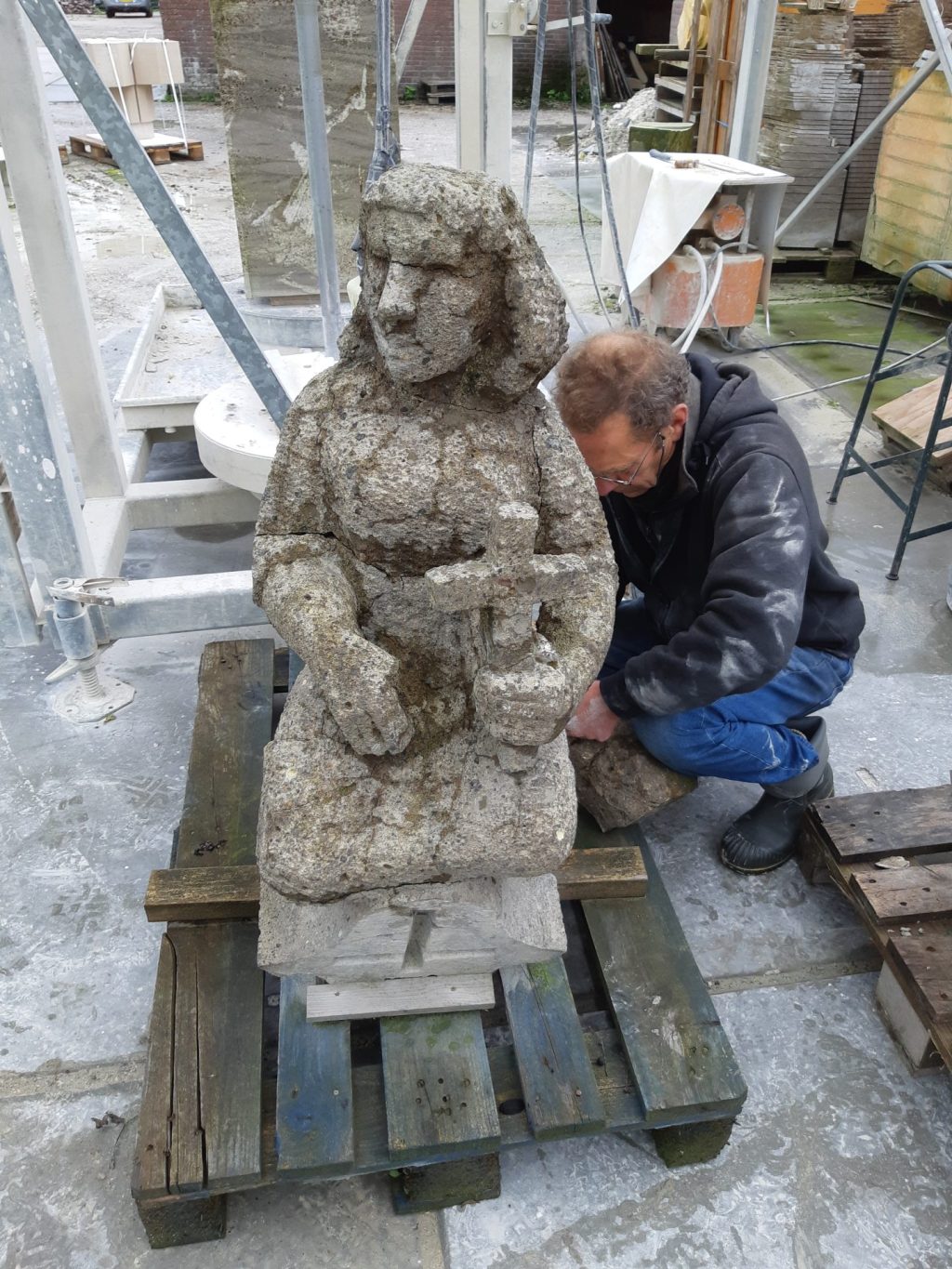
Stide at the old flying buttress statue of Fides. This statue clearly shows why we cut these copies: they are completely full of cracks.
But around the summer period we had a somewhat quiet time. But we have not been idle! Like with the flying buttress of the Seven Sins that we had last year, there was now the flying buttress next to it, with the Seven Virtues. Jelle and I have almost finished all of them, except for the statue of Faith, that Stide is now working on.
We thought it would be smart to tackle the next flying buttress now, because we already knew there was so much work to be done later. However, they were not waiting for that at the Eusebius Church. This flying buttress is actually part of the next restoration phase and they hadn't even started on that yet. Plus that the budget was starting to run out. But with some deliberation we could move forward. If we had postponed it, it would have become much, much busier next spring!
Two griffins
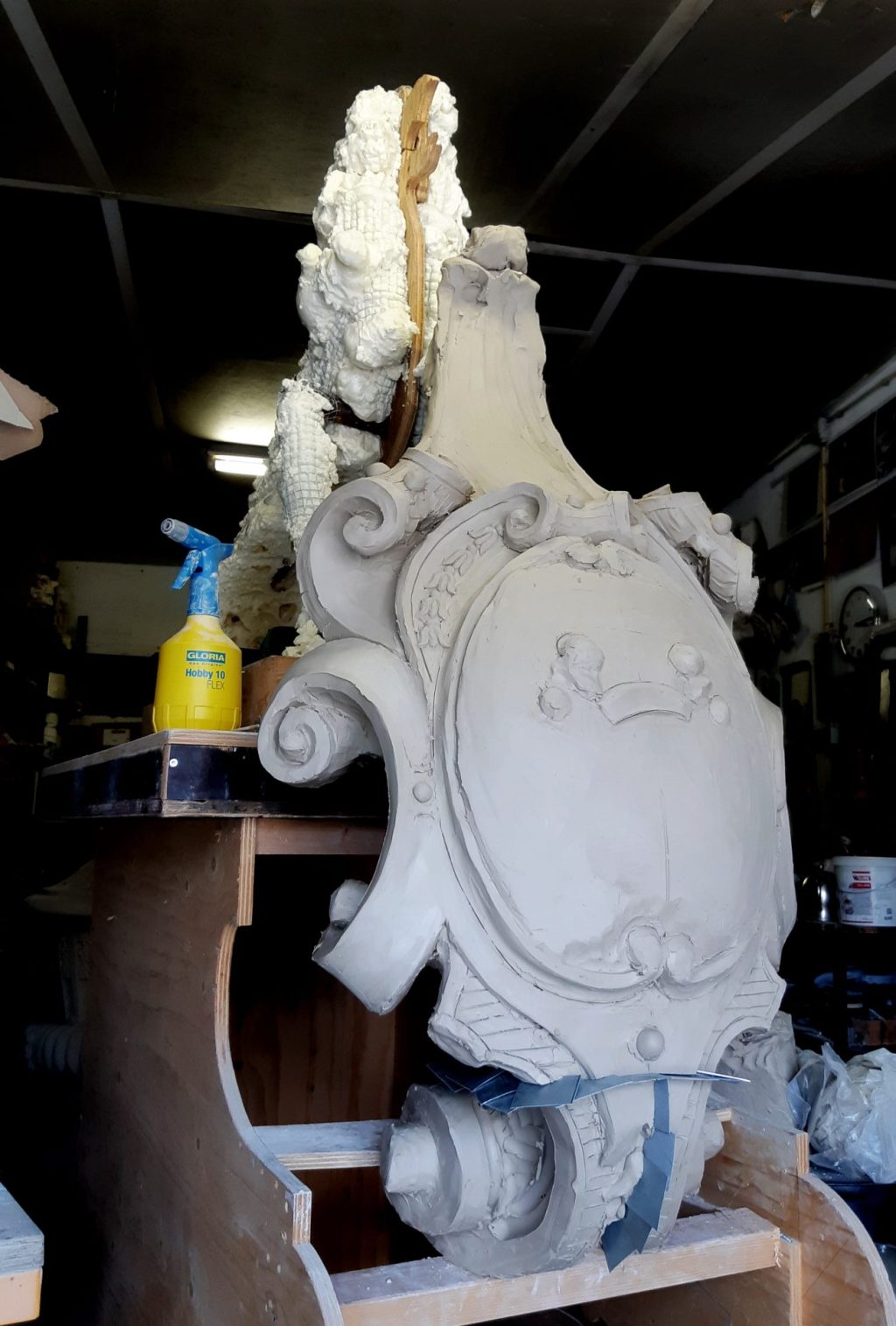
Modeling the shield for the two griffins
When some space came up this summer, Jelle and I immediately seized the opportunity to finally decisively to continue with the modeling work on this blog the two mirrored griffins, on which I already started in 2017 with a scale model. The work is in no hurry because the castle is not ready yet, but now we have been hard at work. Soon I'll post an extensive report. In any case, we made full-size clay models and cast them in plaster. On Instagram you get to see something of these activities.
Caritas, love
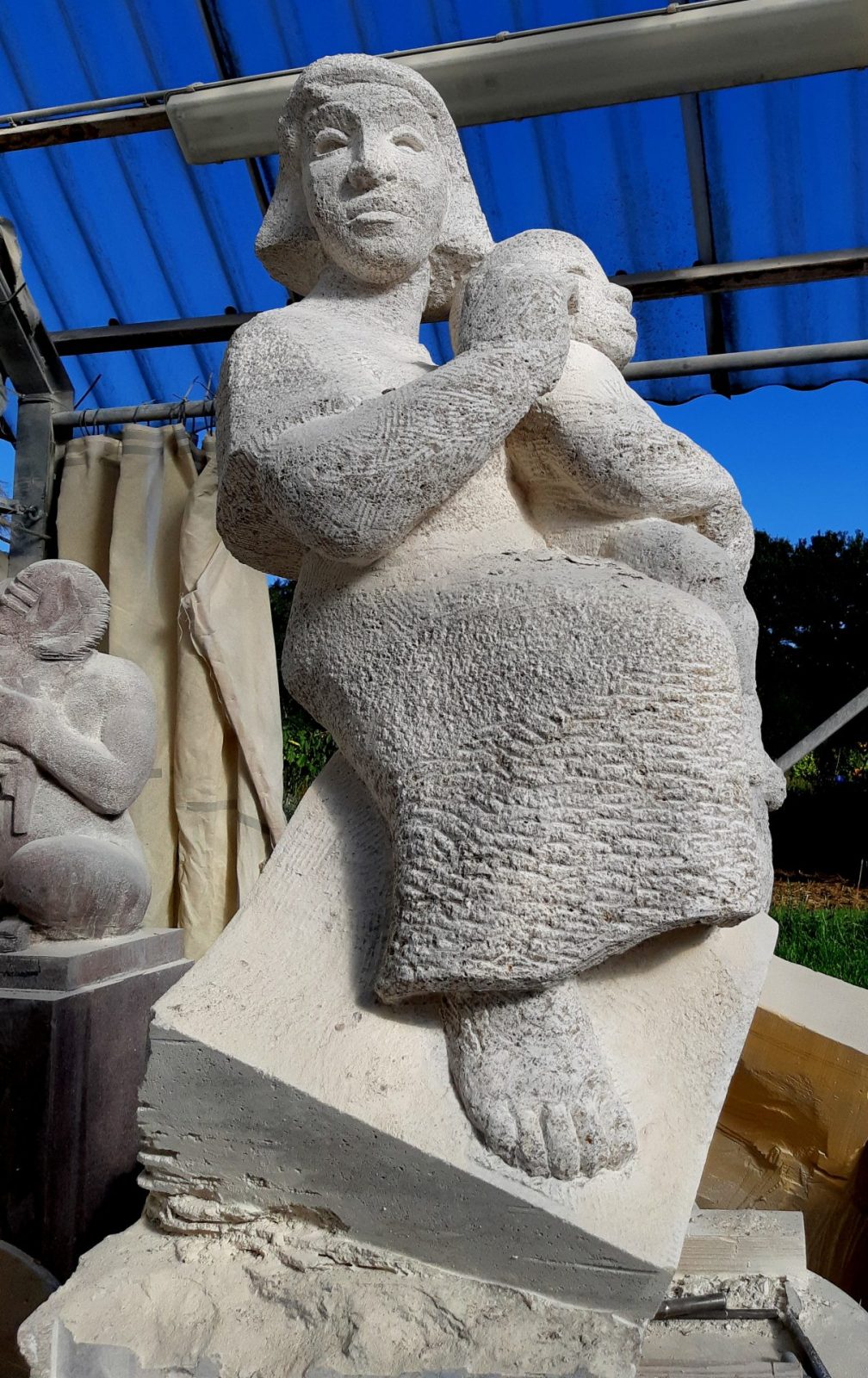
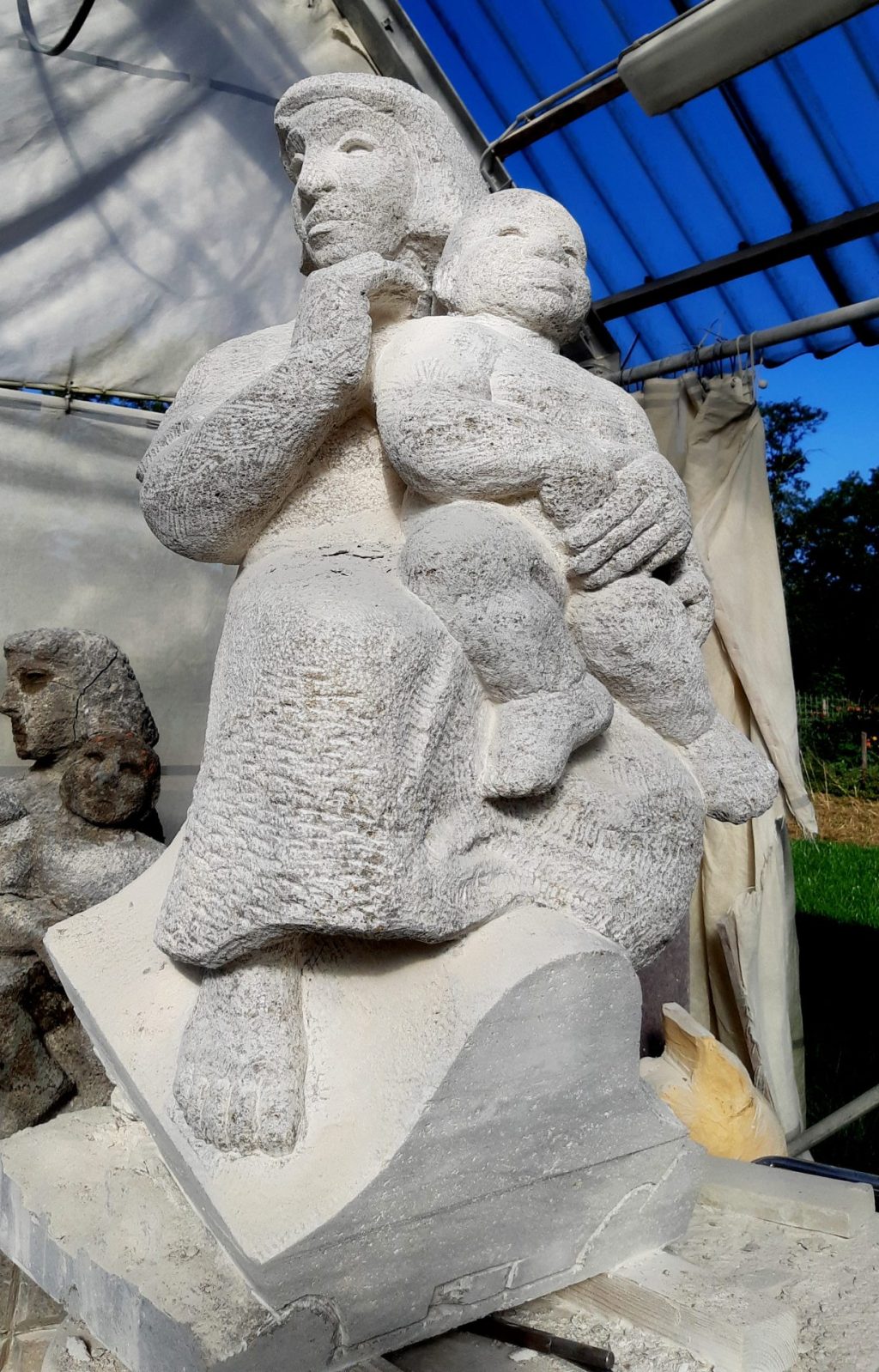
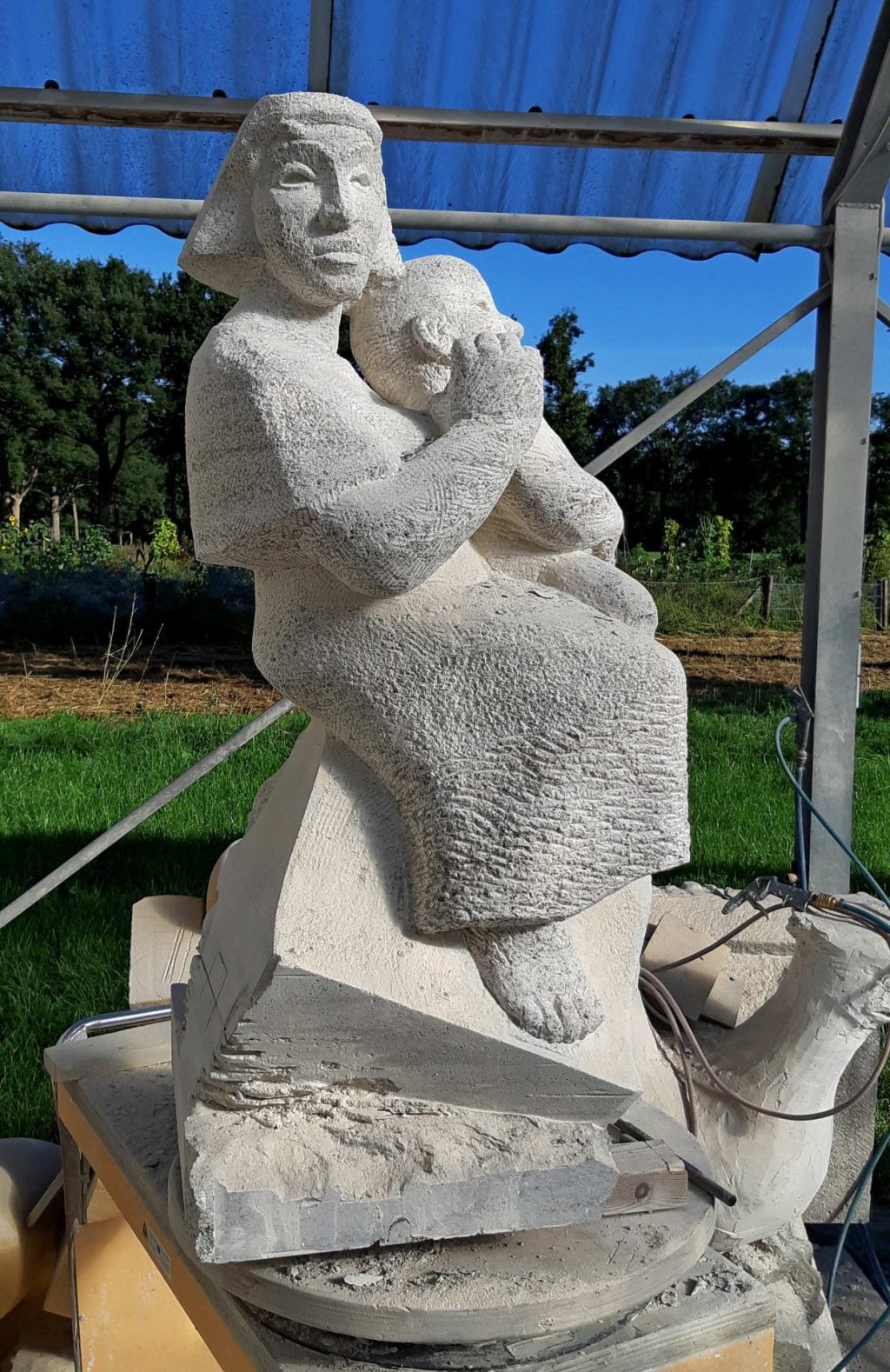
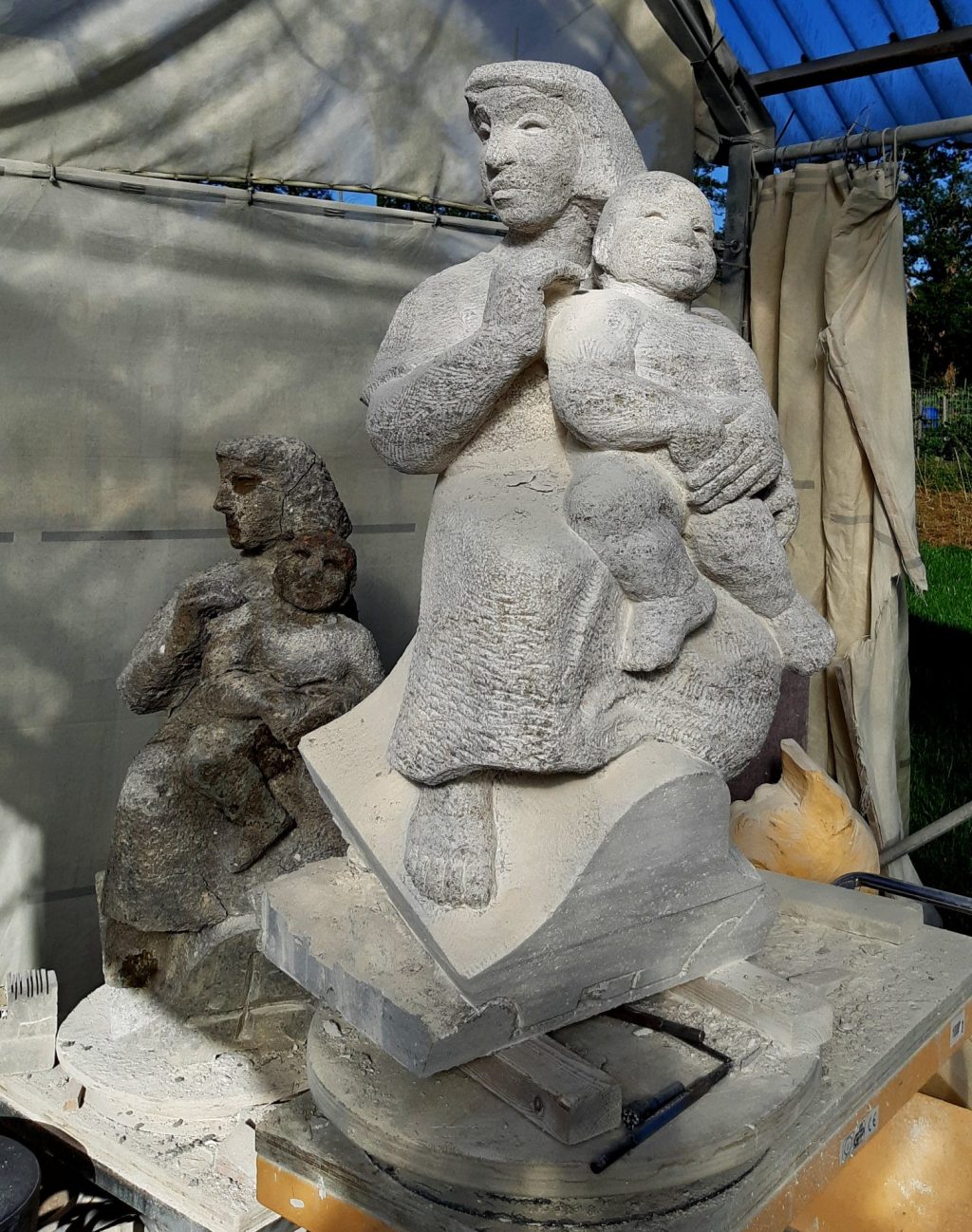
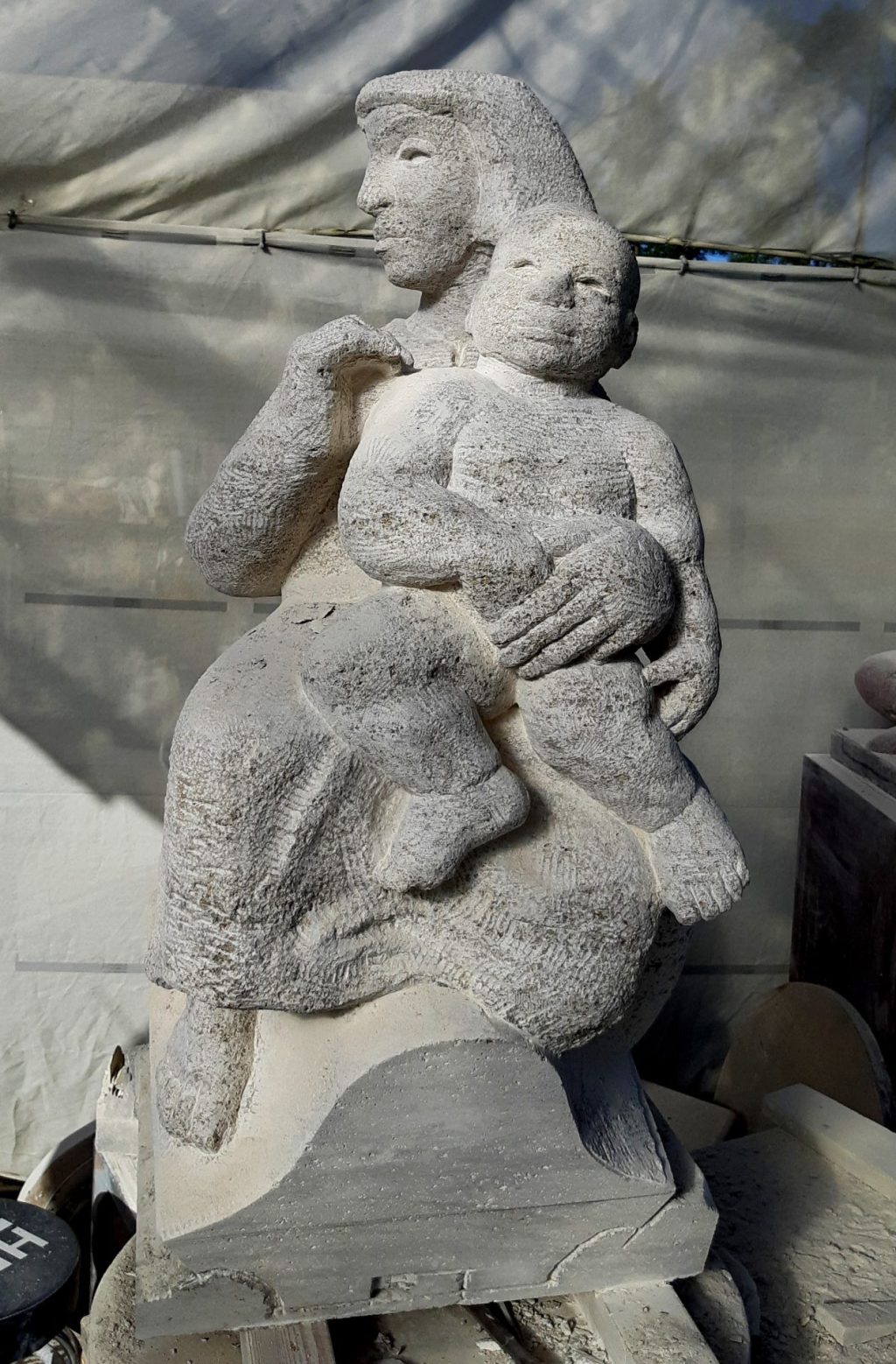
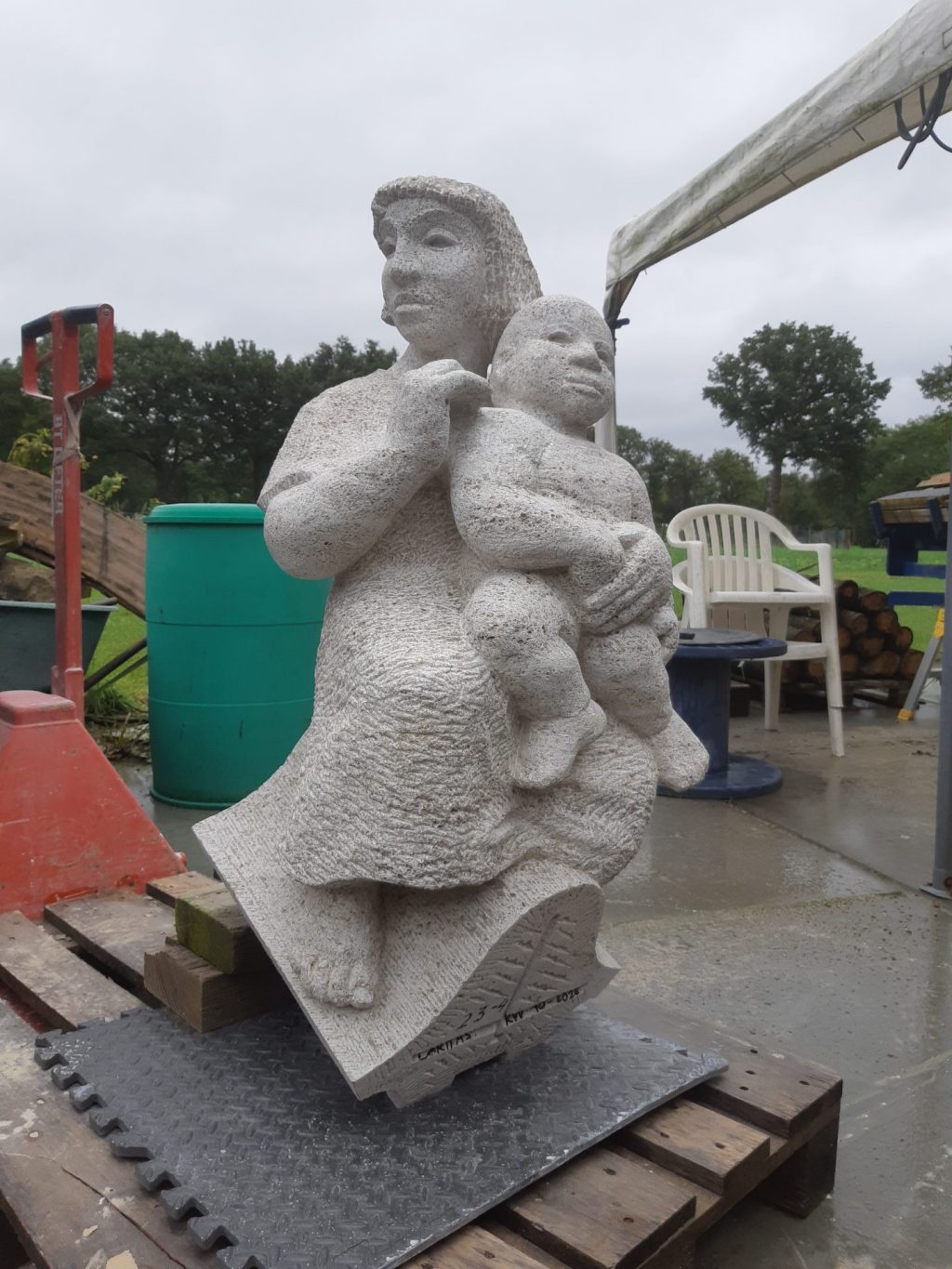
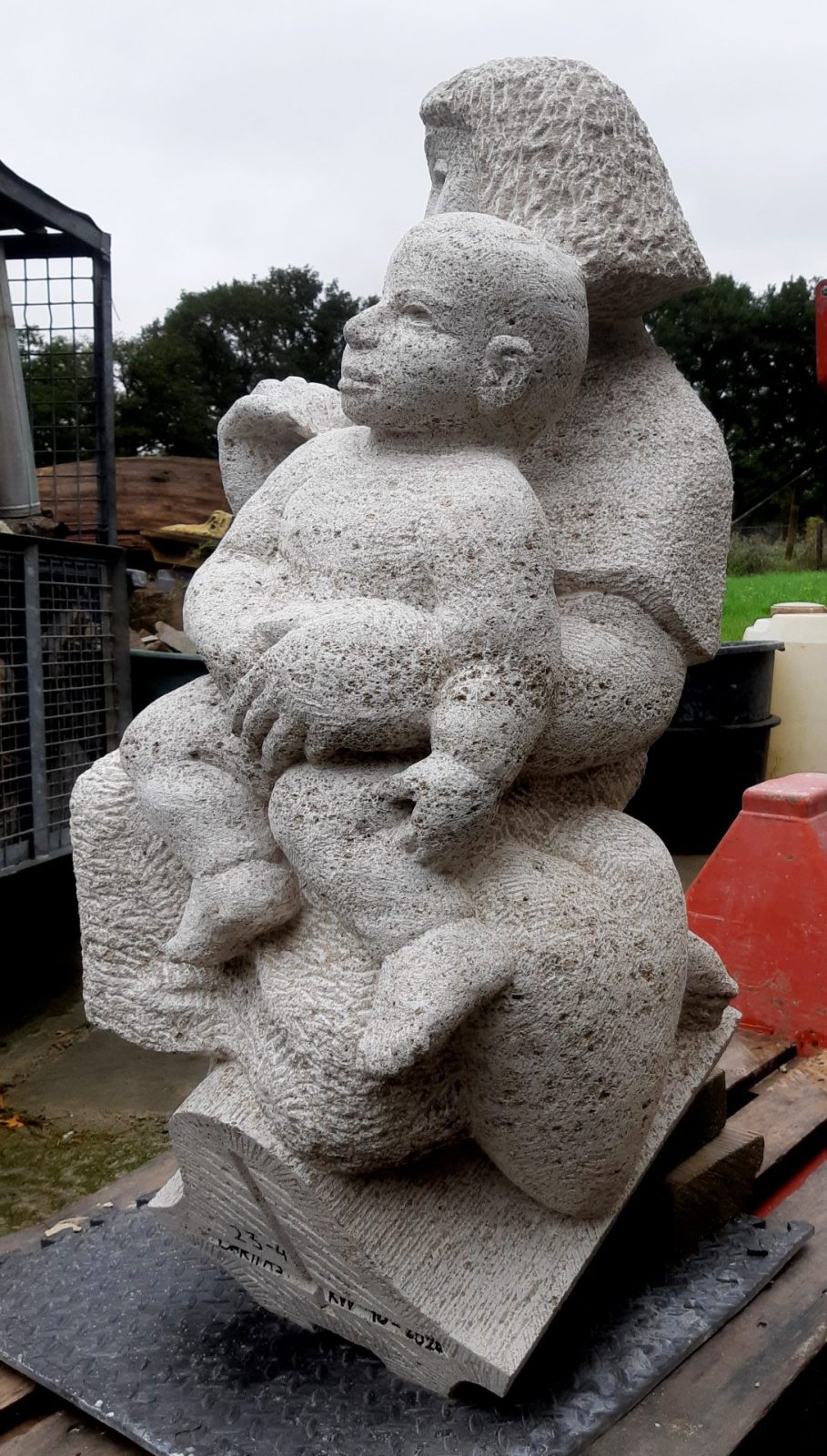
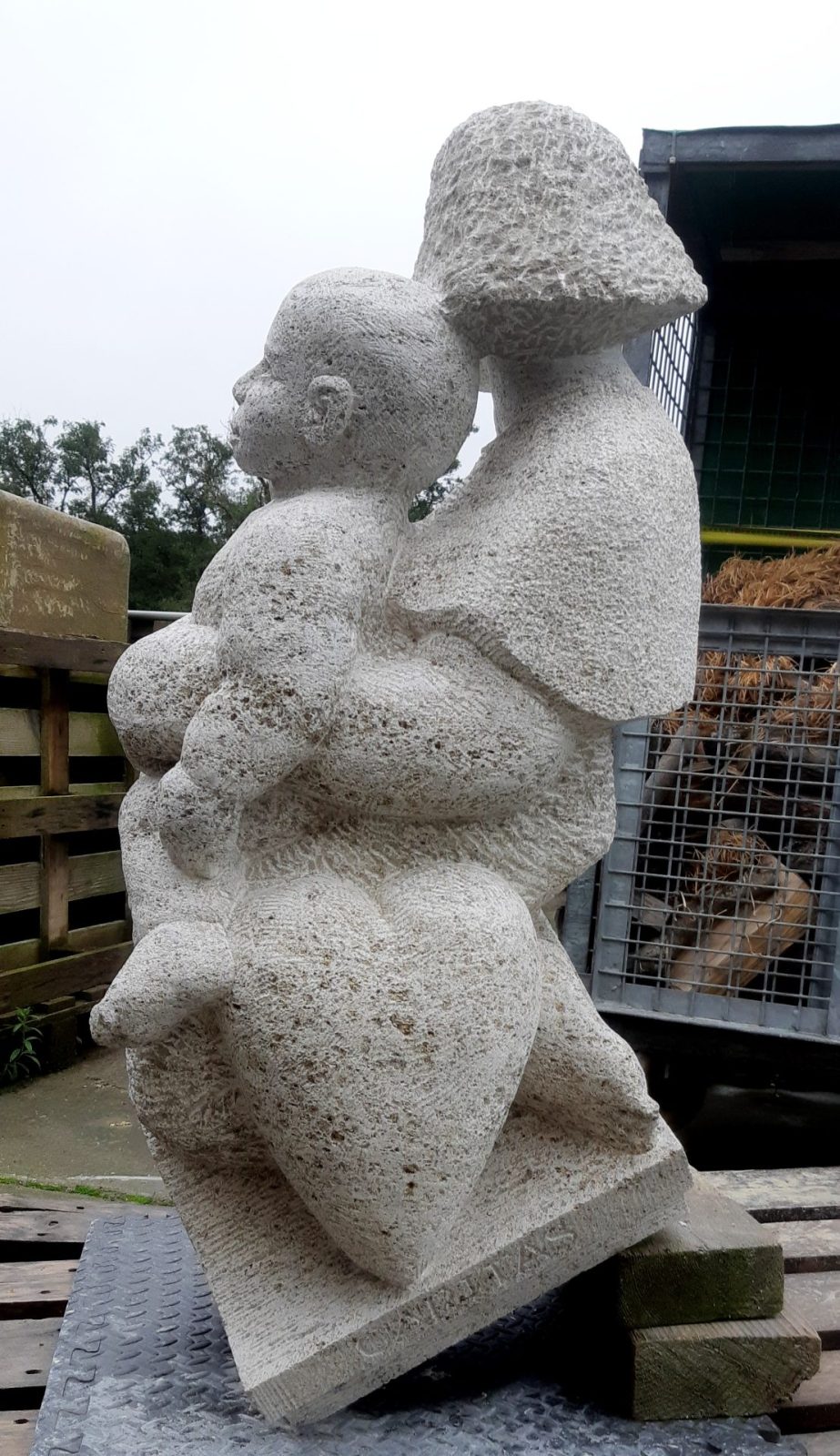
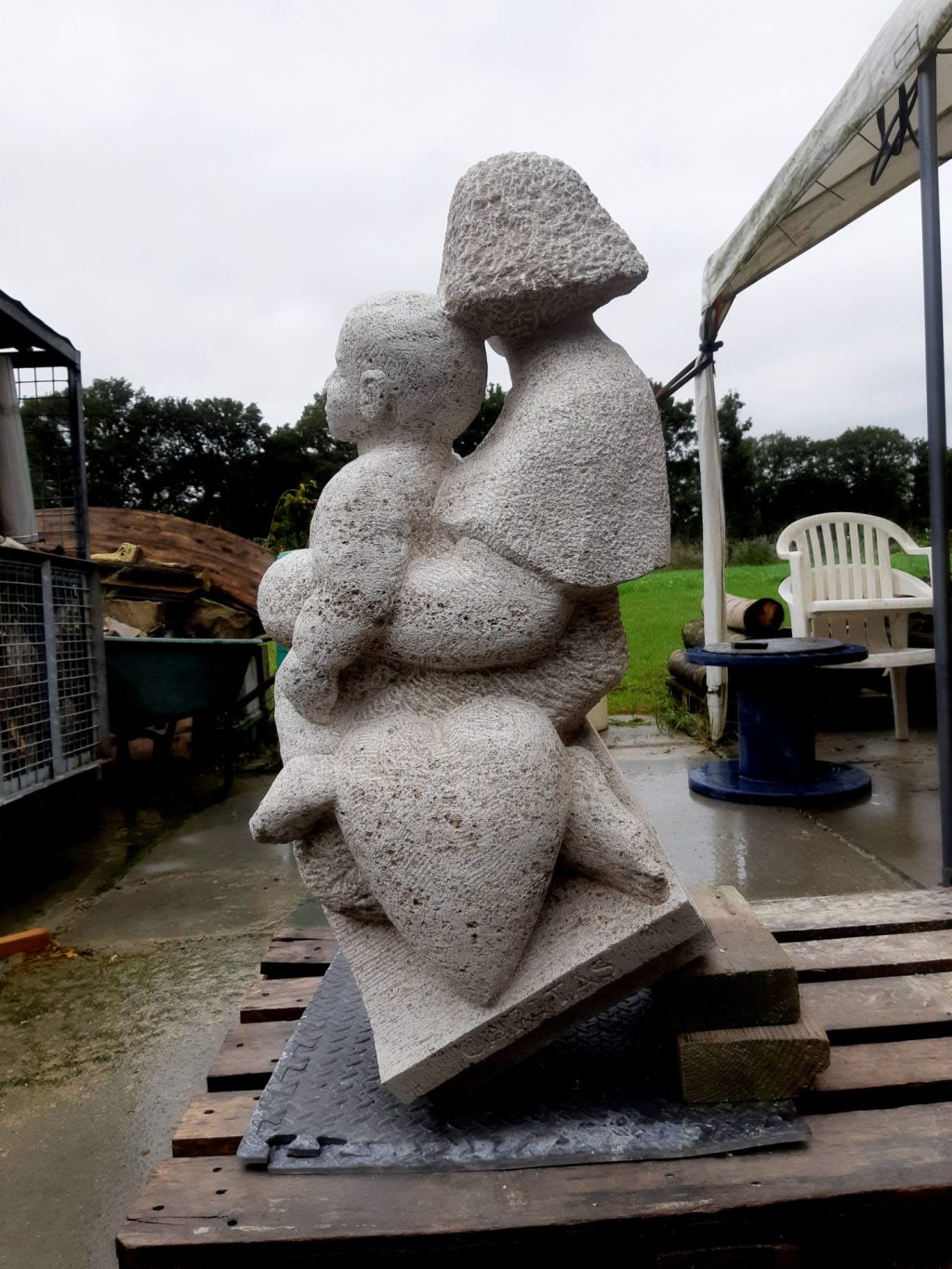
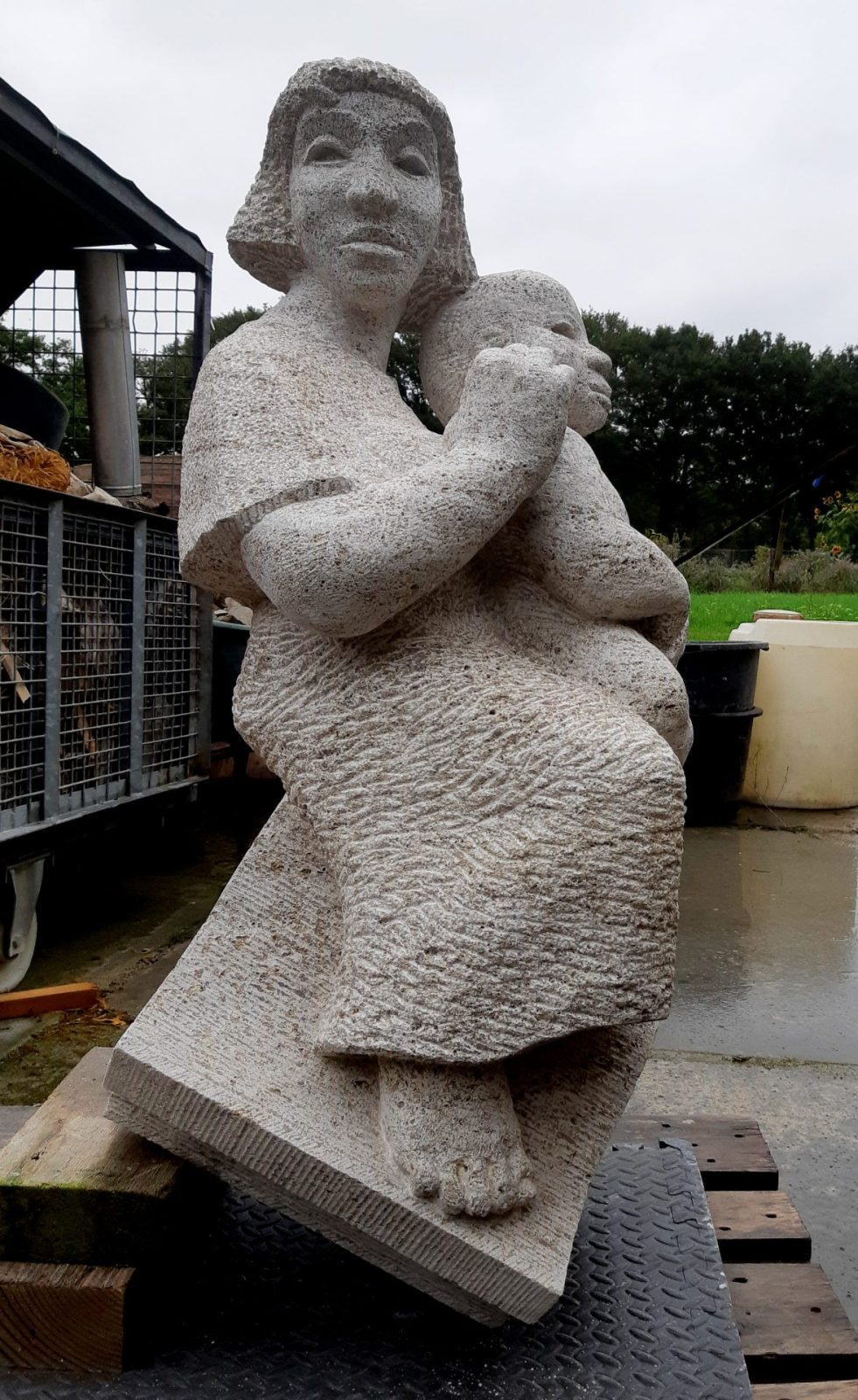
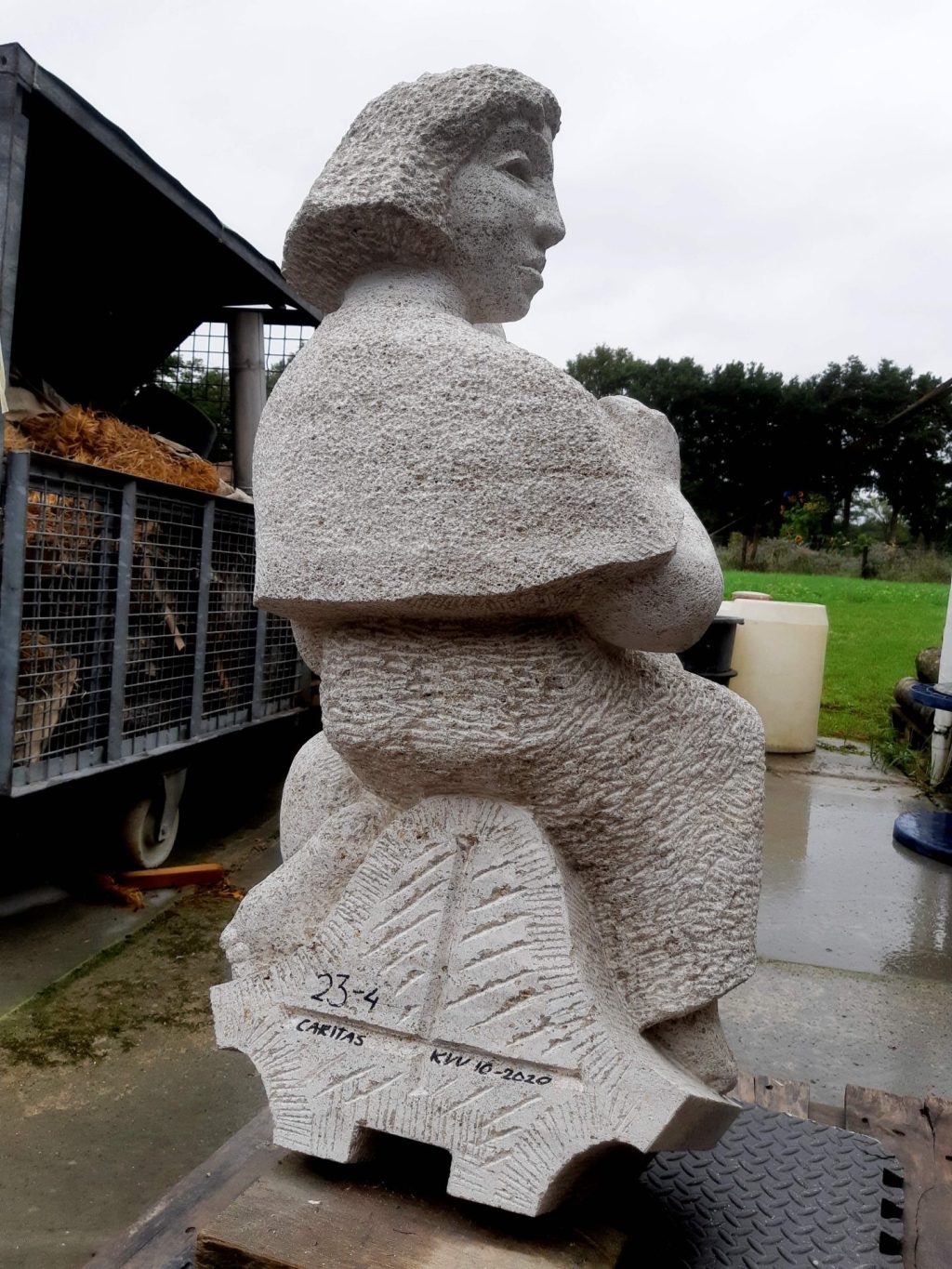
One of the figurines I copied for arch no. 23 is Caritas, the symbol of Love. Quite appropriate for this time in the restoration of the Eusebius Church, Caritas also means Charity and Generosity.
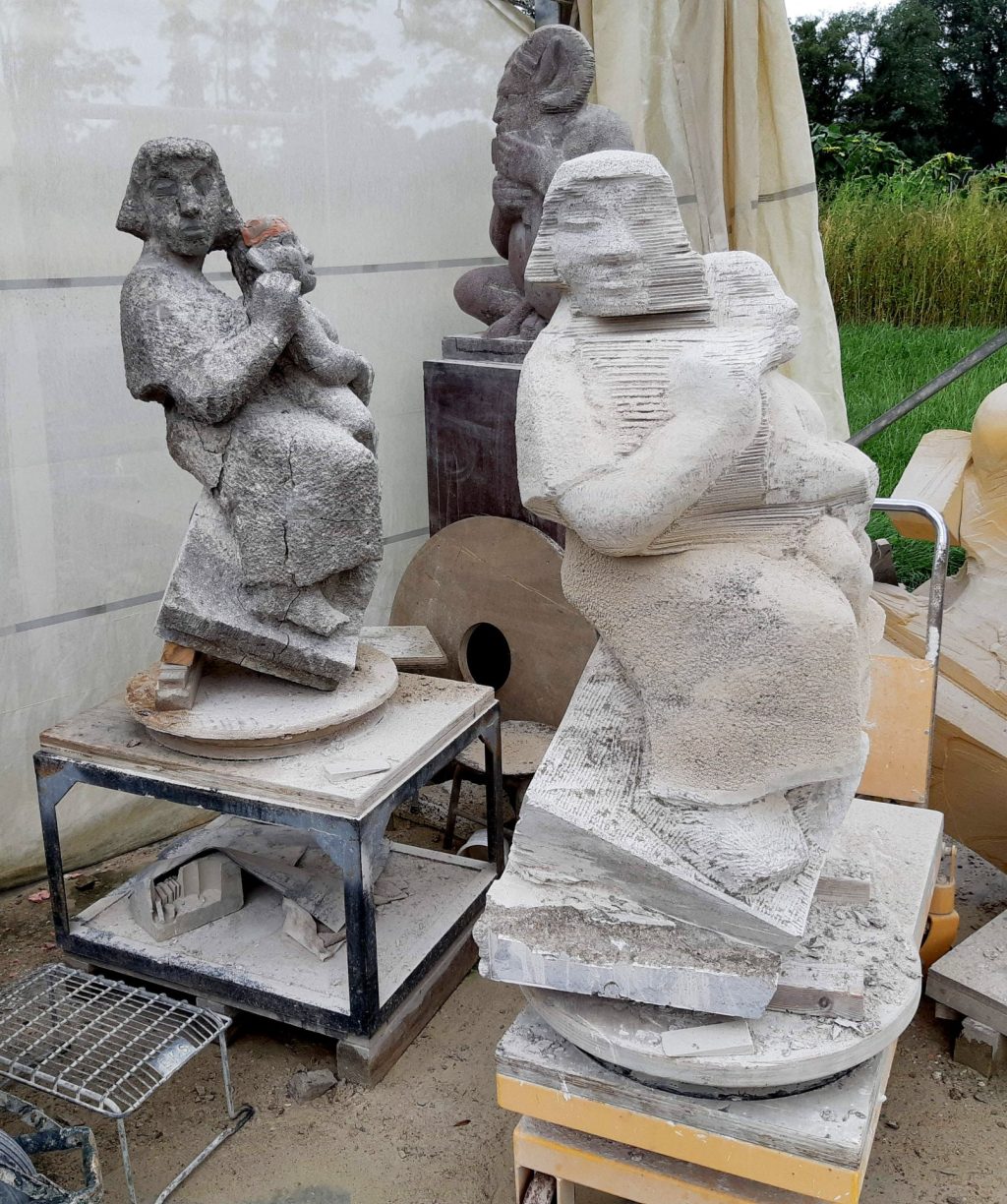
Sculptor Eduard van Kuilenburg has carved Caritas from tuff as a young woman in a thick dress, holding a somewhat listless child in strange proportions on her lap. It has a rather small head and very broad shoulders.
In the copy I made a few minor adjustments to Caritas, so that the child has a bit more of a child's head. I also made the heart that was on the right side, from a flat object into a rounded shaped, pumped up heart, because luckily I had more mass in the stone at that point. It is characteristic of our approach: we largely stick to the original sculpture, in finish, dimensions and details, but we try to give some points a little more tension, which makes the figurinea bit more expressive. We also carve, just as we did with the Seven Sins, the Latin name of each virtue in the side profile. See more about this in the post about the previous flying buttress statue from this series: Temperantia.