• Two putti restored

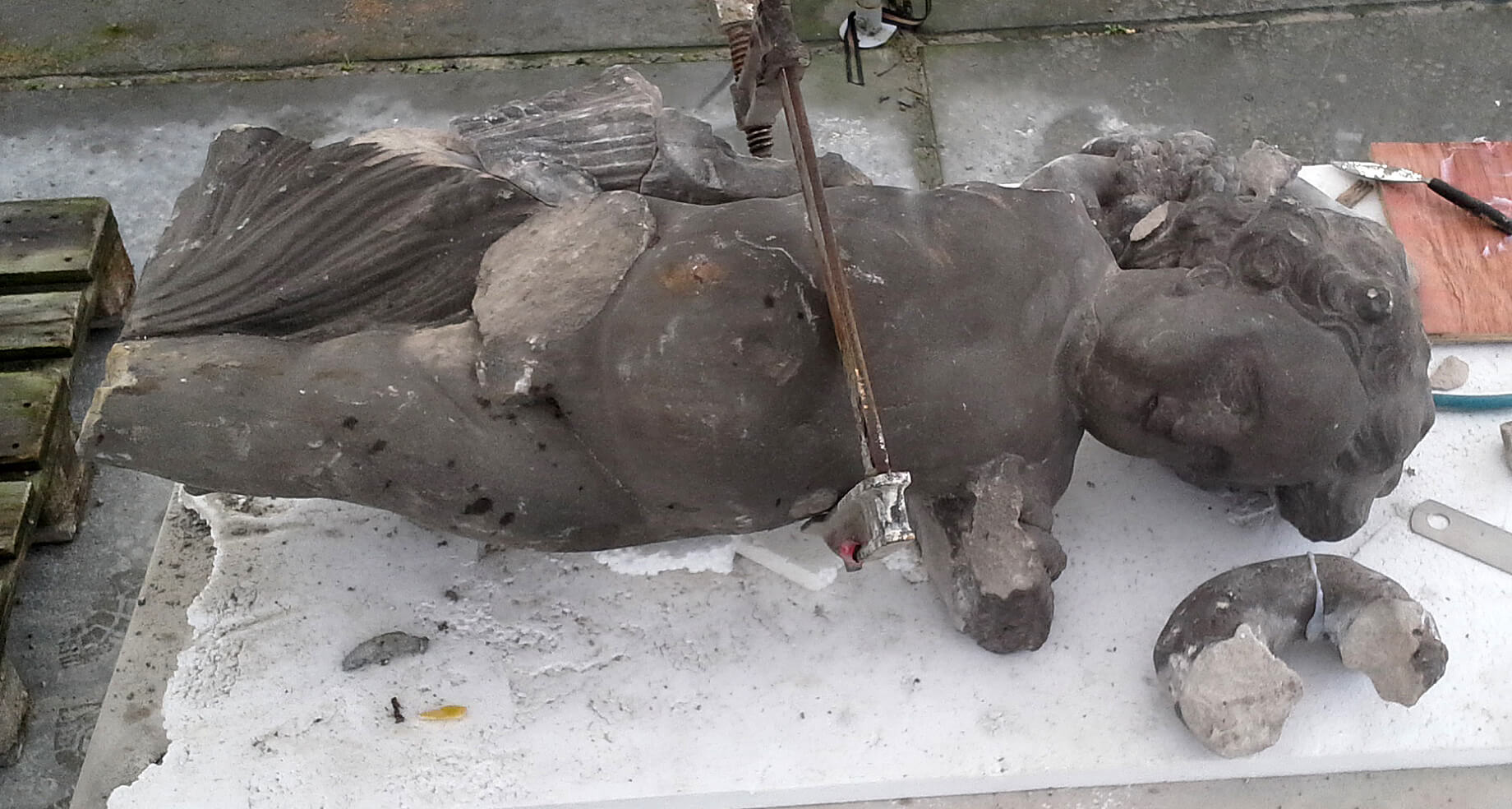
    broken putto

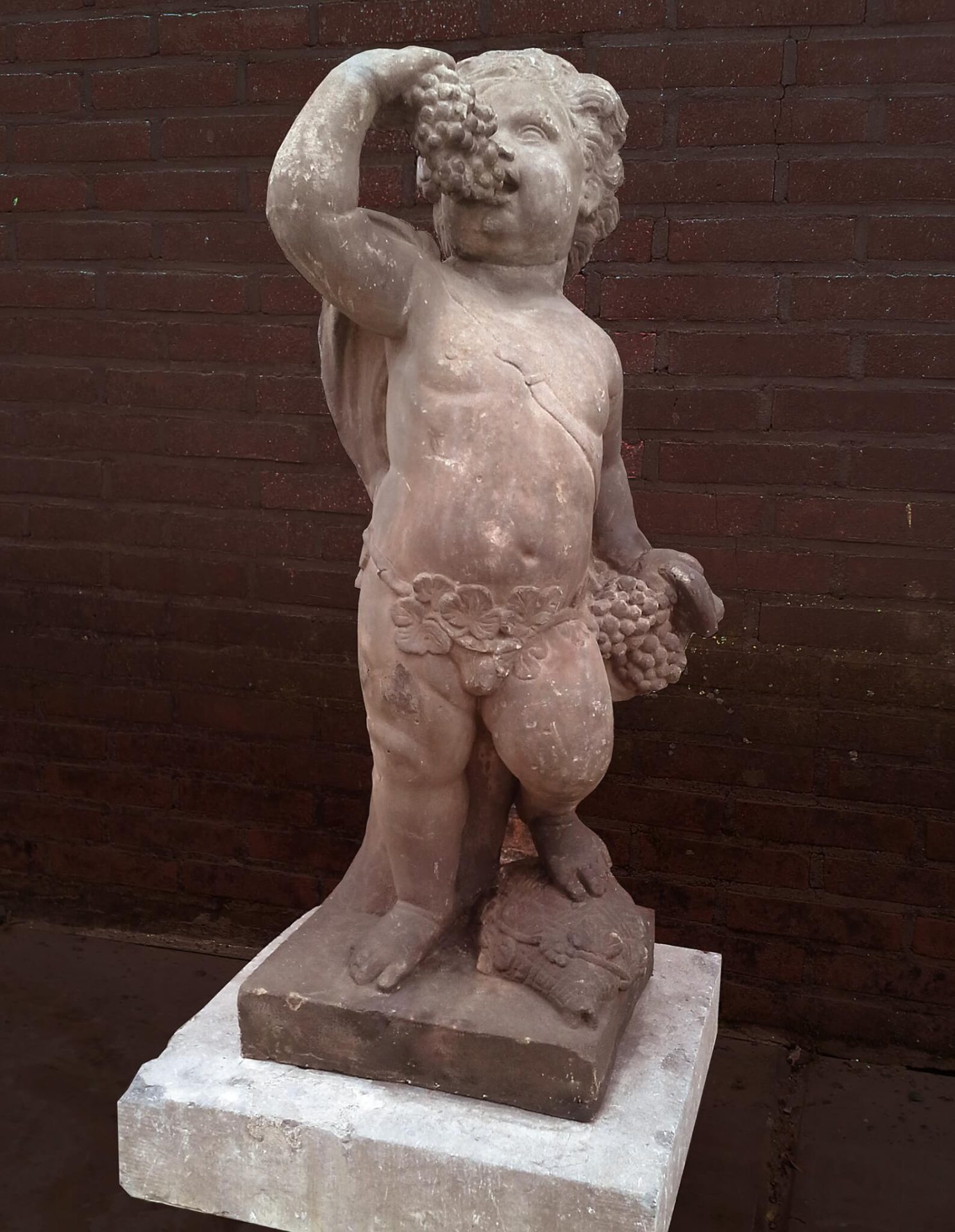
    The two eighteenth-century sandstone putti that I recently started to restore are finished. It's become a kind of harvest scene:

    one chap with a bunch of grapes and one with a bundle of corn ears. The lad with the ears of corn got a new leg, which I've carved out of a block of sandstone. All the parts of the two putti are bonded, and each fracture received a reinforcement in the form of an invisible stainless steel pen.

    One of the foot plates had also broken, and I managed to repair that with the use of epoxy adhesive and mortar as well. Perhaps it would have been better to completely replace it with new stone, but in that case some of its character would have been lost, and this stone base should last for a while now. While working, a few things about the two putti caught my attention. These figurines were carved at the time with great craftsmanship and flair, and their quality is undeniable.
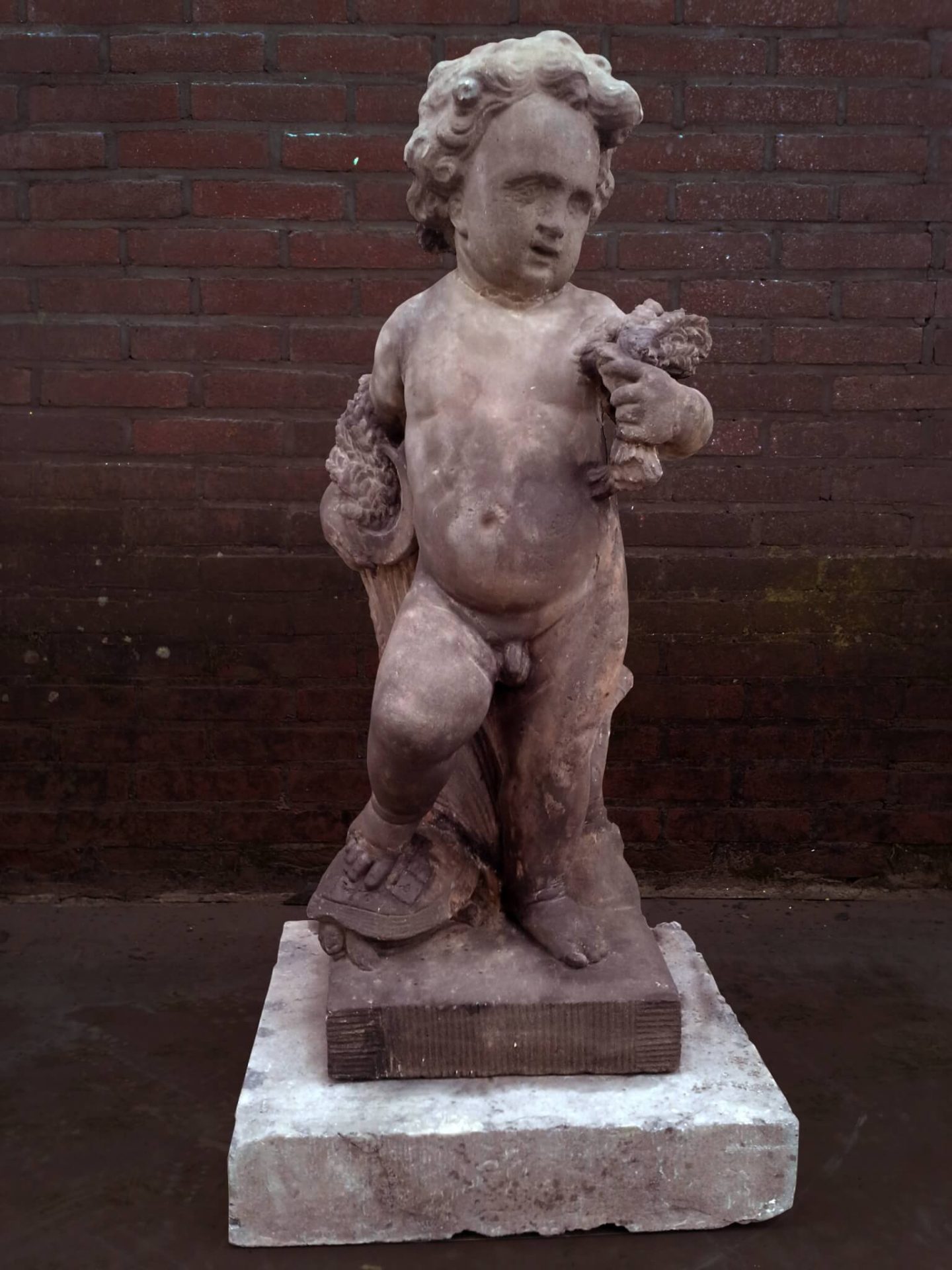
    Putto met korenaren. Part of sandstone two putti
    his right leg (for the viewers at home to the left) was made from new sandstone
    Putto met druiventros. Part of sandstone two putti
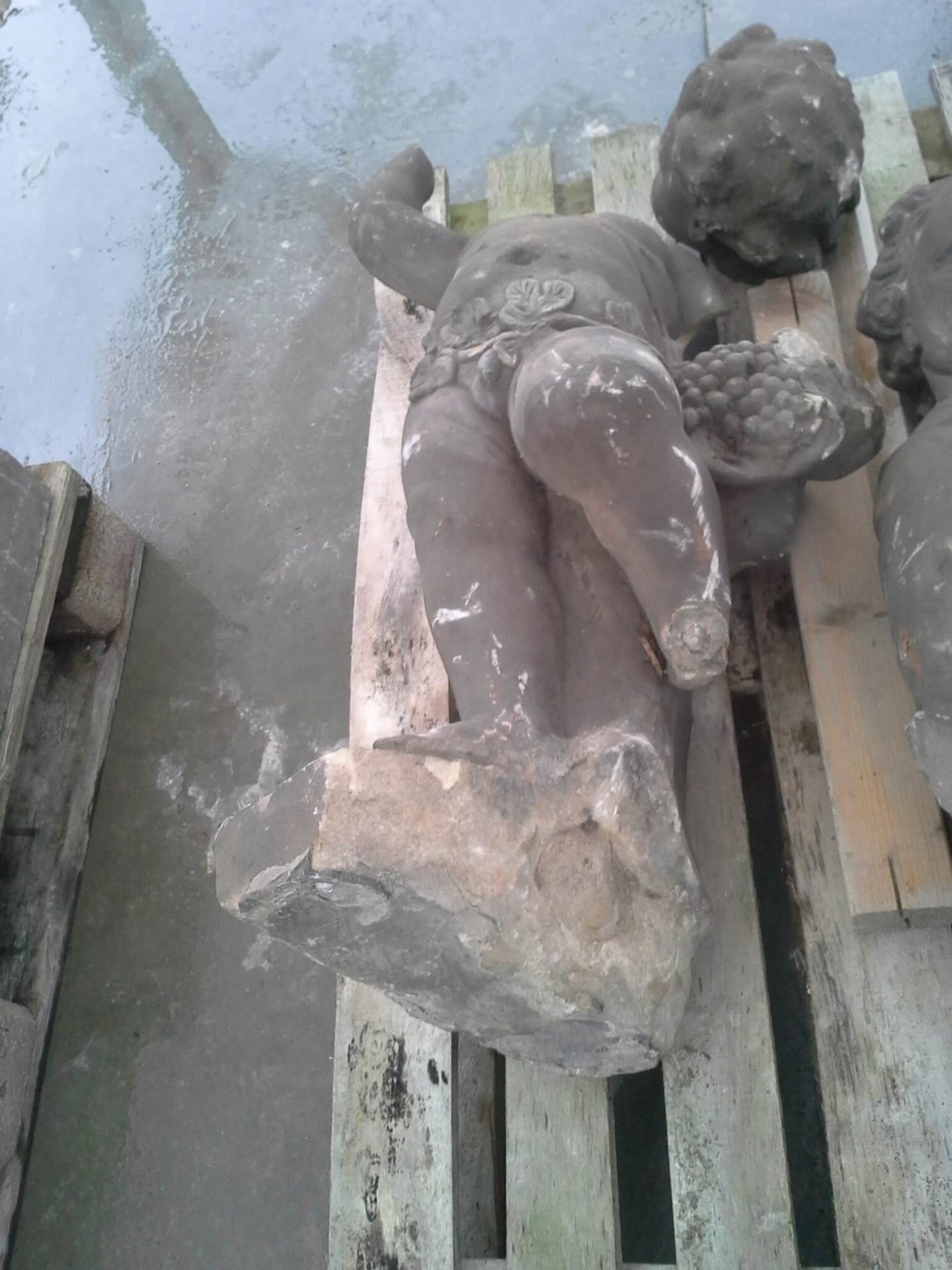
    one of two putti in sandstone. Broken, beginning of recovery

    The little fellow with the bunch of grapes had lost his head during his last fall, but that had apparently happened once before with his brother, that held the bundle of grain. I always thought it had a somewhat strange face. When I took a good look at the face in profile, I noticed that it must have looked quite different before. I suspect that the head was put back somewhere in the 20th century, and that was when it was decided to carve the face anew because the nose had broken off during its fall. For that, the sculptor had to recarve the whole face a lot deeper, so the youngster now has a curious short chin and eyes that are not carved as crisp as the rest of the sculpture. Also, the style is more 'fifties’ than eighteenth-century. The statue of Artemis will get a new arm; more on this later.
    → Read more…

  • Two broken putti and a fallen Artemis

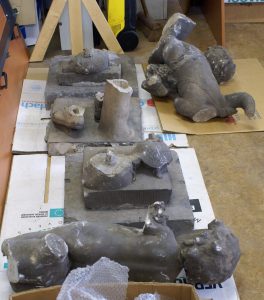
    two broken putti and the ankles of Artemis
    the two broken putti and the ankles of Artemis

    Last month I was offered an interesting challenge: two eighteenth-century putti made of Bentheimer sandstone and terracotta sculpture of Artemis. All three were seriously damaged and to me fell the task to restore them in all their splendour.

    The two broken putti came originally from an estate in North-Holland, where they apparently must have stood in the open air. Whenever I get these kind of cases, the first work will be to undo the previous bad repairs, removing iron and the fitting together of all parts, to see how complete it all is.

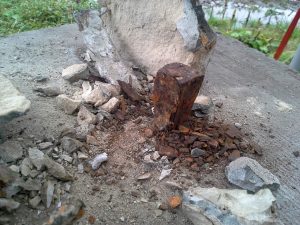
    Rusting iron

    the iron pegs were cast within lead, but had nevertheless caused a lot of damage
    the iron pegs were cast within lead, but had nevertheless caused a lot of damage

    In this case it could easily be seen what the cause of the damage must have been. The putti had been fixed with a thick iron support, which was cast in lead. The flow channel for the lead was plain to see. But iron can rust, and in doing so it can cause a lot of damage(about which I wrote an article here a while ago). Even in these putti, this was the case: the iron had rusted and because of that, the angels had fallen off their base and broken into pieces. A lot of pieces, that is.

    the base plate of one of the putti is broken due to rust and old age
    one of the base plates had broken by rust and old age

    During the removal of previous cement repairs was revealed that the putti had already been repaired at least twice before, with even more iron pins and hard and impermeable cement layers as a result. While fitting and measuring, I discovered that the two boys were very nearly complete, apart from some small bits and chips, and a missing leg of the boy with the ears of corn.

    Stainless steel pins

    the two putti variety of small parts are still together in a box
    of the two putti many small parts were collected in a box

    Putting such a puzzle together means a lot more work than just a little pasting with some adhesive. Each piece should retain a lasting bond with the connecting part. For that, to every break a stainless steel pin was added, to reinforce the weak spot. But this pen should be invisible bonded, so I had to drill holes in both parts, and these holes should be in line. All in all, something that's not finished in a second.

    A new leg

    When all the parts are back together, the reconstruction of the missing leg will come next. First, I modelled a new leg in plastiline clay. Next I will carve this out of new Bentheimer sandstone, because this is stronger than making a leg with restoration mortar. The challenge here is to make it so that the style and surface match the rest of the statuette. More on this later.

    Artemis in terracotta

    The statue of Artemis, a casting of the famous statue that is attributed to Praxiteles, came originally from a sculpture foundry in Berlin, according to the stamp in the foot plate. I suspect that it was cast there in parts of clay around 1880, which were then put together and then baked. This statue was easier to repair: it had simply broken off at the ankles. Maybe happened during removal ? In addition there was quite a bit of hunting damage, as if someone had tried out a hunting rifle a little bit too close to the statue. Of the drapery all kinds of shards were missing and there were lots of buckshot asterisks in the surface. There must have been something moving in the undergrowth for sure.

    This statue I first bonded together again, and then reinforced the ankles with M16 threaded wire ends of stainless steel, and then I repaired the damage with restoration mortar. More on this later as well.

    Read more…

No more messages to show.

No more messages to show.