• Sculpture 'Surrender’ installed

    Surrender, a symbolic moment

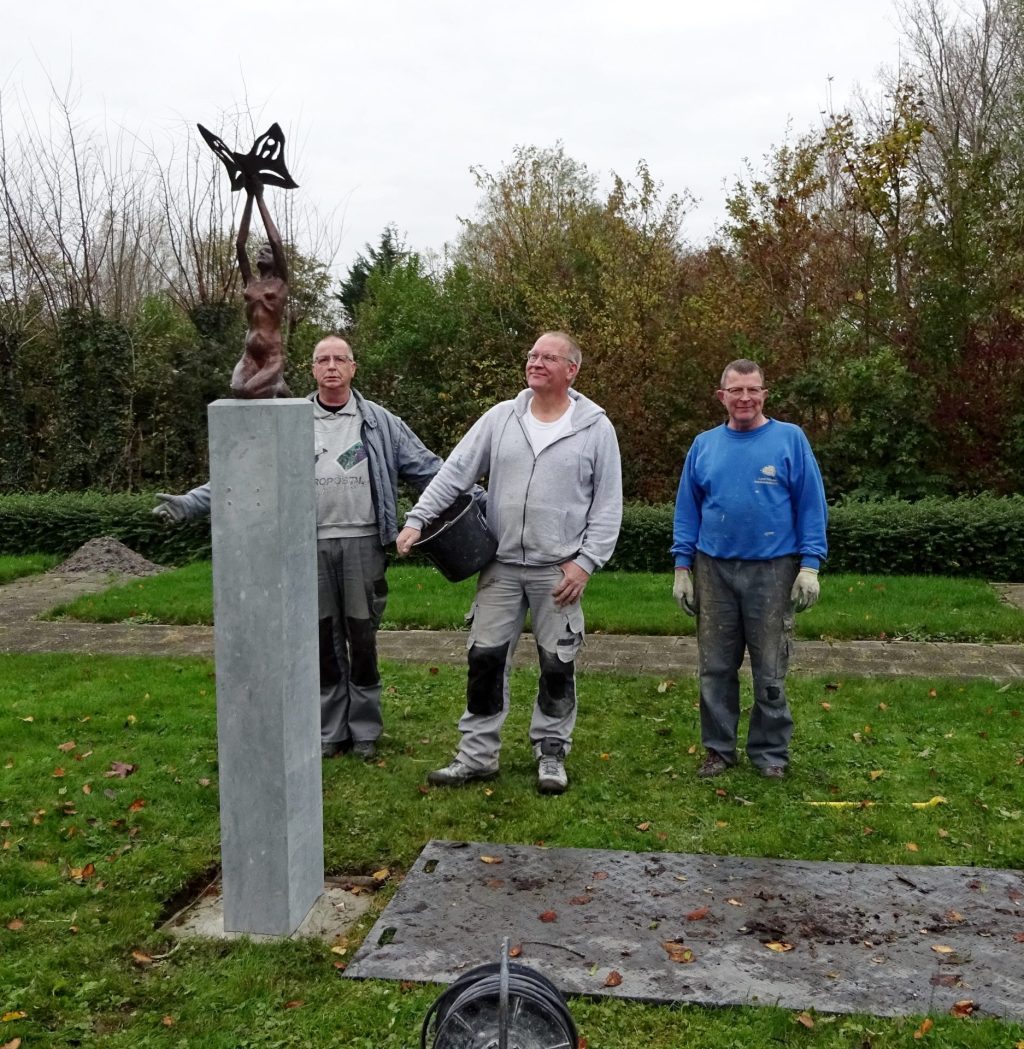
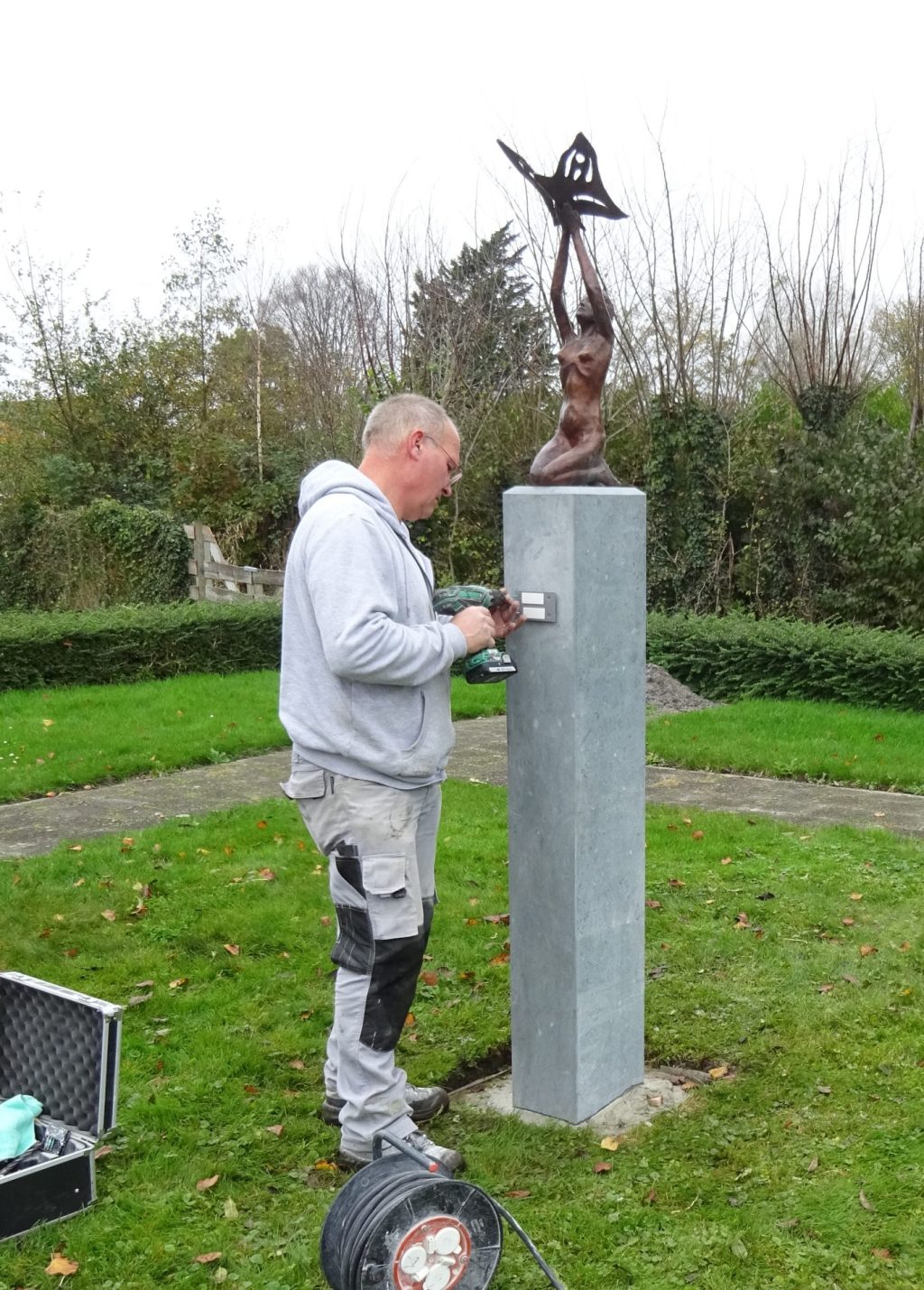
    Installing sculpture Surrender

    A few days before All Souls' Day 2020 I went to my place of birth for a special moment. I was about to install my father's sculpture 'Surrender’ in the cemetery behind the church.

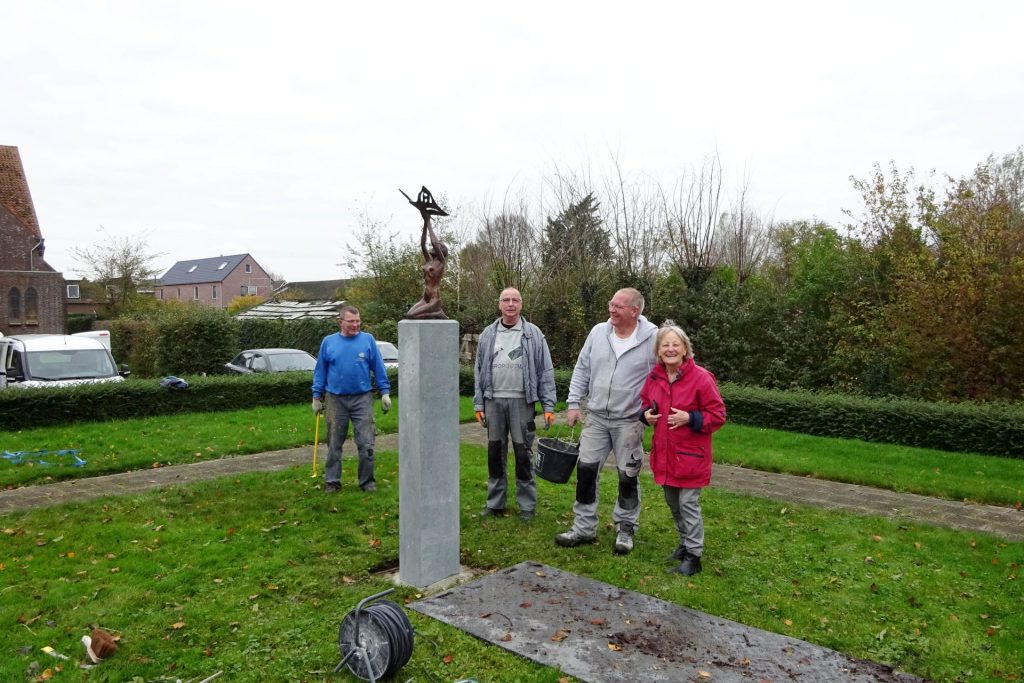
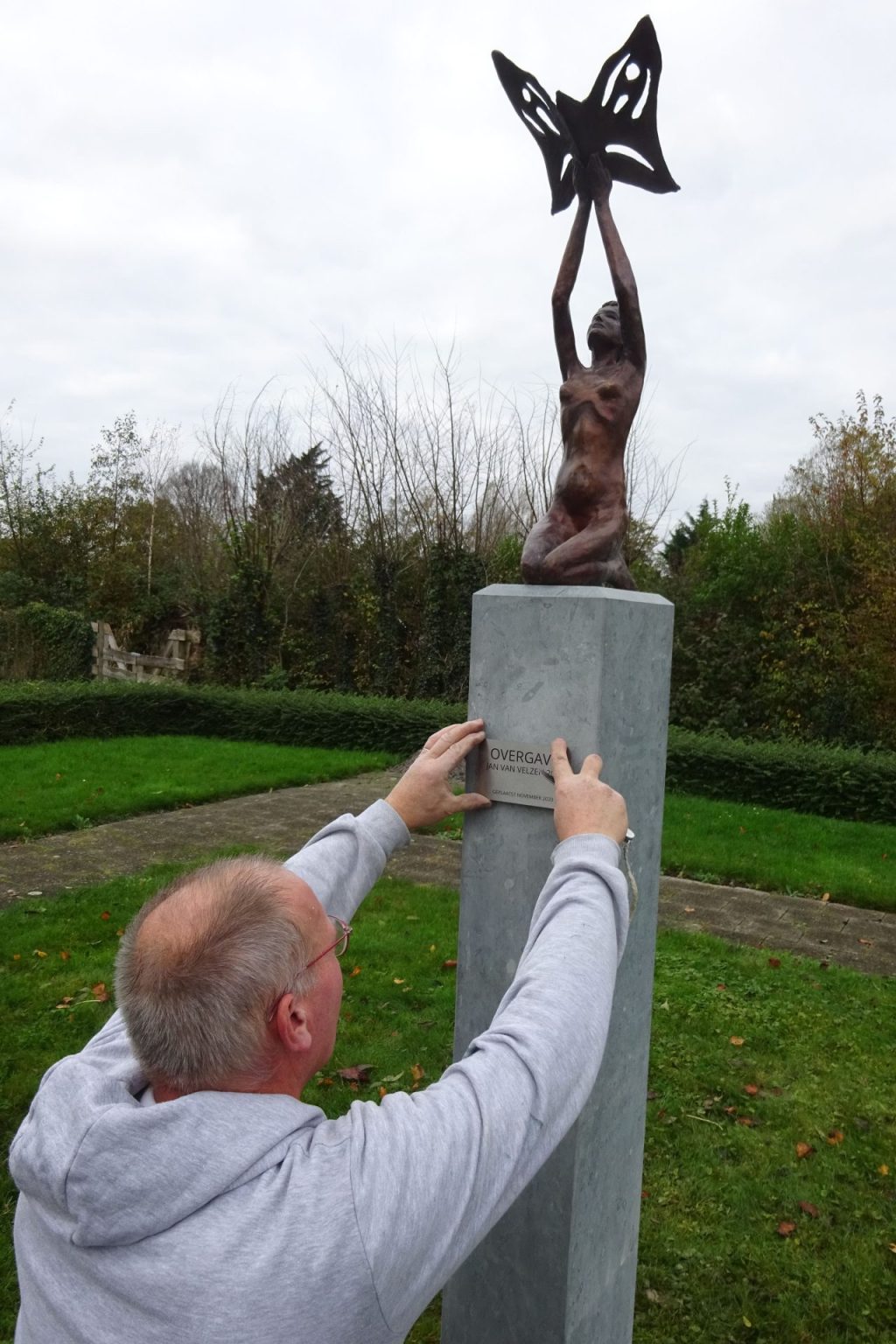
    My father, Jan van Velzen, had made this sculpture in 2011 when he, was nearly 80 years old. It represents a young woman releasing a butterfly, rising into the air. It depicts the release of a soul on its onward path to the light.

    At the time, he provided the following explanation about this sculpture:

    The thought 'Surrender’ designed represents the inner attitude of surrender to God's plan for us.

    The feminine aspect is present in every person as tender beauty, the kneeling posture as dedication to the Creator of all.

    The butterfly is a more often used symbol of the Soul, and means Transformation.

    As surrender is greater than letting go, so true beauty often is fragile silence.

    Jan van Velzen, 22 February 2011, Onderdijk

    In the right place

    Installing sculpture Surrender

    Actually, there was a whole process before this sculpture ended up here. My father actually intended this as a figurine for the children's graves in this cemetery, but that fell through. After his death, I made a proposal to my mother and brothers and sisters for a funerary monument, but we couldn't figure that out at first, as tastes differ, after all. Then the idea arose to place this statue on his grave, but we soon came to the conclusion that such a grave did not suit his modest nature. It would however be a good idea to donate it to the parish, and that was what happened.

    Pedestal

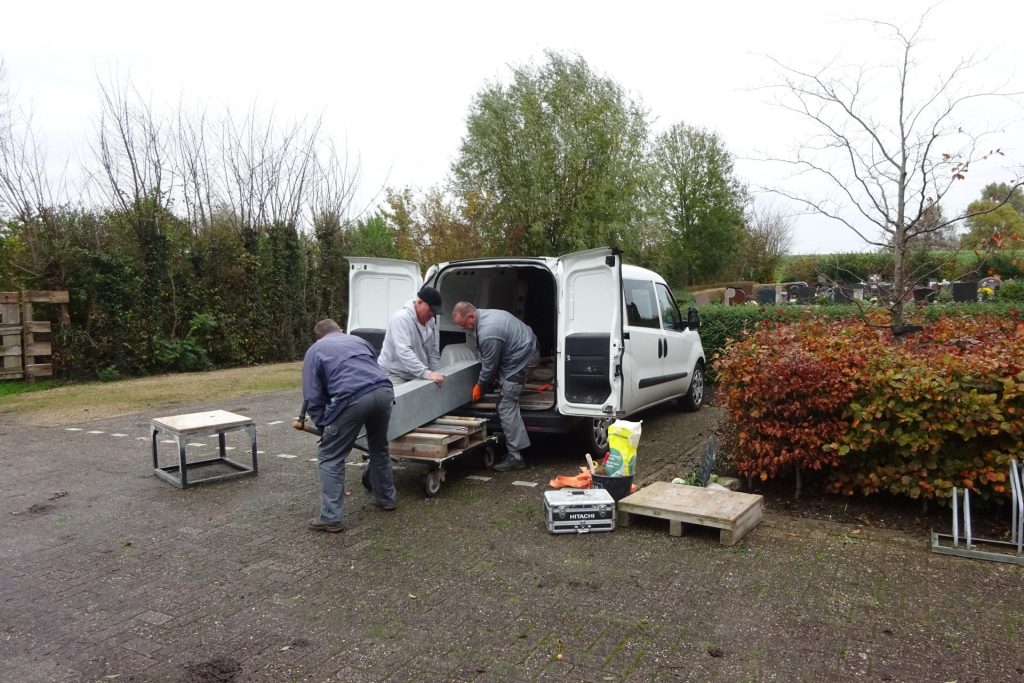
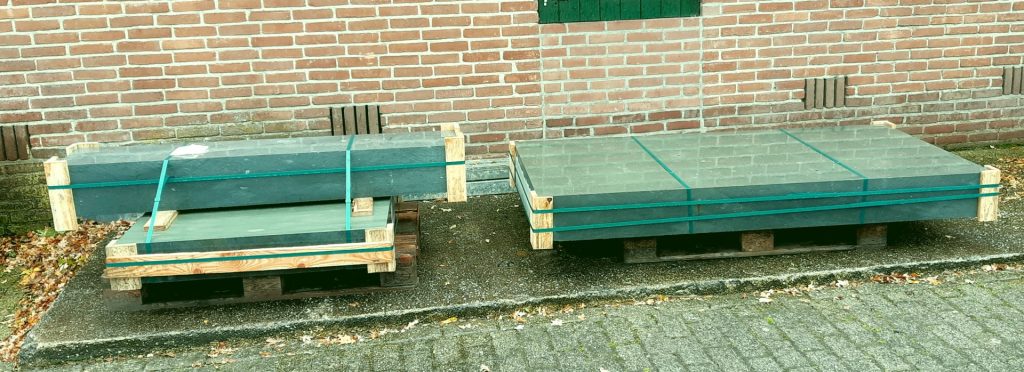
    stone arrived for plinth of Surrender

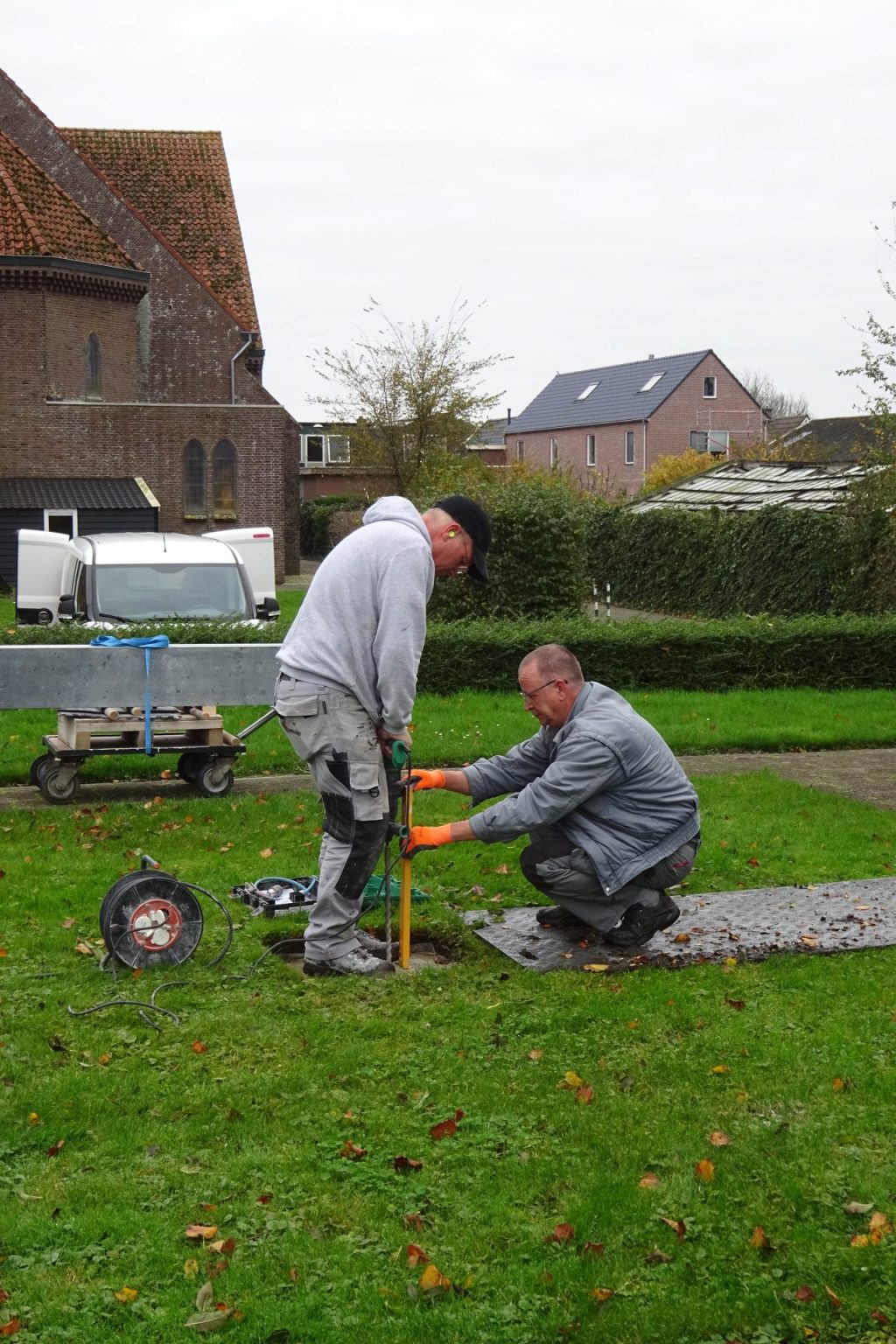
    I ordered a column of Anröchter Grünstein (dolomite) for this figurine. My mother felt it had to be placed high up in order to enhance its movement, and I can only say that she was right. I spent half a day doing all the preparations: sanding, drilling holes, removing its old base, drilling and tapping holes in the bronze, gluing pins, making a drilling template, collecting stuff and more. The pedestal stands on two thick stainless steel pins and the statue is also anchored in that way.

    To polish or not to polish, that is the question?

    This dolomite, or rather Anröchter Grünstein, is quite greyish at first when you sand or polish it. But the longer it sits outside, the more it turns into a beautiful light greenish tint. You can polish it of course, as you can see from my sculpture 'Ferns’, but in this case I just sanded it down to grain 200, so that the soft structure comes into its own, and not predominates over the sculpture itself with a sleek dark green shine.

    Installing sculpture Surrender

    Quite a weight

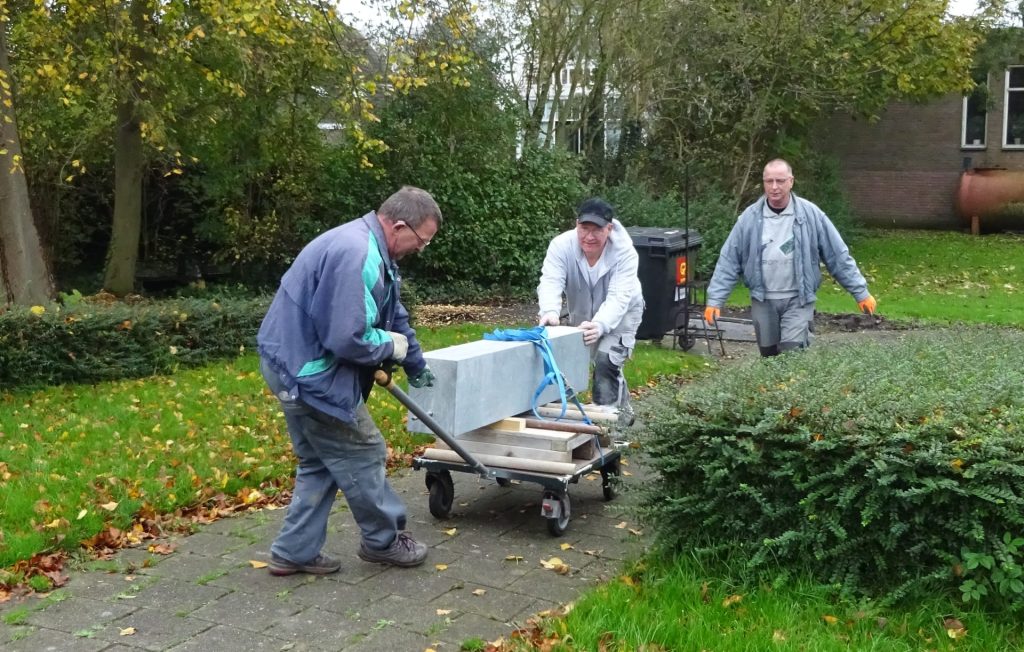
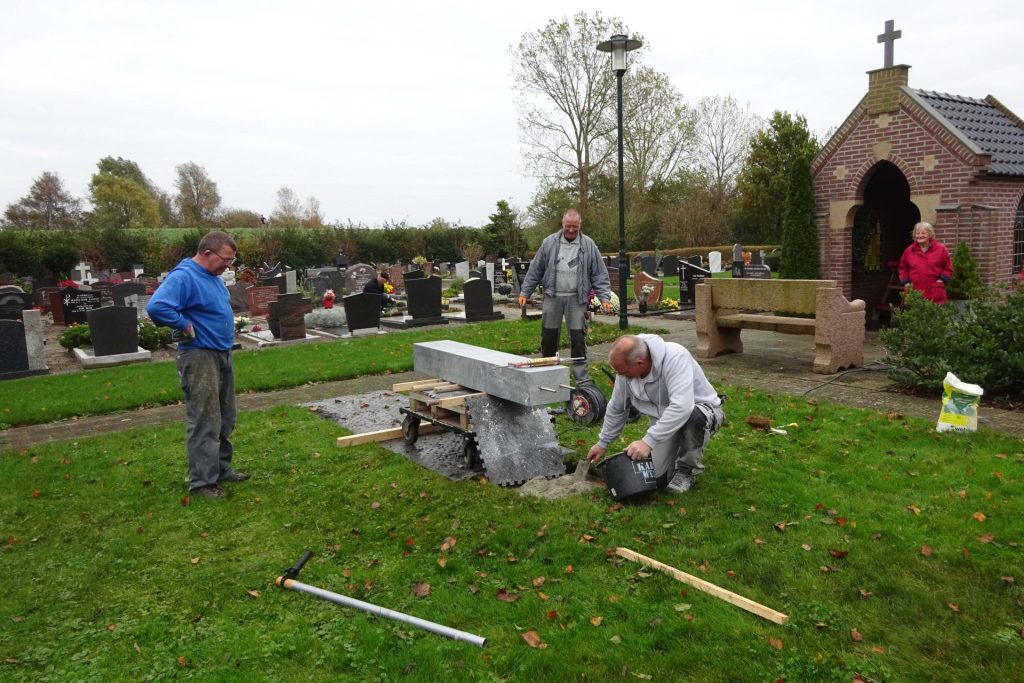
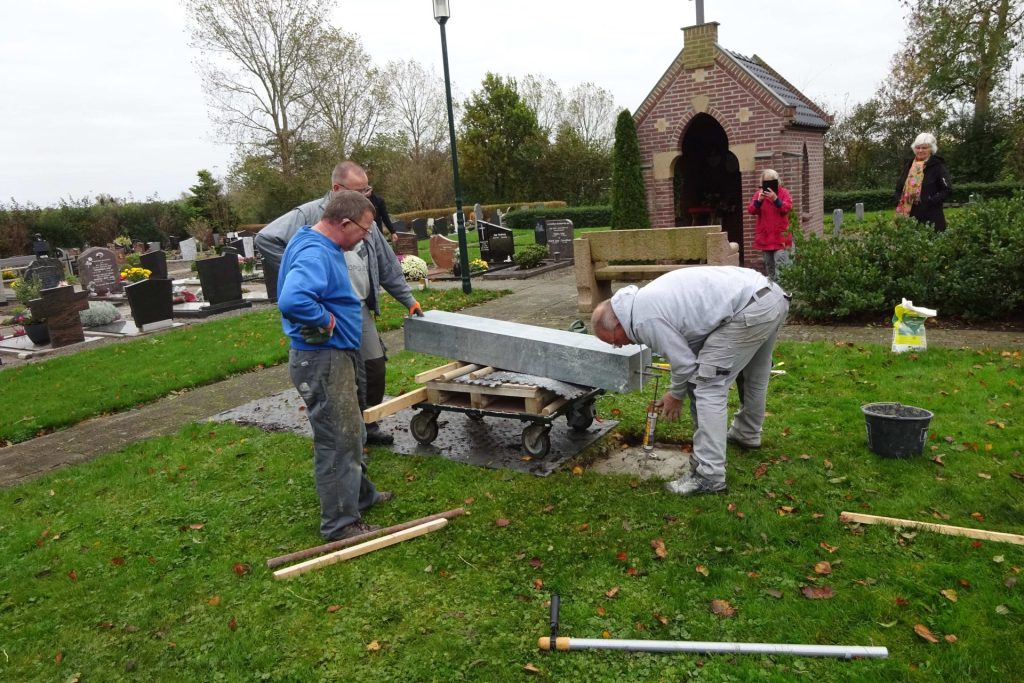
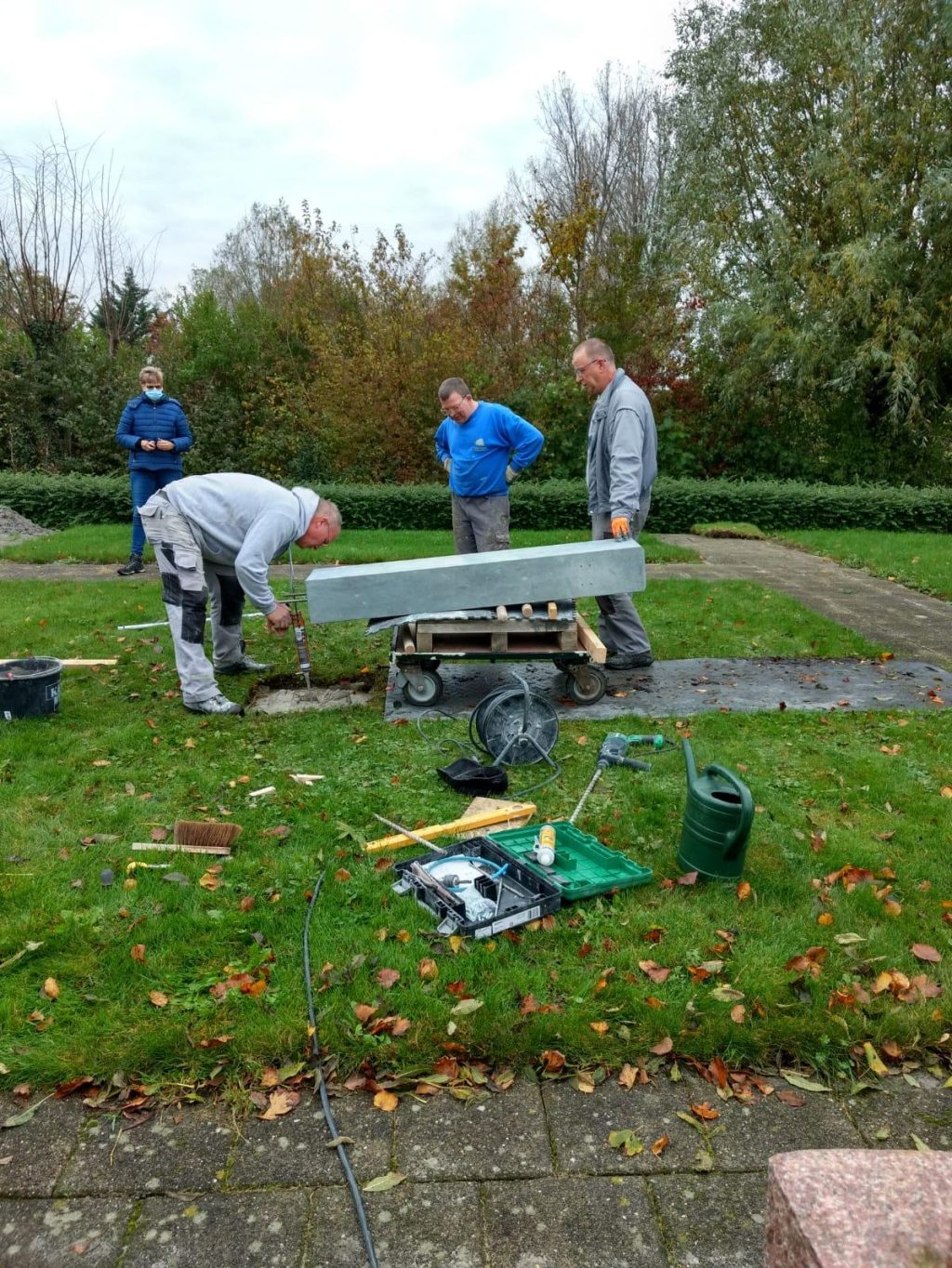
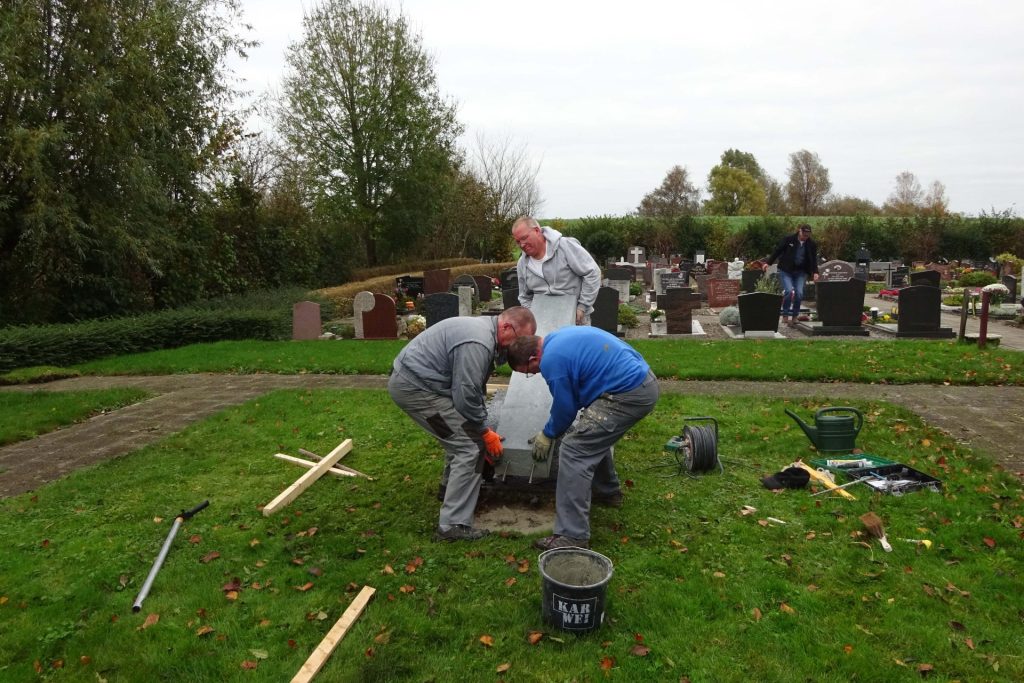
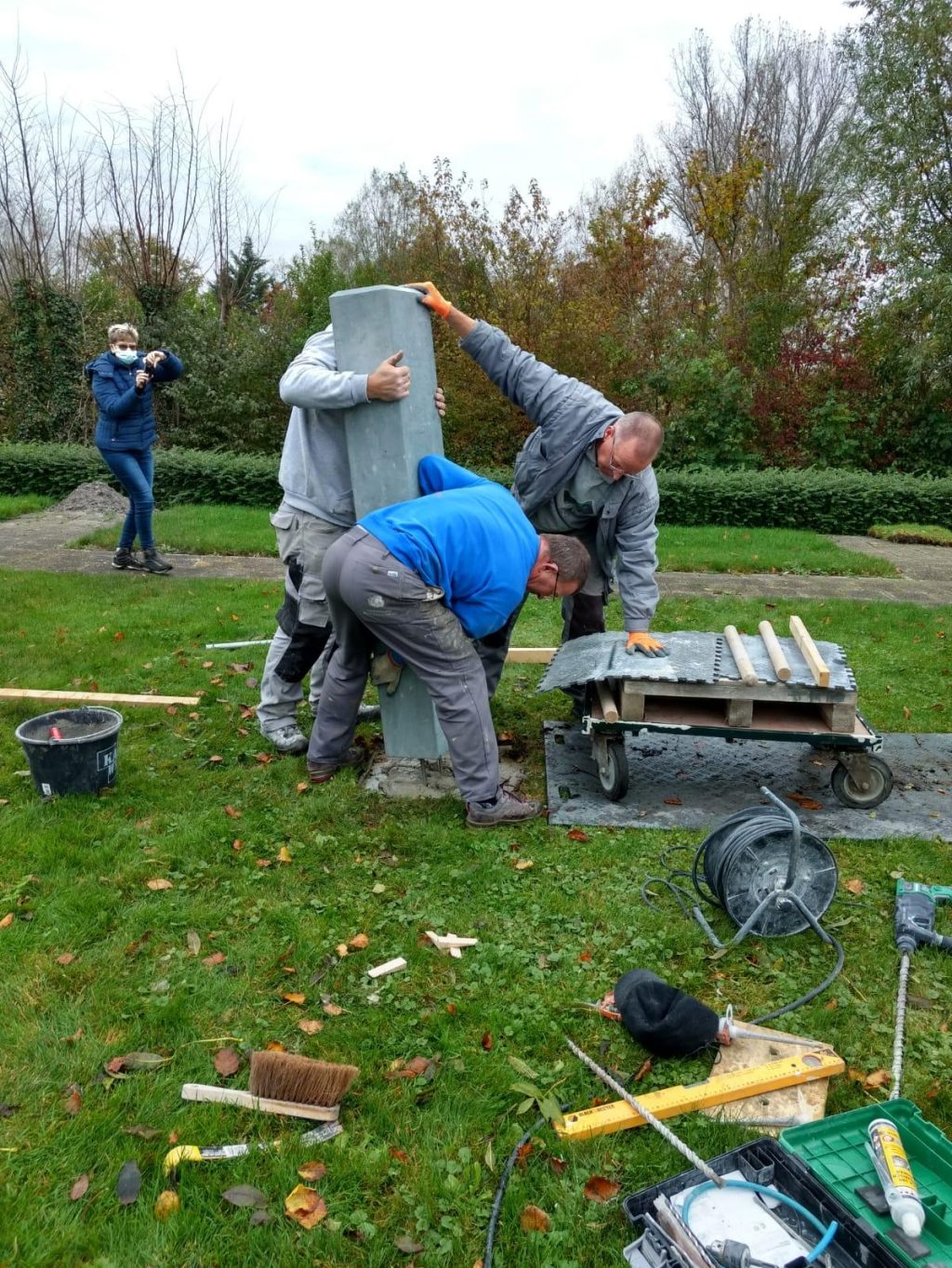
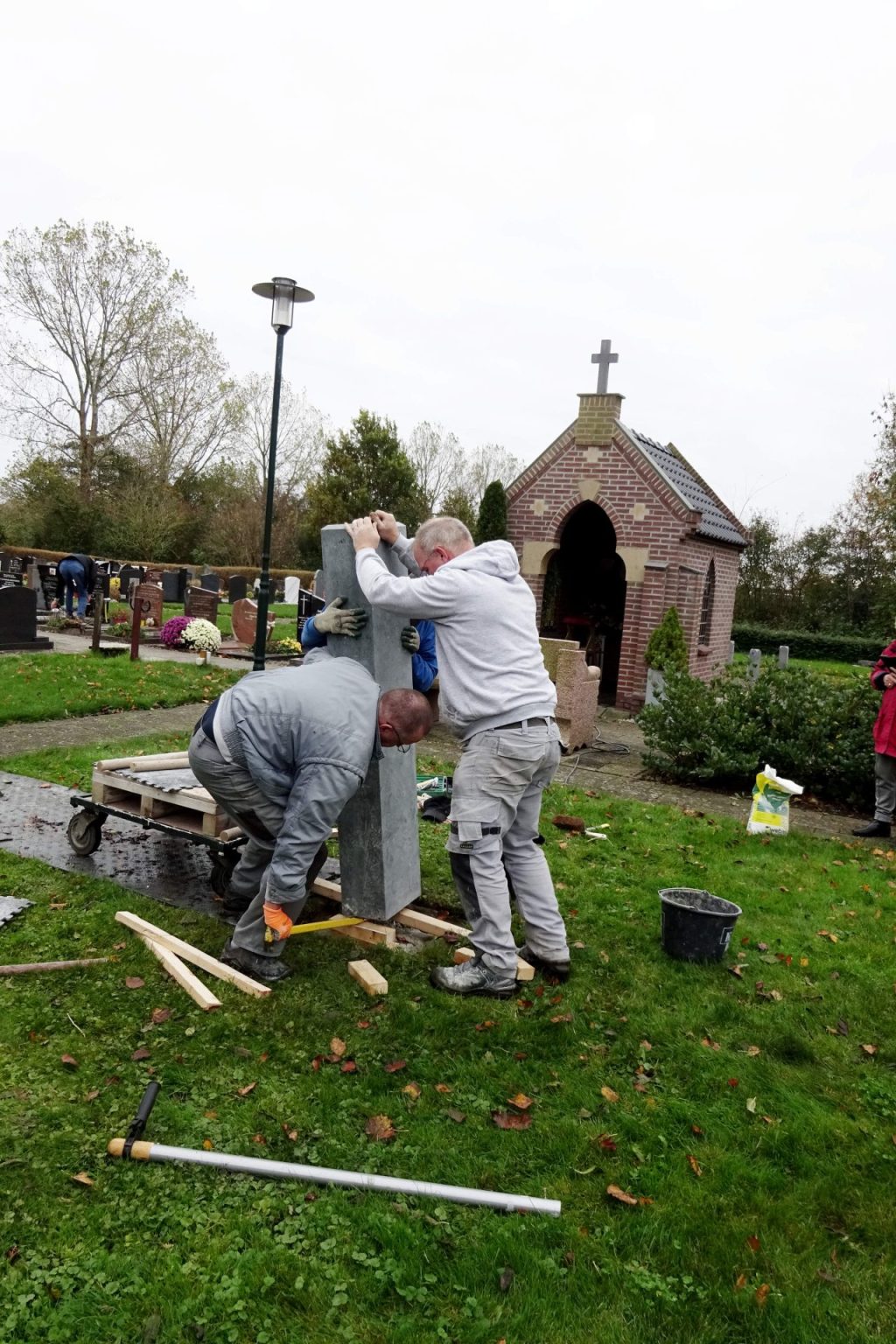
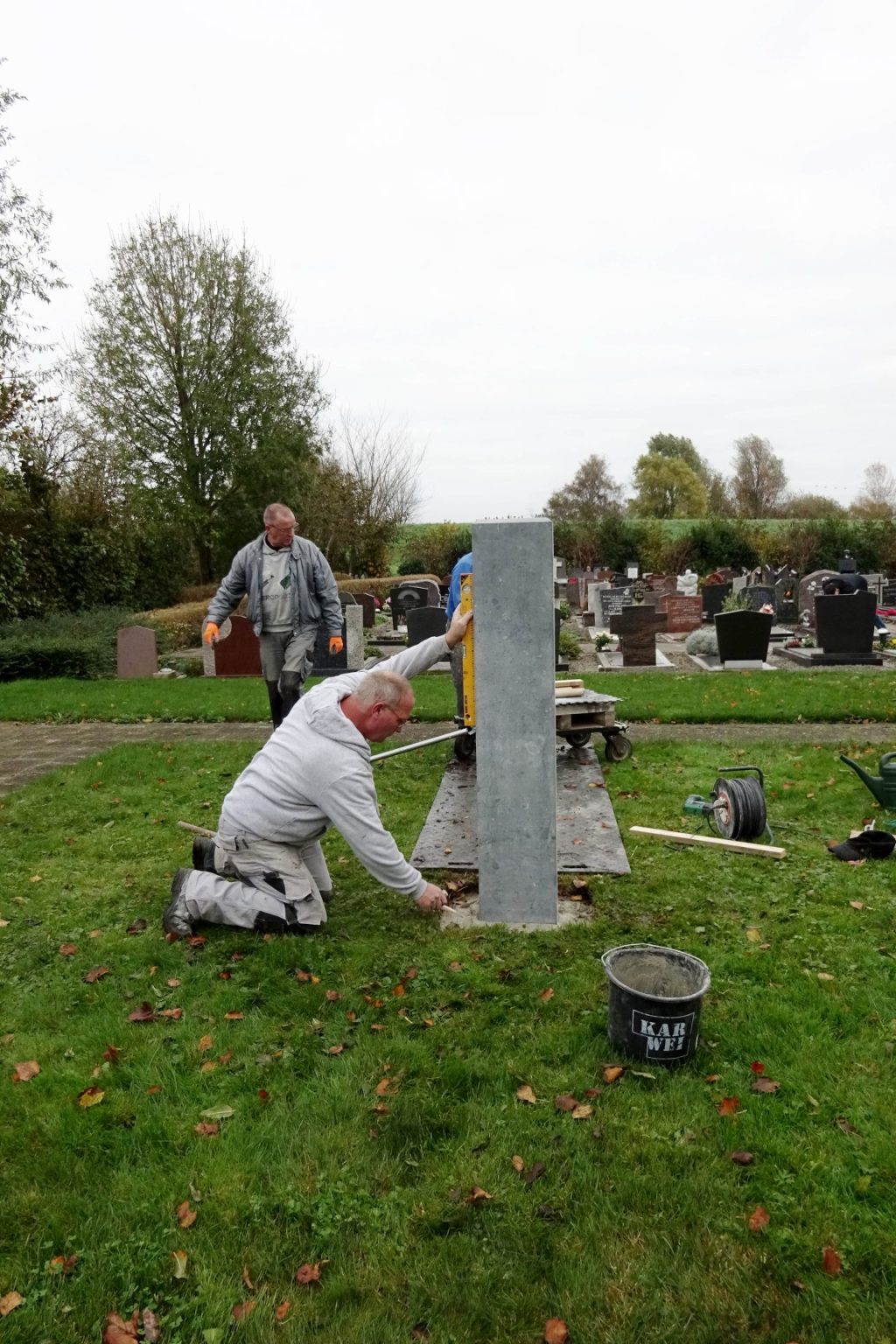
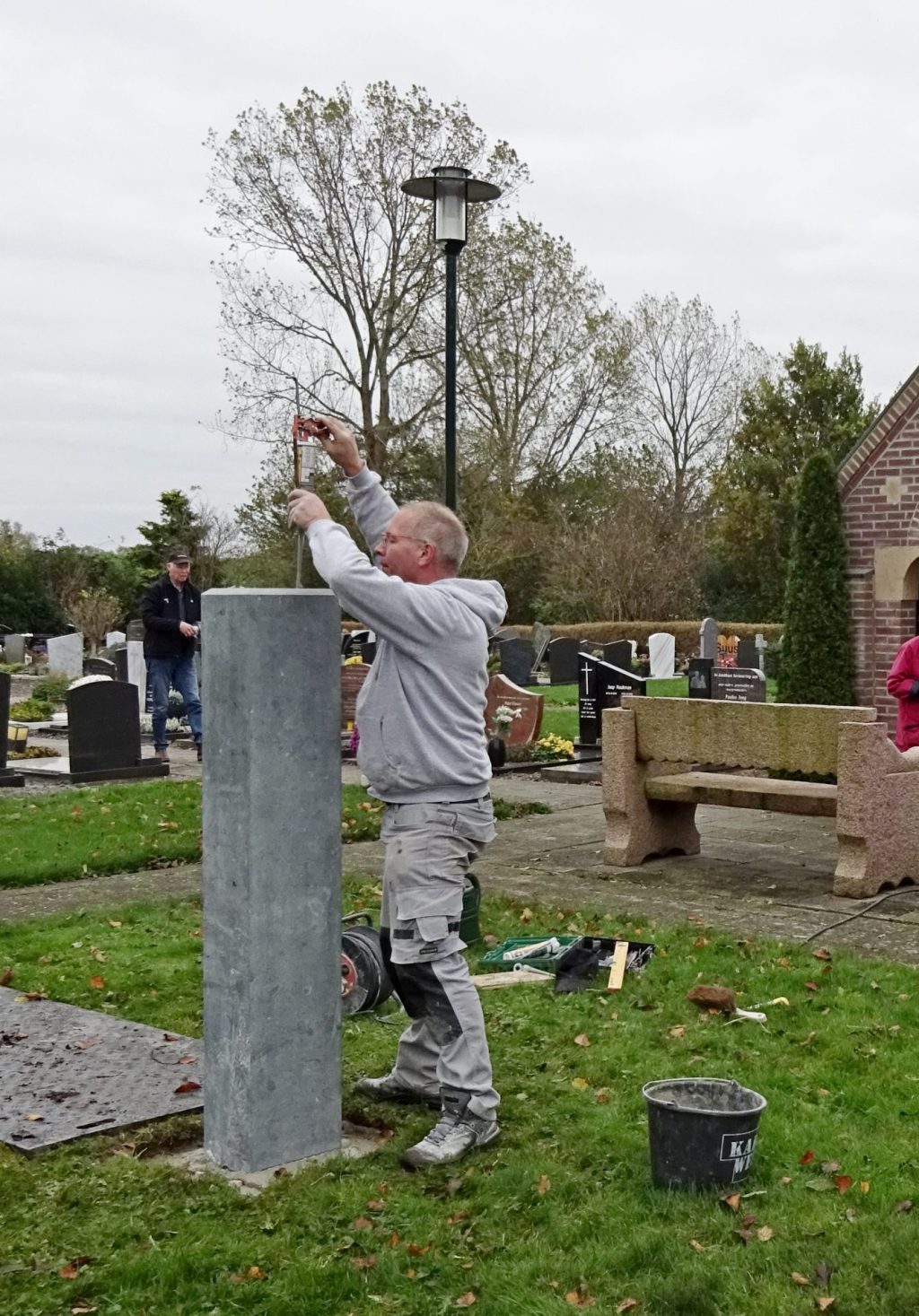
    This plinth weighs approximately 250 kilos, but with a little skill and the right equipment you can move it around just like the ancient Egyptians did. Leverage and rollers. Fortunately I had help from the Stroet brothers who also took a flat cart with them, so within half an hour it was all up and done.

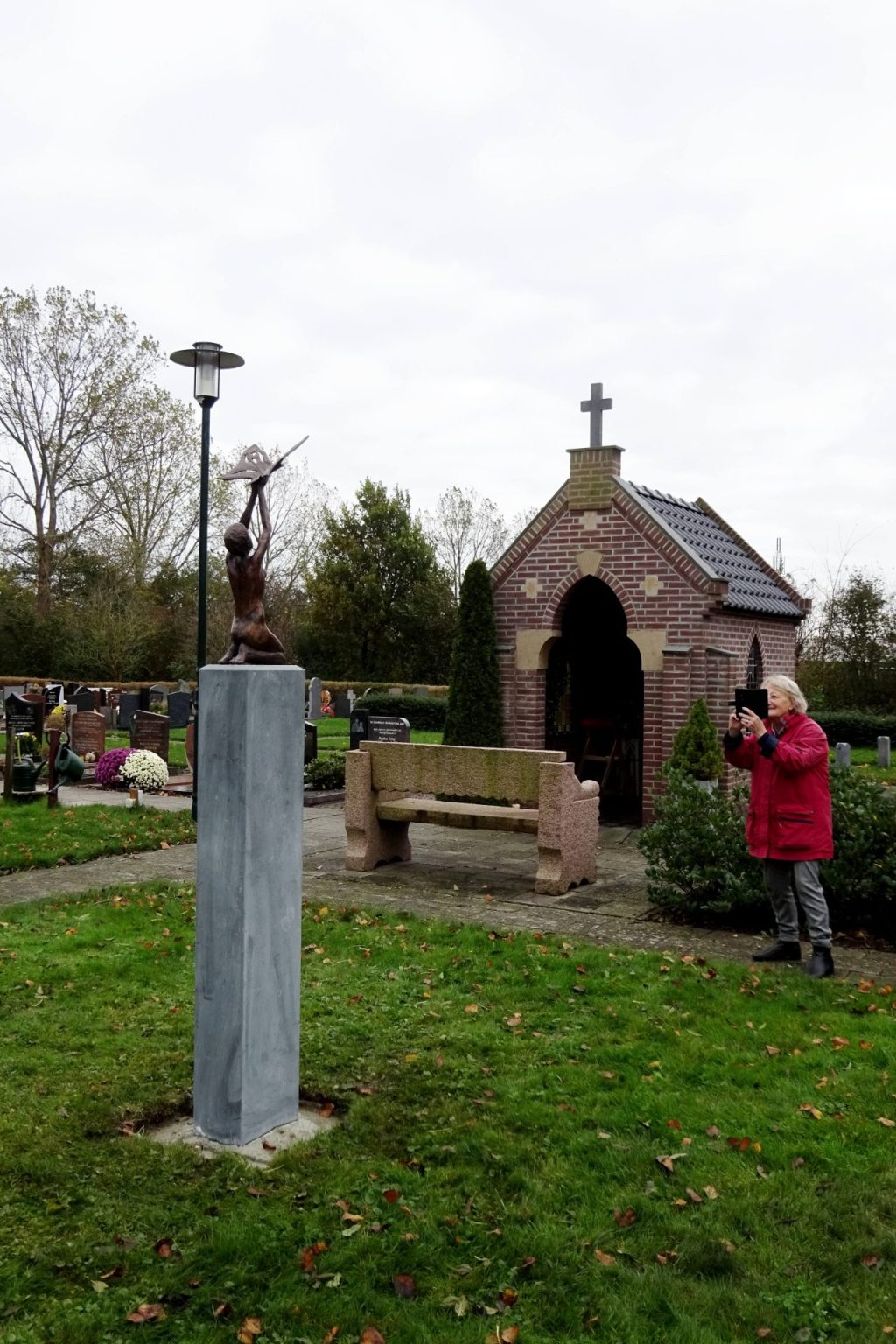
    The sculpture sits in the center of a green lawn, which itself is also more than a meter above the surroundings. The field is intended as an extra space for any graves. With the plinth of 1 metres 60 in addition, the statue protrudes high above its surroundings and thus the column strengthens the intention of the sculpture and the movement of the woman: releasing the butterfly, the soul that continues on its new voyage of discovery. The sculpture therefore contrasts well with the sky and the dike behind it.

    Installing sculpture Surrender

    It was also a special moment for me, because a lot of things came together that day. The statue of my father has such a strong symbolic function for the soul journey and it was almost All Souls' Day and All Saints' Day. It also felt strongly as if the sculpture had been made for that place and the day was perfect: nice weather, not subdued and still, but something of a joyous realization that it is not over after this, just the next step in our journey. Surrender doesn't have to be tough! It's great how everything can come together.

    More about his life

    Sculptors Jan and Koen van Velzen rowing

    A while ago I shared a first article about my father's life. I could write five more, I noticed later. But actually that doesn't fit in with the blog and there is so much material that it would become an ever bigger project. That is why we are now in the process of working out and printing his memoirs, in which we hope to include a lot of photos of himself and his work. On this blog I will dedicate one more article to what I learned from him as a sculptor. Meanwhile, I have also started working on his tombstone, because we finally agreed on what it should look like. More on that later.

    Gallery

    Below you will find a photo series of the installing of the pedestal and the sculpture 'Surrender'. My mother really didn't want to be in the picture, but as she was doing the donation, she has earned that place as far as I'm concerned. Thanks to Gerda Schutte for most of the photos.
  • Boulder and oak-tree and stone

    A stone-tree for the group home

    Today in Amersfoort, a new group home for people with a mild intellectual disability was inaugurated. I've lately been involved (pro deo) in a number of things in the new home, including the stone-tree and the boulder in the garden.

    The stone-tree was a special project for me, because it led me to undertake several things that I do not normally do. It's a long story, so let's start at the beginning!

    Read an earlier post about the boulder here.

    The mad squire in 1661

    boulder and oak- pulling the Amersfoort boulder, on an old print

    Each Amersfoort resident knows the story of the mad squire and the Amersfoort boulder. Or, at least, he/she should know it. In short it goes like this:

    Squire Everard Meyster makes a walk on the Leusden moors with his study pals, and comes upon a huge boulder, sticking out of the ground. After some speculation about the origin of the boulder the squire is willing to bet that the boulder would be easy to move. He gets 400 Amersfoorters crazy enough that they willingly, and for promises oflots of beer and pretzels start to move the boulder of 7 tons and hoist it on a cart, and under loud cheering bring it into the city. A man lost his legs in the excitement, but that couldn't spoil the fun.

    Then the stone was set on display at the Pig's Market. Later, the squire writes a mocking rhyme about the gullible Amersfoorters, and the boulder was buried out of shame. Only in 1903 the boulder was dug up again. Today, the boulder is still visible at the beginning of the Arnhem street. A stone's throw from the group home.

    Real Amersfoort boulders

    Amersfoorters have been nicknamed Boulder pullers ever since that day’ and the city is also called Boulder Town. So what was a more appropriate name for the future residents than The Boulder Club?

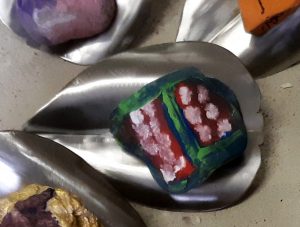
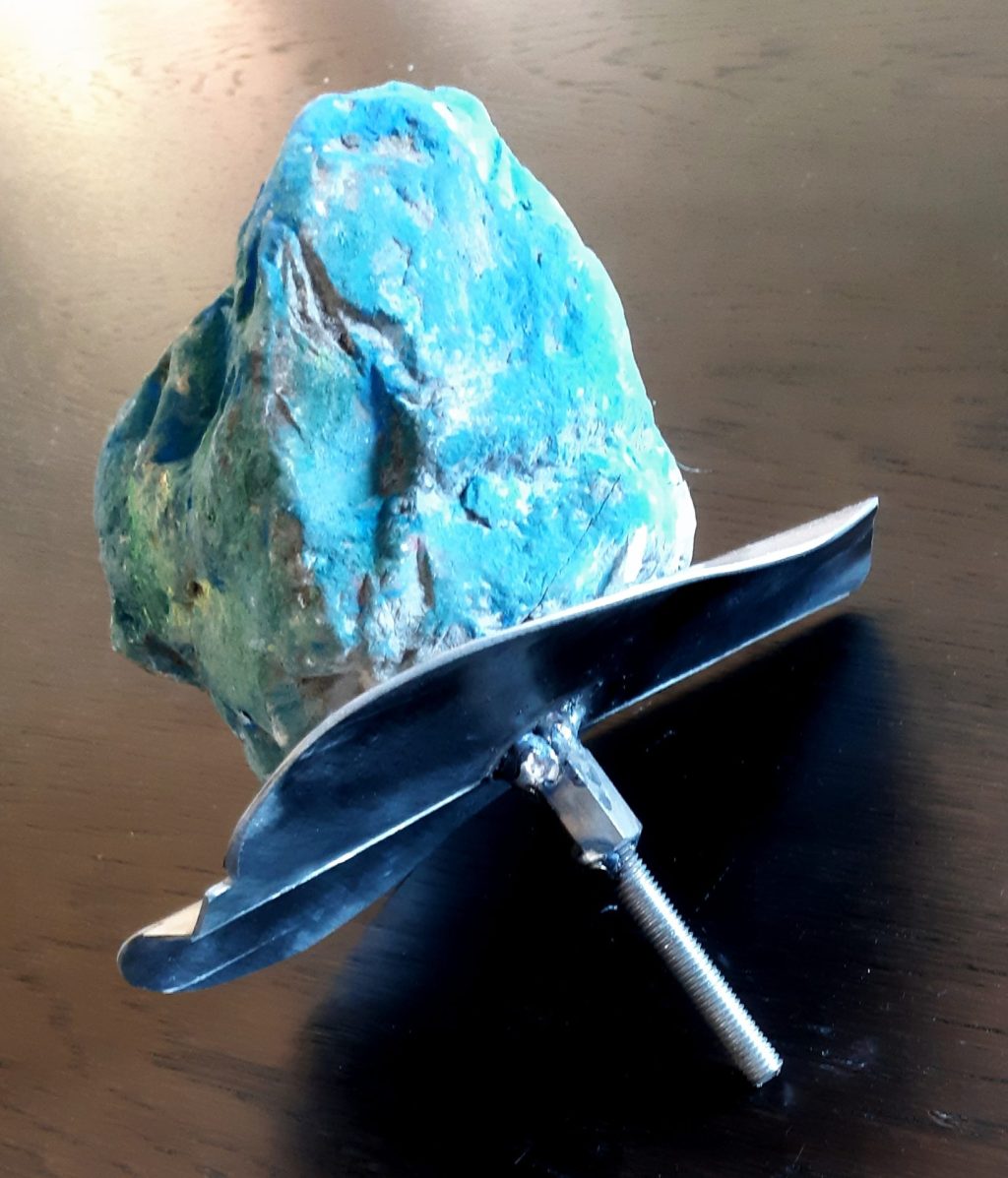
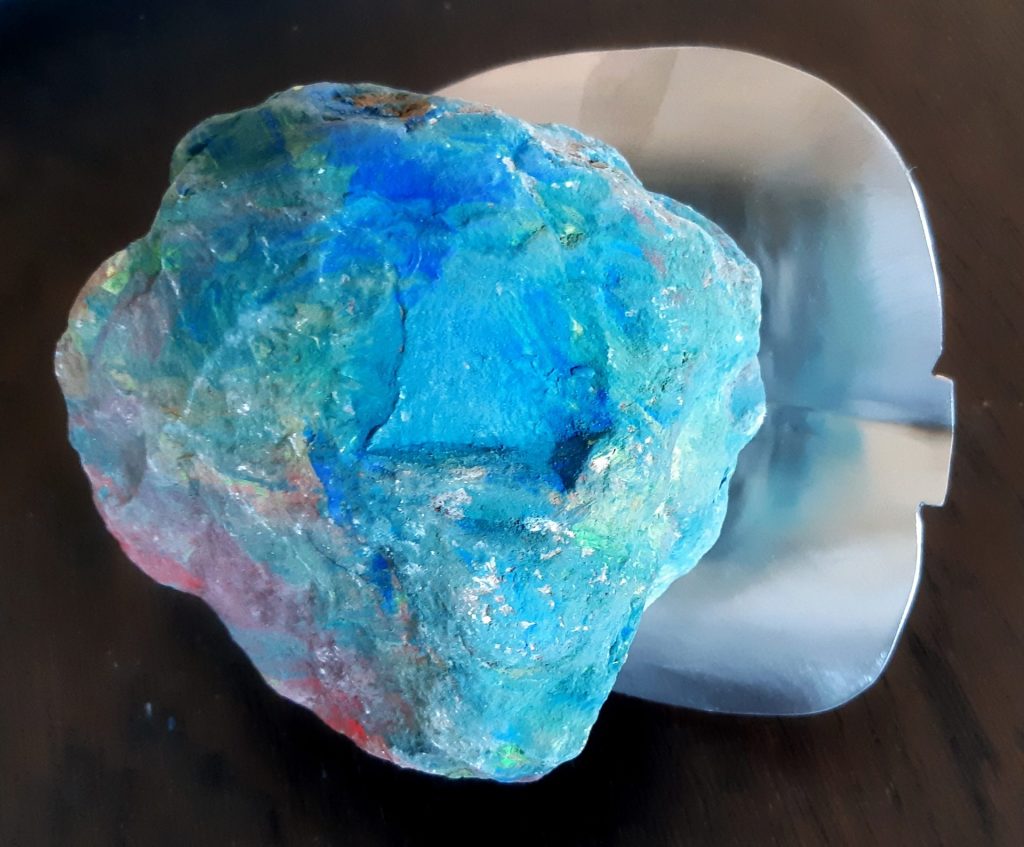
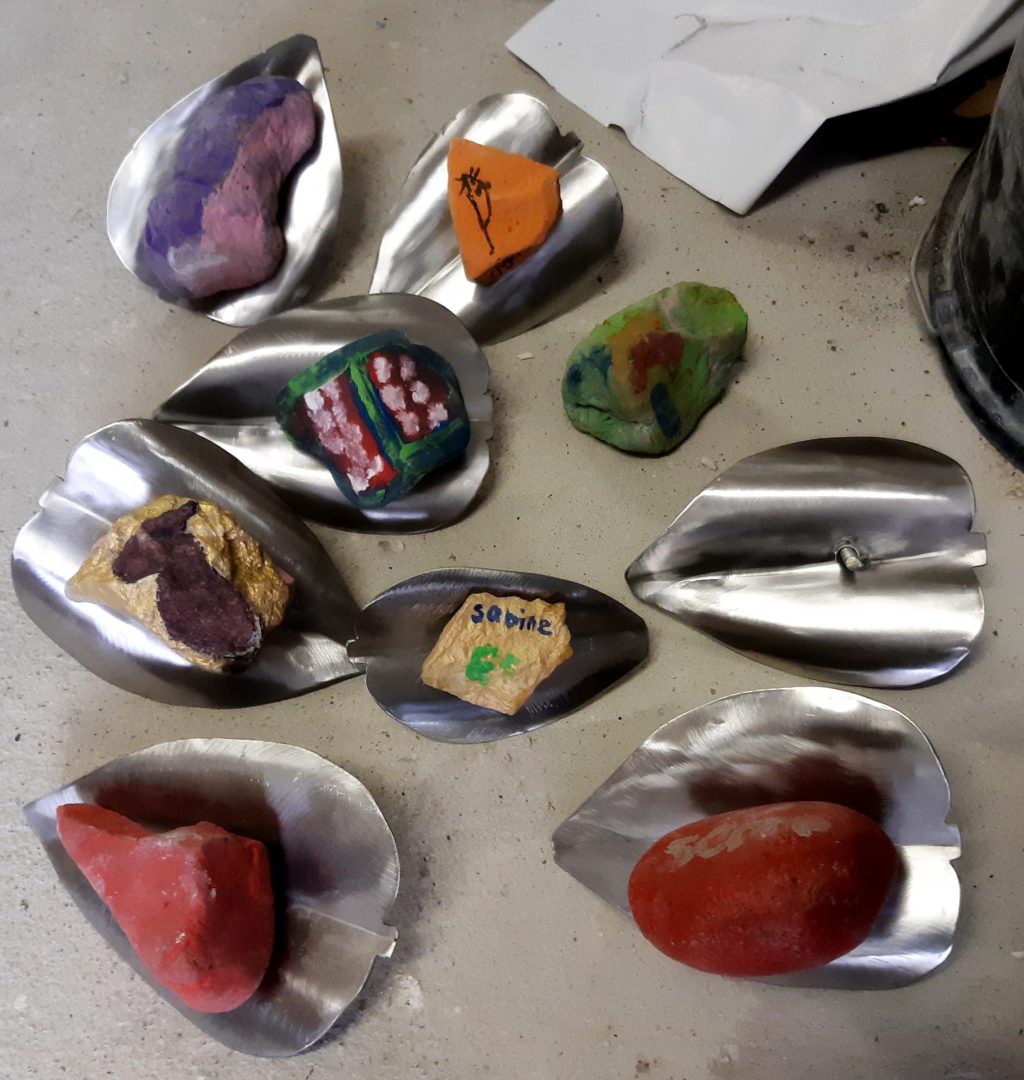
    At one of the meetings of the Club every resident has painted their own stone. And these remained lying around in a basket somewhere in the house. A pity though, thought the central committee, and after some discussion an idea came up for a work of art, a tree with these stones as leaves. Boulder and Oak.

    Whoever thought up what, I don't know anymore, but in the practical part, it ultimately came down to a collaboration between me and painter Sandra Nanning, who has made a lot of murals,  and from trees as well. Sandra was going to paint a large tree in the stairwell, and I would attach the stones to stainless steel tree leaves.

    Making tree leaves

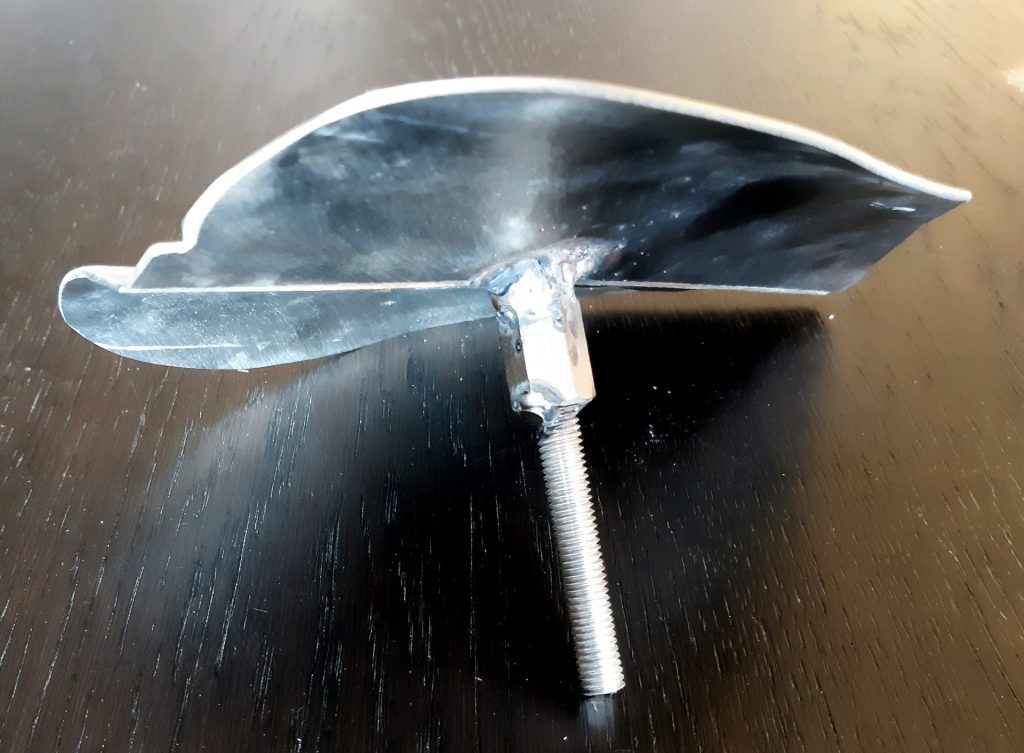
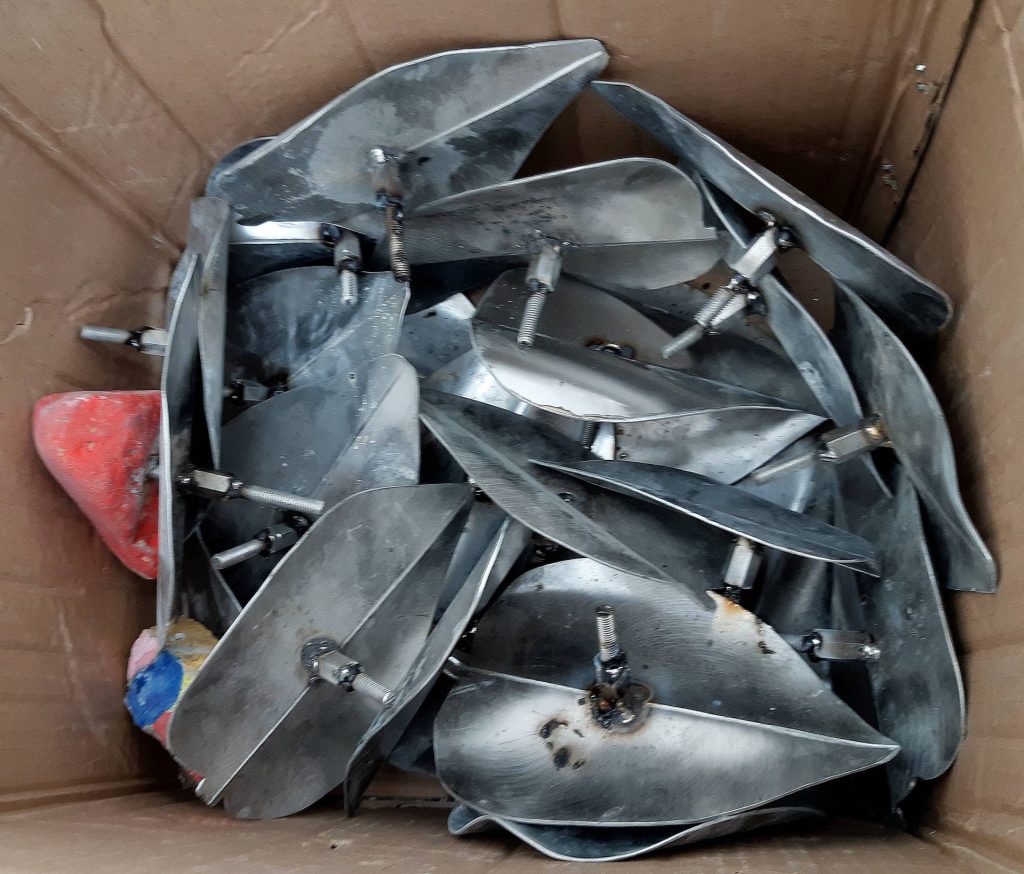
    I bought a sheet of stainless steel and cut out the shape of the leaves. After that, I made a hole in the middle, and a fold over its length. I tapped the leaf halves around a thick tube to get the leaf effect, and welded an long M8 nut on the rear side. Into that, I welded a threaded wire piece, with which I can fix the leaf into the wall. It is a somewhat cumbersome construction, but now every leaf has a nut into wihich I can screw a stone.

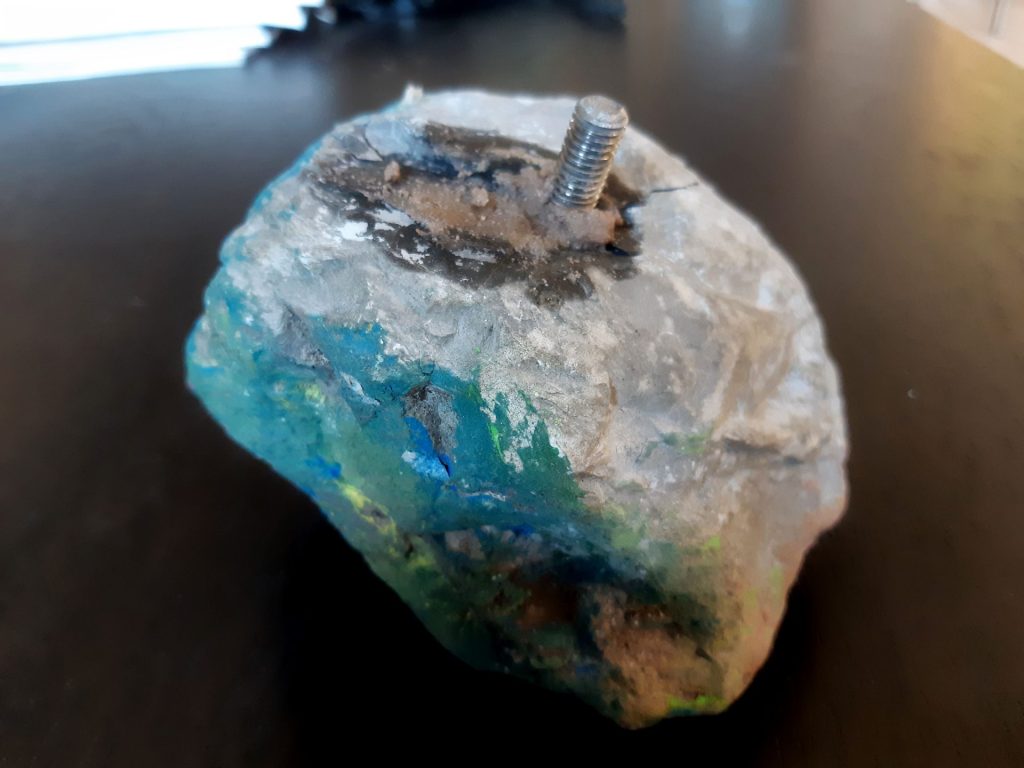
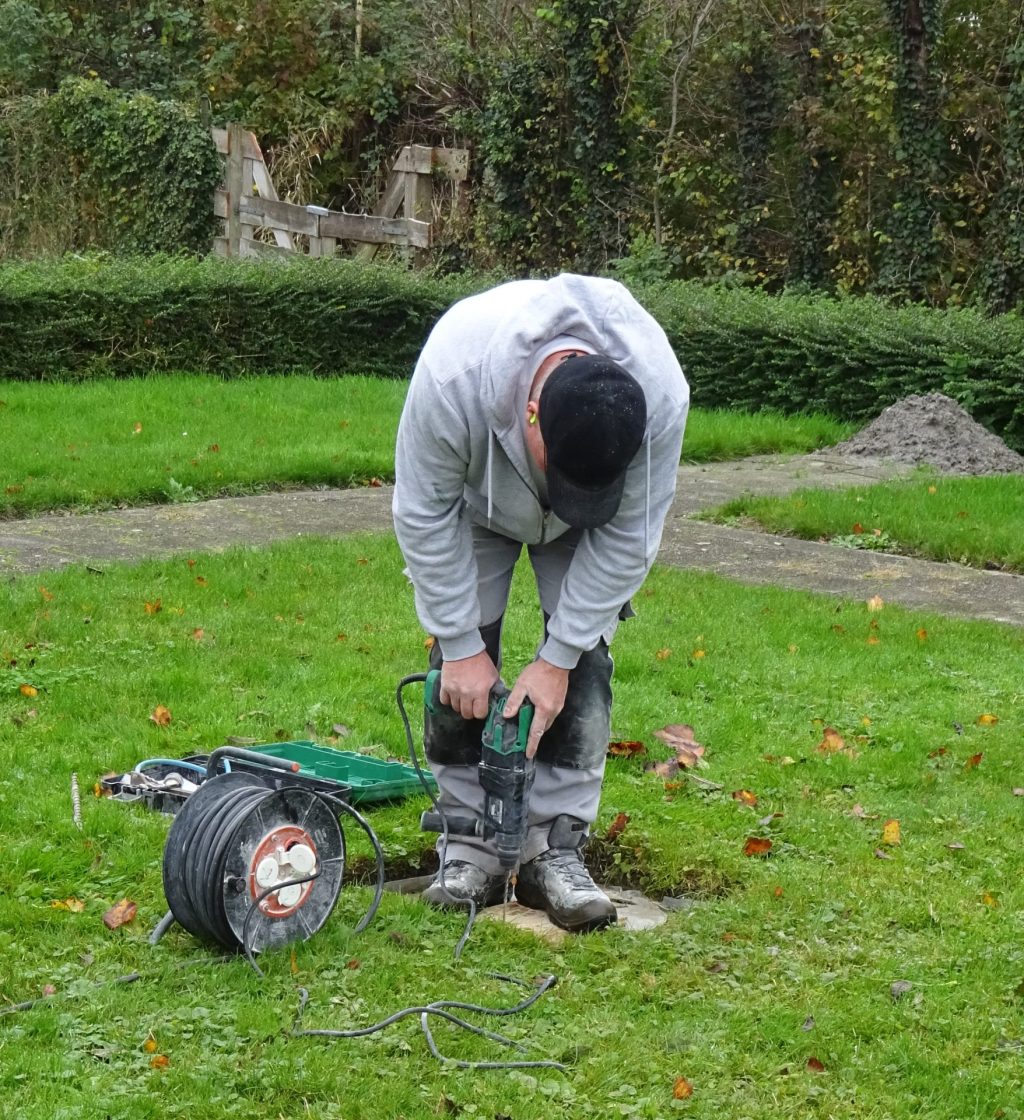
    Each stone had to be pierced. And there were hard ones among them! Limestones I can drill without the hammer function, but a piece of granite can't be drilled with a hammer drill. It would break in half. So many of these stones I needed to patiently pierce with a diamond bit. 32 in total, so I had enough on my hands there.

    A huge tree in the stairwell

    boulder and oak-tree and stone

    Sandra then went to work on the back wall of the stairwell. She painted one big tree, from the ground floor up to the second floor continuously. It also runs out into the two side walls, so it stands with an imposing presence. At the bottom are the names of the initiators of the project, plus the architect and the owners of the property who have put so much work in.

    On the first floor is a poem about a tree that was good at letting go. And on the top two floors are the stones of the residents, criss-cross all over, each on their own stainless steel tree leaf.

    Should it be necessary, they can be screwed out again, and there are still four spots left for future residents.

    The Tree in the Wood

    The tree in the wood

    in autumn let everything loose

    He let go of it all and as he stood

    he whispered softly:

    'Letting go is paramount in life, to stand stronger and be sound

    boulder and oak-tree and stone2
    poem on tree
    boulder and oak, stone and tree3


    Placement of the boulder with the house numbers

    A week earlier I have here too placed the boulder that I recently provided with house numbers. The boulder was put in the front yard, right next to the entrance. I had transported the nearly 500 kg heavy boulder in the back of my white little van. I could lift it out with an engine hoist I'd brought along in a trailer. After that, it was only a matter of laying planks and planting it into the garden.

    boulder and oak- boulder hoisted
    boulder and oak-positioning of the boulder2
    boulder and oak- planting the oak tree

    Boulder and Oak

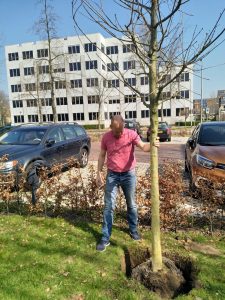
    This boulder was not the only thing that was planted; later that week a young oak tree (Quercus Robur) was also planted, in appreciation of the architect and the two developers. Because an oak can live for over 450 years here, we hope that both the group home and the oak will live a long and happy life.

    Update 3 June 2023: painted

    Because the boulder was rather in the bushes and was difficult to visible in the dark and in rain, I just painted the numbers for a while. So, here goes.

    Kei with gold paint

No more messages to show.

No more messages to show.