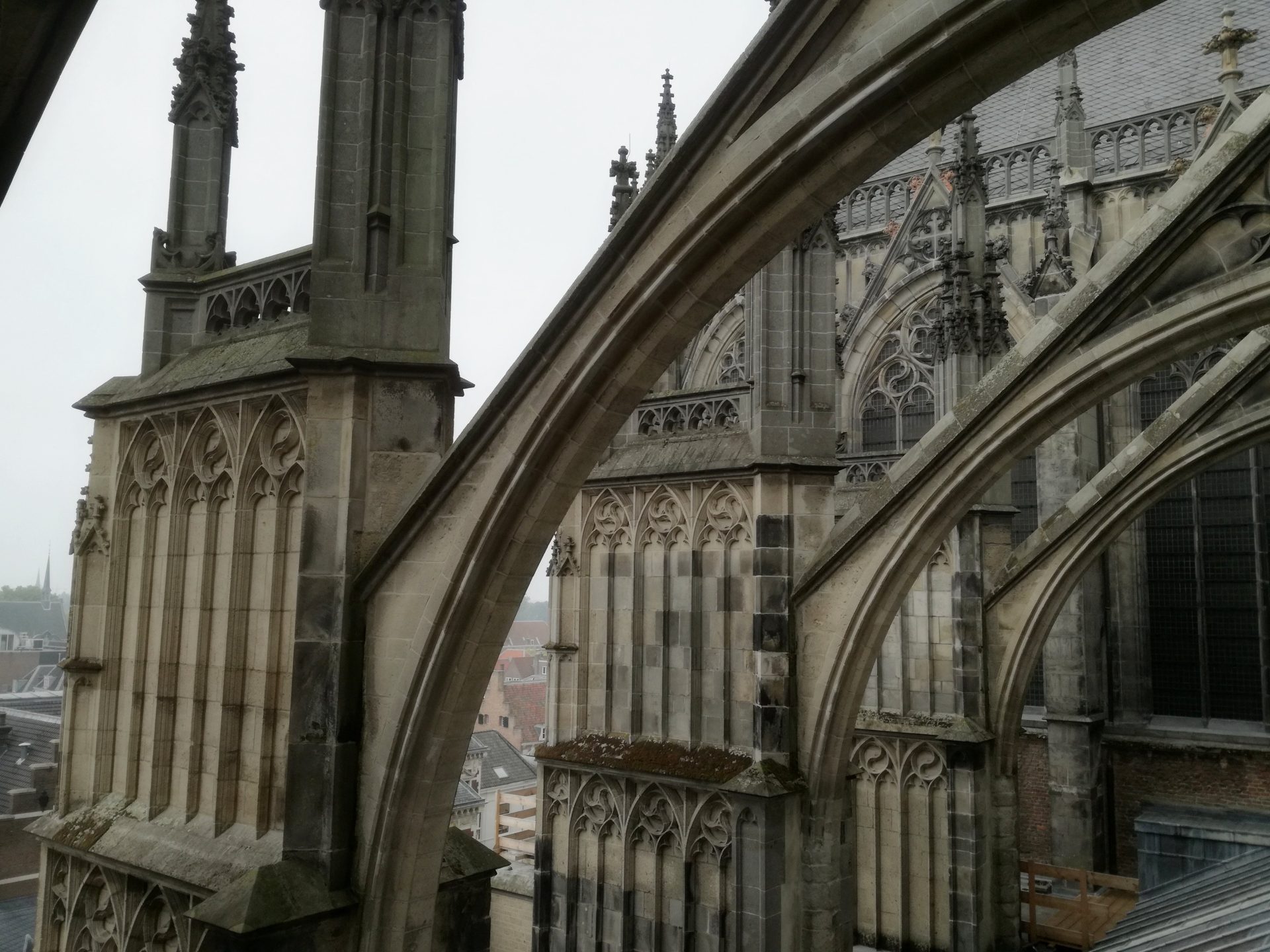
• Ornamental work for the Utrecht Dom Church and St. John's

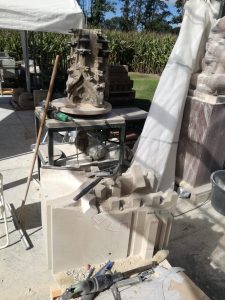
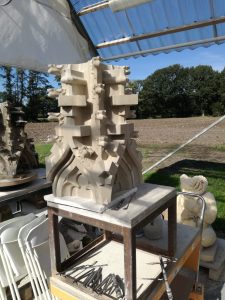
    A suspended ornament for a canopy of St. John's
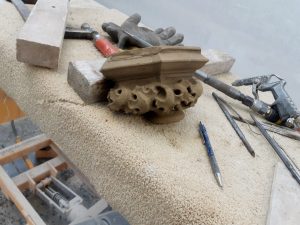
    Ornamental work in Udelfanger sandstone: suspended ornament for a canopy from St. John's Cathedral
    I'll still need to adjust the profiled parts later

    It was an interesting last week of the year. I first went to St. John's Cathedral in Den Bosch, where I needed to carve some ornamental parts. It was a ’toot’ from a canopy. The old one had weathered down and I was asked to make a new one. But the scaffolders above my head were already busy breaking down the scaffolds, so after taking some measurements I went back to Achterveld again with the workpiece to finish it there. I had actually already done this ornament long before that, but when I got there the first time, I noticed that the flowers I had carved on it so nicely were bigger than on the ornaments around it. So, I've taken it back again, carved the new basic shape in the workshop, then went back again to Den Bosch, and made a start with carving the leaf motif there, then back to Achterveld, and finished it there.. Now I'll still have to install it on site. Sometimes things are bad, and sometimes they're worse. Like this time.

    Visitors
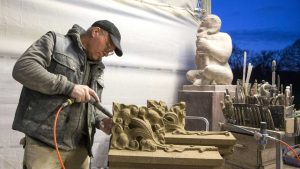
    Ⓒ Thijs Rooimans for De Telegraaf

    Wednesday we would get a studio visit from an eight persons strong committee, in connection to the ornamental work for the Utrecht Dom Cathedral. But we had only just received the stone from which we had to make them. So we immediately started the carving work. We'll be carving 29 side crockets in tuff for a restoration of three facades of the Southern Chapel. This is near the courtyard, the Pandhof. This quadrangle by the way is a very magical place, a must when visiting the inner city of Utrecht. Serge had modeled two maquettes, and Stide and I had each carved an example. The comittee examined the design and details of the original fragments and of the copies. Of course the carved and molded specimens were as required, even though mine was still not quite finished.

    In the newspaper

    After I'd finished it, I uploaded a picture on Instagram right away, and for good measure, one on Twitter as well. Apparently I had put the right hashtags next to it, for less than an hour later I got a call from a reporter who wanted to write an article in the Utrecht edition of De Telegraaf. At the end of the day the photographer came, and made that beautiful photo above. Click on the picture to the right to read the article. Pity is that it was written so that it looks like the others are employed by me, and they're not. Stide, Serge and I are all independent sculptors who work together. Even new addition Jelle is self-employed. Now that I'm getting more publicity, it doesn't make me everyone else's boss automatically!

    On the radio

    Later on, we were called by RTV Utrecht. They also wanted to make an item on the radio. Fortunately Stide can talk easily, so I was very happy that he wanted to take that part. He told something about the background of gothic ornamental work and our role in this restoration.

    On TV

    RTV Utrecht also wanted to shoot something for their TV channel, so today a cameraman came, who shot a few hours of material for what ultimately ended up as half a minute of TV material. View Here is the video and the accompanying article:

    For us it is amazing that something that we've been doing more than 25 years suddenly is getting so much attention. But that's probably because the cathedral and especially the Utrecht Dom tower is right at the heart of their 'Stadsie' (town). Otherwise I can't explain it. It is also of course a compelling picture, of these dusty men working outside and making beautiful things in the cold, but obviously no world news.
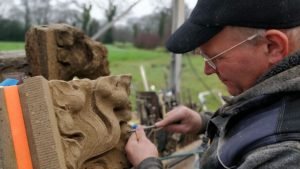
    ornamental work for Domkerk Utrecht
    Ⓒ Steef Bouwman

    Explaining yet again

    I found it remarkable that at first for several journalists it wasn't really clear how this restoration process takes place. These of course are things which we never think about anymore! But eventually we could make it clear to them that first the restoration architect makes a plan, then the contractor takes out the parts to be replaced, next, the stonemason precarves the blocks and makes all of the profiled parts, and lastly we come in and finally make the ornamental parts in the places where the stonemason left a block. Then the new block goes to the cathedral, the contractor puts it back in again and points it all neatly. "So these ornaments are really used!?’ But of course, they are being copied and actually used to replace the old parts in their original location: three gothic arches on the Pandhof side of the cathedral. Smack in the centre of Utrecht.
  • Finally another update!

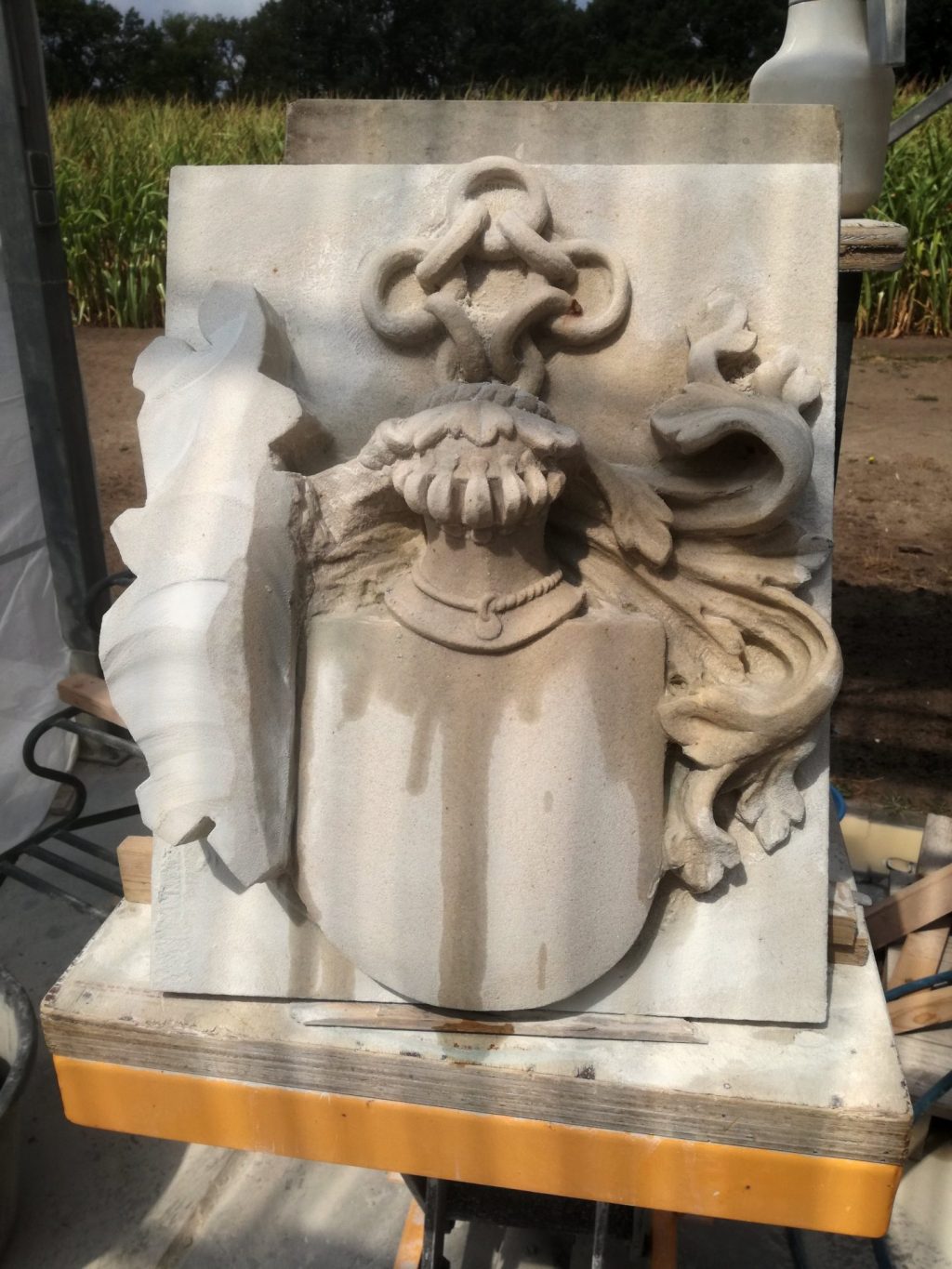
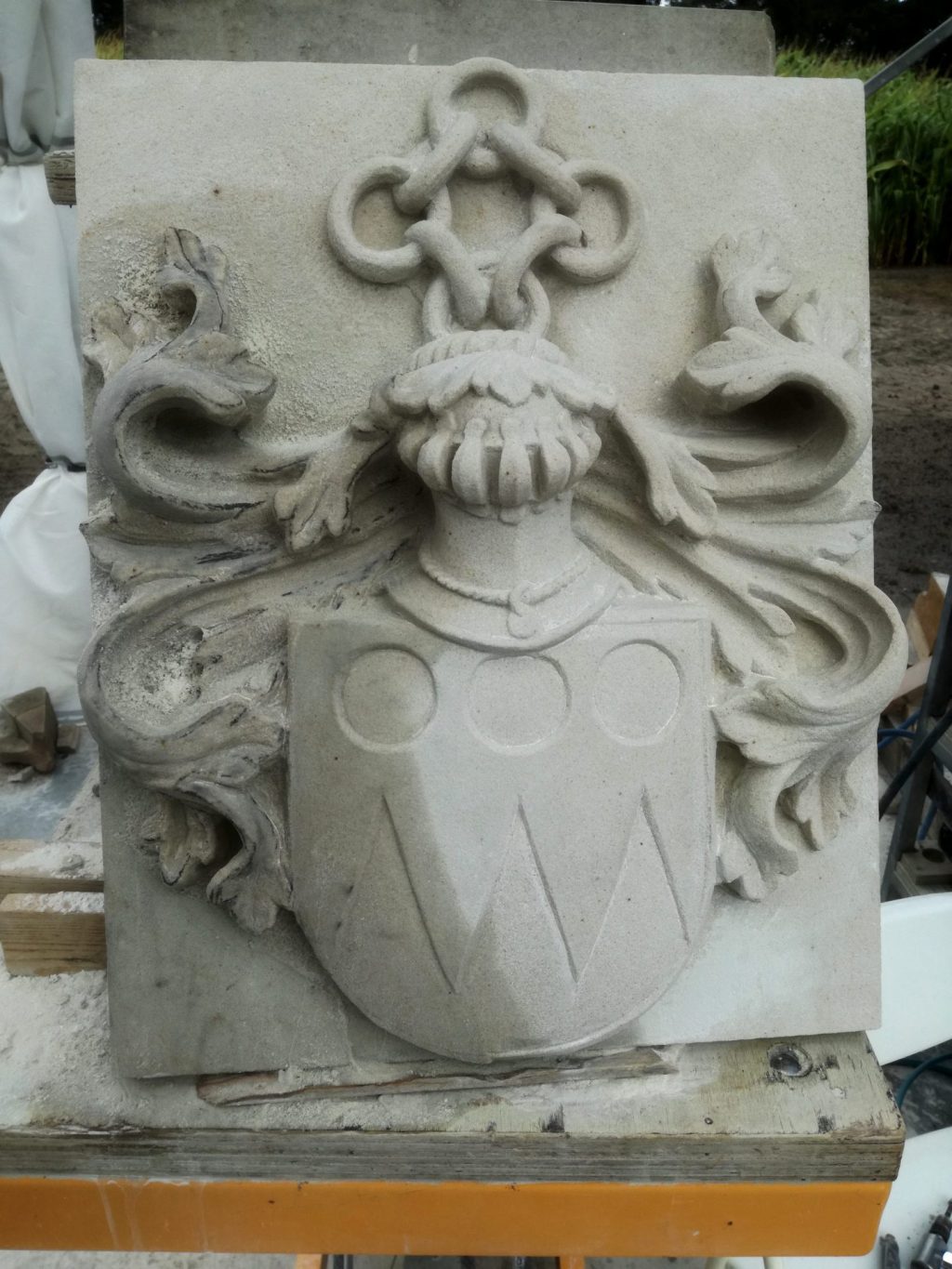
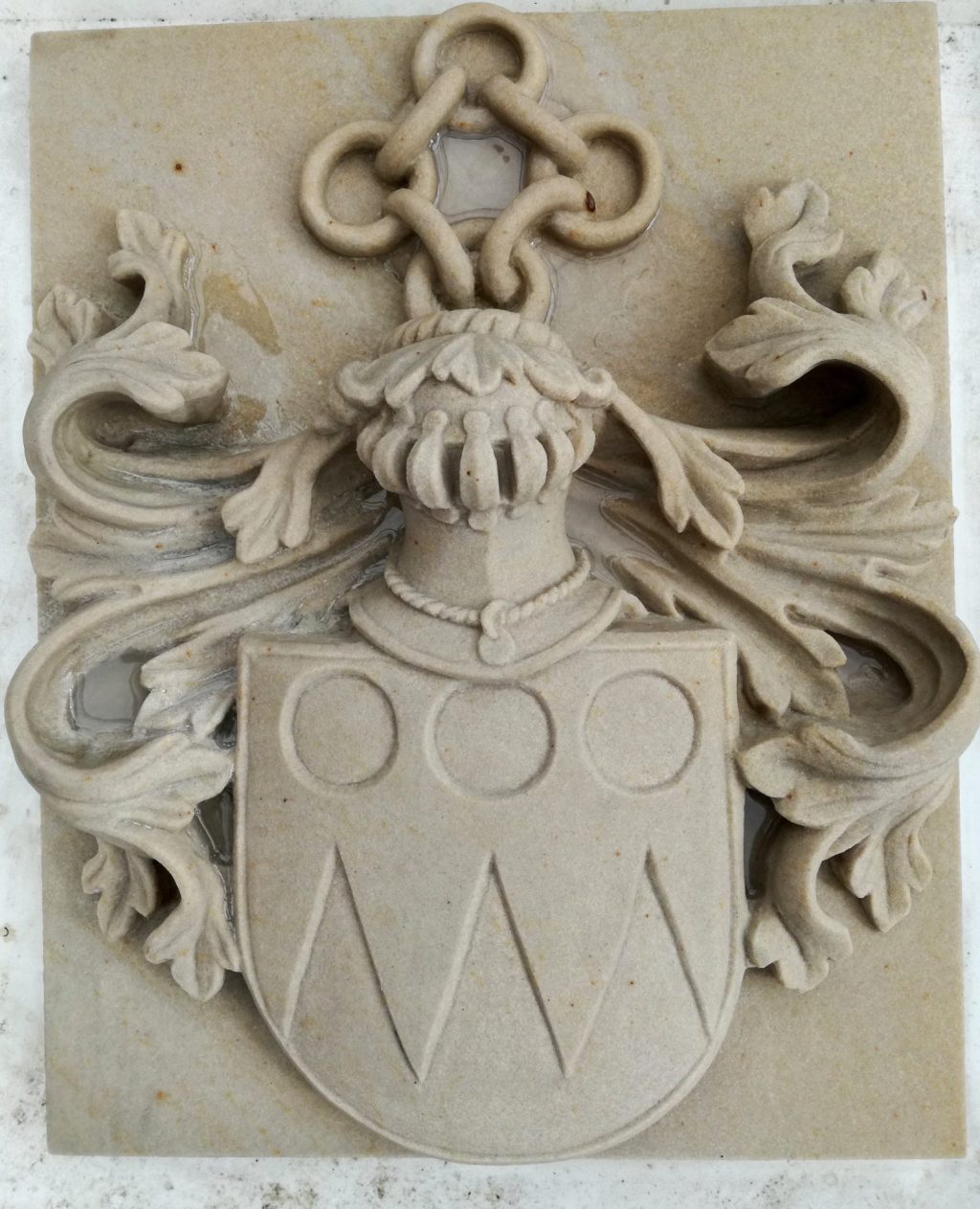
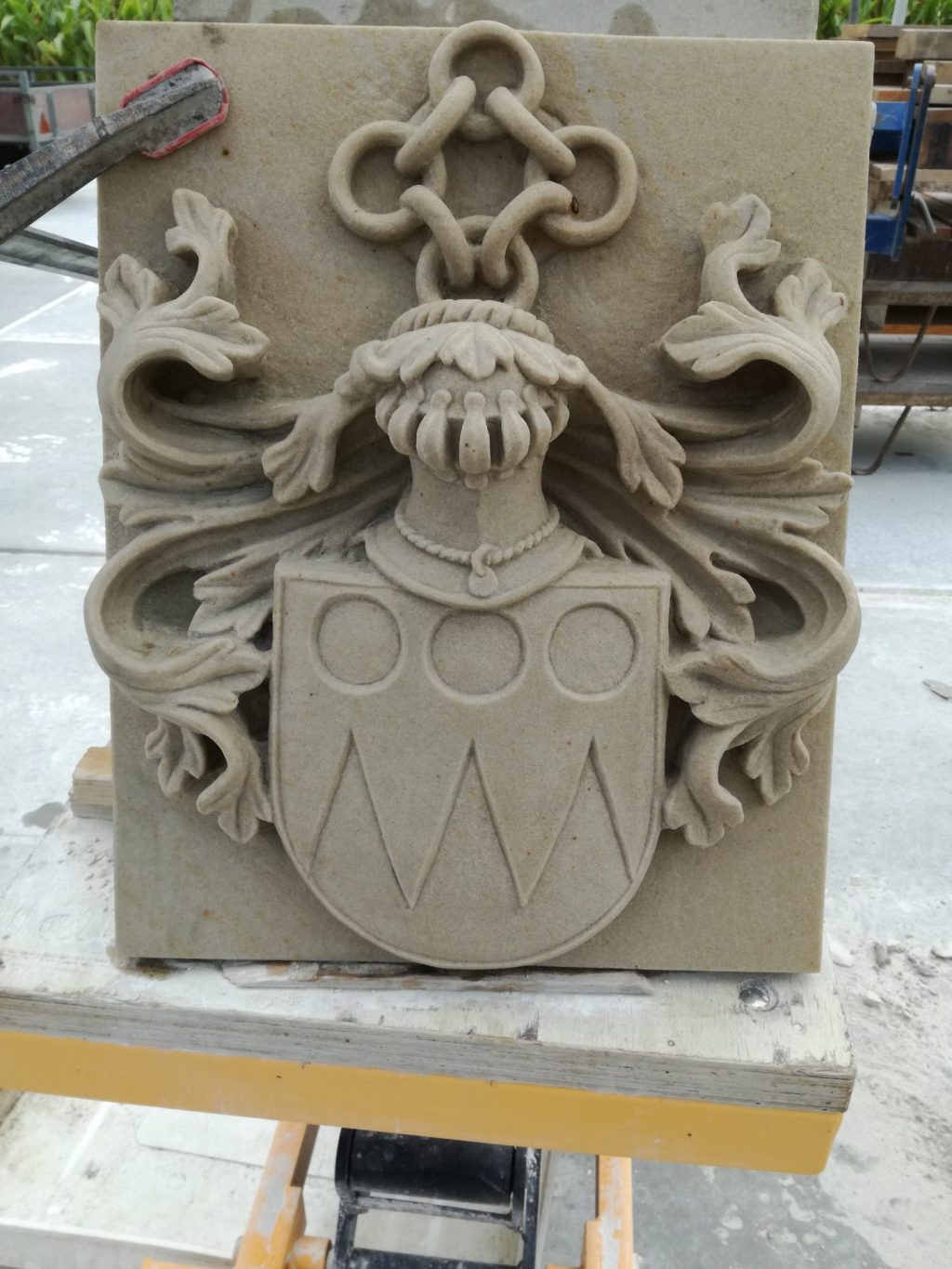
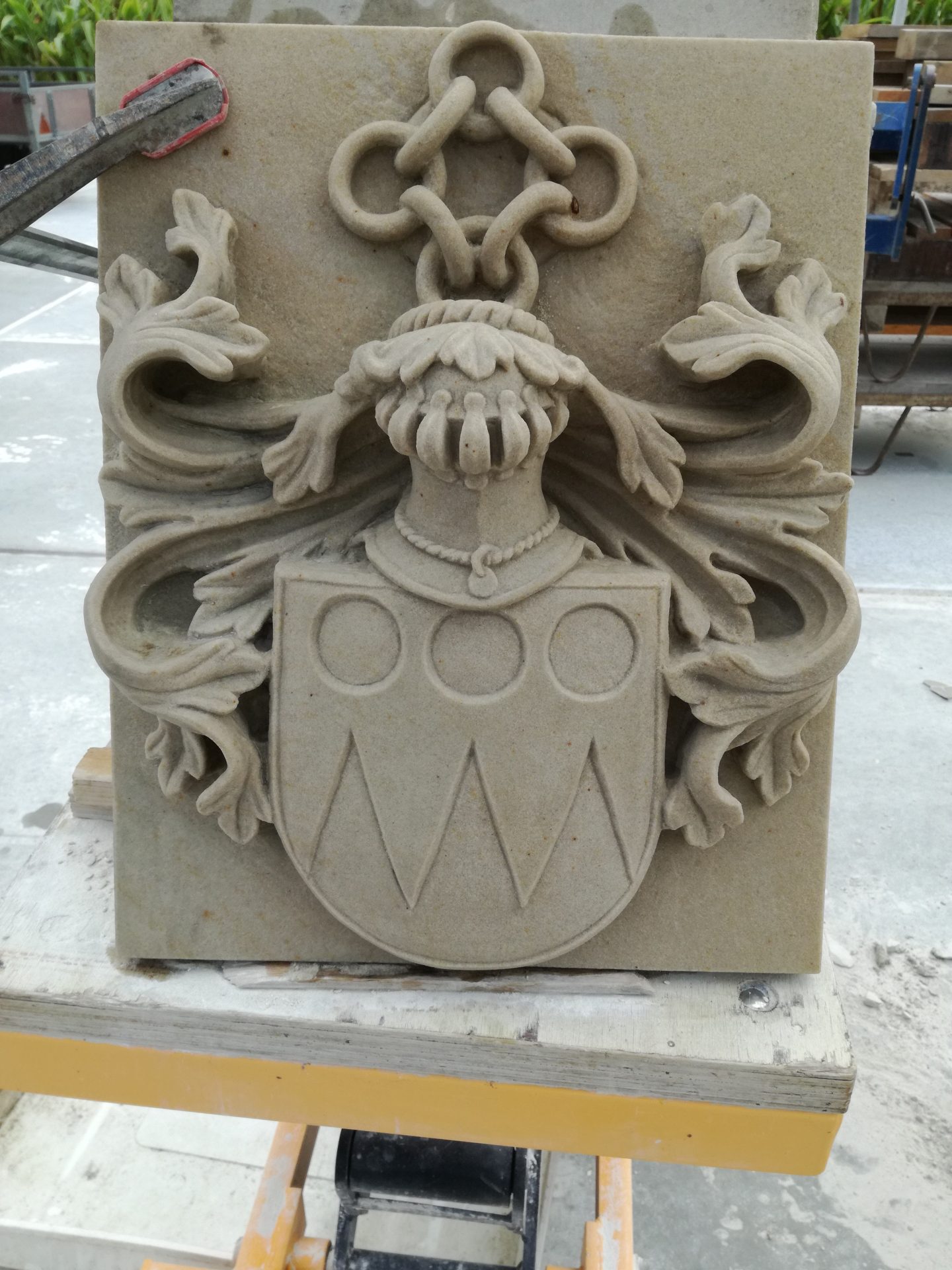
    step 5: the finished coat of arms in Bentheimer sandstone

    Storm before the silence

    After my last post on this blog, it has remained silent for far too long here. But not because I haven't done anything! On the contrary, it's been way too busy to report it all.

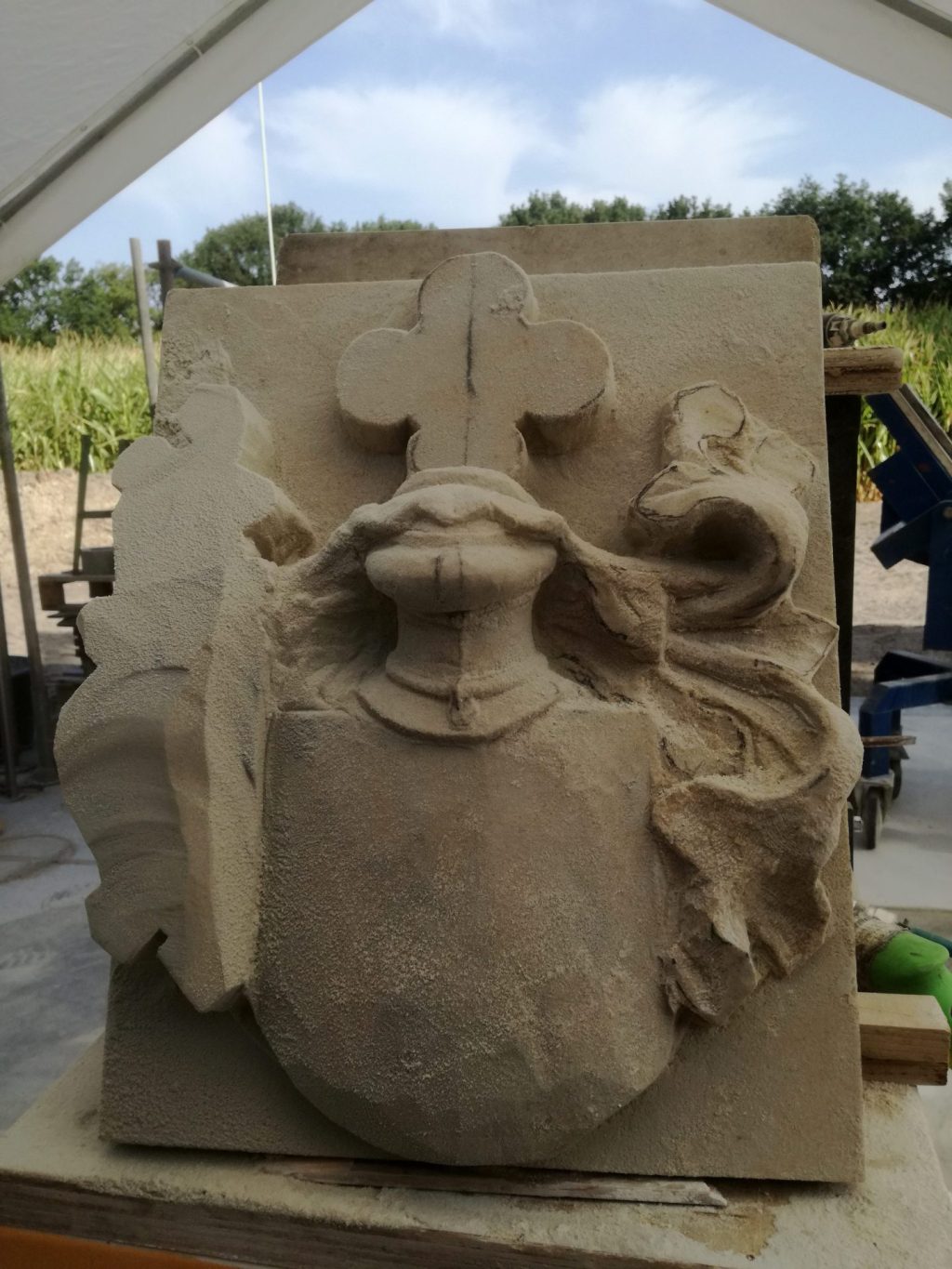
    So I've been working on the carving of another coat-of-arms in Bentheimer sandstone. The design was almost the same as the previous one, but this one would would be suspended from a wall. Therefore, it was carried out lighter, without an edge to the relief and with a thinner base of 3 cms thick.

    Flying Buttress Figurines

    flying buttress figurines as well
    Blind man

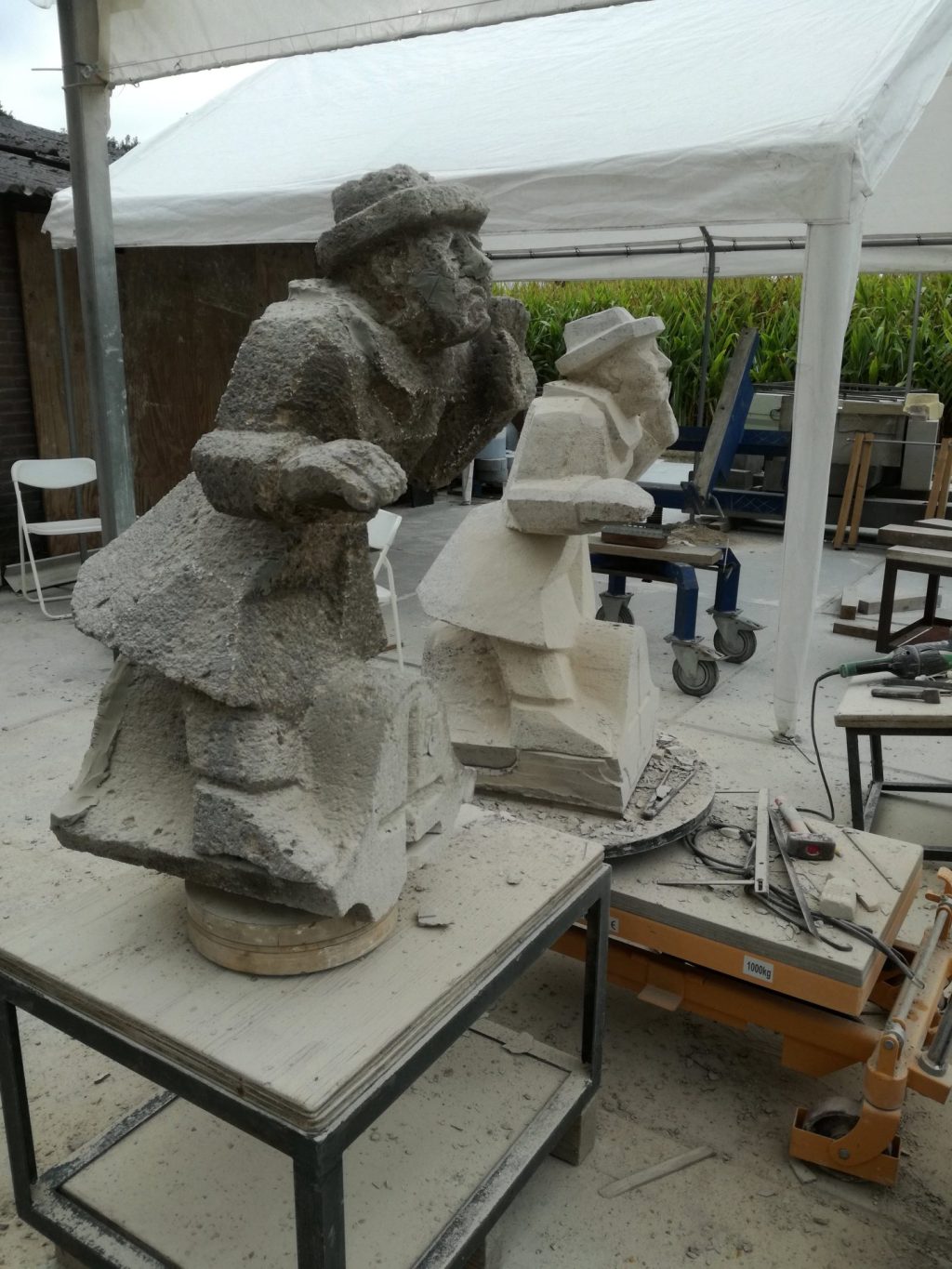
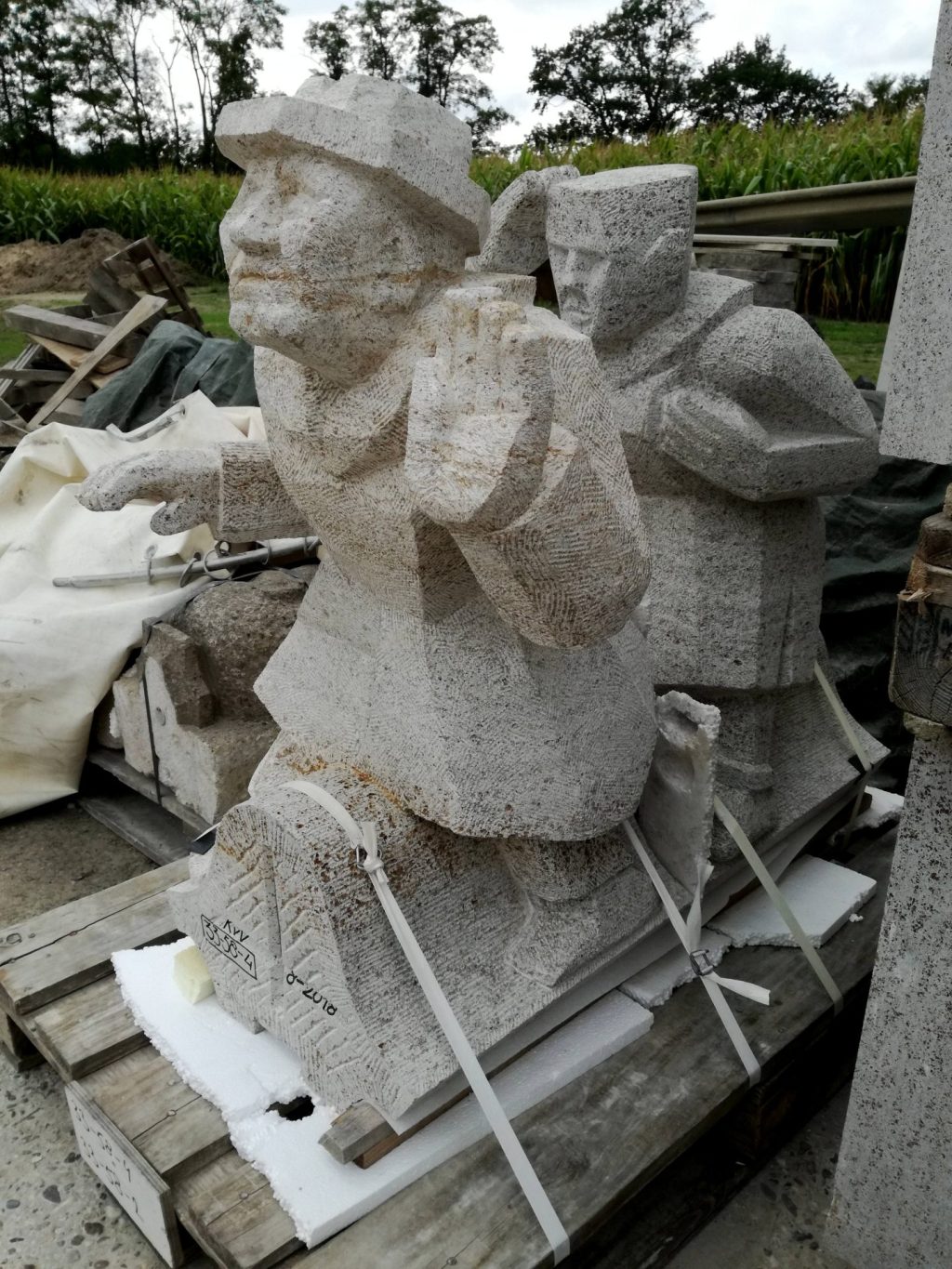
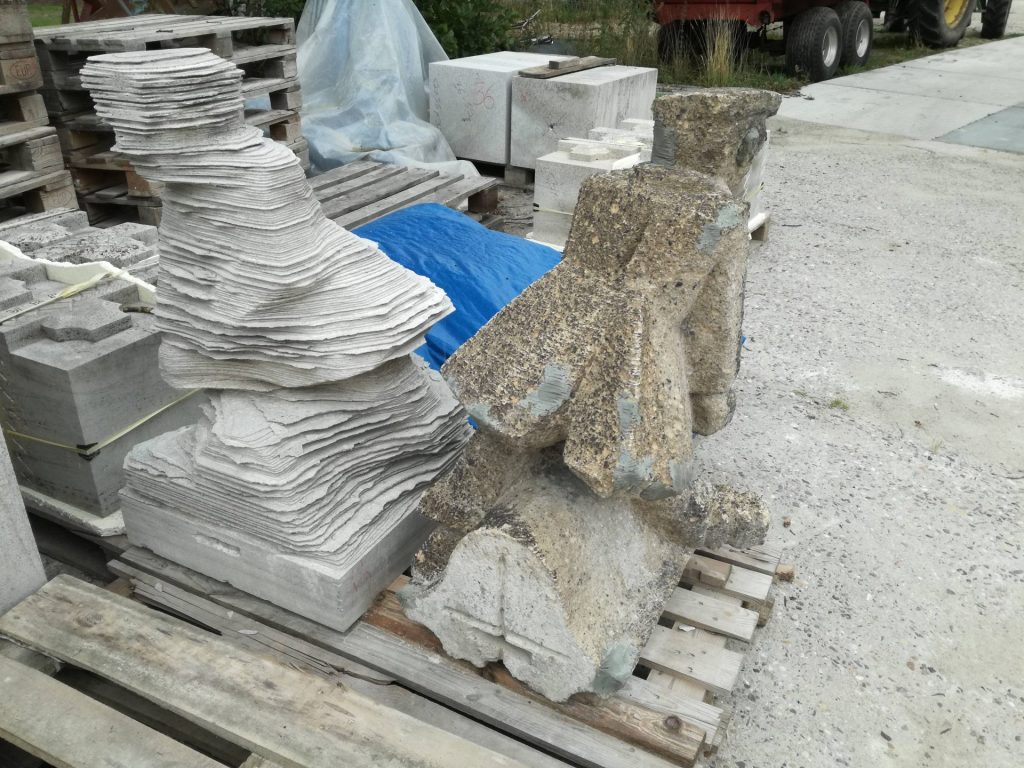
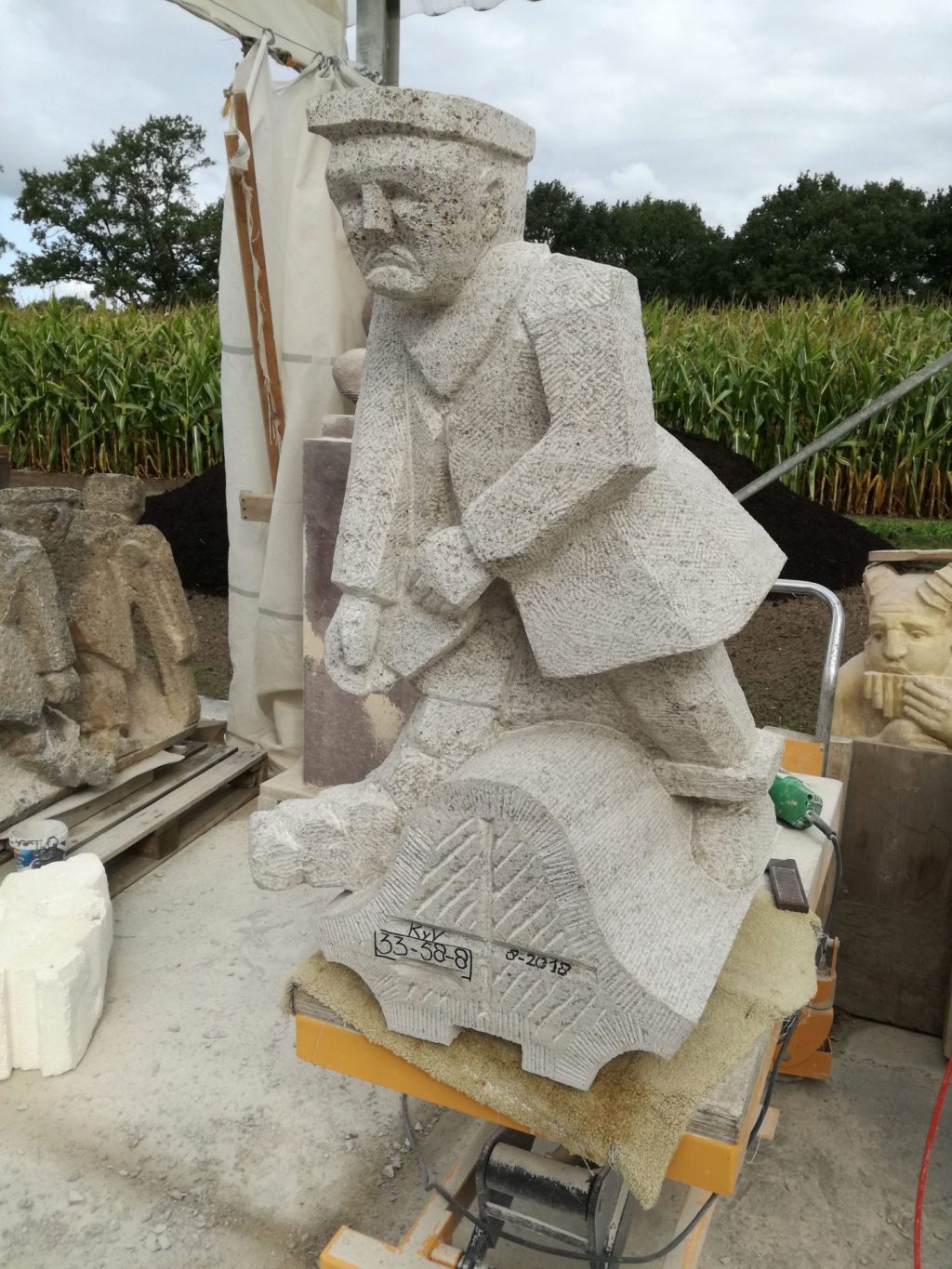
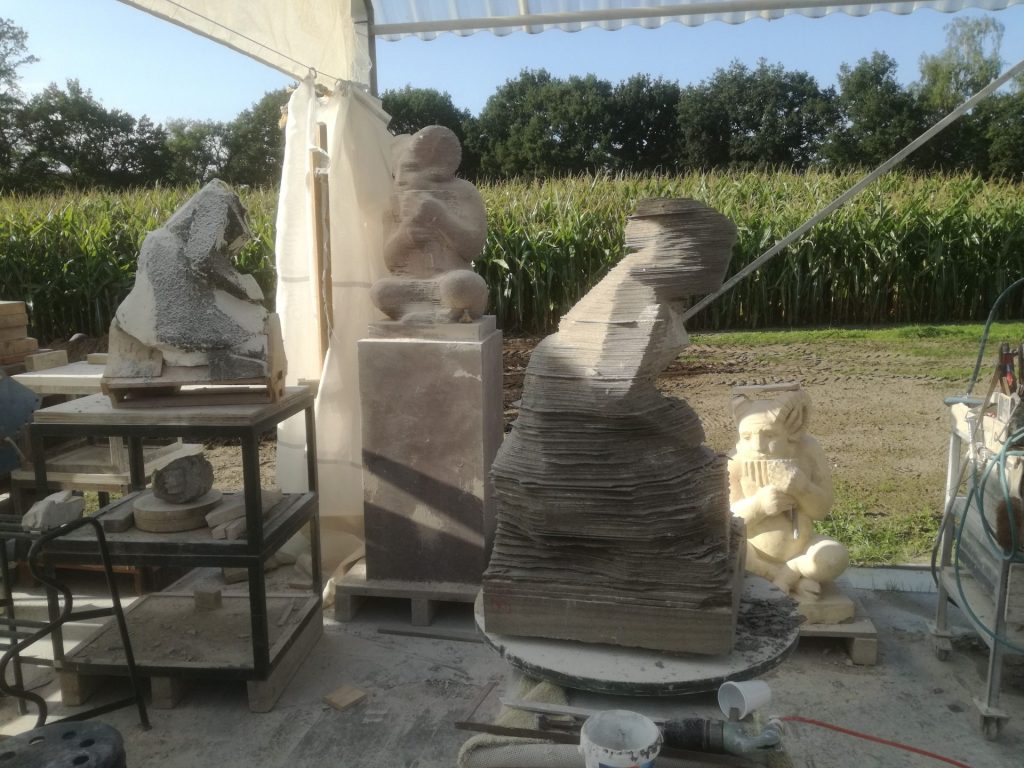
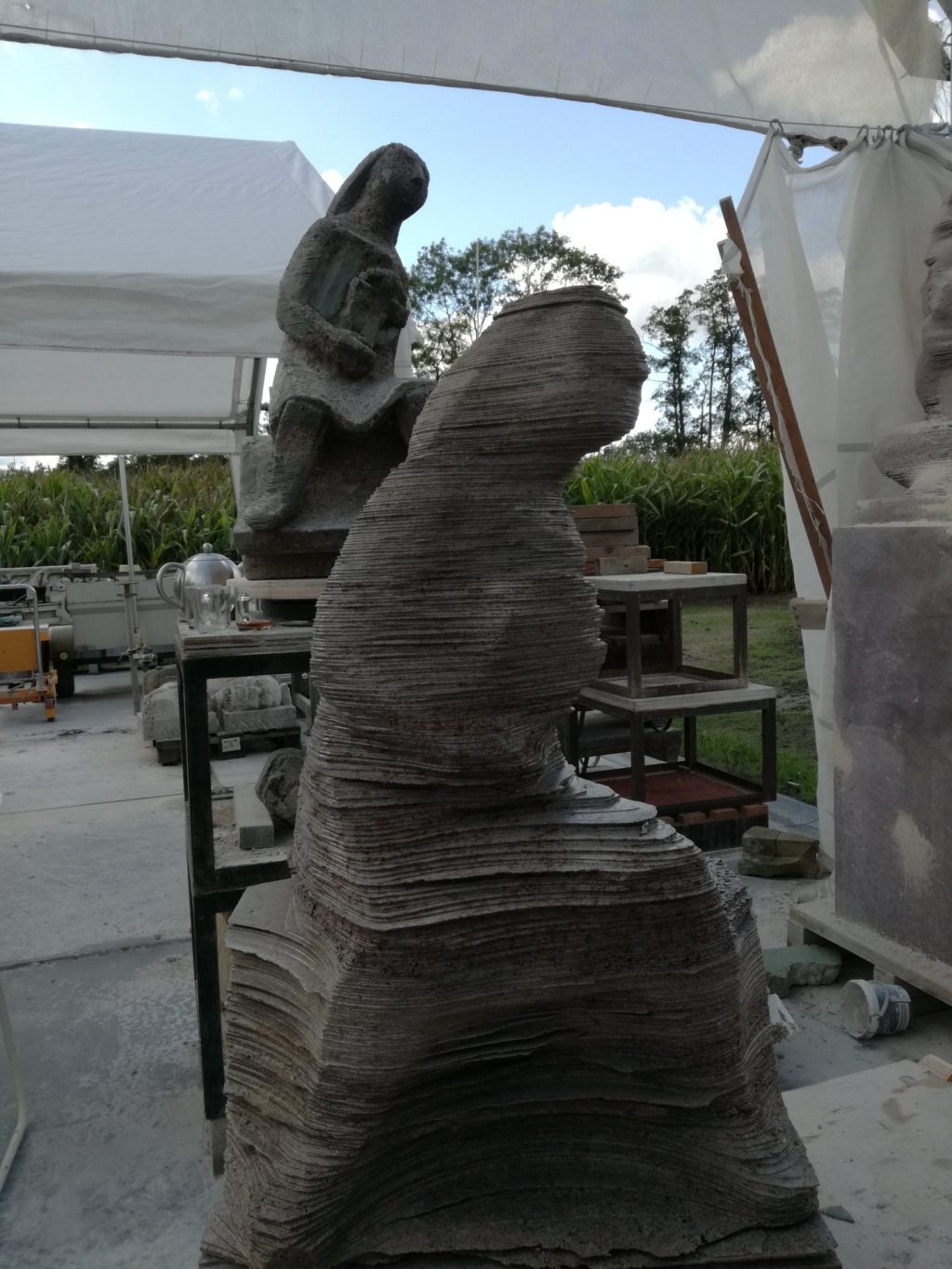
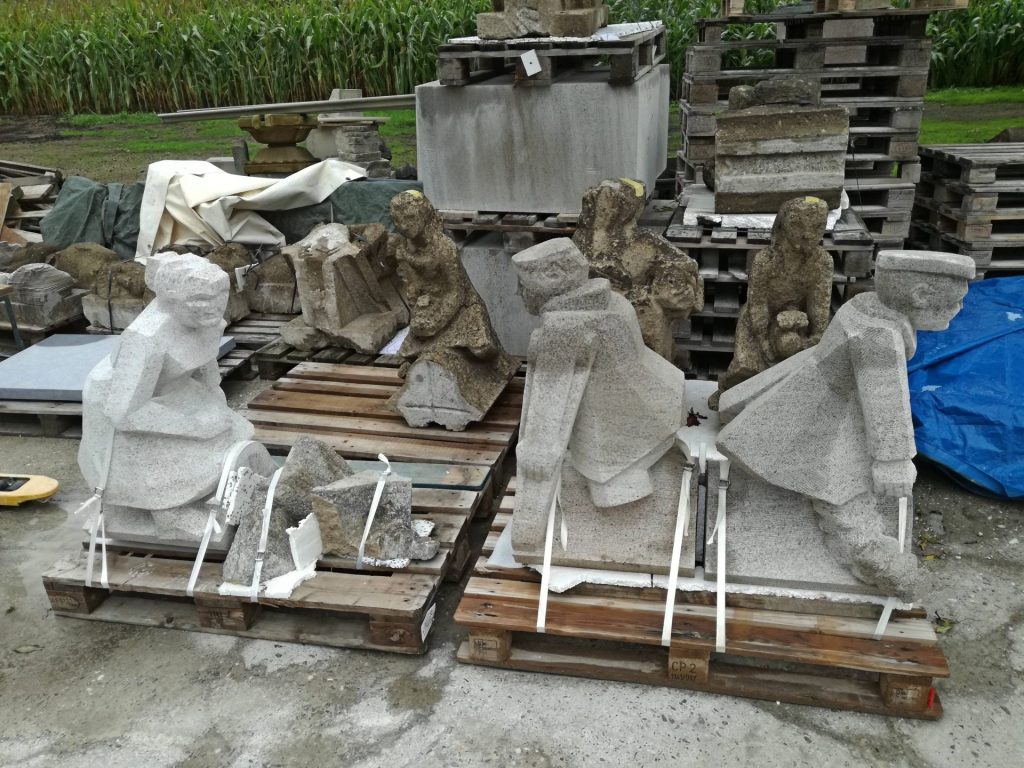
    After that, I went on with the next set of flying buttress figurines for St. Eusebius's Church. Last year I've carved 24 of these for 4 flying buttresses on the north side of the church, around the theme of Noah's Ark. This year the four flying buttresses on the south are up. No, three, because a flying buttres with 7 trumpet angels have in november 2016 already been copied by me. We started this time with a series which was originally designed and carved by George van der Wagt, round 1954.

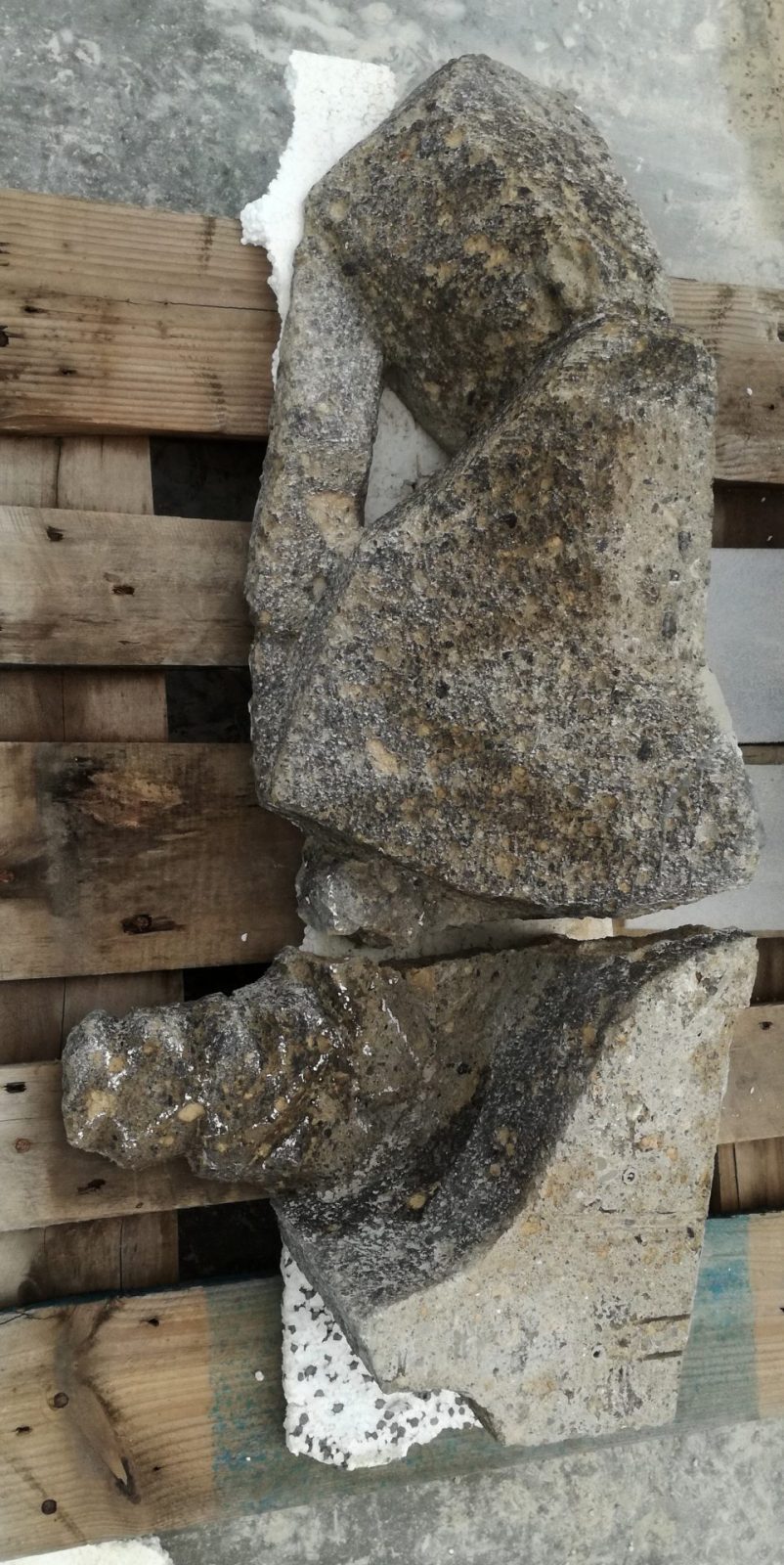
    The theme of this group is the beatitudes from the Sermon on the Mount. Van der Wagt has portrayed this by carving a group of lame, crippled, blind and stricken people into the tufa. But I honestly do not see the connection of this with the blessings of Jesus in the Bible. Van der Wagt felt that it should be strongly angled so as to get a clear silhouette from below. But after fifty years it has become very difficult to even see what it's supposed to be, even from up close. Of one of the sculptures, of a Woman with a Clubfoot, only one quarter was left. This one I needed to reconstruct before I could copy it.

    Gallery

    To the next flying buttress statue.

    A new team member

    I was quite busy with carving the coat-of arms, the griffins and the flying buttress figurines, and much more would arrive later. It looked as if it would be to much to handle all by myself. My colleague Stide was doing sculpture parts for the tower of St. Eusebius's church, and my other colleague Serge was working on his own commissions, so I was looking for a solution. And that came in the person of Jelle. Jelle was trained as an artist and knows his way well around stone. Because there is always more to be learned in this trade, it's a beautiful combination: Jelle will help carving the sculptures and meanwhile will learn some tricks of the trade. For me it's also nice that this handicraft will not die out for the Netherlands after my generation of three colleagues has left. Below Jelle in action with the copying saw. This figurine will then be carved by himself.

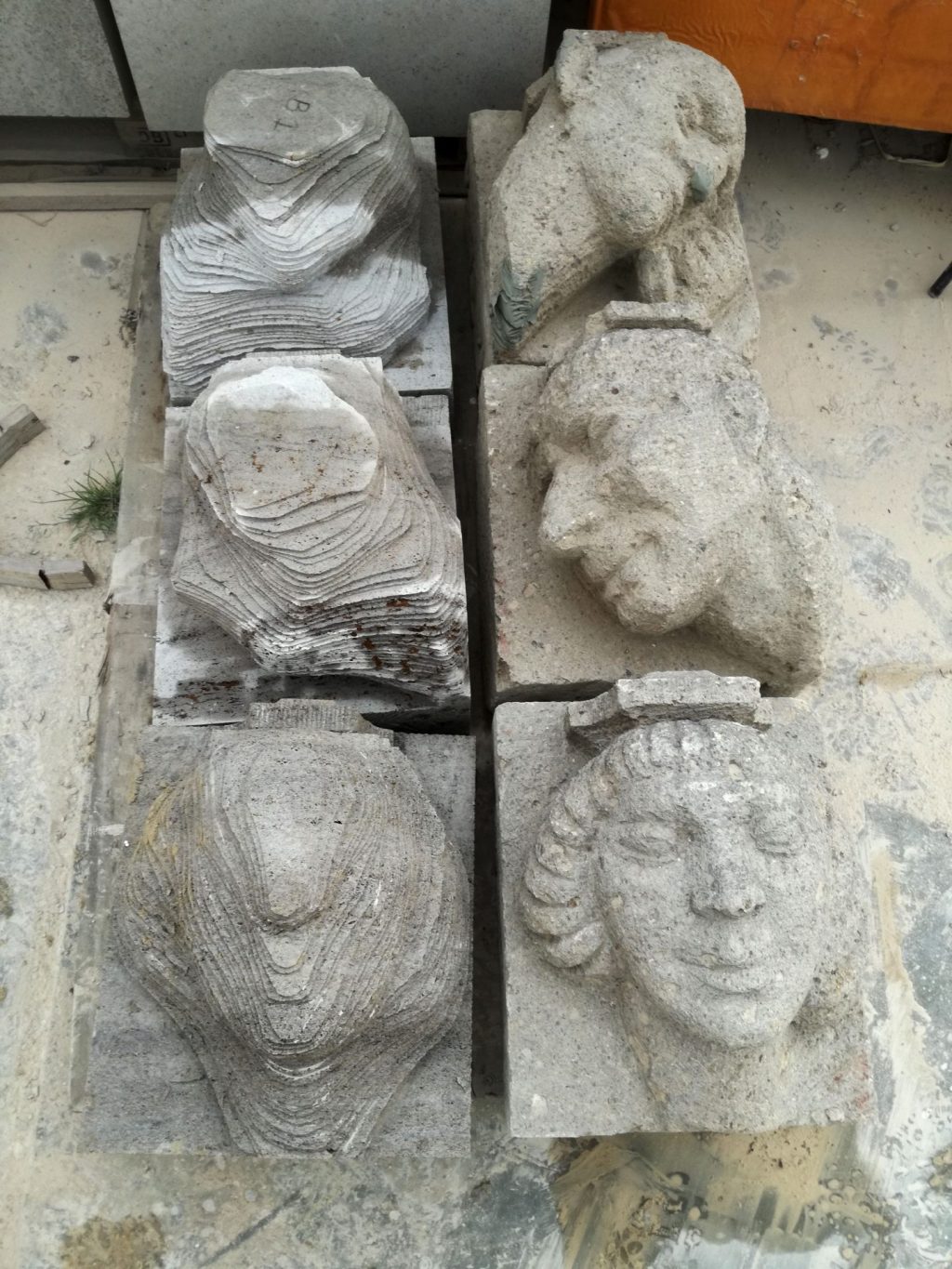
    We also did some sawing work on some flying buttress figurines and on 12 heads for the west facade of the tower , which are currently being carved by Stide.

    Myself, carving a flying buttress image that was just presawn

    Four flying buttresses on the north side

    Jelle and I together made these figurines taking each a turn. Work on the griffins is on hold now for a while, because the church has a completion date set: In March the four arches should be complete and the tower finished. In 2020 the other forty flying buttress figurines on the other side of the church will follow. Just, to taste the atmosphere and see what has already been created for this church, at visit to the scaffolds of St. Eusebius's church.

    Stonemasonry work

    Carving from a block

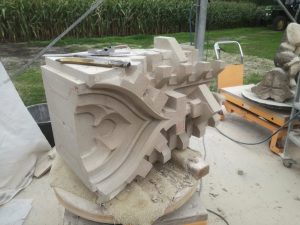
    If I felt that I was busy, then apparently someone else can still surpass that : I was called by the restoration stonemasons if I could take on part of their work, because they were even more busy. Construction is going well in the Netherlands. Everywhere there's a lack of professionals and contractors don't know how to finish all that work. When it rains there, it will be dripping on me, too. A few years ago I sometimes had some months without work, but that time is long past. So now I'm doing a -for me- quite unusual job, the stone carving of a block that is: the lower part of a finial, including the profiles, trefoils, pointed arches and crockets. After that, the carving of the ornaments follows.

    accurate measurements

    I have of course been doing this once before. But that was almost 15 years ago, so I had to really think about how I should handle this. For there is indeed a real difference between stonemasonry parts and sculptural work. Stonemasonry is everything you can mark on the block of stone from a template. It is tight, geometric work, for which you need to work very systematically to keep everything exactly perpendicular and crisp. Sculptural parts are more organic. This involves shapes, style, tension in the lines, elegance, and the like. These two complement each other; in Gothic architecture, the one can not exist without the other . In this block the ornaments would fall under sculptural work, and everything else is stonemasonry work. More about this soon pinnacle part.

    Dom Church, Utrecht

    Finally, I, Stide and Serge climbed the Cathedral of Utrecht in connection with a quotation. Gorgeous, impressive place, as seen from above!

    carving ornaments
    Dom Church in Utrecht from above

No more messages to show.

No more messages to show.